.comment-link {margin-left:.6em;}

La Bloga la bloga mugs

Chicana, Chicano, Latina, Latino, & more. Literature, Writers, Children's Literature, News, Views & Reviews.

About La Bloga's Blogueras & Blogueros

Monday, December 31

¡Con Tinta in New York!

Con Tinta is a coalition of Chican@ and Latino@ cultural activist poets and writers who believe in affirming a positive and pro-active presence in American literature. Con Tinta's mission is to create awareness through the cultivation of emerging talent, through the promotion and presentation of artistic expression, and through the collective voice of support to its members, communities, and allies.

The following is an open letter from the writer and Con Tinta board member, Richard Yañez, which I want to share with La Bloga’s readers:

Friends of Con Tinta:

On behalf of my fellow Advisory Circle members, I send you warm greetings at the close of another year. We hope it has been a fruitful one and that your work—on & off the page—is thriving. As we achieved on two previous occasions, Con Tinta is hosting a celebration at the upcoming AWP conference in New York City, which is scheduled for January 30 - February 2, 2008.

Con Tinta’s annual event will feature an award presentation, poetry readings, and a buffet/cash bar. Mojitos' Bar/Restaurant (227 East 116 Street between 2nd and 3rd Avenue) will host our event on Thursday, January 31st from 6:00 to 9:00 p.m.

This year’s recipients of the Con Tinta award will be Sandra María Esteves and Tato Laviera. These two unheralded heroes of the northeast are being recognized for their years of work and history of publication. Their contributions to Latino literature are numerous and have left their mark on our community. They reflect our mission of affirming a pro-active presence in American literature. Our previous recipients were Rolando Hinojosa-Smith, raúlrsalinas, and Judith Ortiz Cofer.

We are also excited about the evening’s program including a reading hosted by Acentos Bronx Poetry Showcase. Rich Villar is our ally in NYC who is coordinating with local artists and helping spread the word about the evening’s line-up.

At this time, Con Tinta is soliciting donations from organizations and individuals to help offset costs ($1500.00) for this event. In return, we will be sure to publicly thank all donors and supporters during the course of the evening’s events and also in the event’s program. I am the Con Tinta member collecting funds and all donations can be sent to me at the address at the top. Checks should be made out to "Richard Yañez."

Please consider yourself and your guest(s) invited to our Con Tinta celebration. If you have any questions, please contact me at richyanez@hotmail.com / 915-831-2630.

We look forward to having you share this special evening with us.

Sincerely,

Richard Yañez

◙ From many sources, we’ve learned the sad news that Alexander “Sandy” Taylor, co-founder of Curbstone Press, died at age 76 on December 21, 2007. As noted on the press's home page, Curbstone Press is “non-profit publishing house dedicated to literature that reflects a commitment to social change, with some emphasis on writing from Latin America and Latino communities in the United States.” Many of La Bloga’s favorite writers have had their books published by Curbstone. A very moving tribute to Sandy appears on Luis Rodríguez’s blog. After recounting Sandy’s accomplishments including publishing Luis’s work, Luis notes:

“So I will say with all candor--I would not be here as writer, lecturer and editor if it were not for Sandy Taylor. Such debt can never, ever be repaid. Yet Sandy lives on in the people he's touched, cajoled, rallied for, and celebrated. He lives on in his own poetry and translations. He lives on in the wondrous but economically unstable small publishing world that he helped create--where the best of this country still values what matters, and against all odds and economic advise continue to make books that will out live all of us.”

Francisco Aragón also offers his thoughts on the passing of Sandy. And as Richard Yañez put it in an e-mail to friends and colleagues: “In Memory for a warrior of words!”

Rigoberto González reviews Alicia Gaspar de Alba’s new novel, Calligraphy of the Witch (St. Martin’s Press). Of the protagonist, he notes, in part:

“Concepción Benavídez is an unfortunate soul who makes a lengthy journey from the convents of Mexico to the shores of New England. A trained scribe and a devoutly Catholic mestiza who mumbles her prayers in Latin, she's too strange for a ship's crew and too unruly for the captain, who kidnaps her…. As a symbol of displacement and survival, Concepción Benavídez is an extraordinary character. As a book about the troubled present as represented by the anxiety of the past, Alicia Gaspar de Alba's Calligraphy of the Witch is truly exceptional.”

◙ Speaking of Rigoberto González, he dropped an e-mail to his friends that his recent focus has been on his column at the Poetry Foundation. He'll be blogging for another two months, and then back to a regular reviewing schedule at the El Paso Times. He also shared wonderful news: Rigo officially accepted a position, Associate Professor with tenure, at Rutgers University in Newark. He will begin his appointment in September. ¡Bravo, Rigo!

◙ I have a little (and I do mean little) story in a new anthology, You Have Time for This : Contemporary American Short-Short Stories (Ooligan Press), edited by Mark Budman and Tom Hazuka. I’m in some wonderful company…the anthology includes flash fiction by Aimee Bender, Steve Almond, and many others.

◙ Many fine authors ended up on best-of-the-year book lists. Over at The New York Daily News (Latino), Latino/a writers chose their favorite books of 2007. For example, Luis Alberto Urrea picked The Faith Healer of Olive Avenue by Manuel Muñoz, calling him "[a]n extraordinary writer with immense promise." Francisco Goldman's picks were The Brief Wondrous Life of Oscar Wao by Junot Díaz, and Lost City Radio by Daniel Alarcón. Read all the picks here.

Newsweek included The Brief Wondrous Life of Oscar Wao on its top ten list for 2007 stating: "A quantum leap beyond the short stories that made Díaz’s reputation a decade ago. And one hell of a ride.”

And Helena María Viramontes ended up on Michael Silverblatt’s 2007 favorites for her novel, Their Dogs Came With Them (Simon & Schuster). If you haven’t heard Silverblatt’s author interviews yet, they’re available online including his chat with Viramontes (Silverblatt also lists Steve Erickson's brilliant novel, Zeroville (Europa Editions), as one of his favorites; I reviewed Erickson's exquisitely strange and powerful novel in yesterday's El Paso Times). If you know of any other Chicano/a or Latino/a writers who have ended up on best of 2007 lists, or if you want to mention some of your favorites, please post a comment and a link, if available.

Michele Martinez’s suspense novel, Cover-up : A Novel of Suspense (HarperCollins), is now in paperback. Check it out!

◙ The El Paso Times reports on El Paso native Raymundo "Ray" Eli Rojas’s return to his hometown after completing his degree from the University of Kansas Law School but “he wasn't looking for a cushy corporate law job or a comfortable civil-service lawyer position.” Rojas said: “All my life, I wanted to help people. And I needed to find the best way to do that.” So, Rojas is the new executive director of Las Americas Immigrant Advocacy Center. "I wanted to be an advocate for immigrants and poor people,” says Rojas. The EPT notes that the center “assists refugees with asylum petitions and other legal matters to protect the human rights of unaccompanied immigrant children and assist battered women and children.” Of course, as the EPT reports, “[o]ne of the things [Rojas] is best known for is his Pluma Fronteriza literary newsletter, which began as a print publication and grew into an online production.” Way to go Ray!

◙ All done. So, until next Monday, enjoy the intervening posts from my compadres y comadres at La Bloga. ¡Lea un libro! --Daniel Olivas

Sunday, December 30

Guest: Ann Hagman Cardinal. The New Year’s Lamppost.

Tildes to everyone, one and all. When you wish someone happy new year in Spanish you gotta have that tilde, que no? Que si! Feliz ano nuevo, if you've had plastic surgery. Otherwise, it's feliz Año Nuevo! (Windows: numlock on. Hold down the ALT key and type 0241. Mac: Hold down your Option key, press letter n, then letter n again.) La Bloga welcomes our friend Ann Hagman Cardinal to her third guest column. Looking forward to much more from Ann in dos cientos ocho. A ver.


The New Year’s Lamppost

I’ll never forget my mother’s response when I told her my friends and I wanted to go to Times Square for the big New Year’s Eve celebration: “Okay, my mother told me not to go, and I went anyway, now I’m going to tell you not to go but you’re going to go anyway. Just take this small bit of advice from your mother: grab a lamppost.”

“Uh…okay, Mom.”

I admit I was baffled by this conversation but was so pleased that she was going to let me go, I didn’t question it.

There were six of us in our group, all around sixteen years old, and as we rode uptown on the subway we were excitedly chattering like monkeys. We had spent the last few New Year’s Eves watching the festivities on the television screen and it seemed like such an incredible party the fourteen-inch screen could barely contain it. It was hard to believe we were finally going to be in the middle of it. After emerging from the Times Square station, we edged our way through the crowd on Broadway, situating ourselves less than a block from the glowing ball that was suspended high above the teeming streets. The air seemed electrically charged with the excitement, the scent of steamed hot dogs, firecrackers, sweat and alcohol hung about the crowd in a haze. We felt as if this was a right of passage; we had finally graduated from the kids’ table and were celebrating with the adults.

Almost as soon as we chose our spot, the shoving began. There was a gang of young men, half of whom were starting fights to distract the onlookers while the others snatched purses and wallets. Our lower stature allowed us to discern what was going on earlier than most, and we quickly put our valuables inside our jackets and kept our eyes open. Suddenly I found myself picked up off the street, the crowd lifting me and dragging me along. I saw the heads of my friends as they too got carried off in different directions and my throat tightened with panic. It was like drowning in a sea of people and I knew I could so easily fall beneath the wave and get crushed. Just as my asthmatic lungs began to wheeze in my panic, I was carried by a lamppost. I reached out and grabbed it with both arms, stepping up on the base and lifting myself above the crowd. I was in control again and could see what was going on around me. I noticed an ebb in the flow of people in a certain direction and made a dash through and out of the crowd. Each of my friends eventually made it out too, and as we stood there, our hands on our knees trying to catch our breath, tears pouring down our cheeks, we looked up and saw that the ball had already dropped, the din of the crowd deafening our words of consolation.

We had missed it all.

Suddenly the festivities took on an ominous air, every face that went by seemed menacing, every shout a threat. We went straight home, accompanying each other on the train (there are no cabs to be had in NYC on New Year’s Eve) and that night as I lay in bed, I pledged to celebrate future New Year’s in a more tranquil fashion.

I have since heard talked to people who had wonderful experiences in Times Square on New Year’s Eve. It is certainly true that it was a different place then—now it seems to be like a concrete-floored yuppie mall—but it is not an event I care to experience again in this lifetime. This may seem a somewhat dark column for such a festive time of year, but what I really want to share with you is the gift that the experience gave me, what I learned. I have thought a lot about my mother’s advice since that last night of 1979, and find myself seeking that lamppost whenever I feel unwillingly carried along and out of control. There are certainly times when being lifted off the ground and surrendering are good choices and in fact encourage our growth, but many times they are unwelcome guests. My lampposts have come in different forms throughout my adult life—my family, friends, writing,—and I am grateful for the support they offer each and every time. It is my hope for the coming year, La Bloga readers, that you find your own lampposts when they are needed, and with them you are able to get a better vantage point, see your options, and choose the ones best for you. But if you are entertaining any thoughts of going to Times Square on New Year’s Eve, please email me first.

¡Feliz Año Nuevo!

Friday, December 28

Dig A Hole, Fill It Up -- Or Write Haiku

Manuel Ramos


Throw out the old, ring in the new. I’m sure I’m not the only one who is acutely aware of the ebb and flow of time as 2007 slips away. Time for reflection, for re-organizing, for making new plans and scrapping old projects. Donate those sweaters not worn in years; go through the piles of books in the corners and make hard decisions about the ones that will never be read; scratch out a list of things to do in 2008, places to see, people to visit. Then the important stuff: where am I and how did I get here?

Maybe it’s not just that the new year approaches. Maybe these thoughts occupy me because of the music I’ve been playing. Or maybe I play this music because it is the end of the year?

This Time by Los Lobos:
Why do the days
Go by so fast

If only time

Was built to last.


Precious Time by Van Morrison from his Back on Top CD:
Precious time is slipping away
But you’re only king for a day
It doesn’t matter to which god you pray
Precious time is slipping away.

Bob Dylan got in the act, of course (Not Dark Yet):
Shadows are falling and I've been here all day
It's too hot to sleep time is running away
Feel like my soul has turned into steel
I've still got the scars that the sun didn't heal
There's not even room enough to be anywhere
It's not dark yet, but it's getting there.

And there's no way I'm going to chance Puño de Tierra.


It’s all about time, lack of time, time will tell, time is on my side, time after time -- time out.


The Persistence of Memory by Salvador Dalí


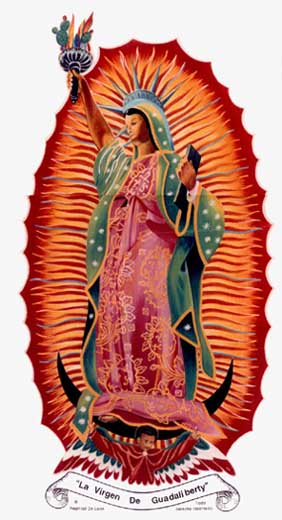
I hung my 2008 Chicano Art Calendar (Amber Lotus Publishing) and it looks great. The artists include Santiago Pérez and his magnificent First Aztec on the Moon, a piece that impressed me years ago when I viewed his work at the National Hispanic Cultural Center in Albuquerque; Malaquías Montoya’s powerful Trabajo y así transformo el mundo; Our Lady of Guadaliberty by Nephtalí De Léon; and several other amazing Chicano and Chicana artists. But, the real reason this calendar was on my wish list is because Carlos Frésquez is featured. His dynamic A Westside Wedding stands in for June, naturally. Carlos is an old friend and this painting evokes deep emotions in anyone familiar with the lore and mythology of Denver’s Westside, and for those who don’t know the stories, Carlos’s work is still very cool.

So, how about some nostalgic end of year or New Year celebration haiku? La Bloga would love to see your efforts. Here’s one to get you started; I know you can do better.

I stare at the clock
Round face ignores the question
Tick tock says it all.

Have a great 2008.

As always,

Later.

Labels: ,

Thursday, December 27

Some thoughts at the end of the year


As 2008 rolls around, I wanted to share that I feel incredibly blessed. This week's post is just my attempt to give at least partial thanks for what I've been given.

One
, to have joined the ranks of La Bloga and be able to share my brickbats and bouquets alongside Daniel, Michael, Manuel, René
, Rudy and Gina has been a honor. You've all been kind to a fault, supportive, funny, (especially YOU, Rudy!) and insightful.

To make a small contribution to our discourse about literatura, cultura y
más required me to dig deep in the best possible way. La Bloga has given me the chance to interview writers like Martín Espada, Demetria Martínez, Luis Rodríguez , Margo Tamez, Tara Betts, Rich Villar, conversations that make me want to be a better writer.

Two
, with sands shifting in my personal life this year, I've been given an object lesson as to the real nature of friendship. For all the shoulders I've cried upon, ears I've bent, dinners I've been treated to, late night phone calls accepted, opinions shared, and unconditional love....my love and my gratitude to: Jay and June, Rose, Toniann, Deirdra, Ramone.


Three, for my hermana, my cohort, my heart, my partner in crime, Ann Hagman Cardinal. To be able to have you in my life as family is one of the rare times the words fail me. But what I do have words for is the incredible joy I feel in being part of your writer's journey.

Four
, for the gift of finding Jewish roots, my ancestry in full, hidden treasure now in the light.


Five, for proof that magic is still possible, even when you least expect it.


Other notes:

Gente, indulge me with posting the photo above. (Sometimes a girl's just gotta....)

I've completed a poetry manuscript, Raw Silk Suture, and I'm lighting the candles that there will be more good news about that in 2008!

There's also been a redesign of my website: http://lisaalvarado.net
The incredibly lovely design is courtesy of Jay Fox -- http://frogdoggraphix.com
and Lin, http://photographybylin.com

Labels: , , ,

Wednesday, December 26

Magazine Submissions


Stories for Children Magazine


Stories for Children Magazine is currently in need of the following:

NONFICTION articles for ages 3-6 (no more than 400 words)
NONFICTION articles for ages 7-9 (400 to 800 words)

POETRY - see new Guidelines

We're in particular need for FEBRUARY and MARCH 2008 issues. Please read the Submission Guidelines page before submitting.

SFC is not a themed magazine but if you need a kickstart, check out our Monthly Idea Calendar. We're always short on crafts, recipes, games and puzzles so if you have any tucked away, send them in.

SFC welcomes new writers. This would be a great time for you to submit.

Warmly,

Wendy Dickson
Assistant Submissions Editor
Stories for Children
http://storiesforchildren.tripod.com


Iguana Magazine

We are always looking for material in español to publish – fiction, non-fiction, interviews, recipes, poems, photographs, comics, puzzles and more.

Please contact us about submissions at: revista_infantil@yahoo.com


[Writer's Guidelines] [Illustrator's Guidelines] [Photographer's Guidelines]

WRITER'S GUIDELINES

General Guidelines

* We do not accept translations. All submissions must be originally written in Spanish.

* We do not pay persons under the age of fifteen for contributions.

* We hold first time rights and do not consider material previously published.

* We accept queries.

* All materials are paid upon publication.

* All materials can be submitted electronically via email.

* Articles may be edited for length, grammar, and punctuation.

* We publish 6 issues a year. However, all proposals are considered.


Fiction

* We accept realistic fiction, stories, fantasy, humorous tales, legends, science fiction, fables, myths, mysteries, fairy and folk tales.

* Stories should be 800 words or less.

* Payment is US$0.05 per printed word.


Non-Fiction

* This section includes biographies / interviews with Latino personalities that have influenced the lives of Latinos in America, art, history, animals, nature, technology, science, geography, and stories about children from other cultures and countries.

* Articles should be 800 words or less.

* References, bibliography, and / or sources of information must be included with submissions.

* Payment is US$0.05 per printed word.


Arts & Crafts

* Article should include clear directions with no more than five steps.

* The project should require common households and inexpensive materials.

* A sample of the finished project should be included with the material.

* The payment is US$25.00 per project.


Poetry

* It can be serious or humorous.

* It should be no longer than 15 lines.

* Payment is US$15.00 per poem.


Other

* Recipes, puzzles, games, word search, brain teasers, math and word activities.

* Payment will be determined per submission.


ILLUSTRATOR'S GUIDELINES

* Illustrations, cartoons, comics, drawings, cover illustrations.

* All art work must be submitted digitally, at a minimum of 300dpi at full size, via tif.

* Payment will be determined per submission.


PHOTOGRAPHER'S GUIDELINES

* Photos of children and animals.

* Payment will be determined per submission.


Skipping Stones


Skipping Stones is an award-winning, international, non-profit magazine, now in the 14th year! We celebrate ecological and cultural diversity, facilitates a meaningful exchange of ideas and experiences. Young readers of Skipping Stones, ages 8 to 16, hail from diverse cultural and socioeconomic backgrounds. We try our best to make their reading of Skipping Stones an active experience, relevant to issues confronting them locally and globally.

Youth respond to the world through Skipping Stones Magazine...

Skipping Stones readers hail from north, south, east, and west. From villages to inner cities, youth have something to say, about their culture, school, religion, environment, neighborhood... and Skipping Stones provides a forum for sharing it. Any way you choose to express your dreams and opinions, Skipping Stones provides a place for writers and artists of all ages and backgrounds to communicate creatively and openly.

Writings (essays, stories, letters to the editor, riddles and proverbs, etc.) should be typed or neatly handwritten and limited to 750 words and poems to 30 lines. We encourage writings in all languages with an English translation, if possible. And, we love illustrations! Please send originals of your drawings, paintings, or photos. Include your name, age, and address along with your submission.

Ideas for Submissions:

* Cultural or Regional Celebrations: First-hand descriptions (with photos or illustrations)
* Writings accompanied by children's artwork
* Bilingual submissions or writings introducing (using words/phrases from) other languages
* Folktales, hospitality customs, recipes, music, folk art and architecture from around the world
* Living Abroad and Immigration: Your memorable experiences
* Cross-Cultural Communications: Ways we express ourselves through language, proverbs, tales, songs, body language, symbols, etc.
* International Humor: Jokes, funny stories, riddles, games, cross-cultural mix-ups, etc.
* Photo Essays on a country or region
* Families and Community: Getting along, unique gatherings or projects, intergenerational experiences, multilingual families
* Creative Problem Solving and Peace-Making
* Cooperative Games, Quizzes, Riddles, Puzzles
* Life as a Minority: Challenges and successes
* Living with and Understanding Disabilities
* Unforgettable Moments: Times of transformation or revelation.
* Inspirations or Role Models in your life
* Right Livelihood: Earning a living while helping the world.
* Technology: Its impacts on the planet.
* Sustainable Living: Our Mission, Purpose and Challenges. How can we care for the Earth and all its inhabitants?
* Nature: Unique ecology, resource conservation, endangered species, fighting pollution
* Taking Action: Reports of or suggestions for children's involvement in community, ecology or social justice; actions to improve the world
* Raising Caring Kids: What tools do we use? Improving self-awareness and self-esteem; encouraging creativity, non-violence and tolerance; being a role model
* Parent/Teacher Guide: Lesson plans, ideas, activities, experiences and suggestions.
* Any other multicultural, social, international or nature awareness theme that you wish to write about!

You can send us your submissions by snail mail or via E-mail with Word attachments).

Please to:

Managing Editor
Skipping Stones
P.O. BOX 3939
Eugene OR 97403-0939 USA

Labels: ,

Tuesday, December 25

Doce días de mis Krismas - Day 1

the Spanglich version
Posted each day beginning Dec. 15th

(Esa's voice in red; Ese's voice in black)

On the día de mis Krismas
My true love gave to me,
The homage of a bare tree.

"Esa, it's almost midnight. We're opening presents already. You gotta come out o' the kitchen."
"What'd your friends from work give you?"
"They pitched in and got me that ... quesadilla thing."
"What--they couldn't find a comál? Well, at least you got a white elephant for next year. Did they like the subscriptions to Chola Chichis?"
"Nah, they already subscribe. They said they'd pass it along. Speaking of white elephants, your mom wants to clean up Rinó--, I mean the Krismas tree--and needs that vacuum she gave you."
"She's just checkin' I didn't garage-sale it. Quick! Get it out of the attic and scratch off the fifty-cent tag. Come back when you're done."
* * *
"Ho, ho, ho, Esa!"
"Oh! I thought it was Santa come early. You sound just like him."
"Ho, ho, ... holy shit, what happened in here?"
"The pinche fridge went out, as if we didn't have enough bills. I'm trying to save the food, find a place outside for the frozen, clean the mess up."
"But it's Krismas! Forget it. I say we just eat--everything."
"Including my mom's chile?"
"I'll serve it to Pepe and Real Butch."
"I got a better idea. This Krismas, you work the kitchen, and I'll serve. I keep checking on you and let you know what's happening."
"But I wouldn't know what to do!"
"You watch the girls at that preppie tequila place and the chichi bar, right?"
"A little."
"As little as my nalgas. Do like them, just with more clothes on."
"Okay, I guess I could handle it."
"See you after midnight."
* * *
"Oh good, Esa--you're back. What was that crashing sound? Did Santa come?"
"No, your boracho Tío knocked over Rinócero."
"Already? Tell him to get the cuña'os' older kids to stand it up."
"Bueno ... Oh, it's okay. Real Butch put it up."
"I told you she was."
"Guess what? I got one thing I really wanted this year, besides mis uñas done. Pepito took a shower!"
"I knew there was something different 'bout that boy. I thought it was the cologne you loaned him."
"That wasn't cologne. I gave him the stuff you cover up dog pee with."
"But we don't have a dog."
"Not so loud! ... No amá, we don't have a cat, either. ... My mom says she thinks there's some animal hiding in Rinócero."
"Tell her it's probably just some rata chata."
"I gotta go; sounds like mom's vacuum's plugged up."
"So what, it doesn't suck?"
* * *
"Ese, you'll be glad to hear it wasn't un ratón, just una ardilla. And your kids finally showed up."
"My kids?"
"Yeah, you remember: the little pork butts?"
"Oh, them. How they look?"
"Daughter's fine, but your son brought one of those magazine cholas as his date. He claims she even cooks."
"How's she dressed?"
"Don't worry, she must have the day off. But we have another problem. Your daughter says somebody was naughty and already opened our presents."
"How could she tell?"
"From the lousy taping job and the beer stink. See? You shoulda let me do it."
Ring! Ring!
"I'll get it. ... Hello? … It's your mom. She wants to know if the photo's really of you. She says it makes you look real short."
"Tell her that's the way Chicanos mostly come. It's her fault for marrying my dad. If she wanted tall, she shoulda picked a gringo."
"… She says it was abuela's idea, 'cause your dad drove that chido Chevy."
"It was a Ford, and it always needed a valve job."
"I'll check on you later."
"But, Amor--"
* * *
"What was that music a while ago?"
"The doorbell."
"Nice. We should play it more often."
"Not likely; for that our gente would have to get out of their cars."
"Quién fue?"
"Old man Ramirez came to tell us the roof lights got loose and said to give you a big dedazo. So here."
"You don't have to be tan, tan ... demonstrative."
"You been reading different magazines?"
"Yeah, Playboy. And, who was honkin' so much?"
"The priest. I served him some fideo. He wants to know if he can give your seat away."
"Tell him Allah said I can go next Easter…. He say anything else?"
"Yeah, he lied and said the tree was painted real nice."
"Speaking of mentirosos, I haven't seen any of the cuña'os' older kids."
"They're out back in the work shed, smoking mota."
"Well, at least they'll have an appetite for all this food. Oh, and who's making those awful sounds?"
"Everybody! They're singing the 12 Days of Krismas."
"After this year, I think we should make up some new lyrics for it."
"There you go again, always thinkin'... Now, hurry up, or you'll miss everything."
* * *
"Híjole, that was some Krismas party, Ese!"
"So I heard. You'll be glad to hear your lottery numbers didn't come up."
"You got any other pieces of good news?"
"Uno más: here's your special present, de mí."
"Lousy tape job. Who opened it?"
"I did. Forgot who it was for."
"Oh, Cariño, just what I always wanted--for the past four years! I didn't know they still made 'em."
"I 'membered, Esa; I was thinkin'.
"You always are, Cariño. Maybe your unlucky dry spell is over."
"After everybody's asleep, wanna go lie under Rinócero and make some stars?"
"No, the pipes came loose, and we'd just get rust all over us. But we could thank our lucky stars: nobody got into chingasos today, there was plenty of comida, and we got to spend some quality time with our familia."
"Seguro que sí, Cariña. You know, I think it was even . . . a Merry Krismas!"
* * *
ALL TOGETHER NOW, from the top:

On the doce días de mis Krismas
My true love gave to me,
12 numbers numbing ...
11 peppers pepping ...
10 Fords a-beepin ...
9 chicas prancing ...
8 shades a-looming ...
7 bods a-lying ...
6 misas' crying ...
5 bronzen things ...
4 thawing stars ...
3 grinchy friends ...
2 mortal loves ...
And the homage of a bare tree.
[fin]
© Rudy Ch. Garcia

Since this is an ongoing work of love, more than a work of art, the author would appreciate overall comments about its progress. How close to, or far from, capturing the spirit of a Chicano Christmas do you think it is?

In any event, I'd like to add to my fellow Bloguistas' Christmas felicitaciones. May your holidays be as benignly eventful as Esa and Ese's.

Feliz Navidad!

Labels: , , , ,

Monday, December 24

YOU HAVEN’T FINISHED SHOPPING? ¡AY!

As I venture out to the busy streets of Los Angeles, I sense the angst and urgency of those who have not finished buying gifts for their family and friends. So, here is one last book list that might make your life easier. Each title is followed by a short description from the publisher. Stay safe, enjoy the season, and remember: ¡Lea un libro!

My Nature Is Hunger: New and Selected Poems 1989-2004 (Curbstone Press) by Luis J. Rodríguez. “My Nature is Hunger is the first poetry collection in five years by this major award-winning Latino author. It includes selections from his previous books, Poems Across the Pavement, The Concrete River, and Trochemoche, and 26 new poems that reflect his increasingly global view, his hard-won spirituality, and his movement toward reconciliation with his family and his past.”

Walking the Forest with Chico Mendes: Struggle for Justice in the Amazon (University Of Texas Press) by Gomercind Rodrigues. “A close associate of Chico Mendes, Gomercindo Rodrigues witnessed the struggle between Brazil's rubber tappers and local ranchers--a struggle that led to the murder of Mendes. Rodrigues's memoir of his years with Mendes has never before been translated into English from the Portuguese. Now, Walking the Forest with Chico Mendes makes this important work available to new audiences, capturing the events and trends that shaped the lives of both men and the fragile system of public security and justice within which they lived and worked.”

Liquid Mexico: Festive Spirits, Tequila Culture, and the Infamous Worm (Bilingual Review Press) by Becky Youman and Bryan Estep. “Liquid Mexico delves into the locales, festivities, and history related to Mexico's most famous libations. Each of the chapters focuses on a specific beverage as well as the region of the country most closely associated with that particular drink as seen through the eyes of a U.S. couple. The authors describe a wealth of interesting characters as they travel the country to unearth the traditions and unique culture associated with each drink and its corresponding location.”

Velvet Barrios: Popular Culture & Chicana/o Sexualities (Palgrave Macmillan) edited by Alicia Gaspar De Alba. “In Chicano/a popular culture, nothing signifies the working class, highly-layered, textured, and metaphoric sensibility known as ‘rasquache aesthetic’ more than black velvet art. The essays in this volume examine that aesthetic by looking at icons, heroes, cultural myths, popular rituals, and border issues as they are expressed in a variety of ways. The contributors dialectically engage methods of popular cultural studies with discourses of gender, sexuality, identity politics, representation, and cultural production. In addition to a hagiography of ‘locas santas,’ the book includes studies of the sexual politics of early Chicana activists in the Chicano youth movement, the representation of Latina bodies in popular magazines, the stereotypical renderings of recipe books and calendar art, the ritual performance of Mexican femaleness in the quinceañera, and mediums through which Chicano masculinity is measured.”

A Simple Plan (Chronicle Books) by Gary Soto. “National Book Award finalist Gary Soto returns to his favorite themes of place, childhood, and kinship with the down-and-out in his sparkling and satisfying new collection of poems. The title poem concerns a young man's attempt to rid himself of the family dog by leading it so far from home that it becomes lost for good a metaphor for the poet's attempt to rid himself of the pulls of childhood.”

The Desert Remembers My Name: On Family and Writing (University Of Arizona Press) by Kathleen Alcalá. “Loosely linked by an exploration of the many meanings of ‘family,’ these essays move in a broad arc from the stories and experiences of those close to her to those whom she wonders about, like Andrea Yates, a mother who drowned her children. In the process of digging and sifting, she is frequently surprised by what she unearths. Her family, she discovers, were Jewish refugees from the Spanish Inquisition who took on the trappings of Catholicism in order to survive. Although the essays are in many ways personal, they are also universal.”

Atomik Aztex (City Lights Books) by Sesshu Foster. “A fantastical gonzo Aztlán mythology, where modern Aztecs and immigrant ghosts uncover blood sacrifice in Los Angeles. In the alternate universe of this glitteringly surreal first novel, the Aztecs rule, having conquered the European invaders. Aztek warriors armed with automatic weapons and totemic powers, with the help of their Russian allies, are colonizing Europe. Human sacrifice is basic to economic growth.”

Memory, Oblivion, and Jewish Culture in Latin America (University of Texas Press) edited by Marjorie Agosin. “This anthology gathers fifteen essays by historians, creative writers, artists, literary scholars, anthropologists, and social scientists who collectively tell the story of Jewish life in Latin America. Some of the pieces are personal tales of exile and survival; some explore Jewish humor and its role in amalgamating histories of past and present; and others look at serious episodes of political persecution and military dictatorship. As a whole, these challenging essays ask what Jewish identity is in Latin America and how it changes throughout history. They leave us to ponder the tantalizing question: Does being Jewish in the Americas speak to a transitory history or a more permanent one?”

Hecho En Tejas : An Anthology of Texas-Mexican Literature (University of New Mexico Press) edited by Dagoberto Gilb. “In assembling this canonic reader, Dagoberto Gilb has created more than an anthology. Read cover to cover, Hecho en Tejas is not only a literary showcase, but also a cultural and historical narrative both for those familiar with Texas Mexicans and for outsiders. Hecho en Tejas is a mosaic portrait of the community, the land and its history, its people's sorrows and joys, anger and humor and pride, what has been assimilated and what will not be.”

Antonio's Card/La Tarjeta de Antonio (Children’s Book Press) by Rigoberto González and illustrated by Cecilia Concepción Álavarez. “Antonio loves words, because words have the power to express feelings like love, pride, or hurt. Mother's Day is coming soon, and Antonio searches for the words to express his love for his mother and her partner, Leslie. But he's not sure what to do when his classmates make fun of Leslie, an artist, who towers over everyone and wears paint-splattered overalls. As Mother's Day approaches, Antonio must choose whether -- or how -- to express his connection to both of the special women in his life. Rigoberto González's bilingual story resonates with all children who have been faced with speaking up for themselves or for the people they love. Cecilia Concepción Álvarez's paintings bring the tale to life in tender, richly hued detail.”

Doce días de mis Krismas - Day 2

the Spanglich version
Posted each day beginning Dec. 15th

(Esa's voice in red; Ese's voice in black)

On the 2nd día 'til mis Krismas
My true love gave to me,
2 mortal loves ...

"The presents are all wrapped, tamales are done, frijoles are cookin', we made enough dulces y pan to make chingos of dentistas very rich, and everything else is on its way. Cabrón! I think we're ready."
"Where is everybody?"
"All the cuña'os are down the street throwing snowballs at the burros."
"Qué bueno! You know, the peace sign came out pretty suave. We even got compliments from los vecinos."
"Yeah, that was a good idea, better than your alien elves one."
"How many Krismases will this be?"
"Counting this one, two thousand seven."
"No, that we been together, Esa."
"I don't know, I don't remember."
"That's my line."
"Okay, it's been a lot of Krismases."
" 'Member the one when the kids were little?"
"They were always little, 'til they got big. Which one you mean?"
"When they figured out there was no Santa."
"There isn't?"
"I used to call them 'my little pork butts'. 'Member the year the boy learned to read, saw it on a grocery sign and read it to the girl. They went bien locos!"
"Yeah, that was cute. After that Krismas, they always wanted to help make tamales and open presents early."
"How come they didn't help this year?"
"They moved out, remember? But they'll be here later tonight."
"Oh, yeah, ... moved out."
"I want to open your present while everybody's gone."
"Nah, you gotta wait. Santa's list, 'member?"
"But you peeked at yours!"
"Moi? What makes you think that?"
"The mugre job you did taping it up again."
"But I couldn't wait, mi amor!"
"Neither can I. What's say we check 'em out, rewrap 'em, and act surprised when we open 'em up later?"
"Doesn't that count as naughty? Won't Santa get p-o'd?"
"After all my time en la cocina, I deserve naughty, and I don't know no vato Santa. Quick--I'll get the tape."
"I'll get some cervezas and wait for you ... maybe."

(To be completed Christmas Day.)
© Rudy Ch. Garcia

Labels: , , , ,

Sunday, December 23

Doce días de mis Krismas - Day 3

the Spanglich version
Posted each day beginning Dec. 15th

(Esa's voice in red; Ese's voice in black)

On the 3rd día 'til mis Krismas
My true love gave to me,
3 grinchy friends ...

"Where we gonna get gifts this late? You shoulda told me earlier you drew names at work. "
"I forgot. I need something for 3 of 'em. "
"Three white elephants. Why do they call 'em that, anyway?"
"Can't 'member. Elephant? 'Cause you don't really need one?"
"We could use an elephant--to eat up Rinócero's plastic needles that're droppin' like moscas."
"I wish you wouldn't call ..."
"What'd these so-called friends give you last year?"
"Let's see: a cheap Aztec church key, a plastic mono, a used utility knife."
"No tamale openers, huh?"
"Not unless you count the knife."
"What'd you give them?"
"Nothing; I forgot. Actually, I was sick the year before so we gotta make up for three."
"Chingaus! And what's this mierda about WE? ... Could one of them use a big Krismas tree?"
"Not time for joking. What about that cosa your mom gave you you said sucked?"
"It was a miniature vacuum; it was supposed to suck."
"Oh. ... Let's see--three presents, three ... wise men. Got any gold, frankin--?"
"No time for jokes.
"Three, three ... three dozen tamales!"
"They're your friends, not mine."
"Well then, three subscriptions to ..."
"Chichi magazines--great, the perfect Krismas gift! So they think they're the muy macho types?"
"One's more macho than the others. She's Real Butch."
"Una lesbiana?"
"No, that's just her nickname: Real Butch."
"Why?"
"I don't know. I forgot."
"Well, anyway, I guess that would take care of your elephants, qué no?"
"Actually, no. I forgot the ..."

(Continued on Day 2.)
© Rudy Ch. Garcia

Labels: , , , , ,

Saturday, December 22

Doce días de mis Krismas - Day 4

the Spanglich version
Posted each day beginning Dec. 15th

(Esa's voice in red; Ese's voice in black)

On the 4th día 'til mis Krismas
My true love gave to me,
4 thawing stars ...

"Hand me the staple gun, Esa. And don't drop it again, or it's you who goes down the ladder this time."
"Why didn't we do this when it was warm?"
"We had to go shopping, remember?--12 times."
"I still think it's late to be putting up lights. Especially on the roof, in this wind."
"Think of it as your contribution to neighborhood Krismas spirit."
"But los vecinos never like your Krismas lights messages. Remember four years ago? 'Bush vale ver_ _!' didn't earn you a lot o' gifts."
"It's the thought that counts."
"Some advance thought would have counted more this year, like when it was warm. What're we spelling this time? Will we have to sell the house and move?"
"You're gonna love it."
"That what you said five years ago. 'Remember the Alamo, fondly' got us death threats."
"So sometimes I'm not so good."
"Yeah, that's what the priest says."
"Good we got the torch 'cause some pinche lights got loose and froze to the shingles. It would look like we're throwing a finger 'stead of givin' the peace sign."
"A peace sign? You going soft in the coco or something."
"Maybe, but only 'cause of when you vetoed my 'Estoy de luto porque ganó el bruto!' "
"Until lately, not everyone mourned El Bushy winning. Besides, we woulda had to buy un montón de lights."
"Anyway, this year I decided to go easy on 'em."
"But válgame los dioses, a peace sign? You almost sound like Santa."
"Ho, ho, hope you don't think it's gonna last."
"Nope--just 'til Tuesday."

(Continued on Day 3.)
© Rudy Ch. Garcia

Labels: , , , ,

Friday, December 21

Doce días de mis Krismas - Day 5

the Spanglich version
Posted each day beginning Dec. 15th

(Esa's voice in red; Ese's voice in black)

On the 5th día 'til mis Krismas
My true love gave to me,
5 bronzen things ...

"Now here's something we could really use."
"We're looking for gifts for other people."
"But check it, Esa, it's to make quesadillas."
"We've already got one. It's called a comál."
"But this is high-tech, and it looks suave."
"Where do you put the masa in? Which end's for the cheese?"
"I don't know. I guess you gotta read the instructions."
"What'll they think of next--a tamale opener?"
"I mighta seen one of those in my magazine."
"I didn't think naked cholas could cook. Wouldn't their chichis gigantes get in the way, catch on fire?"
"Nah, silicone don't burn. ... Aw, forget this--this thing costs chingos. What else we gotta get, anyway?"
"Something for your mamá, your Tío Fred and my--"
"I already got mom a big, framed photo of me."
"So she'll remember who's the stranger who's calling?"
"So I forget sometimes."
"Maybe that quesadilla thing comes with a memory attachment?"
"I forgot to look."
"What about your Tío Fred?"
"I got him a subscription--"
"Let me guess--to a car magazine with naked cholas who cook quesadillas?"
"You peeked. Who's last on the list?"
"Mi 'amá. But she's so old, she's always hard to shop for."
"What about a shiny--?"
"High-tech cosa that makes quesadillas!"
"Okay, shopping's done."

(Continued on Day 4.)
© Rudy Ch. Garcia

Labels: , , , ,

Thursday, December 20

Ulises Silva: Breaking Ground in Speculative Fiction


Ulises Silva is an emerging Latino author whose fusion of academia, mainstream influences, and vivid storytelling present a fresh entry and perspective into the genre of speculative fiction.

A graduate of the University of Michigan, Silva’s dissertation work focused on science fiction and its retelling of American colonialism, including the westward expansion and its war against Native America. In particular, Silva studied the ways in which mainstream science fiction re-imagined American history by inverting historical roles and political ideals—retelling the story of exploration and expansion as an inherently benevolent venture.

As a fan and student of science/speculative fiction and its ability to re-imagine historical and contemporary realities, Silva was influenced by the literary works of H.G. Wells, Orson Scott Card, and Philip K. Dick. Authors of color, including Sandra Cisneros, Leslie Marmon Silko, Lucha Corpi, and Américo Paredes, have influenced Silva’s multicultural narrative approach.

Cinematic influences, such as George A. Romero’s Living Dead films, Stanley Kubrick’s The Shining, and Danny Boyle’s 28 Days Later, which extrapolate the struggle of the human psyche under extreme and cataclysmic ordeals, played an equally large part in Silva’s writing. He is fascinated by what he calls the “psychology of apocalypse,” specifically the roles, actions, and decisions of characters in apocalyptic, end-of-the world scenarios. Indeed, the central question posited by his new novel, Solstice—“What would you do if you knew the world would end next week?”—looks to engage readers with the possibilities of such a scenario.

Taken together, Silva’s academic, literary, and cinematic influences produce a brand of fiction that tells gripping stories from historically marginalized points of view. (In Solstice, for example, the main protagonist is a Mexican-Japanese woman.) Silva delves deep into the fractured psyches of his beleaguered characters to uncover broader questions of race, gender, and the conceptualization of recorded history.

Silva is a first-generation Mexican-American who grew up in New York City, spent five years in Buffalo, NY, and has since moved to Michigan. He is currently working on his next novel, a comedic satire about Hollywood’s portrayal of Latino/as.


Gente, take a look at at a description of this novel and you'll be hooked.

Words are murder.

Scribes have a gift. Whatever they write comes true. Misfortune. Theft. Even murder. Editors—covert specialists operating beyond the law—watch over them. Among the Editors, Io is the best, and the most ruthless. But on her way to her next assignment, something happens. Her phone rings—along with every other phone on the planet.

What would you do if you knew the world would end next week?

A single phone call to the world’s population asks this question. The same message appears on walls, TV screens, even flesh. Confusion erupt into chaos. Violence spreads like wildfire. Io discovers a Scribe named Nadie sent the message. But the message is only the beginning.

The final winter solstice.

In two weeks, on the day of the winter solstice, Nadie promises a final judgment. Battling a world spiraling into mass hysteria and her own dark past, Io must race to stop Nadie. But as the world is engulfed in a series of supernatural catastrophes, Io uncovers a shocking possibility: Is Nadie writing humanity’s extermination? And is Nadie linked to her past?

xxxxxxxxxxxxxxxxxxxxxxxxxxxxxxxxx

Some personal notes on Solstice:

First, on general principal I was excited to hear about this entry in the world of speculative fiction/sci-fi. I believe strongly that 'Chicano fiction' is what ever genre we choose, and I applaud Silva for pushing the envelope a little further. Secondly, as a writer myself, I was intrigued by the idea of warring 'Scribes vs. 'Editors.' It's a clever spin and a birthing of a universe equal to Dick's replicants and humans in Blade Runner, or Marv Wolfman's day walkers and vampires in Blade.

Silva creates a vibrant underground for his heroine, Io, and her adversary, Nadie. Like the core of Chicano history, Silva's scribes and editors emerge from a turbulent mix, in this case, both Mexican and Japanese. They duel in in a shadowy, dangerous, hybridized world, without room from hesitation or error. While Dick's influence is clear, Silva's terrain is a unique one, his style noirish, his female characters strong and tender, ruthless and unstoppable. And then there's the choice of the name Nadie. Brilliant, right up there with Matrix' Neo. There are definitely more tales to emerge from this first offering, more compelling struggles between dark words and the edits that hold chaos at bay.

xxxxxxxxxxxxxxxxxxxxxxxxxxxxxxxxxxx

Tragical Mirth Publishing is an independent publisher headquartered in Troy, Michigan. Their vision is to promote the fictional work of new authors, especially authors of Latino/a and Asian descent, into the literary marketplace. With one novel slated for publication this year and two more in 2008, they plan to nurture the budding careers of new authors alongside our own company growth.

Tragical Mirth Publishing was founded on the belief that there is always a market for ethnic fiction. With more and more publishing houses focusing on the marketability of new fiction—oftentimes sacrificing literary quality for commercial appeal—too many aspiring authors of color are being shut out. Tragical Mirth Publishing hopes to provide a new generation of authors a real voice in the literary marketplace.

Customer Service
To Order Solstice directly:
service@verytragicalmirth.com

Media and Review Kits Available
To request a kit, review samples, schedule interviews, or for additional information: marketing@verytragicalmirth.com

ISBN: 978-0-9794513-0-0

Lisa Alvarado

Labels: , , , , , ,

Doce días de mis Krismas - Day 6

the Spanglich version
Posted each day beginning Dec. 15th

(Esa's voice in red; Ese's voice in black)

On the 6th día 'til mis Krismas
My true love gave to me,

6 misas' crying ...


"Vas conmigo a la misa?"
"You know I hate goin' to church. It's always so somber."
"It wouldn't kill ya to go the rest of these days. You only went once this year. Real Catholics are supposed to go more.".
"Nah, I'm thinking of converting, like maybe to Muslim, or Druid."
"Por qué?"
"Because maybe they let you have more no-shows than the Church."
"Bobo, that's not how you're supposed to decide."
"What--I'm supposed to decide rationally?"
"Course not. It's a matter of faith."
"But I got no faith."
"That's why you need to go, Ese--to find some."
"But, I do have a different kind o' faith."
"Like what?"
"I got faith that ... that ..."
"See what I mean?"
"I got faith that this is gonna be a great Krismas!"
"We got bills coming out the yin-yang, I got pressured into making 12 dozen tamales, your sobrino Pepito's stinkin' up the curtains and Rinócero's shedding like a Persian-gone-leper. Tell me what's so great."
"I wish you wouldn't call him that."
"Rinócero, Rinócero, Rinócero."
"No, I meant my sobrino. His name's Pepe."
"Pepito, Pepe--una rosa by any other name would smell as Pepito. So what about mass?"
"I'm thinkin'."
"Tell you what I'm thinkin'. I'm thinking you'd better go pray Pepito and Rinócero don't wind up out in the alley."
"So, what time's that mass start?"
"It starts right after you sweep up after Rinócero."
"I wish you wouldn't--."
"Rinó--."

(Continued on Day 5.)
© Rudy Ch. Garcia

Labels: , , , ,

Wednesday, December 19

Too Many Tamales 2007

If you love the book, you will enjoy the play. Angelinos and visitors, don't miss the opportunity to watch this incredible play.

Children's Bilingual Reading With René Colato Laínez
at Aztlan Books Y Mas


But if you are in Las Vegas or plan to go this weekend please come and join me at Aztlan Books and Mas on Saturday December 22nd at 2 p.m.

1014 E Charleston Blvd
Suite 102
Las Vegas, NV 89104

for more information visit www.aztlanbookslv.com

Labels: ,

Doce días de mis Krismas - Day 7

the Spanglich version
Posted each day beginning Dec. 15th

(Esa's voice in red; Ese's voice in black)

On the 7th día 'til mis Krismas
My true love gave to me,

7 bods a-lying ...


"You didn't tell me your cuña'os were coming over for Krismas."

"I forgot."
"You forgot seven extra mouths to feed? I gotta make an extra pot of everything just for them!"
"Ah, but everything you make is so sabroso, mi amante."
"What we'll need is loaves and fishes, sabroso or not. And they're probably gonna wanna stay over the week, too. Where we gonna put 'em? Oh, I know. There's probably enuf room in Rinócero, your new Krismas tree."
"I thought you liked the tree?"
"I'll put up with Rinócero, but do I like it? Yo creo que no."
"Do you have to call it that?"
"Rinócero, Rinócero, Rinócero."
"That's not even the proper term for rhinoceros."
"I guess I'm not feeling very proper…. So, where are they gonna sleep?"
"How 'bout my new workshed?"
"The one that doesn't have any lights or heat? What're they gonna use at night, the chimenea?"
"That's not a bad idea. ... On second thought, chale, it wouldn't work. They'd just come in smellin' like a campfire."
"That'd be an improvement for your sobrino Pepito, the reborn hippie."
"He's just going thru a stage."
"Es cierto--the stage of a ripe 21."
"I never complain about your cuña'os."
"That's 'cause they bathe."
"There's an idea! Why don't we have them put 'em up?"
"Cuña'os with the cuña'os? Huh... Cariño, now you're using your cabeza."
"Exactly why you married me, que no, Esa?"

(Continued on Day 6.)
© Rudy Ch. Garcia

Labels: , , , ,

Tuesday, December 18

Exultation: Mehta Comes Home

Michael Sedano

Popular wisdom, such as that derived from literature, seems always if not to get stuff wrong, to have it only approximately right. These thoughts were running through my head Sunday, December 16, as I took my seat at Disney Hall.

It was one of those days that serve as a constant reminder of what it means to be Zubin Mehta. What it means to be a great conductor.

Mehta came home to the L.A. Philharmonic to an absochingaolutely enchanted house. The orchestra obviously welcomed him with wide open arms. Played with the intensity and discipline of the 1970s, when fresh out of the Army I moved to Los Angeles to find Mehta conducting the Phil with Toscanini type control. When Mehta left for Manhattan in 78, Carlo Maria Giulini brought a different perspective. We’d gained as much as we’d lost with Giulini at the helm, but still, Mehta had left big footprints.

Esa Pekka Salonen, today’s director, is a puzzle. He conducts a beat ahead of the band. His arms—sometimes with the stick, sometimes not-- will be swinging wildly in anticipation of the next phrase while the orchestra is still playing a quiet passage, and vice versa. And he uses the safety rail on the podium. Mehta stands there feet firmly planted, he knows where he's at.

Mehta conducts on the beat in complete synchrony with what’s happening in the risers and on the page. Mas, Mehta’s seating chart places the Basses far right rather than alongside and above the Violins, giving both a more distinct presence. It helped that the orchestra was huge on Sunday, over a hundred musicians in contrast to Salonen’s 80 or so hands on a typical afternoon. Eight French Horns give a mighty sound! Salonen typically hires three or five.

Exultation is the only word for what transpired on that stage. It wasn’t that the audience had to take Mehta back. It was more, dang, bro, you’ve been away too long! But you haven’t lost a step. OK, he’s a lot older and more . . . substantial.

Los Angeles audiences invariably give standing ovations even for modest achievement. But the riot that greeted Mehta’s curtain calls had such wild spontaneity I guessed that gente had risen from the dead to attend this concert. I found it totally delightful that when Mehta walked out for his second call the horns gave forth a graceful fanfare that took Mehta by surprise. He was halfway to the podium when the Tuba sounded a single note then was joined in rich full chorus by the whole Brass section. Mehta stopped in mid stride, beamed up at them, then finished the walk.

I regret the prohibition of photography in the hall. This was truly an historic event that deserves to be memorialized beyond words and fading memories.

The Phil sells iPod/.mp3 recordings. I'm not a fan of Webern's unusual 6 Pieces for Large Orchestra, nor Richard Strauss--I'd have loved a night of Beethoven and Mahler's Hammer of God-- don't have to be, to want to order the concert to enjoy it all over again and again, to remember the day Mehta finally came home again. "Zubin?" Someone will ask me. "Alive!" will be all I'll answer.

mvs

And ahora en seguida vamos a ver que pasa con day eight of los 12 days of Xrismas. Adelante, RudyG! And remember, La Bloga enjoys guest columnists--check out Sunday's interesting contribution, Full Scale Parenting from Ann Hagman Cardinal. If you've a word or so to share, click here, or leave us a comment. See you next week. Wonder what I'm gonna get for Christmas? Come tell everybody if you saw mommy kissing you-know-who.

Labels: , ,

Doce Días de Mis Krismas - Day 8

the Spanglich version
Posted each day, beginning Dec. 15th

(Esa's voice in red; Ese's voice in black.)

On the 8th día 'til mis Krismas My true love gave to me, 8 shades a-looming ...
"Hijo de su--. Qué es eso?
"Es mi Krismas tree."
"A tree is something in a forest. That's un monstruo off a graffiti wall. Where'd you get it?"
"It was a blue-light special. 10 foot for only 19.99. And I got there just in time. La vieja Ramirez was looking at it."
"Baboso, they saw you coming. And why's it all painted like that?"
"You know those leftover cans o' paint we had out back? I sprayed it--with all of 'em."
"No shit."
"I think it looks suave."
"You thought a pink house would look suave. Now they call us the locos en la casa jota."
"They're just jealous."
"How'd you get it in here, anyway?"
"It came in pieces."
"Then why don't you take it out in pieces? But, use the back door."
"I don't think I can, Esa. I tried unhooking it, but the pipes are all stuck. Too much rust, I guess."
"That ain't all that's rusted. What were you thinking?"
"I was thinking it would make our living room muy Krismasy."
"Krismasy, chismasy.... I don't know… maybe it's not that bad."
"See? It grows on you."
"Just so it don't grow nada más."
"You wanna help me decorate it?"
"I'm 5 foot, remember? It'd take two of me to reach the top."
"Nah, it's pretty strong. I think if you get in the middle there and climb up, I could hand you the stuff."
"Always thinking, huh, Cariño?"
"That's why you married me, qué no?
"No, it was your Ford. I thought I'd look bien chula cruisin' in it."
"And you do, Esa, you always do."

(Continued on Day 7.)
© Rudy Ch. Garcia

Labels: , , ,

Monday, December 17

Doce días de mis Krismas - Day 9

the Spanglich version
Posted each day, beginning Dec. 15th

(Esa's voice in red; Ese's voice in black)

On the 9th día 'til mis Krismas My true love gave to me, 9 chicas prancing ...

Slam!
"So what happened?"
"Qué chingaus! You wouldn't believe how p-o'd your people can get."
Honk! Honk! Honk! Honk! Honk!
"See what I mean?"
"Know what I figured out while you were gone, Cariño?--that you're getting me perfume for Krismas."
"What gives you that idea, Esa?"
"Your clothes stink like you laid on the Chanel counter at cómo-se-llama's."
"I haven't been near the mall. It must be--"
"Must be what? Dioses mios, not that! You go to that chichi bar, again?"
"But, mi corazón--"
"You've got your body parts mixed up, Ese. Why do you even go there?"
"The boys, you know."
"You boys should staple your money to your wallets and stick broken glass in your chones."
"But, Amor, it's just a little entertainment."
"Naked sinverbuënzas with big plastic ones ain't entertainment. Plus, you can't afford it, Sonso. You're no yuppie."
"Okay, I promise ..."
"Promise what?"
"... to only have lascivious thoughts about you, mi osita preciosa."
"Now I think I'm being insulted. And at this time of the year, to boot!"
"That's not what I meant, estrellita mia."
"I'll show you some stars if you come home smelling like that, again."
"Como tu dices, mi angelita, como siempre."

(Continued on Day 8.)
© Rudy Ch. Garcia

Labels: , , , ,

Sunday, December 16

Teatro Luna's GREAT News


CURRENTLY PLAYING:
MACHOS


After a sold out run at Chicago Dramatists, MACHOS is moving to the 16th Street Theater in Berwyn, IL, conveniently located near the CTA/Blue Line Austin stop.

Tickets are already on sale, and I hope you will help spread the word!


Here's the scoop:

MACHOS
At 16th Street Theater 4 weeks only! January 25 through – February 17, 2008

Fridays at 7:30 PM Saturdays at 5:00 PM Saturdays at 8:00 PM Sundays at 6:00 PM

BUY TICKETS ONLINE
at www.brownpapertickets.com/event/25539

Labels: , , ,

Guest columnist: Ann Hagman Cardinal

La Bloga happily welcomes writer & columnist Ann Hagman Cardinal to a second visit with our friends. Ann, with Jane Alberdeston Coralin and Thursday La Bloga Bloguera Lisa Alvarado authored the wonderful Sister Chicas

Full Scale Parenting
Ann Hagman Cardinal


During this time of year I find myself thinking of my parents, missing them. For a Christmas gift for my son I am preparing a photo album of the grandparents he never met, and in my research I unearthed a collection of photographs of a trip our family took in the late 1960s to Washington DC. There are several shots of some of the more famous Greek revival structures that pepper the city, and there we children are; tiny beings at the bottom left hand corner of the image, so small that it’s hard to distinguish which one of us is standing where. For years, whenever my siblings and I traveled with our parents, you would hear them say, “Annie, honey, go stand in front of that building.” Then they would step back, and back, the wide angle lens glinting in the sunshine like a distant star and even in my five-year-old brain I’d be thinking, “Where are they going? I’m back here!” Once we returned home and they developed the pictures, I would shuffle through them, looking for one of me, and there I was, the size of a penny while the building’s image filled the page. Though we were certainly well-documented children—our parents were amateur photographers and would spend Sundays taking dozens of portraits of us in scratchy clothing and with overly combed hair—in the majority of our travel photographs we were only included to give scale to the buildings.

I’ll be honest with you, until very recently this really pissed me off. Every few years I’d come across one of these pictures and see our little bodies dwarfed by some marble monolith that towered behind us like a predator, and think, “why did they even bother to take us on vacation with them?” And in many ways I’m trying to compensate for this as when we travel now I can’t take enough pictures of my son, and often our photos are of the same people set in different backgrounds: Carlos and my husband Doug in front of palm trees, Carlos and Doug in the snow, Carlos and Doug on a city street. But as I’ve grown older, become a parent myself and attempt to juggle my day job and writing career at the same time, I’ve come to realize that my parent’s choices of photography subjects was not necessarily a slight on me and my siblings, I’m realizing that it represents a larger issue, one about passion and parenting and how they fit together.

I’m starting to understand that when my parents were traveling and saw a building that particularly struck their interest, the architect took over and the parent took a back seat. Their only thought was to capture that simplicity of geometric form, or the reinterpreted pediment. They saw us every day. But parenting back then was less “hands on” than it is now, so I doubt it was even an issue. Now our children are expected to be the center of our lives—as they should be—but I have some concerns with that, and lately I’ve been reflecting on our modern roles as parents and how artistic and professional priorities fit in.

Though my son is my first priority, Carlos also knows that when I’m writing it’s important—to me and to the family—so he usually gives me my space. Does my dedication to my art take away from my role as parent or add to it? Though it certainly does bite into family time, it also establishes space for him to discover his own interests. When I write sometimes Carlos does too, or plays his guitar. And many of my friends find ways to shoehorn their passions into their lives and in between their ever-increasing responsibilities. For instance my friend Heather wakes up at four a.m. so she can write and drink black coffee before her family awakes. And when Amy is home from the office her husband Freddy goes off to train for his next triathlon. I like to think that having your children see you passionate about something else, about something that really energizes and feeds you but doesn’t directly involve them is important, it establishes you as an individual and not just “Carlos’ Mom.”

What I’ve come to realize when I see those pictures of my miniscule siblings and I next to a unique example of a Bauhaus building, is that my parents were teaching us that sometimes the scales shift, and you’re an architect who happens to be a parent instead of a parent who happens to be an architect. And as I attempt to strike that balance myself, I’ve come to understand that this isn’t a bad thing, in fact it’s vital. Hopefully we’ll arrive at a time in our lives when the kids are healthy and grown—God willing—and it changes yet again, but until that time, it is up to us to find the balance on the scale, and encourage each other to make time in our lives for things that feed us, thereby making us better parents, wives, husbands, better people.

My holiday wish for you: find some time to enjoy your passion this season amidst all the mince pies and retail craziness. And felicidades, gentle readers!


La Bloga welcomes guest columnists. If you've a holiday memory, new year news, or Spring bouquet of rosas-- a literary piece, an interesting critical view-- click here or leave a comment. As the bigamist said, "the more the marrier."
El Blogmeister.

Doce días de mis Krismas - Day 10

the Spanglich version
Posted each day, beginning Dec. 15th

(Esa's voice in red; Ese's voice in black)

On the 10th día 'til mis Krismas
My true love gave to me,
10 Fords a-beepin ...

"Get that!"
"It's not for us."
"How can you tell?"
"It's the wrong kind of horn, Esa. It's a Ford."
"None of our amigos have Fords?"
"Our friends aren't real smart, but they're not pendejos."
"What if it's the chotas?"
"In the barrio, the cops don't come a-honkin', they come a-shootin'."
"Right. But what if it is for us?"
"Then you get it."
"Listen, now there's two of 'em. Are they both Fords?"
"Simón, but one's got a bad rod."
"How come you can tell so much from how a car sounds?"
"They tracked me into auto mechanics, remember?"
"But you flunked out."
"Yeah, but I was always paying attention."
"I swear there's 4 or 5 of 'em honking now."
"Six, exactly. And two need valve jobs."
"They're probably checking out the Ramirez's Santa with 8 tiny burros. I told that vieja it would just cause trouble."
"Don't worry. The Migra'll probably get word and round up the burros, too."
"And I suppose they're still all Fords?"
"Not really, Esa. Two are pinche rice burners. Which reminds me, what we gonna have for Krismas?
"Tamales, frijoles, and fideo. The usual."
"Yeah, the usual--what we had Sunday."
"Oh, and maybe some chile."
"Just so it's yours, not your ma--"
"Don't start."
"There must be ten honkers out there now. How come your people ain't smart enough to get out of a car or use a doorbell?"
"I don't know. Why don't you go put a stop to it and show 'em?"
"Esa, I think I will."
Slam!

(Continued on Day 9)
© Rudy Ch. Garcia

Labels: , , , ,

Saturday, December 15

Doce días de mis Krismas

Intro

Okay, it's a day late, but since there has yet to appear an overwhelming opposition to this more-or-less annual La Bloga tradition, I will again post the dreaded Spanglich version of "Doce días de mis Krismas", in as many days.

In deference to regular La Bloga contributors, each short installment will be posted below their assigned daily post, so if you for whatever silly reason, wish to keep following the breathtaking momentum of this comedic attempt at capturing the Chicano Krismas spirit, you'll only be able to partake of them after checking out the regular post. As always, let us know how these move you, even if it's in the direction of repulsion. To play catch-up, below we begin with the first two installments.
RudyG

Doce días de mis Krismas
the Spanglich version
Esa's voice in red; Ese's voice in black

On the 12th día 'til mis Krismas,
My true love gave to me,
12 numbers numbing ...

"Cariño!"
"What? What's wrong?"
"Nothing, Cariño. Why do you ask?"
" 'Cause it's always something when you call me that."
"Not this time, Cariño."
"Oh, okay."
"By the way ..."
"Qué ching--"
""... Cariño, you did remember to get my numbers, qué no?
"Tus num--"
"My lotto numbers--my 2 winning tickets. Today's the drawing, and I need that 50 mill. I gotta get presents, get mis uñas done and there's that bingo tomorrow. I'm just feeling lucky."
"Numbers--"
"You must not be feeling lucky 'cause it sounds like you forgot! Uh, bobo?"
"What happened to cariño?"
"Same chingada that's gonna happen to you if my numbers come up!"
"But Cariña, I--"
"And if you forgot, Ese, you get nada de lucky from this cariña--that will be tus Krismas."
"But, but--"

On the 11th día 'til mis Krismas,
My true love gave to me,
11 peppers pepping ...

"Honey, Esa ..."
"Ahora, qué quieres?"
"I want you mi corazón."
"Did you stop at that preppie tequila bar, otra vez?"
"No, mi muñeca magnifica."
"Then why you calling me those names?"
"Because of my infinite adoration for you."
"Did you eat?"
"Amor, I didn't have--"
"That's what I thought. There's frijoles you can microwave, and there's still that chile mi 'amá brought over."
"Still?"
"You speaking ill of my mom's cooking?"
"Nunca, mi flor encantada, it's just that--"
"Just that you're a huevón when it comes to eating real chile, huh?"
"Perhaps you'd consider whipping--"
"You, maybe?"
"No, mi estrellita lindísima, I just thought--"
"You just thought you could come in late bien pedo and sweet-talk me?"
"I thought you might find it in your heart--"
"This heart's tired from cleaning up after your marrano friends' poker game last night."
"But I thought you agreed--"
"I tell you what I agree. I agree I won't tell your macho friends what an aguitado you are about chile and you ..."
"Anything you say, mi mariposa mas luminosa que ..."

[Continued on Day 10.)
© Rudy Ch. Garcia

Labels: , , , ,

Friday, December 14

Un Poco

Manuel Ramos

This post is quick and slim -- the holidays are bearing down and time is short.

LIBRARY JOURNAL SELECTS DÍAZ AS ONE OF THE BEST OF 2007
Among the Library Journal's recently released list of the best books of 2007 can be found The Brief Wondrous Life of Oscar Wao, by Junot Díaz (Penguin Group ). Here's LJ's take on this highly-regarded novel:

Díaz follows up his breathtaking story collection, Drown, with a brief and wondrous novel about a second-generation Dominican nerd nicknamed Oscar Wao. More than a coming-of-age tale—and more than an account of the Latino experience—this robust work uses Oscar’s sharp and distinctive voice to delineate the human struggle to define oneself. (LJ Xpress Reviews, 8/28/07).

The LJ list also includes The Spanish Bow by Andromeda Romano-Lax (Harcourt):

Loosely based on the life of the great Spanish cellist Pablo Casals, Romano-Lax’s riveting debut novel follows a Catalan boy’s musical journey through 50 years of Spain’s tumultuous history. (LJ 8/07).

FOURTH ANNUAL WRITERS STUDIO LITERARY CONTEST
First place winners win $250, publication in Arapahoe Community College's literary magazine, Progenitor, and a guest invitation to the annual Literary Festival in April. The winners read their work at the festival. See General Submission guidelines here. Writers Studio runs a yearly literary contest in fiction, creative non-fiction and poetry. The contest is open to ACC students, faculty and the Colorado community. All entries are considered for publication in The Progenitor. Submissions for this year's contest will be accepted January 1, 2008 through March 1, 2008.

NEW LITERARY SITE
We recently received the following message:

I am very pleased to announce the creation of alternative-publications, a new virtual press devoted to publishing innovative Latina/o literature.

Alternative-publications intends to provide an outlet for innovative literature that may not be considered marketable by established presses, to encourage the public to play an active role in the literary process, to serve as a public action in favor of a literature that is not market-driven, and to create a database of
reader-responses for future use by researchers.

Please pay us a visit (and spread the word!): http://alternative-publications.ucmerced.edu

(Please note: if you get a message to the effect that the server is not found, please try again after a few minutes. If the problem persists, please let us know).

Looking forward to your comments,

Manuel M. Martin-Rodriguez
Professor of Literature and Founding Faculty
University of California, Merced

TALES OF MYSTERY AND SUSPENSE


ANOTHER LOOK AT THE GREAT LOTUSLAND COVER

This book is finally on its way -- early 2008. More info on Daniel Olivas's website. You know you want it.


Later.

Labels: , ,

Thursday, December 13

The Play's the Thing


In The Playwright's Workbook, Jean-Claude van Itallie explores playwriting through exercises based on the plays of Chekhov, Beckett, Pinter and others. He deals with the fundamentals of writing: who, where, when, and what. He describes the "What" as being ‘the writer’s dominant emotional image’ that ‘functions as its (the play's) heart’.

This "What" never gets talked about in the play. It is the image or feeling that the playwright holds in the back of her mind as she is writing. van Itallie gives the example of the "What" in Beckett’s Waiting for Godot as having to do with waiting but it goes deeper than that.

'When all that once mattered - social identity, work, home, health, family, and hope of happiness and longevity- has been ripped away, what’s left to call human? Breathing. ‘Breathing’ or ‘pushing on’ may be Beckett’s ‘What’.

This "What" begins the playwright on a quest that starts deep within and creates a map that encourages others to take the journey. It pushes them to formulate their own questions to look at playwriting critically and deeply. His exercises are field guides for the journey, exposing paths that will help to establish an understanding of the fundamental rules of playwriting.

'You don't have to know exactly where you're going, but you need to know where the path starts and in what general direction it seems to lead.'

The workbook doesn't advocate any one style of writing. It can easily be used to create the well- made play or an avant garde performance text. The important thing reiterated is that before the boundaries of theater can be pushed the playwright has to know where the boundaries lie and this is done by examining the work of others. A play, according to van Itallie, should be thought of as:

'...a dramatic question, not an answer. Think of yourself as skillfully including the audience in the questions of the play. As you plan the play's journey maintain a confident yet questioning attitude.'

This questioning, this journey needs to begin within the playwright. While concentrating on a ‘What’ or an emotional image, the playwright (in their best moments) acts almost as a Buddhist monk, focusing his mind on ‘specific images that ask questions.

'In this sense, strong theater is like dreaming, creating a safe context within which to experience cruel (a la Artaud) dramatic events and the wobbling of our usual straight line thinking.’

I found support for my writing, for themes of conflict and regeneration. Also, within this context, van Itallie makes the case that the function of theater is not to be a source of answers for the world's ills, but rather the place where necessary questions get unearthed, offering change in how we see and experience ourselves, each other and the world.

  • ISBN-10: 1557833028
  • ISBN-13: 978-1557833020
Lisa Alvarado

Labels: , , ,

Wednesday, December 12

Interview With Author/ Illustrator Carol Heyer About Her New Picture Book: Humphrey's First Christmas


HUMPHREY'S FIRST CHRISTMAS
http://www.carolheyer.com/new.htm
Written and Illustrated by Carol Heyer
Ideals Publications September 2007

In Spanish speaking countries, the three wise men or los tres reyes magos bring presents to children on January 6th. Are you familiar with this tradition?


Ye, my grandmother was from Spain and The Feast of the Three Wise Men, The Epiphany was very important to her. When I was little, my mother followed that tradition and always kept our decorations up until the sixth of Jan. On that day we had another celebration and then the Christmas season was officially over.

How did you get inspired to write the story?

My publisher, Pat Pingry, wanted me to do another book for Ideals Children's Books. She liked the way I painted camels and asked if I could write a story about a grumpy camel. This sounded like a wonderful idea, for a story, since I love camels! I worked for a few months until I came up with an idea that I thought was good and included all of the familiar elements of Christmas. I tried to balance that, with humor and still maintain the importance and dignity of the season.

Tell us about your most wonderful Christmas memory as a child.

I have so many memories that all melt together to form a happy Christmas feeling. Opening one present on Christmas Eve. Going to midnight mass. Picking out the perfect tree and decorating it. Putting the star up at the top of the tree, cookies and milk for Santa. So many special and wonderful memories that have made Christmas my very favorite holiday.

Can you tell us the process from manuscript to published book?

Well, it took some time coming up with the idea and writing it, then rewriting it and writing it again, until I got the story to a place where I was satisfied.

Then I sent it to the publisher to look over. At that point they make suggestions for changes and I re-wrote and polished it and then polished it again, until it became the manuscript you read in the published book.

At that point I did a book map, which is a thumbnail storyboard of the book. It has the projected layout of pictures and type. Then I do larger more detailed sketches for the final paintings.

Once those sketches are completed and accepted, I worked with the art director Eve Degrie and the publisher to on the final design of the book and began the finished acrylic paintings that appeared in the final product.
You are also the illustrator of the book. What came first the image or the story?

When I'm writing I often picture the event in my mind first and then write the details out for the manuscript. Sometimes I may go back and modify the text if I have an idea for a really great illustration. It's kind of a back and forth process.
How long does it take to illustrate a book?

All in all it took over eighteen months to complete Humphrey's First Christmas.
What is your message for the children reading this book?

I hope they have as much fun "meeting" Humphrey as I did painting him! And that, like Humphrey found out, giving can be more important than receiving.

Where can we get a copy of the book?

The book is available at amazon.com, Adventures for Kids in Ventura CA, and most Barnes and Noble and Borders bookstores.
Can you send us, un saludo navideño- a Christmas greeting?

I wish for everyone to have the joy of Christmas, all year long.


CAROL HEYER is a resident of Thousand Oaks California and is a full time illustrator and writer. She has retold and illustrated numerous books and faerie tales, among them, "THE SLEEPING BEAUTY IN THE WOOD", "BEAUTY AND THE BEAST", "THE EASTER STORY", and "ROBIN HOOD". Heyer has won awards for her children's art from; The Society of Children's Book Writers and Illustrators, The Carnegie Art Institute, and The Society of Illustrators LA. To date well over one million of her books have been sold. Visit Carol at www.carolheyer.com.

Labels: , , , ,

Tuesday, December 11

Review: Felicia Luna Lemus. Like Son.

NY: Akashic Books, 2007.
ISBN-13: 978-1-933354-21-7

Michael Sedano

You might have seen Like Son on the bookseller’s shelf and passed it by. The portrait on the cover stares out with empty eyes that suggest the contents might be just as … provocative.

As one digs into the opening chapters of Felicia Luna Lemus’ novel, there will be no loss for words to describe the reading experience, the world of the story. Dismal. Miserable. Dispiriting. Perverse. If not quite hopeless, then harrowing. Then fascinating, penultimately persuasive, and finally a complete contradiction.

Like Son is a romance that refuses to be romantic. Not that the character wouldn’t be pleased to find happiness. It’s that history and reality keep finding ways to confound Frank, a woman in a man's mind and body, at every turn.

The novel opens as Frank’s father reappears out of nowhere. Not to rekindle a touching father-daughter relationship, but to get help dying. Dad is an incurable romantic whose natty clothes and personal style are his way of keeping the Anglo world at arm’s distance. But Frank’s mother is a nightmare from Hell, the complete opposite of her former husband. The mother, a highly successful plastic surgeon, punished her ex by bleeding him dry for child support even while denying him visitation rights.

Mother’s Laguna Hills home is a shit hole. Literally. Raw sewage floats out the bathtub drains of a rat pack house filled with trash. Her second husband had been raping the 9 year old Frank until the divorce when she was a young teen. But when the child wants to disclose the ugly truth, the mother demands her daughter remain silent, tell the court she thinks of Chip as her only real father.

It’s no wonder the girl leaves home the day she turns eighteen. Much of this story we get in flashback after the father dies and leaves Frank a cache of love letters, the photograph on the novel’s cover, and a book of poetry. The love letters bespeak a passionate romance between father and mother that bears no resemblance to the people they became.

In a variant on the title, like mother like daughter, the young lovers’ piropos converted to pusillanimity under the unremitting hatred of the maternal grandmother. Frank remembers accompanying the grandmother to the charity food bank, putting on airs of poverty when, in fact, the grandfather and grandmother owned vast agricultural acreage in Orange County. The act is part of the self-hatred of vendidos whose wealth accumulated from selling out other raza, and who hate the indio features of Frank’s grandfather and father.

After Frank’s dad dies, at dawn on Father’s Day in a romantic irony, he carries Dad’s ashes to the mother’s home. Mom refuses to admit the child, instead handing a wad of hundred dollar bills through the screen door with the curse that the child has too much of her father.

There’s an old truism that a woman eventually becomes her mother. The male equivalent is the aphorism of the title. In one sense, Frank is running from the former while pursued by the latter. So many parallels in her father’s history find mirror images in Frank’s. The portrait is of a Mexican bohemian named Carmen Mondragon but who takes the Nahuatl name Nahui Ollin. Ollin had presented the poems, a lover's gift, to Frank’s grandmother, who was leaving for Chicago that day.

In the strangest parallel, a Chicago train wreck kills a child who would have been Frank’s aunt. As the novel ends, Frank is broken up in a train wreck. Ollin, too, lost a child, a son, whom the mother suffocates accidentally in her own bed. Frank symbolically kills her own child when she refuses her mate Nathalie’s plea to have their own child.

Just as Ollin’s hopes for love with Frank’s grandmother disappeared when she left for Chicago, Frank’s lover, Nathalie, keeps disappearing. With all the crap that has come Frank’s way, it’s no wonder he goes about in a state of numbness that refuses to allow him to enjoy the romance that swirls about him.

Lemus, however, is not entirely cruel to Frank. He’s solidly grounded in reality, perhaps as antidote to romanticism and unreality. For instance, in the train wreck, Frank muses about the popular notion that catastrophes bring out the best in people. For Frank, nothing of the sort. Observing “I would be lying if I claimed I did anything but whimper with bloody snot smeared on my face. . . . There wasn’t a single bit of my brain that pondered if maybe our wreckage resembled the derailment that had killed my father’s sister in Chicago so many years before. I didn’t pray for my father to watch over me like some sort of guardian angel, I didn’t hope my mother would care, and I didn’t wish for Nathalie to cover me in kisses. I just lay unconscious in the demolished train.”

The rich ironies that infuse the novel would be funny, had Frank’s career not been so grim. For example, in a fit of uncharacteristic romanticism, Frank has a heart tattoo with Nathalie’s name carved into his chest, the day before Nathalie once again abandons him in a most painful manner. When the hospital treats Frank’s broken scab chest, they think he’s suffered a horrendous chest wound. All Frank can say is “if they only knew.”

A reader can pick at the gender issues in the novel, or not. Nathalie herself, Frank points out, in spite of herself, is merely normal. That's a good approach to this love story. With the life Frank's been pummeled with, his growth is to be hoped for and his gender, born or assumed, is beside the point. He's entitled to invent himself, and with the crap that's hit him, he's earned the right.

It’s not a spoiler to disclose that Nathalie comes home as the novel ends. Depending on what the reader believes is in Frank’s fate, it may be that his luck has changed, and love has finally found a way to make Frank happy. Or not.

While that photo on the cover may lead your favorite reader to think this an unusual gift, make Like Son a stocking stuffer this holiday season and your favorite reader will thank you for it.


La Bloga enjoys hearing from you. Please leave a comment when you find something interesting or useful. And if you'd like to share a guest column spot, please email the Blogmeister, or leave a comment.

Look for our returning guest, Ann Cardinal, on Sunday December 16.

Labels: , ,

Monday, December 10

Just a Few Suggestions for the Reader in Your Life

By Daniel Olivas

It's time for a few literary gift suggestions. Please accept this modest list of five titles as a mere hint of what you may give your family and friends.

● In Deborah Da Costa's delightful children's picture book Hanukkah Moon (Kar-Ben Publishing, $17.95 hardcover, $7.95 paperback), little Isobel gets to visit with her Aunt Luisa, who has recently moved to the United States from Mexico.

Once there, Isobel learns that Jews from Latin America also celebrate "Januca," but with a few differences. Jewish and Latin American traditions are blended so that, for example, Isobel gets to hit a large piñata shaped like a dreidel.

Isobel also learns of the magic of the Hanukkah moon -- the luna nueva, or new moon, that always appears during Hanukkah.

● Himilce Novas' 2008 edition of Everything You Need to Know About Latino History (Plume, $16 paperback) is the fourth -- and thickest -- iteration of this successful and engaging overview of all things Latino.

Novas uses a question-and-answer format to let readers choose whatever topic they wish to explore. She wisely includes a detailed index as well as listings of recommended readings and Internet resources.

The book divides Latin American culture into key demographic groups: Mexican Americans, Puerto Ricans, Cuban Americans, Dominican Americans, and those of Central and South American descent. Novas keeps it light and conversational but always informative.

● Daniel Reveles is a charming and humorous writer who spins tales that have their roots in the oral tradition of Mexico. His latest short-story collection is Guacamole Dip (Sunbelt Publications, $15.95 paperback), which uses as its stage the border town of Tecate.

In his introduction, Reveles invites readers into his world and sets the tone for the stories that follow: "I'm so glad you could make it down to Tecate today. Let's take a shady bench here in the plaza and watch a live show as good as any musical you'll see on Broadway." Of course, the "show" features the lives of ordinary people who live, love and die in Reveles' beloved town. Not surprisingly, Reveles has been likened to John Steinbeck and Mark Twain.

● For the budding authors on your gift list, I strongly recommend Writers Workshop in a Book (Chronicle Books, $14.95 paperback), edited by Lisa Alvarez and Alan Cheuse. This volume includes essays on numerous aspects of fiction writing from 18 well-regarded authors.

Yes, there are war stories about getting published and dealing with book tours and publicists. But the editors also include edifying pieces on story structure, the history of fictional point of view, and creating believable characters.

Alvarez and Cheuse have brought together absorbing and informative guidance from some of our most fascinating contemporary authors.

● For a change of pace, consider a new collection of essays, How I Learned English: 55 Accomplished Latinos Recall Lessons in Language and Life (National Geographic Society, $16.95 paperback), edited by Tom Miller. The contributors include politicians, authors, scientists, athletes, educators, and others.

One of my favorite essays is "The Learning Curve" by journalist Rubén Martínez. He recounts that "long before the debates over bilingual education or English Only or whether a hyphenated American was a real American," his parents decided that he, "their first child and American citizen by birth, would speak Spanish before English."

This book will enlighten and, perhaps, lower the volume on the often incendiary debate over bilingualism in this country.

OK, you have your short list. Now head to your favorite bookstore and tell the gentle salesperson that the El Paso Times (and La Bloga) sent you.

[This piece first appeared in the El Paso Times.]

Friday, December 7

The Wandering Ghost

Manuel Ramos

The Wandering Ghost
Martin Limón

Soho Press, 2007

Ten years ago I interviewed Martin Limón for a radio program. His second novel, Slicky Boys, was in the bookstores, getting good press as usual, and he was waiting for Buddha's Money to be released. He was excited about his series about two "maverick agents," as he described them, of the U. S. Army's Criminal Investigation Division, stationed in South Korea in the seventies-- George Sueño and Ernie Bascom. He admitted that he was a fan of hard-boiled literature and writers, and he mentioned Raymond Chandler, Dashiell Hammett, and Lawrence Block as among those he admired. He would have preferred to write about an American private eye in Seoul, Korea, he said, but since that didn't make sense, he came up with the idea of two Army cops rooting through the corruption and sleaze that they confronted during their tour of duty. Limón spent twenty years in the Army and ten of those years were in Korea, in a variety of different jobs, one of which was M.P., military policeman. And yes, his stories were based on some of his experiences in Korea.

He said one thing that I came back to when I had finished reading his latest Sueño and Bascom story, The Wandering Ghost, recently published by Soho Press. "I was always fascinated by the clash of all these thousands of young G.I.s suddenly running into a 4000-year-old culture. ... George and Ernie are caught right in the middle of that clash." Limón has taken that thought and expanded it into an incisive portrayal of the destructive effects of such a clash, and created a book that explores themes of cultural imperialism; the struggle to maintain cultural traditions in a world that moves too fast to hang on to most traditions; gender oppression; and the invulnerability that is bestowed on men in positions of power, authority and control.


As Michael Sedano pointed out in his review of this book earlier this week, The Wandering Ghost is an excellent detective novel filled with nervous tension, frenetic action, unexpected but believable plot twists, some really bad people, and a pair of good guys who do the right thing in spite of themselves and their commanding officers, and at the risk of their goal of honorably retiring from the Army. They solve the crime with old-fashioned hard work, putting together seemingly unconnected clues, running down false leads, and knowing the right people to talk to when vital information is needed -- prostitutes, bartenders, con men, and community elders. They stick to their job although everyone else tells them that the job is over.

The core story of a missing female M.P. is juxtaposed with the story of a young Korean girl killed by reckless American G.I.s, who never have to face Korean courts or justice, and over it all is a rough veneer of black marketeers, sexual predators, and high-level depravity.

There was a break of several years between Buddha's Money and Limón's next novel, The Door to Bitterness, but it is a good sign for all of his readers that The Wandering Ghost has been a quick follow-up to The Door to Bitterness. The more we read about Sueño and Bascom, the more we want to learn. Limón is an accomplished craftsman at providing just enough additional detail in each of the books to gradually fill in the pictures of these two Chicano tough guys who can't help but side with the Korean people, the lowly grunt, the brutalized policewoman, or whatever underdog slips into the plot. The Wandering Ghost informs the reader that George came from East L.A., a product of foster homes, and that he picked up valuable lessons of life on the streets. We also see that he has the initiative and foresight to try to learn the Korean language, that he has studied that country's philosophical and religious heritage, and that he is embarrassed by the rowdy and disrespectful actions of other American soldiers, who think that their time in Korea is designed for the ultimate "bachelor experience" and very little else. On the other hand, Ernie is the rabble-rousing, hard-drinking, eager-to-throw -down-chingazos vato who is ready to act while George is still thinking about options. He fits in with the other G.I.s, but he really doesn't, if you know what I mean. Together, Sueño and Bascom make a great team.

Obviously, Limón has a deep affection and appreciation for the Korean people and their culture. The book is filled with details about music, food, language, Confucian ideals, ancient ceremonies, the interaction between young and old Koreans, and much more. Most importantly, the perspective of Limón's characters, which includes their relationship with the Korean people and culture, invites a discussion about the meaning of the ongoing and presumably perpetual presence of American troops in a country such as Korea, and whether such a presence can truly keep the peace or simply exacerbate the conflicts.

This is a fine novel filled with atmosphere and tension. As most good books do, it succeeds on several levels. If you appreciate crime fiction, military thrillers, political suspense, Chicano Lit, or just a good story, you should enjoy this book.

Later.

Labels: ,

Thursday, December 6

Urgent News from Margo Tamez/Indigenous Lands at Stake


Press Release: For Wide Distribution
From: Margo Tamez (Lipan Apache, Jumano Apache)
December 6, 2007
Re: Chertoff Announces Eminent Occupation of Land Title Holders Refusing to Sign NSA Waivers

Dear supporters of the Lipan Apache Women Title Holder Defenders:

Ahi'i'e for all your wonderful outpouring of support to our elders of El Calaboz. We need your help on our continuing efforts to protect and keep safe the elders of our struggle against U.S. tyranny.

Today we have serious news to share and to update on the situation unfolding in the traditional lands of the Lipan Apache communities of the Mexico-US militarized border region. Chertoff announced plans to force occupation of South Texas families who refuse
to allow the government access to their lands.

See the story in the Houston Chronicle:
http://www.chron.com/disp/story.mpl/ap/tx/5357676.html

United States occupation of South Texas people refusing Homeland Security access to their traditional lands is EMINENT. 'Refusers' such as the Lipan Apache Land Grant Women Defense, co-led by my mother, Dr. Eloisa Garcia Tamez (Lipan Apache, Basque-Apache), in the rancheria of El Calaboz, have frustrated the NSA, Border Patrol and Army Corps of Engineers officials for over two years, and increasingly in the last two months.

Using tactics such as public announcements over the news service, used as intimidation and as psychological warfare--NSA/Chertoff exploits the press to prepare the nation to invade South Texas--and indigenous peoples--who are being 'architected as the perpetual enemies of the United States. This is an old story of genocidal tactics and militarization.

This scenario played out before, in 19th century, in 20th century. And now the 21st, my mother, the 'child of lightning ceremony', is fighting for the vestiges of our traditional lands. My mother, and the ancestors of 'the place where the Lipan pray', have been critical to our land-based struggle, and they are leaders in an Apache struggle in the Mexico-US International Boundary region. Our elder voices direct us in a huge role that Apache people will play in standing up against tyranny of the settler society. We cannot do this without the support and the solidarity of our indigenous sisters and brothers who are also at the forefront of the 21st century battles for our rights as indigenous peole with ancient footprints on this land.

My mother, at this stage of our community-based struggle, indicates that she is prepared to receive national and international support for our small community on the peripheries of U.S. empire. She wrote a comment on the page of this newsstory out of Houston, Texas.

Today we are submitting our comments to the Environmental Impact Statement authorities, and parallel to that we are submitting an indepth case study of our histories under U.S., Mexican, Spanish, Vatican and corporate domination to the International Indian Treaty Council shadow report to be submitted to the U.N. Convention on the Elimination of Racism and Racial Discrimination in December.

Please read Chertoff's public announcement to occupy South Texas oppressed groups, and pass on WIDELY to all networks. I'm going to attach the CENSORED story, so new folks to our struggle can become educated rapidly. In peace in the struggle against tyranny.

Margo Tamez
(Lipan Apache, Jumano Apache)

http://bsnorrell.blogspot.com/2007/11/urgent-call-for-helphomeland-
security.html
Urgent Call for Help from Lipan Apache Women Defense

http://www.kpfk.org/index.php?option=com_content&task=view&id=3574
&Itemid=79&lang=en

American Indian Airwaves interview of Margo Tamez: "The Militarization of Indigenous Women's Lives at the Mexico-U.S. International Boundary."

http://www.nativewiki.org/Margo_Tamez

Lisa Alvarado

Labels: , , ,

Chocolate: A Bittersweet Story of Dark and Light

In this scintillating narrative, acclaimed foodie Mort Rosenblum delves into the complex world of chocolate. From mole poblano — chili-laced gift of the gods, to the contemporary French chocolatiers who produce the palets d'or, bite-sized, gold-flecked bricks of dark chocolate — to the vast empires of Hershey, Godiva, and Valrhona, Rosenblum follows the chocolate trail the world over. He visits cacao plantations, meets with growers, buyers, makers, and tasters, and investigates the dark side of the chocolate trade as well as the enduring appeal of its product.

Yes, our kind is everywhere... I'm a foodie, too. I watch the Food Network like it's porn. Seriously, have you seen Nigella Lawson and Jamie Oliver, watched their nimble fingers, their deft touch as they make the stuff that dreams are made of? Delicious food, subtly prepared, engages all the senses, just like good sex. And like sex, most of us have a particular twist, a certain something that sets us over the edge. My particular kink is chocolate.... smooth, silky, sweet, or slightly bitter. I can take a nibble and slowly let it dissolve on my tongue, and the rush of flavor — flower petal/sugar/dark woods/midnight — overwhelms me.

And I'm not alone either; check out Milt Rosenblum's odyssey with my beloved. But before you do, I want to let you in on the fact that Chocolate is no mere confection. Rosenblum does offer an engaging travelogue featuring the voluptuous substance as the centerpiece.

But it's also a character study of of the people who absolutely live for the perfect cacao high. There's Chloe Doutre-Roussel, the chocolate doyenne, who by force of will, expert knowledge, and her own Gallic brand of sexiness, was able to convince the Brits to augment that waxy brick of theirs with glorious French confiserie. They couldn't resist her blandishments, despite years of proffering that insult as a treat to an unknowing populace.

Then there's Claudio da Principe, whose obsession with growing the best bean and to create a fair trade chocolate finca led him to a South American pilgrimage; an odyssey of intrigue, duplicity and greed worthy of Herzog and Aguirre the Wrath of God. Shot through this confection of a book is also a fascinating micro history of how the Old World "conquered" the "New" World.

Early in the book, which is for me one of the most potent descriptions, Rosenblum pays homage in Oaxaca at the altar of Estela Luna. He lovingly describes her comida casera and her personal domain where she holds court as chef, priestess, and historian, conjuring up mole exquisito and making the point that Mexico was not conquered after all.

And there is the redoubtable Mr. Rosenblum himself, intrepid explorer, traveling the globe for that ultimate high. Ah, such sacrifice in the pursuit of knowledge...

xxxxxxxxxxxxxxxxxxxxxxxxxxxxxxxxx

News You Can Use

La Tremenda herself, Michele Serros, will be reading from her newest novel, Scandalosa.

Sunday, December, 8th 3pm
Borders 8861 Washington Boulevard, Pico Rivera, CA


Gente, get out there and get the book!

Lisa Alvarado

Labels: , , , , , , , ,

Wednesday, December 5

Picture Books for Navidad

René Colato Laínez

Feliz navidad a todos. Take a look at these great books.

N Is for Navidad by Susan Middleton Elya and Merry Banks. Illustrated by Joe Cepeda.

Bienvenidos! to a celebration of Christmas, Latino-style! From the ángel (angel) hung above the door to the zapatos (shoes) filled with grass for the wise men s camels, each letter in this festive alphabet introduces children to a Spanish word


Feliz Navidad: Two Stories Celebrating Christmas by Jose Feliciano. Illustrated by David Diaz.

The famous bilingual Christmas song is now a picture book. Feliz navidad próspero año y felicidad.


Uno, Dos, Tres, Posada! by Virginia Kroll. Illustrated by Loretta Lopez.

A little girl guides the reader through each step of a posada, a Hispanic holiday tradition celebrated on the nine nights before Christmas.


The Farolitos of Christmas by Rudolfo Anaya. Illustrated by Edward Gonzales.

With her father away fighting in World War II and her grandfather too sick to create the traditional luminarias, Luz helps create farolitos, little lanterns, for their Christmas celebration instead.


The Gift of the Poinsettia/ El Regalo De LA Flor De Nochebuena
by Pat Mora and Charles Ramirez Berg. Illustrated by Daniel Lechon.

As he participates in the festivities of Las Posadas, preparing for the birth of Christ, a young Mexican boy worries about what gift he will have for the baby Jesus.


Mimi' s Parranda / La Parranda De Mimi by Lydia M. Gil. Illustrated by Hernan Sosa.

Mimi is disappointed when she learns that her family won't make their annual trip to Puerto Rico. She doesn't want to miss her parranda, but her friends have a plan.


The Christmas tree/El árbol de Navidad : a Christmas rhyme in English and Spanish by Alma Flor Ada. Illustrated by Terry Ybáñez.

A cumulative rhyme describes the decorating of the family Christmas tree.


The Legend of the Poinsettia by Tomie dePaola

When Lucida is unable to finish her gift for the Baby Jesus in time for the Christmas procession, a miracle enables her to offer the beautiful flower we now call the poinsettia.


The Night of Las Posadas by Tomie dePaola

At the annual celebration of Las Posadas in old Santa Fe, the husband and wife slated to play Mary and Joseph are delayed by car trouble, but a mysterious couple appear who seem perfect for the part.


Carlos, Light the Farolito by Jean Ciavonne. Illustrated by Donna Clair

When his parents and grandfather are late on Christmas Eve, it's up to Carlos to take over his grandfather's role in the traditional Mexican reenactment of the Nativity called Las Posadas.


The Spanish Children's Blog, Los Bloguitos, is growing! Take a look.

Labels: , , ,

Tuesday, December 4

Review: Martin Limón, Wandering Ghost

Michael Sedano

The Wandering Ghost. Martin Limón. NY: Soho Press, 2007. ISBN: 978-1-56947-481-5

The old woman wore the traditional clothing we called an arirang dress—most Korean women not working the fields wore it--a long-sleeved short waistcoat topping a long skirt ending just above the ankles. The dull grey color contrasted with the bright orange-on-orange silk arirang dress of the young woman who hung her head in obvious embarrassment at what the old crone was spouting at us in Hangul.

I didn’t have to understand the words to comprehend. The old woman’s brown face smiled broadly, her mouth moving a mile a minute. With a tight grip on the youngster’s wrist, the crone yanked the girl forward. The kid stumbled in the soft footing, and, looking up momentarily, made eye contact through pleading eyes.

The old Korean pointed at us then the girl. Gesturing with an open hand and talking a mile a minute, she paused at the young woman’s face, then with a cackle, at the teenager’s bodice, then the wrinkled hand swept down the tall woman’s torso. It was a sales pitch; we were being offered a concubine, or maybe just a few frenzied moments on one of the sand piles deposited by yesterday’s storm that had turned the stream into a raging torrent, forcing us to stop here. The river ran fast but shallow enough that we could shovel sand and gravel in frenzied digging to build enough of a pad to gain traction, ford the river, and from there enjoy an open road to the crossroads at Cap Yong, where we’d turn left and continue our trip to Chunchon.

A few weeks later I saw the girl again. She was the going-away gift to a fellow in my unit DROSing back to Texas. The party was hosted by our houseboy, and he’d arranged the date. “She cherry,” he proclaimed proudly, “nineteen year”. The girl wore the same beautiful orange silk dress we'd seen back at the river, but it wasn’t clean anymore. She picked up a yakimando, dipped it in sauce, and pushed the morsel into Ol’ Ern’s mouth. Between bites, she took long pulls at a highball glass filled with the sour mash whiskey we were swilling that night.

The memory of that suffering child has tortured me since that day at the first ford, back in 1970. It’s a feeling of helplessness and nagging anger that consumes Martin Limón’s chicano character in his latest Sueño and Bascom detective novel, Wandering Ghost. As Limón develops his story, readers will share Sueño’s and my emotions, adding to the pleasure when the bad guys get theirs in the end. Some of the bad guys, do, at any rate. Darn it, a lot of them get away.

The entire Limón oeuvre makes fascinating reading. The detective stuff is first rate. The intercultural content, moreover, adds dimensions that won’t be found in other chicano literature. The linkages between U.S., Korean, and Chicano culture—language, custom, ugliness-- create a rich fabric of detail that in themselves make the novels worthwhile and fully illuminating.

Limón’s use of GI pidgin is so completely accurate it throws me into reveries of nostalgia. Moolah me says one character, “I don’t know,” in other words. The expression is still an active part of my vocabulary, I said it so many times back in 69-70, along with chingo—pal, not “chingao” by the way-- karra chogi--“split” or “get out”--and taaksan meaning “a lot of”. And the nonverbal—kimchee breath. Fuchi! Here are the small local color details that lend uncanny authenticity to the US-Korean experience. Most unusually, Sueño speaks Hangul. It’s his unique edge that allows him to dig out leads that would be closed to the typical xenophobic GI. The one objection I have to this is Sueño’s insistence on calling toilets by a more Korean word, byonso. In my time, the typical GI would proclaim his need to “go banjo.” One should note that, unlike most novels, Limón’s characters spend a lot of time going banjo. And on a side note, I wish the publisher had selected a larger, legible font for all those italicized words.

Korean custom, architecture, dress, art fill the 314 pages of Wandering Ghost, sometimes excessively. For example, Limón several times signals a dwelling’s luxury by describing its tile roof, without accounting for the material of more humble structures in the city of Tongduchon, or the straw-covered roofs of country folk. People who’ve never squatted over a Korean porcelain toilet—installed at floor level—may pause at certain paragraphs to ponder the kinetics of such. When Limón describes the antique celadon vase, he does it with such affection I wouldn’t be surprised to see that object in his own home. Indeed, Korean celadon will take your breath away; it did mine. But who had the taaksan tone—lana-- required to buy one? In this novel, blackmarketing lifer assholes. The vase offers a small joke at the reader’s expense. After the exquisite description, the vase is injected into a firefight and inferno, and one fears this thing, like so many of the novel’s delicate beauties, will be destroyed in the confluence of US and Korean culture. The vase survives, probably. Maybe. Who knows? I hope.

Over the course of his five novels, Jade Lady Burning, Slicky Boys, Buddha’s Money, The Door to Bitterness, Limón has provided details to make George Sueño more chicano. In Wandering Ghost we receive a lot more biographical detail about Sueño’s foster child experience in a generalized East LA than in earlier work. Here again, Limón could provide needed detail to enrichen the character, but at least he’s not merely asserting his character’s identity. Young Sueño’s fearless punchout with some cholos, for example, would benefit from knowing if they were Maravilla, White Fence, Lote or some other group of pendejos. It would add geographic authenticity to sweeten the irony, when Sueño recalls, “He could’ve killed me but he didn’t. Kids were decent back then.” Which kids?

Limón’s story won’t earn him any medals from the 2nd Infantry Division. The entire outfit is calumniated as elitist assholes whose allegiance first and foremost is the division, “second to none.” That’s exactly what all the signs read, a standing signal of implied inferiority that drives them to close ranks against the REMFs from Eighth Army. I suppose the infantry has a right to resent the rear echelon, though I remember nothing but puro envy the few times I got down to Seoul from Bravo where I lived on a missile site. Eighth Army had a restaurant serving military and United Nations staff where I ordered wine, ate from china and silver service, and ate stateside food. Damn, they had it good! Up on the mountain we ate powdered eggs or C-Rations, and in the Chunchon ville some ramyon noodles, “high-a-rice-a” which was rice with brown meat gravy, and for special treats, barbequed dogmeat.

I wonder at a major omission in the story, Soul Brother GIs and their business girls. A pivotal character in Limón’s story works in The Black Cat Club. Limón doesn’t explain that the military sponsored strict segregation, though he does allude to race riots that occurred “a couple of years ago”. Indeed, I have first hand knowledge of one that made me sick—the library at Camp Red Cloud was torched by a pair of soliders from Compton. Not surprising. Black soldiers congregated in their own hooches—quonset huts. In the ville, they had their own clubs where Anglos were unwelcome and chicanos with black buddies were tolerated, generally. The whores who served the white and brown GIs were low status people in the social structure, but the lowest caste business girls were those who worked the Soul Brother clubs and tea houses. In a story about gender discrimination and sexual exploitation, I suppose there wasn’t room to delve into the ugly racial dynamic that persisted back then.

Finally, I suggest there’s a bit of symbolism to be found in the central character, the round eye MP, Cpl. Jill Matthewson. Wandering Ghost takes place in the mid 1970s (I DROS’d--Date Return from Over Seas— out of Korea in August 1970). She’s among the first US woman soldiers in a hardship post. People who haven’t experienced military sexism should understand the complete accuracy of Limón’s account of the crap Cpl. Mathewson is put through—I was ordered to give a woman Captain an administrative stonewall, for example. The blackmarketeering, the exploitation of young women, the breaking in of “cherries” ring true, too. In the New Testament, one of the best-known lines from the Gospel of Matthew has to do with knowing the truth and letting it set you free. Sueño’s and Jill Matthewson’s exposé of US military and Korean soulless corruption presents an ugly truth that demands exposure.

“No point in lecturing you,” Ernie replied. “Because you know what you did.”
Colonel Proffert’s voice lowered. “And what exactly,” he said, “was that?”

“You let two GIs get away with murder.”

Colonel Proffert sputtered but before he could reply, Ernie plowed on.

“And what’s more important, you sent a message to every GI in Division that no matter how recklessly they drive, no matter who they kill or maim, the Division will protect them from having to take responsibility for their actions.”


There’s two and a half tons of truth in that.

The girl in the orange silk arirang dress is in Wandering Ghost, too, throughout the novel.

“We sat with the aging kisaeng on a wooden bench in an inner garden. She told me that her name was Blue Orchid and she’d been sold by her parents to a kisaeng house … when she was twelve years old. Her training had been rigorous and traditional.” Earlier, investigating an old brothel, Sueño and Bascom notice a closet too small to stand in, too tiny to stretch out. The blackmarketeer explains it was for cherry girls. The traditional way to train these novice prostitutes was to confine them here until she cooperated, or her keepers beat her into submission.

Maybe the truth will set the next girl free.

Wandering Ghost raises some ugly specters of US military and Korean society. It’s a work of fiction. Keep reminding yourself that. While I cannot attest to the accuracy of the tawdry and criminal elements in the novel—I was never a ville rat, that's me teaching English to Korean soldiers—everything else rings true. Read Wandering Ghost. Ample action, tension, engrossing. If it’s your first Martin Limón novel, kudda chogi bali wa to your nearest bookstore and order up the rest. This is number hana stuff, chingos.

Here we are gente, the first Tuesday of the final month of 2007. My final year of full employment. A while back I described one of my first retirement projects, a book excerpting passages in chicana chicano novels of Los Angeles, illustrated with my photography. Martin Limón, Wandering Ghost in particular, has some wonderful descriptions that I shot photos of; hooches, local produce, sackcloth mourners, old men in traditional dress, military stuff. I'm adding it to my list.

La Bloga welcomes your comments on anything you read here. And we welcome also guest columnists. If you have a yen for sharing, click here to email the blogmeister, or leave a comment.

See you next week.

mvs

Labels:

Monday, December 3

It’s a “Brown Christmas” at Tongue and Groove

Don't miss the latest installment of Conrad Romo's reading series, Tongue and Groove. (Romo pictured below.)

Four compelling figures in contemporary Chicano culture will lend their voices to the December 9 installment of Tongue and Groove’s monthly reading series at the Hotel Café: poet Jose Montoya (co-founder of the Rebel Chicano Art Front), his son, Richard Montoya, of the comic troupe Culture Clash, writer Luis Rodriguez (Always Running), and Mario Rocha, subject of the documentary Mario’s Story.

The lives and work of each of these men testify not only to the power of an artist engaged in one’s community, but to the transforming power of the written word—whether it’s Jose Montoya, back in the Bay Area after the Korean War, drawn to the influence of the Beats; his son, Richard, using biting satire to stir up the cultural pot; Luis Rodriguez, saved from the ravages of la vida loca by a stroll into an East LA bookstore; or Mario Rocha, who enrolled in a writing program while serving nine years in prison on a wrongful conviction.

The December 9 evening presents a rare blend of voices from the Chicano community—voices that span generations and genres:

Poet Jose Montoya is one of the premier cultural activists in the Chicano movement. He co-founded the Rebel Chicano Art Front (later known as the Royal Chicano Air Force), an internationally recognized artists’ collective. His work helped lay the foundation for contemporary Chicano culture, through visual art, poetry and songwriting. He’s the author of three collections of poetry, including the highly acclaimed In Formation: 20 years of Joda. He is also featured in over 40 anthologies.

His son, Richard Montoya, is a member of the comedy troupe, Culture Clash, whose shows include Radio Mambo, Anthem, and Zorro in Hell. He is a mayoral appointee to the Los Angeles Cultural Affairs Commission.

Luis Rodriguez is the author of 13 books, including Always Running: La Vida Loca, Gang Days in L.A. and is a recipient of the Carl Sandburg Literary Award. He is the founder of Tia Chucha Press and the Tia Chucha Cultural Center.

Mario Rocha is the subject of the award-winning documentary Mario’s Story, which portrays his struggle to overturn a wrongful conviction for murder and his emergence as a writer under the tutelage of a prison writing program.

The Details:

When: Sunday, December 9th, 6:00 to 7:30 pm
Where: The Hotel Café, 1623 ½ N. Cahuenga Blvd., Hollywood, CA
Cover: $5.00

Tongue and Groove is the creation of Conrad Romo. For more information, visit the Tongue and Groove's website. You may also drop an e-mail to Conrad Romo or call him at 323-937-0136.


◙ FROM THE ASSOCIATED PRESS:

Diaz, Danticat earn book awards and an Argentine poet wins the Cervantes Prize

Junot Diaz's The Brief Wondrous Life of Oscar Wao was named the year's best work of fiction, and Edwidge Danticat's memoir Brother, I'm Dying won as best nonfiction work in a poll of more than 100 authors and critics conducted by the National Book Critics Circle.

Among the writers who participated were John Updike, Anne Tyler, Walter Isaacson, Jane Smiley, Cynthia Ozick, Jonathan Lethem and Sue Miller.

"Best-seller lists really only show people what's selling, not what people are reading. Recommendations are personal because it means someone has actually read that book. And who better to ask than award-winning poets, novelists, historians and critics?" said John Freeman, president of the National Book Critics Circle.

Three works tied in the poetry category: Robert Hass' Time and Materials, the late Zbigniew Herbert's Collected Poems and Robert Pinsky's Gulf Music.

And in Spain, the Argentine poet Juan Gelman, who wrote about the pain of loss under his country's military juntas, has won the Cervantes Prize.

The Spanish-speaking world's top literary award, with a cash prize of $133,000, was announced Thursday by Spanish Culture Minister Cesar Antonio Molina.

Gelman, 77, has published more than 20 books of poetry since 1956, and is widely considered to be Argentina's leading contemporary poet.

[Thanks to Gregg Barrios for the tip.]

◙ UCLA CHICANO STUDIES RESEARCH CENTER EVENT:

Storytelling Time: The CSRC Library will host “An Event of Traditional Storytelling” on Thursday, December 6, 10:00–11:00 a.m., in 144 Haines Hall. Students enrolled in Chicana/o Studies 109, “Chicano Folklore,” will present stories from the Mexican oral tradition. The event is open to the public. For more information, visit the CSRC’s website. Other contact information: UCLA Chicano Studies Research Center • 193 Haines Hall • Box 951544 • Los Angeles, CA 90095-1544 • Tel: (310) 825-2363 • Fax: (310) 206-1784.

◙ The December/January issue of Tu Ciudad, the English-language guide to Latino L.A., shares a few travel destinations in Mexico for unique getaways. From wine tasting in Baja’s thriving region and eco-friendly resorts in Loreto to culinary treats and modern architecture in historical Puebla, these new discoveries provide luxury and adventure.

“We wanted to focus on nearby destinations In Baja, and also on Puebla, a classic colonial city that is becoming hip,” comments Editor-in-Chief Oscar Garza. “We felt that it’s important to highlight the charm and luxury available to travelers interested in experiencing the new with the old. It’s a chance for U.S.-born Mexicans to get back to their roots no matter what generation they are.”

A gem from Mexico’s cultural scene happens to be on exhibit this holiday season at The Getty Museum and is the focus of the issue’s second feature story. Writer Josh Kun visits acclaimed photographer Garciela Iturbide at her home in Mexico City in preparation for the opening of “The Goat’s Dance,” a retrospective of her work. All this and more is available in the latest issue of Tu Ciudad Magazine, now on newsstands and sold at stores throughout Southern California including Ralphs, Albertson’s, Vons, Rite-Aid, Barnes & Noble, and Borders throughout Los Angeles and Orange counties. Visit the magazine’s website for more information.

◙ My holiday book suggestions appeared in yesterday’s El Paso Times.

◙ The new issue of Somos Primos is now live online and packed with interesting articles. Edited by Mimi Lozano, Somos Primos is “dedicated to Hispanic heritage and diversity issues” and is sponsored by the Society of Hispanic Historical and Ancestral Research.

◙ All done. So, until next Monday, enjoy the intervening posts from my compadres y comadres at La Bloga. ¡Lea un libro! --Daniel Olivas