.comment-link {margin-left:.6em;}

La Bloga la bloga mugs

Chicana, Chicano, Latina, Latino, & more. Literature, Writers, Children's Literature, News, Views & Reviews.

About La Bloga's Blogueras & Blogueros

Friday, January 30

Interview with A.E. Roman


La Bloga has always integrated the old with the new when it comes to literature. We honor the classic writers and books with reviews, award announcements, and other news. We pay respect to those who paved the way. And we get damn excited about the new breed. Our goal is simple: We want to find good writing for good readers regardless of when it was published or whether anyone else has noticed.

If you have been a loyal reader of La Bloga over the past four years you know that we highlighted several writers when they were just getting out of the gate -- Mario Acevedo, Reyna Grande, and Michael Jaime-Becerra quickly come to mind. I’m sure my Bloga comrades can name several others.

Today we have an interview with A.E. Roman, the latest in a long and proud line of New York City crime fiction writers and one of a handful of Latino writers who has dipped his or her pen in the inkwell of murder, mystery and private eyes. Roman joins writers such as Steven Torres, Michele Martinez and the late Jerry A. Rodríguez in giving us a taste of the Big Apple with plenty of the spices of criminal activity, cultural flair and inner city zest. See my earlier post about the NYC writers at this page on La Bloga.

A.E. (Alex Echevarria) Roman's novel Chinatown Angel has already been tagged by Publishers Weekly as "a refreshing debut" with a "nice satirical touch." I liked the book and think that Roman might be on to something with his detective Chico Santana. I plan to review the book closer to its publication date (March 17, 2009) but let me say at this point that Chinatown Angel has an abundance of lively characters; a plot complicated just enough to keep the reader guessing without getting lost; and an authenticity that flows from the pages like the Hudson River pours into the Atlantic Ocean. I'm partial to a good detective yarn that does more than solve the mystery. I want to know who the killer is but I also like relevance, cultural significance, characters that matter, crisp dialog, clean writing, and action. Roman scores an A on all points.

Alex kindly agreed to answer a few questions for La Bloga. I think you will see where that "satirical touch" mentioned by Publishers Weekly comes from.


__________________________________________________


Give me some basic background information - the stuff that you want readers to know about you before they pick up your book.

Bro, if I knew you were going to be so nosy I'd never have agreed to this... OK, well: I sleep on the left side of the bed.

Too much information, dude.

You've chosen to make your main character, Chico Santana, a private investigator operating out of the Bronx. Why a P.I. and why the Bronx? Why (to get to it) a mystery?

Maybe this goes back to the idea of writing what you know. I was born and raised in the Bronx. I don't know much, but I know the Bronx. And why mysteries? I love reading. I read mysteries. I love writing. I write mysteries.

I appreciated the feel for the city (and the love/hate relationship with the city) that comes across in Chinatown Angel. You infuse the story with cultural and street life details that put me, as a reader, right on the scene with your characters. You reference the Nuyorican Poets Cafe, Central Park, various streets and neighborhoods of the Bronx, music (oldies and the new stuff), movies (many movie references that I thought were cool), so on and so on. Was this a conscious effort as you wrote, or did the verisimilitude just happen? And Mimi's Cuchifrito - can I stop by and pick up a papa rellena?

Yeah, I'm all about the verisimilitude. No, there was no conscious effort in terms of what I referenced. I'm a New Yorker. I've read poetry at the Nuyorican. I'm all over Central Park. I love movies, the old and the new. I love music, the old and the new. Mimi is a make-believe character in Chinatown but I can give you directions to my favorite cuchifrito in the Bronx for six papa rellena, and directions to Lincoln Hospital for an angioplasty.

Also, I used to be a teen rapper. I won't tell you what my M.C. name was, but it rhymes with "blue," because during an M.C. battle, the word "blue" goes a long way: "Your rhymes are wack! My rhymes are true! You say champ! I say Blue!" I still wonder whatever happened to my record deal.

Yeah, well - good that you got this writing thing going on.

How much of Chinatown Angel is based on your real-life experiences? Any of the events based on actual incidents; do any of the characters mirror people you've come across - is there an Albert or Tiffany or even Kirk Atlas who might ring you up late one night and ask how the book is doing?


Are you asking for the ingredients to my secret sauce? Chinatown Angel is a novel--it's all fiction. I don't write memoir or autobiography. I do try to write poetry. And I have my suspicions about the poetry in terms of autobiographical information. But that's between me, my subconscious, and my president. And if any of my characters call me up late one night, that's between me, my credit card company, and phone service provider. I have, however, asked my agent if she would be interested in my memoir: "Confessions of a Mystery Man." She said: "Alex, nobody cares where you buy your Bustelo." So, until they do, I just write fiction.

Your characters come across as very real, down-to-earth, actual people I might bump into any day I find myself in New York City. Any thoughts about your representations in your book of the Puerto Rican/Cuban/ Chinese American characters that populate the story?

If you bump into any of my characters in real life, just swallow the little pink pills and follow the nice lady. Everything is going to be all right. However, I think all my thoughts about my characters are in the book.

The mystery begins when Chico is hired to find a missing girl. That is a classic opening used in many P.I. novels from which flow the plot complications and twists and turns. How much, if any, have you been influenced by other mystery writers, especially the private eye writers? Any particular writers stand out for you as models, influences, or people that you love to read?

I've been influenced by so many writers. The list would be too long and I'd leave someone out and feel bad about it in the morning. I don't want Alice Walker calling and complaining again how I didn't mention her in my list. OK. I'll name three mystery writers: Dashiell Hammett. Chester Himes. Patricia Highsmith.

Hammett, Himes and Highsmith - that's quite a trio of H's. Some of my favorites, too.

You inject a three-part story written by one of your characters into your plot, and the story plays a major role in the detective's deductions. The story sections are separate chapters of the book. Did the story come first, before the novel, and so it led to the overall plot, or the other way around, i.e., the novel's plot morphed into the three-part story? I've done the same thing: used a character to write poetry or a short story, but I wonder what the thinking process was
for you when you decided to include the story in your book?

I'm not sure that I fully understand the question but I'll give it a shot. There are three stories in the novel. The three stories play a part in Chico's deductions. The stories are the novel and the novel is the stories. I can't think of one without the other. (And stop plugging your books during my interview. Heh.)

I hear that you have a story in the upcoming Hit List, the anthology of Latino crime fiction set to be published also in March by Arte Publico. What can you tell us about that story; do you have other stories published or in the wings? You prefer the short form or writing the longer novel?

I do have a story in Hit List. It's called Under the Bridge. I had originally attempted to write a short story for The Thrilling Detective, but it wouldn't finish for me. By the time Hit List came along, I guess that story had been brewing in my subconscious, and I finished it. Under the Bridge is a Chico Santana story. Someone has already called it a revenge story. I think it's also a love story. I also have a short [on the Web site] Thuglit called Let's go talk to Willie. It's also a love story. I'm most comfortable in the longer novel but I'm in awe of poets and short story writers.

What are your plans for promoting Chinatown Angel? La Bloga readers like to meet and greet and party with authors. What is your book signing or public appearance schedule for the book?

In terms of promoting Chinatown Angel, I will be doing an interview with La Bloga, and by the time you finish reading this sentence you will realize that this is that interview. I may also be reading at the KGB Bar in April. The writer Junot Díaz, who is Dominican, read at the KGB Bar and then he won the Pulitzer Prize for Literature. So, if I learned anything from my amateur studies in logic, I know that: A. People think I'm Dominican all the time. B. I'm a writer. C. I'll probably be winning the Pulitzer. And on top of that, I'll be appearing at my mother's house for arroz y abichuelas and at the Supreme Court of the State of New York in February for some kind of JUROR award. I'm not sure what this JUROR award is, but they promise to pick me up if I don't show. Flattered? You betcha.

Other than that, the signing and public-appearance schedule for the book is a work in progress. I am open to suggestions and invitations and also open to being invited by La Bloga readers to a meet and greet and party at their houses. I like to drink, so keep the plastic slipcovers on the furniture...

We never take off the plastic at our house. Makes for a clean, lean scene.

What are you working on now, and what else do you have coming up soon for our readers?


I'm working on more Chico adventures. I also have a young-adult novel called Sweet 15 that I co-wrote with my friend and writing partner Emily Adler coming out soon. There are more projects in the works, but they're a matter of national security. Thanks, Manuel and La Bloga and La Bloga readers, and I'll be waiting for those party directions. Who's got the wine coolers? Call me.

_______________________________________________________
Thank you, Alex. Good luck with the book, and ease up on the wine coolers, man.


HIT LIST

Speaking about Hit List, the upcoming book has been reviewed by Publishers Weekly. As far as I know, that's the only review so far. The PW review is a mixed bag: on the one hand the reviewer says that "the volume will disappoint readers looking for fiction examining distinctively Latino themes." Not sure what that means, frankly. On the other hand, the review has some nice things to say about A.E. Roman's story (mentioned in his interview, above), Under The Bridge, and my contribution, The Skull of Pancho Villa. The entire (short) review is here. The reviewer points out that the collection includes stories from established writers in the genre such as Mario Acevedo, Carolina Garcia-Aguilera, Lucha Corpi and Steven Torres. Hit List: The Best of Latino Mystery is edited by Sarah Cortez and Liz Martinez and is set for a March publication by Arte Público.


TAKING A BREAK

I'm going to take a short break from all things other than finishing my current novel. That means that you won't see my byline here on La Bloga for the next several weeks (four at least). My Bloga comrades and pals have agreed to fill in so you the reader won't notice any bumps on this literary road we all love and appreciate, La Bloga. Look for upcoming articles from RudyG and his guests, and a few other surprises. Whatever you do, don't forget La Bloga and your daily dose of the best in reviews, news, and views.

Final Thoughts

So long, John Updike. I'm one of the many who benefited from your great ride. Thanks.

Current best three-word phrase in the English language: Former President Bush.


Later.

Labels: , ,

Thursday, January 29

International Latino Book Awards 2009


11th Annual International
Latino Book Awards
May 28, 2009

Nominations continue to come in for next year's International Latino Book Awards (ILBA). This is the earliest ILBA has ever received nominations. Judging from these early entries, it looks like there will be strong competition in all categories.

The 2009 ILBA to be held at the Javits Center in New York City on the afternoon of May 28. Each year the awards ceremony is held in conjunction with BookExpo America, the country's largest book publishing industry trade show.

Publishers, authors, publicists and all friends of literacy are invited to nominate their favorite books from 2008. There are 62 categories open for nominations: English and Spanish language categories covering everything from fiction to self-help to children's and young adults. Books must have been published in calendar year 2008 to be eligible.

For the 2009 awards, there are four new categories, including Best Young Adult Sports/Recreation (A11 & A12), (B19 & B20), a general fiction category, Best Popular Fiction (C37 & C38), Best Gift Book (B19 & B20) and Best Graphic Novel (C47 & C48). Please consider all the categories carefully before deciding which ones best fit your submissions.


You will find nominating forms and instructions in both English and Spanish here. The nominating process lasts until March 13, when the books will be sent to a diverse panel of judges.

L. A. Live
New Home of the Los Angeles Latino Book & Family Festival
August 29-30, 2009
The new home for the Los Angeles Latino Book & Family Festival starting in 2009 is L.A. Live. Home to the Nokia Theater, Club Nokia, the Grammy Museum, the Conga Room, Lucky Strike Lanes, the AEG Broadcast Studio, the ESPN studios and restaurants such as Trader Vics, Wolfgang Puck's, Lawry's and the ESPN Zone, L.A. Live will also feature two world class hotels, the Ritz-Carlton and the JW Marriott. This entertainment complex is revitalizing the downtown Los Angeles scene and quickly becoming the Times Square of the West. As the new, preferred venue for major events and concerts, including the 2008 & 2009 Primetime Emmy Awards, L. A. Live is perfectly located in downtown Los Angeles, just across the street from the Staples Center and the Los Angeles Convention Center.

The Festival exhibit area will occupy the Nokia Plaza and Chick Hearn Court (the street that runs between the Plaza and Staples Center). A floor plan will be available shortly. This dramatic new Festival venue demands a brand new start for the Los Angeles Festival. Look for more celebrities, more authors and more literacy based initiatives than ever before.

The Los Angeles festival has had its greatest successes when held in late August and positioned as a "back-to-school" event, so we are also very excited about staging the event at this great facility the last weekend of August.

Reserve your space for LBFF L.A. Live today!


Books are the pathway to a better future for our kids. Please support this effort.


Lisa Alvarado

Labels: , ,

Wednesday, January 28

Interview With Children's Book Author Monica Brown

By René Colato Laínez

Congratulations on your new book Pele King of Soccer, Monica you are truly the queen of Latino children’s book biographies. How did you get the idea for this great book?


How fun to be queen of something! More seriously, I am surrounded by people that inspire me, from the children I meet to the folks in publishing who fight to get these stories told. As a Peruvian-American, I grew up with an appreciation for Pelé's physical genius and an understanding of what he represented for the children of South America. The idea to write about him grew out of conversations with my husband (who has coached each of our girl's soccer teams) and my agents, Stefanie Von Borstel and Lilly Ghahremani. I've was also inspired by my brother Danny, who has played soccer semi-professionally and who now plays for the CAL Men's Club team. Since I have a soccer-crazy family, this was a natural project for me.

Tell us about Monica, the big foot player.

Well, I had a particular coach--Coach Charlie--who called me "big foot" because I had such a big kick! I always played defense. As you can see from the photo, I played AYSO!


Your daughters must be thrilled with this book. What was their first reaction? I know they are fútbol players too.

They were so excited! I dedicated the book to my nine-year-old daughter Juliana who plays for a club, Flagstaff United. We travel with her team and it is truly amazing to watch these rough-and-tumble nine year old girls leave everything on the field!


The illustrations of the book are wonderful. I love how the illustrator captured Pele in action in the cover. How was the process of illustration? Did you have contact with Rudy Gutierrez?

Rudy and I have been in contact over email and I hope to have the pleasure of meeting him in person soon. He is incredibly talented and has a great spirit. Rudy has worked quite a bit in the music industry--he illustrated Santana's Shaman album cover--and his blend of color, movement and rhythm was perfect for a story about Pelé.

We have many writer visitors in La Bloga. Can you tell us about Monica, the researcher? What places do you visit? Books? Media?

I put a great deal of time and effort into research and I think my biographies are stronger for it. The internet is a great initial source, but I always end up with real books from a real library! In addition to writing children's books, I'm a professor and a scholar and ever since I was a college student I've found libraries restful, meditative places. The more thoroughly I research, the more inspiration I have to draw on. In some cases, I'm able to glean information directly from the source.


Now that you have all the data, what is the process of writing the books? You must collect tons of great information and we know that children’s books are very limited with words. How do decide what to include?

Well, first I think about the shape and structure of the book. Will I begin in the present and then look backwards to the subject's childhood? Will there be a recurring image, rhythm or theme? I begin with these questions and then I begin drafting. It's hard to fully describe the process of writing because honestly, I can't pinpoint the source of a particular line or turn of phrase except to say that if feels like a gift when it's flowing. When I have a complete draft, I ask myself more questions: Have I captured the spirit of my subject in all its brilliance and joy? Will children and their parent's be moved and inspired by this story? Will they have fun reading it?

A little bird told me that your next book is about Dolores Huerta and Cesar Chavez. Can you tell us about it?

I cannot begin to express how excited I am about this book! The book, illustrated by the incredible Joe Cepeda, is called Side by Side: The Story of Dolores Huerta and Cesar Chavez/Lado a Lado, La Historia de Dolores Huerta y Cesar Chavez and is forthcoming from HarperCollins Rayo this Fall. Dolores Huerta and Cesar Chavez were partners in leadership and my book places this side by side in history. Dolores Huerta reviewed the manuscript and she and her family were incredibly helpful in terms of writing a historically accurate book. It was an honor to write this book, inspired by two people who are my personal heroes.

There are many children full of dreams and in your books they can see that dreams can become a reality. What is your message for your readers?

My message is one of inspiration and pride in our beautiful and diverse Latinidad. So many of my subjects came from challenging beginnings, but they believed in themselves and achieved greatness. As a boy, Pelé and his friends were so poor that they couldn't afford an actual soccer ball and would play with a sock stuffed with newspapers. I want all children to feel that their only limitation is their own imagination. As teachers, writers, artists, and activists, it is our job to make sure that this is true.

Thanks Monica, where can our readers catch you and say hi! When and where are your future presentations?

I will be speaking at several events this spring, including the International Reading Association in Phoenix and The Texas Library Association Annual Meeting in Houston. I'm always interested in visiting schools, conferences, and book festivals. Speaking to students and their teachers, as well as other creative writers through children's writing workshops, is particularly rewarding. The best way to find out about my upcoming appearances or to contact me about speaking to your group is to check out my website at www.monicabrown.net


Monica Brown is the award-winning author of My Name is Celia: The Life of Celia Cruz/Me Llamo Celia: La Vida de Celia Cruz(Luna Rising), My Name is Gabito: The life of Gabriel Garcia Marquez/Me Llamo Gabito: La Vida de Gabriel Garcia Marquez (Luna Rising); Butterflies on Carmen Street (Piñata); Pelé, King of Soccer/ Pelé, El Rey de Futbol (HarperCollins Rayo); and the forthcoming Side by Side: The Story of Dolores Huerta and Cesar Chavez (HarperCollins Rayo).

Labels: , , ,

Monday, January 26

Walkout in Crystal City


When students take action, they create change that extends far beyond the classroom. A former teacher from Crystal City, Tex., remembers the student walkout that helped launch the Latino civil rights movement 40 years ago.

by Gregg Barrios

In the late 1960s and early 1970s, Mexican Americans/Chicanos across the state of Texas made their voices heard in a civil rights movement that would change the state forever. Few people know that the movement began when students in a small farming community took action in a dispute over who could and couldn't be a high school cheerleader.

I witnessed that movement from a front-row seat, as a teacher in Crystal City, Texas.

In 1969, Mexican Americans were prohibited from speaking Spanish in school. There were no classes or lessons about Mexican history, culture or literature. The contributions of Mexican Americans were not included in textbooks.

Mexican Americans were — and remain — the overwhelming majority in Crystal City.

At the time, nearly half of these were migrant farmworkers. In spring, migrant parents took their children out of school, often before the semester had ended, and sometimes didn't return from the migrant circuit until after the fall semester had started.

During that summer interim, local government and school officials — all representing the Anglo minority — would select candidates for fall elections and pass measures, rules and regulations to maintain control of the absentee majority.

The city council wasn't the only place where the Anglo minority was overrepresented. If you looked at the local high school's cheerleading squad, you would never know that most people in Crystal City were Mexican American. While school cheerleaders had been elected in the past by the student body, once Mexican American youth became the majority in the schools, the rules were changed. A faculty committee now decided the selection. Only one Mexican American cheerleader was allowed, while the other three positions were only for Anglos.

In 1969, when two cheerleader positions were vacant, Chicano students were told they could not fill the vacancies since their quota of one had been met. The school board also imposed a requirement that any candidate for cheerleader had to have at least one parent who graduated from the high school.

Mexican American students cried foul. School administrators did not help, so students met with the superintendent, who decided on what he considered a more equitable quota system: the selection of three Anglos and three Mexican American cheerleaders.

Anglo parents protested against the superintendent's "caving in" to Chicano student activists. The school board nullified the superintendent's concessions and added an incendiary resolution that any future student unrest would be met with expulsion.

Student leaders took their concerns to the school board.

"Boy, you're out of order!" shouted one board member, as one student began to address the board.

The board then refused to hear the students' demands, which included recruitment of more Hispanic teachers and counselors; more classes to challenge students and fewer shop and home economics electives; bilingual-bicultural education at the elementary and secondary levels; Mexican American studies classes to reflect the contributions made by Latinos; and the addition of a student representative to the school board.

Frustrated and intent on making their case known, high school students staged a walkout on Dec. 9, 1969. More students joined each day, until more than 2,000 students were walking the picket line.

Once junior high and elementary students joined their brothers and sisters in solidarity, the Texas Education Agency (TEA) sent negotiators to end the walkout and get the students back in school. The board, however, continued to play hardball and nixed the TEA proposal to close the schools early for the Christmas holidays.

By then, the media had descended on the town. Mexican Americans in neighboring South Texas towns beset with similar issues of discrimination identified with the student walkout in Crystal City.

Texas Sen. Ralph Yarborough invited three student leaders to Washington, D.C., to discuss the discrimination in their schools. They also met with Sen. Edward Kennedy and Sen. George McGovern, who in turn alerted officials in the Civil Rights Division of the Department of Justice and the Department of Health, Education and Welfare of the serious situation in Texas.

Back home, Texans for the Educational Advancement of Mexican Americans (TEAM) mobilized educators to Crystal City to teach the striking students during the holidays. Since the schools were closed, they met in a community dance hall.

I was one of the teachers who answered the call to tutor the striking students. I was immediately taken by the poise and confidence of the striking students, but more impressed by their eagerness to learn. I was humbled when the students asked if I would return to teach once the walkout was over. I told them I would seriously consider it.

Overwhelmed by the pressure, the board finally held a hearing. On Jan. 9, 1970, student demands were reluctantly approved. The hard-fought student victory energized and educated the community. In the spring, Mexican American candidates swept the school board and the city council elections.

And in September, keeping my promise, I joined the Crystal City schools as an elementary bilingual teacher. The following year I moved to the high school as the Senior English teacher.

Within two years, the schools' faculty, administrators and superintendent reflected the Mexican American majority of the community. More students were finishing school; a majority of the graduates were attending some form of higher education. Crystal City graduates were receiving acceptances from Harvard, Stanford and the University of Texas, as well as local area junior colleges. Some of those student leaders have gone on to hold key positions at the school and in state government.

The Crystal City student walkout remains a high point in the history of student activism in the Southwest. Crystal City provided both template and inspiration for any community faced with economic or civil discrimination.

Above all, it gave us participants a sense of individual and communal destiny in the knowledge that a common cause can bring about justice, unity and change.

In the rallying cry of the United Farm Workers and the more recent U.S. immigration reform protests: "Sí, se puede."

Yes, we can.

NOTE: Gregg Barrios taught in the Crystal City schools for 10 years. Since then he has been a successful journalist for the Los Angeles Times and more recently was book editor of the San Antonio Express-News. He is now a full-time playwright. The San Antonio Express-News recently selected Barrios as one of nine artists who are on the verge of breaking through in 2009.

Discussion Questions:

1. Barrios notes that many of the students involved in the walkout went on to attend Harvard, or attained prominent positions in government. Why does he point this out? Why would Harvard be interested in students who participated in the walkout? Why would these students be more likely to achieve success later in life?

2. Crystal City students wanted to see Mexican American subjects addressed in the classroom. How well do the lessons in your classroom reflect the world you see every day?

3. How did the Anglo minority manage to control a town that was mostly Mexican American? Do you think similar things are going on today?

[This essay first appeared in the Southern Poverty Law Center's magazine, Teaching Tolerance, and is reprinted here by permission of the author.]

◙ Rigoberto González, an award-winning writer and author most recently of Men Without Bliss (Chicana and Chicano Visions of the Americas) (University of Oklahoma Press), reviews Ruins by Achy Obejas (Akashic Books) for the El Paso Times where he notes, in part:

On the 50th anniversary of the Cuban revolution, Achy Obejas pays homage to those who persevere on the island -- despite a lifetime of political and economic turmoil -- with the celebrated release of her stunning new novel, "Ruins" (Akashic Books, $15.95 paperback).

The year is 1994, and Usnavy Martín Leyva, notwithstanding his Yankee-inspired name, is a staunch nationalist and fiercely loyal to Castro's ideologies. But because of food shortages, the rise of a black-market economy, and obnoxious camera-wielding tourists invading even his leisurely game of dominoes, it's difficult to deny his disillusioned neighbors' assessment that reclaiming Cuba for the people "didn't turn out exactly like we thought."

***

"Ruins" is a beautifully written novel, a moving testament to the human spirit of an unlikely hero who remains unbroken even as the world collapses around him. A fine literary achievement by the graceful author of "Days of Awe" and "Memory Mambo," it's Achy Obejas at her very best.

To read the entire review, click here.

◙ Álvaro Huerta (author and contributor to La Bloga) alerts us to an article entitled "Gardeners reap the pain of recession" by Anna Gorman of the Los Angeles Times. The subtitle is: "As the economy worsens, those who provide the extras -- housework, lawn care, pool service -- feel the pinch first." The piece begins:

Every time a client calls, Martin Alamillo gets nervous. Since last summer, more than 10 of his clients have discontinued their weekly gardening service. Several are behind on their payments, including one woman who owes him nearly $1,000.

Alamillo and his two crews are still out mowing lawns, blowing leaves and picking weeds, but he estimates that business is down as much as 20%.

While the economic crash has affected businesses from real estate to retail, gardeners like Alamillo have been among the hardest hit as homeowners looking to save money dust off their lawn mowers and take care of their own yards.

Gardeners, like housekeepers and pool cleaners, are seen as extras when people's houses go upside down or when they lose their jobs, said John Husing, an economic consultant based in Redlands.

"You can cut your lawn. You can clean your house," Husing said. "These are those little extra goodies when you are feeling flush. They are also some of the first to go away when you are not."


The complete article may be read here.

◙ Finalists for the National Book Critics Circle Awards were announced on Saturday, January 24, at a packed event at the Housing Works Bookstore Café in Manhattan. The finalists for NBCC's forthcoming awards for books published in 2008 included the late Roberto Bolaño for his novel, 2666 (Farrar, Straus), and Juan Felipe Herrera for his poetry collection, Half the World in Light (University of Arizona Press). You may read the entire list here.

Daniel Alarcón, acclaimed author of Lost City Radio and War by Candlelight, sends this news to La Bloga:

The third and last installment of my essay on the inauguration of Barack Obama is up on Granta today. The complete text (all 3 parts) will be published in Spanish in the next issues of El Malpensante and Etiqueta Negra:http://www.granta.com/Online-Only/The-Inauguration

◙ That’s all for this week. So, in the meantime, enjoy the intervening posts from mis compadres y comadres here on La Bloga. And remember: ¡Lea un libro!

Saturday, January 24

Yellow Medicine Review's spring 2009 issue guest edited by Jimmy Santiago Baca looking for submissions

Submission Deadline: FEBRUARY 15, 2009

For the Spring 2009 issue of Yellow Medicine Review, guest editor Jimmy Santiago Baca is interested in submissions from Indigenous writers and scholars that speak to one of two themes:

1) Explorations of Learning & Teaching Experiences

Entries in all genres considered (poetry, prose, journal, letters, etc.), especially in regards to the experiences we've had in learning how to live; learning from elders and kids and nature and books and the Creator.

2) Endangerment of Civil Liberties

Works giving voice to infringement upon or violation of our civil liberties; experiences where we've had our civil liberties cut from our lives--cameras everywhere, law enforcement officers conducting themselves like paramilitary goons, our emails and telephone calls being intercepted by Homeland Security, etc. A huge change took place under the Bush watch and we poets and writers have suffered the worst of its assault. We'd like to see what's going on out there, especially since so many poets and writers of color have remained silent because of fear of having their cultural and governmental acceptance-card recalled....

For more information on the writings, works, and interests of guest editor Jimmy Santiago Baca, click here or visit Cedar Tree, Inc.

How to submit:Send submissions as email attachments, either in Word (.doc) or Rich-Text File (.rtf) format. Work should be doublespaced in Times New Roman 12 pt. font.

Include in the subject line of the email: YMR submission: Last Name, First NameAlso, please include, either as a separate attachment or in the body of the email, a short bio. Within your bio, please include mention of the Indigenous group with which you self-identify if such is the case. Send to: editor@yellowmedicinereview.com

Direct questions to: editor@yellowmedicinereview.com

Upcoming Events

Latina Authors Panel & Book Signing
3:00pm Sunday
January 25, 2009

Location:
Los Alamitos/Rossmoor Library
12700 Montecito
Seal Beach, CA


Latina Authors Panel & Book Signing
6:00-9:00pm Thursday
February 5, 2009


Join us in celebrating Libreria Martinez's Grand Re-Opening with Great Literature, Food & Wine Tasting!

Featuring: Sarah Rafael Garcia, Jamie Martinez Wood & Mary Castillo
Guest Moderator: Marcos Najera, Latino Affairs Journalist

Location:
Libreria Martinez
1110 N. Main St.
Santa Ana, CA
(714) 973-7900


Texas Book Tour, Again!
March 4-12th, 2009
Dates & Locations to be announced

Labels: , , , , , ,

Friday, January 23

Good News and New Books

HOW ABOUT SOME GOOD NEWS?

More American Adults Read Literature According to New NEA Study

Literary reading on the rise for first time in history of Arts Endowment survey

Washington, D.C. -- For the first time in more than 25 years, American adults are reading more literature, according to a new study by the National Endowment for the Arts. Reading on the Rise documents a definitive increase in rates and numbers of American adults who read literature, with the biggest increases among young adults, ages 18-24. This new growth reverses two decades of downward trends cited previously in NEA reports such as Reading at Risk and To Read or Not To Read.

"At a time of immense cultural pessimism, the NEA is pleased to announce some important good news. Literary reading has risen in the U.S. for the first time in a quarter century," said NEA Chairman Dana Gioia. "This dramatic turnaround shows that the many programs now focused on reading, including our own Big Read, are working. Cultural decline is not inevitable."

Among the key findings:

Literary reading increases

  • For the first time in the history of the survey - conducted five times since 1982 - the overall rate at which adults read literature (novels and short stories, plays, or poems) rose by seven percent.
  • The absolute number of literary readers has grown significantly. There were 16.6 million more adult readers of literature in 2008. The growth in new readers reflects higher adult reading rates combined with overall population growth.
  • The 2008 increases followed significant declines in reading rates for the two most recent ten-year survey periods (1982-1992 and 1992-2002).

Demographics of literature readers

  • Young adults show the most rapid increases in literary reading. Since 2002, 18-24 year olds have seen the biggest increase (nine percent) in literary reading, and the most rapid rate of increase (21 percent). This jump reversed a 20 percent rate of decline in the 2002 survey, the steepest rate of decline since the NEA survey began.
  • Since 2002, reading has increased at the sharpest rate (+20 percent) among Hispanic Americans, Reading rates have increased among African Americans by 15 percent, and among Whites at an eight percent rate of increase.
  • For the first time in the survey's history, literary reading has increased among both men and women. Literary reading rates have grown or held steady for adults of all education levels.

Trends in media and literary preferences

  • Fiction (novels and short stories) accounts for the new growth in adult literary readers.
  • Reading poetry and drama continues to decline, especially poetry-reading among women.
  • Online readers also report reading books. Eighty-four percent of adults who read literature (fiction, poetry, or drama) on or downloaded from the Internet also read books, whether print or online.
  • Nearly 15 percent of all U.S. adults read literature online in 2008.

A tale of two Americas

  • The U.S. population now breaks into two almost equally sized groups – readers and non-readers.
  • A slight majority of American adults now read literature (113 million) or books (119 million) in any format.
  • Reading is an important indicator of positive individual and social behavior patterns. Previous NEA research has shown that literary readers volunteer, attend arts and sports events, do outdoor activities, and exercise at higher rates than non-readers.

The NEA research brochure Reading on the Rise is based on early results from the 2008 Survey of Public Participation in the Arts (SPPA). SPPA is a periodic survey that has been conducted five times since 1982 using data obtained in partnership with the United States Census Bureau. Detailed results from the 2008 survey will be available in 2009. The 2008 SPPA survey has a sample size of more than 18,000 adults. The 2008 survey's literary reading questions - which form the focus of Reading on the Rise - were the same as in previous years: "During the last 12 months, did you read any a) novels or short stories; b) poetry; or c) plays?" Since 1992, the survey also has asked about book-reading. In 2008, the survey introduced new questions about reading preferences and reading on the Internet.

Reading on the Rise, along with other NEA research, is available for download at www.nea.gov/research.


MORE GOOD NEWS

SU TEATRO WILL BE AMONG THE 2008 RECIPIENTS OF MAYOR’S AWARDS FOR EXCELLENCE IN THE ARTS

Free community reception February 18

(DENVER) Mayor John Hickenlooper, the Denver Office of Cultural Affairs and Denver Commission on Cultural Affairs are pleased to announce the 2008 recipients of the Mayor’s Awards for Excellence in the Arts. The 2008 honorees are Charles Burrell, Denver Young Artists Orchestra, Su Teatro and The Bloomsbury Review. In addition, the Mayor’s Cultural Legacy Award will be presented to Noël Congdon.

The 2008 Mayor’s Awards for Excellence in the Arts reception will be held on Wednesday, February 18, 2009 from 6:30 p.m. to 7:30 p.m. (doors open at 5:30 p.m.) at the Ellie Caulkins Opera House in the Denver Performing Arts Complex, 14th St. & Curtis St. Mayor Hickenlooper will present the awards to the honorees at the event. The public is invited to attend this free community celebration. Seating will be first-come, first-served; no RSVP necessary. Performances for the evening will include: Rocky Mountain Children’s Choir, Sweet Edge Dance Company and Purnell Steen & Le Jazz Machine.

Since 1986, the Mayor’s Awards for Excellence in the Arts annually recognize individuals and organizations that have made significant and lasting contributions to the arts in the City and County of Denver.

Here's what the announcement says about Su Teatro -

Su Teatro was formed in 1972 in a University of Colorado classroom and quickly became an important artistic arm of the Chicano self-identity and civil rights movement of the time. Su Teatro is the third oldest Chicano theater company still in existence—after Teatro Campesino and Teatro Esperanza—and has been recognized as a significant force in both the Chicano arts aesthetic and American Theater. Su Teatro’s mission is to create, produce and promote theater and other art that celebrates the experiences, history, language and heritage of Latinos in the U.S.and the Americas.

In 1989, Su Teatro emerged as the larger cultural arts center, El Centro Su Teatro. They expanded their offerings to include annual projects such as the XicanIndie FilmFest: Latino World Cinema, Neruda Poetry Festival, which includes the Barrio Slam competition, St. Cajetan’s Reunification Project, Chicano Music Festival and Auction and a multi-tiered arts education program called the Cultural Arts Institute.

The organization is poised to expand once again with the purchase of a new space on Santa Fe Drive in Denver’s historic Westside neighborhood. Though the organization continuously experiments with form and content, Su Teatro remains committed to education, social justice and community enrichment.

You can read more about the award and the recipients at this link to a Denver Post story.


LITTLE BIT MORE GOOD NEWS

The recent series of short stories about Denver collectively known as A Dozen on Denver and printed in the Rocky Mountain News has been picked up by Fulcrum Publishing. The twelve stories will be published in book form in Fall, 2009, "positioned and priced for the Holiday season" as the announcement says. A Dozen on Denver has been a great project that brought together a varied and terrific group of writers who produced some outstanding stories about Denver through the decades. The project helped celebrate the 150th birthday of Denver and the News in a unique and literary way. I have a story in the collection so I am not completely objective, but I heartily recommend the stories (and the book, of course). Until the book is available, you can read my contribution, Fence Busters, here; and you can get to all twelve stories at this link.


NEW BOOKS

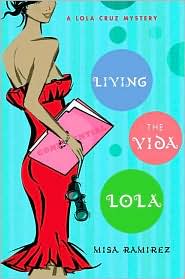
Living The Vida Lola
Misa Ramirez
St. Martin's Minotaur, February 7, 2009

Dolores “Lola” Cruz loves shoes, kung fu, and her job as an underling at Camacho and Associates, a private investigation firm in Sacramento. After a year and a half on the job, her sexy and mysterious boss, Manny Camacho, finally assigns Lola her first big case—a woman’s disappearance. If Lola gets it right, it could mean a big bump up the career ladder. But this is no grocery store stakeout. The woman turns up dead and the same thing could happen to Lola if she doesn’t watch her back.


The Sweet Smell of Home
Leonard F. Chana, Susan Lobo, Barbara Chana
University of Arizona Press, July, 2009

A self-taught artist in several mediums who became known for stippling, Leonard Chana captured the essence of the Tohono O'odham people. He incorporated subtle details of O'odham life into his art, and his images evoke the smells, sounds, textures, and tastes of the Sonoran desert -- all the while depicting the values of his people.

He began his career by creating cards and soon was lending his art to posters and logos for many community-based Native organizations. Winning recognition from these groups, his work was soon actively sought by them. Chana's work also appears on the covers and as interior art in a number of books on southwestern and American Indian topics.

The Sweet Smell of Home is an autobiographical work, written in Chana's own voice that unfolds through oral history interviews with anthropologist Susan Lobo. Chana imparts the story of his upbringing and starting down the path toward a career as an artist. Balancing humor with a keen eye for cultural detail, he tells us about life both on and off the reservation.

Eighty pieces of art -- 26 in color -- grace the text, and Chana explains both the impetus for and the evolution of each piece. Leonard Chana was a people's artist who celebrated the extraordinary heroism of common people's lives. The Sweet Smell of Home now celebrates this unique artist whose words and art illuminate not only his own remarkable life, but also the land and lives of the Tohono O'odham people.

what i'm on
Luis Humberto Valadez
University of Arizona Press, March, 2009

Luis Valadez is a performance poet and his poems shout to be read aloud. It's then that their language dazzles most brightly. It's then that the emotions bottled up on the page explode beyond words. And there is plenty of emotion in these poems. Frankly autobiographical, they recount the experiences of a Mexican American boy growing up in a tough town near Chicago. Just as in life, the feelings in these poems are often jumbled, sometimes spilling out in a tumble, sometimes coolly recollected. Sometimes the words jump and twitch as if they'd been threatened or attacked. Sometimes they just sit there knowingly on the page, weighted down by the stark reality of it all.

José García
put a thirty-five to me
my mother was in the other room
He would have done us both
if not for the lust of my fear

This new Mexican American/Chicano voice is all at once arresting, bracing, shocking, and refreshing. This is not the poetry you learned in school. It owes as much to hip hop as it does to the canon. But Valadez has paid his academic dues, and he certainly knows how to craft a poem. It's just that he does it his way.

i anagram and look and subject to deformation and reconfiguring . . .
it ain't events or blocks that ahm jettisoning through this process
it be layers of meaning, identity, narrative, and ego that gets peeled off
i can only increase my own understanding


Dark Thirty
Santee Frazier
University of Arizona Press, February, 2009

Writing sometimes in dialect, sometimes in gunshot bursts, sometimes in sinuous lines that snake across the page, Santee Frazier crafts poems that are edgy and restless. The poems in Dark Thirty, Frazier's debut collection, address subjects that are not often thought of as "poetic," like poverty, alcoholism, cruelty, and homelessness. Frazier's poems emerge from the darkest corners of experience: "I search the cabinet and icebox -- drink the pickle juice / from the jar. Bologna, / hard at the edges, / browning on the kitchen / table since yesterday. / I search the cabinet and icebox -- the curdling / milk almost smells drinkable."

Dark Thirty takes us on a loosely autobiographical trip through Cherokee country, the backwoods towns and the big cities, giving us clear-eyed portraits of Native people surviving contemporary America. In Frazier's world, there is no romanticizing of Native American life. Here cops knock on the door of a low-rent apartment after a neighbor has been stabbed. Here a poem's narrator recalls firing a .38 pistol -- barrel glowing like oil in a gutter-puddle" --for the first time. Here a young man catches a Greyhound bus to Flagstaff after his ex-girlfriend tells him he has fathered a child. Yet even in the midst of violence and despair there is time for the beauty of the world to shine through: "The Cutlass rattling out / the last fumes of gas, engine stops, / the night dimly lit by the moon / hung over the treetops; / owls calling each other from / hilltop to valley bend."

Like viewing photographs that repel us even as they draw us in, we are pulled into these poems. We're compelled to turn the page and read the next poem. And the next. And each poem rewards us with a world freshly seen and remade for us of sound and image and voice.


Later.

Labels: , , ,

Thursday, January 22

Martín Espada on Barack Obama


Litany at the Tomb of Frederick Douglass
Mount Hope Cemetery, Rochester, New York
November 7, 2008

This is the longitude and latitude of the impossible;
this is the epicenter of the unthinkable;
this is the crossroads of the unimaginable:
the tomb of Frederick Douglass, three days after the election.

This is a world spinning away from the gravity of centuries,
where the grave of a fugitive slave has become an altar.
This is the tomb of a man born as chattel, who taught himself 
to read in secret,scraping the letters in his name with chalk on wood;
 now on the anvil-flat stone a campaign button fills the O in Douglass. 
The button says: Obama. This is the tomb of a man in chains, 
who left his fingerprints on the slavebreaker’s throat so the whip 
would never carve his back again;  now a labor union T-shirt drapes itself 
across the stone, offered up by a nurse, a janitor, a bus driver. 
A sticker on the sleeve says: I Voted Today. 
This is the tomb of a man who rolled his call to arms off the press,
peering through spectacles at the abolitionist headline; now a newspaper
spreads above his dates of birth and death. The headline says: Obama Wins.

This is the stillness at the heart of the storm that began in the body
of the first slave, dragged aboard the first ship to America. Yellow leaves
descend in waves, and the newspaper flutters on the tomb, like the sails
Douglass saw in the bay, like the eyes of a slave closing to watch himself
escape with the tide. Believers in spirits would see the pages trembling
on the stone and say: look how the slave boy teaches himself to read.
I say a prayer, the first in years: that here we bury what we call
the impossible, the unthinkable, the unimaginable, now and forever. Amen.

~~~ Martín Espada


xxxxxxxxxxxxxxxxxxxxxxxxxxxxxxxxxxxxxxxxxxxxxxx

Tips for Better Life

1. Take a 10-30 minutes walk every day. And while you walk, smile.
2. Sit in silence for at least 10 minutes each day.
3. Sleep for 7 hours.
4. Live with the 3 E's -- Energy, Enthusiasm, and Empathy.
5. Play more games.
6. Read more books than you did the previous year.
7. Make time to practice meditation, yoga, and prayer. They provide us with daily fuel for our busy lives.
8. Spend time with people over the age of 70 & under the age of 6.
9. Dream more while you are awake.
10. Eat more foods that grow on trees and plants and eat less food that is manufactured in plants.
11. Drink plenty of water.
12. Try to make at least three people smile each day.
13. Don't waste your precious energy on gossip.
14. Forget issues of the past. Don't remind your partner with his/her mistakes of the past. That will ruin your present happiness.
15. Don't have negative thoughts or things you cannot control. Instead invest your energy in the positive present moment.
16. Realize that life is a school and you are here to learn. Problems are simply part of the curriculum that appear and fade away like algebra class but the lessons you learn will last a lifetime.
17. Eat breakfast like a king, lunch like a prince and dinner like a beggar.
18. Smile and laugh more.
19. Life is too short to waste time hating anyone. Don't hate others.
20. Don't take yourself so seriously. No one else does.
21. You don't have to win every argument. Agree to disagree.
22. Make peace with your past so it won't spoil the present.
23. Don't compare your life to others'. You have no idea what their journey is all about. Don't compare your partner with others.
24. No one is in charge of your happiness except you.
25. Forgive everyone for everything.
26. What other people think of you is none of your business.
27. However good or bad a situation is, it will change.
28. Your job won't take care of you when you are sick. Your friends will. Stay in touch.
29. Get rid of anything that isn't useful, beautiful or joyful.
30. Envy is a waste of time. You already have all you need.
31. The best is yet to come.
32. No matter how you feel, get up, dress up and show up.
33. Do the right thing!
34. Call your family often.
35. Your inner most is always happy. So be happy.
36. Each day give something good to others.
37. Don't over do. Keep your limits.
38. Share this with someone you care about


Lisa Alvarado

Labels: , , , , ,

Wednesday, January 21

Voces


A Message from Adriana Dominguez

VOCES


Dear Friends:

Happy New Year! As some of you may already know, I've launched a bilingual blog to promote Latino authors and books called VOCES (see web address below). The idea started with an invitation to a local Univision news show to recommend Spanish language books as Christmas gifts, and grew from there. (I've posted the video on the blog.)

The following is my first post and "Welcome" message on the site:

Welcome!/¡Bienvenidos!
I've created this blog with one goal in mind: To provide you with a place to read about Latino authors, their books, and news related to the Latino book market (with a special emphasis on the Latino children's market). We write and speak in two languages, often seamlessly switching between the two, hence, this blog will sometimes switch from English to Spanish, depending on the source of the content. Latino authors, publishers, agents, booksellers, journalists, this is your blog too; I encourage you to participate by sending me your news, events, releases, anything you'd like to let others know about. The name of this blog does not only refer to Latino authors, but to our collective effort in using our "voices" to promote the work of Latino authors and books. This is a work in progress, and I look forward to your feedback to help me make this the place where Latino authors and books are the #1 priority. I hope that you will join me on this wonderful new journey. Saludos!

"Caminante, no hay camino, se hace camino al andar..."—Antonio Machado


Although the blog is still a little "green," the initial response has been wonderful, in both languages! Univision viewers wrote me to thank me for guiding them through the sometimes complex process of finding and learning about Spanish language books in the U.S., and for promoting reading on television, something not often done. Colleagues have offered to help in any way they can, and a few have already linked up to to the blog from their websites. I have a couple of author interviews lined up as well, and plans to develop a series to guide aspiring Latino authors through the process of getting published, and beyond. And I am of course open to any ideas that you may have!

Saludos,
Adriana

http://adrianadominguez.blogspot.com


This is a great way to call Lotería

Yesterday, I was checking Lotería's videos on You Tube and I found this hilarious video. I had heard many ways to call Lotería and the guy on the video is the king! If you have a loteria's card grab it. Find some frijoles and play the game. Be ready to laugh!


Labels: , , ,

Tuesday, January 20

Review: The Accidental Santera

"Irete Lazo." NY: Thomas Dunne Books, 2008.
ISBN: 978-0-312-38188-2


Michael Sedano

That's not this author's real name, according to the inside flap of the dust jacket of this interesting novel. The photo of a smiling brown-skinned woman may be Lazo or quién sabe who. "Lazo" in her not pseudonym worked as a scientist, print journalist, announcer  for NPR, and santera. 
And there's the rub. The Accidental Santera describes an agnostic experimental scientist's religious conversion from lapsed Texas Catholic to priestess of the Cuban-Afro religion called Santeria. 

Santeria informs many a novel. From cultural allusions in such work as Leonardo Padura's Havana colors series, to the more typical scary elements of such novels as Alex Abella's scary The Killing of the Saints.

Perhaps owing to the horror-story character of the religion, "Lazo" elects to cloak her actual identity behind that pseudonym. Just as her character, a San Francisco State University professor does.

La Profesora works happily with her third-world students out of an obligation to bring people of color into the racist, sexist, deeply biased world of the hard sciences.

But other than that happiness, the first person narrator is dismal. She and her scientist husband have grown estranged, partially as a result of three miscarriages and their failure to conceive. But he's become an insensitive clod, and she drinks too much. Her BFF, another Latina scientist, offers a comforting shoulder to cry on, as well as a solid point of reference for Gabi's--our narrator--sense of estrangement from her own Latinidad.

Gabriella's crises of culture, relationship, faith, and faithfulness, come to a head at a New Orleans scientific conference. Drinking too much, she picks up a good-looking scientist at the conference party and allows herself to be pulled to the brink of adultery, until too many margaritas drive her to a toilet bowl to puke out her guts.

Having come to this head-spinningly low point in her life, Gabi sits for a santero's reading of the bones at Marie Laveau's voodoo shop, setting Gabi off on a search for identity that eventuates in her initiation as a santera of The Religion.

Stripped to these outlines, The Accidental Santera offers a fulfilling story of academic political bullshit, marriage, fertility, family, and friendship. Less arresting is the author's drive to explain her conversion to Santeria, which requires the novel to assume a pedagogical voice explaining the various terms and personages of The Religion--as Santeria is referred by adherents. Also less involving is the author's--or her editor's--insistence on appositional translation. Say something in Spanish and have it in English in the next clause. Worse, the translation is almost always literal, none of the fun with expression seen in such work as Houston, We Have a Problema. Fortunately, the "Lazo" resists the temptation to use a lot of Spanish but instead tells us a character speaks in Spanish.

Despite these flaws, or perhaps because of them, the novel is an enjoyable reading experience. And, given the allusions to Santeria in so many other novels, The Accidental Santera--including its glossary--will fill several gaps in many a reader's knowledge.

Free Houston, We Have A Problema

After I reviewed Gwendolyn Zepeda's chiclit title, Houston, We Have a Problema, the publisher offered a free copy to the first five La Bloga readers who requested a copy. And that's exactly what La Bloga was happy to do for these friends:

Randy Zuniga
Stanton, Ca

Lauren Bogenberger
Odenton MD

Arnoldo Mata
Pharr TX

Amy Mascareñas
Watsonville, ca

George Luna-Peña
Washington DC 20036

Congratulations to our five friends! I hope they'll read and enjoy the title and send in their own review of the novel, or pass along their copy to other readers to share in the experience.

Know that La Bloga welcomes your reviews of books reviewed here, or other titles that merit La Bloga's attention. Be La Bloga's guest by leaving a comment, or click here to get more information about your invitation to be a La Bloga guest columnist.

Arroba, arroba, arroba.

Last week, La Bloga's Thursday columnist, Lisa Alvarado, introduced Damian Baca's [Mestiza Mestizo] Scripts, Digital Migrations, and the Territories of Writing. Rather than spelling out the feminine and masculine noun forms of the title, Baca elected using the nonsense @ marker to designate both genders. I complained and a commenter with the handle Quetzal, presumably Baca himself, blamed some gente at UC Berkely for the orthography, averring the unpronounceable spelling offers some version of gender inclusivity. 

I disagree. Vehemently. For me, this arroba represents someone's cute idea gone wild. I see the usage as laziness, at best. As I complained, how does a reader pronounce that perversion? Chicanat? Chicanarroba? In any event, the spelling doesn't say what the writer intends, so it's simply an error.

Chicana Chicano writers express inclusivity by writing inclusively. Only slightly less huevón is the -a -o abbreviation, as in "Latina/o", which Quetzal acknowledges as similarly unpronounceable, and characterizes as a "landmine." Sheesh, gente. When approaching a landmine, the only sensible strategy is go around. I'd say that's a safe rule, ¿que no?

Hay les wachamos, folks. Happy inauguration.

Believe It.

When I was a kid, the legal voting age was 21. So I was already in grad school my first presidential election. 1968. Gene McCarthy was my man.

I remember. Bobby and Hubert. Riots in Chicago and Miami. Law and ordure Nixon’s Southern Strategy plays on racial divisions to solidify the still-solid GOP South. Thanx, Dick. In ‘68, Nixon drafts my ass out of grad school. Dick Cheney and Bill Clinton stay home.

You go. Yes you can.

I remember my parents' bitter disappointment when a real estate agent phones us the evening we’d bought a new house. The offer rescinded because Mexicans not allowed to live in that neighborhood.

No you can't.

I remember 4th grade, playing violin for the Superintendent of Schools who pats my head with his greatest compliment, “You are a credit to your race.”

No you can't.

I remember 5th grade, we buy a house and I enroll in a new school. The first week an invitation to a girl's birthday party. Wow, I am amazed that some people rent the entire roller rink—I’d never been inside--to hold private parties. Then the girl phones me and tells me I’m disinvited--Mexicans not allowed in the roller rink on Saturday mornings.

No you can't.

I remember photos and television images, cops using fire hoses to knock people down, attack them with dogs, club them to the ground, because they want to vote.

No you can’t.

I remember bombs. Schwerner. Chaney. Goodman. Evers. QEPD. Troops to open schoolhouse doors.

No you can't.

I remember incredulous men and women peppering me with questions, "What are you?" "Where is your father from?” “What language do you speak at home?" then denying I could possibly be, because I win speech contests.

No you can't.

I remember, all gussied up for fraternity rush, the curious stares from the guys. Why was I bothering? Not welcome.

No you can't.

I remember a voice on television telling me Barack Obama surpasses 270 Electoral Votes and is the 44th President of the United States of America.

Yes we can.

Labels: ,

Monday, January 19

The Meaning of the Martin Luther King, Jr. Holiday

By Coretta Scott King

[from The King Center 's website]

The Martin Luther King, Jr. Holiday celebrates the life and legacy of a man who brought hope and healing to America. We commemorate as well the timeless values he taught us through his example -- the values of courage, truth, justice, compassion, dignity, humility and service that so radiantly defined Dr. King’s character and empowered his leadership. On this holiday, we commemorate the universal, unconditional love, forgiveness and nonviolence that empowered his revolutionary spirit.

We commemorate Dr. King’s inspiring words, because his voice and his vision filled a great void in our nation, and answered our collective longing to become a country that truly lived by its noblest principles. Yet, Dr. King knew that it wasn’t enough just to talk the talk, that he had to walk the walk for his words to be credible. And so we commemorate on this holiday the man of action, who put his life on the line for freedom and justice every day, the man who braved threats and jail and beatings and who ultimately paid the highest price to make democracy a reality for all Americans.

The King Holiday honors the life and contributions of America’s greatest champion of racial justice and equality, the leader who not only dreamed of a color-blind society, but who also lead a movement that achieved historic reforms to help make it a reality.

On this day we commemorate Dr. King’s great dream of a vibrant, multiracial nation united in justice, peace and reconciliation; a nation that has a place at the table for children of every race and room at the inn for every needy child. We are called on this holiday, not merely to honor, but to celebrate the values of equality, tolerance and interracial sister and brotherhood he so compellingly expressed in his great dream for America.

It is a day of interracial and intercultural cooperation and sharing. No other day of the year brings so many peoples from different cultural backgrounds together in such a vibrant spirit of brother and sisterhood. Whether you are African-American, Hispanic or Native American, whether you are Caucasian or Asian-American, you are part of the great dream Martin Luther King, Jr. had for America. This is not a black holiday; it is a peoples' holiday. And it is the young people of all races and religions who hold the keys to the fulfillment of his dream.

We commemorate on this holiday the ecumenical leader and visionary who embraced the unity of all faiths in love and truth. And though we take patriotic pride that Dr. King was an American, on this holiday we must also commemorate the global leader who inspired nonviolent liberation movements around the world. Indeed, on this day, programs commemorating my husband’s birthday are being observed in more than 100 nations.

The King Holiday celebrates Dr. King’s global vision of the world house, a world whose people and nations had triumphed over poverty, racism, war and violence. The holiday celebrates his vision of ecumenical solidarity, his insistence that all faiths had something meaningful to contribute to building the beloved community.

The Holiday commemorates America’s pre-eminent advocate of nonviolence --- the man who taught by his example that nonviolent action is the most powerful, revolutionary force for social change available to oppressed people in their struggles for liberation.

This holiday honors the courage of a man who endured harassment, threats and beatings, and even bombings. We commemorate the man who went to jail 29 times to achieve freedom for others, and who knew he would pay the ultimate price for his leadership, but kept on marching and protesting and organizing anyway.

Every King holiday has been a national "teach-in" on the values of nonviolence, including unconditional love, tolerance, forgiveness and reconciliation, which are so desperately-needed to unify America. It is a day of intensive education and training in Martin’s philosophy and methods of nonviolent social change and conflict-reconciliation. The Holiday provides a unique opportunity to teach young people to fight evil, not people, to get in the habit of asking themselves, "what is the most loving way I can resolve this conflict?"

On the King holiday, young people learn about the power of unconditional love even for one's adversaries as a way to fight injustice and defuse violent disputes. It is a time to show them the power of forgiveness in the healing process at the interpersonal as well as international levels.

Martin Luther King, Jr. Day is not only for celebration and remembrance, education and tribute, but above all a day of service. All across America on the Holiday, his followers perform service in hospitals and shelters and prisons and wherever people need some help. It is a day of volunteering to feed the hungry, rehabilitate housing, tutoring those who can't read, mentoring at-risk youngsters, consoling the broken-hearted and a thousand other projects for building the beloved community of his dream.

Dr. King once said that we all have to decide whether we "will walk in the light of creative altruism or the darkness of destructive selfishness. Life's most persistent and nagging question, he said, is `what are you doing for others?'" he would quote Mark 9:35, the scripture in which Jesus of Nazareth tells James and John "...whosoever will be great among you shall be your servant; and whosoever among you will be the first shall be the servant of all." And when Martin talked about the end of his mortal life in one of his last sermons, on February 4, 1968 in the pulpit of Ebenezer Baptist Church, even then he lifted up the value of service as the hallmark of a full life. "I'd like somebody to mention on that day Martin Luther King, Jr. tried to give his life serving others," he said. "I want you to say on that day, that I did try in my life...to love and serve humanity.

We call you to commemorate this Holiday by making your personal commitment to serve humanity with the vibrant spirit of unconditional love that was his greatest strength, and which empowered all of the great victories of his leadership. And with our hearts open to this spirit of unconditional love, we can indeed achieve the Beloved Community of Martin Luther King, Jr.’s dream.

May we who follow Martin now pledge to serve humanity, promote his teachings and carry forward his legacy into the 21st Century.

◙ Many good people have been fighting for Dr. King's dream in different ways. One such group of people created Community Lawyers, Inc., a nonprofit organization that was incorporated in May 2005 by R. Vanessa Alvarado and Luz E. Herrera. As explained in its website:

Community Lawyers, Inc. was formed to formalize mentoring opportunities for first-generation pre-law and college students to expose them to opportunities in, and challenges of, the legal profession and the needs of low- and moderate-income clients. The precursor to Community Lawyers was an informal internship program facilitated by Luz E. Herrera in her law office for young lawyers, law students and college students interested in going to law school. Between May 2002 to May 2005, approximately a dozen new and future attorneys sought Ms. Herrera's assistance for work and practical experience. Although still in its infancy, the organization seeks to create a pipeline for quality, ethical and affordable attorneys who are responsive to the needs of the communities they serve.

Community Lawyers is proud to announce the upcoming opening of the COMMUNITY LEGAL ACCESS CENTER located at 1216 E. Compton Blvd., Compton, California 90221.

DATE: January 30, 2009

TIME: 5:00p.m. - 7:00 p.m.

Stop by for a cup of coffee sponsored by Antigua Coffee House and a tasty dessert sponsored by Narver Insurance and prepared by Chef Luz. For more information and to contribute please contact us at (310) 635-8181.

[Pictured: Community Lawyers, Inc.'s 2008 Summer Interns.]

◙ Over at the El Paso Times, Sheryl Luna reviews Suzanne Frischkorn's Lit Windowpane (Main Street Rag) which she calls a "tight collection of poems that speaks to the beauty of the natural world, as well as the relationships between individuals." Luna continues:

Suzanne Frischkorn's poems are often compact, well controlled, yet playful linguistically and thematically. This collection is engaging on multiple levels with its multilayered meanings and careful attention to language.

***

These poems are often syntactically innovative. They also are lyrically attentive to the ear, short and well-controlled, yet playful and imaginative. Themes of love, sorrow, nature and awareness run throughout.


To read the entire review, go here. Sheryl Luna, an El Paso native and award-winning poet, is the author of Pity the Drowned Horses (University of Notre Dame Press).

◙ Al Martinez's last column appears in today's Los Angeles Times. I'll let Al speak for himself...read the column here.

◙ That’s all for this week. Tomorrow will be a wonderful day as our new President is sworn in; I hope you will have a chance to watch the ceremonies and, perhaps, join in with the festivities (even from afar). Remember: ¡Lea un libro!


Saturday, January 17

It's my fiesta and I'll cry if I want to.

You know that stereotype about how we Latinos are overly emotional people? As is usually the case with stereotypes, it's just not true. Not in the case of my family, anyway. But with one glaring exception. I remember one balmy summer evening when I went to go see "The Joy Luck Club" with my mother, the perfect mother-daughter bonding film. By the end of the exceptionally touching movie, I was sobbing so hard we had to wait until the other patrons had left the theatre and I had wiped the trails…nay, four-lane highways, of mascara off of my cheeks. My mother just sat and stared from the seat next to me.

"Why do you do this to yourself?" she inquired.

"What do you mean?" I asked sniffling into the thirtieth tissue.

"I mean, if you know films like this do this to you, why would you put yourself through this?"

I just gaped at her. She really didn't get it. "Going through this" was exactly why I went to films. To feel, to think…to cry. "Mom," I attempted to explain, "I enjoy expressing my emotions! It was a wonderful touching movie and I am just honoring it!"

She shook her head and sighed. "Emotions like that are signs of weakness."

I glared back at her with fury.

"You have the same feelings, mother," (I always called her mother when I was angry, like she always used my middle name when she was pissed at me), "you just bury them and they come out in bad health. THAT is a sign of weakness!" The argument went on as we left the theatre and walked up Seventh Avenue, our raised voices echoing off the closed storefronts.

I have since had this same "discussion" with many people, mostly men, but all ending with the same "agreeing to disagree" conclusion. I just don't get it. I love to cry, laugh, yell, and express pretty much every emotion that blows through my psyche. There is such a feeling of relief to let them out, to guffaw in public or, yes, sob. A colleague and I were actually shooshed at an outdoor university gathering for laughing out loud. Yet people like my mother feel that bottling up is the best option. Hell, I'm not sure where my cap even is, so bottling is out of the question for me.

And how do I feel this differs from gender to gender? Personally I don't think there's much sexier than a man who can cry. I mean really, there is a time and a place for the, “Oh come on! Suck it up and deal!” attitude, but there are other occasions that beg for a tender expression of emotions, and I don’t just mean funerals. Though my husband is literally the strongest person I’ve ever met, he cried at the birth of our son, Carlos, and I have never loved him more. However when Carlos broke his wrist and I was away at a writers’ residency, I knew that he was the best parent for the situation. Though I am clearly better at the empathy side of parenting, our son really needed his father’s, “Okay, cry for awhile, then suck it up and deal” type of crisis management. If I had been there I fear my husband just would have been taking care of us both as I am never more emotionally raw than when it comes to my kid. But in general it serves me quite well in parenting and the rest of my life. I get as excited as Carlos does when we go to the Champlain Valley Fair, or the new Harry Potter book comes out. When I cry, he holds me. When he cries, I hold him. And we laugh…God we laugh…

So go ahead and bury the emotions my friends, stiffen your upper lip when Bambi's mother is killed and titter into your hand at the latest Jib Jab short, but I'll be a few rows back sobbing and guffawing with the other "overly emotional" folk. All I ask is that you don't make judgments about the strength of our personalities based on our display of emotions. You might be surprised just how tough we cry babies turn out to be.

Friday, January 16

Bless Me, Ultima - The Play

ANAYA'S CLASSIC FINALLY ON STAGE


Just this week I received this exciting message from our friends at El Centro Su Teatro:

For the first time ever, Rudolfo Anaya’s original script, Bless Me, Ultima, based on his beloved 1972 novel, will be presented on stage. And who will be bringing you this landmark work? Who else? Your favorite Chicanos! (Okay, okay—your second favorite?) Denver’s most colorful theater company (36-years-old and still going strong)—Su Teatro! Bless Me, Ultima captures the magic of childhood with poetic elegance. Torn between his mother’s earthy farming family and his father’s wild vaquero brothers, young Antonio finds a wondrous middle ground in his relationship with the wise old curandera, Ultima. Su Teatro’s workshop production of Bless Me, Ultima opens on February 12. Stay tuned for more details, including a great way for you and your family to get involved. Or give us a call now: (303) 296-0219.

In line with the presentation of the play, I'll repeat a message I posted a few weeks ago regarding the Amatl Project, which is tied in with Su Teatro and Rudolfo Anaya's work.

THE AMATL PROJECT
John-Michael Rivera, Creative Director of the Amatl Project, sends our readers the following message encouraging contributions to a literary project scheduled for April, 2009. This sounds unique and full of possibilities - give it some serious thought. You should contact John-Michael for details about submitting your contribution.

Dear Folks,

For those of you who do not know me, I am John-Michael Rivera, an Associate Professor of English at CU Boulder and Creative Director of The Amatl Project, a center for the cultivation of Latina/o Arts and Literacy.

The Amatl Project grew out of EL Laboratorio, which was an award winning Latino Literary arts space that held innovative Literary Salons in 2007-2008 and worked closely with The LAB at Belmar, Arte Público Press, and the University of Colorado at Boulder's Creative Writing Program. We are continuing our programs with Latina/o artists and facilitating Literary Salons, but now we are adding important dimensions: we are working with El Centro Su Teatro in Denver and will add Latina/o literacy to our programming elements. I am currently working with El Centro Su Teatro and this year's NEA sponsored Big Read.

Making sure that Latina/o literature and culture are highlighted nationwide, we plan this year to create programs and honor the work of Rudolfo Anaya.

We are writing you all to ask that you contribute to a creative project that will take place during the 11th Annual Pablo Neruda Literary and Poetry Festival in Denver, Colorado on April 16th, 17th and 18th. At this festival, we will have a digital and live-action literary salon made up of writers, scholars and artists who have engaged or been influenced by Rudolfo Anaya's work in the broadest sense. We are looking for essays, poems, short stories, graphic novels, documentaries, and other creative work that responds to Anaya's long career as a writer.

Your contribution will, in part, serve as the basis for a literacy project with high school students in the Rocky Mountain area who have historically been left behind in literacy projects or have not had a chance to engage Latina/o artists and scholars at their own schools. The Amatl Project will work closely with teachers and students, and your contributions will serve as models for their own writing. Through your creative or critical work, we will help students find their own voices and begin their life long passion for writing.

The deadline is March 15th, on The Ides of March, and selected works will be posted on La Bloga and will be highlighted at our live performances held at El Centro Su Teatro in April, the weeks leading up to and during the Neruda Festival. If you are in the area, you will also be invited to read or perform at this event. I am also currently in conversation with three publishers who are interested in publishing a book length manuscript that may emerge from this project. This is the first of many literary salons and live blogs we will be sponsoring. Please stay tuned. Thanks for your time and if you have any questions please contact me at anayaproject@suteatro.org.

Con Respeto,
John-Michael Rivera
Creative Director, The Amatl Project

BOOK REVIEW
The Examined Life: A Gil Rodrigues Mystery
Virgil Jose

Yellowback Mysteries, 2007

Crimespree Magazine’s review of this book said that The Examined Life is a "small gem that deserves to be dug out of the thousands published every year." The reviewer concluded that “well-drawn characters and convoluted plot lines create a pleasurable reading experience.” I agree, but let me elaborate.

Jose manages to present the characters in this private eye novel (the author’s first published work of fiction) as distinct individuals. The protagonist, Gil Rodrigues, is a Vietnam vet, widower, and a private eye. The year is 1987 and most of the action takes place in and around Los Angeles. Rodrigues does mostly insurance work, jobs like making sure that an accident victim really is injured, or checking on a business bank account to look for missing funds - that kind of mundane, routine stuff. He’s in a relationship with Diana, a beautiful Chinese American who struggles with a conflict between wanting to escape the “old ways” of her family and her need for the security of tradition. She wants to “make it” and Gil is just along for the ride. Gil is Portuguese but he spends a lot of time with the Chinese community – his best friend is David Chang (Diana’s brother); the cops who eventually become involved in the caper are Latino and Asian; some of the bad guys are also Asian. So there is a good mix in this book of unusual personalities and color. I wish there had been more about the cultural traditions and customs of the characters, but the author doesn’t spend a lot of time with those kinds of details. However, I may be wishing for the kind of details that other mystery readers object to as getting "in the way" of the mystery. This is a detective novel, after all.

The plot centers on the murder of David, which turns Gil’s world upside down. David’s daughter, Sabrina, asks Gil to investigate the killing. She’s not satisfied with the official police version that David was the victim of a carjacking gone bad. She tells Gil that David had been “acting very odd” the past few days.

Gil gets right into the case even though Lieutenant Steve Hara of the LAPD tells him not to play "TV private eye" and that interfering with an investigation of a capital crime could cause him nothing but trouble. But Gil's loyalty to David and David's family drives him forward.

Gil’s investigation affects his relationship with Diana. It requires that he dig deep into David’s life and learn things he didn’t really want to know about his friend. Eventually it places Gil in the same danger that his friend faced. Along the way, Gil meets uptight police detectives; shady and mysterious “businessmen” from China who don’t seem to really work; a retired CIA operative; and other assorted characters that point Gil toward an international conspiracy involving diplomatic immunity, smuggling, and political intrigue.

As Crimespree said, this is a pleasurable reading experience. I should point out that this book is not noir or hard-boiled (what I usually read). The violence, for the most part, is off the page, there isn’t a lot of private eye angst, and the book’s conflict plays out for the reader without many unexpected twists or turns. Jose’s first book is a good start, and I expect that his future books about his private eye will be more developed in terms of character analysis, a bit more mysterious, and maybe with more of an edge.

Later.

Labels: , , ,

Thursday, January 15

Damián Baca, Scripts for Liberation


Damián Baca works at the intersection of rhetoric, comparative writing systems in Mesoamerica/later America, and globalization. Generally, he looks to cultures in Latin America, the Caribbean, and U.S. Latinidad as a lens through which to complicate and inform two correlative domains of inquiry:

1) The disciplinary formation of the study of alphabetic writing as it emerges during a crucial period of Western territorial annexation, and

2) The imperial complicity between "racialized" subjectivites and economy, from the development of the transatlantic commercial circuit in the sixteenth century to the present stages of global capitalism.

Baca is especially interested in the rhetorical potential of post-Occidental reason - an invitation to theorize with, against, and beyond inherited patterns of thinking that emerged in Western Europe under capitalism. In place of merely challenging the Western Rhetorical tradition from a so-called "alternative" cultural locus, his work examines how and why the current study of Rhetoric and Composition becomes an unquestioned alternative to the immense global plurality of communicative forms and knowledges that remain obscured. He perceives these inquiries as having substantial implications for the politics and ethics of research, teaching, and curricular reform.

Author Bio:


Damian Baca, assistant professor of English at the University of Arizona, earned his Ph.D. from Syracuse University in 2006. He is a member of the National Council for Teachers of English (NCTE) and serves on the council's Committee Against Racism and Bias in the Teaching of English.

Baca is a recipient of the NCTE Cultivating New Voices among Scholars of Color scholarship, and was supported by the Ronald E. McNair Post-Baccalaureate Achievement Program during his years as a graduate student. His research and teaching areas include Chicano Chicana Rhetoric & Poetics, Comparative Technologies of Writing, Rhetorics of Mesoamerica/Colonial Mexico and the U.S./Mexico Border, Globalization, Colonial/World-Systems Analysis, Digital Humanities, and Ancestral Literacy.

Baca is author of Mestiz@ Scripts, Digital Migrations, and the Territories of Writing (New Concepts in Latino American Cultures Series) Palgrave Macmillan, 2008. He is also lead co-editor of Rhetorics in the Americas: 3114BCE to 2012CE with Victor Villanueva, scheduled for publication in late 2009.

He is currently preparing his third manuscript on pedagogical resistance to inherited patterns of thinking that emerged in Western Europe under capitalism.
A native of New Mexico and descendant of Sephardic Crypto Jews (primarily through his matrilineal line, Espinosa), Baca regularly conducts research at the National Hispanic Cultural Center Foundation and numerous other locations throughout the region. Additional information is about Baca is available at http:/u.arizona.edu/~damian.


2008 Palgrave Macmillan Press Release for Mestiz@ Scripts, Digital Migrations, and the Territories of Writing:

Conventional scholarship on written communication positions the Western alphabet as a precondition for literacy. Thus, pictographic, non-verbal writing practices of Mesoamerica remain obscured by representations of lettered speech. This book examines how contemporary Mestiz@ scripts challenge alphabetic dominance, thereby undermining the colonized territories of "writing." Strategic weavings of Aztec and European inscription systems not only promote historically-grounded accounts of how recorded information is expressed across cultures, but also speak to emerging studies on visual/multimodal education. Baca argues that Mestiz@ literacies advance "new" ways of reading and writing, applicable to diverse classrooms of the twenty-first century.

La Bloga's discussion with Damian Baca

How would you describe your career arc?

I trace my present inquiries back to my training and experience in graduate school. The teaching of college writing is a practice that is claimed by Rhetoric and Composition, a discipline within the larger field of English Studies. On one hand, the discipline focuses most of its attention on writing activities in controlled academic spaces with histories firmly embedded in the thinking of ancient Athenians, Roman imperialists, Aryan-Germanic philosophers, and descendants of Puritan immigrants. On the other hand, Rhetoric and Composition proclaims that writing is more or less a life-long activity that is relevant in multiple ways and for multiple cultural situations. So a notable predicament arises -- how can scholars make authoritative claims about (and thus teach) the "diversity" of writing while simultaneously surrendering to an outdated and culturally provincial historical fantasy?

My point of departure from the discipline has become two-fold. First, while the discipline's governing gaze remains fixed upon a linear "Greece>Rome>Europe>North America" global trajectory, I'm committed to questioning pre- and post- conquest legacies on our own continent. While conventional academics theoretically look back across the Atlantic to the West and Europe, I aim to think from the South, from Mesoamerica, colonial Mexico, and the U.S./Mexico borderlands. And not surprisingly, Rhetoric and Composition is structured upon the largely unquestioned ideology that Western Roman alphabetic symbols comprise the foundation of writing and literacy. But this is not my foundation.

Indeed, our continent tells an "other" narrative, one of a plurality of graphic marks that produce Olmec calendrics, Maya hieroglyphs, Aztec pictographs, Inca quipu knotted cord systems, Chicana Chicano iconography, and Zapatista digital communications. A truly hemispheric and global plurality provides precisely what Rhetoric and Composition experts have yet to grasp: historically-sound and theoretically grounded accounts of multiple and conflicting writing systems in the Americas, the Caribbean, and beyond. I believe such accounts foster perspectives that are better suited for our contemporary world problems of perpetual warfare, territorial occupation, economic exploitation and systemic poverty, and the politics of communication across cultural borders.

Why this area of study?

Good question. Why study and teach writing? My interest is driven by a conviction that critical agency and justice cannot emerge from a single overarching rhetorical tradition upon which all civilizations across the globe must follow. In this spirit, I practice and teach writing as a political and creative art, an art that involves building theoretical frameworks, analyzing and developing concepts, and thinking beyond the sentence-level to critically reflect upon larger, underlying structures. This is why instead of "teaching writing as production" or "teaching texts as consumption," I tend to think in terms of teaching through inquiries associated with legacies of conquest and resistant discourses that challenge global powers of our day.

A series of interlocking life-changing events, from the colonial break-up of the Ottoman Empire and the Balfour Declaration of 1917 to Al-Qaeda attacks of September 2001 complicate --among other things-- isolationist narratives that recast Western civilization as separate from the world rather than part of it.

The political and ethical potential of my work, I hope, might provide
space for enlarging the harmfully narrow frameworks that academics use to study and teach written language and literacy. In addition to an increased awareness of, for example, transnational migrations, fundamentalist faith systems, and multinational corporations, a more global concept of writing might likewise call into question the foundations of the humanities and social sciences.

When and where do the Americas and the Caribbean become literary, literate, and rhetorical? According to whom and with whose definitions? Should North Atlantic imperialism dictate the historical and creative imaginary of the rest of the world? I prefer looking to wider geographic, temporal, and cultural contexts for rethinking hemispheric and world history. Building a wide-angle transatlantic view is helpful in teaching beyond the provinces of Athens, Western Europe, Massachusetts Bay, the British colonies, and toward a global past and global present.

How are writing technologies and disciplinary lenses
already embedded within transnational processes of oceanic trade, migration, and industrialization? How can writing specialists better understand the plurality of writing systems, empires, and trade networks that thrived in
the
Western Hemisphere long before European occupation? How have these earlier commercial networks set the stage for our current era of technoglobalism, human trafficking, and unregulated capitalist expansion? As a teacher, these inquiries impact multiple scenes of learning, teaching, and institutional leadership, from hallway conversations to seminars, from faculty search committee meetings to conference presentations. The classroom is merely one space where learning,teaching, and writing happen.

What is the significance of specific constructs of language in Chicano contexts?

There are so many writers who've influenced my thinking about language and rational thought. Lucha Corpi, Sandra Mar?a Esteves, E.A. Mares, Rosaura S?nchez, Ben S?enz, Aurora Levins Morales, Demetria Martinez, José Antonio Burciaga, Manuel Mu?oz, Laura Pérez, and numerous others. The late Gloria Anzald?a and her groundbreaking Borderlands/La Frontera: The New Mestiza also comes to mind. Borderlands adds significantly to our understanding of Chicana Chicano politics of language, I think, by advancing a new strategy of imagination and invention?the critical invention between multiple discourses and the memories that are embedded in those discourses. Mexican Spanish, Spanglish, Cal? and Pachuquisma, Tex-Mex, English variations, Nahuatl fragmentations, Espa?otli.

I see this intervention as a powerful rhetorical
tactic, but one that is often confused with the mere encounter between different cultures and worldviews. Numerous writers have shown that Chicana Chicano discursive experiences are far more complex than this. For example, Anzald?a employs nepantla as a concept of borderland thinking. Nepantla, which can translate as "the space between two oceans," is a Nahuatl expression coined in the early sixteenth century in the aftermath of European invasion, rape, genocide, and conquest. The first generation of children from Mesoamerican mothers and Iberian fathers recognized that "authentic" pre-European ways of life were impossible to recover. At the same time, the Spanish colonial world of brutal Christianization was not a suitable alternative.

Nepantlism,
then, is a strategy of thinking and speaking from a border space through multiple kinds of expressions and oppositions. Inventing and communicating from nepantlism, suspended between paradoxical frames of reference, was first a possibility in the mind of the Mesoamerican, not the Spaniard. Both worlds experienced and negotiated cultural difference and linguistic "diversity," yet the Spanish colonial administration had no equivalent to the Nahuatl nepantla. Anzald?a's border thinking is a distinct articulation that emerges from the underside of colonization, from the perspectives of the subjugated and silenced. These Chicana Chicano articulations undermine and revise Western conventions of communication by enacting "new" memories, subaltern recollections in which splintered Mesoamerican and other language practices are strategically reconfigured and embroidered within our post-Columbian world of colonial and global power. Moreover, our culture has no need to accept either/or linguistic binaries. Anzald?a, like so many others in our community, reveals U.S. linguistic assimilation debates for what they are?outmoded ideas and false dilemmas.

What are some future areas of study?

In early 2009 I'll complete a book project I've had in mind for a few years now, Rhetorics of the Americas: 3114BCE to 2012CE, an edited manuscript under contract with Palgrave Macmillan. I believe this will be a groundbreaking collection, the first of its kind, as it extends the culturally provincial study of Western Rhetoric into an introduction to pre-Columbian rhetorics of the Americas. The book addresses an understanding of discourse meant to persuade within Pre-Columbian civilizations; that is, in presenting the rhetoric that coincided with but was not influenced by Greco-Latin ones.

Each
contributor provides glimpses into what those indigenous rhetorics might have looked like, how they are tied to culture and conquest and, perhaps most importantly, how their influences remain.

The collection brings together
scholars from Rhetoric, American Indian Studies, American Studies, Mesoamerican and Latin American Studies, Art History, and Comparative Spanish Literatures, among other disciplines. I approached Victor Villanueva, Director of American Studies at Washington State University, to step in as co-editor for the project. Victor?s an amazing person and an award-wining scholar whose contributions to Rhetoric and Composition studies are too numerous to list here. I'm blessed to be working with him, and blessed to work with such a wonderful group of scholars.

Lisa Alvarado

Labels: , , , ,

Wednesday, January 14

Books about Martin Luther King Jr. in English and Español

Here is a list of books to celebrate Martin Luther King Jr. Day on January 19. Go to your favorite library or bookstore. Enjoy! ¡Diviértete!

Celebrate Martin Luther King, Jr. Day with Mrs. Park's Class
Celebra El Dia De Martin Luther King Jr. Con La Clase De La Sra. Park

By Alma Flor Ada & F. Isabel Campoy

The students in Mrs. Park’s class prepare to celebrate Martin Luther King, Jr. ‘s Day by thinking about the values he taught. Contains an informative section on Martin Luther King, Jr.

A Picture Book Of Martin Luther King, Jr.
Un Libro Ilustrado Sobre Martin Luther King, Hijo

By David A. Adler. Illustrated by Robert Casilla.

A brief, illustrated, biography of the Baptist minister and civil rights leader whose philosophy and practice of nonviolent civil disobedience helped American blacks win many battles for equal rights.

Happy birthday, Martin Luther King.
Feliz cumpleaños, Martin Luther King

By Jean Marzollo. Illustrated by J. Brian Pinkney.

An introduction to a great civil rights leader. In commemoration of his peaceful fight for freedom and change. The stunningly illustrated, best-selling portrait of the famed civil rights leader and the times in which he lived is a poignant and touching tribute to an American Hero.

Martin Luther King, Jr.: A Life of Determination
Martin Luther King Jr. : una vida de determinación

By Sheila Rivera

Do you know...? How Martin Luther King Jr. helped black people in the United States? How Martin fought peacefully? How Martin showed determination? Read this book and find the answer.

Read about Martin Luther King, Jr./ Lee sobre Martin Luther King, Jr

By Stephen Feinstein

Bilingual series for ESL and English speakers trying to learn Spanish- Great for beginner reports- Supports the History/Social Studies, ESL/Spanish Language Arts, and Reading curricula- Illus. with color and black-and-white photographs and illustrations- Contains large, easy-to-read type, timeline, glossary, further reading, Internet addresses, and an index.

Martin Luther King, Jr.

By Jonatha A. Brown

Based on Martin Luther King, Jr. (Trailblazers of the Modern World series) by Adela Q. Brown -- T. p. verso.
Includes bibliographical references (p. 23) and index.

Martin Luther King Jr. Day / Día de Martin Luther King Jr.
Our Country's Holidays/ Las fiestas de nuestra nación

By Sheri Dean

This bilingual series is ideal for English Language Learners. It supports a key topic in the early social studies curriculum- our nation's holidays- and provides students with an introduction to United States history. Using lively, full-color photographs and easy-to-read text, each title explores a different holiday and explains why it is significant. Beginning readers will also learn how the holidays they celebrate in their families and communities are observed across the nation.

Martin Luther King, Jr. Day : honoring a man of peace.
El día de Martin Luther King, Jr. : honramos a un hombre de paz

By Carol Gnojewski and Carolina Jusid

Civil rights leaders are people who make sure that the laws of the United States are fair for everyone, regardless of their race, religion, or gender. One of the most influential men of our time was Dr. Martin Luther King, Jr.


Martin Luther King Jr. Day
El Día de Martin Luther King, Jr.

By Mir Tamim Ansary

Introduces Martin Luther King, Jr., Day, explaining the historical events behind it, how it became a holiday, and how it is observed.
Includes bibliographical references (p. 31) and index.

Martin's Big Words: The Life of Dr. Martin Luther King, Jr.

By Doreen Rappaport. Illustrated Bryan Collier

This is one of my favorite books! It is not in Spanish yet.

This picture-book biography is an excellent and accessible introduction for young readers to learn about one of the world's most influential leaders, Dr. Martin Luther King, Jr. Doreen Rappaport weaves the immortal words of Dr. King into a captivating narrative to tell the story of his life. With stunning art by acclaimed illustrator Bryan Collier, Martin's Big Words is an unforgettable portrait of a man whose dream changed America" and the world" forever.

Labels: , ,

Tuesday, January 13

Review: Ghosts of El Grullo

Patricia Santana. Albuquerque: UNM Press, 2008.
ISBN: 978-0-8263-4409-0 

Ghosts of El Grullo offers some haunting moments in Chicana fiction. That's not a cheap pun on the title. It's an accurate
description of what you'll find in the 287 pages of this fine novel. The absochingaolutely intolerable papá, raging--whether against his own ghosts, ignorance, or mental illness--drives his consentida to a finely-honed hatred for him through a lifetime of outrageous acts:

A male voice calls on the phone asking for one of his five daughters, the father screams at the caller not to bother calling here again. A daughter has gone to her high school prom without his permission; he drives over, drags her off the dance floor and brings her home to his cowering brood. He comes home early one from his night job to discover a party in progress; outraged at such festivities without his knowledge or permission he throws everyone out.

Do Mexicano fathers really exercise this kind of mind control over their daughters and wives? Do Mexicanas and Chicanas sit still for such abuse, accept Papá's outbursts as part of their lot in life and learn to be obedient wives and children?

Whatever grains of truth may lie in this fiction of the father, Patricia Santana so overstates the character that I began to mistrust the narrator's perception of her father's behavior. This unreliability becomes more acute as Yolanda the middle daughter of five (and four brothers), talks about her mother, who emerges a saintly presence. Although Yolanda declares how, as an eleven- and twelve-year old she was trying to hate her mother, Yoli has only kind words and warm memories to share.

This imbalance is the only truly weak element in an otherwise rewarding story. The working class girl finding her metier as a literature major at UC San Diego recognizes how her new world will tear her away from her familial culture and her father's rules, so her narrative focus leads her to the extremes that comprise the novel's most harrowing events, the horror a way to keep the fugitive grounded in her origins.

When Yoli's head isn't spinning on horrible memories she takes the time to enjoy living in her mother's culture back in El Grullo, Jalisco, Mexico. Here are some of the story's best elements, when Yolanda travels to the warmth of her mother's familial mansion, a perfect contrast to the struggling poverty of their San Diego household. 

That Yolanda bears a striking resemblance to her mother brings the daughter special welcome in the hearts of her dead mother's family and long-ago friends. The ghosts are real. The tias have made peace with the spirits, but Yoli's troubled soul is easily touched by the household spirits. The susto the ghosts wreak on the twenty year old Yoli straightens her out and she returns to the States liberated--perhaps escaped--from her mother's and father's histories and ready to go forth on her own.

Santana expresses ambivalence about events that take a Mexicana or Mexican-American to Chicana. As a college student, Yoli becomes a fervent Mechista, but with an obvious detachment. An older sister had adopted a similar path, and Yoli would ridicule the sister's nationalism. Now, married and in a professional career, the older sister returns the favor, as if to say MEChA is merely a passing experience that one inevitably grows out of. When Yoli abandons her virginity to the president of MEChA--in one long, beautiful sentence that is a highlight of the written work--the experience leaves her unsatisfied and empty in a clear evocation of the political experience.

But abandoning youthful experiments may be the "author's message," as is required in coming of age stories. Yolanda gains profound insights into her mother's tormented marriage, and paths not taken. She comes to see her father in a more realistic state, then idealizes that as a way of forgiving his trespasses as he forgives hers against him. She may look like her mother, a priest notes, but does the daughter have the carácter of the mother? It's not appearances, but substance.

Ghosts of El Grullo is also notable for the character of Chuy, whom we met in Santana's earlier Motorcycle Ride on the Sea of Tranquility. I was put off by Santana's portrayal of the veteran in the earlier novel--Yolanda is fourteen and it is 1969. Chuy comes home a stereotypical crazy ex-soldier who runs off into the night. Surely our veterans deserve better in literature. The broken Vietnam veteran brother is doing better in this novel. After a violent confrontation between broken father and broken son, in the end it is this son who leads Yolanda to do the right thing by their father. But then, Yolanda realizes she is a broken daughter.

Patricia Santana writes interesting prose. The narrative leaps easily from present to memory then back again. The writer introduces an image or a reference then drops it, only to bring it back with more dimension and with telling energy later in the story. She, or her editor, employ appositional translation of Spanish language terms, the italicized Spanish accompanied with an English translation--"my aunts admitted que les daba escalofríos--that it gave them goose bumps"--but more often in a unique manner. Sometimes Spanish is italicized, others not. Rarely is the translation direct--"add to this one frayed brincacharcos, high-water charro suit" or, "her entourage of viejitas (gossipy old biddies)"-- other times a term sits untranslated. "Pan dulce" likely doesn't require translation, but mother and daughter's chata nose, or "viejas chismosas" might not be so obvious. Such style is a good way to honor the intercultural reader while not bringing a compelling story to a screeching halt.

Patricia Santana has hit her stride with her Yolanda Sahagún character. As this novel wraps up, Yoli is heading for UCLA and graduate school, perhaps romance with the slick-talking ladies man and Chicano medical student. One thing for sure, Santana's set high expectations for a third novel in Yoli's career.


That's the second Tuesday of January 2009. Be sure to check out the Call for Writers to the 2010 Festival de Flor Y Canto--details upcoming. Until next week, hay les wachamos.

mvs

La Bloga welcomes your comments on this and any column. Click the Comments counter below to share your views. When you have a lengthier reply, or you'd like to share an independent view on a different book, a cultural, or arts event, know that La Bloga welcomes guest columnists. Click here to explore your invitation to be our guest.

Labels: , ,

Late-Breaking News: Free Book!

If you'd like a free copy of Gwendolyn Zepeda's Houston, We Have a Problema, reviewed last Tuesday at La Bloga, send your mailing address to this link. The first five gente do this will find a copy of the recently-released novel in their mail box. 

Monday, January 12

Showing the past, present and future of human existence


Alejandro and the Fishermen of Tancay (University of Arizona Press) by Braulio Muñoz

Guest review by Kathleen de Azevedo

When one thinks of Peru, one might imagine the Andes and its ancient Inca ruins nestled on high oxygen-depleted hillsides. However, author Braulio Muñoz in his poetical new novel Alejandro and The Fishermen of Tancay (University of Arizona Press) takes us to the modern Peruvian port city of Chimbote and shows us the lives of fisherman and how these humble yet noble people struggle with the gradual environmental changes that threaten not only their livelihoods, but their souls. This book is not one of those nostalgic tomes of life-as-it-once-was. Muñoz has written a heartbreaking yet brave tale of our time that is both about Peru and about all of us.

The narrator of the book addresses his story to an absent listener, Alejandro. We do not know much about Alejandro nor the narrator until the end (which I will not reveal, but herein lies the weakness of the book: the relationship between the two is fascinating but we only know of its full extent in the final chapter). However, we get a sense that Alejandro is modern and lives far away and perhaps is young and distracted. The narrator, who has seen many changes befall his community, reminds Alejandro of how things were in the past and what life has become, and urges that that “we must follow the threat of remembrance and recall not only what you saw and felt, but also what others saw and felt for you or with you.”

The city of Chimbote and the surrounding rocks of Tancay and the sea are teeming with beings both of flesh and spirit. The ways of ocean fishing are as varied as the fish which are harvested. Those fishing for chita (grunt fish) stand on dangerous rocks and drop lines into the churning water below. Those preferring mojarilla (croaker), fish from the pier. Some fisherman stand on the beach and hurl baited lines into the oncoming waves. There is no competition among the men; there seems to be enough fish and ocean for all, even for the dead. The almitas, spirits of people who have perished, wander the beaches as do the pre-Columbian gentiles. However even these ancient beings are being destroyed by progress as there are fewer people to remember them.

The community is threatened by both acts of God and Man. A big earthquake dismantles much of Villa Maria, the shantytown section of Chimbote, where most of these people live, but no earthquake is as destructive as human greed. The fishmeal industry pours putrid yellow sludge into the ocean, producing a “smell of boiled fish that [sleeps] in your hair.” The military takes hold of Chimbote as does prostitution. Corruption and pollution go hand in hand with the heartbreaking disintegration and “slow death” of “everything going to hell . . . the turtles, crabs, cachemas, sand sharks . . . trying to save themselves from the yellowish water.”

A theme the narrator gently reminds us is one of patience. It takes patience to tell stories and patience to fish and patience to tend to human need. It takes patience for nature to replenish itself. Muñoz wonderfully shows of how the lack of patience destroys, not only the ways of the fisherman, but their value system and identity. “Remembering” in this case does not mean yearning for the past but rather “polishing our memories” to find what kept us alive in the first place.

Alejandro and the Fisherman of Tancay is a short book with small chapters, each chapter a snapshot of a moment in time. Read together, these fragments show the past, present and future of human existence. The writing is beautiful and lyrical and expertly translated from Spanish to English by Nancy K Muñoz. The two languages are woven together seamlessly as shown with description of how “when the moon was full, their shirts of cotton covered with fish scales would glow.” In a lot of ways, the novel reminds me of John Steinbeck’s The Pearl, though the issues in Muñoz’s work are more complicated and more in keeping with the issues good Latin American literature explores.

Of course, poor communities such as the inhabitants of Chimbote have lived unseen in the shadows of our modern world, but these people are wise men and women who saw the future long before we did. Now we face the same world they have been struggling with for so long. Our lack of patience has resulted in our current environmental and financial wasteland and we too, need the advice of these fishermen. This book is painfully current and valuable in contemplating our own legacy.

***

Kathleen de Azevedo’s novel of Brazilian immigrants in the U.S, Samba Dreamers (University of Arizona Press) won the 2007 Pen Oakland Josephine Miles Award. You can find out more at http://www.kathleenazevedo.com/.

◙ Over at Art Ltd. magazine, George Melrod writes about the artist, Salomón Huerta:

In an identity-obsessed “Facebook” culture, in which the majority of the population seems fixed on displaying themselves to the rest of society in as many different formats and media as possible, Los Angeles painter Salomón Huerta, over the last decade, has seemed no less intrigued by the joys of obfuscation. His first widely recognized body of work, exhibited at Patricia Faure Gallery in 1998, featured the backs of men’s heads, neatly bald (or shaved), presented against flatly graphic, pastel colored backgrounds. Without reference to the usual primary indicators of personality—their faces—viewers were forced to project their own conjectures of identity onto the elusive portrait subjects. Who are they? That depends: who do you think they are?

Huerta’s most recent works are if anything bolder and more overtly obscured: portraits of Mexican wrestlers, their faces covered in vividly graphic masks. Posed variously, from steeling themselves for battle to grimacing in mid-fray, from defiant to defeated, and presented in larger-than-life scale, at up to four by five feet, Huerta’s fighters exude emotional intensity even as they defy traditional expectations of what portraiture should depict. Yet one cannot deny the bravura aspect of the work, both in the melodramatic posturing of the fighters, and of the painter’s own ambition in grappling with them and pinning them (at least in spirit) to the canvas. One difference, however: unlike the previous portraits, these characters are clearly—ostensibly—Mexican.

“American culture has Superman and Batman, but you can only see them on a screen. Mexican culture has these guys, but you can actually meet them,” Huerta explains. “They each design their own mask. Some of the them fit their identity so strongly, you don’t want to see them without the mask ... They go to a guy, tell them what they want: ‘I want it to be like a sun, or like lightning.’ Then they fit it to their head. You have a funny shaped head, you’re going to have a funny-shaped mask.”


To read the entire piece, go here.

[Pictured: “Untitled (Wrestler in Coffin),” 2008, Oil on canvas, 61" x 48" x 2"]

Helena María Viramontes’s powerful and evocative novel about East L.A. during the Vietnam era, Their Dogs Came with Them, was recently released in paperback. With the economy being what it is, lower cost paperback editions offer welcome savings, no? Indeed, I’ve heard several booklovers recently say that they will not purchase a particular new hardcover book until it comes out in paperback in order to save money. Indeed, even though this hurts my own bottom line, when friends and family tell me that they want to buy one of my books, I remind them that the Los Angeles Public Library carries all of them. If you want to see whether your favorite book is carried by the libraries in your neighborhood, you can go to WorldCat and do a search by state (if you want to do a countrywide search, once you’ve found the book you’re interested in, type in “U.S.” instead of “CA” or whatever other state you had in mind). In any event, if you did not buy the hardcover edition of Their Dogs Came with Them in 2007 due to the price, now’s the time to purchase it in paperback.

Speaking of East Los, Hector Becerra, staff writer for the Los Angeles Times, tells us about East L.A.’s movement toward becoming a city by obtaining enough signatures to begin the process:

East Los Angeles is proudly known as the community that sparked a Mexican American civil rights movement, gave birth to Los Lobos and jump-started low-rider car culture.

But for all of its notoriety and close-knit feel, East L.A. has never been a city. Rather, it’s an unincorporated area governed by the county Board of Supervisors.

But on Friday, the community took a major step toward gaining independence. County officials announced that backers had gathered enough signatures for the cityhood process to formally begin.


To read all of Becerra’s piece, go here.

This news reminded me of Luis Rodriguez’s wonderful short-story collection, The Republic of East L.A. Luis was ahead of his time.

◙ Award-winning writer Rigoberto González reviews A Dolores Huerta Reader (University of New Mexico Press, $27.95 paperback) for the El Paso Times where he notes, in part:

Dolores Huerta, internationally recognized civil rights leader and activist, is a name inextricably linked to the United Farm Workers movement as well as to many other significant social and political struggles since the 1950s.

"Yet despite her important historical role," writes Mario T. García in his introduction to [the book], "she has not received the same type of coverage from historians and journalists as César Chávez."

This groundbreaking reader is a first step to changing that.

***

"A Dolores Huerta Reader" presents a complex portrait of a greater-than-life figure who continues to march, protest, advocate and educate after all these years. This is an inspirational glimpse into the life of an American legend. García's praiseworthy project does indeed fill an inexcusable void until a more comprehensive biography appears in print.


Read the entire review here.

◙ Just got word from Los Angeles Times columnist, Al Martinez, that his column will end on January 19. Martinez currently blogs here so I'm sure that he will let us all know the details. This is very sad news. But it's also very confusing. Is Martinez too old for the Times demographics? Perhaps he needs to get some plastic surgery, a little liposuction, and start a line of designer gowns that both Oprah and Britney would kill for. If this news upsets you, drop an e-mail to the Times at readers.rep@latimes.com (Jamie Gold is the readers' representative). If you haven't read a Martinez column, today's piece is a moving example of his work: he writes about his daughter's fight with cancer. Finally, I note that Kevin Roderick of LAObserved has been covering the Martinez story and all other matters of concern to our city. Stay tuned.

◙ That’s all for this week. So, in the meantime, enjoy the intervening posts from mis compadres y comadres here on La Bloga. And remember: ¡Lea un libro!

Friday, January 9

KOP & Ex-KOP by Warren Hammond

When cultural appropriation isn't

Manuel Ramos is buried under a ton of deadlines, and as soon as we can find a shovel to dig him out, he'll be returned to this, his regular posting day. Speaking of Ramos, I'm not into cop/detective/crime fiction like he is, but at last summer's Denver WorldCon, I was lucky enough to share some food, time and drink with local-writer-made-good Warren Hammond. For a güero, the guy's charming, friendly and, despite a Clark Kent veneer, worth being around.

Because of that, I got copies of his futuristic noir KOP and Ex-KOP novels. Since I love noir and science fiction I figured at least those aspects of his work would be worth my time and money. I was wrong.

KOP contains some of the strongest prose, striking noir, and original world I've read in years.

As far as SciFi, it's not your typical, formulaic future world. Check this: the planet Lagarto (Spanish for lizard because this tropical-like world's got one on or under every doormat and kitchen shelf) was colonized by Mexican scientists! Not Spanish conquistadores or Mexican drug lords, but científicos. This alone was refreshing, at least to this reader.

To deal with one question La Bloga readers might be asking--cultural appropriation--I've got to say Warren maybe's deduced what a lot of cultural-appropriating novelists have yet to figure out: it's better not to exploit too much of what's foreign to you. To his credit, Warren doesn't try passing his world off as Chicanolandia. He doesn't stretch his premise about the planet's name and founders much into the body of the work. Yes there are surnames and references, but all incidental or extraneous to the plot. Even what I think is the biggest "inconsistency" in his Lagarto world--the absence of dialogue influenced by Spanish--works for me. Otherwise, I might have felt differently.

Now, about the writing. From the cover quote: "KOP is about as good as noir crime gets since Dashiell Hammett stopped writing. Yes, I know what I just said." (David Drake) If this was on the cover of Warren's second book Ex-KOP, I'd agree with this Drake guy. But the writing in KOP is better, more sophisticated than Hammett's. Yes, one day even the classics get replaced, and should be.

Instead of just telling you what I think, I give you a little of Warren's own words. What you need to know first is that KOP is replete with this style, crazily filled with his choice of language, bien gordo with this richness hidden in a SciFi novel. Now, sit back and let these words pica your lips and saturate your tongue, swish them around some, and then let them storm your literary gullet, and you'll see why Mario Acevedo, of X-Rated Bloodsuckers notoriety, said about Warren's writing: "Raw. Visceral. Compelling. As unforgettable as a stabbing." I'd add, you'll find yourself repeatedly rubbing that wound with pleasure. All quotes below are from KOP, wherein I find a more masterly prose than its sequel. (Sorry, Warren, I call them as I confuse them.) These are not favorite passages; they're just what I randomly flipped to.

What the planet's like:
I crossed the street, weaving between the puddles and piles of rotting garbage. Geckos scattered out of my way, running for cover under green weeds that had pushed up through the rippled pavement. Every few months, the city would come through on a slash-and-burn. They used to poison the encroaching jungle growth until people started to notice tumor-ridden fish belly-up in the Koba Riber. Citizens' groups got worked up over their health and forced the city to change methods. Now, they blasted the streets with flamethrowers, crisping anything green, leaving only the smoldering stench of burned trash and vegetation in their wake. (p 13.)

About the gritty protagonist:
She listened with rapt attention as I open-booked my life for her. I could tell her anything--judgment free. I told her about Tenttown. I told her how my father would tie me up while he beat my mother. I showed her the rope-burn scars. I told her how I was always getting kicked out of school for fighting. When she asked if I had any regrets, I told her that I wished I had killed my father before his liver beat me to it.

"Really? You wouldn't feel guilty killing your own father?"

"The bastard deserved it. I deserved the chance to kill him myself. His liver robbed me of my vengeance. It was my only chance to see the world as a fair place.

She wouldn't let it drop. She kept asking questions about my father and how I could possibly kill him, my own flesh and blood. He beat my mother. I didn't know how much plainer I could make it." (p. 113)

Cover-wise, while the artwork is fine, I couldn't help but see a disgruntled Pierce Brosnan in the Kop portrayal of protagonist Juno. That said, it fit his character. What's funny is that the sequel's Ex-Kop cover of a more hardened, down-and-out Juno reminds me of a hung-over Bruce Campbell, half of which is in keeping with the second installent, where Juno's lost his career and turned private eye. Judge yourself from the side-by-side pics below.

Here's the publisher's blurb:
"Juno Mozambe is a dirty cop... The colony world Lagarto boomed when an indigenous plant was discovered to yield a uniquely intoxicating brandy...but when Earth synthesized a copy, Lagarto's economy crashed. Now, like many Lagartans, Juno lives in quiet desperation. But it wasn't always like this. When he was a young cop in capital city Koba's Office of Police, he and his partner worked to break the drug trade. Now, his old partner is the beleaguered chief of police, and Juno is a cop on the take, broken in body and in spirit.

"Despite his past sins and present problems, some small part of Juno has not given up hope. He and his beautiful, young rookie partner are assigned to a particularly ugly murder case that makes no sense...until he realizes that it's a setup to get rid of him and the chief. But it's also a chance to blow the lid of a huge scandal—an offworld plot to crush the slim hope Lagarto has to regain its economic independence. If he can break the case it would mean a new beginning for him and his world...if the conspirators don't break him first." (DOR, Tom Doherty)

Warren Hammond bio from his website:
"Warren grew up in the Hudson River Valley of New York State. Upon obtaining his teaching degree from the University at Albany, he moved to Colorado, married his wife Kathy, and settled in the Platt Park neighborhood of Denver where he can usually be found typing away at the local coffee shop or browsing the selection at the Tattered Cover.

"His first novel, KOP, was published by Tor Books in 2007. Its sequel, Ex-KOP, hit shelves in October 2008. Currently he is writing KOP Killer, the third book in the KOP series. Splitting his time between devouring science fiction and classic crime noir, he lists among his important influences Arthur C. Clarke, Orson Scott Card, Jim Thompson and James Ellroy. Warren is a serious music listener, specializing in blues, reggae and surf. Always eager to see new places, Warren and Kathy have traveled extensively. Whether it’s wildlife viewing in exotic locales like Botswana and the Galapagos Islands, or trekking in the Himalayas, they’re always up for a new adventure."

It's too late for me to recommend this as a Xmas present (although I did gave away a couple), but at the start of New Year 2009, which we may describe to our great grandchildren as the Worst Depression, reading Kop and its sequels may be the perfect way to increase your tolerance for pain, hardboil your heart against depression, and still stoke the fires of a hope that American (gringo) originality, genuine passion(ate writing) and creative talent are not following the economy into mediocrity.
Ex-KOP = Bruce Campbell?
RudyG

Labels: , , , ,

Thursday, January 8

Words to Live By


Poetry is the universal language which the heart holds with nature and itself
William Hazlitt

Poetry must have something in it that is barbaric, vast and wild.
Denis Diderot

Poetry, whose material is language, is perhaps the most human and least worldly of the arts, the one in which the end product remains closest to the thought that inspired it.
Hannah Arendt

Poetry
makes nothing happen.
It survives
in the valley of its saying.
Maxine Kumin

Poetry is plucking at the heartstrings, and making music with them.
Dennis Gabor

Poetry is not only dream and vision; it is the skeleton architecture of our lives. It lays the foundations for a future of change, a bridge across our fears of what has never been before.
Audre Lorde


To help kick off the poetic year, I would like to feature ACHIOTE PRESS


Achiote: a shrub or small tree indigenous to Central and South America. Introduced to the Pacific and Asia by the Spanish in the 17th century, Achiote now has firm transnational roots. Achiote produces pink flowers and red spiny seed pods. Peoples have used the seeds as a dye for clothing, arts and crafts, as body paint in times of war and celebration, as spice and coloring for food.

The editorial board named the press after the Achiote tree because they believe poetry has the very same powers to enrich our surroundings, inspire our passions, enhance our senses, and heal our wounds.
Achiote represents the unrepresentable, transnational, migratory, and adaptive. Achiote Press asks what it means to bear witness, to use adaptation as resistance, to cross borders, to map ourselves onto a dislocated world, to speak in exile, and to suffer diasporic hunger.

Achiote Press was founded in 2006. Every season, they publish two chapbooks: a single-author chapbook and a chap-journal featuring poetry, prose, essay, or translation by authors from diverse cultural and aesthetic backgrounds. In addition, we publish special project chapbooks, including chap-anthologies and collaborative work.


The press is not currently reading manuscripts. Please query if you would like to be considered your poetry or your artwork for a future issue.
Achiote Press is located in Berkeley, California.

Craig Perez, Editor

Jennifer Reimer, Editor
Jason Buchholz, Art Director


Ballast (excerpt below)


Ballast IV: Flung Out Like A Fag-End

The ships that sank never really stood
a chance; the captured in the holds, less.
In water, gravity numbed at the cost of oxygen
made their breaths catch for a taste
of weightlessness; space, centuries before
the Buzz became news. Odd, how we explore
the high and deep, rarely the middle - that belt
of rarefied air which balloons occupy, where
the brutal cargo would have avoided the fury
of waves. Battered, at worst, by hurricanes, there
was still the likelihood of a short period of calm
at the axis - a respite from evil winds - before
the centrifugal drag of the eye wall: a flutter of
freed bodies floating to the ends of the world
to feather new nests, a basket falling, an envelope
drifting, a fire augmenting the speed of migration
from Africa beyond a fast-fingered jazz solo, minus
the 500 years of insult: in the bodies, fire;
in the basket, gifts; in the envelope, odds on whether
the seeds of the scattered would have avoided Katrina
- the dancing wind that exposed the unchanging water
-borne illness of prejudice caught in the holds of
the ships that made it across the sky's reflection two
centuries before the eerie shimmer of a hot air balloon.


Ballast X: Final Cries

If the river cries blood, it is not the sun's
reflection rosy beneath a retiring light, it is
not riverside berries, betrayed by skins too gorged
to contain the sweetness of their juice. It is not
a dream. It is our forebears, battered and branded by gain-
seekers, dripping iron, rusting, as they hover tethered
in baskets strung to sun-shaped fabrics that consume
fire to rise above the desire for freedom. Their voices -
like them - know nothing of the borders to come, slip
between clouds to metamorphose into birdsong. They
inhabit the air, absorb its language by osmosis, observe
its scattering versatility - the way it hisses and dances.
Some escape, diving into the spaces where hurricanes are
sown, to learn the equations that govern pressure; how
the cold air is enough to make them pop like champagne
bottles on ice. The fliers bequeath the inheritance of falling
gracefully; a blessing for dancers, a curse in love. Yet
in the end the method matters little. The sea being mirror
to the blue of the skies, the ship is the genetic cousin
of the balloon - both anchored to the Xs of density,
surface area and flotation. The question is of ballast,
that which gives weight to the ship, balloon, story; and this
interpretation is a vessel to reclaim the history of love, a history
of hatred, discrimination, survival, science, music... language.


Nii Ayikwei Parkes is a writer of poetry, prose and articles, and author of the poetry chapbooks: eyes of a boy, lips of a man (1999) and M is for Madrigal (2004), a selection of seven jazz poems. A former associate writer-in-residence for BBC Radio 3, and writer-in-residence at California State University, Los Angeles, he is also the Senior Editor at flipped eye publishing - where he has overseen the production of four award-winning titles. Nii is the current International Writing Fellow at the University of Southampton and his debut novel, Tail of the Blue Bird, will be released in June 2009 by Jonathan Cape.


Cover art by Ketzia Schoneberg. Ketzia Schoneberg creates portraits of individuals of other species in order to show the viewer a mirror - an image of the earthy, biological and spiritual origins we share with other creatures. She does not sketch before beginning a painting; when entering the studio she doesn't know beforehand what her subject or palette will be. This approach keeps her work honest both technically and energetically. She uses live models and photographs as starting points for all of her work. Ketzia's educational background includes undergraduate work at the San Francisco Art Institute, art studies at Kibbutz Yavne in Israel, a BFA from San Francisco State University and graduate work at New Mexico State University. She has been showing her work nationally for over 15 years, and makes her home in Oregon. View more of Ketzia's work online at www.ketzia.com.


Teaching Thinking


Hugo García Manríquez. Author of two books, No Oscuro Todavia, (2005), and Los Materiales (2008). His work has appeared in Mandorla, Damn the Caesars, New American Writing, and others. His translation of William Carlos Williams' poem, Paterson, will be published in Mexico next year.

Originally from Strasbourg, France, François Luong currently lives in San Francisco. Other work of his has appeared or is forthcoming in Cannibal, Parthenon West Review, New American Writing, Mirage #4/Period(ICAL), and elsewhere. He is also working on a translation into English of Chutes, Essais, Trafics by Rémi Froger and into French of Wide Slumber for Lepidopterists by A. Rawlings.

Evie Shockley is the author of A Half-Red Sea (2006) and two chapbooks,31 words * prose poems (2007) and The Gorgon Goddess (2001). Her poetry and critical pieces appear in numerous journals and anthologies, recently including Foursquare, The Southern Review, No Tell Motel, Ecotone, PMS: poemmemoirstory, The Ringing Ear: Black Poets Lean South, Mixed Blood, Center, and Jacket. She currently serves as co-guest editor (with Cathy Park Hong) of Jubilat. A Cave Canem graduate fellow and recipient of a Hedgebrook residency, Shockley teaches African American literature and creative writing at Rutgers University, New Brunswick.

Roberto Harrison edits Crayon with Andrew Levy and the Bronze Skull Press chapbook series. Two full-length collections of his work appeared in 2006: Counter Daemons (Litmus) and Os (subpress). Elemental Song, a chapbook, also appeared in 2006 through Answer Tag Home Press. Recent work can be found in Chicago Review, Brooklyn Rail, Court Green, War & Peace 3: The Future, Cannot Exist, and string of small machines.

Cover art by Mary V. Marsh. Mary V. Marsh has exhibited paintings, drawings and artist books in many venues, including solo shows at the San Jose Museum of Art, Berkeley Art Center, and the San Francisco Public Library. She received an MFA from the San Francisco Art Institute in 1992. Old library books and checkout cards are reconstructed to explore memory, propaganda, and consumer society.

Lisa Alvarado

Labels: , , , ,

Wednesday, January 7

Pelé King of Soccer/ Pelé el rey del fútbol


By Monica Brown
Illustrated by Rudy Gutierrez


Do you know how a poor boy from Brazil who loved fútbol more than anything else became the biggest soccer star the world has ever known? Turn the pages of this book to read the true life story of Pelé, King of Soccer, the first man in the history of the sport to score a thousand goals and become a living legend. Rudy Gutiérrez's dynamic illustrations make award-winning author Monica Brown's story of this remarkable sports hero truly come alive!

¿Sabes cómo un niño brasileño pobre que amaba el fútbol más que nada en el mundo se convirtió en la estrella más importante del deporte? Lee este relato y entérate de la historia de Pelé, El rey del fútbol; el primer hombre en la historia del deporte capaz de marcar mil goles y convertirse en una leyenda viva. Las dinámicas ilustraciones de Rudy Gutiérrez destacan vívidamente los momentos recreados por la escritora premiada Mónica Brown en este extraordinario libro.


About the Author

Award-winning author Monica Brown is a super soccer fan whose junior high school coach once nicknamed her Bigfoot! She lives in Flagstaff, Arizona, with her husband and two soccer-playing daughters.

La autora premiada Monica Brown es una súper fanática del fútbol, cuyo entrenador de la escuela secundaria le dio el apodo "¡Piegrande!". Ella vive en Flagstaff, Arizona con su marido y sus dos hijas, que también juegan al fútbol.


Criticas Magazine interviewed Monica

Monica Brown—The Bilingual Biographer
by Adriana Domínguez -- Críticas, 12/15/2008

Since winning the America’s Award for Children’s Literature in 2004 for My name is Celia/Me llamo Celia (Luna Rising, 2004)—her bilingual biography of singing legend Celia Cruz—Monica Brown has quickly become the children’s bilingual biographer of choice.

Read the complete interview at www.criticasmagazine.com


Writing from the Root:
An Exploration of Contemplative Writing


with Alicia Vogl Saenz & Debra Dysart

Shambhala Meditation Center of Los Angeles
963 Colorado Blvd
Los Angeles, CA 90041
323-255-5472
http://www.la.shambhala.org/index.php

January 28, February 4, February 11 /7:30 PM - 9:30 PM
Donation: $40 for the series or $15 per class

“First thought, best thought” springs from a clear, processed mind. When “first thought” comes from discursive thought, then it is just confused. Arising from the ground of meditation, “first thought” is clear mind and open sky. The writing emerges from the spaciousness of the present moment.

This class will explore the connection between meditation practice and writing. Each class will intersperse meditation or contemplation with playful and exploratory writing exercises. No previous writing or meditation experience is necessary. Meditation instruction will be given.

Alicia Vogl Sáenz is a student and practitioner of Shambhala Buddhism. Her poetry has appeared in literary magazines and anthologies and she is the author of a chapbook. Alicia was in residence at Hedgebrook in 2002 and is a member of Macondo, a writing community founded by Sandra Cisneros. She is currently on staff in the Education Department at the Los Angeles County Museum of Art, where she programs for families and teens.

Debra Dysart fortuitously stumbled onto the path of Shambhala Buddhism 12 years ago and has been engaged in study and practice ever since. She is a graduate of Shambhala Training, Sacred Path, and Shambhala Art and has attended Warrior Assembly and Sutrayana Seminary. Her livelihood is in nonprofit development for the arts where she works every day at practicing meditation in action.

For more information or to register:

http://www.la.shambhala.org/index.php


2008 New Mexico Book Awards Winners


Children’s Picture Book
Red Truck (Viking Children’s Books) — Kersten Hamilton

Children’s Activity Book
New Mexico A to Z (Enchantment Lane Publications) — Jill Lane
READdiscover New Mexico (Sunstone Press) — Kathy Barco

Young Readers Book
Loco Dog and the Dust Devil in the Railyard (AZRO Press) — Marcy Heller

Juvenile Book
From Slave to Superstar of the Wild West (Legends of the West Publishing) — Tom DeMund

Young Adult Book
Lawn Boy (Random House) — Gary Paulsen

Anthropology
Chaco Astronomy (Ocean Tree Books) — Anna Sofaer

Anthology Book
Peace Beyond All Fear: A Tribute to John Denver’s Vision (Petals & Pages Press) — Hank Bruce

Arts Book
Southwestern Indian Jewelry (Rizzoli New York) — Dexter Cirillo
Talking with the Clay (SAR Press) — Stephen Trimble

Biography
Into the Devils Den (Ballantine Books) — Dave Hall & Tim Burkey

Business Book
The Keyword Tutorial Ebook (Feathered Soul Press) — Hope Kiah

Cookbook
Cuisines of the Southwest (Golden West Publishers) — Dave DeWitt
Red or Green (Clearlight Publishers) — Clyde Casey

Gardening Book
Ma Frump’s Guide to Plastic Gardening (Sunstone Press) — Marcia Muth

Health Book
Working Like Dogs: The Service Dog Guidebook (Alpine Publications) — Marcie Davis & Melissa Bunnell

History Book
A Peculiar Alchemy (SAR Press) — Nancy Owen Lewis & Kay Leigh Hagan

Nature/Environment
Bearing Witness: 25 Years of Refuge (La Alameda Press) — Lou Liberty & Margy O’Brien

New Age Book
Soul Oriented Solutions (Soul Resources) — Rheanni Lightwater

Parenting/Family Issues
Syra’s Scribbles (PublishAmerica) — Syra Divine

Political Book
Your Money and Your Life (AU Publishing) — Martha Burk

Reference Book
Decoding Design (HOW Books) — Maggie MacNab

Religious Book
Saints of the Pueblos (Rio Grande Books) — Charles Carrillo

Self-help Book
Dying: A Natural Passage (Three Whales Publishers) — Denys Cope

Travel Book
Backroads & Byways of New Mexico (The Countryman Press) — Sally Moore

Multi-cultural Subject
Patterns of Exchange (University of Oklahoma Press) — Teresa Wilkins

Other Nonfiction
New Mexico: Biographical Dictionary Vol. II (Rio Grande Books) — Don Bullis

Adventure or Drama Novel
Avenging Victorio (Rio Grande Books) — Dave DeWitt

Historical Fiction/Novel
Arizona War (La Frontera Publishing) — Melody Groves
Bell County Bushwhackers (Outskirts Press) — Dave Bushmire

Mystery/Suspense Novel
Turquoise Girl (Forge/Macmillan) — Aimee and David Thurlo

Romance Novel
Annie’s Song (Whiskey Creek Press) — Sabra Steinsiek

Science Fiction & Fantasy
The MoonQuest (Light Lines Media) — Mark David Gerson

Other Fiction
The Pageant Unveiled (Infinity Publishing) — Lucretia Tippit

Poetry Book
Graven Images (Sunstone Press) — Mike Sutin
The Seasons of Yes (Sunstone Press) — Lorraine Schechter

First Book
Our Favorite Recipes (Rio Grande Books) — Albuquerque The Magazine
The Road from La Cueva (Sunstone Press) — Sheila Ortego

People’s Choice
Milagro Beanfield War (Holt Paperbacks) — John Nichols

Best of Show
Into the Devils Den (Ballantine Books) — Dave Hall & Tim Burkey

Labels: , , , ,

Tuesday, January 6

Review: Houston, We Have a Problema

Michael Sedano

Gwendolyn Zepeda. NY: Grand Central Publishing, 2009.
ISBN: 9780446698528

Any time I read a novel about singlehood and all that implies about sex, romance, youth, careers, I am glad to be old and out of all that. What a harrowing experience to be a 26-year old single woman making exceedingly bad decisions about virtually everything that comes her way.

But then, a woman reader might take the story in a different light than a retired man. In fact, I'd recommend Houston, We Have a Problema to single men just because of that difference in perspective.

Meet Jessica Luna, men. She's easy and hot to trot. All you need is a good line and a sexy body and Jessica is in your bed on the first date. Actually, it's not even a date when Jessica falls into Guillermo's bed. Guillermo has a few things going for him. He's a painter, Jessica's an Art History major with a knack for web design. She's filled with frustration in a dead-end clerical job in the insurance business. And, although Jessica doesn't recognize the resemblance, in many ways Guillermo is a clone of her father, in the worst ways.

Meet Jessica Luna, women. Confused about her ethnicity, loves her tacos, struggles with a body image problema, resents her mother's and older sister's meddling, and finds herself attracted to bad men because, as Cindy Lauper put it once, girls just want to have fun.

Gwendolyn Zepeda plays Jessica like Shakespeare's flies to wanton boys, torturing Jessica for sport. But makes a point when the chips are down. When sister sets up a cute meet with a successful executive, Jessica falls right into the trap, but with comedic results. Jonathan has all the tools that lure Jessica--car, money, connections--but he's traditional and reluctant to take the first step. Fearing rejection by someone with her looks and allure, Jonathan doesn't recognize that Jessica has the hots for him. When she gets him into her apartment and they begin to undress, his cat allergy acts up and he flees from her grasp.

Jessica's parents have been married too long without talking, just playing their roles. Papi takes his wife for granted. La Señora feels unappreciated and resents her husband's indifference. Thirty years of marriage begin to unravel and the sisters watch helplessly, the older daughter taking the mother's side, her father's little girl sticking with Papi.

Zepeda deftly brings the conflicts up as a slap in the face to Jessica who begins to see her father's racism against whites in her own push-pull attraction to Jonathan, a bolillo like her sister's husband and friends. "You're such a cocoanut" Jessica tells her sister. The Mexicano artist, Guillermo, takes Jessica for granted just as Papi does Mami. The artist neglects Jessica for weeks on end, doesn't call until he wants sex, then resumes the pattern of indifference. When Jessica realizes how history is repeating itself, she liberates herself from the mess and becomes, finally, her own person.

There's only one oddity about the ethnicity schism that adds some life to the story, the single instance of the word "Chicano" in the text. Zepeda scatters the "Latin" label here and there--no "Hispanics" in Houston. Jessica tells a confidante, "that's how it is when you date Latinos. Dramatic. Spicy. Exciting." Jessica's childhood friend is a gay guy who takes her clubbing. Describing the dance floor, Jessica observes the shitkicker outfits on the men, and women dancing with women, then specifically notes "Young Chicanos in the latest fashions spun and shimmied on tabletops." Is that a Texas thing?

Houston, We Have a Problema is neither complicated nor earth-shaking as a novel. Readers who enjoy the sucias novels will find this one agreeable. Still, there's plenty here for a male reader wound up in dating angst to buck up, take courage, and glean a soupçon of understanding that will reduce that looming fear of women and rivals. Anyone can simply allow Zepeda to lead you along to the mostly happy ending and a few hours' diverting reading. The extensive book club material at the end might be useful to see the novel as more than a mere confection.


Not mierda, character!

In his Monday post, Daniel Olivas has a character declare a certain Frida Kahlo work a piece of shit. Now, I know, it's only fiction, but I cannot allow such a remark to go unchallenged, for two reasons. Three. First, I like the original, "Las Dos Fridas" that Daniel's character so chacun a son gouted the joy out of. Second and third, I own a couple of derivative pieces. First, is Alfredo de Batuc's pastische created for Dia De Los Muertos 1981 and printed at Self Help Graphics. It's a beautiful work featuring Los Angeles icons the Watts Towers, City Hall, and the Hollywood sign / Griffith Park Observatory dome, perhaps on fire. Second, is Artemio Rodriguez' hommage quoting the piece itself, done as a lino cut and printed at the artist's now-closed La Mano Press. Both images are © the respective artists.

Daniel, that vato doesn't deserve Juana, whoever she may be. Here's to a nice halibut dinner for him, too.

One to Watch in 2009

It's grand seeing big city newspapers recognizing literature and art, even as many folks bemoan the diminution of space devoted to art and literature. La Bloga friend Gregg Barrios has been included in the San Antonio Express-News' people to watch in 2009, along with eight other artists and writers.

Of Gregg, the website observes,

If all goes according to plan, playwright Gregg Barrios is poised for a busy year in '09.

Part of it is overflow from '08, when his play "Rancho Pancho" generated some big buzz. The piece, which delves into the little-known relationship between Tennessee Williams and Texan Pancho Rodriguez, received an enthusiastic reception when the San Antonio-based Classic Theatre performed it at the Provincetown Tennessee Williams Festival in September. A New Jersey publisher put out a souvenir edition of the script as part of the festival, and, Barrios said, the company has plans to put out an edition in February that will be available at bookstores and online. It will include a piece Barrios wrote for the Texas Observer about his research for the play, as well as an introduction.


The full story on Gregg Barrios and the "Nine to Watch in 2009" is at http://www.mysanantonio.com/sacultura/Arts__Entertainment_151_Nine_for_09.html. My apologies to the others if you're La Bloga friends and I don't know that.


Happy New Year, gente! My gosh, here is the first Tuesday of 2009. Looking forward to a year of good reading, great fun, and your comments. To leave a comment, click on the counter below and share your views.

La Bloga welcomes guest columnists. If you have a book review, an extended response to something you've read at La Bloga, an arts/cultural event that merits coverage, by all means, click
here and let's explore your invitation to be La Bloga's guest columnist.

Labels: , , , ,

Monday, January 5

A Little Bit of Noir

I was chatting online the other day with Denise Hamilton, the Queen of Los Angeles Noir. Hamilton is a former Los Angeles Times journalist who is the author of five Eva Diamond novels, editor of Los Angeles Noir (Akashic Books), and author of last year's thriller, The Last Embrace (Scribner). The Chicago Sun Times says of Denise: "One of the brightest new talents to enter crime fiction over the last few years." In any event, this conversation reminded me that I've written my share of noir short fiction...perhaps it's in L.A.'s water, who knows. But, for something a little different, I'm reprinting one of my murderous stories, "Juana," which first appeared in PALABRA: A Magazine of Chicano & Latino Literary Art (Issue 2, spring/summer 2007), edited by the multi-talented elena minor. Enjoy.

"Juana"

By Daniel Olivas

Juana told me to meet her at El Museo de Arte Moderno. Right by “The Two Fridas” at noon she said. Juana knew that I despised Frida Kahlo’s obsession with herself and that it would have been just as easy for us to get together at the Colón Misión Reforma where she’s staying. And she also knew that she would arouse my suspicions by keeping me away from her hotel. But she always liked to tweak me, get my goat as they say in the United States. I couldn’t refuse Juana, of course. And she knew that, too.

It’d rained all morning but mercifully it stopped just before I went out to flag a taxi. The sky remained gray and oppressive as honking cars and buses strangled the slick streets. I’ve found that my ability to remain calm in Mexico City’s traffic, especially when it rained, has seeped away with each year so that I’d rather spend a few pesos for someone else to sweat through it for me. Though I’d left plenty of time, it took too long to get there. I gave my driver a generous tip and then I remembered that I’d have to pay the museum’s admission fee which annoyed me further. It figured that there’d be a charge to see Juana.

After buying a ticket, I entered the museum and approached the information desk to ask where I would find “The Two Fridas.” The woman offered a smile that let me know two things. First, she didn’t mind the way I looked in my dark, blue suit. Second, she was proud to direct me to one of the museum’s most appreciated pieces. I nodded my thanks and returned her smile. If things didn’t work out with Juana, I figured I could pay another visit to the information desk.

I got to the painting but Juana wasn’t there. I glanced at my watch. I was no more than five minutes late. But certainly even Juana wouldn’t force someone, especially her ex-husband, to meet her at a museum and then leave because of a mere five minutes. A tour of about seven Americans stood too close to the Kahlo painting as the guide explained each symbolic element. He called the canvas a masterpiece of self-awareness. I call it nothing more than solipsism.

“Magnificent, isn’t it?”

I turned. Juana stood not more than a foot behind me, arms crossed, head cocked to the right pretending to admire the painting.

“Un pedazo de mierda,” I said even though Juana had made her pronouncement in English.

The tour guide stopped in mid-sentence. Luckily the Americans didn’t seem to understand what I’d said. I turned to the guide, offered an apologetic shrug, and tried to lead Juana away. She wouldn’t move.

“Not even a kiss hello?” she asked still speaking in English.

She wanted to annoy me as much as possible but I wouldn’t let her win. My English was as good as hers so I jumped right in.

“But of course,” I said as I leaned in and kissed her cheek. She smelled of cigarettes, perspiration and a perfume she’d never worn while we were married.

“Much better,” Juana whispered. “Where can we talk?”

I scanned the area and spied a free bench by a large Rufino Tamayo canvas. We made our way to it and sat. We looked at each other for a minute or so in silence. I figured Juana should begin since she was the one who had flown to Mexico City to see me.

“I need help,” she finally said.

“I figured as much.”

Juana snorted and turned away from me. Her eyes rested on the Tamayo. I looked at her left hand and I grew excited. Her ring finger sported nothing more than a pale line. Could she have left Reynaldo already? Sure. Why not? I never expected them to last. Two ex-husbands before Juana reached twenty-five.

“Did I waste my time coming home?” she said keeping her eyes from mine.

“I thought San Diego was home now.”

Juana turned to me. I tried to read her eyes the way I used to but I couldn’t. As my curiosity started to swirl and gain momentum, Juana touched my hand. Actually, not quite a touch. She put her hand just above mine so that I could feel the heat from her palm. But she never really made contact with my skin.

“Let’s go,” she said. “Vamos al hotel.”

* * *

As I lay in bed, I rested my eyes on the large and sole window in Juana’s hotel room. It’d started raining again on the way here but the sun was now beginning to peek out from behind the clouds. My stomach rumbled because Juana preferred to make love rather than eat lunch. While we were married, she often made me delay my meals on the theory that a hungry body could feel more sensation. I never believed it. And now as she snored softly next to me, I could only fantasize about gorging myself on succulent carnitas and steaming corn tortillas washed down with cup after cup of hot, black coffee. Juana stirred and before I knew it, her eyes were wide open, staring at me. I reached over and touched her face. She didn’t respond.

“Él está muerto,” she announced without a flinch.

I sat up, confused. “Who’s dead?”

“Reynaldo.”

“How?”

Juana got out of bed. She wore only a large t-shirt that made her look even tinier than she was. She folded her arms and paced back and forth on the red, shag carpet. This room had been elegant once but now it looked a bit frayed at the edges, unstylish, out of a different era.

“I had left him a few months ago,” she began keeping her eyes on her feet as they moved. “But he wanted to see me, to talk.”

I nodded, understanding what Reynaldo had felt.

“And?”

“And so he cooked dinner for me,” said Juana. “Halibut.”

I didn’t need to know what they ate. But I let her continue.

“We were having a good time, really. It was fine to talk. And then it happened.”

“What?”

Juana stopped pacing, dropped her arms and stared at me. “Reynaldo started choking, on a bone.”

Ah, that’s why she mentioned the halibut. But I was still confused.

“So they couldn’t save him from a fish bone?”

Her left eye twitched. And then I understood what she was trying to say.

“You didn’t call for help, did you?” I said.

Juana didn’t answer but she didn’t have to.

“When was the funeral?”

She shook her head.

“Juana,” I said. “When was the funeral?”

She walked to the bed, lifted the covers and snuggled next to me. I sank into the mattress and pulled her close.

“He’s still there,” said Juana. “In his house.”

At that moment, I probably should have jumped out of bed to get away from her. But I didn’t. Instead, I pulled Juana closer.

“When did it happen?” I asked using a tone that would’ve been appropriate at ask a young child where she had lost her favorite doll. Juana didn’t answer as if she had to think about it.

“What day is it?” she finally asked me.

“Sunday.”

“Sunday?”

“Yes.”

Juana exhaled loudly through her mouth. I felt a hot tear fall onto my chest.

“Monday,” she said.

I turned away and looked at the window. The sky grew brighter as the clouds continued to dissipate. Juana’s breathing grew heavy.

“Mi amor,” I said softly.

She didn’t answer. Within a few moments, she snored softly into my chest. I kissed her hair and thought for a moment. I then carefully extricated myself from her body and dressed as quietly as I could. Before I left, I kissed Juana’s forehead and touched her hair. As I reached the street, the sun shone brightly without obstruction for the first time all day. I signaled for a taxi and got in.

“El Museo de Arte Moderno,” I said before I realized it.

The driver nodded and eased his car into traffic.

“Finally, some sun,” he said as he caught my eye in the rearview mirror.

“Yes,” I answered with a smile. “Finally.”

◘ NOW BACK IN PRINT:

Pat Mora's House of Houses (University of Arizona Press)

From the publisher: Combining poetic language and the traditions of magic realism to paint a vivid portrait of her family, Pat Mora’s House of Houses is an unconventional memoir that reads as if every member, death notwithstanding, is in one room talking, laughing, and crying. In a salute to the Day of the Dead, the story begins with a visit to the cemetery in which all of her deceased relatives come alive to share stories of the family, literally bringing the food to their own funerals. From there the book covers a year in the life of her clan, revealing the personalities and events that Mora herself so desperately yearns to know and understand.

“Poet Mora’s complex and dramatic family history comprises more than personal reminiscences: it also embraces resonant aspects of Mexican American history. Mora recounts her family’s traumatic exodus from Mexico to escape the violence of Pancho Villa and his forces and their struggles to begin new lives in another country. To anchor her psychologically rich, dramatic, sometimes funny, often touching multigenerational tale, Mora uses the image of a house—the house of houses—during a single year, a fruitful metaphor that allows her to dwell on the bright beauty of flowers, birds, and trees, emblems of the loving legacy of her nurturing family.”—Booklist

“Mora has created an ingenious structure for these recollections of her extended family, of their lives and the tales they share about the family’s history. Woven in with these memories are recipes, fragments of songs and poetry, folk remedies, and jokes, all of the small matters that most reveal a family’s identity. In a language deftly mingling the natural cadences of speech and precise, poetic imagery, Mora believably summons up both a group of tough, loving, idiosyncratic survivors and a vivid, detailed portrait of life in the Southwest in [the last] century.” —Kirkus Reviews

◘ The new issue of Somos Primos which, as La Bloga readers know, is "Dedicated to Hispanic Heritage and Diversity Issues" and produced by the Society of Hispanic Historical and Ancestral Research. If you want to jump immediately to the literature section of Somos Primos, go here.

◙ That’s all for this week. So, in the meantime, enjoy the intervening posts from mis compadres y comadres here on La Bloga. And remember: ¡Lea un libro!

Saturday, January 3

Home is Where They Take You

When I was growing up, my father insisted that my family move every two years. It was as if he couldn’t stand the feeling of grass growing beneath his feet. As soon as a house became home we had to pack-up our toys and books, and take the pictures off the freshly painted walls. My mother hated this nomadic existence. “I would have made a bad gypsy,” she used to tell me in hindsight as old age overtook her. If she traveled anywhere for more than a day she dragged along a firm pillow, a hairdryer, and—like a good Latina—a make-up case the size of a toolbox with its own light-up mirror.

The year I turned three my father was diagnosed with ALS, and in the confusion that illness brings, the biannual move was forgotten. We spent the next couple of years traveling to see specialists around the country during breaks from school and my father’s academic job. For the benefit of us children these trips were disguised as family vacations, but though we never discussed it I think all of us knew that our time together was fleeting. Despite the fact that I was quite young at the time, the memories of these family trips are strong, particularly of the motels in which we stayed. Each time I would unpack my bags and carefully place my small clothes in a dresser drawer, no matter how short the stay. I wanted to make the motel room mine…ours. Keenly focused images of these places haunt my memory to this day.

The clearest memory I have is of the Tiki pool house—a popular theme in 1960’s decorating—at a motel we stayed at in Washington D.C. I particularly remember walking out of the main building with my mother and brother John. This excursion was very unusual as it was past my bedtime and my mother had never expressed an interest in swimming, but I was not going to question why and take the chance of breaking the spell. I skipped along, giddy with the anticipation and excitement of swimming at night for the first time. I watched my flip-flops slosh along the wet grass and stones, my thirsty stamped motel towel over my arm, the moon gleaming off of my sloppily painted peppermint-pink toenails. I was mesmerized by the steam that poured from the heated pool house into the cool night air, hovering along the ground giving the scene a graveyard feel. I ran ahead and pushed open the door to the pool house and the heat smacked me in the face reminding me of the annual feeling of stepping off the plane into the heat of my mother’s island. What my siblings and I didn’t know was that the next day, under the guise of a two-day business meeting, my father had the nerves from his left hand moved to his newly lifeless right hand so he could hold the chalk and continue to teach his classes in architectural graphics. After he returned (explaining the bandaged hand as an accident) we visited the Lincoln memorial and the White House and I had that anxious yet happy feeling one has on Christmas Eve. My brothers and sister were being nice to me (I suspect that as they were older they had a better idea of what was really going on) and I had my parents’ attention and affection. I could have lived at that Tiki hotel.

Eventually we moved on campus as Dad’s increasing immobility demanded a short commute. A few months after his death a good friend of his, a rabbi, was mugged and murdered two blocks from our apartment. Though my mother hated to move, particularly at a time when the care of children left at home and her full-time job didn’t allow her the luxury of grief, we moved back to the New Jersey town where I had spent the first five years of my life. It was not the same without Dad.

When I hit my twenties and moved out, “home” became wherever my mother was: Manhattan, Morrisville, Vermont. Whenever I went off to visit her I would tell my co-workers I was “going home” for the weekend, even though I had never lived in Vermont. Eventually I followed her and my siblings north. Now, fourteen years after her death though my husband and I own a house, we yearn for the perfect home in the country, acres of land, the only sound the wind in the trees. I yearn for a place to stay for a long, long time. I think that is why I took so strongly to my Puerto Rican roots and feel so comforted by the silhouette of a palm tree, the song of tree frogs, and the constancy of my mother’s family. For me the island represents a history my own childhood lacked, and a family center to visit now that my mother is gone. I yearn for fertile soil in which to sink my roots. To plant gardens, paint walls, and hang family portraits. To call somewhere “home.”

My eleven-year-old son is very attached to this not-so-perfect house on this tiny street, yet when we take vacations to visit family in Puerto Rico, Canada or Connecticut I’ve noticed that he really doesn’t care if we go home at all. As he sat sifting the sand with his father on the warm Luquillo beach he told me he wanted to stay there forever. Then we gather our things and return to the daily grind of life in Morrisville, Vermont and he loses the relaxed attention of his parents to jobs, laundry, a snowed-in walkway.

I’ve come to realize from watching him and with the settling of middle age that it isn’t “home” I yearn for as in a building, but rather the presence of family, unconditional love and the sense that things are taken care of. Someone else will keep you safe. Home is the feeling you have when you are a child sleeping in the back seat of the car while your parents talk softly in the front seat. Half-asleep, half-awake, you smile, feeling comforted and content. You pretend to sleep as your father lifts you from the car and as he carries you to the house. You are sad that the moment has to end, that after a gentle good night kiss you will be left, once again, in your dark bedroom alone. Perhaps I am misguided in my thinking that a lovely little country cape with lots of windows will fulfill my quest for home. Perhaps I should work on restoring the feeling I got in that D.C. motel with my family around me. Perhaps home is not permanent, but rather something fleeting. Like most precious things are.

Friday, January 2

Excerpt From Blues For The Buffalo


The fourth installment in my series about the anguished and troubled mid-life years of Denver lawyer Luis Móntez was published in 1997 by St. Martin's Press. I have a very warm spot in my heart for Blues for the Buffalo, for a number of reasons. I managed to turn the germ of an idea about Oscar Acosta into a full-blown mystery novel, without exploiting the man's iconic myth. I presented several themes without distracting from the book's essential detective core; at least that's my opinion. And although it did not win any awards, Blues for the Buffalo was the best reviewed book in the series (a starred review in Publishers Weekly, for example.)


When Northwestern University Press reprinted the Móntez novels in an attractive and affordable trade paperback format, in 2004, I asked fellow mystery writer John Straley to write a foreword. J0hn has written truly creative and intelligent novels over several years; his latest is The Big Both Ways (Alaska Northwest Books, 2008). I hear he also recently published a collection of poetry, The Rising and the Rain (University of Alaska, November, 2008), which I haven't had a chance yet to read, but it's on my list. I'm a big fan of John's and was very pleased when he agreed to do the foreword. Ilan Stavans wrote an introduction to the book, as he did for all of the Northwestern reprints, and together John and Ilan managed to see more in Buffalo than I ever imagined.


Chapter 8 - Blues for the Buffalo
copyright 1997 by Manuel Ramos, all rights reserved

Jesús Genaro Móntez needed a shave. The gray-and-white growth of three days of beard had a silky, almost angel's-hair texture, but it had to go. I lathered his face and then glided his Trac II across his wrinkled skin -- slowly, oh so slowly. The razor had a chipped handle with a veneer of old soap, but with a fresh cartridge it worked fine.

"Be careful, Louie. I ain't got much blood left, and I don't want to lose any because of your shaky hands. You drink too much, son."

"My hands don't shake, but your face sure quivers and quakes. Be still, or we will have a bloodletting. Pretend you're in the barbershop. Gee, Dad, you should try to keep on top of this personal grooming stuff."

"I'm almost eighty years old. Everyone I ever knew is either dead, in the hospital, or in a nursing home. Who am I trying to impress? Shaving is the biggest crime ever inflicted on men. I hate it, always have. This is to shut you up. Otherwise, I wouldn't bother. And I haven't been to a barber shop since Emiliano croaked that day we were all in his shop."

"That was at least ten years ago. Who cuts your hair?"

"That's for me to know, and you to mind your own business."

"I don't know Jesús. You worry me some days."

He started to laugh but he ended up coughing. I waited until he brought his heaving body back under control. I turned down his radio and opened the kitchen window to relieve some of the trapped heat that Jesús had allowed to accumulate in his house. A mix of traffic and hollering children competed with a Mexican music station deejay who jabbered about an upcoming concert at the Adams County Fairgrounds. Ostensibly, the greatest recording artists in the history of Mexico planned to grace the stage the next Saturday night, and tickets were only twenty-five bucks for a couple.

Five minutes later, I finished with his face and rinsed the razor, the soap brush, and the lather cup. He did not use prepackaged shaving cream.

Jesús said he might go to the dance.

I did not react to that statement. I calculated that in the past ten years he had been to a barber more often than he had dragged himself to a dance hall.

"I wanted to talk with you about something that happened back in the thirties. A story of yours that I remember hearing only once, when I was a kid. I think Mom made you tell it, I can't even remember why. You know what I mean, that one about the shooting, in Chandler. You were arrested, your trial and all that. There's something about all that's happened lately that reminded me of that story, but I think I'm just more curious than anything else."

He poured two cups of coffee, handed me one, and made himself comfortable in his big easy chair. He patted his face.

"That stuff you put on my skin smells kind of like anise. What is it? Stings, too."

"Aftershave. Old Spice. You had a bottle in your medicine chest. Whatever it is, it's yours."

"¡Santo Niño, Louie! That stuff is as old as you. No wonder it's burning a hole in my cheek. It must be pure alcohol. What a guy!"

He made a show of wiping his face with his handkerchief.

"I think you'll live, Dad."

"Yeah, sure. With a burned-off jaw."

...

"Anyway, that story. ... I don't like it because I'm not proud of what happened. Those were different times, different people."

"It's part of my history, too, Dad. I should know it."

"Yes, you may be right."

...

"I was a young man, maybe twenty. We lived for a time in Chandler, down by Florence. Chandler's gone now, and the only clues it ever existed are the crumbling pieces of building foundations. They moved all the houses when the mine finally played out. But when I lived there, it was a lively mining town and the miners were all Mexicanos or Italianos. The mine was owned by a man from Cañon City. I worked the mine, and so did most of my family -- the uncles and cousins I lived with in those years. I was the shift foreman. Even if I have to say it, I worked hard. I was honest and kept the men at it, so the company liked me, respected me even though I was a Mexicano. The men respected me, too. Most of them, anyway."

For a few seconds, he stared through me while his brain put the pieces of his past in place, and his mouth found the words that brought back the events.

"For someone like that, there's always somebody else who resents him, who challenges him, even though it may be all one-sided. There was a guy. Alejandro Ozuna. I think he thought he was in a feud with our family. None of us did."

"But he never really took you on, right? It was always someone else in the family, no?"

"Yes, that's right. He left me alone. ... But my brother-in-law, Samuel, was a different story. Samuel was young, younger than me, but much taller than Ozuna. He was hell. Quick to respond to provocation. A quick temper. He and Ozuna did not mix well."

I moved the story along with some of the details that I remembered from the one time I had heard this particular chapter of his life ... .

"It came to a head at one of the house parties the miners had every Friday night. I remember you talking about them. Every week a different house, but always the same party. Liquor, music, dancing, card games. Until the sun came up. And the men checked their guns at the front table. Rows of guns laid out that weren't touched until the party was over."

"Yes, that's how it was. I can still see the barrels of those guns. Long and shiny, resting next to each other like pipes on an organ."

"And at one of the parties, this guy Ozuna decided to resolve his feud, for a purpose only he knew."

"It sounds trite now, but it's true. Our lives were hard and the times were mean. Yo era muy joven, but I remember that part of my life as if it was only yesterday. We knew only work. Death came suddenly and often. Accidents in the mines, illness, and our anger. We had nothing except our friends and families. We had no country. Most of the men could not return to Mexico; everyone was escaping from something. And those of us who traced roots for more than a hundred years in this land, back before it suddenly turned into the United States, we also had no place. It had been taken from us. Men were quick to react because a delay could cost a life. Ozuna knew that, and that was how he acted that night."

He lapsed into Spanish.

Jesús cinched the holster around his waist and checked the chamber of his revolver. He belched, then slipped the weapon into its resting place. Samuel had disappeared, but Jesús could not wait. The sun soon would rise above the background silhouette of the Sangre de Cristo Mountains, and he needed sleep. Only one day off from the mines, and it should be a day of rest. Most of his money had changed hands during the card game, and he had not found an opportunity to dance with Marie. The night had not been a good one. Ozuna had taunted the other card players for the entire game. The whiskey mellowed some of the edginess, but Jesús had not had enough of that. He was not drunk.

Manuel handed him his hat and wished him a safe journey back to the house where he lived with several members of his brother's wife's family.


"Next week, the game will be at your house," Manuel reminded him. Jesús stepped into the night.

He normally walked straight down the road from Manuel's home. Chandler was a small town with only a few streets. Even so, the Mexicano workers lived near each
other and the Italians shared the other half of the town.

The cold minutes before dawn hit him as soon as he left the warmth of Manuel's house. He buttoned his thin coat and pulled down his hat's wide brim in a futile gesture to protect the back of his neck. The night air, the cold air, magnified sounds, and his ears picked up the howling of the Sarmiento dog and the icy bubbling creek at the edge of the town. An angry man's words race
d across that same air, and stopped him.

"You've laughed at me for the last time. Prepare for God or the devil!"

He jumped, frightened, but the words were not meant for him. Jesús rushed to the back of Manuel's house, quietly, and with an urgency that made his temples throb
. He stood at the corner of the house, in the darkness, and watched Samuel and Alejandro. The men faced each other across the bare yard. Ozuna's gun stuck out from the top of his trousers, near his right hand. Samuel had no weapon. He had stepped outside for air without retrieving his gun from the front table.

"¡Cabrón! You're not man enough!"

Samuel, the boy, was drunk and he twisted in the blackness as he spoke. He spit at Ozuna, then turned his back. Jesús flinched. His brother-in-law had made a m
istake. Ozuna reached for his gun and pointed it at Samuel's back. Jesús gripped the leathery handle of his revolver, eased it from his holster, aimed, and fired. The roar echoed in the night and rang in his ears. An orange flame flowered at the end of his gun for an instant. His hand kicked back from the gun's reflex. Ozuna spun in the dirt, reached for his side, dropped his gun, and fell. Samuel collapsed to his knees, then tried to make sense out of the night and the wounded man sprawled near him. Ozuna's spasms were quick and violent. A pool of black blood flowed into the frozen earth.

Manuel ran to the men with his own gun in his hand. The
sun popped into view at the edge of the mountains, and Manuel could see that Ozuna was dead.

"I'll find the boss. He'll know what we should do."

He ran back to his house and told his wife to make some coffee. "We have a long morning ahead of us."

Jesús poured himself another cup of coffee as he neared the end of his story.

"The boss ... me conoció y me dió respeto, but even he couldn't stop them from arresting me. I spent several weeks in the county jail in Cañon City. My family visited every week, but it was hard on them. When el patrón testified at my trial, that was all the jury had to hear. I was the first Mexicano in Fremont County who wasn't convicted of the crime he had been charged with. The jury was made up of ranchers and other mine owners and a couple of shopkeepers. They appreciated that the boss thought well of me, that he came to the trial and testified that I was a good man, and that in his opinion, whatever I did was necessary. They let me go, calling the killing justified, and I went back to the mine, where I worked until the boss sold the mine to a company from the East. Samuel moved away, and we lost track of him. Ozuna's family kept up the feud with the Móntez family for years. They made threats to avenge Alejandro ... but nothing came of it. And now I have outlived them all."

...

"It sounds so quick and ugly, yet you reacted in the blink of an eye, quite bravely. But there had to have been a risk to Samuel. In the darkness, with the two men so close to each other, and you slowed by liquor. Why didn't you holler, try to warn Samuel? For our family, it turned out right, but it could easily have gone the other way. What were you thinking when you shot Ozuna?"

My father pursed his lips, rubbed his forehead, and moved his tongue inside his cheek. His face carried the serious look that, of late, he had taken to wearing more often.

"As I said, Louie, men had to act quickly. That's the way those times were. I never liked to talk about the shooting, or the trial, or any of that. The Ozuna family left me alone. It was the rest of the Móntez clan who had to fight with the Ozunas and put up with their insults. Since you ask, I had to shoot. A warning would only have delayed the inevitable. I always understood that I would have to do something very much like what went down that night. We all could see it coming, and so my actions that night were not as impulsive as my boss made them sound in the courtroom. Ozuna and a Móntez had to have a resolution of whatever it was that worked on Ozuna's mind. He had to be stopped and that night, in that place, there was only one way -- with the gun. If I missed and shot Samuel, well, maybe that would have been enough for Ozuna. Alejandro and Samuel were the same; they were both guilty of something that night, and all I could do was stop it. That's what I did."

"Cold-blooded, Dad. But I can see what you mean. At least I think I get it. Sometimes you lose me."

"Ha! The loser gets lost. Pobrecito, all that education and you can't understand the simple stories of your rickety old father. Louie, Louie. What am I going to do with you?"


Later.

Labels:

Thursday, January 1

First day of 2009


In no particular order:


I wish for...

Universal health care for all
Universal literacy and the means to achieve it
Meaningful work at a true living wage for all
A planet without us wounding it by thoughtless use of resources
And end to gun barrel diplomacy

I am grateful for...

a spiritual outlook and a real relationship with Spirit
some small gift to be able to write
a larger gift to be able to appreciate the genius, hardwork,
and talent of so many others
Martin Espada
Dina Ackerman
Luis Rodriguez
Pablo Neruda
the blogueros
Ann Cardinal in particular
strength, both physical and emotional
the ability to find joy and beauty in everyday life
the ability to laugh

Lisa Alvarado

Labels: , , , , , ,