.comment-link {margin-left:.6em;}

La Bloga la bloga mugs

Chicana, Chicano, Latina, Latino, & more. Literature, Writers, Children's Literature, News, Views & Reviews.

About La Bloga's Blogueras & Blogueros

Tuesday, March 31

Review: Achy Obejas, Ruins.

NY: Akashic Books, 2009.
ISBN: 978-1-933354-69-9

Michael Sedano

As February wrapped up, Lisa Alvarado profiled Achy Obejas. Then, a few weeks later, what should fall before my eyes but Obejas' newly published novel of Havana, Ruins.

When I think back on Achy Obejas’ love poem to Cuba, Ruins, I feel compelled to remember Shakespeare’s “Bare ruined choirs” sonnet, with its closing line, “to love that well, that thou must leave ere long”. Cuba in fourteen lines.

Ruins is a 205 page novel, not a poem. But author Achy Obejas clearly wears her heart on her sleeve in writing about the lives of everyday gente in a Havana slum during 1994’s “Special Period” that nearly brings Cuba to ruin, and that “ends” when the government permits people to leave the island by any means necessary.

Although set against a backdrop of a nation’s slow starvation and material deprivation by its own government, politics is not involved in this absorbing story. Obejas’ focus is neighborhood life, of shantytown construction, bureaucratic indifference, shortages of all kinds, everyday black marketeering.

In a universe of ordinary privation, some people build rafts and take off, joining generations of names who left in earlier times. Other people buy or bully their way into small comforts and luxuries. A small number of people unconditionally subscribe to revolutionary purity, accepting privation as something to be equally shared by all. These are the people like Obejas’ central character, Usnavy Martín-Leyva, who seem to get more than their share of crap.

Ordinary privation requires stoic fortitude, or extraordinary measures. Usnavy refuses the latter with a moral indignation that blows up in his face when he discovers his wife and a neighbor woman soaking sheets of felt in spices and water to sell as meat to customers who will choose to believe the obvious sham. Authenticity is a running theme in the story; not just meat but antiques, cars, irons, and being truly Cuban.

Usnavy’s only failure of revolutionary purity comes from noble motives. He works in a government bodega and is supposed to distribute materials equally, first-come. But he bends the rules, hoarding food supplies for invalids and aged who shuffle into the warehouse store long after the fit and able-bodied have queued up looking for a little extra.

When circumstances and opportunity lead Usnavy to dip into the bodega’s supplies to help a childhood pal build a raft that floats to Miami, Usnavy’s shattered moral rectitude can no longer prevent his own pursuit of the dollar. The bigger his roll grows, the greater his neighbors admire him. Odd. Prior to his newly earned wealth—a delicious plot involving Tiffany glass and the book’s title—the rap on Usnavy is he is all salao. Escaping this sobriquet, and its imputed truth becomes a focus for much of Usnavy’s dealings. He is bound and determined to prove his dominoes-playing socios wrong. When he finally gains an upper hand on those guys, it’s as false a victory as the warmth expressed by the transgender son of an old pal. More authenticity theme play here, readers will enjoy it.

Usnavy’s story ends on an unhappy note, but not owing to his dollars. Despite his money, he’s been right all along. A person’s fate doesn’t reside where his boat lands but in his character. Once the moral dam has broken, Usnavy figures out a method for digging for dollars in collapsed buildings. He follows weather reports to be two hours ahead of the rain, then listens as the groans of collapsing timbers send residents fleeing but Usnavy forward. Digging the rubble to retrieve valuable salvage brings dollars, a big roll of them. If you have the dollars you have good shoes. That doesn’t prevent a person from being salao, and this is Usnavy’s final irony.

This is the same Havana found in similar novels of Cuba written from a United States base. Every such novel, it seems, has a highly literate character, sensitive to the feelings and needs of others, strong enough to resist temptations and advantage. Despite their outward support of the Revolution, literary Cubanos all wait for that magic moment they can cheer and applaud the fall of the dictatorship. For now, their admiration for Fidel comes with ritual overtones, the gente make jokes at his expense with practiced casualness. Obejas’ world sidles up on the jinetera subculture that occupies such novels as Havana Bay, Adios Muchachos, and Havana Lunar, but avoid the street, pursuing where such people come from. Usnavy’s fourteen year old daughter, for example, has grown to a perilous age in a dangerous place, her parents fear, something Obejas elects to keep ambiguous.

There’s a close kinship between Ruins and Havana Lunar. Akashic Books published them both recently. Both novels deserve a good reading, in tandem, they go so well together. Both take place during the same time period, with overlapping events—inescapably. Boat people, rafters, floaters, privation. There are other similarities; both, for example, mention the ersatz meat product, a textile sandwich. While Havana Lunar is a mystery with picaresque undertones, Ruins is sentimental novel of place and character. Given a spate of slow titles in recent weeks, it’s been two great weeks in a row. 

BORDER BOOK FESTIVAL CELEBRATES 15th ANNIVERSARY APRIL 17-19, 2009


With the idea of gathering stories, poems, memories, meditations and ruminations, the public is invited to send the BBF reflections, stories and artwork that reflect on the number 15. For example:

* 15 Reasons to Live in Peace
* 15 Favorite Books
* 15 Favorite Meals
* 15 Sacred Memories
* 15 Reasons to Love the Desert
* 15 Lessons I’ve Learned In My Life
* 15 Favorite Sayings or Dichos
* When I was 15. . .

We will gather the 15s as we move toward our 15th annual Border Book Festival in April 2009. We will share these lists and stories with you at the festival. So, put on your thinking caps, and reflect on the 15s!

Sounds like another great festival. But what really caught my eye is the festival's auction of a Diego Rivera lithograph:

The BBF will be selling a signed Diego Rivera print, The Fruits of Labor/Los Frutos del Trabajo during the festival. The lithograph was donated by an anonymous donor and is numbered #49 of #100. For more information on the lithograph or the Silent Auction donation, contact the festival.

To get the details on your 15 reasons, or para mayor info click
here.


That's the buey it is, the final Tuesday of March, 2009, a day like any other day, except You are here.

mvs

Orale, if you'd like to share an observation on the above, please click the Comments counter below. La Bloga welcomes guest columnists when you have a review of book, arts, or cultural event, or an extended response to a La Bloga column. Click here with your idea for a guest column.

Labels: ,

Monday, March 30

Seeing How the Other Half Lives

Guest essay by Álvaro Huerta

In times of financial turmoil and massive corporate bailouts, we shouldn’t forget one simple fact: The working poor in this country have historically been marginalized and blamed for their impoverished status. This has been especially true for racial minorities and immigrants in the nation’s ghettoes and barrios since as long ago as the 19th century.

The working poor and immigrants are no strangers to housing instability, high job loss and unemployment, tight credit markets, lack of health coverage, and other social and economic ills currently plaguing millions of Americans. Why is it that only when economic downturns hit the middle and upper classes that America finds itself in desperate need of trillion-dollar federal interventions?

Throughout its history, America has blamed the working poor and its most recent wave of immigrants for their low socioeconomic status. If only they learned the virtue of the so-called Protestant work ethic, the logic goes, “those people” would succeed in America, the famed land of opportunity. If only “those immigrants” learned to speak proper English and adopt America’s cultural norms of individualism, hard work and self-motivation goes the xenophobic argument, they would become productive members of society.

This is not to say that government intervention hasn’t addressed the needs of the working poor. President Franklin Roosevelt’s New Deal and President Lyndon Johnson’s Great Society programs provided the working poor with vital monetary aid and services in employment, health care and education. Despite the good intentions behind many liberal government programs and services, however, mainstream and conservative voices have stigmatized anti-poverty programs and services as handouts for “lazy, undeserving individuals” who represent, in economists’ terms, free riders.

As someone who grew up in East Los Angeles housing projects on welfare, food stamps, free school meals and medical services (Medi-Cal), I’m all too familiar with the social stigma associated with these government benefits. Although most of my childhood friends in the Ramona Gardens housing project also received food stamps, using them at the local store typically made us feel like drug addicts buying heroine in a dark alley.

The stigma of being poor was another source of exasperation for many of us when we participated in a mandatory, desegregation busing program to a majority-White school, Mount Gleason Jr. High, in Sunland Tujunga during the late 1970s.

Despite the obvious fact that we “dressed poor” and received free school meals compared to the mostly affluent White students, I never heard anyone from our barrio admit to being poor or on welfare. For us, this would have been tantamount to admitting to a heinous crime such as, say, waterboarding.

This stigma continued through my undergraduate years at UCLA in the mid-1980s. When filling out my financial aid application, for example, my household income was a meager $8,000. This for a family of eight, not to mention the fact that welfare doesn’t technically count as income – it’s government aid after all. But I kept this simple fact a secret from my UCLA peers, who came mostly from stable, middle-class backgrounds.

In fact, it wasn’t until I studied U.S. history that I learned I had nothing to be ashamed of and that the working poor have contributed greatly to making America the most wealthy and powerful country in the world. Yet, in contrast to anti-poverty policies, government programs and services aimed at boosting the middle and upper classes, such as the G.I. Bill, mortgage-interest tax deductions for homeowners and ongoing Bush administration tax cuts for the rich, have hardly received the same stigma and public scorn.

And while it’s true that many government intervention programs and subsidies, together with access to higher education, home ownership and tax breaks, have helped create a significant middle class, Whites have been the main beneficiaries of these policies as they fled from inner cities to the suburbs.

In short, there seems to be a double standard in government intervention aimed at helping Americans. Whereas government aid to the working poor is pregnant with social stigmas and attacks by conservatives, aid that addresses the needs of the higher classes, including victims of the current financial meltdown, is perceived as perfectly normal.

While recessions impact all people, not all people suffer equally. For the majority of the working poor, a bad economy is one more crisis to deal with on a daily basis, while the upper classes get a taste of what if feels like to live at the bottom: insecurity, anxiety and a pervasive sense of gloom.

But if every crisis has a silver lining, my hope is that this time around, privileged Americans and government officials alike will have more compassion for the less fortunate instead of scapegoating them for the nation’s ills.

Guest essayist Álvaro Huerta is a visiting scholar at UCLA’s Chicano Studies Research Center, and a doctoral student in city and urban planning at UC Berkeley. His story, "Los Dos Smileys," is featured in Latinos in Lotusland: An Anthology of Contemporary Southern California Literature (Bilingual Press, 2008). This essay first appeared in the Los Angeles Business Journal.

◙ Well, despite being a bit under the weather, I'm still flying high from our wonderful Latinos in Lotusland book reading at Librería Martínez this last Saturday. I want to thank our guest authors who wowed the crowd with their writing and thought-provoking comments and answers to audience questions: Manuel Ramos, Lisa Alvarez, Alejandro Morales, Sandra Ramos O'Briant and Victorio Barragán (unfortunately, Conrad Romo couldn't make it but he was there in spirit). Also many thanks to Reuben Martínez for being a fantastic host. You should help support independent bookstores such as Librería Martínez! This week, I want you to drive or walk to Librería Martínez located at 1200 N. Main St., Santa Ana, CA 92701, and buy a book or two or three. Indeed, there are autographed copies of Latinos in Lotusland waiting for you if you missed our reading. Without your support, such cultural gems will not survive...I mean it!

I also want to thank the hardworking staff at Librería Martínez including Sarah Rafael García who did the promotional work for our reading. Sarah is a fine writer in her own right. Visit her website to learn more about her work.

Finally, mil gracias to Gustavo "Ask a Mexican" Arellano and Andrew Tonkovich (editor of the Santa Monica Review and host of KPFK's Monday book show, Bibilocracy), who got the word out about our reading.

◙ Some news from Daniel Alarcón:

A new installment of El Barco is now online at the Etiqueta Negra website. Most of the pieces from the latest issue (EN69) are also online now, including the complete Spanish text of Alarcón's essay on Obama.

◙ That’s all for now. So, in the meantime, enjoy the intervening posts from mis compadres y comadres here on La Bloga. And remember: ¡Lea un libro!

Sunday, March 29

Once Upon a Sato

The other day I was pleased to come across a news piece about tween-star Selena Gomez and her work with stray dogs, satos, while filming in Puerto Rico. Besides being impressed that such a young star was being photographed feeding stray dogs rather than shopping in her Uggs with a diamond-collared, pocket-sized, purebred pooch in her arms, I was also grateful to her because this is a cause that has become dear to my family’s heart, particularly after our most recent trip to La Isla Bonita.

Since I was a small child I was aware of the stray dog situation in Puerto Rico, it’s hard not to be. Each store parking lot has at least a half dozen, mangy-furred, weary-eyed critters begging for food and lying under cars to avoid the blazing midday sun. But for me it was also because opinions about the creatures varied so greatly in the Davila branch of my family. My mother was brought up to believe that dogs were livestock to be kept outside and employed as security. But her stepmother, my beloved Mamita Nivea and my grandfather’s second wife, collected stray dogs like most people collect knickknacks. There were always at least a dozen mutts ranging about the house, smalls ones barking at you from under the rattan furniture, large ones loping around the exterior of the house, their fur caked with the tar from my grandfather’s trucks. Nivea would sit on the porch in her rocking chair with at least three or four of them draped across her body, their eyes closed with pleasure as she scratched behind their one remaining ear. But my grandfather hated them. I remember sitting on the porch one day as he shuffled out in his pajamas yelling towards the back yard, shaking his cane and waving a gun. I screamed as he shot at a stray that was scurrying by the pool. “They’re only blanks!” he yelled at me as if I should have known, my ears ringing from the blast. The dog took off into the bushes, its stringy tail between its legs. “If I don’t scare them away that woman would take them all in until there was no room for us!” he muttered as he shuffled back to his bedroom, cane in one hand, and gun in the other.

But he is looking down from heaven in dismay as my beloved Tía Georgina has taken after Mamita Nivea rather than him. From the day she moved out of my grandfather’s house and on her own she has grown and nurtured her own brood of disheveled but well-loved hounds, her real estate choices dictated by the now thirteen dogs that live with her. The back of her SUV always contains two large bags of dog food and a container of water. Over the years while traveling with her around the island we’ve stopped by the road on the way to El Yunque to feed the strays that wander by the road, on a side street in Humacao, and every trip to the supermarket includes a meal and fresh water for the parking lot’s canine residents. I always smiled and accepted this as an integral part of this woman I loved, but an odd one. But it wasn’t until this February that she managed to pull me and my son Carlos into her efforts…it wasn’t until then that I really began to understand.

Once we had settled into my Tío Esteban’s condo in Luquillo, Georgina arrived to take us to lunch, but said she had a stop to make on the way. We drove along the narrow side streets, wondering where she was taking us. Finally she pulled the car to a stop at a dead end. I couldn’t imagine what she was doing: there was nothing there but trash and palm fronds rustling in the wind. She asked Carlos to help her get something from the trunk, and I saw them hauling a massive bag of dog food towards the edge of the trees. I should have known. I resigned myself to watching her feed some gristled old mutts when suddenly seven tiny creatures came stumbling over the bank, all long legs, fur and ribbed torsos. Carlos and I stood transfixed as she carefully poured piles of food on the ground and the family of puppies watched with careful eyes from the shadows of the trees. Half of them looked like boxers, the other like any number of dog breeds all mixed together. The mother watched in the distance as Georgina poured some water into a discarded plastic to-go container she found on the side of the road. Carlos tried to coax them closer, but they would skitter with any movement of his arm, any step closer. Realizing we probably wouldn’t get to pet them, we contented ourselves with watching them gambol about, tumbling over one another on the grass as they waited for us to leave. We watched them begin to eat in the rearview mirror and felt happy we had helped fill those small bellies for at least one day.

Needless to say, we went back the next day. And the next. By the end of the two weeks, the boldest one would stand near as we poured the food, his brother and sisters a few feet away. As we cooed over them, my aunt offered to ship them to anyone who might want to adopt them stateside. Carlos and I lamented our asthma, our allergies. Otherwise, we would have taken at least one home. Carlos’ favorite part of the vacation was not the hours of body surfing at the beach, the shopping in old San Juan, or even the generous gift of a Nintendo DS from Titi, but rather the daily ritual of feeding the puppies. We talk about them often, even now, realizing with not a small amount of sadness that they will be full grown by the time we visit next year: that is, if they survive. A sato’s life span is not a long one, and our only hope is that the efforts of people like Georgina will pay off in no-kill shelters, and more comprehensive neutering plans. And the press attention that Selena Gomez’s visit brought is sure to help, but there is a long way to go to change the society’s perception of the canine species. But until then, when we visit the island, we will always have a bag or two of dog food in the back of our rental car, and though I’m not sure my mother would understand, Mamita Nieva is looking down at her great grandson Carlos and smiling.

Labels: , , , , , ,

Friday, March 27

XicanIndie, New Book, Short Story Events


El Centro Su Teatro, in collaboration with the Consulado General de Mexico and the Denver Film Society, proudly presents XicanIndie FilmFest XI: Latino World Cinema, April 2 – 5, 2009 at the Starz FilmCenter, 900 Auraria Parkway in Denver.


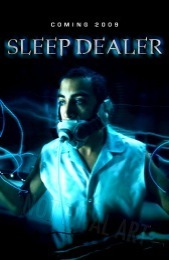
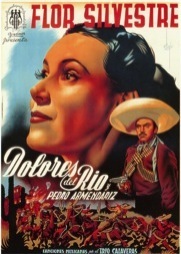
What began as a small celebration of independent Chicano film making, has, in a decade’s time, become the foremost Latino film festival in the region. This year’s XicanIndie will feature the Denver premiere of an award-winning and riveting new film from director Alex Rivera, Sleep Dealer; a beloved classic from Mexico’s golden age of cinema; a handful of exciting independent shorts - the Chones; and a special tribute to legendary movie producer Moctesuma Esparza (The Milagro Beanfield War, Gettysburg, Walkout).

Su Teatro announces the XicanIndie FilmFest XI opening night film: Amexicano (a Denver premiere)

Join us at 6:00 p.m. as we celebrate the living legacy of Chicano film producer Moctesuma Esparza (Ballad of Gregorio Cortez, Milagro Beanfield War, Selena, Walkout) followed by the Denver premiere of Amexicano - the story of an unlikely friendship between a down and out Italian-American and a Mexicano day laborer.

“Pulses with the hum of city life”—New York Daily News
“Constantly unpredictable”—Variety

April 2, 6:00 p.m. -- Opening Night Reception (Moctesuma Esparza will be in attendance); City and County of Denver recognizes April 2, 2009 as Moctesuma Esparza Day; Su Teatro presents Esparza with the XicanIndie Lifetime Achievement Award

7:30 p.m. -- Amexicano (distributed by Moctesuma Esparza’s Maya Entertainment)

$15 Opening Night Reception & Film combo

Call El Centro Su Teatro for tickets: 303.296.0219. Check out complete festival details online at: http://xicanindie.suteatro.org or the Denver Film Society website.


NEW BOOK

A Not So Perfect Crime,
Teresa Solana
Bitter Lemon Press, March, 2009

Another day in Barcelona, another slimy politician’s wife is suspected of infidelity. Luis Font discovers a portrait of his wife in an exhibition that leads him to conclude he is being cuckolded by the artist. Concerned only about the potential political fallout, he hires twins Eduard and Pep, private detectives with a supposed knack for helping the wealthy with their “dirty laundry.” Their office is adorned with false doors leading to non-existent private rooms, a mysterious secretary who is always away and a broken laptop computer picked up on the street. The case turns ugly when Font’s wife is found poisoned by a marron glacé from a box of sweets delivered anonymously. This is a deftly plotted, bitingly funny mystery novel. A satire of Catalan politics and a fascinating insight into the life and habits of Barcelona’s inhabitants, diurnal and nocturnal. Winner of the 2007 Brigada 21 Prize for the Best Catalan Mystery Novel.


SHORT STORY EVENTS

Don't forget the group reading and Q&A for Latinos in Lotusland scheduled for March 28, 2009, 3:00 - 6:00 p.m.at Librería Martínez, 1200 N. Main St., Santa Ana, CA 92701. Phone: 714-973-7900. Scheduled contributors to the anthology include Lisa Alvarez, Conrad Romo, Victorio Barragan, Alejandro Morales, Sandra Ramos O'Briant, Manuel Ramos, and the esteemed editor, Daniel Olivas.

And, this just in ... a reading and signing for Hit List: The Best of Latino Mystery has been set for the Tattered Cover, Colfax store (Denver) for May 21 at 7:30 p.m. Join Mario Acevedo and me at the Tattered as we read from our stories in the new anthology and celebrate this publishing milestone - the first short story collection devoted to Latino crime fiction writers. I will post a complete list of all scheduled Hit List events (from New York to Houston to San Antonio to Denver to L.A.) in the weeks to come. Watch for it.

And while you are at it, watch for another interview with one of the people responsible for putting together Hit List - coming soon.

Later.

Labels: , ,

Thursday, March 26

Great Events in Aztlán del Norte - NMMA shines


Josefina Lopez,
acclaimed author of the play and successful film Real Women Have Curves, presents her latest work
Hungry Woman in Paris

THE BOOK
A journalist and activist, Canela believes passion is essential to life; but lately passion seems to be in short supply. It has disappeared from her relationship with her fiancé, who is more interested in controlling her than encouraging her. It's absent from her work, where censorship and politics keep important stories from being published. And while her family is full of outspoken individuals, the only one Canela can truly call passionate is her cousin and best friend Luna, who just took her own life.


Canela can't recover from Luna's death. She is haunted by her ghost and feels acute pain for the dreams that went unrealized. Canela breaks off her engagement and uses her now un-necessary honeymoon ticket, to escape to Paris. Impulsively, she sublets a small apartment and enrolls at Le Coq Rouge, Paris's most prestigious culinary institute.

Cooking school is a sensual and spiritual reawakening that brings back Canela's hunger for life. With a series of new friends and lovers, she learns to once again savor the world around her. Finally able to cope with Luna's death, Canela returns home to her family, and to the kind of life she thought she had lost forever.

THE AUTHOR

Born in San Luis Potosi, Mexico in 1969, Josefina López was five years old when she and her family immigrated to the United States and settled in East Los Angeles. Best known for co-authoring the film Real Women Have Curves, Josefina is the recipient of a number of awards and accolades, including formal recognition from U.S. Senator Barbara Boxer's 7th Annual "Women Making History" banquet in 1998 and a screenwriting fellowship from the California Arts Council in 2001.

She, along with Real Women Have Curves co-author George La Voo, won the Humanitas Prize for Screenwriting in 2002, The Gabriel Garcia Marquez Award from L.A. Mayor in 2003, and the Artist-in-Residency grant from the NEA/TCG for 2007. This is her first novel: Josefina resides in Boyle Heights and considers herself a "Renaissance Woman".

Complimentary reception 
Friday, March 27, 2009, 6 PM, Program at 7 PM 
National Museum of Mexican Art 
1852 W. 19th Street, Chicago, IL     Free 

New Exhibits:


Chicago Figurativo: 
Prints Selected from the NMMA Permanent Collection
and Quilt Me a Story: Nuestros relatos (Immigration Stories)

Reception Saturday, March 28, 2009, 6-8 PM

LOCATION:
National Museum of Mexican Art 1852 W. 19th Street, Chicago, IL 

Lisa Alvarado

Labels: , , , , ,

Wednesday, March 25

The House On Mango Street- 25th Anniversary Edition


Sandra Cisneros talks about her childhood and the role libraries and education played in her life. And don't miss the 25th anniversary edition of her classic novel The House on Mango Street, now with a new introduction by the author.


Sandra Cisneros talks about the importance of volunteering and community activism in her life.


Sandra Cisneros reading from House on Mango street paired with Hispanic art.


***


Labels: , , ,

Tuesday, March 24

Review: Havana Lunar. Robert Arellano.

NY: Akashic Books, 2009.
ISBN: 978-1-933354-68-2

Michael Sedano

What a delight, after reading a string of uninvolving novels, to come across Robert Arellano's engaging "Cuban noir novel", Havana Lunar.

The Havana setting breathes life into this story of grisly murder and false accusation. The first person narrator is an idealistic medical doctor working in a neighborhood clinic. Lacking the most basic supplies like aspirin, the medico Rodriguez heals through bedside manner and decency.

Rodriguez' nobility is its own reward until a teenaged jinetera takes advantage of kindness to insinuate herself in his life. The novel opens with a detective surreptitiously searching the clinic for the sex worker's jacket. She's a suspect. 

Arellano keeps a smile on his fingers as he takes readers through a lively, twisting story that brings in the doctor's large tight-knit familia from a rural compound, the break-up of his marriage, his ongoing affair with a childhood friend, the ugly mole on his cheek that is the title of the book, the beheading of a local pimp and the doctor’s involvement with the teenie jinetera suspect.

Sexual tourism, inept social services, corrupt public servants, the loving familia, a portrait of Che Guevara that talks, give the novel enough color that the potential horror of the crime never infects the fun of the telling. 

Some of the fun is Arellano's, exercising his decided political slant against the revolution. The doctor regrets small privations like choosing between buying gas for the car or coffee for his cuppa, and he uses an old skeleton to evade enforced hitch hiker laws. But a children's clinic with no aspirin insults this deeply caring professional. The jineteras know he’s a doctor who does HIV tests on the QT, no government reports, and he takes no sex in return. Breaking his resistance is part of the whore's motive. The doc's a real sucker. The pimp's moves to get her back thrusts the doctor into captivity and torture, escape, a near-lethal confrontation with a crazed killer, and the corrupt policeman.

Contrast the city's constant struggle to the doctor's family compound out in the sticks on the local economy, liberated from the restraints of city bureaucrats. Granpa rules with iron fist, the women eat in the kitchen whether company comes or not. They laugh, eat well, all the kids are above average. This is the sentimental Cuba of shoulda woulda coulda land, but Arellano's point is well taken.

Arellano doesn't harp on the failures of Cuban socialism, not in a heavy-handed manner. Everyday ironies abound; a family learns that flour has come on sale. All gather excitedly around the table, real bread oven fresh! The food is ripped from their mouths. Rumors abound that saboteurs mixed glass into the flour. More irony, other rumors arise the government spread the rumors to suppress the black market for flour, they coulda eaten that bread.

As with so many other Cubano novels, the shortcomings of the revolution are well knit into the fabric of the story. Everyday details like enforced hitch hiking, or choosing between buying gas for the car or coffee for his cuppa, point up such novels like Havana Lunar can be told only in Cuba. Arellano's noir masterpiece belongs alongside Daniel Chavarria's Adiós Muchachos and Tango for a Torturerer.

Applause must go to Akashic and or Arellano for their common sense approach to English and Spanish expression. The languages are not italicized nor does Arellano offer much appositional translation. When a character says something in Spanish the expression stands on its own.

For slightly under 200 pages, Havana Lunar has lots to enjoy, everything a comic noir aficionado could hope for. Mejor, Havana Lunar need not be enjoyed in private; the publisher plans a coast-to-coast tour of readings, from March 24 at NYNY Bluestockings to May 8 at W. Hollywood's Book Soup. Many of the stops include Achy Obejas, signing her latest, Ruins.


Juan Felipe Herrera Poetry Collection Honored


The National Book Critics Circle Award in poetry, announced March 12, named Juan Felipe Herrera's Half of the World in Light: New and Selected Poems, along with August Kleinzahler's Sleeping It Off in Rapid City.

I note the publisher's and Herrera's support for Oracy, making this collection, hopefully, a trailblazer setting a standard for all published poetry: Beginning with early material from A Certain Man and moving through thirteen of his collections into new, previously unpublished work, this assemblage also includes an audio CD of the author reading twenty-four selected poems aloud.

Felicidades, Juan Felipe. You had it coming, ese.

Read Lisa Alvarado's La Bloga interview with Mr. Herrera here.


Poetry Collection Reviewed

La Bloga friend Rigoberto González expresses his joy at reading Kevin A. González' first poetry collection, Cultural Studies, noting the poet is "prodigal son, a creative writing degree in hand, come back to reconnect to the imagery of his youth". 

You'll enjoy the full review at the El Paso Times.


Nuyorican MTV Viewers Protest

Gente who partake of the plug-in drug have one more reason to abjure the device altogether. Consumers of what MTV has to offer find a recent episode so undigestible they've written a petition to have a program withdrawn and a new one produced to replace it. The group's petition links here.

We, the undersigned, call upon Viacom/MTV/MTV News to cease airing the episode entitled "True Life: I'm a Nuyorican" on the grounds that it is an unbalanced, negative stereotype affirming and unfair representation of who and what Nuyoricans are as a culture.

Furthermore, it is psychosocially damaging to youth and uncharacteristic of the values which MTV News claims to uphold.

Additionally, we call upon Viacom/MTV/MTV News to produce a new episode which represents the Nuyorican community accurately and references the Nuyorican Movement, this task is to be completed and aired by year's end.


Sandhill Crane Migration - A Wonder of the Natural World


Please enjoy a few fotos from a recent visit to Nebraska's Rowe Sanctuary on the Platte River: http://www.readraza.com/cranes/index.htm


La Bloga welcomes your comments and guest columns. To leave a comment, please click the Comments counter below. To be our guest with a column-length review of your own, click here to learn more.

Labels: , , , ,

Monday, March 23

¡ ZOETROPE: ALL-STORY GOES LATIN AMERICAN!


In 1997, Francis Ford Coppola launched Zoetrope: All-Story, a quarterly magazine devoted to the best new short fiction and one-act plays. It has received every major story award, including the National Magazine Award for Fiction, while publishing today's most promising and significant writers including David Mamet, Ha Jin, Don DeLillo, Salman Rushdie, Woody Allen, Susan Straight, and Haruki Murakami among them.

Zoetrope: All-Story is proud to announce a special Latin American issue edited by Daniel Alarcón and Diego Trelles Paz. Alarcón kindly agreed to sit down with La Bloga to answer a few questions about this special issue.

DANIEL OLIVAS: Who came up with the idea for this special issue?

DANIEL ALARCÓN: Michael Ray, editor of Zoetrope: All-Story, first proposed doing a Latin American issue last summer. I liked the idea, but I knew it would be way too much work to do alone, so I contacted Diego Trelles Paz, a Peruvian novelist who had recently edited an ambitious anthology of new writers called El Futuro No Es Nuestro (The Future is Not Ours), which has just been published in Argentina, and is forthcoming in Mexico and Bolivia. I suggested to Michael that Diego and I take on this project together. He agreed, and that’s how we began. It takes a lot of people to make something like this happen.It was a team effort between the three of us, the authors (who demonstrated great patience through the long process), and the excellent translators who did the heavy lifting. I’d like to mention them by name, because translators never get their due: Janet Hendrickson, Carolina De Robertis, Mariana Grajales, Andrea Strane, Francisco Goldman, and Idra Novey.

OLIVAS: How were pieces solicited?

ALARCÓN: We started reading for this collection last September, relying heavily on the work Diego had already done for his anthology, and from a selection made by the Hay Festival in 2007 called Bogotá39. There are many fantastic writers from these two groups, and I’d recommend those who know Spanish go directly to the source and read this work for themselves. Diego and I kept winnowing down the list, until we approached the ten or so that we liked best. In some cases we wrote authors we knew and asked for their newest, best stuff. We relied on the suggestion from friends, and scoured literary magazines like Etiqueta Negra, where I work, and Eñe, edited by my old friend (and ex-Etiqueta editor) Toño Angulo. I was blown away by some of the stories I read, and there were many worthy pieces we couldn’t fit into the issue. I should mention that this isn’t the first collection of new Latin American writing to propose an update like this. Two of note: McOndo, published in Chile in 1994, edited by Alberto Fuguet and Sergio Gómez, and Se Habla Español, published in the US in 2000, also edited by Fuguet, this time with Edmundo Paz Soldán. What’s significant about this issue of Zoetrope: All-Story is that it pushes this overdue conversation along in English.

OLIVAS: Did the issue come out as you expected or were you surprised by the result?

ALARCÓN: When you start putting together something like this, you never really know what to expect. Any anthology is always a bit arbitrary, a snapshot of the editors’ tastes at any given moment, and this one is no exception. Diego and I could have picked another ten stories and been equally proud of this issue. Still, we selected these stories because they moved us, they taught us things we didn’t know. They made us laugh, they made the places we recognized seem new and startling and humane. I’m not really much of a literary critic, but it’s easy to note some overlapping sensibilities among the writers, particularly in regards to the influence of film and music and migration. One striking fact: at least half of these writers live outside the country of their birth, and that’s not counting Diego and I, Peruvians by birth who both live in the US. The most pleasant and reassuring surprise was that no single style reigns. There is no unified voice in Latin America, and I don’t believe there ever was—in a region this large and diverse, how could there be? It seems more likely that the dominance of magical realism was a function of external market forces, a commercial response to the powerful example of Gabriel García Márquez, a novelist so exceptional that most honest writers would never risk imitating him. Could one literary aesthetic really have reigned for so long in an area spanning the better part of two continents and more than twenty countries? Of course not. Other voices, other styles, simply weren’t translated, and in some cases were just ignored. We’re hoping the same doesn’t happen to the next generation of writers.

OLIVAS: What do you hope readers get out of the special issue?

ALARCÓN: Latin America has changed a great deal in the four decades since the publication of One Hundred Years of Solitude. I’ve tired of seeing the vibrant, dynamic literary output of my peers who work in Spanish interpreted through the single, constricting and somewhat outdated lens of magical realism. I say this as someone who has the greatest admiration for García Márquez, someone who, as a young man, devoured his masterworks with revelatory glee. Still, in the marketplace of Latin American letters in the US, this obsession with magical realism has had the unfortunate effect of erasing nuance and glossing over the great diversity of talent and voices that are out there. In Latin America, the literary conversation has already moved far beyond this, but here in the US it seems that we haven’t yet caught up with the times. This is to be expected, I suppose, given the relative trickle of literary translations that make it to the American market, but that doesn’t make it okay. The demographic shifts that have transformed Latin America in the last forty years are stark, and naturally art and literature will reflect these massive changes. There have been great migrations to coastal urban centers, as well as further migrations north to the United States and Europe. Economies have opened up, blossomed, and crashed; nor is the political landscape of today the same as it was in 1970s. There is less ideology, or at the very least, less respect for ideologies, and a generalized fracturing of political parties in many countries. Meanwhile, the rise of a polarizing figure like Hugo Chávez has heightened tensions between some nations, and brought others closer together in unexpected alliances. The explosion of information technology, the Internet, and the relative ease of international communication and travel have necessarily transformed how people see themselves and their communities in relation to the wider world. The small town settings favored by García Márquez’s numerous imitators still exist, but you’re more likely to find young people there online, trading music files with their peers across the continent than sitting around a tree listening to folk tales.

If Americans are still viewing Latin America through the lens of Macondo, they’re not going to get the whole picture. It’s not that people shouldn’t read García Márquez—of course they should, they must—it’s just that he’s not the only writer they should read. I was thrilled to hear that Bolaño’s 2666 won the NBCC this year. I’d like to think it will spur American readers to search out more Latin American voices. And if you don’t know where to look, start here. These are exceptionally talented writers, folks I admire and look forward to reading for years to come.

OLIVAS: Mil gracias for spending time with La Bloga and congratulations on a wonderful and important project.

[You may learn more about Zoetrope: All-Story including the authors featured in the special Latin American issue, subscription rates, and submission guidelines by visiting here. Pictured from top to bottom: Daniel Alarcón, Diego Trelles Paz and Francis Ford Coppola.]

◙ Just a little reminder about a group reading of the landmark Latinos in Lotusland: An Anthology of Contemporary Southern California Literature (Bilingual Press). This collection brings together 60 years of Los Angeles fiction by 34 Latino/a writers. The contributors at this reading will include Manuel Ramos, Lisa Alvarez, Conrad Romo, Alejandro Morales, Sandra Ramos O'Briant and Victorio Barragán. The anthology's editor, Daniel Olivas (moi), will moderate. After a reading and discussion, a signing will follow.

WHEN: Saturday, March 28, 3:00 to 6:00 p.m.

WHERE: Librería Martínez, 1200 N. Main St., Santa Ana, CA 92701

COST: Free with refreshments thrown in for fun!

WEBSITE: http://www.latinobooks.com/

And don't miss my special appearance on KPFK at 90.7 FM tomorrow, at 4:20 p.m. where I visit with Gustavo "Ask a Mexican" Arellano as we talk about this upcoming Latinos in Lotusland reading. You may listen online at http://www.kpfk.org/. This just in: Over at the OC Weekly, Andrew Tonkovich (editor of the Santa Monica Review and host of KPFK's Monday book show, Bibilocracy), gives a nice preview of our upcoming reading.

◙ And now, the latest stories from LatinoLA.com:

Stepping Up with Paul Ramirez - LatinoLA's Liza Z chats with the owner and producer, Lobo Video Productions by Lisa Zion, contributing writer

I feel it's time to bounce..... by mia soto

Cuba Swift: On a Mission - Grand opening of hip-hop dance studio and launch of DVD series for kids, teens and adults with the goal of improving Latino health

Top 10 Signs Your Chihuahua is Nuts by Al Carlos Hernandez - Contributing Editor

Funes Elected as El Salvador's President - Political, entertainment, financial and industry news from LatinoLoop

Save Peter Case - LIke so many artists who can't afford medical insurance, he needs our help by Slowjoe

Mendez v. Westminster Case at Center of New Curriculum - Children across California could soon learn about desegregation, migration, Treaty of Guadalupe Hidalgo, and more by Theresa Cisneros

Watching the Old Dudes Dance by Frankie Firme, Contributing Editor

Rick Najera's Double Shot of Comedy by Susie Albin-Najera
By George, It's George Lopez! - "America's Mexican" gives LatinoLA's Lisa Z the lowdown on kidney disease by Lisa Zion, contributing writer

Opportunities for Tax Relief to Burdened Americans - The current recession offers the best opportunity for individuals and businesses to address their tax issues by Mike Habib, EA

Changing the Face of History - HOPE's 18th Annual Latina History Day conference celebrates historical accomplishments of Latinas by Lisa Zion, contributing writer

Salvadoran Elections Provoke Cautious Optimism On U.S. Relations by Roberto Lovato, New America Media

◙ That purveyor of darkly droll yet insightful prose and poetry, Andrei Codrescu (creator of the literary journal, Exquisite Corpse, and regular commentator on NPR), has kindly published a couple of my little fictions over the years. His kindness has caused me to dub him an honorary Mexican. Well, Andrei has published a new book, The Posthuman Dada Guide: Tzara & Lenin Play Chess (Princeton University Press). I've just ordered my (autographed!) copy and plan on being surprised, amused and maybe a little confused, but completely entertained. The publisher describes the book as follows:

The Posthuman Dada Guide is an impractical handbook for practical living in our posthuman world—all by way of examining the imagined 1916 chess game between Tristan Tzara, the daddy of Dada, and V. I. Lenin, the daddy of communism. This epic game at Zurich's Café de la Terrasse—a battle between radical visions of art and ideological revolution—lasted for a century and may still be going on, although communism appears dead and Dada stronger than ever. As the poet faces the future mass murderer over the chessboard, neither realizes that they are playing for the world. Taking the match as metaphor for two poles of twentieth- and twenty-first-century thought, politics, and life, Andrei Codrescu has created his own brilliantly Dadaesque guide to Dada—and to what it can teach us about surviving our ultraconnected present and future. Here dadaists Duchamp, Ball, and von Freytag-Loringhoven and communists Trotsky, Radek, and Zinoviev appear live in company with later incarnations, including William Burroughs, Allen Ginsberg, Gilles Deleuze, and Newt Gingrich. The Posthuman Dada Guide is arranged alphabetically for quick reference and (some) nostalgia for order, with entries such as "eros (women)," "internet(s)," and "war." Throughout, it is written in the belief "that posthumans lining the road to the future (which looks as if it exists, after all, even though Dada is against it) need the solace offered by the primal raw energy of Dada and its inhuman sources."

For Andrei Codrescu's complete reading and signing schedule for The Posthuman Dada Guide: Tzara and Lenin Play Chess, go here.

◙ That’s all for now. So, in the meantime, enjoy the intervening posts from mis compadres y comadres here on La Bloga. And remember: ¡Lea un libro!

Friday, March 20

Interview With Rolando Hinojosa-Smith: The Writer's Mission

Rolando Hinojosa-Smith, the Ellen Clayton Garwood Professor of Creative Writing at the University of Texas at Austin, is the author of the Klail City Death Trip series of novels. He is the recipient of numerous literary awards including the Premio Quinto Sol for his first novel, Estampas del valle y otras obras (1973), and the most prestigious prize in Latin American fiction, Casa de las Américas, for his second book, Klail City y sus alrededores (1976). His other novels include Ask a Policeman, The Useless Servants, Becky and Her Friends, Dear Rafe, and Rites and Witnesses.

The Klail City Death Trip series takes place in fictional Belken County in the Texas Valley, where two of the main characters in the series, Rafe Buenrostro and Jehú Malacara, are first introduced as young boys in the 1930s. The series progresses up to fairly recent times. Numerous critics and literary analysts have compared Hinosja-Smith's work favorably to other epic writers who have created a body of work about a particular group of people in a particular place, e.g., James Joyce and William Faulkner.


Professor Hinojosa-Smith is a prolific and admired writer who continues to write, teach, lecture and help aspiring writers even though he recently celebrated his eightieth birthday. His reputation is literally worldwide and his busy schedule often includes appearances at international writers and literary conferences. He is one of the contributors to Hit List: The Best of Latino Mystery, due any day now in the bookstores. We are honored that the good professor managed to squeeze in a few minutes for La Bloga.

____________________________________________________________________
Your impressive record of publications includes several in the mystery category, including your police procedurals, Partners in Crime (1985) and Ask A Policeman (1998), and short stories such as Nice Climate, Miami, your contribution to Hit List: The Best of Latino Mystery. What is it that draws you to this type of writing, this particular genre?

This'll be a long answer. I've read detective stories since childhood and am acquainted with the old as well as contemporary ones, however, there are two main reasons for Partners and Policeman.

After a long chat with Tomás Rivera, I finished Estampas del valle and sent it to Quinto Sol. I didn't want to write a linear novel, nor did I want a sole protagonist. Instead, I wrote of a place where every character, minor or major, would have a voice. I followed this with Klail City y sus alrededores, and it too was a fragmented novel. That, then, produced two main characters, Rafa Buenrostro and Jehú Malacara. Still bent on not writing a linear novel, these two were followed by Korean Love Songs, a novel in narrative verse. I meant to show the younger writers that the Mexican American experience was a wide one, and thus our literature would have to call for whatever genre prose fiction offered; since then, I've written an epistolary novel, a novel where dialogue predominated in the first part and with reportage in the second part, one with no narrator where the characters narrate the novel, there's one in journal or diary form, a campus novel, and so on. In brief, whatever the young writers chose to write regardless of theme. The Klail City Death Trip would show, through time, changes in that part of Texas.

During my trips to the Valley in the early 80s, I noticed an increase in violence on the Mexican side which also affected the northern bank of the Rio Grande. To show this, I chose a detective novel which calls for linearity, and this produced Partners in 85.

I followed this with the various genres mentioned earlier and thirteen years later, the violence increased along with a false economy produced by money due to the drug trade, from south to north, and the selling of weapons from north to south. This gave birth to Policeman in '98. The violence has increased and placed Mexico and the United States at odds: our country is the biggest buyer and user of drugs and Mexico, as our next door neighbor, is the principal conduit for their introduction into the United States.

I chose the procedural because I think it's more realistic: the police are not Dirty Harry types. They go about their business by interviewing, checking on what or may not be facts, and so on. So, in keeping with showing the changes of the Valley, the detective stories fit in what I set out to do: the violence called for that type of novel. The latest one, We Happy Few, shows still another genre in prose fiction: the campus novel. During this, I write essays, short stories, prepare papers for conferences, and so on.

What can you tell us about your Hit List story Nice Climate, Miami?

To leave the Klail City Death Trip for a while, I decided to write a ten chapter novel featuring Timothy Matthew O'Hara, a retired Manhattan Homicide lieutenant. An interesting background, almost a stereotype: Irish, his father and his grandfather were policemen. A widower, he was happily married for 16 years when his wife died of uterine cancer. She was the granddaughter of a retired Capo who gave his consent because the old man had known O'Hara's family and because they, as the present O'Hara, never took bribes. His marriage, however, kept him from rising about the rank of lieutenant as the old Capo predicted. After his twenty years on the force, he retires. He keeps his identity but places ads under the name of Rienzi and offers his services as a hitter. His twenty years in the Chinatown/Mulberry precinct took him all over Manhattan and I make use of this. His life, then, is a series of disposable cell phones. Independent, he won't be rushed. He plans the hits carefully, and as a former policeman he'll be hard to catch. He demands payment in advance; he'll do the occasional job for a friend, say, a madam at a high end brothel, and at one point, leaves Greenwich Village and moves across the East River to Astoria. Miami is the final chapter; however, I have three chapters to go before I finish the work. In Nice Climate, Miami, he fulfills his assignment, keeps the $20,000 the victim offered, and, earlier, having bought airline tickets to Montreal, San Francisco, New Orleans, and Miami, he flies to Miami to begin a new life, again as a hitter.

The hit man novel is yet another classification in crime fiction. I can't wait to read your contribution to this popular type of story. Maybe someone should put together an anthology of hit man stories - Latino hit man stories.

It seems that you are constantly on the go, from one literary conference to another, often in countries far from the U.S. One conference that you have attended several times is Semana Negra, the annual festival hosted by Paco Taibo II and his family in Gijón, Spain. That festival is dedicated to the “black” novel –crime, thrillers, detectives, graphic novels, and so on. Semana Negra is ten days of celebration and party where writers are treated like pop stars. How did you get involved in Semana Negra, and could such an event ever happen in the U.S.?

I was reading and lecturing at several German universities when a friend, Ricardo Bada, who lives in Cologne, told me of Semana Negra and he sent Paco Taibo my name and address. I was invited and the two of us flew to Madrid. Retired now, Ricardo worked for some thirty years for Deutsche Welle, the German shortwave station. A world-wide traveler for D.W., he is well-known and highly regarded in Europe and Latin America, and he occasionally writes for La Opinión in L.A. Once in Madrid, there's an overnight stay at the Chamartín Hotel (the meeting place before taking El tren negro north to Gijón). Paco is seemingly tireless and he is responsible for coming up with the money; you'd think this would be enough, but no: he's a writer, and I know of four novels and a biography of Ernesto Guevara, el Che, published in the ten or twelve summers I've been there. The writers come from the United States, Latin America, and all over Europe: England, France, Germany, Spain, the old USSR, and specialists in translation in foreign languages are present to help the audience. For several years, Elia Barceló and I conducted a series of creative writing seminars for young writers. Three years ago, Goran Tocilovac and I started creative writing seminars for seniors; all but one are women and most of them in their 70s. I also participate in a select three-day session with fourteen other writers and we discuss what we do. I also participate in radio and television interviews. It's an exciting conference with good company where one greets and meets old and new friends.

Would such an event take place in the United States? I don't know. I don't know who could/would raise the money for hotels, food, transportation, and so on for a worldwide conference on writers. Then there's the matter of taking care of the many contingencies that arise in any international conference. It'd be a fine occasion, but being the United States, if it were ever held, it would most likely be a one-time event. Why? Because I find that too many of our fellow citizens don't get along.

Sounds like a challenge for an enterprising literature benefactor - an international festival of writers and writing, here in the U.S.A.

In your more than thirty years as an active, consistently published writer, you must have seen various writing trends, fads and experiments. What’s your view of the current state of Latino fiction in the U.S.? What kinds of stories are popular now; who are some of the younger writers you think will be around for a while?

I know of one novel by Carlos Cisneros (he's a practicing attorney) and I believe The Case Runner is his first novel. As an attorney he could continue to write write genre novels, and this would be the paving of another avenue for younger writers to think on. There's also much activity in the young adult market and for that I can mention two: Claudia Guadalupe Martínez and René Saldaña, Jr. I don't know Patricia Santana's age but her writing is mature. Then there's Matt de la Peña who will also make contributions to our young adult literature. Anne Estevis is not a young person, but she's a young writer with a fine sense of humor.

I was at a conference where a Chicano literary critic said that Rivera, Anaya, and I represented the old school. Whatever that means. Well, Rudy is best known for Ultima, as he should be, of course, but he's also written short stories and has developed his detective series as well. I doubt the critic has read much of mine, but that's all right, any critic has the right to be wrong at the top of his voice as long as the second amendment to the Constitution gives all of us the right to do so.

He wanted us to get away from our culture and to write fantasy novels; I wonder if he would say the same about Toni Morrison, Alice Walker, and others to stop writing about the Afro-American experience. James Baldwin must be spinning in his grave, to coin a phrase to which the critic is welcomed.

Writers should write what they want to write about; if they are to harken and follow advice from nonwriters, our and all literature is in trouble.

I couldn't agree more, Rolando. We have to write what we need to write - the readers will be there.

Much of today’s Latino literature deals with the immigrant experience. Do you see that type of story finding a place in the mystery genre? Are you aware of current immigrant crime, detective, or mystery fiction?

The horrible crimes in regard to the Juárez murders would fit in with the immigration condition, but I would hate to earn money writing fiction on the subject, particularly on such a serious subject. Yes, fiction is based on some reality, but, in the end, it should remain what it is: fiction.

Immigration is on the news, of course, and the robberies and murders of Mexican nationals who were killed returning home after six to nine months of hard work in the U.S. would be a workable piece of fiction. This would call for the police departments of both countries working together. This, however, is far different from the Juárez tragedies which are a part of contemporary history.

I’ll ask a question I asked Professor Ralph Rodriguez: Let’s say that a few of La Bloga’s readers have not read any Latino crime fiction or, worse, think they shouldn’t waste their time with such lowbrow material. What’s your reaction to that? Why should people read Hit List, for example?

I don't consider crime fiction low brow, period. Those who do are entitled to their opinion, but an opinion is merely that, and opinions change. An opinion is different from a fact, and as Eustace Budgell wrote, "Facts are very bothersome things in that they refuse to go away."

As for those people who consider crime fiction low brow, who do and whom have they read? Orwell? Graham Greene? Evelyn Waugh? F. Scott Fitzgerald? Faulkner,Hemingway, Steinbeck, Bellow? Have they read Joan Didion, Susan Sontag, or the following crime writers, the three Scottish women: Alanna Knight, Lin Anderson, Alex Gray, or A. S. Byatt, Agatha Christie, Mignon Eberhardt, etcetera. Well, crime writers do. Why? Because the novels of those cited are well written and, as educated readers, crime writers are like sharks: they have no natural enemies. We don't set out to out do Shakespeare or Marlowe, Pérez Galdós or Cervantes, for crying out loud.To add to this, have they read Nicolas Freeling? Per Walloo and Maj Sjowall? Arthur Conan Doyle? Edgar Allan Poe?

Have they read half of those mentioned? Or are they, as I suspect, holding thumb and index finger to their noses to show superiority? They don't even know that Faulkner read crime stories as did Franklin Delano Roosevelt and John F. Kennedy.

Have they, finally, read Crime and Punishment? Now there's a crime novel for you.

As for Hit List, it's not meant solely for Hispanic readers; to write for one audience and one audience alone is not the mission of any writer.

Thank you, Professor. I sincerely appreciate your time and wisdom. It's been a pleasure - maybe we can continue the discussion one day soon over brisket at The Kreuz Market. I promise to call next time, honest.

_______________________________________________________________
LUCHA CORPI IN CONCERT

A quick note about another contributor to Hit List and a series of events that begins this weekend, March 21. The poetry of Lucha Corpi, more precisely, her poem Marina, has been set to music and will be presented in three separate concerts by the San Francisco Choral Artists in collaboration with the Early Music wind band, The Whole Noyse. The new composition Marina, by Ted Allen, uses early instruments like recorders, sackbuts, cornetts and curtals, together with mixed chorus. Includes works by Brahms, Clemens, Croft, Distler, Jannequin, Lassus and others, as well as instrument-only works.

SAN FRANCISCO: Saturday, Mar 21, 8 PM; St. Marks Lutheran Church, 1111 O’Farrell
OAKLAND: Saturday, Mar 28, 8 PM; St. Paul's Episcopal Church, 114 Montecito
PALO ALTO: Sunday, Mar 29, 4 PM; St. Mark's Episcopal Church, 600 Colorado

More information including tickets at www.sfca.org.

The new composition Marina is based on a poem cycle by poet Lucha Corpi, and explores different aspects of a native woman known to the Spanish as Marina, who aided Hernán Cortés in the 16th Century in Mexico. Also known as La Malinche, she has acquired almost mythical status over the centuries, and has been both revered and reviled.

Lucha Corpi, a poet and novelist who lives in Oakland, often explores themes of racism and justice in her works. Growing up in Mexico, she learned the story of La Malinche as a child. As an adult in Berkeley of the 1960s, she revisited the story while taking part in the Chicano Civil Rights movement and her perspective on Marina deepened. Says Corpi, “I began to appreciate La Malinche in a different context – as an intelligent, smart woman who took control of her own destiny."


Later.


Labels: , , ,

Thursday, March 19

Teatro Vista, Tanya Saracho and Our Lady


TEATRO VISTA, THEATRE WITH A VIEW is firmly committed to sharing and celebrating the riches of Latino culture with all Chicago theatre audiences. This commitment stems from the belief that there are as may similarities as there are differences, and that perhaps the answer to breaking down the walls of prejudice and stereotypes lies in understanding these differences. Ultimately, it is through this "view" that Teatro Vista intends to bridge the gap between Latino and non-Latino cultures in Chicago.

A Message from the Founders
Henry Godinez, Director-Founder Edward F. Torres, Artistic Director-Founder WE MET IN 1989, while working on a play together here in Chicago. We both felt that it was a shame that Latinos weren't getting roles outside of stereotypical casting. So we founded Teatro Vista. We hoped that all of Chicagoland could enjoy the sort of theatre that we had envisioned. Our Mission Statement is from our hearts and we hope that our "view" is one you share. We hope you like our "Theatre with a View" and will visit us in person, as well as our website, as often as you can.


Our Lady of the Underpass by Tanya Saracho 

The same week that Rome announced a new Pope, a woman driving home from work spotted an image of the Virgin Mary on a discolored wall of the Fullerton Avenue underpass.


Playwright Tanya Saracho renders the voices of those who were drawn to that wall, exploring issues of faith and desire in present day Chicago.
Tanya Saracho (Playwright) Tanya Saracho was born in Sinaloa, México and moved to Texas in the late 80's. As the proud Co-Founder and Co-Artistic Director of Teatro Luna: Chicago's All-Latina Theater Ensemble, Tanya's writing has been featured in most of Teatro Luna's ensemble-built works including Generic Latina, Dejame Contarte, The Maria Chronicles, SOLO Latinas, S-E-X-Oh! and Lunatic(a)s.

Tanya's play Kita y Fernanda has received productions at Teatro Luna (2003) and 16th Street Theatre (2008) along with a reading at Repertorio Español while a finalist for the 2003 Nuestras Voces playwrighting competition. Other Awards include: The Ofner Prize given by the Goodman Theatre, Finalist for the Christopher B. Wolk Award at Abingdon Theatre in NYC, nominee for the Wasserstein Prize and winner of the Khan Award.

Her solo play Quita Mitos received a world premier with Teatro Luna, in November of 2006 and has toured colleges and festivals, including the International Hispanic Theatre Festival and the Goodman's Latino Theatre Festival. Other productions include: Jarred (A Hoodoo Comedy) and Lunatic(a)s.
Tanya is working on a fellowship in collaboration between The Goodman Theatre and the Institute for Women and Gender Studies at Columbia College on an interview-based piece titled 27 where she will interview one woman from each of the 27 countries that make up the Latin Diaspora.

She is also under commission from Steppenwolf Theatre to adapt Sandra Cisnero's "The House on Mango Street" slated to open in the fall of 2009. Directing/co-directing credits include: Solo Tu, Lunatic(a)s, the remount of Generic Latina, Piece of Ass for Estrogen Fest, The Maria Chronicles for both the Goodman's Latino Theater Festival and the critically acclaimed full-length run at Teatro Luna, and S-e-x-Oh!, Que Bonita Bandera and Three Days for SÓLO Latinas. Also an accomplished actor, Tanya's performing credits include Neil Labutte's Fat Pig with Renaissance Theatreworks in Milwaukee, Migdalia Cruz' Another Part of the House with Teatro Vista, Living Out with American Theatre Co./Teatro Vista, Electricidad at Goodman Theatre, and Angels in America and La Casa De Bernarda Alba with Aguijon Theater. Tanya is a Resident Playwright at Chicago Dramatists and her voice can be heard around the country in radio and television commercials.

Sandra Marquez (Director) has been a proud ensemble member of Teatro Vista, the mid-west's only Equity Latino theater company, since 1997 and served as the company's Associate Artistic Director from 1998-2006. In 2005 she made her main stage directorial debut with Teatro Vista's production of Breakfast, Lunch and Dinner by Luis Alfaro. Previously she had conceived and directed an ensemble studio piece for Teatro Vista called Vampiros y Bebes. Other directing credits include student productions at various venues as well as her work with Yollocalli, the Theater Summer Outreach Program under the auspices of The Mexican Fine Arts Center Museum and The Goodman Theater which served the young people of Chicago's Pilsen neighborhood. Teatro Vista acting credits include Icarus, Another Part of the House, Santos and Santos, Living Out (for which she was Jeff nominated). Other credits include The Oregon Shakespeare Festival (Breakfast, Lunch and Dinner), Victory Gardens (Anna in the Tropics); The Goodman Theater (Mariela in the Desert, Electricidad, Massacre, Zoot Suit & A Christmas Carol); Steppenwolf Theater (Sonia Flew, One Arm, A Streetcar Named Desire, and The Boiler Room); Madison Repertory Theater (Our Town).

Ms. Marquez is a member of AEA, AFTRA, and SAG and has worked in many industrial films and national commercials. Film and TV credits include Timer, Stranger than Fiction, Early Edition, Prison Break, Women's Murder Club and Big Bang Theory. Ms. Marquez has been on faculty at Loyola University, Eastern Michigan University and Columbia College of Chicago. Currently she is an adjunct faculty member at Northwestern University where she has been teaching since 1995.
Teatro Vista...Theatre with a View is at the forefront of the Latino theatre movement in the U.S. Chicago and ensemble based Teatro Vista is universally redefining the American landscape through the use of new, provocative and unique voices that reflect the Latino experience in the U.S.

After 18 years of existence it has empowered and encouraged "first voice" among the community and its artists.
 

Our Lady of The Underpass opens to Rave Reviews:

"Absolutely don't miss this really special piece!
Saracho's ear is terrific." – Kelly Kleiman, WBEZ Dueling Critics

"It is quite the artistic achievement."
Randy Hardwick, chicagocritic.com

"Our Lady veers — just like real life — from laugh-out-loud hilarious, to gut-wrenching to enraging to contemplative."
– Catey Sullivan, examiner.com

"This is brilliant work that is worth the trip to see. Director Sandra Marquez has assembled the perfect cast to bring these characters to life."
– Alan Bresloff, steadstylechicago.com

"The details of the monologues are perfect..." – Laura Molzahn, The Reader Newspaper

NOW Through MARCH 29
GREENHOUSE THEATER
2257 N. LINCOLN AVE.
CHICAGO, IL

(To read our reviews visit this link:www.theatreinchicago.com)


Tickets are available now! To purchase please click www.teatrovista.tix.com or call 773-404-7336

xxxxxxxxxxxxxxxxxxxxxxxxxxxxxxxxxxxxxxxxxxxxxxxxxxxxxx

THE EVENT:

Support Chicago HOPES, an educational program for the city's homeless children, at:

Casa Aztlán

1831 S. Racine Ave
Chicago, IL 60608
(312) 666-5508
THURSDAY, MARCH 19TH 7PM


Acknowledging the strengths of Mexican families, Casa Aztlán seeks to sustain the strong cultural identity of the Pilsen community by organizing and educating residents and providing supportive services in order to combat social violence, discrimination and poverty.


what i'm on
With a performance by Luis Humberto Valadez

THE BOOK:
what i'm on

Camino del Sol: A Latina/Latino Literary Series
, 64 pages
ISBN: 978-0-8165-2740-3, $15.95 paper

Luis Humberto Valadez is a poet/performer/musician from the south side of the Chicago area whose work owes as much to hip-hop as it does to the canon and has been described by esteemed activist writer Amiri Baraka as "strong-real light flashes."

His debut poetry collection
what i'm on is frankly autobiographical, recounting the experiences of a Mexican American boy growing up in a tough town near Chicago. Just as in life, the feelings in these poems are often jumbled, sometimes spilling out in a tumble, sometimes coolly recollected. Valadez's poems shout to be read aloud. It's then that their language dazzles most brightly. It's then that the emotions bottled up on the page explode beyond words. And there is plenty of emotion in these poems. Sometimes the words jump and twitch as if they‚d been threatened or attacked. Sometimes they just sit there knowingly on the page, weighted down by the stark reality of it all.

José García
put a thirty-five to me
my mother was in the other room
He would have done us both

if not for the lust of my fear


THE BUZZ:

This new Mexican American/Chicano voice is all at once arresting, bracing, shocking, and refreshing. This is not the poetry you learned in school. But Valadez, who received his MFA from the Jack Kerouac School of Disembodied Poets at Naropa University, has paid his academic dues, and he certainly knows how to craft a poem. It's just that he does it his way.
Luis Humberto Valadez works as a coordinator and consultant for the Chicago Public Schools Homeless Education Program.

Recordings of Valadez performing his poems can be found at MySpace.com, Reverb Nation, and other Internet sites.
 

“Brave, raw, and exposing of a young mans consciousness. Luis’s work is not confessional in the limited, put-it-in-a-box way that big publishers like to market their material to liberal guilt.” -Andrew Schelling, author of Tea Shack Interior

“In voices colloquial and church, reverent and riotous, serious and sly; in rap and fragment, sound and sin; from gangs and minimum-wage jobs to astrology and Christ, Luis Valadez makes his fearless debut. This poetry is a painfully honest disclosure of identity and anger, and it is as mindful of falsity and as hard on itself as it is playful, loose, and loving. Sometimes the language is clear and cutting, while other times it disintegrates into sonic units and primal utterances: Luis calls upon the whole history of oral and verbal expression to tell his story—going so far as to write his own (wildly funny and disturbing) obituary.” —Arielle Greenberg, author of My Kafka Century

“On the trail blazed by innovators like Harryette Mullen and John Yau, Luis Valadez sends wild, canny, charged, and vulnerable prayers from the hard camp of contested identities. Each line, each word, is a blow against “impossibility” and the heavy pressure to be silent as expected. Interrogations of tradition(s) as well as celebrations, the irresistible poems in Valadez’s first collection exist at the exact fresh moment of deciding to live and to love.” —Laura Mullen, author of After I Was Dead

“Valadez’s work is not simply fierce language poetics… here is a writer—the genuine article—whose style is that of a truth-speaking curandero, offering sacred cantos to anyone interested in illuminating that inner revolution called corazón. To read his work is to discover the future of American poética! “
—Tim Z. Hernandez, author of Skin Tax

“Valadez’s impressions abruptly transport the reader from swaggering elucidation to raw pain. In a sometimes-resigned glance around for divinity, what I’m on triggers equally sudden heart-rippings, laughter, and cinematic naturescapes.
—Claire Nixon, editor Twisted Tongue Magazine

Holly Schaffer, Publicity Manager
University of Arizona Press

355 S. Euclid Ave., Ste. 103
Tucson, AZ 85719
Ph: 520-621-3920, Fx: 520-621-8899

hollys@uapress.arizona.edu
www.uapress.arizona.edu

Lisa Alvarado

Labels: , , , , , , , , ,

Wednesday, March 18

Tan to Tamarind


Written by Malathi Michelle Iyengar
Illustrations by Jamel Akib

Publisher: Children's Book Press
English
32 pages • Ages 6 and up
8 1⁄2” x 9 3⁄4”
Hardcover ISBN: 978-0-89239-227-8


When you look in the mirror, what do you see? Tan, sienna, topaz, or tamarind? Poet Malathi Michelle Iyengar sees a whole spectrum of beautiful shades of brown. Swirls of henna decorate ochre hands and feet at an Indian wedding. Cinnamon lips smile over a cup of café con leche. And crunchy leaves drift like stars onto upturned russet faces in fall.

This warm and inviting poetry collection helps young readers discover that no matter what your skin tone, every shade is beautiful. Jamel Akib’s pastel illustrations bring the richness of brown to vivid, colorful life.

Malathi Michelle Iyengar grew up in North Carolina. She holds a Master’s degree in Music from the California Institute of the Arts and a Master’s in Education, and currently teaches at a public elementary school where she is happy to see lots of beautiful brown faces every day. Malathi lives in the Los Angeles area with her husband and daughter.

Jamel Akib was born in England and grew up in Malaysia. He is an illustrator whose award-winning work has appeared in children's books, magazines, and advertisements in the United States and abroad. He lives in England with his wife and children.


WORKSHOP WITH LILIANA VALENZUELA

The Port Townsend Writers' Conference in beautiful Washington state, taking place the week of July 12-19, is delighted to present Liliana Valenzuela, one of the foremost English-to-Spanish translators in the world--a translator who is also, as Artistic Director Cristina García notes, a superb poet in her own right. Liliana's workshop class will focus on the words that we use in our writing. "What is your particular linguistic treasure trove?" she asks. "How can you use it to enrich your writing?" According to García: "Liliana brings her boundless curiosity, her poet's musicality, and an exquisite ear for language to everything she touches. Her workshop promises to be a fascinating experience." For more information, go to: http://www.centrum.org

And here is another endorsement by our compa Levi Romero:

Liliana Valenzuela is a remarkable poet with an astute ear for language on and off the page. I was priviliged to co-teach a workshop at the Macondo Writers Workshop with Liliana and can attest to her incredible presence in the classroom. I strongly urge you to take advantage of this workshop if at all possible.
Levi Romero


THE FRIENDS OF
THE SUNLAND
TUJUNGA PUBLIC LIBRARY
PRESENT
CAMELBACK READINGS


Saturday, March 21 at 3 PM

An afternoon of open readings- bring your spring (flowers optional) and an air of summer.

With special guest- Pepe Peña- Classical, Flamenco guitarist and harpist.


SUNLAND-TUJUNGA PUBLIC LIBRARY

7771 FOOTHILL BLVD.

TUJUNGA, CA

(818) 352-4481

Labels: , ,

Tuesday, March 17

Review: Blackout. An Inspector Espinosa Mystery.

Luiz Alfredo Garcia-Roza. NY: Henry Holt and Co., 2008.
ISBN: 978-0-8050-7960-9
ISBN-10: 0-8050-7960-2

Michael Sedano

Blackout is as good a title as any for this mystery set in Rio de Janeiro’s fabled Copacabana and Ipanema neighborhoods. Sadly, the blackout of the title is more a gimmick than a psychological condition experienced by the suspect. In a typical fictional blackout, a character commits a series of acts then loses memory of having performed the actions. The detectives and the character’s loved ones then must unravel clues then assign responsibility.

But in Blackout, the central character does not suffer blackouts. His problem, really, is not a damaged memory nor situational blindness but a profoundly haunting event that so terrifies him that his memory superimposes visions from that long ago upon events at hand. He acts on what he thinks he sees, then lies and covers up when he later discovers the actuality that confronted him. None of this is a blackout, so why that title?

Maybe it’s translation from some Brazilian Portugese word whose closest English equivalent is “blackout”? (I write this without the book in hand and must depend on memory. I do not remember the translator's name, nor is it listed in the publisher's website). At any rate, “blackout” is not what happens to the Aldo, a successful interior decorator married to a beautiful psychologist.

When Aldo was a boy, a neighborhood bully bloodied the boy’s face. Aldo offered no resistance, no defensive posture, only meek submission to the beating. But the beating has a haunting effect on Aldo. He develops a lifelong fear of meeting up again with that bully. Garcia-Roza fails to develop the background of this terror. Instead, the author shows us one event that foreshadows the novel’s central event.

Some time after the beating, Aldo thinks he spots the bully headed in Aldo’s direction. Terrified at the thought of another meeting, another beating, Aldo cowers behind stacks of merchandise in a small shop until the shopkeeper asks if the boy needs help. Shaking with fear, the boy abandons his hiding place to hesitantly peek out the storefront. No bully. One moment he was on the street, the next, an empty street. Who knows what set off the panic, but the reader understands Aldo has been terrorized by a figment of his imagination.

Years later, Aldo is moving his car during a thunderous rainstorm. Suddenly out of the darkness, an apparition appears to Aldo’s eyes. It is the bully. Isn’t it?

The next morning, a one-legged man is discovered dead, shot in the chest at the top of a hill. Now the mystery begins. How, or why, does a one-legged man make the strenuous trek from flatlands to the cul-de-sac at the top of a steep hill? Who killed him? Why? Aldo and others were at the scene around the time of the murder, but they have no obvious connection to the nameless corpse.

Meanwhile, back at the office, Aldo’s assistant is a hot young beauty named Mercedes. She sets her sights on Aldo and it’s only a matter of crooking her little finger and Aldo is in her bed. The triumphant Mercedes begins scheming to take Aldo from his wife and two kids. To this point, Aldo was a semi-likeable character. Now, seeing how easily he falls into adultery, the reader loses any loyalty to Aldo and is willing to sit back and let bad stuff happen to Aldo.

Aldo’s wife is murdered. But not before the reader sees her in therapy sessions with attractive women, and seemingly crossing the boundary between counselor and lover. How sad to witness three people—Aldo, his wife, and Mercedes the assistant--with such comfortable lives discarding all for a fast fling with a good-looking target.

With a cast of such unattractive, even repellent, characters, the reader cares ever more about Espinosa’s sleuthing. With the wife dead, Espinosa discovers the affair between Mercedes and Aldo. Then a clue here, a clue there, and, almost haphazardly, with only a few pages remaining, Espinosa pins their respective crimes on them.

Blackout is an engaging story but I want to know more about the characters. We see Aldo pushed around as a kid, but have no idea why the boy doesn’t fight back, nor what leads him to be such a ninny that Mercedes finds him easy pickings. We don’t get to see connections between Mercedes’ history and her predatory nature, nor what motivates her to such drastic acts.

There may be a method behind this. Although Blackout has much undeveloped territory, the lacunae help the reader understand the milieu that Inspector Espinosa and his staff work in. Since the reader knows only as much as the detectives, as the case unfolds the reader is forced to set aside logic and causality and simply watch the cops do their job. In the process, the reader will enjoy the delight of discovery and the surprises that Garcia-Roza dishes out. Not a bad trade-off, and one worth picking up the novel for.

That's the view from Lincoln Nebraska this week, the third Tuesday of March. Looking forward to being home next week, but reading some good stuff while on this trip to the great plains. Les wachamos.

mvs

La Bloga welcomes your comments. Owing to SPAMming pendejos, La Bloga recently began modering comments. Your comments--click on the comments counter below to share your views--will appear after a delay of several hours. La Bloga apologizes for the awkwardness of this.

La Bloga welcomes guest columnists. When you have a book review, or an arts/cultural event you'd enjoy reviewing or announcing in detail, click here and let's discuss your invitation to be La Bloga's guest.

Labels: , ,

Monday, March 16

¡Latinos in Lotusland at the Librería Martínez!

WHEN: Saturday, March 28, 3:00 to 6:00 p.m.
WHERE: Librería Martínez, 1200 N. Main St., Santa Ana, CA 92701
COST: Free with refreshments thrown in for fun!
WEBSITE: http://www.latinobooks.com/

Join us for a group reading of the landmark Latinos in Lotusland: An Anthology of Contemporary Southern California Literature (Bilingual Press). This collection brings together 60 years of Los Angeles fiction by 34 Latino/a writers. The contributors at this reading will include Manuel Ramos, Lisa Alvarez, Conrad Romo, Alejandro Morales, Sandra Ramos O'Briant and Victorio Barragán. The anthology's editor, Daniel Olivas, will moderate. After a reading and discussion, a signing will follow.

PRAISE FOR LATINOS IN LOTUSLAND:

"Latinos in Lotusland is a movable feast that bears witness to the incredibly talented writers that reclaim Los Angeles as their own." -- Gregg Barrios, San Antonio Express-News

"...a wonderful anthology...will surprise and delight..." -- Sergio Troncoso, El Paso Times

"Quintessential LA...but so much more." -- Callie Miller, LAist

"...a masterful collection of literature capable of seducing every reader..." -- Natalie L. Gutierrez, Tu Ciudad

◙ MORE LITERARY FUN:

Poetry/Open Mic featuring:

Lamont B. Steptoe (Author of Mad Minute, Oracular Rumblings & Stiltwalking) Winner of the 2005 American Book Award

and

ISAC GALVAN, poet and author of ELATIO

Hosted by poet Eduardo Arocho

WHEN: Monday, March 16th
WHERE: Batey Urbano, 2620 W. Division St., Chicago, IL
WHEN: 6:30 to 9:00 p.m.
COST: $5.00 suggested donation

◙ One of the contributors to Latinos in Lotusland, Álvaro Huerta, just had a children's story published in the Los Angeles Times Kids' Reading Room Section. The story is called "Peanut Butter" and is described as follows: "A little kid gets picked on all the time. One day, that all comes to an end. Read more to see what happened. (Art by Andrew Huerta)"

You may read the story online here. This is a wonderful venue. One my kids' stories which first appeared in the L.A. Times was eventually published as a picture book, Benjamin and Word / Benjamin y la palabra (Arte Público Press). ¡Bravo, Álvaro!

◙ Over at ForeWord Magazine, C.M. Mayo gently reminds us to make time to write, even if all you can pull together is five minutes. She notes, in part: "Back in 2005, for my writing workshop students, and myself— for I was then struggling through some of the most daunting stretches in writing my novel, The Last Prince of the Mexican Empire (forthcoming from Unbridled Books this May)—I began posting a daily five minute writing exercise on my website. These cover a variety of aspects of craft, from imagery and descriptions, to point of view, dialog, plot and more."

◙ In case you missed it yesterday, here is an exclusive interview by Gregg Barrios of award-winning author, Rigoberto González. Gregg asks wonderful questions and, as usual, Rigo offers honest, precise and thoughtful answers. They cover many topics including school reading lists, the movie Milk, coverage of YA novels, Chicano and Latino books worth reading, among many.

◙ That’s all for now. So, in the meantime, enjoy the intervening posts from mis compadres y comadres here on La Bloga. And remember: ¡Lea un libro!

Sunday, March 15

Gregg Barrios interview with writer Rigoberto Gonzalez.

Friday, March 13

Interview With Ralph E. Rodriguez - The Worthiness of Escapist Literature

Ralph E. Rodriguez is Associate Professor in the Department of American Civilization and at the Center for the Study of Race and Ethnicity in America at Brown University. He is the author of Brown Gumshoes: Detective Fiction and the Search for Chicana/o Identity (University of Texas Press, 2005).

Brown Gumshoes is a rarity: a critical analysis of a type of literature usually labeled as genre fiction (and, therefore, “less deserving.”) I am aware of only one other academic book dealing specifically with Chicana/o crime fiction, Susan Baker Sotelo’s Chicano Detective Fiction: A Critical Study of Five Novelists (McFarland and Co., 2005.)

Professor Rodriguez also has published articles on a range of Latina/o authors, critical pedagogy, queer theory, detective fiction, and film. Latina/o literature and culture, graphic novels/comic books, queer theory, cultural theory, race, ethnicity, and feminism constitute his active research and teaching interests.


He has received teaching awards from the University of Texas and Penn State University. He is currently a member of the PMLA editorial board and a former member of the editorial board of Aztlán: A Journal of Chicana/o Studies. He regularly referees for a host of journals in American Studies, literary studies, and film studies.

Rodriguez wrote the Foreword to Hit List: The Best of Latino Mystery, edited by Sarah Cortez and Liz Martínez, due from Arte Público Press at the end of March, 2009. In anticipation of the publication of this anthology, I asked Professor Rodriguez to share a few thoughts and comments with La Bloga about Latino crime fiction, a genre that apparently has caught and held his attention.
__________________________________________________________________________

How and why did you become interested in crime fiction (mysteries, detectives, thrillers?)

I have my 7th-grade English teacher to thank for my interest in mystery novels. He assigned Agatha Christie’s And Then There Were None. I honestly wasn’t interested in reading it at first, but my parents made sure I did my homework. Twenty pages in, I was hooked. Perhaps I should credit my parents as well. I loved the intrigue and puzzle aspect of the mystery novel.

Ah yes, Christie. Every few years I read And Then There Were None. It helps to get back to basics, especially when the creative well runs dry.

Isn't publishing in a crisis, economically and in terms of challenges for audience? If so, does Latino crime fiction have a future in publishing?

Yes, on the economic front, I think all businesses are in a crisis at the moment and are looking for ways to cut costs and make more money. The mystery genre strikes me as a business driven by niche markets. That is to say, not all mystery readers read all mysteries. They have their preferred sub-genres—hard-boiled, cozies, historical, police procedural, etc. In addition, many of these readers have authors they are committed to following as well, but that’s not so different from fiction sales in general. However, I’m not sure that Latina/o crime fiction has yet found its niche or fan base. I can’t say that with unqualified conviction because I don’t have the sales figures to back that statement up. Indeed, when I was working on Brown Gumshoes, I found that most publishers were reluctant to discuss sales figures. Nevertheless, I don’t think any of the Latina/o crime fiction books have sold, say, in the hundreds of thousands. Perhaps Rudolfo Anaya or Carolina García-Aguilera. In other words, they can’t guarantee the sales of, for example, a new James Patterson, J.A. Jance, or Kathy Reichs novel. Though one need not generate those sales figures at first, commercial publishers are going to be reluctant to continue with a series that seemingly isn’t producing readers. Thank goodness for independent presses like Alyson and Arte Público who get first-time writers in print and keep well-established ones there as well. I don’t want to be bleak about this. I think there are challenges for Latino crime fiction (as I think there are challenges for all fiction), but I believe there are great opportunities too. I know there must be literary agents out there just dying to receive a query letter about an exciting new Latino mystery series.

I know writers who are having a tough time continuing with their craft because of market conditions and publishing stress. Maybe more so for Latina and Latino writers who have tied themselves to a subgroup of literature such as mystery. As a follow-up to the preceding question, is there an audience for Latino mysteries among non-Latino readers?

I certainly hope there is, and I suspect that many non-Latino readers have already been reading Latino mysteries. I know they have been in my classes. But you raise a terrific point, Manuel. The viability of Latino fiction depends on both Latino and non-Latino readers buying these books. Writers have to have crossover appeal to succeed. The boom in African American detective fiction, which slightly preceded the rise in Latino mysteries, depended on crossover appeal. It’
s what made Walter Mosley such a household name. It also doesn’t hurt that he writes in a number of literary genres and thereby draws readers from other genres over to the mystery novel as well. I think the success of Rudolfo Anaya’s work in general, but particularly Bless Me, Ultima, suggests that folks are interested in topics that Latina/o authors are writing about. I would hate to think of these works of fiction as anthropological or sociological texts because they are works of the imagination and art, not ethnographic fieldwork, but I do know that some of the appeal of ethnic fiction is an interest in knowing what other folks are like.

To return to the matter of crossover appeal, think of the tremendous success of Tony Hillerman’s Jim Chee and Joe Leaphorn novels. So yes, I think there is a market for Latino mysteries among non-Latino readers.

I want to hasten to add that the success and continuation of Latino mysteries depends as well on a strong marketing campaign. Among Latino mystery writers there are no, what the industry calls, out-of-the-box bestsellers, and there probably won’t be until one of the major commercial publishers puts some serious marketing dollars behind a Latino mystery writer. I’m talking about the kind of marketing that would make it impossible for you to walk into a Borders or Barnes and Nobles without stumbling
upon a display of that author’s works or to open the New York Times Book Review without coming across an ad for that author. That kind of marketing will draw attention to the author, and then the book has to payoff. Readers have to feel excited about its contents. Then word of mouth and prominent reviews on the web and in more traditional venues can assist in selling the book.

Sounds like an Escher loop. The kind of marketing you describe is usually reserved for writers who already are best sellers; but I agree, such marketing probably has to happen for a Latino or Latina mystery writer to "hit."

Brown Gumshoes was published in 2005. In the four years since, what changes, if any, have taken place in Latino crime fiction -- new writers, new themes?

When one is working on a book, as you know, you follow everything being published that relates to your book. But afterwards, you sometimes need a break. So I have to confess that I haven’t been reading as many mysteries in the last few years, but it did worry me, until I read Hit List, that the production of Latino mysteries was slowing down if not coming
to a halt. Michael Nava stopped his Henry Rios series. Rudolfo Anaya finished his quartet of mysteries. What had felt like the emergence of a boom to me in Latino mysteries wasn’t exploding at the magnitude I anticipated. Yet this period of slow growth did witness the publication of many fine books as well, Alicia Gaspar de Alba’s Desert Blood, Lucha Corpi’s Crimson Moon, and Carolina García-Aguilera continued her Lupe Solano series, among others.

I am not certain I have detected new themes emerging. Perhaps it is too soon to see that. I always have the feeling it takes a decade or so worth of work to start noticing patterns and themes. Nevertheless, as Juan Flores and a number of other Latino Studies scholars have pointed out, the Latino population is more diverse and more widely dispersed throughout the United States than ever before. Indeed, that diversity and dispersal are what account for, in part, Marcos McPeek Villatoros’ Romila Chacón series, whose protagonist is a Salvadoran woman living in Tennessee.

We see the diversity of Latino experiences in Hit List as well. The range of voices in the volume will please a number of readers. There are voices new to the genre such as Bertha Jacobson, John Lantigua, and Steven Torres, among many others, whose stories contribute significantly to the growth of the Latino mystery. In addition to
these new writers, the volume also includes established figures like yourself, Carolina García-Aguilera, Rolando Hinojosa-Smith, and Lucha Corpi. For me, it is always a treat to run across the new work of established authors you have come to consider your friends over the years because you have spent countless hours reading and re-reading their work. Sarah Cortez and Liz Martínez have assembled a wonderful collection of mystery fiction, and I thank them for that and for the opportunity to write the Foreword. It gave me first crack at reading what should be a wonderfully successful book.

I agree that Hit List sounds like a great collection. I eagerly anticipate the stories from some of the "friends," as you call them, such as Lucha Corpi, Rolando Hinojosa, Steven Torres, Mario Acevedo, Sergio Troncoso, etc., as well as the newer writers -- A. E. Roman, R. Narvaez, Carlos Hernandez, just to name a few more.

The late Max Martínez was a friend and I admired his work, especially his two crime novels, White Leg (1996) and Layover (1997), both published by Arte Público. Max didn't fit your approach in Brown Gumshoes, but I wonder if you have any thoughts about Max and his impact, if any, on Chicano crime fiction?

I enjoyed both of Max’s crime novels, but as I was focusing on detectives and mystery novels and he was writing novels where the focus was on the criminal, it went beyond the scope of my project to talk about him. The crime novel, with its focus on the crime and the criminal, has always constituted a small, but important, segment of the mystery genre. I read Max’s work in the tradition of Jim Thompson, one of the great names in mystery fiction, and I would recommend any fans of The Killer Inside Me to pick up White Leg and Layover. While I admire Max’s work, the crime novel hasn’t really taken off in Latino letters.

I have high hopes for the crime novel, a story told from the criminal point of view. In fact, if I may, I predict that eventually there will be a crime novel told from the perspective of an immigrant Latino or Latina, and it will rock the market. But then, I also predicted that Bush would lose in 2004 -- it seemed obvious.

Let's say that a few of La Bloga's readers have not read any Latino crime fiction or, worse, think they shouldn't waste their time with such lowbrow material. You've read all the stories in Hit List. Why should other people read it?


I think all fiction stands to broaden our cultural horizons. The art of fiction is the art of narrating life, taking a series of events and constellating them into a meaningful picture. This picture can reveal to us depth of character, moral conundrums, pressing political matters, and a host of emotional experiences. At its best, fiction helps us understand ourselves and others in ways we hadn’t imagined before. It opens up a world of imaginative possibilities. It can bring us to ecstatic highs and melancholic lows. It compels us to abandon any solipsistic understanding of the world that we might have by bringing us into the lives of characters whose experiences, values, and beliefs may widely diverge from our own. I don’t believe in drawing distinctions between high culture and low culture because I think all culture has the possibility of connecting with and transforming our lives. I think Hit List can affect readers just as well as any work of capital L “Literature.” The stories in the collection can entertain as well as give pause for thought. The two need not be mutually exclusive.

Moreover, I think we all lead such busy, hectic, and, let’s face it, sometimes boring lives that on occasion we want to escape into a compelling story, and I don’t think we should make value judgments about the worth of such escapes. If you are looking for such an escape, you can find it in the intrigue and suspense of the stories in Hit List. But the volume is also going to ask you to think about substantive matters as well, matters such as history, politics, the ethics of murder, and Latino identity formation. If you have shied away from mystery fiction in the past, dare to embrace it now.

One of the writers you studied in Brown Gumshoes was Lucha Corpi. Who are some of the other women writers in this genre and what are they doing with the mystery template?

Women writers have a long history in the genre and have long been some of its best practitioners. If you are asking about fundamental rewrites or major revolutions at the level of form, I’m not sure I have detected any since the feminist rewrite of the hard-boiled story that emerged in the late 1970s and 1980s. Maureen Reddy’s Sisters in Crime is a terrific study of feminism and the crime novel, as is Sally Munt’s Murder By the Book?, which also engagingly analyzes the lesbian mystery novel. As regards some of the novelists themselves, I enjoyed the way Barbara Neely used an African American domestic worker as her principal sleuth in her Blanche series. Lindsey Davis’s long-running Marcus Didio Falcus series set in ancient Rome will delight fans of the historical mystery, and I think Janet Evanovich is a comic genius. Well, I can’t possibly list all of the writers I enjoy and admire here, so I should stop before it appears I am attempting to make some definitive and exhaustive list of the women mystery writers who matter. I’m not. I just tossed out a few examples of works and writers I like.

The simple art of murder, Raymond Chandler wrote more than fifty years ago, really is not so simple, as any reader of Brown Gumshoes quickly learns. However, the murder mystery and detective tale have to be entertaining. At its heart, a plot about crime and criminals, cops and sleuths, must have a good story. I'm asking now for your personal opinion -- which writers, in any genre, tell the best stories? Who would you recommend as authors who grab readers quickly and hold them until the very end?

Oh gosh, Manuel, this is a wonderful and difficult question. Without trying to justify what novels grab me and why, I’ll just mention a few titles and authors. Junot Díaz’s The Brief Wondrous Life of Oscar Wao was one of the first novels I have read in a long while that I wanted to reread as soon as I finished it. Allison Bechdel’s Fun Home is perhaps one of the best graphic novels I have read in a while. Adrian Tomine’s Sleepwalk and Summer Blonde immediately come to mind. His characters are by no means loveable and may be too angsty for some, but he really is at the forefront of graphic novels. Along those lines, I think mystery readers and those interested in suspense will enjoy Brian K. Vaughn and Pia Guerra’s Y: The Last Man. Jonathan Lethem’s Fortress of Solitude tells a great story about music, race, friendship, and New York. John Connolly’s Book of Lost Things wouldn’t let go of me, nor would Marcus Zusak’s The Book Thief and I Am the Messenger. I think the latter book has a lot to tell us about what it means to treat oneself and others well, without being preachy. I adore Haruki Murakami’s novels, and since I’m a runner, I couldn’t miss his What I Talk About When I Talk About Running. I regularly reread Ana Castillo’s Sapogonia and May Sarton’s journals. Edwidge Danticat’s Krik? Krak! and Jhumpa Lahiri’s Interpreter of Maladies demonstrate their tremendous gifts as storytellers. Henning Mankell’s Kurt Wallander series is a joy. Nick Hornby’s novels are poignant and playful, especially High Fidelity. Donna Tartt’s The Secret History grabs you and won’t let you go. Robertson Davies’s novels are full of wonder and surprise; Fifth Business is one of my favorites. David Sedaris endlessly entertains me while always striking a chord of deep emotional resonance. Paul Auster’s City of Glass is a wonderful reflection on the detective novel and the shaping force of language, as is Patrick Chamoiseau’s Solibo Magnificent. Paco Ignacio Taibo II is a master of the mystery novel, and Benjamin Alire Saenz’s House of Forgetting is a haunting psychological thriller. Zadie Smith’s On Beauty is a powerful tale about race, class, love, and cultural expectations. Okay, I should stop now. I fear this is getting too long. Readers of La Bloga who would like to know more may contact me at Ralph_Rodriguez@brown.edu

I'm sure some of our readers will take you up on your offer. That's quite an impressive list.

What are you working on now? What future projects are on your agenda?

Kind of you to ask. I have a few projects I am working on now. I am writing an essay on visual seduction and graphic novels, which will likely deal with one of my favorite graphic novelists, jason. That essay is related to a book I am writing now on pleasure and literary form tentatively entitled Please, Please Me. I am interested in how we think about, represent, and consume pleasure in literature. In other words, what is pleasing in literature and why? I want to know, moreover, how those pleasures vary among literary forms such as the mystery novel, the Latino novel, the young adult novel, the queer novel, and so forth. I am also working on two novels. I have a completed mystery novel entitled Bluesman: A Marco Fuentes Mystery sitting on my desk. In Bluesman, Marco Fuentes returns home to Seaside, Virginia from Austin, Texas. His father is undergoing his final chemotherapy treatment, and Marco wants to spend time with his family. While there, Marco’s long-time friend, Winston Jefferson, is shot to death while playing a blues concert in a small nightclub. Winston's mother hires Marco to investigate the murder. Feeling more and more like a Texan of late, Marco finds himself ill at ease in a place he once called home. The working-class neighborhood he grew up in has undergone substantial gentrification, while simultaneously breeding a growing cocaine trade. Marco has to wrestle with both of these developments, as well as his brother Vegas's connections to them, to solve the murder of Winston Jefferson. I need to give the manuscript one more read through and then query literary agents about getting it published. I have also recently started writing a novel that examines a series of overlapping friendships and romantic relationships among a cast of about ten principal characters. Each of the characters is, to varying degrees, trying to figure out the significance of what it means to share their lives with another person, what the role of friendship and romance is in their lives, and how to be open to the vagaries of sexuality. It’s written in a playful style meant to make the reader laugh and reflect on life.

_______________________________________________________________________

Muchisimas gracias, Ralph. You have given our readers much to consider, maybe even comment upon. I appreciate your time and thoughtfulness and your intellectual attention to a type of literature that I certainly enjoy and promote.

That's it for this week. Upcoming - an interview with one of the best-known and prolific contributors to Hit List. Plus, more news, views, and a review or two. Lucha Corpi's poetry set to music! A new movie
that tells "a haunting immigration tale about worker exploitation in a world of technology gone awry" is showcased at the XicanIndie Film Festival in April! More new books! Y mucho más.

Later.


Labels: ,

Thursday, March 12

Brick by Brick


Guest essay by Álvaro Huerta

My mother built her own home, brick by brick. Too poor to get a piece of the American Dream, in 1985, while still living in East Los Angeles’ Ramona Gardens housing project, she decided to build her own home in Tijuana, Mexico.

When she told my siblings and I (all eight of us) of her plans, we all thought she had gone mad.

“What are you going to do over there all by yourself?” I asked.

“Not too worry,” she told me in Spanish. “I’m going to build a room for each one of you.”

Our family, like many Mexicans, has a strong bond with Tijuana—a place where countless immigrants first settle before making their arduous journey to el norte. My parents first migrated to this border city from a rancho in Michoacan in the early 1960s, fleeing a bloody family feud that claimed the life of my tio Pascual.

Like a “good wife,” my mother relocated with my father and his siblings (all nine of them) to the hillsides of this poor yet vibrant city. Unlike the U.S., the poor in Latin America, for the most part, live in the hillsides while the affluent reside in the city core.

Once settled in Tijuana, she managed to get a work visa in San Diego as a domestica (domestic worker), cleaning the homes of mainly white, middle-class women, while she left her young children at home. In her absence, my older sisters took on the “mother” role by cleaning, cooking and caring for the younger ones.

Not one to conform, my mother, during her fifth pregnancy, arranged for me to be born in los estados unidos. Accessing her kinship networks in the U.S., I was born in Sacramento in the mid-1960s. Isn’t San Diego closer to the border? Regardless of this mystery, having a U.S.-born child facilitated the process for my family to successfully apply for micas (green cards) in this country.

Once in the U.S., my mother continued to labor as a domestica while my father earned minimum wage in dead-end jobs. Due to their lack of formal education and non-existent English skills, accompanied by low-occupational skills, my parents eventually applied for public housing assistance in East Los Angeles.

Tired of the abject poverty, violence, drugs, gangs, police abuse and bleak prospects associated with inner-city housing projects, my mother decided to return to the motherland, Mexico, as a refuge.

During my freshman year at UCLA in 1985, my mother phoned me about herplans: she bought a small empty lot in Tijuana to build her dream home.While initially shocked, I asked for an emergency student loan to help herwith this goal. If the financial aide office would have asked me tojustify the loan, I probably would’ve said something like, “Help motherescape from housing projects.”

Not long after acquiring the land, my mother gave my siblings and I a tour of her new purchase. Like a recent architecture graduate from UCLA or UC Berkeley embarking on a major design project, she created a visual image of her plans for us.

“This is where the kitchen will go and over there I’ll build the living room,” she told us on our first visit, as we surveyed the uneven, dirt-filled lot. Without saying a word, we all looked at each other, wondering if she could pull it off.

In retrospect, we should’ve never doubted her. This is the same woman, who at 13-years-old, hit a menacing man in the head with a rock, as he failed to kidnap in the rancho. By kidnapping her for several days and then returning her home, she would be forced to marry her abductor to “save her honor”—a barbaric practice that continues to the present throughout the world. This is the same woman who worked as a domestica in the U.S. for over 40 years to provide for her family; who forced my father to take my brother and I, as lazy teenagers, to Malibu as jornaleros (day laborers) so that we could appreciate the importance of a college education.

“If you don’t take them to work,” she threatened my father, as he watched Bonanza re-runs, “then I’ll take them myself.”

During the next 24 years, my mother, with the help of the family, slowly built her dream house, brick by brick. First came the cement foundation, then the walls, followed by the roof. Then came the windows and doors. Not satisfied with a one-story house, she eventually built a two-story home, with a detached guest house in the back.

Defying the odds, she transformed an empty lot of land, filled with rocks,used tires and broken glass into the most beautiful house on the block;probably in the entire colonia (colony). She hired and fired workers,fixed leaky faucets and remodeled, painted and repainted like there was noend.

For me, this house became my mother’s obsession, but for my mother, itsymbolized her true passion, to create something out of nothing, and shewasn’t going to let anyone jeopardize her vision.

I only wish she could live one more day so that she could buy that bed comforter she was looking for.

Wednesday, March 11

New Books From Cinco Puntos Press

THE DOG WHO LOVED TORTILLAS
La perrita que amaba las tortillas

by Benjamin Alire Sáenz
illustrated by Geronimo Garcia

Publication Date: June 2009
Price: $17.95


10-digit ISBN 1-933693-54-1
13-digit ISBN 978-1-933693-54-5

Taking care of a new puppy isn’t as easy as Diego and Gabriela imagined.

This is a bilingual book for kids and dogs and even their parents. Like all kids, Little Diego and his big sister Gabriela argue over their new dog Sofie. She belongs to me, says Diego. No, she’s mine, says Gabriela. It’s only when Sofie gets really sick that they find out who their tortilla-loving pup really belongs to. Once again, Benjamin Alire Sáenz shows he understands the chemistry and dynamics of family, this time with a dog stirring up the recipe. The illustrations for The Dog Who Loved Tortillas are by Geronimo Garcia, who created the characters of Little Diego and Gabriela first introduced in Sáenz’s early best-selling title A Gift from Papá Diego (sixty thousand copies in print).

Benjamin Alire Sáenz received three starred Publishers Weekly reviews in 2008—one for his young adult novel He Forgot to Say Goodbye (Simon & Schuster) and two for his illustrated book A Perfect Season for Dreaming (Cinco Puntos Press). Long at the forefront of the emerging Latino literature in the United States, he has received both the Wallace Stegner and Lannan fellowships, and he is a recipient of the American Book Award. His young adult novel Sammy & Juliana in Hollywood was named one of the Top Ten Best Books for Young Adults in 2005. Saenz lives in El Paso, Texas.

Geronimo Garcia is a highly successful and internationally recognized graphic designer. He lives in El Paso, Texas.


OPUESTOS
Mexican Folk Art Opposites in English and Spanish

by Cynthia Weill
illustrated by Quirino and Martin Santiago

Publication Date: July 2009
Price: $14.95

10-digit ISBN 1-933693-56-8
13-digit ISBN 978-1-933693-56-9

Happy hand-painted animals from Oaxaca teach kids about opposites in two languages.

Cynthia Weill’s book of Mexican folk art teaches kids about opposites in Spanish and English! These whimsical little animals from Oaxaca, carved and painted by hand, make learning about opposites fun. Up and down, tall and short, left and right—all inside a beautiful book.

Cynthia Weill is an educator and art historian whose expertise is the work of indigenous artisans from all over the world. She is the co-author of the very successful ABeCedarios: Mexican Folk Art ABCs in Spanish and English, the first book of her Folk Art for Teaching Kids series, and of Ten Mice for Tet (Chronicle Books, 2003). She lives in New York City.


ONCE AROUND THE BLOCK
Una vuelta a la manzana

by José Lozano
illustrated by José Lozano

Publication Date: May 1, 2009
Price: $16.95

10-digit ISBN 1-933693-57-6
13-digit ISBN 978-1-933693-57-6

There’s always a lot of action in the Mexican American neighborhood where Mr. Lozano lives. Amelia argues with Anita; Benito loves bean burritos but not bumblebees; Hortencia and Herminia hover around like hummingbirds; and Zacarias is catching some Zs on Zachary Street. José Lozano’s wacky little stories and illustrations combine Mexican culture with Sesame Street smarts to make for a wonderful read-aloud ABC book in Spanish and English.

José Lozano, who lives in Anaheim, California, makes his living as an elementary school teacher, but his passion is art. He is a rising star in the thriving Latino art scene in Los Angeles.


BEYOND BAROQUE
FOUNDATION & LITERARY ARTS CENTER
681 Venice Blvd
Venice, California 90291


March 21, Saturday - 7:30 PM
WORLD POETRY DAY OPEN READING & CAZA DE POESÍA PRESS PUBLICATION PARTY

Join us for multimedia bilingual Spanish-English performance, poetry and art, with books by ALBERTO GOMEZ País al Viento, MARK LIPMAN Because They Were Happy and Free, LETICIA LUNA Los Días Heridos (translation by TOSHIYA KAMEI as Wounded Days), DUKARDO HINESTROSA Los Autos del Poeta, ANTONIETA VILLAMIL Soluna en Bosque, FERNANDO RENDON Los Motivos del Salmón, RAFAEL DEL CASTILLO MATAMOROS Pirómana. Also readings by poets ESTRELLA DEL VALLE, ANTHONY SEIDMAN, TATIANA DE LA TIERRA, RAUL ARREDONDO, ELIZABETH CAZESSUS, musicians JOE CUMBE, RAMÓN LIMÓN, ALBERTO DELGADO, followed by Open Reading to celebrate World Poetry Day.

21 Marzo, Sábado - 7:30 PM
DÍA MUNDIAL DE LA POESÍA & LANZAMIENTO DE LIBROS DE CAZA DE POESÍA
Estás cordialmente invitado a un evento bilingüe Español-Inglés: Performance con multimedia para el lanzamiento de libros de poesía y arte de ALBERTO GOMEZ País al Viento, MARK LIPMAN Because They Were Happy and Free, LETICIA LUNA Los Días Heridos (tranducción de TOSHIYA KAMEI como Wounded Days), DUKARDO HINESTROSA Los Autos del Poeta, ANTONIETA VILLAMIL Soluna en Bosque, FERNANDO RENDON Los Motivos del Salmón, (traducción de ANTONIETA VILLAMIL y MARK LIPMAN como The Way of The Salmon), RAFAEL DEL CASTILLO MATAMOROS Pirómana. Además presentaciones y lecturas de los poetas ESTRELLA DEL VALLE, ANTHONY SEIDMAN, TATIANA DE LA TIERRA, RAUL ARREDONDO, ELIZABETH CAZESSUS, músicos JOE CUMBE, RAMÓN LIMÓN, ALBERTO DELGADO, y micrófono abierto para celebrar el Día Mundial de la Poesía.


PLEASE RSVP: 1323 515 3713 or avpoet@att.net

Labels: , ,

Tuesday, March 10

Review: The Book of Murder. Guillermo Martinez

NY: Viking, 2008.
ISBN 9780670019946

Michael Sedano

Guillermo Martinez gives fresh meaning to the term "love triangle" in his story-within-a-story novel that also illustrates the bad end that comes of an old fart fantasizing about a younger woman. 

Such reverie is second nature to a pair of Buenos Aires writers who hire the same fresh-faced young woman to whom each dictates a current novel.

The unnamed narrator of this work, ably translated by Sonia Soto, is a late-twenties writer with an injured hand. His publisher recommends Luciana, the eighteen year old clerk employed by Kloster, a reclusive and admired writer, who will be out of the country for the month of the writer's recuperation.

The writer begins to read signals in the woman's routines. Although the writer finds the woman's skills extraordinary, he finds her body substandard. Luciana has small breasts and round hips. Martinez is acutely aware of his character's sexism, and plays it up with the writer's description of Luciana's body, "before she sat down I noticed that from the waist down she suffered from the characteristic Argentinian asymmetry, as yet only incipient, of excessive hips."

The writer's passion gets an equivocal reward. He imposes a massage on an exposed neck. When Luciana doesn't protest he continues the massage routinely. It ends in a brief kiss, and her month is up.

When Luciana returns to her previous employer, Koster, he starts a massage routine of his own. When Koster puts a move on the woman, this time she screams and rushes away. There's a lawsuit, Koster must face up to sexual harassment, pay the penalty, and Lucia go on about her life with a difficult lesson.

Martinez spins the tale through Lucia's eyes into the writer's increasingly incredulous ears. Although outlandish, the writer finds Lucia's story of murder and revenge compellingly plausible. He saw and responded to the signals Lucia sent out, a young woman experimenting with her ability to entice a man's attention. He knows what allure the demure young woman radiates.

After Lucia charges Koster with sexual harassment, Koster's wife sues for divorce and keeps the child, who then drowns in her own bathtub. Lucia is convinced Koster blames Lucia and revenges himself by killing Lucia's boyfriend, mother, father, and brother.

That is the tale crazed Lucia relates so compellingly the writer makes an appointment to interview Koster for a book based around Lucia's charges. Koster tells the same story, from his point of view. Which novel will be truer to the fact? 

For added fun, just as the reader is juggling Lucia's version against Koster's version against the narrator's version, it becomes clear that we are now reading the very novel our narrator has come to thrash about with Koster.

Innocent, or guilty. Coincidence, or revenge? Is Lucia broken and wrongfully accusing the great writer of a series of horrible crimes, or is the great writer a horrid monster exacting his revenge? 

Martinez creates a comedy that closes with a chilling thought. Obviously, both Koster and our narrator are a pair of sexist fools, but Lucia paid the price. And what of Lucia's young sister, the spitting image of the older sister and only sixteen. She's fallen under Koster's protection.  What if Koster is the monster Lucia saw, and Valentina will be his ultimate revenge?

Academics Call For Papers

MELUS,  society for the study of Multi-Ethnic Literature of the United States, is organizing two panels at MLA in 2009. As MELUS-sponsored events, these panels welcome submissions from anyone interested in the study of multi-ethnic literature and culture but require those whose proposals are accepted to be members of the society.

Panel One: Ethnicity and the Short Story

Topics include all aspects of short fiction, including the short story cycle, relating to ethnicity. 250-word abstracts and 1-2 page vitae by Mar. 25 to Wenxin Li (liw@sunysuffolk.edu).

Panel Two: American Ethnic Bestsellers

Ethnic bestsellers. Popularizing ethnic fiction through marketing, reviewing, and book clubs. Aesthetic, political, and pedagogical implications. 250-word abstracts and 1-2 page vitae by Mar. 25 to Fred Gardaphe (fred.gardaphe@qc.cuny.edu).

http://webspace.ship.edu/kmlong/melus/


2009 Conference on Mesoamerica

La Bloga friend Roberto Cantu sends updated information on the Cal State LA conference,

“Continuity and Change in Mesoamerican History From the Pre-Classic to the Colonial Era”
An Homage to Tatiana A. Proskouriakoff


May 15-16, 2009
Salazar Hall E184
California State University, Los Angeles

Conference Highlights

Keynote Speaker
Prof. David Carrasco
Founder and Director of the Mesoamerican Archive Neil L. Rudenstein Professor of the Study of Latin America Harvard University
Title of Lecture:
“Re-Discovering Aztlán and a Mesoamerican Odyssey: An Interpretive Journey through the Mapa de Cuauhtinchan”
May 16
*****
Viewing of the film “Breaking the Maya Code” based on a book by Michael Coe with references
to Tatiana Proskouriakoff’s life and work.
May 15.
*****
A two-hour decipherment workshop on Maya writing systems
Presented by David Lebrun.
May 16

The Ides will have come and gone by next Tuesday, so if your name is César, beware the Ides. Time Marches on, saving daylight from coast to coast except in certain locales. 

mvs

La Bloga Moderates Comments

La Bloga welcomes your comments, well-intentioned, informed, helpful. La Bloga finds SPAM disheartening. We recently were SPAMMED by someone with uncommunicated intent--the message was in kanji or hangul or some such characters. No espeakee.

At any rate, sorry about the moderation. Click on the comments below and share your views. La Bloga welcomes guest columnists, too. Click here to start the process when you have an independent book, arts, or cultural review, or a writer's insights.

Labels: ,

Monday, March 9

MAJOR LITERARY CONFERENCE AT LMU FOCUSES ON “WRITING LOS ANGELES”

What: LAy of the LAnd: Writing Los Angeles
When: March 25, 2009 1:30-8:00 PM
Where: Loyola Marymount University

How do contemporary L.A. writers render the city they call home? What new directions are there in L.A. writing—is there a “school” of L.A. writing? What role should L.A. writers play during these crisis times in our city and country? Can L.A. authors give the city back the sense of history and identity that “development” so often erases?

Two of Loyola Marymount University’s own writer-professors, Gail Wronsky (director, Creative Writing) and Rubén Martínez (Fletcher Jones Chair in Literature & Writing) have curated a day-long conference dedicated specifically to writers in Los Angeles and writing on Los Angeles—not as a one-off occasion, but as an annual celebration of the literary arts in the City of Angels.

The conference will gather about a dozen writers, both established and upcoming who both live here and represent the city in their work. The presenters will range across the genres—poetry, fiction, non-fiction and criticism. There will be panels, readings and opportunities to break bread, time for the LMU community to rub elbows with the best of the city’s literary talent.

Among the distinguished company will be one the grande dame of L.A. lit, Carolyn See (There Will Never Be Another You), poet and 2008 Whiting Award recipient Douglas Kearney, Los Angeles Times Book Review editor David Ulin, performance poet and MTA diva Marisela Norte (Peeping Tom Tom Girl), historical fiction/noir-with-a-twist novelist Nina Revoyr (The Age of Dreaming), Terry “the Insurgent Muse” Wolverton, a veteran of the poetry scene (Embers), the politicized cyber-punk phenom of East L.A., Sesshu Foster (Atomik Aztex), Los Angeles Poetry Festival organizer and “unofficial Poet Laureate of Los Angeles” Suzanne Lummis, former Los Angeles Times staffer and elegant prose stylist Lynell George, “Witness L.A.” social justice blogger and author Celeste Fremon, novelist and UCLA professor David Wong Louie, Eastside performance writer Raquel Gutierrez.

LAy of the LAnd is sponsored by Creative Writing and Syntext, Fletcher Jones Chair in Literature & Writing, Graduate Program in English, Marymount Institute, Denise Scott Fund and the Bellarmine College of Liberal Arts.

The event is free and open to the public.

PROGRAM

12:00 - Opening Reception/Lunch (Marymount Institute)

1:30 - Panel I: “Visibility” (McIntosh Center)
Moderator: Alicia Partnoy, poet and LMU professor
Panelists: David Wong Louie (fiction)
Celeste Fremon (non-fiction, blogging)
Lynell George (non-fiction)
Terry Wolverton (poetry)

3:00 - Break/Tea (English Department Village)

4:00 - Panel II: “Invisibility” (McIntosh Center)
Moderator: Chuck Rosenthal, novelist and LMU professor
Panelists: Sesshu Foster (fiction, poetry)
Raquel Gutierrez (performance, theater)
Nina Revoyr (fiction)
Suzanne Lummis (poetry)

5:30 - Wine & Cheese Reception (Ahmanson Foyer)

6:00 - Featured Reading & Discussion (Ahmanson)
Moderator: David Ulin, editor, Los Angeles Times Book Review
Readers: Douglas Kearney (poetry)
Marisela Norte (poetry)
Carolyn See (fiction)

Contact: Rubén Martínez (213-804-4682; ruben.martinez@lmu.edu) or Gail Wronsky (310-338-7668; gwronsky@lmu.edu)

◙ As I approach the big 5-0 (April 8th, to be precise), AARP keeps sending me little membership packets just to rub it in. But I just learned from Richard Yañez (author of El Paso del Norte: Stories on the Border) that AARP has a bilingual version of its magazine called Segunda Juventud. The spring edition’s cover is graced by a smiling (and forever young) Sandra Cisneros with an article by Carlos J. Queirós in honor of the 25th anniversary of The House on Mango Street. Queirós says, in part:

Sandra Cisneros dips her feet into the cool water as sunlight shimmers on the San Antonio River. "This, to me, is the best part of San Antonio," she says, pointing out a monarch butterfly, circling hawks, and a white crane skimming over the water.

The quiet spot, just a short walk from her house, is where the Mexican American writer comes to clear her head or walk her many dogs. Born and raised in the barrios of Chicago, Cisneros, 54, is now at ease in San Antonio's historic and affluent King William neighborhood, her home for the past 22 years.

She greets friends as she strolls, giving an observer the impression that, wherever she is, Cisneros carries herself with confidence and grace, the same qualities that have helped her become an influential activist, teacher, and literary icon. She's celebrated for her compelling Chicana perspective on issues such as identity, gender, sexuality, bilingualism, and class struggles.

On this, the 25th anniversary of her acclaimed first novel, The House on Mango Street, Cisneros recalls a time during its writing when, living out of boxes and working as a high school teacher and counselor, she questioned the direction of her life. "It seemed that literature didn't save anyone and was flimsy compared to the struggles of my young students," she says of those who were pregnant, in abusive relationships, or facing even worse problems. "I wondered if I should have done something more practical, like teaching these young women how to control their fertility."


You may read the entire piece here. Included is a full Q & A with La Sandra.

◙ And now about one of my favorite places to grab coffee or maybe a scone or lunch during my work week in downtown L.A. It’s called Lost Souls Café which is located in the Old Bank District down the Harlem Place Alley, 124 W. 4th Street (the alley will look familiar to anyone who has watched CSI: New York or other television shows where it impersonates a Big Apple alley rather nicely). It’s a place where you could spot artists and poets sharing space with attorneys, judges and many other folk. The bookshelves groan with all sorts of good things to engage the mind and I admit that I've happily donated books and literary journals throughout the years. The walls are covered with innovative and exciting art (sometimes for sale) and the space has hosted wonderful musicians, singers and poets. Well, in these tough economic times, this soulful place is trying to survive. So, because the founders of the café will not give up, they are hosting a huge fundraiser fiesta on Sunday, March 15, noon to 10 p.m. Come celebrate, listen to groovy tunes, and keep Lost Souls Café alive! Visit here for details.

◙ That’s all for now. So, in the meantime, enjoy the intervening posts from mis compadres y comadres here on La Bloga. And remember: ¡Lea un libro!

Sunday, March 8

Hey American Idol! Don’t Charo-ize our Jorge Nuñez!

First of all, let me just get the confession out of the way. Yes, I watch American Idol. I blame my friend Rachel for getting me hooked, but I’ve thought long and hard before writing this entry about what it is about the mostly insipid reality show that appeals to me (and how I can justify it to you and to myself). I came to realize that it makes total sense that I enjoy it. I mean, yes, it’s about the contestants’ singing talent, but more than that, it’s about their stories. As a writer I am a hoarder of stories, I will get into deep conversations with a stranger online at the supermarket and leave having gathered a bit of their tale, a glimpse of their life (maybe I’m closer to a story vampire). Well, American Idol is about watching and rooting for the people you get attached to and hissing at the ones that annoy the shit out of you. It’s about learning their stories, bit by bit every week, and feeling you know them. And this past week I have gotten very attached to the first Boricua to make it to the top twelve (or this year, thirteen), Jorge Nuñez. But along with my attachment I’m also very concerned about the beginnings of what I see as the show’s Charo-ization of him.

If you aren’t familiar with the history, during the marathonish Hollywood week the judges told Jorge he should work on getting rid of his accent. That was bad enough; I for one was relieved to hear a slight (very slight) accent in his singing voice after years of Ricky Martins and Robi Rosas who have no discernible accents while singing in English. But then the poor guy works with a dialect coach, does a beautiful job of singing Elton John’s “Don’t Let the Sun Go Down On Me” and Simon says he should sing with his accent because it makes him different. ¡Ay Dios mío! But the worst part was yet to come…

After Simon’s 180 degree turn, Paula Abdul tells Jorge to speak so they can hear his accent as if he were a performing poodle or something. Not that anyone would say that Paula Abdul is the brightest bulb in the batch, but it sure raised my hackles. As my jaw fell to my chest I was reminded of Charo. A stretch, I know, but hear me out.

Charo is a comic footnote in the annals of American television. Forever known as the cuchi-cuchi woman from Laugh-In or The Love Boat, the curvy Spaniard was ghettoized before the term even existed. Most people don’t even realize she is one of the finest Flamenco guitar players in the world (she studied with Segovia). Yes, some of it was her own doing (marrying bandleader Xavier Cugat who was three times her age and her wild stage persona didn’t help her any), but it was the mockery of her accented English that molded the stereotypical celebrity she was to become. After this week it really hit home that we haven’t come very far from those debased 1970s variety shows. Especially when we are subjected to the other Puerto Rican contestant—the unbearably annoying, born-to-be-on-a-telenovela, Tatiana Del Toro—who in her wild card round/last ditch effort suddenly developed an accent since it seemed to work for Jorge.

Over the past few weeks we’ve gotten a glimpse into Jorge’s story. We know he auditioned because his recently deceased great-grandfather wanted him to. We know he has put his study of law on hold to take this journey. And we know he is inordinately proud of his isla. In other words, many of us have already gotten attached to him. I for one would like to see Jorge Nuñez succeed in American Idol. Do I think he’s going to win? No, but I do think he has a stab at lasting a few weeks and building a career for himself. He is a lovely, open-hearted young man who I fear could be manipulated and molded by the music industry machine, an age-old and clichéd story, but one that happens every day to us Latinos. I know, I know, I’m getting melodramatic, but if you watched his eyes fill when he was voted into the top thirteen you undoubtedly feel as protective of him as I do.

So Jorge, take some advice from this Latina, story vampire who is older and hopefully wiser: sing proudly with your accent and dance however the music moves you. And do me a personal favor, the next time Paula asks you to speak so she can hear your accent, ask her to speak so we can all mock her ignorance. Oh wait, that already happens every week.

Labels: , , , ,

Saturday, March 7

Caring For Mother

by Annette Leal Mattern

(photo: Tia Lila & Mother)

When my mother reached age 82, it was time for us to make different living arrangements for her. The family had moved out of state and she lived alone since her husband’s death several years earlier. Her health and security began to worry us all, requiring closer and closer attention than was possible with occasional visits and phone calls.

My two sisters and I always assumed that when the time came she would live with one of us three daughters. We even imagined shipping her around so as to always have her in perfect weather, a snow bird splitting her time with the different families. However, when faced with the actual move, she insisted on living on her own with elder care support. Because she had the means and was still fiercely independent, she opted to make her new home in an assisted living facility.

A recent study of core Latino culture, styles and values found that most Latino families bring their aged family members home, whether or not they're able to care for themselves. According to the researchers, traditional Latino families find it natural to integrate multiple generations into the household. The study made me wonder if we were doing the right thing.

This question will face more and more Latino homes in the years ahead. Statistically, the older Latino population is among the fastest growing groups in the nation. The Census Bureau estimates that, by 2020, Latinos age 65 and older will represent nearly 15% of the Latino population. Most will revert to living with family for cultural, socio-economic and practical reasons. And, given the current economy, this trend may increase as more elders find themselves without resources outside of the family.

The importance of family in the Latino culture is paramount. Like many European family values, Latinos hold family at the core of existence. One of the main characteristics of Latino families is collectivism, a psychosocial tendency to view the needs of the family above the individual needs of any of its members. Often leading to sacrifices of the individual, this can be an opportunity as well as a challenge, particularly where the aged are concerned.

Living with family can boost an elder’s sense of purpose, particularly if they are contributing to the wellbeing of the household, caring for children, assisting with household activities, being consulted on matters of the family. This healthy interdependence among the different generations is a powerful testament to the senior person’s value.

On the other hand, many elders need special care, which can strain the household physically, emotionally and economically. Preparation and open discussion of these issues can make the decision less traumatic and the transition more successful for all.

The deciding factor for my mother was the fact that she had heart problems and having medical support available any time of day or night was comforting to her. Fortunately, her resources and independent personality made this a reasonable option.

However, about one in 12 elderly Latinos has no health insurance, so they lack access to quality health care and may be unfamiliar with services available to them. Navigating social services and community resources can be daunting, particularly to an elderly and possibly ill person. Some are uncomfortable in medical environments and intimidated by the system, leaving them with inadequate service or support.

Language can be another barrier as many elderly Latinos are not fully fluent in English and may not be able to advocate for themselves with health care providers. In addition, medical terms are technical and confusing, further challenging the patient who is embarrassed to admit that they don’t understand.

Another significant concern is that over 21% of Latinos aged 65 or older are diabetic. Besides issues of proper medical treatment and management of food-nutrition-exercise programs, future lifestyle issues are a grave matter. Sustaining a quality of life may depend on the family’s commitment to creating and implementing a regular program of strength training and flexibility management, balance and healthy activities.

Some family situations are better suited to caring for an elder than others. Other caregiving concerns center on the individual medical needs of the elder family member. Is there a process to manage medications? Are the caregivers healthy? Will there be need for additional support if care is given in the home?

Caregiving requires additional focus on organization, particularly where elders are concerned. Multiple medications, doctors, insurance and Medicare administration require attention and often involve appeals and reviews. Having a system of management is essential.

Besides the additional work, there is great advantage to bringing elders into the nuclear family. Traditional Latino families strongly identify with the extended family and feel loyal to the members as a group. This is an important value to pass on to younger generations.

Elders also bring a wealth of knowledge and experience, culture and heritage, stories and soul. Listening and supporting them is a gift to everyone involved.

And, each person in the family becomes better when all are treated with dignity, a value often forgotten in our fast-paced lives.

Did we make the right decision to support our mother and her independent life? We think so. But we never take for granted that it is our honor to share the most vulnerable time of her life with her.

What ever your choice, when you look back on the decision from a later point in time, know that you chose thoughtfully the best option for your elder and the best decision for your family. And ultimately, know in you heart that you did the best that you could.
__________________________

Annette Leal Mattern held numerous corporate leadership positions where she championed development of minorities for upper management. She received the National Women of Color Technology Award for Enlightenment for her diversity achievements and was recognized by Latina Style and Vice President Gore as one of the most influential Latinas in American business. In 2000, she left her corporate work to devote herself to women's cancer causes. Her book, Outside The Lines of love, life, and cancer, helps people cope with the disease. Annette serves on the board of directors of the Ovarian Cancer National Alliance and founded the Ovarian Cancer Alliance of Arizona, for which she serves as president. Annette also writes for http://www.empowher.com.

Labels: , , ,

Friday, March 6

Rabbits to Zombies

Thank you, Annette Leal Mattern, for filling in the past four weeks. Her health-oriented articles were informative and timely; I appreciate that she shared her observations and advice with La Bloga's readers. Hey, RudyG - did you see what she had to say about smoking?

I've been doing a lot of reading and a bit of writing - not as much writing as I should but that's always the case. I hope to soon have some good news about future publications; stay tuned, as they say. One reading project I took up is to read John Updike's Rabbit novels, in order. Years ago I read Rabbit Redux - Updike's recent passing got me to thinking that this might be a good time to catch up on all four Rabbit books. I have to say that Rabbit, Run was a tough book for me to get into but now that I am finally finding a handle on Rabbit's puzzling personality, at least as much as I can in 90 pages, the book is reading quicker. I'm a very slow reader so this particular project could take me months. Where does Updike stand these days in the pantheon of twentieth century North American writers? Is he regarded as having more substance than John O'Hara or more staying power and diversity than John Cheever, but not on the same level as F. Scott Fitzgerald? Or is the jury still out?

Meanwhile ...

NEW BOOKS FROM ARTE PUBLICO
(Taken from the Spring 2009 Catalog)

The River Flows North
Graciela Limón

March 31, 2009

In Sonora, a group of immigrants circles around a coyote, Leonardo Cerda, who will—for a price—lead them across the treacherous desert to the United States. Fearful that Cerda may be one of those who will collect their money up front and then leave them stranded to die, the travelers ultimately are forced to put their trust in him and begin the dangerous crossing to a new life. Afraid even of each other, they initially avoid eye contact or conversation. But as the three-day passage across the blistering landscape progresses, the fight to survive the grueling trip ensures that their lives—and deaths—are linked forever.

While trudging along, placing one exhausted foot in front of the other, the travelers each remember their lives and the reasons they have been forced to abandon their land, homes and loved ones. Among the immigrants is Menda Fuentes, a salvadoreña, the only member of her family to survive a massacre during her country’s civil war. Then there is Julio Escalante and his young grandson Manuelito, who pay the full fee even though they plan to go only halfway. By their side is Encarnación Padilla, an ancient indigenous woman who has survived ostracism and her involvement in the Zapatista uprising. Next to her walk Nicanor and Borrego Osuna, two brothers who suffer the ultimate indignity just to make it to the United States. Finally, there is Armando Guerrero, shifty, suspicious-looking, and clearly different from the rest because of his fancy clothes as well as the mysterious bag to which he clings.

In addition to confronting their own internal demons, they must also face the dangers that they encounter on the trail: poisonous snakes, debilitating dehydration and exhaustion, and a ferocious sandstorm that tears the group apart. This riveting novel explores the lives behind the news stories and confirms Limón’s status as one of the country’s premiere Latinas writing about issues that affect us all.

Survival Supervivencia
Miguel Algarin
March 31, 2009

This anthology of searing poetry and prose collects the famed Nuyorican's writings from the past 35 years

"Don’t believe the deadly game," Miguel Algarin warns the elderly black Puerto Rican sitting in a park in Old San Juan, "of Northern cities paved with gold and plenty / don’t believe the fetching dream / of life improvement in New York / the only thing you’ll find in Boston / is a soft leather shoe up your ass."

In this affecting collection of poetry and prose, Nuyorican poet Miguel Algarin crafts beautifully angry, sad pieces about injustice and loss. While warning his compatriots about the unreality of the American Dream, he acknowledges that "we are the pistons that / move the roughage through Uncle / Sam’s intestines, we keep the flow / of New York happening / we are its muscles."

Algarin’s poems covering his long career give voice to the disenfranchised—the junkie, the HIV inflicted, the poverty stricken—and survival is a recurring theme. In the essay "Nuyorican Language," which was originally published in 1975, he argues that for the New York Puerto Rican, there are three survival possibilities: to work hard for little money all your life and remain in eternal debt; to live life by taking risks of all types, including killing, cheating and stealing; and to create alternative behavioral habits. The Nuyorican poet, he says, must create a new language, "A new day needs a new language or else the day becomes a repetition of yesterday."

While many of the poems focus on the Puerto Rican experience in New York, others touch on universal experiences such as the death of friends and the ephemeral nature of life. "So what if you’re dead, / I’m here, you’re gone, / and I’m left alone / to watch how time betrays, / and we die slow / so very slow." And he turns his sharp gaze on events around the world, including the fights between England and Argentina for the Falkland Islands, Israel and Palestine for the Holy Land.

With an introduction by Ernesto Quiñonez, author of the acclaimed novel Bodega Dreams, this collection takes the reader through an intimate, autobiographical journey of one of the country’s leading Nuyorican writers and intellectuals.

Hit List: The Best of Latino Mystery
Edited by Sarah Cortez and Liz Martínez
Introduction by Ralph E. Rodriguez, Ph.D
March 31, 2009

Of course I have to mention this anthology - again. And expect more from me dealing with this book and the contributors - I'm lining up at least one intriguing interview and hope to have more to share. For now, here's a complete list of the authors: Mario Acevedo, Lucha Corpi, Sarah Cortez, Carolina García-Aguilera, Alicia Gaspar de Alba, Carlos Hernandez, Rolando Hinojosa-Smith, Bertha Jackson, John Lantigua, Art Muñoz, R. Narvaez, L.M. Quinn, A.E. Roman, Manuel Ramos, S. Ramos O'Briant, Steven Torres, Sergio Troncoso.


NATIONAL ASSOCIATION OF LATINO ARTS AND CULTURE ANNOUNCES WINNERS OF ANNUAL NALAC FUND FOR THE ARTS AWARDS

NALAC awarded over $143,000 to 22 Latino artists and 17 Latino arts and culture organizations for the 2008-2009 cycle of the NALAC Fund for the Arts (NFA). The NALAC Fund for the Arts (NFA), is the only national arts fund specifically for Latino artists and arts organizations in the United States. READ MORE

The 2008-2009 NFA Grantees Are:

Artists: Brent Beltrán, Anna De Orbegoso, Nicolas Dumit Estevez, Nicole Elmer, Michael John Garces, Guillermo Gómez-Peña, Sandra Guardado, Eren McGinnis, Esau Melendez, Abinadi Meza, Elisha Miranda, Michelle Ortiz, Sandra Pena Sarmiento, Laura Perez, Marlene Ramirez Cancio, Omar G. Ramirez, Ruben Salazar, Minerva Tapia, Juana Valdes, Vito Jesus Valdez, and Elio Villafranca

Organizations: Arte, Inc., Association of Hispanic Arts, Bronx Academy of Arts and Dance, Calpulli Mexican Dance Co., Conjunto Heritage Taller, El Centro Su Teatro, Esperanza Peace and Justice Center, Fiesta DC, La Casa de la Raza, MACLA/Movimiento de Arte y Cultura Latino Americana, The Providence Latin American Film Festival, Santa Cecilia Orchestra, Serie Project, Talento Bilingüe de Houston, Taller Puertorriqueño, Inc., Teatro IATI, and Teatro Vision.


JAILBAIT ZOMBIES INVADE THE TATTERED COVER

Mario Acevedo reads from and signs his latest Felix Gomez novel, Jailbait Zombie, on March 9, 2009, at 7:30 PM at the Colfax Avenue Tattered Cover, Denver. Acevedo is a former infantry and aviation officer, engineer, art teacher to incarcerated felons, and the bestselling author of The Nymphos of Rocky Flats, X-Rated Bloodsuckers, and The Undead Kama Sutra. In Jailbait Zombie (HarperCollins) vampire detective Gomez coming face-to-face with the worst sort of undead. To stop a ravenous army of zombies, the detective must team up with a precocious teen with clairvoyant powers whose cooperation comes at a price: she won't help unless Felix makes her a vampire - if the zombies don't get her first.

Mario's continuing signing schedule so far is:

The Paranormal Bender Tour with fantasy authors Mario Acevedo, Caitlin Kittredge, Mark Henry,
and Cherie Priest:

Clark County Library, Jewel Box Theater
Las Vegas, NV
March 11, 2009. 7 PM
.......................
Mysterious Galaxy
San Diego, CA
March 13, 2009. 7 PM
.......................
Dark Delicacies
Burbank, CA
March 14, 2009. 2 PM
.......................
Borderlands Books
San Francisco, CA
March 15, 2009. 7 PM
.......................
Powell's Books
Beaverton, OR
March 16, 2009. 7 PM

To get you in the right mood for an evening with Mario here's his animated trailer for his new book featuring motorcycle-riding Legos, directed and animated by Emiliano Acevedo.


Later.

Labels: , , , , ,

Thursday, March 5

Sor Juana Festival 2009


The National Museum of Mexican Art, In Collaboration with Various Texas Organizations Presents The 2009 Texas Sor Juana Festival

A Tribute to Mexican Women
Austin • Dallas • Fort Worth • Houston • San Antonio March – May 2009 The National Museum of Mexican Art, in collaboration with The Museum of Fine Arts, Houston (MFAH), Museo Alameda, Arte Público Press, Esperanza Peace and Justice Center, Multicultural Education and Counseling through the Arts (MECA), The Mexican American Cultural Center (MACC), Talento Bilingüe de Houston (TBH) and various women’s organizations will host the 2009 Texas Sor Juana Festival, A Tribute to Mexican Women.

The Sor Juana Festival returns to Texas to celebrate its 3rd anniversary.
This year, the NMMA is proud to announce the expansion of the Festival to include our new partners: Artes de la Rosa in Fort Worth, Children’s Museum of Houston, Discovery Green in Houston, Latino Cultural Center in Dallas and Mexic-Arte Museum in Austin. The Sor Juana Festival has become the largest Latino performing arts festival in the country.

Currently, the festival is divided into two seasons: March through May in Texas and April through June in Chicago/Milwaukee with plans of further expansion into other cities.
The Sor Juana Festival is a multidisciplinary festival that honors one of Mexico’s greatest writers, Sor Juana Inés de la Cruz, a 17th-century Mexican nun who valued the education of women.

Sor Juana was a celebrated playwright, mathematician and poet in her own time and considered to be the first feminist of the Americas. Through this unique festival, we celebrate the legacy of Sor Juana Inés de la Cruz and pay tribute to the rich artistic accomplishments of Mexican women from Mexico and the United States.

The festival includes: culinary arts, dance, film, literature, music, theater, and visual arts and takes place at different venues throughout the Texas cities of Austin, Dallas, Fort Worth, Houston and San Antonio, Texas.


This year’s Sor Juana Festival is going to be the largest and most diverse to date. NMMA is thrilled to be working with such dedicated and distinguished cultural institutions throughout Texas, that share our vision of recognizing the many contributions that Mexican/Mexican American women have made to the arts, our community and our lives.

Audiences will be amazed by the 2009 Texas Sor Juana Festival’s stellar line-up, which not only includes well established names such as: Vikki Carr, Girl in a Coma, Lila Downs, Eugenia León and Tania Libertad but also highlights local gems like: Gina Chavez, Graciela Limon, Norma Zenteno and Tammy Gomez while introducing artists from other parts of the country like Monica Palacios and Patti Vasquez.

"This festival is dedicated to the countless women in our lives and throughout history that were never able to live out their dream, a dream Sor Juana Inés de la Cruz fought for: a women’s right to education, to learn, to grow and live her dream. We hope this festival, in some ways, honors the dream they were never able to fulfill.”Jorge Valdivia, Festival Director / Director of Performing Arts, NMMA.


For the schedule of events, please visit:
www.nationalmuseumofmexicanart.org
or download the online brochure at:
http://www.nationalmuseumofmexicanart.org/downloads/SorJuana_FNL.pdf


About the National Museum of Mexican Art:

On December 5th, 2006, the Mexican Fine Arts Center Museum changed its name to the National Museum of Mexican Art in recognition of its 20th Anniversary and its status as the largest and leading Mexican cultural institution in the U.S. The Museum remains a not-for-profit, non-governmental organization.

The NMMA is the largest Latino Arts organization in the U.S. and the only Latino museum accredited by American Association of Museums. The NMMA presents Visual Arts Exhibitions, Performance Festivals, and Education Programs to more than 200,000 annually including 60,000 K-12 students. 90.5 FM Radio Arte is the Museum's youth-driven bilingual public radio station committed to advancing the voices of a multi-layered society through socially conscious journalism, media literacy, training and programming.

The Museum's hours are Tuesday through Sunday, 10:00 am to 5:00 pm. Admission is free. For information call 312-738-1503 or visit the NMMA's web site www.nationalmuseumofmexicanart.org
1852 W. 19th Street Chicago, Illinois 60608

Labels: , , , ,

Wednesday, March 4

New Children's Books From Piñata Books/ Arte Público Press


Zulema and the Witch Owl / Zulema y la Bruja Lechuza
Written and illustrated by Xavier Garza.

ISBN 9781558855151
Published 31 May 2009
Bind Hardcover
Pages 32
Price $ 15.95
Age Group 4-9


An entertaining bilingual picture book featuring a spooky character from Mexican-American folklore

Zulema Ortiz is the meanest little girl in the whole wide world. She doesn’t have any friends, animals run away from her in fear, and her mom doesn’t know what to do with her. But maybe, just maybe, her almost ninety-year-old Grandma Sabina does.

When Grandma Sabina comes to live with the family, the first thing Zulema says to her is, “You sure look old and ugly.” Grandma Sabina calmly warns her rude granddaughter about the Witch Owl who prowls the night looking for mean little children, but Zulema just laughs defiantly at such a preposterous story. Nothing scares her because she’s the meanest child in the world!

So when she gets into bed one night and something begins to tap at her window, Zulema isn’t afraid at first. She’s mad. “Nobody plays tricks on me. Only I can play tricks!” But as the noise at her window continues, the insolent little girl begins to lose her bravado. And when a huge owl with glowing red eyes smashes through the window and swoops into her room, Zulema is ready to agree to its demands—even if it means promising to be nice!

In this exciting story about the consequences of being mean to others, Zulema learns something about herself and possibly her grandmother too. The imagination of children ages 4-9 will soar with this fun, suspenseful story by acclaimed author and artist Xavier Garza, whose knack for storytelling and creating lively illustrations captures the spirit of naughty Zulema.


Triple Banana Split Boy, The / El niño goloso
Written by Lucha Corpi. Illustrated by Lisa Fields.

ISBN 9781558855045
Published 31 May 2009
Bind Hardcover
Pages 32
Price $ 15.95
Age Group 4-9


This bilingual picture book for children portrays one boy's struggles to overcome his insatiable sweet tooth

“How come you can have sweets and I can’t?” Enrique asks the hummingbirds as they flutter over the flowers in the garden. His craving for sugar is getting out of control, and his father has forbidden him to eat anything sweet. Enrique’s birthday is coming up and he won’t be allowed to help his grandma with her baking. It’s not fair!

Enrique’s cravings multiply by the minute. Even numbers in his math book start to look like yummy desserts. His life is over! The next day, though, he comes up with an ingenious plan to outwit his father.

Unfortunately, his mother soon catches on. But she has a plan of her own. On Mondays and Fridays only, after school, Enrique may have any dessert he likes, but none during the rest of the week. What a sweet deal!

On his first outing with his mother, Enrique orders a huge triple banana split, with strawberry, chocolate and vanilla scoops of ice cream, nuts, sprinkles and chocolate syrup. Later that night, Enrique’s stomach aches, and El Coco, a fearsome creature with a huge mouth and sticky hair, haunts his dreams.

Enrique’s mother wonders if he will ever learn to eat in moderation. Will he be able to bake with Grandma? And what about having a special treat on his birthday?

Lucha Corpi’s poetic prose is combined with Lisa Field’s enticing illustrations in this engaging story that will resonate with kids and their parents as they struggle to balance healthy eating habits with the natural desire for sweets.


Sunflowers / Girasoles
Written by Gwendolyn Zepeda. Illustrated by Alisha Gambino.

ISBN 9781558852679
Published 31 May 2009
Bind Hardcover
Pages 32
Price $ 15.95


This Charming bilingual picture book for children illustrates the simple joys of gardening and time spent with loved ones

“My name is Marisol. I’m seven years old. This spring, I helped my grandfather make a garden.”

First, Marisol and her grandfather had to prepare the ground. They pulled out the old plants and weeds. They mixed up all the dirt “to make it soft.”

Then it was time to plant the seeds. They planted seeds to grow the vegetables Mamá uses in soup—squash, onions, carrots, and cabbage. They planted seeds to grow the things she needs to make salsa—garlic, tomatoes, cilantro, and chili peppers. They planted mint for Abuela’s tea. They planted watermelon seeds for Marisol and her brother. And for Grandad, they planted sunflower seeds because their “big black eyes with long yellow eyelashes” make him happy. And he likes to eat the seeds!

One day, Marisol’s grandfather gives her a small bag of sunflower seeds, but instead of eating them she plants them here and there—one in the corner of Mrs. Sosa’s yard, another in Mr. Binh’s yard. In fact, as she walks to school, she plants seeds in the corners of all the yards she passes. And she plants the last three seeds in the playground at school.

As the days pass, sometimes it’s rainy and sometimes it’s sunny. Finally, one bright day, Marisol’s sunflower surprise shines a bit of happiness all around.

The tender relationship between grandparent and grandchild is illuminated in this children’s book by author Gwendolyn Zepeda with warm illustrations by Alisha Gambino. Children ages 3-7 will sow and reap ideas of their own about ways to share a little joy, just as Marisol does with sunflowers.

Labels: , , ,

Monday, March 2

Review: Lucky Chica. Berta Platas.

NY: St. Martin's Griffin, 2009.
ISBN: 978-0-312-34174-9
ISBN-10: 0-312-34174-1

Michael Sedano

Chicana literature rewards readers in so many ways. Arresting stories, superb writing, endearing characters, memorable literary experiences. But even with all the great "literary" work being produced by Chicanas writing fiction, one novel has yet to be written: the Great Chick Lit Novel.

For one thing, it'll be a wondrous challenge for a capable writer to break the boundaries of the standard chica novel, give us some genuine unrelieved heartbreak and solid, interesting writing to go along with cute characters, silver linings, and always happy endings. 

But then, maybe that's too iconoclastic and such a work wouldn't be the literary confection that pleases certain readers looking for a fun, unchallenging novel as a respite from more serious tomes, or readers who prefer romance and comedy to other literatures.

For another thing, it would be interesting to see a Chicana writer attack the formula, since the best exemplars of Chica Lit has, so far, come from Cubana Alisa Valdez-Rodriguez and her sucias stories. Valdez writes effectively while introducing some heavy downer topics like eating disorders and adultery. Her diverse cast of Latinas includes brown, white, black women, who are Cubana, Boricua, Mexicana/Chicana. 

There's no danger that Berta Platas' Lucky Chica is going to displease readers looking for an easily consumed novel that skirts around deadly serious issues in order to offer a wonderful respite from whatever. Moreover, there's precious little cultura to be seen in the book. A Spanish phrase here, un cafecito cubano there, black beans and rice for dinner; other than those elements, this is a bolillo of a novel.

What would you do if you won the big lottery prize? That's the premise of Platas' novel. Rather than moping around dreaming what if, Atlanta receptionist Rosie Caballero wins six hundred million dollars. Greedy readers might see trouble in store when Rosie wants to share equally with her abuela and her primo. 

Abuela, a hotel housekeeper, does something unusual; she engages a lawyer friend to help the three of them organize their wealth. He gets them immediate access to cash then sets up their business and personal interests.

Each of the newly-rich characters spends excessively in the first flush of wealth. Rosie buys diamonds and a fur coat. Abuela gives five thousand dollars to a stranger with a sob story. Cheeto buys an ugly Hummer and throws gala parties.

Fame brings unpleasantness. The tabloids call Rosie the Trailer Park Diva or Diamond Rosie, and paparrazi intrude on their privacy. In Rosie's mind, the photos prove a conspiracy to make her look fat and like a hick. It doesn't help that she looks ridiculous in that fur coat.

Enter the love interest, a studly action movie star. Because Brad is puro Hollywood, Rosie's intimidated, but she gets her man after a passionate tryst on a secluded Mexican beach. Then Rosie loses Brad to a hot young starlet. Worse, the lawyer skips the country with all their liquid assets. 

Abuela strikes gold, however, when she gets engaged to a rich septuagenarian (not one of the young studs Rosie feared would prey on abuela's money). To help pull Rosie out of the doldrums, abuela invites Rosie to join her on an exclusive cruise ship island hopping in the Caribbean.

Rosie is kidnaped. By the lawyer. Brad happens to be on the island, come to beg Rosie's forgiveness for the starlet--which was a tabloid rumor anyhow. Rosie attacks her kidnapers, Brad jumps an unsaddled horse and chases down the jeep with Rosie. The crooked lawyer is arrested. Brad gives Rosie a huge diamond.

Happily ever.

There's no irony in Lucky Chica, the title nor the plot. Rosie wins the lottery, wins the movie star, sees the embezzler arrested, restores financial order to her family's life. That must be what good luck looks like.

But that's not all, folks. Good for Platas. Throughout the story, the paparrazi bedevil Rosie, to her enormous unhappiness. But Cheeto--he of the garish lifestyle and outlandish presence, if he weren't a primo he'd be a total jerk--the tabloids leave Cheeto in anonymous bliss, no photos no stories. The last paragraph of Lucky Chica explains why, proving Cheeto is, in fact, a total jerk and closing the book with one last morsel of fun.


Here is it March! What's that line about lions and lambs? And two weeks until the Ides. Time Marches on, indeed! See you next week.

mvs


La Bloga welcomes your comments on this and all columns. Simply click on the comments counter below to share your views.  La Bloga welcomes guest columnists. When you have a book review, an arts or cultural event to report, or a telling essay from your writer's notebook, share it. Click here to let La Bloga know you'd like to discuss an invitation.

Labels:

Reading by Lucha Corpi at UCLA’s Chicano Studies Research Center Library

Author and poet Lucha Corpi will present a reading on Thursday, March 5, 4:15–5:30 p.m., in the Chicano Studies Research Center Library (UCLA campus, Room: 144 Haines).

Corpi is the author of five novels written in English, four of which are mysteries featuring Brown Angel Investigations and Gloria Damasco, the first Chicana detective in American literature. Her novels include Delia's Song (1984), Eulogy for a Brown Angel (1992, 2002), which received the 1992 PEN Oakland Josephine Miles Award and the Multicultural Publisher's Exchange award for best fiction in 1992, Cactus Blood (1995), Black Widow's Wardrobe (1999) and Crimson Moon (2004).

Her poetry is collected in Variaciones sobre una tempestad / Variations on a Storm (1990) and Palabras de mediodia / Noon Words (2001), with English translations by Catherine Rodríguez Nieto. She also wrote the children's book Where Fireflies Dance / Ahí, donde bailan las luciérnagas (1997). The Triple Banana Split Boy / El nino goloso, her second children's book, will be published this month by Arte Publico Press. Corpi lives in Oakland, California, where she was a tenured teacher in the Oakland Public Schools Neighborhood Centers Program for thirty years.

Corpi will sign books after the reading, and books will be available for purchase. This event is co-sponsored by the UCLA César E. Chávez Department of Chicana/o Studies, the “Bilingual Creative Writing: Mysteries with a Mission” class, and the CSRC. Parking is available in structure 2 and can be purchased for $9.00 at the kiosk located at Westholme Ave. and Hilgard Ave. For more information, visit the CSRC's website.

◙ Each week, members of the ForeWord staff choose a book to read and discuss. For the week of February 25, ForeWord featured the new anthology, Pow-Wow: Charting the Fault Lines in the American Experience - Short Fiction from Then to Now (De Capo Press) edited by Ishmael Reed with Carla Blank. Specifically, ForeWord focused on Danny Romero’s short story "Mice" from Pow-Wow. As ForeWord notes, Romero’s story:

…examines the life of "mister longhair," a middle-aged, part-time library page, full-time wino, and eavesdropper. By "examines" I mean that Romero puts our eyes on him, doesn’t let him out of our sight---but in no way does he pass judgment. "Mister longhair’s" life, well, it is what it is. His life is slightly more interesting now that the old lady who owned the building died and her relatives started moving in, the latest being a woman "with a hole in her face where her missing teeth should have been" and her three kids. Kids are kids: they start fires, swing cats, and break bottles on the driveway. "Mister longhair" watches them, yells at them, listens to them when they plot his demise in the garage. To tell the truth, "mister longhair" gets a charge out of it.

Danny Romero was born in 1961 and raised in Los Angeles, where he attended Catholic schools. He has degrees from University of California, Berkeley (undergraduate) and Temple University (graduate) in Philadelphia, where he taught writing (part-time) for many years. He currently teaches at Sacramento City College. Romero’s poetry and short fiction have been published in literary journals and anthologies, including West of the West: Imagining California (1989), Pieces of the Heart: New Chicano Fiction (1993), Under the Fifth Sun: Latino Literature from California (2003), and Latinos in Lotusland: An Anthology of Contemporary Southern California Literature (2008). He is the author of the novel Calle 10 (1996) and two chapbooks of poetry. A bilingual poetry collection is forthcoming from Bilingual Review Press. He lives with his wife and son in Sacramento, California.

[Photo: Danny Romero stands center stage (holding cup) with several other contributors to Latinos in Lotusland at a Cal State L.A. reading. Also featured in photo: Reyna Grande and Helena María Viramontes (sitting), me, Lisa Alvárez, and Melinda Palacio (from left to right, standing).]

◘ As La Bloga readers know, I had a wonderful time in Chicago last month attending the annual AWP conference. I saw old friends and made new ones. I was repeatedly impressed by the accomplishments of those who were in attendance. One such person is Richard T. Rodríguez. Richard is an Associate Professor of English and Latina/Latino Studies at the University of Illinois, Urbana-Champaign. He received his B.A. in English from the University of California, Berkeley and his Ph.D. in the History of Consciousness from the University of California, Santa Cruz.

Richard's research, teaching, and writing are grounded in U.S. Latino/a cultural studies, with particular interests in literary and film studies, the visual arts, popular culture, critical theory, and gender/sexuality studies.

Richard’s publications include articles and reviews in American Quarterly, Aztlán: A Journal of Chicano Studies, Theatre Journal, Velvet Barrios: Popular Culture and Chicana/o Sexualities (Palgrave MacMillan), and Gangs and Society: Alternative Perspectives (Columbia University Press). His newest book will be published this summer by Duke University Press and is entitled, Next of Kin: The Family in Chicano/a Cultural Politics. At Illinois he was recently awarded the Latina/o Congratulatory Ceremony Faculty Award and the LGBT Resources/Office of the Dean of Students Faculty Leadership Award.

◙ That’s all for now. So, in the meantime, enjoy the intervening posts from mis compadres y comadres here on La Bloga. And remember: ¡Lea un libro!