Monday, February 27, 2012

¡AWP in Chicago!


Each year, AWP holds its Annual Conference & Bookfair in a different region of the United States in order to celebrate the outstanding authors, teachers, writing programs, literary centers, and small press publishers of that region. The Annual Conference typically features 400 presentations: readings, lectures, panel discussions, and forums plus hundreds of book signings, receptions, dances, and informal gatherings. The conference attracts more than 9,000 attendees and more than 550 publishers. It’s one of the biggest and liveliest literary gatherings in the country.

This year, the AWP Annual Conference will be held in Chicago starting February 29 and running through March 3 at the Hilton Chicago and the Palmer House Hilton. For the complete schedule of events, visit here.

I’m pleased to say, there will be a strong Chicano/a and Latino/a presence including such luminaries as Pat Mora, Dagoberto Gilb, Luis Rodriguez, Jimmy Santiago Baca, and Esmeralda Santiago, to name but a few.

I’m also happy to say that I will be on two panels on Saturday, March 3:

10:30 a.m. to 11:45 a.m.: ¡Wáchale! Chicana/Chicano Authors Celebrate Debut Novels

Panelists: Daniel Chacon, Lucrecia Guerrero, Daniel A. Olivas, Melinda Palacio

Location: Wiliford B, Hilton Chicago, 3rd Floor

Panel Description: Critic Rigoberto González has said that reading a Chicano novel is a commitment to a sustained exchange with a thriving culture and a proud people. Come hear four Chicano authors confirm and celebrate the continuum of a literary tradition. Through varied aesthetics and attitudes, the debut novels document the stages of a community’s growth. Their audience will experience distinct voices that teach the world not to fabricate or twist the truth of our histories because they're all written down in ink.

12:00 Noon to 1:15 p.m.: Talking the Talk: Writing Fiction for Today’s Latino Teens

Panelists: Sarah Cortez, Sergio Troncoso, Carlos Hernandez, Diana Lopez, Daniel A. Olivas

Location: Astoria, Hilton Chicago, 3rd Floor

Panel Description: Engaging young Latinos/as in the act of reading is one of the American educational system’s great quandaries. This panel of Latino writers discusses the creation of edgy, contemporary literature for a wide range of Latino teens—from the college-bound to the reluctant reader. Authors frame their discussion around the creation of their own stories in You Don’t Have a Clue: Latino Mysteries for Teens, the first anthology of Latino crime/suspense fiction created for young adults.

MORE AT AWP IN CHICAGO:

I will also be signing my novel, The Book of Want, at the University of Arizona Press booth (Booth #300), on Friday, March 2 from 3:00 to 3:30. Please come on by and say hi.

There will also be book signings sponsored by PALABRA (the literary journal) and Con Tinta in the Southeast Hall, Table K17, where the following writers will sign their most recent works: Rubén Quesada, Elisa Garza, Melinda Palacio, Carolyne Wright, Lucrecia Guerrero, Millicent Borges Accardi, Pedro Ponce, Fred Arroyo and Emmy Pérez. Please visit the table for a schedule.

And let’s not forget Con Tinta’s Annual Pachanga on Thursday, March 1, from 5:30 to 7:30 p.m., where we will be honoring Pat Mora at the Zapatista Restaurant, South Loop, 1307 Wabash Ave. For more information, visit this earlier La Bloga post.

See you in Chicago!

Sunday, February 26, 2012

Parking Lot Poets & Tongue-Fisting Guayaba Beauty Salons

tatiana de la tierra

We were in a parking lot in Eagle Rock in a buzzed state. We were in my car by then; we switched cars after I accidentally spilled the container of pho on the floor. I stumbled out of the car and giggled while she cursed me and plucked the floor mat out onto the pavement, noodles and broth and all. As she walked away looking for a trashcan to throw the wet styrofoam mess in, I quickly assessed my intense desire to pee, pulled down my pants and squatted. My piss hit the edge of my red Mexican shawl, rolled over bean sprouts and Vietnamese noodles, and pooled at edge of a tire.

“Let’s roll,” I said casually. We got in my car and I drove across the lot, into another metered parking space. From here, we had a view of a dumpster and, just ahead, Colorado Boulevard. Willy Chirino’s “Mister Don’t Touch the Banana” blasted us. “... La banana es de Shangó, kabiosile Shangó ooooooohhh....” I get pumped up like that, salsa with words that set my imagination loose.

“Why don’t we write,” she yelled over the music.

“OK. Here’s the prompt: ‘It starts in a parking lot’.” We wrote. Turned the music down. She offered the next prompt: “sea foam green”. We wrote again, then shared our parking lot words and mused about our creative writing being-ness.

I think she said it first, who knows. But we came to the sober conclusion that we needed to be in a writing group. Again. We had drifted in and out of groups for years, and it was time. We pitched ideas about what we wanted--it should be small, focused, a space for workshopping and brewing metaphors. We came up with the names of a few writers we wanted to invite into our little group. Right then, I made a few phone calls, sent a few texts. Before the night was done, we had done it, created our new writing group, The Parking Lot Poets.

As I wait for our group’s first meeting, exactly a week from now, I’m thinking about groups I’ve been a part of in the past. While writing is a solitary act, I covet time spent with other writers, digging into our work, dishing on ourselves, doubting the process and embracing it all at once. I love to share with other writers. I am in awe of writing itself, of words pulsating in nerve endings, making their way through my body. As a reader, I linger on lines and scrutinize structure. As a writer, I marvel at the mystery of words that emerge from my fingertips. Sharing this magic with other writers--that’s ultra special.

My first writing group happened right after I got my MFA at University of Texas at El Paso. I graduated and headed east, to Buffalo, New York, where I would quickly become a librarian. There, I hooked up with a group of Latino graduate students; several of us, all writers, ended up at a bar one night, brainstorming ideas for some sort of group. The result was El Salón de Belleza, The Beauty Salon.

It was wicked fun. We met weekly in each other’s homes and offered our words as libations to each other. We did creative writing exercises or assigned ourselves poetic homework due the following week. (Haiku recipe: find bellybutton/ pour rum, bite lime, rub ice cube/ lick drink suck repeat.) Our salon got big, perhaps too big, and eventually petered out.

I moved to Long Beach in 2007 and clicked with a special group of women. We wanted to share writing and we became The Tongue Fisters. Us fisters, we had full course meals along with our poems. We took turns facilitating, cooking, critiquing, and coming up with writing exercises. Our friendships deepened in the process; they also got a little complicated. Food took over our group; I remember the day I spent hours cooking fresh spinach, stir frying onions and buttering phyllo dough for the spanakopita I baked for us. It was delicious, yet I was exhausted. At some point, we morphed into a dinner group. At another point, we ceased to exist.

Later on, a writer I respect conspired with me to form a workshop group. We carefully selected the writers we’d invite, generated a zillion emails back and forth between everyone, and scheduled our first meeting. She was adamant that we should share meals, and I, along with a few others, resisted that notion. Soon after we formed, and before we ever got going, she pulled out of the group, and the rest of us disintegrated as well. Months later, I discovered that she had started another writing group, without inviting me. That group lasted for a bit and then dissolved.

An email arrived from outer space one day and hit my inbox with an invitation to join a new writing salon. I’d met the writer just once before and decided that whatever she had in mind, I’d be there. Our first meeting took place right after I’d had major surgery, and I was in a fog of body and mind. Yet I was so happy to be there, in her home with hardwood floors, zany objects, rabbits and a collection of plates decking out the walls. We were all Latinas, and we became Las Guayabas. Us fruits, we met monthly and shared writings and resources. We did a few readings together and became friends. Over time, our meetings became sporadic. We haven’t really ended, I suppose, but we’re not really being Guayabas either.

The Parking Lot Poets is a continuation of that drive to exist as writers within some sort of community. Will we eat together or drink iced coffees or beer? Or will we just get down and dirty into our pages of prose and poetry? I don’t know, and I don’t care. I just can’t wait for us to get this group going. There’s a Guayaba and a Tongue Fister in the lot, along with a kick-ass poet I’ve never been in a group with. I know that groups come and go, like life, like a favorite fruit, like a song beating in my head. But it’s just so good for that moment.

it starts in a parking lot
you piss on concrete
your piss runs down asphalt
under the tire your piss
warm as you
jab your jeans back up.
who will know that piss but
you?

Saturday, February 25, 2012

Don't thank your kid's maestro

by Rudy Garcia

If I believed the establishment press, the politicians and the education conglomerate, I am one of the unclean, even though I bathe daily. I am one of the guilty, even though I pay my taxes and don't run stop signs. I am one of the problems, even though I go to work every day, work until I'm too tired to do more, and put in unpaid extra hours on weekends.

I rank only as medium among my colleagues, some of whom will go to early graves because of their commitment to teaching America's children. But the dialogue on the problems in education centers greatly on how teachers are the problem, especially in educating the children of the poor and working class.

Of course I don't fall for the teacher-problem propoganda. I ignore it to keep myself centered on the children's needs. And I don't hear much from colleagues about what the propoganda does to them. It's sort of an unspoken rule that we teachers avoid discussing what the political climate in this country is doing to our hearts, our sense of self-worth, our estimation of whether our country wants or needs us. To touch and share that subject might open our hearts too much. And--though not in my case--the underlying hurt is best kept hidden so we can all keep on.

Budget cuts, teacher layoffs, slashing of teacher benefits, school closings, privatized charter school take-overs of our neighborhoods, and increased class sizes are constantly in the news because, we are told, after bailing out the banks, mortgage companies and brokerages, there is no money to bail out children, especially the less prosperous.

Of course there is money in the vaults of the richest country in the world. It's just being used elsewhere. It's always been there--for the bailout of the 1%, for the senseless wars and for segregating the minorities into prisons and barrios, at least until the gentry desire the barrios.

The reality that the U.S. is one of the few countries in the world that finances public education by neighborhood instead of nationally, keeps our unfair system in place. It has been that way for too long for many Americans to demand another way. Until that is changed, all the debates about budget cuts and how to close the achievement gaps are relatively useless. And our teachers will just have to keep their hearts closed and struggle on.

Below are excerpts from a study of how local funding of public schools is increasing the education gap between the 1% and the rest of us, particularly the minority poor who I work with. You can go here to see the full article. And if you can read and understand it, there's no need to thank a teacher. We don't do what we do for the recognition, nor for our average salaries. What you can do is thank your lucky stars you at least were born before average, locally funded American schools were replaced by below average locally funded schools.

"A study has dug deeper into the value-added system [of education]. Professors Xiaoxia Newton of UC Berkeley and Linda Darling-Hammond, Edward Haertel and Ewart Thomas of Stanford have analyzed how ethnicity, English language ability, poverty and parental educational levels impact students’ classroom performance."

“The achievement gap between children from high- and low-income families is roughly 30-40 percent larger among children born in 2001 than among those born 25 years earlier,” Reardon wrote. At the same time, he said, “the gap between the rich and the poor has widened significantly, particularly among families with children.”

"The New York Times story cited a study by professor Meredith Phillips of UCLA showing that by the time affluent children start school, they have spent about 400 hours more than poor children in literary activities. All told, affluent children before the age of 6 have spent 1,300 more hours than poor children in places away from home, day care center or school. These places include shopping malls and museums."

"The unfairness of our economic system is a central point of the Occupy Wall Street movement."

For a deeper discusson of questions raised in that article, you can also:

Go here for Lessons from the New Corporate Schooling

Here for Testing, Privatization, and the Future of Public Schooling

Here for Militarism and Education Normal

And here for The Culture of Poverty Reloaded

Es todo, hoy
RudyG

Friday, February 24, 2012

Translations, Conjunto Music and Lit, New Theater

Recent Books In Translation


The Third Reich
Roberto Bolaño
translated from Spanish by Natasha Wimmer
Farrar, Straus & Giroux
November, 2011

[from the publisher]

On vacation with his girlfriend, Ingeborg, the German war games champion Udo Berger returns to a small town on the Costa Brava where he spent the summers of his childhood. Soon they meet another vacationing German couple, Charly and Hanna, who introduce them to a band of locals—the Wolf, the Lamb, and El Quemado—and to the darker side of life in a resort town.

Late one night, Charly disappears without a trace, and Udo’s well-ordered life is thrown into upheaval; while Ingeborg and Hanna return to their lives in Germany, he refuses to leave the hotel. Soon he and El Quemado are enmeshed in a round of Third Reich, Udo’s favorite World War II strategy game, and Udo discovers that the game’s consequences may be all too real.

Written in 1989 and found among Roberto Bolaño’s papers after his death, The Third Reich is a stunning exploration of memory and violence. Reading this quick, visceral novel, we see a world-class writer coming into his own—and exploring for the first time the themes that would define his masterpieces The Savage Detectives and 2666.


The Potter's Field

Andrea Camilleri
translated from Italian by Stephen Satarelli
Penguin
September, 2011

[from the publisher]

Witty and entertaining, the Montalbano novels by Andrea Camilleri - a master of the Italian detective story - have become favorites of mystery fans everywhere. In this latest installment, an unidentified corpse is found near Vigàta, a town known for its soil rich with potter's clay. Meanwhile, a woman reports the disappearance of her husband, a Colombian man with Sicilian origins who turns out to be related to a local mobster. Then Inspector Montalbano remembers the story from the Bible-Judas's betrayal, the act of remorse, and the money for the potter's field, where those of unknown or foreign origin are to be buried-and slowly, through myriad betrayals, finds his way to the solution to the crime.

[from Publishers Weekly]

Camilleri’s clever 13th Inspector Montalbano mystery (after 2010’s The Track of Sand) opens with the discovery of an unidentified body, cut into 30 pieces, in a remote field near the Sicilian town of Vigàta, known for soil rich with potter’s clay. Montalbano, who has a knack for finding gallows humor in even the most grotesque situations, believes the hacked-up body signifies the 30 pieces of silver Judas was paid for his betrayal. Later, Dolores Alfano, a stunning woman whose skin has “the faint scent of cinnamon,” reports that her husband, a sailor with ties to a local mobster, is missing. That Mimi Augello, one of Mantalbano’s most trusted inspectors, is in a permanent rage complicates matters. As usual, Montalbano wants to wrap up both cases quickly so he can get back to his real work—sleeping, eating, drinking, and dealing with his long-distance girlfriend, Livia.


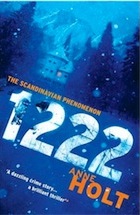
1222
Anne Holt
translated from Norwegian by Marlaine Delargy
Scribner
December, 2011

[from the publisher]

From Norway’s bestselling female crime writer comes a suspenseful locked-room mystery set in an isolated hotel in Norway, where guests stranded during a monumental snowstorm start turning up dead. A train on its way to the northern reaches of Norway derails during a massive blizzard, 1,222 meters above sea level. The passengers abandon the train for a nearby hotel, centuries-old and practically empty, except for the staff. With plenty of food and shelter from the storm, the passengers think they are safe, until one of them is found dead the next morning. With no sign of rescue, and the storm continuing to rage, retired police inspector Hanne Wilhelmsen is asked to investigate. Paralysed by a bullet lodged in her spine, Hanne has no desire to get involved. But she is slowly coaxed back into her old habits as her curiosity and natural talent for observation force her to take an interest in the passengers and their secrets. When another body turns up, Hanne realizes that time is running out, and she must act fast before panic takes over. Complicating things is the presence of a mysterious guest, who had travelled in a private rail car at the end of the train and was evacuated first to the top floor of the hotel. No one knows who the guest is, or why armed guards are needed, but it is making everyone uneasy. Hanne has her suspicions, but she keeps them to herself. Trapped in her wheelchair, trapped by the storm, and now trapped with a killer, Hanne must fit the pieces of the puzzle together before the killer strikes again.

[from the Washington Post]
It must be spooky in Scandinavia, but Holt, Norway’s best-selling female crime writer and a former minister of justice, has a goofy streak that changes the tone of this beguiling book. There are lots of helicopters toward the end and cops running around and worldwide implications (the only weak part is a contrived conversation about America as a world power). The fun goes on in the lobby, where peculiar people conspire, and just outside the hotel, where people hide corpses, or try to. I really loved this snowbound book.


The Fat Years
Chan Koonchung, translated from Chinese by Michael S. Duke
Doubleday/Talese
January, 2012

[from the publisher]

Banned in China, this controversial and politically charged novel tells the story of the search for an entire month erased from official Chinese history.

Beijing, sometime in the near future: a month has gone missing from official records. No one has any memory of it, and no one could care less—except for a small circle of friends, who will stop at nothing to get to the bottom of the sinister cheerfulness and amnesia that have possessed the Chinese nation. When they kidnap a high-ranking official and force him to reveal all, what they learn—not only about their leaders, but also about their own people—stuns them to the core. It is a message that will astound the world.

A kind of Brave New World reflecting the China of our times, The Fat Years is a complex novel of ideas that reveals all too chillingly the machinations of the postmodern totalitarian state, and sets in sharp relief the importance of remembering the past to protect the future.

[from The Observer]

Sitting in the comfortable west, it is easy for critics of China to be censorious about the way so many people accept the rush for wealth accumulation and close an eye to the regime's political record and its human rights abuses. But the crude fact is that, after a terrible century and a quarter up to 1978, in which China went through the worst protracted experience of any nation in history, the present era may, indeed, seem like the "fat years".

To touch on so many issues, either directly or by implication, in such a compelling narrative is a triumph, abetted by an excellent translation by Michael Duke. One can only hope that Chan, who was born in Shanghai and raised in Hong Kong, continues to write about the China of today from his current vantage point in Beijing. That will, in its way, be a test of whether the warnings of The Fat Years come true. We can only hope not.


All Yours
Claudia Piñiero
Translated from Spanish by Miranda France
Bitter Lemon Press
January, 2012

[from the publisher]

Inés is convinced that every wife is bound to be betrayed one day, so she is not surprised to find a note in her husband Ernesto’s briefcase with a heart smeared in lipstick crossed by the words “All Yours”. Following him to a park in Buenos Aires on a rainy winter evening, she witnesses a violent quarrel between her husband and another woman. The woman collapses; Ernesto sinks her body in a nearby lake.

When Ernesto becomes a suspect in the case Inés provides him with an alibi. After all, hatred can bring people together as urgently as love. But Ernesto cannot bring his sexual adventures to an end, so Inés concocts a plan for revenge from which there is no return.

Claudia Piñeiro was a journalist, playwright and television scriptwriter and in 1992 won the prestigious Pléyade journalism award. She has more recently turned to fiction and is the author of literary crime novels that are all bestsellers in Latin America and have been translated into four languages. Thursday Night Widows won the Clarin Prize for fiction and is her first title to be available in English.


A note from Juan Tejeda of the Conjunto Music Festival:
Camaradas: just wanted to send you the official schedule for the Guadalupe Cultural Arts Center's 31st Annual Tejano Conjunto Festival en San Antonio 2012 which will take place from May 15-20 at the Guadalupe Theatre and Rosedale Park. We hope that you and your familia can be with us in May. The new winning poster design for 2012 will be released in early March. I'm also looking for some literature on conjunto music: poetry, short stories, articles (academic and otherwise), etc., for possible publication in the TCF Magazine this year. E-mail me your favorite conjunto story to juantejeda@sbcglobal.net Please spread the palabra and schedule to your friends. Gracias. Juan


GUADALUPE CULTURAL ARTS CENTER

PRESENTS THE 31ST ANNUAL

TEJANO CONJUNTO FESTIVAL EN SAN ANTONIO 2012

Tentative Schedule

Tuesday, May 15/Guadalupe Theatre/10am-12pm/Free for Seniors

Seniors Conjunto Dance

Los Conjunto Kingz de Flavio Longoria

with Rachel Longoria

Tuesday, May 15/Guadalupe Theatre/7pm/Free Admission

The Making of Juanito’s Lab

Producers/Directors Guillermina Zabala and Enrique Lopetegui

discuss the making of Juanito’s Lab, a new documentary film

about Juanito Castillo, the 22-year-old blind button accordionist

and musical wiz-kid konjunto jazz loko karnal de San Anto.

Some footage from the still-in-the-making documentary will be shown.


Wednesday, May 16/Guadalupe Theatre/7:30-11pm/$10 pre-sale $15 at the door

New Directions in Conjunto Music

7:30 Nick Gaitán and The Umbrella Man (Houston)

8:30 Piñata Protest (San Antonio)

9:30 La Santa Cecilia (Los Ángeles)


Thursday, May 17/Guadalupe Theatre/6:30-9pm/$65 & $100**

Special 31st Annual Gala Celebration Dinner & Baile

Honoring the Inductees into the Conjunto Music Hall of Fame

Best of the 30th Annual Tejano Conjunto Festival 2011 CD Release Party

8:15 Bernardo y sus Compadres

9:00 Rick De la Rosa y Los D Boyz


Friday, May 18/Rosedale Park/6pm-12am/$15 per person*

5:30 Opening Ceremonies/Poster Contest Exhibit & Awards

Puro Conjunto Pesado: Dos de Houston, Corpitos y el Valle

6:00 Impozzible (Houston)

7:00 Los Tremendos Cinco (Corpus Christi)

8:00 Los Monarcas de Pete y Mario Díaz (Houston)

9:00 Los Fantasmas del Valle (Mercedes)

10:00 Boni Mauricio y Los Máximos (Corpus Christi)

11:00 Los Dos Gilbertos (Edinburg)


Saturday, May 19/Rosedale Park/1pm-12am/$18 per person*

Puro Conjunto Pesado: Hecho en Tejas

1:00 Student Showcase: Guadalupe Cultural Arts Center * Conjunto Heritage Taller

Conjunto Palo Alto/Palo Alto College * Estrellas de Acordeón/Houston Accordion Performers Palmview High School/La Joya Independent School District

3:00 La Familia Mauricio (Corpus Christi)

3:30 Crystal n The Crew (Pasadena)

4:10 Los Conjunto Kidz (Victoria)

5:00 Susan Torres y Conjunto Clemencia (Austin)

6:00 Conjunto Prestigio (Dallas)

7:00 Edgar Vásquez y sus Muchachos (Laredo)

8:00 Rubén De la Cruz y su Conjunto (Edcouch)

9:00 Joel Guzmán Sarah Fox y Conjuntazzo (Austin)

10:00 Rio Jordán featuring Juanito Castillo (San Antonio)

11:00 Albert Zamora (Corpus Christi)


Sunday, May 20/Rosedale Park/1-11pm/$18 per person*

Puro Conjunto Pesado: Así se baila en San Anto

1:00 Los Padrinos

1:40 Los Hermanos De León

2:40 Eddie “Lalo” Torres y Anita Paiz y su Conjunto

special presentation by Salvador García y Los Pavos Reales

3:40 Lobo IV

4:40 Eva Ybarra y su Conjunto

5:40 Max Baca y Los Texmaniacs

special presentation by Dwayne Verheyden

6:40 Santiago Jiménez Jr. y su Conjunto

7:40 Bene Medina y el Conjunto Águila

special presentation by Nick Villarreal

8:40 Mingo Saldívar y sus Tremendos Cuatro Espadas

9:40 Flaco Jiménez y su Conjunto

10:30 Accordion Conjunto Jam


WORKSHOPS

Saturday, May 19/Guadalupe Theatre/9-10:30am/$40

Accordion Tuning, Maintenance & Repair Workshop

Tim Schofield, Hohner Accordion Repair and Parts Supervisor,
will teach you how to tune the reeds of your accordion and
maintain it in tip-top playing shape. Accordion tuning kits
will be available for purchase. For registration, call 210.271.3151.

Saturday, May 19/Guadalupe Theatre/10:30am-12:30pm/$40

Button Accordion & Bajo Sexto Workshops

Master Button Accordion and Bajo Sexto maestros Joel Guzmán

and Max Baca will conduct this concurrent two-hour workshop.

Basic chords and scales will be explored, along with the playing and

accompaniment of different conjunto rhythms. The two workshops will

come together at the end for an impromptu performance and conjunto jam.

For registration, call 210.271.3151.

* 3-Day Rosedale All-Events Pass

$35 GCAC Members

$40 Non-Members

** $65 Conjunto Music Hall of Fame Dinner & Baile,

plus, a Best of the Tejano Conjunto Festival CD and TCF 2012 Magazine

$100 Conjunto Music Hall of Fame Dinner & Baile,

plus, a 3-Day Rosedale All-Events Pass,

a Best of the Tejano Conjunto Festival CD and a TCF 2012 Magazine

For reservations call 210.271.3151. Limited Seating

For info, 210.271.3151

www.guadalupeculturalarts.org


Water & Power


BETRAYAL


A horrid double cross propels two brothers headlong into desire and revenge. A tale of the violence and corruption of L.A. politics and of ruthless ambition. Dark, hilarious, political, satirical and fearless.

water and power
Water and Power


Su teatro logo


Water & Power
Written by Richard Montoya for Culture Clash
Directed by Phil Luna and Anthony J. Garcia

March 8-25
TH., FRI., and SAT. 7:30 p.m.

$20 gen. $17 stu/sen COMADRES!!!! 12 tix - $12 each
2-4-1 Thursdays when you ask for discount (off of general admission).

Su Teatro Performing and Cultural Arts Center
721 Santa Fe Dr.
Denver, CO 80204
303-296-0219


Gearing Up For Spring - photo by Flo


That's it for the exciting, cold, and wet month of February. Later.


Thursday, February 23, 2012

Ópera afrocubana, y "Melissa's Gift"

 “Cubanacán: Una revolución de formas”

El compositor Roberto Valera en la reciente sesión de trabajo en La Habana
Foto por Charles Koppelman


Una ópera afro-cubana sobre la creación del Instituto Superior de Arte (ISA) se dirige al estudio de grabación.

En el 2002, el cineasta de California Charles Koppelman descubrió el libro Revolución de Formas (Revolution of Forms), escrito por el arquitecto John Loomis, el cual describe el diseño y construcción del aún inconcluso Instituto Superior de Artes (ISA) en La Habana. Ahora, después de una década de desarrollo y experimentación, Cubanacán: Una revolución de formas (titulo de trabajo) se dirige hacia un estudio de grabación de La Habana.

Aunque Koppelman no había producido una ópera antes, él ya sabía que esa era la forma en que quería contar la historia. 

"Eso no dista mucho de la producción de una película”, dice. "Hay aspectos que son propios de la ópera, pero los principios de hacer algo de la nada es creativamente similar".


Además de ser la fuerza impulsora del proyecto, Koppelman escribió el libreto de la ópera. Sin embargo, el equipo creativo detrás de Cubanacán está formado principalmente por cubanos, incluyendo el compositor Roberto Valera y la directora musical Zenaida Romeu.

"Roberto vive en La Habana y ha estado impartiendo clases en el ISA desde hace muchos años, en la facultad de música", dice Koppelman. 

"Es muy conocido en Cuba—no así en el exterior del país. Pero pronto lo será." 

A pesar de que Valera ha compuesto una variedad de géneros musicales, desde música orquestal y de cámara hasta partituras para cine y televisión, esta es su primera ópera. Romeu, quien estudió en el ISA con Valera, proviene de un “amplio linaje de conocidos músicos cubanos”, dice Koppelman, y es la fundadora del conjunto femenino de música de cámara Camerata Romeu. 

"El grupo toca regularmente en la Basílica de San Francisco, en La Habana", Koppelman dice, añadiendo que Romeu tiene su propio programa de televisión. "En Cuba, ella es una superestrella". . . 

(De Cuban Art News; para leer más, pulse aquí)


*****************


Olin Dodson on his memoir Melissa's Gift

Melissa’s Gift is a memoir of a most unusual relationship set in Central America and the United States. It describes how, 43 and unmarried, I was found by my daughter, Melissa. She was 11 and lived with her mother in a small town in Costa Rica. I had no knowledge of her existence and my immediate reaction was shock, surprise and utter delight. There was fear, as well, because Melissa had the incurable genetic disease of cystic fibrosis. Our relationship was a painfully rewarding challenge until she passed away at the age of 18.

Significant portions of the book take place in Costa Rica where I repeatedly travelled to visit Melissa and her mother. The story combines the expected linguistic and cultural barriers with the complexities between me and Melissa, her mom and extended family, and the tensions surrounding my attempts to save her life and be a loving father. Numerous dreams are sprinkled throughout the narrative, providing an intriguing backdrop to the unpredictable twists and turns of the story.

After Melissa passed away, with the benefit of only 6 years together, I yearned to have more stories about her. Returning to Costa Rica-- and Nicaragua-- I was fortunate to have a series of experiences which transformed my life nearly as dramatically as the phone call which broke the news of my fatherhood.   
Writing and shaping the story of my life with-and after-Melissa became an obsession for five years. Periods of every day were spent writing: before breakfast, during lunch breaks, after work and on weekends. I would wake up in the middle of the night to write down revisions and solutions to problems in the text. I took a journal on long hikes to write down ideas. Melissa was continually next to me throughout the writing process as my heart broke all over again. By the time the book was completed, my grief had been constructively repositioned in my life.

Melissa’s Gift is a testament to the power of love in my life and Melissa’s courage and integrity. The book also reveals her legacy, one that continues to impact the lives of myself and others in very concrete ways fifteen years after her passing . 

Alfredo Vigil wrote this about the book: “Rarely have I encountered a story like this, told with such raw emotion and power.” Melissa’s Gift is published by Bay Tree Publishing.

Rudolfo Anaya to Receive LA Times Lifetime Achievement Award


32nd Annual Los Angeles Times Book Prizes Finalists Announced
Ceremony to Be Held at USC’s Bovard Auditorium with Tickets Available to Public

LOS ANGELES – February 21, 2012 – The Los Angeles Times Book Prizes today announced its 2011 finalists for honors to be unveiled at a public ceremony the evening of April 20th at the University of Southern California’s iconic Bovard Auditorium. The event is the preface to the 17th-annual Los Angeles Times Festival of Books, the nation’s largest public literary festival, to be held on USC’s campus in the heart of L.A.’s Downtown Arts & Education Corridor on April 21st and 22nd.
The Book Prizes recognize 50 distinguished works in 10 categories. The complete list of finalists in biography, current interest, fiction, first fiction (the Art Seidenbaum Award), graphic novel, history, mystery/thriller, poetry, science and technology, and young adult literature can be found at www.latimes.com/bookprizes.
National Medal of Arts winner Rudolfo Anaya is the recipient of the Robert Kirsch Award for lifetime achievement. New Mexico-born Anaya’s award-winning 1972 debut novel “Bless Me, Ultima” is the most widely read and critically acclaimed novel in the Chicano literary canon. It was followed by the sequels “Heart of Aztlan” and “Tortuga,” and Anaya’s compendium of works include “Albuquerque,” the Sonny Baca quartet of detective novels and a number of books for children and young adults. Throughout his career Anaya also served as a professor in the University of New Mexico’s Department of English Language and Literature.
The Innovator’s Award, which spotlights cutting-edge business models, technology or applications of narrative art, will be presented to Figment. Co-founded and led by Jacob Lewis, Figment is a digital writing community with connections to – and roots in – traditional publishing, a space where young writers and readers are encouraged to share and comment on each other’s creativity. An early adaptor of the digital landscape as a publishing and literary territory, Figment is a site in constant evolution, developing and expanding to meet both the needs of its users and its own digital imperatives.
Tickets for the Book Prizes ceremony will be available for purchase at 10 a.m. Monday, March 26th, and additional information will be posted to www.latimes.com/festivalofbooks. Finalists and winners of the Los Angeles Times Book Prizes are selected by judging panels composed of writers who specialize in each genre. Further information about the Book Prizes, including past winners, is available at www.latimes.com/bookprizes.


Wednesday, February 22, 2012

New Books From Raven Tree Press

THE RAIN FOREST PARTY
FIESTA EN EL BOSQUE TROPICAL
Written and Illustrated by Lorraine Dey


Full–Color • 9 x 11 • 32 pages
Jacketed Hardcover; Bilingual
Publication Date: May 2012

Hector–Armando was a little Armadillo who wanted to find his special talent that he could share with his friends at the big rain forest party. As he walked into the forest he noticed his friends were all busy collecting things and practicing their own talents to get ready for the big party. As he came upon his many friends, he would try to do the same things they were doing, but he just wasn’t fast enough, or his legs were too short, or he wasn’t tall enough. He tried again and again, but became sad to realize he may not have any special talents.

He curled up to hide and suddenly became aware of a hidden talent that was there all along. Something mother nature gave him but he forgot about. He would share a very special talent with friends at The Rain Forest Party.

 PEDRO THE PIRATE
Written by Tim Hoppey
Illustrated by Dianna Bonder


Full–Color • 9 x 11 • 32 pages
Jacketed Hardcover; English (with Spanish clues)
Publication Date: May 2012

Pedro yearns for the pirate’s life. Though he is only the cabin boy on Captain Crossbones’ ship, he daydreams about becoming a real pirate. When that chance finally comes, Pedro steals a mermaid’s gold locket. The mermaid chastises Pedro, but he laughs and boasts, “It’s what we pirates do!” That initial boast, however, soon gives way to regret as Pedro contemplates his actions. He resolves to return the locket and to free the mermaid that Captain Crossbones holds captive. The outcome is a happy one as Pedro expresses his contrition to the mermaid, and assures her that the pirate’s life is not for him.

 MR. BIGGS AT THE CIRCUS
EL SR. GRANDE EN EL CIRCO
Written and Illustrated by Kevin Bloomfield

Full–Color • 9 x 11 • 32 pages
Jacketed Hardcover; English and Bilingual
Publication Date: May 2012

Mr. Biggs is a very curious Sasquatch who has huge feet and an even bigger heart. One day, as he hikes next to a creek, he finds a bright and colorful circus poster. He has never been to the circus before and it looks like fun. He sets off to discover all of the exiting adventures the circus has to offer.
Come along with Mr. Biggs on his journey as he flips on the trapeze, dances with huge bear, stomps with elephants and much, much more. Will the giant Mr. Biggs find out he fits in a circus…or is he just too big? One thing is for sure… he’ll have tons of fun along the way!

Mr. Biggs at the Circus is a hilarious and heart–warming story for both the young and young–at–heart, with vividly wacky illustrations which will make you laugh out loud with every turn of the page.


THE ADVENTURES OF MARCO FLAMINGO IN THE CAVE
LAS AVENTURAS DE MARCO FLAMENCO EN LA CUEVA
Written and Illustrated by Sheila Jarkins


Full–Color • 9 x 11 • 32 pages
Jacketed Hardcover; Bilingual
Publication Date: May 2012

Marco Flamingo is off on a cave adventure in this fourth book in the Marco series. But this time, Marco’s friends—Coral, Shelly and Webb—join him. When Marco spots caves, he is eager to discover what he will find inside. Marco’s flamingo friends are timid and make excuses for staying safely outside the cave. But when they are scared by the sight of a leopard, a snake and a vulture will they take their chances inside the cave? And what has happened to Marco, the friends wonder. Why hasn’t he come out? Come join Marco’s friends as they explore the cave in search of Marco and discover what Marco finds inside the cave. You are in for a big surprise.