Note from Michael Sedano
Librarians, book collectors, voluminous readers, and all sorts of people interested in US Literature may already have received their copy of Libros, Libros, subtitled New In Chicano(a) and Latino(a) Literature. Editor Raymundo Eli Rojas packs the 33 .pdf pages of books news and reviews in this Late Summer 2005 edition of his Pluma Fronteriza endeavor. And don't omit a visit to Ray's blog.
Las Blogueras Los Blogueros

Click to email a writer. Denver CO • Pasadena CA • The San Fernando Valley CA • Eagle Rock CA • Lincoln NE • Glendale AZ • Santa Barbara CA • Lincoln Heights CA • Kansas City MO • Santa Monica CA
Saturday, September 10, 2005


Friday, September 09, 2005
Buffalos And Poets
Manuel Ramos
Oscar Zeta Acosta
Letter to Playboy, October 15, 1973
“Sir:
Your November issue ... on Mr. Hunter S. Thompson as the creator of Gonzo Journalism, which you say he both created and named ... Well sir, I beg to take issue with you. ... [I]n point of fact and methodology of reporting crucial events under fire and drugs, which are of course essential to any good writing in this age of confusion - all this I say came from out of the mouth of our teacher who is known by the name of Owl. These matters I point out not as a threat of legalities or etcetera but simply to inform you and to invite serious discussion on this subject.
Yours very truly,
Oscar Zeta Acosta
Chicano Lawyer
P.S. The guacamole and XX he got from me.”
We mentioned Acosta last week. Following up on that mention, here is a list of books by and about the mysterious and still controversial “first Chicano attorney.”

Acosta published two novels : The Autobiography of a Brown Buffalo (Straight Arrow Books) and The Revolt of the Cockroach People (Straight Arrow Books). Brown Buffalo was published in 1972, the same year as Rudolfo Anaya’s Bless Me, Ultima and Rodolfo Acuña’s Occupied America: A History of Chicanos. Cockroach People appeared in 1973. Since then, Acosta's books have been reprinted by Vintage (1989). These are staggering works of imagination, reflections of the times, and rude and sometimes embarrassing insights about the author. Among students and other readers I have encountered only two reactions to these books - admiration or aversion.

Ilan Stavans went on a Brown Buffalo tear for a while. His academic and somewhat subjective scrutiny of a man he described as “the king of rascuachismo, el rey of low taste” produced two books: Bandido: Oscar “Zeta” Acosta and the Chicano Experience (HarperCollins, 1995), reprinted as Bandido: The Death and Resurrection of Oscar "Zeta" Acosta (Northwestern University Press, 2003), and Oscar “Zeta” Acosta: The Uncollected Works (Arte Público Press, 1996). Stavans also included a few pages on Acosta in Latino USA: A Cartoon History (Basic Books, 2000), a book on which he collaborated with Lalo Alcaraz. The Uncollected Works includes Perla Is A Pig, the only story published during Acosta’s lifetime (Con Safos, 1970), as well as three previously unpublished short stories.
In 2003, Floricanto Press published Love & Riot: Oscar Zeta Acosta and the Great Mexican American Revolt by Burton Moore. (We should provide more information here on La Bloga about Floricanto Press one day - it is publishing some interesting works). Moore knew Acosta and witnessed many of the events of the late 1960's and early 1970's and his short book (126 pages) is an homage to a “folk hero.” This is a good, quick read with a lot of background color, personal details and unique references. This was Moore’s last book before he died. Mil gracias to Jesse Tijerina for turning me on to this book and for the first edition of The Revolt of the Cockroach People.
Poets in Town - Updated Website
From the Tattered Cover website-

Sheryl Luna reads from Pity The Drowned Horses, winner of the Andres Montoya Poetry Prize, on Monday, September 12, 7:30 PM, at the LoDo Tattered Cover (Denver). This collection is about "place and family and home, and many of the poems in it are set in the desert southwest border town of El Paso, Texas." Scroll down this page on La Bloga for Daniel Olivas's review of Luna's collection.
Lucia Blinn also will read from her first collection of poems and stories, Lucia, Passing For Normal. Blinn's poems are described as "wry, truth-telling, hilarious and, occasionally, rueful, and her stories are a rich stew of characters and images that stir the reader's own reminiscences."
Por fin, I've updated my website a bit - some news, a couple of events. Find it here.
Oscar Zeta Acosta
Letter to Playboy, October 15, 1973
“Sir:
Your November issue ... on Mr. Hunter S. Thompson as the creator of Gonzo Journalism, which you say he both created and named ... Well sir, I beg to take issue with you. ... [I]n point of fact and methodology of reporting crucial events under fire and drugs, which are of course essential to any good writing in this age of confusion - all this I say came from out of the mouth of our teacher who is known by the name of Owl. These matters I point out not as a threat of legalities or etcetera but simply to inform you and to invite serious discussion on this subject.
Yours very truly,
Oscar Zeta Acosta
Chicano Lawyer
P.S. The guacamole and XX he got from me.”
We mentioned Acosta last week. Following up on that mention, here is a list of books by and about the mysterious and still controversial “first Chicano attorney.”
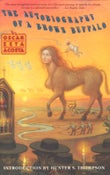
Acosta published two novels : The Autobiography of a Brown Buffalo (Straight Arrow Books) and The Revolt of the Cockroach People (Straight Arrow Books). Brown Buffalo was published in 1972, the same year as Rudolfo Anaya’s Bless Me, Ultima and Rodolfo Acuña’s Occupied America: A History of Chicanos. Cockroach People appeared in 1973. Since then, Acosta's books have been reprinted by Vintage (1989). These are staggering works of imagination, reflections of the times, and rude and sometimes embarrassing insights about the author. Among students and other readers I have encountered only two reactions to these books - admiration or aversion.

Ilan Stavans went on a Brown Buffalo tear for a while. His academic and somewhat subjective scrutiny of a man he described as “the king of rascuachismo, el rey of low taste” produced two books: Bandido: Oscar “Zeta” Acosta and the Chicano Experience (HarperCollins, 1995), reprinted as Bandido: The Death and Resurrection of Oscar "Zeta" Acosta (Northwestern University Press, 2003), and Oscar “Zeta” Acosta: The Uncollected Works (Arte Público Press, 1996). Stavans also included a few pages on Acosta in Latino USA: A Cartoon History (Basic Books, 2000), a book on which he collaborated with Lalo Alcaraz. The Uncollected Works includes Perla Is A Pig, the only story published during Acosta’s lifetime (Con Safos, 1970), as well as three previously unpublished short stories.
In 2003, Floricanto Press published Love & Riot: Oscar Zeta Acosta and the Great Mexican American Revolt by Burton Moore. (We should provide more information here on La Bloga about Floricanto Press one day - it is publishing some interesting works). Moore knew Acosta and witnessed many of the events of the late 1960's and early 1970's and his short book (126 pages) is an homage to a “folk hero.” This is a good, quick read with a lot of background color, personal details and unique references. This was Moore’s last book before he died. Mil gracias to Jesse Tijerina for turning me on to this book and for the first edition of The Revolt of the Cockroach People.
Poets in Town - Updated Website
From the Tattered Cover website-
Sheryl Luna reads from Pity The Drowned Horses, winner of the Andres Montoya Poetry Prize, on Monday, September 12, 7:30 PM, at the LoDo Tattered Cover (Denver). This collection is about "place and family and home, and many of the poems in it are set in the desert southwest border town of El Paso, Texas." Scroll down this page on La Bloga for Daniel Olivas's review of Luna's collection.
Lucia Blinn also will read from her first collection of poems and stories, Lucia, Passing For Normal. Blinn's poems are described as "wry, truth-telling, hilarious and, occasionally, rueful, and her stories are a rich stew of characters and images that stir the reader's own reminiscences."
Por fin, I've updated my website a bit - some news, a couple of events. Find it here.
Thursday, September 08, 2005
Un Canto Azteca

Title: Mi Hija, Mi Hijo, El Aguila, La Paloma: Un Canto Azteca
Author: Ana Castillo, Susan Guevara (Illustrator)
Publisher: Dutton Juvenile; (March 1, 2000)
ISBN: 0525458670
Price: 12.99
Ana Castillo, the reknowned Xicana poet, novelist and essayist has written one of the loveliest little children’s book I’ve ever seen. It is a blessing and a prayer based on an old Aztec flor y canto beautifully illustrated by Susan Guevara.
The book is small and looks something like the facsimiles of the old Aztec codices. It is written Spanish. It begins with Mi Hija, La Paloma, or My Daughter, the Dove; a canto designed to teach little girls of their preciousness, beauty and how to live their lives. It has a charming lilt to it. The first stanza begins:
“Mi hija, preciosa,
como un collar de oro
preciosa como una pluma de quetzal,
tu eres mi sangre,
mi imagen - ”
“My daughter, precious
like a golden necklace
like the feather of a quetzal,
you are my blood
my image - ”
como un collar de oro
preciosa como una pluma de quetzal,
tu eres mi sangre,
mi imagen - ”
“My daughter, precious
like a golden necklace
like the feather of a quetzal,
you are my blood
my image - ”
It continues to extol the virtues of the daughter as well as giving some life lessons, reminding the daughter not to be lazy, to study, to work. It tells that a girl must learn to live her life on the right path.
The second section is written for a boy, Mi Hijo, El Aguila, El Tigre or My Son, The Eagle, The Tiger begins:
“Mi hijo,
aguila y tigre,
ala y cola
Hijo mio,
Tan querido, tan amado – ¡escuche!”
“My son,
eagle and tiger,
wing and tail,
My son,
So dear, so loved – listen!”
aguila y tigre,
ala y cola
Hijo mio,
Tan querido, tan amado – ¡escuche!”
“My son,
eagle and tiger,
wing and tail,
My son,
So dear, so loved – listen!”
It goes on to speak of ancestors, of pride, or what our ancestors have left for us in lessons, in our culture, our heritage. It tells of doing good works, becoming a good man, of living life with care and dignity. It asks that the son listen with his heart and go on to become a good man.
The book is illustrated with Aztec symbols from the old codices as well as delicate and powerful paintings on amatl paper or tree bark in the indigenous tradition. The paintings, while done in the style of the ancient people are of contemporary children and their parents and surprisingly, fit in perfectly with the Aztec symbols and images.
It is an astounding message, a lovely and loving book and a testament to Ms. Castillo’s love of our culture. She and Ms. Guevara have created a lasting and honorific tribute to our ancestors as well as a beautiful and contemporary moral poem for children and parents to enjoy for years to come. - Gina MarySol Ruiz
Wednesday, September 07, 2005
San Anto Chiclit bit, and a small piece
I was interested to learn that “Punta de Partida,” a seminar on Chicana Chicano literature, is coming this month to San Antonio’s University of Texas campus. Co-sponsored by UNAM, Mexico’s National University, the seminar brings writers John Phillip Santos and Helena Maria Viramontes together with academics Norma Cantu, Axel Ramirez, and Gerardo Kleinberg. UNAM’s Mario Melgar Adalid moderates. Conferences like this make me long to be a denizen of a university campus somewhere. La partida de que, I'm wondering. At any rate, I'll be looking for the proceedings, and will get back to you on anything interesting.
I was surprised to learn that UNAM has a San Antonio campus. An intellectual outpost? A retreat for exiled scholars? Had I paid attention to the news blurb I would have noted that Melgar Adalid is director of UNAM-SA,USA. When I phoned for more information and got a UNAM recorded message, the realization sank in.
UNAM's a favorite spot of mine. A few years back, after reading Alejandro Morales' Death of an Anglo and finding some curious stuff, I visited the central biblioteca to find the novel in its original Spanish. There were dozens copies of Verdad Sin Voz, its Mexican title, some one reserve for a class. Moreover, UNAM's collection of Chicana Chicano titles was extensive. Glad to see Mexico's interest in chiclit still alive and well.
Speaking of alive and well, the news from Hurricane Katrina gets worse by the day. Will heads roll? Just as in Iraq, where the US failed to plan or think matters all the way through, the Gulf Coast looks like another quagmire. If there's a "law of unintended consequences," it will come to full fruition in the aftermath of relocating all the victims. Here's one vision of same.
The Man in the Spare Bedroom
The eviction riots of 2008 marked the turning point. Thousands of Katrina refugees massed in the streets of Las Vegas, barricaded the sports stadia of Houston and San Anto, took over private homes. Chanting “Hell No, We Won’t Go!” even as riot police and National Guard troops knocked bloodied protestors to the ground, some walked, others were dragged onto buses for transport out of town and out to the permanent refugee camps set up on remote indian reservation land.
Seven years had passed and one man remained in our spare bedroom. Mike was the last of the nine souls whom we’d welcomed into our home in September 2005. The rest of us survived the cholera that killed three guests shortly after arriving. One by one, the others drifted off until, by Dia de los Muertos 2012, only Mike remained. Mike never gave us his surname. “Mike is enough,” he’d always answer.
Mike was quiet and industrious. Most nights, the only sign of his presence was hearing his shopping cart wheeling up and down the driveway on his forays to scavenge aluminum and plastic from recycling barrels. During the day he either kept to his room or reported to the jornaleros centro to pick up odd jobs.
Mike never joined us for meals. Even during those months when we and the survivors gathered for mealtime, Mike’s chair sat empty. We would leave a plate for him at night. In the morning we would find his plate washed and put away. "Everyone recovers in their own time," my wife would remind me, when I grew impatient at Mike's lingering occupation of the upstairs bedroom.
That Sunday, Mike came downstairs as I was cooking. “Coffee?” I asked. To my surprise, Mike poured himself a mug and sat.
I mounded chorizo and egg, sliced tomatoes, and frijolitos chinitos on his plate. “My favorite,” Mike exclaimed with delight.
Seizing the moment, I warned him about my chile pequin salsa, then taught him how to taquear his chow. “I never ate greaser
style before,” Mike said, stuffing a tort-wrapped morsel into his mouth. I smiled but ignored Mike's offhand remark. He was, after all, a guest.
I asked Mike about the boom town New Orleans had become. Could he find work there?
Mike shook his head. “I don’t think the government would have me back.”
My ears perked up. “Back?” I asked.
“Yeah, back." Mike pushed a piece of tortilla into the beans, looked up and spoke, "Before Bush converted the nation to the Monarchy, I worked for him in DC.”
I stared into his eyes. “Mike,” I asked, "what did you do, before Katrina?
“Before...K...Ka..." it was either the salsa or the word he choked on. Mike swallowed some toronja juice then spoke. "Me, I was the director of FEMA. Is there more chorizo?”
Katrina Relief Resources
Manuel Ramos
Until a new literary post here on La Bloga, here is a good source of information for victims of Katrina, especially those needing legal help.
Click on this page for links to general relief and legal resources as well as information on nonprofit legal services providers in states affected by Hurricane Katrina.
Also, recognizing that many of the victims of Hurricane Katrina have lost documents establishing their identity and employment authorization, the Department of Homeland Security (DHS) has announced that it will not sanction employers for hiring victims of Hurricane Katrina who are otherwise eligible for employment but are unable to provide the necessary documentation. Employers still need to complete the Employment Eligibility Verification Form (I-9) to the extent possible, but should note at this time that the documentation normally required is not available due to the events involving Hurricane Katrina. This policy will be in place for 45 days. At the end of 45 days, DHS will review the policy and make further recommendations. DHS has issued a press release.
Monday, September 05, 2005
SPOTLIGHT ON GARY D. KELLER
 Monday’s post from Daniel Olivas…
Gary D. Keller is Regents' Professor and Director of the Hispanic Research Center at Arizona State University. He is the author of numerous books and articles of scholarship and creative literature that treat Mexican-American and Latino art, film, literature, linguistics, and language policy. Keller is also the General Editor and Director of Bilingual Review/Press (“BRP”) which publishes literary works, scholarship, and art books by or about U.S. Hispanics under the name Bilingual Press/Editorial Bilingüe. BRP also produces the literary/scholarly journal Bilingual Review, distributes more than 1,000 titles by other presses, and is the exclusive distributor of books by Latin American Literary Review Press.
Most recently, Keller co-authored Chicano Art for Our Millennium: Collected Works from the Arizona State University Community (Bilingual Press), which showcases more than 120 works of Chicana and Chicano art and provides a good representation of the art movement for general readers as well as students. Created in part as a catalog for the 2004 exhibition of the same name, the book is also designed to serve as a useful tool for teaching Chicana/o art from the elementary grades through graduate school. Art aficionados will relish the striking full-color images in this coffee-table-quality volume. Themes include community values, borders and biculturalism, spirituality, and cultural icons. This is the third volume in the series.
EDITORIAL INTERNSHIP: Tu Ciudad Los Angeles magazine is seeking motivated and talented interns to assist with editorial duties including but not limited to research and fact-checking for its print magazine and online outlets. Ideal candidates possess excellent written and verbal communication skills in English and Spanish, as well as a passion for providing the hippest and most relevant cultural and lifestyle news to L.A.’s English-speaking Latinos. Interns must be available to work in the magazines Wilshire Boulevard office between 10 a.m. and 5 p.m. for a minimum of three consecutive months. Candidates must be college students. Internship positions are unpaid. Interested persons should send a cover letter, resume, and writing samples to edit@ciudadmag.com.
A LITTLE POETRY: Here is a poem by Leticia Hernández-Linares:
Cars That Go Boom
cars that go
boom
scrape the ground
you feel every groove
the pulse of the bass
carries you through the streets
that you are so excited to ride down
in that black lowered mini-truck
that goes
boom
but these are the poor boy rods
not the ones
with glossy lettered rear windows
in hot pink and turquoise
like the Aqua Net can
that she carries in her backpack
spray spray in the morning
groggy shufflin' of slippers
the father swears
she's killing herself with that poison air
and taking them all down too
question
how to know you're a red neck
answer
if you think bond-o is a color paint
wrong
never been to my neighborhood
where bond-o flags
that the wind can't move
lay crumpled in driveways
where Mexicans eat rednecks for breakfast
in their Menudo soup hangover broth
that the mother pops
out of the can
in the Sunday aftermath
so glamorous those cars that vida
like the Sheila E. song
sparkly and forbidden to ride
but once you're in
its not all that special really
it's actually kind of uncomfortable
feels kind of wrong
like the bottom shouldn't be
so close to the ground
and what if he doesn't really like her
she can hear the metal
scratching
but the bass is too high
and all you feel is the throbbing
and picture
the windows bubbling out from the sound
like in a cartoon of a spaceship
te buscan
they are calling you the father says
when the familiar vibrations
shake the house
it's like
a mating call
pointy shoed dj wannabe
too much gel in the hair vato
wants you and he asks hey
you like the cars that go
boom
when the ride is over once you
get out
you feel just like that old school jam says
like Expose revealing
what the Cover Girls are hiding
with the female
always heart broken
always hard spoken
feels like she's been dragging
more than cruising
more than loving
later you find out
all there is to like
about the cars that go
boom
is the memory
[From the chapbook Razor Edges of My Tongue (Calaca Press).]
BUSH AND LITERATURE: The online literary journal, Outsider Ink (which was named one of the top five markets for new writers by Writer's Digest in the June 2003) has just released a special edition of art and literature concerning the Bush administration. I have a little story included in the issue. Here’s the contents:
Fiction: The Destruction of the World Trade Center Considered as an Aerial Relay Race by Dan McNeil; Hit by Daniel A. Olivas; Looting In Irak by Robyn Singer Rose; The Day The World Ended by Devan Sagliani; Fugue by Ted Sappington; Spit by Joseph P. Thayer
Poetry:Corey Habbas
Artwork:Bill Pierce
Story-Photo Collage:Alice Wittenberg
All done. I’m back from Kaua’i and I had promised to tell you more about those colorful roosters and chickens that run wild on the island. But I leave that for another day. Until next Monday, enjoy the intervening posts from my compadres at La Bloga. Also, do what you can for those suffering from Hurricane Katrina. My compa listed several fine organizations on La Bloga last week...good resources there. ¡Lea un libro!
Friday, September 02, 2005
Music of the Mill, A Few New Books and A Plea
Manuel Ramos
In this post: Luis J. Rodriguez, Ana Castillo, Lorna Dee Cervantes, Martin Limón, and Katrina Relief.
Music of the Mill
Luis J. Rodriguez

What could be more natural than a Chicano working class novel? In fact, saying "Chicano working class" is almost redundant. Work (hard, sweaty, mind-numbing work) and Chicanos go hand-in-hand. It’s a little surprising that there haven’t been more novels that directly deal with the labor aspects of Chicano life or that at least have the working class atmosphere. Dagoberto Gilb’s fiction comes to mind, as do the stories in Michael Jaime-Becerra’s Every Night Is Ladies’ Night. And, for sure, the classic farm worker literature of Tomás Rivera and Helena María Viramontes would qualify.
In any event, Music of the Mill by Luis J. Rodriguez is working class to the core. The book tells the story of the Salcido family over three generations, beginning in 1943 in northern Mexico and finishing almost in the present in an L.A. barrio. The family patriarch, Procopio, finds work in the massive Nazareth steel mill, and thus begins the hate-love relationship between the Salcidos and the mill. When at last the mill shuts down, the family has sent almost every male in the family to work in the mill. And without the mill the family flounders.
The book is rich with descriptions of working in the mill, especially from the millwright’s perspective. Rodriguez places the reader in the day-to-day toil of the workers. Rodriguez knows the heat, noise, danger and intensity of the mill (he was a steelworker in the Bethlehem Steel Plant of Maywood, California), and he conveys his knowledge in clear, crisp prose, almost as hard as the steel produced by the mill.
The story eventually centers on Johnny, Procopio’s son. A former gang member and ex-con, Johnny finally straightens out, with the help of a good woman, of course, and much of the book is taken up with his struggle for necessary reforms in the working conditions inside the mill, and with his fight against corruption in the workers’s union. Rodriguez presents a varied and intriguing cast of secondary characters: Communist organizers, Ku Klux Klan thugs, the first women steelworkers, union bureaucrats, corporate criminals, Mexika activists, pintos, workers of all races and ethnicities, and many more. They all come together in a story that rings as true as the pounding of a forge from the 32-inch mill onto red-orange steel ingots.
The final section of the book departs from the previous story line; in fact, to accent the departure, it is presented in the first person point-of-view of Johnny’s daughter, Azucena. For me, this was the weakest part of the book. I understand that the story had to go into the long-lasting effect of the closing of the mill on the community and families who had worked in it for years. But once the story leaves the mill, it meanders through drug abuse, domestic abuse, criminal life on the streets, and children who fall by the wayside (even though they have what appear to be the greatest parents and supportive family) before a semblance of balance is restored in the Salcido family.
Even so, Rodriguez has crafted a book that should sit on anyone’s list of required reading if for no other reason than that he has given a strong and valid voice to the working men and women of an industrial era that has vanished for good. Rodriguez’s book ensures that their lives and struggles will not be forgotten.
New Titles For The Fall
Almost time for the fall books - it's good news when the books start rolling from the presses. Here are a few, many more to come:
Ana Castillo has two new works, both published by small presses.
Here’s what the Wings Press website says about the play, Psst...I Have Something to Tell You, Mi Amor: "Sister Dianna Ortiz traveled as a missionary in the early 1980s to the highlands of Guatemala, where she taught Mayan children to read and write. On November 2, 1989, Sister Dianna was sitting in the garden of her convent when she heard a man behind her say, in Spanish, Hello, my love. We have some things to discuss. She was abducted by this man, who together with others transported her to a jail where she was brutally tortured. One of her torturers ––their boss, in fact –– was a North American, probably associated with the US government in some capacity. Miraculously, Sister Dianna escaped by leaping from a car in which she was being transported." Castillo has paid homage to Sister Dianna with two versions of this new play.
Her second book comes from Curbstone Press. The book is a verse novel, Watercolor Women, Opaque Men. The press blurb for this book says, "With a remarkable combination of tenderness, lyricism, wicked humor, and biting satire, Ana Castillo dramatizes her heroine’s struggle through poverty. Urged on by the gods of the ancients, the heroine, known only as Ella or She, narrates stories that illustrate what it means to be a marginalized brown woman or man at the threshold of the 21st Century."
As we've noted previously here on La Bloga, Wings Press also is publishing a book of new poetry (after fourteen years) from Lorna Dee Cervantes, Drive: The First Quartet. The book is set for shipping in October, 2005.

Martin Limón returns after several years’ with a new book about his Chicano military cops in Korea, George Sueño and Ernie Bascom, entitled The Door to Bitterness. Limón has created a unique and exciting series (this is the fourth book about George and Ernie) although the books are few and far between. So it’s encouraging to hear about this new one. "What lingers longest in George and Ernie’s odyssey is the grinding poverty, pride and moral compromise they find in1974 Korea ... [and] acrid insights on the dehumanizing force of the lasting American presence in Korea." (Kirkus)
Katrina Relief
Finally - please do what you can for the victims of Katrina: donate to a relief agency, give blood, support events like the blog for relief day (go to this site or Lorna Dee's blog for more information ). Here are some numbers and links:
Red Cross – 1-800-HELP NOW or online at RedCross.org
Salvation Army – 1-800-Sal-Army or online at SalvationArmy.org
Bonfils – 303-363-2300 or online at bonfils.org
America’s Second Harvest – 800-771-2303
AmeriCares – 800-486-4357
Catholic Charities USA – 303-742-0828
Feed the Children – 800-627-4556
Humane Society of the United States – 202-452-1100 or 303-781-4418
United Jewish Communities – 303-322-8328
United Methodist Committee on Relief – 800-554-8583
In this post: Luis J. Rodriguez, Ana Castillo, Lorna Dee Cervantes, Martin Limón, and Katrina Relief.
Music of the Mill
Luis J. Rodriguez

What could be more natural than a Chicano working class novel? In fact, saying "Chicano working class" is almost redundant. Work (hard, sweaty, mind-numbing work) and Chicanos go hand-in-hand. It’s a little surprising that there haven’t been more novels that directly deal with the labor aspects of Chicano life or that at least have the working class atmosphere. Dagoberto Gilb’s fiction comes to mind, as do the stories in Michael Jaime-Becerra’s Every Night Is Ladies’ Night. And, for sure, the classic farm worker literature of Tomás Rivera and Helena María Viramontes would qualify.
In any event, Music of the Mill by Luis J. Rodriguez is working class to the core. The book tells the story of the Salcido family over three generations, beginning in 1943 in northern Mexico and finishing almost in the present in an L.A. barrio. The family patriarch, Procopio, finds work in the massive Nazareth steel mill, and thus begins the hate-love relationship between the Salcidos and the mill. When at last the mill shuts down, the family has sent almost every male in the family to work in the mill. And without the mill the family flounders.
The book is rich with descriptions of working in the mill, especially from the millwright’s perspective. Rodriguez places the reader in the day-to-day toil of the workers. Rodriguez knows the heat, noise, danger and intensity of the mill (he was a steelworker in the Bethlehem Steel Plant of Maywood, California), and he conveys his knowledge in clear, crisp prose, almost as hard as the steel produced by the mill.
The story eventually centers on Johnny, Procopio’s son. A former gang member and ex-con, Johnny finally straightens out, with the help of a good woman, of course, and much of the book is taken up with his struggle for necessary reforms in the working conditions inside the mill, and with his fight against corruption in the workers’s union. Rodriguez presents a varied and intriguing cast of secondary characters: Communist organizers, Ku Klux Klan thugs, the first women steelworkers, union bureaucrats, corporate criminals, Mexika activists, pintos, workers of all races and ethnicities, and many more. They all come together in a story that rings as true as the pounding of a forge from the 32-inch mill onto red-orange steel ingots.
The final section of the book departs from the previous story line; in fact, to accent the departure, it is presented in the first person point-of-view of Johnny’s daughter, Azucena. For me, this was the weakest part of the book. I understand that the story had to go into the long-lasting effect of the closing of the mill on the community and families who had worked in it for years. But once the story leaves the mill, it meanders through drug abuse, domestic abuse, criminal life on the streets, and children who fall by the wayside (even though they have what appear to be the greatest parents and supportive family) before a semblance of balance is restored in the Salcido family.
Even so, Rodriguez has crafted a book that should sit on anyone’s list of required reading if for no other reason than that he has given a strong and valid voice to the working men and women of an industrial era that has vanished for good. Rodriguez’s book ensures that their lives and struggles will not be forgotten.
New Titles For The Fall
Almost time for the fall books - it's good news when the books start rolling from the presses. Here are a few, many more to come:
Ana Castillo has two new works, both published by small presses.
Here’s what the Wings Press website says about the play, Psst...I Have Something to Tell You, Mi Amor: "Sister Dianna Ortiz traveled as a missionary in the early 1980s to the highlands of Guatemala,
 where she taught Mayan children to read and write. On November 2, 1989, Sister Dianna was sitting in the garden of her convent when she heard a man behind her say, in Spanish, Hello, my love. We have some things to discuss. She was abducted by this man, who together with others transported her to a jail where she was brutally tortured. One of her torturers ––their boss, in fact –– was a North American, probably associated with the US government in some capacity. Miraculously, Sister Dianna escaped by leaping from a car in which she was being transported." Castillo has paid homage to Sister Dianna with two versions of this new play.
Her second book comes from Curbstone Press. The book is a verse novel, Watercolor Women, Opaque Men. The press blurb for this book says, "With a remarkable combination of tenderness, lyricism, wicked humor, and biting satire, Ana Castillo dramatizes her heroine’s struggle through poverty. Urged on by the gods of the ancients, the heroine, known only as Ella or She, narrates stories that illustrate what it means to be a marginalized brown woman or man at the threshold of the 21st Century."


As we've noted previously here on La Bloga, Wings Press also is publishing a book of new poetry (after fourteen years) from Lorna Dee Cervantes, Drive: The First Quartet. The book is set for shipping in October, 2005.

Martin Limón returns after several years’ with a new book about his Chicano military cops in Korea, George Sueño and Ernie Bascom, entitled The Door to Bitterness. Limón has created a unique and exciting series (this is the fourth book about George and Ernie) although the books are few and far between. So it’s encouraging to hear about this new one. "What lingers longest in George and Ernie’s odyssey is the grinding poverty, pride and moral compromise they find in1974 Korea ... [and] acrid insights on the dehumanizing force of the lasting American presence in Korea." (Kirkus)
Katrina Relief
Finally - please do what you can for the victims of Katrina: donate to a relief agency, give blood, support events like the blog for relief day (go to this site or Lorna Dee's blog for more information ). Here are some numbers and links:
Red Cross – 1-800-HELP NOW or online at RedCross.org
Salvation Army – 1-800-Sal-Army or online at SalvationArmy.org
Bonfils – 303-363-2300 or online at bonfils.org
America’s Second Harvest – 800-771-2303
AmeriCares – 800-486-4357
Catholic Charities USA – 303-742-0828
Feed the Children – 800-627-4556
Humane Society of the United States – 202-452-1100 or 303-781-4418
United Jewish Communities – 303-322-8328
United Methodist Committee on Relief – 800-554-8583
Subscribe to:
Posts (Atom)