Tuesday, October 11, 2005

Educating Parents in Either Language

Michael Sedano

How to Raise Emotionally Healthy Children is not a literary title. Nonetheless, the book could make a dramatic contribution in a family who reads it. Translated into Spanish as Como Criar Niños Emocionalmente Sanos, the book promotes a wealth of ideas and guidance that any family can put into action.

Jerry Newmark, a seasoned corporate consultant, has been promoting the book for several years. Recently, his company, NMI Publishers, announced the title has been picked up by a San Bernardino County public health/ neonatal services organization. The health educators see in it a key resource for parents.

One key to the book's value is Newmark's view of "the five critical needs" a child has, and his ideas on how to provide and fulfill these. In Spanish, here's the list:

La necesidad de ser respetado

La necesidad de sentirse importante

La necesidad de sentirse aceptado

La necesidad de sentirse incluido

La necesidad de sentirse seguros

Newmark's discussion of these issues may seem "common sense" to some parents. Sadly, one of the rarest behaviors I've witnessed in the general population, is common sense. How to Raise Emotionally Healthy Children / Como Criar Niños Emocionalmente Sanos, will be worthwhile to any reader. NMI Publishers are at nmipub@earthlink.net, or 18345 Ventura Blvd, Suite 314, Tarzana CA 91356. ISBN 0-932767-08-7 (Spanish) 0-932767-07-9 (Ingles).
Have a great week, gente. Read! Raza.
mvs

Monday, October 10, 2005

SPOTLIGHT ON ANGIE CRUZ

Monday’s post from Daniel Olivas…

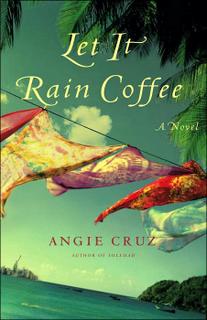
A New York-born Dominicana, Angie Cruz is the author of Let It Rain Coffee (Simon & Schuster, 2005) and Soledad (Simon & Schuster, 2001). She is at work on her third novel. Her fiction and essays have appeared in Latina magazine, New York Newsday, The New York Times and Callaloo. Most recently her essay, On the Verge, was featured in Border-Line Personalities (R. Moreno and M. Herrera Mulligan; Rayo, Harper Collins 2004). Cruz earned her MFA in fiction from New York University and has received numerous awards, including the Camargo Foundation Fellowship, New York Foundation for the Arts Fellowship and The Barbara Deming Award.

On Tuesday, October 18, at 6 p.m., the Queens Library New Americans Program will host a talk with Cruz moderated by Marcela Landres. Address, phone and travel information: Queens Library, Jackson Heights Branch, 35-51 81st Street, 718-899-2500; by train: 7 to 82nd Street; by bus: Q19B, Q32, Q33. You may also e-mail Marcela Landres for further information.

NEWS FROM THE UCLA CHICANO STUDIES RESEARCH CENTER (“CSRC”):

◘ Yolanda Retter Vargas, the librarian of the UCLA CSRC Library, and Lillian Castillo Speed, head of the UC Berkeley Ethnic Studies Library, received a grant from the UCLA Librarians Association Research and Professional Development Committee to collaborate on a project to update the Chicano Thesaurus. The thesaurus provides subject heading guidance for the Chicano Studies Database, which is the primary online research resource for Chicano studies. The project will add new headings in two areas: non-Chicano Latinos in the United States and LGBTI (lesbian, gay, bisexual, transgender, intersex) people.

◘ This summer the CSRC press worked to forward a number of projects. After a year of focusing on our periodicals (releasing two issues each of our Latino Policy & Issues Brief, CSRC Research Report, and Aztlan: A Journal of Chicano Studies), the CSRC turned to its two new book series: A Ver: Revisioning Art History and The Chicano Archive. The first series, under the leadership of Director Chon A. Noriega and with major funding from the Rockefeller and Ford Foundations, is devoted to forwarding and preserving the work of Latino/a artists. The first book in the series, to be in full color, is on the artist Gronk. The second series, with collaboration from Latino institutions around the country, is devoted to preserving Latino archives. The first book in the series is on Self Help Graphics & Art and due back from the printers by the Open House this October.

◘ The fall issue of Aztlán: A Journal of Chicano Studies has arrived. If you are not an Aztlán subscriber and want to be one, e-mail your postal address to the CSRC Press in order to receive a subscription package.

◘ For more than three decades, Self Help Graphics & Art has been a national model for community-based art making and art-based community making. Through its innovative printmaking and other programs, Self Help has empowered local artists and reached out to the world beyond East Los Angeles with the vibrancy of Chicano/Latino art. In the new CSRC book Self Help Graphics & Art: Art in the Heart of East Los Angeles, Historian Kristen Guzmán draws on archival sources and on interviews with artists to tell the story of this remarkable organization. Edited by Colin Gunckel, this book comes out of a partnership between the CSRC and Self Help. It is published in collaboration with Sal Guereña from the California Ethnic and Multicultural Archives (CEMA) at the University of California, Santa Barbara, which provided the book’s finding aid to the CEMA Self Help Graphic archive. Five hundred copies of the book are being donated to Self Help. For more information, click here.

CONFERENCE: El Clamor Público - 150 Years of Latino Newspapers in Southern California.

The Huntington Library, San Marino, CA
October 28, 2005
8:30 a.m.-4:00 p.m.

Sponsored by the Huntington-USC Institute on California and the West, USC Annenberg School for Communication, California State University, Northridge Graduate Studies Program Distinguished Speakers Series, and the John Randolph Haynes and Dora Haynes Foundation.Founded in Los Angeles in 1855, the newspaper El Clamor Público staunchly defended equal rights in California. Though labeled treacherous, incendiary, and anti-American, eighteen-year-old journalist Francisco P. Ramírez‘s newspaper courageously reported lynchings, land frauds, vigilante terror, racial profiling, and legal injustices targeting Spanish-language communities. Ramírez’s faith in the U.S. Constitution guided him as he urged readers to elect trustworthy representatives and to learn English so they could defend their rights. He printed the Declaration of Independence in Spanish and encouraged Californios and Anglos to “work together in the same spirit.” During its four and a half years, the newspaper published political opinion, international news, literary expressions, and social commentaries.This conference will examine the history and legacy of El Clamor Público through and exploration of Latino newspapers in Southern California’s past, present, and future. The conference is free and open to the public; registration is required by October 24. Luncheon will be provided for a prepaid fee. For registration information, go here. For more information on the conference contact conference coordinator Joseph Legaspi at his e-mail.

NUEVO LIBRO: Rigoberto González reviews Benjamin Alire Sáenz's new novel, In Perfect Light (HarperCollins/Rayo). He calls it a “heart-wrenching, beautiful novel.” González is an award-winning writer and associate professor of English and Latino studies at the University of Illinois at Urbana-Champaign.

LOS GANADORES: The winners of the 31st Chicano/Latino Literary Contest have just been announced. This year the genre was poetry; the judge was Valerie Martinez:

1st Prize: Javier Huerta – Some Clarifications
2nd Prize: Pablo Miguel Martínez – Before Stars Were Moored
3rd Prize: Javier Campos – El poeta joven

To read the judge’s comments about each winner, go here.

FINALMENTE: The Write Influence: Valuing Diversity. A day-long multi-panel seminar featuring lively and honest discussions exploring how diversity is making storytelling a richer, more profitable experience. Working writers, those who hire writers, media ad buyers, and those who market and distribute films are set to share their progressive successes and missed opportunities within today's entertainment world.

The day's first panel, The Changing Room, will feature showrunners who've hired diverse staffs that create challenging and quality television content.

The second panel, Everybody Loves Green, will focus on media buyers, as they discuss the economic and moral connection between advertising and entertainment product that features diverse storytelling.

The third panel, Damn, You Wrote That?!, will spotlight successful multi-cultural screenwriters who've excelled in Hollywood by writing against type.

Date and Time: Saturday, October 15, 10:00 a.m. to 4:00 p.m.
Venue: Writers Guild Theater
Address: 135 S. Doheny Drive , Beverly Hills
Ages: 21+
Admission: Free
For more information call: (323) 782-4577
Or visit: http://www.wga.org/
Email: PAEvents@wga.org

All done. So, until next Monday, enjoy the intervening posts from my compadres y comadre at La Bloga. ¡Lea un libro!

Friday, October 07, 2005

Pedazos y Pedacitos

Manuel Ramos

Opportunities for Writers
We've heard about a couple of places offering opportunities for Chicano/a writers. First, a friend forwarded this post from the Freelance Writing website:

"Looking for writers and material ASAP - Posted by Tereso Caspa , Aug 22,2005
One of the largest Latino Lifestyle magazines in the country. #2 to be exact. Searching for creative edgy, artsy material dealing with Latino issues. We explore politics, art, current issues, etc. with, about, or by a Latino perspective. We are looking for material and writers. Please contact by the email above or call 323-344-1239 and speak with Fernando. Pay varies depending on experience and work. We pay .10 a word for most new writers, yet if we like the work we will consider more. We never pay more than $3000.00 for a feature.
Related link: Bello Magazine."

Second, from another friend, we got this note: "Could you give some press to this online journal by fellow Chicano poet Albino Carrillo? Check it out. He's always looking for Chicano/Latino writers. He says it's gotten a bit political of late because of the horrid times we live in, but decide for yourself." The journal is Maverick Magazine found at this link: http://maverickmagazine.com/default.htm

Third, November is National Novel Writing Month. That means you can join in on the fun of writing 50,000 words in thirty days. There is a website with details.

Cruisin' The Heart of Aztlán
I spent a few days traveling through southern Colorado and northern New Mexico as part of a Milagro Tour sponsored by KUVO radio - great idea and a wonderful chance to see the beautiful country and meet some simpático people. The trip took us from Denver to the Baca House in Trinidad, the plaza in Santa Fe, El Rancho de las Golondrinas, Española, Chimayó, the hot springs at Ojo Caliente, then return over the High Road to Taos and through the San Luis Valley.

Over on the Occasional Blog I have posted a few photos from the trip - of course, they don't do justice to the beauty and grace of the land.

This is Bless Me, Ultima (Rudolfo Anaya) and Milagro Beanfield War (John Nichols) country. Here is where the myths and legends come alive, where the great stories thrive, waiting to be told, and where a writer's imagination can blossom from the inspiration or shrivel from the challenge.


Up on the High Road to Taos a person gets a chance to visit places like Chimayó, home of the miraculous holy dirt and the setting for the book Chiva, by Chellis Glendinning, which is about the heroin scourge in that small village, or Truchas, where the Milagro Beanfield War movie was filmed by Robert Redford (a pretty good movie with an outstanding cast), or Las Trampas, site of the San José de Gracia church built in 1776, or, north of Taos, the D.H. Lawrence Ranch. With a bit of luck and the right timing, a person could attend Cambalache at the Artesanos Center in Questa, where El Kukui is burned along with the past year's pains, ills and other bad stuff.

On the tour we listened to Max Córdova of Los Siete Arts Center in Truchas explain the history of his beautiful valley, from the Aztec village of Quemado to the town's appreciation for but ultimate rejection of Redford's idea to have a "mini-Sundance film festival" in Truchas, to the plague of "social services," to the real fear that the gente in his valley are losing the fight to maintain their lifestyle and homes to unwanted immigrants (trust fund babies from California) whose first acts as Truchas residents are to build fences around their land.

I could have used another week traveling through the mountains, actually seeing the stars and taking stock, as they say. Oh well.

Another thing - the biscochitos and sopapillas in these villages are excellent.

Wednesday, October 05, 2005

The Woman Who Outshone the Sun

I was going to write about Condorito, the new comic book collection that has been recently translated into English and published by Harper Rayo but, as usual, I got distracted and found this book while I was packing up for my big move to San Diego next weekend. Once I saw it, I knew I had to post this one instead. I think it was a good choice for this week's post.


Title: The Woman Who Outshone the Sun / La mujer que brillaba aun más que el sol
(English/Spanish bilingual)
Author: Rosalma Zubizarreta, Harriet Rohmer, David Schecter
based on a poem by Alejandro Cruz Martinez, Fernando Olivera (Illustrator)
Publisher: Children's Book Press (CA); Reissue edition (April 1, 1994)
ISBN: 089239126X
Price: $7.95

This is one of my most beloved children’s books.

The Woman Who Outshone the Sun/La mujer que brillaba aun más que el sol is such a beautiful, compelling and moving story. It is based upon a poem by Alejandro Cruz Martinez, a young Zapoteca poet who spent years collecting the oral traditions of his people. The Zapotecas are great storytellers and the tale of Lucia Zenteno comes from that grand and ancient tradition. In 1986 he published his version of this story as a poem and was later killed in 1987 while organizing the Zapotecas to regain their lost water rights.

The book is about Lucia Zenteno, a woman who was so beautiful she outshone the sun. All of nature loved Lucia and in this magical story, the fish in the river and the river itself love her so much that she combs them in and out of her glorious long black hair. The people of the village, however are afraid of her because she is different. They whisper about her and are so cruel in their fear of her. The village elders are different. They warn the villagers that Lucia is a woman in touch with nature and they hurt her at their own peril but the villagers donít care to listen. She is too different, too odd. Finally, Lucia, hurt by their taunts and whispers, leaves the town followed by her beloved pet iguana.

The river and nature mourn her loss and leave with Lucia caught up in her hair. It is only when the village, now desolate and dry that the villagers repent of their cruelty and seek Lucia out.

The book is fantastically illustrated with lush and magical paintings by the acclaimed painter Fernando Olivera, who was a close friend of Alejandro Cruz Martinez. Each page is a fantasy of beautiful Zapoteca indigenous dress, nature, animals and of course, the river which is as much an important character as Lucia Zenteno. My favorite illustration is of Lucia combing all the little fish and water creatures into and out of her beautiful, long black hair.

The story has a strong moral message for both adults and children and I cannot help but think that to Cruz Martinez, this story was told as an allegory for the water rights he died defending.. His widow gave Children’s Book Press (a wonderful independent publisher that specializes in multi-cultural books based in San Francisco) the permission to adapt the story. All royalties from this book are paid out to her.

I encourage everyone to purchase this and to read it to your children or just enjoy it yourself. Tell the children the story behind the book. Cruz Martinez was an eloquent and astounding poet and his voice should be heard. The book is bilingual in English and Spanish.

Tuesday, October 04, 2005

Gracias, Poets & Writers

We at La Bloga discovered that Poets & Writers magazine made note of our little venture in P&W's most recent "Focus on California" e-newsletter. This is what P&W said under its "Link of the Month" column:

La Bloga: Readers can get a real feel for the Chicano/a literary landscape by visiting La Bloga, a blog that combines the knowledge, talents, and footwork of a number of different contributors. The combination of loose self-reflection, news, opinions, book reviews, spotlights on writers, event reminders, and interesting tidbits is what makes La Bloga a fairly quick, interesting, and informative read.

So, if any of you gentle readers have dropped by because of P&W's kind words, please make yourself comfortable and join in the discussion. And mil gracias to P&W!

Betabeles & Pieces / Bits & Pedazitos

michael sedano


QEPD August Wilson.


UNA


La Bloga's Daniel Olivas nearly got singed by September's fiery swan song in Los Angeles' San Fernando Valley. Dan, along with hundreds of his neighbors, packed only what they could drive out with, then waited the flames, or the "all clear". Scary stuff, fire. Maybe it's the Devil's vengeance for Dan's exposing la diabla's various guises and b.o. in Devil Talk. You think? For sure it's the stuff of stories and poems.


Dan's peril put me in mind of one of my favorite Latina love poems, Ina Cumpiano's "Metonymies". This is one of those "nonLatina" Latina works. proofs of birth? will have a special reverberation for some, que no? Theory aside, what a moment of truth.


From Metonymies . . . .


4

If the police ordered me to evacuate,

what would I take with me?

Baby pictures, computer disks, the silver,

proofs of birth? The sun

would hang like old fruit until the smoke

gathered it in. Then: night in day, sirens,

and knowing that whatever I took

would hold in its small cup

everything I had ever lost.

So if the police ordered me to evacuate during a firestorm,

I would write your name on a slip of paper,

light it, and--

in those few hurried moments allowed me--

watch it burn, brush the ashes into an envelope

which I would seal and keep with me, always.


   The Floating Borderlands, Twenty-five Years of U.S. Hispanic Literature.
Ed. Lauro Flores. Seattle: UofW Press, 1998, pp. 390-391


DOS


Daniel Olivas forwarded PALABRA's call for submissions that bend rules and cross boundaries but "Sorry, no genre work." Odd. The rule evoked an issue that La Blogans enjoyed awhile back in our consideration of "ghettoization" of the chicano literary genre. Will chicano literature be confined to certain literary corners, always excluded from attention in the broader market for writers and stories in the $2.6 billion book market? Curiously irritated, I asked the editors, who say,
the intent of PALABRA is to publish the kind of literary writing that will not, in all likelihood, be published by trade or even mainstream literary publishers. Genre is cool, though. We like it. It's simply that genre, i.e., mystery novels, crime thrillers, spy novels, romance novels, science fiction, etc., isn't what we intend. Gracias. -- The Editors


Their specialization got me wondering. How many thousands of titles, literary or genre work, get published annually? How many published writers each year could, in all likelihood, be Chicana Chicano writers of any ilk, literary or genre? Despite breakout titles here and there--People of Paper for example--the booklists suggest we're confined into a pretty tight corner. Is "confined" the right word?


TRES


I was happy to read about the steady growth of US publishing:


Net sales for the entire United States publishing industry are estimated to have increased by 1.3 percent from 2003 to 2004 to a grand total of $23.72 billion, according to figures just released by the Association of American Publishers (AAP). Overall, trade sales rose 1.9 percent, with sales of $5.16 billion. Adult trade hardbound gained 6.3 percent ($2.61 billion), while paperbound sales were also up 2.8 percent ($1.51 billion). Juvenile hardbound sales were down 16.7 percent ($581 million),


Sadly, 2003 came and went and I hadn't realized it was the year of Latino publishing, as declared by the Association of American Publishers:

Adriana Lopez, the initiative's spokesperson and editor of Criticas, a magazine that focuses on the Latino market for books, said, "It's an amazing time for Latino publishing in both English and Spanish for U.S. readers. I'm thrilled to be part of AAP's timely efforts in 2003 to bring this rapidly expanding market to the mainstream's attention."


I hope it worked.


Penultima

I recently put up a sentimental photo essay recounting time I spent on an air defense artillery site. Serendipity. Back when La Bloga was a few weeks old, I mentioned the name of a Drill Sergeant and his favorite exercises, including "Position of a Dying Cockroach". I was delighted to get an email from his son, also an NCO. His dad survived Vietnam and an Army career and now lives in jubilacion in Tucson.


Ultima


      That's Dolores Gonzales Haro's cover featured on a Chicanarte calendar that's hitting the streets next month. Writing the introduction and editing artist biographies has been great fun. Floricanto Press is bringing it out, so look for it in your local bookstore. If you don't see it in your local bookstore or stationers, tell the buyer about access and the growing Latina Latino market, and 2003, and genre lit, and tempus fugit.


Michael Sedano

Monday, October 03, 2005

SPOTLIGHT ON MARÍA HERRERA-SOBEK


Monday’s post from Daniel Olivas…

María Herrera-Sobek is Chair of the Chicana and Chiano Studies Department and holds the Luis Leal Endowed Chair in Chicano Studies at the University of California, Santa Barbara. She taught at the University of California, Irvine for several years and has been a Visiting Professor at Stanford and Harvard Universities. Herrera-Sobek is the author of several books including The Bracero Experience: Elitelore versus Folklore (1979); The Mexican Corrido: A Feminist Analysis (1990); and Northward Bound: The Mexican Immigrant Experience in Ballad and Song (1993).

In addition she is the editor or co-editor of numerous anthologies including Beyond Stereotypes: The Critical Analysis of Chicana Literature (1985); Chicana Creativity and Criticism: Charting New Frontiers in Chicana Literature (with Helena María Viramontes) (1988 and 1996); Gender and Print Culture: New Perspectives on International Ballad Studies (1991); Reconstructing a Chicano/a Literary Heritage: Hispanic Colonial Literature of the Southwest (1993); Chicano Renaissance: Contemporary Trends in Chicano Culture (with David Maciel and Isidro Ortiz) (2000). Santa Barraza: The Life and Work of a Mexica/Tejana Artist (2001).

CALL FOR SUBMISSIONS: PALABRA, a magazine of Chicano/Latino literary art, invites submissions of short fiction, poetry, creative non-fiction and short plays that “bend rules, cross boundaries, and explore new territory in Chicano and Latino literature, lenguaje y pensamiento...Pues, ya saben...” Las Guidelines/Reglas: fiction & creative nonfiction up to 3500 words, poems 3-5 with a max of 50 lines each, plays up to 10 pages. Sorry, no genre work. Unpublished work only, including work published online in any manner. Include name, address, phone number and e-mail on each submission. Simultaneous submission OK. No multiple submissions. Response time 2-3 months. Snail mail submissions only. Include SASE for response only. Submissions accepted year-round. Manuscripts not accepted for publication will be shredded and reycled. PALABRA acquires first worldwide serial rights, nonexlusive electronic rights and nonexclusive anthology rights. Some pay. Copyright reverts to author upon publication. Mail submissions to:

PALABRA
P.O.BOx 86146
Los Angeles, CA 90086-0146

For additional INFORMATION ONLY, E-mail
palabralit@earthlink.net

LOS GANADORES: The winners of the 31st Chicano/Latino Literary Contest have just been announced. This year the genre was poetry:

1st Prize: Javier Huerta – Some Clarifications
2nd Prize: Pablo Miguel Martínez – Before Stars Were Moored
3rd Prize: Javier Campos – El poeta joven

Visit the Contest’s Web page for more information and news on next year’s contest.

NUEVO LIBRO: Rigoberto González reviews Sylvia Torti's The Scorpion's Tail (Curbstone Press), winner of the 2005 Miguel Mármol Prize for Latino literature. He says that the novel “is a poignant look at the complexity of responses to the Zapatista movement as seen through the eyes of those who experienced the pivotal event as it unfolded on that fateful New Year's Day.” I note that González is an award-winning writer and associate professor of English and Latino studies at the University of Illinois at Urbana-Champaign.

MÁS NOTICIAS: The new issue of Somos Primos is now live online. Somos Primos is “Dedicated to Hispanic Heritage and Diversity Issues” and is produced by the Society of Hispanic Historical and Ancestral Research . . . BUY A FRIEND A BOOK: You must go here to find out what this is about.

All done. We survived the fires more or less intact. So, until next Monday, enjoy the intervening posts from my compadres at La Bloga. ¡Lea un libro!