Thursday, May 26, 2022

A Moment of Silence for Uvalde Or Action?

 Melinda Palacio


The people of Uvalde are my people. My mother was born in Del Rio, a town just over an hour away from Uvalde at the end of the corridor between San Antonio and the last town before Villa Acuña, Mexico. I had planned to write about the poetry tribute to Margaret Garcia's art show at the Ventura County Museum and my process of turning my poem, How Fire Is a Story, Waiting, into a song. A few people came up to me and wanted to know more about the process. However, I will have to shelf that post because the terrible shooting at Robb Elementary has left me speechless. I will need more time to think about all those bright lives clipped short. And the killer continues to kill. He may be dead, but the husband of the teacher has just died of a heart attack. All our hearts break for the young students and the teachers who tried to protect them. Uziyah Garczía, Amerie Garza, Xavier Lopez, Tess Mata, Ellie Garcia, Rojelio Torres, Jose Flores, Jailah Silguero, Jayce Luevanos, Nevaeh Bravo, Jackie Cazares, Annabelle Rodriguez, Elianha Torres, Makeena Lee Elrod, Lexi Rubio, teacher Eva Mireles, and teacher Irma Garcia, and her husband Joe Garcia who had a heart attack yesterday, two days after the massacre. The couple had been married twenty-four years and had four children. 

Can we do something about gun violence today? Can we pass gun laws, mental health checks? Will you help, will you vote for stricter gun laws? 

After Great Pain -- Healing through Literature


Life's Enigma, the Depths of Grief

      I don’t need to describe “great pain”, since each of us has experienced it, some worse than others, and some more constantly throughout their lives.

     For me, there were the deaths of close relatives, over the years, many sick, in the hospital, and suffering a terminal illness, from alcoholism to cancer to a life well lived.

     Then there is violent death, which can come suddenly, out of nowhere, like a frigid north wind, the kind experienced in a car accident, a street fight or in combat, not unlike the recent shooting on Tuesday in Uvalde, Texas, a horrific tragedy, beyond comprehension.

     Most of us felt it, and we weren’t even there, yet we suffered the pain, of course, to different degrees. What about those who were there, or are a parent, relative, or friend of those killed? How do they cope, when they want to die themselves, when they don’t think they can make it through the next five-minutes, let alone the next day, and when their legs can barely hold them up? That kind of pain, a crippling pain. "Take me, Lord," kind of pain.

     After “great pain”, life will never be the same. Can we even heal from that type of pain? Like a physical cut eventually forms a scab then a scar, do we form psychic scabs and scars? They say it takes time, months, years to heal, or for the pain to lessen, and for the consoling memories to form. The hard part is believing healing will, one day, come, a harsh transformation, a new beginning, and a new person.

     The key word in the military was “kill,” in an institution designed to teach killing. In the military, one hears the word a lot, “Kill the Jerry, Jap, Viet Cong, Gook, Hajji! Follow orders or you’ll be killed,” etc. etc. You’re a kid, 18-19, and you try to understand this idea of killing, of death. You know it can happen, but it isn’t real, until it is.

     For me, it happened on our first operation, not far from our base camp, Phan Rang, Vietnam. It was a quiet night. Then it started with a single shot and all hell broke loose, everyone firing into the darkness, excitement, war.

     The next morning, they laid his body out to wait for an evacuation chopper. He was lying on his back, face up, a plastic green poncho covering him, only his boots protruding, jungle boots, like mine, like the rest of us, only the soles visible, thick, black, muddy treads. We pretended he wasn’t there. I didn’t know him, this kid, this soldier, but it felt like I did.

     I’d glance over at his corpse. I remember thinking, at the time, his parents and friends have no idea he’s not coming home, that he’s lying there dead, in the dirt, just his boots showing. They’re going about their lives, and their child is dead. In that instant, it became real, no longer a romantic war movie in my head. I could die, end up like him, under a plastic poncho, and nobody back home would know, so I went about my work, mechanically, filling sandbags, cleaning my weapon, mindless tasks, whatever it took to keep busy, to numb my mind. There was no debriefing, no therapy, no Dr. Phil or Oprah. Then came the reason. He was killed by his friend.

     The prior night, they’d been on the outpost, about twenty-five yards away from the rest of the artillery battery, pulling security, considered good duty for the infantry. The kid woke up, stepped out of his hootch quietly, without bothering to tell his friend he needed to urinate. His friend never heard him leave. When the kid returned, he stepped out of the dark, his friend turned, and shot him. The revelation was as shocking as the death. It made no sense. I can’t describe the mixed emotions. The paradox, I didn’t know him, yet I did. He was me, and I was him.

     Understand, a round from an M-16 (today an AR 15) was designed to tumble when it hits the human body at a velocity two to three times faster than a regular rifle. When it hits, it makes a normal entry wound. Then, the tumbling begins, and it disintegrates and tears everything in its path, nerves, organs, bones, and flesh. There’s little chance of survival. The M-16 terrified the enemy. The damage was one reason they kept the kid’s body hidden. The exit wound tore out his back. (What chance did second and third graders have?)

     Of course, during my tour, it got worse, right up to the last day, and the death of close friends, guys I slept with, each night, side by side, spending nearly all our time together. I knew about their families, their girlfriends, wives, whims, and desires. Fortunately, I hadn’t been there and didn’t see it. I had left the field earlier in the day, back to the rear area to catch a flight to base camp and home. That night, they were overrun.

     The next morning, there was commotion everywhere, choppers flying in the dead and wounded. A friend urged me to go and with him to the infirmary to meet the wounded and the dead. I couldn’t, even if they were alive. I could hardly move. I can’t say I had a broken heart. I can’t say what I had. I’d just turned 20. What was I supposed to do? I guess I slipped into some kind of mental state, not quite shock, or maybe it was, and I didn’t even know it. A jeep pulled up in front of me, a trailer filled with dead enemy bodies. I saw the results of an assault rifle, up close. The image remains.

     And here it is again, 2022, on television, except this time its nineteen children, Chicanitos and Chicanitas, and their teachers, Uvalde, TX, 75% Mexican, close to home, close to my heart, and coming off the heels of the Buffalo killings, friends and neighbors going to the store for groceries, a different kind of war? It brings it all back, not just for me, but for all of us. We’ve all experienced tragedies and trauma.

     When this happens, I mean the pain, the lead in the pit of the stomach, a slight nausea, fear, anxiety, and Emily Dickinson comes to me. A female hermit, a New Englander, and a transcendentalist poet, no connection to a Mexican from suburban Los Angeles, the year 1972, when I first studied her, and still, today, listen to her. She’s made a home in my psyche, and I turn to her, if not for comfort, at least for some understanding of life’s incomprehensibility.

     When tragedy strikes, the pain a branding iron, a storm raging in the brain, and nothing makes sense. Even if there are reasons, the reasons, themselves, are irrational. According to Dickinson, healing is a difficult process, a rough road, and a long journey, if one survives it.

     Her words and images say: we suffer the pain “He” suffered, "He," the crucified Christ, whether the real or a mythological Christ, our nerves like rockets firing, until the shock, the stage of nothingness, a “Wooden way,” disassociation from everything, from life itself, and then the turning point, the climax, descending to a quartz contentment, no more feeling than a stone, and if we survived, “outlived the hour of lead,” we rise, like someone freezing in the snow, first experiencing the “chill”, the “stupor”, a certain numbness, and, finally, the outcome, the denouement, the “letting go,” the liberation, and the forging of a new person. The challenge is to survive.

Emily Dickinson

After great pain, a formal feeling comes-

The nerves sit ceremonious, like Tombs-

The stiff Heart questions was it He, that bore,

And yesterday, or centuries before?


The Feet mechanical, go round-

Of Ground, or Air, or Ought-

A Wooden way

Regardless grown,

A Quartz contentment, like a stone-


This is the hour of Lead-

Remembered, if outlived,

As Freezing persons, recollect the Snow-

First-Chill-then Stupor-then letting go.”

Wednesday, May 25, 2022

VIENTO, VIENTITO / WIND, LITTLE WIND


By Jorge Argueta

Illustrations by Felipe Ugalde Alcántara


ISBN:  978-1-55885-945-6

Publication Date:  May 31, 2022

Format:  Hardcover

Pages:  32

Imprint: Piñata Books

Ages: 5-10


This trilingual picture book written in verse recounts the rejuvenating force of wind from the point of view of one little breeze.


“My name is Wind

but everyone knows me

as Little Wind.”


In this beautiful, poetic ode to the refreshing but sometimes dangerous force of wind, award-winning children’s book author Jorge Argueta describes—in English, Spanish and Nahuat—the power of air from the perspective of a mischievous youngster.


He is born everywhere and can fly all around Mother Earth. Little Wind is swift like a hummingbird, he comes and goes. Zummm, zummm, zummm. 


“You can’t see me.

You can’t touch me.

But you can feel me.”


Some call him the north wind, or draft, breeze, gale, hurricane, tornado, but 


“I like it better

When they call me

Wind, Little Wind.”


A Junior Library Guild selection, this book about the wind reflects Argueta’s indigenous roots and his appreciation for the natural world. Felipe Ugalde Alcántara’s gorgeous illustrations depict birds floating on the breeze and trees bent under strong gusts. Containing the English and Spanish text on each page, the entire poem appears at the end in Nahuat, the language of Argueta’s Pipil-Nahua ancestors. The third book in a four-part series about Mother Earth, this is an excellent choice to encourage children to write their own poems about nature and to begin conversations about the interconnected web of life.


JORGUE ARGUETA is a prize-winning poet and author of more than twenty children’s picture books, including Una película en mi almohada / A Movie in My Pillow (Children’s Book Press, 2001); Guacamole: Un poema para cocinar / A Cooking Poem (Groundwood Books, 2016); Fuego, Fueguito / Fire, Little Fire (Piñata Books, 2019); Agua, Agüita / Water, Little Water (Piñata Books, 2017); and Somos como las nubes / We Are Like the Clouds (Groundwood Books, 2016), which won the Lee Bennett Hopkins Poetry Award and was named to USBBY’s Outstanding International Book List, the ALA Notable Children’s Books and the Cooperative Children’s Book Center Choices. His poetry collection, En carne propia: Memoria poética / Flesh Wounds: A Poetic Memoir (Arte Público Press, 2017), focuses on his experiences with civil war and living in exile. The California Association for Bilingual Education honored him with its Courage to Act Award and Agua, Agüita / Water, Little Water won the inaugural Campoy-Ada Award in Children’s Poetry given by the Academia Norteamericana de la Lengua Española. A Pipil Nahua Indian, Jorge is also the founder of The Library of Dreams in his native El Salvador, a non-profit organization that promotes literacy in both rural and metropolitan areas. Jorge divides his time between San Francisco, California, and El Salvador.


FELIPE UGALDE ALCANTARA, a Mexico City native, illustrated Agua, Agüita / Water, Little Water (Piñata Books, 2017); Fuego, Fueguito / Fire, Little Fire (Piñata Books, 2019); Mother Fox and Mr. Coyote / Mamá Zorra y Don Coyote (Piñata Books, 2004); and Little Crow to the Rescue / El Cuervito al rescate (Piñata Books, 2005).


Tuesday, May 24, 2022

Cosecha Calabasas: Zucchini Abundance & the Gluten-free Chicano

Zucchini Abundance: Recipes For Gluten-free Dining

Michael Sedano, The Gluten-free Chicano

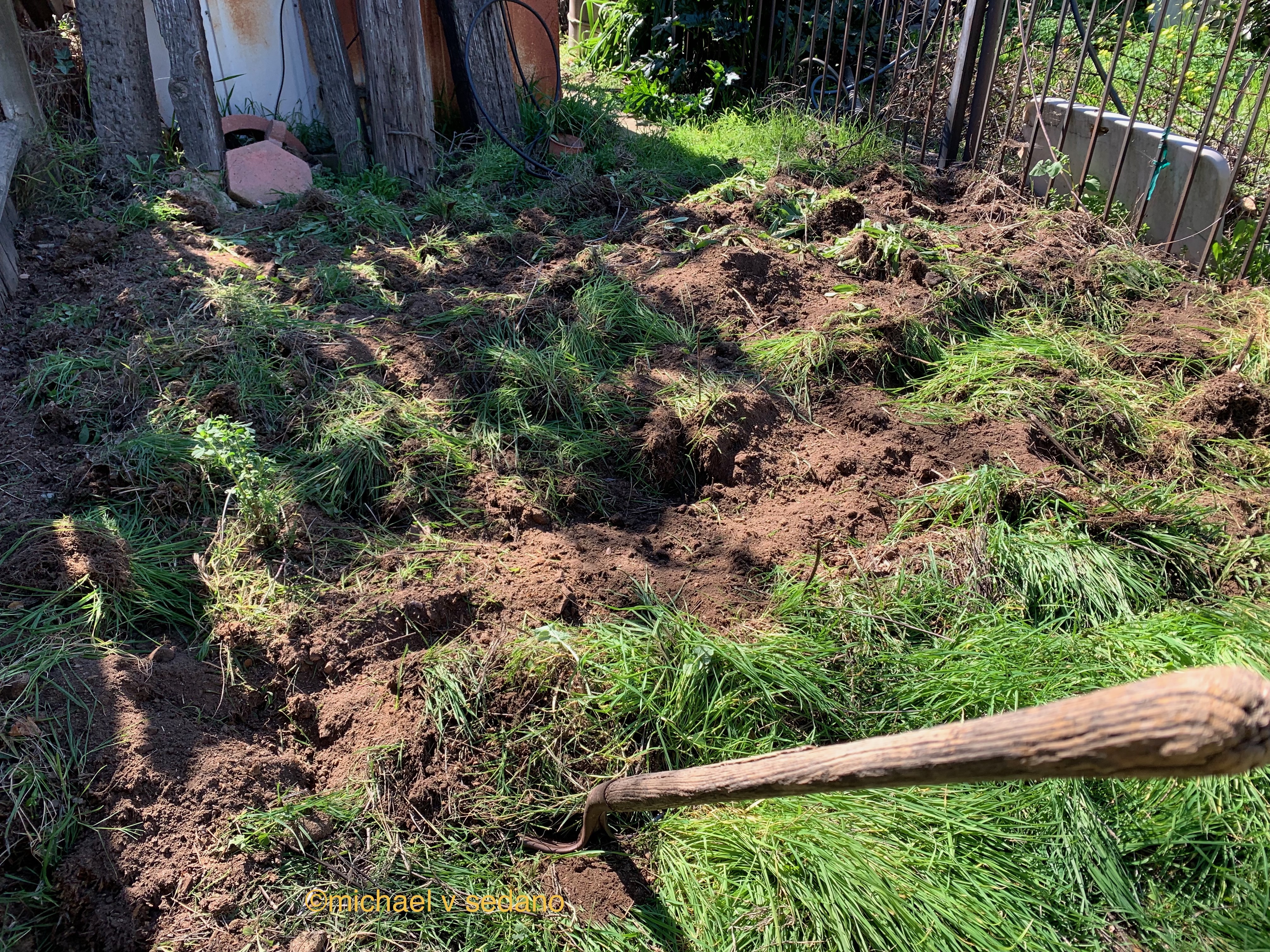
Healing comes on its own schedule. This year, after three years disability, I had functional shoulders. I operated a steering wheel painlessly, I played piano without tiring, and I wielded a shovel like a campesino arando la tierra.

On Super Sunday, I began turning my earth and finished in two weeks. When planting time arrived I exercised the wisdom of a lifetime's vegetable gardening and planted two, count 'em, two summer squash plants.

Zucchini have to be a gardener's most immediately satisfying big plant. Those big, green, vigorous plants stand out handsomely as they grow and spread. Then, the first yellow flowers arrive on elongated stems. A week after, miniature zucchini-shaped nubbins topped with yellow flowerbuds grow from the tough main stem. 


When a flower dies it's time to pick her fruit, no matter the size of the zuke. Fingerling zukes are tenderly edible and often the first crop of an extended season. 

Gardens produce increasingly larger squash. Plants need harvesting of fruit to be spied in the foliage, separated by hand amid spiny branches, cut or twist-off every ripe squash. When you get five-pounders you'll vow next year, fewer plants or more recipes.


The Gluten-free Chicano's Zucchini Harvest Recipes

Harvest season is well underway in Southern California. The Gluten-free Chicano has enjoyed Green&Gold's first iteration. The recipe has infinite variability.


Next week, the household will be past the "let's make tortillas" stage of harvest abundance. Perhaps we'll be in new horizons.


Desperation will never set in. Hope, like new zucchini, springs eternal in a resourceful kitchen. The world is filled with zucchini growers and zucchini recipes. 


Universal strategy for Zucchini Abundance: Give freshly-harvested cosecha to friends with a recipe card. Other than the Universal, the Gluten-free Chicano begins a harvest season with a four-step recipe plan:

First Harvest: Elemental summer squash.

Traditional Calabacitas con queso.

Green&Gold Casserole.

Tortilla de Calabasa.

First Harvest: Elemental summer squash.

Cut into bite-size pieces. Steam five minutes until just fork-tender. Drain. Dab with butter. Whisper 'salt' across them, and serve. Squeeze fresh limón if available.

We eat this in quiet ritual acknowledgement of the essence of the thing; that the simplest way makes the best beginning.


Traditional Calabacitas con queso.

A naturally* Gluten-free food

*Naturally gluten-free designates food that in no way, shape, nor form, has ever in culinary history been prepared with wheat, barley, or rye ingredients. Nor should. I mean, why would anyone put wheat in tamales? Or champurrado? But it happens. So caveat celiac, always make sure of ingredients and when there’s doubt, don’t eat.


Ingredients 

Garden-fresh summer squash.

Garlic.

Onion.

Fresh tomato.

Cilantro.

Gebhardt’s Chile powder

Tomato sauce.

Sharp yellow Cheddar cheese, or Longhorn Cheddar cheese.


To slice or dice? Preparing the squash gives eye appeal. Cooked squash holds its shape. Cylindrical squash you either make rounds or make half-moons. Patty-pan squash either slice or make pie slices.


Slice your onion or dice your onion, or both. Rough chop or slice 3 or 4 dientes of your ajo. 


Chop a small tomato, peel if you wish. Some grocery store Roma tomatoes have been engineered with tough skins that cause distress to digestive tracts.


Some like it hot, some not. If so, thin slice a Jalapeño or Chile Huero. Let diners pick out the chile if they’re on the don’t-like-it-hot list.


Wilt the vegetables in good olive oil barely coating the bottom of a frying pan. 


When translucent and limp, add the Calabacitas and shake that sartén vigorously to get everything mixed together over high heat, then turn down the flames to medium. 


Add some chile powder. This is not a “hot” dish but kid-friendly, so go easy and serve a hot salsa with dinner.


Gebhardt’s chile powder contains salt and comino and garlic in a flavorful mix. Instead, use California and New Mexico ground chile powders with a good pinch of cumin, salt if you want. 


Add a few branches, or a pinch of chopped, cilantro.


Pour a small can, or a generous amount, of tomato sauce into the squash. Add the same amount of water. During tomato season, the el Gluten-free Chicano uses garden-fresh sauce and no water.


Lay thick slices of cheese atop the liquid and cover. 


Simmer covered five or ten minutes. When the cheese has melted, stir it into the tomato sauce, simmer another five minutes and turn off the heat. Let this vegetable ambrosia rest five minutes or more while you prepare other courses.


Executive summary:

  • Plant good seed.
  • Harvest when the flowers die.
  • Slice and chop.
  • Fry.
  • Add liquid and simmer.
  • Add cheese, stir, and simmer. 
  • Serve.


Bonus Recipe: My Grandmother's Recipe for Homemade Tamales, Part One

Step One: Plant corn.

Step Two: Buy a pig.

Step Three: to be continued.

Monday, May 23, 2022

Sobre _Dead Woman City_ por Xánath Caraza

Sobre Dead Woman City por Xánath Caraza


Dead Woman City de Esther Garcia fue publicado por FlowerSong Press en 2021.

Las páginas de Dead Woman City donde Esther García plasma el doloroso ritmo de la vida son la entrada al abismo. Su maestría para encadenar palabras hace que bailen a la vista del lector en este libro de poemas-denuncia que marcan el sabor de la lectura.  El cruce del río, la pasada al otro lado, los cambios de códigos, la frontera y las referencias literarias son ritos de pasaje para el lector-testigo que camina con las muertas, las desaparecidas, las mutiladas, las torturadas, las hijas que no regresaron a casa y forman ese collage sanguíneo que rebosa las fosas clandestinas. Dead Woman City es un poemario que, como Virgilio, nos guía al averno.


Dead Woman City de Esther García

Casa Editorial: FlowerSong Press

ISBN: 978-1953447883

Friday, May 20, 2022

New Books for Summer

I'm writing this post on May 19, 2022.  The temperature in Denver reached the high 80s today. Although it was only Thursday, it was a day for long hikes, picnics, gardening, cold beer and fried chicken. Tomorrow we will experience a huge drop in temperature and cold winds.  A winter storm warning has been issued and we expect three to five inches of snow in the city.  We are having an early summer and a late winter -- at the same time.  But don't dwell on the weather or the consequences of climate change.  That's no fun.  Here are a few upcoming books that may help get you through the rest of spring or summer or winter -- whatever this is.

______________________


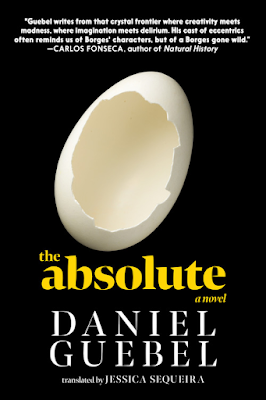
Daniel Guebel, translated by
Jessica Sequeira
Seven Stories Press - May 17

[from the publisher]

Called a "masterpiece" and the author a "genius," this English-language debut of one of Argentina’s best writers is the story of a family of artists, scientists, and politicians who are responsible for the great cultural and political advancements of modernity, yet remain mysteriously unknown.

This monumental novel tells the story of the Deliuskin family’s secret interventions in music, mysticism and revolutionary thought over the course of three centuries, spanning six generations. Each figure engages in obsessive and absurd acts, which—depending on who controls the narrative— could be genius or madness, so often indistinguishable. Countless minor characters also appear, intersecting with these stories in a suggestion of infinite parallel narratives.

The title predestines this philosophical, political, historical, literary, sentimental, erotic, religious, scientific and artistic book to evocative incompleteness. To attempt perfection is a joyful act of throwing oneself into the world, the task at hand is not to capture life but create, in and through words. Poised on the edge of something between reality and its negation, Daniel Guebel's The Absolute is an undeniable masterpiece even as it questions if the novel is a failed project.

Winner of Premio Municipal de la Novela, 2021
Winner of Premio Nacional de Literatura Argentina, 2018
Winner of Premio Literario de la Academia Argentina de Letras, 2017
Winner of Best Novel Award by La Nación, 2016

_____________________


Kali Fajardo-Anstine
One World - June 7

[from the publisher]
Luz “Little Light” Lopez, a tea leaf reader and laundress, is left to fend for herself after her older brother, Diego, a snake charmer and factory worker, is run out of town by a violent white mob. As Luz navigates 1930s Denver, she begins to have visions that transport her to her Indigenous homeland in the nearby Lost Territory. Luz recollects her ancestors’ origins, how her family flourished, and how they were threatened. She bears witness to the sinister forces that have devastated her people and their homelands for generations. In the end, it is up to Luz to save her family stories from disappearing into oblivion.

Written in Kali Fajardo-Anstine’s singular voice, the wildly entertaining and complex lives of the Lopez family fill the pages of this multigenerational western saga. Woman of Light is a transfixing novel about survival, family secrets, and love—filled with an unforgettable cast of characters, all of whom are just as special, memorable, and complicated as our beloved heroine, Luz.

______________________


Tom Segura
Grand Central Publishing - June 14

[from the publisher]
From Tom Segura, the massively successful stand-up comedian and co-host of chart-topping podcasts 2 Bears 1 Cave and Your Mom’s House, hilarious real-life stories of parenting, celebrity encounters, youthful mistakes, misanthropy, and so much more.

Tom Segura is known for his twisted takes and irreverent comedic voice. But after a few years of crazy tours and churning out podcasts weekly, all while parenting two young children, he desperately needs a second to himself. It’s not that he hates his friends and family — he’s not a monster — he’s just beat, which is why his son’s (ruthless) first full sentence, “I’d like to play alone, please,” has since become his mantra.

In this collection of stories, Tom combines his signature curmudgeonly humor with a revealing look at some of the ridiculous situations that shaped him and the ludicrous characters who always seem to seek him out. The stories feature hilarious anecdotes about Tom's time on the road, including some surreal encounters with celebrities at airports;, his unfiltered South American family; the trials and tribulations of parenting young children with bizarrely morbid interests; and, perhaps most memorably, experiences with his dad who, like any good Baby Boomer father, loves to talk about his bowel movements and share graphic Vietnam stories at inappropriate moments. All of this is enough to make anyone want some peace and quiet.

I'd Like to Play Alone, Please will have readers laughing out loud and nodding in agreement with Segura's message: in a world where everyone is increasingly insane, sometimes you just need to be alone.

_____________________


Erika L. Sánchez
Viking - July 12

[from the publisher]
Growing up as the daughter of Mexican immigrants in Chicago in the nineties, Erika Sánchez was a self-described pariah, misfit, and disappointment—a foul-mouthed, melancholic rabble-rouser who painted her nails black but also loved comedy, often laughing so hard with her friends that she had to leave her school classroom. Twenty-five years later, she’s now an award-winning novelist, poet, and essayist, but she’s still got an irrepressible laugh, an acerbic wit, and singular powers of perception about the world around her.

In these essays, Sánchez writes about everything from sex to white feminism to debilitating depression, revealing an interior life rich with ideas, self-awareness, and perception. Raunchy, insightful, unapologetic, and brutally honest, Crying in the Bathroom is Sánchez at her best—a book that will make you feel that post-confessional high that comes from talking for hours with your best friend.

J. Reeder Archuleta
Izzard Ink Publishing - July 27

[from the publisher]
The Best Good Horse is a collection of stories that celebrate both the rugged individual and the grace that comes when two people join forces. These are characters who are playing the cards that life has dealt them, ordinary people who would not stand out in a crowd; and although they are from different walks of life, they have one thing in common: they all live and die in a work-a-day world. From the dry farm fields of Texas to the damp streets of San Francisco, from the rodeo circuit to Mexico’s Sierra Madre, these characters meet life head on and offer no apologies. Some names and faces are familiar from Archuleta’s other collections, but there is also a host of new characters who are every bit as unyielding, gritty, and engaging.

In the title story, an old cowboy befriends the young daughter of a ranch cook and becomes her protector as she grows up. In A Prayer to St. Michael, a World War II spy tries to adjust to living with human depravity in a small Texas town. Imperfections tells the story of an indigenous prostitute in Mexico who is beaten by her pimp. She summons incredible strength and cunning to come out on top.

Every story in this collection stuns and satisfies with its mix of sweet innocence and awful experience. The scope of problems confronted is breathtaking, and the volume is wrought with brilliant talent by Archuleta.

Later.

______________________


Manuel Ramos lives in Denver on the Northside. His latest novel is Angels in the Wind: A Mile High Noir.

Thursday, May 19, 2022

Chicanonautica: Zooming for El Porvenir, ¡Ya!

by Ernest Hogan 

Of course, I took part in the book launch for El Porvenir, ¡Ya!: Citlalzazanilli Mexicatl.


It was different, taking place at the Medicine for Nightmares bookstore in San Francisco. Some of the writers were there in person, while others, me included, participated via Zoom. It was also a celebration for the 50th anniversary of Somos en escrito founder Armado B. Rendón’s Chicano Manifesto.


 As happens with something new, there were technical difficulties, or situations beyond our control, as they would say on television in my youth. They came in the form of a problem that let comments from the audience intrude on the readings. 


Martin Hill Ortiz’s reading was interrupted by a distorted voice like a demonic presence from a horror movie. It was announced that it was fixed, but the same thing happened during my reading.


The voice sounded like a young man who hadn’t ever really accomplished anything and wasn’t happy with his life. I’ve heard many like it over the decades. His confidence was no doubt amped up with hormones and other chemicals. 

He took offense to my hair. No matter how I wear it, there are always those who don’t like it. I stopped caring way back in my teens. 


He also thought that a line from my story, “Incident in the Global Barrio” was—and I quote—“some racist shit.” This was dialogue from a racist character. 


Some members of the politically correct generation react to anything that seems racist by screaming bloody murder and trying to shut down the conversation—exactly what we don’t need.


It’s happened to me before. One reviewer warned of racism in High Aztech, even though he admitted that the racism was coming from the bad guys.


I often write about racism. It is an important subject. I will continue doing it. It’s my way of fighting the fight and revealing the truth. If you don’t like it, don’t read anything with my byline.


Fortunately, the technical problem was solved after my reading.


A peculiar bit of irony is, the fellow who heckled me is exactly the sort of person who should be reading El Porviner, ¡Ya! 


 Really.


The reason that the bigtime publishers aren’t publishing Chicano writers (How many are on the best seller lists right now?) is that they don’t think we have an audience, or it’s just so small it could never make the big bucks they require. Which creates the Catch-22 of us not selling enough to be profitable.


We have to reach out ourselves, connect with our audience, which is big and diverse and includes frustrated kids who think they know everything but are in desperate need of getting their minds blown. And that is what science fiction and being Chicano is all about.


Ernest Hogan’s story “Incident in the Global Barrio” can be read in El Porvenir, ¡Ya!: Citlalzazanilli Mexicatl. Chicano Science Fiction: Buy it, Read it, Live it!