Friday, September 20, 2024

Literary Events

People still read, apparently. Here are publicity materials for events celebrating the written word. You might want to check them out in full blooming reality before such events are reduced to miniature videos on your phone's inadequate screen.


Lalo Delgado Poetry Festival

Sat, Oct 5, 9am - 4pm MDT
Metro State University of Denver
800 Kalamath Street Building
Denver


Lalo Delgado Day of Flor y Canto Poetry Festival - a day dedicated to the written and spoken word, in memory of Abelardo "Lalo" Delgado, the Grandfather of Chicano Poetry. The day includes special tributes, poetry workshops, PoeJazz, Open Mic, and comida deliciosa. 

Keynote speaker: ZBassSpeaks – Poet Laureate of Lafayette, Colorado

Winners of the Unknown Poets Contest will be announced at the festival.

Generously funded by Colorado Humanities, in partnership with MSU Denver Journey Through our Heritage, Colorado Alliance of Latino Mentors and Authors (CALMA), and the Denver Woman's Press Club.

Admission free, but requires ticket registration, which you can do here.

---------------------------------------


2024 Denver Book Festival
September 21-22, Santa Fe Arts District, Denver, CO
Free Admission

The Word, A Storytelling Sanctuary is dedicated to shining a spotlight on storytelling from BIPOC, LGBTQIA2S+, disabled, and neurodiverse communities. Its annual Literary Conference is a safe space for all voices and helps to build community among Colorado's literary community.

"Our mission is storytelling for collective abundance. And what that really means is we're opening pathways for the richest, broadest range of voices to share stories because we know that is the pathway to the richest, broadest world we can live in," said Viniyanka Prasad, Co-Executive Director and Founder of The Word, A Storytelling Sanctuary.

The conference will feature writers who are National Book Award and Pulitizer Award finalists. A huge contingent of local writers will be taking part.

"We do three tracks. There is an opportunity for writing craft, the business of publishing, and then community building as well," said Chris Aguilar-Garcia, Programs Director for The Word, A Storytelling Sanctuary.

But there is also a film component, a fashion show, and open mic opportunities. This year the [margins] Literary Conference & Book Festival will be held in the Santa Fe Arts District, so there will also be an art component to it.

FULL PROGRAM & SCHEDULE

Later.
_________________________

Manuel Ramos writes crime fiction. Read his latest story, Northside Nocturne, in the award-winning anthology Denver Noir, edited by Cynthia Swanson, published by Akashic Books.

Thursday, September 19, 2024

Chicanonautica: Arizona in a Battleground State of Mind

by Ernest Hogan

This was written a couple weeks before it goes up . . .


Arizona is cooking. We’ve had over 100 days of over 100 degrees Fahrenheit in a row, and there’s no end in sight. We’re set to break records again.


And that’s the weather, meanwhile, in politics . . .


I said that it was unusually quiet on that front. It’s a quiet we shouldn’t trust. Like in all those old movies I watched as a kid when the bad guys were lurking, and one young trooper would scream, “WHY DON’T THEY JUST ATTACK?”


Then he’d usually get an arrow or a bullet in the chest and all hell would break loose.


There were some signs of politics on that recent spontaneous road trip: 


In Flagstaff, there was an OLD JOE AND THE HOE GOTTA GO bumper sticker.


Then that shop in Sedona that was selling Trump T-shirts a few months ago now displayed fresh ones with the town’s name and flying saucers.


After a traffic jam, we ended up in Kari Lake territory. No mention of Vance, just TRUMP LAKE signs as if she were the running mate. Did we slip into an alternate universe?


In Prescott, there was a car emblazoned with COVID SHOTS KILL. One of those black, white, and blue flags flew over a “ Wellness Center.” The streets were full of neohipster-types and places advertising live music. I found myself speculating about Hipsters for Trump.


There were a few Trump flags in the ranch lands around Wickenburg. These were all in sparsely populated areas, and far less that we saw last summer.


Even with Harris’ surprise pop-up event that filled the Desert Diamond Stadium and raised a lot of money, you can wander all over Arizona, and not realize that there’s an election going on.


Plug into a news outlet, and it’s another story. Lots of stories.


Most change in a few days. Still, an electronic billboard in Phoenix flashed ARIZONA CONSERVATIVES FOR HARRIS. A Democrats for Lake rally was announced, but never materialized. Not much political talk in restaurants and on the bus.


Yeah, yeah, it’s kinda looking good for the future of democracy, but I keep remembering what Han Solo said in the original Star Wars movie from the Nineteen-Hundreds: “Great kid, now don’t get cocky!”


We keep hearing the same old racist border paranoia song the right has been singing since the Anglos invaded back in the Eighteen-Hundreds. There are young nonwhites who want Trump to set them free to asshole their way into being billionaires.


I hope that my gut feelings about the Project 2025 crowd–that they’re all a bunch of wannabe armchair fuhrers, with not enough junior stormtroopers to do the heavy lifting– are true, but I was so sure that Trump was going to lose in 2016. We need to be ready to navigate through chaos no matter what.


I’ve also realized that a president isn’t a human being, but an avatar of a deity that the country is evoking. 


Tezcatlipoca help me, I really need a vacation . . . 


Ernest Hogan, the Father of Chicano Science Fiction, is out searching for America again.

Wednesday, September 18, 2024

LéaLA 2024


Del 19 al 22 de septiembre, 2024

LA Plaza de la Cultura y las Artes

501 N Main St, Los Angeles, CA 90012


Para más información visite https://lea-la.com/


La Feria del Libro en Español y Festival Literario LéaLA 2024 regresa este verano en uno de los lugares más emblemáticos de Los Ángeles, LA Plaza de la Cultura y las Artes. Durante cuatro días tendremos a las voces más importantes de nuestro idioma en diálogos abiertos a todo público.

Con el objetivo de continuar y fortalecer sus programas de difusión de la cultura y las artes para la comunidad de origen latino en la ciudad de Los Ángeles, California, la Fundación Universidad de Guadalajara USA realizará durante cuatro días en septiembre un festival literario a manera de foro abierto a las ideas y la reflexión.

LéaLA 2024 tiene como propósito la promoción de la lectura y el libro en español, así como el reconocimiento a la cultura y costumbres de la comunidad latina en Estados Unidos de Norteamérica, una población que cada vez adquiere más importancia a nivel cultural, político y económico.

Asimismo, habrá sesiones de lectura de poesía, sesiones de discusión académica y talleres infantiles a cargo del programa Letras para volar de la Universidad de Guadalajara.

LA Plaza de Cultura y Artes, en el corazón histórico de Los Ángeles, será la sede de todas las actividades que se realizarán del 19 al 22 de septiembre, con acceso gratuito.

Los libros de los autores participantes y una selección de títulos de interés en español para todas las edades estarán a disposición del público gracias a la participación de la Librería Carlos Fuentes de la Universidad de Guadalajara.

LéaLA 2024 es organizado por la Fundación Universidad de Guadalajara USA, con el apoyo del Legado Grodman y la colaboración del Consulado General de México en Los Ángeles, la Asociación de Egresados de la Universidad de Guadalajara en Los Ángeles, así como varias instituciones públicas y privadas de ambos lados de la frontera.


*

Ven y conoce a los Autores Hispanos de Los Ángeles en el puesto 19.


Tuesday, September 17, 2024

Huizache Eleven In View


UC Davis Hosting Huizache 
Michael Sedano

Back in 2014, La Bloga's Daniel Olivas shared his enthusiasm for a start-up Chicano literary magazine, Huizache (the magazine of Latino Literature), reporting from a launch party at Virginia Espino and Hector Tobar's hillside Los Angeles home (links).

Olivas wrote, "The initial three issues featured a who’s who of Chican@ and Latin@ literature such as Juan Felipe Herrera, Sandra Cisneros, Gary Soto, Cristina García, Héctor Tobar, Lorna Dee Cervantes, Luis J. Rodriguez, Michele Serros, Rigoberto González, Alex Espinoza, Achy Obejas, Conrad Romo, and so many more."

From its inception, Huizache stood for the finest writing. It hearkened back to the two journals that fueled the literary heritage of el movimiento, El Grito and Revista Chicano-Riqueña. After storied careers, both went dark. Huizache deserves a long life and so far it enjoys staying power. Huizache published its tenth issue, in 2023, following the journal's relocation from University of Houston Victoria to University of California Davis. 


That early number's stellar lineup continues to be the journal's métier with a ten-year roster of new, debut, and well-known raza writers, with superb graphic artists to sweeten the appeal of its layouts. 


This tenth edition features a cover design by Malaquias Montoya and literary work by leading figures like Helena Viramontes, Achy Obejas, ire'ne lara silva, Barbara Jane Reyes, Michael Jaime-Becerra, José B. Gonzalez, tatiana de la tierra, complemented by a host of writers new to many readers, and a dust cover poster designed by Malaquias Montoya (link).
A special treat for linguists and gente with a sense of humor are Ramiro Rodriguez' hilarious phonemic puns, including "Chop", "Chair", "Cherry", "Shoes", "Ship", and "Sheep".

Deluxe ancillaries like the fine arte cover and the fold-out color poster, in a printed book-size magazine--245 pages--illustrate the good fortune for readers that the journal-magazine's moved to UC Davis where Huizache editor Maceo Montoya has marshaled support from the College of Letters & Sciences, the English Department, the Chancellor's Office, Chicano Studies Department, and unnamed benefactors. Subscribers get a  bargain receiving both this tenth and the upcoming eleventh issue--Fall 2024--for one payment.(link)

You say potato I say papa, the quondam "Latino Literature" journal now calls itself "The Magazine of a New America", reflecting the widening scope of raza writing no matter who calls it names, and a growing distance from the battle of the name that engaged El Grito and Revista in an interesting but ultimately unproductive canonical agon ya hace many moons (link). It doesn't matter what it's called so long as the writing's excellent and the content speaks to one's alma.

Huizache, since its founding by Dagoberto Gilb, has been all about quality, not nationalism. This is a value carried on by Prose Editor Carribean Fragoza, Poetry Eds Javier O. Huerta and León Salvatierra, with Contributing Poetry Editor Yaccaira Salvatierra. Other masthead positions include Associate Editor Vanessa Diaz, Editorial Daisy Magallanes, Multimedia Specialist José A. Pérez, and Layout Edsigner Stephanie Sauer.

The move to Davis put the kibosh to those lavish issue launch pachangas on Mt. Washington, but the added features borne of significant institutional support make the loss of a few hors d'oeuvres and fascinating conversations a lástima. Southern California supporters have traded the pachangas for lavish readings in cultural landmarks like La Plaza de Cultura y Artes (link).

I had an extensive collection of issues that I "lent" to a book club member relatively new to contemporary Chicana Chicano y más writing. The issues went that-a-way when time passed with no return. Así son las cosas. Ni modo, if the vato read and got informed on the best there is among our writers, then passed along the treasured volumes to other interested readers.


I'm sure any reader will love poet Adriana Sánchez Alexander's light-heartedly dark story about a dead parrot. Viramontes will raise a titter from some with her vignette of a small boy's erection. Code-switching  characterizes latinx literature but the tenth Huizache doesn't have much Spanish- English mezcla, while Barbara Jane Reyes switches with English and a pinay dialect I don't know. Poetry covers a gamut from experimental pieces to Obejas' prose poems, Giaconda Belli's Spanish language poems come with English language translations.
With a move to a technology-rich UC host, Huizache expands access to a wide audience. The magazine offers a $30 2-issue paper subscription (link), and an archived electronic subscription to high-resolution scans of every back issue starting with 2011 and ongoing (link): 

"Digital subscriptions to the complete archive of Huizache are now available for individuals and institutions. The 10 issue strong archive is hosted by digital publishing services platform Exact Editions, and can be read, browsed and searched by subscribers across web, iOS and Android devices."

Chicana Chicano Latina Latino literatures represent the nation's most vital and up-and-coming thriving market. With dozens of independent small press artivists bringing writers to hungry audiences, finding the work in the crowded literary marketplace is problematic. In Huizache, readers find fresh new voices and familiar powerhouses. Let the magazine act like a clearinghouse and accumulator, a simpatico gate-keeper. 

Keep an eye on Huizache's contributors and be assured of meeting quality writers not readily accessible, then follow the writer to their small press niche and buy the longer works. It's how readers make a literature grow and sustain development, constituting only one of myriad reasons readers need to make Huizache a standard part of their media consumption and support for la cultura.

Links In This Column:

 Huizache Magazine. https://huizachemag.org/

Subscriptions: https://huizachemag.org/subscribe/

Reading samples, Index: https://huizachemag.org/read/

Friday, September 13, 2024

Poetry Connection: Poetry and Music in Santa Barbara

 Melinda Palacio


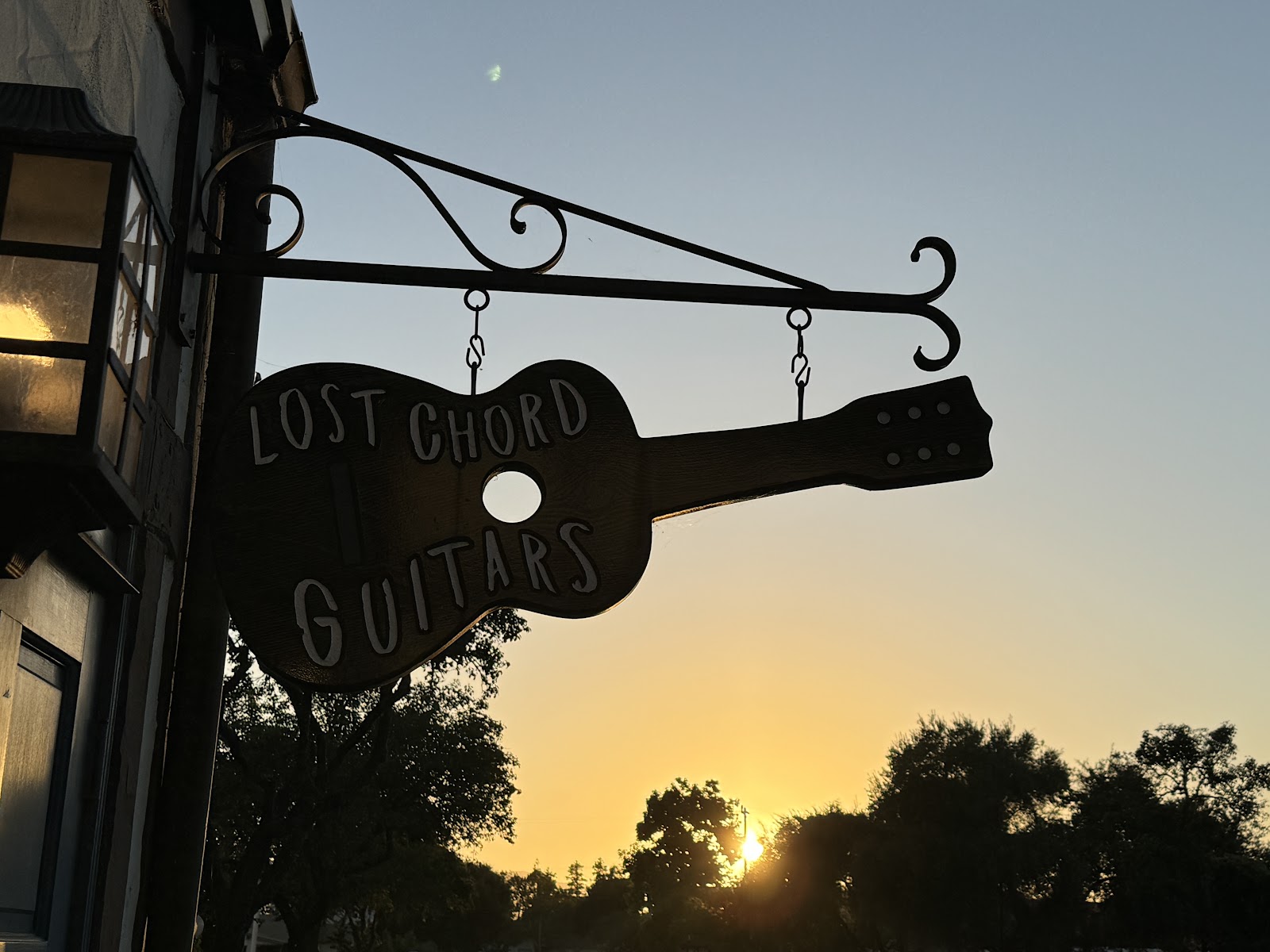
There’s a fun venue in Solvang that offers some evening entertainment as the sleepy town winds down for the night. Lost Chord Guitars is a quaint venue with an amazing array of talent that passes through it. On the last day of August, poet Ruben Lee Dalton from Buellton happened to play his original songs on guitar, along with Peter Claydon and Friends. It was an evening of all original songs and I was not surprised to notice how much I enjoyed Ruben’s lyrics. The poetry in his work really stands out. It could also be that I was attuned to hearing his lyrics because I recently read with him at the Goleta Valley Library. Look for an upcoming interview with Ruben Lee Dalton in the near future. If you are a fan of the local poetry scene and are scratching your head, wondering why you haven’t heard of Ruben Lee, it might be because he has changed his name. I kept asking myself the same question. Why is it that I haven’t heard of this poet and musician. Ruben Lee Dalton is the stage name for Bruce Schmidt. I remember reading with Bruce Schmidt years ago. I am happy to make the connection. 


September brings the celebration of National Hispanic Heritage Month. I am honored to participate in two events celebrating the Latino Poetry Initiative, Places We Call Home. The first is Palabras Vitales: Latiné Poetry Series on Wednesday, September 18th 1pm-2pm at Calden Overlook at Santa Barbara City College. All community members are invited to attend this special event. I will be presenting a series of poems and their companion songs that I have written. It’s not always a given that I am asked to prepare both music and poetry. As someone who is a late-blooming musician, it’s only been during the past couple of years that I have been adding music to my poetry readings. In some cases, the song preceded the poem. Although the themes of the poems and their companion songs are similar, each poem and song is its own entity and stands on its own. I am grateful for the time I have spent as your poet laureate to pursue music in addition to poetry and fiction. 


Another event that is part of National Hispanic Heritage Month and the Latino Poetry Initiative is the community open mic I am hosting at La Casa de la Raza, Thursday, September 26 from 6-7:30pm. This event is sponsored by the Santa Barbara Public Library. Poets and poetry lovers are invited to read a favorite poem that speaks to and from our Latino community. Participants may read from the Latino Poetry Anthology or read their own poems in English, Spanish, Spanglish, or Indigenous languages to Latin America, with one poem per person and a three-minute.   


Poet and pianist, Esteban Ramirez also combines poetry and music. He writes instrumental piano pieces to accompany his poems. On September 21, he will offer a free concert showcasing his piano work and his new book of poems, Welcome Home. He has added a third element to his presentation, visual art. Ramirez combines artificial intelligence and photoshop to produce illustrations for his poems. He says he is excited to share this multi-sensory experience with the community: “The audience can expect an evening of rich, evocative storytelling, brought to life through spoken word, visuals, and the beautiful harmonies of piano and cello." 

Upcoming Poetry Events:


September 11, Blue Whale Reading Series, 5:30-7:00 pm, Chapel, Unity of Santa Barbara, 227. E. Arrellaga Street. Featured poets includes Jace Turner and Catherine 

Abbey Hodges. 


September 18, Poetry and Music presentation by Santa Barbara Poet Laureate, Melinda Palacio at Santa Barbara City College’s Calden Overlook, 1pm-2pm with a reception to follow. This free program is part of Palabras Vitales: Latiné Poetry Series. This program is presented as part of Latino Poetry Places We Call Home. 


 Saturday, September 21, an evening of artistic fusion as Esteban Ramirez unveils his second poetry collection, Welcome Home—The Poetry Book, inspired by the romantic neoclassical melodies of his piano/cello album. at the Community Arts Workshop (CAW), located at 631 Garden St, Santa Barbara, CA. The event will begin with a mixer at 4 PM. The concert starts at 5 PM and concludes at 6 PM.


Sept. 21st at 11:30: Youth Poetry in the 805 hosted by Estimable Poet & Poetry Impresario, Sean Colletti
Don't miss this group of younger poets!  They are the nerve center of the next generation of Ventura County's famous poetry scene.

Sept. 22nd at noon:  Places We Call Home hosted by Marsha de la O.

This reading is in conjunction with the exhibit called "Places We Call Home" at the Santa Paula Agricultural Museum and with the statewide initiative by our California Poet Laureate, Lee Herrick.  It's called 'Our California' and is designed to get people throughout the state writing about their home whether that be their city, county, natural surroundings, place of origin or personal family.


September 26, Favorite Poem Open Mic/Poemas Favoritos, 6-7:30 pm, La Casa de la Raza 601 E. Montecito Street. Santa Barbara Public Library invites the community to a poetry open mic. In celebration of National Hispanic Heritage Month and the Latino Poetry Initiative, Places We Call Home, poets and poetry lovers are invited to read a favorite poem that speaks to and from our Latino community. 


*a version of this column was previously published in the Santa Barbara Independent 

Thursday, September 12, 2024

Browning of America: Fact or Myth

                                                                                 
Clinton's NAFTA helped fuel the Zapatista war in Chiapas

     I was fifteen years old when “they” killed President John F. Kennedy in Dallas, Texas. Like most Americans, I grieved, more because he was an Irish Catholic, and the Irish nuns and brothers who educated me talked about him in damn-near saintly language, same as my Mexican-Democrat working-class family, my dad a “union man,” who said he’d have no healthcare, pension, or vacation days without the AFL-CIO. As a child of Mexican immigrants, he was one of the first in his family to be a natural born U.S. citizen.
     My guess is none of us really understood the politics of the day, only that Republicans cut taxes for the rich, while Democrats spent them on social programs for the poor and middle-class. Sound familiar? And that was sixty-two years ago. Talk about “same tired old playbook.” What do you expect when you only have a two-party system -- or I stand corrected, we once had a “two” party system? Now, one of the two parties has morphed into party straddling the “middle,” while, according to pundits, the other side has been hijacked by a “cult-like” figure who refuses to go along with the "system," simply because he didn’t win the last election, and his party, or those remaining, follow him wherever he leads them, his main gripe: immigrants are destroying our country. This from a man who built his wealth on the backs of immigrants. Many undocumented immigrants have claimed to work for Donald Trump, at one time or another, nobody ever once asking for their papers.
     In fact, or so the former president says, from what he sees on television, residents of Springfield, Ohio, are claiming, immigrants are "eating their dogs and cats.” Okay, now, I, and many Americans, can deal with an immigrant-bashing as a political campaign strategy. There is an argument to be made, but eating dogs and cats? Gimme a break. I guess his point is to spread fear in Americans that our country is turning "brown."
     It wasn’t until 1966, after I served in the military with Americans of every stripe and color, I realized America, culturally, was, even then, much wider and broader than I was led to believe in my little sheltered corner of Los Angeles. In Vietnam, how was it one of my close friends was a black kid from the Virgin Islands, Ronnie La Beet, another, Jerry Lugo, from New York by way of Puerto Rico, Jack Brun, a white kid from Arkansas, and Bobby Simmons, a black kid from the Alabama. Then there were Lakota friends from South Dakota, Asians from California, funny speaking guys from the Bronx and lowlands of Pennsylvania, not to exclude Mexicans from Texas who could barely speak English? Talk about a brown America. 
     If a kid volunteered for the military, his legal status meant nothing. Hell, Puerto Rico and the Virgin Islands weren’t even states, and we drafted their kids, in droves. All of the guys who served, from the hills of West Viginia to fields of Delano, California, all the way to the Dominican Republic, and up to New England, shed their blood, and, sometimes, gave their lives in Vietnam. Nobody questioned their immigrant status. 
     It wasn’t an anomaly. When I talked to my dad about it, kind of jokingly, about all the characters I met in the army, he said it was the same during his time in the service during WWII, in the 1940s. He said he met guys from everywhere, and of all colors and ethnicities. Today, I assume, its ditto for the guys and women who fought our wars in the Middle East. This is the real America, but you’d never know it listening to politicians who rail about the browning of American and the changing culture. What they bank on are voters who haven't seen the "real" America outside their towns and communities.
     We’ve always been "brown," from the time Dutch and English pilgrims meandered about the shores of Plymouth, trading with the native people, who numbered in the hundreds of thousands, if not millions, considering all the land that would one day be called the United States. If not for the Iroquois Confederacy, the white strangers from far shores would not have lasted a winter here. Benjamin Franklin saw it. In an essay opening with, "Savages we call them..." tried educating early Americans about the sophisticated culture the natives practiced.
     So, if you’ve never left your neighborhood and travelled the country, you’d never know it. Sure, there are some parts of the country that are more homogenous, “all one color,” maybe like an Amish town in Ohio, not a lot of color there, but drive down through the Rio Grande Valley, it’s still homogenous, but the dominant people are Mexicans, not unlike Pine Ridge, in South Dakota, all Lakota, or towns in Alabama, Mississippi, and Tennessee, nearly all black, even parts of California’s Orange County, Vietnamese, and L.A.’s Monterrey Park, Chinese and Korean. Put them all together, that’s a lot of color. 
     Maybe that’s why New York, L.A., Philadelphia, Chicago, and San Francisco are such strange places to many outsiders when they first migrate to these cities, where the “browning of America” happens, and often the financial and cultural hubs of the nation, where the newest ideas bloom, from music to technology. Who would think of putting African percussion to American jazz but a Cuban conguero sitting in with Tommy Dorsey or Louis Armstrong? Put together a German accordion, Spanish guitars, electrified by Les Paul and Leo Fender, and toss in a few country voices, and you’ve got the Texas Tornadoes. 
     The thing is we’re so segregated into our own communities, we don’t consider America has always been a brown country. That makes it easy for politicians to spread lies, and I’m not just talking about an opportunist like Trump, who has taken the propaganda to new, and vile heights. Many of them do it, from both parties, and have always done it, pit our immigrant past with our immigrant future. 
     For me, the more I read, and the more I travelled, the more I saw it. America never was all “white,” like many would have us believe, which brings me back to JFK. I recall, after his assassination, Malcolm X made the comment, regarding the president’s death, “The chickens have come home to roost.” If Malcolm wasn’t an outcast before the statement, he sure was after it, in many circles, but I was intrigued. I didn’t get it. What did it mean? 
     Some might interpret it as “You reap what you sew.” Then, that’s like saying, JFK deserved what he got. How could that be? Is that what Malcolm meant, or was his comment more nuanced, open to interpretation? Maybe it wasn’t really about JFK, at all. Maybe it was more about what he represented. If JFK was president, then, didn’t he represent our nation, just like Washington, Adams, Jefferson, and all the other presidents? Was Malcolm saying more, something deeper, about the U.S., and not even talking about one man? Was he talking in symbols? 
     I thought back on Smedley Butler’s statement, “War is a racket.” Butler, a Marine general, won two medals of honor, wrote a memoir pretty much stating that, as a Marine, he was a “hitman” for U.S. business interests around the world, participating in the invasions of weaker nations, terrorizing and killing innocent people, all for the purpose of stealing their resources for our growing country. 
     Starting in Cuba, in 1892, across to the Philippines, to China, and back to Mexico, around 1914, where he led the invasion of Veracruz, and since Mexico didn’t have much of an army, his Marines slaughtered hundreds of innocent Mexicans, old men, women, and children who took up whatever made a good weapon to help fight off Butler’s Marines, all justified under the banner of the U.S., to keep Mexico’s ports open to American trade. Butler believed that was a medal he didn’t’ deserve. 
     Military conquest isn’t my point here. Countries have been invading and conquering other nations since the beginning of time, but what historians began to notice was that after any conquest, the decimated country is left with hungry people, often left without homes and livelihoods. What do they do? Where do they go? Most, get on boats or take to the road and migrate as refugees to the conquering countries. 
     It happened in Britain and France, colonialists to many subjects throughout Asia, Africa, and the Middle East. Since the late 1800s and into the 1900s, even, today, in the 21st century, whether through direct invasion or proxy wars planned by agencies in our government, Butler’s arguments still seem to be hold true, “War is a racket.” 
     After years of wars in the Philippines and Latin America, immigrants from those countries flooded into the U.S. During the Mexican Revolution of 1910, hundreds of thousands of Mexicans left their homes and settled in the U.S. Even though, the U.S. didn’t fight in the war, directly, many of its policies towards Mexico helped initiate the war. American mining interests poured money into the federalist government, led by Porfirio Diaz, while U.S. bankers supported the rebel forces of Francisco Madero, offering each side money and weapons. Without this support, who knows whether the war would have ever taken place. Maybe those immigrants, like my own grandparents, refugees of the revolution, would have stayed home, where they said they were always happiest. 
     After our military exploits into Santo Domingo, Dominicans began heading here in droves. I heard one U.S. sportswriter explain to his American readers: the reason so many Dominicans, Cubans, and other Latin Americans fill the ranks of major league baseball today is because they picked up the bats, balls, and gloves the U.S. marines left behind after they invaded and occupied those countries. 
     Our support of wars, or our participation of coups, in Nicaragua, El Salvador, Honduras and Guatemala didn’t only destroy economies but ruin farmers, it created multitudes of refugees. Where do those people go? They come here, crossing treacherous jungles, like the Darien Pass. 
     After our wars in Southeast Asia, Vietnamese and Hmong came here as “boat people,” to escape communism. Iranians arrived here by the thousands after we assisted in overthrowing the Shah in Iran. In 1990’s Mexico, Clinton pushed through his NAFTA plan, which helped U.S. corporations more than it helped Mexican farmers. A steady stream of Mexicans began heading north to the U.S. border once their farms couldn’t complete with U.S. agriculture. They’re still coming. Now that Gaza and the West Bank are pretty much being flattened, where will the Palestinian refugees flee when they find their homes no longer exist? If history holds true, most will come here to join their relatives who fled, years earlier, during the 1980s Israeli-Arab wars. Have the chickens come home to roost?
     My point isn’t to say any of these wars is right or wrong. I will keep that to myself, but I am saying, our wars have consequences, and they leave behind refugees who need to survive. Track the route of refugees and where they migrate during and after ours wars abroad, you’ll find many come to the U.S. It’s been that way through the last hundred and fifty years. Once here, immigrants, legal or otherwise, spend their lives working in the worst, most dangerous, low-paying jobs. 
     Some Americans demonize them or use them as political pawns. Who knows how many undocumented immigrants were buried after the covid pandemic, when they worked, often without proper protection, as we hid away safely in our homes. At the time, we called them, “essential workers,” nice name, when we needed them. Afterward, they became "immigrants" again, "rapists and murderers", their heads on the chopping block as meat for politicians' rhetorical rants, a convenient place to place blame for all the corruption and poor decisions made in Washington, in both parties. 
     So, I wonder, when Malcolm X claimed, after JFK’s death, that the chickens have come home to roost, did he blame the president’s death on our country’s political machinations, sinister plans abroad to overthrow democratically elected governments, unjust wars against weaker nations, or covert operations that go way beyond what any of us can ever imagine? My guess is if we put an end to these policies, immigrants might just stay home, where most of them say they prefer, instead of traveling hundreds of miles, only to sit on a border not knowing whether they will even be allowed to enter the promised land.

Wednesday, September 11, 2024

LA FIESTA DE LAS PUPUSAS / THE FIESTA OF THE PUPUSAS


Written by Jorge Argueta

Illustrated by Gabriela Moran

Publisher Luna's Press Books


Las pupusas son la comida nacional de El Salvador, reconicidas internacionalmente. Este bello libro escrito por el afamado escritor salvadoreño, Jorge Argueta es un homenaje a esta delicia salvadoreña. Las coloridas ilustraciones de Gabriela Moran son una fiesta cultural revuelta de todos los colores. 

Pupusas are the national food of El Salvador, recognized internationally. This beautiful book written by the award-winning author, Jorge Argueta is a tribute to this Salvadoran delicacy. Gabriela Moran's colorful illustrations are a mixed cultural festival of all colors.


OTHER BOOKS PUBLISHED BY LUNA'S PRESS BOOKS


La piedra mágica de la Chinchintora/The Chinchintora Snakeend the Magic Stone

Written by Manlio Argueta and illustrated by Male Cuéllar


The chinchintora is a snake that lives in the backwoods of El Salvador. It has a magic stone in its body that everyone wants to own. But to get it, you have to be an excellent dancer and challenge the snake to dance cha cha cha, salsa, cumbia, merengue, samba or Aztec dance.


ABC EL SALVADOR

Written by Holly Ayala and illustrated by Elizabeth Gómez 


With this fun‭, ‬unique‭ ‬ABC book‭, ‬learning-to-readers will travel‭ with Xiomara and her brother Kevin to some of their favorite places in El Salvador‭. ‬Spanish and Indigenous-influenced‭ Salvadoran words‭, ‬with beautifully painted illustrations by award-winning illustrator Elizabeth Gómez‭, ‬will guide children through‭ the culture‭, ‬history and traditions that make Salvadorans proud‭.‬‭


Olita and Manyula: The Big Birthday / Olita y Manyula: El gran cumpleaños

Written by Jorge Argueta and illustrated by El Aleph Sánchez


Olita and Manyula: The Big Birthday / Olita y Manyula: El gran cumpleaños is about Manyula, a beloved elephant that lived in El Salvador's zoo for over 50 years. Winner of an International Latino Book Award: Honorable Mention. This book is loved by children all over the United States of America and El Salvador.


Telegrams to Heaven/ Telegramas al cielo

Written by René Colato Laínez and illustrated by Pixote Hunt


Telegrams to Heaven/ Telegramas al cielo recounts the moving childhood of Archbishop Óscar Arnulfo Romero y Galdámez, who from an early age discovers the candor, light and power of the word, which he uses to pray and to write poetry, sending telegrams to heaven from his heart. René Colato Laínez, the renowned Salvadoran writer, has written a touching story about the great Arcbishop Romero. The colorful, modern illustrations of Pixote Hunt make us reflect with deep tenderness, showing us the innocence of the great Archbishop Romero as a young child. ‬