Thursday, October 03, 2024

Chicanonautica: Foreshadowing a Re-Entry

by Ernest Hogan


I just returned from another road trip.


Like a re-entry into the Earth’s atmosphere–if you’ll pardon the flashback to my Space Age childhood–coming back home can be stressful.


No danger of burning up like a meteor, but after being in different environments, home and the old routine seem different.


It’s like one of those science fiction stories where an astronaut returns from a long mission and finds that life on Earth is no longer what they thought it was.


Hmm . . . I should probably offer that as a prompt for the class I’ll be . . . teaching . . . in a couple of days! No, wait a minute --that won't be happening due to circumstances beyond my control . . .


Argh!


It’s always future–or some other kind of–shock.


Shock you can get high on.


The photos used here are from the trip, presented in reverse-chronological order.


Ernest Hogan, the Father of Chicano Science Fiction, is readapting to his altered environment.

Wednesday, October 02, 2024

How to Eat a Mango- Cómo se come un mango


Written by Paola Santos

Illustrated by Juliana Perdomo


Publisher: ‎Neal Porter Books 

Hardcover: ‎40 pages

ISBN-10: ‎082345388X

ISBN-13: ‎978-0823453887

Reading age: ‎4 - 8 years

Grade level: Preschool – 3


Abuelita teaches Carmencita that you can’t rush mango-eating: it takes five steps to appreciate the gift and feel the love.


Carmencita doesn’t want to help Abuelita pick mangoes; she doesn’t even like them! They’re messy, they get stuck in her teeth, and it’s a chore to throw out the rotten ones.


But Abuelita adores mangoes, and patiently, she teaches Carmencita the right way to eat them. Together, they listen to the tree’s leaves, feel its branches and roots above and below, and smell and feel the sweet, smooth fruits. Each step is a meditation on everything Mamá Earth has given, and in the Earth’s love, Carmencita feels the love of her Mami, her Papi, her little brother Carlitos, and of course, Abuelita.


When they finally bite in, the juice running down their arms, Carmencita understands. The mangoes are more than just mangoes… and she’s ready for another!


Inspired by her own childhood in Venezuela, Paola Santos’s mango-sweet story is a grounding, life-affirming take on gratitude for nature’s gifts and connection with family and culture. Juliana Perdomo’s cheery artwork brings Carmencita, Abuelita, and their mango tree to life with all the warmth of golden fruit under the sun.


Abuelita le enseña a Carmencita que comer un mango no puede precipitarse: se necesitan cinco pasos para apreciar el regalo y sentir el amor.


Carmencita no quiere ayudar a Abuelita a recoger mangos.  ¡Ni siquiera le gustan! Ensucian, se atoran entre sus dientes y es una lata limpiar los podridos.


Pero Abuelita adora los mangos y, con paciencia, le enseña a Carmencita la forma correcta de comerlos. Juntas, escuchan susurrar a las hojas del árbol, sienten sus ramas y raíces arriba y abajo, y huelen y sienten los dulces y suaves frutos. Cada paso es una meditación sobre todo lo que Mamá Tierra ha dado, y en el amor de la Tierra, Carmencita siente el amor de su Mami, su Papi, su hermanito Carlitos y por supuesto, Abuelita.


Cuando al fin prueban una mordida, los jugos escurriendo por sus brazos, Carmencita lo comprende. Los mangos son más que una fruta... ¡y ya está lista para otro!


Inspirado en la infancia de la autora Paola Santos en Venezuela, esta historia, tan dulce como un mango, fomenta la gratitud por los regalos de la naturaleza y la conexión con la familia y la cultura. Las alegres ilustraciones de Juliana Perdomo dan vida a Carmencita, Abuelita y su árbol de mango con toda la calidez de los frutos dorados bajo el sol.


Review


"Sunny, shape-based digital images by Perdomo radiate joyous warmth and nurturing."—Publishers Weekly, Starred Review


"A heartwarming—and delectable—narrative that readers will treasure."—Kirkus Reviews, Starred Review


"A vibrant picture book that sets up a wonderful way for individual readers or an entire classroom to reflect on the natural wonders all around them."—School Library Journal, Starred Review

"Sensory experiences explode on each page."—BookPage, Starred Review


"Bright and full of musicality and movement."—The Horn Book


Paola Santos was born and raised in Venezuela, and holds a master’s degree in Children’s Literature and Reading Promotion from the Castilla-La Mancha University in Spain. She is a member of SCBWI and a graduate of the Children’s Book Academy. She was awarded the Las Musas-Hermanas Mentorship with author Alexandra Alessandri and the We Need Diverse Books Picture Book Mentorship with author Meg Medina. How to Eat a Mango is her debut book.


Juliana Perdomo was born in Bogotá, Colombia, surrounded by a huge loving family, friends, bright colors, music, weird fruits, sunshine, lots of rain, but also rainbows. With a background in psychology and art therapy, she is the illustrator of many books for children, and the author and illustrator of the picture book Sometimes All I Need is Me. She lives in Colombia with her partner, son, and dogs.


Tuesday, October 01, 2024

Colder Than A...G.I. Should Be. Punto.

How Cold Was It?
Michael Sedano


A Fall heat wave sweeps into Southern California. When that happens, an old man's fancy turns to thoughts of when he felt more cold than anyone deserves to feel. In 1969, the US Army stationed me at Bravo Battery, seventh of the fifth air defense artillery, B 7/5, where I lived a summer and a winter rotating between a comfortable base camp called the Admin Area, and the tac site atop mighty Mae Bong.  


Fire Control Operator and Wayne Concha behind the Commo hootch

Winter, 1969. 


Outside temperature readings on the digital display go black like the weather doesn’t want us to know. On the roof of our Quonset hut, the anemometer either has frozen and stuck, or it met its match in the elements. 25 knots, the device last reported. 


High above Korea on mighty mile-high Mae Bong, Site 7/5, we soldiers feel the thermometer dropping all day, we don’t need technology to spell it out. 


It is cold. Colder than inside the freezer at DeYoung’s poultry in warm Redlands, Califas, where gramma works. Too cold to be funny, witches and well-diggers go to hell.


-12º, the digital display’s last words. The Lieutenant works some math aloud, reporting to no one in particular a wind chill factor equivalent to some outrageous below zero temperature if you were outside in that storm. Only the commo guys go out into the storm. I work commo.


Inside the command hootch the sound of storm slamming against steel sides of the structure reminds us how lucky we are to be inside the hootch. A diesel-burning space heater glows without warming, the cold air sucks the hot right out of the heat. We wear our cold-weather gear inside and talk in gasps of perpetual shivering.


There’s a sign down in the Admin Area base camp bragging how this is the world’s highest, ruggedest, toughest missile site, admonishing our blithe spirits to be Proud to be here. Up here, on top, where it’s cold, those words would fall out of my mouth, shatter on the cement pad, leaving Red White and Blue puddles.


Normally, we’re on the mountain three days and two nights, but this latest storm has kept us five days already. Maybe tomorrow a deuce and a half will make it to the top bringing a ride down to hot chow, hot showers, a warm bunk, and restful sleep.


Snow plasters against the windward side of the whip antenna mounted to the roof above my radio. Each hourly commo check reads fainter and fainter. “How do you hear me? Over.” “I read you five by five.” “I read you four by three.” “I read you two by two.” Faint, scratchy, and weak, 2x2. It’s time to climb onto the roof sheltering the Quonset hut to de-ice the whip antenna.


Top of Mae Bong Commo Hootch Weather and Radio Equipment

It's one small leap for a soldier, one giant leap into the face of the storm when I jump onto the shed. I balance along the roofbeam buffeted by adrenalin-raising random gusts. I keep my feet under me and in a few moments I’ve attained the far end of the hootch, directly above my duty station. The antenna wears a hoary beard that’s crept around to envelop the entire rod.


I’ve brought the de-icing instrument—a length of wooden broom handle. Like a magician I straighten my left arm and the broom handle slides into my grasp. With practiced ease, I straddle some cables, set my boots on the eaves, and lift both arms with the broom stick tilted over my head in readiness to strike a mighty blow. We do this with ugly regularity. In this storm, I'm hoping for a few hours to pass before I have to do this again. 


The wind reaches a momentary peak, an enormous gust grabs my parka fills my frame like a sail. The storm lifts me off the roof of the commo hootch and I fly above the ground, the shattered boulders, the concertina wire, the precipice.


I am flying! In momentary exultation I look into the whiteness of the blowing storm imagining the view from up here. Down there, Chuncheon and Camp Page lie in the crook of the curving river. Lights will twinkle and pa’lla far away pa’lla the shining ribbon of river winds its way South to Seoul. I am Mary Poppins floating above the city. I am feathered-Icarus dressed in Army green, headed for a fall.


When I revive I’m relieved to be tangled in barbed wire, holding my broomstick. Blood has oozed through my long underwear and wool OG trousers making a reddish icicle. Nothing hurts despite I’m bent over backwards on a shattered boulder. I extricate from the concertina spiral, roll onto my feet, slap snow off my parka. Back to the jumping-off spot, leap onto the command hootch, negotiate my way to above my duty station. Ever-so-carefully, both arms lift the broomstick into the air and mission accomplished.


“How do you hear me? Over.” 

“I hear you five by five. Over.” 

“Roger. Out.”


The storm abates to a weak sleet and constant Siberian gusts of punishing wind. The Llieutenant comes into the commo room with bad news. His phone line to Maintenance is out. Fire control and commo section sit at the highest level of the hill. Below us, the LT keeps a chow hall and maintenance hootch in constant communication by a telephone line laid along the edge of the mountain.

Launchers at the ready, B 7/5. North Korea pa'lla 15 miles away.

We advise the Admin Area switchboard we’ll be out of commo for a while so they don't freak out not hearing from us on schedule. The cold and wind have snapped the line somewhere out there. Outside. Where it's pitch black night. Where it's windy and penetratingly freezing.


Finding and fixing a snapped twisted pair copper wire happens regularly. It’s no challenge when it's daylight and nice weather, even when we have no field wireman tools. We have X-acto knives from a hobby kit. We’d need a third hand to manipulate a flashlight so we go gently into the night working by feel.


The phone line runs strung through eyelet bolts hammered into the rock every twenty feet or so, as terrain allows on the edge of the cliff. It’s cautious going, toes feeling for rocks and craters, keeping the phone line in gloved hands. The wind plays havoc with gait and balance. Wind accelerates as it whips up cliffs before cutting over the edge like an air knife. 


We lean hard into invisible forces that make us wobble from whirling gusts. We've bent the soft zinc wire sewn into our fur-lined hoods so just our noses protrude into the air. Moisture freezes nostril hairs into hypodermic needles that make breathing a painful hazard when you reflexively wrinkle your nose against the cold and recoil from sleet, grit, and needlelike nose hairs.


Only the blowing animal hair of the fur-lined hood protects my glasses from the stinging flint bits the wind slams into exposed skin. My lenses clack with each impact and my cheeks recoil at each pinpoint of pain as grit infiltrates past the fur hood. I tell myself not to wrinkle my nose but I can't resist the urge to feel that unique kind of pain. 


We wear Army-green knee-length nylon hooded overcoats. A heavy quilted liner buttoned into the coat manages to fight off the worst of the cold and wind. We walk arms out like cartoon caricatures. Green wool glove liners inside supple leather gloves keep our fingers nimble enough that the snapping wire signals its location through our palms several feet from the whipping slack wire.


Dawn from atop Mighty Mae Bong

We back into the wind feeling ten to fifteen feet of whipping wire strapping against our shoulders and legs. Wrapping itself around the knees puts the thing in our grasp and the job ahead is simple. We pin down the free-flying telephone line, lodging the wires under rocks.

The line snapped just behind the Maintenance hootch. There's dim light from around the front of the Quonset hut. Here is good fortune.


I pull off my gloves to grip the free end of wire to strip off insulation exposing a couple inches of copper. I feel sensation leak out of my hands. Now my fingers can’t feel a thing. I observe my hand clasp around the loose wire. I witness the blade draw along the first of the paired wire. I give up making sense of this. I put on the gloves and run back to the hootch and the light. Concha, my homeboy this turn on the mountain, has mirrored my actions. In the lee of the Maintenance hootch we don't have to shout to make ourselves heard.


When I can flex hands again, a breath into the gloves returns sensation to my grasp. Concha and I run back to the splice. As before, we pull off the gloves and instant numbness. I strip the second wire, pull on the glove and run back trembling and shaking, to the light.


Four wires stripped, the task remains to twist the broken ends together, wrap the joint in rubber tape, go inside and test the line. "Are you ready?" Concha and I shout in agreement. 


We make a break for the break where there's just enough light to match the two stripped wires to each other, twist once, twice, three times. Not enough but Concha can’t work beyond. I take the line and twist once, twist twice, and I assume twist a third time before I have to get those gloves back on my frozen hands. We don’t use the tape. The ten-minute repair takes a miserable hour out of our lives.


The maintenance hootch offers cozy respite. With twenty bodies and three space heaters to warm two grateful commo guys, we're still too cold to relax. But we feel warmth and gratitude. Here, in the light, we get a look at our defrosting fingers.  The copper wire ripped into the flesh of our insensate frozen fingers leaving ragged gouges filled with frozen blood. Our blood icicles begin melting, covering the fingers with slushy blood that drips onto our knees. We laugh as pain wells up from our ragged torn flesh.


I crank the field telephone and the Lieutenant hears me Lima Charlie. Loud and Clear, five by five.


Specialist 4 Michael Sedano on tac site duty


Thursday, September 26, 2024

What Is an American, after All?


Security, while traveling, just in case

     Like most Americans, I’m sickened when I hear about another shooting, especially mass shootings, which often cross my mind when I enter Northgate Market, a super Mexican grocery store on L.A.’s westside, between Culver City and Venice, the crowds thick, day and night. It’s the shooting at a Walmart in El Paso, TX, in 2019, that claimed the lives of 23 people, young and old, alike, mostly Mexican Americans and Mexican immigrants, I remember. The El Paso killer admitted, outright, he drove hours from his home to kill Mexicans and immigrants. On his website, he wrote, “This attack is in response to the Hispanic invasion of Texas.”

      I remember, after the shooting, I went to my Facebook page to see what “friends,” many third and fourth generation Mexican, were posting. Most, of course, were shaken, saddened by the tragic event. Now, the violence in America was hitting closer to home, reminding us some people had Mexicans in their crosshairs.

     Many on FB blamed Donald Trump’s rants against immigrants as the catalyst that drove the shooter. Others argued, “words don’t commit murder, people do,” so, to hold Trump responsible is playing politics. Strangers began posting their reactions, some obscene and offensive. Eventually, the responses deteriorated into conservatives bashing liberals and vice-versa, some friends not sounding very friendly, others down right indignant. Lost in the fray were the deaths of innocent people, the suffering of the families, and the threat to all people everywhere.

     Of course, gun control became the issue, a large percentage of Americans supporting a ban on assault weapons and laws to begin universal background checks when purchasing a weapon; some who said there were already enough laws in place to assure no “crazies” can’t purchase guns but the other side arguing the existing laws don’t go far enough, the same political cliches dished out by politicians and television pundits.  

     Some “friends” claimed the main problem was a Godlessness in America, too many single families, and lack of old-school, traditional values, like respect for each other, prayer in the schools. Then came the memes showing how violent music, movies, and video games were the culprit, brainwashing our kids. Of course, few people actually created the memes. Most copied and pasted them from other websites, those that fit their political ideologies.

     Conservative politicians took to the air waves and immediately latched on to mental illness as a cause, which inflamed television analysts who work with the mentally ill, arguing it’s an insult to people suffering from mental illnesses to blame them for mass shootings. Most mentally ill people, they said, quoting statistics, aren’t murderers, less than 3%. Liberal politicians, on the other hand, drove home the Trump-as-chief-instigator-line and used examples of his language to support their positions.

     I saw the FB response of a woman describing her liberal “friends” (Democrats) as being unreasonable, angry, out-of-control, and obscene. I thought this strange since some conservative responses I’d read also sounded much the same. I took a closer look at the posts. The person was right. How did I not see it? Maybe, we see what we want to see. There were angry posts on both sides. No particular ideology had a monopoly on crass, deplorable verbiage. Though, I admit, the majority of responses were measured and respectful, if not always supported by evidence.     

     Since El Paso, we’ve had a lot of shootings, at schools, two assassination attempts on a presidential candidate, some assaults on churches and temples, all the shootings baffling. If past experience over mass killings holds true, nothing, will change. While politicians on the “left” spout Trump’s candidacy is a threat to democracy, the ex-president has ramped up his anti-immigrant rants, even as hundreds of thousands of immigrants, across the country, work at jobs most Americans reject. If Alex Jones can get away with making his base believe Sandy Hook was a publicity stunt, what chance do we have to stop these “senseless killings?”

     What is scary is how, what are “senseless killings” to me, make complete sense to somebody else, especially those who believe what their messiahs tell them, not unlike the followers of Jim Jones. Some people believe “Whites” (I’m not really sure what “white” means), are losing control of the country, and “nonwhite” people are taking over, an “invasion,” the El Paso shooter believed, pushed by Trump advisor Steven Miller. However, people, like Miller, never mention the fact that, by any measure, the majority of those at the top, whether in politics or industry, are not women, people of color, or poor Whites.

     None of that is the point, or, at least, it shouldn’t be. We are all Americans, regardless of ethnicity, and once we get a hold of the ladder to success, we work hard for ourselves, our families, and to make the United States a better place. It is what it is. If the U.S. is becoming “browner,” it isn’t because anybody’s “plan,” no such thing as a great replacement theory. Simply put, as Americans, we are taught to work hard if we want to survive in this land, and that is what most of us do.

     Recently, at Vons, I waited, patiently, for the sandwich lady to take my order. She was working alone, and she was also older, brown skin, and looked exhausted. Okay, she was slow, not lazy-slow, just up in years. A guy ahead of me, in his thirties, a professional-type, who was waiting for his sandwich, kept checking his phone and tapping his foot. Finally, he blurted, rudely, “Just give me the sandwich the way it is. I don’t’ have all day.”

     She told him she was moving as fast as she could. When she was out of earshot, he turned to the rest of us and said, “If they’re going to take our jobs, they should work harder.”

     It took me a minute to gather my thoughts. When I did, he was gone. Why had he said, “they,” as if assuming she wasn’t American? She did have a Middle East accent, but a lot of Americans have accents. I wished I could have asked him, “Would you work eight hours on your feet cutting lunch meat for minimum wage?”

     I think about driving through California’s Central Valley, in my air-conditioned car, and looking out at the hundreds of field workers, stooped over, picking vegetables in hundred-degree weather, knowing many of them are here without documents. Who else is going to do that work? The hypocrisy is that many who criticize immigrants don’t hesitate to call them when they need a worker at rock-bottom-prices. All Americans benefit from immigrant, legal or not, low-wage labor, and to pretend otherwise is absurd. Justly or not, immigrant labor is needled into the fabric of this country, I’d say, a remnant of slavery.

     If this guy at the meat counter saw the sandwich lady as an “outsider,” how did he see me, Chicano, brownish skin, in my Columbia sandals, Docker shorts, and baby blue John Ashcroft t-shirt? This guy made me aware of my own Mexican-ness, even if my family has been in the U.S. five generations. It is curious how most Anglos I run into on the street, nearly always greet me in English, yet Latino immigrants I meet, hesitate when they meet me, not sure how to address me. When I greet them in Spanish, a bright smile crosses their faces. One woman recently told me, in Spanish, “I thought you were American.”

     Traveling recently, just outside of Bakersfield, I stopped at a restaurant. I saw men entering and exiting, some of them wearing camouflage trousers and hats. I decided to put on a U.S. Army cap, in case anyone suspected me of being an “outsider,” like I had to prove myself. I thought this was nuts. I didn’t even like the hat and hardly ever wore it. A gift from a friend, I just happened to have in tucked away in the back of my car. I had never been concerned by the way people saw me, anything other than American. So, why now?

     Luckily, during my travel, no matter where I went or stopped, in towns from Taft to Button Willow and onto Paso Robles, everyone was friendly and polite, whether I asked directions or stopped to chat. In stores and restaurants, I saw the locals, burly “White” guys and their wives, talking friendly to the Mexican and Chicanos who worked behind the counters or in the kitchens, like they all knew each other. Then it hit me. They probably did, all living together in these small towns.

     On the way home, I stopped by the James Dean Memorial along Highway 46. The parking lot was crowded, and I couldn’t find a space. As I began to pull away, a trio of bikers, beards, sleeveless jackets, and all, called to me. Uh-Oh, I thought. I rolled down my window. One of them called, “Hey, sir, we’re leaving. You can have our spot.” The Purple Heart on my license plate may have had something to do with it, but either way, they rekindled my trust in America.

Wednesday, September 25, 2024

Latinx KidLit Book Festival and Los Angeles Libros Festival


From https://www.latinxkidlitbookfestival.com


The Latinx KidLit Book Festival was created in 2020 during the COVID pandemic by members of Las Musas Books. Our aim was to connect Latinx authors and illustrators with readers and educators in classrooms around the globe. Since then, and with the help of countless volunteers, the festival has continued to foster a love of story and literacy as well as increase empathy and conversation among educators, students, and book lovers while uplifting the voices of Latinx kidlit book creators.

The Latinx KidLit Book Festival will be streamed live on the festival’s YouTube channel, or YouTube links can also be found on each individual event below.  All posted times are in EDT!

Sessions can be safely streamed into the classroom and shared with students using an educator's account. Classrooms can engage with festival authors and illustrators using the live-chat option! All video content will be recorded and available after the festival.

This is the schedule for this Friday, September 27.


 Los Angeles Libros Festival 


From https://www.lapl.org/libros


Sábado 28 de septiembre 2024

10 a.m. - 4 p.m.


Biblioteca Central

630 W. 5th St.

Los Angeles, CA 90071


Un festival del libro bilingüe para toda la familia


La sexta edición de Los Angeles Libros Festival ofrecerá una entretenida programación con cuentacuentos, conciertos, autores, talleres, libros y comunidad. Entrada gratuita.


Saturday, September 28, 2024

10 a.m. - 4 p.m.


Central Library

630 W. 5th St.

Los Angeles, CA 90071


A Free Bilingual Book Festival for the Whole Family


The 6th annual Los Angeles Libros Festival will offer a full day of entertainment featuring Spanish-language and bilingual storytelling, musical performances, authors, workshops, books, and community. Free and open to the general public.


Tuesday, September 24, 2024

Review: A Night At the Opera & A Migrant's Tale

Euphemistically yours, the 20th century
Michael Sedano


Puccini’s Opera, Madame Butterfly, comes from 1904. It’s as grand a tragedy as Grand Opera produces. Here's LAO’s précis:


Lights, camera, action: An American officer in turn-of-the-century Japan wants a bride, and a greedy marriage broker obliges, assuring him that the union can be easily dissolved. The innocent Cio-Cio-San believes they’re in love, even as Lt. Pinkerton moves on. For three years, she fights off rising debts and new suitors, refusing to believe she’s been abandoned. But when their long-awaited reunion finally arrives, the lieutenant isn’t alone—and he isn’t here for her. End scene.  link https://www.laopera.org/performances/2025/madame-butterfly


Orchestra tunes, extras mill about stage, audience settles into the film set atmosphere.

Attention must be paid to the untold story of the Italian Opera. A United States Naval Officer chooses a 15-year old girl to be his temporary wife while he pulls duty in Nagasaki, Japan. Pinkerton, the officer, can do whatever the hell he wishes in this Japan, abetted by a local Pandarus who, for 100 yen, fans out a foto gallery of alternative Cio-Cio-Sans, just pick one that suits your whim. 


The local US Consul plays a major role in Pinkerton’s rape of the Japanese girl, endorsing the sham marriage colluding by running interference, like paying the rent after Pinkerton ships out for home, and keeping the boy’s birth a secret. 


The child feels old, at 15, and considers the marriage arrangement her life’s greatest beneficence. Cio-Cio-San, Butterfly, loves Pinkerton with romantic teenager passion. Act II sees three years pass since Pinkerton was in town, and Butterfly sings the loveliest aria in grand opera, a daydream of her husband’s return, like Penelope probably sang over her ten years of absent love.


Then Pinkerton’s ship comes in. Pinkerton brings the blonde wife, Butterfly has been tossed aside. When the Lieutenant learns he is now a father the Consul arranges for the Mrs. to steal the child and take Butterfly’s son to the USA where can mature to be like these people.


Butterfly accepts that Pinkerton and the Mrs will take Butterfly’s son from her. Punto final. Cio-Cio-San, surrendering to her complete powerlessness, kills herself.


That’s, more or less, the untold story behind the magnificent tragedy of Cio-Cio-San, known as Madama Butterfly, sung in grand opera style as written by Puccini in 1904. In the Los Angeles Opera Company’s production running now at the Dorothy Chandler Pavilion, the year is 1930-something. A movie company is making a movie of the Opera.


Audiences get to watch the Opera being performed for three cameras on a sound stage in  a bygone Hollywood era. Making a movie in the old days  and doing in front of a live audience, creates visually useful tools for enjoying a live performance. Why the 1930s, when the era’s censorship outlaws movies about miscegenation?


Take a seat. Lights, camera, action, Hays Code repression. None of these concerns are obvious on stage. This perspective is in the night’s program. You don’t have to know this to enjoy the wondrous photography on the supertitles screen.


Far balcony-sitters get the same Opera the big-ticket buyers get.


It's all make-believe, except the imperialism part. The full house at the Dot Chandler were not interested in anything but the spectacle and immersion in Director James Conlon’s portrayal of this classic opera with Karah Son in the role of her career.

https://www.laopera.org/performances/2025/madame-butterfly


The movie gimmick works in its own fashion. 


At first glance, projection distracts. Maybe rock concert fans aren’t fazed by the large teevee screen. The Hollywood Bowl does it to good advantage. At LAO’s event, singers and set take second place to the giant black and white stream of the movie-in-progress. Two camera operators work near the apron. 


Director Conlon uses his camera angles effectively. One scene his lens positions singers in the same frame behind one another in a dramatic visual construction of a trio. Up in the nether regions of my affordable seat, the trio stands left to right across the vista. The singers, tiny manniquins from Door 42, fill the screen above the stage. Eyes sparkle, brows contort, lips form sounds and mouths hurl melodies the 200 feet to my ears.


Light travels faster than sound. That deeply satisfying closeup an artist like Karah Son exerting all her instrument has to give comes with a delay. Up against the back wall, Son’s lungs and interpretive power on screen occur like lip sync. Her lips move on screen. Audiences hear her song a fractionate moment after Son's mouth has completed the note. Audiences up here have to listen slower so the disconcerting delay doesn’t too greatly diminish the wonder of powerful singing.


Intense lighting emphasizes the chorus' colorless costumes

Chorus costumes feature variations on high contrast dark and light patterns to produce pleasing greys or shadowed texture in the B&W movie screen. Only Cio-Cio-San wears color. The maid dresses in dingy grey. Pinkerton wears dress whites. The Consul’s brown suit and skin don’t stand out against the B&W colorscheme of the rotating set; his powerful voice does all the work. 


Years ago, I had seats on the main floor. People now in my seats probably went home with sore necks, the compelling lighted screen would have had their heads repeatedly pivoting up to see the action and back down to the stage to see what the whole scene looks like in real life.


No one is compelled to see Madame Butterfly at the Dot. Just like last year's hit, El último sueño de Frida y Diego, it's a choice. The Opera’s a fantasy not a documentary. Don’t subsume rage at Puccini’s age-old literary patriarchical values driving the conceit of the story. One could compare Romeo and Juliet, or Chaucer’s Troilus and Criseyda, or Shakespeare’s Troilus and Cressida, then enjoy spirited discussions with fellow opera-goers--or people forming opinions reading LAO’s euphemistic words about some really crappy twentieth century values on that stage. 


Maybe Director Conlon intends the 1930s anachronism as a subtle form of patriotic subversion? I shouldn’t have read the program and let the setting be the setting. Audiences making the trek to the top of the hill overlooking Gloria Molina Grand Park will decide if it matters beyond the pretty pictures.


Multitask, gente. It works. I hold some critical thoughts in one part of attention. I use other parts of the experience to listen to the music, drink in the spectacle, and live three hours in artful fantasy. Everyone sings whatever they have to say. A full orchestra plays the music in a sunken pit. Costumes and staging deliver their own arte. The music’s sung in Italian. English supertitles scroll above the stage on that big silver screen. It's the Music Center where Bunker Hill used to be.


Opera’s a Big Date Night for couples who enjoy special nights out. Órale, this one’s special.


Now, through October 13, 2024. (link)

https://www.laopera.org/performances/2025/madame-butterfly


Another Country, Same America


Recommended Reading: The Orchid of Quetzalí by Claudia D. Hernández


You're 7 years old when soldiers give your family 24 hours to vacate your mountain eden. This is no country for you. You take what you can carry and head north to a join a relative in Los Angeles.


That's the story Claudia D. Hernández weaves for her character, Quetzalí, in a trilogy for early to capable readers. Quetzalí is one of those books that belong on every classroom shelf. I would have loved using Quetzalí with children I was privileged to tutor in a local elementary school.


Kids see themselves in Quetzalí, or they see the kid at the next desk, or the people next door. The story opens a reader to discussions of history, migration, language, culture, natural wonders. The orchid element raises the latter issue. 


Quetzalí takes her name from the jungle bird at the brink of extinction. So is the white orchid the child brings on the journey. The people of her mountain home are at the brink of extinction, too. Even if you don't explain this to a kid, the kid will "get" the metaphor.


With lush illustration by Jazmin Villagrán Miguel, Quetzalí, and its two sister titles forthcoming, make not only a valuable classroom resource, the trilogy belongs in a child's hands at home. Nothing motivates a developing reader like a book that mirror's the kid's own experience.

Monday, September 23, 2024

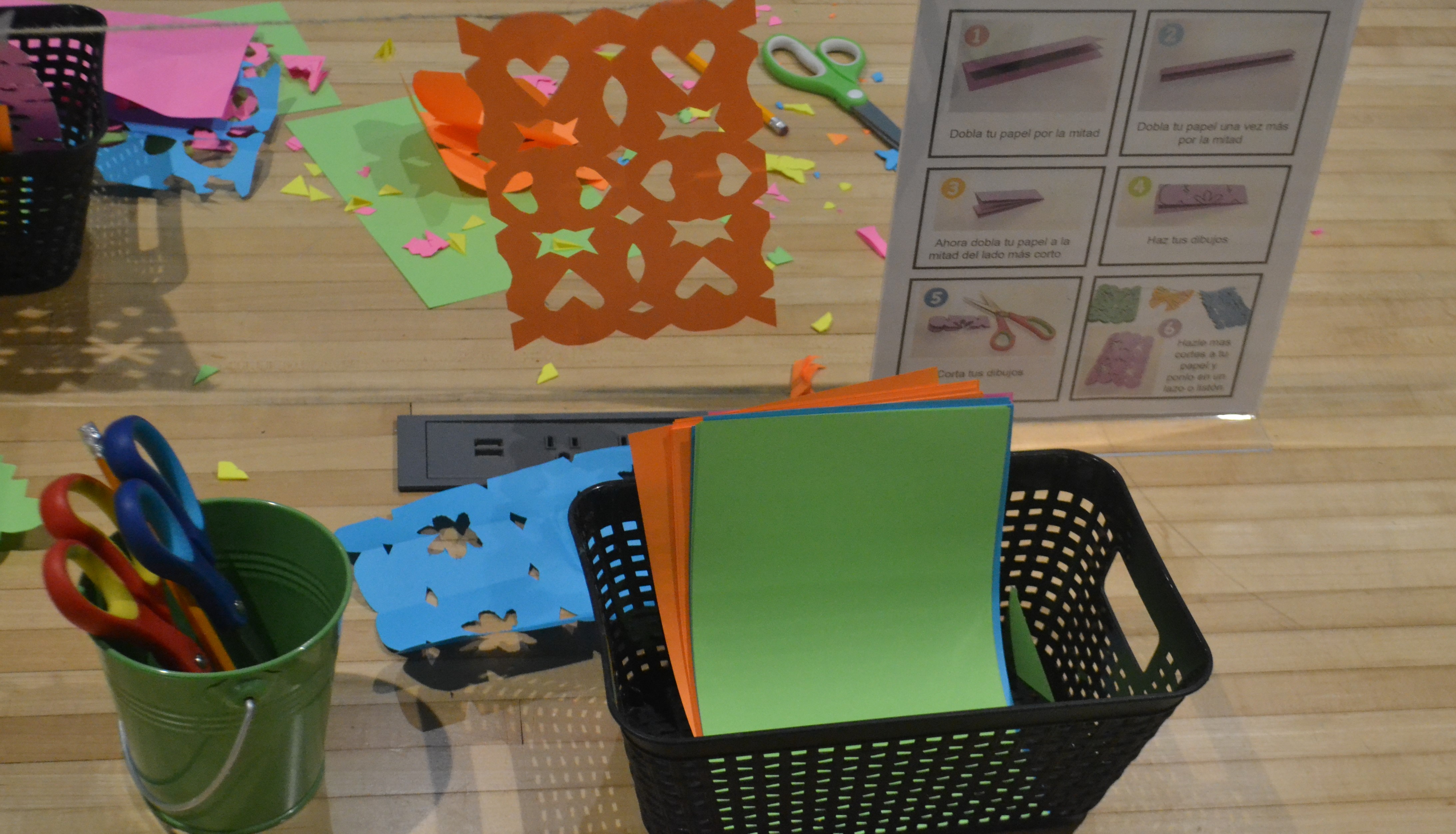
Hispanic Heritage Month Celebration at the Johnson County Arts & Heritage Center 2024

Hispanic Heritage Month Celebration at the Johnson County Arts & Heritage Center 2024


El miércoles 2 de octubre de 6 a 8 p.m.
Johnson County Arts & Heritage Center
8788 Metcalf Avenue, Overland Park, KS 66212

¡Únase al Centro de Arte y Herencia del Condado de Johnson para disfrutar de una agradable velada en celebración del Mes Nacional de la Herencia Hispana! Desde trabajadores mexicanos e inmigrantes recientes de Centro y Sudamérica, la región de Kansas City tiene una profunda historia Latina. Hoy en día, la comunidad Latina es la población de más rápido crecimiento del condado de Johnson. El Mes Nacional de la Herencia Hispana es un momento para honrar las culturas y contribuciones de los Latinoamericanos en los Estados Unidos. 

El evento es organizado por Johnson County Arts & Heritage Center, Johnson County Museum, Johnson County Park & Recreation District, Hispanic Leadership Lowrider Bike Club y El Centro.

Este evento es gratis y abierto al público. No es necesario registrarse. ¡Hay algo para todos!

Wednesday, October 2 from 6 - 8 PM
Johnson County Arts and Heritage Center
8788 Metcalf Avenue, Overland Park, KS 66212

Join Johnson County Arts & Heritage Center for a lovely evening in celebration of National Hispanic Heritage Month! From Mexican traders and laborers, to recent Central and South American immigrants, the Kansas City region has deep Latino history. Today, the Latino community is Johnson County’s fastest growing population. National Hispanic Heritage Month is a time to honor the cultures and contributions of Latino Americans across the United States.

This event is hosted by Johnson County Arts & Heritage Center, Johnson County Museum, Johnson County Park & Recreation District, Hispanic Leadership Lowrider Bike Club, and El Centro.

This event is FREE and open to the public. No registration required. There is something for everyone!