Sunday, July 07, 2013

How to be a Chicana/Chicano Bio-Hacker!


Copper Mountain, Colorado

 Kudos to Michael Sedano’s recipe he named, “The  Gluten-free Chicano Cooks Zucchini Tortillas,” (click here for his post and recipe)!  As soon as he posted the recipe, I had a zucchini tortilla fiesta at my house (we delegated the various cooking duties) and substituted the wheat flour for almond and coconut flour.  And since Michael gives directions como mi familia:  “un poco de esto, un poco del otro, just taste it as you go,” pues, we finally created our very first test batch.  They are delicious with the New Mexico Chile, and smaller rounded tortilla shapes will prevent them from getting crumbly.  For non-gluten gente—it’s possible!  I also added rajas de chile poblano, Michael—just so you know.  With the rajas and the almond and coconut flavors, it is exquisite!  Gracias for another exciting low carbohydrate recipe idea! 
chile poblano--roast them, peel and chop--great in so many dishes!
Segundo—Currently, I’m in Copper Mountain, Colorado, where Wanderlust Colorado is taking place and where I have learned I’m a bio-hacker—and this has something to do with the zucchini tortillas—honest!  But before explaining what it means to be a “bio-hacker,” (cooking tortillas) here’s a quick explanation of Wanderlust Colorado (click here for the website).  It’s four days of intensive yoga, meditation, lectures on the body, nutrition, and strategies on organizing to create awareness, make political change.  The website will show hundreds of people doing yoga or meditating.  I only attended two of those mega-classes (wild!).  Most of the sessions I attended were small and intimate. 

After a meditation hike (Nancy y Amelia)
I didn’t know anything like Wanderlust Colorado existed until my daughter, Nancy, suggested we go.  My daughter has been a “yogi” (individual who is proficient in yoga) for over 20 years and when we get together, yoga is often included in our activities.  As one yoga teacher explained this morning, “Our children can take us in so many brilliant places we never imagined we could go.”  So true!  Here we are all “shiny” after one of the yoga classes. 

Nancy y Amelia


Hand Stand!

Some of the more experienced yogis doing a "plank stack"
The lectures I attended allowed my sore body to rest up from the yoga and hikes.  With all these activities combined, I felt awakened body and spirit.  Meeting, listening to, and talking with Dr. Sara Gottfried and Dr. Mark Hyman opened up new areas of thinking for me in regards to Diabetes, well-being, our bodies and how we consider our body.  In her lecture (and writings), Dr. Sara Gottfried encourages all of us to be a “bio-hacker.”
  
Hand stands help with balancing the body!
A Bio-Hacker:  One who can break into her or his own metabolic system.  I didn’t know I was already doing this by testing my blood every morning or when I test during the day when I’m not feeling well, or when I first tried the newly cooked zucchini tortilla to see how it would affect my blood glucose levels.  As a “bio-hacker,” I have access to how (metabolically) my body is handling the glucose I’ve given it which gives me the power to heal myself.  Dr. Gottfried is most interested in having people check their cortisol levels which also affects glucose levels, which in turn affects our well-being. A brand new world is here.


Dr. Mark Hyman’s lecture, “Take Back Your Health” encouraged us to think about our trips to the grocery store.  He said, “When you go grocery shopping, consider it ‘FARM-aceutical’ shopping.”  Meaning?  Think of your groceries as the most powerful drugs for healing.  Foods such as phytonutrients can do more healing for your body than pharmaceutical drugs.  “A lot of our illness is about disconnection from the body.” 

Dr. Hyman lecturing:  "Take Back Your Health" at Wanderlust Colorado
An electric buzz went when through my head when Dr. Hyman said:  “… illness is about disconnection from the body.”  This is a loaded statement, I thought, because I can think of so many levels of disconnection (metabolic, physical, emotional. . . ):  which one is he talking about?  All of them-- because all of these are interconnected to make up one system:  our body system.  Dr. Hyman wishes all of us to be experts of our own system:  our body.  He's asking us to become the doctor of our body.  Here he is in a TED lecture (via TEDMED) talking about this very idea:  (CLICK HERE)


Maybe I should have been a doctor.  Maybe.  I’ve always been fascinated by “the body.”  An early memory is walking to school one day (elementary school), (my usual route going through an avocado grove), and noticing a dead white cat near one of the avocado trees.  Something had gouged out its midsection and I could see organs, muscles, sinews.  I was transfixed.  Every day on my walk to and from school, I’d look forward to seeing the latest condition of the cat. What had been lovely, fluffy white fur, soon became matted, shrinking skin, giving way to bones, skull, a detailed spine which also slowly disintegrated, subsumed into the mucky wet ground.  I kept imagining how the cat would also serve to fertilize the avocados.  This was a childhood accidental "hacking" (I didn't "break in" but I did keep vigil)-- being present and witness to a body's transformation.  I was also sad the cat had died, but then mesmerized by what its inner body offered me to view and study. 

Now with Diabetes, I’ve been presented with a living “body” (my own) to experiment and view its changes—via bio-hacking. 
testing your own blood
How to be a Bio-Hacker:  To unlock the secrets of your metabolic system (you can do it!), you have to be brave—and test your blood.  I say “brave” because many people are afraid of pricking their own skin (or letting someone else do it) and letting it bleed.  It wasn’t fun to do when I first began.  I think of it as when I began learning how to play the guitar.  At first it hurt to continually press on those wire chords.  My fingers finally protected themselves with thick callouses. Same with blood letting. 
So many gifts await you when you become a bio-hacker and learn to test and understand your blood

When you “break in,” the gifts you receive from your blood are truly amazing.  You will have a completely new relationship with your body. Less disconnection.  You become in tune with what your body is doing—and best of all, by unlocking the secrets of your metabolic system, you give yourself the power to heal yourself!  Too many of us gente are being diagnosed with Diabetes and are simply given a pill or told to get on insulin with no explanation, no idea how to prevent complications.  (This is not to say that your doctor's orders are wrong, but it's good to ask questions, to understand the "why" of your doctor's suggestions). Too many people have told me that their doctors just tell them to stay away from sugar.  Well what does that mean?  Only desserts?  Do we only look at "sugar" in the label?  Here's the secret:  avoid looking at "sugar" in the label.  The secret lies in the amount of "carbohydrates" in the food (complex and simple sugars).  This may not necessarily mean desserts. For example, eating a carrot is similar to eating a tablespoon of glucose/sugar.  You get a quick sugar high with carrots.  Who knew.  Without more information, how can you manage your body's metabolic system?  

It's problematic to consider that “one pill for all” or “one diet for all" is the answer.  It just doesn't work.  That's why there are so many diets and pills:  because each works in each body differently.  We are as unique as our fingerprints. Your metabolic system is your own individual fingerprint.  I learned that quickly in my Diabetes Support Book Group when I noticed that even though we all have Diabetes (Type II) in the group, one person might be able to eat a banana and their blood glucose will not rise, while another person will eat just a half banana and have a spike in their glucose levels.  Every body is different and reacts to food differently.  When people ask me, “So what kinds of food should I eat?  What kind of diet should I be on?”  I usually tell them, the best diet is, of course, a low carbohydrate diet, BUT created via your own bio-hacking—by testing your blood 75 minutes after the first bite of a new food or restaurant food you haven’t had, etc. 

So back to Michael Sedano’s “Chicano Zucchini Tortillas (non-gluten).”  I took my first bites (using almond and coconut flour), loved the taste, and then 75 minutes later, took my blood. SUCCESS!  My blood glucose levels stayed stable—no spike.
Michael Sedano's Chicano Zucchini Tortillas
I so want to find ways to have our gente get excited about their bodies—to discover interesting vegetables to cook, like celeriac root.  Celeriac root and cactus cooked with cumin, turmeric, curry powder is such a delicious side dish and is low in carbohydrates and loaded with vitamins and nutrients.  Spices are also anti-inflammatory (tumeric especially) and will do wonders. 
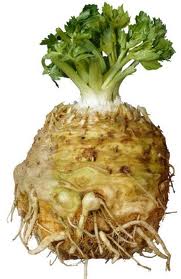
 
celeriac root
Here at Wanderlust Colorado, Dr. Hyman reminded all of us that (globally) 1 in 2 people will be diagnosed with Type II Diabetes in their lifetime (and the highest incidences are with our gente:  Chicanas/Chicanos, U.S. Latinas/Latinos). Our children are being diagnosed with this chronic disease when 50 years ago, this was unheard of.  This is devastating news.  The good news is that it’s preventable, and if you are diagnosed, there is so much good food for you to eat, food that has healing properties, and best of all—you will feel good. 
Instead of potato chips, you can make celeriac root chips (very low starch)
“You shouldn’t be eating foods with labels,” said Dr. Hyman.  “Instead get creative with your cooking and listen, study, become connected with your body.”  Mindfulness. And now to work:  sending this information to you, figuring out ways to help our gente who live in areas where it is too dangerous to go outside and exercise, where money is tight so familias turn to inexpensive fast food and processed foods to survive. I'm thinking of South Central Los Angeles, where gente there organized and created The South Central Farm or The South Central Community Garden.  It's one of the largest urban farms in the United States (read about it here!).  


La comunidad creating community gardens like this one teaches our children about food, about eating, and gets them outside, moving their bodies!


It’s been an amazing four days here in the mountains of Colorado.  Gracias and much love to my brilliant and talented daughter, Nancy Wolff, to all the smart conversations I had with her, and to so many yogis I met who are working toward a healthy society, to new friends (more hugs!), and to all the mindful volunteers.  And if you're interested in going to one of these festivals but are worried it's too expensive, you can go to this festival as a volunteer.  That’s how Nancy and I attended. We loved assisting behind the scenes, meeting other yogis, teachers, lecturers.  And now-- I share this with you.  Contigo.  Abrazos!  Sending you all strong healing energias!

Saturday, July 06, 2013

Latino conferences. Writing contest. Arte, Sacramento


National Latino Writers Conference 2014

Mark your calendars and get your writing ready. This conference will be back next year. Go here to sign up for the E-list and receive details as they develop.


- - - - 

Also, over on LinkedIn's Latino and Latina Writers Group, there's an interesting discussion begun by Nylda Dieppa-Aldarondo with Sandra Ramos O'Briant, Daniel Olivas et al about conferences for Latin@ writers. You can read and join it here.


Writing contest

"Each year Blue Mesa Review holds a writing contest. We are honored to announce that Sherman Alexie (fiction) and Michael Dickman (poetry) are the 2013 judges. Submit your very best prose and poetry online.

"First place winners receive a cash prize and publication in Blue Mesa Review. We look forward to reading your work!"

Submission Period: June 1 – August 31, 2013
Award Publication, $250 cash prize
Eligibility: This competition is open to original English language works in the genres of poetry and fiction. The submission must be an unpublished work. Simultaneous submissions are acceptable. Authors must not have a close personal or professional relationship with any current or previous BMR staff members.
Reading Fee: $12
What We’re Looking For: Startling, compelling, and beautiful original work. We’re looking for fresh prose and powerful poetry.
Guidelines: Submissions are accepted exclusively through our online submissions manager, Submittable. Entries must be received no later than August 31. Submit a packet of up to 3 poems or up to 6,000 words of prose. Results will be announced mid-October.


The Folk Art Of Emmanuel Archuleta

Closing Reception at Spanglish Arte, Saturday, July 13, 2013, 6:00 - 10:00pm
2nd Saturday Art Exhibit of Emmanuel Archuleta
It's Going To Be Caliente Caliente!!!
Roll Thru And Cool Off With Local Art, Music, Sangria And Paletas!
Spanglish Arte
2512 J Street, Sacramento, Califas
Go here for map, directions and info.
https://www.facebook.com/events/478645548890766/

Es todo, hoy,
RudyG

Friday, July 05, 2013

Roof Sitting in New Orleans

Melinda Palacio


It's the fourth of July in New Orleans and my friend invited me to a swim, barbecue, and roof sitting party. Roof sitting means climbing a rickety ladder to the attic and catapulting oneself to the roof. The catapulting force cannot be too rigorous because there's not much of a ledge on the slanted roof. However, it's an ideal setting or seating to see fireworks from a barge on the Mississippi river. It also beats battling the crowds in the French Quarter.

I made peach sangria punch with a botched batch homemade peach ice cream. My hand is in working order after a big splinter embedded itself under my thumbnail. I posted a picture on facebook and bloguero Sedano suspected a good story behind the espina impalement. No juicy story to tell. I am simply clumsy. Always have been. Ever since the time I first sprained my ankle dancing in the dark, and then the time I was nine and I was jumping rocks to get to the other side of a lake, slipped, and nearly lost my toe to a broken glass bottle under the water, just big enough to leave my littlest toe dangling by some stubborn skin. Earlier in the week, I was opening a bathroom door when I grabbed the handle with too much vigor and impaled myself. The splinter under my thumb almost reach my cuticle and was smack in the center of my fingernail.  I didn't have any polish on my nails and you could see the unnatural splinter in the center of my finger. Two shots, one tetanus, a lollipop, and a big bill from urgent care and it was done. My thumb no longer throbs and my arm no longer feels punched (a side effect of the tetanus shot).
The bruise or ghost of a splinter under my thumb.

Although I'm mentioning my little espina episode, I cannot complain. Especially, after visiting my friend Naomi at Touro Brain Rehab. Naomi has been in the hospital for seven weeks after being hit by a car while walking. She is doing much better thanks to her sheer willpower and everyone's prayers. She's working on walking and being able to use her right leg and remembering. She still has no memory of the accident. I suspect she probably will never remember. I am in awe of the progress she has made in the past month. 

Here's to miracles!


Thursday, July 04, 2013

On-line Floricanto for the Fourth

On-line Floricanto Independence Day 2013

Michael Sedano

Fourth of July, United States Independence Day, comes with fireworks and nationalistic hostilities. The chest-thumping crowd puts on their blinders so all they see are the red, white, and blue. More and more, gente acknowledge the grave markers, row upon row decorated by those flags.

Point seven five percent of the United States population is in uniform this Independence Day. We still have one million one hundred eighty-nine thousand living WWII Veterans. Twelve percent of Bush and Obama’s Veterans are unemployed. Twenty-six percent of Veterans who are designated Poor also have a disability. Of the nation’s 308,745,538 people who were created equal, twenty-one million can call themselves Veterans. One point six million are women. No wonder there’s so much good poetry about dead and dying soldiers; being one is rare.

A couple blocks away a ball game singer renders sweetly the National Anthem. Some drunken lout screams out whatever drunken louts like him scream out. She hits that high note with a rich purity of tone. The lout screams again.

Two poems strike me as Fourth of July material, Emerson’s “Concord Hymn” and Shelley’s “Ozymandias.” The United States Empire begins with Emerson’s first bullet. An empire’s hubris is its only reward in Shelley’s desert emptiness.

A third poem is one of those, “goes without saying,” pieces, ee cummings “next to of course God”

Concord Hymn
BY RALPH WALDO EMERSON

Sung at the Completion of the Battle Monument, July 4, 1837

By the rude bridge that arched the flood,
Their flag to April’s breeze unfurled,
Here once the embattled farmers stood
And fired the shot heard round the world.

The foe long since in silence slept;
Alike the conqueror silent sleeps;
And Time the ruined bridge has swept
Down the dark stream which seaward creeps.

On this green bank, by this soft stream,
We set today a votive stone;
That memory may their deed redeem,
When, like our sires, our sons are gone.

Spirit, that made those heroes dare
To die, and leave their children free,
Bid Time and Nature gently spare
The shaft we raise to them and thee.


Ozymandias
BY PERCY BYSSHE SHELLEY

I met a traveller from an antique land,
Who said—“Two vast and trunkless legs of stone
Stand in the desert. . . . Near them, on the sand,
Half sunk a shattered visage lies, whose frown,
And wrinkled lip, and sneer of cold command,
Tell that its sculptor well those passions read
Which yet survive, stamped on these lifeless things,
The hand that mocked them, and the heart that fed;
And on the pedestal, these words appear:
My name is Ozymandias, King of Kings;
Look on my Works, ye Mighty, and despair!
Nothing beside remains. Round the decay
Of that colossal Wreck, boundless and bare
The lone and level sands stretch far away.”


"next to of course god america i
love you land of the pilgrims' and so forth oh
say can you see by the dawn's early my
country 'tis of centuries come and go
and are no more what of it we should worry
in every language even deafanddumb
thy sons acclaim your glorious name by gorry
by jingo by gee by gosh by gum
why talk of beauty what could be more beaut-
iful than these heroic happy dead
who rushed like lions to the roaring slaughter
they did not stop to think they died instead
then shall the voice of liberty be mute?"
He spoke. And drank rapidly a glass of water
--ee cummings

Wednesday, July 03, 2013

New Books From Cinco Puntos Press


MI FAMILIA CALACA/MY SKELETON FAMILY
A Mexican Folk Art Family in English and Spanish
by Cynthia Weill
illustrated by Jesus Canseco Zárate

Welcome to the Family! It’s just like yours: father, mother, sister, brother, abuelita, gato. Well, there’s something just a little bit different about this family. Maybe it’s those clothes they wear … just a little bit fashion backward. And the colors! So vibrant and … lively. Maybe that’s what it is. They are just so full of life. Familia-life.


CONSPIRACY GIRL
by Karen Chacek
illustrated by Abraham Balcázar


On the day of Nina’s birth, the world goes wild, and a flock of evil mangy birds follows her home from the hospital, intent on killing her before she ruins their plan to destroy the world. But, armed with only a cereal box and an alert mind, Nina is too clever for their devious designs. 


MAXIMILIAN AND THE BINGO REMATCH
A Lucha Libre Sequel
written and illustrated by Xavier Garza

Everybody’s fighting in Maximilian’s world: a couple of cranky tías who, like lucha libre rudos, will stop at nothing to triumph in the church’s lotería game; his masked uncles going for the tag-team title of the world; and a green-eyed vixen named Paloma who challenges Max's love for Cecilia Cantú. Will good triumph over evil? Max sure hopes so!


DON'T SAY A WORD, MAMA / NO DIGAS NADA, MAMA
by Joe Hayes
illustrated by Esau Andrade Valencia

Author Joe Hayes and artist Esau Andrade team up to deliver a knockout picture book about siblings. Two sisters secretly try to outdo each other with generosity. Each new gift from one sister to the other—a secret to everybody but their mother—will have readers crying out, "Don't say a word, Mama!" Until, of course, she does. 


Tuesday, July 02, 2013

Poesia para la Over- and Under-ground Gente. Pocho2 is Gone. On-line Floricanto

Orale, Poets Ride the Red Line

Michael Sedano

Anthony Davis eludes tacklers, speeding around the corner toward the goal line. The Notre Dame linebacker gets the angle on Davis and meets him near the sideline. Hwump! It is the desperate defender's only big hit of the game, sending Davis full speed into the LA Times' photographer. The collision launches the thin woman in the tan pantsuit off her feet, impelling her ten feet back to the asphalt-and-rubber track where she lands in a heap. Her Nikon bounces along until it lands twenty feet to her right behind the End Zone. We photographers rush to the Nikon to see it has survived the hit.

That moment comes back to me in a flash when I hear the distinct sound of lens bouncing against steel floor of Metro rolling stock. The abashed lensman remarks it is only a couple hundred dollars of Nikon lens. Now, if he'd dropped the $5000 D800 body, that would have been another story. Here’s what we would have missed.

Riding the Red Line toward the heart of Hollywood is also another story for passengers finding themselves sharing space with the boisterous poets and photographers who fill one end of the 75 foot long subway car as it accelerates away from Union Station.

Poesía para la gente went underground on June's final Sunday. Organizer Jessica Ceballos' inspiration for reading poetry in public spaces came to life with a passionate intensity embodying the conviction that poetry matters, that poetry belongs out in the open, not exclusively within the covers of chapbooks, loose-leaf binders, literary ephemera, and public readings attended by the other poets on the list.

The event comes off magnificently! Jessica Ceballos and co-producer Ryan Nance issued their call for poets less than a month earlier and find themselves wrapped up in the energy and excitement that has some train riders looking on curiously. Some interact with poets, call-and-response, heckling, laughing, shaking their heads that gente would commit poetry in public places like this for all to see and hear.


Sean Hill
Poetry in public space is the raison d’être of Poesia para la gente, whose mission statement observes “…By providing a welcoming non-traditional, unique, and one-time-only public platform for sharing the power of the spoken word, we hope to stimulate intercultural understanding within the diverse population of the North East Los Angeles area...and beyond “.

Conney Williams performs for the camera.
Karineh  Mahdessian


 Jeffrey Alan Rochlin
The poet crew comes with its own built-in diversity, an intercultural cross-section of the city of La, a mirror for the faces of passengers looking on, a spectacle for passing tourists when the itinerant poets, like Orpheuses ascending from the bowels of the MTA, become part of the frenetic scene at the corner of Hollywood and Highland.
Cue Offenbach. Orpheuses ascending. One looks back.
Jessica Ceballos in green dress realizes the event has taken on a life of its own. 
Arriving early, I stalk the Red Line platform thinking the event operating on CPT. The half hour interval between the announced gathering hour and the crowd trickling in allows me to quiz various gente. “Are you a poet?” I get alarm, quizzical looks, surprised denial. I explain to smiles of relief my motive in asking letting these strangers know that the brown vato with a camera means them no harm.

“Yes,” the sole occupant of a manufactured granite bench affirms, asking if I know the organizers. I introduce myself and, suffering from chronic anomia, promptly forget her name. I quiz her about her work, what she’s chosen to share. She discloses she’s never read her work in public. I urge her let today be your day, and she nods agreement but I see the apprehension in her eyes.

The reading starts with a shouted introduction. The first readers match their presentation to the setting; they fill their space, gesture with body and face and vocalics, and get the juices flowing. Kaya hangs back from the gaggle who crowd the readers, eager to laugh and cheer their comrades.

 Jeffrey Alan Rochlin reads as the crowd closes in.
They are agents of change in so many ways. Rolland Vasin, who performs as Vachine, observes, “Because Poesia Para La Gente threw down on Sunday, the Universe shifted a bit toward Goodness today.”

Ryan Nance, Yago Cura, Devereau Chumrau, Conney Williams

Yago S. Cura

Brandon Brown

Kaya Amoroto makes a fist to relieve the pressure that builds as she prepares to do her first public reading.
For one woman the change brought a once-in-a-lifetime change: she read in public for the first time. Now there’s no going back. But, as with any communication apprehensive person, taking that first step onto the stage comes gradually.

I make eye contact with Kaya and signal with a head nod to take a spot. No, she smiles and steps back. I approach, offer my hand to lead her to the emcee. She doesn’t take it but walks with me and I introduce her to Jessica Ceballos. Personalizing the experience should infuse Kaya Amoroto with the confidence to get up there and read. Kaya appears more relaxed, integrates into the throng, but doesn’t claim an open mic.

We hop on a Red Line car and poetry turns the ride into diverting perfection. I note Kaya holds a scrap of yellow paper. Eye contact again, I smile and nod, she smiles and shakes her head. A poet closes a piece and the interval reaches out and grabs Kaya by the tongue. She jumps to her feet and of the sudden, there’s Kaya Amoroto, projecting energetically to the passengers, turning toward the other poets, strolling the aisle using the space, slam style and fully engaged. I am happy for her and her face is triumphant when Jessica calls out “that was her first time reading in public!”

Kaya Amoroto stands and delivers.
Kaya Amoroto holds on while taking command of her space.
Another beauteous moment arrives when the group lands at MacArthur Park. The ride, the crowd, the poetry infects a group of youngsters. They interrupt their itinerary and, Ceballos recalls, the kids are “hanging out with us at our MacArthur Park stop. Sean made an announcement that he would be joined by a beat boxer …next thing you know, Sean is doing a duet with Isabel Hirama, in the middle of the park!” Scofflaw Sean and the kids had been blowing bubbles on the train and the poetic relationship emerged. Ceballos recalls, “just as suddenly, Isabel & Co. were back on the train to continue their trip to their original destination.”

Ryan Nance, a co-organizer with Jessica Ceballos.
Tourists hitch a step when they see Ryan Nance making poetry happen in Hollywood.

Karineh  Mahdessian adds to the excitement of the walk of stars.

Karineh  Mahdessian's tee shirt reads "poet". Indeed.

But I didn’t see any of that. After Hollywood and Highland, I split. On the train back to Union Station I recognize one of the featured poets, Yago Cura. We platicar and chat, he introduces me to la esposa, Amanda, explaining they have to get back to the babysitter. I don’t take their foto we’re so engaged in our chaticar.

He pulls out a copy of “Postcard Feat” published in 2007 by Cura and C.S. Carrier. It’s an issue of Hinchas de Poesia, a beautiful color codex paying tribute to postcards, poetry, and the United States Post Office as a quintessentially Unitedstatesian institution, and the decline of mail versus the ascendancy of paperless thought.

Yago asks if I like futból and I confess to being a Cementero but don’t really follow it. Yago does. He pulls out another number of his literary journal, Hinchas de Poesia. It’s the soccer issue, “Odas a Futbolistas,” every piece a tribute to a footballer, written by Cura or his collaborator Chaz Folgar. Cura shares also his hand-made folleto “Ode to Wayne Rooney by Yago S. Cura.” Cura really likes Rooney, writing “He plays like an ambitious intern at the Patent Office where plans for a Goalie Death Ray are discussed by querulous agents.” I also carry off the train Cura’s own collection, “Californiando.”

Yago S. Cura's Hinchas de Poesía and other ideas.
Pobrecita la señora. She digs that Cura and I are enjoying ourselves so she doesn’t pull him off at their stop. The couple miss their connection and now backtrack to another station to make the connecting ride home.

Email Cura vai hinchasdepoesia.com for information on Hinchas de Poesia. I did not know what the title meant, I thought of Ricardo Sánchez’ “Mis ojos hinchados,” but Yago explains an hincha is like a sports fanatic, except for poetry. Given where we had been, hinchas de poesia says in a nutshell what happened on the underground that day.

Poesia Para La Gente is a program of the Avenue 50 Studio's monthly La Palabra Poetry. The program has been made possible by a grant from The James Irvine Foundation.

Ceballos already has plans in the works for the next Poesía para la gente poetry in public spaces event. La Bloga will share details when information arrives. Jessica's Bluebird Reading Series has its next event Sunday, July 14, 2013, 2:00pm - 4:00pm at Avenue 50 Studio, Inc.


Ave Atque Vale, Pocho2

http://labloga.blogspot.com/2011/11/honoriing-piri-pocho2-on-line.html

Back in November 2011, La Bloga published an epitaph for the Chicana Chicano precursor to today's fully  burgeoned social media ambiente, Pocho2.

Monday, wrapping up a seven year existence, Pocho2 formally closed its portal and disappeared into the ether. Hail and farewell, Pocho2.

Pocho3 has sprung into existence as a still-embryonic Facebook group with a secret membership. Old Pochos from the original Cyber Cholo Chat Room, created by world-renowned cartoonist Lalo Alcaraz before he was famous, or Pocho2 hangers-on, looking to get into Pocho3, click here.


Mail Bag
Gemini Ink Kick-off Event Friday July 5


San Anto's leading literary cultural resource, Gemini Ink, plans a summer full of activities and learning. Visit their website for details on the kick-off event and the schedule of classes.


On-line Floricanto for Two July Thirteen
John Martinez , Francisco X. Alarcon, Javier Pacheco, Bernal Esme, Nancy Reza

"Abuelo Rosendo" by John Martinez
"Tanka for El Charro de Oro" by Francisco X. Alarcon
"down under and back [a poem about integrating the hardness and the light]" by Javier Pacheco
"Tonto Yo" by Esmeralda Bernal
"The Walk" by Nancy Reza


ABUELO ROSENDO
John Martinez

What was in those bible thumbs?
What did he see
In that rice paper?
Words like tiny ants
In columns,
Footnotes,
Like small grains
Of black sand

It was power,
I think,
That’s what it was.
Power to protect
9 children
In a Country
That didn't love him,
Didn't love
His children
And their children,
A Country that wanted
Him out
Of a Country
They took from him

But he ground
His bones
At their ice plant anyway,
Grimacing,
His skin,
A lawn sprinkler
Of sweat,
So that he could
Sit at his table,
Behind Encyclopedias,
Niche in Spanish,
National Geographic,
Pablo Neruda,
The white faces
Of LIFE

He did it for his Raquel,
For his family,
Our brownness,
Glistening under
The forgiving sky

And every prayer
He made,
With his shut down eyes,
Left him and lingered
Like a cloud above us,
An angel in white and grey

When we were hot
It rained on us,
When we were cold
He lit the pilot
And called us in

I watched him
Over the years,
Tremble into
A confused state
On his chair,
In front of Telemundo,
Blazing those European legs
And he had that forever smile,
As I combed his hair
Like I did as a child,
He dozed off
Under the calendar,
Crooked on the wall

(c) John Martinez 2013
All Rights Reserved


John Martinez studied Creative Writing at Fresno State University. He has published poetry in El Tecolote, Red Trapeze and The LA Weekly. Recently, he has posted poems on Poets Responding to SB1070 and has published in La Bloga (an online Blog dedicated to Latino/Chicano Culture and Literature. He has performed (as a musician/political activist, poet) with Teatro De La Tierra, Los Perros Del Pueblo and TROKA, a Poetry Ensemble (lead by poet Juan Felipe Herrera) and he has toured with several cumbia bands throughout the Central Valley and Los Angeles. For the last 17 years, he has worked as an Administrator for a Los Angeles Law Firm. He makes home in Upland, California with his beautiful wife, Rosa America y Familia. His first volume of Poetry, Under The Forgive Sky, is due out in August and will be available on Amazon.


Tanka for El Charro de Oro 
Francisco X. Alarcón

for Sebastien de la Cruz

yes, keep on singing,
bringing blooming tunes to all—
your golden voice dons
the true American Dream
in great mariachi outfits

© Francisco X. Alarcón
June 13, 2013


Francisco X. Alarcón, award winning Chicano poet and educator, born in Los Angeles, in 1954, is the author of twelve volumes of poetry, including, From the Other Side of Night: Selected and New Poems (University of Arizona Press 2002), and Snake Poems: An Aztec Invocation (Chronicle Books 1992), Sonetos a la locura y otras penas / Sonnets to Madness and Other Misfortunes (Creative Arts Book Company 2001), De amor oscuro / Of Dark Love (Moving Parts Press 1991, and 2001). His latest books are Ce•Uno•One: Poems for the New Sun/Poemas para el Nuevo Sol (Swan Scythe Press 2010), and for children, Animal Poems of the Iguazú/Animalario del Iguazú (Children’s Book Press 2008) which was selected as a Notable Book for a Global Society by the International Reading Association, and as an Américas Awards Commended Title by the Consortium of Latin American Studies Programs. His previous bilingual book titled Poems to Dream Together/Poiemas para sonar juntos (Lee & Low Books 2005) was awarded the 2006 Jane Addams Honor Book Award. Alarcón teaches at the University of California, Davis, where he directs the Spanish for Native Speakers Program. He is the creator of the Facebook page POETS RESPONDING TO SB 1070.


Down Under and Back
Javier Pacheco

This gracious host
isn’t feeling so well;
down in the dumps,
disenchantment swell
immobilizing dis-ease
loss of appetite
lack of normal sleep
constant fatigue
day ‘n night blahs
languishing lethargy
descending to underworld
demonology claws
where nothing is sacred
very little held dear
coping mechanisms jammed
when gravity gives way
to the sudden free-fall of ego/elevator
weighted in anguish and fear

synchro-mystic magic
swept by dark undercurrents
resonance interrupted
stifling dreams of heaven
base hardness smothering the soul
awash in inner agitation
blocked energy flow
fulcrum instability
arousal turrets closed
tension discernment
attitude maladies
growing atrophy
phobia constrictions
psychogenic breakdown
prolonged vulnerabilities
distorted cellular growth

recurrent traumas
from child/victimhood
mental distress loops
of stored-up humiliations
feelings of being slighted
public rejections
derisive social neglect
brooding indifference that boils over
into anger and its triggers unhinged
bringing drama-abuse,
theatrics of tantrums
resentment, bitterness
exteriorized undertows
blanket recriminations,
diatribes and blaming;
its the inflated ego
too attached to this fading world
severing mystic cords
of memory, justice and
tender compassion,
the transition from time
to timelessness,
that inner eternity

afflicting forces may ultimately lead me
to understand maya (illusion)
the mindfulness of
spaciousness within,
coalesced inner seasons,
planting good seeds
tending to a blooming heart;
in the pivotal shift
that reconstitutes life’s focus
true devotion
readjusting center
personifying the heroic exemplar
in self-renewing promise
raising the spirit aloft
freed from polarities
the corrosive space,
in the negativity
of dark shadows

embracing the wondrous present
is the ground of oneness
coincidence of all opposites
integrating coexisting counterparts
in transpersonal unity
the harmony of the spheres
archetypal energy
soul work serenity
genuine solace
leading the cosmic dance
both feet lacing rhythms
combining opposites
a befriending love that
transcends duality
defines unifying purpose:
the peak experience
mysterious awe
of magical grace
at the door of divinity.


Javier B. Pacheco was born in Palo Alto, CA, April 22, 1949.


He is a S.F. Bay Area performance poet, pianist, composer, arranger, with an M.A. in Music (UCLA 1986) and PhD in Ethnomusicology (UCLA 1994).

He is pianist for Broken English (Santa Cruz), directs his own ensemble, Orquesta Pacheco, and performs Jazz on occasion with the Pacheco Trio.


Tonto Yo
Esmeralda Bernal

johnny depp 6/23/2013

Tonto Yo bows deeply in reverence
to johnny depp, he has defended us

bricolage, bricolage, bricolage
bricoleur rearranges
heavy bricks of definition
Tonto is now a dumb white man

and Tonto Yo bows down
grateful the results
are neatly stacked
profit for depp’s pocket
what a great man,
great warrior,
bwana,
great white father

© Esmeralda Bernal 6/23/2013 All Rights Reserved


Esmeralda Bernal resides in Phoenix, Arizona. Her poetry has appeared in La Bloga, HaLapid, Yellow Medicine Review, Nahualliandoing Dos: An Anthology in Nahuatl, Espanol and English, and recently in the San Gabriel Quarterly Review: Issue 58/ Spring 2013.


The Walk
Nancy Reza

As you prepare to what's ahead, don’t hesitate to glance back
from time to time.

The journey may have seemed as though it had no end
but its only just begun.

By criticism or encouragement; by barriers or a helping hand;
by oppression or by being driven you have crossed that line.

The line where your dreams meet reality,
the crossing from a team of many to a team of one.

As child-hood friends are called individually,
as friends walk before you, some after you

As your mind races back and visits every back-to-school moment,
every rally, every class room;

As you suspensely wait to hear your name,
you will walk across as you aspired to do.


Monday, July 01, 2013

Spotlight on Spencer R. Herrera


Spencer R. Herrera was born and raised in Houston, Texas. He studied at Southwestern University, the University of Houston, and the University of New Mexico. His areas of research and teaching are Chicano/a literature, studies, and film. His Ph.D. dissertation is titled “Pochoroman: The birth of the Chicano/a writer” (University of New Mexico, 2007), which he describes in the abstract:

“Oscar Zeta Acosta’s The Autobiography of a Brown Buffalo (1972), Richard Rodriguez’s Hunger of Memory (1982), Sandra Cisneros’s The House on Mango Street (1984), and Denise Chavez’s Face of an Angel (1994) are the principle narratives I examine in this dissertation. In each, the idea of writing and establishing themselves as writers is a prevalent theme. Connected to this theme are language and identity, two cultural components to which Gloria Anzaldua refers as ‘twin skin.’ By writing about language and cultural identity, many Chicano writers confront the derogatory tag that has been placed upon them, that of Pocho, a Mexican American who has become Anglicized. Despite all the cultural nuances associated with Pocho, the term is mostly defined by the loss of language, specifically the inability to speak Spanish fluently. Ironically, if it is language (Spanish) that Chicanos have lost, then it is language (English) that they will use to reclaim their cultural identity, voice, and history.”

Herrera teaches at New Mexico State University in Las Cruces where he is Associate Professor of Spanish. He is married and is the father of two daughters.


Herrera’s forthcoming book is Sagrado: A Photopoetics Across the Chicano Homeland (University of New Mexico Press, October 2013), which includes photography by Robert Kaiser, poetry by Levi Romero, and an introduction by Luis Valdez. From the publisher:

“Un lugar sagrado, a sacred place where two or more are gathered in the name of community, can be found almost anywhere and yet it is elusive: a charro arena behind a rock quarry, on the pilgrimage trail to Chimayó, a curandero’s shrine in South Texas, or at a binational Mass along the border. Sagrado is neither a search for identity nor a quest for a homeland but an affirmation of an ever-evolving cultural landscape. Embedded at the heart of this remarkable book, in which prose, photographs, and poems complement each other, is a photopoetic journey across the Chicano Southwest.”

In an article by Tonya Suther for the New Mexico State University News Center, Herrera explained that he “wanted to show that despite fences and laws, the flow of culture could not be restricted.” He added: “You can’t stop culture; it permeates borders.”

Praise for Sagrado:

“Sagrado’s three talented artists represent the best in contemporary Chicano poetry, art and history. One of the most important books I’ve read recently.” –Rudolfo Anaya, author of Bless Me, Ultima

“These poems are photos, these photos are poems, and together with the historical testimony that reads delicious as cuento, they are prayers said on behalf of others. A book to teach with or to teach ourselves things we forgot. Wise, heartfelt, generous, grace-filled, and, above all, created with love. And everybody knows whatever is made with love siempre sale bonito. A thousand and one blessings to the artists for this labor from el corazon.” –Sandra Cisneros, author of The House on Mango Street