Sunday, August 11, 2013

Retarded Justice: On Language and the Mistreatment of Rachel Jeantel in the George Zimmerman Trial

Olga García Echeverría


As soon as 19-year-old Rachel Jeantel hit the witness stand, everything about her was up for grabs—her blackness, her education, her English, her weight, her facial expressions, her tweets and posts. Isn’t it mind boggling to consider that during the televised State vs. George Zimmerman trial there seemed to be much more discussion and debate about Rachel Jeantel’s character and credibility than there was about George Zimmerman’s?

There is way too much to say about the mistreatment of Rachel Jeantel (both in and out of the courtroom), but I’d like to highlight one of the moments when defense attorney Don West is cross-examining Jeantel, who was on the phone with Trayvon when the encounter that led to Trayvon’s death occurred.

When probing Rachel on the stand, West states that Trayvon “confronted” Zimmerman when “he could have just run home.”

 Jeantel explains that Trayvon was already by his house. “He told me,” she states.

 “Of course, you don’t know” West says with a slight smirk as he reaches for his glass of water on a podium, “if he was telling you the truth or not.”

Rachel, whose unwavering stare seems to see right through West’s courtroom shenanigans, speaks steadily into the mic, “Why he need to lie about that, sir?”

There’s a brief pause while Don West gulps his water, and then proceeds. “Maybe if he decided to assault Zimmerman he didn’t want you to know about it?” Rachel immediately comes back with a monotone, “That’s real retarded, sir. That’s real retarded to do that, sir…”

I’ve gone back to YouTube numerous times to replay that scene. Although many saw Jeantel’s response as further evidence that she was “a train-wreck witness” and “ghetto trash,” I found her response cathartic and in the context of that courtroom, brilliant.

The only other televised moment that had a similar effect on me was the 2008 presidential-shoe-throwing incident. Remember that Iraqi journalist who threw one and then two zapatos full-force at President’s Bush face at a Baghdad press conference? Of course, that was not proper etiquette by a journalist, but weren’t those rebellious shoes flying in the air wonderfully cathartic, even if they did miss Bush’s face? That act of rebellion could not change all the loss of human life (mostly Iraqi) and the behemoth destruction propagated by the Bush administration’s War on Terrorism, but for a moment Muntadhar al-Zaidi’s angry shoes shattered the farce, the theater of Bush’s visit to Baghdad, and so many of us around the world who watched, clapped and said, “Thank you!”

What does one do in the ugly face of Superpower politics? How do you defend yourself or the dead? Maybe one reaches for whatever you have, an angry shoe, for instance, or ghetto lexicon to resist and to remind the world that it’s all a farce. That’s what, in my opinion, Rachel Jeantel did during the George Zimmerman trial by just being herself and for that I’d like to say, “Thank you, Rachel!”  

Khadijah Costley White in “A Letter to Rachel Jeantel” captures my exact sentiments when she writes to Rachel, “You exemplify, in your girth, skin tone, language, and manner, a refusal to concede. You are a thousand Nat Turners, a quiet spring of rebellion, and some folks don’t know how to handle that.”

Definitely many folks didn’t know how to handle Rachel Jeantel on the stand. So much negative attention has been paid to Rachel Jeantel’s speech and body language, yet so little has been discussed in regards to Don West’s. Somehow Rachel Jeantel’s courtroom disposition and teenage-Creole-Black-ghetto-speak speaks volumes, but Don West’s privileged-White-legal-speak, his arrogance, and cultural ignorance does not. I’m sorry, but “That’s real retarded.”

Before I proceed with this blog, I’d like to say a few words about the word retarded. As an English teacher and writer, I believe words are very powerful and I understand why the word retarded is offensive to many. In fact, there’s a campaign to end the use of the R-word. At http://www.r-word.org/ you can join millions and pledge to not use it.

There are many words I dislike and find offensive, but that does not mean I would join a campaign to eradicate them. I don’t believe in the eradication of words; I believe in the creation, the transformation, and in some cases, the abuse of them, but NOT the eradication. So a warning for R-word sensitive readers; I will be using the word retarded repeatedly in this blog. After all, the verb “retard” has been around (in the written record) since the 1700’s. It’s not the word’s fault that a bunch of retarded medical professionals in the U.S. decided in the 1900’s to attribute the word to the mentally challenged. Like many words, it has several meanings and can be used in a wide variety of ways.

     Retard:

  1. to make slow; delay the development or progress of (an action, process, etc.); hinder or impede.
  2. to be delayed
  3. a slowing down, diminution, or hindrance, as in a machine.
  4. slang. Disparaging.
    1. a mentally retarded person.
    2. a person who is stupid, obtuse, or ineffective in some way
I grew up hearing and saying the word retarded. When something was so stupid that it was ridiculous, we used the word retarded. East LA is full of nothing but gangsters. That’s retarded. Mexicans are lazy and sleep under cacti with giant sombreros on their heads. That’s retarded. Marc Anthony can’t sing God Bless America at a baseball game because he’s a brown-haired Latino and real Americans are blond and blue-eyed and don’t have Spanish surnames. That’s very retarded. Don West asks Rachel Jeantel in English if she understands English after hours of cross examining her in English. That’s outrageously retarded.

I’m not an investigative journalist and this is just a blog, but this past week in a desperate desire to explore and better understand my own outrage over the George Zimmerman trial, the mistreatment of Rachel Jeantel, and my growing obsession with the word retarded, I asked a few people what they thought about the R-word or if they had anything to say about Rachel Jeantel’s response to Don West’s retarded theory.

The first person I asked was the one sitting right next to me. My girlfriend Martiza had this to say: “It’s a demeaning word, but we used it a lot while growing up. I remember the nuns in Catholic school used it on us often. They would say things like, ‘Why don’t you have your thinking cap on? What are you, retarded?’  In regards to the Zimmerman trial, Don West was trying to pin Rachel into a corner. I think he was also repeatedly trying to humiliate her, but she saw right through his trickery. I think she nailed it when she told him how stupid he was being in his suggestion that Trayvon was the aggressor. For those who criticize Rachel’s use of language, I wonder what language, other than her own, was she supposed to use to say what she needed to say, which was basically you’re acting retarded, sir.”

Over breakfast in Long Beach I picked the brains of two college professors. Maylei Blackwell from UCLA paused for a second and then succinctly said that Jeantel’s response to Don West was “a puncturing to realness in a context where everything else was political farce.”

Arelene Keizer from UC Irvine shared that “Using the word retard isn’t acceptable, but she’s a young person, it’s the language she speaks in. I thought the attack on her was really a way of avoiding the violence that was going on in the courtroom, the violence that was happening to her, the violence that was a kind of reiteration of the violence Zimmerman perpetrated on Trayvon Martin.”

On Facebook, I harassed one of my favorite writers/thinkers to share her retarded thoughts. Myriam Gurba said, “I do not think that the word retarded is retarded. I do think that it would be retarded to ban the word retarded.” Since Gurba is a high school English teacher, I also asked her if she hears her students using the R-word and what she thinks about this. “I hear kids using the word retarded but I think its one of those words that's so divorced from its origin that kids aren't using it in a hateful way. That's what happens with language. If we were to examine the word origins of lots of words, we might find weird and hateful roots to them but most of us aren't etymologists so we have no idea where our words come from and how they came to be. Like the word jip comes from gypsy, a group historically associated with swindling. I don't think most people using the words nowadays are associating with this stereotype but hey, that's language. It's got longevity and mystery.”

I also texted a couple of friends with, What do you think about the word retarded? Sandra Muñoz, East LA Employment Lawyer, texted back, “I like the word retarded, but I’m not allowed to say it anymore which is really retarded. Remember we went to that gathering where women were urging other women to stop using the word bitch and then we started calling each other bitch ad nauseam? I feel the same thing is going to happen with the word retarded.”

Liz Vega texted: “I am deeply aware that calling someone retarded or using it to describe something is the same as using the word nigger, spic, or any other slur and that’s why I wouldn’t use it in a public sphere…but behind close doors, I think it’s retarded to be censoring ourselves. I also think that the fact that the medical establishment changed mentally retarded to intellectual disability is retarded. This was done because retarded was being used as an insult, so guess what? Censoring made it more powerful!”

In regards to the Trayvon Martin case, what’s more offensive than any word could ever be is a verdict that defies reason: Trayvon (the 17-year-old armed with Skittles) and not Zimmerman (the 28-year-old armed with a gun) was the aggressor. What’s offensive is Don West’s absurd knock knock joke at the onset of the trial. Offensive is the repeated assertion (by both the prosecuting and defense attorneys, and later the jury) that race was NOT a factor in this case. “This is not about race,” said prosecuting attorney John Guy in his closing statement, “it’s about right and wrong.” Is he fricking retarded?

And yet, we have seen the erasure of race in this case on many levels. In her July 16th Lesbrain blog, entitled George Zimmerman/Jorge Zimmerhombre, Myriam Gurba reminds us that “Although the evidence points to George Zimmerman being a bleeding douche afroth with issues he is also…NOT WHITE.” Zimmerman, Gurba points out is part German and part Afro-Peruvian. Posing a series of questions about identity and access to White privilege, Gurba challenges the public discourse on this case, which she describes as currently “stuck in the 1950’s.” Gurba goes on to argue that if we are to equate Zimmerman with a baked salted galleta, we should expand the lexicon to include the complexity of color. “He’s no cracker,” Gurba writes, “he’s a Triscuit.”
 
I am so grateful to Gurba for the Triscuit metaphor. I feel it empowers us to be able to discuss the complexities of race and power on another level. One of Gurba’s most interesting observations in the Zimmerman case is actually a question: what allowed Zimmerman, who is technically not White to access White privilege? Did his last name erase his “Other” half in this courtroom? In another context, had Zimmerman attacked a White youth, for example, he might have been cast into the role of the aggressive "Other.”

Over coffee yesterday, as I shared the Triscuit metaphor with two young brilliant minds, Jorge and Leslie, we pondered the deeper meaning of the actual colored cracker. Jorge winced and wanted to know what the intricately weaved Triscuit is made of. Leslie wondered if perhaps there is a new generation of people of color who aspire so much to be part of White America that they eradicate (via self-hate and denial) their color and colored history. Not everyone can do that, of course. Not everyone can bleach themselves and pass. But for those who do, may they suffer, said Leslie, “from some kind of Triscuit complex?”
 
So while Mr. Triscuit sat quietly in the courtroom like a coward, Miss Rachel Jeantel was thrown into the lion’s den with Don West asking a series of retarded questions that were loaded with subtext. Rachel Jeantel might not read cursive, but she sure knows how to read and respond to subtext, insinuation and bullshit. Don West can hide behind legal jargon and “legitimate” English all he wants, but his courtroom tactics and his role in this case stink of old, systematic “creepy-ass cracker” politics that aim to criminalize/dehumanize Black youth everywhere and that ultimately retard justice in America.
 
 
Links referenced in the blog:


Saturday, August 10, 2013

Noticias and upcoming events


Colo. woman makes Disney dizzy
info from: Amanda Schiavo, May 08, 2013

"Disney Enterprises Inc. issued a statement saying the company will no longer seek trademark on Día De Los Muertos.

"Originally Disney Corp. wanted the holiday name for the title of a film. However a woman from Nederland, CO started a petition to stop the company's trademark application and stopped the conglomerate from exploiting the Mexican holiday. The petition started by Grace Sesma gathered more than 17,500 signatures. Disney changed the film title, dropped the trademark application.

"Día De Los Muertos is a Mexican holiday celebrating and honoring friends and family who have died. In order to celebrate, all of Mexico shuts down on November 1st and 2nd. People dress in costume and "build altars using sugar skulls, marigolds and anything that the departed liked and visit their graves with these gifts." Read the whole story here.


43rd Chicano Moratorium Commemoration
Saturday, August 24, 2013


9:00am

Salazar Park, Los Angeles, California


Please join us for the "All Out 43rd Chicano Moratorium Commemoration" March and Rally against
*Illegal Deportation
*State and Border Patrol Brutality and Racial Profiling
*Attack on Chicano Studies

March Begins @ Belvedere Park on 1st and Mednik Ave. to Program and Rally @ Salazar Park 3864 Whittier Blvd., East Los. Program will include Political Gust speakers and Entertainment regarding Education, La Mujer. Indigenous Movement, Police Brutality, Political Prisoners and "Against the War".


National Hispanic Cultural Center in Albuquerque


MEChA National 1st Liaison Meeting

Mecha De Alta-Califas Sur, Aztlán del Noroeste


Saturday, August 17, 2013


10:00am in PDT


Ready for nationals 2014 at the University of Northern Colorado? All Chapters welcome! We will discuss logistics for next year's nationals as well as hosting chapters for the upcoming year. If you want to change something through the national structure, please attend.
Contact Jehoan Espinoza 818.571.5785 if you have any questions.
UCSD, 9500 Gilman Dr., La Jolla  
       
        
Night Of Solidarity For Environmental Justice In The Central Valley
Leon S. & Pete P. Peters Educational Center, Fresno, California
Friday, September 6, 2013


5:30pm PDT

at Peters Education Center Auditorium
West of Save-Mart Center in the Student Recreation Center Building. CSU Fresno Parking is not enforced after 4 pm on Fridays

Featuring the Central Valley Film Premiere of
A Fierce Green Fire -The Battle for a Living Planet
Discussion with filmmaker Mark Kitchell and grassroots activists from Kettleman City, Fresno & other valley communities
                          
Sponsors: Greenaction for Health and Environmental Justice * El Pueblo/People for Clean Air and Water of Kettleman City * Central California Environmental Justice Network * Center on Race, Poverty and the Environment * Fresno Brown Berets * Fresno Metro Ministry * Fresno Center for Nonviolence * Global Community Monitor * Peace Fresno * Reedley Peace Center * Sierra Club Tehipite Chapter * Women's International League for Peace and Freedom
                          
For information, contact Greenaction (559) 583-0800 www.greenaction.org

All CineCulture film screenings on campus are free and open to the public. Go here for more information.


A Night of Dreams: A DACA Fundraiser/Noche de Sueños
Fresno Immigrant Youth in Action - FIYA


MeCha de Fresno
814 N Van Ness Ave Fresno, Califas
Thursday, August 15, 2013


5:00pm until 8:00pm


Countless local immigrant youth in the Central Valley are priced out of the Deferred Action process. In the year since Deferred Action was announced, we have met many of these youth who are ready to pursue their dreams but are struggling to pay the $500 in fees per application. Our goal for this event is to raise $5,000 to sponsor 10 applications.
                          
The night's program will include: Experiences of immigrant youth that received their work permit • Showcase of the group's work in advocating for just ... and more
                          
Fresno Immigrant Youth in Action - FIYA are now accepting donations online through the Fresno Center for Nonviolence! We welcome donations of any size through Paypal or using your credit card. If you have any questions/concerns or if you would like to make a donation in person please contact us at contact@wearefiya.org or 559-464-5180. Thank you for helping us make someone's dream a reality!


Caminata A Oficina Del Congresista Devin Nunez Para Una Reforma Migratoria

Tuesday, August 13, 2013,
5:00pm

Corner of Shaw Ave and Clovis Ave. Fresno, CA

El congresista republicano Devin Nunez, no se ha comprometido a apoyar una reforma Migratoria Justa y Humana.No se ha reunido con nuestras organizaciones.No ha participado en Foros comunitarios. Es tiempo que el Congresista Devin Nunez de la Cara. Nos reuniremos a las 5:00 pm y saldremos caminando a las 5:30pm. a las 6:00 pm inicia el Rally.

Friday, August 09, 2013

Scars. And Latino Books Into Movies - Finalists

Scars: Random Thoughts on a Summer Afternoon  

Scar
I have a white scar that creases the back of my skull, probably two inches long. I’ve never measured it but I’ve looked at it using a couple of mirrors. When I was a child my mother told me that the scar resulted from a fall out of a second story window at my grandmother’s house. Apparently I landed on a rock. I vaguely remember pointing out the jagged stone to my cousins as the “rock where I hit my head.” I always wondered how I got up to the second floor of the house and then through the window, and who was the adult who was supposed to be watching me. I wondered but I never asked. Now that I’m older I wonder about the long term effects of such an injury. I wonder but I’ve never asked.

The Raft
One day many summers ago, I was on a makeshift raft with my pal “Chuckie.” We were goofing off in the Arkansas River. We might have been in the sixth grade, or thereabouts. I don’t know who made the raft. Back then, when a group of Florence kids went to the river for swimming or fishing or just messing around we used whatever the previous group of kids had left behind. Rafts, makeshift shelters, diving boards, homemade flags. For Chuckie and me that day it was a raft made out of soggy tree limbs and crooked boards held together with string, mangy rope, and odd pieces of wire. We launched the craft in one of the slow moving pools along the edge of the river. I can’t remember how long we lounged on our custom vehicle but eventually the raft broke apart and we were dumped in the water. I couldn’t swim, still can’t, so I’m not sure why I didn’t drown or get swept away into the faster moving current of the real river. Chuckie and I went under but we quickly bobbed to the surface. It must not have been too deep – maybe I touched bottom with my feet. Chuckie flopped around, waving and slapping his hands on the water. He shouted, “I can’t see! I can’t see!” I watched him panic for a second or two. Then I said, “Open your eyes.” He did. The flopping stopped. “Thanks,” he said.

Cry Me A River
I heard La Llorona at the same river that almost claimed Chuckie and me. It might have happened the same summer. Florence was a great place to be a kid, especially in the summertime. I still get flashes of my childhood summers in that town:  incredibly hot, lazy days, buzzing insects, bike caravans at night with my friends, stealing green apples from the various apple trees that grew in the yards of several different houses. When the moaning and crying started by the river, some of the kids were scared off, others made it their mission to find the source of the sounds. The adults eventually inserted themselves into the adventure. Crowds started showing up on the river banks at dusk. They were never disappointed. The river did a better business than the drive-in movie over in Cañon City. Extended groans and cries echoed across the water and through the trees. The more adventurous hunted down the source, without luck. My grandmother (she of the house from where I tumbled) knew what was going on – La Llorona, of course. We learned that story from her, which was then embellished by my aunts and my mother. The river could be spooky and dark in the middle of the day, so it was not difficult to imagine a crazy woman wandering and crying along the weedy, rocky banks at night, looking for drowned children. The noises continued for a good stretch of the summer. Shortly after they stopped someone found the body of a crane or some such strange bird that did not belong in the woods along the river. For everyone except the rag tag bunch of wild things I hung with, the dead animal explained the mournful music that had turned our river into a sad setting for an ancient legend come-to-life.

Blackie    
The Florence populace consisted of a mix of Mexicans, Italians, Eastern Europeans, and a few "others." The families ended up in the small town mainly because of the coal mines that surrounded the area. When the mines petered out the men found jobs in the Pueblo steel mill or construction work in Colorado Springs. The mix created the tensions you might expect. I recall a story that one of my aunts was denied her homecoming queen crown, even though she had been elected by the student body. Her boyfriend was the captain of the football team, so that got straightened out quickly. I heard other stories like that.

For me, the tensions started in junior high and escalated through my freshman year in high school. My tormentor – a short but solid Italian kid who decided that I was competing with him for whatever prize he expected in life - gave me the nickname “Blackie.”  He and his friends thought it was funny. Some of the teachers, too. (I once wore a powder blue sweatshirt to class. The basketball coach asked me why people with the most color wore the most colorful clothes. He didn’t say it in a friendly way.)

My nemesis was very proud of his thick, light brown hair. He smothered it with Butch Wax and combed the sides back in severe wings that made him look like the rear end of a 1956 Cadillac. The front wave rose majestically over his pale forehead. He absolutely hated it if anyone touched his scalp. We eventually had our fight, after basketball practice one night. He was very riled up about something; I, on the other hand, didn’t quite get it that the dance we were doing on the high school lawn was serious. He landed the first punch, right on the top of my left eye. We wrestled around until we were separated by some of the other students. I remember him saying, “I’m not afraid of you.” And I retorted with something like, “Me too.”  He combed his hair, laughed, and sauntered into the darkness with his friends. My eye swelled up into a magnificent ball that turned purple, black, and then yellow over several days. I carried that black eye with shame and embarrassment. Anyone who saw me assumed I had been beaten up, including my father’s mother, a kind and gentle woman who tried to reduce the size of my shiner with various herbs and smelly concoctions. Looking back I have to admit I lost the fight. The other guy walked away basically untouched. And although he landed only one punch, it did the job. It still is.

Hollywood
The colonia around Florence carried the fancy name of Hollywood – and it was anything but. The dozen shacks clustered across the tracks that cut Florence in two. The inhabitants were all Mexicans, and their primary language was Spanish. Bunches of children roamed the dusty hills where they grew up among cactus, lizards, and well water. My father’s uncle and his family lived there in a small house that butted up against a scraggy hill. They were dark-skinned, like me, hardworking, and carried that Ramos reticence that some of you know all too well. Their story was filled with tragedy. The eldest son died from Leukemia. He was a young boy and I don't remember him – I was either not born yet or very young when he died. Another son died in a coal mine cave-in shortly after he graduated from high school. Yet another son did his duty in Vietnam only to come home to die from his own troubled hand. A daughter married and moved to Pueblo. Her husband died in a construction accident, leaving her with young children. The sons I grew up with were excellent athletes. Speedy runners, skillful basketball players, and touchdown-making halfbacks. In that small town high school sports accounted for much of the community’s identity and pride. For a brief time my cousins were local heroes.  I could never keep up with them, and I don’t mean only in running. They always appeared older than the other kids; more aware; more in tune with the secret workings of a world that remained beyond my grasp. The feeling that comes over me when I think of that family is – grace. The family perseveres. I visited with the daughter at my father’s funeral last year. She seems to be doing fine.

Death of the Cool
I was ready for the adventures my pals and I had talked about for years – driving to the Pueblo parties; dating the Pueblo girls; camping trips with just the gang; being the cool guys. We all had nicknames, except for Frank, who was simply known as Frankie. The rest of us went by Doc, Chopper, Mazola, Salvy. We were the guys ready to step into the roles created by our uncles, older brothers, big city cousins. Sharp dressers, smooth talkers, world-wise and hip. On the edge of our teen years, eager to take over the world. It was not to be.

Fifty years ago my parents moved us from Florence to Colorado Springs. The family had to follow the work my father needed to do. It made no sense for him to drive every day from Florence to Colorado Springs and then back again. He was a hod carrier, so he had to be on the job before the bricklayers, ready with their mortar and bricks. That meant he was on the road before dawn, and never home before dark. We moved to a new development with only five houses on the southern edge of Colorado Springs. My father wanted a lawn surrounding the house so we dug up alfalfa plants, carted away rocks, and added manure to the soil. Until I did construction work with him a year later, planting that lawn was the hardest labor I had ever attempted.

I ended up in a city high school completely different from Florence High. Friends told me, years later, that when I first appeared at Harrison High, they formed a conspiracy to beat me up (never brought to fruition, thankfully) – they didn’t like the way I walked. It was my Florence walk. My last year in Florence was also the year of slow dancing with the girl from Pueblo. Soldier Boy, He’s So Fine, Be My Baby. We strolled and wiggle-wobbled. I never danced with her again.


Las canas no quitan ganas.

______________________________________________________________________________

Latino Books Into Movies Awards
From Kirk Whisler:

The Latino Books Into Movies winners will be announced on September 21st at the University of La Verne during the 2013 Latino Author Summit.

The event, organized by Latino Literacy Now in conjunction with the University of La Verne, is in Los Angeles county. Latino Literacy Now was co-founded by Edward James Olmos and Kirk Whisler in 1996. Since then the organization has produced 52 Latino Book & Family Festivals with just under 900,000 in total attendees and 15 International Latino Book Awards that have honored over 1,400 authors and publishers.

Copies of these winning books will be presented to key motion picture studios, producers, and other key entertainment industry insiders. It's Latino Literacy Now's goal through these awards to help foster the creation and production of more movies about and by Latinos. For too long Latinos have been underrepresented within the industry and appropriate scripts is one of the weaker links.

The finalists are:
A Song in My Heart, Roma Calatayud-Stocks, Beaver's Pond Press
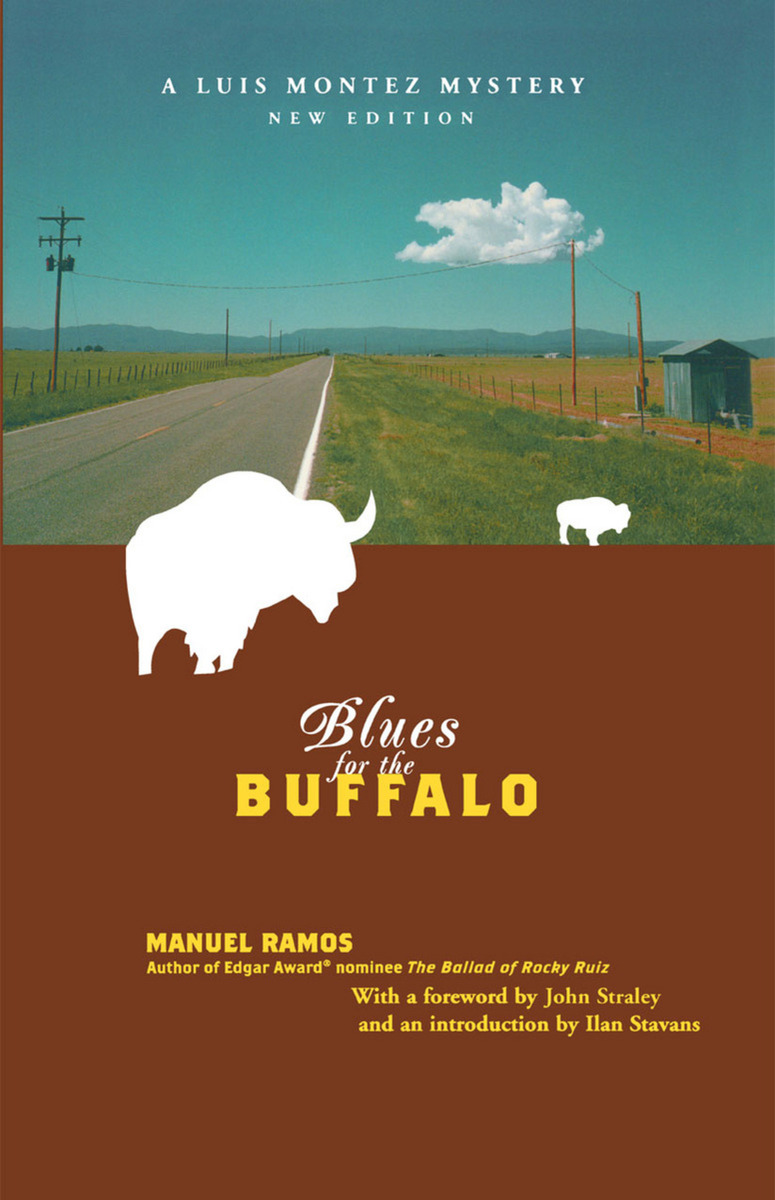
Blues for the Buffalo, Manuel Ramos, Northwestern University Press
El Caracol: The Story of Alfonso, Labor Camp Child, Yolanda Espinosa Espinoza, Mill City Press, Inc.
LightKeepers to the Rescue!, Marisa de Jesús Paolicelli, A Caribbean Experience Con Amor
Maidin Iron, Ana Padilla, Author House
Mortal Flesh: The Last Hero of Pompeii, Ana Costa Alongi, Sigillum Publishers
Spirits of the Ordinary: A Tale of Casas Grandes, Kathleen Alcalá, Chronicle BooksThe Encounter (El encuentro), Rita Wirkala, Pearson Educacion
The Witch Narratives Reincarnation, Belinda Vasquez Garcia, Magic Prose
Walking for Peace: An Inner Journey, Mony Dojeiji and Alberto Agraso, Booklocker.com, Inc.

___________________________________________


Blues For The Buffalo was originally published in 1997 and reissued by Northwestern University Press in 2004. It's probably my best-reviewed book and I think it is very visual, ready-made for a movie. The opening sequence, in fact, was designed with a camera frame in mind.

"What an ugly scar."
I opened my eyes into the brilliant Mexican sun. The details of her face were masked in a numbing combination of light and more light created by the sun and the white beach that curved against the turquoise lagoon.
"It must have hurt."
I shielded my eyes with the flat of my hand. Her skin recalled the café con leche I had nursed at breakfast. She wore a white two-piece swimsuit that was less than a bikini and she looked hot and sweaty.
"It hurt like hell. I was in the hospital for weeks. I still limp."
I raised my beer to my lips. My empty hand slipped from the handle of the cooler and grazed the hot sand and recoiled automatically. Her feet were naked, exposed to the sand.
"Is the bullet still in your knee?"
I did not ask how she knew it was a bullet wound. Maybe it was obvious.

Later.


Thursday, August 08, 2013

Servando Cabrera Moreno: The Erotic Drawings


Some 32 years after his death, artist Servando Cabrera Moreno (1923-1981) continues to stir up controversy. Provocative, transgressive, Cabrera Moreno dared to portray the nude male body in postures too daring for the Cuba of 1960-1980, where homosexuality was more than frowned upon. It’s no secret that their sexual orientation prompted the ostracism and exclusion of many Cuban artists, and Servando was no exception.

"In the late 1960s, as a step towards his erotic phase, which was the climax of his artistic development, Cabrera Moreno made works in which the representations were intended to parallel the plant and animal worlds. In the decade of the 1970s—which in his case lasted for more than 10 years, culminating in his death in 1981—Servando preferred to sensually represent the human body,” says Rosemary Rodríguez, curator of the exhibition Epifanía del cuerpo (Epiphany of the Body), presented at the museum as part of the celebration of his 90th anniversary.

According to the exhibition catalogue, the show "is a way to recognize the diverse production of an artist who has transcended his own time." Cabrera Moreno was a great drawing teacher, “of excellent transparency, an artist of sensuality." Several rooms in the museum offer a glimpse into his ways of approaching erotic and homoerotic themes.

(Rosemary Rodríguez, deputy director of the Servando Cabrera Moreno Museum and Library, talks to Maya Quiroga about Epifanía del cuerpo / Epiphany of the Body, a show of more than 30 of the artist’s erotic drawings—most of them previously unknown.  From Cuban Art News.  To read more, click here).


Servando Cabrera Moreno was born in Havana Cuba (1923-1981). He graduated from the National School of Fine Arts "San Alejandro" in 1942 and developed a prolific artistic career with over fifty outstanding personal exhibitions and over two hundred group exhibits. His works were shown in La Biennale di Venezia, Sao Paulo and Mexico. In 1969 he receives First Prize at the VIII International Joan Miro Drawing Contest, Barcelona, Spain. Servando Cabrera used thousands of different technic and themes with original masters ease. During the most significant moments of his creations, referred to as epic, the expressionism and erotisisim, always plays with themes where the human body is the protagonist... More, here.

Wednesday, August 07, 2013

Yes! We Are Latinos

Alma Flor Ada & F. Isabel Campoy
Pictures by David Diaz

  • ISBN-13: 9781580893831
  • Publisher: Charlesbridge Publishing, Inc.
  • Publication date: 8/1/2013
  • Pages: 96
  • Age range: 8 - 12 Years

Through first-person poems and descriptive prose, thirteen different Latino and Latina young people are introduced to readers. The histories of immigrants from various countries and in numerous situations are presented in a way that is both heartwarming and informational. Young Latino and Latina readers will find themselves in the text and non-Latino children can learn of the breadth and depth of the contributions made by Latinos to the U.S.


Book Creators 


Alma Flor Ada is the celebrated author of hundreds of books for young readers and adults, including Under the Royal Palms (Atheneum, 1998) a Pura Belpré Award winner and Tales Our Abuelitas Told: A Hispanic Folktale Collection with F. Isabel Campoy (Atheneum, 2006). She lives in the San Francisco Bay area in California.


F. Isabel Campoy is the author of more than 100 books of poetry, art, biography and folklore for children including Rosa Raposa (Harcourt, 2002) and ¡Pío, Peep! (HarperCollins, 2003) co-authored by Alma Flor Ada. She lives in the San Francisco Bay area in California.


David Diaz is the acclaimed illustrator for dozens of books for young readers including his debut picture book, Smoky Night (Harcourt, 1994) which was awarded the Caldecott Medal. He lives in Carlsbad, California


Tuesday, August 06, 2013

20 Parts Per Million. On-line Floricanto


The Gluten-free Chicano
The Point Zero Zero Zero Zero Zero Two Solution

Great news for gluten sufferers. Last week, the U.S. Food and Drug Administration issued a standard for gluten-free products: twenty parts per million. Food containing .000002 percent gluten are "gluten free."

The Gluten-free Chicano reminds gente that the labels will appear in 2014, but only on USFDA regulated products. The agriculture and alcohol regulators are working to harmonize their own rules so as to provide uniform labeling standards for the nation.

One excellent resource to study the standard comes from the FDA.

On-line Floricanto Bringing Light in August
Abel Salas, Ama Luna, John Martinez, Peter J. Harris

August's first On-line Floricanto features five poems by four poets and one translator-poet.

Dreamer 9 by Abel Salas
Soñadores por Ama Luna
Some of Us Will Make It by John Martinez
Love is Our Nationality by Peter J. Harris.
Amor Es Nuestra Nacionalidad por Peter J. Harris; traducción al español por Abel Salas


Dreamer 9
Abel Salas

Again the sadness, the same
Ochre morass as nine young
Immigrant students don cap
And gown to change history
To change time, to show us
All what it means to dream,
To believe, to transform the
Planet with love and peace
Without losing liberty or the
Humanity that informs them
The nine dream like everyone
But speak an intergalactic
Tongue, touch celestial truth
Because earth can no longer
Bear the gaping wounds more
Known as borders and walls
Berlin witnessed an antidote
Now the greatest nation in
The world makes the same wall
In corrugated tin or electrified
Wire, blind to the millennial
History, to the imprint of two
Continents shared by so many
Peoples before the arrival of
The interlopers who now seek
To own and make and forge
A future that erases time like
The shackling of nine doves
who now sit in solitary
confinement for daring to
take the dream one step
beyond the safe and wistful
compromises with hate and
acid, bitter scapegoating by
the most natural allies, the
poor, pale working class that
is made to look for a Place to
lay blame, but the blame
is not with nine students
who know only here as home,
the nation we are rebuilding,
reshaping with a soft love that
forgives and soothes and
welcomes like the shores in
so many stories of our past,
a safe and promising harbor,
only this is a port that produced
the nine, children who
are more grown than most,
youth who live neither here
nor there in a limbo where
they are deplumed, their halos
made gray with sorrow
and pain, the anguish of the
nine or the song of the next
millennium or the courage they
carry in tender bodies, in the
hope igniting will and strength
that must make nine times
nine times nine an exponential
inevitability because the nine
are the new Boston Harbor, the
line in the sand and across the
ocean like the border between
a crown that we will no longer
worship, while we all know it
is only prurient vested interests
that profit from detention and
punitive measures imposed on
select communities deemed less
The nine are ours, they belong to
the globe and unafraid, they remind
everyone that the meek may well
so perhaps that alone may be
what troubles those who hold
sway, but the nine know this, they
face billy clubs, chancellors and
presidents and politicians with
heads held high in agreement
Nine are a perfect reflection of
triangular harmony, the math
of wisdom like the learning in
young hearts that beat with
the essence of these, our nine


Abel Salas is a poet, journalist and translator based in Los Angeles. His poems have appeared in The Austin Chronicle, ZYZZYVA: A Journal of West Coast Art & Literature, Washington DC's Beltway Poetry Quarterly, Cipactli, In Motion Magazine, Kuikatl: A XicanIndio Literary & Arts Journal and Huizache, a new journal published under the direction of Dagoberto Gilb. He currently edits and publishes Brooklyn & Boyle, a community arts newspaper distributed widely in LA’s East Side, and he has shared his poetry with audiences across the U.S., Mexico and Cuba, where he participated in the 13th Annual International Poetry Festival. His work as a journalist has been featured in the Los Angeles Times Magazine, LA Weekly, Latina Magazine, The New York Times, The San Antonio Current, The Brownsville Herald, OYE Magazine, Texas Observer, The Austin Chronicle and The Austin American-Statesman. A Co-founder of Corazon del Pueblo in Boyle Heights, Salas was also an early organizer with Poets Responding to SB1070 and coordinated a public reading on the steps of the U.S. Capitol. Watch his most recent video poem here: http://www.youtube.com/watch?v=BKJFodvN3Bc&feature=youtu.be.


SOÑADORES 
Ama Luna

Soñadores somos
nacemos, crecemos
y morimos soñando

somos soñadores de maíz
de frijoles y tierra fértil

caminamos de la mano
con el sol, la luna
y las estrellas

guiados por nuestrosancestros
nos volvemos jaguares,
leones y serpientes

Soñadores somos
atravezando desiertos,
rios y montañas

soñamos con los ojos
bien abiertos
con el sudor en la frente
con el arado en mano
sembrando esperanza

Soñadores todos
tejedores de rebeldia
incansables guerreros
quienes gota a gota
y poema en poema
moldeamos la piedra
de la sociedad
y conquistamos la paz.


Some of Us Will Make It
John Martinez

There is something painful but so far away,
Yet, in the center of my chest, in the pasty brown
Skin of my years

The desert floor rises at midnight
Dances in the star bunched sky,
Black, like the inside of my throat
Before my mouth opens,
Before I begin to speak,
This immense everything
Glistening in me
Is telling me; write about us,
Tell our stories

Yesterday a little boy cut an artery
On barbed wire, a mother, breast feeding
A bundled girl, felt the prison
Of an immigration van
Filled with the body odor of hope,
Filled with dreams, caught like fire flies
In the night

The day before this, our ten burned knees fell
Into the hot sand, heads down to the man
In the Khaki blue; listen to his hateful words?
He feeds his family with these words,
He'll feed his dog, before he feeds any of us

Tell our stories to the college students
With warm iPads on their laps,
Backpacks full of European conquests,
Tell our stories in the cafes,
Where sugar is a Queen’s crown
On carrot cake and 5 dollar cups of coffee-
One of us, kneeling, felt the horror of $ 3.65 day
In the finca's, felt the coffee bean
Like red pearls in his hands

The fincas are patrolled by the Mara Salvatrucha,
They learned their machine gun methods
From Pachino, from Gandolfini
On 18th Street, in the Pico Union,
Then thrown back to the jungle
To terrorize-America knows,
They have their Think Tank flunkies
Helping them do damage,
Anyway you look at it

Tell the story of Don Victor,
Who once lived by the river in San Salvador,
But lost his home to the credit card
Of McDonalds, Pizza Hut,
To a shirt made in Malaysia,
A Blue Dodgers cap made in Taiwan;
His children are grown
And on the other side,
This was his body’s last chance,
He is finished and on his knees

There is something painful but so far away, yet,
In the center of my chest, in the pasty
Skin of my years

And lastly, remember to tell them about you,
How you drank with them,
Fucked around in their torture chambers,
Watched the planes fly by
Through your office window
And not even a word written about us,
Tell them how we were looking
Through your eyes, while you ignored
Our very presence, tell them
How you were lost in their golden
Hair, Their Schick shaved grins,
And tell all of them, please,
That we won't stop coming over,
Not even if the shank if the line
Rips us in half,
Some of us will make it,
Like your Abuelo did,
Like we did, living inside of you,
Reminding you to write this poem


John Martinez studied Creative Writing at Fresno State University. He has published poetry in El Tecolote, Red Trapeze and The LA Weekly. Recently, he has posted poems on Poets Responding to SB1070 and has published in La Bloga (an online Blog dedicated to Latino/Chicano Culture and Literature. He has performed (as a musician/political activist, poet) with Teatro De La Tierra, Los Perros Del Pueblo and TROKA, a Poetry Ensemble (lead by poet Juan Felipe Herrera) and he has toured with several cumbia bands throughout the Central Valley and Los Angeles. For the last 17 years, he has worked as an Administrator for a Los Angeles Law Firm. He makes home in Upland, California with his beautiful wife, Rosa America y Familia.


Love is Our Nationality
Peter J. Harris

we disregard all borderlines
when we are together
we are delicate continents clicked into place
we are uncharted territory
home to the wanderer in each of us

paperwork is unnecessary
when we are together
exchange treaties signed sealed delivered
we need no vaccination reports for our passage
passports stamped by sunrise in our eyes

we are citizens of each other
when we are together
we honor shrines with silence & flowers
we are tour guides dedicated to patient exploration
breathless travelers visiting open minds

we learn hope from one another's past
when we are together
we are sweet talking freedom fighters
we are literacy to curious children
patticake & pick-up sticks play with bilingual rules

no soldiers trample our ancient passion
when we are together
we erase our fear of fear
we stand attention without rifles
we march to the cadence of dreams
love is our nationality
our embassy safeguards persecuted touch
we are ambassadors of intimacy
we are diplomats of secret whisper
we are beauty without flags
we are emotions elected by a landslide


Amor Es Nuestra Nacionalidad por Peter J. Harris. 
Traducción al español por Abel Salas

no respetamos a ninguna frontera
cuando estamos juntos
somos continentes delicados conectados en sus lugares
somos territorio inexplorado
hogar del aventurero dentro de ambos

papeles son inecesarios
cuando estamos juntos
tratados de intercambio firmados sellados y entregados
no hacen falta pruebas de vacunación para nuestro pasaje
pasaportes sellados por el amanecer en nuestros ojos

somos ciudadanos uno del otro
cuando estamos juntos
honramos altares con silencio y flores
somos guías turísticas dedicados a la exploración paciente
pasajeros sin aliento visitando mentes abiertos

aprendemos esperanza por nuestros distintos pasados
cuando estamos juntos
somos patriotas con palabras dulces
somos el alfabetismo para niños con curiosidad
tortillita mamá y topos se juegan con reglas bilingues

ningún soldado pisotea a nuestra antigua pasión
cuando estamos juntos
borramos nuestro miedo del miedo
nos paramos en formación sin armas
Marchamos a la cadencia de sueños
amor es nuestra nacionalidad
nuestra embajada protege el tacto perseguido
somos embajadores de la intimidad
somos diplomáticos del susurro secreto
somos belleza sin banderas
somos emociones elegidas por una abrumadora mayoría de los votos

(Spanish translation by Abel Salas)


Peter J. Harris, founder and Artistic Director of Inspiration House, is an African American cultural worker who has, since the 1970s published his poetry, essays, and fiction in a wide range of national publications; worked as a publisher, journalist, editor and broadcaster; and been an educator, and workshop leader for adults and adolescents. He is also founding director of The Black Man of Happiness Project, a creative, intellectual and artistic exploration of Black men and joy and author of the joyful ebook, THE VAMPIRE WHO DRINKS GOSPEL MUSIC, co-editer of Relive Everything & Live the Same: VoiceMusic from Avenue 50’s Black-Brown Dialogues Project, an anthology published by Avenue 50 Studio, Los Angeles (2011). He wrote the forward to New Wine and Black Men’s Feet by Keith Antar Mason (2010, Red Hen Press). His essay, “1,000 O’clock: Johnson Time,” was published in the 2009 anthology, The Black Body, edited by Meri Danquah (Seven Stories Press). Harris is author of The Johnson Chronicles: Truth & Tall Tales about My Penis and Safe Arms: 20 Love/Erotic Poems (and One Ooh Baby Baby Moan).