Friday, May 12, 2017

New from Mexico - In Translation (Or Not)

And now ... some Mexicans that recently crossed the border -- screw any wall or other pendejadas trumped up by North American politicians or Hitler fan boys.  Humans migrate and so does good literature.

This week's lineup features new books (to U.S. readers) from Mexican authors.  The list includes a political thriller from a gutsy journalist; a metaphorical masterpiece from an author hailed as Mexico's greatest living novelist; a young adult story set in a magical library; history from a crime novelist; and the release of a "lost" treasure by one of Mexico's more famous authors. Something for everyone?


Milena, or The Most Beautiful Femur in the World
Jorge Zepeda Patterson
Translated by Adrian Nathan West
Restless Books - May, 2017

[from the publisher]

A Mexican Master’s Global Thriller of Sex, Power, and Corruption

The Los Angeles Times reported that Mexico is "one of the world's deadliest places for journalists," being surpassed in 2016 only by Syria and Afghanistan. That harrowing fact puts into stark relief the kind of bravery it takes to expose the truth there, and the powerful forces determined to suppress it. Jorge Zepeda Patterson has been one such journalist for decades, reporting on crime and corruption at the highest levels of power. In recent years, he's turned his talents and experience to fiction, exploring our darkest human impulses—and the better impulses that resist them.

His novel Milena, or The Most Beautiful Femur in the World dives into the gritty world of international sex trafficking. Inspired by a 17-year-old girl he encountered in Mexico who'd been forced to become a sex slave, Zepeda explores human resilience in the face of the worst extremes imaginable, as well as the vast underworld of human traffickers and its many links with power. Along with Milena's story, who's on the run after escaping from her imprisonment, we get the tale of three impassioned friends who, each for his or her own reason, turn detective and race to find Milena before her former captors catch her and force her back into sex slavery. The result is a pulse-pounding romp across Europe and the Americas that reads like a Mexican version of The Girl with the Dragon Tattoo.

When it was first published, Milena, or the Most Beautiful Femur in the World won the Premio Planeta, the Spanish-speaking world's richest literary prize. We're proud to be bringing this important international voice to English-language readers.

Economist and sociologist Jorge Zepeda Patterson was born in Mazatlán, México, in 1952. He received a masters degree from the Facultad Latinoamericana de Ciencias Sociales and a doctorate in political science from The Sorbonne. After his journalistic training at El País, he was the founding editor of the newspapers Siglo 21 and Público in Guadalajara, and was later editor-in-chief of El Universal. He has authored numerous books on political analysis, and his weekly column appears in over twenty newspapers in Mexico. He currently edits the news website SinEmbargo.mx.


The Golden Cockerel and Other Writings
Juan Rulfo
Translated by Douglas J. Weatherford
Deep Vellum Publishing  - May, 2017

[from the publisher]

The Golden Cockerel is the legendary lost novella from Mexico’s mega-influential Juan Rulfo, published here in English for the first time on the 100th anniversary of his birth, introducing this masterwork into Rulfo’s timeless canon, collected with previously-untranslated or hard-to-find writings by the author, most never before published in English, heralding a landmark event in world literature.

Juan Rulfo (1917-1986) was one of Mexico’s premier authors of the twentieth century and an important precursor of “magical realism” in Latin American writing. Rulfo has been credited with influencing the work of several generations of Latin American writers, including Sergio Pitol and Gabriel García Márquez. He is well known for his novel, Pedro Páramo, and short story collection, The Burning Plain (El llano en llamas). Deep Vellum’s forthcoming publication of The Golden Cockerel & Other Writings introduces his cinematic novella, originally made into an award-winning film, into English for the first time, along with a collection of rare, previously untranslated writings. Rulfo received Mexico’s National Prize for Literature (Premio Nacional de Literatura) in 1970, was elected to the Mexican Academy of Language (Academia Mexicana de la Lengua) in 1980, and received the Cervantes Prize (Premio Cervantes), the highest literary award in Spanish, in 1985. Rulfo suffered from lung cancer in his final months and died on January 7, 1986 at his home in Mexico City.


Patria 1: 1854-1858 (Spanish Edition)
Paco Ignacio Taibo II
Planeta México - May, 2017

[from the publisher]

«—Benditos seamos los mexicanos, de derrota en derrota hemos abierto las puertas de la victoria definitiva. Se inicia la era de la razón, nuestro Siglo de las Luces.


—¿Y por cuánto tiempo? —preguntó Guillermo Prieto, el airecillo ramplón de la tarde le sacudía la cabellera leonada.
 

Ignacio Ramírez, llamado por sus amigos y enemigos El Nigromante, dudó; durante un instante se mesó la dispareja barba de chivo. Prieto no lo dejó seguir pensando:
 

—Perdón por mi ataque de pesimismo. ¿Acaso importa? Un segundo de fulgor, diez minutos, dos años... Y luego a volver a empezar. ¿No es ese el destino de un pueblo sabio?, ¿pelear eternamente?»

En tan sólo 15 años México se vio sacudido por la Revolución de Ayutla, que acabaría con la dictadura de Santa Anna; la batalla por la Constitución de 1857, el golpe militar y la Guerra de Reforma; la intervención anglo-franco-española, la agresión militar francesa y la guerra de guerrillas contra el imperio de Maximiliano.
 

Los protagonistas de la resistencia, de la república armada, fueron una generación de ciudadanos endiabladamente inteligentes, agudos, esforzados, laboriosos; personajes terriblemente celosos de su independencia y espíritu crítico, honestos hasta la absoluta pobreza. Los liberales puros, los llamados rojos.
 

Una década de exhaustiva investigación culmina en esta obra de tres tomos en la que Paco Ignacio Taibo II consigue retratar las simpatías y enemistades, los errores y las genialidades de uno de los periodos más decisivos y fundacionales de nuestra historia nacional: los años que van de 1854 a 1867.

Paco Ignacio Taibo II
Gijón, España, 11 de Enero de 1949
Historiador y escritor es, entre otras muchas cosas, prófugo de tres escuelas superiores, participante del movimiento estudiantil del 68 y fundador del género neopolicíaco en América Latina, además de profesor universitario y fundador de diferentes publicaciones culturales. Autor de diecinueve novelas, tres libros de cuentos, libros de historia, varias antologías, libros de reportaje y crónica publicados en veintiún países, sus obras han sido mencionadas entre los "libros del año" en The New York Times, Le Monde o el L. A. Times. Ha recibido el Premio Nacional de Historia INAH (1986), el Premio Internacional de Novela Planeta-Joaquín Mortiz y tres veces el Premio Dashiell Hammet a la mejor novela policíaca, y fundó -y dirigió hasta 2012- el festival literario de la Semana Negra de Gijón. Entre sus obras de ensayo destacan Ernesto Guevara, también conocido como el Che o Pancho Villa. Una biografía narrativa.


Kingdom Cons
Yuri Herrera
Translated by Lisa Dillman
And Other Stories - June, 2017

[from the publisher]

In the court of the King, everyone knows their place. But as the Artist wins hearts and egos with his ballads, uncomfortable truths emerge that shake the Kingdom to its core. Part surreal fable and part crime romance, this prize-winning novel from Yuri Herrera questions the price of keeping your integrity in a world ruled by patronage and power.

A powerful and memorable meditation on the social and economic value of art in a world ruled by the pursuit of power. Publishers Weekly

Born in Actopan, Mexico, in 1970, Yuri Herrera studied Politics in Mexico, Creative Writing in El Paso and took his PhD in literature at Berkeley. His first novel to appear in English, Signs Preceding the End of the World, was published to great critical acclaim in 2015 and included in many Best-of-Year lists, including The Guardian‘s Best Fiction and NBC News’s Ten Great Latino Books, going on to win the 2016 Best Translated Book Award. He is currently teaching at the University of Tulane, in New Orleans.


 The Wild Book
Juan Villoro
Translated by Lawrence Schimel
 Restless Books - October, 2017

[from the publisher]

Juan is looking forward to spending the summer having adventures with his best friend when he gets terrible news: not only are his parents separating, but he has to go live with his strange uncle Tito, who lives in a rambling home with three cats and about one million books. Shy and wary, Juan starts to explore Tito’s library, which is unlike any Juan has ever seen: the books are arranged in strange sections like "Motors That Make No Noise,” "Cheeses That Stink But Taste Delicious,” and "How to Govern Without Being President," and some of them seem to change location each time you look for them. In fact, Tito tells him that a book finds a reader when it’s needed, and not the other way around.

Soon, Tito lets his nephew in on a secret: Juan is a Princeps Reader, to whom books respond in a very special way, and Tito needs his help finding a special volume called The Wild Book, which has never allowed itself to be read. Juan is joined in the quest by his little sister and the pretty girl who works at the pharmacy across the street, and together they battle the nefarious Pirate Book, which steals words out of existing stories. Over the summer, with the help of his new friends, Juan learns all sorts of secrets about world classics from Alice in Wonderland to The Metamorphosis, and overcomes his fear of change and the unfamiliar.

Mexican master Juan Villoro’s The Wild Book is an unforgettable adventure story about books, libraries, and above all the power of reading, with as many life lessons as introductions to literary classics.

Juan Villoro is Mexico’s most prolific, prize-winning author, playwright, journalist, and screenwriter. His books have been translated into multiple languages. Several of his books have appeared in English, including his celebrated 2016 essay collection on soccer brought out by Restless Books, God Is Round. Villoro lives in Mexico City and is a visiting lecturer at Yale and Princeton universities.

____________________________________________________________

Later.


Manuel Ramos is the author of several novels, short stories, poems, and non-fiction books and articles. His collection of short stories, The Skull of Pancho Villa and Other Stories, was a finalist for the 2016 Colorado Book Award. My Bad: A Mile High Noir was published by Arte Público Press in 2016.




Thursday, May 11, 2017

Chicanonautica: A Post-Cinco de Mayo Report from Trumptopia

by Ernest Hogan


The day before, I found myself reposting my Mondo Ernesto piece “The Gun-Toting, Blackfaced Transvestites of Cinco de Mayo” on Facebook in another vain attempt to remind people of the true meaning of the holiday. I fully realize that it probably wouldn't do any good. People would get drunk anyway, and Cinco is on Friday, so it could go on all weekend. 


It might as well be St. Patrick's Day.


And I had funny feelings about this year, 2017, just after Trump did his first 100 days and claiming that he's accomplished things that didn't happen. Where is that wall? And the deportation force? Does he even know how to create a fascist state?


And his fans don't seem to care. They would probably be slurping Margaritas and cerveza while wearing sombreros, sarapes, and fake mustaches, listening to flamenco while thinking it's mariachi music. What do they care? They have their delusions to keep them warm.


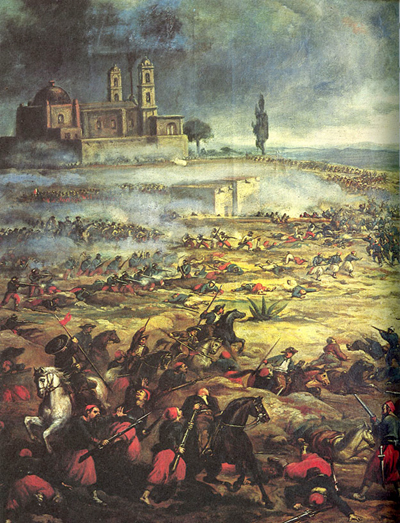
I still can't see why reenacting la Batalla de Puebla never caught on on this side of the Border. Colorful costumes, French troops against Zacapoaxtlas, facing off with fake muskets and swords. Get some exercise before drinking.


Meanwhile, after hearing rumblings about people wanting to flee the country, in my neighborhood in Glendale, Arizona, just across the railroad tracks from Phoenix, in the infamous West side of the valley where many Anglos fear to tread, not much has changed. Roosters still crow at all hours of the day. Most of the neighbors speak Spanish. My wife and I hear a lot of Norteño when we take our evening walk. Yeah, we get helicopters hovering over us, but there's a new generation of brown kids inputting the data that's keeping businesses running, and making the future.


A future that will be in direct conflict with Trumptopia.


I brace myself; sometimes having an overdeveloped, overactive imagination can be a problem.


Then I found out that Trump would not be celebrating Cinco de Mayo at the White House, ending a sixteen-year tradition. Pence is to do an event at at an undetermined location. Maybe Trump didn't want to look like a hypocrite, but that never stopped him before.

Could it be that he really does have a problem with Mexico/Mexicans/Chicanos/Hispanics/Latinos? That's an awful lot of people. Most of the folks in this hemisphere, actually. Las Américas, love us or leave us.


There were reports of people being afraid of going to events. Maybe those deportation forces are there after all. And this was all before the day . . .


On the actual Cinco, it was bright, sunny, hot, and a rooster crowed all morning. Pence did his Cinco thing in the White House, did some coached, awkward españolizing, and blah-blahed about the wonderful contributions people who can trace their roots back to Mexico have made to this soon-to-be great again country, and announced the not-yet here Age of Trumpcare. There were news stories about Latinos being nervous about raids on celebrations, Trump piñatas being big sellers, great deals on Margaritas, and one fatal stabbing that may or may not have been politically motivated.


Luckily, there was cerveza in my refrigerator.


Ernest Hogan's High Aztech has been reviewed by Strange Horizons, saying it displays “a real knack on Hogan’s part for packaging progressive politics in imaginatively lively and entertaining ways . . .”

Wednesday, May 10, 2017

2017 Américas Book Award Winners


For more information visit,


The Américas Award is given in recognition of U.S. works of fiction, poetry, folklore, or selected non-fiction (from picture books to works for young adults) published in the previous year in English or Spanish that authentically and engagingly portray Latin America, the Caribbean, or Latinos in the United States. By combining both and linking the Americas, the award reaches beyond geographic borders, as well as multicultural-international boundaries, focusing instead upon cultural heritages within the hemisphere. The award is sponsored by the national Consortium of Latin American Studies Programs (CLASP).


Award Winners


 Ada’s Violin written by Susan Hood and illustrated by Sally Wern Comport. Simon & Schuster Books for Young Readers, 2016. ISBN: 978-1481-430-951 


 The Only Road written by Alexandra Diaz. Simon & Schuster, 2016. ISBN: 978-1481457507


Honorable Mention Titles 


Malaika’s Costume written by Nadia L. Hohn and illustrated by Irene Luxbacher. Groundwood Books, 2016. ISBN: 978-1554987542 


The Distance Between Us written by Reyna Grande. Aladdin, Simon & Schuster, 2016. ISBN: 978-1481463713


Commended Titles 


Burn Baby Burn written by Meg Medina. Candlewick Press, 2016. ISBN: 978-0763674670 


Juana & Lucas written by Juana Medina. Candlewick Press, 2016. ISBN: 978-0763672089 


Lion Island written by Margarita Engle. Simon & Schuster, 2016. ISBN: 978-1481461122 


Lowriders to the Center of the Earth written by Cathy Camper and illustrated by Raúl the Third. Chronicle Books, 2016. ISBN: 978-1452123431


 Mamá the Alien / Mamá La Extraterrestre written by René Colato Laínez and illustrated by Laura Lacámara. Children’s Book Press, Lee & Low Books, 2016. ISBN: 978-0892392988 


Margarito’s Forest / El Bosque de Don Margarito written by Andy Carter and illustrated by Allison Havens. Hard Ball Press, 2016. ISBN: 978-0997979701 


Radiant Child: The Story of Young Artist Jean-Michel Basquiat written by Javaka Steptoe. Hachette Book Group, 2016. ISBN: 978-0316213882 


Rainbow Weaver – Tejedora del arcoirís written by Linda Elovitz Marshall and illustrated by Elisa Chavarri. Children’s Book Press, Lee & Low Books, 2016. ISBN: 978-0892393749 


Shame the Stars written by Guadalupe García McCall. Lee & Low Books, 2016. ISBN: 978- 1620142783


Somos Como Los Nubes / We are Like the Clouds written by Jorge Argueta and illustrated by Alfonso Ruano. Groundwood Books, 2016. ISBN: 978-1554988495 


The Memory of Light written by Francisco X. Stork. Arthur A. Levine Books, Scholastic, 2016. ISBN: 978-0545474320


The Princess and the Warrior written Duncan Tonatiuh. Abrams Books for Young Readers, 2016. ISBN: 978-1419721304


The School the Aztec Eagles Built written by Dorinda Makanaōnalani Nicholson. Lee & Low Books, 2016. ISBN: 978-1600604409


Tuesday, May 09, 2017

Truth. Beauty. All you need to know.


Truth. Beauty. All you need to know.
Michael Sedano


“¿Es del monte, o de la casa?”

I was acquiring language, English at home, Spanish at my grandmother’s house. Gramma divided the world into wild and domestic, a good way to understand the role and function of things that are safe and things to avoid for a 3-year old who was allowed to wander at will in the spacious back yard and garden.

Gramma had gallinas, chivas, a marrano, and a huge white Leghorn rooster who, one day, beat the heck out of me when I entered the jaula. Gramma came running when she heard my screams as the rooster leaped on me, beat my face with flapping wings, pecked furiously at my tiny chest. He probably knocked me to the dirt, I don’t remember that part. I remember we ate caldo de pollo that day.

My gosh, I loved that back yard with its nopal boundary, excusado, los animales de la casa. Even more, I loved the jardín with its coffee cans and pots holding canela-scented claveles, geraniums, and myriad flowers, where vegetables of all sorts sprouted from the earth to our plates. One plant particularly drew me, a brilliant red flower that covered the pencas of the hanging plant, whose tiny espinas were potent reasons not to touch but only look.

That was my first Epiphyllum.

Scion of my first Epiphyllum 

My grandmother migrated from Michoacan to Texas, to Kansas, Texas again, eventually to Colton and San Bernardino before setting down roots in Redlands, Califas. That plant made the journey with her. When my mom left home to start her own family, one of her few possessions was that red Epiphyllum. The red one is the first cutting I took after I got married then returned from overseas and set down roots in the LA area.

My mother became an Epiphyllum collector, expanding from the red to any color she could find. We’d go to the Presidio at San Diego where old plants snaked around the grounds. Snip. The zoo. Snip. The Fuschia gardens at Point Loma provided several specimens, often gifts after she struck up conversations with the nurseryman or a Mexicano gardener. Snip. She’d exchange cuttings with friends and her collection expanded. She attended Epiphyllum shows at the Orange Show, or the LA Arboretum, to see and buy precious cuttings.


She rented out the family home when my Dad was transferred to Utah and they moved. One inspection tour, Mom was upset to discover the Air Force wife had set up a table and had made cuttings of every plant. That wasn’t in the lease, but my Mom got over it. After all, Epiphyllums are supposed to be shared. A thing of beauty is a joy forever.

When Mom grew ill and lay in her hospital bed, I brought her dozens of fotos of her flowers, some from my own cuttings of her plants, others from her garden. She cheered up at the sight of her precious treasures, named them, told me their stories. She came alive! Truth and beauty heal.

When she came to live with me, I brought some of the smaller specimens with her so she could be near them. When Mom died, I moved the rest of the collection to my Pasadena home and loved them as I knew she wanted them loved. "Beauty is truth, truth beauty.”


Here is truth, a gallery of the 2017 blooms. Some of them--the season is still going. It's my mother's collection but I grow it every year from friends, and sales. In SoCal, visit the Pacific Epiphyllum Nursery in Baldwin Park CA for a heart-breakingly wondrous collection--totally affordable but you can't buy them all. Can you? I've bought only two from this place. link


Many of my Epiphyllums come to flower in the Spring months. Others will wait for summer’s heat to bud, swell, and open. The plant prefers to open at night. I track their progress daily, anticipating, hoping. Every morning, I rush out with first light to photograph the truth nature has given me overnight.

I've had blossoms in December, convincing me that Juan Diego didn't bring rosas to the Archbishopric, but epiphytes. Since the invaders didn't have names for the Epiphyllum, the closest word was "rosa." See "The Miracle at Tepeyac" where I recount the story. (link)

An Epiphyllum blossom lives a day, two, three at most. Their most glorious existence is that first morning. Only a few wear perfume, that a human nose can smell. When the flower has a scent its dizzying sweetness permeates the air around it.


This dinner-plate size Yellow and White Epiphyllum exudes a wondrous perfume.

The “epi” is easily nurtured. Keep it in a small pot to promote blossoming. Water and feed every few weeks, and when the earth dries. Epiphyllum fanciers have written books about the plants, knowing the names of the hybrids and coloration styles, and all manner of technical stuff. Me, I like to remember my gramma’s lesson on the universality of growing things: that red “orchid cactus” was del monte but it finds a welcome home en la casa. That’s why, above all, the most important element of raising Epiphyllums is generosity: share cuttings with friends.

“that is all / Ye know on earth, and all ye need to know.”

White-fringed Purple Epiphyllum opening. In the morning there will be a glorious show.
White-fringed Purple Epiphyllum in early a.m. light
Scott. E. Haselton. Epiphyllum Handbook. Pasadena CA: Abbey Gardens Press, 1951.
Fading white giant, third day.

Photography note. I use a 100mm lens on my Canon T2i, a low ISO setting, a tripod, and remote control to allow for long exposures at f/32 to show depth of focus into the heart of the blossom. For wide framing, I use the 18-55mm lens racked out to provide the best view and focus. These print spectacularly and look powerfully alluring on a wall. I use dye-based ink on 13" x 19" archival paper to offer a one hundred year lifetime to each print.


In her glory she was white with yellow and wore a sweet perfume.
A couple days and a night of rain and
she's Cinderella's gown at 12:01 a.m.

Gentrification Threatens Here & Now

Crowd-sourcing can be a wonderful way for gente to share in good works and causes. Trouble is, there are so many people asking for gifts for anything from a funeral to a summer vacation. It's easy to disregard frivolous pleas, but vitally important to lend a hand when one's able.


El Sereno's Here & Now community center, has been forced to join the crowds of causes asking for help. In this case, it's the type of worthwhile goal that I hope will attract 180,000 people with one dollar each, or six people with $30,000 to offer, or anything in between. The magic number is $180K.

Here's what Iris de Anda, poet, musician, healer, community activist says about this cause:

For the last 15 years, The Eastside Café has been an autonomous collective that’s been working towards building self-determination and providing free self-empowerment services. For the last 3 years, we’ve been working towards creating a feasible deal to purchase our building due to gentrification.

This past week we were made aware that there was already a purchase deal in the works for the building.

On Thursday, May4th, at 10am, we confronted that buyer and negotiated a 10-day interruption of a sale. This sale would compromise our occupancy and the wellbeing of our community severely. We have 8 days, Sunday, May 13th, to fundraise $180,000 to get the buyer to back out and began the acquisition process with the donations we’ll be receiving

We the people from Eastside Café, community residents of El Sereno, Artists, Activists, Professors, students, parents, grandparents and so on are here today, to humbly ask you for your financial support to help us purchase the building that sits on the corner of Maycrest and Huntington Dr. in El Sereno, North East Los Angeles. Your contribution will go directly towards the acquisition of the building that will continue to be a thriving space and sanctuary for our rooted communities. The time is now to start buying land for ourselves. Thank you!

Click here to view the Facebook video Here & Now put together to move your heart from moral support to a credit card:

https://www.facebook.com/iris.deanda/videos/1513332398706682/


Santa Fe Springs, CA Art Fest This Weekend!

At The Clark Estate.
10211 Pioneer Blvd, Santa Fe Springs, CA 90670


Where in the world is Santa Fe Springs? The one in California, that is.

That's where there's a major art festival and sale happening. Featured artist Pola Lopez has been feverishly creating work for this. Here's an opportunity not only to see Pola's masterpieces, but to take one home for that spot on the wall that's screaming for beauty, truth, and Pola Lopez!


Monday, May 08, 2017

LitFest Pasadena is May 20 & 21, 2017!


LitFest Pasadena, the city and Southland’s free literary arts festival, celebrates its sixth year with a weekend of events, authors’ panels and readings on May 20 and 21, 2017. LitFest Pasadena is presented by Light Bringer Project and Literature for Life.

LitFest will unfold again on the sidewalks and in the storefronts, corridors and unique venues of the highly walkable Playhouse District. Vroman’s Bookstore and the Pasadena Playhouse will serve as anchor points, as the festival continues its legacy of featuring Pulitzer Prize winners, L.A.’s most diverse and exciting authors, and eclectic discussion panels.

I am honored to be one of the guest authors at this year’s LitFest. This is my panel:


So many other wonderful authors will be sharing their work over this two-day literary festival including Lilliam Rivera, Luis J. Rodriguez, Neelanjana Banerjee, Jessica Ceballos, Naomi Hirahara, Gary Phillips, Tom Lutz, Steph Cha, Heidi Durrow, Bill Esparza, Jonathan Gold, Dana Johnson, Carolina A. Miranda, Keenan Norris, Thelma Reyna, Jervey Tervalon, David Ulin, Jesús Salvador Treviño, and so many more!

For a complete list of authors, visit here. And, for the two-day schedule of panels and readings, visit here.

IN OTHER LITERARY NEWS…

Life has been a bit busier than usual of late. Not only has my day job revved up a notch or two, I have the great fortune to have two books coming out this year. My short-story collection, The King of Lighting Fixtures, will be released by the University of Arizona Press in September. Here is the cover which incorporates a wonderfully evocative painting by the great Eloy Torrez:


And here are some lovely back-cover blurbs for my story collection:

“A sharp, smart collection punctuated with inventiveness and wit: in the ongoing effort to depict Los Angeles as lit by something other than the glare of Hollywood, Daniel Olivas reminds us that the vast topography of the entire city and its neighborhoods are vibrant with their own unique electricities.”—Manuel Muñoz, author of What You See in the Dark

“Comic, wry, very Angeleno, and essential Southern California.”—Susan Straight, author of Between Heaven and Here

“The short story is a delicate artifact and Olivas knows it: the right balance is achieved only if what is said is in harmony with what is left unmentioned. His Los Angeles is not only from bottom up but from east to west and from south to north.”—Ilan Stavans, author of On Borrowed Words

And then, in November, my debut poetry collection, Crossing the Border, will be released by Pact Press. Here is the cover:


 And again, some lovely back-cover blurbs for my book of poetry:

“The poetry of Daniel Olivas rings distinctly wise, sensitive, and true. All are welcomed here, from the woman writing to her lover in prison, to the victims of a tragic flood. Cross over and listen to those who suffer and survive, and to those who protest and persevere—each of them ‘speaking their own special language.’”—Rigoberto González, author of Other Fugitives and Other Strangers: Poems

“These haunting narrative poems by Daniel Olivas are rooted in the heart of his beloved Los Angeles. They stretch across that infinite, mythical place called the Borderlands and plant themselves firmly in the unchartered territory of a new, great American literature. In this extraordinary collection, we hear a new-old America singing.” —Himilce Novas, author of Mangos, Bananas and Coconuts: A Cuban Love Story

“Daniel Olivas’s poems are necessary things: they tell stories that need to be told, render scenes that need to be seen, isolate moments that need to be examined in all their beauty and suffering. Actor and victim, witness and innocent, all are represented in Olivas’s powerful first collection, engaging the reader in the act of crossing over via the tools that language possesses when in skillful hands.”—Patty Seyburn, author of Hilarity: Poems


More news to come as we plan the book launches. If you’d like a review copy, please visit my webpage and drop me an email through the link on the homepage. Also follow me on Twitter for updates: @olivasdan.