Monday, May 09, 2022

Los Poemas

 Los Poemas

Xánath Caraza


Como parte del Rio Grande Valley International Poetry Festival 2022, conduje un taller de poesía el sábado 30 de abril.  El taller se hizo de manera híbrida con audiencia presencial y en línea. Se unieron al llamado de poesía participantes de Connecticut, Los Ángeles, Nuevo México, Texas, Kansas City y Canadá.  Hoy, queridos lectores de La Bloga, le comparto algunos de los poemas que me hicieron llegar como resultado de este encuentro poético que ha organizado Edward Vidaurre. Ojalá y los disfruten tanto como yo. Que la poesía nos salve.


What is Happiness?

by Max Rodríguez and Yarina Ascencio


Happiness is awakefulness.

Happiness is allowing love in; allowing love out

loving so deeply, I fear its loss

the ocean on the shore, the bird in flight

the sun through a cloud, the sound of rain

children laughing

the sound of my wife's satisfaction

my son's skin touching mine

the joy of “yes”; the acceptance of “no”.

Happiness is one breath, my family in sleep.


Youthful Oblivion

by Roméo Desmarais III


The little girl layed out

her outfit for the day.

She dressed silently,

independently, gently

singing to herself.


Her mother had been

rushing, as busy mothers do.


How would they afford

the groceries, and those

bills, long overdue?


Her mother had been

worrying, as mothers

too often do, till


the tug at her sleeve

jolted her back to a

despairingly sad

realization:


she had forgotten her 

daughter’s birthday!


She quickly wiped her tears, 

picked up her darling, and

hugged her hard and

deep into her lap. 


Then, while stroking her head, 

she said:  “I shall 

gift you, my love, with

exactly how I 

see you:


with hopeful 

innocence, unfiltered 

joy, and a


shining halo of

pure, woven love!”


And so, for the rest of 

that birthday, at least,


the little girl carried

light and oblivion on

a single braid of hair.


The Single Braid of Hair

By Juliana Aragon Fatula

She opened her eyes to the bright light that illuminated the stage and blinded her and squinted from the pain. Her hair captured the light like the sun at daybreak, like the moon glowed at night. She listened to the applause from the audience. She bowed. She smiled. The curtain fell near her feet, and she stepped to the darkness and screamed silently in her head. The performance brought forth a magic she didn’t know she possessed. She listened for the sound of her heart in her chest, but only heard the cheers from the other side of the curtain. She forced herself to smile, but deep inside her she felt shame. She walked backstage and cried.


What is happiness? ¿Qué es la Felicidad?

by Juliana Aragon Fatula

Jammin’

Happiness walked in the door and began dancing. Happiness was skanking and shaking her hips, swaying to the beat, and her dreadlocks were flying smacking everyone near her. She heard the music in rhythm to her heartbeat. She felt light, full of love and peace. She danced her blues away as the music transported her to the islands. She smelled the clean and fresh tropical breeze. She felt the mist of the ocean on her skin, and it made her body vibrate. She heard the monkeys and birds in the trees. The rain fell on her face, and she opened her mouth and swallowed the jungle juice. She danced fast and slow. She moved without thinking and forgot about her heartache. Her body felt electric and alive. She stomped her feet and raised her hands in the air and took a breath inhale, exhale. She closed her eyes and opened them only when the music stopped. Everyone stared at her with their mouths open. She had been singing at the top of her lungs, “I wanna jammit wit you. We jammin. We jammin. I wanna jammit wit you.


La dicha al borde de degustar

by Stephen Holland-Wempe


Soñar es la felicidad.

Explorar lo que pueda ser un futuro de tantos.

Voyage through and being with crisp leaves sprouting on spring trees and pristine flowers blooming gold, purple, and burgundy.

Whiff of hot-out-of-the-oven almond blueberry muffins tenderly kneaded with love.

La dicha pronunciada desde los ojos límpidos y al borde de los labios con su sentir hacia la profundidad de mi ser.

Al yacer este sentir en degustar me lleva luz hacia las entrañas.

One mouthful, one blueberry, one strand of hair at a time, savored as droplets of energy, as droplets of enchantment.


Friday, May 06, 2022

Opening Lines From Denver Noir


If you’ve read any of my recent posts for La Bloga you know that I have a short story in the just-published (May 3) anthology Denver Noir, and that I think this book features some excellent examples of dark, sinister fiction.  Cynthia Swanson, the editor, gathered thirteen writers (plus herself) with Denver roots to create varied tales with a noirish tinge set in different Denver neighborhoods. 

Akashic Books, the publisher, defines “noir” as “morally ambiguous.” The definition I like for “noir” is “a story whose protagonist is screwed on the first page and goes downhill after that.” When I read Denver Noir I accepted that these definitions were guideposts only.  Eventually, authors will write “noir” according to their own definitions based on what they think their stories require. 

However, I contrasted the diverse plots and characters against the definitions, simply as an exercise that I hoped would make me a better writer.  That exercise got me to ask questions such as, “How noir are the opening lines?”

What I’ve ended up with is today’s blog.  For your reading enjoyment I present the opening lines to the fourteen stories in Denver Noir. Welcome to a collection of screwed characters and morally ambiguous circumstances.  Welcome to grim choices and bad decisions, broken hearts and crippled lives.  And watch out for that last page. 

_______________________________


COLFAX AND HAVANA – David Heska Wanbli Weiden

The smell of the grease from the taquería downstairs overwhelmed me as I tried to review thirty pages of legal documents.  I rented a small office – about the size of a walk-in closet – on the second floor of an old building on East Colfax in Aurora.  The price was right, but my space was directly above the restaurant’s trash can and oil bin.


A LIFE OF LITTLE CONSEQUENCE – Twanna LaTrice Hill

By the time LaVonda returned from setting the table, the two men had nearly traversed the length of her block.  She had watched them for over an hour and now it was dusk. As they approached her walkway, she closed her book and rose from her chair.


PIECES OF EVERYONE, EVERYWHERE – Cynthia Swanson

Digging graves is straightforward labor, involving little more than brute strength and a sufficiently sharp blade.  The job can be done with relative ease by even the most doltish of common workhands.


TOUGH GIRLS – Erika T. Wurth

Entering the White Horse was like entering a dream.  A dream of the past. My mother’s past. She had grown up here – in Denver, on Colfax, like a million other Indians, like her own mother.  Now I was back to solve a crime.  Another Indian woman dead, like so many others in our communities, no one but her mom giving a shit.  Not the cops.  Not her dad, who hadn’t been seen in a decade.  No one else but me, a woman whose face, though allowed to grow much more critical with age, so resembled hers.


THE LAKE – Peter Heller

I live on the west side of Denver.  Sloan’s.  Three miles around with an island in the middle.  I live in a small 1950s blond-brick ranch house whose walls are cracking because the water table is high and there is a stream running through my crawl space.  But I wouldn’t trade it.  I look out the window and I see grass, water, trees, mountains.  The long escarpment of the Continental Divide.  I’m really in the middle of a city but it doesn’t seem that way…. 

I love where I live but here’s a confession:  I have never really known what I was supposed to do in my life.  Or whom I should listen to.  Should I listen to myself?  I always seemed to get in trouble that way.


A BAKER’S DUCKLING – R. Alan Brooks

With certain white girls … they try to connect with you … by tossing out some faceless, generic aspect of blackness … that has nothing to do with you.  It’ll pop up outta nowhere … nothing to do with the conversation. Just some random and useless “Black” fact they’ve been dying to tell you.  Like, we were just talking about music, and she says … “My godfather is black.”


NO GODS – Amy Drayer

There are two bars in my neighborhood that aren’t terrible.  Aren’t full of hipsters and liars, mostly lying to themselves but still not worth the goddamn words you’re wasting on them.  I always walk to the bars, right up Broadway.  If you can’t walk to the bar, you shouldn’t go because you shouldn’t drive drunk.  And if you’re at a bar and you’re not drunk, what the fuck are you doing?  I mean, just what the fuck are you doing? I know what I’m doing and it’s not wasting my time in bars I haven’t been in before and driving around drunk.  Jesus Christ.


JUNK FEED – Mark Stevens

Katy Cutler’s neatly trimmed right eyebrow arched like the top curve on a question mark. “When I imagine private investigators, I picture them on long stakeouts, sitting in their cars eating greasy sandwiches out of paper bags.  So perhaps you never –"

“That’s kind of a movie-type cliché.”  Wayne Furlong swallowed hard.  He hoped she didn’t press the question.  “Trope, I guess.  Never quite sure of the difference.”


NORTHSIDE NOCTURNE – Manuel Ramos

I didn’t give it a second thought when the young white man was shot outside Gaetano’s at Tejon and Thirty-eighth.  Way I saw it, that wasn’t news.  People been shot in the Northside for years, didn’t matter that the Chicano barrio was quickly turning into something else, something whiter, something with more money. 


WAYS OF ESCAPE – Barbara Nickless

The dogs heard me coming before I could see them in the dark.  Rex and Terror, my dad’s hunting dogs, a pair of black Labs.  He’d raised them from pups, loved them like children; they were the only creatures around here he never hit.


SANGRE – D. L. Cordero

“Gota.”

Rogelio heard the whisper from his threadbare blue recliner, drowsy brown eyes opening to the feel of goose bumps creeping up his legs.  The bedroom he shared with his second-youngest brother was vacant, save himself, as the whole two-story brick house should’ve been despite the rustling in the hall.  He leaned forward, straining to listen, looking at his watch.

Only five minutes past nine.


DREAMING OF ELLA – Francelia Belton

All he wanted to play was jazz, and to one day play trumpet to the First Lady of Song’s voice.  So when the Miss Ella Fitzgerald walked into the Silver Sax one chilly November night in 1956, Morgan could hardly believe his dream might come true.


ON GRASMERE LAKE – Mathangi Subramanian

The day they found her father’s body, Nithi’s feet moved on their own, carrying her out of her front door and down Louisiana Avenue, toward Washington Park.  It was winter, and pale, leafless maple and oak trees twisted toward the sky like bleached bones.  Renovated homes alternated with cleared plots of land, the houseless dirt turned up like freshly dug graves.


EL ARMERO – Mario Acevedo

I exit the number 12 bus at the corner of Forty-fifth Avenue and Camino de Frida Kahlo.  Traffic rumbles above me.  I’m under the Mousetrap, an immense concrete confusion straddling Globeville, where Interstates 25 and 70 intersect north of downtown Denver.  I take a moment to catch my breath.  The air carries a metallic tang and tastes of grit filtering from the rush of trucks and cars on the overpass.

Later.

______________________________


Manuel Ramos lives in Denver on the Northside.  His latest novel is Angels in the Wind: A Mile High Noir.

Thursday, May 05, 2022

Chicanonautica: The Hazards of Writing While Chicano

by Ernest Hogan

I finally got to the end of Zyx; Or, Bring Me the Brain of Victor Theremin. I’m not finished -- there’s still a lot of brutal pick&shovel editing to do. Scenes will have to be rearranged. Stuff cut. Gaps filled. Stuff that most readers won’t notice. Welcome to the real work.


And now I’m thinking about what I’m going to do with a shiny new novel. Talk about Argh! I’m not satisfied with just having written something, I need it to be published, and read, and to be out there messing with people’s minds. Buhuhahahahahaha!


I’m not a humble “minority” writer. (I don’t like the word, it implies that we don’t matter and the big, important “majority” can safely ignore us. Do so at your own risk, pendejos!) It ain’t enough to be obscure, a hero among an elite group of barrio intellectuals. Every time I write something, I expect it to shake the world. Really. I see my books as bestseller material, and potentially, movies/TVseries/franchises.


Yeah, cabrones, go ahead and laugh.


When I was getting started, back in the antediluvian 1970s I didn’t think that my ethnicity would be an issue. The Chicano movement had just happened, and I thought the denizens of the publishing industry were the most progressive, intelligent people on the planet. Imagine my shock when they treated me like the most talented leper they had ever met.


After bashing myself bloody on this stumbling block for many a decade, I’ve come to realize that the English language book biz, centered in New York considers culture, pop and otherwise, to be of and about white folks. And even when they indulge in books by and about “others” they seem to be made to appeal to this perceived audience. Note American Dirt.


I suppose I could have taken advantage of my Irish surname, and never mention my ancestry, keep things Latinoid in my writing at a safe distance, and make sure the viewpoint characters are Anglo, but judging by the many times I’ve been called the n-word in my life, I don’t pass for white very well.


I’ve been told that things have changed, but it doesn’t seem so if you look at the bestseller lists. Guess I’ll be finding out. 


My gut tells me that the current culture, global and corporate as it has become–Hollywood is no longer a place–still has a problem with a Chicano (I’m willing to crash the Latinx party) in the driver’s seat, afraid of where we might take them. They also don’t think our audience is big enough to make the profits they need. I’ve had to argue with them that, yes, goddamit, I actually do exist.


So, I’m bracing myself for the beating I’ll get running this gauntlet. I wonder if I should call this Chicano-centric satirical work science fiction, or dare pass it off as mainstream, or even (shudder) Literature. 


Might as well go for the gold. I ain’t getting any younger. And a wad of cash would allow me to retire and spend more time writing.


If once again I’m told that what I’ve written is too weird for New York, I’ll go back to the small presses, the underground, where I always keep one foot planted, so when the shit hits the fan, I’ll have a place to stand.


Ernest Hogan is the critically-renowned, unrepentant Father of Chicano Science Fiction. He is merrily running amok. Oh yeah, Feliz Cinco de Mayo . . .

Wednesday, May 04, 2022

LitFest Pasadena- Wednesday, May 4


From: https://litfestpasadena.org


The 10th Anniversary of LitFest Pasadena 2022 embraces a dynamic new format, expanding locations as well as returning to known favorites. LitFest Pasadena brings acclaimed authors and new voices together to engage in a variety of powerful and inspiring literary and social conversations.


This year’s in-person event is, as always, free to the public and no registration is required.


WEDNESDAY, MAY 4

6:00pm – 9:00pm


Altadena Library

600 E. Mariposa St., Altadena, CA 91001

•

Limited library parking

Free street parking until 10pm

Free parking at Altadena Senior Center, 560 E. Mariposa St.

•

BOOM Mexican food truck (cash or card)

•

Books for Sale! Courtesy of Flintridge Bookstore


Find the program and schedule 

https://litfestpasadena.org/schedule/


Monday, May 02, 2022

LitFest Pasadena 2022: April 30 to May 14


The 10th Anniversary of LitFest Pasadena 2022 embraces a dynamic new format, expanding locations as well as returning to known favorites. LitFest Pasadena brings acclaimed authors and new voices together to engage in a variety of powerful and inspiring literary and social conversations. This year’s in-person event is, as always, free to the public and no registration is required. The full schedule may be accessed here.

I am delighted to be part of LitFest again! Join us on May 14, 4:30 p.m., at Vroman's Bookstore's courtyard. I will read from my new collection, How to Date a Flying Mexican: New and Collected Stories (University of Nevada Press). Vroman's is located at 695 E. Colorado Blvd Pasadena, CA 91101. Support independent bookstores!

Thursday, April 28, 2022

Consider Cano’s Question from Yesterday

 Melinda Palacio 


Where are the Chicano Intellectuals? Are they buried under student loan debt? Are they dead, an idea reduced to a meme or emoji? I think they’re among us, making art, daring us to take notice, and sometimes they’re recognized. I think of the playwright Luis Alfaro, the photographer and poet Marisela Norte, the painter Margaret Garcia, the teacher Mary Ortega, the lawyer Eddie Ortega, the playwright Lindsey Haley, people who have opened their door to provide a cultural center, spaces for books, music, and dance. The list goes on and on, but most don’t get the opportunity to share their intellectual insights on PBS or have a HBO show dedicated to Chicano Intellectuals. While not the Hollywood walk of fame, Luis Rodriguez placed his handprint on the Vroman’s Walk of Fame. 

However Cano has a point, while I can think of many thinkers with enormous intellect who could stand under the Chicano umbrella, I cannot think of someone like Sor Juana Ines de la Cruz who is willing to sacrifice herself for a life favoring intellect. Books don’t seem to hold the same reverence they held in Sor Juana’s time. She didn’t have the modern problem of having too many things or too many bigs. She didn’t have to ask herself which volume of poetry no longer sparks joy in her life. She treasured every book she owned. 

As I write this short response on my iPad in a hotel room on the road to California, I wonder if this very device isn’t responsible for the diminishing future of Chicano Intellectuals. In my travels I see less young people pull out a book from their backpack than I did twenty years ago. People seem to argue less about the meaning of passages in a book, let alone have a conversation without referring to a photo on their device. Perhaps, I am dating myself and am skating into Chicano curmudgeon territory when I notice a reverence for athletes, rockstars, and actors over intellectuals and literary artists in our community? 

At least we have La Bloga and intellectuals, such as Professor Cano to keep us on our toes.

Where are the Chicano Intellectuals?


The Intelligentsia
             

     I was listening to Cornel West talk on Public Television last week. A respected professor, scholar, and African American intellectual, West is the author of several books, his most influential Race Matters. In his talks, West is as comfortable referencing Frederick Douglas, Phyllis Wheatley, W. E. B. Dubois, Mark Twain, St. Augustine, Dostoyevsky, and Martin Buber as he is Toni Morrison, Bob Dylan, Alice Walker, John Coltrane, and Jay-Z, in the same vein as African American intellectuals today, like Michael Eric Dyson, Henry Louis Gates Jr., Joy Degrue, the late Bell Hooks, and Ta-nehisi Coates.

     As I listened, I began to think, where are the Chicano, Latino, Mexican American, Latin X, hell, I'll even take "Hispanic" intellectuals, especially these days when issues like Latino identity, ethnicity, immigration, nationalization, education, and art are at the forefront? Some might say we should look to Latin America, Carlos Fuentes, Rosario Castellanos, Octavio Paz, and Diego Rivera for our intellectual precursors. I'm just saying.

     American intellectualism grew out of the tradition of the 1920s, post WWI, scholarship of thinkers like John Dewey, and Jewish literary scholars, like Lionel Trilling, Hannah Arendt, Saul Bellow, Susan Sontag, Alfred Kazan, and Norman Podhoretz, powerful with both the mind and the pen. Their work opened the literary canon, from the staid formalist, “Art for Art’s Sake” theory, to the more progressive social literary theories of today, as well as commenting on all aspects of American culture. They got us looking inward, toward a more American identity, and away from Europe.

      The Harlem Renaissance lifted the voices of the early Black intellectuals, writers like Claude McKay, James Baldwin, Langston Hughes, Zora Neal Hurston, Alain Locke, and later Lorraine Hansberry. They not only created art, but they wrote reviews and essays, critiquing high and low brow “Negro” culture, paving the way to today’s African American intellectual tradition.
                                                                                     

Mexican Anarchists and Intellectuals in Los Angeles

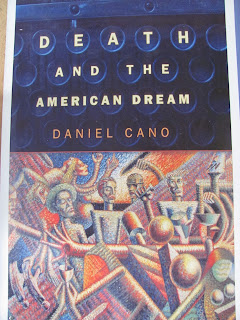
      One could argue New York was the bastion of “literate” cultures, where the Southwest was mostly agrarian and blue collar, still looking for culture. Yet, 1920s Los Angeles, for example, was home to 20-25 Spanish-language newspapers and periodicals, monthlies, weeklies, and dailies, a topic I explored in my third novel Death and the American Dream. Why? Because I wanted to know who was writing and reading these newspapers? Who were the Mexican, Californio, and Mexican American thinkers of the day?

     By 1930, Anglo migration to California from the Midwest and East surged, the population of Los Angeles County close to one-million people, 170,000-200,000 of them Mexican, some fleeing the 1910 Revolution and the 1925 Cristero War, others native Californios. They not only worked the fields, mines, and railroads, but many moved into real estate, law, and agriculture. Many of them gave voice, in both literature and art, to social injustices and helped create the early labor movements in the Southwest.

     As I attempted to show, in my novel, there were many important Mexican “literate” voices in the 1920s, one of the most influential Ricardo Flores Magon, along with his brother Enrique, and members of the Mexican Liberal Party, who published Regeneracion, a political newspaper widespread in Spanish-speaking America, Mexico, and Latin America. With its English translation by William C. Owen, Regeneracion reached readers across the United States and into Europe. 

     Since Magon and the Magonistas resided and operated on both sides of the border, they often saw themselves as bicultural. Magon was even tried in Los Angeles, unjustly, and died in an American prison. Magon was also the voice of the Mexican Revolution. Historians say it was he who wrote the lines for Zapata, "It is better to die on one's feet than live on one's knees," and "Land and Liberty."

      The concept of a border wasn’t as definite at the turn of the 20th century as it is today. For a few cents, and a signature on a piece of paper, people moved freely across the border, taking and bringing their property and ideas with them. Indo-Hispanic cultural tradition wasn’t only captured on paper but in music, especially the nortena and corridos, well into the 1940s by such radio hosts as Pedro J. Gonzalez, up before dawn each morning, with his group Los Madrugadores, to entertain and educate Mexican workers on their way to their jobs.

     However, can we discount the early journals, diaries, letters, and interviews of those Hispano-Indo-Mexicans who originated and settled, not only California but other cities throughout the Southwest, even into Michigan, Kansas City, and St. Louis where they migrated to work the dairies, stockyards, and railroads?

     As a teacher for nearly thirty years, I saw future generations of Chicano-Latino-Indo-Hispanic students and friends earn doctorates, and excel in many intellectual fields, including those who wrote novels, poetry, and essays. To me, their excellence has earned them the right to call themselves doctors, scholar-writers, novelists and poets, but with that right comes a certain responsibility and obligation -- to publish and speak out, vociferously, in the tradition of the early intelligentsia.

     So, I’m mystified as to why I don’t hear more Mexican-Latino intellectual voices as I do other voices in the media. Where are they? On cable’s MSNBC, anchor Alicia Menendez, daughter of long-time Cuban American congressman Robert Menendez, has done her best to bring on more female, Latina voices, but they are mostly political. For a time, there were quite a few raza scholars, journalists, novelists, poets, and essayists in the public square, but today it seems they’re relegated to the classroom.

     Who decides what or who is a “hot” intellectual commodity, worthy for publication and a place at the lectern, the scholars themselves? It is true, scholars often dismiss any form of popular writing, poetry, novels, and essays, as intellectually relevant. As one noted scholar said when he was asked why popular writers weren’t respected in academia, “You don’t turn the zoo over to the hippopotamus.”

     Maybe a problem is that our "Latino" identity is fluid. We can't even agree on what to call ourselves. Not all Mexican Americans identify as “Chicano,” a term many Chicano Study scholars refuse to abandon, which I understand since Mexico's children are still the largest ethnic group in the U.S. For sure, Central Americans, Cubans, and Puerto Ricans don’t see themselves as Chicano, but many do see themselves as “Latino.”

     Are we all so radically different that we don’t have a common culture? Personally, I think when a people share the same language, religion, and hemisphere, they also share many of the same values and cultural traits. Being from California, I experienced times in the military when I had more in common with a Puerto Rican from New York than a Mejicano from a tiny town in Texas. If there were no Mexicans in a platoon or company, Puerto Ricans and Cubans immediately took me into the fold.

     After all, American Jews come from every country in the world, but they seem to agree on their Jewishness, as a religion and a culture. African Americans didn’t all migrate from the deep South, yet they have created something of a common culture, even in their acceptance of their brethren who hail from Africa, Europe, and the Caribbean. African Americans have no qualms integrating Afro-Latinos into their culture.  There's power in numbers. Today, it seems Chicano scholars are fighting over who is more indigenous than Hispanic, when part of the clave of being Chicano was mestizaje, the whole point of Corky Gonzalez’s, Yo Soy Joaquin.

     Or, maybe, I'm "off" here, and it’s that the entire tradition of Intellectualism is a thing of the past? Since it is reported that less than 90 percent of the American public has read an entire book in the past year, is literature, in all its forms and genres, for that matter, are the arts, generally, on life support, and the plug dangling from the wall, or are the arts transforming into something unrecognizable, like techno music and computer-generated art?

     It seems that the acquisition of wealth and possessions, today, more than ever, governs the American ethos. The most popular forms of music are like infomercials for violence, Gucci, gold chains, cocaine, guns, sex, pickup trucks, booze, and honky-tonks. Will Facebook, Twitter, and Instagram soon make the NY Times Bestseller List? The blockbuster movies feature superheroes and zombies. The Fast and Furious franchise is number one with young Mexican-Chicano-Latinos. Excited about a movie called El Chicano, I could hardly sit through the cinematic disaster. What a waste of excellent acting talent, but if violence and demons sell, the results are understandable.

     Lord knows, I’m not one to look to the past or “Make America Great Again” propaganda. I’m in the camp of those who say, “It never was great,” whatever great means. We pretend to detest China but nearly everything in our closets and medicine cabinets is produced there. China and Saudi Arabia own more U.S. real estate than the average working American. Russia is destroying its neighbor as the world watches, the conclusion: buy a nuclear weapon, or, what Putin is showing the rest of non-nuclear Europe, “Watch what I’m doing to them because I can do it to you, and nobody will help.”


Barrio Philosopher

     So, I’ll to listen to what remains of the American intelligentsia, African Americans, who focus insightfully on ethnic cultural issues, coming out of the Southern Black church tradition; and the Anglo intellectuals, who are becoming more political than social or cultural, except maybe for Neil Postman, Noemi Klein (though Canadian), Thomas Freidman, and a few others. For Chicano/Latino intelligentsia, I guess, until they show up, there's Danny Trejo and Gustavo Arellano to set us on the right path.