Showing posts with label Latinx. Show all posts

Monday, March 04, 2024

It's alive! "Chicano Frankenstein" will be launched at Vroman's Bookstore on March 6, 7:00 p.m.


La Bloga friends, I wanted to let you know that Vroman’s Bookstore will be hosting the book launch for my forthcoming novel, Chicano Frankenstein (Forest Avenue Press), on March 6, 7:00 p.m. Here is the link with details. I will be interviewed by the wonderful writer, Désirée Zamorano. I hope you can make it!

We’ve been receiving some beautiful early reviews:

"Part science fiction and part political satire, Olivas’s timely latest explores the pitfalls of assimilation and probes what it means to be 'human.'"

     —Publishers Weekly

"The way Olivas builds on the classic Shelley story and sets it within a futuristic context makes it an intriguing read that will speak to disenfranchised voices and spark discussion among its readers."

     —Library Journal

"With witty dialogue and beguiling glimpses of Chicano life, the book probes existential questions about identity and political questions about immigration and race.”

     —Foreword Reviews

"Blending together elements of science fiction, horror, political satire, and romance, the story explores ever-relevant issues of belonging, assimilation, bigotry, and humanity."

     —HipLATINA

I hope you can make it! And if you have a book club or bookstore event where you'd like to feature Chicano Frankenstein, let me know! You may visit my website and use the message function to send me an email.


***

And also in honor my my new novel's launch, I will also be at the Tucson Festival of Books on the beautiful University of Arizona campus, March 9 and 10. I will be signing Chicano Frankenstein at the Indie Authors tent on Sunday, March 10, 10:00 a.m. to 1:00 p.m. My wonderful publisher, Laura Stanfill founder of Forest Avenue Press, will join me. You may view this venue on the Festival map. Drop on by and say hi! Also, check out all of the wonderful writers who will be signing books and presenting on panels.

Monday, May 29, 2023

Cimientos 2023: IATI Theater's Staged Readings Series (June 8 to June 11)

Cimientos Play Development Program at IATI Theater in New York is a unique opportunity for global playwrights. Out of hundreds of submissions, only ten playwrights are selected to develop their plays with us. This program is dedicated to pushing the envelope of traditional playwriting and explore what IATI calls vanguardia. The program provides the selected playwrights with resources such as mentorship, workshop-panels, and a platform to present their work to audiences.

IATI's ultimate goal is to cultivate and support innovative and unconventional voices in the theater community. IATI believes in pushing boundaries and supporting artists who challenge the status quo.

Join IATI for the Cimientos 2023 Staged Readings Series between June 8-11, 2023. Spotlighting this exciting curation of national and cross-continental contemporary writers. For information about the plays including getting your tickets for any or all of the readings, visit here.

Location: IATI Theater Studio, 64 E. 4th St 2 Floor, New York, NY, 10003.

I am delighted that my play, Waiting for Godínez, is a featured play in Cimientos 2023 with a live reading scheduled for June 9, 8:00 p.m. (Eastern). If you are in New York, pick up a ticket and enjoy an evening of theatre.

***

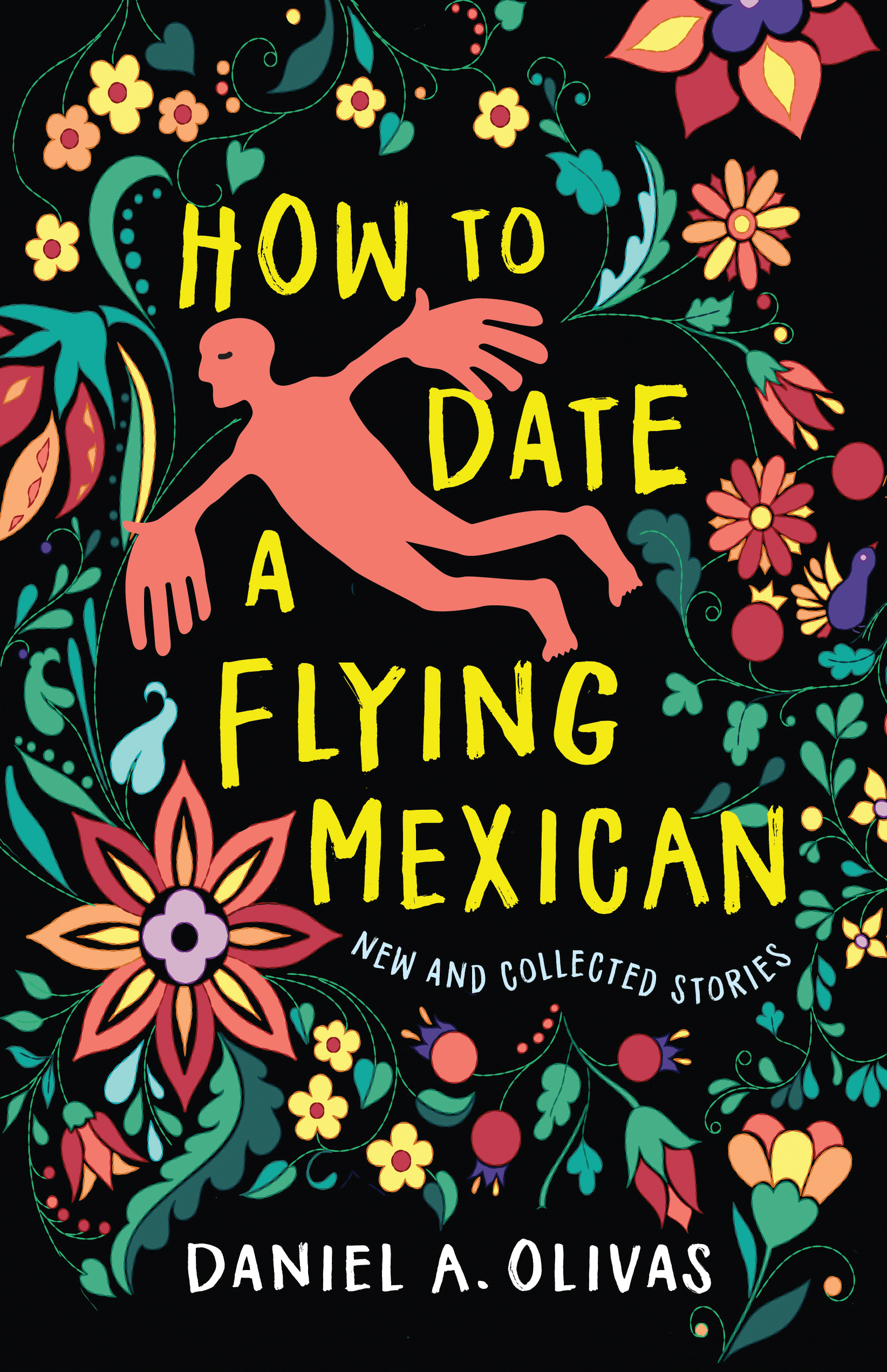
May 22 was the book birthday of the Spanish translation of my short-story collection, How to Date a Flying Mexican under the title of Cómo Salir con un Mexicano Volador (University of Nevada Press). The Spanish edition was translated by Cinta García de la Rosa. Having my work available in Spanish means a lot to this old pocho. Perfect for the classroom and libraries! Get your copy now from your favorite bookstore or online seller.

Monday, April 03, 2023

"How to Date a Flying Mexican" selected as an International Pulpwood Queens and Timber Guys Book Club April International Book of the Month


I am honored that my most recent book, How to Date a Flying Mexican: New and Collected Stories (University of Nevada Press), was selected as the International Pulpwood Queens and Timber Guys Book Club April International Book of the Month of April. You may find all book club selections for the year here. Our book club event will be streamed live on April 11, 5:00 (Pacific). Details will be published on the Pulpwood Queens' Facebook page on April 4th. However, due to some very unpleasant Zoom bombings, if you wish to be my guest at the book club event, please drop me an email (olivasdan [at] aol [dot] com) with your name and I will add you to the list.

The International Pulpwood Queen and Timber Guy Book Club Reading Nation was founded by Kathy L. Murphy and is the biggest meeting and discussing book club in the world – with 800 chapters, including chapters in 20 foreign countries.

In other news, a Spanish edition of How to Date a Flying Mexican will be released on May 22. This is the first time one of my books had been translated into another language, so this is particularly special to me. The Spanish edition was translated by Cinta Garcia de la Rosa.


Monday, February 06, 2023

Book launch of “To the North/Al norte: Poems” by León Salvatierra: February 10, 6:00 p.m.

The University of Nevada Press is pleased to publish its first dual-language (Spanish-English) book of poetry, To the North/Al norte: Poems, by the Nicaraguan poet León Salvatierra. The work is rooted in the Central American diaspora that emerged from the civil wars in the 1980s. The poems are tied together through the experiences, memories, visions, and dreams of a 15-year-old boy who embarked on a journey to the United States with a group of forty other migrants from Central America. After being undocumented for eleven years, Salvatierra established himself in the United States, first becoming a naturalized citizen and then obtaining a university education.

Salvatierra mixes lyrical and prose poems to explore the experience of exile in a new country. His powerful metaphors and fresh images inhabit spaces fraught with the violence, anxiety, and vulnerability that undocumented Central American migrants commonly face in their transnational journeys. His vivid memories of Nicaragua tie the personal experiences of his poetic subjects to the geopolitical history between the Central American region and the United States.

Praise for To the North/Al norte

“By combining prose and poetry, and blurring the boundaries between genres and nations, Salvatierra manages to assert individual agency and wrest control of his own story.”

—Diego Báez. Poetry Foundation

“Largely translated by Javier O. Huerta, it is simultaneously heartbreaking and hilarious — even more so if you can read it in both languages.”

—Daniel A. Olivas, Los Angeles Times

“The collection chronicles the poet’s journey from Nicaragua to the U.S. as he faces obstacles as an undocumented teenager and as he adjusts to the demands of life in a new land. To read this book is to get is poignant and poetic look at what it means to be marginalized in the U.S.”

—Jose B. Gonzalez, Latino Stories

“The poetry here is at once intimate and public, which makes for a complex and rich alchemy. León Salvatierra’s range of registers is breathtaking.”

Francisco Aragón, poet, editor, director of Letras Latinas at the Institute for Latino Studies, University of Norte Dame, and author of After Rubén
 
To the North/Al norte makes poetry feel essential, that without it, Salvatierra’s speakers would become unmoored, losing everything that they have tried so hard to recover. Salvatierra clearly revels in language. . . . This collection is a significant contribution to the growing body of undocumented literature as well as Latinx literature.”

Maceo Montoya, professor, University of California, Davis, author of Preparatory Notes for Future Masterpieces

“The memory and humanity that Salvatierra reaps along the way are ultimately challenged, and subdued . . . What we’re left with is the impression of autonomy; and its anatomy of longing.”

Delphic Reviews

                                                    ***

You may read my Los Angeles Times interview with León Salvatierra here.

Monday, January 23, 2023

The New Oeste: Literatura Latinx of the American West in the 21st Century


Series Editors: León Salvatierra and Daniel A. Olivas

The University of Nevada Press announces a new book series, The New Oeste, which celebrates the outpouring of creative expression by Latinx writers in the American West of the 21st century. In border-breaking literary arts informed by perspectives as distinctive as the American West, the authors in the series explore the artistic, cultural, and intellectual connections between the region’s complicated past and its diverse future. With a commitment to the power of prose and poetry to unite, educate, and enrich, the series editors seek to support projects from unique voices that invite connection and inclusion within the American West. Currently, the editors seek fiction, poetry, and creative nonfiction that expand conceptions of the West and its people.

To submit a book proposal to The New Oeste or generally to the University of Nevada Press, follow the guidelines at this link.

***

And just a reminder that on January 25, 7:00 p.m., I will be a guest of the Friends of the Alameda Free Library to discuss my short-story collection How to Date a Flying Mexican: New and Collected Stories (University of Nevada Press). I will be interviewed by the wonderful poet, León Salvatierra. The event will be streamed live, and you may register now at this link. It helps the event planners if you can register early, so if you have a moment, please do so. We will be discussing many things including the writing life, the creation of this short-story collection, and also preview the forthcoming Spanish translation of How to Date a Flying Mexican which will be released in May. I hope to see you (virtually) there!


Thursday, January 12, 2023

Chicanonautica: Crossfire at the Chicano/Latinx Intersection

by Ernest Hogan

Way the chingau back in 2021, I did one of these columns titled “Whachacallus?” in which I pondered the problems of what all of us in the Latinoid continuum should call ourselves. Now in 2023, I’m starting on a new project, and stumbling over how to tell people about it. Is it Chicano? Latino? Latinx? Each one carries issues that can snafu the simple task of letting people know who we are and what we are doing.


Goddammit, it shouldn’t be such a pendejada.


I call myself a Chicano. The word that conveys how old I am, and what part of the planet I’m from, and the politics that spawned me.


A lot of markets that are willing to publish me (need I mention that not being Anglo has been a stumbling block in my career?) have called themselves Latino, and recently Latinx. As a Chicano who has been publishing since 1982, I’ve learned that I can’t be picky about who publishes me. When I find willing publishers, I tend to stick with them, even though they don’t pay much (if anything) and aren’t usually considered high-class. 


Going through my résumé, most of the places I’ve published have “science fiction” as part of my name. Also “Latino,” “Chicano,” and “Latinx.”


All of those are considered offensive to somebody.


Everything is offensive to somebody.


Anyway, I tend to not care about what people call me or how they categorize me. I’m a confusing mestizoid/ rasquache mess. I never know what people are going to think I am. I enjoy the confusion that telling them I’m a Chicano causes. I’ve been taken for black—Harlan Ellison assumed I was a negro. I’ve been told, “You’re so smart—I thought you were Jewish.” Also: "You look more like an Arab than a Mexican." And in Taos I was once called a “dumb fucking white" person.


I am not now, nor have I ever been, a card-carrying cyberpunk, but if you Google me there’s a lot about me being a Chicano cyberpunk.


Sometimes people doubt that I really exist. I’ve got to admit, I’m pretty damn unlikely.


Some of my fellow Chicanos not only don’t like the newfangled "Latinx" (I’m  reminded how the old gente bitched about Chicano back in the Seventies) but also hate "Latino", and "Hispanic." 


Latinx is popular on the campus and with academia. The Pew Research Center says that one in four “U. S. Hispanics” have heard of Latinx and only a third use the term.


 Academics teach and promote my work, and I fully acknowledge that they saved my career. They publish me in anthologies with Latinx in the title. 


They also pay me. I kinda gave up making a living as a writer years ago, but by the nature of the job, I am a dreamer . . .


Anglos keep telling me that nobody uses Chicano anymore. Meanwhile, across the border, in proper Latin America (isn’t Aztlán Latin America?) Latinx is considered a joke. And Spanish-speakers don’t like Anglophones telling them how to speak Spanish.


Ever try to speak Spanish replacing the Os and As with Xs? How do you pronounce it?


What do I do when the hipper New York publishers, trying to be woke, use Latinx, then get yelled at by angry Chicanos?


Looks like we are one long, hard, perpetual identity crisis.

Good thing I enjoy me some chaos.


Ernest Hogan keeps getting more Chicano sci-fi ideas and dreaming of global and intergalactic barrios.

Monday, August 22, 2022

“How to Date a Flying Mexican” comes to the New Short Fiction Series, August 31, in a live streamed performance

The New Short Fiction Series, Los Angeles' longest running spoken word series, presents selections from How To Date A Flying Mexican: New and Collected Stories (University of Nevada Press) by Daniel A. Olivas, Wednesday, August 31, on Crowdcast. This live streamed performance stars host and spoken word artist Sally Shore, with guest cast Holger Moncada Jr. (Promised Land, Penny Dreadful: City of Angels) and Jill Remez (The Neighborhood, The Bold and the Beautiful). 

Performance stream begins at 7:00 p.m. Tickets are $12.00 advance purchase, $20 day of stream. For tickets and program information, visit https://www.crowdcast.io/e/how-to-date-a-flying/register.

Praise for How to Date a Flying Mexican

"How to Date a Flying Mexican is a beautifully realized work that comes out of the depths of the Mexican and Mexican American cultural experience."

    —Michael Nava, Los Angeles Review of Books

"Throughout all of his stories, there are strong Chicano characters, who embody tales that range from the laugh-out-loud funny to the heartbreaking. A timely retrospective from an important voice in Latinx literature."

    —Wendy J. Fox, BuzzFeed

"Prompted by tragedy—the death of his father and the pandemic—Olivas revisits decades of writing to produce this collection of new and previously published stories. Olivas’s work is surreal, dystopian, critical, and introspective, ultimately moving into contemporary political rhetoric."

    Alta Journal

“Daniel Olivas loves to tell stories and his writing reflects that joy. Every story is told with a wink and a smile, encouraging you to follow along for the ride.”

    —Maceo Montoya, associate professor of Chicano/a Studies, University of California, Davis, and author of Preparatory Notes for Future Masterpieces

“From gritty realism to mythic and sci-fi speculative, Olivas dishes up an exquisite feast of short fictions filled to the brim with small and outsized everyday struggles—and failures.”

    —Frederick Luis Aldama, award winning author and Jacob & Frances Sanger Mossiker Chair in the Humanities at UT Austin 

 “This kinetic new collection of stories is exuberant and poignant, filled with the homegrown details of Latinx life as well as a kind of cheerful, saucy magic.”

     —Yxta Maya Murray, law professor, Loyola Law School and author of The World Doesn’t Work that Way, but It Could: Stories


Monday, May 02, 2022

LitFest Pasadena 2022: April 30 to May 14


The 10th Anniversary of LitFest Pasadena 2022 embraces a dynamic new format, expanding locations as well as returning to known favorites. LitFest Pasadena brings acclaimed authors and new voices together to engage in a variety of powerful and inspiring literary and social conversations. This year’s in-person event is, as always, free to the public and no registration is required. The full schedule may be accessed here.

I am delighted to be part of LitFest again! Join us on May 14, 4:30 p.m., at Vroman's Bookstore's courtyard. I will read from my new collection, How to Date a Flying Mexican: New and Collected Stories (University of Nevada Press). Vroman's is located at 695 E. Colorado Blvd Pasadena, CA 91101. Support independent bookstores!

Monday, March 21, 2022

"How to Date a Flying Mexican" comes to Los Angeles Mission College on March 26


DANIEL A. OLIVAS in conversation with DR. JOSÉ PAEZ

In a freewheeling discussion, this live event will explore Daniel A. Olivas’s newest book, How to Date a Flying Mexican: New and Collected Stories (University of Nevada Press). This short-story collection is deeply rooted in Chicano and Mexican culture and the literary worlds of magical realism, fairy tales, fables, and dystopian futures. The characters confront—both directly and obliquely—questions of morality, justice, and self-determination.

Praise for How to Date a Flying Mexican

"This deeply textured, sensual collection more than accomplishes Olivas’s self-proclaimed task of rendering the beauty and complexity of Mexican and Mexican American culture in its fabulist, folkloric stories." —Michael Nava, Los Angeles Review of Books

"Throughout all of his stories, there are strong Chicano characters, who embody tales that range from the laugh-out-loud funny to the heartbreaking. A timely retrospective from an important voice in Latinx literature." —Wendy J. Fox, BuzzFeed

"Prompted by tragedy—the death of his father and the pandemic—Olivas revisits decades of writing to produce this collection of new and previously published stories. Olivas’s work is surreal, dystopian, critical, and introspective, ultimately moving into contemporary political rhetoric." —Alta Journal

***

This event is sponsored by

Tía Chucha’s Centro Cultural & Bookstore

and 

Los Angeles Mission College

Monday, March 07, 2022

The Tucson Festival of Books returns in person to the University of Arizona Campus on March 12 – 13


The annual Tucson Festival of Books is returning to the beautiful University of Arizona campus on Saturday, March 12, and Sunday, March 13, after the COVID-19 pandemic canceled the 2020 event completely and led to an all-virtual event in 2021.

This year’s book festival will include 267 presenting authors representing over 15 different genres and 268 events throughout 31 venues during the two-day festival.

The guest authors include many La Bloga favorites including René Colato Lainez, Estella Gonzalez, Reyna Grande, Xochitl Gonzalez, Luis Alberto Urrea, Jaime Cortez, Yuyi Morales, Lilliam Rivera, David Bowles, Lizz Huerta, Zoraida Códova, Oscar Mancinas, JJ Amaworo Wilson, and many more!

I will be on two panels this year if you want to check them out:

1. Parables for Our Times 

(Saturday, March 12, 2:30 pm - 3:30 pm)

Using magic, mythic power and humor, these authors have written marvelous tales that address questions about justice, self-determination, survival and the power of collective action against tyranny. How did they craft these tales and what inspires them?

Panelists: Daniel OlivasJJ Amaworo Wilson
Moderator: Scott Glener

2. To Live and Die en La Ciudad: Chicanx Short Fiction in the Urban Southwest

(Sunday, March 13, 2:30 pm - 3:30 pm)

Three Chicanx authors discuss questions, issues, and processes of writing short fiction from and about urban Chicanx communities. Some of these questions are: How do we create, adapt, and sustain our cultural and communal expressions within Southwestern cities? And what do authors think about when trying to render these dynamics in short fiction?

Panelists: Estella GonzalezOscar MancinasDaniel Olivas
Moderator: Ivonne Ramirez

***

I will also be doing a book signing at University of Arizona Press Booth #238

(Saturday, March 12, 11:00 - 11:30 am)

I will be signing my University of Arizona Press titles (The Book of Want and The King of Lighting Fixtures) at the University of Arizona Press's booth #238.

We look forward to seeing you!


It’s a strange feeling anticipating the publication of a book for about two years and then realize the book has been born and is out in the world. My tenth book, How to Date a Flying Mexican: New and Collected Stories (University of Nevada Press), was published on February 22 and I have been so moved by the response. We’ve had several events already and, due to the pandemic, they’ve all been virtual, so many are available for watching if you missed any of them. Here are some links to a few book appearances, interviews, and reviews:

Vroman's Bookstore

Skylight Books

Chills at Will Podcast

Alta Journal

Poets & Writers

Los Angeles Review of Books

BuzzFeed

Many more events are planned throughout the year. For a complete list that is being updated as needed, visit my events page. And mil gracias for the support and well wishes for my newest literary baby!


Monday, February 21, 2022

Join us February 23 for the virtual book launch of the latest book from Daniel A. Olivas, “How to Date a Flying Mexican: New and Collected Stories”


VROMAN'S LIVE PRESENTS DANIEL A. OLIVAS,

IN CONVERSATION WITH PROFESSOR ÁLVARO HUERTA,

DISCUSSES HOW TO DATE A FLYING MEXICAN

DATE: FEBRUARY 23, 2022

TIME: 6:00 P.M.

This is a virtual event and will take place on Crowdcast
Register for FREE ahead of time to save your spot and get an email reminder!

EVENT LINK FOR REGISTRATION

During the pandemic and in the wake of his father's death, Daniel A. Olivas set upon the task of reviewing almost 25 years' worth of his short stories that had been published in various collections or as parts of novels. Our strange times seemed to call for this type of introspection and examination. He found that many of his narratives fell within the world of magic, fairy tales, fables, and dystopian futures. This review also revealed that many of his fictions confronted—either directly or obliquely—questions of morality, justice, and self-determination while being deeply steeped in Chicano and Mexican culture. Olivas decided to choose his favorite tales from the many scores of stories that populated his published works. He added to the mix two recent stories—one dystopian, the other magical--both of which confront the last administration's anti-immigrant rhetoric and policies.

The result is How to Date a Flying Mexican: New and Collected Stories (University of Nevada Press). Though his books have been taught in colleges and high schools across the country for over two decades, this collection brings together some of his most unforgettable strange tales that will be enjoyed, again, by his fans, and anew for readers who have not, as yet, experienced Olivas's distinct—and very Chicano—fiction. A literary critic once called Olivas a "literary marvel." These stories, collectively, offer ample support for this declaration.

Praise for How to Date a Flying Mexican

Featured by Poets & Writers magazine as a new and newsworthy book.

“Prompted by tragedy—the death of his father and the pandemic—Olivas revisits decades of writing to produce this collection of new and previously published stories. Olivas’s work is surreal, dystopian, critical, and introspective, ultimately moving into contemporary political rhetoric.”
Alta Journal

“Throughout all of his stories, there are strong Chicano characters, who embody tales that range from the laugh-out-loud funny to the heartbreaking. A timely retrospective from an important voice in Latinx literature.”

Wendy J. Fox, BuzzFeed 

“Daniel Olivas loves to tell stories and his writing reflects that joy. Every story is told with a wink and a smile, encouraging you to follow along for the ride. His humor not only brings levity to matters of life, death, and human treachery, but it is also a stylistic choice that Olivas has mastered. These stories aren’t so much about the interiority of its characters, but about the mythical, magical mundanity of our lives—Olivas’s style perfectly expresses this contradiction.”  
Maceo Montoya, associate professor of Chicano/a Studies, University of California, Davis, and author of Preparatory Notes for Future Masterpieces

“From gritty realism to mythic and sci-fi speculative, Olivas dishes up an exquisite feast of short fictions filled to the brim with small and outsized everyday struggles—and failures. Through it all, we feel the mischievous wink and wry smile twinkle of an author whose . . . skills clear new space for us to breathe again in the richness of Latinx ways of life.”
Frederick Luis Aldama, award winning author and Jacob & Frances Sanger Mossiker Chair in the Humanities at University of Texas, Austin 

“This kinetic new collection of stories is exuberant and poignant, filled with the homegrown details of Latinx life as well as a kind of cheerful, saucy magic.”
Yxta Maya Murray, law professor, Loyola Law School and author of The World Doesn’t Work that Way, but It Could: Stories


“Olivas has the voice of both an ancient and modern storyteller. He is very deft and sure with language. The stories make a significant contribute to the Latinx community and beyond.”
David Kranes, professor emeritus of English, University of Utah, and author of Keno Runner, Abracadabra, and Performance Art: Stories

***

If you can’t make the Vroman’s Bookstore event, visit my events page for other opportunities including a virtual event at Skylight Books on February 26 where I will be in conversation with writer and educator, Lorinda Toledo. You may register for this Skylight Books event here.


Monday, October 18, 2021

Reflections on Publishing My Twelfth Book, "How to Date a Flying Mexican: New and Collected Stories"


By Daniel A. Olivas

Almost 25 years ago, I started writing fiction. My first published short story appeared in the literary journal RiverSedge in 1998. In 2000, a small, now-defunct press based in Pennsylvania published my first book, The Courtship of María Rivera Peña: A Novella. I was 41 years old, married, the father of an 11-year-old boy, and well-established in my legal career with the California Attorney General’s office. That book is now out print, but it served as the foundation for ten more books—fiction, nonfiction, poetry—including two I edited. And in writing those books, I honed my storytelling skills which, in recent years, spawned a new life in playwriting.

Now a twelfth book is on the horizon. I am a man in his early sixties facing retirement in a few years. Luckily, I am still married to my law school sweetheart as we are about to celebrate 35 years of marriage. And our son is now 31, a grown many with a career and a rich life on his own. My father was called back last September, but my mother is still running circles around her grandkids and great-grandkids.

On February 1, 2022, the University of Nevada Press will publish my latest book, How to Date a Flying Mexican: New and Collected Stories. If you are a reviewer who is on NetGalley, I invite you to read the galleys.

How did this new book come to be? During the pandemic and in the wake of my father’s death, I set upon the task of reviewing almost 25 years’ worth of my short stories that had been published in various collections or as parts of novels. Our strange times seemed to call for this type of introspection and examination. I found that many of my narratives fell within the world of magic, fairy tales, fables, and dystopian futures.

This review also revealed that many of my fictions confronted—either directly or obliquely—questions of morality, justice, and self-determination while being deeply steeped in Chicano and Mexican culture. I decided to choose my favorite tales from the many scores of stories that populated my published works. I added to the mix two recent stories—one dystopian, the other magical—both of which confront the last administration’s anti-immigrant rhetoric and policies. The result is How to Date a Flying Mexican: New and Collected Stories.

We are now setting up book appearances to help bring this new book out into the world. The book launch will be at the venerable Vroman’s Bookstore on February 3, and I will be making an appearance at Skylight Books on February 26. I will also be a guest author at the Tucson Festival of Books on March 12 and 13. Other readings are being planned including one at Tía Chucha’s in spring. I hope you will be able to attend one of them. I am updating my events page as I get confirmations.

If you are a writer who has birthed at least one book, you know about the nightmares: your book gets published and when you open a copy, the pages are blank or they are in complete disarray with pages missing and words filled with typos. I am currently having those nightmares.

But no matter. I am blessed that a wonderful press has agreed to publish my work. I will do everything I can to bring it into the world with all of my energy, hard work, and love. I hope you will come along for the ride.


Friday, October 15, 2021

Cafecito Con, the New Podcast Celebrates Womanhood at All Stages

Melinda Palacio 

Cafecito. The drink that says ‘let me share some words of wisdom with a comadre.’ At least, that’s what it says for Delila Vasquez and Rosa Martin Munoz, two women who have started the podcast, Cafecito Con. The format is simple, yet brilliant, a conversation about womanhood for women by women. Delila, 57, and Rosa, 31 developed the podcast idea in July. The show is live on a Thursday and a replay can be heard the following week on YouTube. Delila was excited to bring in a younger woman who could be her daughter, to cohost the show. The two teamed up to create a space for women to navigate the world of womanhood and to give each other tips for achieving their goals, dreams, and a strong sense of self. The topics of casual conversation cover the issues of Who Are You, Why Do You Do What You Do, Who Are Your Influences, and What Are the Symbols of Your Faith? The questions allow for the sharing of a cup of love and the stories of Latina women and how they navigate life. 


Delila has held many jobs in education and within the Catholic Church. One of her prior jobs was the Executive Director of the Catholic Association of Latino Leaders. I first met Delila through Reyna Grande, when she helped one year with the International Latino Book and Author Festival in Los Angeles. In fact, Reyna Grande is this week’s guest. Listeners around the globe can hear the podcast on YouTube next week. After sampling some of the previous shows, I was impressed by the passion that Delila and Rosa bring to the table. They speak to all of their guests as if they were old friends or familia. 


Both Delila and Rosa put so much thought into the show, it’s refreshing to hear. The format allows women to share the essence of what makes them unique, allowing a wonderful exchange that I’m sure helps listeners grow. Women need to hear from different women at different stages of their lives to help them “build joy” as one of the guests mentioned. 


While their logo may be a high heel inside a coffee cup, the program is really about the different shoes women inhabit. Rather than think about hats or occupation, the shoe stands for how women express their comfort, needs, and wishes in the different spaces they inhabit. I was very impressed with the interaction between Delila, Rosa, and Reyna. I’m excited to hear more shows. The current formula is an audio conversation on the Clubhouse App. Reruns can be found on their Facebook page by pressing watch video and on YouTube. The co-hosts call themselves an intergenerational duo and there’s something magical about dynamics of their age differences. While the two are at different points in their lives, they are equally passionate about learning how to be the best form of themselves. They both want to reclaim a space to celebrate womanhood. Take a listen to this informative and inspirational podcast. 

Thursday, October 07, 2021

Chicanonautica: ¿Whachacallus?

by Ernest Hogan

It’s Hispanic Heritage Month. Or should that be Latino? Latinx? Once again we’re arguing about who we are, what we should be called, and what language we are arguing in.


Gotta love it. La Gente/La Raza ain’t just one thing.  And La Cultura is a complex of intersecting, recombining cultures, bubbling away, constantly giving birth to new lifestyles, new identities, new civilizations. 


Hang on your Chicanonaut helmet, we’re heading for the Intergalactic Barrio. . .


I call myself a Chicano. It’s the most accurate and honest term that allows me to tell where and when I’m from without having to do a quick, complicated bio. 


Chicano wasn’t always a term of pride. It was once an insult, very much like the N-word (that is now more offensive than the good ol’ F-bomb). I lived through the transition that happened a few years after black went from insult to a word of pride and power that for a while was capitalized. 


Political correctness changes with shifting timespace coordinates. In Mexico, people don’t understand what Chicanos keep getting worked up about. In some Mayan ruins, I once failed miserably to explain what a Chicano was. I’m not sure if I could do better today trying to explain Latinx.


I was happy when the term Hispanic came along when I was in college. Before that there was no box for me to check on the forms. We were in every classroom, but the bureaucracy didn’t recognize our existence. In protest, I put myself down as something different each time—I was Black, Oriental, anything but a White, or Other.


Then the census changed it to
Hispanic (Spanish-surname only) ruining it for me.


Believers in Puro Mexicano (which doesn’t exist, Mexico was multicultural since before Teotihuacán) don't like Hispanic, even though a lot of our beloved Mexican traditions can be traced back to Spain--just ask the Hispanos in New Mexico.  Then it is also still used by law enforcement to describe brown suspects.


Latino, on the other hand, got picked up by showbiz. It’s used to describe sexy celebrities, marketable commodities.


Latino always sounded funny to me, like an awkward contrivance made-up to deal with an uneasy, cross-cultural situation. Latin by itself never quite seems to be enough. I’ve suggested Latinoid, and R. Ch. Garcia recommends Latine, but they haven’t caught on.


Then came Latinx, that sounds like a laxative, but was actually created by trans Brazilians, to adjust the gender complexities of the Romance languages to their situation.


Before that there was Latino/a, but it couldn’t be decided if the o or the a should go first, so Latin@ came along, and word processing programs kept trying to make it into an email address.


My story “Flying Under the Texas Radar with Paco and Los Freetails” sold to an anthology called Latino/a Rising in the Kickstarter campaign. When it came out, the book was called Latin@ Rising. Recently, a new edition was called Latinx Rising. A follow-up volume, with my story “ Those Rumors of Cannibalism and Human Sacrifice Have Been Greatly Exaggerated,” has just come out, under the title Speculative Fiction For Dreamers: A Latinx Anthology.


Some of my fellow Chicanos have criticized me for being associated with anything Latinx. The whole point of my being a writer is to get published and have my work read. The Latinxes (see how it messed up English, too) have connections with publishing and academia. I’m not going to turn my back on a chance to be published--and paid--because of a label. See, as a Chicano I’m all about sneaking across borders into places where people don’t think I belong.


Just check out my story “Skin Dragons Talk” in Mothership: Tales From Afrofuturism and Beyond.


It also looks like Latinx is coming to mean futuristic, which I like.


And I’m soon going to be in Porvenir Ya!, Chicano science fiction anthology, and Nuestra Realidad Creativa / Our Creative Reality, Chicano nonfiction anthology.


Meanwhile, I'm surfing the distortion waves into the future.


Ernest Hogan wrote High Aztech. May Tezcatlipoca have mercy on his soul.