Showing posts with label Latino. Show all posts

Monday, August 22, 2022

“How to Date a Flying Mexican” comes to the New Short Fiction Series, August 31, in a live streamed performance

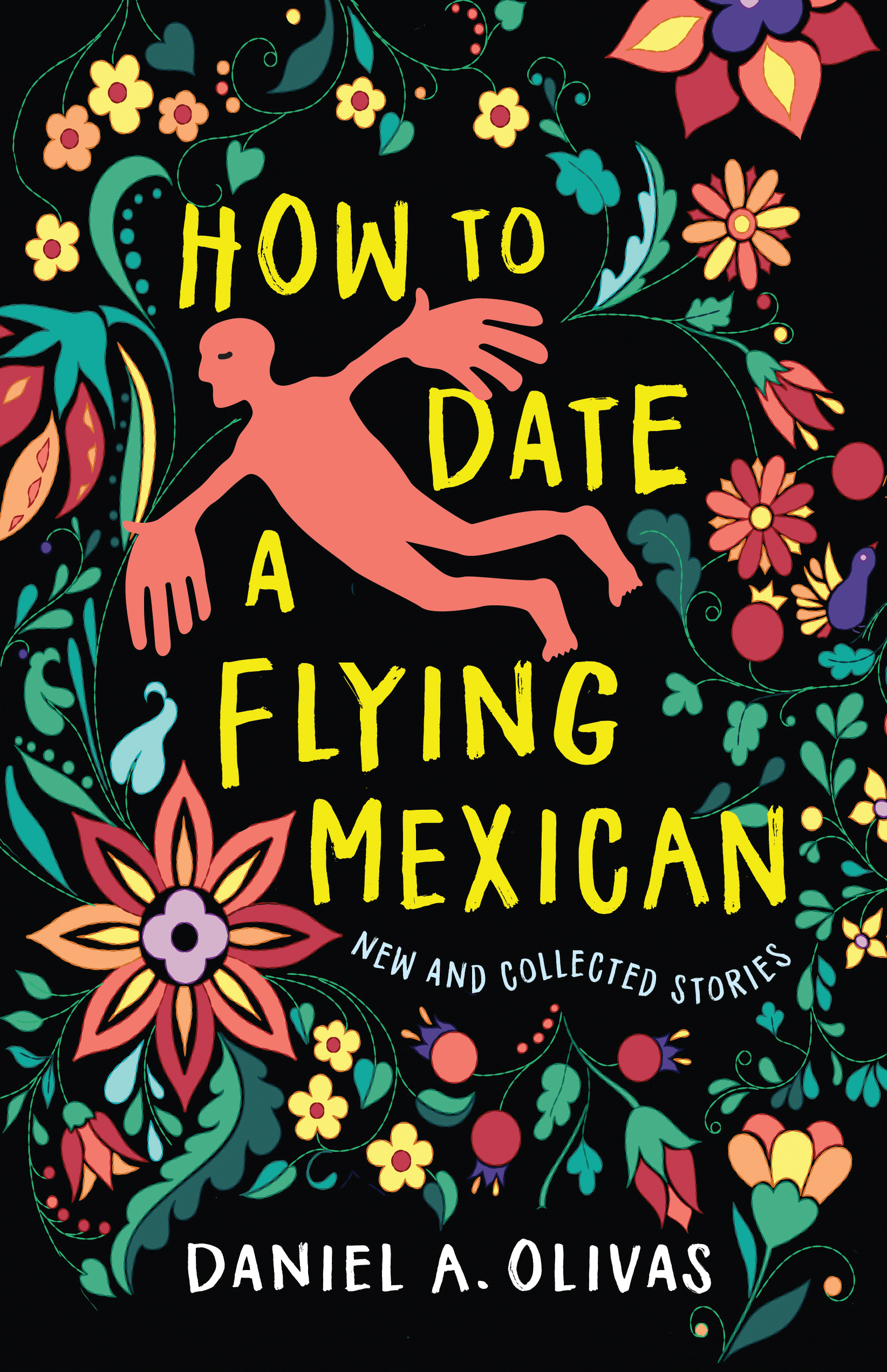
The New Short Fiction Series, Los Angeles' longest running spoken word series, presents selections from How To Date A Flying Mexican: New and Collected Stories (University of Nevada Press) by Daniel A. Olivas, Wednesday, August 31, on Crowdcast. This live streamed performance stars host and spoken word artist Sally Shore, with guest cast Holger Moncada Jr. (Promised Land, Penny Dreadful: City of Angels) and Jill Remez (The Neighborhood, The Bold and the Beautiful). 

Performance stream begins at 7:00 p.m. Tickets are $12.00 advance purchase, $20 day of stream. For tickets and program information, visit https://www.crowdcast.io/e/how-to-date-a-flying/register.

Praise for How to Date a Flying Mexican

"How to Date a Flying Mexican is a beautifully realized work that comes out of the depths of the Mexican and Mexican American cultural experience."

    —Michael Nava, Los Angeles Review of Books

"Throughout all of his stories, there are strong Chicano characters, who embody tales that range from the laugh-out-loud funny to the heartbreaking. A timely retrospective from an important voice in Latinx literature."

    —Wendy J. Fox, BuzzFeed

"Prompted by tragedy—the death of his father and the pandemic—Olivas revisits decades of writing to produce this collection of new and previously published stories. Olivas’s work is surreal, dystopian, critical, and introspective, ultimately moving into contemporary political rhetoric."

    Alta Journal

“Daniel Olivas loves to tell stories and his writing reflects that joy. Every story is told with a wink and a smile, encouraging you to follow along for the ride.”

    —Maceo Montoya, associate professor of Chicano/a Studies, University of California, Davis, and author of Preparatory Notes for Future Masterpieces

“From gritty realism to mythic and sci-fi speculative, Olivas dishes up an exquisite feast of short fictions filled to the brim with small and outsized everyday struggles—and failures.”

    —Frederick Luis Aldama, award winning author and Jacob & Frances Sanger Mossiker Chair in the Humanities at UT Austin 

 “This kinetic new collection of stories is exuberant and poignant, filled with the homegrown details of Latinx life as well as a kind of cheerful, saucy magic.”

     —Yxta Maya Murray, law professor, Loyola Law School and author of The World Doesn’t Work that Way, but It Could: Stories


Monday, October 18, 2021

Reflections on Publishing My Twelfth Book, "How to Date a Flying Mexican: New and Collected Stories"


By Daniel A. Olivas

Almost 25 years ago, I started writing fiction. My first published short story appeared in the literary journal RiverSedge in 1998. In 2000, a small, now-defunct press based in Pennsylvania published my first book, The Courtship of María Rivera Peña: A Novella. I was 41 years old, married, the father of an 11-year-old boy, and well-established in my legal career with the California Attorney General’s office. That book is now out print, but it served as the foundation for ten more books—fiction, nonfiction, poetry—including two I edited. And in writing those books, I honed my storytelling skills which, in recent years, spawned a new life in playwriting.

Now a twelfth book is on the horizon. I am a man in his early sixties facing retirement in a few years. Luckily, I am still married to my law school sweetheart as we are about to celebrate 35 years of marriage. And our son is now 31, a grown many with a career and a rich life on his own. My father was called back last September, but my mother is still running circles around her grandkids and great-grandkids.

On February 1, 2022, the University of Nevada Press will publish my latest book, How to Date a Flying Mexican: New and Collected Stories. If you are a reviewer who is on NetGalley, I invite you to read the galleys.

How did this new book come to be? During the pandemic and in the wake of my father’s death, I set upon the task of reviewing almost 25 years’ worth of my short stories that had been published in various collections or as parts of novels. Our strange times seemed to call for this type of introspection and examination. I found that many of my narratives fell within the world of magic, fairy tales, fables, and dystopian futures.

This review also revealed that many of my fictions confronted—either directly or obliquely—questions of morality, justice, and self-determination while being deeply steeped in Chicano and Mexican culture. I decided to choose my favorite tales from the many scores of stories that populated my published works. I added to the mix two recent stories—one dystopian, the other magical—both of which confront the last administration’s anti-immigrant rhetoric and policies. The result is How to Date a Flying Mexican: New and Collected Stories.

We are now setting up book appearances to help bring this new book out into the world. The book launch will be at the venerable Vroman’s Bookstore on February 3, and I will be making an appearance at Skylight Books on February 26. I will also be a guest author at the Tucson Festival of Books on March 12 and 13. Other readings are being planned including one at Tía Chucha’s in spring. I hope you will be able to attend one of them. I am updating my events page as I get confirmations.

If you are a writer who has birthed at least one book, you know about the nightmares: your book gets published and when you open a copy, the pages are blank or they are in complete disarray with pages missing and words filled with typos. I am currently having those nightmares.

But no matter. I am blessed that a wonderful press has agreed to publish my work. I will do everything I can to bring it into the world with all of my energy, hard work, and love. I hope you will come along for the ride.


Thursday, October 07, 2021

Chicanonautica: ¿Whachacallus?

by Ernest Hogan

It’s Hispanic Heritage Month. Or should that be Latino? Latinx? Once again we’re arguing about who we are, what we should be called, and what language we are arguing in.


Gotta love it. La Gente/La Raza ain’t just one thing.  And La Cultura is a complex of intersecting, recombining cultures, bubbling away, constantly giving birth to new lifestyles, new identities, new civilizations. 


Hang on your Chicanonaut helmet, we’re heading for the Intergalactic Barrio. . .


I call myself a Chicano. It’s the most accurate and honest term that allows me to tell where and when I’m from without having to do a quick, complicated bio. 


Chicano wasn’t always a term of pride. It was once an insult, very much like the N-word (that is now more offensive than the good ol’ F-bomb). I lived through the transition that happened a few years after black went from insult to a word of pride and power that for a while was capitalized. 


Political correctness changes with shifting timespace coordinates. In Mexico, people don’t understand what Chicanos keep getting worked up about. In some Mayan ruins, I once failed miserably to explain what a Chicano was. I’m not sure if I could do better today trying to explain Latinx.


I was happy when the term Hispanic came along when I was in college. Before that there was no box for me to check on the forms. We were in every classroom, but the bureaucracy didn’t recognize our existence. In protest, I put myself down as something different each time—I was Black, Oriental, anything but a White, or Other.


Then the census changed it to
Hispanic (Spanish-surname only) ruining it for me.


Believers in Puro Mexicano (which doesn’t exist, Mexico was multicultural since before Teotihuacán) don't like Hispanic, even though a lot of our beloved Mexican traditions can be traced back to Spain--just ask the Hispanos in New Mexico.  Then it is also still used by law enforcement to describe brown suspects.


Latino, on the other hand, got picked up by showbiz. It’s used to describe sexy celebrities, marketable commodities.


Latino always sounded funny to me, like an awkward contrivance made-up to deal with an uneasy, cross-cultural situation. Latin by itself never quite seems to be enough. I’ve suggested Latinoid, and R. Ch. Garcia recommends Latine, but they haven’t caught on.


Then came Latinx, that sounds like a laxative, but was actually created by trans Brazilians, to adjust the gender complexities of the Romance languages to their situation.


Before that there was Latino/a, but it couldn’t be decided if the o or the a should go first, so Latin@ came along, and word processing programs kept trying to make it into an email address.


My story “Flying Under the Texas Radar with Paco and Los Freetails” sold to an anthology called Latino/a Rising in the Kickstarter campaign. When it came out, the book was called Latin@ Rising. Recently, a new edition was called Latinx Rising. A follow-up volume, with my story “ Those Rumors of Cannibalism and Human Sacrifice Have Been Greatly Exaggerated,” has just come out, under the title Speculative Fiction For Dreamers: A Latinx Anthology.


Some of my fellow Chicanos have criticized me for being associated with anything Latinx. The whole point of my being a writer is to get published and have my work read. The Latinxes (see how it messed up English, too) have connections with publishing and academia. I’m not going to turn my back on a chance to be published--and paid--because of a label. See, as a Chicano I’m all about sneaking across borders into places where people don’t think I belong.


Just check out my story “Skin Dragons Talk” in Mothership: Tales From Afrofuturism and Beyond.


It also looks like Latinx is coming to mean futuristic, which I like.


And I’m soon going to be in Porvenir Ya!, Chicano science fiction anthology, and Nuestra Realidad Creativa / Our Creative Reality, Chicano nonfiction anthology.


Meanwhile, I'm surfing the distortion waves into the future.


Ernest Hogan wrote High Aztech. May Tezcatlipoca have mercy on his soul.

Monday, September 06, 2021

The Brown Bomber


In Memory of Ernest Alderete 

By Daniel A. Olivas

Pop’s chestnut skin glistened, tight and strong as he dove into Venice Beach’s foamy waves and then shot up like a mortar and yelled, “I’m the Brown Bomber!” This was his favorite beach line.

So, for years, whenever I heard the Brown Bomber mentioned, I figured everyone just knew Pop. I mean, he was brown and he fought in Korea as a Marine. He eventually admitted that other men were known as “Brown Bomber” including one who still lived in Monterey Park not too far from us.

The Brown Bomber: A war hero, my Pop said, who couldn’t wait for his amphibious vehicle to reach the cold, dark Normandy shore. The way Pop told it, the Brown Bomber liberated dozens of death camps almost single-handedly.

But the Brown Bomber’s second life, after the war, is what made my eyes widen and my teeth click with excitement. The Brown Bomber helped make a movie! And not just any movie. He’s the one who, through celluloid trickery, made the swarming black ants in Them! look huge – bigger than a house – so they could eat everything from El Paso to L.A.

But the Brown Bomber died at the dawn of the new millennium. Killed not by a bullet or giant ant, but by the ordinary course of time at a commendable, wintry age. His daughters sprinkled his ashes along Yosemite’s dusty hiking trails. Trails he helped build under the New Deal.

So, I guess Pop could borrow that moniker now. It’s free to use. I’m sure the real Brown Bomber wouldn’t care. Not really.

[“Brown Bomber” first appeared in the literary journal Muse Apprentice Guild, and is featured in Crossing the Border: Collected Poems (Pact Press).]


Monday, August 23, 2021

Birthing a New Book


The typewriter owned by Michael Augustine Olivas

On Sunday, I received my copy editor's redline to my manuscript, How to Date a Flying Mexican: New and Collected Stories (University of Nevada Press), coming out in February 2022. The email included a lovely letter from my copy editor, Robin DuBlanc, that began:

“Congratulations on How to Date a Flying Mexican. Your stories are by turns intriguing, funny, poignant, charming, alarming, and above all human. I had to force myself to slow down while editing because I often had a tendency to rush to see what would happen next.”

And so, the birthing of my new book truly begins. This will be the twelfth time I’ve worked with a copy editor on one of my books (I’ve written ten books, and served as anthology editor for two), and each time, I get butterflies of anticipation. But this book is particularly special to me. As I explain in my introduction to the manuscript, my late father, Michael Augustine Olivas, loved the title story which is why I chose it to lead off the book and set the tone, if you will. I also dedicate the collection to him.

My father's declining health and my weekly visits with him inspired me last year to review my published stories of the last 20-plus years and choose my favorites for this collection. I then added two newer ones to complete it. My father, who passed away September 23, 2021, never lived to hear the news that a publisher enthusiastically accepted it earlier this year. But we had an opportunity to discuss my selection process which brought him great joy.

My father never got to publish his own fiction and poetry. He worked in a factory while he and my mother raised five children. But he wrote on a little manual typewriter when I was young and completed a novel and many poems. However, publishers rejected his submissions. I think my father was ahead of his time. Very few publishers would even consider a manuscript written by a Chicano who told stories and had themes that were not "mainstream."

He eventually destroyed his manuscripts and focused on getting his college degree and master's. So, when I became a published writer over 20 years ago, my father was so proud. Writing was our special bond. I miss him dearly.


Friday, June 12, 2020

Pandemic Insecurities and Shifting Seasons

Melinda Palacio


Lockdown’s summer edition comes with the fact that Covid-19 is settling into 2020 and will probably usher us into the new year. As much as I love being at home, I do miss being out in the world. While this uncertain time only grows more uncertain because of the lack of leadership in this country, there are a few new pandemic habits that I plan on keeping up with. Having to ration out food and plan meals ahead of time is a plus. I admit I was getting into the habit of eating out too much. I’m grateful for the opportunity to slow down and appreciate being home by gardening more, learning to sew, and making music. It’s been a joy keeping up with both ukulele and guitar. 
As someone who grew up with choices on career and family and marriage, I didn’t want to learn how to sew my own clothes. My grandmother tried to teach me how to use her sewing machine but I didn’t appreciate the lesson at the time. A month ago, when I was in a desperate fix to make masks, I wish I had paid more attention.
For a second, the world, regardless of what the new normal might be, looks like hopeful place, but then the news sets in. People are rallying against racism and despite a pandemic, we make a statement against racism and the world follows suit. But when I think about all the Black lives it took to fire people up, I get dejected again. Especially when I think of my nephew. 
Like all people, I only want the best for him. He’s a child that enjoys playing with guns and aspires to be a police officer. He’s still too young to realize that as a brown-black boy the simple act of playing with a toy gun in public could bring him harm. The simple act of being in the outside world can bring him harm because of the color of his skin. As handsome, charming, and smart as he is, he does not wear a cloak of white privilege. The very institution he admires might burst his bubble. I don’t know why little boys enjoy playing with guns. 
As a child, I wasn’t allowed to play with matches, let alone guns. For now, he has a certain freedom as a boy that I never did. I wonder how long that will last. I can only hope that change is possible during his childhood and he will not have the trauma of racism and fear the institution he admires. Will racism take away his childhood? Will Covid take away his trust in the outside world? Will we leave a better planet for our future. Injustice happens right under our noses, murder, children separated from their parents, concentration camps in this country, people forced to endure unsafe conditions and a relentless virus on top of a greedy government that seems hellbent on destroying the planet. These are some of the things that keep me up at night during times when I worry about the world. Please vote. 

Saturday, October 10, 2015

Nurturing Nieto


Monday and Tuesday every week, the Nieto comes over about 7:00am, stays until three or four. He's done that for about a month and become my life on those days. I haven't been around an infant for over thirty years.

He's five months old now, but not crawling yet, so maintenance and feeding, diapering and burping him is manageable. And fun. What goes through my head for those hours is complicated.

I wonder. About nearly everything that I do or don't do with him. About how it will affect, guide or mold him. I don't want to make mistakes, but that could only happen if I were perfect.

My goals aren't that complicated. I intend to let him make the decisions, where possible.

Picking him up from anywhere, I extend my hands and tell him, "Venga." Not until he's lifted his head or arched his back do I actually grasp him. One day I expect him to decline my offer. It'll be fun to see him doing that.

I do the same procedure with his bottle and tetera. There in front of his face and even if he's crying, I await his reaching and grabbing them, rather than just sticking them in his mouth. I hope that's the proper thing to do.

Another goal, maintenance, necessary but can be fun.

When he needs changing, out comes the baby-wipe, but it's not just a damp cloth. "Ay viene la toallita blanca," I singsong. "Está bien fria!" I say jokingly, adding, "Oh, no! No me pones eso en mis pompis!" He loves it.

Same procedure goes for pulling moco out of his nose. This time it's, "Ay viene el buscamoco! Dónde está el moco?" This doesn't always result in the green thing coming out, so I let it lie. Don't want him to develop an aversion to keeping his nose clean, figuratively or otherwise.

TV's limited. Just some cartoon in Spanish. Otherwise, he'd just stare at the screen, understanding nothing, doing nothing, developing nada.

A new book every day. read twice in Spanish is an experience. We lie on our backs with the book held too far for him to grab the pages. He's old enough to follow my pointing finger while I sing the text. He's in awe, of the colors, maybe some of the faces, who knows what else. "Voltéo la página," I say, turning each page. His attentiveness, smile and wide eyes tell me this goes well.

I avoid putting everything in his right hand, though I can't recall at what age Nieto will decide which hand he prefers. His mini-conga-playing is scratchy, loud, done mostly with his right hand, sometimes his left. I can only play the stereo, so I'm no music teacher. But Nieto has fun conga-ing.

He's not ready for it, but we dance. That is, I dance to a song and he lies there, wondering what chingada is going on. I move his hands to mimic mine and expect he'll get the idea fairly soon. Then we'll baila locos.

Speech is trying for me. Having to remember to separate my words and not slur or slide parts of two words into each other. "Mami " and "Papi" seem to impress him, though he hasn't reached the level of deliberately speaking either consonant.

Whenever he goes into one of his loud-yells monologues, I focus on those clearest to me, echoing them to show him the purpose of communication. He'll get it on his own, but maybe my monkey sounds are helping.

We use the legs of the livingroom table, a cube manipulative and his sleeper as jungle gyms. Sideways climbing, pull-ups and stretches are basically wrestling without a partner. Hopefully, he won't become a crazy hands-only, mountain climber.

We've got song-games. Dónde está la pata, la panza, la boca. He's learning to clap this with the soles of his feet, holding onto his ankles sometimes. When we get to, "Aquí está la ____," he knows the tickles are coming. Loves it. Yeah, I know some are animal parts, not people's, but they've got fewer syllables for better singing.

10 Elefantes is a good one. The song played out with a stuffed elephant we just got. Elephants are sentient--not meant for zoos and circuses, so I need to figure out how to convey that to him.

After weeks of teething-hell, Nieto surprised me last Tuesday. He's developed to the point of reaching his arms out to tell me he wants to be picked up, like for comforting. Pinche! Of course he needs comforting to not grow up lacking that loving. Then again, I can't become a helicoptering Abuelo who contributes to Nieto turning into a spoiled brat. A tightrope to walk. Guess I'd better learn where the line is drawn.

He'll crawl soon, just not certain how soon. Then the world opens wider for him. Will have to baby-proof the front of the house, leaving as much as possible for him to mess with so he can learn how or why to treat it just so. I'm leaving the plants, unless they're poisonous. It'll be fun teaching him to treat them like he will the cat and the dog. Gently, with care.

Pinche gato is doing its own lessons. Nieto kept grabbing its hair until Gato finally whipped a few lashings at Nieto's hand. Whoa! Nieto's expression was total "I don't believe this! Something's off-limits?" He has cats at his home, though they're probably not as mean as ours.

There's no pic of Nieto here. He hasn't asked for selfies, either. Anyway, how cute or not, how pretty or not, he is, no importa. Besides, at his age, pics don't convey intelligence, development or potential. Or how much he's learned to care for others. I'm only a minor part of his rearing, but I have to do well on that last element.

Eight or nine hours of calculated nurturing and fun make for one exhausted Abuelo. After two days, I need extra naps. We'll be together for some time, maybe for years, so I need to toughen up. Nurture when I think I need to. Guide wherever it seems appropriate. Encourage everything artistic in him and his exploring, experimenting [banana is good, Gato, not so much] and fine-motors skills. Un montón for me to learn.

Es todo, hoy,
RudyG, a.k.a. el Abuelo-in-training

Saturday, May 09, 2015

How a first grandson made me think and feel


I have two children, both of whom took care of themselves, even when they got in trouble. Nothing major, though. They graduated top of their high school, scholarships to great schools, received their B.A.s. The daughter completed her M.A. secured good jobs, her own home and a future of her making. The son will finish his M.A. this year, married a great woman, and the two of them just had my first grandkid. Whether there are more doesn't matter. One is great.

Before: son and his wife
Although, it took him over 50 hrs. of labor to agree to leave his mother's womb. Will that make him a "mama's boy?" I don't know, nor do I care one way or the other. He will be shaped and nurtured by his father and mother. That's sufficient.

50 hrs. of labor. From the ruido I've heard through three births, males should share that experience.
A high school sex-ed where kids had to watch 50 hrs. of labor might lead to a lot fewer unwanted births, bastards, as we call them. Whatever the origin of that term, the intention was children with two adult parents responsible for the rearing. A good thing.

Sex-ed classes of 50 hrs. of labor might prove positive for some girls. Or not. But it might be more entertaining than the zero-effective Just Say No, Not These Thighs.

Nor might it drive down the hormones of some boys. Better perhaps to try what one TV show did:
"As part of a stunt for their show, Storm and Zeno were hooked up to a machine with electrodes stuck to their abdomens to simulate labor pains. And just like the real thing, the cramping of the 'contractions' got stronger, longer and closer together.
"The average labor lasts 12 to 14 hours, but Storm and Zeno only lasted two hours."

Nahua movement glyph to watch over him
Historically, the Catholic Church is responsible for billions, or more, children born out of wedlock, without the support of two loving parents, born into relative poverty as their first obstacle in life. The Catholic "sacredness" of life precludes contraception, like a woman's right to abortion. So, in fact what's sacred is making babies, of whatever lineage. As long as any church holds sway with Chicanos, Latinos and others, multitudes are locked into cycles that include poverty, and not only financial poverty. Also, a poverty of self-responsibility and parental modeling.

My new grandson is "luckier" than that. His parents smarter, more responsible. As my daughter will be. And many other sons and daughters. And even though there are too many of our species on this planet, at least many grandkids will be born who learned from the errors of their generations. So, change can come.

50 hrs. of labor. An abuelo during labor is as useful as a diaper. There's nothing to be done, nor much of any way to contribute. It's really up to the parents. Moral support--sure. Physically going to the car for something--sure. Getting on the phone to deliver messages--maybe. Otherwise, abuelos serve by only standing and waiting and assuming their presence is somehow valuable to someone. It's in the job description, at least for that day(s).

50 hrs. of labor. Sounds like damn good extra rationale for considering adoptions.

azteca cradle illustration
Adoptions, in many cases, of grandkids born out of wedlock. Or orphans, many of whom are collateral products of American wars, American drugs or American guns. Somewhere on the Internet there are statistics of how many adoptable kids my country is responsible for this year or day. And that's not including those within our borders.

Orphaned Palestinians. Orphaned Mexican, Salvadoran and Guatemalan grandkids. How many there are, I don't know. I do know what my country is financing in Israel and Gaza. I can hear it from the lips of Israeli soldiers who helped produce those orphans.

I don't feel it's a negative or sad thing to think of such children during the 50 hrs. of labor while First Grandchild was searching for a way out. I'm privileged to be sitting in a new, modern hospital in a richer country than most grandkids will open their eyes to. My grandkid will have more such privileges, though he will not have it easy. But he'll learn. Things like, #BlackNBrownNRedLivesMatter.

Imbedded raw turquoise ojo; half set, unstained walnut
I'm making my interpretation of a neo-azteca cradle for whenever New Grandkid comes over. Of salvaged or recycled walnut, cedar and ipe wood. No nails, screw or metal, only glue, dowels and rope, tung oil stain. Because of the Catholic Church-sanctioned destruction of native art, I know little of what cradles in Tenochtítlan looked like, vaguely something like this drawing. I imagine the rest.

I'm imbedding raw turquoise in the headboard knot-hole, an ojo to watch over Grandkid while I head to the frig to get him another Negra Modelo. Of course, to cool him in summer, not to drink. Yet.

brecas on cedar siderails
The side rails have brecas painted on them. The footboard he'll be able to see has an ollin-motion glyph, bracketed by a lizard and monkey, symbolic animals to encourage his love of other creatures. The cradle is a work of love--loving to work with wood and natural elements. Grandkid and I don't know each other well enough to determine much more than that, yet.

on ipe wood footboard

Almost 50 hrs. after birth, Grandkid has no name. Actually, his parents decided that even the sex would be unknown until birth. I love that. So few precious things in life to savor that our technology attempts to rob us of.

Turns out, my guess about the birthdate won the pool that I'll have to share with … Cinco, as I have called him, given that he had no name. Cinco, as in my guess that he'd be born a week late, on Cinco de Mayo. [It was the Siete, instead.] Now I'll need to get a new cat or dog and name it Cinco, to break my tendency to endow Grandkid with a numerical nickname.

50 hrs. of labor, but my grandson is not special. "Laborious," sure. Precious, certainly. Beautiful? Like art and literature, where beauty is in the eye of the beholder or the reader or audience, in the case of baby-beauty, it's in the eye of the relatives.

Humans must have at least two genetic propensities. One for any baby, because it's defenseless and of our species. Another, for babies related to us and bearing some resemblance to our clan or tribe. The second feels like the more ingrained, to me. Moral dilemma: having to choose between saving only one of two babies, you save the one with your color hair and eye shape. Naturally.

Yesterday, I saw and held and talked and discussed life with Grandkid for the first time. Skin like his parents. Hair like a gorilla. Invisible eyebrows. Eyes, black as ebony, tinged like the deepest waters off Cozumel. Beauty was not what I hoped for, which is why there's no photo here of Grandkid. Only a video could capture what's important.

Instead, Grandkid quickly showed the same alertness my kids were born with, not that I know whether his mother seemed that way at birth. Focusing on things above him, intensely savoring something about them, steadying his gaze, finding his bearings. Maybe wishing Strange Abuelo with flashing camera would go the fk away. Smiling a couple of times. Like he understood his new position of dominance.

After: she could probably do another 50
50 hrs. of labor. That I can't describe as regrettable, given the results. Mother forgive me, but it was natural, that's all.

I'm thinking: one can adopt kids, so why not grandkids? Forget how "beautiful" they might look. Better they have the capacity to understand this world that I oftentimes don't. That they reverse our direction heading toward global-warmed extinction. That they're lucky enough to find parents like these ready to catch them. And maybe an abuelo nearby, willing to stand-in. And cuddle him before nestling him like some hummingbird egg, into a neo-azteca cradle. Whenever it's completed.

Es todo,
RudyG, hoy, just another abuelo

Saturday, July 26, 2014

A Latino book for kids, about bullying

U.S. readers definitely need more and more diverse books. Especially for children, both Anglo and the marginalized children of color. A bilingual book by Kat Aragon, published last month, relates to that need, as well as to the U.S. sickness of bullying. Below is the publisher's description of Boy Zorro and the Bully (El Niño Zorro y el Peleón).

• ISBN: 978-1-60448-027-6 • Paperback • $8.95
• Ages 4 to 8 • 24 pages
• Bilingual English/Spanish edition
• Published: July, 2014
http://www.lecturabooks.com/

"Every day Benny Lopez woke up looking for a way to help people. One day he finds a mask and wears it while helping an elderly lady cross a busy street. With that act of grace, he becomes Boy Zorro—defender of good. Then, one morning at school, he helps stop a bully from intimidating another student. The bully is punished and sees the error of his ways. Boy Zorro made a difference. This book helps children understand that bullying is hurtful and wrong but when everyone does their part, it can be stopped."

The motto of Zorro's publisher, Lectura Books, is: "for English learners and parent involvement." Below are my thoughts as a former teacher of latino first-graders, and father of a boy and a girl.

Zorrito, I'll call him, uses his outfit to empower himself and begin acting like a "hero" of good deeds. He's a great role model taking pride in his kind acts. It's great that the principal, Ramos, is a latino.

When he has a school encounter with a bigger kid who's bullying another kid, the action gets going. Zorrito "makes a difference" by running to the principal when the bully threatens him. He snitches, is what kids would call it.

Telling an adult is one correct thing to do. One, but not the only thing. This book would be a good start for kids to discuss how to deal with bullying, as long as the discussion is extended to other methods and questions.

Like, what if there's no adult around? What if the bully doesn't let you go to tell an adult? After you tell, how will you deal with the accusation that you're a snitch?

One book can't cover all of life's possibilities. As I said, Zorro is a good start.

Recent studies and reports on school bullying have shifted away from just telling an adult. As a parent, I know kids need to learn many other things. When to run away. How not to get backed into a corner. How to try to get other kid-bystanders involved. As a parent, I told my kid it was okay if he was sent to the principal's office because he was defending himself. (I can hear you teachers cringing out there.)

In Zorro, the latino principal holds an assembly, tells the bully to apologize and admit his mistakes. He gets a week suspended from school and detention for a month after that. Pure punishment.

Bullies are a U.S. epidemic. Newer studies and reports, again, advocate treating that sickness. A bully at home for a week will not necessarily cure himself. Detention is a junior form of prison solitary. I know principals who prefer to keep bullies in the school, give or get them counseling and teach them why their bullying needs to be corrected. It's no simple task.

In Zorro, the bully problem has a positive outcome. For that reason it can help parents and kids see that they don't need to tolerate bullying.

To encourage more books from this author and other latinos' books aimed at latino kids, I also looked at the illustrations. What struck me was the skin color of the characters. One black boy is the only one with dark skin. I saw no real color distinction between latino kids and ones who are assumedly Anglo. I wasn't sure why complexions were done this way.

Unless something was intended that I haven't thought of, I'd suggest to the illustrator, Noel Ill, that the skin tones of his afroamericano character would work for some latinos.

Teachers of latinoamericano kids deal with the color line every day. Darker kids can get shunned by lighter-skinned latino kids. Many kids call their color "blanco," to not be identified with what class society considers an "inferior" color or "inferior" race, like indios. It's not the kids' fault, it's a prejudice from the country they were raised in. Books aimed at them need to acknowledge that some do have darker skin. Otherwise one of our major, latino characteristics would get whitewashed. I'm not sure if anything good is served by that.  

Females in the book: girls in the background who don't speak or play any role in the story. From experience, I believe--and have read--that boys will like books that include girls, so long as they're engaging books. I'm uncertain there's value in leaving girls totally out of any book. (The only other female is the elderly woman--maybe Anglo--who Zorrito helps to cross a street.)

Latino boys do need more books like Zorro, as well as "boy books" with girls, especially, playing greater roles as they do in real life.

To help publicize Zorro, I'll give the author, publisher, and illustrator, for that matter, space here if they would like to explain more about the book. Yes, I've examined a lot about it; such books are important, especially given that few are published each year. Because I'm Chicano, have taught bilingual latino kids, and hope to publish books aimed at them, I have a great interest in examining the work of other latinos.

Our First Voice books should aspire to be superior to others being written. If expecting books to meet such a standard offends someone, I prefer that to my saying nothing about our literature needing improvement. And when mine are published, I'll ask help holding them to similar standards.

Es todo, hoy,
RudyG, a.k.a. a former bilingual teacher and still a father

Sunday, June 16, 2013

To the Best Bad Dad in the World: A Tribute to My Fragmented Father

Olga García Echeverría

I have a fond memory of my father. In the 11th grade, as part of a school fundraiser, I had to sell glazed donuts. I took home 4 dozen with nothing but good intentions, but since donuts are a weakness of mine, I ate one and then another. Originally, this was not a big concern. Each donut was .50 cents and I figured I could afford a few dollars worth. But as the days passed, I sold nothing; I didn’t even try. Instead, I peered at the aging donuts in the cardboard box, whispered “sorry” to some invisible Donut God, and devoured another. Before I knew it my debt had skyrocketed. When I did the math, I owed the school close to $20.00. This was a lot of money for a teenager in 1986. I had no idea how I was going to pay. My father, who understood the pressure of debt, must have picked up on my anxiety. I had about five donuts left when he said, Ya comételas, mija. ¡Yo te las pago todas! And he did, all 4 dozen.

I can share this story now, but there was a time when I was so angry at my father that I believed I had no good memories of him. For years, I completely blocked memories like the one above. Yes, it was a bit dysfunctional of him to simply pay for all the donuts I had eaten (encouraging my emotional eating like that), but it was also tender, especially for someone who rarely showed affection. For most of his life, my father was a hardcore alcoholic. Although he could sometimes be a harmless drunk mumbling to himself at the kitchen table, he was more often than not explosive. Yelling curses, breaking things, and raising fists in the air were a few of his fortes.

Mostly this was due to his childhood wounds. My paternal grandfather had been shot and killed when my dad was just a toddler, and later my grandmother remarried and “lent” my father out as a farmhand to an uncle who beat and berated him regularly. I don’t know why my grandmother “lent out” my dad or if she did it willfully—there are many gaps in the story--but I do know my father lived with a deep sense of abandonment thereafter. The years he spent with that uncle also scarred him for life; they crippled his ability to give and accept love; they filled him with pain and rage.  Alcohol became his life-long anesthesia.


Wallet & toy gun found in dad's old suitcase
Patriarchy screwed my father. It gave him a limited and oppressive definition of manhood. In short: guns, liquor, lots of women, and violence. Patriarchy rooted him on, encouraging irrational, destructive behavior. I’m remembering him drunk on our porch in East LA, shooting bullets into the night sky on the 4th of July. This made him feel like a real man. I’m also remembering him packing his gun into a leather bowling bag and insisting on taking it grocery shopping. According to my father, one never knew what could go down at the local Johnson’s market on Whittier Boulevard. Once, he actually got into a showdown in the parking lot with someone else’s alcoholic Mexican father who, like my dad, had packed a gun to go shopping. Hijole! Were they from the same pinche rancho or what? Both of them had probably seen way too many John Wayne movies. Nobody got shot or maimed that day thanks to the women and children on both sides of the showdown; we had to literally drag our fathers into their respective station wagons.


Picture of Indio-looking dad
I can laugh now, but growing up with my dad was crazy. Aside from patriarchy, colonization también lo chingó. It taught him caste and color. It fed him self-hate. In his eyes, everything wrong with my mother was a result of her pinche sangre Yaqui. He talked a lot of Yaqui shit, my dad, but at times in the middle of a Yaqui curse, he’d go into a monologue about how fierce they were, what great warriors, how they resisted the Spanish and then the Mexicans like no other tribe. Buenos para luchar los Yaquis! There was an overtone of awe and respect. My father wasn’t an Aztec, or a Toltec, or a Yaqui. He was a colonized Mestizo (and a borracho to boot) who’d long lost the thread of his own indigenous ancestry. When he cursed the Yaqui, he was cursing the long-lost Indio in himself.

I have a folder titled DAD that is full of all the scraps of poems, letters, essays, stories I’ve tried to write about my father over the years. When I sit down to tackle my papa drama in words, there is always an initial outpour of red-hot emotions—hurt, anger, wounded love—but before long, the momentum fizzles (red-hot emotions are exhausting) and another unfinished piece gets stuffed into the folder.

In a recent interview on PBS, Bill Moyers asked Sherman Alexie if his writing was cathartic. Alexie chuckled and answered, “No.” There was something cathartic about hearing Sherman Alexie say that his writing was not cathartic. He added, “I think it can be healing for readers. You know, I have been helped and healed by other people’s words. But I, my own words for myself, oh man, I don’t think so.”

Perhaps I was laughing because a part of me understood. Although I believe writing can be healing, there is also that other side of writing—the one that claws at the most vulnerable parts of us. The one that haunts and hurts like the jagged pieces of my father stuffed into a manila folder.

In her poem, “Tepalcate a tepalcate,” Elba Rosario Sánchez writes about how Spanish colonization in the Americas broke us, both physically and spiritually. Tepalcate, Elba notes at the onset of her poem, is a Nahuatl word which means “fragmento de una pieza de barro quebrada.” Through the generations of violence and racism, we became broken pieces of clay, dispersed. At the end of Elba’s poem, we (esos pedazos rotos) stand before each other as if standing before a mirror, tepalcate a tepalcate. We recognize one other through time and space. “Somos caras en relieve,” writes Elba, “de una misma pieza.”

When I open my DAD folder, this is what I see—tepalcates. The fragments are not only reflections of me; they are splintered pieces of American history. My father first migrated from Mexico to the U.S. in the late 1940’s, when he was in his early twenties. It was a time of overt racism, “unofficial segregation,” where signs that read No Dogs or Mexicans Allowed reflected a national, deep-seeded fear and hate for Mexicanos.

Like many migrants of his time, my father did not join the Bracero Program. Instead, he crossed and worked illegally, sin papeles. Much like today, deportations were rampant, and my father recalls being deported numerous times. Pero yo siempre regresaba al siguiente día, he says defiantly.

For years, my father followed the crops up and down California, working in pesticide-sprayed fields and in slave-like conditions. He tells stories of being “promoted” in the fields at some point and becoming a migrant camp cook, feeding close to a hundred workers a day. For several years in the 1960’s he worked for the Southern Pacific Railroad Company. And later, when he settled in Los Angeles, he was gardener and handyman for White man, warehouse packer, factory worker, security guard.

Through the years, I’ve recovered other memories of my father that challenge my previously held belief that he was a one-dimensional monster, like memories of him sacrificing to take us to the most elegant of downtown restaurants—Clifton’s Cafeteria. We were ecstatic as we slid our food trays along the silver rail, scanning the steaming meats, mashed potatoes, gravy, cake slices and bright-colored gelatins. Agarren lo que quieran, my father would say as if we were rich, and our small hands would reach out, grabbing.

Or the memory of him in the kitchen baking cinnamon bread from scratch. He’d shed his machoness then, put on an apron and play chef. He had sazón and everything he made was delicious. Chile chipotle salsa. Birria. Barbacoa. Tortas de camaron con nopalitos. Homemade chorizo. Deep fried donuts (the root of my donut obsession).

There is the memory of him coming home after a long day of work and throwing himself on the couch like a falling giant, moaning, Aiii, Aiii. ¡Quítenme las botas! He gave us quarters, nickels and dimes for taking off his heavy boots and pulling out his blooming grey hairs, all our fingers eagerly digging into his scalp, searching. I loved the feel of his dark wavy hair and the smile of surrender on his face.

Portrait of dad with wavy hair sans canas
 
There were also the fruits and vegetables he seeded in whatever little niche of dirt he could find. We lived right by the 710 freeway where concrete and smog ruled, but he made of our immediate surroundings a small garden. We had corn, sprawling chayote, an orange tree, sugar cane stalks that grew twice our size. He sliced open the stalks with his navaja and gave us and the neighborhood kids pieces to chew. We sucked on the sweet juicy stalks until they became stringy mush in our mouths.

My father wasn’t a monster. True, when he staggered around the house unable to express himself he reminded me of Frankenstein. When he beat his fist against his inflated chest he reminded me of King Kong. When he threw his fits and roared, he resembled Godzilla. But in the end, weren’t these monsters misunderstood and mistreated beasts? Poor Frankenstein, created and then abandoned. King Kong taken from his homeland (for capitalistic interests) and displayed as a freak in the good old U.S.A. Even Godzilla, the most destructive of monsters, was conceived by the Japanese imagination post the nuclear bombing of Hiroshima and Nagasaki. Destruction breeds destruction and even “The Bad” are multilayered stories waiting to be told and understood.

Which brings me to the act of excavating and piecing together tepalcates in an attempt to get a more comprehensive picture. I was going through one of my father’s old suitcases a few days ago, organizing. I found some treasures. Among them a Father’s Day card I gave him when I was a child. I have no recollection of making him this card and it’s not dated, but gathering from the writing and bad spelling, I’m guessing early elementary school. What child doesn’t want the fantasy “Best Dad In the World”? Despite my home reality I gave my father a card that reflected that deseo, esa fantasía. The funny thing is I misspelled “dad” and instead the card reads: To the best bad in the world. Happy Father’s Day! Freudian slip?
 

I’m not sure whose terrycloth I massacred in the making of this card and it’s obvious that colonization también me chingo a mí, since my father appears as a pink-skinned, light-haired, blue-eyed beach boy in striped shorts. There is so much more to say, but I will leave you with these few sentimental fragments and with a shout out to all the fragmented fathers, daughters, and sons out there who are trying to put themselves back together again, one tepalcate at a time.