Showing posts with label bilingual. Show all posts

Wednesday, February 21, 2024

BILINGÜE, SUPERHÉROE / BILINGUAL, SUPERHERO


 By Jorge Argueta

Illustrations by Elizabeth Gómez


SBN: 978-1-55885-988-3

Publication Date: May 31, 2024

Format: Hardcover

Pages: 32

Imprint: Piñata Books

Ages: 4-8


Children’s picture book highlights the fun and power of being bilingual!


“My name is Gerónimo Pérez, 

but everybody calls me Bilingual. 

I like my name Gerónimo, 

but I like Bilingual better.”


The boy speaks English and Spanish and loves the ease with which he can flip back and forth between the two, “easy as pie, / so smooth, so cool, so beautiful, suuuuper sweet.” He can taste the words—and dance with them too! He explains the instructions for his grandmother’s medications and translates his grandfather’s stories. He helps his mom and anyone else who needs his assistance, whether on the bus or at school. “Sometimes I feel like I’m a parrot with two tongues: / one for Spanish and the other for English.” Gerónimo is a superhero with bilingual powers!


Acclaimed children’s book author Jorge Argueta returns with another compelling story featuring an important theme for all immigrant children: speaking more than one language. With whimsical illustrations by Elizabeth Gómez, this book turns the lore of superheroes on its ear while encouraging kids who are learning multiple languages. Parents and teachers will appreciate both the positivity exemplified by a boy’s endless enthusiasm for his bilingual skills and the reimagining of what it means to be a hero.


JORGE ARGUETA, the poet laureate of San Mateo County, is a Pipil Nahua Indian and prize-winning poet and author of more than twenty children’s picture books, including Una película en mi almohada / A Movie in My Pillow (Children’s Book Press, 2001) and Somos como las nubes / We Are Like the Clouds (Groundwood Books, 2016), which won the Lee Bennett Hopkins Poetry Award and was named to USBBY’s Outstanding International Book List, the ALA Notable Children’s Books and the Cooperative Children’s Book Center Choices. His books in the Madre Tierra / Mother Earth series are Tierra, Tierrita / Earth, Little Earth (Piñata Books, 2023); Viento, Vientito / Wind, Little Wind (Piñata Books, 2022); Fuego, Fueguito / Fire, Little Fire (Piñata Books, 2019) and Agua, Agüita / Water, Little Water (Piñata Books, 2017), winner of the inaugural Campoy-Ada Award in Children’s Poetry given by the Academia Norteamericana de la Lengua Española. The California Association for Bilingual Education honored him with its Courage to Act Award. Jorge is the founder of The International Children’s Poetry Festival Manyula and The Library of Dreams, a non-profit organization that promotes literacy in his native El Salvador. Jorge divides his time between San Francisco, California, and El Salvador.


ELIZABETH GÓMEZ, a Mexico City native, has lived in California for more than 30 years. She has illustrated many books, including Jorge Argueta’s award-winning A Movie in My Pillow / Una película en mi almohada (Children’s Book Press, 2001). She received her bachelor’s in fine arts from San Jose State University.



Wednesday, January 23, 2019

Ganadores del Premio Campoy-Ada


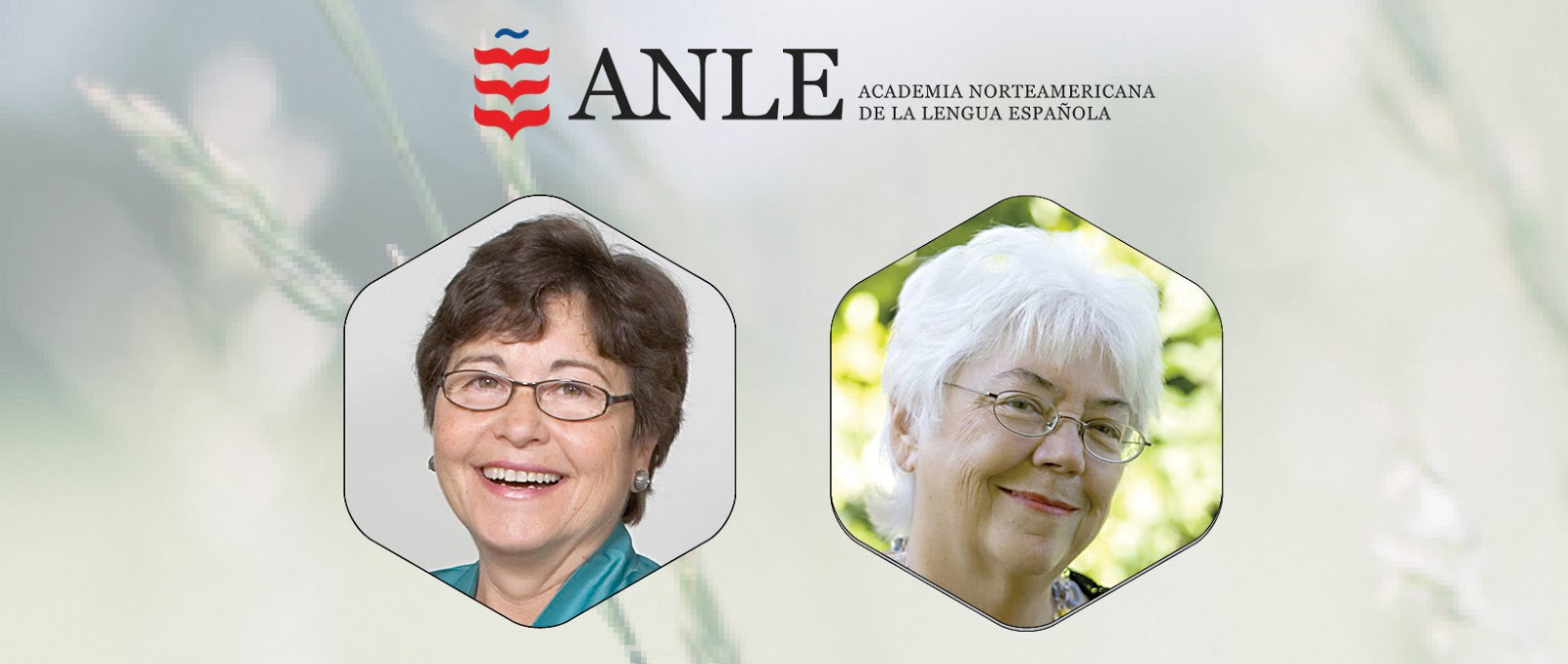
LA ACADEMIA NORTEAMERICANA DE LA LENGUA ESPAÑOLA, 
ANUNCIA CON FECHA 14 DE ENERO 2019, 
LOS GANADORES DEL PREMIO CAMPOY-ADA DE LITERATURA INFANTIL Y JUVENIL.


Respondiendo a su compromiso por defender y propiciar el uso del español en todas sus variantes auténticas y la difusión de literatura de calidad desde la infancia, la Academia Norteamericana de la Lengua Española (ANLE) ha instituido este premio cuyo nombre honra a dos de sus miembros. 

El objetivo de este premio es reconocer obras de literatura infantil y juvenil publicadas en español en los Estados Unidos que destaquen por la originalidad de su idea, su realización literaria y artística y por el uso excelente del lenguaje.
  

In consonance with its commitment to defend and foster the use of the Spanish language in all its authentic variations and the support of quality literature for children and young adults, the North American Academy of the Spanish Language has instituted this award named in honor of two of its members.

The objective of this award is to recognize books for children and young adult published in Spanish in the United States, that stand out for the content originality, its literary and artistic creation, and the excellent use of Spanish.


CATEGORÍA 1A: LIBROS TROQUELADOS/BOARD BOOKS 

Honor
Cuánto mamá te quiere. Autor, Terry Pierce. Ilustradora, Simone Shin.   
Traductor, Alexis Romay. Simon & Schuster, 2018


CATEGORÍA 1B: LECTURA INICIAL / EASY READERS

Premio
La princesa de cabello invisible. Autora, Yulién Jiménez. Ilustrador, Dahn 
Tran Art. Voces de hoy, 2017

Honor 
Colección “Cuentos traviesos” de 5 libros. Autora, Margarita Robleda.  
Ilustradora, Eulalia Cornejo. Santillana, 2018.


CATEGORÍA 1C: LIBROS DE IMÁGENES /PICTURE BOOKS

Premio
La princesa del agua. Basado en la infancia de Georgie Badiel. Autora, Susan Verde. Ilustrador, Peter H. Reynolds. Traductora, Roxanna Eardman. Santillana, 2017. 

Honor
Galapagueña. Autora, Marsha Diane Arnold. Ilustradora, Ángela Domínguez. 
Traductora, Adriana Domínguez. Children’s Book Press. Lee & Low, 2018.

Honor 
Cosechando amigos. Autora, Kathleen Contreras. Ilustrador, Gary Undercuffler. Traductora, Gabriela Baeza Ventura. Piñata Books, Arte Público Press. 2018. 

Honor 
Pastel para enemigos. Autor, Derek Munson. Ilustradora, Tara Calahan King.Traductor, Juan Pablo Lombana. Chronicle Books. 2018.


CATEGORÍA 1D: LIBROS INFANTILES ILUSTRADOS / ILLUSTRATED CHILDREN’S BOOKS

Honor
La ñusta diminuta. Autora, Mariana Llanos. Ilustrador, Uldarico Sarmiento. 
Purple Corn Press, 2018.


CATEGORÍA 2: NOVELAS INFANTILES / MIDDLE GRADE NOVELS

Honor
Do-re-misterio playero. Autora, Isabel Araiza Arana. Ilustrador, DiegoArana.
Isla Rana, 2017.


CATEGORÍA 4: POESÍA INFANTIL / POETRY FOR CHILDREN

Premio
Poemas familiares para cada día de la semana. Autor, Francisco X. Alarcón. 
Ilustradora, Maya Christina González. Children’s Book Press. Lee & Low, 
2017. 

Honor
Monstruos. Autor, Ricardo Williams. Ilustradora, Sozapato(Sofía Zapata).  
Santillana, 2017. 


CATEGORÍA 5: POESÍA JUVENIL / POETRY FOR YOUNG ADULTS

Premio
En el fondo del amanecer (El mapa de nuestros muertos). Autor, Chito Cuéllar. 
Luna’s Press, 2018.


CATEGORÍA 6: AUTOBIOGRAFÍAS/ MEMORIAS JUVENILES 
AUTOBIOGRAPHIES/ MEMOIRS FOR YOUNG ADULTS

Premio
Camino a las estrellas: Mi recorrido de Girl Scout a ingeniera astronómica. 
Autora, Sylvia Acevedo. Traductora, Isabel Mendoza. Clarion Books, 2018.


CATEGORÍA 10: BIOGRAFÍA INFANTIL / BIOGRAPHIES FOR CHILDREN

Premio
Conoce a Sor Juana Inés de la Cruz. Autora, Edna Iturralde. 
 Ilustradora:María Jesús Álvarez. Santillana, 2017.

Honor
Conoce a Bernardo de Gálvez. Autor, Guillermo Fesser. Ilustrador, Alejandro Villén. Santillana,  2017.

Honor
Telegramas al cielo: la infancia de monseñor Óscar Arnulfo Romero.  
          
Autor René Colato Laínez. Ilustrador, Pixote Hunt. Luna’s Press Books.


CATEGORÍA 12: INFORMATIVOS: LIBROS INICIALES / NON-FICTION INITIAL BOOKS 

Honor
¡Hola, Zapata! Autora, María Alma G. González. DelAlma Publishers, 2016.

Honor
Otorgado a American Reading Company, por el conjunto de libros en español 
en esta categoría.


JURADO

El jurado estuvo integrado por los siguientes miembros de la Academia Norteamericana de la Lengua Española:

Alma Flor Ada. Profesora Emérita de la Universidad de San Francisco. Líder visionaria de la educación bilingüe y el reconocimiento de la importante función de los padres en la educación.  Su amplia obra incluye pedagogía transformadora, narrativa para adultos y numerosos libros galardonados para niños y jóvenes.

F. Isabel Campoy. Autora prolífica, educadora, luchadora por los valores de justicia social, defensora del bilingüismo. Receptora de numerosos galardones entre otros, los premios Ramón Santiago de NABE y Tomás Rivera de la Universidad Estatal de Texas.

Nasario García.  Autor de más de treinta libros bilingües tanto en poesía como prosa, para lectores jóvenes y adultos. El profesor García es especialista en la historia oral y el folklore, así como la lengua española y la cultura del estado de Nuevo México.

Eduardo Lolo. Autor de textos de historia y crítica literaria. Investigador de literatura infantil. Profesor universitario y bibliógrafo de MLA (Modern Language Association of América).

Gerardo Piña Rosales. Profesor universitario (The City University of New York), crítico literario, novelista, editor, fotógrafo y director de la Academia Norteamericana de la Lengua Española. Es miembro correspondiente de la Real Academia Española.


Carmen Tafolla. Profesora de la Universidad de Texas en San Antonio con una larga trayectoria de apoyo a la educación bilingüe, la Dra. Tafolla enseña el curso de Transformative Children’s Literature. Sus libros para niños y jóvenes han sido galardonados con premios nacionales e internacionales.


Saturday, October 10, 2015

Nurturing Nieto


Monday and Tuesday every week, the Nieto comes over about 7:00am, stays until three or four. He's done that for about a month and become my life on those days. I haven't been around an infant for over thirty years.

He's five months old now, but not crawling yet, so maintenance and feeding, diapering and burping him is manageable. And fun. What goes through my head for those hours is complicated.

I wonder. About nearly everything that I do or don't do with him. About how it will affect, guide or mold him. I don't want to make mistakes, but that could only happen if I were perfect.

My goals aren't that complicated. I intend to let him make the decisions, where possible.

Picking him up from anywhere, I extend my hands and tell him, "Venga." Not until he's lifted his head or arched his back do I actually grasp him. One day I expect him to decline my offer. It'll be fun to see him doing that.

I do the same procedure with his bottle and tetera. There in front of his face and even if he's crying, I await his reaching and grabbing them, rather than just sticking them in his mouth. I hope that's the proper thing to do.

Another goal, maintenance, necessary but can be fun.

When he needs changing, out comes the baby-wipe, but it's not just a damp cloth. "Ay viene la toallita blanca," I singsong. "Está bien fria!" I say jokingly, adding, "Oh, no! No me pones eso en mis pompis!" He loves it.

Same procedure goes for pulling moco out of his nose. This time it's, "Ay viene el buscamoco! Dónde está el moco?" This doesn't always result in the green thing coming out, so I let it lie. Don't want him to develop an aversion to keeping his nose clean, figuratively or otherwise.

TV's limited. Just some cartoon in Spanish. Otherwise, he'd just stare at the screen, understanding nothing, doing nothing, developing nada.

A new book every day. read twice in Spanish is an experience. We lie on our backs with the book held too far for him to grab the pages. He's old enough to follow my pointing finger while I sing the text. He's in awe, of the colors, maybe some of the faces, who knows what else. "Voltéo la página," I say, turning each page. His attentiveness, smile and wide eyes tell me this goes well.

I avoid putting everything in his right hand, though I can't recall at what age Nieto will decide which hand he prefers. His mini-conga-playing is scratchy, loud, done mostly with his right hand, sometimes his left. I can only play the stereo, so I'm no music teacher. But Nieto has fun conga-ing.

He's not ready for it, but we dance. That is, I dance to a song and he lies there, wondering what chingada is going on. I move his hands to mimic mine and expect he'll get the idea fairly soon. Then we'll baila locos.

Speech is trying for me. Having to remember to separate my words and not slur or slide parts of two words into each other. "Mami " and "Papi" seem to impress him, though he hasn't reached the level of deliberately speaking either consonant.

Whenever he goes into one of his loud-yells monologues, I focus on those clearest to me, echoing them to show him the purpose of communication. He'll get it on his own, but maybe my monkey sounds are helping.

We use the legs of the livingroom table, a cube manipulative and his sleeper as jungle gyms. Sideways climbing, pull-ups and stretches are basically wrestling without a partner. Hopefully, he won't become a crazy hands-only, mountain climber.

We've got song-games. Dónde está la pata, la panza, la boca. He's learning to clap this with the soles of his feet, holding onto his ankles sometimes. When we get to, "Aquí está la ____," he knows the tickles are coming. Loves it. Yeah, I know some are animal parts, not people's, but they've got fewer syllables for better singing.

10 Elefantes is a good one. The song played out with a stuffed elephant we just got. Elephants are sentient--not meant for zoos and circuses, so I need to figure out how to convey that to him.

After weeks of teething-hell, Nieto surprised me last Tuesday. He's developed to the point of reaching his arms out to tell me he wants to be picked up, like for comforting. Pinche! Of course he needs comforting to not grow up lacking that loving. Then again, I can't become a helicoptering Abuelo who contributes to Nieto turning into a spoiled brat. A tightrope to walk. Guess I'd better learn where the line is drawn.

He'll crawl soon, just not certain how soon. Then the world opens wider for him. Will have to baby-proof the front of the house, leaving as much as possible for him to mess with so he can learn how or why to treat it just so. I'm leaving the plants, unless they're poisonous. It'll be fun teaching him to treat them like he will the cat and the dog. Gently, with care.

Pinche gato is doing its own lessons. Nieto kept grabbing its hair until Gato finally whipped a few lashings at Nieto's hand. Whoa! Nieto's expression was total "I don't believe this! Something's off-limits?" He has cats at his home, though they're probably not as mean as ours.

There's no pic of Nieto here. He hasn't asked for selfies, either. Anyway, how cute or not, how pretty or not, he is, no importa. Besides, at his age, pics don't convey intelligence, development or potential. Or how much he's learned to care for others. I'm only a minor part of his rearing, but I have to do well on that last element.

Eight or nine hours of calculated nurturing and fun make for one exhausted Abuelo. After two days, I need extra naps. We'll be together for some time, maybe for years, so I need to toughen up. Nurture when I think I need to. Guide wherever it seems appropriate. Encourage everything artistic in him and his exploring, experimenting [banana is good, Gato, not so much] and fine-motors skills. Un montón for me to learn.

Es todo, hoy,
RudyG, a.k.a. el Abuelo-in-training

Wednesday, September 05, 2012

Author F. Isabel Campoy Talks To Her Father


Juan Diego Campoy Coronado
 
The strength of your mind sculpted the prodigy of our existence. 
The poetry of your heart made you, our example of life.

We come to say good-bye, with our hearts filled with a rainbow of feelings that your life sowed in our hearts. Dressed in black arrived sadness, first. Hidden in her dark clothes she carries the memories of your smile, the serenity of your voice, the sweetness of your kisses, the strength of each of your hugs that your arms offered for any reason. In her pockets she carries 98 years of memories, from your childhood in Aguilas, your adolescence as the first and best student of life, your adulthood as the responsible husband and father, that she is taking today to new horizons.

But our rainbow has also the WHITE of your innocence. You made a century of choices in life, so that the justice of love would triumph. You were our best defense against everything and everybody planting in our heart the strength for any possibility of life, and from them grew a crop of Happiness. Happy our home and childhood, work, studies, play. Happy the abundance of care, and happy even the scarcity in a long post civil war.

GREEN is this fertile field that with your effort you plowed seed by seed, alone, counting only with your determination. In it you designed the goals that would take you to be the first and at that time, the only, professor of English of dozens of generations of students. It was also there where it grew the hope to win a battle to history, to make this a better world. Your idealism is contagious and in it we will always follow you, blindly.

RED is the love that will remain alive, because you made its path eternal. Used, used daily, infinitely used love, made of close-afar, present-absent, from us to you-from you to the world “I love yous”. Love generously shared from dawn to forever.

BLUE is your kindness, and the peace with which you built the roof of our house. It is also de color of those eyes where you saw yourself daily. She is waiting for you, willing to close the cycle of your absence by her side. It is in the happiness of that road that you begin today, in which your memory will live, eternally.


Juan Diego Campoy Coronado

La fuerza de tu mente esculpió el prodigio de nuestra existencia. 
La poesía de tu corazón, te hizo nuestro ejemplo de vida.


Venimos a decirte adiós, o quizás solo, ¡hasta luego!, llenos de un arco iris de emociones que tu vida supo sembrar en nuestro corazón. Vestida de negro llegó primero la tristeza. Entre sus ropas oscuras lleva envueltos los recuerdos de tu risa, la serenidad de tu voz, la dulzura de tus besos, la fortaleza de cada abrazo que los tuyos daban por cualquier razón. En sus bolsillos guarda 98 años de memorias, desde tu infancia en Aguilas, tu adolescencia salesiana, tu madurez responsable de esposo y padre, que hoy se lleva a otros horizontes.

Pero nuestro arco iris de emociones tiene también el BLANCO de tu inocencia. Un siglo –casi- de elecciones en la vida para que triunfara la justicia del amor. Tu fuiste nuestra mejor defensa, frente a todo y todos. Tu sembraste en nuestro corazón, cualquier posibilidad de vida y sobre ella, creció la cosecha de la palabra FELIZ. Felices nuestro hogar y la infancia, el trabajo, el estudio, los juegos. Feliz la abundancia de cariño, y feliz incluso la escasez de una larga posguerra.

VERDE  es este campo fértil que con tu esfuerzo plantaste semilla a semilla en solitario y contando solo con tu tesón. En él trazaste las metas que te convertirían en el primer –y entonces único- profesor de inglés de decenas de generaciones de estudiantes. También allí nació la esperanza de poder ganarle un pulso a la historia para crear un mundo mejor. Tu idealismo es contagioso y en él te seguiremos siempre a ciegas.

ROJO es el amor que seguirá vivo, porque así labraste tú su camino. Usado, usadísimo amor, hecho “te quieros” cercanos - lejanos, presentes- ausentes, nuestros a ti, tuyo para los tuyos. Amor a manos llenas desde el amanecer hasta el infinito.

AZUL es tu bondad, y es la paz con la que edificaste nuestro techo. Es también el color de esos ojos en los que te miraste siempre. Ella te espera ya, deseosa de cerrar el ciclo de tu ausencia. Y es en la alegría de ese camino que hoy recorres, en la que vivirá eternamente tu recuerdo.


Tus hijos,
María del Pilar, Diego Alberto †,
Francisca Isabel, Vicente Lázaro
 ===========


 F. ISABEL CAMPOY is the author of numerous children’s books in the areas of poetry, theatre, stories, biographies, and art. As a researcher she has published extensively bringing to the curriculum an awareness of the richness of the Hispanic culture. She is an educator specialized in the area of literacy and home school interaction, topics on which she lecturers nationally. An internationally recognized scholar devoted to the study of language acquisition, a field in which she started publishing in l973 after obtaining her degree in English Philology from Universidad Complutense in Madrid, Spain; and post graduate work in Reading University in England, and UCLA in the United States. Among others, she is the recipient of Junior Guild Award, ALA Notable Book Award, San Francisco Library Award, and the 2005 Reading the World Award from the University of San Francisco.

Visit Isabel at www.isabelcampoy.com

Wednesday, August 04, 2010

From North to South/ Del Norte al Sur


From Illustrations to Final Book

Writing a picture book is fascinating. The author is just one parent. When you write the manuscript, you make images in your head of your protagonist, his/her family and his/her environment. After signing the contract, you need to wait to know who the other parent of your book will be, the illustrator. Soon, you discovered his/her name and then you may have a clear idea of how your book will look like.   

These are the final illustrations of From North to South, illustrated by Joe Cepeda. Images provided by Children's Book Press.


Then the book is born. It is time to the delivery. But instead of going to the hospital and waiting for the doctor, you stay at your front door and wait for the postman or postwoman.

You hear the knock knock or ding dong or a "Good afternoon." And surprise!


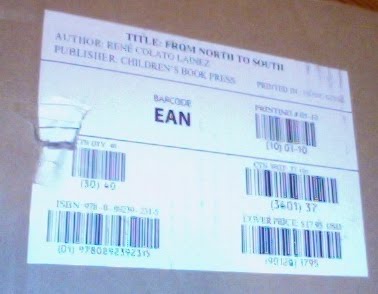
You look at the box and wonder, "Can this be the BOX. The one I am waiting for?" So you look at the label.


FROM NORTH TO SOUTH. Yes, this is the box. But you need to open it, just to be real sure.


Then you know. It is not a dream. It is true. Finally the picture of the proud parent.


"From North to South shines a light on the painful experience of family separation from both sides of the border—the questions, the anxiety of waiting, and the hope of a child and his parents. ¡Si se puede!" —Dolores Huerta, activist, organizer and co-founder of The United Farm Workers of America, AFL-CIO

Kirkus reviews FROM NORTH TO SOUTH


From North to SouthFROM NORTH TO SOUTH/DEL NORTE AL SUR
Author: Colato Laínez, René
Illustrator: Cepeda, Joe
Review Date: August 1, 2010
Publisher: Children's Book Press
Pages: 32
Price (Hardback): $17.95
Publication Date: September 1, 2010
ISBN (Hardback): 978-0-89239-231-5
Category: Picture Books


After his mother is deported by U.S. immigration officials, José and his father go to visit her at Centro Madres Assunta in Tijuana, where she will stay with other women and children until she gets her papers and can return. Frankly a plea for sympathy for families torn apart by immigration rules, this tender story is gently told in Spanish and English texts, together or on opposing pages. Young José recalls his day: the border traffic jam, the joy of seeing his mother, gardening and a seed game with other children in the shelter missing their parents and a final bedtime story told in the car’s backseat. The author, a Salvadoran immigrant, teaches in a bilingual school where his students often experience family separations. Cepeda’s oil paintings, full-bleed single- and double-page spreads, use bright colors and a variety of perspectives to reinforce the joyfulness of the day. A road map of the area between San Diego and Tijuana serves as endpapers. The child’s perspective makes this a particularly moving glimpse of an increasingly common experience. (Picture book. 5-9)
 

Saturday, February 16, 2008

A late sharing of a Valentine

"Use the content-rubric to rate the students' writing from 0 to 2: zero if their response lacks an introductory thematic sentence and closing statement, 1 if they show evidence of either."

As I tried following these instructions during an after-school staff meeting, I found it impossible to determine whether my first grader A___'s writing in Spanish lacked theme and closure, or contained both, for that matter. But my confusion wasn't due to what she'd done or her lack of trying.

In her five months of struggling in room 103, A__ had regularly filled a half-sheet of paper with letters she carefully scribed while sounding out each syllable. And although her lettering was wonderful, in fact her compositions were unreadable, oftentimes even to their author. That hadn't stopped her.

Problem was, A__'s written words lacked most of the vowels, some consonants, and each of her lines normally contained only one space separating two long clusters of indecipherable prose. At the same time, such work showed improvement since she'd entered first grade almost unable to read.

"Zero if the response lacks an introductory--" I repeated to myself. How could I know if it did? She might have a strong thematic sentence and an even better closure, but I was expected to give her a zero simply because I couldn't decipher her heroic compositions. I was tempted to leave an N/A, which translated as "not observed," but then I would have had to explain my veering from the grading system.

During those five months A__ had managed to reach a 6 reading level, which put her on the path of failing to reach grade level by the end of the school year. I had worried about her in other ways, wondering if her belabored development was a sign of ADHD, dyslexia, or an even more serious learning disorder.

Teachers worry about such things, sometimes more than they should. For various reasons, every year we have kids who can't, won't or don't make it. We don't reach them. It's not just in writing; it's in every subject and can even encompass their growth as little human beings.

Anyway, A__'s prospect of going on to second grade with skills, abilities, and knowledge she'd need to survive, much less prosper, didn't seem likely. I would need to "staff" her, which would mean a meeting with a team of professionals to determine how best to meet her needs, since her teacher hadn't been able to do it.

I didn't mind the implicit idea of failure in this, since I know I'm no master teacher. It was the implicit branding of A__ that I dreaded. She and her parents would suffer the too common stress and even humiliation of a student diagnosed as failing.

Given her and my situation, I'd begun having her sit regularly with others at my table, instead of writing independently.

One morning she asked, "Cómo se escribe Hawaii?" I wrote it on a note for her, even though spelling U.S. states wasn't how I had intended to help her. When she showed me her completed sheet, I was surprised she hadn't done the usual half-page. There were only five lines. Less than thirty words. But each one was spaced. Almost no letters were missing. And I could read them. A__ had made a qualitative leap! We celebrated her achievement that day with song, dance and chants.

But A__ wasn't done.

A couple of days later she wrote seven lines. While the spelling and spacing was about the same, she had added something new. Sentences. With capitals and periods. Even the lone sentence that wasn't grammatically perfect was close to.

A__ who was at level 6 in reading had made a syntactic leap that those at level 16 had only begun to tackle, in some cases not as successfully. We celebrated again, only harder. A__ had become not just the class model for persistence, but also our model for something higher--writing excellence.

The composing of a few five-word sentences may not sound like major achievement, but in this case it was sufficient to affect a heart that often gets hardened by the job of teaching in U.S. classrooms. I felt good.

But she wasn't done.

For our Valentine's party, we worked like Santa and his elves do on the 24th, in our case, getting the kids' cards for their parents ready. I'd sent blank cards home for parents to make one for their kid, and my plan was to have each parent and child share theirs in front of the class.

As they took turns reading aloud, I realized I didn't know what the kids had written, even though I'd helped them with revisions. I'd been too much editor and not enough listener. Some of the more advanced ones had created some great, even beautifully poetic pieces, which I wish I could share, but can't since you're not a part of room 103.

When A__ finished reading to her father, I realized again that I hadn't heard what she'd read. All I'd heard was her loud, proud voice smoothly and unhesitatingly enunciate every word, from beginning to end. To me, the content, though intelligible, wasn't the most important thing.

When I looked at the faces of the parents who didn't know of A__'s past, I so much wanted them to know what she had struggled through, what her achievement amounted to.

I began explaining the significance of the words that she had very fluidly read to them, how wonderful it was that she could even read her own words, and how proud they should feel for her. I was only able to mutter out half of this as I made my way to where we'd posted a display of A__'s recent gains. I did manage to point to it. That's the most I'm capable of while crying.

One by one the parents approached to examine her work, nodding and talking amongst themselves. I couldn't make out what they said because I was all choked up with my own heartfelt pride in her.

Unintentionally, A__ had accomplished one more thing. I'd challenged the class to write something so excellent it would make their parents cry, promising a prize to whoever succeeded. But all the parents had succeeded in holding their emotions back. Only the teacher had succumbed. By default, A__ had won the prize.

I lay claim to A__'s reading as my best Valentine, which makes it worth a lot higher than a 2 on a content rubric. Teacher's prerogative. That's all I wanted to share.

But then again, A__ may not be done yet.

© Rudy Ch. Garcia 2008