Showing posts with label chicano fiction. Show all posts

Thursday, December 12, 2024

Chicanonautica: Joaquin . . . Joaquin . . . Do You Read?

by Ernest Hogan


Writing while Chicano. It’s a problema. Especially if you’re writing about Chicanos. Write what you know, they say, but if you’re not part of the dominant culture, but one that’s misunderstood and goes against the corporate mythology . . .


We don’t fit into the parameters of what Western Civilization in the last century has come to call “realism.” So, we get magic and other realisms. We are too complicated. So, I make my Chicano weird shit into sci-fi, and Scott Russell Duncan’s novel is “metafiction.”

Duncan is a Chicano. So am I. Yeah, there we go being complicated again. How can such things be? As my grandmother once put it, “Sometimes the soldiers would come into the village, and take the girls away on their horses, and then they would be their wives.”


I get sick of explaining myself, but then that’s the whole point.


Then throw in history, folklore, and literature . . . 


This is why Duncan’s novel Old California Strikes Back is so complicated. There’s a lot of his personal experience that would anger racists and disturb liberals, then there's Joaquin Murrietta, who’s legend is the beginning of the Chicano identity, though some Anglo scholars want to write him off as a racist serial killer. His head floating in a jar being put on display by California Ranger Harry Love seems like something out of an over-the-top, surrealistic spaghetti western. It is our heritage. Where we come from, and the mess that is our situation as we hurtle into the year 2025.


The book goes from slices of life, to a wildly imaginative journey to the heart of the California/Chicano dream/nightmare. It’s a wild ride, and hilarious.


And there are Star Trek references.


It may scare some folks but brings a special joy to my born-in-Eastlos heart.


And it’s all an important part of United States of Norteamericano culture, tambien. Joaquin’s legend was popular. Novelist Johnston McCulley whitewashed him (a lot of Anglos can’t tell Hispanic from Latinoid from Indigenous) into Zorro, a rich, Spanish landowner to make him appealing to the readers of early pulp magazines. Later we got a further whitewashed, no longer Hispanic version in urban millionaire Batman. 


It all goes back to Joaquin.


He’s also the prototype for the bandido/bad hombre that a certain felon/president is promising to get rid of in a mass deportation/ethnic cleansing.


The world needs Old California Strikes Back. It’s funny and enlightening–Chicano reality in all its complicated glory. 


I often wonder, would a Chicano be allowed to write the Great American Novel?


Could it be about Joaquin Murrietta?


I just hope it’s not coming too late.


Ernest Hogan, the Father of Chicano Science Fiction, is planning on running amok in the year 2025. Stay tuned for details . . .

Monday, April 03, 2023

"How to Date a Flying Mexican" selected as an International Pulpwood Queens and Timber Guys Book Club April International Book of the Month


I am honored that my most recent book, How to Date a Flying Mexican: New and Collected Stories (University of Nevada Press), was selected as the International Pulpwood Queens and Timber Guys Book Club April International Book of the Month of April. You may find all book club selections for the year here. Our book club event will be streamed live on April 11, 5:00 (Pacific). Details will be published on the Pulpwood Queens' Facebook page on April 4th. However, due to some very unpleasant Zoom bombings, if you wish to be my guest at the book club event, please drop me an email (olivasdan [at] aol [dot] com) with your name and I will add you to the list.

The International Pulpwood Queen and Timber Guy Book Club Reading Nation was founded by Kathy L. Murphy and is the biggest meeting and discussing book club in the world – with 800 chapters, including chapters in 20 foreign countries.

In other news, a Spanish edition of How to Date a Flying Mexican will be released on May 22. This is the first time one of my books had been translated into another language, so this is particularly special to me. The Spanish edition was translated by Cinta Garcia de la Rosa.


Tuesday, July 05, 2022

Letters Found In A Shoebox

Who Saved The Letters, Frank? Donna? Marian?

Michael Sedano

I hoped the garage sale sea chest would yield treasure and as the cut-off wheel made short work of the cheap steel hasp, my hopes rose. 

I pried open the rusty-hinged top, then my hopes fell. Layer upon layer of Reader's Digest Condensed Books from the 1950s. At the bottom lay three postage stamp albums and a crushed cardboard shoebox filled with a confetti of postage stamps and a bundle of old letters.


April 14, 1944

Dear Marian,

I hope this letter finds you well and happy. I know you have your reasons for leaving in the middle of the night, and not for a minute do I believe the ugly rumors about Salinas. And Bakersfield. But I am glad you’re out of that place, those places, and are settling down with the church lady. That’s a safe place for you, especially the no-visitors-upstairs part. No sense putting temptation in your way again. ha ha.


Here is a photo of us Frank snapped at the lake on Ditch Day. Hard to believe it’s been almost a year we graduated good old Montpelier High. Good times with good friends. I’ll never forget how we laughed when you and Frank got lost. Ha ha.


Love,

Donna


September 11, 1944

Dear Frank,


After I left Bakersfield, I found a clean place to live in Fresno and ever since then I’ve kept myself busy as a bee typing down at the Chamber of Commerce and going to night school. 


Every d..d night, my landlady Mrs. Felicia, plays the virginal. Don’t laugh, that’s a musical instrument. It’s all church music and I get so I can’t think and I have to go for a walk and a refreshment. So that’s why this letter comes after so long. I know you understand.


The men at the office are so nice. I never have to pay for my lunch and my boss winks an eye when I order an extra glass of wine or two. The members are all business owners and let me tell you, they know their way around town. I never thought Fresno would have so many swell clubs!!


I hope to hear from you soon, dear Frank. I thought Montpelier was hot in the summer. Fresno heat is worse. The only way to keep from suffocating is I lie around my room with the windows open and no clothes on. Tee hee, I should not have said that.


With all my love,

Marian


P.S. Here I am on a penthouse rooftop. Not mine, this one is in Mexico City. A business trip.


no date

My Dear Marian,


My heart stopped when I got your letter at work. It stopped with delight to know you still think of me after what happened, with your mother, and all the unpleasantness—to say the least.


Thank you for that dream. Some call it a photograph. Oh, for x-ray eyes! 


Your Mom blurted out you’d found work, or something, in Salinas. How long did you stay in Bakersfield? I am sorry about the Fresno heat. If I could, I would kneel at your knees with a fan to cool you. Of course I can only imagine how that must be, all that penetrating heat. Again, thank you for that picture.


Marian, I do miss you. You know I wish you all the best, you and your adventuresome spirit. Most of all, I remember how you always said, “Never look back, you’ll miss the good times coming up!” Marian, here’s to good times coming up. 


We are both well. Donna planted French lilacs against the back wall and they are covered with aphids. Duty calls. I will post this tomorrow from work. 


My deepest affection,

Frank


November 11, 1947

Dear Marian,


Happy Thanksgiving to you. I heard from your mother you’d found a place of your own, still in Fresno. And you’ve got yourself a new beau! Michele was so beside herself bragging on you, that she forgot to give Frank the ojo like usual. (That thing between Michele and Frank was all a misunderstanding and I won’t allow that to get in the way of a nice visit with my best friend’s mother. Besides, it was ages ago.)


Will you be cooking this year? Your slow baked camotes were always the hit at our table. We missed you last year, the invitation came back. ??? 


I hope you’re settled once and for all in Fresno, the new job will make a big difference. Just be careful, you know what I mean.


Well, last year we all ate an extra piece of pie in your honor. And we’ll do so again this year, now that you’re moved into the penthouse. My, the bank must be the place to be!


Hoping to hear from you for the holidays. All the juicy details.


Love,

Donna


November 22, 1947

Dear Frank,


Well, you’re talking to the Office Manager and Special Assistant for Membership at Fresno Farmer’s Bank. It all came out of nowhere after the trip to Mexico City.


My new friend, Mr. Aram Ohanian, the alfalfa king of north county, arranged it. I have me a special break on rent in a building he owns. Frank, don’t be mad at me. I don’t have to do anything bad for all this. I do enjoy Mr. Ohanian’s friends, they’re really loads of fun. Poop poop a doop. Guess whose penthouse—did I say penthouse?--has maid service?


Frank, the afternoon sun shines through my penthouse windows and I can see as far as the edge of the world. I love to stand there with no clothes on at all and feel the sunlight warm warm spreading warm across my breasts and down to my tummy and across my thighs. Mmm, wish you were here. We could get lost again. Ha ha.


Everlasting love,

Your Marian


December 3, 1947

Dear Frank,


I am so sorry. I put the wrong letter in Donna’s envelope. I did not mean for her to even know I was writing to you. That’s why I sent them to the office. 


I hope you can work things out.


Deeply regretful,

Marian


November 29, 1947

Dear Marian,


Greetings from… (on back, 
Me and My Man). 


You are a shameless hussy. There. I bet you thought I’d be mad when I got your billet-doux, to Frank, inside the envelope you sent, to me. Happy thanksgiving. ha ha.


Please tell me you didn’t send mine to him? I hope you did not talk about you-know-who in that letter, if you sent it to Frank instead of me. 


Oh, I am not so worked up about this. I enclose your letter here, send it to him if you wish. 


Marian, we have known one another, you me and Frank, since we were children on the same block. I know you, remember? I was right next to you when you became the most popular girl in town. Do you still swim topless? I hope that afternoon sun gives you sunburned nipples. Ha ha.


Marian, do this one thing for me? 


Tell Frank to pay attention to me, now and again. I am the same woman he married. We used to have fun, Marian. Now all Frank does is work all the time or go off fishing by himself. What is it I don’t have but he found in you? Was it only one time? Does Michele know?


Marian, this has always been your way. I hope you are enjoying your career of other women’s men.


I will stop now before I say something I do not mean.


Coldly, but with forgiveness,

Donna

P.S. Frank and Michele are on speaking terms again. Your mother can be such a pill. 


A sheet of yellow legal pad paper was folded around a barely scannable photograph of a woman. Nothing written on the back.  I restored the image as well as possible. 


In the handwritten meditation, I recognize the name "Michele," Donna's mother. I figure this somehow belongs to the correspondence. 


As for the woman in the photograph, I shall let her be her own mystery  unless I uncover more letters in my garage sale loot.


Thursday, February 27, 2020

Chicanonautica: American Monsters, Dirt, and Other Chingaderas


The lizard on the ceiling is still watching over me. Or maybe I’m hallucinating. Those fumes at work yesterday because of the remodeling were something.

I’m tempted to do a stream-of-consciousness rant about the latest developments in the election, and the new literary movement that spoinked out of American Dirt pendejada when it’s just the media finally noticing Latinoid writers like we just snuck across the border while in reality we’ve been around for a long time and they just haven’t been seeing us . . .

The lizard moved again. It’s not hibernating. Just moving really slow.

And there are other things, good things happening.


Like my contributor’s copy of American Monsters Part Two (Part One being about South America) making its way from Merry Olde England to Wild and Wooly Arizona.


My story, “Cuca” about a luchadora, the monsters of Aztlán, and 21st century culture come together in the sixth volume of a series of coffee table books from Fox Spirit Books about monsters from all over this crazy planet. Chicano fiction crashes a global monster bash!


In a gorgeous book with classy illustrations, it will jazz up your coffee table and show your guests that you're hip to monsters.

Ya gotta know your monsters. Especially when a lot of them are running for office.

Uh-oh, the lizard moved again. It’s getting closer . . .


Ernest Hogan is not just a Chicano cyberpunk.¡Viva Myriam Gurba!

Tuesday, November 15, 2016

Henry Rios Returns. Mental Cocido for Truth, Beauty, Joy.


Review: Michael Nava. Lay Your Sleeping Head. San Francisco: Kórima Press, 2016.
                                       ISBN: 978-1-945521-00-3

Michael Sedano

1986 was a long time ago, in literary time and in my memory time.

All that remains in my memory of Michael Nava’s 1986 novel, The Little Death, is knowing I sought out every subsequent Henry Rios novel, and the disappointment when I accepted that Nava had moved on from Henry and wouldn’t be presenting me with another Henry Rios novel.

A loner owing to being cast out by his brutal Mexicano father as well as Henry’s own sexuality in a restrictive straight world, Henry Rios stood out as a unique character not to mention being the first Chicano detective in mystery fiction.

Nava recounts the story of how he regained his copyright to Henry Rios in an afterword of Nava’s upcoming December publication, Lay Your Sleeping Head. A Henry Rios Mystery.

Henry Rios is back from the land of remaindered titles and wherever it is great characters go when they’re out of print. Henry Rios isn’t exactly the same vato. He's an easy mark for a pretty face, he still makes poor decisions that get him in trouble, and that aside, trouble seeks him and thrashes him.

Most distinctively, Michael Nava has liberated himself and Henry from thirty-year old constraints on graphic sex.

Lay Your Sleeping Head, Nava’s 2016 rewrite of The Little Death pulls no punches about Henry’s sex life. Some readers, in fact, will have difficulty with the opening three chapters’ account of Rios falling in love with Hugh, a man who spells trouble.

At first the attraction is puro lust, but hooking up quickly turns to heartfelt passion, then confusion, confession, and what must be love. Henry is desperate to believe Hugh loves him, and that he loves Hugh. Nava shares a powerful sense of what Henry wants to discover. A mythical foundation story tells that people were dualities, man-man, woman-woman, man-woman, but the proto-beings were torn apart and humanity became a species of individuals seeking to rejoin their rightful other half. Hugh is Henry’s other half.

At the end of chapter four, Hugh is murdered.

Nava builds the story of Henry’s search for the killers with twists, turns, duplicity, error, and frustration. Rios’ investigation has to work around a homophobic cop and institutional corruption. A law school friend—Henry’s best friend—turns betrayer. A good cop risks her career to help, then feels betrayed by Henry’s tactics. A man out of Hugh’s boarding school past enters the scene to help with the case while slipping into Henry’s arms. Their relationship is of the variety, “if only we’d met under different circumstances…”

Readers will enjoy the unfolding plot, the legalisms, the primer on estate law, the wretchedly horrid bad people who deserve a healthy dose of come-uppance and payback. The complications and just desserts grow so entangled that Nava has to resort to a gimmicky tactic where a character tells the reader-as-Rios “if this were a mystery novel, right now you’d have to find this, admit that, discover a key element.” And, that’s exactly what takes place.

Detective novels tend to come with moralistic fringes, and this one does that. Lay Your Sleeping Head provides readers with a satisfying measure of righteousness and vindication for the variety of purity Henry stands for, while leaving Henry a bit worse for the experience: he’s unemployed, betrayed, alone.

Power, money, corruption, dynasties—these are fancy words for evil, just as tarte tartin is a fancy word for apple pie. All are elements in Henry's story.

As Henry Rios unravels the skeins of evil, he comes to understand his own nature. That nature makes him a compelling character. He is a being denied his other half, after thinking he’s found that. Henry Rios is a romantic, a seeker of truth and love in a world of liars and exploiters. Readers will want more of this character.

Lay Your Sleeping Head is published by Kórima Press. Scheduled for a December release, widespread distribution and availability are problematic. That’s readily remedied by ordering publisher-direct here.


Unrequited Despair But There's A Cure

November 8's election has cleaved the nation into factions, many at each other's throats. Friendships and families are torn asunder by gloating partisanship and true-believer despair. Voices of reason are met with refusal, while people of color are met with violence akin to the winning candidate's basest impulses and speeches.

In that atmosphere, Amelia M.L. Montes sought words of advice, consolation, and positivity for her students at the University of Nebraska Lincoln. She published these in Sunday's La Bloga. La Bloga-Tuesday adopted a different tact.

Over several years, Chicano artist Gilbert Magu Lujan, brought his "Mental Menudo" tertullia to Michael Sedano's house where a core group was joined by a guest list comprised of other artists, poets, writers, critics, and activists. When Magu was absent, Sedano termed the gatherings "Mental Cocidos." Now that Magu has transitioned to the other side--QEPD, there will never be another Mental Menudo, only Mental Cocidos.

"Come to a Mental Cocido With Menudo," Michael Sedano wrote. "Bring something joyful to share, something you made, a song, a poem, good news." No politics. Puro joy. A pot of menudo and beverages awaited the guests, and the reminder from John Keats, "Beauty is truth, truth beauty,—that is all Ye know on earth, and all ye need to know."

Diane and Sergio Hernandez shared news of a new granddaughter, the recently-completed movie on Con Safos Magazine, and Serge brought copies of two issues. Angel and Mario Guerrero brought news of Mario's near-completion of a 3-D printing studio at their home. Mario brought a scale-model human heart, and news of a prosthetic Toucan bill, a bird's foot, and a human esophagus his firm has produced. Guerrero and Garcia are collaborating on design software to enhance Garcia's creations. Manuel Urrutia brought his encyclopedic knowledge of lyrics to old Mexican standards. Margaret Garcia and Rhett Beavers brought a work-in-progress fused glass painting, and Margaret brought her singing voice.

Margaret Garcia and Manuel Urrutia sing duet. Manuel knows the words, Margaret reads from a phone screen.
Guests gather to view Margaret Garcia's work-in-progress fused glass work.
Margaret Garcia explains the techniques used to create and amend the work.
Music has charms to uplift even the most depressed spirits following a travesty of an election. The gente at the Mental Cocido With Menudo illustrate the truth and beauty of the adage.


The Mental Cocido at Casa Sedano is one of numerous iterations of this variety of literary-artistic gathering. Visit the Facebook community, Mental Menudo, for news of events in your area.

Thursday, April 28, 2016

Chicanonautica: With Kundalini Noir to Planet Pleasure and Back

 by Ernest Hogan

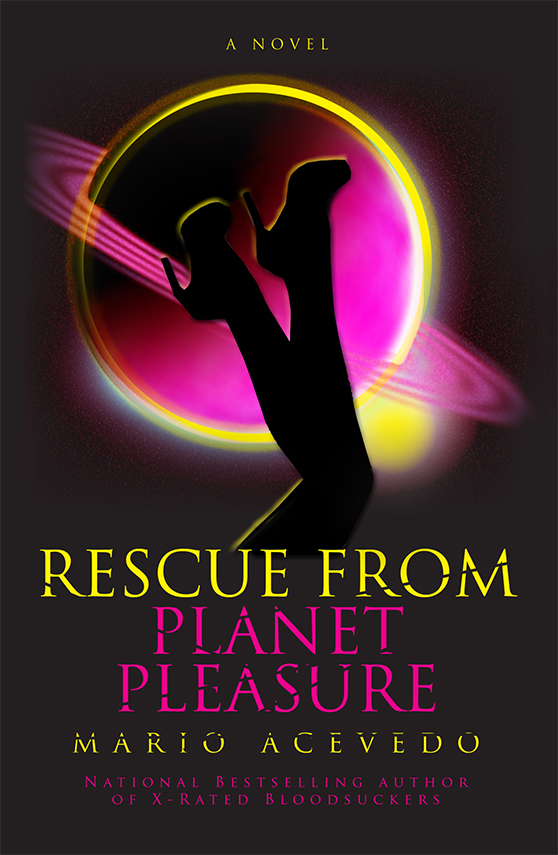
When most people think of Latino or Chicano writers, they think serious social commentary, or maybe thoughtful magic realism. The sort of thing that make readers feel aware, or maybe enlightened, but not the sort of thing you can read for a long, intense blast of fun. This is not the case for Mario Acevedo, and his Felix Gomez novels. Starting with The Nymphos of Rocky Flats, and keeping up with the pulpy, B-movie style titles, they take the Chicano vampire private eye through worlds of trouble and adventure that earned the right to have National Bestselling Author on the covers. I can attest that when I worked for Borders, I saw them sell like crazy. 

So, I'm happy to announce that there's a new volume, Rescue From Planet Pleasure, and it's another wild ride through weird territory with vampires who dunk their tamales in boar's blood.
As an extra, it includes a short story, “A Rainy Night in Commerce City,” which should provide background to those who aren't familiar with the series. It's nice bit of gritty, earthbound noir with vampires.

But we're talking about a universe with kundalini noir, and Rescue From Planet Pleasure, takes you through Acevedo's brilliantly thought-out paranormal universe that is worth of the hard science fiction “nuts and bolts” school of fantasy, on an epic chase/road trip across New Mexico with a fantastic side trip to the other side of the galaxy (this universe has UFOs as well as vampires), and some alien sex that is both ingenious and mind-blowing, and will be a challenge for the special effects crew if someone tries to make it into a movie.

Yes, this is a good book for young people who don't need trigger warnings, and who find the limits of YA fiction to be cramped.

There's also ancient Chicano wisdom with appearances by Coyote, La Malinche/La Llorona, skinwalkers, and other things that you can find in wild and woolly New Mexico – I've been there a lot lately, and it can get that strange, maybe even a little stranger – Transylvania ain't got nothing on Aztlán! And the noir/realism blends into a vision of an intergalactic barrio full of cosmic dirty deals and lots of spectacular action. More than a mild-mannered “good read” – you have to hang for dear life, and it's worth it.

It's certainly not Twilight, closer to Charlaine Harris' Sookie Stackhouse series, plus there's some serious, badass Chicano in the mix. It deserves the attention of all of you out there who are hot for vampires. I know you're out there. I see the fangs gleaming in the dark.

If only I had listened to that editor that told me that sexy vampires sell . . .

Ernest Hogan is the author of High Aztech, Cortez on Jupiter, Smoking Mirror Blues, and a lot of short fiction, including “Pancho Villa's Flying Circus” that is available in both We See a Different Frontier and Lost Trails: Forgotten Tales of the Weird West, Vol.1.

Saturday, August 08, 2015

Stereotypes, tropes, dignifying Latino fiction


Writing fiction about Latinos brings up questions about stereotyping, even for this Chicano author. Will this fictional family be poor, working class, or prosperous? Are the parents' careers working class or professional? What about secondary characters, the house your characters live in and the roles they play in the household?

I'll give examples from a just-completed, middle-grade fantasy story of mine. Examples where I try to avoid stereotyping, with the intention of enriching the Chicano characters in a novel. Whether I made the best choices is not as important as deliberately attempting to dignify the portrayals. If you're an aspiring writer, perhaps my explanations will give you ideas for presenting your stories in a different light, one more realistic, but also innovative. These are examples from A Cradle for Abuelo:

The nagual spirit enjoyed running alongside the bulldog while they both barked at the mail woman.
I might've automatically written, the mailman. But my mail is sometimes delivered by a female, and my sister-in-law also delivers mail. This is the only mention of the mail woman, so it's almost insignificant. Still, it's a distinct point.

• "You'll think of something." she said, drying and hanging his skillet on a hook.
In this family, the husband is the cook, which is not highly unusual. When he's busy elsewhere, the wife warms up leftovers. I could've fallen into the wife being the cook and dishwasher, and I'm not off the hook for making her the dishwasher. I simply did what I could to not fall into the regular patriarchal family.

• "You helped so many kids when you taught elementary." He nodded toward the piano in her den.
The husband worked as a manual laborer, and the wife was a music teacher. Both are not uncommon ideas or careers in a Chicano family. We do have Latino teachers, just not enough great ones. I could've just made her a housewife, but in the story, music is important and she provided avenues for including it. Also note that the den is hers, a nice touch, I thought.

• "They would understand," he said, looking out the skylight.
The man is in his workshop making a neo-azteca cradle for his first grandkid. The story didn't need a skylight, but many homes have them. Even some that belong to Chicanos. We raza are not all stuck back in the 19th Century with simple adobe. Nor are all our homes plain old boxes.

• The nagual zoomed across the land until he spotted the house's solar panels.
Did I go too far with the tech? Possibly. But there are mexicanos, Chicanos, etc. that have solar. If I could afford installation, I would.

• The old couple could've bought almost anything for breakfast, but they were making their favorites--barbacoa tacos, fruit salad and fresh-squeezed orange juice.
There are more mentions in the story indicating this family is secure and can buy nearly anything they want or need. They just aren't into consumerism. My one concern is, did I make the family too well-off for many readers to identify with them.
Nutritional note: no foods were harmfully fried in the making of this story; only grilled, or served fresh.

• "We never found any good cocineras for the house. Their meals never tasted as deliciosos as ours." … The invisible nagual giggled because he'd played some tricks on those cooks, to make them quit.
Here I might agree I went too far in making the couple prosperous enough to hire a cook. However, I needed to introduce the mischievous nagual. At the same time, could a family with a hired cook serve as a role model of what saving money might mean in retirement? Possibly.

• "I wanted to give a gift more unique than a metal or plastic toy." [And later:] He rubbed in an oil made of juniper sap and the fruit-juice of nuts. He only used natural stains; toxic manmade chemicals would've harmed the grandkid's health.
Is this environmental preaching? Maybe, but I'm not the only woodworker who avoids nails and screw, to the extent I can. And there are millions of parents concerned about their children's environment.

• He peered at the white door where he kept his demon imprisoned.
The words liquor, alcohol and whiskey are never used; only the word, bottle. The man "had been born in another country and suffered from horrible memories that brought on his demon-sickness." The appropriateness of that sickness in a children's won't be discussed here. My example above concerns the color of the door holding the evil. I didn't go the lazy route of using classic black to denote bad. Instead, I used white. Like many of the evils in real life. The color of the door is a minor point, but how frequently do even Latino writers resort to the color black, when they don't need to?

• She had an idea, but she didn't like telling anybody what to do. Besides, pushy people made for lousy friends.
The wife is intelligent and often knows the answers to her husband's problems. But she's also confident enough to choose when to interfere. And for good reason. Is this anti-bullying propaganda? I don't know.

• "There's people outside driving by slowly." … "They admiring your beautiful landscaping and rosas, again?" … "Rosas, schmosas. They're pointing at the lawn furniture and at the artsy way you decorated la casa." … "Please don't run out and tell them anything," he said, winking. She could spend half an hour explaining his woodwork to strangers.
There's a lot here, but the passage primarily shows that this Chicano couple's home is not just a plain house. It's skillfully crafted and landscaped enough for strangers to slow down and look. Yes, in fact, some people of color have modest homes that are that attractive.

There are other examples in this story and in others, including in those written by other Latinos. And Latinas. Whatever your opinion of my attempts to diversify the story elements, I hope I at least provided material for thought about what you might do in your own stories. For that matter, experienced authors probably know more than me, and you can see in their writings other techniques for dignifying and raising the bar of how Latinos are portrayed.

Remember though, describing mexicanos, Chicanos, puertoriqueños, domicanos, etceteranos involves more than any literary tricks. It's about other worldviews, values, morals and beliefs. To know those, is to know our people.

Es todo, hoy,
RudyG, a.k.a. Chicano fantasy author, Rudy Ch. Garcia, holding a hot manuscript that's itching for a publisher.