Tuesday, November 01, 2005

Chicana Chicano Warriors

Michael Sedano

(1) Book Release. This comes our way from 0101aztlan.net:

¡Raza Sí! ¡Guerra No!

Lorena Oropeza is Associate Professor of History at the University of California, Davis.

This incisive and elegantly written examination of Chicano antiwar mobilization demonstrates how the pivotal experience of activism during the Viet Nam War era played itself out among Mexican Americans. ¡Raza Sí! ¡Guerra No! presents an engaging portrait of Chicano protest and patriotism. On a deeper level, the book considers larger themes of American nationalism and citizenship and the role of minorities in the military service, themes that remain pertinent today. Lorena Oropeza's exploration of the evolution, political trajectory, and eventual implosion of the Chicano campaign against the war in Viet Nam encompasses a fascinating meditation on Mexican Americans' political and cultural orientations, loyalties, and sense of status and place in American society.

(2) Images from candlelight vigil for the 2000th dead US Soldier in Iraq


I had an uncomfortable feeling as I stood with the candleholders in Pasadena's Memorial Park. It was mostly a bunch of old people, like me, standing with candles in memory of the 2000th GI killed in the Iraq invasion. Somber voices read a list of 200 names, alternating between the names and ages of local soldiers killed in Iraq with the names of Iraqis killed in the same invasion. Our dead were 19, 20, 30 year olds. Iraqi dead included unborn children, infants, young adults and elders.

I realized what it was: deja vue of a sort. Years ago, Teatro a la Brava, a chicano troupe I directed, did an acto for at-risk youth. The plot included a veladora for an innocent youth killed in gang violence. The actor, an incredible young man named Carlos Vazquez, was murdered a few years later by a thug gangster. I looked back at that acto realizing the irony that Carlitos was holding a veladora for himself. How were we to know?

For whom were we holding candles that night? For the next 2000? 3000? 30,000? None of us candleholders would serve, though we stand and wait.

That recent Pasadena evening I had put on my old Army field jacket. How familiar it felt to wear my rank and unit patch again--I was on the Korean DMZ in '69-70, not Vietnam. The television people saw it, asked "would the veteran like to say a few words?" Later, as I walked back to my car, a young fellow, maybe the same age I was when I was drafted, followed me across the street talking on his cell phone. "They're not against the war," he told the ear at the other end of the line, "they're against the soldiers."

Anger welled up in me, but I said nothing. I'd gone into uniform with the belief I was somehow defending that jerk's right to be a fool.

(3) finally, from the academic frontiers, from the MELUS group, Multi-ethnic Literature in the US

Call for Roundtable Participants: Demystifying the Dissertation
April 2006 Annual MELUS Conference, Florida

Email 1 page abstracts by 11/14/05 to kcardozo@english.umass.edu

The future of ethnic/literary studies depends upon the retention of diverse
graduate students. General doctoral attrition rates range between 40-50%, and
dissertation completion is often cited as a major obstacle in the humanities.
At the same time, the dissertation process is often relegated to the informal
or "hidden curriculum" of graduate programs. While some commercial guides
exist, few formal disciplinary resources or structures orient students to the
dissertation's scope, format, a! nd process--even though the thesis is the
scholarly foundation of an academic career and a crucial factor in hiring.

MELUS constituents might consider the following questions: does the
privatized nature of the dissertation process have a disparate impact on
nontraditional or historically underrepresented students (who may lack access
to private academic networks?) And, given tensions between politics and
poetics in the study of ethnic literatures: What are the politics of writing
and completing an ethnic literature project in departments where these areas
and/or ethnic faculty are underrepresented? How do "traditional" literary
programs view interdisciplinary dissertations and how do ethnic studies
programs view literary methodologies? What is the relation between a
dissertation and one's future scholarly career?

I'm soliciting participants at all career levels (including graduate students)
for an informative roundtable theorizing these important issues, as well as
how improvement of dissertation practices could aid in the diversification of
the academy. Email 1 page abstracts (for brief 5-7 minute roundtable remarks)
regarding major problems as well as best practices surrounding the
dissertation process by 11/14/05.

Thank you!

--
Karen M. Cardozo
Postdoctoral Teaching Fellow
Department of English
Bartlett Hall
University of Massachusetts Amherst
Amherst, MA 01003
(413) 545-2332

2005-2006 Research Associate
Five College Women's Studies Research Center
50 College Street
Mount Holyoke College
S0uth Hadley, MA 01075-6406
(413) 538-2275

(4) OK, so the events of the week put me in a funk. RudyG had a provocative piece that deserves discussion. Daniel Olivas' story, too, merits a response, if only a "that reminds me of the time..." Damn. I look forward to reading something happy and cool. Maybe a good children's book will come to our attention this week. Wouldn't that be delightful?

Hasta, raza, and fellow chiclit lovers.

mvs

Monday, October 31, 2005

CUENTO DE FANTASMA

From Daniel Olivas

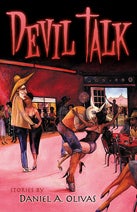
In honor of Halloween and Día de los Muertos, I want to offer something a little different. Here is a little cuento de fantasma that I wrote a few years ago and that first appeared in the anthology, Nemeton: A Fables Anthology (Silver Lake Publishing, 2000), and then was is featured in my short-story collection, Devil Talk: Stories (Bilingual Press, 2004). Enjoy.

Señor Sanchez

Señor Sanchez lived a rather nice life in our little pueblo of Dos Cuentos. He sat most days in the Plaza, by the statue of our pueblo’s founder, Don Antonio Segoviano, and waited, eyes closed, lips pursed in a constant little hum, with his dog Chucho panting by his side. You see, people came to him to hear him talk. They paid a few pesos, dropping them noisily into an empty Maxwell House tin that sat between Señor Sanchez and Chucho. With each clank of the heavy coins, Chucho’s ratty little ears would pop up, frisky and alert, and Señor Sanchez would smile as he leaned back into the weather-beaten fold-out chair. He held his elegant, unusually small hands draped over the brass head of his cane, and he laughed with the same question: “What is it you want to hear?”

And the customers would tell him.

“A sad story,” said Señora Cruz, a widow for these last ten years.

“A very funny joke,” offered our priest, Padre Olivares. And he tipped his shaggy head into Señor Sanchez. “One I can tell in my sermon next Sunday,” he smiled.

“Will I ever find a wife?” asked poor, fat Simón, the carpenter.

One day, the Mayor visited Señor Sanchez. I sat not far away, at the Bar Americano, drinking my usual lunch of two (or perhaps three) bottles of Tecate beer, and I listened to what the great man wanted. No noise came from the Maxwell House tin: the Mayor dropped a nice, fat wad of paper bills into the till. The sun hit my face, hard and true, and I put my cool bottle down with a little clink and waited for Señor Sanchez to ask his usual question. But he did not. What did he do? He smiled. That is all. And Chucho slept. The Mayor stood, frozen, for a moment or two. And then he spoke.

“Speak to me as my son would,” he said. “If he were still alive.”

My heart beat hard in my throat. The whole pueblo knew of the horrible tragedy of Mario’s death in April, three months ago. It had rained so hard for six days. No one ventured out. Finally, on a Sunday, in the afternoon on the sixth day, the sun peeked out from behind the dark clouds. Some of us went out to inspect the roads and it’s there that we found him, head deep in muddy water, by the side of Calle Verdad. Mario’s body was so bloated we assumed that he had been dead for several days. And, of course, it was clearly an accident. The Mayor fell into a dark sadness at the loss of his only child.

So, on that day the Mayor went to Señor Sanchez, I tried to listen. He smiled at the Mayor and then I saw his lips move slowly. I strained and strained but could not discern a word. Señor Sanchez’s thin, almost blue lips stopped as fast as they had started. The Mayor jumped back as if a large, brutal man had struck him in the chest. And for a moment, the birds did not sing, and the wind did not blow. I glanced at my watch and noted that the Mayor did not move for a full three minutes! Finally, the Mayor straightened himself, brushed off non-existent dust from his fine, blue suit, bowed, slowly and elegantly, and turned on his heel. Within a few seconds, he was out of view.

The odd thing was what happened afterward. When the Mayor left the Plaza, Señor Sanchez sighed and shook his head. Slowly he stood, folded his chair, patted Chucho’s head, and wandered off. Chucho, for some odd reason, stayed put. As he walked away, Señor Sanchez turned, ever so slowly, and caught my eye. In my embarrassment, I waved and then turned to my newspaper. He disappeared within a few moments.
Señor Sanchez never came to the Plaza after that. A month later, we learned that he had died in his bed. Padre Olivares said that he lived to be one hundred and twenty-five, according to the Church’s baptism records. And, according to some of the older citizens, Señor Sanchez had been talking, in the Plaza, since he was twenty years old. That is a long time to be speaking. No?

BOOK REVIEW: My review of Rudolfo Anaya’s Jemez Spring (University of New Mexico Press) recently appeared in The Elegant Variation.

All done with a short one this busy holiday. So, until next Monday, enjoy the intervening posts from my compadres y comadre at La Bloga. ¡Lea un libro!

Saturday, October 29, 2005

When Chicano Lit ≠ Latino Lit

by RudyG

La Bloga posts and comments this year have gotten me rethinking what's Chicano Lit and what's Latino Lit. Each author pushed me to revamp my perspective and raised more questions than I could answer. Maybe others could help me sort this out.

I limit this piece to the arena of Chicano Lit (and exclude the question of who or what is a Chicano writer). Bloguistas and others made we reexamine its relationship to what's called Latino Lit.

Chicano Lit is about Chicanos, somehow. I'll dare say that books written about non-Chicanos, even though written by a Chicano (e.g., Diana Gabaldon's "Outlander" series) are not Chicano Lit, in the sense they are not part of a body of works more or less directly expressing perspectives on the Chicano experience. (Nevertheless, I might enjoy an analysis like "Chicano themes and perspectives in Gabaldon's Scotland.")

I'd add that books about Chicanos, even though written by a non-Chicano, should be considered Chicano Lit, when they successfully, empathically portray that experience. It would seem that, on the other hand, books about Chicanos written by a Chicano and not successfully portraying that experience are still Chicano Lit; they're just badly written.

Chicano Lit has affinities with Latino Lit. For instance, in the case of Boriqua Lit, they share historical affinities due to the similar subjugation by the U.S. Our affinities to Cubano Lit are at least dualistic. Chicano (not Hispanic) Lit connects to works still done on the island when we acknowledge shared connections to Che Guevara, also a hero of the Chicano Movement. Expatriated Cubanos centered in Florida understandably don't necessarily share that experience with us, anymore than all literature from the island does.

Along both sides of La Frontera, shared experiences reflected in Chicano and Mexicano writing merge even more, but tend to blur the further one moves into interior Mexico, and literature more "Mexican" than "Border".

Gabriel Garcia Marquez, who writes of Colombia and Latin America, makes his own mold for his work. Several Chicano works obviously or subconsciously owe something to the influence of his works. But one would expect a Nobel Prize winner's obras to have wider influence than most writing.

There is other Latino Lit--Dominican, etc.--that could be examined in the same light, but I don't need to go into that here.

By definition--that of mestizaje--Chicano Lit has its limits and indistinctiveness. A literature about a subjugated people denied their culture and language suffers from that loss of native language. Thus, much of Chicano Lit discussions are forced to discuss in the realm of the English language, since we may not speak, read, much less write in Spanish. Our inability to appreciate, for instance, writing composed in Spanish--no matter that it includes the Chicano border experience--leaves a significant weakness in such discussion. Likewise, lists of Greatest Chicano Lit often include few works in Spanish.

This language gap, and history itself, combine to argue against our including literature from Spain as Latino, no matter that one would think half our mestizaje heritage should work to encompass the conqueror-Hispano experience. However that's a gap we seem to welcome.

A list of Greatest Chicano Works seems a good thing. I understand why 100 Years of Solitude couldn't be on that list, no matter how great a "Latino" work it is. Seems a natural.

What wouldn't seem called for is widening such a list to include Latino, non-Chicano works. Why go along with the U.S. monopolist publishers' Latinization--the corporate, brown melting pot where the Chicano experience gets blender-ed into the experiences of all others subjugated by the criollos.

Good literature is good literature, . But La Bloga could make a distinctive contribution in reviews and discussions of non-Chicano Lit; particularly if such reviews explained how said non-Chicano work related to the Chicano experience, something I think few literati attempt. Perhaps, too, it is something corporate publishers would rather have us not do; for the sake of sales, they might prefer reviews that blurred a work's political and cultural, historical threads to Chicanismo.

Great literature does more than entertain: it explores the human psyche, builds on traditions, opens new paths, and redefines those around it. Its roots spread deeper and its branches reach higher than what is written on an author's birth certificate.

I think La Bloga could help deconstruct even the all-encompassing genre of "Latino", at least in how it relates to the Chicano experience--a guide to how/why it is that Bloguistas choose to discuss or review particular non-Chicano works. We don't often see that.

If I sound like I'm just rhetorically questioning, remember how Chicano Lit is sometimes dumped in university Romance Language depts. with Portuguese, how in bookstores it can be found alongside anti-Castro books, or next to Jennings' Aztec series. For these institutions, the reasons for the categorization vary, from academic paradigms to those of profit motive.

I'm not suggesting La Bloga or others need to hammer out a new literary consensus, but only that exploring whatever makes up our present Chicano-Latino Lit mindset might tell us things about ourselves we didn't know. It might give us literary perspectives we never noticed.

As I said, I throw these questions out because of recent blogger posts, here and elsewhere. My suggestions might help sharpen the direction of "Latino" critique, including of Chicano works. They are not intended to add to history's muddled legacy or corporate publishers' clouding of that great body of work that will always be called Chicano Lit.

Rudy Ch. Garcia

Friday, October 28, 2005

Día De Los Muertos or Halloween?

Manuel Ramos


Being bicultural, I get to mix up things and who can say that I'm wrong? Día de Los Muertos and Halloween, for example. My wife reminds me that Día de Los Muertos is not a scary holiday - just the opposite, in fact (still, having all those skulls and calaveras around the house, late at night, in the dark - you get the picture). Meanwhile, Halloween has nothing to do with honoring ancestors and a lot to do with pagan rites and ancient stories originally meant to keep children in line. So, in honor of the upcoming worldwide commemoration of and festivities for those who have passed on, and with a bit of spooky thrown in, here's a list of reading that might keep you up at night.


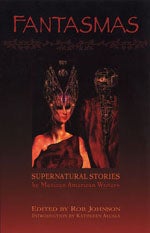
Two short story collections deserve your attention, and both have Daniel Olivas. Daniel's collection, Devil Talk (Bilingual Press, 2004), is a great mix of off-beat stories that present hard-earned lessons of life or glimpses at an alternative reality. These are the kind of stories that make you go "Oh no, he didn't do that" at the end. Daniel also is featured in Fantasmas (Bilingual Press, 2001), edited by Rob Johnson with an introduction by Kathleen Alcalá. This collection is billed as Supernatural Stories by Mexican American Writers and in addition to Daniel the authors include Carmen Tafolla, David Rice, Stephen Gutiérrez, and sixteen others.


The Festival of Bones/El Festival de las Calaveras: A Little-Bitty Book for the Day of the Dead by Luis San Vincente (Cinco Puntos Press, 1994) is described by the publisher in this way: "Mexico’s Day of the Dead fascinates kids, whether for its joyful celebration or its unusual traditions. With fantastic illustrations and a wild and fanciful poem, San Vicente captures the spirit of this most marvelous holiday. A short and fun essay, directed toward young readers, explains this important Mexican holiday, and the fun things kids can do to join in the festivities."

Cinco Puntos Press also features El Cucuy! A Bogeyman Cuento in English and Spanish (2002)by Joe Hayes, illustrated by Honorio Robledo.

All Chicana/o writers have a story in them about La Llorona. Rudolfo Anaya's contribution is his children's book, Maya's Children: The Story of La Llorona (Hyperion, 1997) illustrated by Maria Baca, a kinder, gentler tale in which the mother, Maya, does not kill her children but instead loses them to a tricky Señor Tiempo.

On the other, more serious, hand, Weeping Woman: La Llorona and Other Stories by Alma Luz Villanueva (Bilingual Press, 1994) has been described as painful and disturbing. The stories portray dark images of violence - rape, incest, abuse - but, as noted by The Library Journal, "out of the ashes of this cruelty rises a sense of hope."

My own llorona story can be found here for those of you who might be interested (originally published in 1986!)


And something unique for La Bloga, Día De Los Muertos by Kent Harrington. This is noir fiction - bleak and as gritty as they come. The book has some relevance to La Bloga since Harrington's mother was from Guatemala, but in no way is this book Latino Literature. Even so, it is a very good book for those of us who like this kind of thing.


Bits

The play September Shoes was described by the author as "a complex, lyrical piece about the desert, shoes, forgiveness and redemption. We start you in a place where you are grounded, and then we begin to take you on this lyrical and magical journey." Written by José Cruz González, it runs through December 17 at the Denver Center Theatre Company. The Denver Post observed, "September Shoes is not only the first DCTC play by a Latino playwright since 1999; it will be the first staged by any female director since the same play, Barrio Babies. Director Amy González (no relation) commented that the play is a suspenseful story that is revealed in little increments. 'It's a very personal story that has some deeper and universal resonances,' she said."

Meanwhile, I get to spend most of October 29 at the Boulder Public Library as part of the Guilty Pleasures - Mystery Writers Day. I join seven other writers for talks, lunch, a panel, book signings, and general positive reinforcement about the "writer's life." Come by if you get a chance.

Later.

Tuesday, October 25, 2005

ROSA PARKS: 1913-2005


I realize that I've already done my post for the week, but I felt compelled to take note of Rosa Parks' passing. Here is one of many articles published today. -- Daniel Olivas

ROSA PARKS: 1913-2005

Revered icon of civil rights

Rosa Parks' refusal to give up seat to a white man set off Montgomery bus boycott in '50s


By E.R. Shipp, New York Times

Tuesday, October 25, 2005

Rosa Parks, a black seamstress whose refusal to relinquish her seat to a white man on a city bus in Montgomery, Ala., almost 50 years ago grew into a mythic event that helped touch off the civil rights movement of the 1950s and 1960s, died Monday. She was 92 years old.

Her death was confirmed by former Detroit Mayor Dennis Archer, who served as Parks' guardian.

For her act of defiance, Parks was arrested, convicted of violating segregation laws and fined. In response, blacks in Montgomery boycotted the buses for nearly 13 months while mounting a successful Supreme Court challenge to the Jim Crow law that enforced their second-class status on the public bus system.

The events that began on that bus in the winter of 1955 captivated the nation and transformed a 26-year-old preacher named Martin Luther King Jr. into a major civil rights leader.

"Mrs. Parks' arrest was the precipitating factor rather than the cause of the protest," King wrote in his 1958 book, "Stride Toward Freedom." "The cause lay deep in the record of similar injustices."

Her act of civil disobedience, what seems a simple gesture of defiance so many years later, was in fact a dangerous, even reckless move in 1950s Alabama. In refusing to move, she risked legal sanction and perhaps even physical harm, but she also set into motion something far beyond the control of the city authorities. Parks clarified for public consumption far beyond Montgomery the cruelty and humiliation inherent in the laws and customs of segregation.

That moment on the Cleveland Avenue bus also turned a very private woman into a reluctant symbol and torchbearer in the quest for racial equality and of a movement that became increasingly organized and sophisticated in making demands and getting results.

Over the years, myth tended to obscure the truth about Parks. One legend had it that she was a cleaning woman with bad feet who was too tired to drag herself to the rear of the bus. The truth, as she later explained, was that she was tired of being humiliated, of having to adapt to the byzantine rules, some codified as law and others passed on as tradition, that reinforced the position of blacks as something less than full human beings.

"She was fed up," said Elaine Steele, a longtime friend and executive director of the Rosa and Raymond Parks Institute for Self Development. "She was in her 40s. She was not a child. There comes a point where you say, 'No, I'm a full citizen, too. This is not the way I should be treated.' "

Parks was active in the Montgomery chapter of the NAACP. She and her husband, Raymond, a barber, had taken part in voter registration drives.

At the urging of an employer, Virginia Durr, Parks had attended an interracial leadership conference at the Highlander Folk School in Monteagle, Tenn., in the summer of 1955. There, she later said, she "gained strength to persevere in my work for freedom, not just for blacks but for all oppressed people."

But as she rushed home from her job as a seamstress at a department store Dec. 1, 1955, the last thing on her mind was becoming "the mother of the civil rights movement," as many would later describe her. She had to send out notices of the NAACP's coming election of officers. And she had to prepare for the leadership workshop where she would be the host for teenagers that weekend.

"So it was not a time for me to be planning to get arrested," she said in 1988.

On Montgomery buses, the first four rows were reserved for whites. The rear was for blacks, who made up more than 75 percent of the bus system's riders. Blacks could sit in the middle rows until those seats were needed by whites. Then the blacks had to move to seats in the rear, stand, or, if there was no room, leave the bus. Even getting on the bus presented hurdles: If whites were already sitting in the front, blacks could board to pay the fare but then had to disembark and re-enter through the rear door.

For years blacks had complained, and Parks was no exception. "My resisting being mistreated on the bus did not begin with that particular arrest," she said. "I did a lot of walking in Montgomery."

Her arrest was the answer to the prayers of the Women's Political Council, which was set up in 1946 in response to the mistreatment of black bus riders, and for E.D. Nixon, a leading advocate of equality for blacks in Montgomery.

Blacks had been arrested, and even killed, for disobeying bus drivers. They had begun to build a case around a 15-year-old girl's arrest in March 1955 for refusing to give up her seat, and Parks had been among those raising money for the girl's defense. But when they learned that the teenager was pregnant, they decided that she was an unsuitable symbol for their cause.

While Nixon met with lawyers and preachers to plan an assault on the Jim Crow laws, the women's council distributed 35,000 copies of a handbill that urged blacks to boycott the buses on Monday, Dec. 5, the day of Parks' trial.

On Sunday, Dec. 4, the announcement was made from many black pulpits, and a front-page article in the Montgomery Advertiser further spread the word. Some blacks rode in carpools that Monday. Most black commuters -- 40,000 people -- walked, some more than 20 miles, to and from their jobs.

At a church rally that night, blacks agreed to continue the boycott.

The boycott lasted 381 days, and in that period many blacks were harassed and arrested on flimsy excuses. Churches and houses, including those of King and Nixon, were dynamited.

Finally, on Nov. 13, 1956, in the case of Browder vs. Gayle, the Supreme Court outlawed segregation on the city's buses. The court order arrived in Montgomery on Dec. 20; the boycott ended the next day. But the violence escalated: Snipers fired into buses as well as King's home; bombs were tossed into churches and into the homes of ministers, including the Rev. Ralph David Abernathy; some blacks were beaten by roving bands of whites.

Early the next year, the Parkses left Montgomery for Hampton, Va., largely because Parks had been unable to find work but also because of disagreements with King and other leaders of the city's struggling civil rights movement. In Virginia, Parks worked as hostess in the faculty dining hall at the Hampton Institute, a black college.

Later that year, Parks, her husband and her mother, Leona McCauley, moved to Detroit. Parks worked as a seamstress until 1965, when Rep. John Conyers Jr. hired her as an aide for his office in Detroit. She retired in 1988.

Rosa Louise McCauley was born in Tuskegee, Ala., Feb. 4, 1913, the elder of Leona and James McCauley's two children. Although the McCauleys were farmers, James McCauley also worked as a carpenter and Leona McCauley as a teacher.

Rosa McCauley attended rural schools until she was 11 years old, then Miss White's School for Girls in Montgomery. She attended high school at the Alabama State Teachers College, but dropped out to care for her ailing grandmother. It was not until she was 21, and had been married for two years, that she earned a high school diploma.

Parks' husband, Raymond, died in 1977. There are no immediate survivors.

The Opposite of Chicana Chicano Literature?

Michael Sedano


Can there be such a thing as the opposite of Chicano literature?

(1) The question arises, in part, in considering Manuel Ramos’ report on the business-as-usual exclusion of Chicana Chicano writers from Time magazine’s list of the 100 best English-language novels published since 1923.

Who can argue against Vonnegut, Nabokov, Atwood? I would thump the lectern for alternatives to certain writers’ work. Giles Goat-Boy for Barth, A Cool Million for West, Robber Bride for Atwood. As my eyes swept the list, though, I saw numerous titles and writers whose work has been surpassed by Chicana and Chicano writers. Not that I'd read all 100 of Time's list, but the majority. So here’s what I told Time:

The panel needs to read more. A lot more.  Chicana and Chicano writers have produced notable fiction that merits consideration. Sadly, when a reader's literary compass excludes an entire culture's production, there's little wonder a "top 100" list will illustrate a conscious, or unconscious bias.

Here are five titles to get you  started:

Graciela Limon. Memories of Ana Calderon.

Benjamin Saenz. Carry Me Like Water.

Alfredo Vea. Gods Go Begging.

Alicia Gaspar de Alba. Sor Juana's Second Dream.

Ana Castillo. Peel My Love Like an Onion.

(2) The question hit me again, this time in the funny bone, at the Mark Taper Forum Saturday afternoon, where I sat astonished by David Mamet’s farce, “Romance.

Mamet’s “Glengarry Glen Ross,” had heretofore defined my relationship with the playwright. The telemarketing boiler room drama explodes in deadly intensity, profanity, and just plain human meanness. “Romance,” similarly, is laced with personal animosity and profanity, but unlike “Glengarry,” Mamet’s new play is a courtroom / bedroom farce that takes ethnic and sexual prejudice to outrageously absurd extremes. In one exchange, lawyer and client launch a hate speech assault on one another that builds for five minutes. The Episcopalian defense attorney hurls slurs like “hook nose shimie” and “baby eater,” and lots of exotic stuff I’ve never heard, at his Jewish client. The client gives as good as he gets, denigrating the sect and taunting the lawyer about his son’s pederastic priest in a truly ugly retort that drew gasps from the people sitting near me. When the two men run out of words, they go into several minutes of “f*ck you” repartee that had the audience howling in pain.

Remarkably acted with precision timing and effectively staged by director Neil Pepe,  “Romance,” is so far removed from anything ever staged by a Chicano troupe that it seems absurd even to raise the issue. Except “Romance,” through November 13, launches the Taper’s 39th season, which concludes with the July 27th run of “Water and Power,” written by Richard Montoya with Culture Clash. Obviously the comparison not only is not far-fetched, it’s now a matter of time and Los Angeles audiences will have to deal with it.

Interesante, que no?


Read! Raza.

mvs

Monday, October 24, 2005

SPOTLIGHT ON DEMETRÍA MARTÍNEZ

Monday’s post from Daniel Olivas

Demetría Martínez is an author, activist, lecturer and columnist. Her collected essays, Confessions of a Berlitz-Tape Chicana (Chicana & Chicano Visions of the Americas) (University of Oklahoma Press) is forthcoming in November 2005. Her books include the widely translated novel, Mother Tongue (Ballantine), winner of a Western States Book Award for Fiction, and two books of poetry, Breathing Between the Lines: Poems and The Devil's Workshop both published by the University of Arizona Press. She writes a column for the National Catholic Reporter, an independent progressive newsweekly.

CLASSIC REISSUE: The Elegant Variation recently published my review of HarperCollins/Rayo’s 35th anniversary reissue of the classic novel Chicano by the late journalist Richard Vasquez.

PRESS RELEASE: Con Tinta is a coalition of cultural activists (Chicano/Latino poets and writers) who believe in affirming a positive and pro-active presence in American literature. We come together in the spirit of intellectual exchange, of creating dialogue with our communities and beyond, of recognizing our literary and social histories, and of establishing alliances with other cultural and political organizations. Our mission is to create awareness through the cultivation of emerging talent, through the promotion and presentation of artistic expression, and through the collective voice of support to our members, our communities, and our allies.
In March 8-11 of 2006, Con Tinta members will participate at the Association of Writers and Writing Programs Annual Conference in Austin to engage in a series of necessary discussions about politics, culture, activism and art. As part of its community outreach efforts, Con Tinta will host a celebration through an event outside of the conference grounds. Programming at a local venue will include a dedication to two beloved veteranos of Chicano letters, Rolando Hinojosa-Smith and raulsalinas; a reading by renowned authors and emerging talent; a communal meal; and a baile.

Con Tinta Advisory Circle:
Kathleen Alcalá, Brenda Cárdenas, Lisa Chávez, Rigoberto González, Lorraine López, Daniel A. Olivas and Richard Yañez

Con Tinta contact person: Rigoberto González, Department of English, University of Illinois, Urbana-Champaign, 608 S. Wright Street, English Building, MC-208 Urbana, IL 61801. Email: noanoa@uiuc.edu. Phone: (217) 333-2926

CRISOL PRODUCTIONS IS PROUD TO ANNOUNCE THE RELEASE OF LOTERIA DE LA MUJER: Renowned San Diego artist, Nuvia Crisol Guerra, has fused her vibrant artwork with the traditional Mexican game “Loteria.” Crisol’s striking depictions celebrate 20 universal stages of a woman’s life. These colorful portraits speak to men and women of all cultures and generations. In addition to the game, these images are also available as packets of greeting cards and individual post cards. Visit her website for more information.

CONFERENCE: El Clamor Público - 150 Years of Latino Newspapers in Southern California.

The Huntington Library, San Marino, CA
October 28, 2005
8:30 a.m.-4:00 p.m.

Sponsored by the Huntington-USC Institute on California and the West, USC Annenberg School for Communication, California State University, Northridge Graduate Studies Program Distinguished Speakers Series, and the John Randolph Haynes and Dora Haynes Foundation.Founded in Los Angeles in 1855, the newspaper El Clamor Público staunchly defended equal rights in California. Though labeled treacherous, incendiary, and anti-American, eighteen-year-old journalist Francisco P. Ramírez‘s newspaper courageously reported lynchings, land frauds, vigilante terror, racial profiling, and legal injustices targeting Spanish-language communities. Ramírez’s faith in the U.S. Constitution guided him as he urged readers to elect trustworthy representatives and to learn English so they could defend their rights. He printed the Declaration of Independence in Spanish and encouraged Californios and Anglos to “work together in the same spirit.” During its four and a half years, the newspaper published political opinion, international news, literary expressions, and social commentaries.This conference will examine the history and legacy of El Clamor Público through and exploration of Latino newspapers in Southern California’s past, present, and future. The conference is free and open to the public; registration is required by October 24. Luncheon will be provided for a prepaid fee. For registration information, go here. For more information on the conference contact conference coordinator Joseph Legaspi at his e-mail.

RAIN OF GOLD LIVE ON STAGE: Don't miss Victor Villaseñor’s Rain of Gold live! The most recent version of The Western Stage’s sweeping adaptation is a must see, and will only be in Salinas, October 22nd through November 5th, 2005. For information and tickets visit here.

UP CLOSE AND PERSONAL: Sunday, October 30, 6:30PM to 8:00PM - Tongue & Groove: A monthly offering of short fiction, poetry and music. The featured writers include: Glen David Gold ("Carter Beats the Devil"), Salvador Plascencia ("The People of Paper"), Daniel Olivas ("Devil Talk"), Carmen Esquer and Maria Cristina Jimenez. Musical guest: Carmella Rappazzo. Hosted by Conrad Romo.

Venue: The Hotel Café. Address: 1623 1/2 N. Cahuenga Blvd., Hollywood, 90028. Admission: Free! For more information call: 323-937-0136. Or visit: http://www.hotelcafe.com.

All done. So, until next Monday, enjoy the intervening posts from my compadres y comadre at La Bloga. ¡Lea un libro