Monday, May 25, 2015

Discussing Chicano Literature at UC Davis


Many authors—myself included—will admit to the loneliness of the writing process itself.  This might explain why many authors park themselves and their laptops at a Starbucks or similar establishment: alone yet not alone.

The other way writing seems less lonely is when authors get to discuss their books with readers at book festivals and writing conferences.  And then there’s the wonderful occasion when your book is assigned reading for a class and you are invited to the class to meet the students and field their questions.

This latter opportunity happened to me two weeks ago when Professor Maceo Montoya of UC Davis invited me to spend time with his class on the Chicano narrative because he had assigned one of my short-story collections, Anywhere But L.A. (Bilingual Press).  Well, I ended up having one of those magical times that authors cherish.

First of all, Maceo himself is a novelist and artist of renown despite his relative youth.  He also comes from a family of artists, including his father, the artist and activist Malaquías Montoya, and his late brother, the poet Andrés Montoya.  Maceo graduated from Yale University in 2002 and received his Master of Fine Arts in painting from Columbia University in 2006.  He is an assistant professor in the Chicana/o Studies Department at UC Davis where he teaches the Chicana/o Mural Workshop and courses in Chicano Literature.  Maceo is also affiliated with Taller Arte del Nuevo Amanecer (TANA), a community-based arts organization located in Woodland, California.

I flew into Sacramento International Airport where I encountered this wonderful sculpture that my wife has dubbed, Spidey-Bunny (its real title is "Leap" by Lawrence Argent).


I then had a little time to kill before meeting up with Maceo so I wandered the UC Davis campus.  This was my first visit and I was startled by its beauty (yes, a river runs through it).


While walking the campus, I received a call from Maceo.  Rather than going out to dinner with him and his girlfriend, Alejandra Perez (herself an educator and artist), Maceo’s parents had invited all of us over to dinner.  Well, I was honored.  So, Maceo picked me up and off we went to his parents’ house, a handsome wooden structure built in the late 1800s.

Prof. Maceo Montoya in front of his parents' home.

Once inside, I met his parents, Malaquías Montoya and Lezlie Salkowitz-Montoya.  Each room of the house was filled with art and furniture created by Malaquías; Lezlie does ceramics so I got to see some of her work, as well.  Lezlie cooked a delectable vegetarian Mexican meal of enchiladas and salad (they have been vegetarians for over three decades).  It turned out we had much in common: Lezlie is Jewish and I married a Jewish woman.  So, my son has enjoyed a rich Chicano/Jewish life similar, in some ways, to Maceo's.

Malaquias, Lezlie, me and Maceo

La Familia.

Artwork in hallway.

Artwork in hallway.

Malaquias, Alejandra, Maceo and Lezlie.
After great conversation to match the great food, I had a tour of the backyard and Malaquías’s studio and workshop.

Maceo and Alejandra in the beautiful backyard.

The Montoya studio.

The next morning, Maceo picked me up and we headed to campus.  He told me that his parents were going to be attending which, once again, made me feel quite honored.  The students had read my collection and were ready to ask me all kinds of questions.  Maceo told me that his students would be writing their own short stories inspired by my collection.  I had almost two hours to fill and he said that I shouldn’t worry if I didn’t use all the time.  Ah!  A challenge!  But before that, I met some nice Chicana/o Studies staff members.

Luis and Alyssa.

After Maceo introduced me and after I spoke briefly about my upbringing and how I started writing, we opened it up for questions.  The students were more than prepared.  In fact, I think this might have been the best prepared “audience” I’ve ever encountered.  Their questions were thoughtful—at times pointed but respectful—and made me think.  The time passed so fast that we forgot to take a group picture after the book signing…we remembered when the last two students were in line so I took one with them.  I want to thank the students for their warmth and generosity.  I wish them well and I hope that they feel free to drop me an email especially if they start on a writing career.

Maceo prepares the class for me.

Friendly students get ready for my presentation (note Maceo's parents to the left).

Two delightful students pose with me after class.

To say that I had a great time wouldn’t do it justice.  I just hope that all writers get to have a similar experience that I had.

Sunday, May 24, 2015

Memorial Day Tribute to Mi Papa

La mano de mi papa sobre la mia
Mi papa was born in Topeka, Kansas. He liked to tell me (and anyone else who wanted to know) that he was actually contraband from Mexico because he was conceived in Mexico, and when his parents made the journey to settle in Topeka, his mother was pregnant with him. He spent his early years in Topeka surrounded by cornfields, cactus, various crop fields. His mother cultivated a garden too.  His experiences in the fields stayed with him. Many years later, in Colorado, he taught me how to carefully take the thorns off cactus paddles, clean, and cut them into slices for cooking. 

Removing thorns from a cactus paddle
When we lived in Los Angeles, mi papa told me Topeka, Kansas stories about helping neighboring farmers by collecting huitlacoche, a black fungus that grows on corn.  The word huitlacoche (pronounced wheat-la-KO-che) is Nahuatl—from the Aztecs. My father would tell me, “The anglo farmers in Topeka considered huitlacoche a problem. They even gave huitlacoche a derogatory term, calling it ‘corn smut.’”  Little did they know that huitlacoche is packed with the amino acid, lysine, which strengthens bones, builds muscle, fights infections, and keeps human skin soft and supple.  Instead, the anglo farmers cringed when they saw the black fungus on the corn.  My newly immigrant grandmother knew better, and told my father to offer the farmers help by taking their “corn smut” away. I’ve eaten huitlachoche with my father in Mexico City and in the U.S.  It is a delicacy, like truffles, and quite delicious. Perhaps the healthy diet my father ate contributed to his living a very long life:  97 years. 

Mi papa died a little over two months ago on March 15, 2015. I am memorializing him here, the day before Memorial Day, because, in addition to the many things he did in his 97 years, he fought in the Second World War (WWII).

According to Veteran’s Administration statistics, of the 16 million who served in WWII, only about 855,070 are still living.  By 2036, all will have died. Between 250,000 and 500,000 Latinos fought in this war, and some of them were given U.S. citizenship only after the war was over.

Unlike the childhood and young adult stories my father told me with humor and wit, when he talked about WWII, his storytelling was different.  He spoke in halted breath, he would pause, and sometimes I felt compelled to hold his hand while he held back tears. The day he was shot, he was with his company.  He told me he was grateful that he wasn’t alone. His fellow soldiers were able to get the wounded to combat medics right away.  There was shrapnel in my father’s leg, other surface wounds.  He had been carrying a backpack and a front pack too.  One of the medics began taking out what was in his front pack. Earlier that day, my father had arranged small cans of food in his front pack for easy access. It was there that the medic took out a can that had a bullet hole on one side, and the actual bullet lodged on the other. “You are lucky,” the medic said. “Good you packed your lunch today.”  He was wounded again a few months later. A few months after that, he was honorably discharged, finishing his service career with two purple hearts and four bronze service stars. This is only one of a few stories he told me, but I will never know all the horrible things he saw in Europe. 


I leave you, then, with these two short stories mi papa told me, both involving food: the food he learned to cultivate, prepare, and eat, thanks to his Mexican immigrant mother, and the can of food that saved his life one afternoon during WWII. 

Mi papa removing thorns from a cactus paddle

Friday, May 22, 2015

Oil Spill Disaster in Santa Barbara 2015

Blog post and photos
by Melinda Palacio


Refugio Beach
Before I moved to Santa Barbara, before I was born, the idyllic slice of California coastline suffered an oil blowout that killed thousands of seabirds, poisoned seals, dolphins and whales, and polluted 35 miles of Santa Barbara Coastline. Over the years I heard much about the 1969 oil spill and its 3 million gallon blowout. The disaster prompted President Nixon to sign the Environmental Protection Act, the Clean Water Act, and the Endangered Species Act. All of these laws help protect the beauty of Santa Barbara from total disaster. We were supposed to be spared from disastrous acts of stupidity by the greedy few espousing mantras such as drill baby drill. All to no avail, think of the 1989 Exxon Valdez oil Spill, the 2010 Deep Horizon BP spill that continues to affect the Gulf Coast. The impact of the spills are always worse days, months, and years after the fact.
Oil covered rocks on the beach from Thursday, May 21, 2015.

Yesterday, May 20, on what was supposed to be a festive day and book launch celebration for a friend, my aunt Rosa called to ask if I was okay from the oil spill. She left a message on my phone. I  had no idea what she was talking about. My family always referred to my aunt as La Opinión because she always seems to know the news before it happens. If there is a fire, storm, or earthquake, I can expect a call from my aunt Rosa.
Bagging Oily Sticks. 
My aunt's phone call referred to the Plains All American Pipeline oil spill from Wednesday. When this pipeline was put in, the same old song and dance was given to the public. Talk of guaranteeing the safety of coastal waters and wildlife, anything to guarantee the filling of money in the pockets of the few who stand to gain billions of dollars by drilling for oil in someone else's backyard. In 1998, the 10-mile pipeline was approved with the capacity to carry up to 150, 000 barrels of oil each day. The slick has spread to nine square miles of ocean and spilled 105, 000 gallons of crude into the Pacific.

Clean up along the Gaviota coast
I went down to Refugio beach to see the oil spill for myself. My photographer friend also wanted to witness and photograph the damage. We arrived yesterday, Thursday, May 21, after boats had skimmed close to 70, 000 gallons of oil. The scene at times, a flock of seagulls and pelicans flying overhead, dolphin and seals bobbing in the water, could have been perfect; but the beach was covered in goopy oil. Volunteers and workers performed back breaking work as they bagged and picked up oil leaden sticks and debris from the beach. My friend and I kept thinking that the executives profiting from the pipeline should be the ones out there picking up the crap. I asked one of the workers about the oil-slicked rocks and when those would be picked up, but he said he didn't know and seemed nervous about answering any questions. He was doing his job. How do you answer questions about the worst spill in the area in 46 years? Words from the oil company, such as 'Plains deeply regrets this release and is making every effort to limit its environmental impact,' are an insult. Governor Brown has declared a state of emergency. Santa Barbara county is home to 494 species of birds and is known as the Galapagos of North America. California leads the nation in marine protection with the largest network of marine protected ares in the country.  This news comes two weeks after Santa Barbara declared a stage three drought emergency.

Clean Up on Refugio Beach
Keyt.com, the local news channel 3 has received several photos of dead sea life covered in oil. They are asking anyone who comes into contact with distressed, oil covered sea life to call 877-823-6926. For now, volunteers who want to help wash oil off birds are asked to wait while the impact is documented. I'm guessing the ugly truth is that soap and detergents do not help birds survive in the long run. At least, from what friends who were in Santa Barbara during the 1969 spill tell me, all the birds who were rescued did not survive. Volunteers came out in numbers, wanting to help, but all of oil-soaked birds perished. I hope that the four plus decades of experience has taught us something about how to help oil slicked birds and sea life. Keyt.com also reports Plains All American Pipeline has recently had 10 serious spills in Texas, Louisiana, Oklahoma, and Kansas, choosing to settle with the EPA for 3.5 million dollars for violating the Clean Water Act. All that time and experience sure has not helped us become any wiser in preventing disasters like Wednesday's oil spill, the ones before it, and the ones to come.

Thursday, May 21, 2015

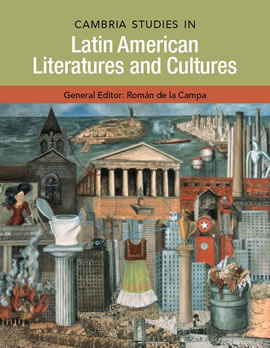
New Series: Latin American Literatures and Cultures


Cambria Press is proud to announce a new series, which will be headed by Dr. Román de la Campa, the Edwin B. and Lenore R. Williams Professor of Romance Languages at the University of Pennsylvania. The Cambria Studies in Latin American Literatures and Cultures book series will feature high-quality, innovative monographs and edited volumes that constitute path-breaking research in Latin American scholarship. 

For literary works, we are interested in both comparative studies as well as book-length studies of individual Latin American writers. Similar genres of books on film studies, particularly those of that emphasize contemporary issues, are also of interest. We also welcome works of an interdisciplinary nature that interweave different disciplines of the humanities as well as studies on the Latin American diaspora. 

About the general editor: Dr. Román de la Campa is the Edwin B. and Lenore R. Williams Professor of Romance Languages at the University of Pennsylvania. His research takes a comparative view on Latin American and Latino literatures, theory, and other cultural practices. His publications include over a hundred essays and journal articles published in the United States, Latin America, and Europe, as well as books published in both English and Spanish. Dr. de la Campa is also the general editor of the journal Hispanic Review. 

Inquiries should be e-mailed to info@cambriapress.com. Proposals should be submitted at the Cambria Press website. 

NEW in this series:

Poets writing in Spanish by the end of the twentieth century had to contend with globalization as a backdrop for their literary production. They could embrace it, ignore it or potentially re-imagine the role of the poet altogether. This book examines some of the efforts of Spanish-language poets to cope with the globalizing cultural economy of the late twentieth century. This study looks at the similarities and differences in both text and context of poets, some major and some minor, writing in Chile, Mexico, the Mexican-American community and Spain. These poets write in a variety of styles, from highly experimental approaches to poetry to more traditional methods of writing.

Included in this study are Chileans Raúl Zurita and Cecilia Vicuña, Spaniards Leopoldo María Panero and Luis García Montero, Mexicans Silvia Tomasa Rivera and Guillermo Gómez Peña, and Mexican-American Juan Felipe Herrera. Some of them embrace (and are even embraced by) media both old and new whereas others eschew it. Some continue their work in the vein of national traditions while others become difficult to situate within any one single national tradition. Exploring the varieties of strategies these writers employ, this book makes it clear that Spanish-language poets have not been exempt from the process of globalization.

Individually, these poets have been studied to varying degrees. Globalization has been studied extensively from a variety of disciplinary approaches, particularly in the context of the Latin American region and Spain. However, it is a relative rarity to see poets being studied, as they are in this work, in terms of their relationship to globalization. Taken as a sample or snapshot of writing tendencies in Latin American and Spanish poetry of the late twentieth century, this book studies them as part of a greater circuit of cultural production by establishing their literary as well as extra-literary genealogies and connections. It situates these poets in terms of their writing itself as well as in terms of their literary traditions, their methods of contending with neoliberal economic models and global information flows from the television and Internet.

Although many literary critics attempt to study the connections and relationships between poetry and the world beyond the page, few monographs go about it the way this one does. It takes a transatlantic approach to contemporary Spanish-language poetry, focusing on poets on poets from Spain and the American continent, emphasizing their connections, commonalities and differences across increasingly porous borders in the age of information. The relationship between text and context is explored with a cultural studies approach, more often associated with media studies than with literary studies. Literature is not treated as a privileged object of isolated study, but rather as a system of ideas and images that is deeply interwoven with other forms of human expression that have arisen in the last decades of the twentieth century. The result is a suggestive analysis of the figure of the poet in the broader globalized marketplace of cultural goods and ideas.

Contemporary Hispanic Poets: Cultural Production in the Global, Digital Age is an important book for library collections in Spanish, Latin American and Iberian Studies, Chicano Studies.

Wednesday, May 20, 2015

Maya's Blanket: La manta de Maya


By Monica Brown
Illustrated by David Diaz
  •          Age Range: 5 - 9 years
  •          Hardcover: 32 pages
  •          Publisher: CBP; 1 edition (August 15, 2015)
  •          Language: English
  •          ISBN-10: 0892392924
  •          ISBN-13: 978-0892392926


Little Maya has a special blanket that Grandma stitched with her own two hands. As Maya grows, her blanket becomes worn and frayed, so with Grandma’s help, Maya makes it into a dress. Over time the dress is made into a skirt, a shawl, a scarf, a hair ribbon, and finally, a bookmark. Each item has special, magical, meaning for Maya; it animates her adventures, protects her, or helps her in some way. But when Maya loses her bookmark, she preserves her memories by creating a book about her adventures and love of these items. When Maya grows up, she shares her book―Maya’s Blanket/La manta de Maya―with her own little daughter while snuggled under her own special blanket. Inspired by the traditional Yiddish folk song “Hob Ikh Mir a Mantl” (“I Had a Little Coat”), this delightful bilingual picture book puts a child-focused, Latino spin on the tale of an item that is made into smaller and smaller items. Maya’s Blanket/La manta de Maya charmingly brings to life this celebration creativity, recycling, and enduring family love.


Monica Brown, Ph.D. is the author of many award-winning books for children, including Pablo Neruda: Poet of the People (Henry Holt), winner of the Américas Award for Children's Literature and an Orbis Pictus Honor for Outstanding Nonfiction, and Waiting for the Biblioburro (Random House), a Christopher Award winner. Her picture book Marisol McDonald Doesn't Match/Marisol McDonald no combina (Lee & Low) is the winner of the Tejas Star Book Award, the International Latino Book Award, and a Pura Belpré Honor for Illustration. Marisol McDonald and the Clash Bash/Marisol McDonald y la fiesta sin igual, the second book in the Marisol series, was published in September 2013.

Monica's books are inspired by her Peruvian-American heritage and desire to share Latino/a stories with children. "I write from a place of deep passion, joy, and commitment to producing the highest possible quality of literature for children. In my biographies, the lives of my subjects are so interesting and transformational that I am simply giving them voice for a young audience. I don't think it is ever too early to introduce children to the concepts of magical realism, social justice, and dreaming big!" Monica is in demand as a conference keynote speaker and has appeared at ALA, TLA, NCTE, Book Expo America, and at book festivals across the country.

Monica Brown is a Professor of English at Northern Arizona University, specializing in U.S. Latino Literature and Multicultural Literature. She writes and publishes scholarly work with a Latino/a focus, including Gang Nation: Delinquent Citizenship in Puerto Rican and Chicano and Chicana Literature; and numerous articles and chapters on Latino/a literature and cultural studies. She was the recipient of the prestigious Rockefeller Fellowship on Chicano Cultural Literacies from the Center for Chicano Studies at the University of California. She lives with her husband and two daughters in Flagstaff, Arizona.