Monday, June 22, 2020

Huayna Picchu por Xánath Caraza


Huayna Picchu
por Xánath Caraza


Esa mañana, hace ya diez años, tenía planeado llegar hasta Machu Picchu y así lo hice. Salí de Cusco, la bella, como yo le puse, aunque en realidad significa el ombligo del mundo en quechua.  De Cusco recuerdo claramente el color de la tierra. Un rojo ocre que cuando llovía parecía que se convertía en sangre. Pues, salí de Cusco en tren rumbo a Aguas Calientes. Para mi sorpresa, en lugar de seguir subiendo íbamos en descenso hacia la zona montañosa donde se encontraba Machu Picchu. Aguas Calientes era simplemente un pueblo de paso. Como muchos de los pueblos de paso que se forman por necesidad. Busqué el albergue de mochileros en el que tenía una reservación y, al otro día, muy temprano por la mañana salí con un grupo de extranjeros rumbo a Machu Picchu.

Quería comérmelo entero. Era literalmente como estar en una postal de viaje. Buscaba con entusiasmo el punto clásico donde la mayor parte de las fotografías son tomadas y que, al fondo de éstas, se ve una montaña. Por fin lo encontré y tomé una de mis fotografías favoritas de todos mis viajes, abajo la ciudad de Machu Picchu resguardada por el Huayna Picchu y yo delante.  Luego la puerta de entrada a tan mágica ciudad. Mi cuerpo empezó a temblar cuando mis manos se posaron por primera vez sobre las piedras perfectamente cortadas que formaban paredes que aún se mantienen en pie después de más de cinco siglos.

Pasé horas recorriendo Machu Picchu. Era como estar en un sueño, recorrer semejante monumento incaico. Caminé tan lentamente como pude en ese exquisito lugar. Quería grabar en mi mente cada uno de los espacios de esa ciudad Inca en medio de las montañas. Me senté al lado de la piedra sagrada, intihuatana, tratando de ser lo más respetuosa que pude. Traté de imaginar la vida cotidiana, el ir y venir de la gente, sus palabras, su ropa, sus plegarias.

El corazón me palpitaba con grande emoción. Estaba en una de esas ciudades perdidas, casi mitológicas de una cultura indígena americana. No me cabía el corazón de alegría, sonreía para mis adentros mi logro. La vista frente a mí era inmensa, montaña tras montaña, verde sobre verde, infinitas nubes y, a lo lejos, el fragor del río Urubamba. Con ingenuidad deseaba que un cóndor apareciera de la nada y volara frente a mí. No sucedió pero la pura evocación de la imagen de esa ave majestuosa me hacía soñar aún más.

Ya avanzado el día, decidí que subiría el Huayna Picchu. Fue un plan de última hora que no tenía contemplado.  La ascensión fue relativamente fácil, un camino ancestral perfectamente delineado para otros viajeros como yo. El premio fue la cima y su superficie de rocas que en algún momento, en algún siglo, fueron lava volcánica. Un mar de nubes me rodeaba y la temperatura del viento cortaba la piel. Era como estar en un sueño más profundo con el rugir de las aguas turbulentas del Urubamba. Me aventuré hasta donde pude y disfruté de la vista del vacío. Belleza en blanco y negro, en roca y en nube, en fría niebla. 

Regresé a Machu Picchu renovada y con un doble respeto. Qué manos tan fuertes y estrategas, tan precisas pudieron diseñar tan importante ciudad en medio de una falla volcánica que nunca ha causado reparos en ésta. Perfectamente diseñada, perfectamente cortadas y acomodadas cada una de sus piedras. Sueño en rocas, sueño en verde, sueño de nubes, susurro de agua.
Estuve hasta que cerraron el lugar. Regresé caminando a Aguas Calientes, camino en zig-zag de bajada. Ya por la noche fui a las aguas termales, me relajé en ellas, y una tras otra de las imágenes del día me asaltaron la memoria como una proyección cinematográfica. Sin darme cuenta me quedé dormida y desperté porque ya entrada la noche sentí frío en los brazos. Como pude regresé a mi cuarto en el albergue de mochileros. Dormí hasta muy entrada la mañana. 

Un día después regresé a Machu Picchu con más calma, volví a recorrer toda la ciudad y regresé a la intihuatana. Con respeto me acomodé a un lado y saqué mi cuaderno de notas. Empecé a escribir lo que pude, nada me distraía, era mi tributo a ese lugar, mi palabra sagrada. Solo el aletear de un ave, que no quise voltear a ver, me detuvo en seco, no quise alzar la vista para no espantarlo. Sabía que era el aleteo de un cóndor, nunca había experimentado un aleteo y sombra tan extraordinaria. No me moví, solo dejé de escribir para que su vuelo se hiciera uno conmigo. El ave voló en círculos sobre mí, sentía su aleteo y veía su sombra, por un momento pensé que me pudiera atacar. No lo hizo. Se alejó sin darme cuenta, simplemente ya no estaba. Retomé la última línea con renovada fuerza y seguí escribiendo mi canto sagrado. La vista de las montañas frente a mí era interminable, verde sobre inmenso verde, nube sobre inagotable nube, montaña tras infinita montaña, furiosa agua del Urubamba.


Huayna Picchu
By Xánath Caraza
Translated by Sandra Kingery

That morning, ten years ago now, I was planning on reaching Machu Picchu, and I did just that. I left Cuzco, the beautiful, as I call it, even though it actually means the belly-button of the world in Quechua. What I remember clearly about Cuzco is the color of the earth. A red ochre that seemed to turn to blood when it rained. So, I left Cuzco on a train headed for the village of Aguas Calientes. To my surprise, instead of going further up, we descended toward the mountainous zone where Machu Picchu was found. Aguas Calientes was simply a crossroads, similar to other crossroads that spring up out of necessity. I looked for the backpackers’ hostel where I had my reservation, and very early the next morning, I set out with a group of foreigners headed for Machu Picchu.

I wanted to devour it in its entirety. It was literally like being in a postcard. I searched excitedly for the classic spot where most of the photos are taken, photos where you can see a mountain in the background. I finally found it and took a photo that’s one of my favorites from any of my travels: down below, the city of Machu Picchu sheltered by Huayna Picchu, and me in front. Then the entrance to that magical city. My body began to tremble when my hands first rested on the perfectly cut rocks that formed walls which are still standing after more than five centuries.

I spent hours exploring Machu Picchu. It was like being in a dream, crisscrossing that amazing Incan monument. I walked as slowly as I could in that exquisite place. I wanted to engrave in my mind every corner of that Incan city surrounded by mountains. I sat next to the sacred stone, the Intihuatana, trying to be as respectful as possible. I tried to imagine daily life, the comings and goings of the people, their words, their clothing, their prayers.

My heart was beating with great excitement. I was in one of those lost, almost mythological cities from an indigenous American culture. My heart was bursting with joy, fulfilling that goal made me smile inside. The view in front of me was immense, mountain after mountain, green on top of green, infinite clouds and, in the distance, the roar of the Urubamba River. Naively, I wished that a condor would appear out of nowhere and fly in front of me. It didn’t happen, but merely evoking the image of that majestic bird made me dream even more.

When I decided to climb Huayna Picchu, it was already late in the day. It was a last-minute plan which I hadn’t thought about earlier. The ascent was relatively easy, an ancestral path that was perfectly designed for other travelers like me. The payoff was the peak and its surface of rocks that at some point, in some century, were volcanic lava. A sea of clouds encircled me, and the temperature of the wind bit my skin. It felt like a deeper dream with the roar of the Urubamba’s turbulent waters. I ventured as far out as I could and enjoyed the view of the void. Beauty in black and white, in rock and cloud, in cold fog.

I returned to Machu Picchu renewed, my respect multiplied. Such strong, strategic hands, such precision, to design such an important city within volcanic fault lines that have never caused it any damage. Perfectly designed, each one of its rocks perfectly cut and placed. A dream in rocks, dream in green, dream of clouds, whisper of water.

I was there until they closed. I walked back to Aguas Calientes, the path zig-zagging down. After nightfall, I went and relaxed in the hot springs, and the images from the day stormed my memory one after another like the projection of a movie. I fell asleep without meaning to and woke up halfway through the night because my arms had gotten cold. I returned as best I could to my room in the backpackers’ hostel. I slept until very late in the morning.

I returned to Machu Picchu with more time a day later. I explored the entire city again and went back to the Intihuatana. I settled down to one side of it with respect and pulled out my notebook. I began to write whatever I could, nothing distracted me, it was my tribute to that place, my sacred word. The flapping of the wings of a bird, which I didn’t turn to see, was the only thing that stopped me; I didn’t want to look up and startle it. I knew it was the sound of a condor, I had never experienced such an extraordinary shadow or wingbeat. I didn’t move, I simply stopped writing to allow its flight to merge with me. The bird flew in circles above me, I could feel its flapping and see its shadow, it crossed my mind that it might attack me. It didn’t. It flew away before I realized, it simply wasn’t there any longer. I returned to my last line with renewed strength and continued writing my sacred song. The view of the mountains before me was endless, green over immense green, cloud over boundless cloud, mountain upon infinite mountain, furious water of the Urubamba.

“Huayna Picchu” is included in Metztli (Editorial Capítulo Siete, 2018)

Saturday, June 20, 2020

Icess Fernandez Rojas is crushing it


Icess Fernandez Rojas is crushing it


Icess Fernandez Rojas is an educator, writer, podcaster, and a former journalist. She is a graduate of Goddard College's MFA program.
Her work has been internationally published in Queen Mobs Lit Journal, Poetry 24, Rabble Lit, Minerva Rising Literary Journal, and the Feminine Collective's anthology Notes from Humanity. Her Houston-based story, “Happy Hunting”, was recently published in the Houston Noir anthology.

Her podcast, Dear Reader, is based on the popular blog of the same name.
Her nonfiction/memoir work has appeared in Dear Hope, NBCNews.com, HuffPost, and The Guardian. She is a recipient of the Owl of Minerva Award, a VONA/Voices of Our Nation Arts Foundation alum, a Dos Brujas Workshop alum, and a Kimbilio Fellow. She's currently working on her first novel and finishing her memoir, Problematic.

Follow her:
Twitter: https://twitter.com/Icess and at her website: http://icessfernandez.com/.

When it comes to women characters, who controls the narrative?

march 13, 2020 by icess fernandez rojas, posted in on assignment, writing, writing life

Dear Reader,

Greetings from San Antonio! (I started this in San Antonio last week so…it’s still technically true).

I attended the annual Association of Writers and Writing Programs conference last week in San Antonio. It’s a pretty great conference usually. This year, the Coronavirus scared many people from going.

But somehow, despite that, the conference turned out pretty good and I made connections with people, had amazing conversations, and learned many more things, unexpected things.

One of the panels I went was about Badass Women in literature and it got my mind thinking about some things in modern literature and the role of women as characters. Who we are? What are we supposed to be?

The feminist in me says anything she can be anything she wants to be. However, the reader and burgeoning academic in me knows that is not true. When it comes to literature, cannon, classical, and modern, women usually are stereotyped and are devoid of any depth. They are reduced to a label — the mother, the whore, the sidekick, the virgin.

This is seen so much in noir, a genre I love, read, and (when the moment strikes) write in. Women are the femme fatale or the secretary. Either she’s a good girl or a bad girl and even in those two labels there is no room for shades of gray.

Women, as do the other humans, contain multitudes. And among them is “the burden of their secrets.”

Yes, that last sentence was surprising. I heard that in the panel about La Llorona, a folklore tale from Latin America, primarily Mexico but other parts of the Americas have this story. The Wailing Woman of the river (or insert other body of water) comes out at now crying for her children. She had drowned them after her husband left her. Or, in some versions, she drowned her children because she was too poor to feed them and killed them as an act of kindness. Or, in other versions, she was sent back down to Earth to look for her children and can not enter the afterlife until she finds them.

Or maybe it’s just a tale told to children to keep them in line, like the boogie man.

Regardless of the version of this story, any character, whether it’s a primary or secondary character, needs to have dimension. But I don’t know why it didn’t occur to me that characters would have secrets; not secrets they keep from other characters but secrets they keep from themselves.

And that is depth, ladies and gentlemen. That is humanity.

Trauma suffers in silence and when those secrets don’t come out in a constructive way, it can seem that someone, the character, maybe acting out of turn. They may not have anything

And, as I tell my students, context is everything.

I think about stories like La Llorona (the actual story and not the movie) and how they have been passed down through the generations. What secrets did the Wailing Woman have to bare? What was her silent trauma? Was the drowning of her children the final act of a trigger from a trauma buried so deep she didn’t even realize it?

This character has been villainized and in that villainy she continues to be a victim herself. But she may not be real, you say? It doesn’t matter. How we interpret this story or folktale or cautionary tale says mountains on how women are treated in story.

The Mother.

The Whore.

The Sidekick.

Evil vs Good.

Damaged vs Naive.

Frankly, if we can’t get it right on the page, how can we get it right in real life. Our literature reflects our values right back to us. These stories that devalue women make it into our classroom, on state tests, and our drilled into students’ heads.

And the cycle continues.

In the impromptu panel I became a part of, I said this one phrase: “Who ever controls the narrative controls the world.”

So, I leave this question to you, dear Reader:

Who is controlling the narrative about women? Who is controlling that part of the world?

Think about it and get back to me.


Waiting for your answer,

–Icess


Dear Reader,

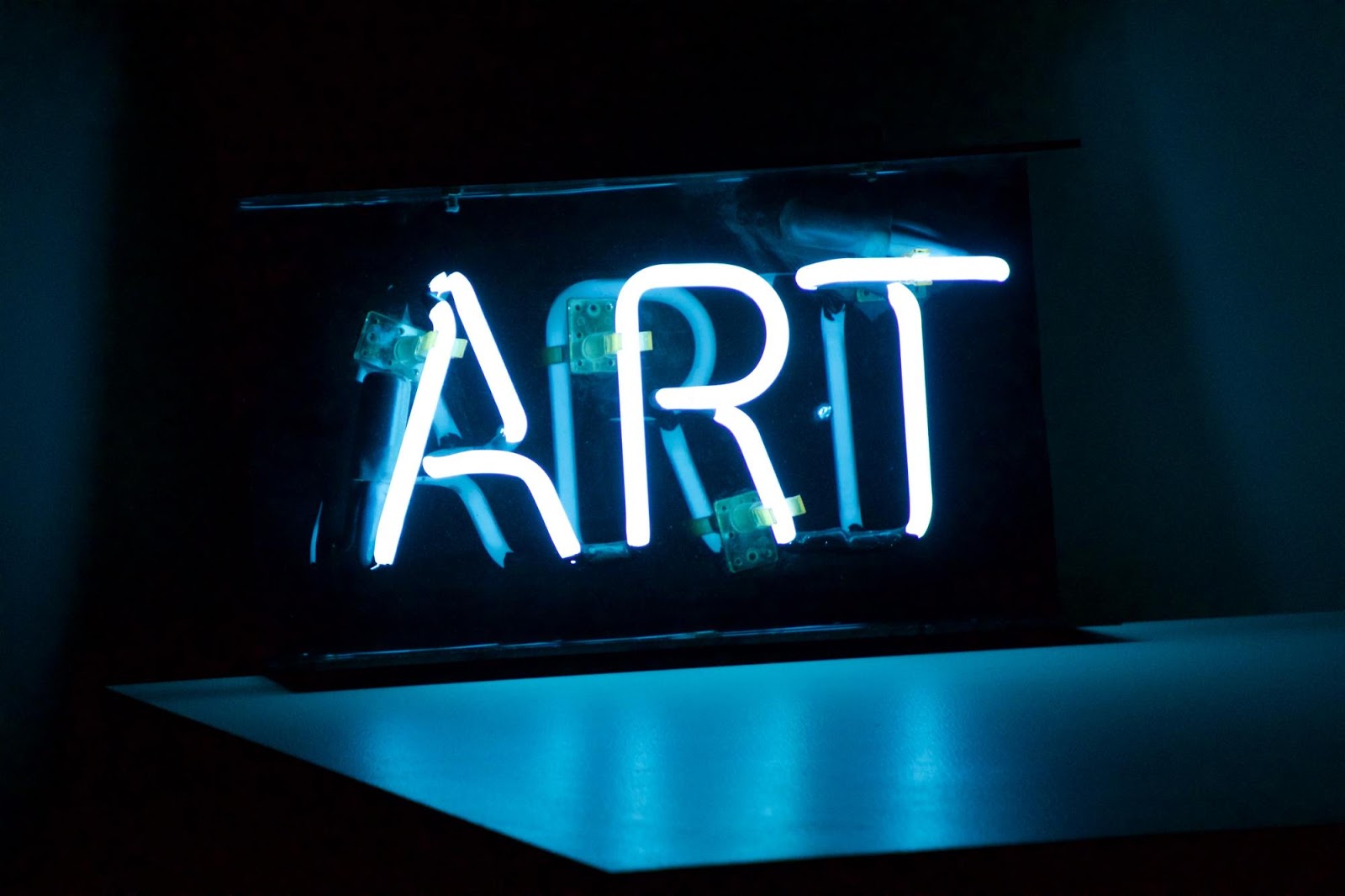
This is a time for art.

That’s a statement that I believe needs to be repeated.

The is a time for art.

Because this is what art does best. It gets us through human emotion and statements and stuff. Crappy stuff. And it does it by healing what has been wounded.

It helps us become seen when we need to be seen the most.

So yes, in the middle of all this, this is the time for art.

And art, dear Readers, is what I am going to give you.

And I’ve got two I want to share. Not mine though. I’m still working on stuff.

Pandemic, a poem written by Lynn Ungar, has been making the rounds. In this Chicago Tribune opinion, states that the poem made its way through social media. Even well-established poets like Rebecca Solnit gave it a thumbs up.

The poem is haunting and gentle in a way that makes you feel cradled in a cloud. It reminds us of humanity during a time some of us question what that humanity is or what it means. It reminds us that we are together despite being apart and that, in some ways is a solace.

Here is a stanza that haunts:

And when your body has become still,

reach out with your heart.

Know that we are connected

in ways that are terrifying and beautiful.

(You could hardly deny it now.)

Know that our lives

are in one another’s hands.

(Surely, that has come clear.)

Do not reach out your hands.

Reach out your heart.

Reach out your words.

Reach out all the tendrils

of compassion that move, invisibly,

where we cannot touch.

To touch, without touching. This is intimate. Close. Human.

My other piece of art in the time of global pandemic comes from friend Elisabet Velasquez. My friend is from NYC and is coming from a different angle to this pandemic. Also still human, also still haunting.

She shared her poem on her Instagram.

Mami & Papi go outside during quarantine is a poem where I see my family and I in the most. The idea that for people of a certain age, the world is finally moving at their pace. They have the space that they can move, the time that they can move and they do not feel rushed.

They feel this freedom at the time when they shouldn’t be free when they should be terrified in their own homes. But that freedom is too delicious and who knows when it will be their time again.

Like these line early in the poem:

Have you ever seen Brooklyn when it’s free

I haven’t — I ask him to describe it to me

so that I can remember this moment when papi sounds like he’s made it somewhere

and his body doesn’t owe anyone anything.

Or the line about her mom being able to go to the post office:

quick & painless. Her back might even feel young enough for a walk in the park later.

This poem is a gut check and a wake-up call. This was the rush was and this is what the social distancing is. And this is the living trauma of an epidemic.

Man, how I do love art.

Take a peek at both poems. Tell me what you think and share, share, share art.

This is a time for art.

Art saves,

-Icess


Friday, June 19, 2020

Crow Chronicles


We’ve lived on Wyandot Street in North Denver for thirty-eight years.  During that time, the street has had a mixed and culturally diverse population – Chicanos, Mexicanos, and Italians, for the most part, with sprinkles of this and that.  Lately, because of gentrification, the diversity has given way to a less colorful, paler population.  But that’s a different blog post.

The crows' nest is near the top of the tallest tree

One constant has been the crows that nest in the numerous trees on our block, including the gigantic evergreen that stands in our front yard.  I’ve been told it’s an Eastern White Pine, not native to Colorado. I don’t know for sure, but it is an impressive tree. Also, I call the birds I’m writing about “crows,” but to tell you the truth I don’t know the difference between a crow or a raven. Crows?  Or Nevermore?

The birds of this story are large black flying creatures that caw and strut and cuss like sailors. A few summers ago, I was challenged by a crow on my front steps.  He dared me to walk past him.  I turned away and acted as though I hadn’t heard him. I’ve had crows wait for me at the end of the block, jammering and screeching all the time I walked or jogged in their direction.  They can be annoying, and a little scary. Years ago, we found a dead crow in our basement.  How did it get there?
  
This year, as the pandemic settled into Denver, a pair of crows built a nest almost at the top of our pine tree.  They were  raucous and animated about their construction project, so they attracted attention from us and our neighbors.  And I’m sure that one reason we spent time spying on birds had something to do with the lack of activity away from home caused by the stay-at-home directives. For example, occasionally we would stand in the street to try to get a better view of the birds. These bird-watching activities helped fill the cabronavirus down time, and they became a diversion for an old man who wasn’t going anywhere anyway.

I have picked up a few items of interest about crows. They are supposed to be the most intelligent bird.  They remember slights and hold grudges.  They conduct funerals and inspire poets.  They are good learners and problem solvers.  Despite attempts to exterminate them, crows are more abundant than ever.

Spring progressed and it became obvious that the crow family had increased by at least one.  That news caused a buzz in at least three of the brick homes on the street.  We tried to get a glimpse of the chick (what do you call a baby crow?), that cheeped  and squawked for another worm, but who avoided being seen even though some of us used binoculars. 

Meanwhile, the proud parents (I assume crows can be proud, they certainly can be argumentative) carried out their parental duties with fervent devotion.  They constantly flew in and out of the top branches of their home tree, making as much noise as possible.  They flew over our heads if we stared too long in the direction of their nest.  They chased squirrels and other birds.  These chases made a good spectator sport, especially when the rat-faced squirrels had to jump from one tree branch to another or make a daredevil leap to the porch roof.  If they were too slow, they risked an assault from a crow’s beak.  I cheered on the crows in their war against our common enemy, although I wasn’t clear about what the crow would do with a squirrel if he did catch one. 
   
Of course we couldn’t leave well enough alone and we stirred things up.  First, we had to do some major tree trimming.  We hired a crew to cut branches off the pine and an ash tree.  The way the crows carried on, you’d think we had fire-bombed their nest.  We were careful to point out the nest to the tree-trimmers and they steered clear.  But the commotion – whine from the saws, numerous strange workers tearing apart branches, one guy actually climbing in the trees with ropes and saws – flustered the crows and they swooped and cawed and generally let everyone know that they hadn’t approved of the invasion of their domain.

Eventually, peace was restored, and even the crows had to feel better about the pruned trees. 

And then we decided we needed a new roof.  You can guess how the crows reacted to the roofers and the roof project.  It wasn’t pretty.

But something unexpected happened.  For some reason, the baby crow, whom I had never seen, was found by one of our neighbors near the pine’s trunk.  The well-intentioned neighbor thought that the baby crow could be injured by the debris that was tossed to the ground by the roofers.  He picked up the chick and placed it in our back yard.  That was a mistake.  The parents were extremely pissed off by that turn of events.  They flew overhead or sat on tree branches as they scolded the entire human race.  We were dragged into the argument even though we had done nothing except order a new roof.
  
Watching and waiting


Watching and waiting


Today, the baby crow is missing.  We think it is in the rose bushes that grow along the alley fence.  It’s probably injured, it may be dead.  One crow (the mother?) stands guard in front of the roses, daring us to come closer, staring at us as we water flowers and throw trash in our bins.  Watching over the ground level guard is another bird (the father?) perched on a telephone pole within earshot of whatever is in the roses.  They’ve been at it for hours. Contrary to their usual behavior, they are quiet and still.  They must be waiting for something.  Is this a funeral or a long night's watch? Their perseverance is admirable. Like good neighbors, we would help them if there was something we could do. 


One watcher on the pole, one under the chair

  
Life goes on.  We’re overwhelmed with pandemic death numbers and killer cops and racist idiocy from politicians.  Those are important things to struggle with, to change, to challenge.  But today, for a few minutes, I think about a pair of mangy, noisy birds, who have gone silent.  I become aware that the premature summer heat wave has turned into a cool gray autumn afternoon.  

Later.

_______________________


Manuel Ramos writes crime fiction and is working on another Gus Corral novel.

Thursday, June 18, 2020

Chicanonautica: José Torres-Tama, Part One: ¿Que es Sci-Fi Latino Noir?


Back in 2012, Melinda Palacio got me in touch with José Torres-Tama. We talked about something about him for Chicanonautica/La Bloga. Somehow we never got around to it. Damnear a decade steamrolled by. We went from SB-1070 and Sheriff Joe Arpaio to our current dystopian/apocalyptic stituation. He got his Taco Truck Theater. I became the Father of Chicano Science Fiction.
Suddenly, the chaos caused by the current administration was amplified by COVID-19, like the impact of a dinosaur-killing asteroid. Was this the sociological equivalent of an extinction level event? What are artists, writers, and creatives of all kinds to do when we have to be quarantined like the beginning of some sci-fi flick? I hunkered down, and bashed away at my novel. Then, via the internet, things began to happen. Zoom, and Guillermo Gomez-Peña, pulled me into a new, evolving reality. You can read about this in earlier Chicanonauticas. Torres-Tama was part of this migration to another alien environment, after his event/presentation, we got in touch after his Dreamocracy in America event, and decided that it was about time we did that interview/write-up.
There was a flurry of text messages. Texting was something I had been resisting for years, but here I was again, being pulled, kicking and screaming into a future not-of-my-own making. He also sent me a lot of emails with attachments to documents and videos. There would be no lack of material here.
I thought a good way to begin was to ask him what he meant by “scifi Latino noir” as he describes a lot of his work. He sent me a series of images. Right away, we entered a different culture from the usual Anglo/Americano sci-fi, which tends to be verbal/cerebral, coming from the reasoning part of the brain, even when showing us monsters and exploding spaceships. Latinoid (pardon me if I feel justified in using my own term in this context) tends to be visual, sensual, art/image-oriented.

The images, interspersed with the text here (uh-oh, I’m combining the visual with verbal, making this into a multimedia experience . . .) were of his performances. There he is as various “alien” characters, the alienness is both sci-fi, and the Latinoid experience, the props reference religion and politics. These are not just pretty pictures, they mean something. Latinoid artists love to slather on layers of meanings. Marshall McLuhan said that the medium is the message, but with us messages are our media. No pure abstraction, art for art’s sake, “politics just distracts from the sort of stuff that makes rich patrons feel good and spend money”sort of thing.
After more communications at that same time that he was doing other things, like being interviewed on Nuestra Palabra, a program out of Houston from Pacifica Radio, and writing an Op-Ed piece on immigrants trapped in Louisiana ICE Detention Center for Colorlines, a social justice daily, as well as dealing with landlord troubles. “I do have my Activist Bat Utility Belt on because it's essential gear during this pandemic.” He texted me the following:
My “sci-Fi Latino noir” perspective was imposed upon me by a country that labeled me a “permanent resident alien” when I first entered its territory in 1968. To add to the “alien” theme, I was given a “Green Card.” So being an “alien” in this U.S. sci-fi reality was written into the script for me and for “other aliens” with such a designation in the so-called land of the free. This is the “alien” prism that launches my point of departure and perspectives here in the United States of Amnesia... JTT
Yeah, I understand. As a born-in-East L.A. Chicanonaut, I had a similar identity thrust on me, by the same society from the opposite direction. I see how an Ecuadorian with Quechua blood, growing up in New York, living in New Orleans, working as a writer, poet, journalist, renegade scholar, educator, visual and performance artist, an activist, and father, equals a powerful kind of sci-fi that is not just a genre of light fiction to entertain the masses as they go about the business of helping transform the entire planet into liquid assets.
We needed to talk more . . .
I’ve used all this space and I’ve been just introducing. I’m going to have to do like they did with the ancient, black&white Flash Gordon serials, and continue, in two weeks . . .


Ernest Hogan's day job at the Phoenix Public Library is back online, albeit in a newfangled “curbside service” model, where he wears a mask, and the public isn't allowed into the building. He's also writing like crazy, as editors and publishers get back to him. Buy Latinx Risng. Watch for big news soon!