Showing posts with label A Dozen On Denver. Show all posts

Friday, February 05, 2010

Field of Honour and A Dozen on Denver


Field of Honour
Max Aub, translated by Gerald Martin
Verso

Originally published in Mexico in 1943, Aub wrote Field of Honour in 1939, only a few years after the events depicted in the book. It is the first installment of a six-novel epic about the Spanish Civil War that Aub called The Magic Labyrinth. Between the writing and the publication, Aub had been imprisoned by the French, deported to a concentration camp in the Algerian Atlas Mountains to work on a railroad the French were building, and eventually escaped to Mexico where he fraternised with many Spanish intellectuals who also had fled into exile. He obtained Mexican citizenship but, as the Introduction by Ronald Fraser notes, he never felt "totally at home there." Aub was of the generation that came of age in 1927, which included Lorca, Buñuel, Dalí and several other artists and writers, all of whose works celebrated the brief Second Republic before the military coup and the ensuing civil war.

Aub wrote about "reality's impact on me and mine on reality." He considered Spain the "labyrinth" at the core of his books, and the stories represented "real" rather than imagined events. Fraser writes that "whatever he had experienced he used 'to write what I imagine.'"

Field of Honour follows Rafael López Serrador from his rural village to the provincial capital Castellon, and then to Barcelona in the years leading up to the start of the Civil War in July 1936. Along the way, the naive, ill-prepared youth immerses himself in the seething politics of the day. Serrador learns from everyone: idealist, individualist, revolutionary, reactionary. He associates with anarchists, falangists, communists, pimps, whores, Carlists -- in short, the men and women who represented all the competing forces in Spain that eventually tore the country apart and set the stage for Franco's dictatorship.

Fraser also points out that "by literary inclination, Aub was a dramatist -- in which individuals' hopes, doubts, determinations, and despair are expressed, often with a bitter, ironic thrust." The playwright's touch is obvious. Much of the action of the novel is presented in dialog between the various characters. These long but vivid scenes reminded me of the heady days of my youth when we gathered for hours of political argument, cultural awareness, debate and polemics. Similarly, Aub's characters play word games with one another. They use puns, puzzles, poetry, and dogma in their matches of wit and ideology. They argue in the smoky bars and dimly lit streets about the class struggle, nationalism and internationalism, the Russian Revolution and the Spanish monarchy. Aub skillfully sets the scene (there also are paragraphs and paragraphs of description) -- he wants us to see, smell and feel the Barcelona he knew and obviously loved, the Barcelona on the verge of exploding, a cauldron of boiling humanity yearning to create a destiny and a future. When the explosion finally occurs, it is more shocking and abrupt than any of them anticipated, and much more definite.

I quote at length from a passage near the end of the book to provide a glimpse into the past that Aub remembered and revealed with scathing brilliance.

There are no electric lights in Barcelona. Nor a moon. Only gunfire and blazing churches. Crowds in the streets move from one fire to another. The firemen tried to go out, but the people cut the hoses. The churches burn, but not the Cathedral, nor the monastery of Pedrables. Gothic buildings are not to be burned; this is the only order the people take note of. Barcelona in the darkness but with enough churches to be able to walk round the city, with the spectacle of its dead horses and flashes of gunfire from the fascists safely installed behind their balconies and murdering with impunity. A million inhabitants whose only light is a few gigantic torches. All the churches look like the Sagrada Familia now, and Barcelona smells of bonfires. Long branches, thick tongues of sparks against the blue, black night; and the smoke against the stars. People move quietly from one place to another, with their tragic sense of life in their pockets, hoping for a miracle; realizing that a new world is being born, one which may die in its infancy, as so often before in this very same bed; but they can all smell new birth; and, suspecting it, no one says anything; all that's to be heard is the crackling of fire. Fire rising to the skies and the black city with its wounded in the doorways and killers on the roofs. You can see the belly of the smoke in the light of the flames, but not its shoulders or its crest.

For a much more in-depth and detailed review of Field of Honour, I recommend Jonathan Blitzer's article at Words Without Borders. It is excellent and can be found here.


A Dozen on Denver Booksigning

Join several of the contributors to A Dozen on Denver (including me) next week, February 11, at the Tattered Cover, LoDo, as we celebrate the formal publication of the stories we contributed to the Rocky Mountain News series commemorating Denver's 150th birthday.

My short story in the collection, Fence Busters, was a finalist for the Top Hand Award (Colorado Authors League). The story is about Kiko, a young Chicano shoeshine boy trying to make a few bucks on Larimer Street, circa 1958, who has a memorable encounter with the one and only Jack Kerouac. Hope to see you there. Here's the bookstore's announcement of the event.

February 11, 2010 - 7:00pm


Several contributors to the book A Dozen on Denver: Stories (Fulcrum), will join us to read from and sign this wonderful book. In this original tribute, twelve talented authors, including Margaret Coel, Pam Houston, Sandra Dallas, Nick Arvin, Joanne Greenberg, Connie Willis, Manuel Ramos, Arnold Grossman, Robert Greer, Diane Mott Davidson, Laura Pritchett, and Robert Pogue Ziegler, celebrate Denver’s 150th anniversary, each creating a unique story based on a different decade in the city’s colorful history. Ranging from the pioneer days to WWII aftermath to a haunting vision of the future, this lively volume offers an eclectic mix of exceptional storytelling, each complemented by contemporary illustrations.

Request a signed copy: books@tatteredcover.com

Location:
Tattered Cover Book Store Historic LoDo
1628 16th St.
Denver, Colorado 80202


Keep on reading. Later.

Friday, August 28, 2009

To Boldly Go Where No Juan Has Gone Before


Spaced-out Chicanos

The following press release recently showed up in my inbox. Two Chicanos in space, on the same spaceship - juan giant step for raza. What a movie this could be. Is the solar system ready for a pair of fast-talking pachucos lowriding through outer space? Houston, no hay problema. George Lopez and Paul Rodriguez in the starring roles.

And who knew that our blogging comrade also has an exciting double life as an astronaut?

The space shuttle is scheduled for lift-off on August 28 at 11:59 PM.

HOUSTON - NASA astronaut José Hernández, set to fly aboard space shuttle Discovery on STS-128, is providing insights about his mission on Twitter in both English and Spanish. He is the agency's first bilingual Twitterer.

Hernández, whose Twitter account is astro_jose, can be followed at:

http://www.twitter.com/astro_jose

Hernández, who considers Stockton, Calif., his hometown, grew up in a migrant farming family, traveling each year between Mexico and California. He did not learn English until the age of 12.

It will be the first shuttle mission to feature two Latino astronauts. Danny Olivas, who also is of Mexican descent, is among Hernández's six crew mates.

For Hernández's complete biography, visit:

http://www.jsc.nasa.gov/Bios/htmlbios/hernandez-jm.html

Olivas's biography is here:

http://www.jsc.nasa.gov/Bios/htmlbios/olivas.html


For more information about the STS-128 mission, visit:

http://www.nasa.gov/mission_pages/sh
uttle/shuttlemissions/sts128

More spacey news -- the official location of Aztlán has finally been mapped. Turns out that Aztlán is on one of Saturn's moons, Titan. At least according to NASA, that's where you can find it. More about this at this link, or here.


From NASA - original caption released with image: The Cassini spacecraft charts a quartet of dark albedo features on the moon Titan. From upper left to lower right of the image are Fenzal, Aztlan, Aaru and Senkyo.


Su Teatro 2009-2010 Season Kicks Off with José Torres-Tama

The Cone of Uncertainty:
New Orleans After Katrina


Four years after Ka
trina, José Torres-Tama utilizes various performance mediums, including satirical reenactments, socio-political commentary, movement, and sound in his acclaimed solo piece The Cone of Uncertainty: New Orleans After Katrina--a deep, first-hand exploration of the rich cultural history of the Big Easy and a wry analysis of the devastating aftermath of Hurricane Katrina by a native son.

Please join us as we kick off a season full of American Masterpieces.

The Cone of Uncertain
ty plays
Friday, Septembe
r 4 at 7pm
Saturday, September 5 at 7pm
at the Denver School of the Arts (7111 Montview Blvd--just off Quebec, a couple blocks north of Colfax).

Tickets are $18, $15 students/seniors, $12 each for groups of 12 or more. Call to purchase: 303.296.0219, and ask about our special student group discount
rate.

Or, purchase an all-inclus
ive Su Teatro Season VIP, and see The Cone of Uncertainty plus four other theater performances, and receive a full festival pass to the XicanIndie FilmFest, Neruda Poetry Festival, and 14th Annual Chicano Music Festival and Auction, all for just $145! Call now: 303.296.0219.


Poetry y Más
The Colorado Humanities and Arts Council (CHAC) presents the monthly Poetry y Más on September 12, 2:00 - 4:00 pm. This month features celebrated guest poets Giovanni Lopez and Ara Cruz with his new book A Journey in Red & Black Ink.

Peruse the full lineup of CHAC events at the website.

772 Santa Fe Drive Denver, CO 80204 [ view map ]
phone: 303-571-0440
HOURS: Wednesday & Thursday 10 AM - 4 PM
Friday 12 - 10 PM & Saturday 12 - 4 PM


A Dozen on Denver in Book Form

A Dozen on Denver: Stories
Fulcrum Publishing
November 15, 2009

From the publisher:

In this original tribute, twelve talented authors celebrate Denver’s 150th anniversary, each creating a unique story based on a different decade in the city’s colorful history. Ranging from the pioneer days to WWII aftermath to a haunting vision of the future, this lively volume offers an eclectic mix of exceptional storytelling, each complemented by contemporary illustrations. Edited by the the Rocky Mountain News and featuring twelve Colorado authors: Margaret Coel, Pam Houston, Sandra Dallas, Nick Arvin, Joanne Greenberg, Connie Willis, Manuel Ramos, Arnold Grossman, Robert Greer, Diane Mott Davidson, Laura Pritchett, and Robert Pogue Ziegler. Illustrated by Charles Chamberlin.

You can learn how this project came about here, and here. It was probably the last great idea from the late Rocky Mountain News.

Remember the 3 L's -- Lopez, Late Night, 'Leven.


Later.

Friday, January 23, 2009

Good News and New Books

HOW ABOUT SOME GOOD NEWS?

More American Adults Read Literature According to New NEA Study

Literary reading on the rise for first time in history of Arts Endowment survey

Washington, D.C. -- For the first time in more than 25 years, American adults are reading more literature, according to a new study by the National Endowment for the Arts. Reading on the Rise documents a definitive increase in rates and numbers of American adults who read literature, with the biggest increases among young adults, ages 18-24. This new growth reverses two decades of downward trends cited previously in NEA reports such as Reading at Risk and To Read or Not To Read.

"At a time of immense cultural pessimism, the NEA is pleased to announce some important good news. Literary reading has risen in the U.S. for the first time in a quarter century," said NEA Chairman Dana Gioia. "This dramatic turnaround shows that the many programs now focused on reading, including our own Big Read, are working. Cultural decline is not inevitable."

Among the key findings:

Literary reading increases

  • For the first time in the history of the survey - conducted five times since 1982 - the overall rate at which adults read literature (novels and short stories, plays, or poems) rose by seven percent.
  • The absolute number of literary readers has grown significantly. There were 16.6 million more adult readers of literature in 2008. The growth in new readers reflects higher adult reading rates combined with overall population growth.
  • The 2008 increases followed significant declines in reading rates for the two most recent ten-year survey periods (1982-1992 and 1992-2002).

Demographics of literature readers

  • Young adults show the most rapid increases in literary reading. Since 2002, 18-24 year olds have seen the biggest increase (nine percent) in literary reading, and the most rapid rate of increase (21 percent). This jump reversed a 20 percent rate of decline in the 2002 survey, the steepest rate of decline since the NEA survey began.
  • Since 2002, reading has increased at the sharpest rate (+20 percent) among Hispanic Americans, Reading rates have increased among African Americans by 15 percent, and among Whites at an eight percent rate of increase.
  • For the first time in the survey's history, literary reading has increased among both men and women. Literary reading rates have grown or held steady for adults of all education levels.

Trends in media and literary preferences

  • Fiction (novels and short stories) accounts for the new growth in adult literary readers.
  • Reading poetry and drama continues to decline, especially poetry-reading among women.
  • Online readers also report reading books. Eighty-four percent of adults who read literature (fiction, poetry, or drama) on or downloaded from the Internet also read books, whether print or online.
  • Nearly 15 percent of all U.S. adults read literature online in 2008.

A tale of two Americas

  • The U.S. population now breaks into two almost equally sized groups – readers and non-readers.
  • A slight majority of American adults now read literature (113 million) or books (119 million) in any format.
  • Reading is an important indicator of positive individual and social behavior patterns. Previous NEA research has shown that literary readers volunteer, attend arts and sports events, do outdoor activities, and exercise at higher rates than non-readers.

The NEA research brochure Reading on the Rise is based on early results from the 2008 Survey of Public Participation in the Arts (SPPA). SPPA is a periodic survey that has been conducted five times since 1982 using data obtained in partnership with the United States Census Bureau. Detailed results from the 2008 survey will be available in 2009. The 2008 SPPA survey has a sample size of more than 18,000 adults. The 2008 survey's literary reading questions - which form the focus of Reading on the Rise - were the same as in previous years: "During the last 12 months, did you read any a) novels or short stories; b) poetry; or c) plays?" Since 1992, the survey also has asked about book-reading. In 2008, the survey introduced new questions about reading preferences and reading on the Internet.

Reading on the Rise, along with other NEA research, is available for download at www.nea.gov/research.


MORE GOOD NEWS

SU TEATRO WILL BE AMONG THE 2008 RECIPIENTS OF MAYOR’S AWARDS FOR EXCELLENCE IN THE ARTS

Free community reception February 18

(DENVER) Mayor John Hickenlooper, the Denver Office of Cultural Affairs and Denver Commission on Cultural Affairs are pleased to announce the 2008 recipients of the Mayor’s Awards for Excellence in the Arts. The 2008 honorees are Charles Burrell, Denver Young Artists Orchestra, Su Teatro and The Bloomsbury Review. In addition, the Mayor’s Cultural Legacy Award will be presented to Noël Congdon.

The 2008 Mayor’s Awards for Excellence in the Arts reception will be held on Wednesday, February 18, 2009 from 6:30 p.m. to 7:30 p.m. (doors open at 5:30 p.m.) at the Ellie Caulkins Opera House in the Denver Performing Arts Complex, 14th St. & Curtis St. Mayor Hickenlooper will present the awards to the honorees at the event. The public is invited to attend this free community celebration. Seating will be first-come, first-served; no RSVP necessary. Performances for the evening will include: Rocky Mountain Children’s Choir, Sweet Edge Dance Company and Purnell Steen & Le Jazz Machine.

Since 1986, the Mayor’s Awards for Excellence in the Arts annually recognize individuals and organizations that have made significant and lasting contributions to the arts in the City and County of Denver.

Here's what the announcement says about Su Teatro -

Su Teatro was formed in 1972 in a University of Colorado classroom and quickly became an important artistic arm of the Chicano self-identity and civil rights movement of the time. Su Teatro is the third oldest Chicano theater company still in existence—after Teatro Campesino and Teatro Esperanza—and has been recognized as a significant force in both the Chicano arts aesthetic and American Theater. Su Teatro’s mission is to create, produce and promote theater and other art that celebrates the experiences, history, language and heritage of Latinos in the U.S.and the Americas.

In 1989, Su Teatro emerged as the larger cultural arts center, El Centro Su Teatro. They expanded their offerings to include annual projects such as the XicanIndie FilmFest: Latino World Cinema, Neruda Poetry Festival, which includes the Barrio Slam competition, St. Cajetan’s Reunification Project, Chicano Music Festival and Auction and a multi-tiered arts education program called the Cultural Arts Institute.

The organization is poised to expand once again with the purchase of a new space on Santa Fe Drive in Denver’s historic Westside neighborhood. Though the organization continuously experiments with form and content, Su Teatro remains committed to education, social justice and community enrichment.

You can read more about the award and the recipients at this link to a Denver Post story.


LITTLE BIT MORE GOOD NEWS

The recent series of short stories about Denver collectively known as A Dozen on Denver and printed in the Rocky Mountain News has been picked up by Fulcrum Publishing. The twelve stories will be published in book form in Fall, 2009, "positioned and priced for the Holiday season" as the announcement says. A Dozen on Denver has been a great project that brought together a varied and terrific group of writers who produced some outstanding stories about Denver through the decades. The project helped celebrate the 150th birthday of Denver and the News in a unique and literary way. I have a story in the collection so I am not completely objective, but I heartily recommend the stories (and the book, of course). Until the book is available, you can read my contribution, Fence Busters, here; and you can get to all twelve stories at this link.


NEW BOOKS

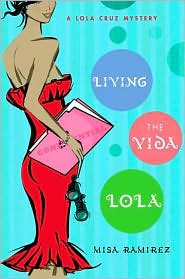
Living The Vida Lola
Misa Ramirez
St. Martin's Minotaur, February 7, 2009

Dolores “Lola” Cruz loves shoes, kung fu, and her job as an underling at Camacho and Associates, a private investigation firm in Sacramento. After a year and a half on the job, her sexy and mysterious boss, Manny Camacho, finally assigns Lola her first big case—a woman’s disappearance. If Lola gets it right, it could mean a big bump up the career ladder. But this is no grocery store stakeout. The woman turns up dead and the same thing could happen to Lola if she doesn’t watch her back.


The Sweet Smell of Home
Leonard F. Chana, Susan Lobo, Barbara Chana
University of Arizona Press, July, 2009

A self-taught artist in several mediums who became known for stippling, Leonard Chana captured the essence of the Tohono O'odham people. He incorporated subtle details of O'odham life into his art, and his images evoke the smells, sounds, textures, and tastes of the Sonoran desert -- all the while depicting the values of his people.

He began his career by creating cards and soon was lending his art to posters and logos for many community-based Native organizations. Winning recognition from these groups, his work was soon actively sought by them. Chana's work also appears on the covers and as interior art in a number of books on southwestern and American Indian topics.

The Sweet Smell of Home is an autobiographical work, written in Chana's own voice that unfolds through oral history interviews with anthropologist Susan Lobo. Chana imparts the story of his upbringing and starting down the path toward a career as an artist. Balancing humor with a keen eye for cultural detail, he tells us about life both on and off the reservation.

Eighty pieces of art -- 26 in color -- grace the text, and Chana explains both the impetus for and the evolution of each piece. Leonard Chana was a people's artist who celebrated the extraordinary heroism of common people's lives. The Sweet Smell of Home now celebrates this unique artist whose words and art illuminate not only his own remarkable life, but also the land and lives of the Tohono O'odham people.

what i'm on
Luis Humberto Valadez
University of Arizona Press, March, 2009

Luis Valadez is a performance poet and his poems shout to be read aloud. It's then that their language dazzles most brightly. It's then that the emotions bottled up on the page explode beyond words. And there is plenty of emotion in these poems. Frankly autobiographical, they recount the experiences of a Mexican American boy growing up in a tough town near Chicago. Just as in life, the feelings in these poems are often jumbled, sometimes spilling out in a tumble, sometimes coolly recollected. Sometimes the words jump and twitch as if they'd been threatened or attacked. Sometimes they just sit there knowingly on the page, weighted down by the stark reality of it all.

José García
put a thirty-five to me
my mother was in the other room
He would have done us both
if not for the lust of my fear

This new Mexican American/Chicano voice is all at once arresting, bracing, shocking, and refreshing. This is not the poetry you learned in school. It owes as much to hip hop as it does to the canon. But Valadez has paid his academic dues, and he certainly knows how to craft a poem. It's just that he does it his way.

i anagram and look and subject to deformation and reconfiguring . . .
it ain't events or blocks that ahm jettisoning through this process
it be layers of meaning, identity, narrative, and ego that gets peeled off
i can only increase my own understanding


Dark Thirty
Santee Frazier
University of Arizona Press, February, 2009

Writing sometimes in dialect, sometimes in gunshot bursts, sometimes in sinuous lines that snake across the page, Santee Frazier crafts poems that are edgy and restless. The poems in Dark Thirty, Frazier's debut collection, address subjects that are not often thought of as "poetic," like poverty, alcoholism, cruelty, and homelessness. Frazier's poems emerge from the darkest corners of experience: "I search the cabinet and icebox -- drink the pickle juice / from the jar. Bologna, / hard at the edges, / browning on the kitchen / table since yesterday. / I search the cabinet and icebox -- the curdling / milk almost smells drinkable."

Dark Thirty takes us on a loosely autobiographical trip through Cherokee country, the backwoods towns and the big cities, giving us clear-eyed portraits of Native people surviving contemporary America. In Frazier's world, there is no romanticizing of Native American life. Here cops knock on the door of a low-rent apartment after a neighbor has been stabbed. Here a poem's narrator recalls firing a .38 pistol -- barrel glowing like oil in a gutter-puddle" --for the first time. Here a young man catches a Greyhound bus to Flagstaff after his ex-girlfriend tells him he has fathered a child. Yet even in the midst of violence and despair there is time for the beauty of the world to shine through: "The Cutlass rattling out / the last fumes of gas, engine stops, / the night dimly lit by the moon / hung over the treetops; / owls calling each other from / hilltop to valley bend."

Like viewing photographs that repel us even as they draw us in, we are pulled into these poems. We're compelled to turn the page and read the next poem. And the next. And each poem rewards us with a world freshly seen and remade for us of sound and image and voice.


Later.

Friday, November 21, 2008

Awards, New Books, Events, and Bolaño

In today's La Bloga:

RECOGNITION
NEW BOOKS
EVENTS

RECOGNITION

UNITED STATES ARTISTS FELLOWSHIPS
Los Angeles-based United States Artists has announced the recipients of fifty USA Fellowships totaling $2.5 million.

Now in its third year, the fellowship program honors artists from all disciplines who demonstrate artistic excellence, unique vision, and significant contributions to their fields with unrestricted grants of $50,000. Past recipients include Su Teatro (Denver) artistic Director Anthony J. Garcia (click here for an interview with Mr. Garcia.)

Hailing from twenty-one states and ranging in age from 31 to 82, this year's fellows include five working in architecture and design, four in crafts and traditional arts, five in dance, nine in literature (fiction, nonfiction, and poetry), six in media (film and video), six in music, five in theater arts, and ten in visual arts.


Rosalba Rolón is the Artistic Director for El Teatro Pregones from the Bronx New York; she has directed her company at El Centro Su Teatro in the productions of El Bolero Fue Mi Ruina and El Apagon, and will return in 2010 with their acclaimed production of Immigrantes/Migrants. She is also the former Chair of the National Association of Latino Arts and Culture.

The USA website says this about Rolón:

Actor, director, writer, and dramaturge Rosalba Rolón is the founder and artistic director of Pregones Theater in the South Bronx. Since 1979 she has shared responsibility for building a distinct Latino musical theater repertory with more than 50 premier works. Pregones has taken its work around the world, with performances in Spain, Portugal, Russia, Mexico, Nicaragua, France, Belgium, the Netherlands, the Slovak Republic, and Puerto Rico. Rolón is an active teacher and advocate for young artists. She has received numerous awards for her work in the Latino community and was recently named the El Diario/La Prensa Outstanding Woman of the Year.

The 2008 USA Fellows include free-jazz pioneer Muhal Richard Abrams, conceptual artist Michael Asher, musician and Chinese pipa virtuoso Wu Man, playwright and hip-hop theater performer Will Power, pioneer artistic director Bill Rauch, installation artist Kara Walker, experimental architect Douglas Garofalo, traditional sweetgrass basket weaver Mary Jackson, legendary tap dancer Dianne Walker, Faulkner Award-winning novelist and short story writer Barry Hannah, and independent filmmaker William Greaves.

Artists drive our nation's cultural life and give voice to who we are and where we're headed, said Susan V. Berresford, United States Artists board chair and former president of the Ford Foundation, which helped to establish USA in 2006. Many of this country's two million artists struggle to make ends meet and, particularly in this challenging economic climate, it is essential to invest in our nation's finest creative voices.


THE PEN OAKLAND-JOSEPHINE MILES LITERARY AWARDS
Lisa Alvarado provided all the details for these awards in her post yesterday. I want to add my congratulations to the winners, and give a big tip of the sombrero to:


187 Reasons Mexicanos Can't Cross the Border: Undocuments 1971—2007 (Poetry & Short Stories) by Juan Felipe Herrera (City Lights)


The Stillness of Love and Exile (Fiction) by Rosa Martha Villarreal (Tertulia Press)


NEW BOOKS
2666 by Roberto Bolaño
Farrar, Straus and Giroux; November, 2008

La Bloga has discussed Roberto Bolaño a few times. In my reviews, I praised Distant Star (New Directions, 2004) and a collection of stories, Last Evenings on Earth (New Directions, 2007). My comrade Michael Sedano reviewed The Savage Detectives, (Farrar, Straus and Giroux, 2007) - suffice to say that Señor Sedano did not jump aboard the Bolaño bandwagon. I'm about halfway through Savage Detectives and I admit that I am feeling overwhelmed by the book. However, as a critic observed, many people who like Bolaño cannot tell you why. They disagree about why they like this writer and book; why they think he is important; and what his lasting influence may be. They agree only that they admire the writing. Put me in that camp. Reading Bolaño has become my guility pleasure, but I'm not sure why I should feel guilty.

The Savage Detectives is a wild tale centered on an unorganized group of young anti-establishment poets who think they have created a poetry movement that could dramatically change Spanish-language literature. Along the way they have to confront their own failures, tragedies, and disappointments - the defeat of their generation. Bolaño's disillusionment with the revolutionary fervor and eventual ineptitude of Latin American youth is one of the themes he returns to periodically in his books.

Now, in English, here comes Bolaño's opus - 912 pages translated by Natasha Wimmer. The publisher says:

Composed in the last years of Roberto Bolaño’s life, 2666 was greeted across Europe and Latin America as his highest achievement, surpassing even his previous work in its strangeness, beauty, and scope. Its throng of unforgettable characters includes academics and convicts, an American sportswriter, an elusive German novelist, and a teenage student and her widowed, mentally unstable father. Their lives intersect in the urban sprawl of Santa Teresa—a fictional Juárez—on the U.S.-Mexico border, where hundreds of young factory workers, in the novel as in life, have disappeared.

And here's one review (typical of the praise this book is getting):

Bolaño’s masterwork . . . An often shockingly raunchy and violent tour de force (though the phrase seems hardly adequate to describe the novel’s narrative velocity, polyphonic range, inventiveness, and bravery) based in part on the still unsolved murders of hundreds of women in Ciudad Juárez, in the Sonora desert near the Texas border. —Francisco Goldman, The New York Review of Books


The Paris Enigma by Pablo De Santis
Harper; November 11, 2008

It is 1889, and the world anticipates the Paris World’s Fair and the opening of Monsieur Eiffel’s iconic tower. The Twelve Detectives—a society of the twelve most famous detectives from around the world—have been asked to discuss the secrets of their trade as part of the fair’s lineup of events. The Twelve travel to Paris to convene as a single body for the first time. But one detective is conspicuously absent: the legendary founding member of The Twelve, Renato Craig. In his place he sends his novice assistant, Sigmundo Salvatrio—son of a shoemaker, a lifelong detective-arts devotee, and the only remaining student of Craig’s famed Academy for Detectives in Buenos Aires. Salvatrio arrives in Paris, carrying a secret message meant only for Craig’s best friend and cofounder of The Twelve, the brilliant, brooding, and fiercely competitive Viktor Arzaky. De Santis won the inaugural Premio Planeta-Casa de América de Narrativa prize for best Latin American novel for The Paris Enigma.

EVENTS
A CELEBRATION: BRIDGING THE DIVERSITY GAP FOR YOUNG READERS
From the Denver Woman's Press Club:

Celebrate a pre-Thanksgiving feast of multicultural stories, food and arts with Denver Woman Press Club members Reneé Fajardo and Anita Jepson-Gilbert.

Reneé is author of four books of true stories with recipes from all over the world. They are Holy Mole, Guacamole; Chili Today, Hot Tamale; Ole Posole; and Pinch a Lotta Enchiladas. Anita is the author of a bilingual book entitled Maria and The Stars of Nazca, about the mysterious Nazca line drawings in Peru and the woman who revealed them to the world.

Bring your own stories to share. Young readers are welcome as well. Free and open to all.

Where: Denver Woman's Press Club 1325 Logan St. Denver. Park in the lot north of the clubhouse. November 23 2-5 PM Contact: Bonnie McCune bf_mccune@yahoo.com

THE DOZEN DO THE TATTERED COVER

Several of the authors who contributed to the Dozen on Denver literary project sponsored by the Rocky Mountain News will gather at the Tattered Cover Book Store (Colfax Avenue store) in Denver on November 22 at 2:00 PM. The writers will discuss the project and their individual stories, and sign their books, which the book store will have available. I hope you can make it.

Later.

Friday, October 17, 2008

Bits and Pieces


THE COLORADO BOOK AWARDS were announced on October 8. The winner in the History category was The Life and Times of Richard Castro: Bridging a Cultural Divide by Richard Gould (Colorado Historical Society). Gould's book tells the story of a Colorado political leader who was beaten by the police as a young man. Years later his house was bombed and he was shot by political rivals. Castro eventually served as a state representative. He died at age 44 from a cerebral hemorrhage. Other nominees for the Colorado Book Awards included aaron a. abeyta for Rise, Do Not Be Afraid (Ghost Road Press) in the Fiction category, and Guillermo Vidal for Boxing For Cuba: An Immigrant's Story of Despair, Endurance & Redemption (Ghost Road Press) in the Creative Non-Fiction category.

FROM LIBRERIA MARTINEZ: "Join the Friends of the Signal Hill Library to welcome guest authors, Margo Candela, Mary Castillo, Reyna Grande, and Jamie Martinez Wood who will discuss their fictional accounts of the Latina experience from three different perspectives. Margo Candela, will discuss More Than This, a unique falling-in-love story; Ms. Castillo's book, Switchcraft, is a spirited romantic comedy about two best friends who share a life-changing trading places experience. Reyna Grande's work, Across a Hundred Mountains, tells the story of a small group of undocumented immigrants and makes their struggles and humanity real to the reader. Jamie Martinez Wood's debut novel, Rogelia's House of Magic, is about three different 15-year old girls who find friendship and special powers as they are trained by a wise old woman. This free program is sure to be a thought provoking evening."

October 20, 7:00 - 8:30 PM, Signal Hill Park Community Center, 1780 E. Hill Street, Signal Hill, CA


A DOZEN ON DENVER, the Rocky Mountain News' project to celebrate Denver's (and its own) 150th birthday with fiction by Colorado authors, has planned two events for November where the twelve authors and their stories will be featured. On November 14 at 5:00 PM, the News will announce the winner of its writing contest (the 12th writer and story) during a reception and general party. All of the participating authors are expected. The party will take place in the lobby of the Denver Newspaper Agency, 101 W. Colfax Avenue, Denver (303-954-5000). Then, on November 22 at 2:00 PM, the Tattered Cover Book Store (Colfax Avenue store) will host an event to honor A Dozen On Denver where all of the authors' books will be available for signing. These events are free and open to the public. In the spirit of the celebration, and to publicly demonstrate your support for an excellent idea from the Rocky Mountain News, I urge those of you who can attend either or both of these events to show up and join in the literary fun.

THE POWER OF ONE - As part of the Aurora Public Library's Power of One series, five authors will conduct a panel around the general theme of the series: the power that one word, one image, one perspective or one moment can have on all around us. Authors include Margaret Coel, Christine Goff, Robert Greer, RT Lawton, and Manuel Ramos. The program is set for October 26 at 2:00 PM at the Aurora Public Library, 14949 E. Alameda Parkway, Aurora, CO. 303-739-6634.


JAMES CRUMLEY - Finally, and belatedly, I wanted to note the passing of a great American writer, James Crumley. Mr. Crumley died on September 17. His death has been noted by many others with praise and admiration, feelings shared by his readers from around the world.

The New York Times repeated this quote in its obituary: Though Mr. Crumley’s books attracted a devoted readership, they were never best sellers. He was philosophical about this.“I’m not middlebrow and middle class,” he said in the Dallas Morning News interview. “Sure, I’d like it if more people read the books. My children would like it. My ex-wives would like it. But that’s just not what I’m about.”

Crumley's best-known work, The Last Good Kiss, is considered an American crime fiction masterpiece. It opens with these famous lines:

When I finally caught up with Abraham Trahearne, he was drinking beer with an alcoholic bulldog named Fireball Roberts in a ramshackle joint just outside of Sonoma, California, drinking the heart right out of a fine spring afternoon.

That's all I got this week.

Later.


Friday, September 26, 2008

Mr. Spic Goes To Washington


Mr. Spic Goes To Washington
Ilan Stavans; Illustrated by Roberto Weil
Soft Skull Press (September 1, 2008)

I asked for this book at a couple of comic book stores where I have done a good deal of business. At the first, the young white men who looked up the book on their computer obviously were uncomfortable with the title. They breathed an audible sigh of relief when the book turned up in their search as legitimate. Can you imagine what they must have been thinking? But I knew what they were going through - I had been a bit uneasy myself about asking for something with spic in the title and I rushed through my query so that the word wouldn't hang in the air too long. It's ugly, and when I heard that Stavans had published a graphic novel under the title of Mr. Spic Goes to Washington, I thought the ugliness would hamper sales. And I wondered what he was up to.

The older guy at the second store impliedly agreed with my speculation. He rolled his eyes when I asked for the book, but when I mentioned that I didn't particularly like the title he nodded and said something like, "But, you know, sometimes political correctness gets in the way of the reality of the streets."

We engaged in a conversation that evolved from our musings about the word spic. He had grown up in a city other than Denver (Chicago, if I remember correctly), in a Latino neighborhood, and he knew the word and its ugliness. He had been surprised that in Denver the word wasn't used all that much. I concurred - there were plenty of hate words for Chicanos and Mexicanos in the Colorado where I grew up, but I can't remember that spic was one of them. At least, not one that confronted me directly.

He remembered the Japanese American who had run a convenience store across the street for years and how the old man was grouchy and unfriendly, but that eventually the two of them got along okay - "he treated me all right." The comic book guy learned from the store owner that the Japanese American had been interned in a camp in Colorado during World War II. "I hadn't known that there were those camps in Colorado," he said. I nodded and added what I knew about Camp Amache, near Granada, and he remarked that it "must have been racism" that produced the camps since no Germans were locked up, and, after all, the Germans were "more likely" to cause problems during the war than the Japanese Americans.

He said he didn't have the book in the store, but I should check again at the end of the month, when I promised to return for a few other books on my reading list.

The hero of Stavans' book is Samuel Patricio Inocencio Cárdenas, alias S.P.I.C. ¡El vato loco! Ex-gangbanger who straightened out his life and managed to get himself elected Mayor of Los Angeles.

Along the way he participated in a crime that haunted him for his entire life. César Chávez became his hero and Mr. Spic was compelled to become "active in the Chicano Movement." Roberto Weil's black-and-white artwork shows the young hero with icons of the Movement: Rubén Salazar, Oscar Zeta Acosta, Reies López Tijerina, and Rodolfo Corky Gonzales, as well as Chávez.

As L.A.'s mayor, Mr. Spic tries to remain true to his principles but the realities of the political arena intrude, and his radicalism is toned down. His big opportunity comes with the death of one of California's senators. The party bigwigs tap him as a replacement, sure that he will "play by the rules - our rules." Of course, he doesn't, and with unabashed enthusiasm for Frank Capra's Mr. Smith Goes to Washington, Stavans takes Mr. Spic through the corrupt and bizarre offices, meeting rooms, and congressional halls of Washington, D.C., culminating in a fantastic filibuster on the Senate floor that transforms Mr. Spic into a national hero, and, thus, a threat.

Stavans gives his readers a few surprises. For example, he peppers the pages with guest appearances by Paquito D'Rivera, Juan Felipe Herrera, Jorge Ramos, and the ghosts of Che Guevara and Abraham Lincoln; his characters allude to Lolita Lebrón and Puerto Rican nationalism. Liberal hypocrisy and conservative conspiracies play important roles in the story.

The book is a tragedy. Probably not a surprise in an election year in post-9/11 U.S.A. Sometimes with tragic endings the reader is still left with a sense of hope. I can't say I got that from Mr. Spic Goes to Washington. The hero is admirable and his causes are just, but one of the last images in the book is a poster of Uncle Sam, his finger to his lips, with the caption, "Shut The F#*&k Up!!"

And that's how it ends.

LA BLOGA'S GREAT BOOK GIVEAWAY
Remember that on Saturday (September 27, deadline noon, Pacific Time) La Bloga will be giving away books. All you have to do is provide answers to questions about La Bloga (of course.) Michael Sedano explained the contest in his post earlier this week; go back to Tuesday and get the details. Here are the books that you can win:

Dream in Color by Linda Sánchez, Loretta Sánchez
Gunmetal Black by Daniel Serrano
The Gifted Gabaldón Sisters by Lorraine López
Bless Me, Ultima
by Rudolfo Anaya
Brownsville
by Oscar Casares
The Hummingbird's Daughter
by Luis Urrea
The General and the Jaguar
by Eileen Welsome
Tomorrow They Will Kiss
by Eduardo Santiago


ROCKY MOUNTAIN NEWS CELEBRATES WITH FICTION
I posted a few weeks ago the Rocky Mountain News' initiative to celebrate Denver's 150th birthday with fictional short stories about the city's history. The project is called A Dozen On Denver and it is exactly that. Twelve writers will take a crack at a story about Denver, each from a different decade, beginning in 1860 and working up to the present, with the final story set in the future. That final story will be the winner of a fiction contest sponsored by the News. The contest is now closed; good luck to all of you who entered. Four of the twelve stories have already been published, and I think they are excellent, each in its own way. The writers and stories are a diverse and intriguing lot, just like Denver and its people. The writers so far include: Margaret Coel, Joanne Greenberg, Pam Houston, and Nick Arvin. You can find all of these stories on the News' website, in print as well as recorded versions available with just a mouse-click, and interviews with the writers. My contribution to this project, Fence Busters, is set for publication on October 14. I think the Rocky Mountain News deserves un aplauso - in these days of shrinking book sections in major newspapers, the disappearance of book reviews and reviewers from the Sunday pages, and the general newspaper malaise that has stymied journalists around the world, it is indeed refreshing and encouraging that one of Denver's major dailies has devoted a great deal of its resources and newsprint to the often overlooked art of the short story. I'm grateful to be a part of it.

Later.

Friday, August 15, 2008

A Prize, A Contest, New Art, New Books

DAYTON LITERARY PEACE PRIZE
La Bloga has learned that Junot Díaz, Daniel Alarcón and Chris Abani (all featured in La Bloga at one time or another) are finalists for the Dayton Literary Peace Prize. Congratulations. Here's info about the prize and the nominees:

The Dayton Literary Peace Prize, inaugurated in 2006, is the first and only annual U.S. literary award recognizing the power of the written word to promote peace. The Dayton Literary Peace Price invites nominations in adult fiction and nonfiction books published within the past year that have led readers to a better understanding of other cultures, peoples, religions, and political points of view. Both awards carry a $10,000 cash prize.

  • The Brief Wondrous Life of Oscar Wao by Junot Díaz

    Mixing pop culture and political criticism, this critically acclaimed novel is a warm and humorous account of the American immigrant experience. (Penguin Group)

  • Lost City Radio by Daniel Alarcón

    Taking place in a nameless South American country, this powerful story illustrates wars devastating impact on a society transformed by violence. (HarperCollins Publishers)

  • .


  • Song for Night by Chris Abani

    Trained as a human mine detector, a West African boy soldier witnesses and takes part in unspeakable brutality. (Akashic Books)

  • .

    Other nominees in the Fiction category include Robert Olmstead and Yoko Taniguchi.


    INSIDE/OUTSIDE/NORTH & SOUTH
    Inside/Outside/North & South celebrates the conclusion of a five-month international collaboration between the Museo de las Américas, El Museo Nacional de Etnografía y Folklore, La Paz, Bolivia and the Universidad de las Americas, Puebla, Mexico. Through intense web-dialogues between the three countries, the teens from each site have produced art works exploring causes, changes and results surrounding stereotypes, prejudice and discrimination. Led by prominent artists from each site, the completed works will be presented in a cohesive exhibition about this timely issue.

    Artists
    Denver Artists: Gwylym Cano, Ana Maria Hernando
    Mexican Artists: Marie France Desdier, Metapong
    Bolivian Artists: Soledad Ardaya, Mauricio Montero Cardoso, Ivan Molina, Alvaro Ruilova

    Opening reception - August 21, 7 - 9 PM ($4); show runs through September 14
    Special performance by Sambos Caporales
    861 Santa Fe Drive, Denver 303-571-4401

    NEW BOOKS
    Thank you High Crimes Mystery Bookshop for the updates!

    Luiz Alfredo Garcia-Roza. Blackout (Holt, August, 2008 ). With no witnesses and no weapon, it seems like the case of the one-legged homeless man found lying in a cul-de-sac on São João Hill, shot through the heart, will remain unsolved. But Chief Inspector Espinosa can’t shake thoughts of the hapless victim—who would target a penniless man who posed no physical threat? This is the sixth in this series.

    Antonio Muñoz Molina. A Manuscript of Ashes (Harcourt, August, 2008). Seeking refuge from the police during the last days of Franco’s rule, Minaya moves into his uncle’s country estate. There he stumbles upon dark secrets involving an old poet, his uncle, and the death of the woman they both had loved.

    Arturo Pérez-Reverte. The King’s Gold (Putnam, August, 2008). This story picks up in Seville, 1626. After serving with honor at the bloody siege of Breda, Captain Alatriste and his protege, Inigo Balboa, have returned: battle-weary, short of cash, and with few prospects for honest work. But the Spanish empire is as dangerous as ever, and it’s not long before Alatriste receives an intriguing offer of short-term employment. This is the fourth in this series.


    Luis Miguel Rocha. The Last Pope (Putnam, August, 2008). 1978, Vatican City: On September 29, the world awakens to news of the shocking, sudden death of Pope John Paul I, elected only thirty three days earlier. The Vatican’s official response: His Holiness died of unknown causes, “possibly associated with a heart attack.” The pope’s body is embalmed within twenty-four hours, preventing any possibility of an autopsy. 2006, London: Journalist Sarah Monteiro returns from vacation to find a mysterious envelope stuffed in her mailbox. Inside is a list of unfamiliar names and a coded message. At first, Sarah is merely puzzled by the strange delivery. But when a masked intruder breaks into her home, she knows that the list has put her in danger.

    José Carlos Somoza. Zig Zag (Harper, July, 2008). While studying advanced physics at a prestigious European university, Elisa Robledo was invited to join a select research team on a secret project to manipulate String Theory. It was the opportunity of a lifetime for the eager young scientist. But on a remote island in the Indian Ocean, the team’s experiments went horribly awry…and something terrible was awakened. This is a paperback edition of the 2007 hardback.

    A DOZEN ON DENVER
    The Rocky Mountain News is looking for an original story to complete its series, A Dozen on Denver: Stories to celebrate the city at 150. The winner will receive a $500 prize and the story will be published in a Rocky Mountain News special section on November 14.

    The story must be an original work, set in Denver in the future (how far in the future is your decision) and must mention Larimer Street. It should be 2,500 words. When writing, remember that language and situations must be appropriate for a family audience to read. Get all the details here.

    I'm pleased to announce that my story, Fence Busters, is part of the series and will appear in the newspaper sometime after Labor Day. I'll give a heads up when I know the date. Fence Busters is set in 1958, a long time ago but somehow just yesterday.

    Later.