Showing posts with label Bilingual Poetry. Show all posts

Friday, April 28, 2023

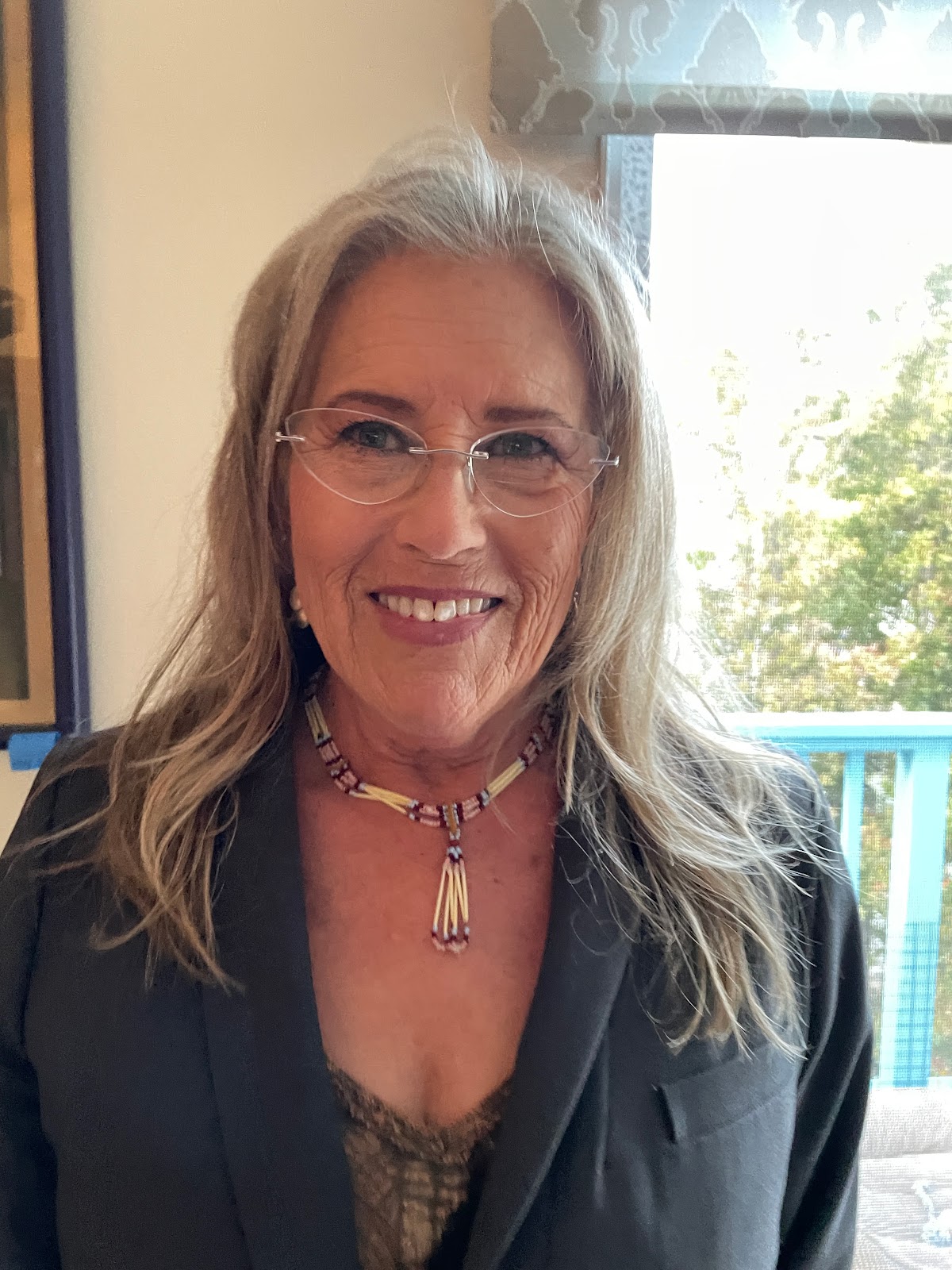
Closing out Poetry Month with Lori Anaya

Lori Anaya


Letter to My Face 


Lori Anaya 


Eyes, 

I never liked how you were almond shaped 

A perfect blend of blue to green and flecks of gold, but 

Different from the rest 

Not as beautiful as my mother’s, 

Passed out on the table 

Day after day oozing innocent sleep 

And hate 

Instead of dinner 

Eyes, if only you could be dark 

Sharp-clawed 

Midnight 

Like Attila 

Or cafecito, morenito, abuelitos brown 

Guarding past, future, 

Now, guarding my tears 

Even those that do not fall 

Eyes, you watched 

Four sisters disappear 

To the house on the hill 

Without me 

Eyes, you turned away 

From sticker fields 

Fist fights and kick fights, 

From planting trees and beautiful things 

To the nowhere and the nothing 

Of searching for sweet crumbs 

Eyes, you left me to mend decades, and 

Places where the bears once fought. 

I’ve grown to love you, Eyes, 

Lizard hunting days 

Orange-pink dawns in soft sand 

Drawing horses 

And cloud portraits 

Watercolor dreams 

I’ve grown to love your place in my life 

On the mask that is my face 

Above the nose I didn’t want 

Nose, 

Even though you are perfect 

Smooth 

Sloped in a straight line like my father’s 

And not the beautiful strong nose of my mother 

You are the nose of stink and silences 

Of dank dungeon, unwanted 

Of people who claim to be family, 

Of refrigerated vodka, no ice cubes needed. 

I’ve grown to love how you smell sweetness 

Outside the door of childhood 

How you smell the young skin of Nephew’s daughter 

How you smell calmness and strength 

How you smell dead animal, pine trees, even rain 

Or fear... 

You fit perfectly in the oval face 

That is my mask 

Lips, hiding so many words 

Lies and truths unspoken 

And some you’ve had the courage to bring forth 

You are full and beautiful 

You are language 

And translations 

Intonations 

Catholic incantations 

Spanish trills 

Tewa hills 

Pragmatic 

English, Spanish 

Even problematic, sometimes, but 

You call forth words 

Help me greet the world 

And share my heart 

Eyes, Nose, Lips 

You were the unwanted face, of 

The unwanted daughter 

The unwanted words rang out 

When my father said he never loved my mother 

You make me glad you were a mask, 

Lone sentinel 

I never realized 

I could love you 

PS 

Dear Heart 


 Lori Anaya is a bilingual teacher, poet, writer, presenter, and one of five sisters. She is a Southcoast Writing Project Fellow and Young Writer’s Academy instructor. Published in short story and poetry: the Santa Barbara Literary Journal, Avalon Literary Review, and lunareview.com. She is an active member of the Society of Children’s Book Writers and Illustrators, a Summer Conference grant winner for middle grade, and picture book creator. When not writing, she rides a paint mare into The Land Conservancy where nature overlooks the fact that she is human. 

Sunday, March 13, 2016

Aguacamino/Waterpath: La poesia de Rossy Evelin Lima

Olga García Echeverría


"Let me gather the river with my hands," writes Rossy Evelin Lima in her latest poetry collection, Aguacamino/Waterpath. Published by Mouthfeel Press in 2015, Lima's collection contains 20 bilingual poems that delve into womanhood, memory, migration, and roots. There is a lot of humo, the floating ghost of nostalgia, roaming through Lima's pages.  "May the abandoned house in the south / never put out its flare..."

There is also water that transforms from small tears to huge mirrors, from river to pathway, from bodies to borders. The immigrant voice in this collection gives testimony to the often unheard/unseen. "Somos los invisibles, no nos busques...Nos comimos cuidadosamente las huellas..."

We're honored to have Rossy with us today, answering five preguntas about her poetry and her book Aguacamino/Waterpath.

  
Bienvenida a La Bloga, Rossy. ¿Cuándo empezaste a escribir y qué fue lo que te llamó a la poesía?

 
Cuando empecé a escribir necesitaba una manera directa para expresar mis sentimientos de confusión, nostalgia y miedo pero necesitaba una forma que me permitiera negarlo todo. Así, podía escribir lo que no me atrevía a contar y refugiarme tras la respuesta “es un poema que se me ocurrió.” Después, encontré que la poesía tenía el poder de tejer lazos con las personas que me escuchaban o me leían, sin importar si compartían mi experiencia o no. Las imágenes que yo creaba en mi poesía se convertían en telas que otras personas podían usar para expresar su propia historia. En una ocasión, después de una presentación en la que leí mi poema titulado Silencio, una mujer se acercó para decirme que ese poema se lo leería a su hija de 8 años que era sordomuda. Cuando me preguntó por qué había escrito ese poema al silencio, sentí que la historia del momento en el que lo había escrito ya no importaba, desde ese momento Silencio dejaba de ser mi poema, y se convertía en el poema de Mayra. Esto es lo que más amo de la poesía, cuando un poema deja de ser mío.


El agua aparece mucho en tus poemas, en ríos, lluvia, islas, lágrimas, caminos, en gotas, y hasta en el agua que falta. "No nos has ofrecido agua desde que llegamos" escribes en "La cuidad del inmigrante." ¿Podrías compartir poquito sobre la presencia recurrente del agua en tu trabajo?

Cuando crucé el Rio Grande a los 13 años, caminamos por varias horas bajo el sol de septiembre. Antes de cruzar no sabíamos que caminaríamos tanto, y no llevamos nada para calmar nuestra sed. En México, yo jamás había sentido esta sed. Trataba de pasar saliva y mi lengua se quedaba adherida a mi paladar. Esta sed literal se transformó en una característica latente de mi situación como inmigrante indocumentada. Sed de entendimiento al no saber el idioma, sed de aceptación al saberme diferente a mis compañeros, sed de futuro, mucha sed de futuro. Mi relación con el agua, antes de llegar a Estados Unidos era muy diferente. El agua para mi siempre fue relacionada con la felicidad familiar de días en la playa, paseos en lancha con mi abuelo, días calurosos que calmábamos jugando con agua en el patio. Esta yuxtaposición negativa y positiva del agua resulta en la presencia constante de este elemento. Para poder conciliar la pesadilla con el hermoso recuerdo tuve que aceptar que ambas me pertenecen, están dentro de mí, ya no en guerra si no transformadas en camino.

En "El poema de mil caras" hay un verso que dice, "no hay fuego que arda más que la distancia." Siento este verso cada vez que lo leo. Siento que es un verso que contiene mucho en pocas palabras.

Este poema a mi abuelo utiliza el humo y el fuego ya que él fumaba mucho. A veces pensamos en la nostalgia como un sentimiento tenue, tranquilo e intermitente. Sentir nostalgia puede ser incluso más leve que estar triste, puede ser incluso un sentimiento que se va en cuanto hay algo más importante que hacer. Para mi la nostalgia arde como la llama constante que no logra apagar el olvido. La distancia entre mi abuelo y yo es el fuego presente diariamente. No es nostalgia, no se ha hecho menos con el tiempo, por el contrario crece hasta el cielo ya que mi querido abuelo murió a finales del año pasado y no pude despedirme de él ya que DACA(Differed Action for Childhood Arrivals) no me permite salir del país.

Eres ambos escritora y traductora y tu poemario es completamente bilingüe (traducido por Gerald Padilla) ¿Cuáles fueron tus razones por no traducir tus propios poemas?

Traducir poesía es sumamente complejo, requiere una interpretación y reinterpretación del poema, una responsabilidad con el significado. La primera vez que traté de traducir un poema de mi autoría, me di cuenta de que no lograba encontrar la palabra en inglés que fuera equivalente a mi palabra en español. El español es mi primer idioma, yo siento, vivo y sueño en español. Me tomó días traducir un poema y al final me di cuenta de que no había logrado capturar la esencia de lo que había sentido, no estaba contenta. No me había pasado esto en mi carrera como traductora, amo la traducción y sus múltiples posibilidades. Entonces, Gerald me dijo que traduciría algunos de mis poemas. Sus traducciones fueron tan exactas que al leerlas no reconocí las palabras que yo tejí en español, solamente el sentimiento y las imágenes que había puesto en esos poemas. Me pude encontrar en esas traducciones y decidimos traducir el resto de los poemas para crear mi primer poemario bilingüe, Aguacamino/Waterpath. El trabajo realizado por Gerald va más allá de la traducción, ya que como se puede apreciar en el título, me gusta crear nuevas palabras compuestas, disfrasismos que el traductor debe de crear también.
 
Vas a tener una fiesta en tu casa y puedes invitar a 5 escritores/artistas famosos (de cualquier época, vivos o muertos). ¿A quién invitas, por qué los invitas, y qué les das de comer?
 
El simple hecho de pensar en esta fiesta me puso una sonrisa en el rostro. ¡Vamos a planear! Invitaría a Macuilxochitzin, quien dijo “Yo doy gozo al dador de vida.” La invitaría porque para mi la vida debe de ser una celebración constante de nuestras raíces, de la mezcla y la naturaleza única de cada uno de nosotros. Invitaría a Miguel Hernández y a Lucha Corpi porque sus poemas me mostraron que mi voz como poeta era valida, porque sus letras me acompañaron desde los 16 años cuando estaba tratando de encontrarme. También invitaría Alfredo Pérez Alencart, para platicar sobre su reciente libro entre Éxodos y Exilios, textos que hablan sobre la universalidad del sentimiento del emigrante. Invitaría a mi madre, Yolanda Valdez, que aunque oficialmente no es poeta, su amor y su ejemplo me han enseñado más de la poesía que ningún libro, ¡y además porque ella nos haría de comer! El menú serían unos ricos tamales veracruzanos con agua de horchata. Después de comer, iríamos al mar a imaginar que no hay fronteras.
 
Beautiful. Gracias, Rossy. Nos despedimos con un poema tuyo lleno de humo, memoria, y mil caras.
 

El poema de mil caras

Este poema se titula
marinero del golfo,
y si empiezo a recordar

se llama mano de tigre.

Cuando me siento en el suelo
pensando en los zapatos
que usaba de niña
se llama abuelo de humo,
también se llama así
cuando encuentro una caja
de Raleigh en el suelo

Este poema se llama la historia incompleta,
se llama el regreso, el regalo de la memoria.

Cuando escucho el grito de la gaviota
este poema se llama lancha azul,
se llama trapiche corta raíces.

Cuando pienso en el futuro
este poema se llama las historias invencibles,
se llama conocerme por medio de tus cuentos.

Este poema tiene mil caras
y al verlo de frente me dice,
“no hay fuego que arda más que la distancia”

Y el recuerdo hunde su mano en mi corazón en llamas.

 
Rossy Evelin Lima, linguist and translator. Her fist poetry book Ecos de Barro published by Otras Voces Press was recognized by the International Latino Book Awards 2014. She received the Gabriela Mistral Award 2010 by the National Hispanic Honor Society. She was awarded the international poetry award Concorso di poesia Altino in Italy (2015). The author has been published in numerous anthologies and literary magazines in Spain, Canada, USA, Argentina, Chile, Venezuela, Italy and Mexico. Lima has been featured in the Smithsonian Latino Night of the Dead Celebration and invited to be a TEDx McAllen speaker. Her second book of poetry Aguacamino was published by Mouthfeel Press. Lima co-organizes the Sin Fronteras Independent Book Fest and is Co-Founder of the Festival Internacional de Poesía Latinoamericana.


www.rossylima.com http://www.rossylima.com/

Sunday, February 14, 2016

Ode to the Wave: A Love Poem by Pablo Neruda


English Translation by Ilan Stavans

Once more my verse goes
toward the wave

I can't stop singing
to you, wave, a thousand times a thousand,
a thousand times,
oh fugitive bride of the ocean,
slim
green
Venus
you raise
your bell
and topple
lilies
at the top.

Oh incessant
sheet
shake
by
the
loneliness
of the wind,
erect like a
see-through
statue
a thousand times a thousand
crystallized, crystalline,
and then
all the salt thrown to the ground:
movement
turns you
into foam
and the sea foam
is turgidly reconstructed
and redone again.


On other occasions,
horse,
pure mare,
cyclonic
and winged,
with the horsehair
burning in whiteness
in the ire of the air
in movement,
you slip, jump, run,
driving the sled
of the sea's snow.


Wave, wave, wave,
a thousand times a thousand
defeated, a thousand
times a thousand times erected
and spilled:
alive
wave,
a thousand times immortal,
wave.


Otra vez  a la ola
va mi verso.

No puedo
dejar mil veces mil,
mil veces, ola,
de cantarte,
oh novia fugitive del océano,
delgada
venus
verde
levantas
tu campana
y en lo alto
derribas
azucenas.


Oh
lámina
incesante
sacudida
por
la
soledad
del viento,
erigida como una
estatua
transparente
mil veces mil
cristalizada, cristalina,
y luego
toda la sal al suelo:
el movimiento
se convierte
en espuma
y de la espuma el mar
se reconstruye
y de nuevo resurge la turgencia


Otras veces,
caballo,
yegua pura,
ciclónica
y alada,
con las crines
ardiendo de blancura
en la ira del aire
en movimiento,
resbalas, saltas, corres
conduciendo el trineo
de la nieve marina.
 
Ola, ola, ola,
mi veces mil
vencida, mil
veces mi erecta
y derramada:
viva
la ola,
mil veces siempreviva
la ola.


(photos in this blog: Olga García Echeverría)

Sunday, March 22, 2015

Lo que trae la marea/What the Tide Brings: A Review by Donna Snyder

Xánath Caraza’s stories in Lo que trae la marea/What the Tide Brings are formed of poetry, music, and the logic of dreams. Characters encounter an intermediary between mortals and gods. The line between life and death is breached. Stories emerge from the earth’s ocean and lakes or the rain that falls from the sky, and they remind us that water is the primordial fluid from which all life emerges, yet also the source of catastrophe, destruction, and death.


Caraza credits María Miranda Maloney, the founder of El Paso’s Mouthfeel Press, for encouraging her to write this collection, a change from her earlier prize-winning poetry collections. Since 2009 Mouthfeel has published twenty-five books by writers from Mexico, Uruguay, and throughout the United States, garnering recognition and accolades for itself and its writers.

 
Originally from Mexico, Caraza lives in Kansas City and teaches at the University of Missouri. On an international level, she teaches, serves as editor of literary and academic journals, performs, and publishes work in both English and Spanish. She has won honors in Central America, Europe, and the US. In this bi-lingual collection, she wrote each piece in Spanish, and then she, Sandra Kingery, and Stephen Holland-Wempe translated them into English. Spanish is a superb language for literature, with an innate rhythm and rhyme which can translate awkwardly, losing the natural poetry. I read the English translations which are beautiful in their own right, each line fluid and graceful.

 
Caraza’s stories vibrate with the sensuality of the female body as it moves through heat, reacts to a man’s gaze, responds to the rhythms of jazz, or fills the memory of a man being subjected to torture. Her writing is redolent of jungle, copal and flesh, the pungent taste and feel of food and drink, the gratification of tactile details. Color permeates her stories -- the flora and fauna of tropical Veracruz and the valley of Anahuac, the sea and sky in their various moods, the colors of cups, drinks, food, clothes, shades of skin. In “Scofield 207,” for example, everything that populates the story possesses a specific color. “Lunch Break” contains twelve references to color in its six brief paragraphs. The writer’s eyes are a prism that breaks the world into every vibrant hue, dazzling the reader, yet along with other sensuous details the myriad colors anchor us in an earthly world even while characters move back and forth between temporal planes, between reality and dreams, fantasy, and myth, between sanity and delusion. Sensuousness is not the only point to this book, however, which addresses refugees from political oppression and other topics of seriousness and depth.


Estimada Poeta Caraza in La Bloga House
The limits of time and space do not apply to Caraza’s characters. In “Nezahualcoyotl,” a pre-Columbian king and poet of the Alcolhua culture of Mexico appears in Barcelona, Spain. As he walks with the other character, called Venus, Nezahualcoyotl recites his poetry. The apprehension of language becomes a sense impression. Venus “felt poetry exude from [his] body. That was his aroma . . . that intoxicating essence . . . .” She is filled with emotion as “verses of his poetry were assaulting her.” The poetry becomes visible on her arms, then her entire body is “tattooed in poems.” Finally, her body disappears, leaving only words.

 
Caraza provides a dazzling lesson in synesthesia, the evocation of one sort of sense impression when a different sense is stimulated. In her stories, odors are colors, poetry a tactile experience. In “The One Behind,” Caraza describes a person as being able to see not only with his eyes “but also his skin, his ears and nose.” In “Water Passes Through my House, It comes to my House to Dream,” the narrator feels “musical notes soak into her being through the pores of her skin” and memory “hits her in the chest.” A breeze is described as pearly in “First Friday in Kansas City.”


Caraza stated in an interview that her “vision concentrates on female voices, their dreams, their struggles, life in general.” A woman’s voice relates all but one of these brief. These women make their own choices. They travel to foreign countries, as has Caraza. They recognize and embrace the mythic power of Man as King, Poet, and Seer. They encounter an intermediary between mortals and gods, between life and death, and demonstrate the gap between the writer’s existence and the fictions she creates. 


In some stories, characters are found reading or writing books with titles of Caraza’s own creations, underscoring the gap between the writer’s existence and the fictions she creates. The use of such metafictive devices forces upon the reader an awareness that the writer is really a writer, creating a separate, unreal reality that is fiction. In Caraza’s case, that fictional reality is both marvelous and terrifying. Caraza’s deft use of language immerses the reader in a swirl where disbelief is willingly suspended. Characters use seashells as a tool of divination, experience the supernatural, “dissolve from this dimension to reappear on the printed page.”

 
The great Spanish writer, Federico García Lorca, first explained the aesthetics of duende, inspiration born in darkness and anguish. The power of duende, a fascination with both death and great erotic desire, suffuses Xánath Caraza’s writing. Her duende, her eroticism and repeated invocation of death, terror, and cataclysm, and the power and authenticity of her language -- all dizzy the reader, precipitating a momentary experience of the sublime. Lo que trae la marea/What the Tide Brings liberates the reader from the sorrow or mere banality of existence.


Mouthfeel Press website

La Bloga interview

Xánath Caraza website

Review in El Paso Times


La Guest Blogger Donna J Snyder
 
Believing that to give voice is an inherently political act, Donna Snyder offers free, weekly writing workshops through the Tumblewords Project which she founded in 1995. Until recently, she worked as an activist attorney on behalf of indigenous people, immigrant workers, and people with disabilities. Snyder has read her work in Alaska, Boston, New York City, Colorado, Los Angeles, and throughout Texas and New Mexico. In 2014, Chimbarazu Press released her collection Poemas ante el Catafalco: Grief and Renewal and Virgogray Press reissued her 2010 chapbook, I Am South, as a paperback book. Three Sides of the Same Moon is due from NeoPoiesis Press in 2015. She is a contributing poetry editor for Return to Mago.


Sunday, April 06, 2014

Breaking Up With Los Angeles: Queer Little Chapbooks Part II


Olga Garcίa Echeverrίa

The latest chapbook that arrives in the mail is Raquel Gutiérrez’ Breaking Up with Los Angeles. The large stenciled-looking title, all caps, is painted in opaque gold.  On my copy, some of the initial letters appear partially cut-off. When I turn the book around, though, I see that the letters bleed onto the back cover. I wonder if this is intentional or if it is one of those lovely imperfections that comes with chapbook making. Anyone who has ever made chapbooks knows it can be highly laborious and at times painful. Fingers can get stapled or cut. The layout of the text can go berserk. Pages can accidentally get glued or inverted. Living space begins to look like a messy workshop full of scattered papeles and art supplies.


Photo "borrowed" from Raquel Gutierrez' website

Looking at Raquel’s cover, I can’t help but get nostalgic about my own chapbook making aventuras. The last time I put together a poetry chapbook was in 2010 with tatiana de la tierra. Inspired by the cardboard books of Latin America, we set out to make a limited edition of self-published cardboard poetry books. For months, cardboard book-making ruled our worlds. We loved cardboard. We explored its strengths and weakness. We folded it. We punctured it. We painted it. We hoarded and fought over it. We slept near our growing piles of cardboard; carton thoughts and energy seeped into our dreams; we were one with the cardboard, tatiana and I. And despite the cardboard cuts and mess, these little poetry books filled us with utter joy and self-publishing power. Of course, we blogged about it: http://labloga.blogspot.com/2010/05/cardboard-creations-homemade-libros.html

tatiana eating cardboard poetry

Raquel's chapbook isn't made out of cardboard, and it has its unique estilo and presence, yet it reminds me of tatiana de la tierra, Myriam Gurba (whose chapbooks I blogged about a couple of weeks ago (http://labloga.blogspot.com/2014/03/queer-little-chapbooks.html), and every other hardworking two-tongued, two-spirited escritora/artista out there creating arte a su brave manera. In the end, despite todas las diferencias, it's the same general fuerza that propels us forth and fuels creation, poesίa, self-published libritos. Locura. Passion. Because you have to be kinda crazy and in love with words to make your own books. Resilience is a must, and humor is a definite plus. There's no big bucks earned here. You can purchase Raquel's Breaking Up With Los Angeles for a very affordable seis dolares: http://raquelgutierrez.net/chapbook/ Or Gurba's latest A Flower for That Bitch for a muy barato $3: https://www.etsy.com/shop/Lesbrain. That's freshly made literature for the cost of a couple of tamales and a café or a champurrado. There's no glory or guarantees in rasquachi book making either. The writer usually distributes and hustles. Libritos! Libritos! Calentitos y deliciosos! Compren sus libritos! It's like blogging or writing a poem or knitting a bad-ass scarf or sweater. You may pour out your heart into your arte, spend countless hours refining the finished product, and get back a, "That's cute."


Photo by Kevin Campbell

Having moved from LA to the Bay Area a little over a year ago, Gutiérrez shares that her new chapbook Breaking Up With Los Angeles marks a “habitual haunting” of the city she broke up with. In her blog (http://raquelgutierrez.net/blog/) she writes: "This project is simply the receptacle for the ache...of leaving home...Poetry has always functioned as a site of no rules...A small holder of my psychic messes. A document. A textual object. Or an embrace for when all other embraces fail to keep me safe."

Using numbers instead of titles, Gutiérrez delivers 22 poems about loving, living in, and leaving Los Angeles. In poem #11, she write:

Partner with loss
Embrace change
Resist nostalgia

It's a mantra that thematically echoes throughout the collection. Whether she's recalling a nightclub in Hollywood full of joteria and Naco Power, a sighting on Silverlake of a truck with "lavender colored testicles hanging so low," the haze of Sour Diesel, her mother's laughter welcoming her home, or the busquedad of her "Ole Dad" and herself in cantinas, Gutiérrez weaves in and out of the cityscape, gathering poetic fragments of the distant and recent past, re-membering/re-constructing that which has been lost or broken, all the while resisting nostalgia.

But where one lives and loves, there are always those glimpses of nostalgia, no? In poem #7, Gutiérrez recalls a few of "the good things:"

telling white people to not speak Spanish to me
having everyone at Homeboy Industries know me by name

I want to stay..

Despite the grappling with grief and loss, and the resistance to nostalgia, there's a sense of love and longing for Los Angeles. For example, in poem #13, Gutiérrez leaves behind a poetic directive of her last rites:

scatter me in the mouth of Los Angeles
her stomach the desert 
her ass the sea
her shoulders the mountains
and her womb
the east Los Angeles freeway interchange

for the 5 brought me all of California
while the 101 took me to where it was possible
impossible on the 10 during rush hour
and the 60 carried my broken teenage heart home

Tributes to the recently deceased are also found in Breaking Up With Los Angeles. In poem #8, LA poet Wanda Colemen who inspired so many of us is remembered, the impact of her loss deeply felt:


Photo by Mark Savage


I mourned her from a lonely bedroom
Deep in the East Bay
Her departure underscoring
an exile from Angels
a burn, a light and tender

a severe degree
that severs me


Although this is her first chapbook, Gutiérrez isn't knew to the arts. She has long been a performer, curator, playwright, and cultural activist. She was a co-founding member of the now retired performance ensemble, Butchlalis de Panochtitlan (BdP), a community-based and activist-minded group aimed at creating a visual vernacular around queer Latinidad in Los Angeles. Raquel also co-founded other Los Angeles-specific art projects: Tongues, A Project of VIVA and Epicentro Poetry project. Raquel's work has been published in The Portland Review and Ambientes: New Queer Latino Writing (edited by Lázaro Lima and Felice Picano). Poems are forthcoming in Sinister Wisdom and Huizache next year.

During the past two weeks, I had an opportunity to ask Gutierrez a few questions over email. Here are my questions and her responses:

Can you share a little about your current transition from performance to poetry? Are you still doing both?

I like the insularity of writing poems. Performing relies on collaboration and a certain familiarity. Being in a new place, living away from Los Angeles, made me retract, reflect...I think I am done with the stage for now but when I read some of these poem aloud, there's a different rawness present that isn't so much about proving myself as an artist. I'm regenerating in a new way.

When I was in El Paso, Texas all I did was write about Los Angeles. I found that the distance and desert allowed me to write about LA in ways that I may not have been able to do had I still been at home. Did you have a similar experience when moving to the Bay Area?

When I was living in New York I couldn't write anything about L.A. The distance of course helps, but I don't know if being in a new city leads to being able to produce writing about L.A. I think a new place coupled with the ability to inhabit certain truths makes the writing come easier.

What do you miss most about Los Angeles?

I miss the 24-hour-ness of L.A. The thrift store near the old Sears. La Estrella's fish burritos. The 110 freeway tunnel from Chinatown into Figueroa. The sun coming up on Bandini Boulevard.

Literary rockstars that you admire?

Rubén Martinez, Wanda Coleman, Charles Bukowski, Roberto Bolaños, Helena María Viramontes, John Rechy, James Baldwin, Chris Kraus, Ali Liebegott, Salvador Plascencia.

Are you taking on any new projects any time soon?

I'm excited about a chapbook press endeavor I am taking on called ECONO TEXTUAL OBJECTS. This [making chapbooks] was so much fun I don't want it to stop. I'm working on another chapbook for the Spring, along with chapbooks by friends and conspirators Félix Solano Vargas and Nikki Darling. These chapbooks are due out in May 2014.

That's an interesting name for a press. What exactly does it mean?

ECONO is inspired by one of favorite SoCal punk bands The Minutemen from San Pedro. They have the misfortune of having the same name as the xenophobic group in Arizona. But the punk band was founded by these dorky white guys into working class politics and aesthetic innovative approaches to making punk...like jazzy bass line and political poetry and experimentation that was accessible to a willing mass and within economic means. So I felt really connected to that and wanted to work with writers that are working full time, invoke that in the work and are making work that Is aesthetically adventurous. Econo being short for economic. Textual object feels more like what we're doing. Sure it's a chapbook essentially but I just felt the physicality of making a chapbook and how that translates to making physical art. The object. And its objectness is grounded in language.

Are you addressing a particular need with the starting of ECONO press?

The need. Hmm well I think it was a means to create a new kind of intimacy in the age of over sharing. I don't know but there's something intimate about knowing that only a specific number of people are experiencing the work.

Can you share a little about the two authors whose work will be featured by ECONO this May?

Félix is a young trans man community organizer who is writing about his family, trauma and survival. his work is also place based. He is writing about Riverside and labor.

Nikki is the poet feminist pushing against form and patriarchal traces in language. She's an experimental writer but she's also been a nanny full time while she writes about art and her New Mexico roots by way of her mom. Her chapbook is called Pink Trumpet and the Purple Prose.


In closing, even though you broke up with her, do you still love LA?


I'll always love LA.


To learn more about Raquel and ECONO TEXTUAL OBJECTS, visit: http://raquelgutierrez.net/
To visit Raquel's blog: http://raquelgutierrez.net/blog/
To purchase Breaking Up With Los Angeles:
http://raquelgutierrez.net/chapbook/breaking-up-with-los-angeles


Sunday, February 23, 2014

A Conversation with Verónica Reyes on Bordered Lives and Poetry

Olga García Echeverría

La chuparosa skates the wind, stops midflight, hovers near petals, and drinks the flor's miel
like me--I am a marimacha crossing la tierra, el mundo and always coming back to East L.A.

--Verónica Reyes
"East L.A. Poet"


In October of 2013, Arktoi Books (an Imprint of Red Hen Press) published Verónica Reyes' first collection of poetry, Chopper! Chopper! Poetry from Bordered Lives. Entre las páginas de este libro helicopters roam, tortillas torcidas fly, violins soothe a man's heart, diablos ask for comida and compassion, Xicanas theorize over jotería and sopa. There's deseo in these pages, rivers running from California to Texas, and super queers riding buses, chanting, "Panocha Power!" The collection embodies different landscapes, from bilingual East L.A. to the dusty desert of El Paso and the mountains of Juárez, from West Hollywood to the valles of Zacatecas.


The agua took her back to her childhood in México
rain that blessed her alma como copal shrouding her skin
She inhaled the desert aroma over concrete, nopales, 
and limones beneath splintered street telephone wires
Socorro breathed in once and inhaled México in East L.A.

 
I first met Verónica Reyes in El Paso, Texas, many moons ago when we were both MFA students in the creative writing program at The University of Texas at El Paso. This past Friday I was able to interview Verónica at Primera Taza in Boyle Heights. Like two caffeinated pericas, we talked for a long time about her book, politics, publishing, and poetry. This bloga is only a snippet of our conversation interweaved with excerpts of Reyes' poetry from Chopper!  Chopper!


The green-yellow helicopters scan the land and the wind lathers us in a cool summer breeze
Years ago in the '70s we'd play "Chopper Chopper" up the shrubbery loma cradling buildings
the fire station, Smokey the Bear, the practice range; on Saturdays we'd hear the pop, pop
And my mamá on hot summer days made rainbows for us with her magic and a manguera

A Sagittarius, who according to her girlfriend acts more like a Cancer, Reyes is a prolific bus rider and currently a professor of English and Composition at California State University Los Angeles. When she is not teaching, she takes off to different parts of the world--Canada, Berlin, London, México--to breathe outside of the U.S. and to write. But no matter where she goes or lives, she always ends up coming back to East L.A. It's the place she calls home.

The Mexican lime tree towers in the desert backyard blooming flowered lives
And the white-marbled sun blasts a fat ray on the dry zacate, leathered nopales
This is my childhood home where I grew up hearing my mamá sing "Paloma Blanca"
This is my childhood home where I grew up listening to my papá playing viólin
This is my childhood home: beneath two jails, below the loma, by the freeway


As a 15-year-old marimacha back in the day, Verónica Reyes shunned the whole quinceañera cosa and instead got herself a standard college-ruled notebook. She carried this rasquachi journal around capturing palabras and poesía. "Something would strike me," she says, "and I'd write it down. This is how I started doing these little scripts, writing pieces of poems." Nobody ever told Verónica to do this. It was necessity and instinct, hunger and teenage angst, an ill mother and barrio jota-haters that filled Reyes with words, images, emotional triggers. She needed a creative outlet; pen and paper became lifelines. 


As a tomboy, I ran and ran around the blue house in my super duper tennies from Zody's
From the side of the casa grew rosas, I'd rub soft tierra like ceniza on my brown chubby piernas
And I'd come running to my mamá; she'd be lavando ropa in the cuartito and I plopped myself
Like the roadrunner I announced, "I'm here, Mamá! Ya llegué from trabajo." And I beamed cariño
And inside the cuartito's opened-mouthed puerta, she shook her head, smiled Válgame

Although Reyes has been writing since her teenage years, it took her a long time to actually view herself as a writer. In college, a Chicano Literature professor once asked her if she was taking any creative writing course. "I didn't even know what that was," she says, "But, shortly afterwards, I read Viramontes' The Moths and Other Stories. I was wowed by it, wowed by stories such as 'Growing' and by the author's use of words like baboso." In her first creative writing class, Reyes had that poetic-unnameable-sense that something magical and deep lurked beneath her words. "I just felt there was something there. I kept thinking, I have something here." So despite the fact that she struggled with English, she kept writing. 

In the kitchen, I studied literature, wrote poetry, typed poesia on my Smith-Corona
And manteca stains spread greasy marks on my textbooks, notes like a forbidden traveler
Once I took my poems to the Vincent Price Gallery, in a trembled voice I asked a writer
            "Can you read them?" Brown eyes blinking in awe; my god, I was so young

Reyes shares that aside from Viramontes, other Chicana writers also enlightened and empowered--Cisneros, Anzaldúa, Moraga, to name just a few. They all fed Reyes in profound ways, but something was still missing. "Who doesn't love Esperanza?" Asks Reyes, referencing Cisnero's child narrator from The House on Mango Street. "But Esperanza wasn't completely me. As a kid, I was popping tires and trying to figure out what I could steal from the neighborhood stores while people played video games. When I was first reading Chicana literature, I wanted to see something from what I knew and what I lived, a hardcore macha, a homegirl who could pass as a homeboy, and the literature wasn't giving me this, so I knew that through my writing I could present another image, one that exists, but isn't often seen." 

She strutted down Whittier Boulevard
checking out the rucas on the calle
A bien suave Xicana butch dyke
hair slicked back with Tres Flores
glistening against her earth tone skin
Cut off Khakis right at the knees
smooth crease down the pant legs
Starched-white camisa over an undershirt
           "Fruit of the Looms"
A true homeboy's brand bought at J.C. Penny

Reyes went on to pursue an MFA in Creative Writing at the University of Texas at El Paso. She recalls, "I was adamant about needing an MFA. As a Chicana dyke writer, I wanted my stories and the stories of others like me to be heard and recorded and taken seriously. This is a country that values the written word over the spoken, so it's about putting these stories down."

The front nopal's sprouting over 100 tunas, sweet prickly pears nesting, in all its glory
A señora at El Superior on Rowan gave him the plantita in a tin can, smiled a gold diente
             "Este nopalito va a dar miles de tunas. Vas a ver."
And in the back jardín, desert cacti grow as if they have found Tenochtitlan in East L.A. 

When I asked Reyes if she has a regular writing schedule, she answered bluntly, "Someone who has a regular writing schedule has money. I don't have money. I have to be creative. When I lived and worked in Toronto, teaching on a semester system, for example, I would look at my schedule and say, okay, I can spend the first 6 weeks pulling some time from here to write. After those six weeks, I knew I was going to lose that time and that I would be grading, grading, grading. I also use winter or spring breaks as time to write, but for me, poetry doesn't really have a schedule. Poetry is always happening. It's happening in my head when I'm walking. Everything I see is a potential poem. But you have to be in tune to notice that that was a poem that just walked by. Some people look at it more intellectually, but for me there's something else there. There's a spiritual element."

ronnie steps outside in the backyard
sits on the big red lawn chair
faces the skirt of the white house
dreams of names floating in spanish
the peach tree blossoms in pink
and the apple tree hovers behind her
Socorro   the name flies away in the air
as if a chuparrosa carries it back home
into the depths of the thick blue sky
somewhere in the heart of el valle
the valparaíso of her mamá's name

And although writing regularly is important, Reyes stresses that as writers we can't always force the birth of a poem. "For years I wanted to write this piece called 'Alamo Motel,' based on a hotel in El Paso," she shares. "I only had the title and the first line and I knew I really wanted to write it, but every time I sat down, I couldn't. That poem took a decade. One day, I just sat down and I started to hear a voice telling me a story. I'm a firm believer that sometimes you're not going to be ready for certain pieces. These pieces will know when you're ready and they'll tell you. Of course, there's other times when you really have to force yourself to write because that's who you are. You're a writer and you can't exist without writing. Even if you get a rejection letter one day. The next day, you move on, you have to do something, you keep writing because the writing--that desire--is in you now. It is a part of you."

And in the Alamo Motel, Modesta waits in the plastered lobby. On the carpet, paint flecks like
sprinkled sea salt absorbs the air. It reeks of American Spirits from gaudy tourists who layover
for the night:
            Sometimes they get stuck from Austin heading to Tuscon, sleep the night
            Sometimes virgins come to lose themselves in the motel and be free
            Sometimes newcomers from el otro lado stay to hide from la migra
And Modesta in her bleached apron cleans their messes, learns their lives.

When I asked Reyes who she is currently reading, she laughed and didn't want to divulge. Of course, I probed until she gave in, "Okay, okay, I'm reading Mark Twain. For a long time I wouldn't read certain things. I refused. If White writers don't read us, why should we read them? You know what I mean? But I'm somewhere else now and I'm going back and reading some of these classics. And yeah, Mark Twain's pretty good."

He ties a cuchillo to an old pole, reaches up
            and saws at the new cacti tendrils. They fall
            on pebbled ground, hang on lower ramas. He
            stabs them. Pulls them in like the viejito
            and the sea, estilo Zacatecano; he brings in
            his fresh catch: nopal.

Like many of us, Reyes has her own classic authors that she reads and re-reads. Among them are Joy Harjo, Leslie Marmon Silko, Louise Erdrich, Audre Lorde, Ivan E. Coyote. During our interview, Reyes mentioned another East L.A. poet who has been riding buses in Los Angeles and performing her poesia for decades, Marisela Norte. "It's amazing how Marisela Norte can carry a 17 minute poem when she reads. Her poems are like symphonic poems where she goes from one thing to another, to another, to another, and you're not lost. She takes you somewhere and then brings you right back and you're like wow, I just went on this amazing journey with her."

Despite all the years that have passed since that first notebook, Reyes still prefers old-school writing tools--a pen and a journal where she can sketch out her poems. "There's been a couple of pieces I've written entirely on the computer, but that's rare." Although not a big fan of social media, she confesses that she has been using Facebook a lot more these days to share news related to her book and readings. I asked her if she had anything she would like to share with any aspiring writers out there. She spoke a lot during our interview of the need for us as Chicanas and writers of color to get informed about grants, writing residencies, conferences, etc. "When I got out of grad school, I didn't know anything about submitting to presses or how to go about applying for literary opportunities. That's something I think we need to really access and it's information we need to share with one another so that it's not a mystery or a secret. I also think we need to recognize that our stories matter. To get our work out there we don't necessarily need major presses, although it is always good to have the support of a press, but there are other options these days, like self-publishing. Most importantly have faith in your words and work on your craft."

Gracias Verónica for your poetry and your writing insights. Best of luck with your book and with all your upcoming events.

List of upcoming events where Verónica Reyes will be reading her poetry:

February 27th & 28th: Book signing at AWP in Seattle, WA. Red Hen Press (booths 1802, 1804, 1806)

Sunday March 9th from 2-4 PM at Beyond Baroque

March 16th from 2-4 PM at Espacio 1839: Reading with Myriam Gurba and Olga Garcia Echeverria

April 5th at 5 PM at Book Soup

April 6th from 2-6 PM at The Last Bookstore

To purchase Chopper! Chopper! Poetry From Bordered Lives
http://redhen.org/book/?uuid=8C0851F9-C7B3-FEF4-3A63-DB9F0ABF445A
http://www.amazon.com/Chopper-Poetry-Bordered-Lives/dp/0989036103

To read a previous bloga on this book by Daniel Olivas:
http://labloga.blogspot.com/2013/09/spotlight-on-veronica-reyes-and-her-new.html

To read more about Verónica Reyes: 
http://www.pw.org/content/veronica_reyes