Showing posts with label California Poets. Show all posts

Friday, February 13, 2026

Poetry Connection: Connecting with a Santa Barbara Institution


Poetry Connection: Connecting with the Poetry Zone, a Santa Barbara Institutuion

Melinda Palacio, Santa Barbara Poet Laureate 2023-2025


Suzanne Frost, Virginia M. Dale, Björn Birnir,  


The Poetry Zone still meets at the Karpeles Manuscript Museum though these days, only a few gather around a patio table in the museum’s atrium. During Covid, Bjorn Birnir kept the series alive through zoom. Last week, the featured reader couldn’t make it but regular Virginia Mariposa Dale was in attendance, along with Suzanne Frost. Virginia Mariposa Dale also ran the series for several years and assists Bjorn when he is unavailable. The intimate group is very dedicated to keeping the series going. With the Karpeles Museum up for sale, perhaps there will be a new chapter or new location for the poetry reading that’s been in Santa Barbara for over half a century.


Walt Hopman founded the Poetry Zone in the 1970’s with his wife, where the readings were held at the storied Earthling bookstore on State Street. Bjorn Birnir started attending in 1985. The readings are always held on the second Sunday of the month at 1:30 pm. On March 8, Mary Freericks will be the featured poet. Bjorn mentioned that Walt Hopman would collect poems from the open mic readers and make Poetry Zone chapbooks. Virginia and Dale still have copies of Hopman’s Poetry Zone chapbooks.


I have fond memories of the time when Sojourner Kincaid Rolle ran the series, in the early 2000’s, upstairs at the Karpeles, the large room was often filled with poets eager to participate in the open mic. I’ve even had a short go at running the Poetry Zone. David Karpeles was very kind with his support for poetry. He provided the large room upstairs, a sound system and tables for selling books and providing snacks.


Bjorn, Suzanne, and Virginia took turns reading into Bjorn’s computer for the benefet of poets tuned in on zoom, a tradition from Covid days. They asked me to read. I, at first declined, but ended up reading a poem. Poets always have poems in their pockets, or phones.


This week’s poem comes from Bjorn Birnir, Professor and Chair of Mathmatics at UC Santa Barbara, and keeper of the Poetry Zone.


Girlfriends

Björn Birnir


They move over the dancefloor

In unison  

So different and yet so close

Two friends from a distant island

In the old roman city

In the dance studio of the opera 

And their whole past materializes 

To dance with them


They are distinct

One is tall and quiet 

The other spontaneous

One a singer 

The other a nurse 

But when they look at each other 

They form a whole 

A common experience 

With two outlooks 

And now out in the world 

Exploring the legacy of that empire


By the campfire together 

In the small tent listening

To the rain 

They sing the songs on the dancefloor

They feel each other’s

Hurt and joy 

Their hearts quicken together 

And they are immediately aware 

Of what is going through

The other’s head

But they also know 

What it signifies from way back

And how it will play

In the future


And how gracefully and swiftly 

They move 

To protect each other’s psyche

To protect their girlfriends

But themselves at the same time


Their part of this holy trinity


Of two girls 

And their friendship


This column was previously published in the Independent

Tuesday, August 26, 2025

PITS Poets and Friends Read At Casa Reyna

Michael Sedano

For years now, La Bloga-Tuesday has promoted the idea of inviting poets and other writers into one's living room or backyard to celebrate friends and food and Floricanto. Circumstances dictated my abandonment of the celebration, so Altadena Poet Laureate-emerita, Thelma T. Reyna, picked up the initiative. 

Reyna has for many years hosted numerous gatherings in her exquisitely landscaped backyard, her Casa Reyna Poetry Garden. In recent years, Casa Reyna took the lead to continue the Pasadena sessions of Backyard Floricantos, including a memorable afternoon featuring Richard Vargas.(link) Despite this summer's record heat wave, Reyna hosted a dual reading floricanto featuring PITS, Poets in the Schools professionals, joined by members of Don Kingfisher Campbell's Saturday Afternoon Poets series. Given the heat and sun, the poets gathered on the shaded backyard porch.

The acronym, PITS, stands for (California) Poets In the Schools (link). I like the metaphor of seeds at the heart of luscious fruits, pits. That's what PITS does, it engages kids K-12 to blossom and develop their poetic center that enriches their own literacy, develops empathy and understanding, and write poems that matter. 

Does your child's school nurture creative sensibilities through reading, analyzing, writing, performing and publishing poetry? PITS' mission statement offers "opportunities for professional development, peer learning and fundraising assistance for Poet-Teachers in California. We also cultivate relationships with school districts, foundations and arts organizations which can fund and support our members’ professional practices."

The program brings poet-teachers into classrooms to work with the students, and the teacher, to exercise a kid's creative writing through workshops that enrich the classroom experience. "The Poet-Teacher leads students in discussion of poetic tools, including image, metaphor, rhythm, line, stanza, alliteration, and wordplay. Most of the workshop is devoted to a writing exercise that follows from examples and discussion. Students are encouraged to share their new poems aloud and to respond to each other’s creative efforts in thoughtful and positive ways, to learn from each other’s work, and to approach literature with an insider’s—a writer’s—appreciation and understanding."

Click this link to explore the possibilities of bringing a poet into your school. It's not free, nor a one-day event. Programs run 5, 10, 15, 30, or 60 sessions, starting at $375, topping at $5400. PITS staff will explore funding with a school or district.  


Sadly, one of the invited PITS readers cancels with a case of GOPlague. COVID is back, gente, have a care!

In addition to sharing their own work, the audience enjoys readings of several Poets in the Schools students, and it's La Bloga's pleasure to share a sampling today.

Gia Civerolo shares fire poems from South East High School in South Gate, California:

Untitled
Fire
Burned so bright
The street lights had no purpose
Million of sparks turned into fireflies
The smell of being around a campfire
But there’s no camp

Untitled
The look of surprise spread across my face as I saw the fires. A sense of fear flooded by mind as the snow storm of heat engulfed the streets. Anything and everything flammable is consumed but my feelings and hope will not be taken by this fire.

Nancy Lynée Woo shares Helena Donato-Sapp's artivist poem recounting the beginning of the nation's ongoing nightmare.

The Day After the 2024 Election
By Helena Donato-Sapp
 
I went to bed sad
I went to bed depressed
I got a little sleep
I got a little rest
I woke up determined
To protect my spirit
The work continues now
And I’m the one to do it
 
Injustice means opportunity
To use my smarts and skills
To fight for what is right
To work with all my will
 
I will not choose despair
And stand under that gray cloud
I will choose to shout
And say my truths out loud
 
I say, “Can you hear me?”
You say, “I want a better world!”
I say, “Will you join me?”
You say, “And make our voices heard!”
 
A Spirit hovers over us
This Spirit of community
This Spirit of collectiveness
This Spirit of collaboration
 
I say, “How do we fight against injustice?”
You say, “Together we fight against injustice!”
I say, “How do we fight against hatred?”
You say, “Together we fight against hatred!”
I say, “How do we fight against dehumanizing?”
You say, “Together we fight against dehumanizing!”
 
Together we cry
Together we fight
Together we rise
In the Spirit of justice
 
I went to bed sad
I went to bed depressed
I got a little sleep
I got a little rest
I woke up determined
To protect my spirit
The work continues now
And we are the ones to do it

Author’s Note: I wrote this poem the morning after the 2024 election.  I went to bed so fearful and worried.  I asked my two dads, “Will we still be a family tomorrow?  Will they take me away from you?  Will you still be allowed to be married to each other tomorrow?” I felt filled with despair when I laid my head on my pillow that night. But, when morning came on November 7th I had to make a decision.  And this is the decision I made. This poem is influenced by the strike lines I have walked on and the rallying calls that strikers chant.  

Helena Donato-Sapp is a 16-year-old scholar, activist, keynote speaker, and poet who believes in the power of youth voice and uses her own in the work of equity and justice. She is an accomplished activist and educator internationally recognized for her work in Disability Justice. She has been the Poet Laureate of The National Institutes for Historically-Underserved Students since 2019. She was a Long Beach YPL Ambassador in 2023-2024, the Long Beach Youth Poet Laureate in 2024-2025, an L.A. County YPL Ambassador in 2024-2025, and is currently the 2025-2026 Runner-Up for the Los Angeles County YPL and a 2025-2026 YPL Runner-Up for the Western Region of the United States. Find out more about Helena at https://www.helenalourdes.com.


Portraits of the Poets At An Afternoon Backyard Porch Floricanto 
Gia Civerolo

Diosa Xochiquetzalcóatl

Don Campbell

Marvin Louis Dorsey

Mani Suri

José Enrique Medina (winner of this year's Rattle chapbook contest)


Nancy Lynée Woo

Michelle Smith

Marc Cid

Soul Stuff (Christian Perfas)

Tuesday, May 20, 2025

Poetry & Cookies 2025: Altadena Strong

Michael Sedano

Pauli Dutton

Altadena librarian, Pauli Dutton, invited a handful of local poets to read their work and share refreshments in a small intimate gathering. That was the first Poetry & Cookies. On Saturday, May 17, Altadena Library, and its Co-Poets Laureate, Sehba Sarwar and Lester Graves Lennon, hosted the 25th gathering of poets to read their work at Poetry & Cookies 2025.

Dutton’s initial years hosting P&C featured a spiral bound collection of the year’s readers. The relatively informal program grew to appoint a Poet Laureate, then Co-Poets Laureate, to host readings and publish the works as a retitled book, the Altadena Poetry Review Anthology (link)

In recent years, the Laureates expanded the publication program to include an Online edition during the Co-Laureates’ first year, and a printed book in the culminating year. 

January’s Eaton Fire devoured Altadena but the fire didn’t stop life as we know it, nor poetry. Indeed, the Laureates extended the deadline for the Online edition so poets could submit fire poems. But the fire has delayed the process of editing the journal and, at the 2025 Poetry & Cookies reading, the Laureates announced August as the publication date for this year’s Online Edition of Altadena Poetry Review Anthology.

Golden Foothills Press has published the most recent volumes of the anthology. La Bloga spoke with the publisher, Thelma T. Reyna, herself an Altadena Poet Laureate Emerita, about the publication process. 

The Laureates issue the Call for Poetry in late Summer, early Fall. The poems arrive until January when the editing process begins. There are always glitches when mail and email systems fail, and disorganized or confused writers have questions and issues.

There’s some truth in the rude belief that organizing poets is like herding cats. Receiving poems is only part of the submission process. Getting biographies and photos from the selected-to-be-published poets takes on the look of feline shepherding.

Organizing contents consumes weeks to find the most elegant sequence of poems. Then the book designer steps in to layout the print and covers. When the artist is involved, the book is nearly ready to go to the printer and it’s time to schedule Poetry & Cookies and the anthology release.

This thumbnail sketch of the editor’s and publisher’s calendar only hints at the amount of labor that lies ahead for Lester Graves Lennon, who will edit Altadena Poetry Review Anthology 2026. 

Lennon, along with Co-Poet Laureate Sehba Sarwar, must have breathed sighs of joy and relief as their first year’s service culminated at this year’s Poetry & Cookies reading. Now begins the year of the book. 

Altadena Poet Laureate Lester Graves Lennon 

Altadena Poet Laureate Sehba Sarwar

Poetry & Cookies Readers

La Bloga apologizes for not securing all the names to go with the portraits
Altadena Library District Director
Nikki Winslow

Roberta H. Martinez
Toti O'Brien
Thelma T. Reyna
Richard Dutton
Seven Dhar 
Alicia Viguer-Espert
Carla Sameth and Sehba Sarwar, Laureate-emerita and current Co-Laureate

Friday, February 08, 2019

CSUCI Houses the Works and Archives of Michele Serros

Melinda Palacio


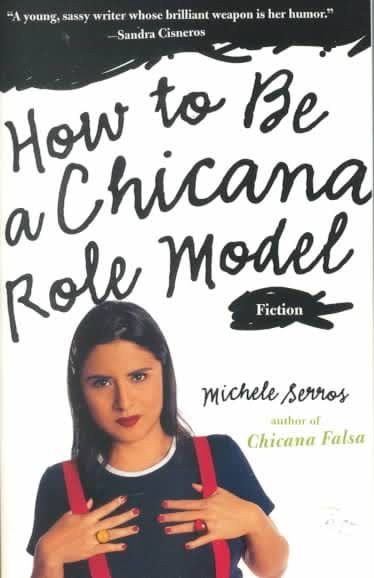
Michell Serros's first book


I still have a hard time believing Michele Serros didn't make it to see her 50th birthday. She had big plans to have a cinquentañera and she had more poems, articles, and books to write. The Oxnard native died at age 48 after a battle with cancer. Sunday, February 10, would be her 53rd birthday. Michele was one of the first, if not the first, author I had ever met. She was young and funny and years later, I had the pleasure of standing next to her at the Latino Book and Author Festival when my first book was published. She had friends all over the country and always managed to send a letter or call around Valentine's Day, her favorite holiday. It's appropriate that California State University Channel Islands will open the Michele Serros exhibit and archives in the John Spoor Broome Library Gallery. The reception will include readings of Serros' works and the screening of a short film called "Cielo or Bust: Honoring the Life and Works of Michele Serros and her Stories of Dead, Identity, and Oxnard" by director/producer Julio Alcala. The exhibit not only contains her papers, but also signature pieces, such as skateboards and the famous desk that Michele writes about in her 1993 book, Chicana Falsa. Coordinating her archives and the Michele Serros Multicultural Living-Learning Community, a dorm at CSUCI, is another amazing Chicana and friend, Dr. Jenny Luna who met Serros when the two were neighbors in New York.


Details: February 14: California State University Channel Islands, 1 University Dr., Camarillo, CA 93012, John Spoor Broom Library Gallery, reception from 5-8 pm.


Michele Serros and Melinda Palacio


****

This Saturday, along with Toni Wynn, I have the pleasure of reading from my latest book, Bird Forgiveness at the Core Winery. If enough wine is had, I will also perform the Bird Forgiveness theme song and my latest song, working title "Time." Rebecca Rose at the Santa Maria Sun wrote up a nice article on me and the upcoming event. Read the full article here.

February 9, Core Family Winery, 7:30 pm to 10: 30 pm, 105 W Clark Avenue, Santa Maria, CA 93455.

I'm holding up the Santa Maria Sun article by Rebecca Rose. 


Sunday, July 16, 2017

Blessed Be: The Poetry of Yaccaira Salvatierra

Olga García Echeverría


Poeta Yaccaira Salvatierra

*Earlier versions of the following poems previously appeared in Cheers From the Wasteland, Huizache, and MiPOesia


BLESSED BE 


Blessed be the Spanish overlooked on a page—hanging
on to tips of tongues, so they are not swallowed
and lost.

Blessed the bending of backs amid yesterday’s
and tomorrow’s dawn: a thousand diagonal arms
reaching for alfalfa or kale in unison, in silence.

Blessed be the midnight blue paisley handkerchief
protecting a woman’s grandfather from sunrays
piercing like endless needles searching
for skin among Salinas and Watsonville fields.

Blessed be the midnight blue travel on the Greyhound:
San Diego, Santa Cruz, San Jose, Los Angeles.
When the angels arrived at the Greyhound stations
of various destinations, they quickly began to look

for a woman entangled in her grandfather’s language
and her country’s, one sounding like barks
muffling the other trailing farther in the distance.
Having lost their sense of direction, the angels thought,

Blessed be these urban cities and not-quite-yet cities.

Then, the angels returned to their terminals, wings tucked
into their corduroyed jackets as they made their way
down narrow aisles of midnight blue seating.

Once, her grandfather said: Guided by the song
of your voice, angels will protect you. Once, he said:
Reza todos los días y canta alabanzas aunque
no tengas una vela, para que no te olvides. 

And she lights a candle in memory of his song.

And she prays soft and steady every night for those
trailing in the distance.

And she knows she will never be a greyhound
under the midnight blue, yet runs, pacing herself,
so she does not tire from guiding her own children
towards the songs of their grandparents’ understanding.


THE HOUSEKEEPER 

Lola learned to wear a dust cloth
like a white glove
and an apron like a red dress
she twirls in her mind
when she sings an Héctor Lavoe song:
Pronto llegará
el día de mi suerte.
Sé que antes de mi muerte,
seguro que mi suerte cambiará.

Close by, her employer
discards junk mail
like a pile of dead leaves
while listening to Lola sing
a song he does not understand.
She must be content,
her employer thinks,
but when asked to work on Sundays,

Lola has learned to say I can’t.
Maybe she is not content,
he rethinks.
What he doesn’t know
is that Lola has a daughter in Perú—
that the language of her song
is a silence in her heart,
or that she makes wings                

from every dollar she is paid,
and on Sunday mornings,
she opens her windows
and lets them fly south.


CALIFORNIA HYMN

Pigeons hovered as we lowered your casket next to your gravestone;
they filled their silvery-purple chests, spewed a lullaby into your stone grave.

Grandfather, you once told me that no song of lament to any Saint
could stop pigeons in Mexico City from having the sky be their gravestone.

As a young man working in the city, a pigeon fell next to your feet,
so you left for the Central Valley: clean air and a small bed for your grave.

I had seen pictures of you younger, sunburned, always wearing huaraches—
your toes filled with dirt like that brick-color dirt under your gravestone.

When you were much older, living off of your Bracero’s pension, you
went to church every day, saved money every month for your gravestone.

Sometimes you went to mass without your teeth, said evil spirits hid them,
but it didn’t matter, you still prayed when you thought of your name on stone.

You always cooked a pot of pinto beans and made soft flour tortillas for us—
I think I’ll put a bag of beans and white flour next to your gravestone

instead of lilies.

  I carefully placed your portable stereo in the grave so you
could listen to Vicente Fernández sing a ranchera under your gravestone,

hear him cry the Mexican yodel—I don’t think I ever saw you cry, Salvatierra,
but at your burial, we cried your favorite “Chente” song over the bed of your grave,

Yo sé perder, yo sé perder, quiero volver, volver, volver.


ENTREVISTA

One of my favorite names in the world is currently Yaccaira Salvatierra. It's a name I imagine we could torture some white supremacists with. It's fierce, poetic, and unapologetically muy Latino Américano. Yaccaira Saves the Earth. I met Yaccaira this past April at LitHop in Fresno. We were both part of the reading Damas, Sirenas, and the New Beats of El Corazón, which also featured the talented poets Nancy Aidé González and Marissa Raigoza.

This past month, I had the opportunity to read some of Yaccaira's poems and interview her via email. Of course, the first question I asked her was about her name. Here is our guest featured poet sharing a little about herself and her work.


LitHop Fresno 2017: Yaccaira, Yo, Nancy, y Marissa (our group organizer and Loteria Queen)

Welcome to La Bloga. How did you get such an awesome name? 

First, thank you for the compliment, I truly feel fortunate to have been given this name. My birth name is Yaccaira Hortencia de la Torre Salvatierra and, as you can imagine, it has not only been butchered but I have lived under different variations of my name because of its uniqueness, but I feel that Yaccaira Salvatierra holds all of me, the Peruvian and Mexican history of me.

You write about your maternal grandfather in your poem "California Hymn." Is that where the Salvatierra comes from? 

My father is de la Torre and my mother’s maiden name is Salvatierra, which is gorgeous and painful considering that my grandfather, Teodoro Salvatierra, worked on California lands as a farmworker for years while my grandmother and aunts stayed in México. I suppose a literal translation to his name could be “Teodoro saves the earth,” but metaphorically it truly embodies his life as a Bracero, which is filled with irony because my aunts and grandmother lived in poverty in México, and because of the poverty we endured when we moved back to the US when I was two.

And Yaccaira?

According to my father, Yaccaira (pronounced Ja-hi-da), is Quechua for a cemetery of flowers or a place where spirits congregate. It basically describes a burial cite. It’s poetic and haunting, but when I visited Perú for the first time—my father has never returned, he left in his thirties—my family who also speaks Quechua, did not make this correlation. As a matter of fact, and with reason, when I asked, they were more interested in wanting to know about my father, all the years that had passed, and his guitar-playing days as an apprentice to a well-known guitarist in Perú. They wanted to reminisce about his years in Perú with me, his first and eldest child, the closest they will probably ever be to him again. That first day, my family gathered in a circle and they took out a guitar. One by one, my uncles played a song, sang, and said something in Quechua or Spanish about a memory of my father. It was a beautiful moment, which left me with more questions about him.  For now, my name holds that mystery, it’s the Peruvian part of me I know little of, the spirits I need to unveil to know my father’s story. Salvatierra is honoring my Mexican family, the beginning of where I start in their story.


What was your first connection to the creative word?

I was born into a very unstable home where it was common and natural for me to retreat within myself, disconnect from those around me and find solace in my solitude.  Even before I knew how to write, I was making up songs about how I felt. I remember one of the first poems I expressed was in song and in Spanish. It was about a dandelion, a wild flower, which in Spanish is called diente de león directly translating to lion’s tooth.  To a child, that image can be frightening, but to me it was wonderful; however, I changed things around in my song. The blades of grass were lion’s teeth protecting this wildflower, or flor silvestre—that’s such a beautiful word: silvestre. I once heard my mother say that cada espíritu nace con su canción, each spirit is born with its own song and I think mine is of sounds and words.

Do you remember writing your first poem?

By second grade, I did eventually write my first poem, but I didn’t know it was a poem then. I grew up Catholic and in the church. Around that time, someone at our church was leaving, someone who was dearly loved by everyone, including me. During one of our Sunday school classes we were asked to make farewell cards filled with pictures or writing. I don’t remember what I wrote about, but I remember it was a child’s sincerity and sadness. When I gave it to Irma, my Sunday school teacher, she showed it to her husband who was there and said, “Tienes que leer este poema que escribió Yaccaira.” “You have to read this poem Yaccaira wrote.” I suppose that would be my first written poem.

Lucille Clifton reminds us that poets have been around long before academia and classrooms. She says that it's important to remember that perhaps “poetry began when somebody walked off of a savanna or out of a cave and looked up at the sky with wonder and said, 'Ahhh.' That was the first poem." Who are the untraditional poets/dreamers/storytellers in your family who have influenced you?

There is so little I know about my family, and so much I want to know, so much I feel needs to be documented for my sons and their understanding of themselves in this world, particularly the United States. For example, my father left Perú in his thirties, but the reason for him leaving is filled with so much mystery, and to this day he will not talk about it. He was also once a guitarist, but he stopped playing when he stopped drinking. I was ten years old then. Because he's always been reserved and secretive about his life, my three older brothers and I made up stories with the bits and pieces we did know of him. Poetry is like this for me. I remember when my father would drink, he would go into a bedroom and play his guitar and I would sit outside of the door.  I would hear him sigh after a song, and it was in those sighs I felt I was entering into his life, one that was meant not to be shared but I wanted to know so much about. On the other hand, my mother has always been an avid reader, a great storyteller, but mostly about her life, that of my aunts, or about spirits. Lots of them.  Ultimately, I am drawn to the stories as a way to better understand them, especially since my childhood was so tumultuous.  

What is your greatest challenge in writing? What is your greatest pleasure? 

My greatest challenge is finding time to write, or trying to keep a schedule. I am a parent, a teacher, and a writer. The balance is so difficult because I many times choose my sons’ needs over mine. I feel it is a spiritual necessity; I am not only having to fulfill my spirit’s longing, but I have to guide that of my sons’.  In addition, I am a single parent, which makes finding time and keeping a schedule even more difficult. I used to have this routine where I would write Saturday and Sunday mornings early while they were asleep; however, I’ve always preferred to write at night. Truthfully, my heart goes out to single-parent artists with little support, or without a co-parent. It’s not easy.  My closest friends are dancers, musicians, or writers, and they live following their spirits need to create.  It’s an imperative to their survival. So, it’s not easy for me, but my two sons have also been one of my greatest pleasures. I have learned so much from them; they have gifted me with more insight into humanity, which is priceless.  Besides, I am enjoying watching them become young men with the need to create.  One of them has the gift of writing and art, and my other son finds happiness in photography and digital music production. And, of course, I find a lot of pleasure in writing a poem.

Pigeons often appear in your poems. Is that one of you animal spirits? 

I have not had a professional vision quest of my spirit animals, but the rock pigeon has to be one of them.  Ever since I was younger every time I heard a pigeon coo I felt it was a message that things were going to be okay, or that my spirits were close by watching out for me.

Thank you, Yaccaira. Here are some pigeons for you. Blessed be tu vuelo! 


Yaccaira Salvatierra is an educator and art instructor living in San José. Her poems have appeared in Huizache, Diálogo, Puerto del Sol, and Rattle, among others. She is a VONA (Voices of Our Nation) alumna, the recipient of the Dorrit Sibley Award for achievement in poetry, the 2015 winner of the Puerto del Sol Poetry Prize, and a nominee for a Pushcart Prize. Although she has lived in over seven cities in California, San José has been home for the past 17 years where she lives with her two sons. (5:00 p.m. at Hart’s Haven Used Bookstore, 6:00 p.m. at Spectrum Art Gallery)

Friday, October 09, 2015

Poet Marsha de la O, a San Buenaventura Treasure

Melinda Palacio


Marsha de la O


I had the pleasure of interviewing Marsha de la O in Ventura a few weeks ago. After the scandal in the New York Times over a White poet using a Chinese name to get his work published, Marsha wanted to make sure La Bloga knew she was not Latina, but had kept her name from a previous marriage. I've admired Marsha's poetry for several years and I've always assumed she was Chicana like me. I assured her that La Bloga readers would be grateful to hear about an exceptional, award-winning poet who was once a bilingual teacher and a former member of CABE, California Association for Bilingual Education.

Marsha arrived at poetry through prose in the form of vignettes. However, when a stranger came up to her and said, 'You are the true poet,' she allowed herself to believe him and even earned an MFA in poetry from Vermont College. She is an intuitive poet. She shared her poeming process with La Bloga:

"I get a fringe of an idea, the brush of a feather, that has possibility. I write a lot of words or I go to a thesaurus. I close the computer so I don't see it. If I'm looking at it, I'm criticizing it."
When her new book, Antidote for Night was nominated for the 2015 Isabella Gardner Poetry Award by Laure-Anne Bosselaar, Marsha was grateful for the acknowledgement, but didn't think she had a chance of winning. "I thought my work was behind the times, too narrative, and that I was too old," she said. "I owned the book of the previous winner and she looked so young. I didn't expect anything so good to happen to me."

It's surprising to hear how humble Marsha de la O is. Her first book, Black Hope (1997), won the New Issues Poetry Prize from the University of Western Michigan and a Small Press Editor's Choice Award. Last year, Mariano Zaro, interviewed Marsha for the Poetry L.A interview Series. There's no doubt her third book will be another success. In fact, BOA has the first option rights and Marsha says she is determined to turn in an even better manuscript, lucky for us poetry enthusiasts. Marsha promises to change things up for her next book.
"I want to deal with the part of poetry that is magic. How magic always operates from words and incantations. Story is what I do best, but I want to explore incantation. I'd like to be able to cast a spell."
I'm positive La Bloga readers will be enchanted by Marsha de la O's poetry. Some might be inspired to send a couple of poems to the Literary Journal she and her husband Phil Taggert produce, Askew. Next year marks the 10th anniversary of Askew. As an editor Marsha values the surprise effect of poetry. Send your best work to askewpoetry@aol.com or mail to Askew, P.O. Box 559, Ventura, CA 93002. Hint. Meet the publishers and editors of Askew at the weekly Ventura Poetry series, hosted by Phil Taggert at the EP Foster Library in the Topping Room, every Thursday at 7:30 pm 651 E. Main Street, Ventura, CA.

A sample of Marsha de la O's poetry and a video link to her reading and upcoming readings:


Another Woman 

Vacuuming chrome and shadow, hot 
air blowing, resting on one knee to extend 
the long neck beneath the settee while 
it sucks and roars and lurches across the shag 
in its hopeless lumbering way, long whipcord 
tail curving behind. I look at my face 
in the window thinking so this is how 
she looks cleaning house. The air is a white 
fist. We all breathe open-mouthed, our chests 
rise and fall like dogs. I‘m the same 
inside and out, all the pixels behind my eyes 
making test patterns. I don‘t remember 
when my voice took on its bitterness, 
maybe it was the frozen juice in plastic 
pitchers, little green oranges giving Florida 
the lie. One morning it was there. 
Strange how much silence can fit inside 
a roar. And the nuzzle of this yearning 
in my palm licking my hand. I can 
see it now in the raveled threads 
the spiders float off the walls, on-screen 
the moisture sheen on the upper lip 
of the kidnapped girl, the last one left 
on the bus with terrorists. What an effort 
the vacuum makes to take it in, straining 
to ingest sand and dog hair, fishing 
line and bits of paper that flutter off 
the ends of straws, the anger in the bed 
clothes and rough cotton towels. I hear 
it faintly all the time, even when it‘s turned 
off. In the morning when the first birds 
carol sunday school hymns and the mocker 
does his take on the robin, it starts up, dull 
and droning at another level like another 
woman with veined legs in another 
house who can‘t stop running the vacuum 
with all its subtle attachments. 


video link to Marsha's video of her poem, Summer

www.youtube.com/watch?v=vzRLAwjY_No


November Readings for Marsha de la O

Poetry by the Sea takes place Nov. 8th at 3:00 at Malibu United Methodist Church located at 30128 Morning View Drive.  It is a public event and admission is free.

The CSUN Reading will take place Nov. 10th at 7:30 in the Reading Room at CSUN.  Primarily for students in the MFA program in poetry and will feature poets from the program who have recently published books, as well as me.  The public is welcome and admission is free.

San Luis Obispo Poetry Festival website is  www.languageofthesoul.org