Showing posts with label Chicana Authors. Show all posts

Tuesday, March 12, 2024

Xochitl-Julisa Bermejo's Incantation: Love Poems for Battle Sites

La Bloga-Tuesday welcomes Michael Sedano's Guest Reviewer, Tisha Marie Reichle-Aguilera, PhD, especially with today's review of Xochitl-Julisa Bermejo's latest collection. La Bloga and Michael Sedano celebrated Bermejo's first collection, Posada, Offerings of Witness and Refuge, in a living room floricanto (link). It's a double pleasure welcoming this review of Bermejo's newest offering and welcoming Tisha Marie Reichle-Aguilera, whose own YA book is due for a review here at La Bloga.  


Guest Reviewer, Incantation: Love Poems for Battle Sites by Xochitl-Julisa Bermejo

By Tisha Marie Reichle-Aguilera, PhD

Anyone who knows me knows that love poems aren’t my thing. When I taught high school English, I selected obscure love poems that didn’t exactly jive with teenage notions of love. Even now when I include the theme of love in my creative writing classes, I tend to select poems that capture this notion of love from an unexpected viewpoint, in forms like letter and list that my students have not seen before.

Incantation: Love Poems for Battle Sites changed my perception of love and the way various poetic forms can be used to express love to the people around us. Bermejo’s poems offer a complex juxtaposition of various kinds of love and the trauma of different types of battles. With these incantations, she summons the wisdom of the ancestors and using their guidance, offers consejos of her own for the next generation. 

With three distinct parts, the collection revels in love: maternal and romantic, love of friends and kids, love of nature and music, and perhaps most importantly, love of self. Bermejo provides different perspectives on the joys and pains of love during times of battle.

In Part One, many of the poems center youthful innocence. The nature imagery in “Dancing to the Tree of Their Own Mum” and “Beach Evening Primrose” reveals the joy of children and mothers; it offers hope. There are also several concrete poems throughout the collection. My favorite is “The High Dive,” which captures both joy and defiance. Several other poems resonate with Tía love and caution. Through “Even in War,” Bermejo reveals a closeness not all extended kinfolk know. This poem about a tragic topic also echoes joy. 

Bermejo includes found family in her love, penning poems for friends in 2020; she supports teacher efforts in the strike and momma memories of more relaxing days. She also dedicates other poems to people who have experienced tremendous struggle. 

In poems like “Birthday Candle for Breonna Taylor” the speaker addresses key moments in our history and reminds readers how they are relevant to our present day. With these words, Bermejo offers respite from the pain. She also pays homage to place. I’ve heard a previous version of “For the Love of Home” and shared it with students to inspire their own writing about their homes. The expanded version has surprising new details and an altered rhythmic structure that increases the impact of each moment.

In Part Two, Bermejo plunges readers into the battle, confronts the ghosts of war and the monuments to our tragic US history. Yet it is only one version, she realizes, and fills in the gaps with images, rhythms, and movements of words that dance across the page. They carry us to the other side with love. 

Embedded within the Gettysburg National Monument poems are testimonies of confronting racism along the creative journey. Bermejo exposes how she engages white people in difficult conversations with “Comfort Food for White Spaces.” The speaker in “Self-Portrait of Expectation” embraces the haunting in order to empower herself, in order to overcome the loneliness society has convinced her she should feel. With her strength, she changes the narrative. “Counting the Dead” chronicles the death, grief, and loss that originated at the battle site, but there is far too much death and grief and loss to be contained there. The poem summons memories of loved ones lost and the pain of that lost love; the tragedies beyond the battles, loss that should not be. The poems in Part Two also offer an alternative to a redacted history or, rather, a neglected one. Bermejo reinserts brown people in places where they’ve been overlooked or erased.

In Part Three, Bermejo juxtaposes the end of love with the trauma when love does not come. Only then is the speaker empowered to revel in the erotic, to subvert the expectations of sadness and shame. Bermejo embraces the body and celebrates its power. She invokes the wisdom of  Frida Kahlo and Audre Lorde as she illustrates how self-love can empower women through the darkest times. Appropriately, the collection ends with “Ritual of Wholeness,” which brings together the pieces of what has been torn apart by the battles.

This is a collection of poems in a variety of forms that can alter readers’ perspectives on love. When I create my next syllabus, I will expand my love unit to include Bermejo’s poems. Follow @xochitljulisa on Instagram so you can join her on her book tour.

ISBN: 978-1-957840-21-5
Publication Date: October 2023
Format: Paperback
Pages: 97
Publisher: Mouthfeel Press

La Bloga welcomes Guest Reviewer, Tisha Marie Reichle-Aguilera, PhD.

Chicana Feminist and former Rodeo Queen, Tisha Marie Reichle-Aguilera (she/her) writes so the desert landscape of her childhood can be heard as loudly as the urban chaos of her adulthood. She is a Macondista and works for literary equity through Women Who Submit. 

A former high school teacher, she earned an MFA at Antioch University and a PhD at USC. Her short stories have been anthologized and nominated for awards. Her play Blind Thrust Fault was featured in Center Theater Group Writers’ Workshop Festival. 

Reichle-Aguilera's YA novel, Breaking Pattern, is available from Inlandia Books. 


About Breaking Pattern

Adriana Elizabeth Herrera Bowen, a Latina living in Riverside California, is an eleventh grader who loves horses more than people. 

School is hard. 

She wants to win the All-Around Cowgirl saddle more than anything, but her parents make choices that disrupt her plans and force her to make drastic decisions.


Tuesday, February 20, 2024

Guest Review: Carmen Calatayud Reviews "the eaters of flowers"

 the eaters of flowers

by ire’ne lara silva

ISBN 979-8-9879541-2-6

Saddle Road Press, January 2024


Book Review by Carmen Calatayud


If a book of poems can be a love song to grief, then the eaters of flowers by Texas Poet Laureate ire’ne lara silva is that love song. In this case, the book-length love song is for the poet’s brother, who died in July 2022. Shortly after his death, silva poured out these poems that chronicle her journey of caregiving and communion with her brother during the 20 years they lived together, as well as her life after his death. 


The poet’s brother Moisés adored plants and flowers, and it is this passion for the natural world that imbues the eaters of flowers. silva dives into the earth, lets it feed her and us as she navigates grief with all of her senses: 


                        i will give you more flowers than you can eat    push

them into your mouth with my mouth    lick them into you    thrust 

them into the hollow of your chest    curl them beneath your eyelids

whisper them over your skin until they dissolve into you


The themes of health, healing and the body are woven throughout the book, both the poet’s and her brother’s, along with their family history. These poems, prose-like and lyrical, are rich, detailed stories about the physical and emotional ramifications of a broken heart, diabetes and cancer. These are not poems living on the surface of life. They dare to go deep quickly. The poem entitled poem for my kidneys begins with a summation:


this starts as a poem for my kidneys but as you’ll see it will rapidly

become a poem about mortality maybe really everything is about mortality

because i’m not sure we can really be serious about anything unless death

is part of the equation…..


Death is ever present in these poems, as is grief, but silva communicates her acceptance of death as a natural part of our lives. It is this belief, present throughout the book, which strengthens us. The poet writes about how mother referred to her dead in the diminutive, mis muertitos, and transmits her mother’s teaching about death:


my mother knew no distant

way to think of her ancestors

or her beloved dead


i think she would have had

compassion for those who are

awkward in the face of grief


awkward because

grief hasn’t yet visited them

or because they weren’t taught


and they don’t know

or cannot accept that death

is not the opposite of life


only the next part

the next world

the doorway we’ll all enter


silva deepens her examination of the spiritual throughout these poems, injecting us with the power to heal by letting us know there is no boundary between the physical and the spiritual:


medicine lives under my skin and in my eyes and in

my tongue and in my breath    i know how to make

medicine i speak medicine i walk medicine i am

becoming i am making myself medicine 


All of these poems are free of punctuation, and in silva’s case, some of them don’t stop for breath. That is part of what makes each poem a conversation with us, or an ongoing soliloquy that we are eavesdropping on. 


In the poem Lot K32, silva writes about the burial plots she and her brother bought together and what it’s like for her to visit him there, among the trees, wild grass and butterflies:


i took care of him 

for all but seven years of his life

in the afterlife there will be

no need to look after each other

his spirit in the unfurling

of all green things and the dew

is free of all pain and memory

and mine will return to the wind

as free as it ever dreamed of being

but here beneath this earth

we will never leave each other

we will be siblings of the soil


As this book is a love song to grief, there must be singing. We get direct evidence of this book as song in the poem silence is the breath between songs, which opens with the poet’s definition of singing:


Singing is inviting all the ghosts all of my dead to sing


The book closes with a poem responding to the tragic events at Robb Elementary School in Uvalde on May 24, 2022. Texas Highways Magazine commissioned silva to write the poem, and in her introduction to the poem, she tells us that this is the last poem she read to her brother, who was her first and most important editor, before he died.


i don’t know where mothers hold their grief

or fathers or children or friends or neighbors or even

strangers who in this shared hurt are no longer strangers

our chests are not large enough can’t hold this roiling of

heat of fire of confusion this churning of fear of rawness

of emptiness


are tears enough are flowers enough are songs enough


The cover of the eaters of flowers must be mentioned, as it features a striking painting (what the artist calls a frontexto) entitled puño de flores by former San Antonio Poet Laureate and artist Octavio Quintanilla. Her poem, after the painting, is also called puño de flores. At a recent poetry reading in San Antonio, silva described the painting’s flowers with orange stems as having been carried for hours in someone’s fist, which eventually withered the flowers and left the heat of the hand on the stems. In this description of the art, and in her poem, we see how the poet understands what we do for love.


silva weaves grief with the stems of flowers into a wreath that crowns her brother and all of our lost loved ones. Through these accessible and vulnerable poems, nuestros muertitos are moving. In the eaters of flowers, they dance, sing, weep and love across fields that burst and bloom. 


== Meet the Reviewer


Carmen Calatayud is the daughter of immigrants: A Spanish father and Irish mother. Her book In the Company of Spirits was a runner-up for the Academy of American Poets Walt Whitman Award and a finalist for the Andrés Montoya Poetry Prize. Her poetry has recently appeared in Rogue Agent and Tahoma Literary Journal, and was nominated for a 2023 Best of the Net Award. 

Carmen is a Larry Neal Poetry Award winner and a Virginia Center for the Creative Arts fellow. Her book This Tangled Body will be published by FlowerSong Press in collaboration with Letras Latinas in Spring 2024.

https://www.press53.com/carmen-calatayud


Tuesday, September 19, 2023

Stepping Into the Stream Twice: LéaLA, Poesía En Nuestras Tres Idiomas

Reading Dialectal Material: Raza Eloquence and Poise
Michael Sedano


It didn't take long for the Spanish-language bookfair, LéaLA, to mezclar its Castellano-centric bent with its eye on the local market, only, it's about time. That long. Sunday afternoon, at Los Angeles' La Plaza de Cultura y Artes, three local poets read casí exclusively in Spanish at a highly professional, ambitious, and grand book fair. Dozens of publisher booths provided extensive choices of nonfiction, fiction, poesía, children's literature.

Next year when LéaLA hits town, LéaLA will be a must-attend event. If you find the LA Times bookfair a diverting few hours, LéaLA will prove itself a diverting three days, it's that good.

Olga García, Angelina Sáenz, GusTavo Guerra Vásquez

Maybe with the GOPlague shutting down public gatherings, LéaLA was making its come-back in a big, splashy way, taking over the grounds of the Olvera Street museum. Or, it's me; I. I've been out of circulation the past five years and I'm rediscovering the outside world after Alzheimer's. 

The poets spoke highly and pleased as ponche to be reading in Spanish only. The reading, organized by Angelina Sáenz, featured extraordinary Chicana writer Olga Garcia and, new to my ears,  GusTavo Adolfo Guerra Vásquez. Guerra's debut in my ears showed Sáenz' genius in pairing the two voices whose comic antics don't conceal incisive understanding of identity, language, indomitability.


Garcia opens the reading with her wondrous war correspondent reporting from the war against the cucarachas infesting her kitchen, Ana Leticia Armendáriz: Matando cucarachas. The story is a highlight of Olga Garcia's rare gem, Falling Angels, Cuentos y Poemas. 

Garcia's account of a lone hero battling hordes of clever insidious roaches keeps the audience laughing with familiarity and recollecting their own battles versus relentless living condition.


Olga Garcia's a tough act to follow and GusTavo Adolfo Guerra Vásquez is up to the task. Órale to Angelina Sáenz for the pairing.


GusTavo Guerra shares the Chapino view on living in the U.S.A., something's Guerra's been at since age of nine and has a couple of college degrees under his mortarboards to show for it. 

Guerra has a hilarious takeoff on the names we call ourselves: "Chicano" "Chapino", how about, "Chapinchicano" "Guatemalcano"? Guerra's permutations on things we can call our gente once we've gotten over here makes a witty observation on the witlessness of ethnic divisiveness.


You ain't heard nada yet. The long-time Californ' writer delivers a syntax lesson in verse inspired by how raza locals gave him shit for saying "Vos" when he was first here.

Angelina Sáenz speaks with sonorous authority in fluid Spanish in a formal style. A poet of short lines and short poems, Sáenz confesses she worked really hard to translate her English-language work into today's Spanish translations. I couldn't discern the sound of work-in-translation, while another listener told me she heard word-for-word translation, English poems in Spanish.


Ni modo. This is good work in English and effective meaning in translation. Angelina Sáenz work comes unadorned with complicated word play against fancy comfortable settings. Hers is the poetry of the single mother, home from working the graveyard shift, tired but dedicated to making lunch for the kids. She will rest, grateful her duty is done, uncomplaining and fulfilled.


The Q&A in Spanish draws an emotional response from a woman who exults at hearing poetry in Español right here en mero el Lay. Enthusiastic give-and-take among the panelists share experiences and concern that Spanish is getting systematically erased in schools and society. Yet, the poetry and conversation illustrate how universally communicative Spanish is among people separated by dialect, geography, and politics.

The final questioner, a noted academic, asks about the sources of poetry, expressing interest into inspirations and motives these poets find writing in Spanish, and the motives and sources for writing in English. The question has seven clauses, each more intricate than the antecedent and would be wondrous in the linguistics seminar.

Sáenz smiles at the questioner, thinks about the question's complexities, how her panelists will compose complex answers and, and...and issues a simple succinct pura Chicana response, "¿Y que chingado Te importa?"


Everyone's Talking About the Chicano Spaceman 

La Bloga's Ernest Hogan was talking about not one, but two, Chicano spacemen, way back in 2009. (link). Then, in September 2013 (link), La Bloga-Tuesday covered a Keynote Address at University of LaVerne by one of those spacemen, José M. Hernández.

Hernández is the subject of a streaming--not in the theatres--biopic you may have heard about, A Million Miles Away. There's high excitement about the movie so La Bloga shares its 2013 column today, including a live video of the real Hernández.


The keynote speaker offers a genuinely heroic role model, astronaut José M. Hernández. A migrant farmworker born on this side, Hernández describes his fruitpicker upbringing crawling through mud so that the siblings enjoy taking off their Levi's so stiff from mud they stand on their own. Born here, during picking season, the future astronaut's siblings were born in Mexico, during the winter.

Hernandez' speech is puro chicano mezcla. Wacha:


You can take the boy out of the fields but you can't take la cultura out of the boy. Hernández' speech is a classic example of mezcla, or code-switching expression. His polished presentation identifies José M. Hernández as a perfect candidate for any school looking for bilingual role models for kids with their own ad astra per aspera dreams. Hernández' biography sells out in English from La Verne's bookstore, only a few Spanish-language copies remain.

Hernández' father approves the ten-year old's dream to be an astronaut. Set a goal, know what's expected, where you fall short, work to achieve. Otherwise your future is here in the fields picking strawberries con la familia. He applies eleven times and is denied. On the twelfth application, he wins appointment.

Tuesday, November 29, 2022

Suerte Sirena. ¡Presente!

Michael Sedano

The Los Angeles Times book section surpised me joyously on November 27 as writer Christopher Soto introduces millions of people to our La Bloga colleague, tatiana de la tierra, qepd.

Soto is completely accurate in his call for more recognition of the work of our colleague. Today, La Bloga-Tuesday offers links and material Soto's research missed.


Here's a link to the article with hopes it's not behind a paywall. 

Soto offers a thoroughly interesting story about tierra's literary activism and supportiveness for other writers, her own creative work in writing, fashioning libros cartoneros, publishing. The Times and Soto missed tierra's conecta to La Bloga.

Ni modo. Here are two La Bloga columns, and a video link, remembering our colleague. The first, by this link (please click here),  comes from by Amelia ML Montes, collecting memories of our colleague upon her transition.

The second, reproduced in full, by Olga García Echeverría, relates the news that readers today enjoy free access into tatiana de la tierra's website and extensive materials for study and enjoyment.


Olga García Echeverría


Fotos: Rotmi Enciso


http://delatierra.net/

Shortly after tatiana de la tierra passed away in the summer of 2012, her website went down. My brother managed to temporarily put it back up. Later in the year, though, the link was dead again. For the past two years, the website has flickered in and out of existence. Mostly, its been dormant.

Not having full access to tatiana on the Web drove me mad, as I'm sure it did many people who love and miss her. tatiana had invested a great deal of time and effort in her original website. She had a particular aesthetic too--clean, simple, bonito. In the spirit of Literature for All, she had also carefully selected a wide range of previously published materials to share on the site. Anyone could visit delatierra.net and read "Mujeres con barbas," "Visions of Colombia," "Big Fat Pussy Girl," and so much more.

I don't know much about websites, so the job of resurrecting tatiana's electronic domain mainly fell on the shoulders of my brother, Mario Garcia, and my girlfriend, Maritza Alvarez. They both are pretty busy individuals, juggling work, deadlines, and just plain old life, but like me, they both loved tati, and she loved them.

On the surface, it may seem very simple. A website goes down? Put it back up. Ya estuvo. But it wasn't so easy. tatiana's website resurrection project was emotional at the core. Yes, we have always known how important it was to get the site back up and share it con todos, but the loss of tatiana in 2012 left us all a bit spellbound, mourning. Also, tatiana was ultra picky. Because we respected her and her work so much, we knew we needed to be realistic and take our time verus rushing to put something/anything up.

What we had when we embarked on the journey of reconstructing tatiana's site were files of the old website (almost all of them) and also the memory of what the site looked and felt liked. We also had everything she and her mother Fabiola had left us--boxes of papers, libros, fotos, muebles, piedras, lamps, Colombian casitas en el campo, ojos de Dios, bath salts, so, so, so many things. We were surrounded by tatiananess, especially at my brother's office where tatiana herself had, during her final weeks, designated box after box be sent to "La Oficina de Mario."

http://delatierra.net/

Since I had witnessed tatiana's initial website journey--she was meticulous and obsessed about cada detalle--I had a pretty good idea of what she wouldn't want and what was important to her. I knew that reconstructing her website would have to be done como ella lo hubiera querido, and because we did not want to run the risk of injecting too much of our own ideas and aesthetics into it, we made an agreement to make the site as close to the original as possible.

My job during the process was mainly to be a bossy overseer. I wasn't at my brother's office regularly. I just showed up every now and then and made comments or suggestions. Yes, I was super annoying. Imagine, "No, no, no, tatiana wouldn't like that. Asi no era el original. tatiana always had a site map. We have to add a site map. tatiana..." I got exasperated miradas and sighs from Maritza and Mario, who were putting in the real labor whenever they had the time, but mostly my tati-demands were met with patience and understanding.

I asked Maritza what working on the website was like for her, and here is what she shared. “Being a part of the collaborative process to relaunch tatiana's website was both an honor and a unique opportunity. It was also a memorable and special experience. I recall several times sitting in front of the computer for hours as I read through her writings and browsed through her photos. Often there were moments when I blurted out 'damn, she's bad-ass!' Then my eyes would swell up with tears because I was better able to understand why she was so terribly missed by so many. I also found myself laughing aloud because she had such an unapologetic rhythm and rhyme to her writings! All these things I had heard of from you, Olga, but revamping her website felt like I was personally discovering them for myself. And those were definitely special moments! I will always appreciate and cherish them. Who wouldn't?”

My brother had the following to say (I believe it's partly in tatiana-Mario code because they shared a special bond).

"mono cosmico azul, sirena, tomate, hermana shamana, puro fuego
blue cosmic monkey, mermaid, tomato, shamanic sister, pure fire

tatiana was a great friend and teacher, so I feel honored that she chose me to be one of her keepers...amongst the many boxes, writings, artwork, furniture, bed sheets, and such...tatiana lives among us, when we sit in her rocking chair at the office, stare at the Botero painting, read her poems, and especially when I have to carry her very heavy boxes (insert happy face)."

Bueno, this is our bloga for today and here is the website link again, in case you missed it.


Please visit it and share it! If you knew tatiana, you will surely be delighted to read or re-read some of her classics. If you didn't know tatiana and are wondering why I am always mentioning her in my blogs, check out her work and enjoy. All of the tabs on the site, the chosen literature, and the general organization of the materials are from tatiana's original webpage. The exception is the tab entitled Suerte Sirena, where we have added a picture of tatiana taken by Rotmi Enciso and Ina Riaskowa, a quote from me, and links to tributes to tatiana. There are still a couple of future tabs to be added, one that will feature links to tatiana's blogs here at La Bloga, and another one that will connect visitors to tatiana's archives at UCLA. But all of that is for Resurrection delatierra.net Part II.

Hasta next time, gracias and happy Sunday!


=== === ===

tatiana de la tierra performs (link, please click here) at the 2010 Festival de Flor y Canto, University of Southern California

https://digitallibrary.usc.edu/asset-management/2A3BF113W3W3?WS=SearchResults

Tuesday, October 22, 2019

Voices from the Ancestors at Ave50. Gluten-free Chicano cooks. Autry Mural Update

Rigor, Received Knowledge, Learning to Think

Review: Lara Medina and Martha R. Gonzales, Eds. Voices from the Ancestors. Xicanx and Latinx Spiritual Expressions and Healing Practices. Tucson: UArizonaPress, 2019.

Michael Sedano


Beatrice Villa was born in Pomona, California in 1898. As a girl, she herded sheep in the Crystal Springs Pass area, where today, Redlands and Yucaipa shake hands along Interstate 10. Grampa grew up in La Barranca somewhere in the Chihuahua monte. Grampa could cure any ailment with herbs and ointments and magic fingers. Gramma told me she knows where the lost gold mine of Crystal Springs is located. Both she (English) and my Grampa (Spanish) were storytellers whose knowledge and wisdom are handed to me through stories, beliefs, practices, and the continuity of generations.

And my other gramma, from Michoacan, who knew herbs and plants and food and taught me the difference between de la casa and del monte, and who made caldo from the rooster that beat me up one day, I know languages and stories from her, too.

Like every Chicana or Chicano, I'm a product of what these abuelos taught me, even if I can remember only a fragment of what they told me. Were I to formalize my memories and turn them into expression, invent new knowledge from received knowledge, I would unlock immense spiritual resources in words, and connect across generations into ancestral knowledge. All of them, not just mine. In reading, others would do likewise. If there were such a book.

Such a book would be literature anyone could use in practical ways, and specialists like students, can use professionally. But there'd be a caveat to the latter. To certain members of the academy, the spiritual content of cultural identity comes with suspiciously tenuous conceptual rigor.

Get over it, as the parlance goes. It's been done. There's a book. Voices from the Ancestors. Xicanx and Latinx Spiritual Expressions and Healing Practices. 

Editors Lara Medina and Martha R. Gonzales collect the work of eighty-five writers investigating, documenting, teaching spiritual practice and theory as indigenous gente have done, would do, could do, will do. "Xicanx and Latinx Spritual Expressions and Healing Practices," the subtitle of the collected knowledge Medina and Gonzales compile, makes clear how Voices From the Ancestors(link) comes with its own audience along with an enhancement of curricular impact for its exogenous readers. "Decolonization" looks like this.

Editors Medina and Gonzales and la portada arte by Emilia Garcia, back: Prisoner art
Medina and Gonzales debuted the thirty-dollar book at Highland Park's gallery of record, Avenue 50 Studio,(link) almost within sight of the Native people of the Americas mural the gallery's helping restore. Gonzales debuted the work recently in Europe.

There's an interesting dual layout at work. The lineal table of contents flows along a topical agenda but also reflects the flow of a day or a person's growth, from morning ritual to evening prayer, from birth to sexuality to death. Chapters on altars and sacred spaces, dance, writing, painting, meld with chapters on death and dying, dreaming and cleansing, curanderismx and health.

The x in some words conveys attitude more than grammatical precision. Writers elect x's use or not, throughout. I don't recall reading "wymyn" or variants. Gender topics range through, male, female, transitional, queer, joto. Rape, recovery and identity occupy important roles in the impact of the collection. Sexuality-related topics, and food, will be the book's most accessible elements. There's not a lot of Spanish in the text. Interestingly, the introduction, which Medina read at Ave50, italicizes "conocimiento" but when Medina reads it, she substitutes "knowledge" for it. The editors state their use of language and parlance is not a hang-up. That's a method of ensuring its widest possible readership.

Voices From the Ancestors exemplifies the value and importance of material culture in spiritual subjects by including a nicely-printed set of eleven color plates on coated stock. Medina mentioned the pages, naming contributors who sponsored the pages. These plates, and the how-to content, make the book a solid addition to anyone's library, though I'd check any used copies to make sure it still has those gorgeous plates.


Raza and allies come to this knowledge eager for a book

Raza already know how to read this book. Its knowledge is what we heard, or were prepared to hear, as we grew up. There's a montón of unknown material here for us, variants of what we grew up with, thoughtful essays articulating shared experiences for us. This is what we send our kids to college to learn.

Beyond that, there are woman-specific topics like the essay on recovering from sexual trauma. Don't give me "men get raped" egalitarian crud. That ritual is for women punto.

Still, everyone will benefit from understanding trauma while not diluting the horror of sexual trauma and the assholia of men. Generational, medical, cultural trauma is shared together alone. Victims of epistemicide don't know it.

In Voices From the Ancestors readers endeavor to recover what got killed and what nearly died off, in getting colonialized. Some is recovered, some is made up as they go along and there's nothing wrong in that. Gramma improvised, too.

Some of the anthologized writers believe the ancestors possessed infinite wisdom about divinity and that the act of writing helps encounter its extant forms. While Lauren Francis Guerra is the one who articulates that, the attitude is a clarion throughout the work. Becoming decolonized requires deliberation and deliberate effort, in lak ech doesn't happen by itself even if it's universally true. This is the foundation urgency of the work, the being-in-becoming from reading.

I don't know if Lara and Martha can expect pedo from fusty old-line professors, if any still exist. In my day, this material could not have been considered. Rigor and spirtuality are mutually anathema in some ways of knowing. People have learned to think better nowadays, even the hard liners on curriculum committee should be open to new audiences, if not new ideas. Besides, they're not the only audience.

Does the Academy have the critical acumen to understand this material? If they cannot or will not allow us to create our own knowledge, they'll have to get over it. There were the authors at Avenue 50, reading from the book. Independent booksellers, college bookstores, the publisher, will get your copies to you quickly.

TopL:Jacqueline Garza Lawrence, Omar Gonzalez
BottomL: Linda Vallejo, Marta López-Garza
TopL: Yreina Cervantes, Trini Tlazohteotl Rodriguez
BottomL: Maritza Alvarez, Marisol Lydia Torres

The Gluten-free Chicano Cooks
Gluten-free Apple Cheese Quiche
Michael Sedano


Mother Hubbard overextended herself, lived in a shoe along with her dog Tighe and so many mouths to feed, her cupboard invariably stood empty. She made bulgogi.

The Gluten-free Chicano was mother hubbarding the other day. Having grocery-shopped ineffectively, he got home with a bag of apples and whole milk. He went to his cupboard where he found butter and cheese, so The Gluten-free Chicano made custard.

1/3 cube butter melted (.03g carbohydrates)
1 cup loosely packed jack cheese grated (.77g)
2 peeled apples rough chopped (32g)
3 eggs (1.2g)
1 cup milk (11g)
Approximately 45g in the entire dish.

El gluten-free chicas patas used the Honeycrisp apple. Any variety with dry solid flesh whose juice doesn’t run down your chin when you bite into it is ideal for this naturally gluten-free recipe.

Preparation time is however long your oven requires to get up to 375º, plus or minus a few minutes.

Preheat oven to 375º
Grease a standard pie pan and set it aside.

Grate Monterey Jack cheese or Mozzarella. Loosely fill a measuring cup. Do not pack the cheese, it needs to be loose.

Microwave the butter if it’s not room-temperature, when it melts and slumps it’s ready for later.

Peel 2 Honeycrisp or other dry-not juicy-apples. You can use 3 if they're smallish. This should leave the mouth wanting apple, and leave no confusion with apple pie. But that's up to the cook and the crop.

Rough cut them into chunks and slices and chops. You want distinct texture and flavor bites. Use as much apple as you can cut and trim away.

Get a deep bowl so you can work vigorously in it without splashing.
Have the eggs room temperature, and break them into the big bowl.
Use a wire whisk to whisk eggs to a uniform color and consistency. Tilt the bowl and form a pool of liquid to whisk into.

Whisk in the milk and get the uniformity back.
Whisk in the soft melted butter. Work vigorously to make a smooth mixture.

Stir the cheese into the egg mix.
Stir the apples into the egg and cheese mix and be sure everything is coated.

Pour the bowl into the pie pan to just below the rim. The volume is enough to fill an 8" pan.

Pull out the oven rack and place the filled pie pan, uncovered, on the rack. If you wish, place a cookie sheet on the rack first. Gently slide the rack into the oven and keep the door closed for 40 minutes.

Bake uncovered for 40 minutes.

The custard is done when it doesn’t jiggle but wobbles a bit. If you use a juice apple, your dish will be wet and need an hour, might never fully thicken. Quiche is ready when a butter knife emerges mas o menos dry from the center. If your oven is uneven, 45 minutes. An hour is not unheard of. Experience will give you timing with your set-up.


Allow the quiche to sit for a few minutes so it comes out of the pan solid. The appearance loses its fluffiness right away. (In the foto notice the high-water line). It nonetheless makes an elegant presentation at the table, served from the pan.

This apple-cheese combination will be a hit. Maybe serve a crisp green salad, or a pungent Caesar salad with champagne—that’s good friends or courtship comida gente. The GFC cooks for one, so this dish was dinner and breakfast. (It saves, reheating is simple.)

El GFC discovered what Mother Hubbard knew, when life gives you eggs, milk, cheese, and apples, make quiche.


Update: Autry Museum, Highland Park, Califas


This wasn't in her contract but Pola Lopez did what any responsible community artist does, she worked with local gente to assure long-term protection for the mural. It's the kind of ground-based "activism" that produces results. People-to-people always works, that's gente, that's not "activism."

Week after week, Lopez invested hours under unusually harsh conditions restoring the Highland Park landmark. One morning she finds it tagged. Kids, Pola shook her head recounting the morning. After years painting murals in schools, confinement walls, public places, working with local young people, Lopez knows communities invest love in murals and do not tag them, out of honor and self-respect. 

HP tagged the mural.


The artist welcomed the visitor who parked and ran across busy Marmion Way to meet the artist. The fellow knew Chicano arte and talked about its presence in the community. Lopez bemoaned the fact some kids had tagged it. The fellow said it wasn't us, we don't do that.

Keen to the "us", Lopez asked and the vato identified himself as HP. Sensing her visitor affronted that the muralist accused HP people of disrespecting the art, Lopez showed him the fotos of the repainted wall. The gentleman excused himself. He walked across the street, made a phone call, and returned to assure the muralist it had been taken care of.


Los Angeles enjoys a lengthy rich mural history. Seeing Daniel Cervantes' landmark mural restored to vibrancy illustrates important dimensions of that mural history: Indigenous cultures and semiotics, today's Chicano Renaissance, chemistry and surface technology, fund-raising and the business of public art, painting as an industrial work site. Then there's art people and their arte.

There's a concrete, hard-edge to arte. Someone has to pay to restore the Autry's property for them. Stretched thin and at the limits of their once-prodigious fund-raising capacity, the museum has done what it will do and thrown itself upon the kindness of committees to secure grants to fund ladders and brushes and stuff.

Efforts fell shorter than vision and Lopez labors under industrial conditions that alarm this retired corporate safety officer. I worked in an ISO9000 environment with low tolerance for worker conditions like those Lopez has to put up with. The Autry's standards are a lot looser.

Ni modo. That's a popular actitud when there's nothing to be done but do what you do. It's obviously the artist's flexibility to ignore the hardship, solve the problem, get the job done.

She is fund-raising independently, however. The committees and city councilmen and arts commissions and the Autry are tapped out or have moved on to other phases of the project. They're done. (A spokesperson for the Autry offered to update La Bloga's Update but has not followed up).

Protecting the mural, longterm, was the next task before the institutions behind the project. Now the most critical element needful of protection from, tagging, has been dramatically removed without spending a cent, using capital no committee was going to produce. Gente do it right.

Giving directly to the project allows Lopez to hire a qualified professional muralist to join her in the unrelenting sun and finish the Autry's landmark.


Friday, February 08, 2019

CSUCI Houses the Works and Archives of Michele Serros

Melinda Palacio


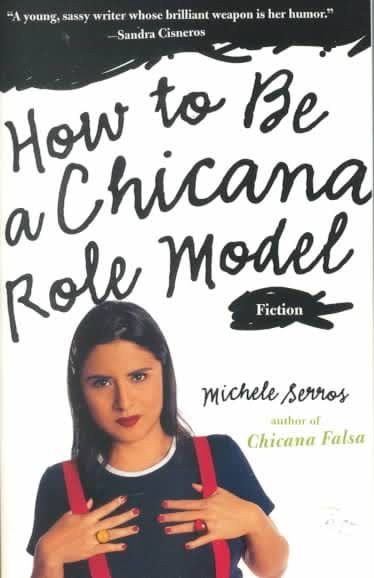
Michell Serros's first book


I still have a hard time believing Michele Serros didn't make it to see her 50th birthday. She had big plans to have a cinquentañera and she had more poems, articles, and books to write. The Oxnard native died at age 48 after a battle with cancer. Sunday, February 10, would be her 53rd birthday. Michele was one of the first, if not the first, author I had ever met. She was young and funny and years later, I had the pleasure of standing next to her at the Latino Book and Author Festival when my first book was published. She had friends all over the country and always managed to send a letter or call around Valentine's Day, her favorite holiday. It's appropriate that California State University Channel Islands will open the Michele Serros exhibit and archives in the John Spoor Broome Library Gallery. The reception will include readings of Serros' works and the screening of a short film called "Cielo or Bust: Honoring the Life and Works of Michele Serros and her Stories of Dead, Identity, and Oxnard" by director/producer Julio Alcala. The exhibit not only contains her papers, but also signature pieces, such as skateboards and the famous desk that Michele writes about in her 1993 book, Chicana Falsa. Coordinating her archives and the Michele Serros Multicultural Living-Learning Community, a dorm at CSUCI, is another amazing Chicana and friend, Dr. Jenny Luna who met Serros when the two were neighbors in New York.


Details: February 14: California State University Channel Islands, 1 University Dr., Camarillo, CA 93012, John Spoor Broom Library Gallery, reception from 5-8 pm.


Michele Serros and Melinda Palacio


****

This Saturday, along with Toni Wynn, I have the pleasure of reading from my latest book, Bird Forgiveness at the Core Winery. If enough wine is had, I will also perform the Bird Forgiveness theme song and my latest song, working title "Time." Rebecca Rose at the Santa Maria Sun wrote up a nice article on me and the upcoming event. Read the full article here.

February 9, Core Family Winery, 7:30 pm to 10: 30 pm, 105 W Clark Avenue, Santa Maria, CA 93455.

I'm holding up the Santa Maria Sun article by Rebecca Rose.