Showing posts with label Michele Serros. Show all posts

Friday, February 28, 2025

Poetry Connection: Connecting with Oxnard Writers

 Melinda Palacio


Melinda Palacio and Michele Serros


Over the weekend, I read a book I couldn’t put down. While it’s an academic book and not everyone’s cup of tea, the subject was about Michele Serros’s work: Welcome to Oxnard: Race, Place, and Chicana Adolescence in Michele Serros’s Writings. The critical book by Cristina Herrera, a professor at Portland State University who is also from Oxnard provides a scholarly analysis of Michele Serros’s books. While I find the study impressive and important for academia, Michele was such as trickster that I can only imagine her being super tickled by all the scholarly research done by Herrera and the sources she cites in her book. While her publishers list Serros’s books as novels, her first two are hybrid collections that contain poems, stories, and non-fiction.


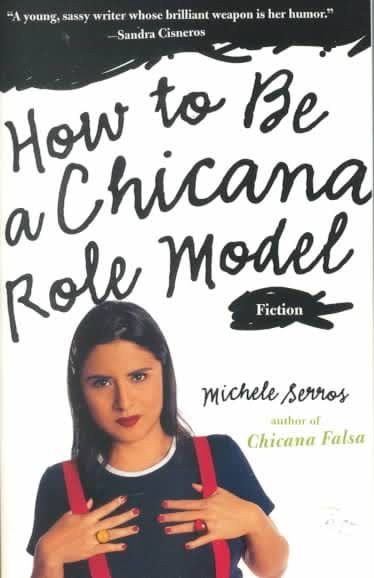
Michele was a friend and our paths crossed in curious ways. She was only four years older than I am but made a name for herself in her twenties. She wrote for the George Lopez show, toured as a poet in Lollapalooza, contributed to NPR and numerous magazines, and wrote poetry and novels, set in her hometown of Oxnard. Her books include Chicana Falsa and Other Stories of Death, Identity, and Oxnard (1993), How To Become a Chicana Role Model (2000), Honey Blonde Chica (2006), and !Scandalosa! (2007).


It’s hard to believe that she was the first author I met at a bookstore in East L.A. in the late 90’s, that we became friends, and that she died of cancer at age 48. My mom’s friends, Mary and Eddie Ortega had taken me to the bookstore where they were excited to meet the young author. We were enchanted by this witty girl who was a writer and a jokester. I often think of the funny texts she would send me or the silly names she would call me like Travelocity because she saw that I traveled far and wide to read my work.


Almost a decade after our initial meeting, we both presented our books at the Latino Book Festival. We had fun talking shop and we kept in touch. But it wasn’t until 2012 that we became friends. We spent a weekend together being feted by the Santa Barbara Women’s Literary Festival. I had just won the Kulupi Press Sense of Place Award that published my first poetry chapbook, Folsom Lockdown, poems about visiting my father in Folsom prison. She had four books to present. At pre-festival dinner, Michele kept picking the chicken out of my chicken pot pie. She had ordered the vegetarian platter and her meal consisted of a place of uncooked vegetables. I thought it was adorable and funny that she felt comfortable enough to eat off my plate. Her husband ran a vegan Mexican restaurant in Berkeley and I think Michele was a secret meat eater, or just hungry for more than the cold vegetables on her plate.


That weekend she also introduced me to her writing group, WoWW (Women Who Write). Michele workshopped a piece she was writing for Marie Claire Magazine about the Hollywood Bowl. I didn’t bring anything to workshop, but WoWW welcomed me to return and to this day, I have made a special connection with them. The group was formed over 20 years ago and includes writers Amada Perez, Florencia Ramirez, Toni Guy, Lori Anaya, and Dani Brown, who hosted on the day I attended with Michele.


A few years later with a novel and a full-length poetry book under my belt, Michele surprised me by attending my reading at Moe’s Books in Berkeley. She was still showing up for fellow writers and modeling how to be a Chicana role mode. That was the last time I saw her. Cancer took her too soon.

Cristina’s Herrera’s book is an unusual academic book in that the author discusses her feelings about having grown up in Oxnard. She bemoans not having had a role mode like Michele Serros to show her that it was okay being different and how to roll with the punches when kids would tell her that she is not Mexican enough. Michele (with one l as she offend pronounced her name), was proud of her hometown. I know she would be super proud of her fellow WoWW who continue to put Oxnard on the map in their writing, especially Mona Alvarado Frazier, whom Cristina mentions in the last chapter of the book, citing the tribute Monica (Mona) Frazier wrote in La Bloga. Mona’s award-winning novels are also putting Oxnard on the map in her fiction. If you haven’t already, check out A Bridge Home and The Garden of Second Chances. 


Mona Alvarado Frazier and Michele Serros


*a version of this post was also published in the Santa Barbara Independent


This week’s poem comes from Mona Alvarado Frazier


Remembering Michele


My friend died two days ago.

Cancer.

I knew she had it for several months.

Pinche cancer.

I really thought she'd survive.

Damn it.

She married the love of her life,

a short three years ago.

He was by her side when she left this world.

My heart holds a special spot for Michele Serros,

or as she liked to hear, "Mrs. Antonio Magaña."

A confusion of feelings surround death.

Why? Why her? Why didn't prayers work?

I see her smile, lively eyes, texts at odd hours,

her words expressing identity, small towns,

and individuality

a literary landmark

stories like my life and unlike my life

resonate with scenes only she could paint

Why?

She found love, at a vegan restaurant,

with a Berkeley chicano, a mexican, from her home town,

from her own high school, the same alma mater, so long ago

ecstatic with love, a new family

sharing her life.

That's the way she was, loving, giving, living

daring to say the unsaid,

with wit and unique style,

inspired to write by Judy Blume.

A Medium Brown girl,

A Taco Belle,

Mucha Michele,

who wrote outside of 'barrios, borders, and bodegas,'

defining herself and the question of identity

to a mess of other men and women

boys and girls

high schoolers to old schoolers

on what is mexicano, chicano, americano.

A writer of handwritten notes,

handcrafted cards of

glitter and glue,

inspired,

memorable,

unique,

like her.


Friday, February 08, 2019

CSUCI Houses the Works and Archives of Michele Serros

Melinda Palacio


Michell Serros's first book


I still have a hard time believing Michele Serros didn't make it to see her 50th birthday. She had big plans to have a cinquentañera and she had more poems, articles, and books to write. The Oxnard native died at age 48 after a battle with cancer. Sunday, February 10, would be her 53rd birthday. Michele was one of the first, if not the first, author I had ever met. She was young and funny and years later, I had the pleasure of standing next to her at the Latino Book and Author Festival when my first book was published. She had friends all over the country and always managed to send a letter or call around Valentine's Day, her favorite holiday. It's appropriate that California State University Channel Islands will open the Michele Serros exhibit and archives in the John Spoor Broome Library Gallery. The reception will include readings of Serros' works and the screening of a short film called "Cielo or Bust: Honoring the Life and Works of Michele Serros and her Stories of Dead, Identity, and Oxnard" by director/producer Julio Alcala. The exhibit not only contains her papers, but also signature pieces, such as skateboards and the famous desk that Michele writes about in her 1993 book, Chicana Falsa. Coordinating her archives and the Michele Serros Multicultural Living-Learning Community, a dorm at CSUCI, is another amazing Chicana and friend, Dr. Jenny Luna who met Serros when the two were neighbors in New York.


Details: February 14: California State University Channel Islands, 1 University Dr., Camarillo, CA 93012, John Spoor Broom Library Gallery, reception from 5-8 pm.


Michele Serros and Melinda Palacio


****

This Saturday, along with Toni Wynn, I have the pleasure of reading from my latest book, Bird Forgiveness at the Core Winery. If enough wine is had, I will also perform the Bird Forgiveness theme song and my latest song, working title "Time." Rebecca Rose at the Santa Maria Sun wrote up a nice article on me and the upcoming event. Read the full article here.

February 9, Core Family Winery, 7:30 pm to 10: 30 pm, 105 W Clark Avenue, Santa Maria, CA 93455.

I'm holding up the Santa Maria Sun article by Rebecca Rose. 


Sunday, September 20, 2015

How A Girl in Pieces Owns All The Words: A Conversation with Isabel Quintero

Olga García Echeverría

Today we have la fabulosa Isabel Quintero in the house, chismeando conmigo about writing, publishing, and her YA novel, Gabi: A Girl in PIeces.

I have so much to say about this book full of barrio sass and sazón, but honesty, I don't think I can sum up the novel better than our own poet laureate, Juan Felipe Herrera. Here is what Herrera has to say about Gabi: A Girl in Pieces:


"Meet Quintero’s high school 'fat girl' Gabi, eating and starving and fighting and writing her way through the crushing pressures of high school boy desire, religious approval and Mexican cultural taboos of 'living in sin.' A 'smiling' good 'virgin' girl or an 'ofrecida,' 'slut'? And in-between these frozen and fearful versions of womanhood, there are blurred, bloated and violated girls: straight girl with gay boy, abandoned pregnant girl with 'parading' boy, raped girl with defender girl. And quinceañeras, and familia and suspensions and carne asada and churros where the soft body stretches, boils in grease and is cut to fit the Mexican girl mouth as it burns. Reminiscent of early Chicana writers such as Evangelina Vigil and Lorna Dee Cervantes, I cannot think of any book today for young adults as voracious, bold, truthful and timely – as this one. Who is courageous enough to read this prize-winning YA novel?"

If this blurb doesn't convince you that this book is a must-read, check out the bio at the end of this bloga that highlights all the awards Quintero's novel has received since it's publication in 2014, among them the 2015 William C. Morris Award for Debut YA Novel, the 2015 Tomas Rivera Mexican American Children's Book Award, and the California Book Award Gold Medal for Young Adult.

Pues, without further ado, here's the literary wiri wiri.

Isabel, so great to have you here at La Bloga. I loved your novel Gabi: A Girl in Pieces. It's wonderful to see a young strong Latina character who navigates her senior year and so many issues via her own wits and heart. She felt very real, very believable.
 
Gracias, Olga. I really appreciate that.

I enjoyed all the parenthetical comments throughout the novel that help capture Gabi's humor and sarcasm. Me hizo reir La Gabi muchas veces. It also made me think about how as a writer you must have some of that sarcasm, attitude, subversive back-talk. Where did you get that from?

Pues, one of my things my mom always told me was que era muy hocicona. I have always questioned things, though sometimes not verbally. Growing up it always bothered me how I was expected to behave because I was a girl and what I was allowed to want and not want. And I wanted everything--sex, dating, good grades, good schools, traveling, drinking, equality, justice.

But, I was often reminded that as a girl my options were limited. My mom didn’t want me to leave home to go to college because that meant que quería libertinaje. Freedom to do what I wanted was often, for some reason, attached to sex. Which is strange, but I guess it makes sense. Maybe my mom knew deep down, that having freedom also meant having ownership of my body and that scared her, porque quién sabe qué cochinadas I’d do.

This issue of freedom and gender roles shows up in your book in various way. Yet Gabi, even in her moments of struggle, shows a lot of agency.

Believing that one is free is different from acting like one is free, and I think that’s where Gabi has a hard time, because she knows she wants to do more than fantasize about what that freedom would be. We can think freeing thoughts all the time, thoughts hurt no one. But asserting freedom, pues agarte because it will most likely disrupt someone else’s power structures, and that gets ugly and often painful.
 
Were there any scenes in the book that you struggled with?
 
The abortion section was one. Only because I wanted to make sure I didn’t throw in this thing that I feel strongly about. So I did some research to make sure it was accurate. Another was one I can’t talk about or I spoil a section of the book. And then, Tia Bertha’s change at the end. At one of the high schools I visited, Lincoln Heights, a student asked me why I had waited so long in making Tia Bertha change. The truth is, she wasn’t going to, but I was rewriting that damn ending so many times, that I began to feel bad for her and yeah, she changed.
 
That's awesome, that in your constant reworking of the ending you began to feel sorry for your character Tía Bertha and that she got transformed in the process.
 
You know, pensándolo bien, the ending was what gave me the most trouble. It always ended with that last line, but the rest was different. Originally, there was a poem about Gabi accepting herself as she was, it was too forced, and I knew it but didn’t want to change it. My publisher finally made me face the reality. Though to be honest, I am still thinking of better ways to end the book.

That's funny. I remember a visual artist telling me once that even when his art was framed and up on the wall of a museum, he kept wanting to remove the glass and add lines and color. Speaking of images, one of my favorite sections of the book was the zine On The Female Body. 
 
You know, I am not a zinester, but I like zines, and I’ve tried to put together a few, and have some half finished ones.
 

Very Cool Body Pieces in Gabi: A Girl in Pieces

How did the zine part in Gabi: A Girl in Pieces evolve?

I learned about zines from Angela Asbell, an adjunct professor and activist at CSUSB. I liked the idea and tried to do some at home but didn’t like how they turned out and tossed them. One day she had a zine day at her house and, at this point I had already been working on the poem [used in this section of the book], and I starting making a zine that would go with the poem. I thought it would be a good format, though I wasn’t sure what I wanted to do with the zine when I was done with it. When I rewrote Gabi, from verse to prose, I knew that was why I had been doing the zine, for her, and that’s where it belonged. Cinco Puntos liked the idea, and at one point the zine was supposed to be a separate component, but that was too costly.


Were there things you couldn't or didn't include in the zine because it was a YA novel?

As for content, I think I got all I wanted in there. The targeted audience is not who I worry about; young people, I think, are more open about a lot of issues. Adults are the ones who often forget what it is like to be young and create a different reality about youth; one that is free of drugs, heartache, sex, and violence. Obviously, this is not true for everyone, but I’ve encountered adults who believe that drugs, violence, and sex in a teenager's life, not only among them but as a part of their daily existence, is a new phenomenon.

Yes, I totally agree. I think it's adults who create taboos around issues. But the youth, they seem to gravitate towards work that tells it like it is. How have young readers responded to your book?


Gabi from A Girl in Pieces Has Got It Right!
You know, the response has been better than I could ever have imagined. I get a lot of, “You’re talking about my high school!” or “That sounds just like my mom or my tía!” or “Thanks for painting fat girls in a real way.” So, those responses are great. I feel really good when readers can connect to Gabi’s questioning of gender roles, especially teens who are going through some of the same issues she is going through. I feel like I’ve done my job.

Did you always know this was a YA novel you were writing?

I think I did know it was YA when I began writing the book in 2007, but it was a novel in verse back then. I had just finished reading Juan Felipe Herrera’s crashboomlove, and K.L. Going’s Fat Kid Rules the World. Those books really helped me see what YA could be, and helped me remove some biases that I had about it. So, I began writing, Photographs of a Fat Girl, which was the original title. It was a much different book then, that although a first person narrative, revolved around photographs, not a diary.

I saw on Facebook recently that you were in Tulsa, Oklahoma, doing a series of readings there at the Martin Regional Library and at high schools in the area. How was that experience?

It was my first time in Oklahoma and I had a great time. The students were receptive, especially at East Central High School. After my presentation they had great questions about the writing process, publishing and of course the book. I’ve also been to some festivals, most recently I was at the San Antonio Book Festival and I did a Literary Death Match in which Luis Alberto Urrea was a judge. Dios mio, that was something. And this weekend it will be the Brooklyn Book Festival. It’s been a wonderful journey so far.
 
You know that golden rule that we always hear as writers, “write everyday”? What's your writing process like?

Tough question. I try to write everyday. Try. But it doesn’t happen. Sometimes I do get writer’s block. Daniel Jose Older, author of Shadowshaper, posted a blog post last week about how there is a myth around writing that we have to write our thousand words or more every day to be real writers, and that sometimes makes us feel ashamed when we don’t do it. I think I agree with him.

I write when I need to write, which is almost everyday. Some days, on really good days, I can write 8-10 hours without changing clothes, eating, or talking to anyone. On really bad days though, I can’t even put together an effing sentence. But I know I’ve gone too many days without writing when I start feeling really sad and lost.
 
And when you do write. What's your process?
 
When I do write, a ver, I prefer mornings or late evenings. If in the morning, I’ll drink black coffee and maybe some sort of carb filled goodness–pan dulce, cookies or toast. I love toast. Then I eat lunch, and get back to it. In the evening, I’ll write after dinner and I’ll drink cold black coffee, iced tea, lemonade, or just water, and go until I can’t anymore. Sometimes that’s a few hours, and sometimes that’s until 2:00 am. But that’s by no means a formula I live by. I do try to get in walks somewhere in there, too. Oh, and I read my work out loud to myself too.
 
Latino writers have been negotiating the use of Spanish in the publishing world for a very long time. It's refreshing to see more books like yours that 1) include Spanish and 2) don't feel obligated to italicize or translate everything.
 
To be honest, at first I did have the words in italics, but it felt wrong. Really wrong, because not only was it confusing with inner dialogue, but it seemed to exotify something I didn’t want to exotify. It made me feel like a traitor, but I didn’t know how publishing worked, and I didn’t have the confidence to say so. Cinco Puntos asked me if I really wanted to italicize the words and I said not really, and they said good because they didn’t either. Now, I wouldn’t think about italicizing the Spanish.
 
It's great to hear that Cinco Puntos encouraged dropping the italics. Did you encounter any resistance from others in the literary world?
 
Ha. There was only one major incident where something was written that said that one of the reasons I wouldn’t win the Printz was because my lack of a glossary. Which was really irritating, because I immediately put my teacher hat on, and wanted to say, “What do we do when we don’t understand a word in a text?”

Exactly. Look it up, verdad? It's good for the brain.
 
Luckily, librarians defended the lack of a glossary. I didn’t use Spanish where I didn’t need it; I created a character who is Mexican American, and speaks Spanish, English, and Spanglish. 
 
What advice would you give women writers out there who are wanting to publish their stories, poems, or first books?
 
Write, read, submit. A lot. If you want to write, write. Know that rejection is part of game and it is not personal (usually). Know that you will get writer’s block, but you can get through it. Likewise, know when to kill your darlings–sometimes it just doesn’t work. Get involved in a writing community, it was the best thing I ever did. It has helped me grow so much as a writer and you have a support group when things don’t go well and a cheering section when they do. It means a lot.

Be true to yourself, to your own voice, to what you want to write, not what you think others want you to write or you should be writing. As women, and as women of color, it can get tough out there. There are expectations about what and how we should be writing. I have a Native writer friend, Erika Wurth, author of Crazy Horse’s Girlfriend, who cannot find a home for her second novel because she keeps getting told it’s too dark. Too dark! I don’t think men would be told this. There are still assumptions about what women should write, and what women of color should write. I remember sitting at a workshop with another friend, a poet who is half-Native and half-Mexican, who doesn’t really speak Spanish, and one of the people in the workshop told her she should use Spanish in her work to make it authentic. I was like what the hell is going on? I think we are often asked to perform our cultures and gender in stereotypical, one-dimensional ways, in ways that make people comfortable, and when we don’t, when we say, “I’m queer/I’m transgender/atheist/don’t speak Spanish/don’t live on a reservation/like Hank Williams” people get upset and question our authenticity. But I say, fuck it, haci soy aunque les duela. No somos moneditas de oro, and god forbid we try to be.

RIP Michele Serros
An important lesson you have learned post the publishing of your first book?
 
Don’t be afraid to speak up for yourself. The late great poet Michele Serros’ gave me a great piece of advice, “Your book is your baby and no one is going to care about it like you would, so you need to stand up for it.” It’s hard to do at first but we have to do it. Also, it’s a lot of work to promote your book; it’s not just fancy sandwiches and breakfast tacos at book festivals. So, be ready a hecharle ganas con las dos manos.


Gracias for your time and all your thoughtful insights, Isabel. Anything else you'd like to add?
 
Thanks for the great questions. If you want more information about my work, appearances, or other chisme, follow me on Twitter @laisabelinpieces or visit my website laisabelquintero.com


Isabel Quintero is a writer and adjunct faculty instructor. The daughter of Mexican immigrants, she was born, raised, and resides in the Inland Empire of Southern California. Isabel also sits on on the board for a non-profit literary arts organization, PoetrIE. Gabi, A Girl in Pieces from Cinco Puntos Press, her first novel, is the recipient of the 2015 William C. Morris Award for Debut YA Novel, the 2015 Tomas Rivera Mexican American Children's Book Award, the California Book Award Gold Medal for Young Adult, 2015 Paterson Prize for Books for Young People, the 2015 Peggy Miller Award for Young Adult Literature, and was named a finalist for 2015 PEN Center USA Literary Award and the 2015 Walden Award. Gabi, A Girl in Pieces has also been included on the Amelia Bloomer Project List of Recommended Feminist Reading for ages 0-18, School Library Journal's Best Books of 2014, 2015 Capitol Choices: Noteworthy Books for Children and Teens, and is one of Booklist's Best Books of 2014, among other lists. In addition to writing fiction, she also writes poetry and her work can be found or is forthcoming in Huizache, As/Us Journal, The Acentos Review, The Pacific Review, and others.


Friday, January 16, 2015

Remembering Michele Serros and Two Services Next Week

Guest post by Monica Frazier


My friend died two days ago.
Cancer.
I knew she had it for several months.
Pinche cancer.
I really thought she'd survive.
Damn it.
She married the love of her life, a short three years ago. He was by her side when she left this world.
My heart holds a special spot for Michele Serros, or as she liked to hear, "Mrs. Antonio Magaña."
A confusion of feelings surround death.
Why? Why her? Why didn't prayers work?
I see her smile, lively eyes, texts at odd hours,
her words expressing identity, small towns, and individuality
a literary landmark
stories like my life and unlike my life
resonate with scenes only she could paint
Why?
She found love, at a vegan restaurant,
with a Berkeley chicano, a mexican, from her home town,
from her own high school, the same alma mater, so long ago
ecstatic with love, a new family
sharing her life.
That's the way she was, loving, giving, living
daring to say the unsaid,
with wit and unique style,
inspired to write by Judy Blume.
A Medium Brown girl,
A Taco Belle,
Mucha Michele,
who wrote outside of 'barrios, borders, and bodegas,'
defining herself and the question of identity
to a mess of other men and women
boys and girls
high schoolers to old schoolers
on what is mexicano, chicano, americano.
A writer of handwritten notes,
handcrafted cards of
glitter and glue,
inspired,
memorable,
unique,
like her.

Michele was the first writer I knew, personally, and from my home town. I attended her readings back in the late 90's. Her writing inspired me to think that I could be a writer. When I first met her, we clicked. She had that kind of personality-she clicked with everyone.
Monica Frazier and Michele Serros
A giver of advice, affection, and friendship, Michele was a humble person who stayed grounded and a strong woman who was soft on the outside, tough on the inside. A chingona.
She was a long distance member of the writing group to which I belong, sometimes sending us articles to review.
I often felt inadequate, a published author asking me for feedback? But that was the way she was, as real as real can get.
An excerpt from her book, "Chicana Falsa: And Other Stories of Death, Identity, and Oxnard," struck me, long ago. Her mother died, from cancer, and Michele wrote the obituary. When she described her mother as an artist, someone questioned it, "it isn't like she sold anything."
Definitions always played a big part of my life: a true Mexican versus a fake Mexican...a true artist versus a wannabe. Nonetheless, my mama would have been crushed knowing she left this earth not remembered as an artist. It was her fear and lack of confidence that kept her art stuck on an easel, hidden away in the corner of our family's garage...it was her death that gave me the courage to finally share some of my own poems and stories. The purpose? to make someone happy, inspired...I just couldn't bear the thought of questioning what my own obituary would say. 1994
There is no question that Michele was an artist, who made millions of readers happy, who inspired thousands of Latinas, Latinos, and others who rarely read anything that resonated with their lives. Her books are here.
She had been working on a new novel, An Unmarried Mexican, a title she borrowed from one of her favorite books and movie, An Unmarried Woman.
As you could imagine, medical expenses soared, especially for a self employed person. Give Forward has a campaign to assist Michele's family. The fund is halfway to its goal.
To read more about this wonderful person, see "An Unexpected Heirloom," at Huffington Post and this article in the Los Angeles Times.
Rest in love, Michele.
Siempre.


****
At UC Santa Barbara, Tuesday, January 20 at 6pm


****
In Oxnard
On Saturday, in Michele's hometown of Oxnard, California, there will be a church service for Michele Serros on January 24, 2015 at Santa Clara Church in Oxnard. The rosary will be recited at 9:30 am and a mass follows at 10 am. The church is located at 323 S. E. St., Oxnard, CA 93030.

Wednesday, January 07, 2015

Remembering Michele Serros


Michele Serros we will miss you. Te vamos a extrañar.

Thank you for your books. They will continue inspiring new generations.

In this video interview Michele Serros chats story, skateboarding and ethnic politics with llan  Stavans.


Friday, December 19, 2014

Checking It Twice

Melinda Palacio
Saturday, December 20, Winterlandia's Anti-Mall Marketplace


My final gift suggestion for the year: books. Tía Chucha Press and Centro Cultural has a great online  book shop. But if you are also looking for a bit of entertainment and fun while rounding out your holiday shopping. Tía Chucha's is hosting their 4th annual Winterlandia Anti-Mall. 

Whenever I mention Tía Chucha's, it's always with a soft spot because Luis J. Rodriguez has always inspired and informed my work. I'm also very honored to be a Tía Chucha Press Poet. They did a gorgeous job with my poetry book, How Fire Is a Story, Waiting. Whenever I go to Tía Chucha's, I always find myself buying some of their local handmade crafts in addition to books. 


If you missed Rudy's books by La Bloga guide, here it is: Holiday Gifts from La Bloga's Latino Authors
Felíz Navidad!


Over in New Orleans, on Sunday, José Torres-Tama gives his final 2014 performance and signs his new book of poems, Immigrant Dreams & Alien Nightmares (Dialogos Books 2014) at Faubourg Marigny Art & Books, December 21 at 6pm, 600 Frenchman Street, New Orleans.

At the Latino Book and Author Festival in 2010,
Luis Rodriguez, Michele Serros, Melinda Palacio and Daniel Olivas

Earlier this year, I reported on Michele Serros's campaign and fight against cancer in the September post: A Latina en Lucha Needs You Mucha Campaign. Thank you for your contributions to La Bloga friend, Michele Serros. In April 2013, Michele was diagnosed with a rare form of cancer, adenoid cystic carcinoma. As the disease has advanced to stage 4, she continues to ask for support and has upped the ante in her GiveForward campaign.

Thank you to everyone who reads La Bloga. I appreciate all of your well wishes for my broken leg which is healing. I'm able to walk without a limp and soon I'll be dancing. Gracias!

One of over 300 children in Iguala who will benefit from Reyna Grande's Posada.

Also, your generosity has helped fund Reyna Grande's toy drive. She will be distributing toys to over 300 children in her hometown of Iguala, Guerrero. Her campaign will also continue into the new year as she plans on including a toy give away to the kids at the ayotzinapa school. Reyna says the school has been turned into a campground with many people and kids. If you missed her guest post on La Bloga, read about how Reyna is bringing some Christmas Cheer to a Town Missing 43


Friday, September 12, 2014

A Latina en Lucha Needs You Mucha Campaign

Melinda Palacio


Michele Serros and Melinda Palacio


 In 1995, I heard Michele Serros read at Martinez Bookstore in Santa Ana. At the time, I didn't see myself as a writer. My mom's best friends, Mary Rose and Eddie Ortega are avid readers and collectors of Chicano Literature. I had no idea what I was in for when I went along for the ride with the Ortegas. I met my first published author, a young jubilant Chicana whose stories were so real and close to home, I laughed without realizing the magical impact of that experience.


Michele Serros reading at a fundraiser for the 2010 Latino Book and Family Festival


In the past twenty years, Michele's stories and books have become iconic and required reading in high schools and colleges.  I never thought decades later we would both be featured authors on panels and writer pals who send each other late night texts.  Earlier this year, I had my own debut at Martinez Books. Thanks to Reyna Grande, who gathered 140 Latino authors for the 2010 Latino Book and Family Festival (see photos and post on La Bloga), I met Michele Serros again as a fellow published author.


Giving Back to a Young Author Who Has Inspired So Many


Less than a year after that moment of meeting Michele Serros again at the Latino Book and Family Festival, I knew that she had some complicated news she wanted to share. But she was hesitant to come out with it. I remember seeing her again in Berkeley when she came to hear me read with Francisco X. Alarcón at Moe's Books. She hinted at her illness, but didn't say outright, I have cancer.  I think she was hoping the disease that claimed her mother would go away and that she wouldn't have to burden her family, friends, and fans with the knowledge that she was fighting for her life.

In April 2013, she could no longer ignore the diagnosis. The cancer advanced to Stage 4 adenoid cystic carcinoma, affecting her bones, liver, lymph nodes and paralyzing her left vocal chord.


Some of her friends convinced her to join a crowd funding campaign to help pay for the astronomical price of what her insurance does not cover. Michele Serros chose to stand down cancer in a public way, sharing photos from her hospital stay on Facebook and writing about her lucha on the Huffington Post. Join her campaign and help her say, Hasta La Bye Bye Cancer! You will even be able to join in her chorus of gritos September 16. As of yesterday, she has raised $26, 517 out of a goal of $30, 000.

I hope that Michele exceeds her goal. I look forward to belting out a grito for her on September 16, Mexican Independence Day and the last day to contribute to her GiveForward Campaign, 'A Latina en Lucha Needs You Mucha.'


Yesterday, I texted and emailed a few people and gathered a little help to round out this Bloga post and boost the crowd funding campaign for Michele Serros. Here are a few more testimonials.

Michele Serros and Mary Rose Ortega


Mary Rose Ortega writes:

"Over the years, I have been to several of her readings, have read and collected her books. All her books are personally autographed. She has brought back many memories and has added laughter to my life. I feel she has included us on her day to day struggle because she knows we care. She puts laughter on the persistent cancer that she is fighting. As a Chicana, I feel that she has always made me proud and when a friend is in need, we need to be there for them. So please give, what you can, to help her in this fight against Cancer."

Amada Irma Perez offers two throwback photos:
Las tres comadres in writing in happier times at the Women’s Literary Festival in Santa Barbara: Melinda Palacios, Michele Serros, Amada Irma Perez 2012 
Michele Serros and Melinda Palacio as honorary members of Women Who Write (WoWW). L to R: Michele, Mona AlvaradoFrazier, Melinda, Toni Guy, Sheri Ward, Amada Irma Perez, Dannielle Brown. Not pictured: Florencia Ramirez, Lori Anaya


Mona AvaradoFrazier and Michele Serros
at the Ventura County Museum where Michele was the keynote speaker for the Latina Film Festival.
Lucy Rodriguez-Hanley made a short film based on one of Michele's short stories.

Mona AlvaradoFrazier writes:
"We are homegirls, Michele and I. Not only did we attend the same high school, are from the same hometown, and in the same critique group but we are homegirls in the fight against cancer. My own fight was nine years ago.

When Michele told me she had cancer, there were no words that I could say, I could only hug her tightand feel the struggle ahead that is a battle for life as it is known before the word 'cancer,' is uttered

Michele is genuinely sweet, a quality hard to come by when you suffer the loss of a parent and grow up in an economically depressed urban areaShe is kindwittytalentedand so much moreBut the quality I know her best for is her ganasthat unique ability to survive and thrive whatever the odds

Thank you to everyone who donates to Michele's fight against cancerShe has many more stories to write."


Florencia Ramirez


Florencia writes:
 "As far as I'm concerned  Michele Serros put Oxnard and El Rio on the map! My favorite all time poem of Michele's is "Dead Pig's Revenge." I've read and re-read it through the years. Recently, I read it aloud to my children; they couldn't stop laughing. But the best part is they could relate: to the chicharrones, to growing up in Oxnard. Michele's poetry and stories are theirs too. 

Through her stories she shows us how life is hysterical, joyful, cruel, and baffling...but somehow we get through it and it is all damn beautiful. But damn this cancer that tugs at Michele's life...it is too soon, too many unwritten stories only she can write. 

With the help of Facebook, she has taken us with her on her lucha against cancer. She shows us all how to face life's toughest challenges with grace and authenticity. And like the young Michele in "Dead Pig's Revenge," this too will have a happy ending."


Reyna Grande

La Bloga friend, Reyna Grande writes:"
"Michele is a wonderful human being and a talent writer who has inspired me by her hard work and dedication but also by the strength and resiliency she ha s shown during this difficult period of her life. I wish her all the best and I encourage everyone to give to her campaign as a way of thanking her for everything she has given us, her readers and fans."


Michele Serros, Stylish Survivor and Author
Join her Campaign. Help her fight cancer.
Last, but never least, we hear from Michele Serros herself. She wants gente reading La Bloga to know that "in addition to being known as the 'Chicana Child (who Chokes on Chicharones in Chico, her effs (friends, family, and fans) may yell out Michele Serros, 'Chicana Conquers Cancer...con safos'."