Showing posts with label historical fiction. Show all posts

Friday, February 04, 2022

The Pandemic Ushers Reyna Grande’s Most Ambitious Novel

Melinda Palacio


Reyna unboxing her proofs of A Ballad of Love and Glory


Reyna Grande left no stone unturned while researching her new novel, A Ballad of Love and Glory, (Atria Books 2021), which tells the story of the San Patricios, the Irish brigade who fought in the Mexican-American War, composed of deserters from the American ranks, who switched sides to defend Mexico. For several decades, the US denied the existence of the Saint Patrick's Battalion, many of whom were hanged and met a terrible death at the hands of the Americans. Even though their efforts did not result in a win for Mexico, but rather a staggering loss where Mexico lost half of its territory to the US, Mexico remains grateful to the Irish for fighting so valiantly. Grande’s research included dozens of historical books on the Mexican-American War, Texas Rebellion and the Battle of the Alamo. She also poured over books on Irish history the Great Famine, as well as books on artillery warfare, cockfightings, and the flora and fauna of South Texas and northern Mexico.


Although the novel features a strong female Mexican protagonist, Grande said she was surprised by having had an easier time writing from her Irish protagonist's point of view. The first chapters she wrote were from the point of view of John Riley, the leader of the Saint Patrick’s Battalion, who was under the command of general Antonio López de Santa Anna. What’s impressive about this novel, is how authentic the Irish soldiers sound, and not just the main character, but the voices of the different soldiers. I asked Grande how she managed to recreate the syntax of an Irish soldier. “I read nineteenth century Irish literature and diaries and I hired an Irish historian to read the manuscript and help me with details and point out my mistakes. Cathal Smith, author of American Planters and Irish Landlords in Comparative and Transnational Perspective: Lords of Land and Labor, helped her infuse the story with Irish Gaelic and weave in bits of Irish history and  Irish sayings seamlessly into her impressive fictional account.


Reyna Grande and historian Cathal Smith in Ireland


While the war is a main character in the novel, at the heart of the story is the romance between John Riley and fictional character Ximena Salomé Benitez y Catalán, a Mexican healer from the area known today as the Rio Grande Valley. Researching John Riley’s historical role in the Saint Patrick’s Battalion made writing his character easier after having learned enough about his role in the war. “I had a hard time with Ximena,” Grande said. “Though she is based on a poem by John Greenleaf Whittier, I had to create her from scratch. I skipped a lot of her chapters from the beginning. It wasn’t until 2020, when the pandemic happened that I started to really work on her.” The prolific writer says once she realized how Ximena sees the world, it was easy to writer from her point of view. The poetic voice of the healer finally emerged and Grande was able to finish her historical novel.


During the past decade, Grande has published works of nonfiction, including two memoirs. A Ballad of Love and Glory is her return to fiction after thirteen years. Grande is excited and nervous about the reception of her third novel. Although the subject may make some people uncomfortable, she wanted to reclaim this part of history. "I felt empowered in understanding this history," she said. "I want to help people understand that the Mexican Americans who live here are not outsiders. 


 One of the things that surprised her in writing the novel was how fun it was writing about the Santa Anna, who became her favorite character. “He’s the most hated man in Mexico and I was intimidated writing about him,” she said. “Since the very first scene, he jumped off the page and I didn’t have to work so hard on making him believable. He is such a talker; I couldn’t get him to stop talking!” 


Reyna Grande’s book launch begins at Vroman’s in Pasadena, March 15, where she will be in conversation with Héctor Tobar. The pandemic didn't slow her down. She has more events and another book out June 7. She is the co-editor of Somewhere We Are Human, an anthology of migrants, refugees and Dreamers. Both new books are available for pre-order on her website.

Tuesday, July 30, 2013

Review: Secrets of Old Blood Sizzles. Mailbag. July's Fifth On-line Floricanto

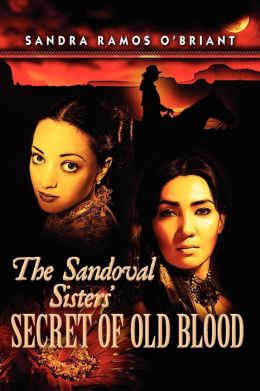
Review:  Sandra Ramos O'Briant. The Sandoval Sisters' Secret of Old Blood. Los Angeles: La Gente Press, 2012. ISBN-13: 9780615615103

Michael Sedano

There’s a reason folks keep “to-be-read” stacks of books. Prioritizing time, one reads, first, time-certain books--book group selections, impending public library due date. Next in line are serendipitous titles picked up here or there, perhaps a gift or a recovered treasure. Over time, priorities change and a book gets added to the good intentions stack.

Every now and again, time allows one to slide the top volume off the nearest “to-be-read” stack. For me, recently, this happened to be Sandra Ramos O’Briant’s historical novel The Sandoval Sisters’ Secret of Old Blood.

Back in September 2012, I attended a fiestas patrias month reading at the Autry Center that featured Daniel Olivas’ landmark anthology, Latinos in Lotusland. It was an opportunity to photograph authors Sandra Ramos O’Briant, Estella Gonzalez, Lisa Alvarez, Melinda Palacio, and Michael Jaime-Becerra.

O’Briant had copies of the novel there, so I bought my copy intending to get right to it. Eventually, The Sandoval Sisters found itself on the stack. Now I regret not getting to this delightful historical romp sooner.

Historians might quibble here and there, I’m not one so I have no idea about the history. O’Briant doesn’t make a big deal out of the massive historical research that the author conducted. Her labor pays off in a text rich in fact and implied knowledge that lends authenticity to crucial events. Readers shouldn't notice the effort, and in that sense, the history works in this novel.

Set in New Mexico in the decades leading to the Treaty of Guadalupe Hidalgo, the story of four women comes ready-made with cultural references and a literary heritage. Most notably, as a uniquely New Mexico story with plot lines filled with miracles and mystical prescience, O’Briant fits into literary space created by Rudolfo Anaya’s timeless Bless Me, Ultima.

O’Briant’s story of the Sandoval sister married into a slave-owning Texas family has a counterpart in Arturo Madrid’s In the Country of Empty Crosses. Set in New Mexico beginning fifty years after the Sandoval Sisters stories, Madrid’s depiction of ever-present tensions between Catholic and Protesant gente, raza and anglo, reflects the creative history O’Briant thrusts upon the indomitable Alma.

Historicity sets a background and defines cultural rules that constrains an author’s work. Eroticism has fewer boundaries, and here Sandra Ramos O’Briant gives herself an almost free hand. There’s the soltera sister, the keeper of familia knowledge. There’s the consolation prize bride, Pilar, a 14-year old. Her middle-aged husband looks forward to training her body. Alma, the intended bride, runs off to Texas with a nice cowboy. First impressions are killers, Alma learns. Still, Bill gives her shivers when she lets herself go. Then she meets the doctor.

Lusty as the reading gets in places, O’Briant constrains herself. Women have clefts, men have members. Putting aside small details, the author enjoys placing characters into sexual situations just because she can. But that’s why it’s a romp of a novel, lots of passion. "What if?" that's why authors create novels out of historical material: the rape victim whose sex slavery teaches her to return home a worldly-wise business woman; the woman who prefers to face the world as a male finds love with a woman; are magic and miracle the result of knowledge and literacy, not belief and intent?

Historical fiction might not be everyone’s cup of tea, but ni modo. This one is a treat and deserves a trip to your local independent bookseller.

When I took The Sandoval Sisters’ Secret of Old Blood off my “to-be-read” stack it was none too soon and about time. What a treat to enjoy the joys of sly smiles and breathless intervals between racist attacks, yanqui invasions, local color, gender ambiguity, jealous lovers, patient lovers, huge cultural paradigm shifts.

And the next one on the stack now is “Accordion Crimes.” Vamos a ver.

Melinda Palacio, Estella González, Lisa Alvarez, Sandra Ramos O'Briant, Michael Jaime-Becerra, Daniel Olivas


Mailbag
Mystery Arises From Arte Publico Email

La Bloga readers already on Arte Público Press' email list recently saw Arte Público spotlighting La Bloga co-founder and alternating-Friday columnist, Manuel Ramos, in the publisher's July email.

Manuel's critically-acclaimed Desperado is on the radio in an interview with KUHF radio host Eric Ladau.

In more news, television watchers will want to expand their enjoyment of The Bridge, according to Arte Público, by reading Alicia Gaspar de Alba's unforgettable novel about the Juarez murders, Desert Blood. The publisher has it in English or Spanish language editions.


On-line Floricanto in July Farewell
Francisco X. Alarcon, Andrea Mauk, Sherry Carbajal, Bulfrano Mendoza, Irma Guadarrama

August horizons today as La Bloga's On-line Floricanto wraps July with five distinctive voices selected by the Moderators of the Facebook group Poets Responding to SB 1070 Poetry of Resistance.

Canto Hondo/Deep Song by Francisco X. Alarcon
Don’t Call Me White Girl (The Backlash) by Andrea Mauk
Trying to Understand by Sherry Carbajal
Sacrificio by Bulfrano Mendoza
Water (The River of Life in a Desert of Hell) by Irma Guadarrama


Canto Hondo/Deep Song
Francisco X. Alarcon


Francisco X. Alarcón, award winning Chicano poet and educator, is author of twelve volumes of poetry,
including, From the Other Side of Night: Selected and New Poems (University of Arizona Press 2002), and Snake Poems: An Aztec Invocation (Chronicle Books 1992) His latest book is Ce•Uno•One: Poems for the New Sun (Swan Scythe Press 2010). His book of bilingual poetry for children, Animal Poems of the Iguazú (Children’s Book Press 2008), was selected as a Notable Book for a Global Society by the International Reading Association. His previous bilingual book titled Poems to Dream Together (Lee & Low Books 2005) was awarded the 2006 Jane Addams Honor Book Award. He has been a finalist nominated for Poet Laureate of California in two occasions. He teaches at the University of California, Davis.

Francisco recently participated in the First Children’s Poetry Festival in El Salvador (Nov. 8-10, 2010) and was able to visit Monseñor Oscar Arnulfo Romero’s tomb beneath the metropolitan cathedral of San Salvador. Monseñor Romero was killed saying mass in 1980 marking one of the most violent periods of the civil war in El Salvador.
He created a new Facebook page, POETS RESPONDING TO SB 1070 that is getting lots of poetry submissions and comments. http://www.facebook.com/pages/Poets-Responding-to-SB-1070/117494558268757?ref=ts


Don't Call Me White Girl (The Backlash) 
Andrea Mauk

Don't stop me in the U-Scan of the grocery store
to tell me that I am a white girl,
to erase my mother's heritage,
to judge me only skin deep,
to tell me I don't know how it is
to be misunderstood,
or that you're angry -
more angry
than I could ever be -
and violence
stops violence.
Don't tell me that
it's my fault.
Just don't.

Don't ask me if I've heard about the protests
on Crenshaw and Vernon
when I live at Western and Vernon
and I hear the helicopters circling
all night long.
Just stop assuming.

Don't tell me that the conquest
of your people
was worse
or larger
or more important
or more brutal
than the conquest of my people.
My ancestors all but disappeared,
their demise blamed
on kind smiles and generosity,
and now you only see them
in the turn-up of my eyes.
Don't think you're the only one
who lost a piece of your identity.
After all, in a flick of your tongue,
you just stripped me of half of mine.
Can I have it back now, please?

Don't throw Arizona in my face,
say I'm afraid to teach
the other side.
I am the other side,
I lived my life,
my education,
in the great
Grand Canyon State,
but you couldn't see that
I was thrown against a police car
on my 15th birthday
repeatedly
because the Phoenix P.D.
couldn't believe that
my father's German name
really belonged to me.
You couldn't understand that
because you were too busy
calling me white girl.
Just shut your mouth
and do something constructive
with your anger
instead of taking it out
on me.

And I do understand,
at first glance,
I look like a white girl.


Andrea García Mauk grew up in Arizona, where both the immense beauty and harsh realities of living in the desert shaped her artistic soul.
She currently calls Los Angeles home, but has also lived in Chicago, New York and Boston. She has worked in the music industry, and on various film and television productions. She writes short fiction,
poetry, original screenplays and adaptations, and is currently finishing two novels. Her writing and artwork has been published and viewed in a variety of places such as on The Late, Late Show with Tom Snyder; The Journal of School Psychologists and Victorian Homes Magazine. Both her poetry and artwork have won
awards. Several of her poems and a memoir are included in the anthology, Our Spirit, Our Reality. She is also a moderator of Diving Deeper, an online workshop for writers, and has written
online extensively about music, especially jazz, while working in the entertainment industry.


Trying to Understand 
Sherry Carbajal

I will never understand racism,
prejudice of any kind,
or the bullying of others.

Even if people don't believe
in a Higher Being,
what happened to common courtesy
and good will to others?

Life can be difficult,
and even more so
for those who are unique
and different from the majority.

Is it fear, jealousy,
or plain evil that forces
people to hate?

We owe it to our children
to love one another
or at the very least
to accept or simply leave

those alone who we
don't understand,
and to stand up for and protect
those being abused or bullied.

For if we do nothing,
what kind of world
are we creating for our children
and grandchildren?


Sherry Trujillo Carbajal has been a culinary arts teacher at Morenci High School since 2000.
 After graduating first in her class at Morenci High School in 1984, she attended Arizona State University where she graduated Summa Cum Laude with a B.A.E. in Secondary Education. She later earned a Master’s degree in Secondary Education with a Reading endorsement from Northern Arizona University. In 2002-2003, she was named the ASBA (Arizona School Board Association) Greenlee County Teacher of the Year. She resides in Morenci, Arizona, with her husband of 25 years, Arnold, her daughter, Ashley, and her younger son, James. Her older son, Christopher, is a 4th generation copper miner who also resides in Morenci with his fiancée, Michelle, and children, little Christopher and Adriana.


Sacrificio
Bulfrano Mendoza

I took my sacred eagle feathers
and all of my Medicina
to an ancient place
in a steamy jungle village
near Quintanaroo.
A place where the physical
and the spirit world are one.
To begin a prayer that I
knew would have consequences.
Careful what you ask for....
Twenty five offerings of flesh
were cut from each arm
plus five..warrior style.
My blood flowed freely
from my offering.
A sign of respect for all
of the women that bleed
and for all their suffering.
I prayed so hard, Tlecuauhtlacupeuh
floated out of the Sun and
danced right through me.
But, with this blessing I was granted,
a message was whispered in my
spirit that opened the eyes of my heart.
Careful what you ask for....
For my prayer had moved
the Moon and Stars
but had no effect
on you.
Careful what you ask for....

Sacrificio


Rick " Bulfrano " Mendoza, is a Pamaque Indian descendant, born and raised in the barrios of San Antonio, Texas.

The Pamaque were one of the tribes from South Tejas, that were taken into the mission system by the Spanish Catholics, before the Americans came here, to populate the Spanish Colonial Missions.


Water (The River of Life in a Desert of Hell)
Irma Guadarrama

Water droplet on scorched tongue,
like a fragile twig almost dead,
too precious, too little, so wrong,
only a surreal existence lingers.
Fingers reaching the empty
plastic jug that feels like brittle
bones, aching feet, useless appendages
that burden every slight stride
now slow and heavy;
life pleading with merciless sunrays
determined to kill.

Caged in an inferno of hell,
let death be the victor,
let death be the heaven that
brings peace, peace, peace;
and stops the agony.

Water for the thirsty, water for the dead.


Irma Guadarrama recently retired after a 44-year career of teaching and research. She started out as a bilingual teacher and finished a professor at various universities, including University of Houston and South Texas’ University of Texas Pan American in Edinburg.

I begin writing poetry and songs in my twenties but I wasn’t interested in performing or publishing until 2009 when I became involved with the Writer’s Forum group in South Texas. Living on the border was such a unique, inspirational experience, and my literary interests broadened and deepened. I have a collection of poems and songs that I’m still refining and eventually will publish a chapbook, and perhaps, record my songs. My poetry and song lyrics have been published in literary anthologies and magazines such as the Interstice literary journal from South Texas College, the Boundless 2011 anthology of the RGV international poetry festival, and Voices from the Chicho anthology (Narciso Martínez Cultural Center’s Writer’s Forum Group). I also published two bilingual chapbooks of children’s original fables while a professor at the University of Houston: Cuéntame una fábula and Cuéntame mas fábulas.

I received a bachelor’s degree from Texas Christian University in Fort Worth, Master’s degree from the University of Texas in San Antonio, and a Ph.D. from the University of Texas at Austin. My area of study was education with an emphasis in reading and language and culture.

I was born in Cd. Juárez, México, but grew up in Central and North Texas areas. My home is currently Houston, TX where I live with my two children.

Presently, I work as a writer/researcher for a couple of blogs, which I recently developed: Bilingual Frontera (http://bilingualfrontera.blogspot.com) deals with themes related to social and political issues in the borderlands, and Mujeres, Fronteras y Sus Historias/Women, Borders and Their Stories (http://mujeresfronteras.wordpress.com), that focuses on the plight of immigrant women in the United States. In the former project, I’m collaborating with colleagues from Matamoros, Tamaulipas.

Tuesday, June 02, 2009

Review: Daniel Cano. Death and the American Dream. Final Report: National Latino Writers Conference. Notes.

Daniel Cano. Death and the American Dream. Tempe AZ: Bilingual Review Press / Editorial Bilingüe, 2009.
ISBN: 978-1-931010-54-2 (cloth) 978-1-931010-55-9 (paper)


Michael Sedano

Charley Trujillo leans into his story. The historical Tiburcio Vasquez had been a fluently bilingual upperclass scion of a Californio familia on the mid-19th century Monterey peninsula. Vasquez ran afoul of the clash of cultures--perhaps because he was too good at moving in and out of his hispanoparlante cultura and his equally educated Englich, I think—and went on the lam from la jura. Escaping a feared Mexican-killer lawman, Vasquez was pinched in West Hollywood by a local posse. In the newspapers of the day, Tiburcio’s personality won the day, but the jury hanged him anyway, no hard feelings, in 1875.

Trujillo, the author of Soldados, and Dogs From Illusion, writes with straightforward power about Chicanos in Vietnam, so his upcoming documentary film on this California legend should prove to be equally compelling. My conversation with Charley at the National Latino Writers Conference highlights the little-known, or mis-known, early history of Chicano culture in California. These people had stories; had newspapers, writers, an information culture, and that was a hundred years ago. So large a story, so small a memory.

Against that historical amnesia comes a much-needed historical novel, Daniel Cano’s
Death and the American Dream. Next year marks the centennial of the 1910 Mexican Revolution, along with a starting point in the chronology of Mexican immigration into California. In Death and the American Dream, populated by an unusual protagonist supported by strong women, set against a convincing historical landscape, Cano treats his reader to six years in the life of a fugitive from the Mexican revolution who settles into a Mexicano community, not in East L.A., but a barrio that occupied today’s Brentwood on the tony west side.

Any title with “American Dream” in it has to be writ large, and the main problem with
Death and the American Dream is it is writ too short. With success of this novel, it could become one in a series of historical novels tracking the conflicted biculturalism of that revolution-driven Chicano diaspora, in the person of Pepe Rios, who is not yet thirty as the novel ends in 1920. Pepe would be around 80 in 1970, the height of the Chicano Movement. It would be interesting seeing how Cano gets us there.

In 1911, eighteen year old Pepe Rios thrashes away from battle in Juarez to safety on the El Paso del Norte shore, where locals have set up picnics to take in the Mexican fireworks. Soldiering with Pancho Villa, Pepe gets tangled with the federales and believes he’s betrayed both his Villista compañeros and the feds, and killing his brother. Unable to tell his mother of his own role in the brother’s death, Pepe’s guilt launches him into headlong flight from the welter of confusions surrounding the battle and likelihood of execution by whichever side catches him first.

Crossing the river, Pepe kills an opposing soldier. Moving toward California, Pepe gets involved in killing a white man. Then Pepe’s best friend Seferino disappears into the hands of Los Angeles police and dies a suicide because he had it coming. These are the deaths that weigh heavily on Pepe—a son’s debt to his mother; the gallows; class and ethnic aporia--just as he’s about to get his first real taste of the American dream. The year is 1915. Pepe’s changed his name to José San Juan, and after years of subsisting on a steady diet of hard physical labor, San Juan—Cano always calls him Pepe--finds a dream job as a cub reporter at Martín Algodón’s newspaper, El ababar.

Cano puts strong women into Rios’ life. For his part, Pepe is not one of those “el hombre domina” tipos but willingly seeks his woman mentors. Ángela, the severe boss and cultural coach, continues where the priest left off back on el rancho, training the student’s mind. The alluringly beautiful Camilia, who years earlier has mentored Pepe Rios in passion, now his publisher’s wife, has gotten Rios/San Juan the life-changing break. Eusebia, a troubled woman, mother, and intimate confidant, disdains Pepe’s social whorl.

Mentored by seasoned bilingual veterana Ángela Durón, a writing career opens to the skilled letter-scribe and habitual diarist. Pepe hungrily takes to Ángela’s training. Secretly, he hopes one day to investigate Seferino’s murder, expose corruption, and bring a measure of justice to his “Just Us” excluded gente. Cano is spare but effective establishing the pervasive brutality of cop v. comunidad of the period, the Them and Us still extant. There’s no whining in Pepe’s bitterness. Cano allows Pepe and his neighbors seething outrage, moderated for similarly outraged readers by the dramatic irony that Pepe’s role is to be a tool. On one hand, the capitalist running dog Algodón keeps a willing Pepe on a financial leash. On the other hand, the anarchists cynically exploit Pepe, playing his ghosts against his better judgment, driving him to despicable and dangerous acts.

Language is no barrier to the monolingual Pepe. His beat is the newspaper’s society pages and occasional hard news piece. Los Angeles’ Spanish-speaking upper crust society opens to San Juan. Movers and shakers who love seeing their names and faces in the paper welcome the writer into their society, and Pepe’s a natural bon vivant and surreptitious interviewer. He gets good stuff that Ángela turns into interesting copy. Even without his own byline, other editors clamor for the reporter’s news. The money helps. With advanced skill, and notoriety, come danger. Ricardo Flores Magon comes to town to publish the famous
Régeneración. In hot pursuit: the cops, the feds, the Mexican feds, judges, anglo media. Magon will eventually get 20 years that cost his life.

Home life offers little comfort to the fatigued and deeply stressed reporter. He’s out late at fancy events, often, in the company of attractive women who seem available. His wife aspires to none of Pepe’s social graces. Her values rest in her home, family, and gente. Eusebia recognizes her indianness as polar opposite to what draws Pepe out of the home. She understands her role. She brought her own children to marriage with Pepe. She knows as does he, that Pepe settled on her, still haunted by the memories of another woman. She recognizes the constant presence of the glamorous ex-lover, Camilia, in Pepe's career.

Cano’s description playing the two women against each other illustrates the dysjunction of Pepe’s torment. His wife has just looked into a mirror noting proudly her Amerindianness:

Pepe saw strength and beauty as he looked into her eyes—not a woman’s socially accepted beauty—bright eyes, curved lips, or shapely body—but something deeper, a chasm that lulled and puzzled at the same time, an enigma that transcended the flesh. Where Camilia, his ex-lover and now the wife of his employer, radiated beauty, intelligence, charm, grace, and poise, Eusebia exuded simplicity and dignity. She existed like the morning sun, a cloud, a wave, a puff of dust, or a blade of grass.

In an interesting writer's tack, Eusebia suffers mental illness. Deep bouts of depression leave her confused and angry. To his credit, Pepe doesn't blame Eusebia for her illness. He doesn't help her, merely tolerating her absences when depression seizes her and family life goes around her. To Cano's credit, he doesn't blame Eusebia either. Conventional writers would say, "pobre Pepe, married to a crazy woman." Eusebia has values, integrity, and thinks critically. Her illness is a fact of life that she manages as best she can. But the illness appears to be winning and we begin to lose Eusebia as a character. This mental illness motif adds interest and value to an already involving story, a unique instance of a good book doing good.

I understand that Eusebia has to play third fiddle to Ángela and Camilia. They stand for power and social mobility; Pepe's chosen slice of the dream. Eusebia connects to home, earth, fecundity, fragility; things Pepe takes for granted, or ignores. And Death and the American Dream, after all, is Pepe's story.

Pepe's workdays and nights bring him superficial contact with strangers. His only close personal connections include Eusebia and a friend he knew in the old days. Lacking much outlet, Pepe seethes in constant outrage at restrictive covenants in housing, heavy-handed lawmen, resentful English-speakers, his publisher’s willingness to publish lies that curry favor with industrialists and anti-unionists of both the US and Mexican governments. Already intoxicated by rubbing up against big shots, he doesn't notice his increasing taste for booze. 

Pepe / San Juan becomes ensnared by the Magon movimiento. Ángela is one of the conspirators, and all along her mentoring has been directed toward Pepe’s recruitment. She reels him in like a fish on Santa Monica pier where Eusebia and Pepe met. The mentor tantalizes and torments Pepe with details of Seferino’s capture and suicide, with knowledge of that long-ago and far away killing. Pepe/San Juan becomes a spy for the Magones. When Ángela asks Pepe to use the publisher’s wife to spy on her husband, Pepe fails to recognize the organization’s manipulativeness. Instead his moral center spins ambivalently between getting the elegant former lover back into the sack, and betraying his obligation to Eusebia and their children. Tellingly, Pepe cannot make a convincing enough case for his wife’s side, but ends up driving the would-be lover into a towering rage that shatters their ties forever. Pepe is absolved of his responsibility to take effective action one way or the other. Is this as good as it gets?

Death and the American Dream is Cano’s second Pepe Rios novel. The eponymous 1991 title from Houston’s Arte Publico calls out “find and read me”, to learn how this current story fits into Cano’s earlier Rios story, and to observe a writer’s growth. This one’s a masterwork so the comparison will prove useful. While at the library, Daniel Cano’s Shifting Loyalties stands tall alongside Charley Trujillo’s as a must-read in United States war literature, and that of Chicanos in Vietnam combat.

The ending of 
Death and the American Dream will leave readers shaking their heads with surprise and mixed, mostly conflicted, emotions. Historical fiction has to follow the script, so there are no happy endings for Chicanas and Chicanos in 1920. Already the two older Rios boys are school dropouts; if it were 2009, they’d be skateboarders and asshole taggers. But it’s 1920 and the one is in and out of trouble, the other puts in hard physical labor but has begun spinning out of control. The older daughter has begun her own life, picking fruit up the central valley. Her kids will be in their seventies and eighties today, WWII veterans, Korean war vets, too, if she has as large a family as her mother. And medication is helping Eusebia's illness. But then, those are stories for another novel. Daniel?


Final Dispatch from Alburquerque...National Latino Writers Conference Wraps With Promise

I have been remiss and a poor guest in delaying thanking Carlos Vásquez and the National Hispanic Cultural Center for inviting my participation at the 2009 National Latino Writers Conference. Thank you, Carlos, Greta, Katie and the staff of the National Hispanic Cultural Center for a multi-faceted gem of a conference. 

I presented a workshop on reading your work aloud and attended workshops on writing poetry, novels, cultural journalism, screenplays, memoir, children's picture books, and panels featuring publishers, editors, and agents. Saturday morning, I observed the interviews between individual writers and a publisher, editor, or agent. Present a quality work, make a convincing presentation and the writer takes another step toward publication.


Vásquez limits attendance to fifty writers. People attend from across the nation and literary ascendencias. Mexico and Puerto Rico gente attend in good proportions. This year included at least one Colombian, a couple Salvadoreños, and gente I didn't get to meet from otros países. Enrollment cost is a well-kept bargain secret, but transportation is extra. As a result there's a good contingent of New Mexico writers. The conference draws a multigenerational group, from college freshman to retirees, from ex-Marines to ex-GIs. Collegiality is probably the second-most valuable experience writers take home from Alburquerque. It is a hotbed of Chicana Chicano Latina Latino stimulating literary discussion. 

Food service at the NHCC is unsurpassed. Registration includes breakfast, lunch, and banquet. Fruta, pan, burritos, salsa, come fresh to table. Main dishes taste and look good, presentation enhanced by attentive servers who don't let anyone down, even gente with food allergies and vegan writers. The conference program should list the mug shots and names of the key staff in that kitchen. ¡Ajua¡ to the cooks and servers.

Attention to detail--exemplified by the menu, the promptness and ease of getting everyone served and seated, but seen in all facets of programming--accounts for the smooth flow of the two and a half day literary festival. CPT rarely rares its head, events run on time. In the case of Open Mic, to the second. 


Scheduling features tracks for fiction, poetry, movie, children, young adult writing, and the critically important panels. Two or more subjects are workshopped during ninety minute periods. Writers elect a course of study, following a topic or instructor, or sampling broadly as a way of enlarging their writer's repertoire of genre. Workshop presentations range from hands-on writing sessions to lecture-discussion variants.

Some instructors recognize the obstacle of offering more than token feedback and abandon the hands-on notion altogether. Reyna Grande, for instance, breaks a novel into five elements, then uses a metaphor of painting a canvas to discuss writing a novel.  


Demetria Martinez does explication de texte, asserting that artifacts from everyday life are the stuff of memoir, then reading from Mother Tongue, where Martínez validates her assertion. 

Some workshop leaders elect to conduct writing exercises, filling paragraphs or lists to fit schemata of a play, or a character, or a poem. Valerie Martinez, for instance, outlines a view of poetic sensibility, then distributes  magazines and trinkets to foment vocabulary exercises that, who knows, could be, become, a poem? 

There truly is not time to read or get feedback on one's exercises. Workshop leaders who engage enrollees in a lot of writing invariably collect the work and promise to read and get back to the writer. Thankfully for some, a modicum of feedback comes at the tail end of the ninety minutes. The best prepared writers, preferring the focused feedback of considered reading, as opposed to extemporaneous first impression, have mailed manuscripts in advance, for their Saturday interview. One improvement Vásquez and organizers might consider is widening this tarea  model, with workshops springboarding from exercises completed prior to arriving.

One improvement definitely not worthwhile would be upping the limit on enrollees. This would be disastrous to the already minimal feedback provided in workshops. Worse, more gente would profoundly alter the personalized character of this warmly collegial, culture forming event. Aside from this, the NHCC staff is severely stretched to provide portable video projectors and audio for PC and Mac systems. For now, the conference is small enough to videotape, or videoconference. Interposed media like those is a far better method for enlarging the National Latino Writers Conference audience.

I placed my own presentation on "reading your stuff aloud to audiences" on my Read! Raza website. Using video from the 1973 Festival de Flor Y Canto, I illustrate important considerations writers plan for, whenever they get the opportunity to present their work to an audience. This is a talking script, not the fleshed out presentation, which I extemporize a la brava. This is the kind of workshop that would benefit from the tarea model. Bring the writer to Alburquerque with a rehearsed 10 minute reading. Meet in 3 or 4 person workshops for an hour and a half. Videotape, critique, revise, do it again (the next day). The drawback is not doing the illustrated lecture, which is so much fun owing to having so wonderful an audience. Sadly, I did not take my audience's photo.

Among the highlights of the conference is the Keynote Address. Last year, Rudolfo Anaya addressed the shape and place of Chicano writing. This year's speaker was the seminal critic and anthologist, Felipe de Ortego y Gasca. This Keynote, and the reading by the Premio Aztlán awardee, should be videotaped and distributed through the NHCC's website. Thankfully, we have the Web.


Here are four excepts from Dr. Ortego's address, titled,
La Tarea Y El Trabajo: Summary And Assessment Of Contemporary Latino American Literature. Click here for a full-text PDF of Dr. Ortego's address.

Over the years that I knew Tomas Rivera, the Chicano author of Y no se lo trago la tierra—first recipient of the Premio Quinto Sol Award in 1972—he would say of his writing, “Ta cabron la cosa,” meaning the task of writing was not always easy. Still, se require el trabajo, the writing must be done. In that sense, all of us who write—especially those of us Latinos who write about our experiences as Latinos—somos trabajadores de la raza. As Paul Tournier, the Swiss physician and philosopher put it in the Meaning of Persons (1957): We are not free of the task, but neither are we free of its responsibilities. The task (la tarea) looms large before us but the work (el trabajo) must be undertaken to complete the task. And what is that task? For us as Latinos and as writers that task is not just to add our literary voices to the chronicle of the human condition but to testify to the presence of our people in that chronicle. That task is formidable, even daunting, but not insurmountable.

. . . .

Given this distinction, the state of Latino American literature today is extraordinarily vibrant made more vibrant by the pulse of Latin American literature. Of course there's a connection. Somos primos. Representing "various Latino nationalities" as Carlos Vasquez has described the participants of this conference, Latino Americans are attuned to the pulse of Latin America. The reverse is not always true. Latino American writers are not as widely recognized in Latin America as Latin American writers are recognized in the United States. Few Latino American writers find their works translated into Spanish for a Latin American literary public. While there is a significant number of Latino American writers who write in Spanish, they are not lionized by that Latin American literary public as Latin American writers like Gabriel Garcia Marquez, Julio Cortazar, and Jorge Luis Borges--to name but a few--are lionized in the United States.

. . . .

The point is that the term “Latino Writers” most often directs inquiries to Latin American writers. The unfortunate truth of the matter is that few Americans outside of Hispanic literary specialists know very much about U.S. Latino literature today. To be sure, there are successful U.S. Latino writers like Sandra Cisneros Rudolfo Anaya, Denise Chavez, Piri Thomas, Miguel Algarin, Nicolasa Mohr, Achy Abejas, and Angel Castro. In the main, however, when pressed, uninitiated Americans will ask quizzically: Are there U.S. Latino writers. Who are they? What this points to is the woeful ignorance of Americans about U.S. Latinos despite their long historical presence in the United States. This also points to the woeful inattention to and neglect of Latino Americans in the daily mainstream of American life.

. . . .

In 1970 I sent a piece of fiction entitled “The Dwarf of San Miguel” to John DiStefano at the New England Review. Within a week he called me excitedly hoping I hadn’t commit-ted the story elsewhere. It was a good story, he said, and he wanted to publish it in the very next issue of the New England Review. I didn’t tell him his was the 21st journal I had sent it to. The 20 previous rejections told me they liked the story but that the beginning needed work or that the middle didn’t quite hold the story together or that the ending needed something punchier. For me this epi-sode confirms that a piece finds its publisher and that a writer must hold firm in trusting his or her art. Of the million words I’m sure I’ve written by now I don’t write with a publisher or a reader in mind.

Next year marks the tenth iteration of the National Latino Writers Conference. La Bloga is happy to announce the opening of registration, so be alert for los datos in November or December.

Rigoberto Gonzáles Reviews YA Novel in El Paso Times.

Dan Olivas didn't get a chance to remind readers of Young Adult literature to catch Rigoberto's take on Diana López' Confetti Girl, a novel of a parent's death, adolescent stirrings, with a generous helping of comedy, Gonzáles find it a satisfying book, concluding, 

López weaves Lina's bilingual and bicultural upbringing into the narrative seamlessly, giving young Latina readers an added element to connect with.

"Confetti Girl" is a satisfying read that belongs in the distinguished company of such young-adult Texana titles as Claudia Guadalupe Martínez's "The Smell of Old Lady Perfume."


Click here to review the entire piece.

La Bloga Guest Columnist This Thursday

La Bloga's Tuesday sign-off reminds readers La Bloga welcomes comments on the daily column. Simply clicking the Comments counter below launches the comment program. La Bloga also welcomes Guest Columnists. This Thursday, Lisa Alvarado is happy to share the column with Lydia Gil, a cultural journalist working for the Spanish news agency Efe. Lydia is covering Luis Urrea's reading of Into the Beautiful North at Denver's  Tattered Cover.


A busy Tuesday for me, for you, a Tuesday like any other Tuesday, except You Are Here. Thank you for visiting La Bloga.

mvs

Sunday, November 04, 2007

Cibolero by Kermit Lopez - a review

I'll start by going out on one of my habitual limbs to say I'd nominate this one for the Premio Aztlán Literary Prize. No, I don't think it's as passionately written as last year's winner, Across a Hundred Mountains by Reyna Grande, but hell, she raised the bar so high, authors are going to be scrambling for some time to catch up with her.

To quote from Kermit Lopez's website, Cibolero "is a tale of sorrow and terror, hope and triumph, set against the backdrop of 1800's New Mexico. Antonio Baca, a former cibolero, or buffalo hunter, pursues his daughter's kidnappers in Post-Civil War era New Mexico and Texas. Cibolero is a fictionalized account of the Hispanic experience before and after the conquest of the Southwest by the United States." (Go to the publisher IUniverse website for a more extensive account.)

Press like that made me want to read Cibolero; it sounded intriguing. But I confess I soon grew more intrigued by the historical references the author used to develop his story. In truth, there's such a wealth of this, the novel should more rightly be categorized as historical fiction.

Cibolero proves that you Chicanos've come a long way, Bebé. Categoried on the back cover as a "Western"--rather than some "ethnic" labeling--it's got all the elements that once accompanied John Wayne on the screen. Cowboys, Indians, horses, shoot-em-ups, cross-prairie chases--the Western culture in detail by an author who knows his history, even researching his own family's history to lace into this novel.

Anyway, as a Western it's got your bad guys, the Texas Rangers, and then your real evil bad guy, Calhoun, son of a wealthy slaveholder rancher; the hero, Antonio Baca; and the quest, to rescue his daughter Elena, Captain Travis Russell, the head of the Rangers is a mixed-up gringo with some morals who won't go along with all the rape and pillage ideas of his men and is the only thing standing between Elena and a gang-raping or two before certain death. His role raises the gringo to co-protagonist with the Hispanic Baca, something we don't usually get from raza writers. I loved that.

The whole cibolero backdrop to the novel introduced an aspect of our history I'd never known. The high plains of New Mexico, el Llano Estacado, serves as the principal scenario, adding to the novel's unique perspective. Likewise, Lopez gives us extensive insight into the plains culture, including details about the omnipresent cibolero lance used to hunt the buffalo, now destined to serve a different purpose.

Using the back-story to Antonio Baca, as a typical New Mexican Hispanic, Lopez interweaves most of the significant economic, historical and political events of this part of the Southwest. Of course, it's a story with plenty of ugly parts, some still denied by the apologists of U.S. history. Especially the parts about los pinches rinches, the Texas Rangers.

There's not many problems with this book; I found the prose, dialogue and plot enjoyable. My initial reaction to the opening was that it felt "slow," especially given how much I think I already know about New Mexico, history, etc. I finally came to the conclusion that Lopez couldn't avoid it: the pace of that writing reflects the time, place and culture he's sharing. A New Mexico tale is not something to be rushed. At least, that's my take on that.

[image courtesy of the author's website)

The only historical bone I've got to pick with Lopez is that Anglos from Texas are referred to as "Texans." Texicans is what they loved to go by before 1836 and some time after; of course, maybe it's there, and I just missed it.

Now for the bad news: Lopez's historical accuracy may be what keeps his book from reaching a wider audience. In a county where the majority don't notice that their President's WMDs wear no clothes, how popular can the truth be? Readers who read Westerns assumedly are looking for escapist literature. (Readers of historical fiction might not be so much.) Being confronted by the ugly truth of what your ancestors did to the Southwest--Mexican citizens, the indigenes, the buffalo and the land--probably won't let them escape enough to enjoy the story. I'd recommend the publishers reclassify and rewrite press about the novel to attract more an historical-fiction audience.

Okay, so the Premio Aztlán committee is probably going to ignore my opening remarks (Amazon has one reviewer who gave it five stars), but today at least you can easily purchase a "Western", some escapist literature, written by one of us. Remember the old days when you couldn't? To boot, you'll get a more realistic account of los pinches rinches than you get in Texas public schools.

Lastly about the book, several times when reading it, I had flashbacks of Tell Them Valdez Is Coming. It always bothered the holy pinche out of me that Kirk Douglas portrayed such a cowering Bob (sic!) Valdez who, yes, later became the shoot-em-up hero, but still--. Hollywood has yet to fully make that up to us, and giving Lopez an option would be a good way to start. (N.B.: the only redeeming value to that movie was Lancaster's response to what did he used to hunt: "Apache, before I knew better.")

About the author's name: I had the same questions you do: is this his nom de plume, did he legally change it, or, what were his parents smoking? That's some not-so-critical info I'd like to have seen on the author website. Also, a historical bibliography and way to contact the author would be nice. It does have a short streaming video on the book that's worth checking.

Rudy Ch. Garcia