
Showing posts with label mexican science fiction. Show all posts

Thursday, December 30, 2021

Chicanonautica: Taibo’s ‘68

by Ernest Hogan

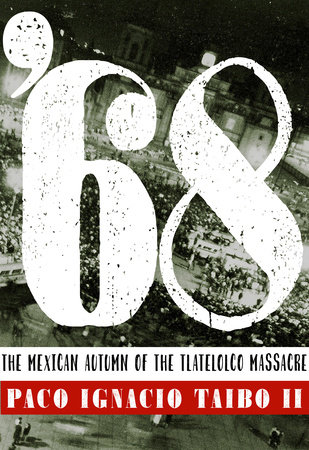
Real life goes beyond the horrors of fictional dystopias. ‘68: The Mexican Autumn of the Tlatelolco Massacre, Paco Ignacio Taibo II’s memoir of the 1968 student movement in Mexico City that ends in the Tlatelolco massacre makes all the YA dystopias of the last decades look lame, and the characters are far more interesting. 1984 was a long time ago. Fahrenheit 451 is a nightmare for bookworms. Hunger Games? Back in the 1970s, as a teenager, I had to sign up for a lottery where I could have been sent off to a real life war . . .


I first encountered the writing of Paco Ignacio Taibo II on the campus of the Universidad Nacional Autónoma de México. I was just visiting, a turista. In some outdoor halls students were selling used books. There were some magazines with the words ciencia ficción. I got excited. On closer examination, they were two special issues of Comunidad CONACYT, the magazine of Consejo Nacional de Ciencia y Tecnología, that were devoted to science fiction. I bought them.

They were mostly articles about American science fiction, and the authors were quite knowledgeable. The language barrier is also a one-way mirror–they can see our side, we can’t see theirs. But there were also stories by Latin American authors. One that impressed me the most was by Paco Ignacio Taibo II–it was about the future of Mexico, and was quite dystopian, and rooted in and inspired by, reality.


Since then I have sought out more of Taibo’s works, and have not been disappointed, from his novels about detective Héctor Belascorarián Shayne, to his historical, and political nonfiction. I highly recommend him.


‘68 is short, but packed with juicy substance. It probably shouldn’t be read fast. A lot happens in each, brief chapter. More than you’ll find in a lot of fat novels.


He had meant to write a novel about the subject, but couldn’t. It probably would have been too much. And there's no romance, no happy endings, and the devastating ending, which after all is a massacre . . .


And the powers that be keep trying to erase it, which is the dystopian way.


Which is strange in this world where dystopia is a subgenre of escapist entertainment, youthful revolution is the stuff of video games, and people think everything is fake.


But then real revolutions happen in extreme slow motion, over decades, not in street brawls, but in the often dull places where laws, and minds are changed. 


As Taibo put it: Demythification is not the only option. Another is remythication.


It’s all about messing with mythologies. 


In the meantime, I recommend ‘68 to readers of Silvia Moreno-Garica’s excellent bestseller Velvet was the Night, to provide some context.


Ernest Hogan’s new story “Incident in the Global Barrio” will soon appear in El Porvenir, ¡Ya! Citlalzazanilli Mexicatl Chicano Science Fiction Anthology. ¡Chicano sci-fi refuses to die! ¡Viva Zazaismo!

Thursday, September 26, 2019

Chicanonautica: Weird Scenes From CDMX


One of the perks of working in a library as a day job is I keep finding books that I might have otherwise missed. I’m always on the lookout while shelving the Spanish language section. Sure enough, a title caught my eye:  

Escenarios Para el Fin del Mundo. (This being La Bloga, I’m assuming I don’t have to translate it.) It was by Bernardo Fernández, who also goes by “Bef.” It had a cover that suggested steampunk and a sense of humor. I grabbed it, checked it out, and read it.

I was impressed, and tore through it faster and with more enthusiasm than I usually do with my Spanish practice reading.

I even wrote a quick Goodreads review in my fonqui, pocho Spanish:

Cuentos de ciencia ficción/lo fantastico desde CDMX de un escritor e ilustrador se llama “uno de los narradores más originales de su generación.” Con extraterrestriales, un demonio, cyberpunk, steampunk, escenarios apocalypticos, y un ángel. ¡Guao!

And of course, I needed to to a proper Chicanonautica write-up here at La Bloga . . .

Bernardo Fernádez, Bef, is an illustrator/writer who has published graphic as well as text novels. His writing centers around CDMX, which for those of you aren’t plugged into the Spanish language media is short for Cuidad Mexico, Mexico City, La Capital Azteca Aztec, originally Tenochtitlán. His work shows a sense of humor, and a style coming out of the comics/graphic novel experience that I find very appealing, not to mention fun. He lists Ray Bradbury, Neil Gaiman, and his “amigo” Bruce Sterling, as influences. He also quotes Tom Waits.

The stories in Escenarios Para el Fin del Mundo deal with aliens infiltrating the Mexican government, cyberpunk, steampunk, demons, angels, and of course apocalyptic scenes.

Two of them have been translated and published in English. “Las Últimas Horas de los Útimos Días/ The  Last Hours of the Last Days” originally appeared in both languages in Rudy Rucker’s webzine Flurb, and also in The Apex Book of World SF 4; “Leones,” in which lions invade Mexico City, was in Three Messages and A Warning: Contemporary Mexican Short Stories of the Fantastic.

My favorites were “La Bestia Ha Muerto,” in which the premature introduction of steampunk technology changes the history of Mexico and the world, and “La Sangre Derramada Por Nuestros Héroes” speculates on Nazis fleeing to Brazil with similar results. No escaping those alternate universes. Especially in the Latinoid continuum.

Somebody really needs to translate this book. All those poor monolinguals need it.

Ernest Hogan will have a story in the upcoming American Monsters: Part Two, and will pick the winners of the Somos en escrito 2nd Annual Extra-Fiction Contest--the deadline is September 30, 2019.

Thursday, May 24, 2018

Chicanonautica: Ugly Things From Mexico

by Ernest Hogan
Isaac Ezban’s The Similars (Los Parecidos) hit me like an electric cattle prod to the pineal gland. I was impressed, and eager for more, but not right away. Too much of this stuff can warp you, and I have a straight job that requires me to be somewhat socially acceptable. I waited awhile, found Cosas Feas on YouTube, (it’s also on Vimeo) then when I felt like I could use a proper jolt, I gave it a watch.

Before the beginning, there a listing of a lot of awards it won and festivals it was selected for. It has quite a reputation. In a few years, people will start calling it a classic.

The title, Cosas Feas, is officially translated to Nasty Stuff, though it literally means, “ugly things,” and in the twisted tradition of Spanish profanity, is used like “pieces of shit.”

All fair warning. Do not see Cosas Feas if your sensibilities or constitutions are delicate. It gets nasty, and ugly, mostly shot through a fish-eye lens.

It’s the story of 11 year-old Kriko Krankinsky. His first sex education class forces a crisis that ends up revealing  not only his sexuality, but just what kind of immigrants he and his family are. Their legal status is never mentioned, but they sure are alien.

Yeah, aliens. We’re talking stark, raving sci-fi, with a bad attitude with fake scratches to make it like an ancient flick on TV, way after midnight. It also recreates the effects such movies had on the preadolescent mind of this old, jaded guy who’s been binging on such madness for over half a century.

Cosas Feas uses scenes from the capitalist propaganda cartoon Destination Earth, and the adolescent angst exploitation classic Teenagers From Outer Space.

And I probably should mention that it has one on the most outrageous explicit sex scenes ever.

Ezban could do a great version of William S. Burroughs’ Naked Lunch. He has a real feeling for sexual anxiety, and insects. Move over Luis Buñuel, John Waters, Alejandro Jodorowsky, David Lynch, Terry Gilliam, Guillermo Del Toro . . .

There’s also the fear of immigrants, so popular on this side of the border these days (but I don’t think we’ll be seeing a special showing at the White House, and/or an enthusiastic tweet from El Presidente).

Cosas Feas is also very Mexican. There’s a gonzo/ Felliniesque distorted realism, but also a peculiar humanity. Characters that are alien in how they act and look come off as sympathetic.

After all, the real aliens come from inside us, rather than outer space.

Ernest Hogan will be at Phoenix Comic Fest, May 24-26, helping his wife Emily Devenport publicize her new book Medusa Uploaded, as well has his own activities.

Thursday, March 15, 2018

Chicanonautica: Weird Scenes in a Mexican Bus Station


Sometimes it’s best for art to come at you like an assassin’s bullet. One moment you’re just a happy consumer, trying to score some entertainment--then BANG!--your brains are scrambled. And the universe isn’t going to look the same anymore.

That’s the effect that science fiction had on me when I was a child back in the Fabulous Fifties, staring that the glow of a tiny black-and-white TV screen, and occasionally the blazing Technicolor glory of a drive-in under a starless SoCal sky.

I wasn’t expecting anything like that night when my wife and I were looking to amuse ourselves on Netflix. Something horror/sff-ish would be nice. Just the thing to unwind to after a day of the usual insanity.

There was something called The Similars that looked promising. A 2015 film from Mexico, originally called Los Parecidos. It was about people trapped in a Mexican bus station on a dark and stormy night.

In my travels, I’ve spent time in a few South-of-the-Border bus stations. They make their gringo counterparts seem sterile, safe zones. They have a way of generating situations out of Kafka, Buñuel, or Jodorowsky. A good setting for a spooky little flick.

However, The Similars is a helluvalot more than a spooky little flick. More than a sci-fi eye fry. It’s a serious brain scrambler.

Writer/director/producer Isaac Ezban merrily assaults the audience’s expectations. Suddenly, I was that little Eastlos boy, once again being savaged by a roaring, flickering screen. This doesn’t happen very often.

Ezban must have absorbed a lot weird pop culture at an impressionable age. There’s a voice-over intro and outro like Twilight Zone and Outer Limits. There are shades of Philip K. Dick, Mexican comic books, and the entire invaders-from-outer-space genre.

But, wait--there’s more!

This isn’t another case of a fanboy regurgitating undigested source material. Ezban has added some weird shit of own to the steamy mix. An I indigenous woman offers an supernatural alternative to the eccentric, sci-fi explanation. The claustrophobic drama proceeds with a intensity that magnifies the effects of some of the strangest, most disturbing surrealistic imagery in the history of cinema that stand out even on this era when special effects are no big deal.

At one point my wife had to stop watching, but she later told me that I had to review it.

And it takes place on October 2, 1968--the day of the massacre of student protesters in Mexico City’s Tlatelolco Plaza. That’s right history and politics seep in. No place is safe.

Also, it has an apocalyptic event happening in’68, while having it make sense that that world as we think we know it seems be going on.

I am struggling not to commit any spoilers. Hope I don’t hurt myself.

Did I mention that it intrudes into high-brow/art film territory?

I am happy to report that the Mexican science fiction film has made a Great Leap Forward--or should that be One Giant Leap?-- this decade (thought I still enjoy the old, cheap funky stuff, but when I’m the the mood for that, there’s always Nollywood) and the world has another badass, mad genius of an auteur. Just what we need in this time when Hollywood has started giving Oscars to Mexicans.

I’ll be checking out Ezban’s other films, and looking out for more, and will let you know about it.

To be continued . . .
 
Ernest Hogan enjoys wallowing in bizarre imagery and doesn’t care who knows it.