Showing posts with label reading aloud. Show all posts

Tuesday, June 13, 2023

Poetry At LA Plaza: Legends Get Made This Way

Michael Sedano

Luis J. Rodriguez beams proudly, looking across the museum meeting room where dozens of eager faces know what kind of work Rodriguez’ Tia Chucha Press publishes: two books a year, poetry of impeccable accomplishment. Today, La Plaza de Cultura y Artes showcases its work.


Today’s lineup of readers and one artist sets high expectations,and Melinda Palacio, Luivette Resto, Miguel Rivera reading work he translated written by Humberto Ak'abal, Gail Wronsky in tandem with Gronk, exceed every imaginable expectation, unless someone expected a "regular" poetry readin g.


Melinda Palacio, recently installed as Poet Laureate of the City of Santa Barbara, leads the reading with a selection from How Fire Is A Story, Waiting (link).

Palacio enchants the audience with poems from Bird Forgiveness (3: A Taos Press) and adds to the experience when she plays Ukelele and sings. 

Enchanted, La Bloga's photographer didn't take fotos of the songs.


Luivette Resto reads from her Flowersong Press title, Living On Islands Not Found on Maps, and Tia Chucha Press' Unfinished Portrait.


Translators don't often receive the attention their labor deserves, so having Humberto Ak'abal's work, In the Courtyard of the Moon, presented bilingually by Ak'abal's translator, Miguel Rivera, gives Rivera's ten minutes a double delight.


Art by Gronk Poetry by Gail Wronsky reads the cover of the stranger you are, a collaboration between the poet Wronsky, and painter printmaker opera set designer, Gronk. 

The book is an ekphrastic collection. Per Wronsky, Gronk did not illustrate this collection. Rather, Wronsky wrote what she saw in Gronk's drawings.


They wow the audience.


The pair use their ten minutes to demonstrate the ekphrastic process, but in reverse. Wronsky holds up a page. 


Gronk recognizes the poem, turns to an easel, and while Wronsky reads the page, Gronk draws up the words and mood.


Synchrony happens loosely but synchrony happens; Wronsky finishes reading and Gronk has to catch up, speeding up crayon to complete his expression.

Then the audience participation part begins.


Gronk tears the drawing from the easel pad, wrinkles the piece, and tantalizes the house, holding the bundle toward them like a prize. Gronk hands a drawing to Luivette. The audience understands.

Wronsky reads another of the short poems and Gronk gets drawing. This one goes into the house!


Poetry read aloud, like a scribble on an easel pad, is ephemeral; it's here and now and then it's gone. But people have ways to bind time into artifacts.


You can bet your bottom dollar those "genuine Gronks" are going into frames and stories. And the poems themselves? Melinda's fire and bird songs, Luivette's introspection and humor, Ak'abal/Rivera's insight and outrage, Wronsky's verbal exploration of Gronk's graphic mind, come in book form.

Tia Chucha Press comes virtually to your door via a package delivery service, hands you all the books you order via the links in this column.

There's going to be another Tia Chucha Press reading, featuring these writers and Gronk, up in Santa Barbara. Soon. La Bloga-Tuesday will share details of the event. You might go home with your own Gronk. For sure, you'll go home with the best time you're likely to enjoy at a poetry reading.

Melinda Palacio
How Fire Is A Story, Waiting
Bird Forgiveness

Luivette Resto
Unfinished Portrait
Gail Wronsky / Gronk
the stranger you are

Tuesday, September 03, 2019

Two Voices: On-line Floricanto in Poetry and Prose

Labor Day 2019. La Bloga On-line Floricanto features two superlative voices celebrating our humanity. It happens, and there's no coincidence, these are women's voices. These two writers, María Elena Fernández and Jean Hooper, make a perfect September song for September's first Tuesday.

So How Was Your Week This Week?
María Elena Fernández

Written for the opening of the exhibition Enter the Goddess Portal at Tonalli Studio, East Los Angeles, Sunday, August 11, 2019

Meet me at LA Plaza, then Union Station
close the night out at Mayfair Hotel
Three bailes, all free, amigas!
I texted Friday night
leaning back
legs horizontal on my pine green couch

Commanded my body to rise
Instead discovered the anchor bearing heavy on my chest
The tar too reemerged
like black mortar between my back and couch
Repeated commands, but my muscles lost the match
Again
Just like Monday afternoon

Three destinations that Monday morning
LAX, Burbank, back to my east Hollywood home
Three hours down, then up the 405, across the 134, southeast on the 101
public radio, my non-stop buzzing passenger
Now two days after our El Paso brown 9-11
Finally, I could hear, could process: There was a manifesto.
Could conceive it, not utter it: It’s our turn. They’re shooting at us now too.
“El Paso Texas, The largest mass shooting of Latinos in U.S. history”
blurted the national newsman, stripping me of denial’s shelter
How I yearned to talk to those rabbis
the ones who get on the mic the very next day, declare
“We will not be afraid, we will continue to go to our house of worship.”
How dear Rabbi, how? When I just want to crumble.

Decided rest was in order on my green couch
Breathed
Made my to-do list
Lifted arms and head, but nothing else followed
An anchor bore deep in my chest
the chain a snake circling my aorta
Thick, stretchy tar seeping from my back onto the couch
Hay que lavar los platos, start prepping classes
My torso wrestled against the iron and the mortar
y también ir al mercado
Wrestled again
Until finally I surrendered
to a day worthy of luto
An hour crept by, then another
My heart heaving grief
trapped in the anchor’s rabid claw
I was too alone
Grabbed el celular
“Amiga, do you have a few minutes? I need to cry.”
Not yet untangled, called another
And the anchor lifted to half its weight
Still I needed nature’s salve
“Ve te a caminar,” the voice boomed
And to bribe myself into action
included an image of a butter pecan ice cream cone in my hand
strolling on my Fern Dell Park walk
The anchor released just enough, the tar melted
Suddenly I was upright
gliding alongside giant shiny green
elephant ear leaves lining a brook
frozen creamy sugar and crunch fueling my gait


Now Friday night
and I am again horizontal in the voracious green marsh
the anchor not crushing, the tar not as thick
but enough to be honored
So I texted las amigas: staying home to write
I might make it to the last baile
Maybe

How did I go from planning three bailes in one night
to half-way buried in the dark green abyss?
The anchor would not shift, stayed stubborn, until finally I asked
How did I survive this week?
How did I stay off the pinche pine green vortex
between Monday and tonight?

Haz memoria, María Elena, tienes que hacer memoria.

Tuesdays I have a standing commitment
To make dinner for my parents and sister
give Mami and sis a night off of cooking
So three days after la matanza and only one day
after my sentenced communion with my couch
I delivered, because I said I would
And with zeal devised a special summer treat
Mexican chicken salad tostadas y ensalada de nopales
even though I hate deshebrando, took three hours to get the meal to table
I made it Mexican because the peas, cilantro and jalapeños are green
the bell pepper red and summertime maíz so pale, almost white
Decorated each tostada with a flower of aguacate petals
and chopped red bell pepper center


Wednesday, four days after the brown 9-11
had a mammogram scheduled
After probably seven years of avoidance, decided the time is NOW
And hell no, nothing and nobody was going to keep me
from remedying the long lapse of neglect
Because I intend to keep these breasts
healthy, lovely, packed and stacked into a push up bra
for as long as I can stand these wires and pulleys

And while I was at it, the same day got the ultrasound
doc said I shoulda had in March
to see if that two millimeter kidney stone is gone now
maybe explains that dash of irritation after I pee
Because damnit I want to know if that thing is still insida me
I ain’t cool with no burning sensation, mild as it may be

That same night the pine green abyss winked my way
beckoned me to lie down on it’s lap
Because that night I planned to attend a dead man’s concert
Honor a music man in our circle, only 33
creator of guitar rhythm and joy for so many bailes, so many years
killed by a firearm at the end of his brother’s forearm
crystal meth possessing his hand, fingers and trigger

But I resisted the green swamp
I had a purpose: be together, honor our brother music-maker
Yet the anchor weighed down enough that I could not indulge
my pre-club ritual and slip into the short black dress I picked
with the gold and aqua maya stela down the front
The summer time doctor’s office outfit would have to do
pale pinstripes on light blue wide-legged jeans, matching sky blue peasant top
The half-inch midriff all I could offer for a semblance of night club seduction
But not a second thought to changing out daytime hoops
for the club-night three-inch diameters

Congas galloped, keyboard scatted, electric guitar demanded
wall to wall bodies dance exuberant
in our dark red and burgundy, velvet and vinyl vintage cave
on Hill Street and 2nd


A pesky and clingy date
the anchor hung pressed against my heart
I didn’t dance
But I could listen, I could sway
and with the others declare loud, “Carlos Zaragoza! Presente!”

Thursday, five days after la matanza
and three days after my exile on the ravenous green grave
I boarded a bus with CHIRLA, warriors of immigrant rights
to rally at San Bernanrdino’s Adelanto Detention Center, the largest in California
For so long my heart broken, watching images of brown sisters and brothers crammed in cages on my TV screen
Finally, the day I longed for, to plunge both hands into defending them
for their “crime” of wanting to work, survive as best they can
On the bus Sunshine Janeth blared on the mic
“Who wants a burrito?” “Quien necesita agua?”
I discovered a former student sitting in front of me
seven years after graduation, now the lead organizer
Next to me I chatted with la Sra. Rosa, migrant from Mexico
who took buses all the way from South Gate to join us

More devotees boarded at our Diamond Bar stop and then again at San Bernardino
Finally at our destination we poured off the bus
Were handed red and white picket signs
“Stop Hate” “Migration is a Human Right” in bold black letters
Across the street we were greeted with the GEO group’s sirens blaring
and a mere nine counter protestors
with their “We Love ICE” signs and nasty megaphone
On our side, four massive speakers mounted on the roof of a van erupting cumbias
And the crowd that I thought would be around 50
multiplied into a wave of at least 200 dancers

A podium perched on the back of a black pick up
Two brown girl MCs commanded the mic in Spanish
English and impeccable lipstick
The alternative white girl reverend with the cropped platinum blond hair
white collar and glitter blue acrylic nails blessed our gathering
Jaír gave his testimony “Me arrestó ICE saliendo de mi casa al trabajo”
21 days detained in Orange County, leaving his wife and children behind
until CHIRLA lawyers delivered him home

The white girl on the sidelines with the glasses, messy hair
and black White Silence is Violence t-shirt
turned out to be an entertainment lawyer turned immigrant rights lawyer
and true to her t-shirt: “Where are the white people? White people, time to fucking get loud! Use that privilege!”

La lider Angelica closed the ritual across from the horizon’s setting sun
“Hermanas, hermanos! We are going to take their hate and build our own beautiful, beautiful shield of love! Our love is more powerful than their hate! This is our country, this is our land! And we believe liberty and justice is for everyone!

And I was exactly where I wanted to be


But the act of resistance I’m proudest of
was pushing that pinche probiotic up my vagina
for four nights in a row instead of just two
the holistic doc said it would only take two nights
to trounce that damn infection
but it refused to get all the way better
I tried again and no dice

“Four nights, I’m gonna do four nights,” I told myself
“do it the natural way.”
But I let six months lapse, until I decided the week before
before everything happened, that Monday through Thursday
would be my non-negotiable

I managed it Monday night-after half a day on the pine green quick sand
Tuesday night after the summertime Mexican meal at my parents’ house
Wednesday two a.m. after getting home from honoring the dead sweet musician
And Thursday midnight after the protest and two hours strapped into that bus

Undeterred
Because it is my intention to make love again
To you, my beloved, as yet unnamed
And that ain’t happening until that sticky
stinky white cosa is all cleared away
Because I am determined
You will re-enter the goddess
enter the portal, enter the dragon
whatever you want to call it
You will return

I venture to confess this
because a goddess after all is a woman
and we got real woman parts and real woman problems
Point is, can’t wait till the coast is clear, querido.


And on this Friday night, ya que hice memoria
Ahora que escribí este poema
The anchor has crumbled, liquefied,
dripping red life force back into my heart
I lift my chest
The tar transformed to jasmine petals
floating down from my back
their aroma lifting me

I am standing
And it’s only 11pm

Amigas, I’m going to make it to that last baile!
And this time, I will do much more than sway
I promise

August 9, 2019


Born in Los Angeles to Mexico City immigrants, María Elena Fernández is a writer, performer and professor. She holds a bachelor’s degree in American Studies from Yale University and a Master's degree in U.S. History from UCLA. Her first person essays have been published in the anthologies Waking Up American and Remembering Frida. As a freelance writer for the LA Weekly, she wrote about Latino music, books and film. Her full-length solo shows include the hilarious Confessions of a Cha Cha Feminist that she toured across the country and the poetry performance, Ancestral Body Navegante. She is currently developing a new solo show The Latinx Survival Guide in the Age of Trump. She teaches history, literature and the art history in the Chicana/o Studies Department at Cal State Northridge.

Readers can find more information and contact the artist via The Face.


The Platform
Jean Hooper

It had to be at least 10:20 pm. I had just walked to the subway stop at Civic Center after watching the Temptations musical at the Ahmanson Theater. Now I stood alone on the Red Line platform looking up at the screen to see when the next train would arrive. I sensed some movement. I glanced down to see a young man in his thirties materialize, heading for me. He spoke in the silent public area. “How do I get to Riverside?” he seemed to ask the air. Except he was addressing me.

I sized him up quickly, which is my habit when I wait for the train, and my personal requirement when I wait alone. Noted: homemade-looking neck tattoos. Grimy demeanor. Black t-shirt and long shorts. Broken blood vessel in left eye. Shaved head. Wristband with ERIC GARCIA in a large font. Clutching clear plastic bag of documents. This guy just got out of jail, I’m thinking. It is late at night, and why is he at this stop when Men’s Central is adjacent to Union Station? Mentally I shifted gears and replied, “Union Station. You want the train on this side.” He was close by now, looking at me with an uncomprehending expression. Dulled. “I’m going there,” I continued. “You go where I go.” Still not registering. “Come with me on the next train. I will show you.”

As if in a movie, the train rolled in miraculously before we had to attempt another exchange. He followed me docilely. Once we were in the train car, I realized I couldn’t just hop off at the next stop and flee to my connection. He looked too helpless and disoriented to leave with verbal instructions. We alighted at Union Station. I asked him to follow me through what looks like a labyrinth to the uninitiated, reminding him we would find the Metrolink upstairs.

On the escalator, I observed offhandedly, “Did you just get out?” Warily he focused on me, saying, “How didja know I got outta jail?” “Well, ERIC,” I answered, eyeing his wristband, “I’m a teacher. Do I look like a teacher to you?” As if this were not one of the more exaggerated non sequiturs I have groped for in my time. He nodded. I asked if he had family in Riverside, did they know he was released tonight? He said his mom lived there and he would find her. I asked if he had her phone number among his papers, and he said no, he didn’t know it.

Because I really was a teacher in alternative education, I recognized so much about this fellow. His marginal existence, his lack of resources, his essential alone-ness. I thought back to my long-ago student, Jeremy, who once confided to me about his release from juvenile detention, that day he went into the sunshine anticipating his mom would pick him up, and no one was there for him. Bravely, he tried to downplay the disappointment and rejection, though we both understood it would always remain buried in one of the lower stratum of his psyche.

“Come with me, Eric.” I glimpsed a security man near the Metrolink ticket dispenser. It was close to 11 pm. “Excuse me, sir. My friend Eric here needs to get to Riverside.”

The security man was joined by an ancient man in a Korean War Vet cap and another younger man in a neon vest. “No train to Riverside til 4:00 am,” he said, as the other two men nodded enthusiastically. “I’m gonna punchum,” Eric muttered softly.

I turned to Eric and said, “Eric, I need you to behave. This man is trying to help us.” Eric grew meek again and looked down. What I learned was that Eric would be rousted out of the waiting area at 1:00 am when the LAPD closed the station for several hours. The security man shared this not unkindly; it was pertinent information.

In my head I felt the exasperation building. But somehow this nameless security man took it upon himself to advise Eric, “You can sit over there until 1 am, and after the police leave there is a place you can wait quietly and I’ll be right here.” I felt my emotions surge at this stranger’s kindness, and I sent Eric over to the bench so I could have a word. I thanked the security man for his generosity, telling him this fellow just appeared out of nowhere to me. The guard wondered aloud if Eric had paid a fare, which we both doubted. “Yeah,” he mused, “he just got out of jail. They all carry those plastic bags. But I can’t let him be outside here at night. He’ll get assaulted out there.” I agreed, saying Eric was too fragile to protect himself.

Eric beckoned me. I half thought he might punch me now, just out of unpredictability. Instead, like a child, he spoke. “I’m hungry. Do you have food for me?” I knew I had a 5$ bill and my TAP card. I told Eric I had no food, but that I would give him five dollars in case he might find something to buy. “But you must behave in here for five hours. Can you do that?” He nodded solemnly. “Be careful,” I said, as I hurried away toward the Gold Line.

I nodded thanks to the security man. To the left and above me was The Faces of Los Angeles mural (or so I call it). I looked up at everyone on the mural and thought, please, watch over us. Then I hurried down the emptying concourse to find my train home.


Jean Hooper lives and gardens in Altadena. She retired from teaching high school in 2017.
She volunteers as an ESL teacher in Atwater Village, is a new devotee to morning bootcamp, and watches for joy in the ordinary.
Fotocredit: @mauragracephotography.com

Friday, February 22, 2019

What To Do When Stage Fright Strikes

Melinda Palacio


I understand your stage fright, but not my own. This newfound rack of nerves is something I am owning up to in order to squash my fear. As a writer, reading my work in publish has always been a breeze. I write the stuff and reading it aloud to others is fairly easy, even when my middle-aged eyes fail me and I have trouble seeing the words when there is little light. I have a good idea of what the text should say and therefore can usually fill in if necessary. However, recently, I’ve dipped my toes into waters deeper than my comfort zone. I’ve started singing and playing the guitar, something I didn’t think I could ever do, let alone perform in public. I’ve blogged about my journey in learning the guitar and writing songs. The first song I wrote was an accompaniment to my poetry book, Bird Forgiveness. You can hear it on you tube. Although I said I would put up new songs on my channel, I have yet to do it. Part of it has to do with this shy stage fright business I need to nip. 
While I don’t get nervous speaking in public, singing in public sets on a whole set of nervous reactions. First, my voice becomes very thin and barely audible. I have difficulty summoning the outdoor voice I am sometimes famous for. Stage fright takes over and I start to make mistakes in my guitar playing, knowing I’m making mistakes me me even more frightened and nervous.

Although songwriting and poetry have something in common, ask Bob Dylan, performing those songs is not as easy as reading my own poetry. Two weeks ago, at the Core Winery in Orcutt, I decided to take a leap of faith and perform the Bird Forgiveness theme song. As a featured reader, along with Toni Wynn, I figured I would take advantage of the extra time I had and work in a song into my presentation. The Core Winery is an intimate  and relaxed tasting room and the proprietors, Becky and Dave Corey treat everyone like family. The tasting room serves as Orcutt’s community center and hosts all kinds of events in addition to poetry and music (they’ve even held discussions with a doula (a person that assists with the final hours of life). I knew that the comfortable space of the winery was where I wanted to debut the Bird Forgiveness song in public. 

At least I’ve learned some tricks over the years that have helped me become a better speaker, and hopefully, a better singer and guitarist. I can share three helpful tips with you. The first is something Becky Corey pointed: no one but you knows you’ve goofed. After performing my song and replaying all the mistakes I made, I mentioned the fact that I had made mistakes and she said that no one but me knew that I had made a mistake. This is something that’s important. When you are reading prose or poetry, if you stumble on a word or a line, it’s acceptable, and sometimes helpful, to repeat the line so the overall meaning will not be lost. This repetition is not necessary in a song. And never start all over, unless you are Patti Smith. Number two is volume. Saying it loud, singing it loud, can trick you and the audience into thinking you have all the confidence in the world. My last tip is to over prepare. Even if you are reading just one poem or singing one song, knowing the material backwards and forwards will help you make an adjustment, should you stumble or miss a beat. 


Article in the Santa Maria Sun on the Core Poetry Series


Tuesday, July 24, 2018

La Palabra July 2018. Latinarte Houston.

Writers Reading their Stuff Aloud; a Photographer's Notebook
La Palabra In Low Light

Sunday brought the leading edge of a punishing SoCal heat wave. Inside Avenue 50 Studio, July's La Palabra Reading Series Curator Angelina Sáenz closed the door to the outside oven. The rear gallery remained tolerable for a crowd, with a pair of fans to move the air about. Sáenz didn't burn the hot spotlights, burning only a string of feeble bulbs. Ni modo. The poets sparkled against the anything-but-gloomy dark.

The photographer suffered because his camera was blind in the ambiente. Ironically, iPhone cameras captured great frames, that you can see at La Palabra Reading Series' Facebook page.

 Cynthia Alessandra Briano, Jessica Wilson Cardenas, Angelina Sáenz, Jubi Arriola-Headley

The group portrait has the benefit of an open door. There's a cooling breeze and wonderful light. Portraits of poets reading their own stuff in extremely low light challenged the heck out of the Canon T2i camera. Challenged the heck out of me, too, but it's the poor worker who blames the tools, and with the right tools you can do anything.

My goal as a photographer is to capture the perfect portrait of a writer reading her own stuff, reading his own stuff. The dynamism of a comfortable performer who regularly produces those satisfying moments, or the inspired moment of a passionate debut reader, will jump off the page into your thoughts.

Portraits of speakers have eye contact, looking toward the lens or into the audience. That's a challenge for page-bound writers. Comfortable readers play to the camera now and again. Directness influences ethos, the perceived character of the reader.

The full body conveys attitude, which a reason to avoid hiding behind a lectern. The reader uses the technology of the body  fully to commit to the message. In the foto, the mouth should be open, forming meaning. Hands, arms, feet, head, posture, using the presentation space, these elements define every speaker. Sometimes all the elements come together in a sublime blend of word, speech, body. The photographer who captures that moment, not before not after, has a rarity, a foto approaching perfection. May it be one of many, but dang, fiat lux.

Featured Poets:  Cynthia Alessandra Briano, Jessica Wilson Cardenas, Jubi Arriola-Headley

Curator Sáenz remarked on meeting Wilson Cardenas at the Open Mic the featured reader today hosts at Tia Chucha's. The emcee noted the busy Open Mic Briano directs in Santa Monica, the Rapp Reading Saloon. It's illuminating, seeing Open Mics networking, spreading the word about their neighborhood poetry community. From the westside to the northeast San Fernando Valley, to Northeast LA, you're never more than a week between open mics, to listen or get 3 minutes.

One's eye and brain have no difficulty seeing in the dark. Mechanical devices like cameras don't have synapses but settings. I set the device to maximum sensitivity, ISO6400. I manually set the shutter to 1/80 second to get an f/5.6 aperture.

The speed is enough to capture gestures and expressions. The aperture allows depth of focus. At a distance, a foto can have both a leading gesture and the speaker's eyes in focus. There can be focus all the way to the back wall. In a close-up, the mic the nose the eyes are in focus, the art behind a blur.

Add caption
Here was an insurmountable problem. The Canon brain couldn't handle the light. The camera refused to focus. I set the lens to manual focus.

My eyes are going bad and I didn't have my glasses, so I had to guess at the focus. Autofocus is great. The focus moves with the speaker. Autofocus depends on bright and dark surfaces, contrast, to delineate focal points. In the flat light of the dark room, the lens sees a grey mass.

Manual focus is equally great, and it's how I used to do live football. But absent light to illuminate the rangefinder, what the photographer sees in the camera isn't bright enough to drop readily into focus with a moving subject. The answer is find a zone and focus. I wait for the speaker to lean into focus, and in the moment, be dynamic.

The generosity of digital photography allows multiple exposures with no issues about reaching the end of the roll. On any day a majority of fotos will be unacceptable, the low light increased the proportion. 

Jessica Wilson Cardenas
Peering into the dark rangefinder and racking the lens, I seek the microphone's sharp lines. I don't want the art prints on the wall to appear sharp so I twist the lens to sharpen the lectern. To be sure, I focus on the lectern then slowly focus on the mic. When the speaker remains in the space where the lens focuses, the image will be satisfactory.

Images taken at wider angle have excellent depth of focus. At closer perspective the mic the nose the eyes are focused while the background remains a pleasant blur.

Jubi Arriola-Headley
The brother was going to pose a sensitivity issue. Dark skinned people disappear into the background, so I needed more light. I slowed down the shutter to 1/50 and kept f/5.6. Turns out this 1/50 provided sufficient stopping action and woulda been great for the  two earlier feature poets. The Open Mic speakers planted themselves in one spot, making focusing a bit easier. Their limited use of eye contact adds the challenge of capturing one good moment.


Open Mic: 3 Minutes

La Bloga fotos appear in reduced size inside the column. To view a foto at a larger size, click the image. Use the left and right arrows to scroll the gallery. You may see a strange texture on the images. ISO6400 on this camera creates electronic noise when it struggles to see in the dark, equivalent to grain on silver gelatin emulsions. Newer cameras have more sensitive ISOs; I wonder how the photographer challenges the grain?


Artivism Aviso: Notorious Book Smugglers Looking for Houston Arts Cash

Back in 2012, La Bloga's Michael Sedano and Latinopia's Jesus Treviño road-tripped from LA and met up with the Librotraficante caravan in El Paso. Contrabando in the belly of the bus traveled up to Alburquerque to meet with Don Rudy Anaya before hitting Tucson in broad daylight with banned books to give away. https://labloga.blogspot.com/2012/03/on-road-for-banned-books-this-is-why.html

The court smacked down Arizona hate laws and literature and cultura are again more-or-less welcome in public school classes and libraries. The war is not won, but gente see goals within reach, or what's a court order for? So now the portavoz of the book smugglers, Tony Diaz, turns his focus to chicanarte, per a recent email.

Houston City Council elected Robert Gallego puts his office behind an effort from Librotraficante Tony Diaz, and a cohort of artivists and collectors, to seek equity in municipal arts spending and comminity demographics. Diaz notes, in an email,

The Houston population is over 40% Latino and almost 50%. Yet the Latino community does not receive that much funding for our art or artists. That's about to change. It's time to put Houston Latino Art on the map.

The first meeting for this initiative is Wednesday, August 29, 2018, 6pm - 7:30 pm at Houston's City Hall Legacy Room, 901 Bagby, Houston, Texas.

Tuesday, November 29, 2016

Twelve. Bermejo Launches Posada


La Bloga Turns Twelve
Michael Sedano

Twelve years is a long time. Or it’s a trick of time that so many days have passed between yesterday to a Sunday in 2004 when La Bloga’s first column hit the internets of Aztlán with RudyG’s declaration that it had begun. It seems almost yesterday but it’s been twelve years, writing, inviting guests, increasing our number to eleven writers. We write about books, health, food, cultura, y más. Pero sabes que?  La Bloga has always been about the books, the literature.

It would be cool to review the emails Rudy, Manuel Ramos, and I exchanged in the days leading Rudy to get it started with that first post. Of the exchanges, all I remember is not knowing what a blog is, and finding seamless ways to fit a weekly deadline into what I was doing for a living. Then there was the “who are these guys?” factor.

I live in LA, Rudy and Manuel live in Denver. In person we’d not yet met. I knew Manuel and Rudy via CHICLE, the pioneering listserv Teresa Marquez managed from her office at University of New Mexico Zimmerman Library. When Marquez had to close down CHICLE, we were out in the cold.

CHICLE, which stood for Chicana/Chicano Literature Exchange, was the first chicano literature-centric email-based communication channel on the internet. Miguel Juárez has an interesting history about CHICLE here. CHICLE’s passing hurts. For one thing, it means Rudy, Manuel, and I would no longer have a place to kick around ideas, to find out literary and publishing news, to catch up with chisme.

In these years, Blogs were emerging onto the social media landscape. Rudy discovered Google’s blogspot service, signed us up, and La Bloga was ready to see light.


While La Bloga has always been about the books, literature, reading, writing, right now it’s about time. Twelve years going on thirteen, La Bloga’s built a library of material that has use. Our author website sidebar, interviews, reviews, photographs, news and notes bits and pieces about literature, cultura, y más are on file, no advertising or hassles. There’s some good stuff in here. We should archive it, some tell us.

I was talking to Latinopia’s Jesus Treviño recently about archiving our respective material. Treviño’s challenged to find a visionary library or university agency to take on bringing Latinopia as a public resource and ongoing active channel. It’s a massive undertaking with Treviño’s encyclopedic visual record of chicanismo and the technical requirements of digitizing video art. Archiving La Bloga would not be nearly as tricky. We are open to suggestions.


Holiday Hero: This Sale

My wife's jewelry invariably catches people's eye. Whether at the University Women's luncheon with her contemporaries, or at some reception or other gathering, people ask where she got that bracelet or those earrings. "Michael bought it for me" invariably wins her admiration for having a husband with impeccable taste.

Here's my secret, and here's your opportunity to make your partner incredibly happy:


Yolanda Gonzalez' studio, Ma Art Space, is easy to reach from any place in SoCal. Located at 800 S Palm Ave # 1, Alhambra, CA 91803, Phone: (626) 975-4799, the sale features silver and gold wearable sculpture of Zergio Florez. Also wonderful ceramics, paintings, sculpture by worthwhile artists.


Xochitl-Julisa Bermejo Celebrates Publishing Her First Book: Posada 


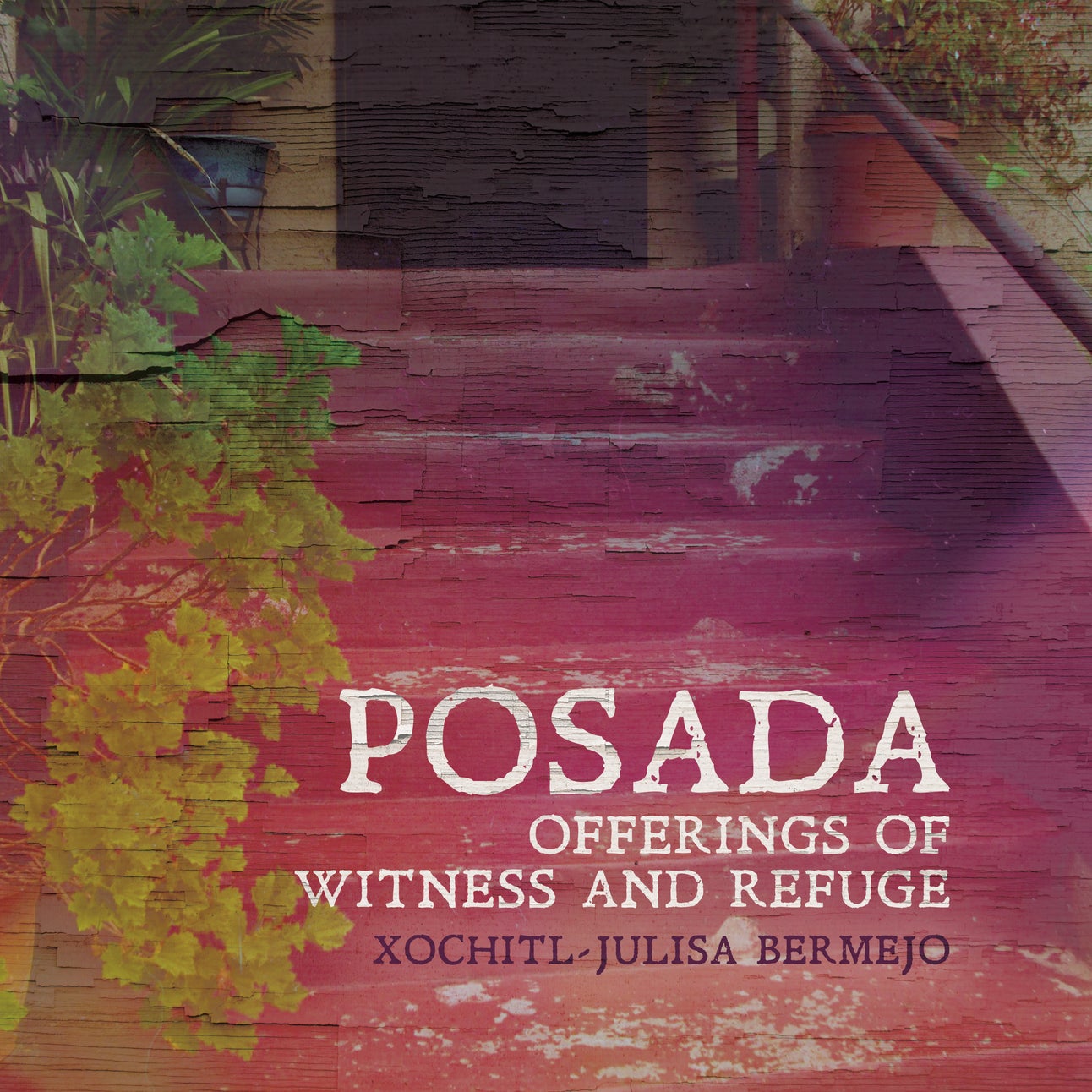
I suffer from anomia so having guests to the house creates repeated chances to forget someone’s name within three seconds of meeting them. Still, recently I welcomed the prospect as the only less than felicitous aspect of hosting poet Xochitl-Julisa Bermejo’s publication party for Posada. Offerings of Witness and Refuge.

Bermejo is one of those poets who make it worthwhile to attend poetry readings. Her poetic voice is powered by a ferocious spirit that fuels thoughtful oral presentations of the poet’s words.

Listening to Bermejo read her own stuff shows an artist who respects her work. Well thought-out phrasing, clear enunciation, and forceful projection extracts all the meaning these words contain and guides the way readers approach the poet’s work.

Back in 2015 I made a promise to myself, that I would host Bermejo’s book party out of respect for an act of incredible character.

When the Association of Writers & Writing Programs announced its program for the organization’s 2016 Los Angeles AWP conference, a host of members protested the selections as exclusionary, the selection process as opaque. Poisonous words roiled relations between members and the executive director.

One member of the conference planning group, publisher Kate Gale of Los Angeles’ Red Hen Press, wrote and later retracted a diatribe. AWP disowned Gale’s position. Gale was called privileged, elitist, and out-of-touch. For Los Angeles’ writing community, Red Hen Press had sunk from exalted to pariah.

Xochitl-Julisa Bermejo would be a casualty of the pedo. Her first book had been accepted for publication by Red Hen Press. Bermejo quickly made a decision. She wrote:

Publishing with Red Hen isn’t something I can do at this point even if it is a press I’ve admired for years with writers I love and respect like Eloise Klein Healy, Doug Kearny, Veronica Reyes, and Terry Wolverton. Publishing with Red Hen isn’t something I can do at this point, if I am to have any credibility in my own community.

I must have met Bermejo at a reading shortly after she published her decision. Maybe I Facebooked my feelings. When that book finds its publisher, I told Bermejo, I will host a publication party for you. She agreed. Neither of us was being desultory. Not in the promise. Not in the acceptance. We schedule it for the weekend after Thanksgiving Day.


Saturday afternoon arrives and the gente start showing up. Latinopia’s Jesus Treviño is first on scene, to set up the lighting and camera position. Then Xochitl, to see if she could do anything? Nope, my wife loves entertaining and Barbara has everything laid out.

Rain is always welcome but not a good weather for people to drive the freeways to get to Pasadena, so a handful miss this sparkling engagement. I’d planned to do this outdoors, but Barbara knew better and she was, of course, right.

We have set up the food and beverages for buffet self-service and the layout works well. There is enough food prepared but I have supplies at the ready to whip up a few more tacos de chicharron de carne, or tostadas de ceviche. There’s nopalitos—Bermejo will read a nopales poem in their honor—pan dulce (elicits another poem), cookies and macarons, and strong hot coffee.


A montón of people arrive. I shake hands or embrace, say people’s name in welcome, and true to form, forget the names. The people from New York City. Jessica and her friend, poet Rocio whom I haven’t yet read nor heard. We shared a table at Jessica’s wedding. An aspiring novelist finds a good listener in Jesus Treviño, who recently won a National Book Award. Mario Guerrero tells me about the near-completion of his 3-D printing studio.

I smile in conversation with the scientist from Colombia and her daughter the scholar. The woman with the injured leg and the cane drove them. Later Liz Gonzales and Jorge Martin step inside. Jorge’s a sound artist whose work fascinates me and I corner him with lots of questions. Iris de Anda and her little girl arrive for a brief visit. I hope they ate. Some people stand and talk and laugh like old friends. Others pull furniture into corners and discuss Spanish phonology, cultural variance between la chicanada and other hispanoparlantes. It’s a great time whose tenor, warmth and camaraderie come from those rare few minutes of this poet reading her work.

Bermejo gave up a lot by going to Sundress Publications, out of principle and strength of character. She has to promote extra hard to get the word out. This houseparty is the poet’s ninth such reading in the past few weeks. Latinopia will have video of the reading; visit regularly to catch up.

Not that the other publisher wouldn’t have expected the same labor. Abjuring Red Hen foregoes the push that house exerts in the regional market. Red Hen’s maillist would open doors with contact names and phone numbers that are the currency of marketing. Maybe instead of nine, Bermejo would have completed twenty readings by now, and introduced hundreds more readers to her powerful, deeply moving work.


No shoulda woulda coulda. Get a copy, tell your friends. Word of mouth is the best kind of marketing.

Order directly from the publisher or via your local independent bookseller. Buy a personal copy and copies for familia and friends. Orders at the publisher through Wednesday do double duty. The money buys your copies of Posada. Offerings of Witness and Refuge, but also Sundress Publications is donating the funds to the water protectors at Standing Rock. Click here for Sundress' offer.


Tuesday, September 27, 2016

Hitched! Digging Through the Fat. Women Who Submit. September songs: On-line Floricanto

Prose in the Afternoon at Holy Grounds
Michael Sedano

A busy industrial thoroughfare is an unusal place for an enchanting coffee house but that’s not the only distinguishing feature of El Sereno’s Holy Grounds Coffee & Tea. The garden, a splashing fountain, a tiny performance stage, add to the oasis-flavored ambience for this week’s Hitched reading.

It's standing room only as the audience settles in for the afternoon's joy.

For many years, Xochitl-Julisa Bermejo curated Hitched at Venice’s Beyond Baroque Literary Arts Center. Already attracted by the name, I wanted to hear the stellar lineups Bermejo collects. I don’t do well at night, and avoid the westside like a plague. When Hitched! comes to the eastside on Sunday afternoons, I know I’ll finally take the opportunity to show up. I miss event after event, and only this week managed the short journey from northern Pasadena to eastern El Sereno.

Juanita Mantz

Juanita Mantz starts the reading. She’s from my neck of the woods, the Inland Empire, with a sad story of a family’s disintegration. Mantz constructs a beautiful contrast having her character writing a report on Romeo and Juliet while her mother loads up the car and leaves their father to his drinking and absence.

Jo Scott-Coe

Jo Scott-Coe pronounces the name his familiars call him, “Charlie.” The name rings with unnerving familiarity but totally out of joint. The man was a monster. Holed up in the tower at the University of Texas, he spent the last hours of his life picking off pedestrians on the campus quadrangle, Charles Whitman. Scott-Coe's nonfiction captures conversations with Charlie's survivors. The monster murdered his mother and wife before climbing to his height.

Désirée Zamorano

Désirée Zamorano reads with practiced cadences, a writer’s distinctive voice narrating a horror story that springs out of quotidian domesticity. A wife hears the nursing infant’s cry, nudges her sleeping man to go bring the baby to her. He is not sleeping. Sometime during the night, he’s died.

YiShun Lai

YiShun Lai reads uproariously her uproaringly bizarre happenings on a Vegas business trip. I know sales people from running a sales force for many years. Industrial marketing, not advertising where Lai’s character makes her living, but much the same. Young, stupid, over-indulgent saleswoman rings true-to-life. Lai’s character drinks too much—don’t they all?—rises too early because that’s how businesspeople work. Hungover and making stupid choices. This will not end well, though the audience laughs at the self-ridicule this person bestows upon herself.

The writers and host deliver a thoroughly wonderful time. Clearly, the series should have an exclamation mark to its name, Hitched!


Jo Scott-Coe, Désirée Zamorano, Juanita Mantz, YiShun Lai, Xochitl-Julissa Bermejo


Digging Through The Fat Press is kicking off


Inaugural event on Thursday, October 6, 2016 at The Living Gallery, 1094 Broadway, Brooklyn, 7 - 10PM.

Our art exhibition will include works by: Cynthia Alvarez (our fantastic Creative Director who is responsible for this lovely invite), Summer J. Hart, and Charlotte Sims.

We'll follow the exhibit with a poetry reading, where we'll introduce four of our favorite poets: Roberto Carlos Garcia, K.T. Billey, Justin Petropoulos, and Jenn McCreary.

This event is free and open to the public.


Women Who Submit Fall Workshop Series

Women Who Submit seeks to empower women writers by creating physical and virtual spaces for sharing information, supporting and encouraging submissions to literary journals, and clarifying the submission and publication process.

The Women Who Submit Fall Workshop Series, in partnership with PEN Center USA and Avenue 50 Studios, is a not-for-profit event created as a fundraiser for future WWS programming, events, and conference presentations. It is open to people of all genders, orientations, and creeds.

Proceeds benefit Avenue 50 Studio, PEN Center USA, Women Who Submit, and the participating women writers


On-line Floricanto Joins 100 Thousand Poets for Change
Jo Reyes-Boitel, Sharon Elliott, Sonia Gutiérrez, César L. de León, MariJo Moore, Sandhya Suri, Odilia Galván Rodríguez, Eréndira Santillana, Jessica Meza, Andrea Hernandez Holm


In solidarity with 100 Thousand Poets for Change, the Facebook group Poets Responding to SB 1070: Poetry of Resistance, issued a special Call for Submissions to coincide with poetry events going on around the globe on September 24, 2016; when poets, musicians and artists organized poetry readings, parades, gallery exhibitions, music and dance performances focused on issues of peace, justice, and sustainability. This important annual global act of solidarity is the core activity of 100 Thousand Poets for Change, a non-profit organization.

La Bloga and our friends Poets Responding, joins 100 Thousand Poets for Change in a ten-poem offering engaging a peaceful global discussion of issues such as war, global warming, poverty, racism, gender inequality, homelessness, gun violence, police brutality, lack of affordable medical care, censorship, and animal cruelty.

Poets Responding was moved to invite all poets who wanted to take part in a virtual event on Poets Responding to SB 1070’s Facebook page and culminating with this special La Bloga On-line Floricanto.

Thanks to all of the poets who contributed their poems and a special shout out to all those featured here. Tlazocamati,

Special thanks for this effort go to Odilia Galván Rodríguez and Iris De Anda for Poets Responding

“Dragonfly” By Jo Reyes-Boitel
“Drought” by Sharon Elliott
“Van Gogh’s Border Eaters” By Sonia Gutiérrez
“Quetzalcoatl in Aisle 5” By César L. de León
“HANHEPI E IYUHA NA UNZI UNKTE (SOLIDARITY IN THE NIGHT)” By MariJo Moore
“We Were Stars” By Sandhya Suri
“Geographic Dreaming or What it means to be Chicana” By Odilia Galván Rodríguez
“América” Por Eréndira Santillana
“Pennies” By Jessica Meza
“War” by Andrea Hernandez Holm


Dragonfly
By Jo Reyes-Boitel

*Dragonfly Woman 1989-94 Photograph/Mixed Media 20″ x 16″

[a meditation on the meaning of freedom for women]

Sometimes I fancy that we may one day see
Her head shoot forth seven stars from where they lurk
And her eyes lightnings and her shoulders wings.
– Christina Rossetti

for women,
freedom is action
not words

a cemented thing
sitting on the porch

always there
but just now realized

the same with the stars
living within our bodies,
the lightning of our beliefs
firing through eyes,
our shoulders arched back
in knowing

freedom
always within

not gifted
by those we cater

despite what we
are taught

*

dragonfly wings – that is what we are –
translucent beauties
having unfortunately learned
we must cover up

our knowledge
that our favors are sacred
but to be hidden

that our offerings are only important
in relation to whom we gift them
linked always with our virtue,
that elusive creature
brought into daylight

like an ill-fitting coat
carried through summer

women, once sovereign,
quickly made servant

backs twisting to accommodate
the demands of our lives

women, once backbone,
now slippered shoes
and talcum skin

at once tissue papered
precious thing

and weighted fist
expected to hold everything
together


Drought
By Sharon Elliott

throats constrict
water is gone
rain holds itself
in abeyance
every cloud
a wastebasket
for grief

too tired
to close her eyes
she dreams
of rivers marching

minds are empty
the moon gives birth
spilling the contents
of her belly
across the sand

failure
isn't optional
it's the birthplace
of wisdom
wake up

Copyright © 2016 Sharon Elliott. All Rights Reserved.


“Van Gogh’s Border Eaters”
By Sonia Gutiérrez


At the Tijuana/San Ysidro
Port of Entry, I cross paths
with Van Gogh’s potato eaters,
where gaunt strong shouldered Mexican men
draped in zarapes rebound
the evil eye, and cinnamon and sugar
churros a la mexicana sweeten life.

At the border, mango roses
descendants of Filipino
and Indian seeds
bloom as I wait and wait—
in my car for the interrogation,
and I am reminded
how rich poor folk are
and how poor rich folk are
as mango juice drips
down my brown fingers,
savoring yellow.

On their extended arms,
vendors carry merchandise,
from windshield wipers
(replaced on the spot),
to Mexican hand-painted
fiery flowered piggy banks
that once pranced
across Rancho Tía Juana’s
border in the 40s, and la mera mera
Virgencita de Guadalupe and crucifixes—
wooden ones, chiseled ones
and hand-crafted ones,
or woven ones—go by
for all the worry people
as I sit and stare
through the Window Pane Era.

Mechanical cashiers
at their royal booths fifty feet away
sniff paper, plastic, and accents
as the potato chip vendor with a grin
carries a potato mountain
and squirts lemon juice
from a recycled water bottle,
as he hands a small bag
to a child—at her mother’s
dinner request. With one dollar
less in his pocket, the potato vendor
handles the hunger problem
Pope Francis, Presidents Peña Nieto,
and Obama’s multimillion
faith industries evade in their sleep.
And I am reminded
abducted golden potatoes
forcefully left Peru
for centuries and muffled
the hunger of Europe
and smuggled tomato nugget seeds
confiscated from the Aztec Empire
on pirate ships destined for Spain and Italy
became unequivocally Tortilla de Patata
Española and Roman pasta sauce.

Here in Kumeyaay land,
Alta California
and Baja California meet,
California clasps her hands
and blushes at the sight
of a spiked fence
protecting a crumbling
Yankee Doodle erected obelisk
hanging from her tattered dress.
At la línea, baked Mexican tostadas,
steaming Mexican corn with chile y limón,
and Mexican mazapanes go by
and feed this ravenous woman
who lives in a famished country,
starving for low-waged workers
and crosses oceans and borders
to fabricate great American products
made in China, India, Turkey, and Africa
and whose country is so thirsty
for black gold of the earth
it unleashes white-owned dogs
on river water warriors
in the homeland and releases chlorine
and gas on desert children.

Every day la frontera Tijuana/San Ysidro
eats at Van Gogh’s clock striking six.
I contemplate a lawsuit against the border
for rupturing a table of five,
urinary tract infections since 1492,
the layer of smog since 1889,
and the pulp faces who never found
the North Star.

Hours later at sunset, still sitting,
I apologize to the dark brown man
who dusts my black car
for not having more change
as he greets me a flirty smile
and chuckles at me.
The man takes my last Washingtons
and Lincolns and blesses me
good night and tells me,
“Doñita, never apologize for that.”
I sit uncomfortably cushioned—
he stands in muggy heat,
and I am reminded
how rich poor folk are.
I listen to one song;
he listens to sounds
in all directions.

At the man-made invisible line,
protected with bullet proof vests
the navy blue-uniformed officer asks,
“What brings you to México?”
I answer, “I was starving
for México in all directions.
I came to eat tacos de papa
harvested and folded by hands
like my mother’s.

I want to cross California’s
frontera as effortlessly as Americans
land in Costa Rica, Puerto Rico
Cancún, and Jamaica.
I want to cross into México
as effortlessly as the wind
in my hair like the time
I crossed from Spain to Portugal
in a convertible away
from the fluorescent lights,
big sticks, shiny metal bars,
stray bullets, and sniffing dogs
before occupied America
became a steel rod Stromboli.
“Do you have anything
to declare?” s/he asks. “Yes,
ten tacos de papa in the trunk
and Mexican seeds—
lots of invisible Mexican seeds
in my pockets.”


Quetzalcoatl in Aisle 5
By César L. de León

Let’s do brujería
in the scented candle section.

Burn vainilla incense cones and lavender infused soy candles,
sweep the air with decorative cinnamon brooms,
sprinkle comino, sea salt, and oregano
smuggled from the spice aisles all around us
for protection.

Hurry!

Bring the snake skin
we found behind the pink oleanders
in the corner of the parking lot.
We can bring it back to life!

Use baby oil and rattles from the infant care aisle,
watch its scales multiply and glisten
under the fluorescent store lights,
watch it grow enormous feathered wings.
-quetzalcoatl in aisle 5.
-Quetzalcoatl In Aisle 5.
-QUETZALCOATL IN AISLE 5.

After lunch we can release him
into quiet suburban gardens
that want to scream like jungles.
Let him work his own hechizos.

Turn house cats into jaguars, sparrows into eagles,
swimming pools into sacred cenotes
from which rejuvenated deities can emerge
under the stars, wrapped in the perfume of a million flowers,
dripping universal wisdom like moonlit birdsongs on river currents.

We can do this, you and I.

No tengas miedo.
His iridescent plumage will protect us.


HANHEPI E IYUHA NA UNZI UNKTE (SOLIDARITY IN THE NIGHT)
By MariJo Moore


FOR STANDING ROCK SIOUX OPPOSING PIPELINE

Le hanhepi
Kin oyate ki iyuha lowanpi.
(This was the night
All the people sang together.)
Le hanhepi
Kin oyate ki iyuha inhanblapi.
(This was the night
All the people dreamed together.)
Le hanhepi
Kin oyate ki iyuha wacipi.
(This was the night
All the people danced together.)
Le hanhepi
Kin oyate ki iyuha wacekiyapi.
(This was the night
All the people prayed together.)
Le hanhepi
Kin oyate ki iyuha okiyutapikte.
(This was the night all the people began to heal.)


We Were Stars
By Sandhya Suri

Dedicated to my family and to the millions who lost so much. Nobody remembers to outrage for what they had to go through...every outrage is for those who threw them out. Justice is dead.

we were stars
in midnight spasms of paradise dreams
you and I, we played
under the same setting sun
the tulips danced
as did we, on wooden carts
sometimes I rode
sometimes I pushed

we sat together
shared iftaar meals
and the warmth of kangris
in frozen snow-clad streets
sipping on saffron flavoured tea
often salted, sometimes sweet

then rose the bile
deep flowing vile streams
you and I did not understand
at least I didn't
torn, we stood on different sides
of the Jehlum that reddened with time

countless took flight, to safe havens
the photographs of memories burned
taps frozen in winters
deafening silences rattled with guns
suddenly it was just your Kashmir
and we, abandoned, belong nowhere

we were Kashmiris
under summer suns, we now cry and burn


Geographic Dreaming or what it means to be Chicana
By Odilia Galván Rodríguez

Dreams of place to call our own
one where we are at home
in our melding of ancestor cultures
Of razas who never left us
who refused to melt away
in that pressure cooker pot
Which has become the way
in these lands called US of America
a place for all, but for no one different
You must fit their mold
complete with Indo-European looks
what their hate speech spewed down
In all the papers and books
of what is Supreme
what they’ve built this system
On the backs of our world
But this is about what it means
to be me, a woman of that Raza Cosmica
who is Chicana proud despite all the years
Of not fitting Here nor There
knowing we were something new
a mezcla to embrace
Holding my head high
teaching the young ones
to be one-hundred percent
Proud of all of who we are
birthing that nation of ours
together with them


América
Por Eréndira Santillana


-El Quijote muestra el perspectivismo que muchos no osan entender, le dije al sobrino más amado del Tío Sam, quien pese a su ilegitimidad sureña es un verdadero <> y no estadounidense. -I am American. -Reiteró con su cinismo maravilloso, emblema del austero modus vivendi en el que viven sus ojos azules, piel nevada y labios granate. Yo, hija de Coatlicue, también soy americana. E hiriendo su etnocéntrico ser, le recordé que desde los remotos confines de Canadá hasta la enigmática Tierra del Fuego, América es Terra Nostra. Besó mis labios, buscando el Edén de tequila y cacao. Besó mis pies, por haber pisado por décadas el suelo mexicano. -You don't look like a Mexican. -Dijo, mientras se hacía a la idea que México no resguardaba su Dorado. No comprendería que lo enigmático de mi herencia mestiza yace bajo el camuflaje de la tez clara. Aún le faltaban cruzar un sinnúmero de fronteras. Y redimirse. -Soy del Norte, tu Sur. Conozco 5 continentes, tú 7. Esta tierra es una y no te pertenece. Es un solo continente, aunque en tu cosmovisión intentes perderme. Mi piel no es canela. Mi lengua es española. We communicate in English. Sí, americano oriundo de Estados Unidos, lamento no ser Columbia... pero más me pesa no ser Malintzin.


Pennies
By Jessica Meza

The world turns with no rhythm or rhyme
And some people just don’t have the time
To give and take what once was mine
It’s these days that remind me that I have no change to give away
Because this change isn’t dollars and cents I found astray.
It’s the revolution and reunion of people who suffer to this day,
But my pockets lie empty because I have no change to say.
So I’m stuck sucking at the tit of a mother who was only taught to love her sons.
Taught to be submissive from very young
But look, I found a penny It’s simply one of many.
Not a nickel, not a dime,
It’s a change in due time.
Nothing near the trillions we need but better than none.
So here’s a penny for your thoughts, to think and think
One by one.
They say the penny costs more to make than to take
So it’s worth nothing to someone who’s never heard of a slum.
So the levee breaks and it breaks
And they take and they take
And what are we left with?
We’re left with none.
Why were we born a daughter?
And not a son?
Why were we born for footnotes?
While they were born for a front page read?
Why is our skin tinted a muddy brown?
And not the shining porcelain that only hate seems to breed?
Now I can’t take all the world’s problems and turn them into a rhyme,
People are dying while I just take my time
Black boys are getting beaten for “looking like a suspect”
Women are getting stabbed for not showing enough “respect”
People are killed for loving in a different aspect.
Jon Stewart once said that, “Evil is relatively rare but ignorance is an epidemic.”
Here we have all the right wings
That think everything they say is the right thing.
BOOM. CRASH. BANG.
That’s the sound a chandelier makes when gravity is too heavy to take.
BOOM. CRASH. BANG.
Is the sound of a simple car ride turning into a ride to their own wake.
Boom, crash, bang.
Is the sound it takes to see the light in a young boy’s eyes slip away.
People who are trying to make a change are being mocked and ridiculed
for thinking a different way.
And don’t tell me I’m wrong
Now don’t think I’m mean, I just trying to live the American dream.
You know, the one where only the rich & white can succeed.
Check my history book if you don’t believe,
Things were hard to wrap my head around, even for me.
Hate, genocide, greed.
Now don’t think the world’s gone to shit,
Even I have to admit,
Even though ignorance and hate reign to this day,
Look at the change they’re giving away.
Not dollars and dimes, but mere sterling’s from ancient times.
They’re outdated and old,
Not to sound cold.
But maybe it’s time to switch to a different currency,
One used more currently.
Not one that forbids knowledge of our natural pulses
Or one that forbids shorts because of male impulses.
Believe whatever you believe but as long my actions don’t hurt anyone or me,
Please allow me my space to breathe and be free.
Do we let freedom ring?
Or is the caged bird the only allowed to tweet?
When we live off pennies, are we allowed to speak?
So the message to you is to save up your pennies turn them into dimes
Crescendo up to time where you give the world it’s rhythm and rhyme
Turn the copper into gold,
wrap it into coils where they tried to wear down your soul
Sit on the fortune of change you have to give to the world,
Give It to the starving, homeless, and sick, make the message stick.
Your change may be small but it’s not nothing at all
And when people laugh and judge your efforts.
You say, it may be a penny but it’s simply one of many.


“War”
By Andrea Hernandez Holm

We know the absence of water well
And are familiar with the dry itchy
Tenderness of parched lips, skin, and hearts
But our antepasados knew natural springs, lively pools of water
Between desert swells that
Wet our living memories
Just enough to keep our souls hydrated
Alive
And strong enough to battle.


Meet the Poets
“Dragonfly” By Jo Reyes-Boitel
“Drought” by Sharon Elliott
“Van Gogh’s Border Eaters” By Sonia Gutiérrez
“Quetzalcoatl in Aisle 5” By César L. de León
“HANHEPI E IYUHA NA UNZI UNKTE (SOLIDARITY IN THE NIGHT)” By MariJo Moore
“We Were Stars” By Sandhya Suri
“Geographic Dreaming or What it means to be Chicana” By Odilia Galván Rodríguez
“América” Por Eréndira Santillana
“Pennies” By Jessica Meza
“War” by Andrea Hernandez Holm


jo reyes-boitel ~ poet and writer – third world latina mezcla - working class graphics designer - music researcher - libertada y realizada.


Sharon Elliott has been a writer and poet activist over several decades beginning in the anti-war and civil rights movements in the 1960s and 70s, and four years in the Peace Corps in Nicaragua and Ecuador, especially in multicultural women’s issues. She is a Moderator of Poets Responding to SB1070, and has featured in poetry readings in the San Francisco Bay area. Her work has been published in several anthologies and her poem “Border Crossing” appears in the anthology entitled Poetry of Resistance: Voices for Social Justice, Francisco X. Alarcón and Odilia Galván Rodriguez, eds. She has read it in Los Angeles at AWP and La Pachanga 2016 book launch, and at the Féis Seattle Céiliedh in Port Townsend, WA. Her book, Jaguar Unfinished, was published by Prickly Pear Press, 2012. She was an awardee of Best Poem of 2012 by La Bloga, for The Day of Little Comfort.


Sonia Gutiérrez’s teaches English composition and critical thinking and writing. Her poems have appeared in the San Diego Poetry Annual, Konch Magazine, and Poetry of Resistance: Voices for Social Change. Her vignettes have appeared in Huizache, AlternaCtive PublicaCtions, and Sunshine Noir II. Sonia’s bilingual poetry collection, Spider Woman / La Mujer Araña, is her debut publication. She is a contributing editor for The Writer’s Response (Cengage Learning, 2016). Her manuscripts, Kissing Dreams from a Distance, a novel, and Legacy / Herencia, her second poetry collection, are seeking publication. Currently, she is moderating Poets Responding to SB 1070 and working on her manuscript, Sana sana colita de rana.


César L. de León is a lifelong resident of the Rio Grande Valley in south Texas. His poetry is included in the anthologies Along the River 2: More Voices From the Rio Grande, Juventud!: Growing up on the Border, Lost: Children of the River, and The Border Crossed Us: An Anthology to End Apartheid among other anthologies and journals. In 2014, César was awarded 2nd place for Literary Magazine Poem from the Texas Intercollegiate Press Association, and in 2012 he was awarded 3rd place in the Golden Circle Awards from The Columbia Scholastic Press Association. Currently, he is an MFA candidate in creative writing with a certificate in Mexican American studies at The University of Texas Rio Grande Valley.


MariJo Moore is an author/editor/anthologist/psychic/medium. The author of over twenty books including A Book of Ceremonies and Spiritual Energies Thereof, The Diamond Doorknob, When the Dead Dream, Red Woman With Backward Eyes and Other Stories, The Boy With a Tree Growing from His Ear and Other Stories, Crow Quotes, and Bear Quotes. She is also editor of several anthologies including Unraveling the Spreading Cloth of Time Indigenous Thoughts Concerning the Universe. She resides in the mountains of western NC. www.marijomoore.com


Sandhya is a retired Naval Officer who works full time as an HR professional. Born in Kashmir, India and brought up in various places, she writes "to breathe" covering various emotions, passion for land, people, courage, love and soul. She is forty four and looks to a life well lived.


Odilia Galván Rodríguez poet, writer, editor, and activist, is the author of five volumes of poetry, her latest, is a collaboration with photographer Richard Loya, The Nature of Things, from Merced College Press. She is also co-editor, along with the late Francisco X. Alarcón, of the anthology Poetry of Resistance: Voices for Social Justice, The University of Arizona Press, 2016. For several decades she’s worked as the editor for several magazines, most recently at Tricontinental Magazine in Havana, Cuba and Cloud Women’s Quarterly Journal online. She also facilitates Empowering People Through Creative Writing workshops nationally, and teaches on-line. Galván Rodriguez is also the administrator for the Poets Responding to SB 1070 and Love and Prayers for Fukushima, both Facebook pages dedicated to bringing attention to social justice issues that affect the lives and well-being of many people. Her poetry and short fiction has been widely anthologized in creative writing collections and literary journals in print and on-line media.


Eréndira Santillana (Valle Hermoso, Mexico, 1994) is a cultural promoter, translator and an aspiring educator. Santillana holds a B.A. in Spanish from The University of Texas at Brownsville and is currently pursuing the M.A. in Spanish at The University of Texas Rio Grande Valley. In 2015, Santillana was selected as one of the four recipients of Sigma Delta Pi’s Study Abroad Scholarship for the Instituto Franklin (University of Alcala, Spain). Santillana co-edited, along with Rossy Evelin Lima, the Antología 2016 for the International Latin American Poetry Festival (FeIPOL) hosted by the Latin American Foundation for the Arts. She currently serves as FeIPOL´s Registration Director.


Jessica Meza is a Texas native, born in 1997 in Corpus Christi, Texas. As of 2016, she began attending the University of Texas at Austin to major in Neuroscience. She considers herself in no way a professional and can’t say she achieved more than the run-of-the-mill nerdy high school student. She is a feminist, an artist, a musician, a scholar, a revolutionary, and a poet with enough anger to self-combust. Beyond anything, Jessica is a survivor, partly for being raised with an emotionally abusive, mentally ill father, but mainly for suffering from clinical depression and anxiety for a lot of her life. But she used those experiences to drive her more than anything, by creating art, music, and spoken word, by competing in state competitions, and by graduating Valedictorian of her high school class. No matter what she decides to do, she wants to do it for the betterment of people.


Andrea Hernandez Holm is a desert storyteller, poet, and scholar. She was a 2014 featured poet of the Stjukshon Indigenous reading series at Casa Libre en la Solana and 2011 Indigenous Poets and Writers Exhibit at Arizona State University. Her writings have appeared on La Bloga and Our Spirit, Our Reality; The Blue Guitar Magazine; Wisdom of our Mothers; and Tribal Fires. Her poetry is included in the anthology, Poetry of Resistance: Voices for Social Justice (University of Arizona Press). Andrea is also a scholar of Mexican American Studies and her writings have appeared in Chicana/Latina Studies: The Journal of MALCS and Arizona Journal of Interdisciplinary Studies. She is a former editor of Red Ink: A Native American Student Publication and moderator for the Facebook page “Poets Responding to SB 1070”. Andrea lives in Tucson.