Showing posts with label richard montoya. Show all posts

Tuesday, April 08, 2014

Are Chicanos The New Irish?

Michael Sedano

“I don’t have a culture,” the student complains, “how can I write a paper on my own culture? It’s easy for all them, but what about me?”

I sympathize with the young man and see his resentment dilute with confusion when I tell him he’s a white ethnic and is a member of a culture with its own traditions and communication issues “just like all of them.”

“What are you?” I ask, unnuanced despite a lifetime of having that question shoved in my ear by sundry tipos who look and sound like this student.

I point him in the direction of the cartoon bigotry of Thomas Nast, and ilk, in the latter years of the 19th century. Nast soldiered along in his society’s culture wars between Anglo and Irish white ethnics, calling Irish immigrants everything but a white man, drawing paddy caricatures that dehumanized Irish as apes. It is a social strategy meant to keep the Irish unequal.

The student produces an excellent paper that opens his eyes and softens his hard heart toward the “victim mentality" of the Chicana Chicano students in the class.

When the student presents his oral report, raza students get an eye-opening understanding they’re not uniquely los de abajo in US culture. The class talks about “meltable” versus “unmeltable” gente and the  melting pot metaphor of US culture, and get insight into the power of U.S. mass media to create an ethos that conditions attitudes toward other people.

Today, Irish ethnicity has a most-favored culture spotlight as witnessed in March when St. Patrick’s Day coerces the wearing of green at risk of a pinch, and all manner of folk sport their “Kiss Me, I’m Irish” tee shirt. My orange tee reads “Relax, Gringo, I was born here.”

How’d they do it, the Irish?

They went to the movies. Bing Crosby and Barry Fitzgerald as lovable Irish priests was a major hit in 1944's Going My Way. Fitzgerald’s sentimental old priest steals the movie and ticket-buyers stream out daubing tears and loving the Irish. The 1949 John Wayne movie, She Wore a Yellow Ribbon, features Irish grunts and a lovably gruff old-country Sergeant played by the professional Irishman Victor McLaglen. Wayne goes the full Irish monty in the 1952 megahit, The Quiet Man. Set in Ireland, the movie defines a montón of Irish stereotypes from fiery pelirroja Maureen O’Hara to the hard-drinking Irishmen of  McLaglen and Fitzgerald, a lovable parish priest played by Ward Bond, and an epic comedic fistfight that ends with the Irishmen drunk, unbloodied, and BFFs. Irish were now white.

It’s that moment in history for Chicanos. Not that we want to assimilate, but be seen as gente buena.

Media momentum builds. A few years ago there was Ugly Betty on teevee starring a Latina named America. How can it get much better than that?

This year’s Oscar awards has gente talking about Afro-Mexicans with the emergence of Lupita Nyong'o and her pride in being Mexican Kenyan. Beauty moves the heart of the savage xenophobe, like forcing a bigot or a nationalist to defend a counterattitudinal argument.

Cesar Chavez blazes a trail, but it seems the audience is blazing it right back at the film. People are not buying tickets. It’s tough to sell the story, evidently, since everyone knows how it turns out.

Sadly, there’s a smattering of critics, perhaps envidiosas envidiosos, who cavil that Mexicans, not Chicanos, made Cesar Chavez, that the film put money in Mexican pockets not U.S., that Chavez the man didn’t like wetbacks, and crud like this. Instead of finding ways to like a product, these tipos don’t talk about the film itself, preferring to trash the film on the basis of what it doesn’t do, or how it failed their biopic assumptions. Lástima.

Nonetheless, Cesar Chavez is out there in big theatres buying big ads. People are aware. If only subliminally, the presence of the film chips away at the malice and xenophobia that characterize U.S. culture. No movie is an island entire of itself, that’s my theory. Every frame benefits someone, can become part of the national consciousness. But the producers need to get people into those seats to have widespread impact and build momentum for other films.

In May, Richard Montoya’s Water & Power hits the screens of AMC theaters. I saw Water on the Mark Taper Forum mainstage a few years ago, and dug it. A powerful drama featuring Chicano characters--the members of Culture Clash for example--without being about Chicanismo, Water&Power stands a better chance of finding a big audience than Cesar Chavez has.

I didn’t get to see the preview screening of Water&Power last year when Montoya was gauging public support. I don’t know if the charm, power, and humor I saw on stage have survived the transition to film. One thing for sure, I’m hoping Montoya will bring droves of white ethnics into the moviehouses. He's not taking brown ethnics for granted, making a major marketing effort in the next couple weeks.

It will be encouraging to see raza come in droves to see Water&Power. And for that matter, start seeing Cesar Chavez. Sales drive showings, and heavy public demand can move Water&Power into the bigger auditoriums of the AMC chain, and lure other chains to ante up and cut themselves a part of the action.

2014 has a strong chance to turn back the clock to the 1940s when movies helped WASP culture reconstruct its view of Irish immigrants from noxious foreign scum and thugs to gente buena. "La lechuga o la justicia es lo que van a sembrar" Abelardo wrote. Today, he might add,  "y luego van a los movies."

Water&Power hits the screen El Drinko de Mayo weekend. See you in the auditorium, gente.

View the Water&Power trailer at its Facebook page: https://www.facebook.com/photo.php?v=645374242166934&set=vb.234854799885549&type=3&theater

Friday, August 26, 2011

What's Goin' On?

Talk to me
So you can see
What's going on
Ya, what's going on
Tell me what's going on
I'll tell you what's going on - Uh
Right on baby

"What's Going On" written by Renaldo "Obie" Benson, Al Cleveland, and Marvin Gaye.


New books from not-so-young writers, new TV about an old master, performance art by old farts, and old agit-prop in a new bottle. It's goin' on.

Manuel Ramos


New Books


Before the End, After the Beginning
Dagoberto Gilb

Grove Press - November, 2011

[from the publisher]

Before the End, After the Beginning is an exquisite collection of ten stories by Dagoberto Gilb. The pieces come in the wake of a stroke Gilb suffered at his home in Austin, Texas, in 2009, and a majority of the stories were written over his many months of recovery. The result is a powerful and triumphant book that tackles common themes of existence and identity and describes the American experience in a raw, authentic vernacular unique to Gilb.

These ten stories take readers through the American Southwest, from Los Angeles and Albuquerque to El Paso and Austin. Gilb covers territory touched on in some of his earlier work—a mother and son’s relationship in Southern California in the story “Uncle Rock,” and a character looking to shed his mixed-up past in “The Last Time I Saw Junior”—while dealing with the themes of mortality and limitation that have arose during his own illness. The collection’s most personal story, “please, thank you,” focuses on a man who has been hospitalized with a stroke, and paints in detail the protagonist’s relationship with his children and the nurses who care for him. The final story, “Hacia Teotitlán,” looks at a man, now old, returning to Mexico and considering his life and imminent death.

Short stories are the perfect medium for Gilb, an accomplished storyteller whose debut collection, The Magic of Blood, won the prestigious PEN/ Hemingway Foundation Award for fiction in 1994. Before the End, After the Beginning proves that Gilb has lost none of his gifts, and that this may be his most extraordinary achievement to date.

[Publishers Weekly]

PEN/Hemingway Award–winner Gilb’s 10 new tales, many written as the author recovered from a 2009 stroke, take on family ties, poverty, labor, and prejudice at the country’s borders, but defy racial and geographic boundaries even when they provide the principal conflict. In “Hacia Teotitlán,” a Mexican immigrant raised in L.A. struggles to resolve his dual identity; “Uncle Rock” finds an Americanized child trying to bond with his mother’s culturally naïve boyfriend. Financial divisions abound, as in “Willows Village,” where the shiftless Guillermo visits a wealthy relation, and the wonderful “Cheap,” the prescience of whose subjects—immigration policy and underpaid laborers—is rivaled only by the explicit address of Arizona’s immigration crackdown in “To Document.” And yet the most affecting story may be “please, thank you” for its depiction of a proud man recovering from a stroke and working his way back into language, as Gilb himself was forced to do. This new collection (after The Flowers) demonstrates that the author has more power than ever in addressing the conditions and contradictions of being split across cultures, and reminds us that every American, native or immigrant, is the product of a society that must learn to share or risk losing its founding graces.


From This Wicked Patch of Dust
Sergio Troncoso
University of Arizona Press - September, 2011

[from the publisher]

In the border shantytown of Ysleta, Mexican immigrants Pilar and Cuauhtémoc Martínez strive to teach their four children to forsake the drugs and gangs of their neighborhood. The family’s hardscrabble

origins are just the beginning of this sweeping new novel from Sergio Troncoso.


Spanning four decades, this is a story of a family’s struggle to become American and yet not be pulled apart by a maelstrom of cultural forces. As a young adult, daughter Julieta is disenchanted with Catholicism and converts to Islam. Youngest son Ismael, always the bookworm, is accepted to Harvard but feels out of place in the Northeast where he meets and marries a Jewish woman. The other boys—Marcos and Francisco—toil in their father’s old apartment buildings, serving as the cheap labor to fuel the family’s rise to the middle class. Over time, Francisco isolates himself in El Paso while Marcos eventually leaves to become a teacher, but then returns, struggling with a deep bitterness about his work and marriage. Through it all, Pilar clings to the idea of her family and tries to hold it together as her husband’s health begins to fail.

This backdrop is then shaken to its core by the historic events of 2001 in New York City. The aftermath sends shockwaves through this newly American family. Bitter conflicts erupt between siblings and the physical and cultural spaces between them threaten to tear them apart. Will their shared history and once-common dreams be enough to hold together a family from Ysleta, this wicked patch of dust?

___________

One reads From This Wicked patch of Dust and can only pause for a moment to say, ‘Yes.’ Sergio Troncoso writes with inevitable grace and mounting power. Family, in all its baffling wonder, comes alive on these pages.

—Luis Urrea, author of The Hummingbird’s Daughter


Crossing Borders: Personal Essays
Sergio Troncoso
Arte Público Press - September, 2011

"On good days I feel I am a bridge. On bad days I just feel alone,” Sergio Troncoso writes in this riveting collection of sixteen personal essays in which he seeks to connect the humanity of his Mexican family to people he meets on the East Coast, including his wife’s Jewish kin. Raised in a home steps from the Mexican border in El Paso, Texas, Troncoso crossed what seemed an even more imposing border when he left home to attend Harvard College.

Initially, “outsider status” was thrust upon him; later, he adopted it willingly, writing about the Southwest and Chicanos in an effort to communicate who he was and where he came from to those unfamiliar with his childhood world. He wrote to maintain his ties to his parents and his abuelita, and to fight against the elitism he experienced at an Ivy League school. “I was torn,” he writes, “between the people I loved at home and the ideas I devoured away from home.”

Troncoso writes to preserve his connections to the past, but he puts pen to paper just as much for the future. In his three-part essay entitled “Letter to My Young Sons,” he documents the terror of his wife’s breast cancer diagnosis and the ups and downs of her surgery and treatment. Other essays convey the joys and frustrations of fatherhood, his uneasy relationship with his elderly father and the impact his wife’s Jewish heritage and religion have on his Mexican-American identity.

Crossing Borders: Personal Essays reveals a writer, father and husband who has crossed linguistic, cultural and intellectual borders to provoke debate about contemporary Mexican-American identity. Challenging assumptions about literature, the role of writers in America, fatherhood and family, these essays bridge the chasm between the poverty of the border region and the highest echelons of success in America. Troncoso writes with the deepest faith in humanity about sacrifice, commitment and honesty

____________

"Touching and intelligent, this book shows what it's like growing up an intellectual on the border of the US and Mexico. It's often painful, often funny, but always precise in expressing how rich and challenging life can be, how sometimes moving away from home can bring you even closer to your family and heritage." --Daniel Chacon, author of And the shadows took him and Unending Rooms.

"Sergio Troncoso takes us on his journey from El Paso to New York, from child to husband, and student to father....and it is worth our while to witness this journey from native son to the bloody birth of a public intellectual." ---Kathleen Alcala, author of The Desert Remembers My Name.


New TV
CRUZ REYNOSO: SOWING THE SEEDS OF JUSTICE TO BE BROADCAST ON PUBLIC TELEVISION DURING HISPANIC HERITAGE MONTH

The award-winning documentary Cruz Reynoso: Sowing the Seeds of Justice, about the trailblazing jurist who was the first Latino appointed to the California Supreme Court, will be broadcast on public television during 2011 Hispanic Heritage Month, Sept. 15-Oct. 15, 2011. (For a complete listing of airdates and stations, please visit www.reynosofilm.org/broadcast.

During his extraordinary life, Cruz Reynoso has been one of those rare individuals who not only were shaped by history but made history. As the child of migrant farm workers, Reynoso understood injustice and as a lawyer, judge and teacher, he has fought to eradicate discrimination and inequality. Cruz Reynoso: Sowing the Seeds of Justice was produced and directed by award-winning director Abby Ginzberg. It is narrated by Luis Valdez; Ray Telles (The Storm that Swept Mexico) served as Consulting Producer. The one-hour film was funded by Latino Public Broadcasting and the California Council for the Humanities.

Born into a large Mexican-American farm worker family, Cruz Reynoso struggled to earn an education; he graduated from Pomona College and then received a law degree from UC Berkeley in 1958, where he was the only Latino in his class. In a career marked by a number of firsts, he was the first Latino director of California Rural Legal Assistance (CRLA), which provided legal aid to California’s rural poor during the early days of Cesar Chavez’s farm worker movement. As the film chronicles, the CRLA came under fire from then Governor Ronald Reagan, who saw the CRLA’s efforts as counter to the interests of his agribusiness supporters.

Reynoso was also one of the first Latino law professors in the country, beginning his academic career at the University of New Mexico Law School. He next became the first Latino justice on the California Supreme Court, appointed by then Governor Jerry Brown. Later, as Vice-Chair of the U.S. Commission on Civil Rights, he provided leadership in the only investigation of the voting rights abuses which disenfranchised thousands of Florida voters in the 2000 election. He received the country’s highest civilian honor, the Presidential Medal of Freedom, from President Bill Clinton for his lifelong devotion to public service. Today at 80, he continues to teach law at UC Davis Law School and actively participate in community organizations throughout the state of California.

About the Filmmakers

Abby Ginzberg (Producer/Director)

Abby Ginzberg has been producing and directing award-winning documentary films since 1983. Her work has focused on character-driven stories, racial and gender discrimination and social justice issues, and has been shown in film festivals and broadcast on public television networks nationally and internationally. Her previous film about another trailblazing jurist, Soul of Justice: Thelton Henderson’s American Journey earned several awards and was featured at film festivals around the country and broadcast on public television Thelton Henderson has been the judge responsible for the reform of medical care for those incarcerated in California's maximum security prisons. Ginzberg has won numerous awards for her work including five CINE Golden Eagles, two Silver Gavels and in 2008 she was selected as a Gerbode Foundation Fellow.

Ray Telles (Consulting Producer)

Ray Telles recently produced The Storm that Swept Mexico, a two-hour documentary about the history of the Mexican Revolution, which aired nationally on PBS. Telles is a veteran producer of many award-winning programs including The Fight in the Fields, the biography of Cesar Chavez; Inside the Body Trade; Children of the Night (Frontline) and Race is the Place. He has been a producer and director for NBC’s Dateline, ABC’s Turning Point and Nightline, PBS and Univision. Telles has won numerous awards including three Emmy Awards, the DuPont-Columbia Gold Baton and two PBS Programming Awards for News and Current Affairs.


New Performance Art

ONE NIGHT ONLY!

MacArthur Fellow and Border Brujo Guillermo Gomez Pena

La Pocha Nostra and Richard Montoya Culture Clash in a mano a mano collaboration.

A once in a lifetime opportunity to see two titans of Chicano performance face off.

Los Dopplegangers is a smart, funny, satirical and incisive commentary that delves into topics such as the rampant violence taking place in Mexico and the concurrent anti-immigration hysteria in the United States.

Expect a "dual exploration of their collective trans-border despair...humor, satire, intelligence, a jalapeño uzi and a chain saw will be weapons of choice, to name just a few".

Museo de las Americas y SU TEATRO presentan.....

LOS DOPPLEGANGERS


SATURDAY - SEPT. 3
Su Teatro @ The Denver Civic Theater
721 Santa Fe Dr.
Denver, Colorado 80204
7:30 p.m.
$20 gen. $17 stu/sen
COMADRES! $12/ 12 or more
Special pricing for groups of 20 or more
303-296-0219


New Take On An Old Enemy - COINTELPRO

COINTELPRO 101 is the title of the one-hour film to be shown in conjunction with a panel discussion on Saturday, September 10, 7:00 p.m. to 10:00 p.m., at the nonprofit El Centro Su Teatro located at 721 Santa Fe Drive in Denver. Panelists will be longtime Chicano activists Ricardo Romero, Priscilla Falcon and Francisco “Kiko” Martinez. The film will introduce viewers to the basics of understanding the history of COINTELPRO (acronym for Counter Intelligence Program), the formal program of the FBI and a more general war by U.S. Government agencies to target activists deemed “subversive” by the government. At one time, mainstream groups like NAACP and nonviolent activists like Martin Luther King were targets of COINTELPRO. The history is told in the film by several activists (Kathleen Cleaver and others) who experienced COINTELPRO firsthand. The film’s intended audiences are people who did not experience the social justice movements of the 1960s and 1970s. COINTELPRO may not be a well-understood acronym, but its meaning is central to understanding the U.S. Government’s repression against people working for social change. COINTELPRO was – and still is – an orchestrated effort by governmental departments (local, state, federal) engaged in spying and related activities within the U.S. Compared to 1970 when the COINTELPRO budget was $6 billion, funding for COINTELPRO type programs grew to $75 billion in 2010. Admission to the September 10th public event is $7.00 per person.


Later.

Friday, August 12, 2011

Livin' the Dream


dog gone
dog days
dog me


Notes About New Books


From Prerana Swami, NYU Press:

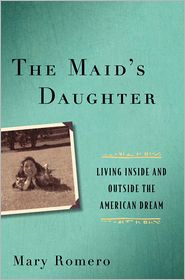
"I see that La Bloga features some great information and links of interest to the Latin community and I thought your readers might be interested in reading an excerpt from a new book about growing up Latina in America called The Maid’s Daughter. Library Journal calls the book, “A valuable case study and a dramatic life story, this oral history explores identity and illuminates race, class, and gender in America at a peculiarly intimate intersection between upper-middle-class white families and the women of color who provide domestic labor for them.”

The afterword is now available on scribd.com. Here’s the web address: http://www.scribd.com/doc/61057126/Crossing-the-Border."
____________________________

In this penetrating case study, Romero examines the life history of Olivia Salazar, a successful public relations professional who grew up in a wealthy Anglo household where her mother worked as a domestic servant.The author followed her subject for more than 20 years, gathering data through a series of in-depth interviews that began in 1986. She organizes her analysis around actual interview segments, which she explicates with a rare combination of rigor and sensitivity.

Olivia was the American-born daughter of a Mexican woman named Carmen who had originally come to the United States to find work that would allow her to support family members that lived south of the border. When Olivia was three, Carmen located a job in an exclusive Los Angeles gated community. It was here that Olivia would spend most of the next 15 years growing up as a "member" of the Smiths, the wealthy family that employed Carmen. While her mother worked within the defined—and frequently exploitative—parameters of domestic servitude, Olivia occupied an uneasy interpersonal, cultural and economic middle ground. As Romero writes, "the social boundaries between 'being like one of the family' and 'the maid's daughter' [were] blurred and in constant flux." Olivia's association with the Smiths gave her access to the schooling and social connections that allowed her to eventually enter the ranks of the professional middle class. At the same time, it put her at odds with a mother unable to provide complete nurture while forcing her into anguished questioning of who she was and where she ultimately belonged. A moving work that deconstructs the American Dream at the fraught intersection of race, class and gender. Kirkus Reviews
_____________________

Mary Romero is Professor of Justice Studies at Arizona University and a Carnegie Scholar with the Carnegie Academy for the Scholarship of Teaching and Learning. Her books include Challenging Fronteras: Structuring Latina and Latino Lives in the U.S.


Guantanamo Boy
Anna Perera
Albert Whitman & Company - July, 2011 (originally published in the UK in 2009)

Innocent until proven guilty? Not here you're not. Robbed of his childhood, this is one boy's fictional experience of the supposed war on terror. Khalid, a fifteen-year-old Muslim boy from England, is abducted from Pakistan while on holiday with is family. He is taken to Guantanamo Bay and held without charge, where his hopes and dreams are crushed under the cruellest of circumstances. An innocent denied his freedom at a time when most boys are finding theirs, Khalid tries and fails to understand what's happening to him.

Awards

Summer 2011 Children's Indie Next List

Reviews

"A chilling and horrifying story of an innocent 15-year-old London-born Pakistani boy who is captured by the U.S. government, taken to Guantanamo Prison and tortured until he collapses. The novel will raise important questions related to government profiling, human rights, and the use of 'torture.' This may well become one of the most important teen novels about social justice of the new century. It will be chewed up, debated, and hopefully digested." Pat Scales, Librarian, Author, and member, National Coalition Against Censorship Council of Advisors

"Readers will feel every ounce of Khalid's terror, frustration, and helplessness in this disturbing look at a sad, ongoing chapter in contemporary history."
Publishers Weekly

"...this gripping look at a poorly defined war's unintended consequences uniquely challenges readers to examine common beliefs and ask searching questions about means and ends."
Kirkus Reviews

"Set six months after 9/11, this unforgettable novel raises crucial headline issues through the story of teenage Khalid, born near Manchester, England in a secular Muslim family."
STARRED REVIEW, Booklist


American Night: the Ballad of Juan José

Oct 7, 2011-Nov 20, 2011
The Ricketson Theatre
Denver Center for the Performing Arts
Speer & Arapahoe, Denver, CO
Subscribe today at 303.893.6030
Single tickets on sale Aug 14

By Richard Montoya & Culture Clash

In this brash new comedy, Juan Jose pulls an all-nighter to take his U.S. citizenship exam so he can bring his family to America. Delirious and sleep-deprived, he is visited by a cast of crazy and diverse figures from U.S. history.

Created and developed by L.A.’s theatre collective, Culture Clash, American Night is a fresh, theatrical portrait of “Coming to America.”


LATINO PUBLIC BROADCASTING TO RECEIVE THE IMAGEN FOUNDATION’S PRESTIGIOUS NORMAN LEAR AWARD
AWARD TO BE PRESENTED AT IMAGEN AWARDS GALA ON AUGUST 12

Latino Public Broadcasting (LPB), a non-profit organization funded by the Corporation for Public Broadcasting, is pleased to announce that it will be honored with the prestigious Norman Lear Award at the 26th Annual Imagen Awards gala on Friday, August 12th, 2011 at the Beverly Hilton Hotel in Beverly Hills, CA. The Norman Lear Award is given each year to a Latino writer or entity that has excelled creatively to dispel negative stereotypes and perceptions of the Latino community. Latino Pubic Broadcasting Executive Director Sandie Viquez Pedlow and LPB founder and Chairman of the Board Edward James Olmos will be on hand to accept the award.

The Imagen Awards were created 26 years ago by The National Conference for Community and Justice (formerly The National Conference of Christians and Jews), based on a suggestion by television producer Norman Lear to improve media portrayals of the Latino community in feature films and television. Called “the Golden Globes of the Latino community,” the Imagen Awards are one of the most prestigious awards of its kind in the entertainment industry.

An excerpt of the award announcement follows: “Through the funding and supporting of Latino oriented programming for public television, Latino Public Broadcasting has made a significant contribution in creating a better understanding of Latinos and Latino cultures in the United States. LPB’s noncommercial educational and cultural programming has given a voice to our community and shared with the nation the beauty of our traditions and our contributions to the arts, culture and the humanities. In addition, LPB has provided numerous opportunities for Latino producers through their support and promotion of television projects as well as independent films. As Mr. Lear impacted the thoughts and perceptions of television viewers so has LPB. There is no one more deserving of this Norman Lear legacy award than Latino Public Broadcasting.”

LPB Founder and Chairman of the Board Edward James Olmos said, “These are exciting, dynamic as well as challenging times for public media and this award is a true honor and a wonderful validation of our work at LPB. As our Latino community increases in numbers, diversity and influence, we are more committed than ever to helping producers tell our stories and reaching ever broader audiences.”

LPB’s Sandie Viquez Pedlow assumed the role of Executive Director in July after a long career in public media and as an LPB board member. Pedlow said, “Since our inception thirteen years ago, Latino Public Broadcasting has strived to champion the Latino creative community. We’ve shepherded more than 200 projects, including several Imagen Award winners and nominees, including this year’s Best Documentary nominee The Longoria Affair. It’s an honor to be recognized by our community and we look plan to continue breaking new ground, breaking down barriers and creating programming that reflects our wonderfully rich and diverse experience.”

About Latino Public Broadcasting
LPB brings new audiences to public television with a recognizable impact on a broad range of viewers that complement and challenge existing public television offerings. LPB’s mission is to support the development, production, post-production, acquisition and distribution of non-commercial educational and cultural content that is representative of or addresses issues of particular interest to U.S. Latinos. Created in 1998 by Edward James Olmos and Marlene Dermer, LPB has provided more than 100 hours of programming to public television, funded more than 200 projects, and organized approximately 100 workshops, panels and screenings for the advancement of Latino producers to showcase the rich spectrum of Latino-American culture. LPB collaborates with other minority consortia, and works closely with the Public Broadcasting Service (PBS), American Public Television (APT), Independent Television Service (ITVS) and POV to maximize its presence on public television. Latino Public Broadcasting is funded by the Corporation for Public Broadcasting. For more information, go to www.lpbp.org.

About The Imagen Awards

The Imagen Awards program was established in 1985 from a suggestion by Linkveteran television producer Norman Lear to encourage and recognize the positive portrayals of Latinos in the media. Later, as The Imagen Foundation, it expanded its programs and initiatives to further its mission to serve as a bridge between the Latino community and the entertainment industry in providing access, education, and resources for Latinos in the industry, as well as those seeking careers in entertainment.


Final Bits

Don't forget that Melinda Palacio and Lucrecia Guerrero read from and sign their new books at the Tattered Cover here in Denver - tonight at 7:30 PM (Colfax store.) You all should check out the event and support these fine authors. You should also hop over to the Poets & Writers site where Melinda expounds on one of her secrets for becoming a better writer. Click here.

Later.

Tuesday, January 12, 2010

Review: Palestine NM. PALABRA Poets at REDCAT. Xánath Caraza en Xalapa.

In this column...
Review: Palestine, New Mexico
PALABRA Poets at REDCAT / Disney Hall
Xanath Caraza Reports from Xalapa, Mexico

Note: Click on photographs for a larger image in a new page.


Review: Palestine, New Mexico by Richard Montoya for Culture Clash. Mark Taper Forum. Los Angeles CA.

Michael Sedano


History rings true with contemporary timbre in a plot combining a dead indian, conversos, Unitedstates and Afghan tribal people; humor reigns despite the deadly seriousness of the mysterious death of a soldier in Afghanistan; at the ending, tears spill in the eulogy for a dead son husband father; throughout, an eager audience devours the current visit of Culture Clash to the mainstage of the Mark Taper Forum atop Bunker Hill in downtown Los Angeles.

Despite having all these elements going for it, there's something wrong with Palestine, New Mexico, now through January 24.

It's not the audience's ignorance of Chicana Chicano Marrano/Converso history. And there's a rich lode of that. I heard one theatre-goer remark as she left the auditorium, "is that all true, is that factual?" She referred to the Jewishness thread running through the story, accounting for the rivalry of neighboring villages in rural New Mexico and syncretic religious jokes and sight gags.

It's not the profound awareness of the senselessness of soldiers killed in action, perhaps "friendly fire", in Bush-Obama's Afghan adventure. Nor does the exaggeration of drama mask the pin-drop ambience as the nearly sold out house holds its collective breath in respectful silence as the flag-draped coffin wheels onstage in a carreta. That it's a theatrical prop is irrelevant.

It's certainly not the emotion playwright Montoya tearjerks out of the snuffling house as the characters salute a fallen soldier, suspected of treason but cleansed in the explication of a US tribal person's respect for kindred tribal people populating Afghanistan. Russell Means' voice cracking rings with authenticity as a bereft father says goodbye to an estranged son.

And for dang sure there's nothing wrong and a whole lot of grand entertainment when Culture Clash takes center stage and goes through some inspired routines.

Although Montoya's play tends toward wordiness, especially the opening scene where the playwright has to establish linkages between Afghanistan, the remote New Mexico outpost of Palestine, conquistadores, the rez, Montoya's words rarely account for the sluggish production. No, it's the direction. Director Lisa Peterson doesn't get it. Satire needs to spin with manic, frenetic energy. Razor-sharp dialog needs to spin out of control and let the jokes overwhelm one another. But no-ooo....Instead, Peterson forces her actors to plod along. Utter a line. Stop. Wait. Cue next actor. Speak. Stop. Wait. Plod, plod, plod. What went wrong? Peterson directed Chavez Ravine. Her work there was puro masterpiece, a performance bursting with the pacing and energy sorely absent in her current job.

Natural conversation occurs in give-and-take interaction. Ditto the best teatro. Actors shouldn't wait for a character to finish a sentence all the way to the period or paragraph break. Audiences should be treated to actors jumping in, stepping on lines. Interrupt and interrupt back. That's natural in speech and beautiful in comedy. There's no chemistry among these characters.

With only a week remaining in the run, it's curious that the cast hasn't risen up in agony at the slow pace Peterson imposes on Montoya's play. Ordinarily I attend the first week of a run, but for this, the final production of the 2009 season, I had to exchange my tickets. I wonder if the first weeks, when the cast was still fresh, went better? Gordon Davidson would never have allowed this to continue. Clearly new "artistic" director Michael Ritchie has yet to hit his stride with LA audiences.

In spite of what's wrong with Palestine, New Mexico, the opportunity to share Culture Clash's comedic genius is not to be missed. Maybe the closing week's audience will shout out loud what I wanted to, "Faster!" and a miracle will happen, art will overcome artifice and the audience will be treated to everything this play ought to be.

back to top


REDCAT may have a strange sound, but it carries the Disney cachet. The acronym contains the Roy and Edna Disney/CalArts Theater. It's tucked away in the southwest corner of fabulous Disney Hall, home to the Los Angeles Philharmonic and its justifiably lionized musical director Gustavo Dudamel. REDCAT corner is yet another richness contributing to the cultural life of angelinos.

Sunday, January 10 was a highlight of El Lay's, Disney's, and REDCAT's contributions to local cultura when PALABRA, A Magazine of Chicano & Latino Literary Art hosted a reading featuring seven artists of special merit, Xochitl-Julisa Bermejo, Carribean Fragoza, Gloria Enedina Alvarez, Stephen D. Gutiérrez, Enriqueta Luissi, Melinda Palacio, Juan Manuel Sánchez. As this was my first visit to REDCAT I was delighted to discover a coffee bar lounge tucked away under a streetside window. A richly delicious, affordable espresso made my day all the more perfect.

The work exhibted skilfully wrought poetry or prose, obviously highly accomplished writers. You can read many of the works performed by ordering the current issue of PALABRA, and may as well treat yourself to the PALABRA backlist available online at its website. The afternoon was videotaped, so I'm holding out hope editor Elena Minor will one day soon post that on PALABRA's website so gente absent from the event can share the joy.

Following are fotos exposed as the writers put their work into the air. These are taken on a Canon Digital Rebel XT, generally at 55mm 1/5 sec f5.6. Selected frames 35mm 1/8 f4.5. All available light, hand held, ISO800. Artist bios pasted from PALABRA's announcement.

Xochitl-Julisa Bermejo is a native Angelino poet with an MFA from Antioch University Los Angeles. She volunteers as a creative writing teacher for women in the Los Angeles Metropolitan Detention Center and continues to research and write on U.S. immigration and detention. Her work has been published in Glass Poetry Journal and The Umbrella Journal, and new work is forthcoming in Los Angeles Review. She is poetry editor for The Splinter Generation.


This exposure taken sight unseen. I racked the lens full wide, 18mm, pointed the camera over my shoulder and let the auto program expose the appreciative audience at 1/15 sec f 3.5. In near foreground are Estella Gonzáles, left; Griselda Suarez, right. Enrique Berúmen in brown shirt center frame. Apologies to the woman between Gonzáles and Suarez, who may be one of Griselda's Long Beach State students.


Gloria Enedina Alvarez, a Chicana poet/intermedia artist, literary translator and curator, presently teaches creative writing and works as a consultant in public schools, universities, libraries, museums, and art centers. Her literary and artistic efforts have been recognized by the National Endowment for the Arts; Cultural Affairs Department, City of Los Angeles; and Poets & Writers, Inc., among others. She has been a writer-in-residence at the Social and Public Art Resources Center, East Los Angeles College, Getty Research Institute for the History of the Arts and Humanities, Beyond Baroque Literary Center, Los Angeles County Art Museum, Los Angeles Public Library, and faculty at University of California, Berkeley, California State University, Los Angeles, California State University, Northridge, and California Institute of the Arts. She has published and read widely in the U.S., Latin America and Europe. Her books of poetry in English and Spanish include La Excusa/The Excuse and Emerging en un Mar De Olanes. Her poetry has been published in various anthologies and numerous periodicals including Chicana Creativity & Criticism; New Frontiers in American Literature, Ciudad Hibrida/Hibrid City, The Production of Art in "Alien Territory", Urban Latino Cultures: La Vida Latina en L.A., Revista Mujeres an lnvocation L.A.: Urban Multicultural Poetry. Her epic play Los Biombos/The Screens has been produced by Cornerstone Theater and directed by Peter Sellars. Her libretto, a new version for the opera, Cuento de un Soldado/Story of a Soldier, also directed by Peter Sellars, was conducted by Esa-Pekka Salonen, produced by the Los Angeles Philharmonic, and performed worldwide. She has collaborated on the opera, El Nino, La Nativete, produced by Chatelet Theatre Musical de Paris, France and San Francisco Symphony.


Carribean Fragoza, raised in South El Monte, California, currently lives, works, and writes in Los Angeles. She holds degrees from UCLA and California Institute of the Arts and teaches at California State University, Long Beach. Carribean is currently working on her first book, The Legend of South El Monte Zombie: And Other Stories of Lust and Longing.

I enjoy taking candid audience shots when the opportunity avails. The light coming in from the window behind the readers provides effective profile illumination.

Enriqueta Luissi was born amid one of the frequent dust storms that fill the sky of her hometown in northern Mexico during the late summer months. As a baby she was nourished with oatmeal seasoned with flakes of dried rattlesnake and put to nap on a bed of cornhusks. Her mother took her at age five to see the famous doctor El Brujo, who predicted Enriqueta would be published in PALABRA. She lives in Chula Vista as foreseen by El Brujo.

Olga reads effectively, switching effortlessly from English to Spanish, as the poem requires. She adopts a neutral mien, allowing the words to speak for themselves without coloration by the reader. It is a good choice, given the intimacy of certain lines.

Stephen D. Gutiérrez is the author of Live From Fresno Y Los, a collection of stories recently published by Bear Star Press. Elements, his first collection, won the 1996 Nilon Award. He has published fiction in many magazines and anthologies. Recent appearances include Fiction International, PALABRA, Latinos in Lotusland: An Anthology of Contemporary Southern California Literature and the upcoming Sudden Fiction Latino. Personal essays have appeared in Fourth Genre, River Teeth, Los Angeles Times and ZYZZYVA. He directs the Creative Writing Program at California State University, East Bay.


Melinda Palacio grew up in South-Central Los Angeles and now lives in Santa Barbara. She is a 2007 PEN Center USA Emerging Voices Rosenthal Fellow and a 2009 alum of the Squaw Valley Community of Writers. Her work has appeared in a variety of publications, including BorderSenses, Black Renaissance Noire, Buffalo Carp, the Valley Voice, Maple Leaf Rag IV: An Anthology of Poems, the Naugatuck River Review, O&S Poets and Artists, and Latinos in Lotusland: An Anthology of Contemporary Southern California Literature. Her first novel, Ocotillo Dreams, will be published by Arizona State University’s Bilingual Press Fall 2010. Folsom Lockdown, winner of Kulupi’s 2009 Sense of Place chapbook contest, will be available next month. Come to her book signing at Tia Chucha’s, March 27 at 1pm.

I was waiting for some passerby to perform a dance at the window. Numerous folk walked past, most glancing into the coffee lounge, hitching a step momentarily, then striding on. This kid had a good time. I wish he and his two friends had come inside to hear what they were missing.


I enjoyed Melinda Palacio's "Sister's Shakedown at Steven's Steakhouse, City of Commerce, California, 2008", in the current PALABRA. The unparalleled warmth expressing the poet's love and appreciation for her sister dancing the night away at a well-known raza hangout was magnified for me when Melinda introduced me to her vivacious sister, the subject of the poem. What a treat! This is the kind of joy attainable only from attending events like this.

Juan Manuel Sánchez is from San Diego. He attended the University of San Diego, University of California, San Diego and the University of Illinois and has taught Spanish at various universities. Nominated for a Pushcart Prize in 2008 and 2009, his work has recently appeared in Pembroke, Ninth Letter, Mandorla, and The Southern Review. New work is forthcoming in Lana Turner and in Junta: Avant-Garde Latino/a Writing.

A visit to REDCAT, or Disney Hall, is incomplete without a stroll through the gardens on the second level. Ascend the grand staircase at your risk. I take the elevator, accessible through the administrative building on the south side of the complex.

The mirrored passageway is my favorite spot. I came upon three tourists acting silly and having fun. I offered to take a photo of all three of them, using their camera. I directed them to their reflection in the polished wall--they had not taken in the possibilities. Three frames should provide them lasting memories to share with the folks back home.

Here I stand in a reflective moment.


back to top

Bobby Salcedo, ¡Presente!

In Monday's La Bloga, Daniel Olivas helps eulogize Bobby Salcedo, an El Monte CA educator, who was murdered in Mexico during a family visit.

There's no denying Mexico is going through an epidemic of murder. Reading the newspapers one might think no one no where is safe in Mexico. Perhaps not. Given such ominous perceptions, I am happy to share a set of reports from Mexico that reflect more pacific experiences, these from Xánath Caraza, a leader of Kansas City's Latino Writers Collective, who writes, "Hope these words bring a bit of hope and beauty to the readers."

It's a pleasure to share Caraza's reports that come, bilingually, with a spirit of renaissance, or at least, purification, for the image of Mexico lindo y querido. How refreshing it is to read something positive and optimistic.

Entre las calles de niebla
por Xánath Caraza


Tener la oportunidad de recorrer México entre galerías de arte, música, cafés y librerías es un placer inusual. Hoy en día la mayor parte de las noticias que recibimos de México están enfocadas en todo menos en el arte que México tiene.

Tuve la oportunidad de recorrer la ciudad de Xalapa las últimas tres semanas. Xalapa es la capital del estado de Veracruz. Está ubicada entre el mar, la costa del Golfo de México y los bosques tropicales de niebla de las montañas al norte de ésta. Xalapa desde sus inicios ha sido una ciudad donde el ambiente cultural ha prevalecido. Xalapa es una ciudad con orígenes prehispánicos. Su nombre en el idioma azteca ancestral, náhuatl, significa “Manantial en arena”.


Durante la colonia española, su clima volvió a Xalapa el descanso obligado entre el caluroso puerto de Veracruz y el largo camino hacia la ciudad de México. Lo que atrajo un sin número de artistas, músicos, pintores que pretendían entretener a los visitantes de paso hacia la Ciudad de México. Desde hace unos siglos la tradición cultural de Xalapa es conocida, haciéndole ganarse el sobrenombre de la Atenas veracruzana.

Xalapa es una ciudad con neblina, especialmente en el mes de diciembre, debido al bosque de niebla. Esta niebla vuelve pintoresca a la ciudad junto con sus empedradas y empinadas calles – a veces muy empinadas.


Volviendo a la visita, de la nublada ciudad de Xalapa de mi niñez, puedo compartir con ustedes los siguientes puntos de interés. Un concierto navideño interpretado por la orquesta de cámara Amadeus y el coro Novum Tempo dirigido por Serafín Rodríguez fue mi reintroducción a la vida cultural de Xalapa. De música gloriosa al silencio para leer, con una vista panorámica del Pico de Orizaba, por supuesto disfrutando de la lectura con una deliciosa taza de café de la región, no pudo faltar. Ya en recorrido por la ciudad, de las visitas a las galerías de arte, me sentí inspirada con la cerámica de Mariana Velázquez. Su serie se llama “Floreciendo con la luna”. De su trabajo, puedo decir, por ejemplo, que su cerámica de cactus, tanto femenina como fuerte, contrasta con la vegetación tropical de Xalapa y sus alrededores. Entrando en historia distante, no puede faltar la obligada visita al Museo de Antropología de Xalapa (MAX). Pasé un día entero entre cabezas olmecas de piedra gigantes, cultura totonoca y una pieza tras otra. Regresando del pasado del MAX al siglo veintiuno, un encuentro con mi buen amigo y pintor experto, Chán, completó el diseño perfecto de otro día de neblina en Xalapa. Sus intricadas pinturas de selvas son un tributo al trópico del sur de México.

Sin embargo, para mí el arte no sólo se encuentra en las galerías, sino también en las calles y mercados, con el ruido y los colores brillantes de cada día. A veces encuentro arte en las frutas tropicales como en la papaya rojo-anaranjada que ha sido cortada en fascinantes diseños en zig-zag para invitar a los posibles compradores. O al reencontrarme con algún actor callejero como mi amigo Javier Pérez, quien nunca deja de sorprenderme con la creación de nuevos personajes, como su hermoso traje de barro que refleja elementos de cultura indígena. Otras veces respiro arte en las caminatas por los bosques tropicales de niebla de los alrededores de Xalapa, o simplemente cuando me pierdo por las calles nubladas de esta mágica ciudad.


Through the Streets of Fog
by Xánath Caraza

Having the opportunity of touring through Mexico--between art galleries, music, coffee shops and bookstores--is an unusual pleasure. Nowadays the majority of news that we receive about Mexico is focused on everything but the art that Mexico has.

I had the opportunity of touring the city of Xalapa during the last three weeks. Xalapa is the capital of the State of Veracruz. It is located between the sea, the Gulf of Mexico, and the tropical cloud forest in the mountains north of the city. Since its beginnings, Xalapa is a city where a cultural ambiance has been traditionally prevalent. The city has pre-Hispanic origins. Its name in the ancient Aztec language of Nahuatl means “Spring (natural source of water) in the Sand”.

During Spanish colonial times, the weather of Xalapa for passers-by was a temporary haven from the hot city of Veracruz before setting out for the then long trek to Mexico City. What attracted a large number of artists, musicians and painters was being the entertainers for short-term visitors before departing for Mexico City. Dating back centuries, Xalapa’s cultural tradition is renowned, earning the nickname the Athens of Veracruz.

Xalapa is a foggy city especially during December, thus the cloud forest. This fog creates of Xalapa a picturesque city including its up and down—sometimes quite steep--cobblestone streets .


Of my visit to my foggy childhood home of Xalapa, I am pleased to share the following points of interest with you. A Christmas concert performed by the chamber orchestra, Amadeus, and the choir, Novum Tempo, conducted by Serafín Rodríguez was my welcome back to the cultural life of Xalapa. From glorious music to quiet reading time with a view, of course enjoying a book along with a delicious cup of locally grown coffee with a scenic view of the Peak of Orizaba could not be missed. Moving through the city, of the visits to the different art galleries, I was inspired by the ceramics of Mariana Velázquez. Her series is named “Blossoming with the Moon”. Of her work for instance, her feminine and powerful ceramic statues of cacti contrast with the tropical vegetation inside and outside Xalapa. Delving into distant history, a must –experience is a visit to the Anthropology Museum of Xalapa (MAX). I spent an entire day there among giant Olmec stone heads, the Totonac culture, and one amazing display after another. Returning from ancient centuries past at MAX to the 21st century, a get-together with my good friend and expert painter, Chán, completed another perfect day layered with the traditional fog of Xalapa. His intricate jungle paintings are a tribute to the tropics of southern Mexico.


However, for me art could not be found just at the art galleries, but also on the streets and in the market places with everyday noise and brilliant colors. Sometimes I find art in tropical fruits, for example orange-red papayas which have been cut open to entice customers in a fascinating zigzag pattern. As well, another highlight is meeting a street performer, such as my friend Javier Pérez, who has never stopped surprising me with the creation of new characters, such as his clay-clad body suit to beautifully portray some elements of indigenous culture. Other times I breathe in art when hiking in the tropical cloud forest surrounding Xalapa, or just wandering through the foggy streets of the magical city of Xalapa.


Foto Credits
Concert. Stephen Holland-Wempe
The Orizaba Peak / El Pico de Orizaba, Xanath Caraza
Ceramics/ceramica , Xanath Caraza
MAX / MAX , Stephen Holland-Wempe
My friend the painter/ Mi amigo el pintor , Stephen Holland-Wempe
The Clay Street Performer/ El actor callejero de barro , Tzununi Caraza
The Clay Street Performer / el actor callejero de barro , Tzununi Caraza
Through the fog/ Entre la niebla , Xanath Caraza


Gente, that's the second Tuesday of January 2010, a day like any other day, except You Are Here. Thank you for visiting La Bloga. Nos wachamos next week.

mvs


La Bloga encourages your comments on today's column. To share a thought, ask a question, click the comments counter below.

La Bloga welcomes guest columnists. When you have an extended response to a La Bloga column, or a books, arts, cultural event review to share with La Bloga's readers, click
to discuss your invitation to be our guest.