Tuesday, December 16, 2008

Review: A Tuesday Like Today

Michael Sedano

Cecilia Urbina. A Tuesday Like Today. Translated by Clare E. Sullivan. San Antonio: Wings Press, 2008.
ISBN: 0916727475 ISBN 13: 9780916727475

Someone rings the doorbell, rousing Márgara from a whiskey-induced nap. Is it David? Has the mysterious-stranger-become-lover tracked her down after so short a delay?

This is how Cecilia Urbina's novel ends, with an unanswered question, a drowsy Márgara, an unfinished novel on the floor beside her chair as she rises to go answer her door.

Of course it's David, isn't it? This is a romance, isn't it?

Urbina's and Sullivan's A Tuesday Like Today wends its way from the ruins of Cambodian temples, to Bali, to Mexico City, with a detour via a story-within-a-story to the cowboy and indian Old West. Exotic locales with a pair of exotic sisters and a story, that, once it takes hold, holds a reader's interest to see how Urbina develops the tantalizing clues and parallels she weaves into her story.

At first, the story seems oddly out of place. The rich by marriage Camila, protective older sister Márgara, traveling the world on Camila's husband's credit card while he works on some mysterious, possibly illegal, business in Europe.

The novel's story within a story fuzzes the boundaries between the history of Camila's namesake grandmother and the sisters' pursuit of the definitely out of place David Masters-Iturbe, a piano playing Mexican they stumble upon in the bar of the Grand Hotel, who knows the history and ins and outs of Angkor Wat and other enchanting places.

The sisters become captivated by the urbane David. Camila, the married sister with the man-killing stare, seems to have the upper hand, even disappearing into the night with David while Márgara retires to their room barely containing her big sister dudgeon, yet nurturing her bitterness at a failed relationship of her own. Camila always gets the man.

David is like a local. Puts his jeep at the women's disposal, along with his services as guide and raconteur. The first hint that something lurks beneath the surface comes when the women spin David a family legend of Camila's namesake in Victorian Mexico involving the Decameron, a forbidden flirtation, and a handsome but ultimately worthless husband. But the question hangs over them, who is David, why is he at home in this remote part of Southeast Asia, does he have a shady occupation as does Camila's husband? Is history repeating itself?

The family legend of grandmother Camila's flirtation then disastrous marriage to the bad poet cheating gambler Francisco is turned upside down when the sisters invite David to tell his story. Rather than take on his own history, David fabricates the unknown history of Francisco, between the flirtation and the grandparents' union some years later. David confesses he weaves a story of lusty gamblers and fearless women out of countless of movies he's seen, but to Camila and Márgara, David has masked elements of his life in the cloak of the fable.

Their escapist evening tales come to an ugly confrontation with their surroundings when the tourists meet dozens of children missing eyes, feet, legs; victims of land mines left behind by various invaders. It's a searing fact that later bears a direct connection to David's story, his search for a sister missing somewhere in the Cambodian jungles.

I was hoping for a bit of ribaldry, a la the Decameron, but Urbina underplays it with nothing lubricious. A bit of understated sex on the beach, the lovers' two-day tryst in Bali, very little urgency one might find in a U.S. novel. But then, this is a Mexican novel. Unlike numerous translations, A Tuesday Like Today has a smooth continuity that doesn't bump up against the original language and culture. In English, it's an involving story. In Spanish, it won the Premio Coatlicue 2008, as did Elena Poniatowska, putting Urbina in the finest literary company.

Wings Press is not some powerhouse advertising behemoth--Urbina's novel is not yet on the publisher's website, so for your fortunate reader friends who merit an excellent recommendation they're not going to find at some mega store, order and read your copy of A Tuesday Like Today and pass it along.
Coming in at only 160 pages, the novel passes quickly through one's hands and into a friend's.


That's the antepenultimate Tuesday of the last month of 2008. Uau, wow, and Santa Claus around the corner desperation. Still time to mail order hard-to-find titles, or visit your local independent bookseller. See you next week.

mvs

Monday, December 15, 2008

A lawyer leaves his day job to dedicate himself to the writer’s life

A guest essay by Gonzalo Barr

Picture this: You’re five years old with nothing to do. It’s Saturday. Your mother insisted that you accompany your step-father to his business, which is a warehouse and a showroom. You get some stationery from his desk and a pen and start writing. What you write is your basic story. A king is about to marry a princess and he wants a new bed. Vonnegut said that, for a story, all you need is a character who wants something. The king gets his bed and his princess and they live happily ever after.

Flash forward to age twelve. A combination of two things – a boyhood fascination with rockets and your cousin’s library of science fiction – start you on a marathon of reading fiction. You learn that there is a whole class of people, called “writers,” who earn their living by making up stories and putting them on paper. On the back cover of one book there’s a picture of a smiling Ray Bradbury riding a ten-speed bicycle that looks a lot like your own ten-speed bicycle. You experience an epiphany: Bradbury rides a ten-speed bicycle. You ride a ten-speed bicycle. You too can be a writer like Bradbury. Simple.

Over the next week, you fill a school notebook with invented scenes and dialogue. A few days later, your mother takes an interest in said notebook, discovers its contents, and destroys it with her bare hands. She punishes you, too. That’s OK, though. All great writers suffer from censorship at one point in their lives. It’s a rite of passage. With Bradburian ten-speed bicycle and your work suddenly samizdat à la Solzhenitsyn, you are on your way to greatness. You can feel it.

Skip three years, to age fifteen. By now, you are reading Camus, García Márquez, Borges and Vonnegut. You publish two stories in your school’s literary magazine. You also discover that writing and, more importantly, brooding like the tortured soul you pretend to be, is an effective means of getting girls. (Note: A boy in the middle of the hormonal category five hurricane that is puberty has one and only one purpose in life; it is not discovering the right metaphor.) Life appears to overflow with opportunities.

After high school, “reality” and its evil twin, “practicality,” make their entrance. Faced with the opportunity of following a career in letters, you become a lawyer.

Law is bad for your soul, bad for your skin, and if you’re not careful it can be bad for your writing. First, it provides you with the ultimate excuse for not writing, to wit – that you’re too busy. Law is not a jealous mistress, it is a machete-swinging Harpy on crack. More than any Latin family, law will suck you in and never let you go. Second, law can be bad for your writing because you are surrounded by so many writer-wannabes. At least four out of every ten practicing lawyers holds himself out as a writer, yet never writes. It is as if being a writer were an ontological state. You just are a writer, no need to do more. Unfortunately, it doesn’t work that way or we would all just be incredibly rich.

There must be several ways of escaping the law life. I did it like this –

First, I changed my practice to one that gave me the mental space for stories to germinate and the time to write.

Second, I came up with a plan and promised myself that I would publish within five years.

Third, I wrote. And wrote. And wrote. I wrote every day from three to five in the morning.

Fourth, I read. And read. And read. (Note: Bad books are more instructive than good ones because it is easier to discover why something does not work than it is to figure out why something does. Think sprezzatura and you’ll know what I’m getting at.)

Fifth, I worked my way up writers’ conferences, starting with those that were mostly lectures to others that were workshops. You need to do Bread Loaf and Kenyon. They are two different experiences. Each has its merits.

Sixth, I networked. Writers work alone, but they need a lot of people to mid-wife a manuscript into a published book. In between, you will need an agent. Bread Loaf and Sewanee are good places to meet agents. If you go, take a finished book-length manuscript with you and be prepared to pitch it.


Seventh, I saved enough money to live for a while. If my first book garnered enough interest and some good reviews, I would take the plunge, quit law, write full-time.

On December 7, it was one year since I resigned from practicing law. Between February and November of this year, I wrote my first novel to completion. It wasn’t the first time I had tried to write a novel, but it was the first time I completed one. Watching my bank balance decrease each month was an excellent incentive for me to finish the book. On many days, I worked six to eight to ten hours. As a result, I have a novel. I also have blurry eyesight and a painfully cramped right shoulder. But there is no way I would have finished the novel had my mind been diverted on other matters, even an undemanding, intellectual dead-end of a day job.

There is one and only one way to become a writer and that is to write. Everything else is fooling yourself.

*****

Gonzalo Barr is the author of The Last Flight of José Luis Balboa (2006),
a collection of short stories that won the 2005 Bread Loaf Bakeless Prize. He keeps a blog and recently completed his first novel, All the Dreams in the World.

◙ Ramón Renteria, book editor of the El Paso Times, recently interviewed Daniel Chacón concerning his new collection, Unending Rooms (Black Lawrence Press). A shortened version of the interview appeared in the EPT. Ramón kindly offered the full interview for publication in La Bloga. So, here it is. Enjoy.

El Paso Times: So this is a collection of short stories?

Daniel Chacón: It has 23 stories. Actually one of them is an essay. I’d been writing these stories for the last three or four years and then they finally came together as a collection. And I called it Unending Rooms because I kind of picture each story like a different room in a really big house. When you enter a house, the first rooms are living rooms, like those rooms that the public sees. But the deeper you go into a house, a lot of secrets are revealed and weird things happen.

EPT: It was pretty deliberate on your part, to format it like that?

Chacón: Yeah, the way I organize it. It’s put into four sections. The first section things really are as they seem. The stories are realistic, I guess you could say. But as you go deeper into the book, the stories get a little weird and sometimes you can’t really tell what is real and what is not. Anything can happen. So, I’m having a lot of fun with it. I took a lot of risks with these stories. For example, one of the stories is told in the point of view of a duck. What happened is that one time I was in Santa Monica and in the Third Street promenade there was this guy with a duck. And all he did was say: See the magic duck. And people would put coins in his can. And the duck would waddle over to the can, stick inside and quack. And that was it. And so I ended up writing a story from the point of view of that duck. So I took a lot of risks. They’re really not very straight forward stories. They’re not very linear. And like I said, a lot of weird things can happen. And they do happen.

There’s one story where you’re not even sure who’s dead and who’s alive. You’re not even sure what reality is. And I kind of like playing with those concepts. It was a lot of fun.

EPT: Is this a departure from your usual style of writing?

Chacón: Yeah, I think it is. But it’s an inevitable departure. Because if you look at my first collection, this is much different. First of all, there’s about 100 more pages and 10, 12 more stories than in the first collection. But in the first collections, most of the stories were just very straight forward, realistic literary fiction. In this one, I think I’m beginning to really find my voice. And I think my voice is probably more Latin American than North American. And I allow myself to go into those parts of the mind that I think linear fiction can’t go. If you look at my earlier work, you’ll see that I was almost getting there. So it seems like a logical departure from where I originally started from.

I’m at a point in my life where I don’t care about getting published. Before, you had to worry about getting published. Now, I really don’t care. So I’m able to be more free and write more along the lines of the kind of fiction that I like. Maybe at first I thought on some level I needed to write the kind of fiction that’s going to get published. Now, I just write what I want to read.

EPT: What? Write for the pleasure of writing?

Chacón: Yeah, for the pleasure of creating. When you write fiction you’re creating a landscape. You’re creating a reality. And it’s really a beautiful experience to enter a reality that you’ve created and start to even create more and to let anything happen that needs to happen. I just write now because I like to write. I guess I’ve always liked to write, obviously. But there really was a certain pressure before to get published, especially in my job. At the university level, if you want to get tenure, if you want to keep your job you need to publish. You know, you publish or perish.

Now, I don’t worry about having to get published anymore. I just write books because I want people to read them. I want to share. I’m very excited about this book. I think it’s a lot of fun. People will enjoy reading it.

EPT: Were some of these published elsewhere before you collected them?

Chacón: Some of them. But because the stories are so weird, it’s hard to find journals that are willing to accept this kind of story. I sent the Magic Duck out, for example. But I don’t think very many editors would even read the entire story because they would say, a duck? And not go on. Mostly, I don’t send stories out. If I get requests to submit a story, I’ll submit a story. So, most of these are unpublished, never seen before.

EPT: Are you also at a point where it doesn’t matter whether you get the critical acclaim or not?

Chacón: I’d like to believe that I’m at that point. The fact is that it really does affect you. I still care deeply about my work. So, it would be nice if it were received in a positive way. But on the other hand, these stories are more like an offering to my friends.

In fact, there was a certain point where I decided I was going to spend 22 consecutive days writing a story a day. And every day after I wrote the story I would send it to my friends. I would post it on My Space, post it on my Web page. And I would just leave them up there for a day and take them off. I did this around Christmas time two years ago. And I told my friends this my offering. Here’s my gift. I’m going to give you these 22 stories. So every morning, no matter what – except for one day a week – I would get up and write one story. And then I would send it out to all my friends. They would sometimes comment on it. It was probably the most writing I had done in that short amount of time. And 14 of the stories are in this collection. So I kind of think of the collection as an offering to my friends, to read stories that are fun to read. So I’m not so much concerned about sales or whether or not it’s going to make it into a top 10 list. But I do care deeply about the stories. They’re a lot of fun.

I sent the stories out to maybe 100 friends, fully aware that some of them were never going to read them. But I had a surprising amount of people who did read them.

When I sat down to write, some of them just came out of nowhere. And others were a little harder to get down on the page. And I would have to work for sometimes, five, six hours a day just to get one story.

After I got all 22, I realized how they fit into the concept of Unending Rooms. Because I had been thinking about the structure of this book for about four years. In part three and four of the book, the stories are a little darker. And they get a little deeper as if you’re entering the attic or the closet or those places where the public isn’t supposed to see.

After I wrote those 22 stories in 22 days, I realized that a lot of them fit perfectly into this book. About 10 of them didn’t fit into the book, so I didn’t even try to put them in even though I think some of them are good stories. And about five or six of them are probably just not worth reading.

After I picked the ones that were going in the book I spent a lot of time revising them.

It took me a year to revise them to the point where I thought they were publishable.

It took me a long time as a writer to realize that I should be writing the kind of stories I want to read. There is a concept among developing writers that you should imagine the ideal reader. I think the concept might have come from John Updyke. That there’s this ideal reader out there, the age of the reader, the gender, the ethnicity, and you write for that audience.

After a while I realized that’s kind of ridiculous for me to make up this reader. So I start writing to perceptions. And when I do that, I start putting limits on where a story can go because I think the ideal reader may not like it.

After And the Shadows Took Him, I took a year off and went to Buenos Aires which was one of the greatest decisions I’ve ever made in my life as a writer but also a very poor decision.

I had this entire year just to read and to write. I read so much Borges, not only his fiction and poetry. I was in his city so I would encounter references that I would find in his work. Sometimes I even imagined myself walking the city with him. And it was actually kind of strange. I ended up renting this apartment and later realized I was standing in front of the building where Borges and Boik Azares used to write their detective stories. It was a beautiful experience. Borges said the idea of the ideal reader is ridiculous. He said I write stories I want to read. That made me realize that’s really what I’ve been wanting to do all along.

When you read a story, the aesthetic phenomenon of fiction is when language disappears and you picture everything like a movie in your head. You forget you’re reading and you’re there. That’s what we want to achieve as writers. I read the kind of fiction that I want to be inside of. I want to be there. So why wouldn’t I create that same kind of fiction? It liberated me quite a bit.

It deepen my writing, made it better. But it was a mistake in one sense because my book had just come out with Simon and Schuster and I went to Argentina so I wasn’t here to promote it. The book was slow to get off the ground.

EPT: Tell us a little bit about your writing style. Do you prefer to write in the daytime, late at night or just write when you get the urge?
Chacón: When I’m working on a novel, I have to write every day. I take one day off a week, no matter what. We need that as people. That’s the whole concept behind the Sabbath. Entering a novel is like entering a landscape. If you enter every day, it’s easy to get there. So if I’m working on a novel it’s every day, six days a week, no exceptions.

The best time to write is in the mornings before I use language in any other way. If I’m using language all day and then I go into my novel, the language that I’ve been using is going to influence the language in the novel. Anytime you encounter language, it influences the way you use language. If I worked all day and taught classes and read this and that, it’s inevitably going to influence the language.

If I work right after I wake up in the morning, my language is fresh and it goes entirely into the work.

When I finished this work, I started the Cholo Tree. It’s a novel. And I just finished it day before yesterday. It’s the novel I started when I was in Buenos Aires in my year off. I wrote for five months straight the first draft of that novel. And I’ve been revising it for about four years now. This last time that I revised it, I cut about 350 pages. It was a difficult novel to write. Now, I’m going to take a little time off before I go into my next novel.

I keep a blog on physics and mysticism. Basically what I’m writing about is how to translate a system based in quantum mechanics into a system of artistic form. And it’s just a lot of fun. I’m just messing around. I take the concepts of physics and apply it to artistic form and artistic development. I write a little bit on that when I want to or I’ll write a little story here and there, maybe even write some poems.

EPT: What else can we say about this book? Have we covered all the bases?

Chacón: Well, it won the Hudson Prize. It’s a contest where you submit a book of stories or a book of poems. And they receive hundreds of manuscripts. I was really shocked that I won it. Not only am I a Chicano and this is a New York press but my stories are so weird. They’re really conventional stories. This is a good book for where I am right now. I’m proud of this book. It’s different.

[Photo credit: Ramón Renteria.]

◙ That’s all for this week. So, in the meantime, enjoy the intervening posts from mis compadres y comadres here on La Bloga. And remember: ¡Lea un libro!

Friday, December 12, 2008

End of Year - Looking Ahead

MORE NEW BOOKS
Continuing from last week, here are a few more publisher announcements about upcoming books for 2009.

University of New Mexico Press

María of Ágreda: Mystical Lady in Blue
Marilyn H. Fedewa
June
News of María of Ágreda's exceptional attributes spread from her cloistered convent in seventeenth-century Ágreda (Spain) to the court in Madrid and beyond. Without leaving her village, the abbess impacted the kingdom, her church, and the New World; Spanish Hapsburg king Felipe IV sought her spiritual and political counsel for over twenty-two years. Based upon her transcendent visionary experiences, Sor María chronicled the life of Mary, mother of Jesus of Nazareth, in Mystical City of God, a work the Spanish Inquisition temporarily condemned. In America, reports emerged that she had miraculously appeared to Jumano Native Americans--a feat corroborated by witnesses in Spain, Texas, and New Mexico, where she is honored today as the legendary "Lady in Blue." Lauded in Spain as one of the most influential women in its history, and in the United States as an inspiring pioneer, Sor María's story will appeal to cultural historians and to women who have struggled for equality against all odds. Marilyn Fedewa's biography of this fascinating woman integrates voluminous autobiographical, historical, and literary sources published by and about María of Ágreda. With liberal access to Sor María's papal delegate in Spain and convent archives in Ágreda, Fedewa skillfully reconstructs a historical and spiritual backdrop against which Sor María's voice may be heard.

Akashic Books

Havana Lunar
Robert Arellano
March
One hungry, hallucinatory night in the dark heart of Havana, Mano Rodriguez, a young doctor with the revolutionary medical service, comes to the aid of a teenage jinetera named Julia. She takes refuge in his clinic to break away from the abusive chulo who prostituted her, and they form an unlikely allegiance that Mano thinks might save him from his twin burdens: the dead-end hospital assignment he was delegated after being blacklisted by the Cuban Communist Party and a Palo Monte curse on his love life commissioned by a vengeful ex-wife. But when the pimp and his bodyguards come after Julia and Mano, the violent chain-reaction plunges them all into the decadent catacombs of Havana's criminal underworld.

Inspired by fifty years of Cuban noir, from the Cold Tales of Virgilio Pinera to Reinaldo Arenas' Before Night Falls, Arellano's Havana Lunar intertwines an insider testimony on the collapse of socialist Cuba with a psychological mystery that climaxes in the eye of Hurricane Andrew.

Robert Arellano's parents fled Havana in 1960. He has been working on Havana Lunar since 1992 when, as a student in Brown University's graduate writing program, he visited Cuba on a research fellowship. He has returned ten times, chronicling the Revolution in journalism, essay, and song. He is the author of two novels, Fast Eddie, King of the Bees and Don Dimaio of La Plata, both published by Akashic.


Ruins
Achy
Obejas
March
Usnavy has always been a true believer. When the Cuban Revolution triumphed in 1959, he was just a young man and eagerly signed on for all of its promises. But as the years have passed, the sacrifices have outweighed the glories and he's become increasingly isolated in his revolutionary zeal. His friends openly mock him, his wife dreams of owning a car totally outside their reach, and his beloved fourteen-year-old daughter haunts the coast of Havana, staring north. In the summer of 1994, a few years after the collapse of the Soviet Union, the government allows Cubans to leave at will and on whatever will float. More than 100,000 flee--including Usnavy's best friend. Things seem to brighten when he stumbles across what may or may not be a priceless Tiffany lamp that reveals a lost family secret and fuels his long repressed feelings . . . But now Usnavy is faced with a choice between love for his family and the Revolution that has shaped his entire life.

Achy Obejas is the author of various books including the award-winning novel Days of Awe and the best-selling poetry chapbook This Is What Happened in Our Other Life. She is the editor of Akashic's critically acclaimed crime-fiction anthology Havana Noir, and the translator (into Spanish) for Junot Díaz's The Brief Wondrous Life of Oscar Wao. Currently she is the Sor Juana Writer in Residence at DePaul University in Chicago. She was born in Havana and continues to spend extended time there.


EL CENTO SU TEATRO DIRECTOR TONY GARCIA AWARDED ARTIST RESIDENCY


Su Teatro Executive Artistic Director and Resident Playwright Anthony J. Garcia has been awarded a month-long residency by the national grant making and artists’ advocacy organization, United States Artists (USA). Garcia will travel in January 2009 to Sitka, Alaska to take part in a writer’s residency at the Island Institute there. In 2006, Garcia was named one of USA’s inaugural class of artist fellows, receiving a $50,000 award for that honor. USA’s fellowship program is meant to encourage creative output in the United States in order to invigorate the economy and celebrate our most talented creative thinkers.

Garcia has been a member of Su Teatro since 1972 when he joined the company as a guitar player and singer. From that point, he began writing plays and, as he says, the company members eventually let him direct. Garcia’s plays have garnered much critical acclaim including the Denver Post’s Ovation Award, the Denver Drama Critics Circle Award for Best New Play, and the University of California, Irvine Chicano Literary Award. Garcia also received a directing fellowship from Theatre Communications Group in 1989, which allowed him to visit theater groups across the country and solidify his standing as one of the Southwest’s preeminent theater visionaries. During his Alaska residency Garcia will work at The Island Institute to develop new work and share it with the local community through readings and workshops. Garcia will also travel to Ketchikan, Alaska to conduct a reading of his plays for local artists.

Launched in 2007 by USA and the Rasmuson Foundation, the Alaska Artist-in-Residence program (Alaska AIR) is an unprecedented statewide residency program that gives new opportunities to artists from across the country who have received USA fellowships for artistic excellence. Building on the success of Alaska AIR’s inaugural season, USA has partnered with five cultural institutions to host USA Fellows in dance, theater, crafts and visual arts throughout 2009.

“United States Artists is committed to providing new opportunities for America’s finest creative talent, both through financial support and programs that catalyze new artistic expression,” said USA Executive Director Katharine DeShaw. “With the generous support of the Rasmuson Foundation, we have forged exciting partnerships with local organizations that will give USA fellows exposure to native cultures, unique arts communities, and dramatic landscapes unlike any in the continental U.S. The inaugural season of Alaska AIR resulted in pioneering artistic work and we know the program will continue to enrich the state’s cultural organizations and the communities they serve in the year ahead.” Other USA fellows participating in the 2009 Alaska AIR program are photographer Zoe Strauss (Philadelphia, PA), dance duo Eiko & Koma (New York, NY), and textile artist Gwendolyn Magee (Jackson, MS).

ONE MORE LIST
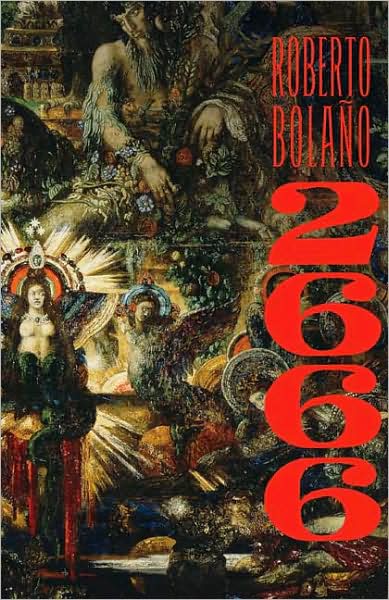
The N.Y. Daily News lists Favorite Latino Books of 2008 selected by Latino and Latin American writers. Roberto Bolaño and his epic 2666 are mentioned several times. The writers include Dagoberto Gilb (who selected Teeth by Aracelis Girmay; Orange County by Gustavo Arellano; and Half of the World in Light, New and Selected Poems by Juan Felipe Herrera); Daniel Alarcón (2666); Ilan Stavans (2666); and Alisa Valdés-Rodríguez (Mexican Enough: My Life Between the Borderlines by Stephanie Elizondo Griest). The complete list is here. Gilb is quoted as observing that the year 2008 will be remembered for the "Bolaño 2666 rage."

Later.

Thursday, December 11, 2008

Oscar Mireles, Walking the Walk

OSCAR MIRELES


OSCAR WITH OMEGA STUDENTS

THE REASON FOR ALL THE HARD WORK


About a month ago, I was lucky enough to be in Madison, WI....Yes, gente, there ARE Chicanos there! One of the great things resulting from the visit was meeting someone with whom I share a common connection---the love of poetry and grassroots organizing. Let me introduce you to Oscar Mireles, poet, educator, community leader, family man, and father. I wanted to share some of his educational accomplishments as well as literary chops to remind us all of what to do.

Mireles has been Principal/Executive Director of Omega School, an alternative school in Madison, Wisconsin for over 11 years, and grassroots educational programs for a total of over 30 years. While at the helm at Omega School, he's assisted over 1500 young adults prepare for and complete their GED Diploma in the past decade. He is the father of four children, Diego Jesus, Sergio Andres, Lorena Pilar and Javier Oscar.


Oscar Mireles started the Wisconsin Conference on Alternative Education which brought together alternative school administrators , students and teachers to discuss future goals and successful models. He was the first Latino parent to become PTO President of Gompers Elementary where he served for two years. His Wisconsin organizing has also included UW-Milwaukee and got the Community Media project using video cameras as tools for inner city youth to document their experiences. He also worked with Alverno College to present Hip Hop Poetry at the center bring Nuyorican Poets to Milwaukee.

Mireles was also the Associate Executive Director of Centro de la Comunidad Unida/United Community Center where he helped establish the UCC Alternative Middle School (30 students) in conjunction with the Milwaukee Public Schools. He developed linkages as an affiliate with the National Council of La Raza’s (NCLR) Educational Programs and piloted several family literacy and after-school enrichment programs in Milwaukee.

In short, Oscar has played a pivotal role in quality education for Latinos, for youth at risk and walks the walk of paying it forward and leaving a legacy. And if that weren't enough he's a poet and editor. Oscar and I share a common inspirational link--Martin Espada. But he's got some real time under his belt. He's been writing poetry for the past 25 years. 

Oscar edited two anthologies: 'I didn't know there were Latinos in Wisconsin: 20 Hispanic Poets' (Focus Communications,1989) and 'I didn't know there were Latinos in Wisconsin: 30 Hispanic Writers' (Focus Communications,1999) . He produced a chapbook titled 'Second Generation' (Focus Communications,1985).

He's had over 50 poems published in anthologies and magazines including Gathering Place of the Waters: 30 Milwaukee Poets (1983) Revista Chicano-Riquena 'Hispanic Literature in Wisconsin' (1985), Visions and Voices against Apartheid (1987) Viatzlan, A journal of Arts and Letters (1992), Dreams and Secrets, Woodland Pattern (1998), Alt. Literature (2003), Telling Tongues: A Bilingual Anthology (2007).


Oscar's work has garnered him grants for his writing activities from the Wisconsin Arts Board, Dane County Cultural Affairs Commission, Wisconsin Humanities Committee, Wisconsin 150th Sesquiscentennial Commission, Madison Civic Center Foundation and Wisconsin Center for the Book. He received a fellowship to spend a month at the Vermont Studio Center, an artist colony.


Mireles has done numerous readings at the following institutions: Detroit Institute of Arts, Detroit, MI., Randolph Street Gallery, Chicago, Il., The Loft, Minneapolis, MN., Chicago Cultural Center, La Raza Bookstore, Sacramento, CA., Wisconsin Book Festival, Madison, WI., National Association for Chicano Studies, Ypsilanti, MI., University of California, Riverside, Riverside CA., Canterbury Bookstore, Madison, WI and Woodland Pattern, Milwaukee, WI. He's currently an artist member of the Minds Eye Radio collective, which produces a monthly radio show of spoken word poetry on WORT(Independent Community radio).

In 2009, Oscar Mireles will once again put together an anthology that brings to life the unique Latino voices of Wisconsin. “I didn’t know there were Latinos in Wisconsin: Three Decades of Writing” will capture the varying Midwestern voices of some 40 to 50 Latino poets and short fiction writers.

Featuring accomplished writers and new writers alike, this new anthology follows in the footsteps of its predecessors; “I didn’t know there were Latinos in Wisconsin: 20 Hispanic Poets,” published in 1989, and “I didn’t know there were Latinos in Wisconsin: 30 Hispanic Writers,” published in 1999.“It is a proclamation that we are here; that we do have a voice but it’s many voices,” Mireles said. “Those voices need to be heard.”While Mireles is still on the hunt for contributors to his newest anthology, he does know that the 2009 anthology will feature notables such as Martin Espada and Daisy Cubias.

To say nothing of his own inimitable work:


'Love Mexican Style' is not a reality television show

Mexico City is far more romantic
then I imagined

Not that I ever think
of any city as being romantic
but there are more people
walking hand-in-hand

or embracing
in front of the bus stop
in the mid-afternoon sun

four cross hugging arms
propped next to skinny tress
to provide
a little shade and privacy

In the open air
the couple were stealing kisses before
the next bus arrives

maybe all the romance
is here in Mexico City
because it gets a little chilly
at night
once the sun
disappears
or that everyone seems
to be built about the same size
from the earth

or maybe reason is
the older men, who are smiling
all seem to have “pollitas”,
women twenty years younger
strapped to their side

or maybe the Latino lover
in them finally starts to takes over

I have even caught myself
holding my wife’s hand
a little tighter then usual

and wanting to kiss her
harder then a peck
smack on the lips

or maybe
the natural rhythms
in me
of old Mexico
have been awakened

Oscar Mireles
Executive Director
835 W. Badger Rd.
Madison, WI 53713
Phone (608) 256-4650
Fax (608) 256-4651
Cell (608) 577-5737
oscarmireles@yahoo.com

Lisa Alvarado

Wednesday, December 10, 2008

Interview with Author/Illustrator Xavier Garza

Rene Colato Laínez


Congratulations for your new bilingual book CHARRO CLAUD AND THE TEJAS KID. This is a great Christmas story. Can you tell us about it?

Charro CLaus and the Tejas Kid is basically the story of Santa's Mexican cousin. He is helped by his nephew Vincent to deliver presents to each and every child that lives on both sides of the US/Mexico border.

Where did you get the idea for Charro Claus?

I didn’t even know that Santa Claus had a Mexican cousin till the day when I was with my father at the grocery store in my hometown of Rio Grande City. Children could have their picture taken with Santa Claus, so I stood in line with the rest of the kids. As I got closer to Santa, however, I noticed right away that something wasn’t right. Why was Santa Claus sitting in a horse-drawn wagon instead of his magical sleigh? He was also dressed in a very strange manner, even stranger than his usual red-and-white outfit. Even though he was wearing his traditional red jacket and trousers, those trousers were tucked neatly into black cowboy boots attached to a pair of oversized silver spurs. A grand serape decorated in the colors of the Mexican flag was draped across his left shoulder, and an oversized mariachi hat rested on his head. He certainly didn’t look like any Santa Claus that I had ever seen. I grabbed my father’s hand and told him in no uncertain terms that this man was an imposter! My father turned to me and smiled. It was then that he uttered the words that served as the inspiration for this book.

“No mijo, it’s true. This isn’t Santa Claus,” he answered me, “but he is his Mexican cousin.”

“Santa Claus has a Mexican cousin?” I asked. How could this be? How was it possible? Who was this Mexican Santa Claus? Where did he come from? Did he deliver presents to all the children of the world too? My father left all these questions unanswered. Earlier works by such people as Lalo Guerrero, and Richard Reyes also served as inspirations for this book.

As an author illustrator, what comes first the images or the text?

It varies, most of the time it is the text, but not always. Sometimes I come up with sketches for stories, and build a tale around them.

How was the process from manuscript to publication for CHARRO CLAUS AND THE TEJAS KID?

The process took two years. I spent about 10 moths developing the story together with Lee Byrd at Cinco Puntos Press. After that, it took about 7 months to get all the illustrations put together. After that I handed everything together and their graphic designer went to work. 7 months later the book was in my hands.


You use vibrant colors in your art, what is your technique? Do you work on canvas?

I work with acrylic on paper. I especially like working on two page spreads. Some of the imagery is lost when the text is added, but I fell its worth it due to the dramatic effect that it creates. I know that children loves bright, vibrant art, so I use those type of colors in all my work. Comic books were also a big influence on my art.

Growing up in the Texas/ Mexican border, you must have great memories. Are your memories reflected in your books?

All my books are based on childhood memories. Creepy Creatures and other Cucuys is based on stories that I grew up hearing from my grandparents. Lucha Libre is based on my fond memories of such greats as El Santo, Blue Demon and Mil Mascaras. Juan and the Chupacabras is based on some of the trouble my cousin Bobby and I would get into as kids. Charro Claus is based on a combining of memories from my childhood.

What is your favorite Christmas book? Christmas song?

My favorite book is the Polar Express. As far as songs they would have to be Pancho Claus by Lalo Guerrero and also the song Feliz Navidad.

What are you working now? What are the titles of your future books?

I have a new book being put out by Arte Publico that I wrote and illustrated. The book is titled Zulema and the Witch Owl, and it is the story of Zulema Ortiz, a girl that is so mean she gets kicked out of the girlscouts for throwing rocks at anybody that wouldn't buy her cookies. Her grandmother warns her that she had best change her ways, or The Witch Owl that will come and steal her away. I am also working on a sequel to my Cucuys book, plus a new picture book titled La Llorona versus the Donkey Lady.

Thanks Xavier, what are your final words for our readers at La Bloga?


I would like to tell your readers to take their stories and write them down. Each and every person has at minimum one truly great story, but these stories are lost because we don't put them down on paper. For younger kids interested in being authors I tell them to write, write, write, and read, read, read. The more you read and write, the better you get!


Born and raised in the Rio Grande Valley, author and luche libre aficionado Xavier Garza is a prolific author, artist, and storyteller whose work focuses primarily on his experiences growing up in the small border town of Rio Grande City. Garza has exhibited his art and performed his stories in venues throughout Texas, Arizona and the state of Washington. Garza lives in San Antonio, Texas with his wife Irma and their young son Vincent.

He published his first book, Creepy Creatures and Other Cucuys (Arte Publico Press), in 2004. Lucha Libre: The Man in the Silver Mask was released in Spring 2005 and quickly became a hit among children and lucha libre fans. Lucha Libre won an Honor Book, Américas Award and a STARRED REVIEW from Críticas Magazine.

Tuesday, December 09, 2008

Review: Chicano / Latino Literary Prize Anthology

Michael Sedano

The Chicano/ Latino Literary Prize. An Anthology of Prize-Winning Fiction, Poetry, and Drama. Stefanie Fetta, Ed. Houston: Arte Publico, 2008.
ISBN: 1558855114

I have this vision of massed poets, short fiction writers, novelists, dramatists relentlessly circling University of California Irvine, brandishing signs like "UCI Gives So Much Too Little!" or "¡Escasez Vale Madre!" or "Does UCI Love Trees More Than It Hates Writers?"

OK, so it's a wild fantasy, but it is borne of frustration that so superb a collection must limit its pages to the paucity of 288. That's the page count divided among the 48 winners between 1974 to 1999 included in editor Stephanie Fetta's coverage of UCI's important literary award.

How daunting a task Fetta has undertaken. Impossibly daunting, in fact. Since inaugurating the prize, UCI has entertained the artistry of hundreds of writers, recognizing some as first, second, third, or honorable mention achievement.

How then to select a representative lot for presentation in such a collection?

To her immense credit, Stephanie Fetta doesn't choose an "easy" way to resolve the problem--choose only the Firsts. Indeed, the reader presents the range of prize winners, such as Luis J. Rodriguez' Second Place short story, "Sometimes You Dance With a Watermelon," and Alfred Arteaga's Honorable Mention poetry, "Cantos". Some years are represented by a single winner, other years Fetta presents a range of prizes. All in all, a highly rewarding endeavor, both in the collecting and the reading.

Frustration is built into such an endeavor, but reward at the same time. Excerpts of longer work raises expectations for characters and plots, only to be suspended in mid-act. Worse, many of these writers have not been independently published, so what you see is what you get and that's all you get. Reward comes from having at one's fingertips such a far-ranging history of Chicana Chicano Latina Latino writing. The synoptic perspective has frustrations of its own, along the lines of "whatever became of..." But there are rewards again, in recognizing names from the 70s or 80s who have a presence today in our literary landscape. For example Juan Felipe Herrera wins a Second in poetry in 1978-79, then a Second again in 1984-85 for Short Story, is recognized as one of the 100 notables by the NYTimes in 2008. 

Reading this collection provides a wonderful adventure in "yesterday, today, tomorrow" rumination. Marvel at the progress of writers like Herrera from the 70s, and look at the writers winning more recently--the collection stops at 1999--and wonder, where will these writers (and literatura chicana) be in 2010? 2020? 

The Chicano/ Latino Literary Prize. An Anthology of Prize-Winning Fiction, Poetry, and Drama makes an excellent companion collection to The floating borderlands : twenty-five years of U.S. Hispanic literature, editor Laura Flores' stellar collection of work published in Revista Chicana-Riqueña and its various identities, and Romano and Rios' El Espejo: The Mirror, plus Romano's El Espejo. In these anthologies lies the "I know it when I see it" answer to that most controversial of questions, "What is Chicana Chicano Literature?"

Celebrating Carlos Fuentes

La Bloga friend Gregg Barrios passes some good words about the 80-year-old Mexican writer, Carlos Fuentes. Gregg writes in The San Antonio Express-News:

Carlos Fuentes, the most prominent living Mexican writer, recently returned to his native Mexico as a conquering literary hero.

The festive occasion was part of a national celebration honoring Fuentes on his 80th birthday and the 50th anniversary of his groundbreaking first novel “Where the Air is Clear.”

Today, Fuentes is the author of more than 20 novels, including “The Old Gringo” (his only best-seller in the United States), “My Years with Laura Diaz” and “The Death of Artemio Cruz” (my personal favorite).

Mexican President Felipe Calderón inaugurated the monthlong series of events on the author's birth date (Nov. 11), declaring a National Read Carlos Fuentes Day. “The best way to celebrate Fuentes is by reading his work,” Calderón said.

Becoming an octogenarian can be daunting, but for Don Carlos, life apparently begins at 80.


Read the entire piece
here.

La Bloga welcomes  your comments on this an all columns. La Bloga invites you to be our guest by clicking here. When you have an extended comment or response to a La Bloga column, a book or arts review, or a writer's almanac piece, you're invited to share it.

Monday, December 08, 2008

El Paso native's essays describe his struggle for understanding

Renaming the Earth: Personal Essays (University of Arizona Press, hardcover $34.95; paperback $17.95) by Ray Gonzalez

Book review by Daniel Olivas

In Ray Gonzalez's Renaming the Earth: Personal Essays (University of Arizona Press, hardcover $34.95; paperback $17.95), we are treated to the award-winning poet's exploration of his development as a writer. The essays are as lyrical as they are hard-headed.

For example, in "A Break with the Past," Gonzalez explores his relationship with the source of much of his writing:

"I drive around aimlessly in my hometown because my hometown is gone. El Paso is no longer the city I grew up in -- this statement is one of the most common and initial perceptions anyone who returns home usually has, whether is it expressed to others or left in the mind of the native who has been gone a long time."

It is his duty, as a writer, to capture his hometown in words, but he struggles mightily: "If I keep writing about the same things, over and over, what have I failed to say? What am I unable to approach about El Paso? What am I unable to escape?" Gonzalez cannot answer his own questions, but accepts this truth:

"My hometown is gone, and I wander through a different El Paso, loving it as I have never loved it before and wishing the ghosts of history could re-enact every lost detail I need for my writing."

At other times, Gonzalez presents the unvarnished reality of the business of poetry, or "po-bizz," as he dubs it. In "Get on the Poetry Bus," he recounts such Sisyphean attempts to promote poetry as doing public readings (where only one person comes to listen), writing innumerable blurbs for the backs of other poets' books, or slogging through slush piles of poems submitted to a literary journal or poetry contests.

It is only when he goes on retreat that he can get back to his calling:

"For five days in the summer, I am a writer again," he says. "Not only do I produce new poems and dozens of pages of prose, but I immerse myself in a deep isolation that during the week is sometimes hard to take."

In the title essay, Gonzalez scrutinizes his role as a person who uses words to "rename" his surroundings: "As a young man, I made the mistake of not renaming familiar territory in order to give it new life that would keep me going as a son of the desert and as a writer." In this way, he encapsulates the writer's ultimate goal and unremitting dilemma.

Indeed, Gonzalez conflates literary expression with his very identity as a "son of the desert."

In "How to Treat People Who Have Harmed You," Gonzalez sometimes sounds like an old-timer who cannot understand why young folks fail to appreciate his rock idols -- Jimi Hendrix, the Who, Jefferson Airplane, Buffalo Springfield. Yet in the same piece, Gonzalez revisits his difficult relationship with his father, who never seemed to "get" his son's literary talent and success. It takes a chance discussion with his uncle Joe to learn that his father is, in fact, proud of Gonzalez.

The eight essays that make up Renaming the Earth ebb and flow, touching on topics as diverse as childhood embarrassments, El Paso history, discrimination, desert heat, Minnesota winters, war and the immigration debate.

In all, Gonzalez brilliantly and with great passion renames the Earth not only for his benefit, but for ours, as well.

[This review first appeared in the El Paso Times]

◙ PASADENA ANNOUNCES ITS ONE CITY, ONE STORY PICK:

Pasadena’s community-wide reading celebration is designed to broaden and deepen an appreciation of reading and literature. The project is also intended to engage the community in dialogue and seeks to bring the Pasadena community together by promoting tolerance and understanding about differing points of view.

The book selection for Pasadena’s seventh One City, One Story community reading celebration is Luis Alberto Urrea’s novel
The Hummingbird’s Daughter.

The novel tells the story of Teresita, a distant relative of Urrea, who comes to terms with her destiny with the power of faith. It is the tale of a father discovering what true love is and a daughter recognizing that sometimes true love requires t
rue sacrifice. It is full of cowboys and outlaws, Indian warriors, cantina beauties, silly men who drink too much and desert women who in their dreams travel to the seashore. Urrea completed two decades of research and writing for this fictional history.

Urrea was a 2005 Pulitzer Prize finalist for nonfiction and is member of the Latino Literature Hall of Fame. He is a prolific and acclaimed writer who uses his dual-culture life experiences to explore themes of love, loss and triumph. The critically acclaimed author of 11 books, Urrea is an award-winning poet and essayist who has published extensively in all the major genres.


For more information, visit here. My interview with Urrea that first appeared on The Elegant Variation in 2005 has been reprinted here in honor of this occasion.


◙ PERFORMING “LA VIRGEN DE GUADALUPE, DIOS INANTZIN”

Writing for the Los Angeles Times, Reed Johnson tells us of the Latino Theatre Company’s yearly production of “La Virgen de Guadalupe, Dios Inantzin”:

The woman playing the world's most famous woman was fondly remembering Christmases past in Los Angeles. When she was a child, Suzanna Guzmán recalled, the windows of Bullock's and other now-defunct department stores dripped with seasonal decor, and the downtown atmosphere was "magical."

"It was like our New York," she said.

That's one reason why Guzmán, an East L.A. native and Los Angeles Opera mezzo-soprano, this year is participating again in what has become a new local holiday tradition, aimed primarily at the region's huge immigrant Latino population.

Last Thursday night, she and a cast and technical crew of 150 mostly amateur performers, plus a handful of professional actors, musicians and designers, gathered at the Cathedral of Our Lady of the Angels for the seventh straight year's enactment of "La Virgen de Guadalupe, Dios Inantzin," a pageant with music produced by the L.A.-based Latino Theatre Company. An audience estimated at 2,500 attended the production.

Directed by UCLA drama professor and Latino Theatre Company Artistic Director Jose Luis Valenzuela, and performed in Spanish and the Aztec language of Nahuatl, the folkloric work dramatizes the story of how in 1531 the Virgin of Guadalupe (played by Guzmán) appeared four times to the Aztec Indian peasant Juan Diego, a Roman Catholic convert, in the hills above Mexico City.

For more information on performances and tickets, go to Latino Theater. To read Johnson's entire article, go here. [Photo credit: Ken Hively, Los Angeles Times.]

◙ That’s all for this week. So, in the meantime, enjoy the intervening posts from mis compadres y comadres here on La Bloga. And remember: ¡Lea un libro!