Monday, February 07, 2011

Spotlight on Richard Yañez’s new novel, “Cross Over Water”

Richard Yañez, a native of El Paso, Texas, is the author of the story collection, El Paso del Norte: Stories on the Border (University of Nevada Press, 2003), which was a finalist for the Texas Institute of Letters first book award. His work is anthologized in Our Working Lives: Short Stories of People and Work, U.S. Latino Literature Today, and Hecho en Tejas: An Anthology of Texas-Mexican Literature. He facilitates diverse writing workshops for community organizations and public schools through the PaPaGaYo Literary Center. He is a founding member of Con Tinta, a coalition of Chicano/Latino writer-activists. Having received a Master's of Fine Arts from Arizona State University, he earned teaching fellowships at Colorado College, the Center for Women's InterCultural Leadership at Saint Mary's College (Indiana), and served as a Visiting Writer at New Mexico State University. He is currently an associate professor at El Paso Community College. He is married to the Chicana poet, Carolina Monsivais, and they have a son. They live in El Chuco, Texas.

Richard’s new novel, Cross Over Water (University of Nevada Press), which was released on February 1st, centers on Raul Luis "Ruly" Cruz who is a young Mexican American who lives in El Paso. As the publisher explains: “As [Ruly] grows from awkward adolescent to manhood, he negotiates the precarious borders of family, tradition, and identity trying to find his own place in the Chicano community and in the larger world. This is an engaging and moving story of growing up in a borderland that is not only geographical but cultural and psychological as well.”

Cross Over Water has garnered praise from award-winning authors:

“The writing is excellent. Very sly story-telling, assured, calm, and enveloping.” --Luis Alberto Urrea, author of The Hummingbird s Daughter

“An intimate portrait of a young boy's coming of age in El Paso, rich with details of the body and the landscape of the border. The rollercoaster in Ascarate Park, the murals of El Segundo Barrio, the ASARCO smokestacks, Chicos Tacos, the Cristo Rey monument. I felt transported back to the games and silences of my own childhood in that place-in-between.” --Alicia Gaspar de Alba, author of Desert Blood: The Juarez Murders

“The novel addresses a great subject, the life of a teenaged boy living in the fascinating and underexplored border area near El Paso and Juarez. The narrator, Raul, has a fertile nerdy mind and often a unique and interesting literary voice. The novel is a wonderful and funny look at the border and one boy's life there.” --Susan Straight, author of Highwire Moon

Sunday, February 06, 2011

The Calling of Colombian Ecoaldeas

tatiana de la tierra


The mountain called and I came, along with just over a hundred Pachamama-loving souls. We made our way through the Colombian countryside into the mountains in the Vereda Palo Grande Alto in Salento-Quindío for “El llamado de la montaña,” the fifth annual ecovillage gathering. Ecoaldeas, ecologically-based alternative communities, caught my imagination from the moment I’d heard of them.

It wasn’t just the solar kitchens, waterless bathrooms, houses made of recycled bottles, and organic gardens that rang in my ears. I’m all for that—it’s high time to implement ecological concepts worldwide. It was also the people, many of them educated city dwellers like myself, who would do such a thing.

To live off the land, that’s a fantasy that’s never left me. I remember being transfixed to the television set when Phil Donahue interviewed hippies who lived on The Farm in Tennessee in the seventies. I got a transcript of the show and a copy of The Farm Vegetarian Cookbook (which explains why I cook up some mean tofu) but I couldn’t figure out how to escape to the commune from Florida while just 14-years old. Later on, as a lesbian in the eighties, my long-term goal was to retreat into nature with a bunch of Amazon women so we could frolic together in our female-centered goddess-worshipping paradise.

So it’s just natural that I’d fall for Colombian ecoaldeas, and I aimed to check them out at the gathering. Colombia is overflowing with my kind of spirituality—earth-based rituals, chanting, plant medicine, fire circles—and I knew that some ecoaldeas incorporate spiritual practices into their agenda.

My curiosity factor was high, but first, I had to deal with my huge heavy suitcase and other excess bags of stuff I considered necessary for five days of roughing it. I traveled in a Jeep with friends from Cali, but, due to heavy rains, we had to leave the car parked and continue 45 minutes on foot with all our belongings. Let me rephrase that and say that my heavy bags made it down the mountain thanks to my friends’ community-conscious ecoaldea spirit.

Spirit. You gotta have it when you’re out in the mountains and it rains just about every day, making the ground sticky, slippery and sludgy. When you walk in the mud, every step is a danger and a miracle. In contrast to my brassy stomping on city sidewalks, I found myself waddling, hesitating, measuring every step, my eyes stuck to the floor, trying to move forward without careening into mother earth. And everything involved walking. Ecological bathrooms and showers were downhill. Workshops were up in one of the tepees, in the centrally-located Colibrí (hummingbird) tarp, or way down the mountain in the Abalgamalüe ceremonial maloca. “Servicio amoroso,” the kindly-worded obligatory community chores, took place in the kitchen, uphill with the goats, down in the vegetable gardens, or all over the place if you were on cleaning crew. (Hmmmm. Let’s just say I did my duty in the kitchen, even happily volunteering extra shifts there, but slouched out on the goats.)

Caught up in my personal drama of muddy clothes, wet feet, shivering cold, and not having a dry space to sleep due to a bad call on my part, I almost lost sight of my vision. I wanted to split, go off to seek flat land and dry shelter. It was a little girl full of light who smiled huge when we crossed paths that brought me back. And the people who blew up my air mattress with pure lung power the night I was freezing and losing it. And the healers who let me spend the night in the healing tepee and then did Reiki, acupuncture, moxa and chanting with me in the morning. The wonder of watching my fingers turn purple while grating warm beets with my bare hands. Eating hot vegetarian meals. Chatting with friends. Chanting. Listening. Being.

I stayed.

The gathering took place at Ecoaldea Anthakarana, which was founded in 2007 by the Rivera Susa family on 11 acres in Colombia’s prized coffee-growing region. A family of performance artists, they sang and danced in costume at a jubilant grand opening, ceremoniously lighting the tall multi-colored candle that would stay on continuously throughout the 5-day gathering. We danced around the altar that first night, digging our feet into the raw earth.

That was just the beginning of dancing, singing and circling, which happened every day at different moments. The conch shell announced the start of meals, events and workshops. Among the offerings were energetic mornings with yoga, chakra breathing, and dancing with the wind. Ecoaldea members did presentations on ritual, permaculture, children’s education, and the dreaming and designing involved in creating eco-families and villages. Workshops included techniques for raising one’s vibration, education during times of transition, dancing to the five elements, mandala construction, and a sacred creative writing workshop that I concocted. We did Dances of Universal Peace one night and a Magical Night the next, with magic tricks, storytelling, poetry, singing and dancing.

A cultural highlight was the Rivera Susa family’s performance, “El llamado del maíz.” Written by Deyanira Susa Monroy, the play is about the history of corn in the Americas. It was performed outside in the rain around huge colorful mandalas representing different varieties of corn in ritual theatre form, with actors alternately wearing robes, masks and stilts, echoing lines like “Corn is the song of the birds, the flight of dreams whispering in the countryside” (El maíz es el canto de los pájaros, el vuelo de los sueños que susurra en los campos). I had a feeling that I was watching something from another time and place.

Ecoaldeas are part of the movement of going back, back to nature, in order to go forward. As Bahamar from Anthakarana said, “An ecoaldea exists from a dream.”

It’s a big dream and, as I learned, the dream is, at this point, bigger than the reality. While there are over a dozen officially registered ecoaldeas in Colombia, there are loads more in the making, all over the country. I’d heard the names of many eco-villages and was surprised to discover that some of them are mere philosophical constructs. In some cases, the land is already purchased but people are not living there yet. In others, there are groups of people with shared vision looking for land to acquire. Or the ecoaldea is a handful of people living out in the country, hoping to lure others to join them. Jumping off the cliff without a parachute into ecologically-balanced communal living with mother nature and letting go of economic stability and social commitments isn’t for everyone.

But it is for some, thankfully. And yes, there are ecovillages in physical existence in Colombia and elsewhere, of many sizes and flavors. Ecoaldeas and alternative communities represented at the Fifth Annual Call of the Mountain include Ecocirco, Corasoma, Asociación Semilla del Sol, Aldeafeliz, Atlántida, Arcadia, Pachamama, Anthakarana, Asociación Juan María Céspedes, Change the World, Echasu Colombia 2012, Proyecto Ecoaldea Terranova, Transitional Minds, Shambala, Velatropa and Villamaga. As evidence that Colombia’s ecovillages are part of an international movement, participants came from all over Colombia as well as from Chile, Argentina, Denmark, France, Germany, New Zealand, Norway, Finland and the U.S.


In the days that I spent being with and observing ecoaldeanos I tried to grab a hold of what it means to really do that teenage and lesbian fantasy thing of living off the land. To me, ecoaldeanos are resourceful, free-thinking, practical, skilled, creative, kind, community-minded, hard-working, family-focused, spiritually-conscious people with a lot of gumption. They build houses with their own hands, grow their own food, respect the earth, do theatre, circus acts, ritual, and sing and dance a lot.

I’m not sure I have what it takes to do all that hard work, but I’m pretty good at singing and dancing and jumping off cliffs and seeing what happens. Now I just need a bunch of Amazons to do it with me.

Videos of some Colombian ecoaldeas produced by Transitional Minds are available on youtube.

Anthakarana: http://www.youtube.com/watch?v=vPZJk5T9-10

Pachamama: http://www.youtube.com/watch?v=qs5ioLvt8Lg

Atlántida: http://www.youtube.com/watch?v=fNr6-_qC3bc

Aldeanfeliz: http://www.youtube.com/watch?v=oHQyCnD09p0

Saturday, February 05, 2011

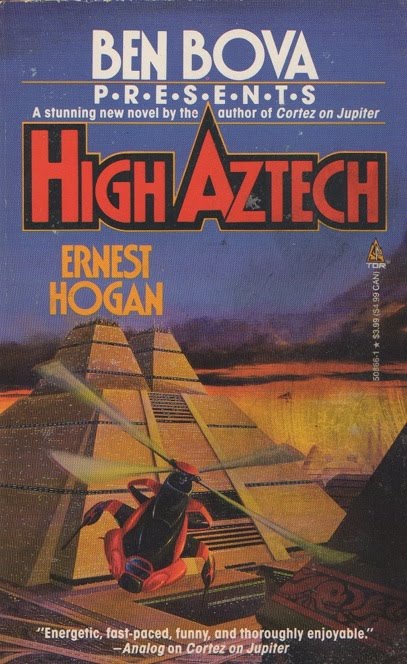
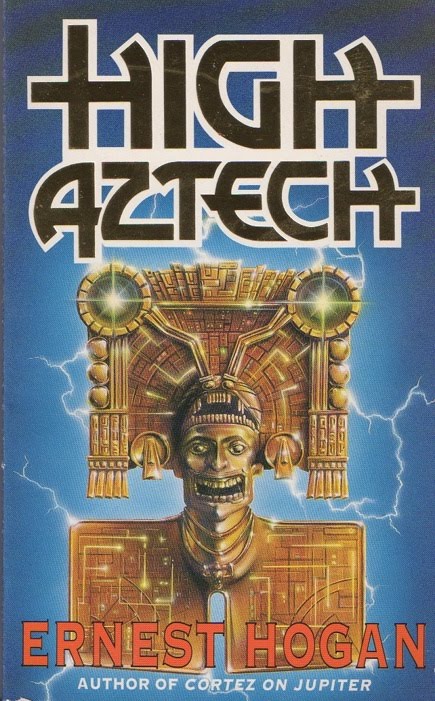
Chicanonautica: Prophesy, High Aztech, and Nerve Jelly

Ay, ay, ay, ay, ay! Would you look at what’s going on in the world? Upheaval in the Mideast, tensions at the Border next door, mass shootings, riots . . . Reminds me of my novel High Aztech:


Just as we turned the corner down a street where the crowd thinned, the whine of the helicopter’s guns spitting out nerve jelly rounds cut through everything. Gelatin shells burst, splattering what looked like green blood that soon looked like it was oozing out of everything: people, the pavement, buildings, cars. Soon all the people who were hit by the nerve jelly were twitching, falling down and going into convulsions.


A barefoot beggarwoman foamed at the mouth as her baby cried beside her.


Patioynene pulled me through the weed-jungle in the form of a boarded up huehue American Dream-style tract home. When we came to the rotting gate, I kicked it down without thinking. We hid in the patio while nerve jelly splashed into the drained swimming pool, threatening to fill it.


I don’t try to predict the future when I write science fiction -- still, people keep telling me that the world is getting to be like my stories. I’ve always been more interested in science fiction as a confrontation with changing reality rather than escapism. And as a Chicano, I’m plugged into cultural influences that most science fiction writers don’t have access to.


Looking back, I shouldn’t have been able to publish High Aztech. It was another case of me stumbling into the right place at the right time so I could get away with something outrageous. Ben Bova trusted me, and let me go wild. Others at Tor did their best to sabotage the book. Despite it all, it has become a cult novel.


As a child of the Sixties, I’m obsessed with riots. A riot can happen, and suddenly who you are and your place in society can change. I watch them like a spectator sport. Like my character Victor Theremin, I scan the Web for video of riots around the world. Lately, there’ve been too many to keep up with. I’m experiencing overload.


I find myself looking for more civilized amusements -- like bullfighting.


High Aztech would be selling like hotcakes if it was in print. But it is not.


I believe that one reason Tor quashed it and tossed me out is that High Aztech wasn't the sort of corporate-controlled genre fiction that publishers and the BigBox chain bookstores had decided was the fast track to big bucks. Lately, that stuff is just sitting there gathering dust in the BigBoxes. Publishers and bookstore chains are imploding. New technology is bringing about catastrophic change. A Sputnik Moment, if you will.


I should really get to work and make High Aztech available as an ebook.


Or as I wrote in High Aztech:


The first two Kalis fired nerve jelly rounds at the crowd. There was some panic and fighting, but the party went on.


I wonder how many revolutions we can have on this planet at the same time?


Ernest Hogan is the author of High Aztech and is solely responsible for its content.

Friday, February 04, 2011

From Painted Cave to Panama

by Melinda Palacio


Melinda admires the view from Painted Cave

I’m taking a brief hiatus from La Bloga to visit relatives in Panama, explore my roots, ride a zipline, and go white water rafting, something I’ve always wanted to do. My earliest memories about the idea of Panama were of sheer terror and not fitting in. My Panamanian relatives made sly comments about how my Spanish was way too Mexican, se le sale todo lo Mexicano, my father’s cousin would say. Maybe that’s because my Mexican grandmother, Victoria, raised me and I spoke English and Mexican. Victoria would also threaten me and say that if my father or any of his relatives took me to Panama, she would never see me again, a holy terror for a child of five. Maybe, that’s why I barely made the phone call a few days ago to inform my grandmother that I would finally be visiting Panama. I emphasized the words, visiting and traveling.

My father’s mother, Grandma Etts, would always speak longingly of Panama and she never understood why I never went. In college, I backpacked all over the world, to Europe, the Greek Islands, Thailand, but never set foot beyond Mexico, let alone the small land bridge called Panama. My poetry chapbook, Folsom Lockdown, Kulupi Press 2010, expresses more of this disconnect.

Now that Grandma Etts is dead, as are so many of my relatives who have passed on prematurely, including my mother who died at age 44, and my father’s cousin who didn’t live to see his 66th birthday, I’ve decided to make the big, scary trip to Panama. I guess last minute decisions are best because you don’t have time to back out or think about the costs. I bowed out of going to AWP this week because of financial issues. I hope someone invites me on a panel next year.

These days it seems harder to find an excuse to leave Santa Barbara, one of the most beautiful places on earth. I love that I can spend an entire day speaking Spanish and running errands without having to get into my car. I can see the ocean and Channel Islands from my house. Trader Joe’s is down the hill, to the right of Mayo’s Carniceria and Daniel’s Mexican bakery where they make flawless tamales, champurrado, and chocolate conchas.

A few weeks ago, I visited my friends Katey and Larry in Painted Cave. The community of Painted Cave is named after the Chumash rock paintings above Santa Barbara. The day demanded attention. The red sunset made the full moon seem unusually close. Katey told me to stand at Larry’s pulpit for the photo above. I saved my poetry and preaching for another day and was silent enough to hear the symphony of frogs. When the Chumash first came, they landed on Santa Rosa Island, one legend says. As I looked out onto the islands, Santa Barbara below, Goleta to the left, I wondered how Painted Cave compares to Panama. I find out on Monday.

Y Volver, Volver. Until I return, mark your calendars for March 13 and 26. I have the privilege of reading at Beyond Baroque twice in March. March 13, Sunday at 4pm, I will join the Hitched reading series with Alicia Partnoy, Sholeh Wolpe, Ramon Garcia, and Bilal Shaw. Hosted by Xochitl-Julisa Bermejo. March 26, I read with contributors of New Poets of the American West, Saturday at 7:30 pm at Beyond Baroque, 681 Venice Blvd, Venice, CA.

Thursday, February 03, 2011

28th Annual Miami International Film Festival


From March 4 through 13, 2011

Launching a new chapter with a new executive director, the official lineup of the Miami International Film Festival (MIFF), produced and presented by Miami Dade College (MDC), was already announced replete with Red Carpet Gusman Galas, Premieres, Competition Categories and Awards, REEL Education Seminars and other special presentations that make up the Festival's showcase of more than 100 films from 40 countries during the 10-day event, which runs March 4-13, 2011.

The Festival launches on Friday, March 4 with the first Opening Night animated feature in its 28-year history: Chico & Rita by Fernando Trueba and Barcelona designer Javier Mariscal, a whirlwind, jazz-and-blues love story between a Cuban band leader and sultry chanteuse that spans from Havana to Hollywood and features the sounds of Dizzy Gillespie, Nat King Cole and Bebo Valdes. Trueba previously opened the 14th edition of MIFF, in 2004, with Belle époque. The Festival's Awards Night takes place on Saturday, March 12 before the screening of Incendies by Denis Villeneuve (Polytechnique, Maelstrom), the French Canadian-Arab family drama that is Canada's official submission for the Academy Awards' Best Foreign Language Film race. Among the highlights of Awards Night is the presentation of the VeneMovies Audience Award.

For the 2011 Career Achievement Tribute, on Sunday, March 6, the Festival honors prolific Danish filmmaker Susanne Bier (Brothers, After the Wedding, Things We Lost in the Fire). The Festival will screen her latest portrait of complex and complicated familial relationships, the 2011 Golden Globe Award Best Foreign Film winner, In a Better World, which is Denmark's official submission for the Oscars' Best Foreign Language Film category. Bier is confirmed to attend the Festival.

"Once again, we are extremely pleased to bring the best of cinema from around the world to Miami. Our rich program not only offers many escapes through the art of film, but also some wonderful educational opportunities," said Miami Dade College President Dr. Eduardo J. Padrón.

"Dreams are a key theme of MIFF 2011, starting with our 2011 official image from photographer Stian Roenning," explains Executive Director Jaie Laplante. "The directors of these films are a true 'dream team' of cinematic artists. Their works will bestow a wizardly enchantment on this year's Miami Film Society members and MIFF ticket ."

This year's Festival will feature films directed by, produced by and/or starring: Pernilla August, Lubna Azabal, Erykah Badu, Harry Belafonte, Monica Bellucci, Susanne Bier, Angie Cepeda, Justin Chadwick, Daniel Cockburn, Claudio Cupellini, Marshall Curry, Alex de la Iglesia, Antonio de la Torre, Catherine Deneuve, Gérard Depardieu, Veronica Echegui, Randall Emmett, Alexander Fehling, Fridrik Thor Fridriksson, Liz Garbus, Andy Garcia, Dominik Garcia-Lorido, Alex Gibney, Danny Glover, José María Goenaga, Quim Gutierrez, Patricio Guzman, Naomie Harris, Jill Hennessy, Curtis "50 Cent" Jackson, Steve James, Ken Kesey, Robert Lee King, Diego Lerman, Ray Liotta, Mia Maestro, James Marsh, Natalie Martinez, Carlos Moreno, Wagner Moura, Stanley Nelson, François Ozon, José Padilha, Martha Plimpton, Om Puri, Noomi Rapace, Vanessa Redgrave, Gabino Rodriguez, Andrew Rossi, Carlos Saura, Oliver Schmitz, David Serrano, Tony Servillo, Jody Shapiro, Magaly Solier, Morgan Spurlock, Peter Stormare, David Strathairn, Cesar Troncoso, Fernando Trueba, John Turturro, Mario Van Peebles, Federico Veiroj, Jordi Vilasuso, Denis Villeneuve, Rachel Weisz and Lynn Whitfield.

WORLD and INTERNATIONAL PREMIERES
818 (USA); Magic City Memoirs (USA); Things Fall Apart (USA); and Water and Salt (Agua y sal) (Argentina)

NORTH AMERICAN and U.S. PREMIERES
Amador (Spain); Half of Oscar (La mitad de Oscar) (Spain/Cuba); How to Start Your Own County (Canada); Intimate Grammar (Israel); Jean Gentil (Dominican Republic/Mexico/Germany); Jo For Jonathan (Canada); Little Voices (Pequeñas voces) (Colombia); Marimbas from Hell (Marimbas del infierno) (Guatemala/France/Spain); Mandoo (Iraq); Microphone (Egypt); The Piano in a Factory (China); A Quiet Life (Italy); A Stone's Throw Away (A tiro de piedra) (Mexico); Tilva Rosh (Serbia); and West is West (United Kingdom)

GUSMAN GALAS and RED CARPETS
This year's series of films screening at Miami's historic 1,567-seat Gusman Center for the Performing Arts, the Festival's marquee home for 28 editions, received major program support from Miami's Downtown Development Authority. The lineup includes: Chico & Rita (Spain); Potiche (France); Things Fall Apart (USA); In a Better World (Denmark); Marti, The Eye of the Canary (Marti, El Ojo del Canario) (Cuba); Elite Squad 2: The Enemy Within (Brazil); Young Goethe in Love (Germany); Magic City Memoirs (USA); With or Without Love (Una hora mas en Canarias) (Colombia/Spain); and, Incendies (Canada/France).

An opening night gala party, to be held Friday, March 4 at Miami Dade College's historic Freedom Tower, will feature a tribute to Cuban music. At the mid-point of the Festival, on Wednesday, March 9, the Spanish films in this year's lineup are celebrated with a spectacular event at the Miami Beach Botanical Gardens, the El Coto de Rioja Paella Parade, featuring paella dishes from some of Miami's top restaurateurs. On Awards Night, Saturday, March 12, the Festival will celebrate its award winners in all categories at a wrap-up celebration at the Design District's historic Moore Building.

Ibero-American Competition:
The Festival's signature Ibero-American Competition is unique among U.S. film festivals and serves as a gateway to U.S. audiences for feature films by first-, second- and third-time directors from Spain, Portugal and Latin America seeking distribution and theatrical release. This year's showcase will feature nine (9) films representing Argentina, Colombia, Cuba, Dominican Republic, Guatemala, Mexico, Spain and Uruguay. They will compete for the $20,000 cash John S. and James L. Knight Foundation Ibero-American Competition Award. Screenwriters of the films in this category will also be eligible to compete for the Jordan Alexander Ressler Screenwriting Award (a $5,000 cash prize). Both awards are selected by a Grand Jury.

Highlights of the 2011 Knight Foundation Ibero-American Competition highlights include:
A Stone's Throw Away (A tiro de piedra) (Mexico), by director Sebastian Hiriart and starring Gabino Rodriguez Jean Gentil (Dominican Republic/Mexico/Germany), by directors Laura Amelia Guzman and Israel Cardenas Water and Salt (Agua y sal) (Argentina), by director Alejo Traube and starring Mia Maestro

Many films that eventually join this competition are graduates of the Festival's unique "Encuentros" Program, which brings culturally interesting and commercially viable feature film projects in various stages of development to MIFF's Industry office for round-table discussions in Miami Beach with distributors, international sales agents, financiers and other key industry personnel. Senior Program Consultant for Ibero-American Cinema, Diana Sanchez, returns as Encuentros Director this year.

"This year's Encuentros selection is especially unique as the majority of the projects being presented are in the post-production phase. My hope is to see some of these projects in the MIFF 2012 selection," said Sanchez. "The Encuentros program adds a vibrancy and depth to the main cinema program and allows us to give continued support to Ibero-American filmmakers who view Miami as their point of entry into the U.S. market."

Highlights of the 2011 Encuentros Program include:
Pescador (Ecuador/Colombia), by director Sebastian Cordero; produced by Lisandra Rivera Sweet 15 (USA), by director Anna Margarita Albelo; produced by Jamin O'Brien

"Doc-You-Up" Program and DOX Competition:
A re-invigorated documentary section, with the new name of "Doc-You-Up," has created for MIFF in 2011, will feature a fascinating collection of new works, several by past Academy Award winners and nominees. "The documentaries we encountered this year provoked a series of conflicting emotions," said Laplante. "Although there are documentaries throughout various sections of the Festival, the films in Doc-You-Up engage many senses on a particularly provocative level." Laplante credits Thom Powers, Senior Program Consultant for Documentary Cinema, as being instrumental in the programming of the new section.

The Doc-You-Up section will include a $10,000 cash John S. and James L. Knight Foundation DOX Competition Award, which will be selected by a Grand Jury. Doc-You-Up special events will include the REEL Education Seminar "A Conversation With..." Oscar nominee Morgan Spurlock, who challenged fast-food giant McDonald's in Super Size Me. Spurlock is ready to take on Corporate America's obsession with branding and product placement in The Greatest Movie Ever Sold, which will have its world premiere at the upcoming Sundance Film Festival. The Spurlock seminar will be held Tuesday, March 8 at 6:00 p.m. at the W South Beach. A series of "meet-and-greets" with documentary directors also will be scheduled around town during the Festival.

DOX Competition highlights include:
Magic Trip: Ken Kesey's Search for a Kool Place (USA), by Alex Gibney (Oscar winner for Taxi to the Dark Side) and Alison Ellwood Project Nim (United Kingdom), by James Marsh (Oscar winner for Man on Wire) If a Tree Falls: A Story of the Earth Liberation Front (USA), by Marshall Curry (Oscar nominee for Street Fight) The Interrupters (USA), by Steve James (Oscar nominee for Hoop Dreams)

World Competition:
The Festival's long-running World Competition is a showcase for new films by a mix of up-and-coming and established filmmakers from around the globe. This year's showcase will feature ten (10) films representing Canada, China, Egypt, Germany, Iraq, Israel, Italy, Serbia, Spain and USA. The films will compete for the $20,000 cash John S. and James L. Knight Foundation World Competition Award. A new addition to MIFF programming team this year, Andres Castillo, contributed heavily to this section.

World Competition highlights include:
818 (USA), by director Robert Lee King Amador (Spain), by director Federico Leon de Aranoa and starring Magaly Solier The Piano in a Factory (Gang de Qin) (China), by director Zhang Meng

About the Shorts Competition, "Spider Love IV from Roxy Sunny Rosa's Outer Space":
The Festival's perennial Shorts Competition gets rebranded in honor of the showcase of under-20 minutes films from developing international directors. This year's slate will feature nine (9) films. They will compete for the University of Miami Grand Jury Award for Best Short (a $2,500 cash prize).

The Shorts Competition and Non-Competition lineup includes:
Good Luck (Spain/Denmark), In the Privacy of My Home (En la privacidad de mi hogar) (Puerto Rico/USA), Los Four McNifikos (Spain), Love Patate (France), Rosa (Argentina), Roxy (USA); Spider Fang! (USA), Sunny (Brazil) and Yuri Lennon's Landing on Alpha 46 (Germany/Switzerland). Two shorts, Blokes (Chile) and Maya (Cuba), will screen out of competition.

About Florida Focus and the CinemaSlam Competition:
This section promotes the work of Florida talents, filmmakers and subjects alike. The lineup includes: Making S*** Up, by director Bill Bilowit, gives the movie star treatment to Miami's own conceptual artist, Bert Rodriguez. His eccentric life, battling his personal demons and transforming them into ingenious works of arts, is his masterpiece-in-progress.

Magic City Memoirs, from executive producer Andy Garcia and Miami director Aaron Salgado, is a filmed-in-Miami, coming-of-age drama starring Dominik Garcia-Lorido (City Island), Natalie Martinez (Detroit 1-8-7) and Jordi Vilasuso (The Lost City).

Mooney vs. Fowle, by director James Lipscomb, filmed in 1961, is a candid and searing documentary portrait of a Miami moment in time: That year's Florida state football championship game between historical rivals, Miami High and Edison High, the coaches and their unorthodox methods and the players who lived it. Although produced for television, the film was not aired on local stations. On its 50th anniversary of its completion, MIFF will present the World Premiere and true Florida "From The vault" screening.

The CinemaSlam Competition is a new event at MIFF this year. It is a talent showcase for emerging auteurs to crown the best made-in-Miami short films created by undergraduate and graduate students attending Miami's top film schools. Online voting began December 7 and runs through January 28, 2011. The competition is a partnership between MIFF and the Miami International University of Art & Design. CinemaSlam films will be posted at the website miff.openfilm.com. Winners will be announced at the awards ceremony that is tentatively scheduled for Wednesday, March 9 at 7:00 p.m. at the Colony Theatre on Miami Beach.

Miami International Film Festival
Ph: 305.405.6433
www.miamifilmfestival.com

Wednesday, February 02, 2011

New Bilingual Books from Piñata Books


I Kick the Ball / Pateo El Balon
Written by Gwendolyn Zepeda. Illustrated by Pablo Torrecilla.
      
        Reading level: Ages 4-8
        Hardcover: 32 pages
        (May 31, 2011)
        ISBN-10: 1558856889
        ISBN-13: 978-1558856882

Product Description

"I kick the ball. BAM! BOOM! POW!" Young Tonito dreams constantly about playing soccer. He imagines himself hitting the ball with his knee, his foot, his head.

In his mind's eye, Tonito can run as fast as a race car. He can leap into the air like a fish jumping out of the ocean. He sees his name on the back of his red jersey. He hears the roar of the crowd as he scores a goal. They chant his name: "Tonito! Tonito! Tonito!

But then his mother yells louder than the crowd in his head, and she reminds him about homework, dinner and family time. When he goes to bed, he knows that tomorrow he'll have to go to school and do his homework. But he also knows he ll play soccer again. "I'll dream what I do. I'll do what I dream. I'll kick the ball tomorrow. Bam! Boom! Pow!"

Crowd-pleasing author Gwendolyn Zepeda writes a dynamic story about a young soccer player that is sure to spark readers' enthusiasm for both reading and dreaming big. The lively text is complemented by Pablo Torrecilla's vibrant and spirited illustrations of Tonito buzzing around a field, hitting soccer balls with every part of his body. Children ages 4-8 will be inspired to go outside and play the world's most popular sport.

GWENDOLYN ZEPEDA is the author of two bilingual picture books for children: Growing Up with Tamales / Los tamales de Ana (Pinata Books, 2008), a 2009 Charlotte Zolotow Award Highly Commended Title, and Sunflowers / Girasoles (Pinata Books, 2009), winner of the Texas Institute of Letters' Austin Public Library Friends Foundation Award for Best Children's Book. She lives and works in Houston, Texas.

PABLO TORRECILLA, a native of Madrid, Spain, has illustrated numerous children's books, including Estrellita en la ciudad grande / Estrellita in the Big City (Pinata Books, 2008) and The Bakery Lady / La senora de la panaderia (Pinata Books, 2001). He lives in Italy.


The Land of Lost Things / El Pais De Las Cosas Perdidas 
Written and illustrated by Dina Bursztyn.

        Reading level: Ages 4-8
        Hardcover: 32 pages
        (May 31, 2011)
        ISBN-10: 1558856900
        ISBN-13: 978-1558856905

Product Description

"I was going to draw, but my blue pencil was missing. It was lost! Where do all the lost things go?" A young boy's search for his misplaced pencil leads him to wonder where all the lost things go.

When he looks inside his pencil box he sees a slim ray of light, and his imagination sends him through the opening and into an unknown world in search of his pencil. Soon he finds himself in the Land of Lost Things!

He enters through the Forest of Lost Blue Pencils, where the sun is setting. But it isn't the sun; it's a golden button he lost a long time ago. He finds lots of other things he has lost as he wanders, following the path to the Mountain of Lost Mittens, through the Garden of Lost Umbrellas and to the Island of Lost Stuffed Animals.

Argentine artist and arts educator Dina Bursztyn's inventive story is enlivened by her whimsical, colorful gouache, collage and pen-and-ink illustrations in this charming, magical book that explores the power of the imagination. Children ages 4-8 will delight in one boy's fanciful journey through a strange and mysterious land.

DINA BURSZTYN is an artist whose sculptures, drawings and public art have been celebrated worldwide. Her work has been represented extensively in galleries, museums and public spaces around the globe, including in the Dominican Republic, Germany, Japan, Mexico and the United States. This is her first book. She divides her time between New York City and Catskill, New York.


Pepita and the Bully / Pepita Y La Peleonera
Written by Ofelia Dumas Lachtman. Illustrated by Alex Pardo Delange.

        Reading level: Ages 4-8
        Paperback: 32 pages
        (May 31, 2011)
        ISBN-10: 1558856897
        ISBN-13: 978-1558856899

Product Description

Pepita is back! And though she likes her new school, she has decided that--after three days--she isn't going back. She's sorry too, because she likes her teacher, Miss Chu, who has black eyes and a sunny smile. She likes her bright, colorful classroom. And she especially likes the playground.

But she does not like Babette, a mean-spirited girl who makes fun of Pepita's name, her braids, and even her dog, Lobo. And so she has decided that she doesn't want to go back to school. That night at supper, Pepita tells her family about her decision and Babette's bullying. Her parents encourage her to try again, and advise her to be kind. Her brother tells her not to fight, because bullies like to fight. So against her will, Pepita goes back to school.

Babette immediately starts to attack Pepita with unkind comments. In spite of her best intentions, Pepita simply can't be nice to someone as nasty as Babette. To Pepita's surprise, it turns out that Babette knows how to dish out hurtful comments, but she doesn't like to be on the receiving end!

Ofelia Dumas Lachtman once again pairs with illustrator Alex Pardo DeLange to introduce children ages 4 8 to an important subject through the antics of plucky little Pepita. Kids will learn--along with Pepita--how to deal with overbearing kids.

OFELIA DUMAS LACHTMAN was born in Los Angeles of Mexican-immigrant parents. She is the author of several bilingual picture books, including Big Enough / Bastante grande (Pinata Books, 1998), and six other books in the Pepita series: Pepita on Pepper Street / Pepita en la calle Pepper (Pinata Books, 2008); Pepita Packs Up / Pepita empaca (Pinata Books, 2005); Pepita Finds Out / Lo que Pepita descubre (Pinata Books, 2002); Pepita Takes Time / Pepita, siempre tarde (Pinata Books, 2000); Pepita Thinks Pink / Pepita y el color rosado (Pinata Books, 1998); and Pepita Talks Twice / Pepita habla dos veces (Pinata Books, 1995).

Born in Caracas, Venezuela, ALEX PARDO DELANGE was raised there and in Buenos Aires, Argentina, before coming to the United States, where she graduated from the University of Miami with a Bachelor of Fine Arts Degree. She now lives in Jupiter, Florida, with her husband and three children. Pardo DeLange is also the illustrator of The Empanadas that Abuela Made / Las empanadas que hací­a la abuela (Pinata Books, 2003); Tina and the Scarecrow Skins / Tina y las pieles de espantapajaros (Pinata Books, 2002); and Sip, Slurp, Soup, Soup / Caldo, caldo, caldo (Pinata Books, 2002).

Tuesday, February 01, 2011

News 'n Notes; On-Line Floricanto First of February

Michael Sedano

FM Radio & Internet Interview with Thelma Reyna

Live Radio Interview, KPFK, with Thelma T. Reyna
Wednesday, February 2, 7:00 p.m. Pacific Standard Time.
You can hear the program via the link for 90 days after the show airs.
90.7 FM, Los Angeles; 98.7 FM, Santa Barbara.
Streaming live on the web at www.kpfk.org.

Pasadena author Thelma T. Reyna presents her book, The Heavens Weep for Us and Other Stories, which brings to life the stories of everyday people. She will also give us a taste of her soon-to-be-released book of poetry, Breath and Bone.

Reyna’s fiction and nonfiction have been published in literary and academic journals, anthologies, textbooks, blogs, and regional media. She is also an editor and writing consultant who owns her own business, The Writing Pros. Having worked as an administrator for the Pasadena and South Pasadena school districts, Reyna understands the importance of educating youth around issues of literacy.

Join your hosts Ariana Manov, Lynn Harris Ballen, and Celina Alvarez --this Wednesday night at 7:00 pm! This is what feminism sounds like! Listen live on 90.7 FM Los Angeles, 98.7 FM in Santa Barbara, and streaming live on the web at www.kpfk.org. If you can't catch us live, you can always listen on archives for up to 90 days after the show airs. It is available on podcast!


Reminder: Conference on Modernity, Critique, and Humanism February 12-13 CSULA

The El Sereno campus hosts speakers and panelists representing 17 different countries and 38 universities, from Denmark to South Korea and Turkey.

Per the conference website, "This conference is sponsored by the University of Copenhagen (Denmark); Universidad de Guadalajara en Los Angeles; Universidad Michoacana de San Nicolás de Hidalgo (México); Universidad Autónoma Metropolitana-Cuajimalpa (México); Consejo Nacional de Ciencia y Tecnología (CONACyT, México); the Gigi Gaucher-Morales Memorial Lecture Series; the Center for Contemporary Poetry and Poetics; the College of Arts and Letters; the College of Natural and Social Sciences; and the Departments of Chicano Studies, English, and Modern Languages and Literatures at Cal State L.A."

The conference website offers its own visual treats, in addition to its list of a host of adventurous panel topics organized by Roberto Canto.


On-Line Floricanto

Valentine floricanto:
Francisco Alarcón and the moderators of the popular Facebook group Poets Responding to SB 1070 next week turn their thoughts to words of love with a special collection of thirteen poets writing in respect of St. Valentine's day observed against the landscape of Arizona's hate laws.


On-Line Floricanto, second month of the eleventh year of the new millenium, as the earth turns...

Aristotle, that ancient chicano rhetorician, posits that all things being equal Good will overcome Evil, but having an effective speech and a quick tongue are weapons every person needs, to keep matters on an even keel.

That worked, until the Romans invaded and made slaves of the best rhetors. Thus ancient youth studied what Quintillian and a bunch of other OG latinos termed scientia bene dicendi. The bene of the slogan being the moral virtuous speaker, armed with an effective message.

Somewhere in here lies a convoluted irony fixed at the loci of Arizona law, teaching C/S, and poetry. A handful of good lawyers will help, undoubtedly. A handful of good poets, undoubtedly does, too.

1. "Invisible" by Ramón Piñero.
2. "Without Papers, la vida está pelada en el Gabacho" by Gerardo Pacheco
3. "In Memory" by Jesus Cortez
4. "Conquistador" by Matt Sedillo
5. "Guilty Skin" by Beth Brotherton


Invisible


I am an
orphan
in my
own
country
an orphan
in my
own
home
an
interloper
(so to speak)
in my
own
house.

they came
to me
haggard
and
hungry
on the
edge
of
despair
hanging
by a
thread
grist for
the mill
of death.

I am an
orphan
en mi
propia
casa..!
un
huerfano
in my
own
home.

I gave
from my
plate
what
little
I had;
they slept
in warmth,
in peace,
they
dreamed

I was
away
when
they
brought
along
what they
said
was
property;

men, women
children
en cadenas
in chains
dead eyes
and empty
souls
torn from
their
homes
and
brought to
mine.

When I
spoke up
they sent
me to
a room
reserved
para mi
familia


I could
no longer
roam
at my
leisure,
in my
own
house.

today
I am
an orphan
in my
own home

An
outsider
where I
live.

this dream
is made
an endless
nightmare

I am
a visitor
in my
country
a visitor
in
my
home;

I need
permission
to speak
I need
permission
to think
I need
permission
to hope
I need
permission
to live

I no
longer
dream
I am
living
in their
sueño;
mi
pesadilla

I am
an orphan
un huerfano
en mi
casa.
a stranger
in my
home
an orphan
in my
own
dreams
trapped
in this
nightmare.

this will
pass,
as other
horrors
have;
but we
will be
awake
as never
before
with
our
nightmare
catchers
working
at full
strength


they cannot
stop the
dream
for we
sleep
with both
eyes
open


© Ramón Piñero 1/2011


Without Papers, La Vida Esta Pelada En El Gabacho
by Pacheco, Gerardo.


cuando el gabacho me pide mis papeles,
se me hace un nudo en la garganta.
el pecho se me llena de rabia.
trato de respirar, pero no puedo,
me sofoco, y no es el pinche calor.
ya estoy cansado de este desmadre.
me muerdo los labios,
muerdo fuerte
hasta que algo se rompe
dentro de mi. me trago mi saliva y sangre,
me seco el sudor y bajo la cabeza,
me acomodo el sombrero y sigo
trabajando aquí en este maizal de california,
la tierra de la fiebre de oro y libertad.

whenever el gabacho asks me for my green card,
i get a lump in my throat.
my chest fills up with rage.
i tried to breathe, but i can’t.
i choke, and it’s not the damn heat.
i’m tired of this desmadre.
i bite my lips
and bite harder until something breaks
within me. i swallow my saliva and blood.
i wipe off my sweat and lower my head.
i settle my hat and go on
working, here in this corn field in california,
the land of the gold rush and freedom.


Conquistador

by Matt Sedillo


1994

Run
Go forth woman
Carry your child
Not long to be a man
Into uncertainty
Flee the certain wreckage
Of broken promises
Of better tomorrows
Know
That to be hated
To be hunted
Is still better
Than to starve

2006

Johnny Ramirez
An immigrant kid
Who crossed over
With his mother
When he was six
Abandoned by his
Father when he was three
Always had it rough
Lived by the motto
If I don’t see the cops
Then I don’t see why not
Lived in a system
That offered him nothing
That taught him
He was unwanted
Undocumented
Without a record
But a criminal by birth
So why not earn the title
Things are tough in
Migrant America
Poverty wages
An imploding economy
ICE raids
It’s always
One thing or another
In this new country
This land of opportunity
There is always a new pain
To discover
A new way to slowly
Kill yourself and your mother
In the land of milk and honey
He had caused her so much pain
He who took refuge in gangs
In drugs in liquor
Belief that he was
An Aztec warrior
Fighting the Blacks
Fighting El Salvadorians
Fighting other Mexican kids
From other corners
Crossing them out
Like so many toy soldiers
Things were rough all over
For the children of the poor
When there aint no jobs
There aint no opportunity
So you join a gang
Like the US military
Leave your mother crying
As you promise her
A path to citizenship
A road to scholarships
A real future in this country
Johnny Ramirez remembered
That conversation well
As he lay wounded fatally
In Fallujah
A gang banger
Turned general issue soldier
Turned cannon fodder
Turned statistic
Turned propaganda
Turned bumper sticker
Support our troops
Or protect our borders
Either way one less hated Mexican wetback
Or one more honored brave American soldier
Who kill and die in wars
Who live and die by the sword
Because those
Were the only two options
Ever given
Turned piece of meat
Whose humanity
Is sacrificed
To the so called
Ways of the world
Turned turn the page
Turned the same old song
Johnny’s mind began to race
He thought of a little girl
He had seen years earlier
In the paper
Shot on the corner
Of Whittier blvd
How the shooter claimed
It was an accident
Johnny thought
How children of Iraq
Were called collateral damage
How he called them Hajis
How he convinced himself
Their deaths were necessary
How his squad leader
Convinced him
They were less than human
How he let himself be convinced
That maybe he deserved this
Maybe he had always
Wanted to deserve
Something like this
That life from birth
Had never been worth
The effort of his mother
To push him through
Was this finally it
Was this what it meant
To be an American
To kill and die
In this now God forsaken nation
Once the cradle of civilization
As a reckless child
In ancient temple
Like the hands of a broken stop watch
As history repeated itself
As an immigrant
A soldier
A poor kid
Who never had a chance
A Conquistador
Dying
Dreaming
Of home
Mother
His cousin’s low rider
And murals
Of Aztec Pyramids


Guilty Skin

by Elizabeth Brotherton


Silver pain
shattered an otherwise crystal morning.
Splintered memories drip like liquid scarlet atop Colonial asphalt.
Remember the hate.
I saw it's face personified on a dollar bill...
wondering--wondered--wonder at its ferocity,
caustic as the late Arizona sun
yet insipid like stale coffee and repetitive mediocrity.

Shame--shaming--shamed by my shaking white hands,
Killer Xeroxed from mine.
I don't own the gun...
my hands are not sullied nor my disciplined tongue.
I am unblemished like my American color--
eyes closed and lips clenched

Silenced--silencing--silent my kind are among the wolves,
snarling, putrefied teeth circle around brown bodies.
My other sisters and brothers cry out,
hands outstretched in pure yearning.
I cower in steadfast impotence,
shivering in comfortable denial--
ears covered and brain disengaged

Pretending, pretended, pretend my skin is innocent,
while fragile chaos rains
and melts my confectionery defenses.
Truth rubs my skin raw.
A sound penetrates the illusory silence.
I look up to meet the white bullet--
shards of remorse and conscience…
gunpowder on my guilty skin.


BIOS


1. "Invisible" by Ramón Piñero.
2. "Without Papers, la vida está pelada en el Gabacho" by Gerardo Pacheco
3. "In Memory" by Jesus Cortez
4. "Conquistador" by Matt Sedillo
5. "Guilty Skin" by Beth Brotherton


Ramón PiñeroBorn and raised in New York,,,spent my formative adult years in the Bay Area and somehow found myself in Florida...I get to the Left Coast a couple of times a year try to get my culture fix...my body is in Florida but my spirit floats all over the Bay Area...


Gerardo Pacheco MatusGerardo Pacheco Matus was born in Huhi, Yucatan, Mexico. He is Mayan. Pacheco migrated to the United States when he was fifteen years old. He was the first in his family to graduate from high school and college. Pacheco’s writing is influenced by his Mayan and Mexican heritage. He uses their magic & history to bridge two worlds that have been in conflict not only with their language, but their culture. Also, Pacheco's writing deals with migration and its social and cultural hardships. Pacheco had published poems at Cipactli Magazine and Transfer Magazine, El Tecolote Newspaper,LA BLOGA, The Amistad Howard University Journal. He has been a Smart Cookie scholar since 2006. Pacheco is a candidate for the MFA Creative Writing- Poetry at San Francisco State University.


Beth Brotherton.When I am not working at an academic library in upstate New York I can be found writing or making art. I have always loved being creative and expressing my rich inner world through words or brilliant colored pictures. Art, in all its myriad forms has been an important part of my life ever since I was a wee child. Since I met my husband in 2005, a Muslim/Indian immigrant named Khalid who has experienced racism through the immigration judicial system, art has become even more important to me; becoming a means to express my anger, sadness and incredulous at a system clearly in need of reform. I am currently working on a series of art pieces depicting the tragedy and inequality inherent in the contemporary incarnation of American immigration policies. Additionally, I am coordinating the creation of a quilt designed to bring attention to the dysfunctional immigration system which will include the names of individuals who have been deported from the United States.
As a result of witnessing the difficulties of my husband in adjusting his status my heart goes out to everyone who has experienced similar problems and has been needlessly separated from a loved one. Additionally, I sympathize with anyone who has experienced discrimination and racism. We are all human beings who should be treated with respect, courtesy and equality. This is what I want for every individual—regardless of gender, race or class-- and I won’t stop writing or painting until such an equitable world manifests.