Wednesday, June 09, 2021

Latinitas: Celebrating 40 Big Dreamers


Written and Illustrated by Juliet Menéndez 


Publisher : Henry Holt and Co. 

Language : English

Hardcover : 120 pages

ISBN-10 : 125023462X

ISBN-13 : 978-1250234629

Reading age : 8 - 12 years

Grade level : 3 – 7


Dream big with the Latinitas in Latinitas: Celebrating 40 Big Dreamers.


Discover how 40 influential Latinas became the women we celebrate today! In this collection of short biographies from all over Latin America and across the United States, Juliet Menéndez explores the first small steps that set the Latinitas off on their journeys. With gorgeous, hand-painted illustrations, Menéndez shines a spotlight on the power of childhood dreams.


From Supreme Court Justice Sonia Sotomayor to singer Selena Quintanilla to NASA’s first virtual reality engineer, Evelyn Miralles, this is a book for aspiring artists, scientists, activists, and more. These women followed their dreams―and just might encourage you to follow yours!


The book features Sor Juana Inés de la Cruz, Juana Azurduy de Padilla, Policarpa Salavarrieta, Rosa Peña de González, Teresa Carreño, Zelia Nuttall, Antonia Navarro, Matilde Hidalgo, Gabriela Mistral, Juana de Ibarbourou, Pura Belpré, Gumercinda Páez, Frida Kahlo, Julia de Burgos, Chavela Vargas, Alicia Alonso, Victoria Santa Cruz, Claribel Alegría, Celia Cruz, Dolores Huerta, Rita Moreno, Maria Auxiliadora da Silva, Mercedes Sosa, Isabel Allende, Susana Torre, Julia Alvarez, Sandra Cisneros, Sonia Sotomayor, Rigoberta Menchú Tum, Mercedes Doretti, Sonia Pierre, Justa Canaviri, Evelyn Miralles, Selena Quintanilla, Berta Cáceres, Serena Auñón, Wanda Díaz-Merced, Marta Vieira da Silva, Alexandria Ocasio-Cortez, and Laurie Hernandez.


Review


"This is an engaging and important book that should stimulate young Latinas to become the best they can be―and I am delighted to be in such good company!" ―Susana Torre, acclaimed architect featured in Latinitas


"What will pull young people in is that Menéndez depicts these women as children (Latinitas), both visually and anecdotally . . . What will keep these readers engaged is how their soon-to-be heroines bloom into their future selves on the page." ―The New York Times Book Review


"Will inspire young children to follow their own dreams . . . This book belongs in any child’s hands." ―Kirkus Reviews, starred review


Juliet Menéndez is a Guatemalan American author and illustrator living between Guatemala City, Paris, and New York. While working as a bilingual teacher in New York City’s public schools, Juliet noted the need for more books that depicted children like the ones in her classrooms. She studied design and illustration in Paris and now spends her days with her watercolors and notebook. Latinitas is her first children's book.


Tuesday, June 08, 2021

Sympathy for Devils: Murmuring Bees


Review: Sofía Segovia  (Author), Simon Bruni  (Translator). The Murmur of Bees. Seattle: Amazon Publishing, 2019. Isbn 9781542040501 (Print book)

Michael Sedano

Don’t get me wrong, I enjoyed reading Simon Bruni’s translation of Sofia Segovia’s The Murmur of Bees, and skimming it in Spanish. I enjoyed the literature, the writing, the storytelling, the book as a whole. But ¡trucha! The Murmur of Bees serves up subversive propaganda promoting exploitation, greed, and generational peonage, and that POV's something not to enjoy, so watch out for beguilement masquerading as storytelling. It does it in a nice way, of course, so when the guy dies at the end, we're sorry to see him go.

I enjoyed a Zoom book group discussion recently, with the Book Club of the Stanford Chicana Chicano Alumni Association. These are bright people—Stanford graduates, que no? They’re going to ask, “Where’d that come from, that capitalist/worker stuff, that wasn’t in our discussion!” They didn’t much discuss what one person pointed as “classism” and "colorism" in the novel. 

A pernicious element of propaganda is gente fail to count subversive stuff when there’s magic, danger, evil, goodness, and natural forces in a textured plot with strong characters and outstanding writing. That’s Murmur of Bees in a nutshell. 

Blurbers, social media reviewers, and my Stanford-alum colleagues, follow the publisher’s line about an abandoned child with seer’s ability. It’s Mexico. Abandoned property belongs to the Master. In this case, generous, loving Landowners take the child, Simonopio, as their haijado. Simonopio—a magic child born covered with bees--older-brothers the scion of los Morales. Revolution looms threatening ownership of la hacienda Morales while Sra. Morales struggles to develop haute cultura in tiny backwater Linares in the first quarter of the twentieth century.

The disfigured child communicates with the bees. The bees' oneness with Nature gives the boy prescience, but he's tortured knowing awful outcomes result if X happens, so instead, he does Y, or speechlessly warns his gente, or cannot. 

Readers follow Simonopio's moves, while no one asks if Simonopio isn’t the landowner’s natural child—the Mexican term for “bastard? Of course he is. The rich vato spends all week riding the range, visiting his peons, managing his share of his share-croppers’ productivity. Droit de señor isn’t in the book.

Notice you allowed me to get away with that “his”?

People don’t own people. Peons don’t own the land they work. Only the Master owns. And he’s a Good character in the supporting cast to Simonopio, Espiricueta, and Guillermo. 

The novel’s Good Versus Evil elements stem from least productive family man on the rancho, Espiricueta. He’s not like us nor the other chattel. Espiricueta’s a dark-skinned southerner, a damned ignorant, primitive, indio. That’s the Mexican POV the narrator shares, and not in an unguarded moment. That is how they think, the rich. Our heroes, Los Morales, are gente decente, sensible we learn, for example they don’t walk on the sunny side of the street or someone will ask for a loan. Besides that, “blondes burn, mi’jo.” People aren’t talking, but noticing it, how skin color is important to how we look at the world through the narrator’s eyes.

When that indio villain with the long name becomes a twisted savage so primitive that Nature rises up and has to kill him—and his little boy, too--it’s a triumph for Colonialism in that avenging the Master has importance beyond human ability but only Nature can right so profound a wrong. And make it an indigenous subhuman, all the better, QED.

I’d hate to be a character in Segovia’s story. She invents one, a little girl, just to illustrate how cruel and worthless the bad guy becomes. That begins with Espiricueta killing his wife by sending her to town to buy tobacco where she gets the plague. Social isolation was the rule then, too. 

When Beatriz, the Master’s wife, takes a doll and clothes to the girl, her resentful father beats the clothes off her tiny body to teach her not to accept anything from those people in the big house. After the evil father gets his, the little girl disappears from the story, the Master gives her away to anyone who’ll have her. That’s noted as an aside by the author. It’s fiction. No, it’s propaganda, pay attention.

Again, don’t take this the wrong way. A book group can take a novel study guide rubric to glean a richly enjoyable discussion covering many elements of this mixta of family saga-historical fiction-speculative/magic realism. Murmur of Bees, so skillfully originated in Spanish, is eloquently presented in English by translator Bruni. Bilinguals will enjoy three novels. The book in Spanish. The book in English. And all those in-between connections grown of simultaneity. Does the English language of the translation sing with more complexity and lexical variety than the Spanish composition? How do you say some colloquial thing in one or the other tongue? Those all are interesting, and worthwhile, divagations from what’s happening within this elaborated pathetic fallacy.

The story sets out to render a los de abajo character completely despicable as a validation of the ruling master’s point of view, and the narrator’s. She takes sides. So do you. POV sucks you right along. It’s a Mexican thing to relish a small detail like some gringo inspires Morales to turn from caña to naranja. He makes it big, the gringo went bust 

Significant danger, a faceless agon to magnify our fear, comes from Land Reform. Outside force threatens to seize land to give to peons. There are two types of Peons. Good, gentle, complaisant tipos like Nana and loyal Martin. But the worst are like that evil guy who’s so low even the land he works doesn’t produce. When we get into Espiricueta’s mind, it’s to learn to hate him and see how wrong he is. His resentment is his own fault.

Segovia is not quite matter-of-fact narrating the movidas the nobles historically pulled to divide land on paper only, to keep land from peons. There’s admiration for hombres nobles that when the time arrived, to a man, they signed back their rights. Readers will admire how the writer makes that parallel happen a couple hundred pages after introducing it.

The Murmur of Bees is a long book. That’s good news as the writer/translator get to unravel some good stuff. Chapter Eleven, for example, is the most powerful writing from first word to final period. The story of the underwater singer offers marvelously distracting comic relief, interrupting the book’s most horrid events. Masterful writing treats you in the closing short chapters that bounce off one another, cliff hanging one thread, leading readers to another stress point, pulling back the curtain to impending doom, meanwhile back at the ranch… it’s great cinematic melodrama. 

I just wish Segovia used up a lot less space. The author feels it, too, introducing threads only to pull them out. Sra. Morales has her sewing chapter and a rat-a-tat motif to echo the daily pace of a near-sequestered woman in those Mexican times and flu times. Later in the story, the author picks up that rat-a-tat, but cursorily, like she sees the inspiration lose its interest. The rat-a-tat motif becomes like sewing with an empty bobbin, a lot of movement but nothing sticks, so change to something else.

If this book had been marketed for its times, we’d be calling Murmur of Bees a “book as Contemporary as 500,000 dead!” or something tasteful like that. Segovia lets the Spanish Flu raise its spectre for a few moments of arresting interest before she yields to the demands of her personal stories. Living in plague-time gives the novel immediacy and power beyond its narrative role. It’s not a book about pandemics.

Californians feel dismay reading the story of the enormous success of los Morales and their holdings. This is historical fiction, sure, but it’s no fiction that California’s citrus economy disappeared, outcompeted by rich Mexicans with cheap labor and good fruit. That’s not in the book at all, but it’s in me. My father and his father were orange pickers before WWII, but after, jobs, like the groves, grew scarce. Luckily, there was the arms industry. That’s not in the book, either.

What’s in the book, and you better be careful to take note, is a nearly 400-page purification of a discredited way of making a living off the labors of other: share-cropping, with corruption as a class privilege underpinning the economy. Segovia’s choice of murmuring bees sharing ways of knowing with a broken human, and the author’s choice of depriving Simonopio of speech, tell unsuspecting believers that powerful supernatural forces are out there to support light-skinned land owners and be generous to cooperative peons like the rest of us.

Like I say, don’t get me wrong. I enjoyed the heck out of The Murmur of Bees. Segovia’s point of view is not deliberately pernicious, I don’t think it is. It's Mexican, not Chicano, that's for sure. Literary value is no excuse, however, for not letting the other side have a say, nor loading the dice so heavily against dark-skinned people. Readers will get a kick out of seeing how she does it.


Monday, June 07, 2021

Junio, mes del orgullo LGBTQ+ por Xánath Caraza

 Junio, mes del orgullo LGBTQ+ por Xánath Caraza


Me gustaría celebrar junio, el mes del orgullo LGBTQ+, junto con el natalicio de Federico García Lorca, el 5 de junio de 1898.  Cada año recuerdo a FGL con fotos que he tomado en algunas de las casas que eran de su familia en Granada, Valderrubio y Fuente Vaqueros en Andalucía, España.  Tuve la fortuna de sentarme a escribir en éstas.  A continuación fotos de estos lugares y un par de poemas en su honor. La versión original en español es de mi autoría y la traducción al inglés de la Doctora Sandra Kingery.


La fábrica de hacer versos


Tras los cristales limpios

observo tu caligrafía

la quiero sentir


Otra vez es verano

y la fábrica de hacer versos

está a unos pasos de mí


Discretamente la rozo

con la punta del dedo

escucho la explicación


Suprimo un suspiro de roble

veo a través de la ventana

imagino Sierra Nevada


Bajo lentamente la escalera

Música desde el piano

Mientras sonríes y te despides de mí


(Huerta de San Vicente, Granada, Andalucía, España, verano de 2012)


Verse Factory


Behind the clean glass

I observe your calligraphy

I want to feel it


It is once again summer

And the verse factory

Is only a few steps away


I brush it discreetly

With the tip of my finger

I listen to the explanation


I suppress a solid oak sigh

I see through the window

I imagine Sierra Nevada


I descend the stairs slowly

Music from the piano

While you smile and take your leave of me


(Huerta de San Vicente, Granada, Andalusia, Spain, summer 2012)


En la Huerta de San Vicente


Bajo la ventana de

Tu dormitorio estoy

A la sombra del naranjo

Disfruto de este aire

Cálido y del trinar

Alocado de los pájaros


Verde intermitente

De los chopos

Y la vid de antaño

Que se mueven con el viento

Llevan sabor a ti,

Federico, en la raíz


(Granada, Andalucía, España, verano de 2012)


In the Garden of San Vicente


Beneath the window of

Your bedroom I am

In shade of the orange tree

I enjoy this warm air

And the crazed

Warbling of birds


Intermittent green

Of black poplars

And grapevines of the past

Move with the wind

Carry a taste of you,

Federico, in their roots


(Granada, Andalusia, Spain, summer 2012)


Friday, June 04, 2021

Short Reviews - Unique Books

For some unknown reason I go through various phases of writing activity that last for a short time, then fade away at the command of the Fates or Casper the Friendly Ghost or whoever it is that controls these kinds of things.  Eventually, these activities roll around again, disappear, come back around.  Time is just a coiled snake swallowing its own tail. 

Recently, I was asked by some very different writers if I would read their upcoming books and, if I were so inclined, to write about my reactions to the books.  Of course, I am always surprised and honored when I get such requests, although I always caution whoever is asking me that I am a slow reader and I need a hard copy to read, no digital drafts.  In any event, I realize that the blurbs I come up with are in the nature of reviews.  That being so, here are four mini reviews of a collection of books that have very little in common but that are all excellent.  

____________________


All That Is Secret
Patricia Raybon

Tyndale House - October 5, 2021

Patricia Raybon’s All That Is Secret is a fast-paced, intriguing mystery that grabs and holds the reader from the opening Prologue.  Set in 1923 Denver, at the height of KKK power and influence in Colorado, the story of a young theologian’s search for the truth about her father’s murder is more than only the gathering of clues by the amateur detective. Annalee Spain confronts questions and doubts about the meaning of justice, love in times of social and political crises, racism, and, eventually, her own beleaguered but resilient faith.  All That Is Secret may take place in the Roaring Twenties, but there is no doubt that it is timely and relevant, and that it speaks directly to today’s world in turmoil.

_______________________


Gone Missing in Harlem
Karla FC Holloway
Northwestern University Press - April, 2021

Karla FC Holloway’s incandescent characters and lyrical imagery inhabit a mystery story that probes one of life’s greatest puzzles – the secrets of the human heart. From the time-locked deep south to the vibrant streets of Harlem, Holloway’s intimate portrayal of African American life during the Great Depression transports readers to a time and place that may be all too recognizable for some, and unknown and hidden to others. Gone Missing in Harlem is brilliant: unforgettable, troubling, surprising, and, ultimately, completely satisfying.


__________________________


Tomas Alamilla, Mario Acevedo
Five Star Publishing - April, 2021

The frontier town of Luther, Wyoming is a hardscrabble dot on the prairie map where the bad guys are clearly and always bad, and the good guys are sometimes good, sometimes bad.

Tomas Alamilla and Mario Acevedo have created realistic characters for an action-packed story filled with tense gunfights, barroom brawls, explosive jail breaks, and deadly ambushes. Adam Sanchez is the lone stranger who rides into town with a broken heart from a love destroyed by bigotry. He teams up with an old friend, Sheriff Cook, who served with Sanchez in the War Between the States. Together the men take on a gang of outlaws terrorizing the town. Sanchez risks his life for his friend and his love, and he must test not only his sharpshooting skills but also his courage.

Before the final bullet has been fired, Sanchez struggles with the meaning of friendship and loyalty, the temptation of honest men and their guilt for succumbing to that temptation, and the uneasy balance between justice and vengeance.

__________________________  


Beneath Cruel Waters
Jon Bassoff

Blackstone - 2022

Jon Bassoff’s writing is as gritty as a bloodstained baby blanket. His latest, Beneath Cruel Waters, is a disturbing tale of secrets and sins that challenges the myths at the heart of a most dangerous institution – the family. This relentless exposure of one man’s destructive re-creation of his forgotten past rejects and then recasts assumptions about the redemptive power of forgiveness and the saving grace of the truth. Readers beware. Buckle up for a nightmarish trip through more than one level of American hell.

Later.

____________________________________

Thursday, June 03, 2021

Chicanonautica: Mexico City in Shades of Noir

by Ernest Hogan


Silvia Moreno-Garcia has all my respect. She is one of the most successful Latina writers of her generation. Her knockout novel Mexican Gothic was a New York Times bestseller, and is being developed for television. Everything I've read by her is great.


She's also prolific. Her books come out so often I can't keep up with them. Please forgive me. I live under a monumental mound of books and am easily distracted.


I deliberately tried to get ahead of the game with her new one, Velvet Was the Night. I got me an electronic ARC from NetGalley. It's not coming out until August, so this is a chance for you to pre-order it to make for a grand finale for your summer reading binge. 


Yes, it's another winner.


Charging further into bestseller/big-time territory, this one leaps out of the sci-fi/fantasy/horror megagenre into the more mainstreamy noir. It transplants the genre to Mexico City, which I suppose would make it negra (that translates to black for you Spanish-impaired out there), which creates some problems. The French started calling Hollywood crime films with dark attitude noir since the Fifties. Maybe we need a new term for what’s going on now--I suggest ultraviolet: the invisible light that makes scorpions glow in the dark.


Velvet Was the Night takes the noir tradition to new places besides CDMX. It takes place back in the Seventies, the time of hippies, and commies, and gangsters getting mixed up in dirty and deadly Cold War politics. But this isn’t a literary history lesson. The real-life nightmarish situation is the background for the story of two young people: a young thug who goes by El Elvis, and a thirtyish secretary who likes American pop music, movies, and Mexican romance comics.


Yes, we have a Tarantino-esque mix of old-time pop culture along with the sex and violence.


The characters are great, and a bit larger-than-life. The setting gave me Mexico City flashbacks--I could smell the streets . . .


It’s just the thing to take you away from the dwindling pandemic and current political shuffle to deal with the new situation. And not just for the Latino lit crowd. Recommend this to your Anglo friends as a page-turning beach read.


If they like it, recommend Mexican Gothic. Also, her earlier books are being rereleased.


Who knows, maybe after a few years New York publishers will stop thinking that books by and about Latinxes won’t make money.

Wouldn’t that be something?


Ernest Hogan’s work will be in two upcoming anthologies: Nuestra Realidad Creativa / Our Creative Reality and El Porvenir, Ya! Citlalzazanilli Mexicatl: A Chicano Science Fiction Anthology.

Wednesday, June 02, 2021

Hear My Voice/Escucha mi voz: The Testimonies of Children Detained at the Southern Border of the United States


Publisher : Workman Publishing Company; Bilingual edition 

Language : English, Spanish

Hardcover : 96 pages

ISBN-10 : 1523513489

ISBN-13 : 978-1523513482


The moving stories of children in migration—in their own words.


Every day, children in migration are detained at the US-Mexico border. They are scared, alone, and their lives are in limbo. Hear My Voice/Escucha mi voz shares the stories of 61 these children, from Honduras, Guatemala, El Salvador, Ecuador, and Mexico, ranging in age from five to seventeen—in their own words from actual sworn testimonies. Befitting the spirit of the project, the book is in English on one side; then flip it over, and there's a complete Spanish version.


Illustrated by 17 Latinx artists, including Caldecott Medalist and multiple Pura Belpré Illustrator Award-winning Yuyi Morales and Pura Belpré Illustrator Award-winning Raul the Third. Includes information, questions, and action points. Buying this book benefits Project Amplify, an organization that supports children in migration.


"In Spanish and in English, a devastating first-person account of children’s experiences in detention at the southern U.S. border.... A powerful, critical document only made more heartbreaking in picture-book form." —Kirkus Reviews starred review


Tuesday, June 01, 2021

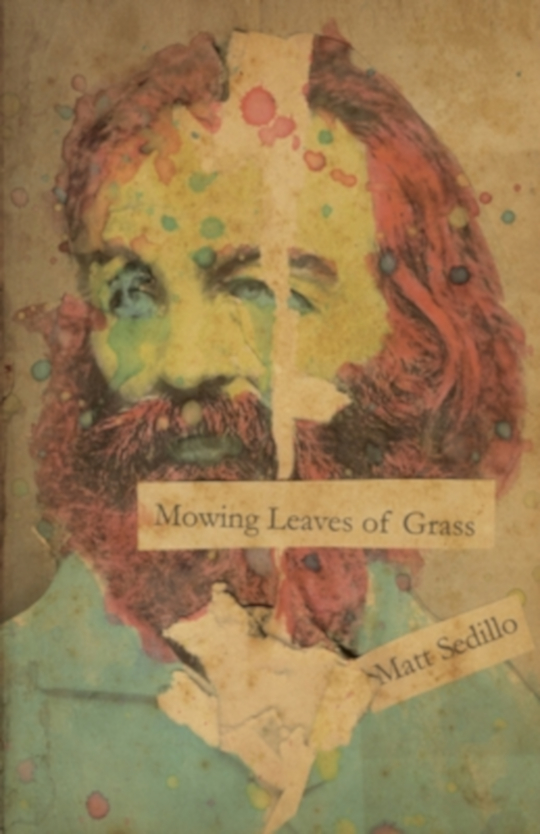
Guest Review: Mowing Leaves Of Grass.


Guest Review: There Is Power In The Naming. On Matt Sedillo’s Mowing Leaves Of Grass.

Theresa Montaño

Matt Sedillo's, Mowing Leaves of Grass, should be a required reading for every student taking a Chicanx Studies course. Sedillo takes the reader on a sometimes troubling, but always realistic journey, into Chicanx historical and contemporary reality. 

Teaching Chicanx Studies requires students to understand contemporary reality, and to engage in the critical process of eradicating capitalism and racism. Sedillo’s poetic compositions describe how Chicanx negotiate life in the colonial project called the “United States of Amerika”. 

Central to Chicanx Studies is participation in resistance movements and engagement in struggles for social justice. Matt Sedillo’s vivid visualizations always end with the necessary “call to action” that Chicanx Studies activist scholars often embed in their coursework. 

Matt Sedillo’s work is more than just a supplemental text. I found that using this text in my course establishes a framework for researching Chicanx history, exposing educational injustice and inviting co-conspirators to reimagine and construct a post-imperial, post-colonial life.

Matt frames his literary writing in a three-act poem. The power of the three-act poem is clearly defined in Lupe Carrasco Cardona’s Foreword. The three-act poem is a…

gift to poets, scholars and liberation activists alike, for it does not stop at calling out oppression in witty eye-opening metaphoric detail, but is simultaneously a call to action that speaks truth to power

Matt’s poetry is also a testament to the beauty of our sustainable, ever-evolving and dynamic culture. His prose and poetry are tributes to the ancestral knowledge of our people flourishing amidst the trauma of racism. 

The poem El Sereno is about surviving personal trauma, but most importantly it is about love of self and of the beautiful, intelligent women who are Chicanas. It is the poem of an activist scholar who grew up like many of my students. It is about personal growth, community, and overcoming internalized racism. Sedillo’s depiction of the barrio’s people, the abuelitas selling mangos and papayas and cherries, the trauma of childhood and resistance to racism, is about becoming Chicano. 

Sedillo’s poems are meant to be heard, to be read aloud. I find his work reminiscent of Corky Gonzalez’s I am Joaquin. Students cannot silently just read the words. My students read Joaquin and El Sereno aloud, the two poems become the vehicle for the student’s own voice. 

In articulating the poems, my students then express their pain, their emotions, and their dreams. I have often used El Sereno to engage my students in constructing their personal counternarrative, to describe their own journey of self-discovery. One can learn so much about one’s students from these creative journeys. 

As an educator, I appreciate Sedillo’s portrayal of the power dynamic in the institutions we label “education” and “schooling”. Matt’s personal counternarratives are realistic and relatable. Upon reading and reflecting on Sedillo’s poems, my students freely exchange their individual experience circumnavigating schooling in the United States. Students in my courses share how Pedagogy of the Oppressor prompts remembrances of Eurocentric teaching practices Sedillo describes. 

In Naming Practices, Matt indicts the educational system for teaching Chicanx “shame and self-loathing”, but concludes this powerful discourse and unapologetic literary declaration announcing that 

There is strength in numbers

There is power in the naming

An empowering pronouncement that many of my students appreciate.

As activists for Ethnic Studies, Matt reminds us that the racist pushback to efforts to integrate Ethnic Studies into the curriculum is premediated and intentional. In Pilgrim, he tells the story of every Brown child who ever attended school in this country, who upon entering classrooms read majoritarian tales, heard ahistorical revisionist narratives and were “miseducated in some of those very same schools”. The poem concludes with an astounding rebuke of imperialism and Donald Trump.

we didn’t cross the borders 

The borders crossed us 

Who you are calling immigrant 

Pilgrim 

Sedillo magically weaves a tapestry of historical narratives, contemporary experiences, and collective action. It is not surprising that the political and poetic literary work in Mowing Leaves of Grass by Matt Sedillo is currently used by Ethnic Studies faculty throughout the nation. His poems are simultaneously situated in struggle, tragedy, anger, and disillusionment, but can also engage students in the healing process. 

Entire classrooms can become sites of reimagination, where students actively contest marginalization, capitalism, and racism. Whether the topic is one about gentrification or the census, Mowing Leaves of Grass, persuasively captures the Chicanx experience. Matt Sedillo’s revolutionary, artistic, and profound counternarrative work can be use in introductory, creative writing, speech, history, or educational Ethnic Studies courses. 

I concur with Lupe Carrasco Cardona, warrior educator, this book is the 

Holy Writ of school guerrerx activists, transformative decolonial educators, righteous contrarian poets, students in need of cultivating their roots…and everyone’s abuelit@s![sic]

Matt Sedillo. 
Poet Laureate of the Chicanx revolutionary struggle?
Presente!

==

Theresa Montaño is a Professor of Chicano/a Studies with an emphasis in education at CSU-Northridge. Dr. Montaño has more than 40 years in public education, she taught for 15 years K12 schools before moving into higher education. 

Montaño is the former CTA Vice President and currently coordinates the public education work for the California Faculty Association. She is active in the movement for Ethnic Studies having served on California’s Ethnic Studies Model Curriculum Advisory Committee. She is actively working with teachers and districts on the implementation of Ethnic Studies programs and curriculum, including work with the Liberated Ethnic Studies Model Curriculum Consortium. 

Her current research includes a project on women of color in union leadership and assorted articles on Ethnic Studies. Her publications include two co-edited books, several research publications, essays and curriculum units.