The world's longest-established Chicana Chicano, Latina Latino literary blog.
Las Blogueras Los Blogueros
Click to email a writer. Denver CO • Pasadena CA • The San Fernando Valley CA • Eagle Rock CA • Lincoln NE • Glendale AZ • Santa Barbara CA • Lincoln Heights CA • Kansas City MO • Santa Monica CA
Occasionally I reprint an older post from La Bloga, part of my private celebration of five years of La Bloga (we went live November 28, 2004), no need to mention that a reprint is an easy fix for deadline anxiety. This one is from December, 2007, as you will no doubt figure out. This post generated several excellent haiku submissions by creative readers -- please go ahead and do it again; it's that time of year.
I've got the 2010 edition of the Chicano Art Calendarmentioned in the post and, again, it's a beauty, and again Carlos Frésquez is one of the featured artists. His Obsidian Ranfla Series #1 is dynamite and, I am proud to say, hangs in our home as I write this.
_______________________________________
Dig A Hole, Fill It Up -- Or Write Haiku
Throw out the old, ring in the new. I’m sure I’m not the only one who is acutely aware of the ebb and flow of time as 2007 slips away. Time for reflection, for re-organizing, for making new plans and scrapping old projects. Donate those sweaters not worn in years; go through the piles of books in the corners and make hard decisions about the ones that will never be read; scratch out a list of things to do in 2008, places to see, people to visit. Then the important stuff: where am I and how did I get here?
Maybe it’s not just that the new year approaches. Maybe these thoughts occupy me because of the music I’ve been playing. Or maybe I play this music because it is the end of the year?
This Time by Los Lobos: Why do the days Go by so fast If only time Was built to last.
Precious Timeby Van Morrison from hisBack on Top CD: Precious time is slipping away But you’re only king for a day It doesn’t matter to which god you pray Precious time is slipping away.
Bob Dylan got in the act, of course (Not Dark Yet): Shadows are falling and I've been here all day It's too hot to sleep time is running away Feel like my soul has turned into steel I've still got the scars that the sun didn't heal There's not even room enough to be anywhere It's not dark yet, but it's getting there.
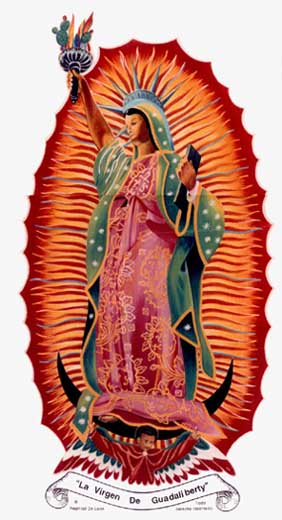
I hung my 2008 Chicano Art Calendar (Amber Lotus Publishing) and it looks great. The artists include Santiago Pérez and his magnificent First Aztec on the Moon, a piece that impressed me years ago when I viewed his work at the National Hispanic Cultural Centerin Albuquerque; Malaquías Montoya’s powerful Trabajo y así transformo el mundo; Our Lady of Guadalibertyby Nephtalí De Léon; and several other amazing Chicano and Chicana artists. But, the real reason this calendar was on my wish list is becauseCarlos Frésquez is featured. His dynamic A Westside Weddingstands in for June, naturally. Carlos is an old friend and this painting evokes deep emotions in anyone familiar with the lore and mythology of Denver’s Westside, and for those who don’t know the stories, Carlos’s work is still very cool.
So, how about some nostalgic end of year or New Year celebration haiku? La Bloga would love to see your efforts. Here’s one to get you started; I know you can do better.
I stare at the clock Round face ignores the question Tick tock says it all.
Many of my earliest memories take place in Piedras Negras, Coahuila; the frontera separating Eagle Pass, Texas from el otro lado. I was six years old the morning I witnessed the stabbing of a young man in the crowded Mercado Zaragoza. My dad yanked me by the neck as I stood mesmerized by la viejita shaving espinas from a pile of pear shaped nopalitos, her eyes fixated on everything except her navajita and the prickly pads of cactus she cupped with her palm. There was no panic in my father's tone of voice nor any attempt of flight as the man before us slumped to the cobbled and crumbled floor. The cashew shaped puddle of blood which formed along his mid-section seeped into the stone and trickled down the cracks. Not a word was stuttered as another man slowly walked toward the scene, not a horn could have shattered the shroud of silence that existed as he knelt down in genuflection to remove the knife inserted just below the rib cage. In a shuffle of footsteps with the bloodied knife already hidden beneath the sleeve, he was swallowed by a mercado already in motion as if nothing had occurred.
Of the many photography books that detail our southern neighbor, Debbie Fleming Caffery's, The Spirit & The Flesh is of the few to expose a distinct sadness that survives Mexico. While in Denver for a reading a few months ago, I mentioned to Luis Alberto Urrea how I looked forward to reading his literary contribution in Caffery's forthcoming book. I asked Urrea what he thought of her work. In a nutshell, he assured I would not be disappointed and that Caffery's Mexico was our Mexico.
Photographed during the mid-nineties, Caffery's black-and-white images of a brothel depict a Mexico often exploited, though rarely embraced. As I leafed from one plate to the next, the Mexico of my youth and those childhood recollections of putas, fire spitters and limosneros rekindled. The jacket-cover photo titled Gabriela, 1999 reveals the haunting sadness of a life born into a brothel. Whatever amount of spirit Gabriela once enjoyed, has long been devoured and disposed of by the thousands of drunken men who have come her way. The plate titled Gena, 2005 frames a portly woman resting with her backside against a darkened door frame. Like Gabriela, Gena's open mouth seems to gasp for breath and for relief from life inside the cantina.
Without question, Urrea was correct when describing Caffery's photos. In her each and every image a story has been told; they are tales of sadness that transcend the page and tug the strings of our real life experiences. You will find that these men and women survive as they have endured, both in spirit and in flesh.
The Spirit & The Flesh by Debbie Fleming Caffery, Radius Books, 2009.
Here is my list of books for navidad for 2009. Enjoy them and feliz navidad y año nuevo.
To view the previous lists of books for navidad, click on the year. 2008 2007
Piñata in a Pine Tree: A Latino Twelve Days of Christmas by Pat Mora. Illustrated by Magaly Morales.
In this adaptation of the folk song "The twelve days of Christmas," a little girl is given such gifts as a piñata and "cuatro luminarias." Includes pronunciation and glossary of Spanish words and a description of Christmas foods and other holiday traditions from different Latin American countries.
Growing up with tamales/ Los tamales de Ana by Gwendolyn Zepeda. Illustrated April Ward . Spanish translation by Gabriela Baeza Ventura.
Six-year-old Ana looks forward to growing older and being allowed more responsibility in making the tamales for the family's Christmas celebrations.
Noche Buena: Hispanic American Christmas Stories by Nicolas Kanellos.
A family seated round the fireplaceSinging and making merry;A sprightly waltz played with graceNoche Buena brings us all the magic of the Christmas season as seen through the eyes of the Hispanic Americans who celebrate it.
Las Navidades by Lulu Delacre
A bilingual collection of popular Christmas songs from Latin America, illustrated to depict the Hispanic culture's rich and exuberant holiday celebrations.
La jaula dorada / The Golden Cage by Alma Flor Ada. Illustrated by Vivi Escriva.
A little boy's search for the perfect gift for his grandmother teaches him about ingenuity, generosity, and freedom.
Benito's bizcochitos by Ana Baca. Illustrated by Anthony Accardo. Spanish translation by Julia Mercedes Castilla.
As they prepare to make the traditional Christmas cookies known as bizcochitos, Christina's grandmother tells her the story of how a magical butterfly first introduced these sweet treats to her great grandfather, a shepherd in the hills of New Mexico.
Salsa stories by Lulu Delacre.
It is New Year's Day, and friends and family from all over Latin America arrive at Carmen Teresa's house for the festivities. Seven heartwarming and humorous stories follow, highlighting holidays from all over Latin America. Each story is told by a different family member, giving the narration a warm, lively sense of family tradition.
Una sorpresa para Josefina: un cuento de Navidad (Josefina's Surprise: A Christmas Story) by Valerie Tripa and Jose Moreno. Illustrated by Susan McAliley and Jean-Paul Tibbles.
The second Christmas after their mother has died, Josefina and her three sisters find that participating in the traditions of Las Posadas helps keep memories of Mamá alive.
Navidad latinoamericana / Latin American Christmas by Charito Calvachi. Introduction by Marco Vinicio Rueda.
Includes text of carols recorded on accompanying compact disc, a novena of prayers before Christmas, and Christmas traditions in Latin American countries
The twelve days of Christmas : a piñata for the pinon tree by Philemon Sturges. Illustrated by Ashley Wolff.
Celebrate the holidays with this lively adaptation of the classic Christmas song. This vivacious rendition, filled with vibrant illustrations, features musical notations and a special recipe for bizcochitos, cookies that can be found in every New Mexican home during Christmas time.
ReadMe: Mimís Parranda
Mimís Parranda is also a great book for navidad. You can find it on La Bloga list of books for navidad of 2007.
Learn more about the author, Lydia M. Gil and her book in this interview at www.spanglishbaby.com.
Mexico City Noir. Edited by Paco Ignacio Taibo II, Translated by Achy Obejas. NY: Akashic Books, 2010. ISBN-13: 978-1-933354-90-3
Michael Sedano
When Akashic Books' Tim McLoughlin and Johnny Temple hit on the idea of a city themed collection, commencing with Brooklyn Noir, it must have seemed like a good idea. Now, with dozens of cities all over the world noired, it's obviously an idea whose time has come and keeps on coming. How deliciously endless its possibilities!
I'm waiting for Redlands Noir and Isla Vista Noir, and how cool would it be to see Hwa-ak-ni Noir? For now, however, I'm more than happy to take a walk on the dark side of one of my favorite non-hometown cities, el Defie, la Capirucha,"the best city on the planet," per the introduction by writer extraordinoir Paco Ignacio Taibo II, Mexico City.
Taibo, and his translator, the accomplished Cubana noirista Achy Obejas, do not make a very good case for that sentimental ascription. As TaibObejas note, if you were assaulted on the streets of Mexico City you wouldn't call a cop. "What do you want, to be assaulted twice?"
The editor collects his material in three parts featuring four stories each. Part I, Above the Law, spotlights four stories that reinforce that implict indictment of D.F. cops' murderous venality with a variety of cop lowlifes. The opening story, from Colonia Narvarte, offers a fevered monologue of a homeless vato who, brutalized in the course of witnessing a cop crime, pushes his shopping cart in a vain journey to escape the memory and a second encounter with the cops. Taibo's own story, "The Corner" set in Colonia Doctores, plays with point of view that beguiles with misdirection. A writer, Fierro, friendly with Manterola, the local beat cop, banters about this crime and that criminal, and the single most crime-ridden corner in the city. Fierro is engaged by the "top dog" of the city's police establishment, seeking ideas on how to change that locus of danger. Fierro's first suggestion, give the corner to sister city Los Angeles, gets a chuckle. The next suggestion, send the cops on vacation to Acapulco, doesn't. But a cultural festival with poetry and music and conga lines is the writer's answer. The story's also Taibo's in-joke, adding to the grim fun of the piece. There's a store named the Flor de Gijón--Taibo's hometown; Fierro gets several chapters out of the corner in a novel, i.e., this story; and the bad cop loses an eye to some angry convict, an echo of Taibo's one-eyed detective, Hector Belascoaran Shayne.
Part II, Dead Men Walking, presents first person narratives by witnesses or victims. An interesting piece, Myriam Laurini's "Violeta Isn't Here Anymore," could as readily fit into part I. Purporting to transcribe audiotapes of witness statements, the reader stares aghast at cold cynicism of a cop willing to trash the lives of anyone involved in a crime just because he can. Adding interest to the story is Laurini's ascent into surrealism when the cops begin to see parallels between the investigation and a Borges story, "The Aleph". By the wrap of events, elements of the Borges story overlap the crime narrative leaving everything hanging in a literary ambiguity.
Part III, Suffocation City, contains an abysmally dense experimental story, Eduardo Monteverde's "God Is Fanatical, Hija," involving transgender priests and nuns, buggering cops, and cannibalism. So thoroughly weird and wild, I hear echoes of William Burroughs' drug-spawned Naked Lunch rippling through the depravity of Monteverde's plot. It's deeply disturbingly strange. Taibo rewards the reader for patience with Monteverde with a finishing pair of more conventional tales, Victor Luis González "Of Cats and Murders" and Julia Rodríguez' RENO. In the former, echoes of the JFK assassination reverberate, in the latter the victim of gang rape may have ended up in tamales.
Mexico City Noir is one of those volumes that cries out for facing page translation, if for no other reason than to enjoy the vituperative resources of Defie Spanish. Obejas usually resorts to "fuck" in a variety of settings that leave me wondering how the conversation goes down in the writer's own idiom. Obejas elects an easy-going narrative style that sounds the same voice from story to story. To her credit, the translation has few of the intercultural irritations seen in less able translations. Obejas recognizes that some things can be said in only one language, so a cabrón is a cabrón, a .45 caliber bullet pulverizes 20 centimeters of one's heart, not 7-plus inches, but Temeraria is reckless, including italics in a clever reversal of the "foreign word" orthography rule of Unitedstatesian publishing.
Readers will enjoy experiencing numerous Mexicano and two Mexicana writers likely unknown to U.S. or Canadian readers. Taibo, of course, is well-known, as perhaps twice-Hammett prized Rolo Diez, whose excellent cop novel, Tequila Blue was translated by the British publisher Bitter Lemon Press. The author thumbnails at the end identify Julia Rodríguez as among the first Mexican noir writers, and Laurini as one of the first women noir writers in Mexico. Per the back cover, many of the stories are brand-new for this collection.
Last time I was in Mexico City, the locals advised I not wear a wrist watch, to blend in better. My digital camera obviously fooled everyone but one taxi driver who relentlessly asked if I came to Mexico loaded with cash. "Nel," I told him, I'd come to borrow money from relatives. Wonder if I woulda called the cops if the cabrón had pulled a knife?
That's the view from Mexico City this second Tuesday of December. A Tuesday like any other Tuesday, except You Are Here. Watch out for those tamales with rings in them, it might not be a simple children's story.
Les wachamos.
mvs
La Bloga welcomes and encourages guest columnists. If you have a book review, arts or cultural event, a significant reading experience, or something from your writer's notebook that you'd enjoy sharing with La Bloga, click here to discuss your proposal.
Sandra C. López was born and raised in Hawaiian Gardens, California. López was the first in her family to graduate from high school and enter college. She is a recent graduate of California State University (Fullerton) with a BFA in Animation and Illustration. López’s first book was the novel, Esperanza : A Latina Story, published by Floricanto Press in 2008.
Her new novel, Beyond the Gardens (Floricanto Press), is about a young Latina in search for independence and self-worth. Being raised in the poor barrio and having a drunk for a father didn’t leave much for Esperanza to believe in. Her dream was to become an Animator, and it was only until after high school that her dream became a reality. Now, she is living the life she’s always wanted in the dormitory of an L.A. art school. What new challenges await Esperanza in this new adventure? With the help of her fashion-guru roommate, the sudden love interest of an old high school friend, and the annoying advice from her loud-mouth mother, Esperanza will learn the hard way that, “you can take the girl out of the barrio, but you can’t take the barrio out of the girl.”
La Bloga is pleased to share the first chapter from Beyond the Gardens:
Chapter 1
As the evening sun was settling over the small hills, I steadily hiked along the concrete path that led into the center of the campus quad. I hung to the strap of my book bag with a light wind sweeping through the air, then walked past the student store and the food court. The garlic aroma of chicken chimichangas was overwhelming and floated around seamlessly. My god, did it smell good. I almost wished I had five bucks to waste.
Instead, I ignored the aching grumble in my stomach and moved on.
The dorms were located on the outskirts of the school next to a highway that was often busy at this time of day. When I reached Da Vinci Hall, I passed along a few students bundled in a corner with large pads sketching the scattered trees on the forefront of the breaking dawn. I had missed the elevator going up just as the doors were closing. Damn.
Exasperated, I punched in the button for the next one. But the wait was so long I decided to just forget it and took the stairs instead.
Crossing down the hallway, I fumbled inside the withered pocket of my jacket for the keys. I unlocked the door and then stepped into a tiny cubicle, where I hit my knee passing by the end table. At that point, I couldn’t decide whether the furniture was moving closer or the room was just shrinking.
I limped across the room and dropped my bag on a nearby chair. Then I took off my cap and tossed it aside. Oh, what a day, I thought while my fingers stroked through the thick strands of my dark hair. I couldn’t believe I stayed up half the night to study for a quiz the teacher decided not to have after all. What a shame. I was really looking forward to it, too.
After spotting my bed just a few feet away, I fell on top of it landing on a soft pillow that cradled my head. Humble sighs trickled through as the evening sun cast a mild afterglow through the shiny window, shadowing the room with a tinted orange. I yawned while the soothing warmth poured across my tanned face. Then I closed my eyes as a tranquil slumber soon began to take its course.
Suddenly, the door quickly slammed open, and I instantly bolted upright.
“Hey, good news you lucky people, I’m here!”
“Jesus Christ!” I yelled, responding to the triumphant arrival of my roommate, Anna.
She looked at me with cavalier naïveté. “Oh, were you sleeping?”
“No, I wasn’t,” I answered. “I was just trying to, that’s all.”
“Well, as long as you weren’t sleeping.” Casually humming, she sauntered back into the hall and returned with several large shopping bags. Most of them looked like they weighed more than she did.
“Been to the mall, lately?” I asked.
“Just for the last half hour.”
“And that’s all you got?”
“Well, I couldn’t really get much because I had to come back for a class.”
“Oh, of course.”
I watched as Anna closed the door behind her so she could peek at the mirror nailed in the back. She twirled around a few times, checking out all the angles of herself. Then she fluffed her short, reddish-brown hair, which was decorated with bright, silver streaks. Under closer inspection, she turned from side to side and caressed the light, delicate skin on her face. She checked out everything from the straight arches in her eye brows to the rich, glossy color of her lips. Oh, brother, I thought as I reclined back into position.
There was just no doubt about it. Anna Zapata was the “Chicana from Beverly Hills.” She, technically, came from Orange County, but she was possessed by someone in Beverly Hills. Note: Anytime you see the word “hills” in a city name, you just know it’s a fancy, ritzy area packed with people, who just have too much money. For example, Anaheim Hills, Woodland Hills, Chino Hills, Beverly Hills. Need I say more?
“Do you think I need to add another streak?” Anna asked suddenly.
“Another streak?”
“Yeah, right here near my bangs.”
“Well, I don’t know,” I answered. “I think you wouldn’t look any different.”
“Would you get up and look,” she insisted.
“Why, I can remember what you look like.”
“Will you just look.”
“Okay, fine,” I said with a roll of my eyes.
With a discouraging grunt, I hoisted myself up and leaned on the tips of my elbows. I cocked my head in her direction, straining to give her a glance. My face crinkled in confusion as I attempted to drum up an opinion.
“Well?” she persisted.
“Well, uh—”
“Be honest.”
“Honestly…you’d look the same.”
“Oh, no I wouldn’t.”
“Yes, you would.”
“No, I wouldn’t.”
“Yes, you would.”
“Oh, what do you know?”
I collapsed back on the bed with a loud murmur under my breath.
“Can’t you see that one streak will add balance to my bone structure?”
“No, I clearly don’t see that,” I said.
“Obviously.” She looked back at the mirror. “Maybe I should just start all over with a brand new color. What do you think about that?”
“Why don’t you just go back with the color God gave you?” I asked.
“Well, that kinda presents a problem,” she said. “See, I sorta forgot my original hair color.”
“Are you serious?”
“Nope, I’ve been dyeing my hair for years, and it just sorta slipped my mind.”
“Well, why don’t you ask your mom then?”
“Are you kidding?” she responded. “Who do you think taught me how to dye my hair? My mother couldn’t find her own roots if she was digging for gold.”
“Okay, point well taken,” I mentioned. At least now I knew where her obsession with hair started from.
“Ya know, I think I will add that extra streak,” she said.
“Whatever you say.”
“And while I’m at the salon, I’ll get a manicure, pedicure, and a facial,” she added. “I’ll just beautify all this even more.”
“Are you sure you’re Mexican?” I asked once again.
“For the last time, I am Mexican,” she replied in defiance. “Yo sé hablar español y todo. I just don’t listen to Spanish music or eat spicy foods. Why, don’t I sound Mexican?”
“Nope.”
“I resent that,” she said. “I would stay and fight you on that, but I gotta go get my facial, manicure, and pedicure.”
“So, back to the mall you go?”
“That’s right,” she said. “Oh, and while I’m there, I might as well get that cashmere blouse I was thinking about buying but didn’t. See ya.”
With giddy excitement, Anna glided out of the room.
Finally! Now where was I? Oh, yeah, I was trying to relax.
I lied there and closed my eyes, gradually reacquainting myself with the peaceful and quiet sounds around me. At some point, I actually wondered whether or not I went deaf. But I didn’t. There was absolutely no noise. Wow, this was nothing like home back in the barrio, I thought.
Back home I had the raucous sounds of police helicopters flying overhead to lull me to sleep. But not here. Sounds of the barrio didn’t exist. I haven’t heard screeching tires against the harsh gravel of the streets, or the sounds of drunken cholos clashing with shattered beer bottles. Up until now I figured I’d be stuck with those noises for the rest of my life. It was amazing. I mean, I’ve heard about lawns being greener on the other side of the fence; but it’s another thing to actually sink your feet into that beautiful grass and wiggle your toes in it. Could I really have done it? I wondered. Could I have gotten myself away from the other side and made it all the way here—at the Atkins Art Institute, the place I’ve been working so hard to get to ever since I saw Bugs Bunny as a kid? Could this be a dream? Yes, it was a dream—it was a dream come true!
After conquering the world of high school as a kid and cherishing the last few moments of summer with the people who meant the most to me, I can now say that I had finally made it. I did it! I was here, standing in the middle of a whole new adventure, ready to begin the grand odyssey of college life, ready to discover the answer to the question that’s been nagging me for years: What’s beyond The Gardens?
Ever since I was born in the small town of Hawaiian Gardens—a California barrio that a lot of the locals referred to as The Gardens— my life always had barbed wire around it, and I just couldn’t get through. I was caged like a raggedy, flea-infested dog, always snuggled in a dirty corner while surrounded by the foul stench of that filthy pound. I would look at the world through steel bars, wondering what it would be like to be on the other side. Was there some other life beyond those gates? Was there something better over that fence? I never knew; I’ve always just wondered. And I kept on wondering even when we moved to East L.A., where I was only transferred from a smaller cage to a bigger one—my curiosities still the same though. I knew I was going to die if I stayed right where I was. I knew it was never going to get any better unless I got out. Well, now, I was a dog that had gone free. I finally escaped my cell. I have passed the gates of limitations, running every step of the way, ready to discover what I have been missing all my life. I was now going to see this new world through fascinated eyes and finally mark my territory wherever I go. What changes await me? What will I find? Who will I meet? How will the next chapters of my life going to end this time? Or were they going to end at all? Maybe my ending will turn out to be a brand new beginning. I couldn’t wait to find out!
When I was twenty-nine my kidneys were put on alert as they began to malfunction and I was diagnosed with systemic lupus erythematosus.With lupus, anything could happen, at any time, and sometimes it did.I have a long medical trajectory, packed with all modalities of healing and a few close calls.
My body has lived beyond its means.It is scarred and patched up.It needs bigger and brighter red blood cells, more kidney function, protein, hormones and minerals.Yet the life force—my motor—is strong, and it made my body resilient as hell, like an old pair of hiking boots that you can take on a trek through any rugged terrain.
I decided, after soul searching, that in order to live, I’d have to die a little, or maybe even a lot.To die the past.To sing the sad songs so I could sing the silly and happy ones.That was the idea—out with the old, in with the new.Just like cleaning out the refrigerator and throwing out food that’s old or just no longer interesting to me.
With this mission in mind, I flew to South America for a medicine journey retreat in the mountains during my annual two-week vacation.We would do a series of rituals, including death rites, birth rites and a vision quest.I was in my forties and I thought I could muster up the bravado to do all of the above, including the death part.But just as we were about to gather for the death rites, my heart raced and I paused as I faced a gnarly truth—that metaphoric death was as chilling as the real thing.I didn’t know how to separate the two.
I was scared to die.And there I was, on a beautiful patch of mother earth, moments away from ritually “dying”.The ground was golden with dried grass and all around us were fruit trees, cactus, flowers, wild brush, and blue skies.We had built a spiral with heavy stones that held the stories of the earth.The spiral would help us identify and release old energies.But the shaman leading the ceremony had clearly said, “You must die without fear.”Otherwise, how could we be reborn?
Moments before the ceremony was about to start, I walked over to Sergio, who was nonchalantly eating fruit he was picking off a tree.He’s a massage therapist who specializes in removing fear from people’s gut, as if preparing warriors for battle.“Fear is a state of mind,” he said.I felt foolish, since I didn’t really have anything concrete to be afraid of.Maybe the fear was old drama, linked to being born with the fear that I could die at any moment?Sergio, who zoomed around congested chaotic streets on a motorcycle, who dug into people’s innards and energy fields to extract fear as if it were a bothersome burr, was so calm about the whole thing.Fear is only fear, and it has the charge that we give it, or none at all.
I popped some fruit in my mouth and got an adrenalin rush.Suddenly, I wanted to die.And fast.Why not?Death was a portal to life.If I wanted to live, then I wanted to die, right?
We formed a big circle and invoked the four directions, creating sacred space out in that idyllic and picturesque nature preserve. There was a massage table in the center, strategically placed atop ground covered with white quartz crystals.Two shamans leading the rites stood on either side of the table, with several shamans stationed near the head and foot of the table to assist energetically as needed.Each of us would lie down on the massage table, one by one, for the death rites, as others held space for us around the circle.Machi Clorinda, the medicine woman, would chant and drum, and those of us with rattles would keep the beat and sustain the energy.There were around twenty of us, and the ceremony would take several hours.We were instructed to walk into the spiral or get on top of the table as we felt called to do so.
I had my eye on that table like a kid antsy to jump on a horse and take it for a ride.I was guided by pure greed.I wanted to die.Once my decision is made, the seas must part, the path must clear.But somehow, before I even took a step, Helen had already floated onto the table.
I watched as shamans worked with their hands and used their keen vision and tracking skills to unwind each of Helen’s chakras (the body’s energetic centers).By disengaging the chakras, the luminous body (a translucent multicolored orb that surrounds and informs the physical body) is free to fly off and “die” and be energetically cleansed of the past.Shamans then launched her luminous body to the west and brought it back from the east, where it was to come back with a different imprint.Then they rewound the chakras and engaged the luminous body back to the physical body.*Helen floated off the table in a daze and headed for the spiral.
I threw myself on that massage table before anyone else could beat me to it.I was bursting with anticipation, like the day I went to the dealership to buy the first new car of my life; I got rid of my 15-year-old, beat up carcass and replaced it with a sparkling new body. Lying on my back on the table, eyes closed, I had some certainty that I was supposed to be there.
The loud music of rattles playing close to my body pulled me into a hypnotic state as shamans shattered the crust of my energy field, breaking it up into little pieces, clearing it out for me.Yes!I wanted to shout.That’s it!Help me heave it to the cosmos!Goodbye to my old boring sob stories.Farewell Useless Shit!I could feel density turning to lightness, almost immediately.I trusted every bit of that moment as shamans kept rattling and the kultrun drum kept beating.I suppose they were disengaging chakras as I’d watched earlier, but I’d given myself over to the rhythm and didn’t know exactly what was happening except that I sensed a rearrangement of my self.
I pumped my fists in the air as I felt a huge liberating whoosh that felt like Freedom.I felt victorious, like I’d won first place in a running competition.My luminous body soared back with open wings.Shamans fiddled with my chakras and I settled into my new duds.Rattles were still going when I flew off the table in a state of happiness as a winged woman.I joined the outer circle to witness the death rites of my companions.It was a continuous stream of clearing, releasing, and bringing back the new, all of it to the beat of rattles, the kultrun, and our hearts.
It was a night of a new moon and I looked up at the sky later and checked in with the cosmos.I saw an embryo forming in the heavens, shape shifting moment by moment—chef, fish, muskrat, mermaid, owl, magician, cop, condor, cartoon character, a twitching mustache, a big eye winking at me from above.I didn’t know what it all meant, but I was smiling the whole time.
The next day we did the birth rites under the spell of a warm and welcoming sun.We took off our clothes, put on a sarong and gathered in a circle around a cold-water pool.One by one, we plunged into the pool in the nude as others witnessed our “birth”.My pink, patched up and imperfect body was happy as hell in those cold waters.I swirled and danced in the pool, splashing and zooming and playing like some sort of mermaid.I was free with my body, blowing bubbles, discovering the newness as it evolved.
------------------
*The death rite process is an adaptation of rites practiced by Peruvian shamans as taught to Alberto Villoldo from the Four Winds Society.For more information about death from the shamanic perspective, see Dying Consciously http://dyingconsciously.org.Another good resource is the last chapter, “Death, Dying, and Beyond,” in the book Shaman, Healer, Sage:How to Heal Yourself and Others with the Energy Medicine of the Americas by Alberto Villoldo.
** Photos by Kamala Snow and Marcela Lobos
12 de diciembre de 2009, long beach, califas, on a cold & rainy day
What's all below doesn't directly reflect the above title, but it came to mind as I composed this.
"They don't want Us here."
The phrase comes up whenever racists, xenophobes, English-onlys and Limbaughers rear their little minds to fill the Internet, town halls or periodicals with opinions inevitably blaming immigrants (legal or otherwise), Spanish-speakers or just plain old U.S.-born, English speaking Chicanos for a laundry list of economic, social or educational failings in this country. On the surface, yes, it sounds, looks and smells like "They don't want Us."
I don't buy the argument, nor the victim-mentality it encourages, because it's a simple reaction to an immediate, specific situation, and no matter how accurate it may be, it fails to include the larger, more complex picture.
They problem lies in the signification They. Without proposing a new conspiracy theory or resurrecting a new one, we tend to throw They around to refer to distinct groups, when we might be better off always thinking of it as the distinct whole--U.S. society, meaning to include the predominant (and some fringe) groups, segments of the population, agencies, governmental bodies, body of law, philosophy and discourse.
When we include all that as They, I'd argue They do want Us here. Someone has to maintain the U.S. hotel toilets, motel bedrooms, Calif. gardens, housing developments and restaurant kitchens at a low enough wage and without drawing down on their tax contributions or good-old-Americans will go without. The food won't get harvested and delivered to those restaurant tables without Us. Manipulating the politics and repressing the economies of Latin America has kept that flow of all types of labor immigrants at an economically profitable level for most of our history.
And after we're here, They still want Us here. The racist, anti-immigrant rhetoric should be interpreted to mean, They want Us here as less-educated scapegoats, the kind that will suffer inhuman abuse in all the verbal, physical and psychological ways that America is so adept at devising. Our norms here are that it's okay to cut off funds to immigrant children, accuse their parents of being members of an ignorant race (sic), while at the same time employing Us at substandard wages without benefits, and even recruiting Us to fight the Iraq-Afghan-Pakistan War.
Homeland Security should erect a monstrous billboard on the border, facing northward, stating:
"Don't leave us. We need your labor and sweat and without you we might realize we're all fokked because we'd have to find new scapegoats and there are enough Muslims around to take all the abuse."
So, the next time your Chicano or mexicano friend says, "They don't want Us here," please try to educate them.
For a good exposure and a set of some real moronic responses, go to "Most Oregon schools slow to get English learners proficient" to see how the Oregon government thinks "punishing" school districts for under serving English language learners can be best implemented by providing even less money for that.
To read about a state notorious for never having understood how to educate Us (Chicano and mexicano kids), and where for years teachers have fought against the myopic standards-based CSAP exam, go to Colorado's new educational standards stress strategic thinking. Dumping the old one doesn't mean a new one will be any better, but the state has at least added the concept of "thinking" to its dialogue. Would they'd extend the concept to Us where education is involved.
Go here for a review/interview of La Bloga's contributor Lydia Gil and her book Mimi's Parranda that's posted on the website Spanglish Baby. It has everything to do with what They should see in Us.
And BTW, you only have today and tomorrow to win a copy of that book!
Almost lastly, Go to the Jim Lopez/Ty Gorton's Antique Children website to read a stranger adult story featuring a kid, written by yours truly. It's not so much about a non-Anglo kid as much as it's about myopic attitudes toward children. (Click on the menu bar Subjects and scroll down to Fiction.)
A Grain of Sand is the second one. Leave comments here to let me know your review of that one.
In the spirit of the coming year's-end, and my unsubstantiated ranting above, and your determination to make the new year different, I invite guest posts on that topic. Leave a comment below if you have something to submit.