Tuesday, September 24, 2019

Mural Update. Happy happening in sad setting.

Update On Cervantes Mural Restoration Work by Pola Lopez
Michael Sedano

Fred C. Dobbs pulled rye grass stickers out of his socks. There were a lot of them. He’d just walked the entire 169-foot length of the mural on Marmion Way, searching the weeds across the street next to the Gold Line, not finding an answer there to the question he’d been asking since that time in Mexico, and that the artist, Pola Lopez, faces right now, which is about more money, and how to get some?

Like millions of area residents, La Bloga’s Michael Sedano regularly drives along Los Angeles' Marmion Way at the foot of Autry Museum's Historic Southwest Museum of the American Indian (link). For years, the long straight-away exiting the Avenues barrio skirted a long curvy retaining wall. Gallons of spray painted crap accumulated across what had been a mural of indian people. Work crews sprayed over the surface.

Fabulous news arrived with the Feb 20 2019 Laist (link) about the mural's restoration courtesy of "Highland Park's Chamber of Commerce and neighborhood council, the Autry Museum, L.A. City Councilman Gil Cedillo's office and Avenue 50 Studio." Writers  Philip Iglauer and Chris Greenspon tracked down the original muralist, Daniel Cervantes, to get his insight.


"Cervantes said he wanted to show Latinos living in L.A. and caught up in gang rivalry that they had another identity that predated colonialism. That's why he painted the Southwest Museum mural in 2004 and, for a few years, the painting stayed clean. Over time, however, the wall became a canvas for taggers and graffiti artists."

The earliest mention in community media of the mural comes in a Boulevard Sentinel article in 2004 that I cannot find on the web. An early post you can read is by chimatli in his post in LA EASTSIDE Life Beyond the River (link )

chimatli's post, illustrated with top notch fotos, notes, “There are many reasons to appreciate this mural on Marmion Way, under the Southwest Museum: the colors that seem to glow in the sun, the attractive graphic style and most importantly, the subject, Native people of the Americas. Northeast LA is home to many American Indians and they deserve a lot more recognition than this mural but this gorgeous piece is a good start.”

That was a high point in the life of the mural. In May 2015, the Eastsider newsletter headlined, “Fundraiser Launched To Rescue A Mount Washington Mural.” (link)

The Eastsider observes, “This January, community groups led by the Arroyo Seco Neighborhood Council began fundraising to restore the work and develop a plan of preservation, monitoring and maintenance, according to neighborhood council member Martha Benedict. Other contributors are the Highland Park Heritage Trust, Friends of the Southwest Museum, Avenue 50 Studio and long-time local activist Ann Walnum.”

Kathy Gallegos, director of Avenue 50 Studios and the fiscal agent for the restoration effort set a preliminary goal of $20,000. That twenty grand was just to start. Fred C. Dobbs’ problem loomed greater than start-up funding. The Eastsider and Gallegos continue, “We also have to think about continuing maintenance, and who will be responsible for that,” she said via email. “So our first monetary goal is about $20,000, but we will continue our fundraising for upkeep.”

In that 2015 article, the Eastsider publishes excellent news for the Fred C. Dobbses of the world. “Councilmember Gil Cedillo and The Autry National Center of the American West, which owns the Southwest Museum that towers above the mural, have both pledged to match all contributions, said Benedict.”

“Those who gots, gets” goes an old Irish sales dictum that applies to getting money for the mural on Marmion Way. Raise more money and the Autry and Gil Cedillo will match you. If you can get, you get more. This is like the public radio pledge drive, instead of a mug you get a mural. Ajua!

IF, the middle word in life, if the matching funds offer stands. Does the matching funds offer stand?

In May 2019, Avenue 50 Studio shared news that world-leading restoration experts Willy Herron & Leah Moscozo found a method to lift off layers of “buff,” heavy latex compound sprayed to white-out years of tags. Herron and Moscozo did the job, got paid, chalk up another resounding success in the life of the contract.

A few weeks ago, La Bloga’s Michael Sedano rode the Gold Line to the Autry (Link) and photographed the job site. Pola wasn’t working that day. This was shortly after thieves needed two nights to carry off the blue tarps protecting the buff-peeled surface. As a consequence, now the mural stands exposed to view and several taggers desperate for a canvas and notoriety among a peerage of pendejas and pendejos have marked up the surface.

Later I made a second trip with friends with a date to meet the artist. I got to observe an interview with another artist to help do color matching and prep tasks on the work surface. The work seemed onerous but Angel Guerrero leaps at the opportunity to restore the treasure of la sierra Mt. Washington.

Read the story behind the foto here

Lopez loves her work and good-naturedly explained that she paints where the sun puts some shade, so she’s not progressing from left to right but jumping around. The title of that La Bloga column is “Muralist Single-handedly Restoring Landmark.” Now there are two women working in available shade. Reportedly, a third artist joins the crew from time to time.

I asked Lopez about getting in some portable shade, one of those tents soccer moms carry around from game to game, fifty bucks. That’d be nice, Pola said, but raking the ground at the base of the mural would really help. The artist is New Mexico Strong, but no one’s ankles are twist-resistant. I hope the Autry will send a crew down to protect those workers on their grounds.

In the world of tagging, the Autry Museum Southwest site is no challenge to tag. There’s a clear view for a mile in either direction, the LAPD cruises Figueroa, not here. Even better for amateur taggers, Marmion Way is often untrafficked, removing any danger from getting shot spraying the wall. There’s no thrill, just mindless amateurism. Sadly, there are several mindless amateurs who’ve left their mark on the naked wall already.

It would take a chain-link cage to keep that surface far from spray can nozzles. That would take $5500.00 at internet fencing rates of $225 for 72 inches of cage. Autry Museum staff could install that with on-hand maintenance staff. Two workers, three days. Punch holes, cement the poles, cure. Stretch the wire, take pride in a job well done.

Here’s another goal for the dedicated members of the committee working with Avenue 50 on that long-range protection plan that never got defined. Security for long-range protection is a Day 01 goal, and it’s been months since the tarps disappeared and the tagging began.

It’s public knowledge the signatories had $26,000, the sum a condition of the Autry's to sign the restoration contract, the Boulevard Sentinel reports (link). Presumably there's been more money raised and banked. Kathy Gallegos and the Avenue 50 Studio are high-functioning arts professionals, so I defer to her and the Committee’s budgeting expertise. I’m no beancounter.

The fiscal agent is Avenue 50. I suspect any money raised for the mural qualifies as a “pass-through grant.” Per the news coverage linked herein, there’s a Committee who wrote and got a grant from the State Arts Commission, the Los Angeles Arts Commission, or Gil Cedillo’s Council District 1 office, maybe all three.

Ongoing revenue efforts produce random victories. There was a 2017 art sale at the Autry that promised proceeds would support the mural. Pola gets a free beer or taco from happy passersby who stop to chat and learn about the restoration and who are those women working in that hottest part of the day, unprotected?

All the money (and none of the tacos) goes to the fiscal agent, not into the hands of the people who “get” the grant award. It’s a business.

There’s an agency overhead attached to pass-through funds. Money shrinks as it moves from the source to the wall. At the same time, fiscal management wants to keep the kitty filled, so releasing funds to the wall depends on institutional practices and probably IRS rules. For all La Bloga knows, there’s already a check been cut for a soccer tent, but Accounts Payable doesn’t mail out until the end of the month, or there’s some IRS complexity the fiscal agent knows about that's making them look bad.

Lopez is doing the job for that twenty grand Gallegos talked about raising. $20,000 is something gente don’t need to know, but there it is, on Facebook. I know Pola Lopez. Pola Lopez is a friend. I would never ask her, nor any friend whose name was Pola, “Hey Pola, how much money do you make?”

Disclosing the artist’s fee raises another question, one it’s appropriate and permitted to ask. How much money beyond the initial $26,000 have fund-raising efforts amassed? Lopez has twenty of the twenty six. Can the fiscal agent spring 5K from the overhead to buy that fence? Or $50 for a soccer mom canopy?

One reason I raise the money spectre is news from Facebook. The artist hired by grant money to restore Daniel Cervantes’ 169-foot buffed-over mural, Pola Lopez, recently launched a Gofundme site in her effort to hire competent help to enhance completion of the work. Lopez holds herself and any helper to the highest professional standards, so she’s not looking for cualquier tipo.

Daniel Cervantes could join the work crew. Lopez intends to fund-raise enough to offer a professional wage to a professional artist. Gente will pitch in and respond to Lopez’ plea. She’s raised several hundred of the ten thousand dollar goal. Fundraising on the site is transparent. The pass-through cost is spelled out in Gofundme's terms of service.

Avenue 50’s Board of Directors and the fundraising committee work tirelessly and without compensation to produce superb work. Add “despite…” list myriad obstacles that magnify the scale of their cultural importance in Los Angeles, and one gets a measure of appreciation for what's going down on Marmion Way. It's part of the genuine Chicano Renaissance in Mural City, U.S.A.

This is greatness at work. That is what they are supposed to do. It’s their job to be great. It's also a goal to be greater.

The Committee recognized from the beginning that the ongoing care issue was more substantial than laying the first brushstrokes. A big old ugly fence is just what the doctor ordered.

Unexpected hurdles always crop up, like the thieves who got new tents thanks to the Committee’s incomplete planning. There’s no method to secure vinyl tarps that prevents their removal. Replacing them is bootless; there’s high demand along the arroyo for free tarps. They coulda cemented the holdfasts to the ground, but shoulda woulda coulda.

Lopez is lending a hand with her personal fundraising effort, because that’s what resourceful gente do when ongoing efforts have been heroic but expectation surpasses reason. 

Will Cedillo match the money Lopez raises? 

Will the Autry? 

Did they?

This is a good place to observe that the signatories to the restoration contract include Autry Museum of the American West, Avenue 50 Studio in Highland Park, and Pola Lopez. The Autry owns the mural, it’s on Autry property. The Autry’s is the most urgent need to see the space protected and the mural completed. They are one and the same, yet two budget line items.

The mural depicts indigenous gente in cultural settings--Indian people. The Autry Museum of the American West owns this property, it's named Southwest Museum of the American Indian. The mural speaks their name; one would think the Autry could express its ownership with energetic pride.

As a divagation from looking for media on the mural, I found proud press releases from the Autry, proclaiming it's spending millions of  dollars up in the tower, moving, restoring, and storing artifacts made by indians. The Autry received 10.5 million dollars in grant money from the Federal Government, according to a 2013 LATimes piece (link may be paywall blocked by the newspaper.) Although it's money-losing operation, the Autry holds over 34 million dollars in assets. This is called prioritization.

The Committee—The Autry and Avenue 50-- faces what business consultants call “mid-course corrections.” It’s an assessment process built into an enterprise's important plans. What works and how can we enhance it? What can we change to produce results we want? Are there errors we can fix? Looming over everything of course, is the goal of more money and how to get it.

That’s where the grant-raising gente are right now. Mid-course correction, and tracking down Fred C. Dobbs to see how that worked out. The good people on the Committee are working out the kinks, eventually they'll come through with something. Need is immediate. This cultural treasure wants to come alive now, it's a spirit restrained only by material bounds.

Click here to visit Pola Lopez’ self-funding page where you can pledge a few dollars to assist the restoration artist in recovering the Daniel Cervantes mural. Lopez is looking for ten thousand dollars above what the contract negotiated. It's a cost-overrun normal to all construction endeavors. Normally, gente simply adjust conditions to meet a reasonable finish date. Absent change, the worker herself seizes the means of fundraising.

Lopez narrates the fund-raiser raison d'etre


Supporters of the mural restoration project include:
Autry Museum of the American West
Councilmember Gilbert Cedillo, CD1
Arroyo Seco Neighborhood Council
Collector’s Club of the Southwest Museum
Friends of the Southwest Museum
Glassell Park Neighborhood Council
Greater Cypress Park Neighborhood Council
Historic Highland Park Neighborhood Council
Mark Zarem
Ann Walnum for FOSWMC
Mt. Washington Homeowners Alliance
Mt. Washington Association


Happy Birthday Margaret Garcia
Ave atque Vale, She's a Jolly Good Artist and Farewell to a Golden Gallery

The Roman poet Catullus recorded the thought that permeated Margaret Garcia's birthday party at East LA's ChimMaya art gallery. Ave atque Vale Hail and also farewell. The poet addressed his brother. ChimMaya was familia, too. They're closing their doors and going to enjoy their lives to their fullest. Ave atque vale Steven and Dan.

There wasn't a somber eye in the house.


A host of artists began showing up just as a fatigued photographer was putting away his iPhone.

José Lozano passed through the salon dropping off a package before disappearing.


Happy Birthday Margaret! Lozano's distinctive style shines from the small canvas. José works large, too; his style now adorns a Los Angeles high-rise(link). 

How fabulous a show it would be if each artist attending hung a canvas just to show and share. That would be a Master Class of Chicanarte! 

Garcia's One-Woman show fills ChimMaya vibrantly with color, subjects ranging from water to fire, size and scale, some stylistic experimentation that sold right away. The exhibition runs through October 5. Gallery Website Link click here.

Güiro note: Numerous people asked me if I was running another güiro workshop. No. Great news, it's happening again.

Salvador Correa informs me that he's going to pick up the Güiro Workshop project and take it to a wider audience. That was the original proposito of the workshop. I love it when a plan comes together. 

Monday, September 23, 2019

Get your tickets now for Tía Chucha's Gala 2019!


If you are a regular reader of this blog, you already know that La Bloga celebrates Latinx culture in its many forms: literature, art, food, politics, and more. In our different voices, we try to bring you news of where and how you can join in the celebration—wherever it might be. For us, very month is Latinx Heritage Month!

And if you’re in Southern California, one way is to celebrate culture is to participate in the many wonderful activities and events at Tía Chucha’s Centro Cultural in Sylmar. The mission of Tía Chucha’s is to transform community in the Northeast San Fernando Valley and beyond through ancestral knowledge, the arts, literacy and creative engagement.

Tía Chucha’s began as a café, bookstore and cultural space owned and run by former Los Angeles Poet Laureate Luis J. Rodríguez, his wife Trini Rodríguez, and their brother-in-law Enrique Sánchez. Tía Chucha’s provides year-round on-site and off-site free or low-cost arts and literacy bilingual intergenerational programming in mural painting, music, dance, writing, visual arts, healing arts sessions (such as reiki healing) and healing/talking circles. Workshops and activities also include Mexica ("Aztec") dance, indigenous cosmology/philosophy, and two weekly open mic nights (one in Spanish, the other in English). Tía Chucha’s host author readings, film screenings, and art exhibits as well.

Now is your chance to celebrate the spirit of Tía Chucha’s at its annual gala, Saturday, October 26, 6:00 p.m., at Plaza de Cultura y Artes, 501 N. Main Street, in downtown Los Angeles. There will be wonderful food, music, dancing, honorees, and a silent auction.

Tía Chucha's Gala not only allows the community to come together and celebrate our collective achievements, it also allows a celebratory space to honor those who have given to our community. Also, it provides a chance to help raise the much-needed resources to continue Tía Chucha's mission.

So, please buy your tickets now by going here. And we look forward to seeing you!

Friday, September 20, 2019

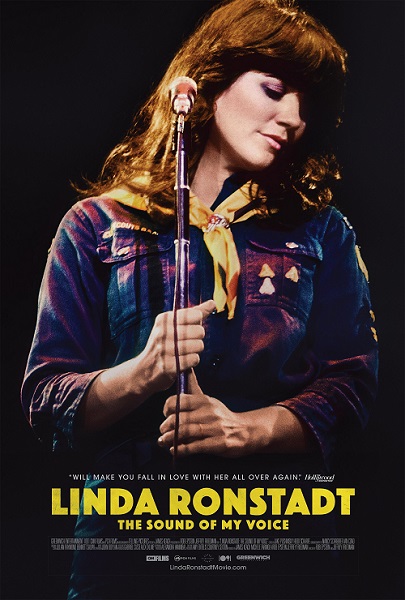
Linda Ronstadt: The Sound of My Voice

Melinda Palacio


Linda Ronstadt Tribeca Film Festival
Linda Ronstadt: The Sound of My Voice


On Wednesday, I went to see the documentary, Linda Ronstadt: The Sound of My Voice. I can’t say enough good things about this film. The only shortcoming might be the shortness of clips of her singing. However, longer samples of her songs would turn the ninety-five minute run time into something too long for one sitting. For a fan such as my late grandmother, a longer film would be welcome. Linda Ronstadt’s music was the soundtrack of my childhood. Sometimes, my grandmother would play her albums on repeat the entire day. She never tired of Linda. 

As a female pioneer and rockstar queen, Linda Ronstadt was versatile enough to own every single genre of music. She is the only woman with 5 platinum albums and one year she appeared at the top of the carts in Pop, R&B, and Country, all at the same time. Her voracious variety in musical taste, echoed the smorgasbord of music in my grandmother’s house in Huntington Park, where I grew up. Before Ronstadt’s double platinum album, Canciones de Mi Padre, my grandmother had no idea Ronstadt was Mexican. She simply loved her voice and enjoyed all her hits, but she especially loved the album that spoke to her in her language. 

The documentary shows Ronstadt’s determination to produce the album of songs in Spanish for herself. Not being fluent in Spanish didn’t stop her. Linda enlisted Rubén Blades to help her with her Spanish diction. The success of the album silenced the record company naysayers. 

Yet, for all her determination and success, Linda was lonely and insecure. Another saying comes to mind, It’s lonely at the top.  I was surprised to learn that with all of her success, awards, and a voice that was liquid gold, she doubted herself. Although I can relate to her insecurities, it’s hard to understand the feeling in someone who is so talented. During the film, I kept waiting for the moment in the film when there is a fall from grace or when the hit records hit a dry spell, but she had a stellar career. Every time she ran into roadblocks, she insisted on knocking them down. She proceeded with her vision, and never failed to produce an award-winning album. 
Of course the absolute heartbreak of the film is the ending and seeing that she has lost her vocal range (and most of her voice) to Parkinson’s, a disease her mother also had. Music is such an important part of her life. To have been one of the greatest singers and to have the gift taken away is devastating and tragic. The testament to her grit is how she is able to share the heartbreak with the world. One can’t help but admire her. 


The few months I wasn’t able to walk after I broke my leg left me yearning to do more than hobble. I couldn’t wait to skip, run, dance, sprint again. The ordeal was a tough lesson in humility. When I hurt my arm in yoga, I couldn’t play guitar and I became agitated with thoughts that I might have to give up something I loved. The old saying about not appreciating what you have until you no longer have it is the toughest lesson. I was lucky to recover from my injuries. Linda Ronstadt graciously shares how hard it is to lose the thing she loves the most: singing with her family. What courage and grace it takes to share such a vulnerable moment with the world. 

Thursday, September 19, 2019

Where is Monserrat Fontes?

                                                                       
Books and Moths
     I’ve been weeding my library of books I’ll probably never read again, even some special ones, kind of like clothes in a closet, some really cool clothes in there that haven’t been worn in years, and, I know I never will wear again—moth food.
     I see James Michner’s “Iberia” up there. It’s been with me since 1976, my Bible as I travelled through central and southern Spain as a student in 1977-’78. There’s a row of books my professors assigned me while I studied at the University of Granada, in the old university downtown, where students crowded into the cafes and plazas and discussed every topic imaginable.
     I see two Ramon Sender classics, “requiem por un campesino espanol,” and “La Tesis de Nancy”, a really charming read about a chatty American student in Spain trying to learn Castellano, even asking common working people the rules of grammar, as if thinking every Spaniard was a grammarian.
                                                                                   
Ramon Sender to Lazarillo de Tormes
     There is a row of books by Chicano writers, poets, essayists, and novelists, some going back to the mid-to-late 1960s, the Chicano Enlightenment. When I retired, I passed off most of my classic Chicano literature books to a friend, Professor Jaime Cruz, who was working with at risk kids at a new library in Santa Monica. Sometimes, I think, I want some of them back. Then I remember the moths and the old shirts.
     I also notice my favorites scattered haphazardly about, books I pull out to skim every so often, like Hesse’s “Steppenwolf”, the short stories of Paul Bowles , Kafka, Chekov, and Hemingway, novels by the Bronte sisters, Rudy Acuna’s “Occupied America,” Thomas Merton’s “Seven Story Mountain,” Paz’s biography of Juana de La Cruz, and a smattering of books on religion-spirituality, peace, war, politics, sociology, education, and writing.
     At the top, in the highest row, are the autographed books, mostly Chicano and Chicana writers, friends I’ve met over the years at conferences, book signings, or award ceremonies where we shared the stage. Many haven’t published in a long time. I hesitate to say “have stopped writing,” because I know that even though I haven’t published a novel since 2009, I write four or five times a week.
     My excuse for not publishing more…. Well, I love the process, writing, revising, editing, publishing, and, of course, seeing the first copy arrive in the mail, but I don’t like the business aspect, and believe me, publishing is a business. When a writer or artist finishes a “piece,” like it or not, whoever produced it, sees a product, and like all products, they are produced to be sold.
     At this point, the artist becomes a salesperson. The more units sold, the better chance of having the next piece produced. For writers who publish with small presses, there is no powerful promotion machine, so the writer becomes the advertiser and bookstore.
     The reading circuit for writers is still the traditional way of selling books, but that ain’t an easy gig, the travel, the expense, showing up for an audience of five (if you’re lucky), and with the disappearance of so many bookstores, today, there are fewer and fewer venues to read. Even university publishers want writers who will hit the road and sell their books.
     On the shelf of autographed books, I spot Victor Villasenor’s “Rain of Gold”. I remember hanging out with Victor for an evening after he read and signed his book at Dutton’s Books (now deceased), in Brentwood.
                                                                             
The autographed copies
     After publishing “Rain of Gold,” Victor was a hot item, covered by major news-outlets around the country. Writing books was his thing, no teaching job on the side or any other work, so he had to sell his books if he wanted to eat.
     As we walked along San Vicente boulevard, Victor carried a satchel filled with flyers advertising his book. To my surprise, he stopped anyone passing us, introduced himself, handed them a flyer, and told them where to buy his book. Victor is gregarious and engaged many people in conversations. Some said they'd definitely stop by Dutton's and pick up his book. "That's how you do it," he said, or something to that effect.
     We went into a restaurant for coffee. He said, “Come with me.” We went into the men’s restroom. and he taped his flyers on the wall just above the urinals. He said, “A good place to advertise; it’s a captured audience.”
     We were both younger at the time, with a lot more energy and ganas. I’d just published my first book. He’d been at it for years and was giving me a lesson in marketing. He was hundred percent correct. What good is a product, even art, if it doesn’t sell, or put another way, if nobody reads, sees, or hears it?
     I once heard the writer Carolyn See tell an audience of writers, “If you already have a book published, forget about writing your next book. Work on selling the one you have.” She wasn't talking about selling for the sake of making money, necessarily, but for the purpose of expanding your "base" as one might say today.
     Beside Victor’s book is Monserrat Fontes’ “Dreams of the Centaur,” published by Norton, and winner of the 1997 American Book Award. Now, to win the American Book Award, your book has to be pretty damn good. I don't remember what Monserrat published after "Dreams," so I picked up my old I-phone and googled her name. It seemed like "Dreams" was her last book. How can that be, after winning such a prestigious literary prize?
                                                                                   
1997 American Book Award Winner
I don't remember much about the story. I mean, it was 1996. I also can’t remember where I met Monserrat, a conference, I think, but she’d read my first book “Pepe Rios”, about a teenage boy who, after his father's mysterious death, leaves his family’s ranch in Mexico during the early days of the 1910 Revolution and, after being kidnapped by the rebels and facing many harrowing  experiences, finds his way to the banks of the Rio Bravo.
     Writing historical novels is exhausting, years of work. I reach up for Monserrat’s book. open it, and read the inscription to me. It’s inspiring, and she encourages me to keep writing. So many years ago. The reason historical fiction takes so much work is the inordinate amount of research necessary before and during the writing.
     I find a comfortable chair, open to Chapter I, and I begin reading. The pages turn, some quicker than others. To read it right, one can’t rush through historical fiction. That’s why it took me six months to read “War and Peace”, one copy in my car and one at home. I finished it while on vacation in Puerto Rico, and I was coming down with the flu. Funny the things books help us remember about out own lives.
     I wrote my first novel rushing home from my day job, eating dinner, saying hi to the family, then dashing to local libraries (no Google back then) to research. I’d return home by 7:30 or 8:00 PM. I tried spending quality time with the kids, at least an hour. By 9:00 PM, after the family was in bed, I’d head to the kitchen and write until 11 or 11:30, go to bed, wake up the next morning and do it all again. I saved Saturday for research and rested Sunday.
     As I read through Monserrat’s book, I am mesmerized by the story and the historical detail. My book paled by comparison. Monserrat had to have done an extraordinary amount of research to pull together her story. I peruse her "Acknowledgement" page. It's vast, with sources from University of Mississippi to Mexico and many places in between. She wrote this while teaching at University High School, a feat in itself. That's what, five classes a day, five days a week?
     She describes a beautiful scene of the protagonist Alejo breaking a wild horse, three-four pages of exquisite writing, heart-breaking emotion, and attention to detail, point by point.
     “Dreams of the Centaur” is filled with wonderful scenes and engaging storylines, the most moving, a mother’s love for her son, and finally, having to let go.
     Monserrat’s book is timeless. Her narrative regarding Mexico’s brutal system of incarceration under Porfirio Diaz shows human beings treated worse than animals, kept, not even in cells or cages, but, literally, in narrow, dirt pits and caves.
     Under his regime, Diaz's government tortured and kidnapped Yaquis from their ranchitos in Sonora and sent them to work on the henequin plantations in the Yucatan where many died, facing an entirely different Mexico, or as an overseer tells Alejo, an army deserter working on a plantation and claiming he is a free man and not a slave. “You’re not free. And you’re not in Mexico. You belong to the king.”
     The kings are those aristocrats who own the plantations, not unlike those plantation owners in the American South during slavery and Jim Crow. They answer to no government. In the late 1800s, using slave labor, the kings produced henequen to sell around the world and wealth to match.
     They created the laws, and even though Mexico outlawed slavery in its Constitution, it never stopped the practice of slavery, not in the past, and not even today. Consider southern Mexico, Chiapas, Campeche, and the Yucatan, as far as Central and South America, where the Maya, Inca, and other indigenous groups continue to be brutalized on plantations and in mines, under antiquated political systems.
     As I read “Dreams”, I realized Fontes' novel is a book about Latin America today, from the burning of the Amazon to the murders of nuns and priests in El Salvador to the drug fueled atrocities, all vile, legal crimes, perpetrated upon the most vulnerable Latin Americans.
     Whether the perpetrators are governments, corporations, or gangs, often one and the same, or go by such names as Nueva Generacion, Los Zetas, Chiquita, United Fruit, Dole, or Shell, they wreak havoc on the environment and on people’s lives and send caravans of migrants north, in a flight for safety, and for no other reason than to keep the flow of cheap labor moving, as well satisfying the unsatiated need of Americans to “get high.” It is the writer's responsibility to tell these stories, sometimes sacrificing their own well-being in process.
 

Wednesday, September 18, 2019

Close/ Cerca and Far/ Lejos


Written by Juan Felipe Herrera. Illustrated by Blanca Gómez.


           *Age Range: 2 - 5 years
*Grade Level: Preschool - Kindergarten
*Board book: 14 pages
*Publisher: Candlewick; Bilingual edition
*Language: English/ Spanish

Some things are close — cerca. Others are far — lejos. With sweet simplicity, these charming dual-language board books engage young children.


El árbol de limones está lejos de mi casa. The lemon tree is far from my house.

The little boy’s house is far from the city, and the city is far from the ocean. What about the mountains in the distance, or the clouds in the sky, or the sun that shines over the boy as he walks?


Mi cuarto está cerca de la cocina. My bedroom is close to the kitchen.


As she walks from her kitchen through a daisy-filled yard to the house next door, a little girl notices things that are close to each other — just as the little boy she goes to visit is close to her.


Juan Felipe Herrera is a poet, artist, and activist. He was the U.S. Poet Laureate from 2015 to 2017. He is the creator of Jabberwalking and the author of Imagine, illustrated by Lauren Castillo. He lives in Fresno, California.

Blanca Gómez started drawing illustrations for her mom when she was a child. Now she illustrates for people from near and far, all over the world. She lives in Madrid, Spain.