Showing posts sorted by relevance for query coyote rising. Sort by date Show all posts

Saturday, May 08, 2010

La Bloga cultural appropriation posts

[To accommodate my participation in Coyote Con, Cecile Pineda's final installment of the series on Jean Blum will appear tomorrow.]

Here from Coyote Con?
To read La Bloga's take on cultural appropriation (
CA), scroll past the Intro.

Intro

This evening at 7pm EST, 5pm MST, I'll be a panelist in a chat room entitled Non-Western Perspectives, part of what looks to be a very well organized (online) 31-Day Digital Author Conference called Coyote Con--no, it's not about those coyotes--launched by Drollerie Press. It's a crazy event with sessions every day of the month covering a gamut of topics: "Our guests are authors, editors, publishers and other industry professionals who love to talk about, and be involved in, the making of books: cross-genre, historical, romance, horror, fantasy, and science fiction, and all the related media they generate."

"Our topics are geared toward the author, but if you have an interest—whether you write or not—you are welcome to attend. There is no cost involved, but registration is required as space is limited and you must obtain a ticket for Special Sessions."

That's me, Special Session, so you'll need a ticket. To check it out, click here. Mine will be in the Raven Room.

As for the Non-Western Perspectives chat: here's the intro:
"Beautiful writing isn’t limited to the west. In fact, great stories have been told in every culture around the world. How do you write great stories that include the rest of the world we live in without appropriating a culture (CA)? Why should you bother? What does a non-western perspective have to offer you?"

I've never done one of these, so I can't guarantee the quality of my input, but you can if you go there and keep me in line. Below is info for Coyote Con participants looking for some La Bloga posts relating to CA.

for Coyote Con:

When we started La Bloga (12/3/04) all we knew was we wanted to create a Chicano literary site. Today's Blogueros post something new each day and include crime, spec, children's lit, novelists and writers, lawyers, teachers and quien-sabe-qué-más, new, views and reviews. (Check their websites for more info.) In any event, we don't have one philosophy, other than a love of lit, so views expressed in this post and today's Coyote Con chat are strictly of my culpa. Below are highlighted posts I chose from La Bloga history that somehow relate to CA, in some of its many exploitations. Its truncated form is intended for a fast read, with links to the full post.

Before that, a few words about where I'm coming from:
What, besides KOP, do I consider some good spec lit that isn't a case of CA? I gotta start with Ernest Hogan's Cortez on Jupiter. Protagonist Pablo Cortez, leader of the Guerilla Muralists of Los Angeles, is one crazy vato in one jam-packed SciFi novel. Some people don't know Hogan's mom was a Chicana, which partly explains the novel's verisimilitude, sans CA.

Who's on my CACA list? Mostly Anglo writer/researchers specializing in other cultures. Gary Jennings of Aztec fame spent years in Mexico doing the research and must've raked it in because after he died, his notes were turned over to Robert Gleason to continue the series. Our history is just so much property to be passed on and exploited, is my take. Not claiming to speak for Native Americans, I put Jean M. Auel's Earth's Children and the other First Americans authors in the same pile of CACA. (Yes, I've probably read them all.)

I don't intend to make today's Coyote Con focus too much on things Chicano; there's many other "non-westerns" to discuss. And like always, if I've put my pata en mi boca I may have to eat some of my words, but don't hesitate to help me position my foot correctly: I've been known to be opinionated, even wrong, several times.

Below are highlights from La Bloga's history relating to CA:

La Bloga Groundrules, from RudyG's version:
"5. Cultural appropriation. (FYI, generally, writing about cultures you're not a part of, like Anglos writing about us--whatever we're called.) I don't like it. There's Anglo writers who I don't think of as being cultural appropriators, e.g., John Nichols, but they're rare and few. The rest of them are cabrones. I'm willing to discuss this, in general or specifically.

Guest columnist Sergio Troncoso's take on "Is the Texas Library Association excluding Latino writers?"

My "review" of SciFi gringo novelist Warren Hammond and his Kop and Ex-KOP.

Chevolution
- a film-review on Alberto Korda's renowned Che image.

Below's a wild poem introducing a great post:
I, Carmelita Tropicana: Performance Between Cultures.

Hello people, you know me, I know you.
I am Carmelita Tropicana.
I say Loisaida is the place to be.
It is multicultural, multinational,
multigenerational, mucho multi.
And like myself ,
you've got to be multilingual.
I am very good with the tongue.

From Manuel Ramos's piece on the Simon and Schuster fake-Chicano author, The Strange Cases of Danny Santiago and Amado Muro:
"Simon & Schuster book editor who bought Santiago's book stated the author had hidden his identity and masqueraded as a Chicano (using Chicano slang in his letters to the editor) and, even after his identity had been exposed, expressed his intention to continue writing as Danny Santiago."

Here's a blurb from a post I did on the Coyote Rising novel, A Light Case of Cultural Appropriation.
"Allen Steele's Coyote Rising (Ace Books, 2004). Subtitled, A novel of interstellar revolution, it depicts the colonization of the planet Coyote by Earthlings who undergo a "revolution" to decide how the planet will evolve.

"Among others, Coyote has a series of Spanish-surnamed characters (presumably Chicano)--Carlos Montero (terrorist/freedom fighter), James Garcia (architect/engineer), et al. I saw none of the baser stereotypical problems with these major characters, i.e., they weren't the formulaic chucos or hot-blooded Latinos we've all come to know and detest. However, what they came across as are white guys who happen to have Spanish names. So what's wrong with that?" . . .

And check out guest Bloguera Mayra Lazara Dole's SPIC Out! on her YA novel, Down to the Bone.

I'll probably regret volunteering for this chat, but hopefully it will sully neither Coyote Con nor La Bloga's rep, at least not too much.

Es todo, hoy
RudyG

Tuesday, July 06, 2010

Guest Columnist: Edith M Vásquez on Rigoberto González. On-Line Floricanto: Poets Respond to Arizona Racists

Amor, Amorphous Amor: On Poems, Sex and Power
In Other Fugitives and Other Strangers by Rigoberto González

Edith M. Vásquez

Editor's note: La Bloga has semi-regularly linked or featured poet and scholar Rigoberto González' literary critiques, most recently his review of Calaca Press' Chicas Patas Sci-Fi title, Lunar Braceros (a worthwhile title reviewed in February by Michael Sedano). Today, La Bloga's Guest Columnist, Edith M. Vásquez, conducts a critical tour of Mr. González' work. Ms. Vásquez' poem, "To The Poets," was included in a recent On-Line Floricanto.


Disrupting symmetry: the key
to the art of conquering

a lover. Take exactitude and
distort its vain

proportions.


In ancient myth, Chaos and Eros are closely aligned figures. These lines, drawn from the poem, “Vanquishing Act,” by Rigoberto González call for the disordering of an as- seemingly-permanent value as that of symmetry, in an argument of love as agile potency against compulsory and preordained order. Throughout his Other Fugitives and Other Strangers, (Tupelo Press, 2006) González foregrounds male erotica through a lyric expansion leading ever more deeply into newly broached recesses of the loved body; here conquest is a countering of form, and form is a responsive if seduced lover. Cutting, biting, and probing the body of the lover is represented as a breakage of form--the release of order permitted therewith supplies new poetic material, and new shapes can be appraised.

The power of love—as physical pact or emotional bond—may injure and or please. Conquest entails some rearranging of power as the sexual positions do also create a necessary giver and taker often. Remarking on the potential of abusive power in sex, the speaker of the opening poem, “Good Boy” queries his own progression into the darker forces of sexual relations; the poem dramatizes the experienced lover’s inquiring gaze fixed on a photo of him as a ten-year old child. Meditating on his maturation from apparent innocent to practiced lover, the speaker poses a series of questions, among them: “Wasn’t I a good boy once?” and “How do you explain this/ strange ability to inflict pain?”

A juxtaposition of innocence and experience draws a contrast between nascent and certain lover through sound, color, and age. Youth is described as “a laugh/so clean,” is compared to a “white sheet,” and is recorded as “those high-pitched sounds.” On the other hand, maturation is “rust in my throat,” and it signifies that the child he once was “is lost in the stomach” and has dissolved “like any other/color.” These queries and comparisons culminate in one possibility, thus the assertion: “I must have been the changeling matured/ now longing for things that blister/ and boil.” Nowhere does it appear that there is early evidence of the hungering adult lover within the ten-year-old boy, yet “I must have ingested hatred/through the spoons of my childhood.”

Already even the shape of the child in the photo converts to something new, and a composite—a child/man. The grown male lover recaptures what is within him, that child who spoke with the “contagious note of a two-finger bell.” While the adult lover finds yearning for pain in sex, perhaps, this is a desire for change of form. Change of form brings playful reinvention even if it voyages through pain, physical and intimate. Near the end of the poem, the desire for the pleasures and the pains of love seem to lead back to such playfulness and even to mischief, so that the poem’s enactment of savage love quiets into an “intentional act.” The lover finds an erotic partner in a scene of sexual engagement hallowed by a correspondence drawn between the lover’s open white mouth and the moon; the moon also appears in two other poems of Part I, “Point it Out” and “In Praise of the Mouth,” where it appears to consecrate love and sexual aggression between masculine lovers.

When certain, love occasions sacred and profane instances contained within a form of lyrical and seminal largess. Through the medium of language and more so in poetic passages that transmit the histories of love and of love’s violence, the poet details the wounded and pleasured zones and pathways of the body erotic. Often, sexual penetration is envisioned as incision particularly in poems belonging to Part I of the book: in “Scar,” “The Balloon Artist,” “Point it Out,” “Of Despots and Deities,” union is likened to the cutting of flesh. Part I also focuses on aspects of doubling. In poems such as “Of Despots and Deities,” “Sweet Somnambulist,” “My Crush on the Crisis Counselor,” “Neurotic Double,” and “Dear Dead Lover, “ the lover/poet is poised as doppelganger. These are impressive works which lead into the repopulating of the self and the breakage of the individualization of epistemology, Multiple identities may be drawn together through sex acts; sexuality offers a forum for adaptations of form and identity here. These poetic formulae will lead in Part II to deeper yet breakages of form, and in Part III, to breakages with authority. For example, in “Vanquishing Act,” a poetic treatise and erotic dismemberment are fused in a metapoetic composition, a tour de force, the poet remarks on what he has constructed as a body poetic/body erotic. With the dismantling of the lover’s body here—not un-Christ-like by far—power becomes the central theme. Destabilizing the power of patriarchy, church, and intoning a form of lovemaking which extends to the world of the dead perhaps speaks of Indigenous Mexican philosophies on death Death, like sex, is the ultimate shape changer.

Other Fugitives and Other Strangers, the second full volume of poems by González may be one of the most provocative books in terms of its sexual politics and its other politics of our decade long 21st Century. Divided into three parts and gathering poems published in nearly twenty different literary periodicals, this book removes the waxy seals of the most confidential of belles letres: an athletic and often racialized, same sex male love where rules of engagement are codified through a form of personal liberation won or retaken from the authorities--church, society, heteronorms, biological family, cultural tradition, labor and race segmentation.

In narrative form González measures and describes these authorities from the position of an apparent impotency converted into agency and without the positivistic romance normally associated with the so-called “uplift” framework of ascendant character development. Butterfly Boy: Memoir of a Chicano Mariposa depicts the fecundity of the author’s creative powers evident in his search for a just and accurate self-fulfillment. Already as a young adult and first-generation college student, he is committed to self-representation and determined to define himself in a manner pleasing and productive to his life as a writer. His ability to advance his literary efforts even in times of great personal turmoil such as after a violent episode with an older lover is one aspect of artistic courage as truth and power.

González’s creative and biographical trajectory posits a theory of the subject/artist/author as a focal point for self-definition through literature and its many resources for the imaginative, social, and public declaration of individual discipline, of writing as manifesto, and as no doubt a martyr or angel. Eventually, it would appear, the poet is willing to commune with the world of readers by becoming an object of potential scrutiny or curiosity for he speaks on behalf of intimacy, a place of submission and a place of surrender. In order to enter the position of object, González scales the walls of society by converting reality into an entryway to the self. Beginning with the most intimate of places, the poet questions the familial bond for it is the palimpsest of social organization: the poet’s origin is his first proscenium.

At home and within the domain of family life, his eloquence draws its boldness from an immersion in a lively Mexican vernacular language which he prizes yet which he also recognizes as the ironic lovely oral communication facilitated in especial ways by illiteracy. Many an isolation-inducing experience for the young writer occur in the autobiography: his impressive verbal and intellectual potential exists precariously in an environment of farmwork labor, poverty, and sensual, emotional, and aesthetic deprivation, as well as uneven gender norms and an implicit heternormativity. In the memoir, he is nothing less than the cherub to whom Ginsberg referred when the venerable late author of “Howl” spoke of those lost ones who emit angelic ravings. He is one of the would-be “best minds” of this generation. But he is not raving mad nor is he one of those lost or defeated ones ultimately. Love and erotic love save him. So it is that “Other Fugitives and Other Strangers” records this testament to love. Everywhere in these poems, the body of love radiates its presence in the proportions of a deity.


Edith Morris-Vasquez is a researcher, writer, and teacher. She publishes in several fields including poetry, women's studies, translation, and civil and worker's rights. While trained in the humanities, she specializes in teaching creative and research skills to students of all backgrounds. As an interdisciplinary scholar, her interests reach into the social sciences, art practice, and communication. She dedicates the poem, "To the Poets/ A los Poetas," to the literati who have always committed their verbal talents to the goal of bolstering society against incivility, racial animosity, and segregation. Que Vivan los Poetas Siempre!


On-Line FLoricanto: Poets Respond to Arizona Legislature's Spiritual Putrefaction

Selected poems for the July 6th issue of La Bloga:

1."A Ceremony for Reclaiming Language" and "Love Poem, After Arizona" by Qwo-Li Driskill
2. "A Perfect Rest" by Daniel Sosa
3. "One Earth, One Kind" by Ariana Hernández
4. "Diferente" by Flora Gamez Gratero
5. "In the shade of the shadows" Miguel Robles
6. "How Coyote Became Legal" (Narrative) by Vito Tribuzio
7. "Marcha en Phoenix (May 29, 2010)" por Luis Jiménez

******************************************
A CEREMONY FOR RECLAIMING LANGUAGE

especially for Casie Cobos and Gabriela Ríos

Qwo-Li Driskill


our homelands remember us
they raise themselves up
to mend our tongues
remove fingers of conquistadors and
governors from bruised necks

as you enter
into this ceremony
breathe phrases
like copal smoke
let syllables strengthen
your blood like nopales
wear words
around your throat
a gift of turquoise and gold

remember
we are here to become elders
and ancestors that teach
our children to
heal the world

as you enter into this ceremony
say a prayer
offer tobacco
remember each morning
we enter into spinning
light of a galaxy that
loves us

hidden words will sprout
in your dreams
like maíz opening
into the rich brown soil
of Anáhuac

as you enter into this ceremony
mourn for what was stolen
smuggle your tongue
across their imaginary border
and laugh
let this language suture
your heart

each word whispers
a story
through your lips
weaves a basket
that carries
a mending
world


A Perfect Rest

By Daniel Sosa

Phoenix surrounded
and a contraction of
faithful into the city
pumps out the blood of our movement
a march enriched with words and songs
flowing through streets
delivering energy

the next week a different city
a signal for the others of us
same movement inward
purposed to match our might
their beat supplying the breath
for chants and shouts
to inspire

listen closely
the heart beat of our struggle
this side works that side rests
this side rests that side works

across our land
our cause repeating
our strength going forward
healthy and strong

a rest in between
needed for an endless struggle
the rest at home with family and friends
love and encouragement
renewed for our next move

this rest
a perfect rest
for a worthy effort

we will never be stilled
with a heart that never stops.


ONE EARTH, ONE KIND

By Ariana Hernández


As I sore above, stare down below
Speckles, dots, of city lights glow
I only see a whole, an ongoing piece of land
Designed for the freedom of humanity
But divided by man
We are all human, a single living race
We don't own the land, mother nature loaned us this space
Everyone should fly to see my realization
You see no borders, no segregation
Or maybe, they should not try
They might just end up putting boundaries to my sky


I wrote this poem on my way to Mexico when I was on the plane. I started thinking about what the Mexican astronaut that recently went to space said and i felt inspired. They asked him how he felt once he was out in space and he said that from up there you dont see borders, you just see one earth. When I was on the plane, looking down made me see his realization.


DIFERENTE

By Flora Gamez Grateron


we enter the classroom
we are
a sprinkle of nut brown faces
open and expectant, awaiting
our turn and poised to learn

we are
glossy hair in similar shades of ebony
dark copper eyes, wide eyed,
sensitive as a doe’s

we are
filled with wonder and hope
dreams and expectations
capable fingers and hands

we are
Ramón, Luis, Jorge, Jaime, Topacio
Miguel, Yazmeen, Yarima

we are not invisible
our names not difficult to pronounce
can’t you at least try?

It’s Juliana – not Julie
It’s Ramón – not Raymond

we have an answer, too
why not call on us?
we think in two languages –
not just one

we listen in the first
respond in the second
double the effort
but it can be done

We are not just taking up space

we are real people
we can do everything
and in two languages – not one.


In the Shade of the Shadows

By Miguel Robles

He is always walking toward somewhere
shrouded in a veil of mystery
from the vapor of the shaman’s breath
creating the aura of a hero
shape-shifting him each moment
into rabbit duck wolf
spider and vulture

With a lean face
he walks erect
head held high
hands poised for any provocation

It is possible for him to hear the flutter of a wasp’s wings
the slightest sound might make him leap from a cliff
plunging in an overdose of adrenaline
the wall smashed in a single attack

He eats snakes
without a knife and fork
no tortilla
no chile

He sleeps on the grass
cactus bless him in passing
rocks in the path part for him
the eagles envy his advantageous view
how he can perceive paradise from so far away
the promised land

He is aware that the world is changing
so every moment he adapts
to a different climate
another language
habits
times

If he hears footsteps he sits in the shade of the shadows
to wait until night falls
when he can disappear on trails of oblivion

He has nothing to lose
but can’t waste time
he is in a hurry
needing to get there before the dream is depleted
by the anxiety of other anonymous beings
who have arrived before him
to swing in the hammock of illusion

************************************************

A la Sombra de las Sombras
Translated by the Poet Virginia Barrett.

Siempre va a hacia algún lugar
cubierto por un velo de misterio
por un vaho de chaman
que le produce un aura de héroe
que lo transforma a cada instante
en un conejo en pato en lobo
en una araña y un zopilote

De rostro enjuto
camina erguido
con la frente en alto
con las manos prestas a la menor provocación

A gran distancia podría escuchar el aleteo de una avispa
el menor sonido
lo haría saltar al precipicio
caer en una sobredosis de adrenalina
romper un muro de una acometida

Come serpientes
sin cubiertos
sin tortilla
sin chile

Duerme en el pasto
los cactus lo bendicen al pasar
los piedras del camino le abren paso
los águilas envidian su vista privilegiada
que a leguas puede distinguir el paraíso
la tierra prometida

Intuye que el mundo está cambiando
y a cada instante se adapta
a un clima diferente
otras lenguas
costumbres
tiempos

Si escucha pasos se sienta a la sombra de las sombras
a esperar a que la noche caiga
y le permita desaparecer por los caminos del olvido

No tiene nada que perder
pero no puede perder el tiempo
anda de prisa
tiene que llegar antes de que el sueño sea agotado
por la ansiedad de otros entes anónimos
que llegaron antes que él
a mecerse en la hamaca de la ilusión


How Coyote Became Legal

by Vito Tribuzio

Doña Juana Ines Coyote rubbed her belly as she served supper, arroz salvaje y caldo de pollo she’d made with the necks, feet and backs her husband wrestled from Don Hawk Falcone de Halcón, and with a smile she reminded Don Coyote about the promises he’d made when he proposed: “I will shower you with fresh whole chickens day and night.”

But that was before the oil spill, when everybody was eating more pescado and less meat. With no decent mariscos to be found, bony chicken parts had become Sunday dinner; that is, if, and only if, one could afford to be that extravagant.

Now Coyote could no longer eat; he lost his appetite knowing that he had been partly responsible for his preciosa esposa’s misery. Juana never warmed up to Aguas Calientes, disliked Jalisco because of the scorpions, and had been having a hard time communicating with some of the locals, even though she could howl in Spanish very well. No, Mexico was not for her, as she missed the brick casita her padres owned in the North Country prior to being deported, and she had always been wishing her marido would come through with what he promised, that he would one day take her back to the Land of Illini, also known as the Land of Slaughter, now known as the Land of Lincoln.

He remembered a story his father told him, something about treaties that pushed his kind southward when foreign animals came and began to pee on everything they wanted to own. Yes, he remembered hearing that north of the border the streets were paved with chickens—I mean, we’re talking about real chickens, big chickens—with the fattest ones being on Wall Street.

“But…but…how do I cross the border?” Don Coyote asked himself, and himself replied: “Very carefully, because the pinche BP Agents will shoot at anything that moves, even at the water that trickles in the Rio Grande.”

Thus Don Coyote sallied forth, strutting across the Desert of Big Sound with nothing to alleviate his hunger and quench his thirst but some peyote he had found along the way. “If only I had brought some romero and Adobo,” Don Coyote mused as he bit into the peyote, “this crap would taste like pollo.” He sighed and sang “curu-cucu-cucu, paloma!” envisioning a fat dove alighting within snatching distance, but the Sonora Spirit told him not to eat it because one should not eat an omen of peace. Thus, Don Coyote was denied even the pleasure of virtual eating-ayy!

A day later, as Don Coyote loped along, singing “Volver, Volver” with all the lamento of a just-castrated mariachi, he heard “Manos en alto! Where you think you’re going, perro maldito? Got papers?”

“I don’t have any papers,” Don Coyote explained, “I didn’t have time to wait around for papers. My expecting wife is hungry and I need to get to Wall Street ahora mismo so that I can earn some chicken for pup-support when she gives birth.”

“Okay,” said one of the guards, “then shows us the oil!”

“Oil?” Don Coyote puzzled.

“Yes,” replied the guard, “dinero to grease your way in. If you have no money, a couple of kilos of good quality cha-chun-sha will do—that’s the way we do things around here.”

“I’m not a drug dealer,” said Don Coyote, “and anyway, I think all animals on the continent should be able to cross borders with a simple document identifying them as North American nationals, of any nation on the continent, I should add.”

“Shee-it, dog!” said one of the guards, “I like the jive the ol’ dog’s talkin’—pretty good idea. You should write to the White House—yessur.”

“But as things stand now,” said the other guard, a man with blond hair and blue eyes, “we can’t let you in—sorry—strict orders from Doña Diabla of Arizona. Now git, before my pistola goes off accidentally.”

So, Don Coyote went back home and wrote a letter, addressing it to the Casa Blanca. A week later he received a reply informing him that the film studio that made Casablanca was no longer functional. Feeling frustrated, he went back to the desert, to intentionally feed on peyote this time—ayy! There he met Red Fox Volpe Rossa de Zorro who told him everything he knew about American red tape, catch-22, Big Oil, Big Tobacco, big hijos de putas—ayy!

But Don Coyote’s eyes lit up when Don Eagle Aquila de Águila came around with a fly-by message: “Something should be done about that oil spill.”

For days, everybody wondered why Don Coyote had been going to and from the seashore, carrying oily sludge and any crude he found, dumping it in a hole he had dug in his backyard. Soon the media showed up and they reported that crude was bubbling in Don Coyote’s backyard—ayy! Before Don Coyote could say “ayy!” again, a bunch of people showed up, offering him multimillion chicken contracts to extract the non-existing crude.

But, as the saying goes, those who find a treasure also find many new friends. Soon, Don Coyote was given the key to many cities by many good mayors; and, a Hollywood studio offered him a part in a movie, and, Salma Hayek became good friends with the Coyotes and officiated as madrina of their pups—ayy-ayy-ayy, Salma!! Then Don Coyote learned that his new friends in Washington, DC were interested in hearing his idea concerning the Immigration Law, the Dream Act, and many other whatnots and etceteras. Furthermore, Big Oil forgave him for the hoax he had pulled, claiming that this is the way we do things in America, and made him an honorary Washington lobbyist.

“Speech, speech!” White House guests demanded. Don Coyote obliged and the crowd cheered. Many moved from left to right and from right to left, some nodded in agreement, others nodded to sleep—ayy! Midway through his speech, all eyes turned to a giant TV screen: “Breaking news: a mushroom cloud is rising over Arizona—seems Doña Diabla’s head has finally exploded.” Ayy!!!


Marcha en Phoenix (May 29, 2010)

Luis Jiménez


La televisión parpadea las imágenes

Es nuestra voz que serpentea por las calles,
sin importarle el peso cobrizo del sol,
sin limitarse al sabor oficial del inglés
y ni siquiera al rojo del español.
que se viste con el resplandor de mil banderas,
y el sueño asueto donde no caben fronteras.

Es el eco que viene clamando la frustración con la que vivimos,
de no entender como sus vecinos,
optaron por esa realidad inventada,
donde el odio nos culpa de haber robado un ayer que nunca existió,
y pretende un presente que no tiene nada que ver con éste.

Lo que nos tomó meses,
Las cámaras apenas le dedicaron segundos.
Y si ahora entiendes menos que antes,
No tienes con que culparnos a nosotros,
Que antes que nada yo te dijera
que es dificil cuando te ufanas
de llevar tu ignorancia como trinchera.


BIOS

1."A Ceremony for Reclaiming Language" and "Love Poem, After Arizona" by Qwo-Li DriskillQwo-Li Driskill is a Cherokee Two-Spirit writer/activist/performer/educator and the author of Walking with Ghosts: Poems (Salt Publishing). Qwo-Li is currently Assistant Professor in the Department of English at Texas A&M University. dragonflyrising.com


2. "A Perfect Rest" by Daniel SosaDaniel Sosa
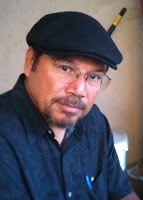
Married to Lorilita Sosa
Father of two daughters
Grandfather of three grandchildren
Active 36 year telecommunications field technician
Resident of Long Beach,Ca


3. "One Earth, One Kind" by Ariana Hernández
Ariana Hernandez is a young adult form the Bay Area. Not only is she a first generation United States citizen, but a first generation college student as well. Ariana has written poetry for recreation since her sophomore year in high school. The inspiration for this poem came from the reply that Jose Hernandez, the first Mexican astronaut, gave after he was asked about his feeling while being in space. He said that looking down on the earth, you see no borders, just one earth. As Ariana was on a plane to Mexico, she realized his observation was true. She is currently a second year at the University of California Davis and is majoring in Chicano Studies with a cultural emphasis. Along with several peers, Ariana is working on starting an organization called A.C.T.O.S., Ayudando Comunidades Trayendo Oportunidades y Servicios. With this organization, they plan to perform several community projects, focusing on brining empowerment to the Latino community in the areas surrounding Davis, Ca.

4. "Diferente" by Flora Gamez Gratero
Flora Gamez Grateron is an English/Language Arts educator for the Sunnyside Unified School District in Tucson, Arizona. She has a B.A. in Creative Writing from the University of Arizona. Flora is a member of Community Stories and works with a mostly Hispanic population of students who create and narrate digital stories on the history, culture, and identity of community members. She belongs to the Sowing the Seeds writers group who is currently working on an anthology by women writers. Her poems have been published in the Blue Guitar Magazine of the Arizona Consortium for the Arts. Born in Texas, Arizona has now become home. Contact her at floragrateron@comcast.net

5. "In the shade of the shadows" Miguel RoblesBorn and raised in Mexico City, he studied art history, silversmithing, and creative writing in the city of Morelia in the state of Michoacán. Since a young age he has worked a wide range of jobs including bookseller, factory worker on the Mexican/U.S. border, and public transportation bus dispatcher. Artisan, poet, and activist, he has lived in diverse environments, residing in San Francisco since 2002.

You can order his collection, "At 24th and Mission" here.

Nació y creció en la Ciudad de México, estudio historia del arte, orfebrería y creación literaria en Morelia Michoacán. Desde muy joven trabajo en los mas variados oficios, desde vender libros de ciencias políticas y literatura, hasta trabajar en maquiladoras de la frontera México/EEUU, y despachar
autobuses de transporte publico. Habiendo vivido en los ambientes y lugares mas disímiles. Artesano, poeta y activista, desde 2002, radica en San Francisco, California.


6. "How Coyote Became Legal" (Narrative) by Vito Tribuzio
Construction worker, storyteller, poet, humor columnist, Vito Tribuzio is an Italian emigrant who was brought to the US by his Argentine-Italian parents when he was sixteen. His works have appeared in e-zines, local literary magazines, school publications and bimonthly newspapers, often under the pseudonym Vincenzo del Silenzio. He presently lives near family and friends in Kenosha, Wisconsin.


7. "Marcha en Phoenix (May 29, 2010)" por Luis Jiménez

Luis is a visiting professor of Political Science at Mount Holyoke. He received a BA and MA from the University of Arizona. He grew up just northwest of Phoenix.

Wednesday, February 02, 2005

Two February Pieces


La Bloga 2/2/2005


Bloganote: here are two current pieces to ponder and post your comments. 

La Bloga invites your comments--by name or anonymously.


Education


One short piece of news and one very short story -


I picked up this tidbit from The Poverty Law News, a weekly newsletter published by the Sargent Shriver National Center on Poverty Law.


Educational Achievement Reflects Family Background More Than Ethnicity or Immigration


This study by the Rand Corporation finds that the most important factors associated with the educational achievement of children are not race, ethnicity, or immigrant status. Instead, the most critical factors appear to be socioeconomic ones. These factors include parental education levels, neighborhood poverty, parental occupational status, and family income.

______________________________________________________________________


Kite Lesson - by Manuel Ramos

Florence, Colorado, 1955


Luis was seven when his father bought a kite and tried to teach him how to fly it.

They walked from their house to the baseball field, overgrown with weeds, and waited for the wind to gather. Luis stood in silence, away from the action.

Jesús was all business as he put together the plastic blue and red thing, attached the string and added a tail of old rags. When he finished his preparations the man chased away the dogs that sniffed at the contraption. He watched the sky for a hint of turbulence, a sign that it was time to launch the toy.

" I learned how to fly kites from my brother Danny. He knew so much about everything, son, so much. He was only nineteen when they killed him in Korea. He would've been a great man. Strong, smart. He taught me about life when I was no older than you, Luis. Lessons that a man needs to know to survive. La vida es dura."

Luis nodded but, as usual, his father lost him. He had heard the story of Danny many times. Jesús's eyes filled with sadness as he spoke of his dead brother. The boy was puzzled by the man's insistence on remembering.
The wind rose to a level that appeared to be right. Luis grabbed the kite and held it aloft, causing the wind to catch it. His father clutched the string.

"You should master this art, boy. And it is an art, after all, as well as a science. Kites show the delicate balance between security and the animal urge to let go, to live life in the clouds. Entiendes, chico?"
He jerked the string and the kite jumped.

"Let it go, Luis, let the damn thing go." He led the kite into the sky.
It was a beautiful kite. It lazily drifted upward to the full white clouds. Sunlight flashed off the plastic sheen creating red, blue and gold streaks.

Jesús reeled out yard after yard of string. The kite hungrily accepted the freedom. The man laughed and hollered and jumped among the weeds.

" There it goes, boy, there it goes! Our kite is now flying with the birds and we did it, we broke the law of gravity. My brother was right."
The boy watched the floating, tiny speck of color. He saw birds near the kite, the tail flapping crazily; and he heard his father's laugh, but Luis couldn't understand.

" Hijo, take the string, fly this baby."

Jesús offered the ball of string. He laid it in the boy's hand.

" Let it drift with the breeze. No need to give it any more slack, it's plenty high already."
Luis never held the ball. He felt it slip from his hand, saw it drag along the ground. Slowly it rose, so slowly that for years when he thought of this day it was in slow motion black and white. He ran after the string but it was above his head. Suddenly it took off with more speed than the boy had experienced in all of his short life.

Jesús jumped for the string but it was gone. He turned, looked at Luis, then shook his head. He kicked at the dirt with his boot, shrugged weary shoulders and walked back to the house.
The kite disappeared over some trees. Luis stared at the empty sky. When he looked for his father, the man was blocks away. Luis ran but he couldn't catch up to him.

__________

A slightly different version of this story originally was published in The Upper Larimer Arts & Times. All rights reserved by Manuel Ramos.


Manuel Ramos

http://www.manuelramos.com/


A Light Case of Cultural Appropriation

by RudyG


About my fifth personal groundrule I wrote, "Cultural appropriation (FYI, generally, writing about cultures you're not a part of, like Anglos writing about us, whatever we're called)--I don't like it. There's Anglo writers who I don't think commit cultural appropriation, e.g., John Nichols, but they're rare and few. The rest of them are cabrones. I'll discuss this, in general or specifically."


Okay, so, here's a specific: Allen Steele's Coyote Rising (Ace Books, 2004). Subtitled "A novel of interstellar revolution", it depicts the colonization of the planet Coyote by Earthlings who undergo a "revolution" to decide how the planet will evolve. (Not really a review, but that's not my purpose here.)


Among others, Coyote has a series of Spanish-surnamed characters (presumably Chicano)--Carlos Montero (terrorist/freedom fighter), James Garcia (architect/engineer), et al. I saw none of the baser stereotypical problems with these major characters, i.e., they weren't the formulaic chucos or hot-blooded Latinos we've all come to know and detest. However, what they came across as are white guys who happen to have Spanish names. So what's wrong with that?


There's no depth to them, Chicano-wise. They don't speak any Spanish (not even a good maldición), never make a taco, don't have bultos in their homes, never mention their abuelitos, and never suffered from ethnic bias, etcetera. In other words, they aren't very Chicano; they are completely acculturated. Oreos.


It's a good that Steele recognized Spanish-surnameds may exist in the future. As I said, I have no problem with the characters' overall characters. I guess I just don't like white bread trying to pass for tortillas. I don't know if Steel is a liberal who wanted to include a multicultural cast or a Bushite who just wanted to sell to a larger audience. Doesn't matter to me.


What does matter is what I feel is the unfulfilled promise provided on the dustjacket. Might you, a Chicano, deliberately buy a book because it seemed to include characters you could relate to? Would you feel cheated when you found you'd bought a loaf of Wonderbread, instead? That's how this reader felt. I don't consider this novel a major transgression of cultural appropriation; there's much worse. It's just a light, more frequently appearing example of how Chicanos are being absorbed by the nonChicano writing world: "We'll acknowledge your existence, but without knowing or describing your uniqueness."


Am I saying no Anglo writer should have Chicano characters in their stories, unless they're fully equipped Chicanos--speaking Spanish, eating tacos, etc.? No, because that might be another stereotype. Secondary characters, Chicano or otherwise, aren't necessarily very developed in short stories, for instance. They may be a little flat, as it's termed. And in some way, it's positive when we're no longer overlooked. But in the case of major characters--Chicano ones--I feel an author should somehow explain why NONE of those Chicanos really seem like Chicanos. Total acculturation? Okay, then we can argue about that.


Cultural appropriation is not a simple question to resolve in a short piece like this. Blame history for that, and everyone's grandparents who went along with creating that history. I'm not here to define what would make Chicano characters, written up by an Anglo, acceptable to Chicanos. A defense of Steele's portrayal might be that in the future, everybody will be acculturated and English-speaking, society having dissipated our picoso ingredients into a masa of bleached wheat dough. If that's the case, then the arena of my contention would be: what does history show and how will the future unfold? That's a discussion for elsewhere.


Maybe I just want some truth-in-advertising and Steele's dustjacket rewritten; "Only the characters' names are Chicanoesque, nothing else." Then I'd say, gracias for the warning.


R.Ch.Garcia


back to top


Tuesday, August 05, 2014

Beyond Boundaries Part II. Ten On the 5th of the 8th: On-line Floricanto

Beyond Boundaries: Networking and Workshopping in Lake Como, Italy, Part II

Guest post by Thelma T. Reyna.

Here's a link to Part I of Thelma's Guest post on Melinda Palacio's Friday column. That column opens like this:

I was invited by one of my publishers to attend a national/international conference they co-sponsored at Lake Como last month. This “Abroad Writers Conference” (AWC) was designed as advanced learning for published authors from the U.S. Their “faculty” included 4 Pultizer Prize winners and 2 National Book Award recipients teaching intensive one-week workshops. Embracing this rare opportunity, I headed to Lake Como in my first overseas networking, workshopping, poetry reading experience. . . . 

Debut Reading from My New Book

My poetry reading at Lake Como was a highlight for me. How often do we have the opportunity to “debut” a new book in Europe? Instead of reading poems from my two chapbooks (all the poetry readers read from their chapbooks), I chose my new full-length collection—Rising, Falling, All of Us. I also purposely selected poems that my workshop fellows had not seen. It was my way of breaking from the norm.

Comprised of published poets and other authors, it was a tough audience. Pulitzer Prize winning poet Rae Armantrout sat in the front row to my left. Next to her was Paul Harding, a Pulitzer novelist. The famed poet Nikky Finney sat farther back. One of the conference co-sponsors, editor and publisher of Kentucky’s Finishing Line Press, Leah Maines, sat in the front row to my right. For about 20-25 minutes, I shared my poems about famous and infamous people, real and make-believe, dead and alive: my “persona poems,” for this new book is a gallery of snapshots of people we know or wish we did, people we’ve read or heard about. My opening poem was appropriate for being in Italy, I told the audience: “Pope Francis.”

With much relief, I can say that the audience was engaged, kind, and receptive.                       
            
Reading in the lovely, architraved              
room of the Villa Galliata.   
My Poetry Workshop colleagues,
with Rae (in black jacket) in the center.
Looking to the Future…for All of Us

The next AWC is scheduled for Spain (http://abroadwritersconference.com/). Though I had never heard of these AWC’s, I learned that Como was the tenth. Others were held in France, Ireland, Thailand, and other exotic places. Sometimes some of the same top authors (“faculty”) teach the 15 intensive hours of each workshop. There is, thus, a cyclical consistency, with faculty and attendees making repeat appearances.

Regardless of where other AWC’s are held, I hope there will be greater ethnic diversity in attendees as well as faculty. At Como, Nikky Finney, a divine African-American poet and National Book Award winner, taught a workshop. Of approximately 50 attendees, I met 3 African-Americans and the 2 Asian-Americans in my poetry group. As stated before, I never saw other Latinos.

A colleague of mine believes that more ethnic minority authors are not involved in international venues such as AWC primarily for economic reasons. This may be so. AWC presenters, however, are subsidized; and this is where diversity can be injected into AWC as a jumpstart. Imagine if our Latino heavyweights, especially our Pulitzer Prize winners (See http://hispanicreader.com/2012/04/15/latinos-and-the-pulitzer-prize/) were included as faculty. Or if Asian-Americans, such as Amy Tan, taught workshops along with African-American authors. The more diversity, the better.

Caveats

There are those who’ll say, “If Latinos are not in attendance, interest in them would be moot.” Perhaps. But if it is beneficial for all authors to have visibility in international settings, to build national networks for learning, collegiality, and visibility purposes, then a means must be found for Latino authors to do this. Perhaps this is a discussion for La Bloga or other literary forums. How can authors of color obtain necessary resources for enhancing our work, our careers on a broader stage? Can there be “common pots” of financial support, for example, that are identified, created, and nurtured? Or do these exist already? How can awareness of these be expanded and leveraged?

I know that, personally, going to Lake Como was worth my investment of time, money, and effort. I believe that, for months if not years to come, my experiences there will impact my work somehow. For example, I am still in email contact with several friends I met there, and at least two book projects in which I’ll be involved are under consideration.

Writing—as is true of any other complex, serious undertaking—requires ongoing economic sustenance. True, all authors, except the big names, struggle to an extent. And AWC is not a be-all, end-all resource. But we can see what is and work toward what can be…for greater benefits for greater numbers.
* * *
Photo by Jesus Treviño
Thelma T. Reyna, Ph.D., is the author of four books, including Rising, Falling, All of Us—issued in summer 2014. Reyna’s short fiction, poetry, and nonfiction have appeared in anthologies, literary journals, textbooks, blogs, and regional print media off and on for over 30 years. Visit www.ThelmaReyna.com


Ten On the Fifth of the Eighth: August On-line Floricanto
Mark Lipman, Odilia Galván Rodríguez, Devreaux Baker, Ralph Haskins Elizondo, David Romero, Antonio Arenas, Iris De Anda, Josefa Molina, Gerardo Pacheco Matus, Xochitl-Julisa Bermejo

Four years ago when La Bloga and the Facebook group, née Poets Responding to SB1070, launched this ongoing series of On-line Floricanto readings, energies and passions drove hundreds of poets to fashion thousands of poems, giving them an audience via postings on Poets Responding to SB1070: Poetry of Resistance, the group's current identity. From those, the Moderators nominated five poems to appear in On-line Floricanto.

Moderators of the internet group, founded by Francisco X. Alarcón, nowadays name five exemplary works for monthly publication in La Bloga's On-line Floricanto. The volume of work entering the literary churn had been so ample that On-line Floricanto went weekly.

In recent days, poets' voices rise again. Sparked by world events and increasingly empowered racism at home, a deluge of poetry floods the Moderators. Reflecting the upswell of expression, this month the Poets Responding Moderators advance ten voices, several of them familiar from those heard in poetry's initial throes of disgust at Arizona's state-sponsored hate.

"The Border Crossed Us" By Mark Lipman
"Collecting Thoughts from the Universe" By Odilia Galván Rodríguez
"Ten Aspects of The World Without War" By Devreaux Baker
"Murrieta’s Morning Sun" by Ralph Haskins Elizondo
"The Ladder - Anastasio Hernandez-Rojas" By David Romero
"Sin Fronteras" By Antonio Arenas
"Here" By Iris De Anda
"La Llorona" By Josefa Molina
"The Children of La Frontera" By Gerardo Pacheco Matus
"The Boys of Summer" By Xochitl-Julisa Bermejo


The Border Crossed Us
By Mark Lipman

I step onto land
where my ancestors
planted our family tree
over 1,000 years ago.

I have known no other sand
between my toes
under my feet
this is my only home.

One day though
a stranger arrived
sat down at our table
drank our wine
ate our bread
raped our women
burnt our village
then declared me illegal.

The color of my skin
the language on my tongue
the god that I chose to believe in
demonized in order to justify their cruelty.

The freedom that I enjoyed
my right to self-determination
gone, victim to yet another
military occupation.

My peace,
simply a broken olive branch
cut from the tree they tore down.

My home,
rubble, beneath the tracks
of their bulldozers.

All I have ever had
all that I’ve ever known
all, taken from me.

My blood,
turned into their gold.

My heart,
broken from generations
of lies and betrayals.

If you cut me, do I not bleed?

Crushed, beneath the boot of technology
by persons with no soul or body to touch

with no heart to feel

eyes, blinded by hatred
ears, closed to any reason
mouths, shut out of fear

comfortably tucked away in their beds
while human beings die in the streets
under the batons and artillery shells
of a militarized police state

Wrapping oneself in a flag
worse yet, a religion
while making excuses for genocide
sanctioning the murder of children.

News actors continue to blame the victims
force feeding us lies, calling us terrorists
because we were born onto the land that they coveted.

Who is the real enemy,
the one who believes in something different than you,
or the one uses what you believe in to change who you are?

There is no escaping the soul staring back in the mirror
regardless of the shifting lines on some map
human rights have no borders.


Collecting Thoughts from the Universe
By Odilia Galván Rodríguez

What do the stars say
about children dying
or is it their spirits
twinkling down
big smiles on their faces
there's no suffering there
At the border
people act less than human
frighten traumatized children
in yellow school buses
their small faces pressed
against the windows
they see
the gnashing of teeth
hear shouts of rage.
What kind of war
is being waged here
these children fleeing war
fleeing death
looking for a place to dream
or looking for what's left
of their family
that's already flown away
for fear or promise
We wage wars
support criminal
heads of State
murderous coups
genocide
the false war on drugs kind
the raining down bombs
on innocents kind
the scaring of innocent children
riding on yellow school buses kind.
And who do we help
does all this war make life better
who is the real enemy
in a land
where one percent of people
owns more wealth
than the rest of us put together and
can we be put together again


Ten Aspects of the World without War
By Devreaux Baker

This is the morning soldiers dismantle guns
And abandoned tanks become nesting grounds
For cranes and starlings

This is the morning that trees are planted in the ruins
Of village streets and bunkers become seed exchange
Stations for non-gmo farmers

This is the morning that prayer flags fly
From the highest buildings in cities
That ring the world with chants or songs

This is the morning that snipers learn
The ancient recipes for baking bread
And distribute their loaves for free

This is the morning long tables are set
In the middle of rubble strewn fields
And musicians gather to welcome everyone

This is the night where stars are recognized
In the deepest recesses of space
As a saving grace

And men, women and children
Drift into sleep where there are no longer
The faces of war…but only the sound of wind
In trees, or water forming waves
Against some forgotten
Shore


Murrieta’s Morning Sun
By Ralph Haskins Elizondo

Murrieta’s morning sun had beamed
with hope for hospitality and shelter.
Greyhound buses filled with teddy bears
and dolls drove into town today.

Little eyes peered out from tinted windows
searching for their welcome party.
Instead the darkened crowds had gathered
blocking out all rays of hope.

Their signs and chants eclipsed
the chance for children.
Buses stopped and turned around,
every child a delicate piñata
filled with fear, ready to be broken
with the stick of hatred.

And as the day wore down
the heavens blushed in shame.
Sickened by the hateful scene below,
the mourning sun plunged off the western sky,
it spilled its darkest red upon the land
and died. There are no children left
to mourn Murrieta’s morning sun.


The Ladder – Anastasio Hernández-Rojas
By David Romero

This poem was written during a session of Last Words: Giving Victims a Voice.

Tijuana
Is a ladder
San Diego
Is a ladder
My name is Anastasio
I know all about climbing ladders
I’m a painter
A roofer
They tell me
Coyotes or police
One day
I will fall off
In screams and shadow
Crash
In bones and blood
I smile
You’ll only fall
If you look down
Will only look down
If you’re too afraid
To climb
I’ve never been afraid
I know all about climbing ladders
I’m a painter
A roofer
This life is a ladder
Tijuana is a ladder
The desert is a rung
Parched lips are a rung
Dry throat is a rung
Blistered feet are a rung
Then
Hours waiting for work are a rung
The bosses are a rung
Cheap pay is a rung
ICE
La migra
La policia
Rungs
But between the cold steel
Is a view
Each view
More beautiful
Than the one before
My kids go to college
They find work
In the shade
Never have to spend a day
Climbing ladders in the sun
I buy my wife a car
One that doesn’t immediately break down
She puts her feet to the pedal to visit her cousin
It runs
A new washing machine
A dryer
They run
For the first time
My wife
Every child
They run
Around
Under one roof
This house
This freshly painted house
Our house
Shines like the afternoon
It rests at the top of the ladder
I can see it
I can breathe it
I can taste it
Like when I rise from my work
And rest on my haunches
Look out over a roof
See the tiles
Near completion
Like a glass jar of money
Almost full
I can see it
I feel it
The border is a ladder
And I am getting closer
With each job
Each crossing
Even at night
I will climb
My hands will grasp each rung
Because I have to
Because I am almost there
My hands
“Hands up!”
Grasp air
“Hands up!”
I fall
“Hands up!”
My hands reach out
"Hands up!"
The ladder is gone
“Hands up!”
I hit
"Hands up!"
They surround
On the desert floor
More than a dozen
Black uniforms
Shouting figures
Malevolent faces
Illuminated by the glow of tasers
Striking like rattlesnakes
They sting and bite
I cringe and cry
Each kick is a rung
Each baton is a rung
Each kick is a rung
Each baton is a rung
Each kick is a rung
Each baton is a rung
So many, many rungs
Bones and blood
Somewhere far in the distance
I see San Diego
But where
Has the ladder gone?


Sin Fronteras
By Antonio Arenas

Sin fronteras caminamos por el mundo,
Gritando a los cuatro vientos,
Que viva la paz entre hermanos,
Y liberando nuestros sentimientos.
Libertad de pensamientos,
Libertad de expresión,
Libertad de correr bien fuerte,
Por la emoción,
Como vuelan libres las aves,
Cantando un estribillo,
De paz y amor,
Y Teniendo de coro a un pueblo,
Que canta con el corazón,
Queremos paz en la tierra,
Sin fronteras en ninguna región,
Sin discriminación de razas,
Ni convicción política, ni religión.
Sin fronteras jugamos al fútbol,
Sin fronteras nos inventamos los juegos,
Sin fronteras escuchamos la música,
Que viva el idioma de los pueblos.
Regresan las aves a sus nidos,
Porque no podemos regresar a nuestra tierra,
Si es una tierra de hombres libres,
Un manantial de paz y belleza,
Donde se respira un aire puro,
Que no tiene fronteras.


Here
By Iris De Anda

here we are
after years
crossing borders
wings & wire
monarch butterfly
flutter over under
forest trees
storm clouds
arid deserts
spring flowers
hope in heart
future in fingertips
truth in tongue
I AM dreaming
this here now
this you I
this us them
we are all together
there was no time
no space
no borders
only jade spirals
obsidian death
coral life
growing blooming
touching creating
sleeping awakening
sighs
luz consciousness
la Mujer
rises morning sun
roja, amarillo, naranja
refleja reflects
a mirror
deep ocean waves
profundo azul
everywhere floating
lotus crying
daughters of desert
Mother Earth drum
mud feet
clay dance
bruja guerrera
lagrimas lapis lazuli
copal fire
overflowing
after years
here we are


La LLorona/ Cihuacoatl
By Josefa Molina

Let me drop the withered bodies of my young
at your doorstep, children eaten
by the Beast or left to die in deserts
next to bone dry water tanks shot full
of holes by local cowboys with
delusions they were sheriff.

Let me drop my dying children at your feet,
praying for refuge from the coyotes that follow,
that you've fed, that salivate
over the fear-filled scent of frightened children.
Coyotes call, promising home, then slit
small, smooth, brown throats and devour their prey.

Let me drop my ghost children at your border,
hoping for compassion in a land where full~ bellied,
ranting "Patriots" want to send them back
to the slaughter they've risked life and limb to escape.
"Patriots" cursing and spitting out jagged shards
of hate that dismember with a familiar terror.

I howl with anguished cries as I mourn
my sons and daughters. If only I could feed them
with my withered breast and let them drink salty tears,
I might save them. Instead, I'm left to wail
each dread full night, as I gather up the remnants
of their souls and softly call them each by precious name.


Copyright: 2014
Josefa Molina, PhD
All rights reserved.


The Children of La Frontera
By Gerardo Pacheco Matus

we are the children of la frontera
left to live, to rot and to dream en el desierto

day and night, we follow the old coyote’s shadow
through this dry world of cacti and rattlesnakes

en el desierto, the dead speak to us
disguised with our father and mother’s voices---

we listen to their feeble hearts
beat as soon as they tell us
the old coyote left them to die
alone and thirsty en el desierto

some dead children smile too glad to see us
others cry and shriek like crows
too fearful to see the old coyote
guide us through this wasteland

day and night, we follow the old coyote
through this labyrinth of bones and shadows
hoping we will live
free en el gabacho

we wear La Virgen de Guadalupe’s medal
for protection
so mother Death knows
we are the children of la frontera

day and night, we wait en el desierto
chewing and gnawing at dry cactus roots
until la migra breaks our spell…

day and night, we wait for la chansa
de cruzar la linea, no matter what…

as we are the children of la frontera;


The Boys of Summer
By Xochitl-Julisa Bermejo

In Carpinteria, California a preteen boy in red shorts
runs down a clouded over beach to play at junior lifeguard.
He is lost in a sea of boys and girls just like him
all smiling and learning lessons on how to be safe.

In Brooks County, Texas a boy with a note pinned to his shirt
addressed to an aunt in New Jersey
wrestles with his mother’s hopes pinned to this his shoulders.
Death pins his dehydrated and cramping leg muscles together.

On a beach in Gaza four cousins play soccer.
One calls Messi while another calls Neymar before the injury.
The score is tied. They set up penalty kicks on the edge
of the surf. A boat in the distance sets up its shot.

The boy digs toes into sand and waits for his turn
to relay to a solo buoy bouncing in the water.
He asks the cute and sunny blond in line next to him,
“If you could live anywhere, where would you live?”

Alone in the desert, the boy lies down in the dirt.
As he closes his eyes he dreams of the home he is to build
for his mother and sister where he will watch all the T.V.
he wants, and no one worries about being killed.

On a beach in Gaza the four boys are blown to Jello-y pieces
of matter, and now they’ll never know a life without fear.
The mothers and fathers gather outside the hospital and scream
into the air because they couldn’t give their boys a safe place to play.


Meet and Greet Some of Today's Poets
Mark Lipman, Odilia Galván Rodríguez, Devreaux Baker, Ralph Haskins Elizondo, David Romero, Antonio Arenas, Iris De Anda, Josefa Molina, Gerardo Pacheco Matus, Xochitl-Julisa Bermejo

Mark Lipman, founder of VAGABOND, is a writer, poet, multi-media artist, activist, and author of six books, most recently, Poetry for the Masses; and Global Economic Amnesty.  Co-founder of the Berkeley Stop the War Coalition (USA), Agir Contre la Guerre (France) and Occupy Los Angeles, he has been an outspoken critic of war and occupation since 2001. In 2002, he became writer-in-residence at Shakespeare and Company in Paris, under the guidance of its founder George Whitman.  In that year he worked with Lawrence Ferlinghetti, Jack Hirschman and the Italian poet, Igor Costanzo, in Back to Beat, a Fluxus art and poetry event in Breccia, Italy. He is currently a member of POWER (People Organized for Westside Renewal), Occupy Venice and the Revolutionary Poets Brigade.  www.vagabondbooks.net

Odilia Galván Rodríguez, poet, writer, editor, and activist, is the author of four volumes of poetry, her latest, Red Earth Calling: ~cantos for the 21st Century~. She has worked as an editor for Matrix Women's News Magazine, Community Mural's Magazine, and most recently at Tricontinental Magazine in Havana, Cuba. She facilitates creative writing workshops nationally and is a moderator of Poets Responding to SB 1070, and Love and Prayers for Fukushima, both Facebook pages dedicated to bringing attention to social justice issues that affect the lives and wellbeing of many people. Her poetry has appeared in numerous anthologies, and literary journals on and offline.

Devreaux Baker’s awards include a 2011 PEN Oakland Josephine Miles Poetry Prize for her book;
Red Willow People, the Hawaii Council of Humanities International Poetry Prize, and the Women’s Global Leadership Initiative Poetry Award. She has published three books of poetry; Red Willow People, Beyond the Circumstance of Sight, and Light at the Edge and conducted both national and international poetry workshops. She has taught poetry in the schools with the CPITS Program and produced the Voyagers Radio Program of Original Student Writing for KZYX Public Radio.

Ralph Haskins was born and raised in Monterrey, Mexico. His family moved to South Texas during the social turmoil of the 60’s.  The new cultural challenges he experienced led him to express himself through poetry.   Many of his poems touch the cultural and political issues of our times.  Today, Ralph lives in McAllen, Texas where he supplements his poet’s income by moonlighting as a science teacher at a local high school.


David A. Romero is a Mexican-American spoken word artist from Diamond Bar, CA. Romero is the second poet to be featured on All Def Digital, a YouTube channel from Russell Simmons. Romero has opened for Latin Grammy winning bands Ozomatli and La Santa Cecilia. Romero's work has been published alongside poet laureates Jack Hirschman, Alejandro Murguia, and Lawrence Ferlinghetti. Romero has won the Uptown Slam at the historic Green Mill in Chicago; the birthplace of slam poetry. Romero has appeared in-studio numerous times on multiple programs on KPFK 90.7 FM Los Angeles. Romero's poetry deals with family, identity, social justice issues and Latin@ culture. www.davidaromero.com

Josefa Maria Molina, eldest daughter and granddaughter, a fourth generation mixed-race Chicana born in Tucson, Arizona. My early life was punctuated by the Sonoran desert, ranch life and frequent travels to and from Mexico. It is there that I became inspired and wrote my first poetry, reading it aloud to family. The poem Mestiza was published in Sinister Wisdom #47 - Lesbians of Color: Tellin' It Like It 'Tis. I currently work as a psychologist and am Chair of the Community Mental Health Program at the California Institute of Integral Studies in San Francisco, CA.


Gerardo Pacheco Matus, a Mayan native, was born in Huhi, Yucatan, Mexico. Pacheco crawled through The United States’ border at age 16. Pacheco’s Mayan and Mexican heritage influences his writing. Pacheco uses their magic and history to bridge these two worlds that have been in conflict. Also, Pacheco’s writing deals with migration's social and cultural hardships. Pacheco had published poems at Cipactli Magazine, Transfer Magazine, El Tecolote Newspaper, LA BLOGA Online Magazine, The Amistad Howard University Journal and Spillway Magazine. In 2012, The San Francisco Foundation awarded Pacheco the distinguished Joseph Henry Jackson Award. In addition, The Grantmakers of the Arts awarded Pacheco a stipend to support his writing, and also featured an excerpt of Gerardo’s current book project, “The Child of the Grasses,” in their 2013 Winter Edition. In 2015, Black Lawrence Press will publish Gerardo’s firs literary essay, “Institutionalized: My Influences as an American Poet.”
Pacheco’s first Poetry book, This Is Crow Land will be published in 2014.