Showing posts with label Lalo Delgado. Show all posts

Friday, April 22, 2011

It's All Good - News That Fits


The Metropolitan State College of Denver President's Office of Institutional Diversity and the Department of Chicana/o Studies present the 4th Annual Lalo Delgado Poetry Festival - "Man on a Mission" - April 25, 2011, 9:00 AM - 3:00 PM at St. Cajetan's Event Center, Auraria Campus.

Metro will celebrate Delgado’s life and career (he taught there for seventeen years) with a variety of events led by Chicano scholar Joe Navarro and punctuated with appearances by Delgado’s family, Metro officials and Lieutenant Governor Joseph Garcia, along with numerous readings and tributes from local poets. All events are free; for more information, call Metro’s Chicano Studies department at 303-556-3124.


PROGRAM: Lalo: Man on A Mission

MC Adriana Duran-Hodge

9:00 - 9:15 a.m. Prayer, Jim Garcia

9:15 - 9:30 a.m. Blessing Ceremony - Azteca Groupo Chimaltonalli

9:30 - 9:45 a.m. Introductions - Amanda Duran

9:45 - 10:00 a.m. Lalo's Poem "La Llorona: Ronnie Ortega

10:00 -10:30 a.m. Guest Poet: Joe Navarro, Chicano Scholar

10:30 -11:00 a.m. Dr. Luis Torres, MSCD Deputy Provost Academic Affairs

Poetry Readings - Lalo's Great-Grandchildren: Lalito Ayala, Mariah Jo Bradley, Daniel Jugret, Evelyn Ramirez, Aliana Inez Velasquez, Michael Alexander Vidal

11:00- 11:15 a.m Poets-

11:15 - 11:30 a.m. Dr. Steven Jordan, President MSCD

11:30 - 11:45 a.m. Colorado Lt. Governor Joseph Garcia

11:45 - 12:15 p.m. Lunch - Grupo Folklorico Sabor Latino

12:15 - 2:00 p.m. Poets: Ricardo Lafore, Amadeo Miera, Dr. Ramon del Castillo, Ken Arkind,

Renee Bryant, Sarah & Ryan Jones

2:00 - 2:30 p.m. Award of Lalo Delgado Scholarships: Professor Steven Cantu


In the spring issue of AARP VIVA, Carlos Fuentes expounds on a wide variety of topics. Here are a few quotes from the magazine:

On retiring: “Retiring is the worst thing you can do for your mind. Then what? You ride around on a bicycle? You have to work until the very end.”

On his grandparents’ legacy: "They gave me two things. On one side was a severity, punctuality and discipline; the other gave me joy and creativity.”

On the importance of education: “Without education, there’s no knowledge. Without knowledge there’s no development. Without development there’s no progress. Everything is linked.”

On being a writer: “First comes love, for one’s wife, children, family and friends. Then comes what we do as writers. Without that life, I couldn’t have written those books; without those books, I wouldn’t have lived.”


April 27 Wine of the Americas Tasting Event. Come hear Executive Director Maruca Salazar talk about art of the Americas while the wine experts from Divino Wine and Spirits enhance your taste for wines from the rich soils of Argentina, Chile and New Mexico. $20 suggested donation, all proceeds benefit our education and community programming. 5:00- 7:00 p.m. Museo de las Americas, 861 Santa Fe Drive, Denver, CO 80204. A glass of Malbec sounds good right about now.


This event is special, so I am repeating the information from the Colorado Humanities & Center for the Book.

Widely acknowledged as Latin America's greatest living poet and activist, Ernesto Cardenal, will make a stop in Denver as part of a 12 city North American tour to celebrate the release of his newest collection of poetry, The Origin of Species and Other Poems (Texas Tech University Press, 2011).

The author of more than thirty-five books, many translated into multiple languages, Nicaraguan poet Ernesto Cardenal was ordained as a Roman Catholic priest in 1965. His studies with Trappist monk Thomas Merton and his involvement with the Sandinista movement in his home country have informed his writing and political activism. He lives in Managua, Nicaragua, where he is vice president of Casa de los Tres Mundos, a literary and arts cultural organization.

Colorado Humanities & Center for the Book, in partnership with Museo de las Americas, is pleased to present this Hispanic Heritage Live special event in honor of National Poetry Month. The event will take place at Museo de las Americas and be presented in the round, so the audience has the opportunity to engage with the author. Following the reading there will be a Q&A moderated by Irene Vilar, editor of The Americas Series at Texas Tech University Press.

Reading and discussion with the author at Museo de las Americas, 861 Santa Fe Drive, Denver, CO 80204 on Friday April 22, 2011 at 6:30pm. For information: Tim Hernandez, tzhernandez@coloradohumanities.org or 303.894.7951 x19
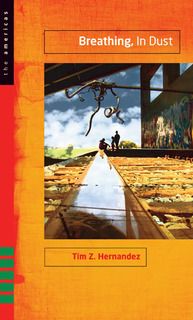

Breathing, In Dust Wins Premio Aztlán

This excellent novel, reviewed on La Bloga at this page, is the recipient of the Premio Aztlán for 2010. On the same page you can also find an interview with Tim Z. Hernandez, the author of Breathing, In Dust. The review noted: "Tim Z. Hernandez is the latest writer I have read whose promise is obvious, whose talent is rich, and whose honest and unflinching debut novel, Breathing, In Dust, deserves a wide-readership and critical attention." Winning this award should help on both points.

According to Facebook and Wikipedia:

The Premio Aztlán Literary Prize is a national literary award for emerging Chicana/o Chicano authors, founded in 1993 by Rudolfo and Patricia Anaya. The award was originally sponsored by the University of New Mexico, but was moved in 2008 to the National Hispanic Cultural Center.

The award is limited to short-story collections and novels (but not children's or young-adult novels) published by a professional press during the previous calendar year. Moreover, the author must be living and must not have published more than two books. The winner receives $1,000 and presents a lecture at that year's National Latino Writers Conference.

_______________________________

Tim Hernandez is one of the primary organizers of the Ernesto Cardenal event (see above). Tim recently returned to Denver and is now the Center for the Book Program Coordinator. Congratulations, Tim - many of us are eagerly waiting for the next one.

That's it - go out there and make your own good news.

Later.

Friday, February 18, 2011

News and New Books

First up, a press release from Las Comadres about the list of books for the 2011 National Latino Book Club.

This is a very impressive list and I am happy to say that King of the Chicanos is part of the the July reading schedule.

Then, two new books markedly different from one another but that, in their own way, signify important milestones in the ever-expanding Chicana/Chicano and Latina/Latino literary canon.

__________________________________________________


Contact: Tina Jordan, AAP
(212)255-0275
tjordan@publishers.org

AAP, Las Comadres Announce 2011 Titles for National Latino Book Club

New York, NY, February 8, 2011—Las Comadres, the national Latina organization, in cooperation with the Association of American Publishers (AAP), has announced the 2011 titles for the Las Comadres and Friends National Latino Book Club. Officially launched in June 2008, the book club meets monthly nationwide to discuss English-language works written by Latino authors. The book club also has monthly teleconferences, scheduled conversations with authors of the selected works and other special guests. Sixteen comadre book club facilitators participated in the selection of the titles. The 2011 reading list below includes fiction, non-fiction and children’s literature.

  • January – Stay With Me, A Novel by Sandra Rodriguez Barron (HarperCollins Publishers). Special teleconference for The Norton Anthology of Latino Literature, Ilan Stavans, General Editor (Norton)
  • February – The Lady Matador’s Hotel, A Novel by Cristina García (Scribner)
  • March – The Next Big Story: My Journey Through the Land of Possibilities by Soledad O’Brien (Celebra)
  • April – The Frog Was Singing by Rita Rosa Ruesga (Scholastic Children’s), with additional discussion on The Trouble with Half a Moon by Danette Vigilante (Penguin Children’s)
  • May – The Island of Eternal Loves/La Isla de Los Amores Infinitos by Daína Chayiano (Random House/Vintage Español)
  • June – Beautiful Darkness by Kami Garcia & Margaret Stohl (Little, Brown Books for Young Readers), with additional discussion on I Will Save You by Matt de la Peña (Delacorte Press) and The Midnight Palace by Carlos Ruiz Zafón (Little, Brown Books for Young Readers)
  • July – The Farthest Home is an Empire of Fire: A Tejano Elegy by John Phillip Santos (Penguin USA/Viking), with additional discussion on King of the Chicanos by Manuel Ramos (Wings Press), and Strawberry Fields: A Book of Short Stories by Chuy Ramírez (First Texas Publishers)
  • August – Conquistadora by Esmeralda Santiago (Random House)
  • September – The Realm of Hungry Spirits by Lorraine López (Grand Central) with additional discussion on The Traitor’s Emblem by Juan Gómez-Jurado (Atria Books)
  • October – If I Bring You Roses by Marisel Vera (Grand Central)
  • November – Tamales, Comadres, and the Meaning of Civilization by Carmen Tafolla and Ellen Riojas Clark (Wings Press) with additional discussion on Puerto Rican Goldilocks: A Lyrical Journey Through El Barrio by Marisel Anderson-Herrera (Author House)
  • December – The Couturiere, A Novel by María Dueñas (Atria Books)

Las Comadres President and CEO, Nora de Hoyos Comstock, continues to receive enthusiastic feedback from participants who credit the book club with introducing them to the work of Latino authors whose books they might not otherwise have read. “We are very happy with the response and are trying to find ways to continue to support as many authors as possible and to start book clubs in more cities,” Comstock said.

Best-selling author Esmeralda Santiago, the official spokesperson for the book club, expressed her pleasure at being a part of this experience. “The book club is providing an opportunity for Latinos nationwide as well as for book lovers across the country to share the pleasures of books and reading.” Currently, book clubs are held in 15 cities across Arizona, California, Connecticut, Washington DC, Florida, Illinois, Massachusetts, New Mexico, New York, Rhode Island and Texas, with plans to expand in 2011 into many of the one hundred U.S. cities with Las Comadres members. The book club is open to the public. Readers can visit www.lascomadres.org for details on locations for participating in the Las Comadres book club in their neighborhoods.

About Las Comadres
Las Comadres is a nationwide grassroots-based group of Latinas that was launched informally in April 2000 in Austin, Texas. The national networks were created in 2003 and have now grown to over 100 U.S. cities. Its 15,000 strong membership keeps Latinas connected via email networks, teleconferences, and monthly potluck events in individual cities. More information on Las Comadres can be found at www.lascomadres.org. For more information on about how to submit titles for the Las Comadres National Latino Book Club, please contact Tina Jordan at tjordan@publishers.org or (212) 255-0275.

About AAP
AAP is the national trade association of the U.S. book publishing industry. The association’s members include most of the major commercial publishers in the United States, as well as smaller and non-profit publishers, university presses and scholarly societies. AAP members publish hardcover and paperback books in every field, educational materials for the elementary, secondary, post secondary, and professional markets, scholarly journals, computer software, and electronic products and services. The protection of intellectual property rights in all media, the defense of the freedom to read and the freedom to publish at home and abroad, and the promotion of reading and literacy are among the association’s highest priorities.


NEW BOOKS

These two new titles from Arte Público Press are exciting news. The first because a collection of Lalo Delgado's works is long overdue, but it looks like he finally is getting the publication treatment he deserved while he was still alive. The second because Latino crime fiction for young adults almost does not exist. The fact that a collection of this type of writing will soon be published, with a varied and excellent array of writers, is nothing but great. Text taken from the Spring, 2011, Arte Público marketing brochure.


Here Lies Lalo: Th
e Collected Poems of Abelardo Delgado
Abelardo "Lalo" Delgado, edited by Janica Linn Watts
Arte Público Press, April, 2011


Known as the “poet laureate de Aztlán” and called “the grandfather of Chicano literature” in his 2004 obituary in The New York Times, Delgado used his words to fight for justice and equal opportunity for people of Mexican descent living in the United States. A twelve-year-old when he emigrated from northern Mexico to El Paso, Texas, Delgado’s development as a poet and writer coincided with the Chicano Civil Rights movement, and so his poems both reflect the suffering of the oppressed and are a call to action. “We want to let america know that she / belongs to us as much as we belong in turn to her / by now we have learned to talk / and want to be in good speaking terms / with all that is america.”

Available for the first time to mainstream audiences, Delgado’s poems included in this landmark volume were written between 1969 and 2001, and are in Spanish, English, and a combination of both languages. While many of his poems protest mistreatment and discrimination, especially as experienced by farm workers, many others focus on love of family and for the land and traditions of his people.

Delgado wrote and self-published 14 books of poetry—none of which are available today—and five of them are included in this long-awaited volume. These poems by a pioneering Chicano poet and revolutionary are a must-read for anyone interested in the Chicano Civil Rights movement and the origins of Chicano literature.

Abelardo Lalo Delgado (1930-2004) was a poet, activist and educator. He is the author of 14 books of poetry, and his poems have been anthologized in numerous textbooks and anthologies, including Hecho en Tejas: An Anthology of Texas Mexican Literature (University of New Mexico Press, 2008). He graduated from the University of Texas-El Paso in 1962, and helped create the Chicano Studies departments at universities throughout the western U.S. including the University of Denver. He taught Chicano Studies at Metropolitan State University in Denver for 17 years.


You Don't Have a Clue: Latino Mystery Stories for Teens
Edited by Sarah Cortez
Arte Público, April, 2011


The teens featured in these stories deal with situations typical to all young adults, including attraction to the opposite sex—or to the same sex, in one story—and first sexual encounters, problems with family and friends, academic and personal aspirations.

But they also deal with every kind of thrilling situation imaginable, from missing girls to kidnappings and dismembered bodies. A young girl finds herself living with her “family,” though she has no memory of them or who they claim she is. A geek at a prestigious public high school finds himself working with his very attractive arch-rival to solve the mystery of a severed, bloody arm that appears inexplicably in his locker. And Mike’s life sucks when his parents split up, but it gets worse when his best friend is abducted by a thug shot by Mike’s dad, a police officer. There’s something for everyone here, with aliens, ghosts and even an Aztec god making appearances in these stories.

Set in schools and communities from New York City to Venice Beach, California, the protagonists reflect the breadth and diversity of the Latino authors included in this innovative collection. Published authors such as Mario Acevedo, Alicia Gaspar de Alba, Diana López, Manuel Ramos and Sergio Troncoso appear alongside less well-known authors who deserve more recognition. With an introduction by young adult literature expert Dr. James Blasingame of Arizona State University, this collection is sure to keep readers on the edge of their seats until the last page is turned.

Sarah Cortez is a poet, educator, and law enforcement officer. She is the author of a poetry collection, How to Undress a Cop (Arte Público Press, 2000), which won the PEN Texas Literary Award in Poetry, and the editor of Windows into My World: Latino Youth Write Their Lives (Piñata Books, 2007), winner of a 2008 Skipping Stones Honor Award; Hit List: The Best of Latino Mystery (Arte Público Press, 2009) and Indian Country Noir (Akashic Books, 2010). She lives in Houston, Texas.


__________________________________________

My story, Back Up, is in You Don't Have a Clue. I don't have a complete list of all the authors, so if you are also in this anthology let us know who you are and the name of your story.

Melinda Palacio should be back next Friday with tales of her travels and adventures. Check her out.


Later.


Friday, March 12, 2010

Gente Telling Their Stories

Rights in a Foreign Land: Women, Domestic Violence, and Migration
Araceli Calderón González

Melissa Sánchez writes in the Yakima Herald-Republic about Araceli Calderón González and her book published last year in Mexico, Rights in a Foreign Land: Women, Domestic Violence, and Migration. You can read the entire article, which I recommend, at this link. Calderón, a writer who currently makes her home in Greeley, Colorado, has collected stories and poems from 17 women from Mexico who have migrated to Yakima, Washington. The women have all been served by La Casa Hogar, which has helped roughly 4,500 immigrant women since it was started in 1995.

The article notes: She had come in 2006 to collect stories from immigrant children for a book to be published in Mexico. But Calderón sensed a greater story in their mothers and in the other women she met here.

"It made me cry to wonder why these immigrants come to Yakima," said Calderón, a children's book author and literacy advocate. "Why do they leave home? Their communities may be poor, but they're so beautiful."

What Calderón discovered upon returning over the next two years was a narrative of domestic abuse that follows Mexican women into the United States, and the healing process they would begin inside a yellow house on South Sixth Street. It's an issue that receives little attention either here in the United States or in Mexico.

The book's forward, written by Elena Poniatowska, commended Carole Folsom-Hill, executive director of La Casa.

"Here and now, she tells them time and time again. She teaches them that life is worth living. She opens the way for them so that they may open the way for their children."

I don't know if this book is available in the United States. I would appreciate any information about the book and the author.

_________________________

The Farthest Home Is in an Empire of Fire: A Tejano Elegy
John Phillip Santos
Viking, April

[publisher's blurb]
In his acclaimed 1999 memoir Places Left Unfinished at the Time of Creation, John Phillip Santos told the story of one Mexican family- his father's-set within the larger story of Mexico itself. In this beautifully written new book, he tells of how another family-this time, his mother's-erased and forgot over time their ancient origins in Spain.

Every family has a forgotten tale of where it ca
me from. Who is driven to tell it and why? Weaving together a highly original mix of autobiography, conquest history, elegy, travel, family remembrance, and time travelling narration, Santos offers an unforgettable testimony to this calling and describes a lifelong quest to find the missing chronicle of his mother's family, one that takes him to various locations in South Texas and Mexico, to New York City, to Spain, and ultimately to the Middle East. Blending genres brilliantly, Santos raises profound questions about whether we can ever find our true homeland and what we can learn from our treasured, shared cultural legacies.

John Phillip Santos, born and raised in San Antonio, Texas, is the first Mexican American Rhodes Scholar whose awards include the Academy of American Poets' Prize at Notre Dame and the Oxford Prize for fiction. His articles on Latino culture have appeared in the Los Angeles Times, The New York Times, and the San Antonio Express-News. Writer and producer of more than forty television documentaries for CBS-TV and PBS-TV, two of them Emmy nominees, he lives in New York City.


Who Will Tell The Story of Lalo Delgado?


Yesterday's post on this blog featured Lalo Delgado, mentor and friend to many writers across the country. Scroll down to read Jesse Tijerina's tribute. Jesse mentions Chicano: 25 pieces of a chicano mind and Lalo's timeless piece, Stupid America. I never got my hands on this collection, although on my shelves you can find Under the Skirt of Justice: 43 Skirts of Abelardo; Here Lies Lalo: 25 Deaths of Abelardo; A Day is Coming: 32 Days of Abelardo; Petrified Bubble Gum: 25 Bubble Gums of Abelardo; Living Life on His Own Terms: Poetic Wisdom of Abelardo "Lalo" Delgado; An Autobiographical Sketch of Abelardo; and Lalo's "novel" Letters to Louise, published by Tonatiuh-Quinto Sol International in 1982. For those of you not familiar with this book, let me quote from the New York Times review by Alan Cheuse:

The narrator of Delgado's novel is a middle-aged Chicano poet/social worker/administrator named Santiago Flores. His job as an expert on the problems of migrant workers takes him across the Southwest, and his 'search for myself' carries him back into the world of his childhood. In the warm, slightly wacky letters he writes to an unknown correspondent -- possibly you? possibly me? -- there's a touch of Whitman and also a swatch of Cantinflas, and finally a great and appealing personality, a new and attractive voice. By peering over Abelardo's shoulder you may catch a glimpse of yourself in his highly polished Chicano mirror.

It should be obvious that Lalo was all about telling the stories of his people -- the migrantes, artists, workers, children, students, activists, radicals ... you get the picture. In the poem, Mi Amigo, Lalo, found in the Autobiographical Sketch, Lalo writes: His name is Lalo/and/he was sent/to make us repent/making/the community aware/that in the end/love will prevail. The man's laugh exuded love; his stories captivated me whenever I was lucky enough to be in his audience, around a table or in a lecture hall. Lalo would start talking and it was like he was a rolling, swaying, eternal motion, emotion machine - a natural poet, a gifted storyteller.

The Autobiographical Sketch is a very slim hodge-podge of poems and the piece Lalo wrote for Contemporary Authors Autobiography Series. It clearly is only a "sketch" and cannot convey the massive influence or impact Lalo had on writing, art, farm worker advocacy, Chicano culture - on you and me. It's worth noting the ending sentences to his article for the Contemporary Authors series: Any of the avenues that I have touched briefly in this sketch of the many persons that live in me beg for more detail. Maybe in the same autobiographical format. I could do it in book size. I knew that Lalo had started work on this more detailed story of his life, but as far as I know he did not finish it.

So, who will tell the story of Lalo Delgado? Who will save this history, preserve the man, and educate the generations yet to come? Who will pay him back for all that he did for us?

The art piece above is by Stevon Lucero. Entitled For Lalo, it was one of the hearts created in 2007 for the annual Chicano Humanities & Arts Council Milagros del Corazon fundraiser, exhibit and auction. It hangs on a wall adjacent to the shelves that house my Lalo books.

Later.


Friday, June 05, 2009

Five Reasons It's Great to be a Chicano in Denver

This post is motivated by similar articles I've read lately about why it's great to be a Latino in the U.S. or particular cities, etc. Lacking any brilliant inspiration for today's edition of La Bloga, I decided to steal the idea and give you my own list. No particular order, just how the pieces came to me. I have more than five reasons but I ran out of time. Maybe I'll continue with my list in future posts. If you have your own suggestions, send them in. Click on the comments link below.


1. Canción Mexicana - this radio program has been on the air for 24 years, an amazing run, and it's still as strong as ever. The show is broadcast on Denver's public radio jazz station, KUVO, 89.3 FM and on the Internet at www.kuvo.org. The show is hosted by Florencia Hernández-Ramos and Debra Gallegos every Sunday from 10:00 am to 1:00 pm (Mountain).

Here's what the KUVO website says about this very popular show that has become a cultural icon in the Rocky Mountain West: New Mexico, Colorado and Tejano music with information excerpts from Latino USA and News From Our Community. Canción Mexicana has dominated jazz89 KUVO's Sunday line-up in both audience and business support. The best of the best in Tex-Mex music, Canción Mexicana has been frequently recognized in Denver's major newspapers. The program consistently ranks in the top five slots on Sunday mornings in the Denver metro area and has enjoyed the number one spot. It's cumbia, it's rancheras, and a little bit of mariachi - it's all that and more; it's Canción Mexicana with the best New Mexico, Tejano and Colorado music. There's music on Canción Mexicana as well as reports from Latino USA with a glimpse into what's happening in the community. Get ready to dance!


2. La Raza Rocks - this show follows Canción Mexicana at 1:00 pm, Sundays, on KUVO. Pocho Joe and Gabe are the incredibly knowledgeable hosts of an hour of the best of Latino rock - new and old - Sunny & the Sunliners, Santana, Los Lobos, the Iguanas, Los Lonely Boys, and Dr. Loco and his Rockin' Jalapeno Band. Interviews and information are part of the show's presentation. Pocho Joe and Gabe dig deep into Chicano rock, coming up with groups like Thee Midniters, Tierra, Little Julian Herrera, El Chicano,War, the Blendells, Cannibal & the Headhunters, and the Premiers, but they also present the latest groups and singers. Over the years, this show has introduced Denver to Ozomatli, Quetzal, Alejandro Escovedo, the Blazers, and many more. As Pocho Joe likes to say, the show covers the "roots and branches" of Chicano soul music. It'll tear you up.


3. Su Teatro - this theater group sprung from the Movement more than thirty-five years ago (1971) as traveling agit-prop, consisting mostly of long-haired students. Today it is a well-established production company that every year amazes Denver audiences with the diversity and brilliance of Latino and Chicano theater. Under the direction of the long-haired Anthony Garcia, El Centro Su Teatro is about to enter a new phase with a multi-million dollar facility that promises to continue to enrich the Denver cultural scene with outstanding plays and events. In recent years, Su Teatro has presented remarkable theater such as Rudy Anaya's Bless Me, Ultima; Ollin; El Sol Que Tú Eres (Daniel Valdez and Tony Garcia collaborated on this Chicano version of the myth of Eurydice and Orpheus); Las Chicas de 3.5” Floppy; Death and the Maiden; and Catastrophe by Samuel Beckett. Annual events include the Neruda Poetry Festival (10 years), The XicanIndie Film Festival (11 years), and the Chicano Music Festival (12 years).


4. A bevy of writers and a strong literary tradition. Denver became the home for beloved poet Abelardo "Lalo" Delgado, author of one of the most famous Chicano poems ever published, Stupid America. Lalo probably is the best known Denver Chicano writer, but the city and the state have a long history of writers who have proudly preserved the story of Colorado's Chicanos and made a little of their own while they were at it. Names that immediately come to mind include Margie Domingo, Flor Lovato, Ramon Del Castillo, Anthony Vigil, Joe Navarro, and Corky Gonzales for I Am Joaquin, a classic bit of Chicano lit. (The Denver Public Library has arranged for a Rodolfo "Corky" Gonzales Exhibit at the Central Library, June 2 through September 20, 2009. A special reception to honor the exhibit is set for June 18 from 7 - 9 pm at the Central Library, 10 West 14th Avenue Parkway.)

The tradition continues and there are young poets reading and writing all over the city, with readings and slams happening at places like the Taza de Café where Café Cultura did a regular thing, Cafe Nuba, the Chicano Humanities and Arts Council, the Neruda Poetry Festival, Art From Ashes, etc. We got fiction writers, too - Mario Acevedo, Aaron A. Abeyta, Rudy Garcia, Emma Perez, Angel Vigil, Reneé Fajardo, and yours truly, to name a few. Denver is a city that loves to read; it has great independent bookstores and many author events. Now if we could just get a permanent book fair.


5. The Chicano Humanities and Arts Council (CHAC) and the Museo de las Américas. These two institutions sit on Santa Fe Drive in Denver's West Side. They provide art, artifacts, history, and venues for performance artists, poets, film-makers, and sculptors. CHAC has been around for thirty-one years, created by a group of artists who saw the need for their own space, devoted to their understanding of art and the creative process. That spirit still lives on at CHAC with ever-changing exhibits with themes such as Vida Artistica, the Poetry y Mas series of readings, and, returning this year, the Chile Harvest Festival (August 29 & 30).

The Museo has consistently presented world-class exhibits of Latino, Chicano and Latin American art, and has developed a national reputation for its adherence to its mission. As the website says, the Museo educates our community about the diversity of Latino Americano art and culture from ancient to contemporary through innovative exhibitions and programs. With the Latino population growing exponentially in the Denver and wider communities, the Museo plays an important role in building pride in the Latino community's heritage and promoting understanding among cultures. Other history and art museums in Denver cannot focus on one segment of the community in a sustained or comprehensive manner. The Museo was organized to fill this important niche in the cultural milieu. Under the leadership of newly-appointed director Maruca Salazar, a celebrated artist in her own right, the Museo should make an even bigger impression on the art-loving Denver residents.

The cool thing about this list is that you don't have to be a Chicana or a Chicano to enjoy the music, art, writing or history. We like to share.

Okay, send in your own suggestions for this list - is it really great to be a Chicano or Chicana, wherever you live? If so, why?


Later.

Friday, April 18, 2008

Got Poets?


NERUDA POETRY FESTIVAL

In Arizona or New Mexico
in a clear midnight

go out and see
if you can see

only one star…

Lalo Delgado, from Harmony in Diversity

The 9th Annual Neruda Poetry Festival opened on April 17 with the annual tribute to Abelardo Lalo Delgado - great poet, great man. The performers presented their own interpretations of Lalo's words, everything from a couple of his sweet children's cuentos to rousing renditions of Stupid America and the Chicano Manifesto. It was an inspiring way to kick-off this event that grows every year. Thanks to John Kuebler of El Centro Su Teatro for the following information about this weekend's events at the Festival.


Give thanks to the women, the mothers and sisters
who were there when everyone else forgot about you
Who bathed you in their baptismal waters
of sacred nurturing, hanging with the weight
you suckled raw, cracked and callused.

Sandra María Esteves, from Give Thanks


A giant of the Nuyorican literary scene and longtime associate of the famed Nuyorican Poets Café, Sandra María Esteves is also the author of six published collections of poetry, including her 1981 debut, Yerba Buena, which won the Library Journal’s Best Small Press publication that year. Sandra will be a featured guest artist and headline performer at this year's Festival.


…street-corner born,
forlorn fugitives
of the total jail.
Hail Pachuco!
raúlrsalinas from Homenaje al Pachuco (Mirrored Reflections)


The Austin press dubbed him the Chicano Allen Ginsberg, but he called himself a cockroach poet. After serving 13 years in some of the most notorious maximum security prisons in the country, raúlrsalinas turned his heart to activism and took up a new and powerful weapon: the pen. Join Su Teatro and help pay tribute to raúlrsalinas this Saturday night (8:05pm). You will also meet and hear Nuyorican luminary Sandra María Esteves, 2008 César Chávez Community Award winner Bobby LeFebre, and 2008 Barrio Slam champs.

Call (303) 296-0219 for tickets and information, and click here to see great video footage of Raúl reading his work.


Thu 4/17, 8:05pm: Tribute to Lalo Delgado
Fri 4/18 , 7pm: Barrio Slam ($500 first prize)
Sat 4/19, 4pm: Tacos and Words Literary Salon - featuring John-Michael Rivera, Sheryl Luna, Rachel Snyder, J. Michael Martínez, Gabe Gomez and Sandra María Esteves. Food and drink, too!
Sat 4/19, 8:05pm: Palabras Vivas featuring Sandra María Esteves and a special tribute to raúlrsalinas, with Yolanda Ortega, Valarie Castillo, Tony Garcia, Debra Gallegos, Bobby LeFebre, and Angel Mendez Soto.

All events at El Centro Su Teatro, 4725 High Street,Denver.

PULITZER CHISME
Junot Díaz:

Fresh off winning the top novelist prize in America, Junot Díaz says the literary establishment “should be embarrassed” he’s only the second Latino writer to snatch it.

“Two Latinos in a hundred years? Mmmh. I don’t think the problem is with us as writers. It seems like the problem is with them as judges,” says the Dominican-born, N.J.-raised author of The Brief Wondrous Life of Oscar Wao. Read the rest of the story here.


Meanwhile, Oscar Hijuelos says:

“Don’t let that overwhelm you,” says Cuban-American novelist Oscar Hijuelos. “Remember the work and keep your feet on the ground.”

For 18 years, Hijuelos was the only Latino writer ever to win a Pulitzer Prize for literature, thanks to his saga of Cuban musicians making it in New York, The Mambo Kings Play Songs of Love.

“It almost knocked me out,” he says of the moment when he heard the news of Díaz’s win last week for his book The Brief Wondrous Life of Oscar Wao. Read more here.


BOOK & LOVERS' DAY

Tattered Cover Book Store April 23, 2008

Every year on April 23rd, Barcelona erupts in a celebration of chivalry and romance, Book & Lover's Day. It all began in the Middle Ages with an annual Festival of Roses to honor St. George, Patron Saint of Catalonia, who as a brave Roman soldier allegedly slew a dragon about to devour a beautiful young princess. According to legend, a rosebush sprouted from the blood of the dragon and the soldier plucked its most perfect blossoms to give to the princess as a remembrance. In 1923, the Rose Festival merged with International Book Day, established to celebrate the lives of Miguel de Cervantes and William Shakespeare, both of whom died on April 23rd in 1616. Now, bookstalls and flower stands sprout up along the Rambla, a two-mile stretch connecting the city with the Mediterranean Sea. Thousands of Barcelonans crowd the streets to enjoy a festive atmosphere of readings, music, literature, and dance.

The Tattered Cover honors this springtime celebration of culture, beauty, literature, and love. On April 23, complimentary roses and commemorative bookmarks will be available with the purchase of any book; while supplies last.

Store locations, contact info, and more events, click here.

LITERATURE IN TRANSLATION
The International Crime Writers Association recently listed several books as Crime Literature in Translation. Here are a few that might be of special interest to La Bloga readers (all translated from Spanish.)

The Island of Eternal Love, Daina Chaviano, translated by Andrea Labinger (Riverhead, 2008)

Nada, Carmen Laforet, translated by Edith Grossman (Random/Modern Library, 2007); originally published in Spain in 1945, this is a cult classic long regarded as a masterpiece. The publisher says: "Mario Vargas Llosa’s Introduction illuminates Laforet’s brilliant depiction of life during the early days of the Franco regime. With crystalline insight into the human condition, Carmen Laforet’s classic novel stands poised to reclaim its place as one of the great novels of twentieth-century Europe." Read more about this book here.

The Bible of Clay, Julia Navarro, translated by Andrew Hurley (Bantam, 2008)


Havana Gold, Leonardo Padura, translated by Peter Bush (Bitter Lemon, 2008)
From the publisher: "This is a Havana of crumbling, grand buildings, secrets hidden behind faded doors and corruption. For an author living in Cuba, Padura is remarkably outspoken about the failings of Castro’s regime. Yet this is a eulogy of Cuba, its life of music, sex and the great friendships of those who elected to stay and fight for survival."

The Painter of Battles, Arturo Pérez-Reverte, translated by Margaret Sayers Paden (Random, 2008)


The Ravine, Nivaria Tejera, translated by Carol Maier (State University of New York, 2008). The publisher's blurb: "Set in the Canary Islands at the outset of the Spanish Civil War, The Ravine is the provocative, disturbing account of a child’s experience with war. Narrated by an unnamed seven-year-old girl, the story begins in the early days of the war when her father—a staunch supporter of the Republic—goes into hiding. As the girl and her family await news of his whereabouts, they learn he is taken prisoner, brought to trial, and eventually sentenced to forced labor in a concentration camp. Confused and bereft, they visit him in the camp, hoping he will be spared the firing squad and the subsequent burial in the ravine, a fate that befalls so many prisoners.

"Acclaimed since its original appearance in French in 1958, The Ravine has been published in several languages and remains the novel for which Nivaria Tejera is best known."

DINAH WAS


Regional Premiere
A Musical by Oliver Goldstick
Directed by Jeffrey Nickelson
Featuring Rene Marie

An announcement from the Shadow Theater Company: "Suppose you'd been adorned the title Queen of the Blues and you are set to headline at the Sahara Hotel in Las Vegas, except it is 1959 and the hotel management has reserved a special trailer out back, as blacks are forbidden from staying in the hotel. Grab your belongings and head for the door, Dinah Washington is about to enter the building! Always a lady but most often a diva, Dinah Washington had a unique way of getting in and out of trouble! Join us in celebrating the matchless music of Dinah Washington whose What A Difference A Day Makes is sure to bring down the house."

Performance Dates: April 24, 25, 26 and 27th, May 1, 2, 3, 4, 8, 9, 10, 11, 15, 16, 17 , 18, 22, 23 and 24th
April 24th, 25th, 26th and May 17th are sold out.

Performance Times: Thursday, Friday & Saturday at 7:30 pm and Sunday matinee at 3:00 pm

Location: 1468 Dayton Street, Aurora, CO 80010

Tickets: $25.00
To purchase tickets please call (866) 388-4TIX (4849) or order online
Box office hours: 8 am - 4 pm Mon-Sun

Later.

Friday, August 10, 2007

Colorado and The Big Read (Red?)

Manuel Ramos

COLORADO
There are at least six Latina/o novelists who are Colorado based. Here are very brief summaries about five of them, in no particular order.


Abelardo Lalo Delgado
Lalo Delgado is best known, of course, as a premier Chicano poet (he passed away in 2004). Stupid America, a brilliant and succinct exposure of racism and its painful legacy, is a masterpiece of literary accomplishment, Chicano or otherwise. His one novel, Letters to Louise, is not as well-known but it does have a solid reputation and I think it deserves a broader audience. The book was published by Tonatiuh-Quinto Sol International in 1982, and copies can still be found in unique book stores and online. One of the gems of my sprawling library is a copy of this book in excellent condition with a very personal and friendly author's autograph. I noted in an earlier review that the novel "tells the story of a man struggling with the contradiction of a good person involved in a moral dilemma, an ordinary person making complex choices in order to live the life he thinks he should."

Alan Cheuse, in the New York Times, said: "The narrator of Delgado's novel is a middle-aged Chicano poet/social worker/administrator named Santiago Flores. His job as an expert on the problems of migrant workers takes him across the Southwest, and his search for himself carries him back into the world of his childhood. In the warm, slightly wacky letters that he writes to an unknown correspondent --possibly you? possibly me? -- there's a touch of Whitman and also a swatch of Cantinflas, and finally a great and appealing personality, a new and attractive voice. By peering over Abelardo's shoulder you may catch a glimpse of yourself in his highly polished Chicano mirror."

Gene Guerin

Gene Guerin's debut novel, Cottonwood Saints (University of New Mexico Press, 2005), won the Premio Aztlán and the Mountains and Plains Regional Book Award for Adult Fiction. I reviewed this book for La Bloga, where I noted that the "author says in the book's Acknowledgments that Cottonwood Saints is a work of fiction but it is based on forty handwritten pages of reminiscences by his mother, Margaret Ortega Guerin. Without her memories there would be no book."

I also said: "At its heart this book is about the essential strength and dignity of hard-working, unpretentious people. In that way this book compares favorably, in tone, depth and sweep, to Luis J. Rodriguez's family saga of steelworkers in Twentieth Century Los Angeles, Music of the Mill (Rayo, 2005). The New Mexican rural poor of Cottonwood Saints overcome hardship and tragedy; raise families and provide for their children against all obstacles, natural and man made; they love, hate and disappoint; they overcome or succumb, yet they manage to leave something to pass on, something to cherish, in the same ways as Rodriguez's urban working class characters also survived and endured. They lived stories that cried out to be told."


Mario Acevedo
Mario Acevedo has
staked out the Chicano-private eye-war vet-vampire turf and made it his special place. His first two books of a projected three book series have entertained and amused readers across the country. La Bloga has featured Acevedo several times -- interviews, reviews, and he did a guest post for us, too -- and at this point we eagerly wait for his next piece in the series. The first, Nymphos of Rocky Flats (Rayo, 2006), garnered this praise from La Bloga's Daniel Olivas:
"Acevedo gleefully debunks vampire lore and creates new rules of the game with a bit of romance thrown in for good measure. In the end, The Nymphos of Rocky Flats delivers fast paced fun topped off with wry humor and dead-on social commentary. One wonders who will play Felix Gomez in the screen adaptation."

His second, X-Rated Bloodsuckers (Rayo, 2007), also received rave reviews, including this from La Bloga's Michael Sedano:
"X-Rated Bloodsuckers will make an excellent, if perhaps ironic, gift for Easter. Harper Collins’ Rayo imprint has the novel scheduled for a March 2007 release. Outright hilarity in places, downright revulsion in others, e.g. rat chorizo and coffee mixed with Type B, and an involving yarn make it a standout. Hopefully, a recipient won’t be superstitious, but at any rate, the engaging character of Felix Gomez will win you as many friends as you give copies to."

The third Felix Gomez book, The Undead Kama Sutra, is set for a March, 2008 release.


Lynda Sandoval
Lynda Sandoval is a former police officer-turned fiction writer with fourteen book sales to her credit.

Sandoval writes women's fiction for HarperCollins Rayo; romance for Silhouette Special Edition; romantic suspense for Silhouette Intimate Moments; and young adult novels for Simon & Schuster.

Her books have won awards such as the 2000 Rising Star, the 2002 Golden Quill, and the 2002 Beacon—all sponsored by regional chapters of Romance Writers of America. She was also a finalist in the 2002 Booksellers Best, and a two-time Romance Writers of America Golden Heart finalist prior to selling.

Her novels include Chicks Ahoy (Simon & Schuster, 2006); Unsettling (Rayo, 2004); and And Then There Were Three (Harlequin, 2003). She also wrote True Blue: An Insider's Guide to Street Cops for Writers (Gryphon, 1999).


Aaron A. Abeyta
A few weeks ago I interviewed Aaron A. Abeyta and offered some comments about his debut novel, Rise, Do Not Be Afraid (Ghost Road Press, 2007). Abeyta's interview is worth looking at if you haven't read it yet. For example, here is his take on being a storyteller:

"I learned early on, mostly from my abuelo, that a story is a living thing. I don’t ever remember hearing a story that began at A and ended at Z. I didn’t grow up with typical plot structures as a model. My mom didn’t read Mother Goose to me, or anything of the sort. I tell people that and they look at me like I was abused, as if to say that my parents not reading to me was some sort of 20th century crime. I never felt deprived, however. Everyone around me told great stories, and those were my bedtime stories. For example, my abuelito would tell a story and then a few weeks later I would hear the same story from the sheepherder and they were remarkably different, yet essentially the same. The teller of the story was always the heart, the information the blood and the listener the soul. I try and remain true to this model, not only in the novel but in all my writing. I guess my people were born of circles because that’s the way we still communicate."

Abeyta teaches English at Adams State College in Alamosa. He also has published two poetry collections, As Orion Falls (Ghost Road Press, 2005), and Colcha (University Press of Colorado, 2000). Colcha won an American Book Award and the Colorado Book Award.


Rudolfo Anaya sent information about his participation in The Big Read, so I checked out the website and pulled the following (all quoted from http://www.neabigread.org/):

"The Big Read is an initiative of the National Endowment for the Arts, designed to restore reading to the center of American culture. The NEA presents The Big Read in partnership with the Institute of Museum and Library Services and in cooperation with Arts Midwest. The Big Read brings together partners across the country to encourage reading for pleasure and enlightenment.

"The Big Read answers a big need.
Reading at Risk: A Survey of Literary Reading in America, a 2004 report by the National Endowment for the Arts, found that not only is literary reading in America declining rapidly among all groups, but that the rate of decline has accelerated, especially among the young. The concerned citizen in search of good news about American literary culture would study the pages of this report in vain.

"The Big Read aims to address this crisis squarely and effectively. It provides citizens with the opportunity to read and discuss a single book within their communities.
The initiative includes innovative reading programs in selected cities and towns, comprehensive resources for discussing classic literature, an ambitious national publicity campaign, and an extensive Web site providing comprehensive information on authors and their works.

"Each community event lasts approximately one month and includes a kick-off event to launch the program locally, ideally attended by the mayor and other local luminaries; major events devoted specifically to the book (panel discussions, author reading, and the like); events using the book as a point of departure (film screenings, theatrical readings, and so forth); and book discussions in diverse locations and aimed at a wide range of audiences."

I've seen the discussion and study materials for Bless Me, Ultima, and I was impressed. These include a Teacher's Guide and a Reader's Guide, which look to me as though they are very good tools for a deeper understanding of the novel.


Here's what the NEA says about Anaya's classic:

One of the most respected works of Chicano literature, Rudolfo Anaya tells the story of Antonio Luna Márez, a young boy who grapples with faith, identity, and death as he comes of age in New Mexico.

Other current featured novels in The Big Read are:

Fahrenheit 451
Ray Bradbury

My Ántonia
Willa Cather


The Great Gatsby
F. Scott Fitzgerald

The Maltese Falcon
Dashiell Hammett


A Farewell to Arms
Ernest Hemingway

Their Eyes Were Watching God
Zora Neale Hurston

To Kill a Mockingbird
Harper Lee

The Heart is A Lonely Hunter
Carson McCullers

The Grapes of Wrath
John Steinbeck

The Joy Luck Club
Amy Tan

The Age of Innocence
EdithWharton


Later.