Showing posts with label Mexican Art. Show all posts

Friday, November 25, 2022

Quick Trip to San Francisco

 Melinda Palacio

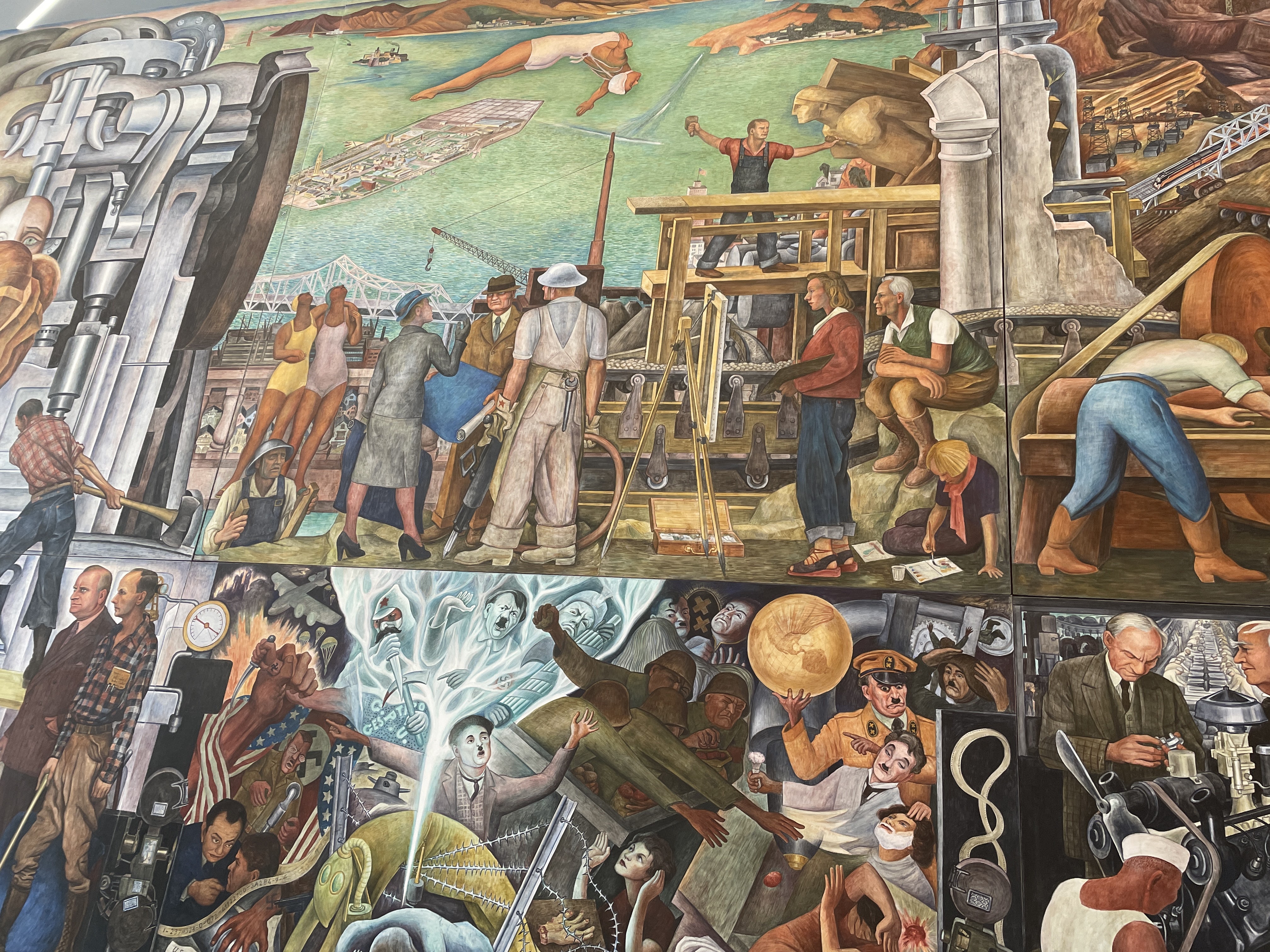
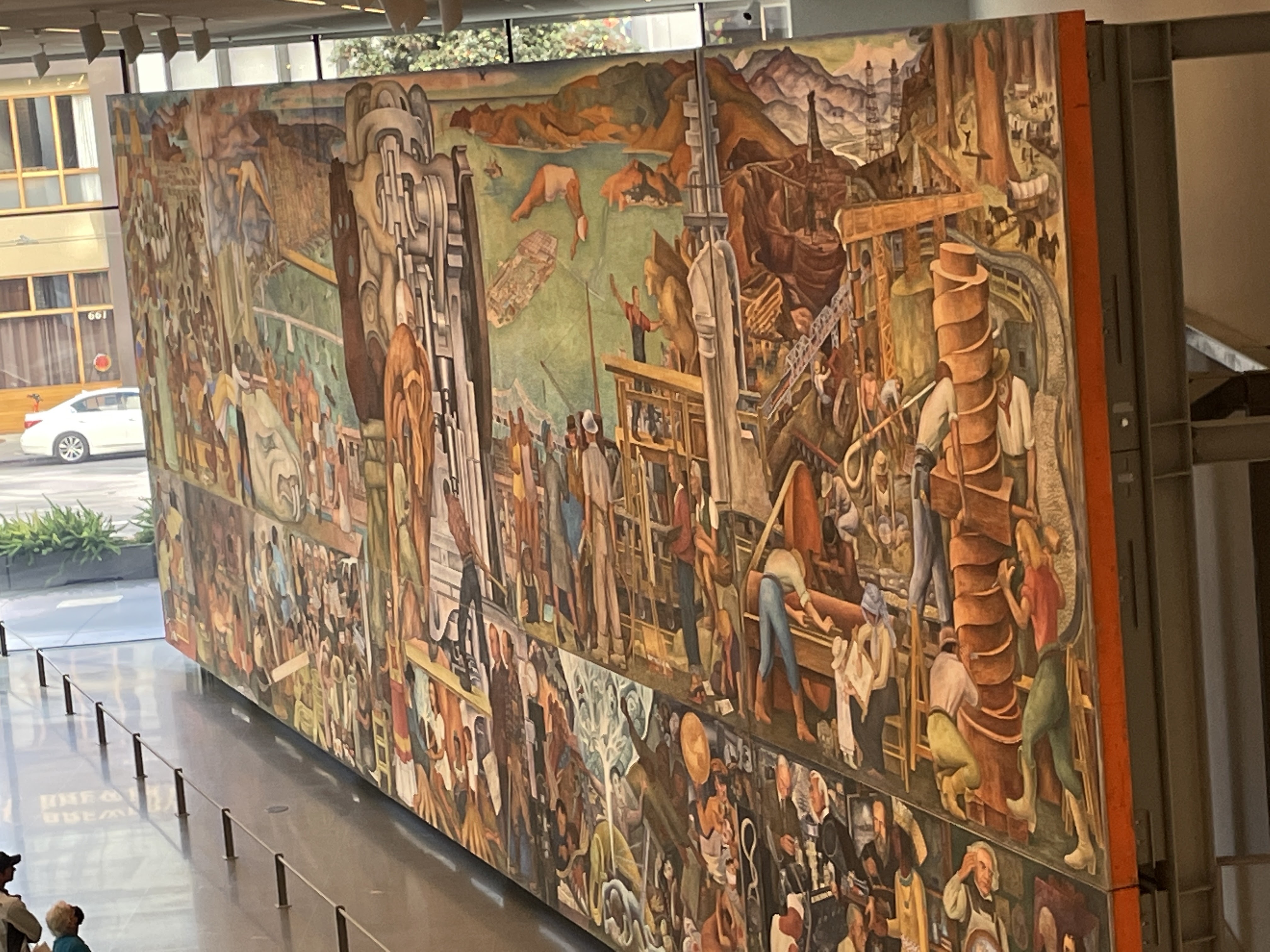
November is a beautiful time to visit California. Crisp, sunny weather makes for a nice weekend getaway. Bonus excursion to the San Francisco Museum of Modern Art, where you can view Diego Rivera's America exhibit until January 3, 2023. 

I had the pleasure of visiting a friend in Richmond who introduced me to the ferry near her house that goes straight to San Francisco. When I lived there, the only non car option was to take Bart and get to SF. Bart is the Bay Area Rapid Transit system and how you will get around without being stuck in car traffic. 


San Francisco

Views of the Golden Gate Bridge from the Richmond Ferry to SF.


Once in the city, Bart will get you to all destinations, but it's fun taking the trolley. 

close up of the Rivera's mural

With Diego's Siren drawing. 

Andy Warhol's Triple Elvis 


Bording the trolley from Powell street

If you look closely, you might see Nancy's house in the distance. 

Do not attempt this photo while the trolley is moving. 

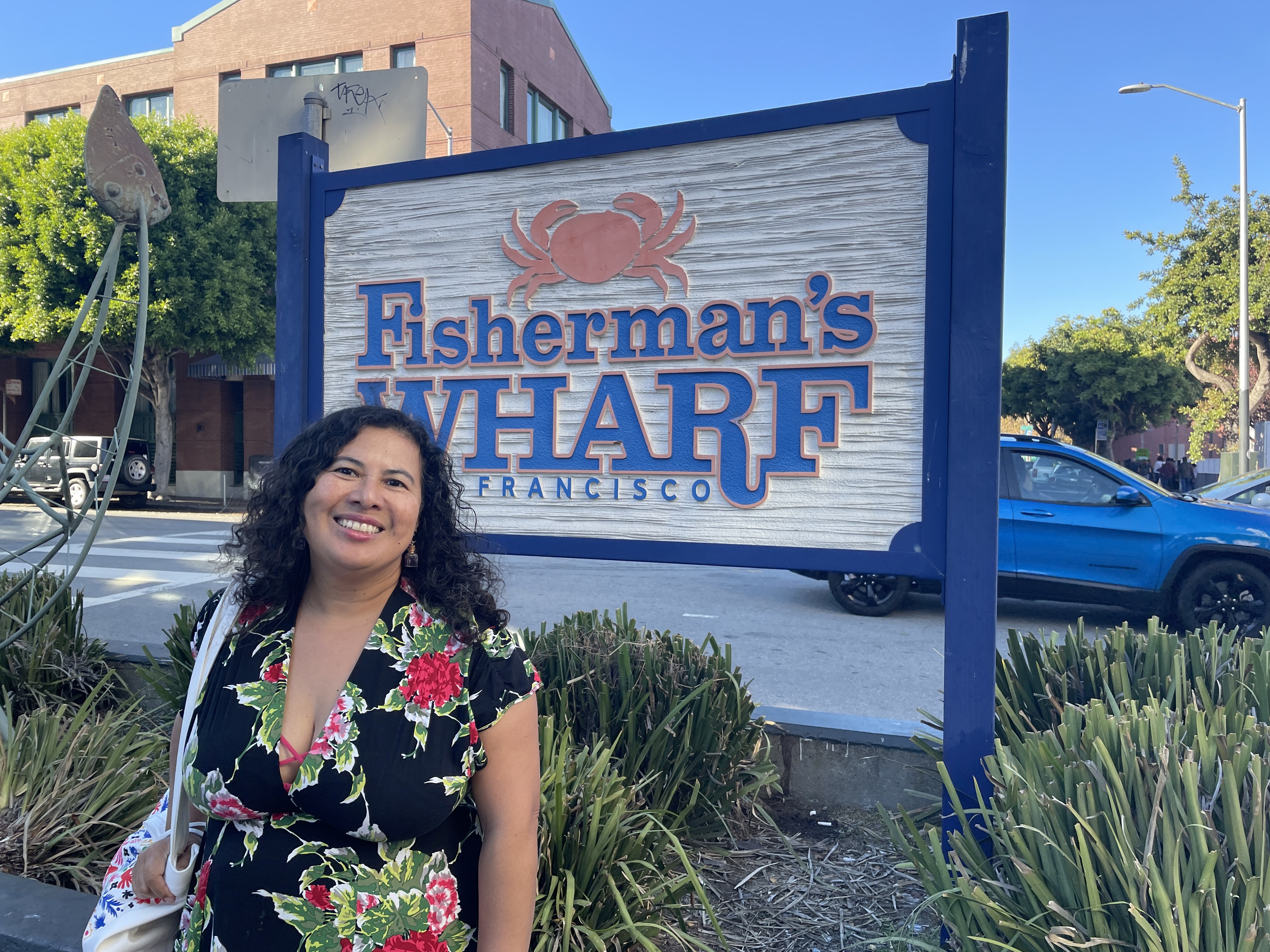
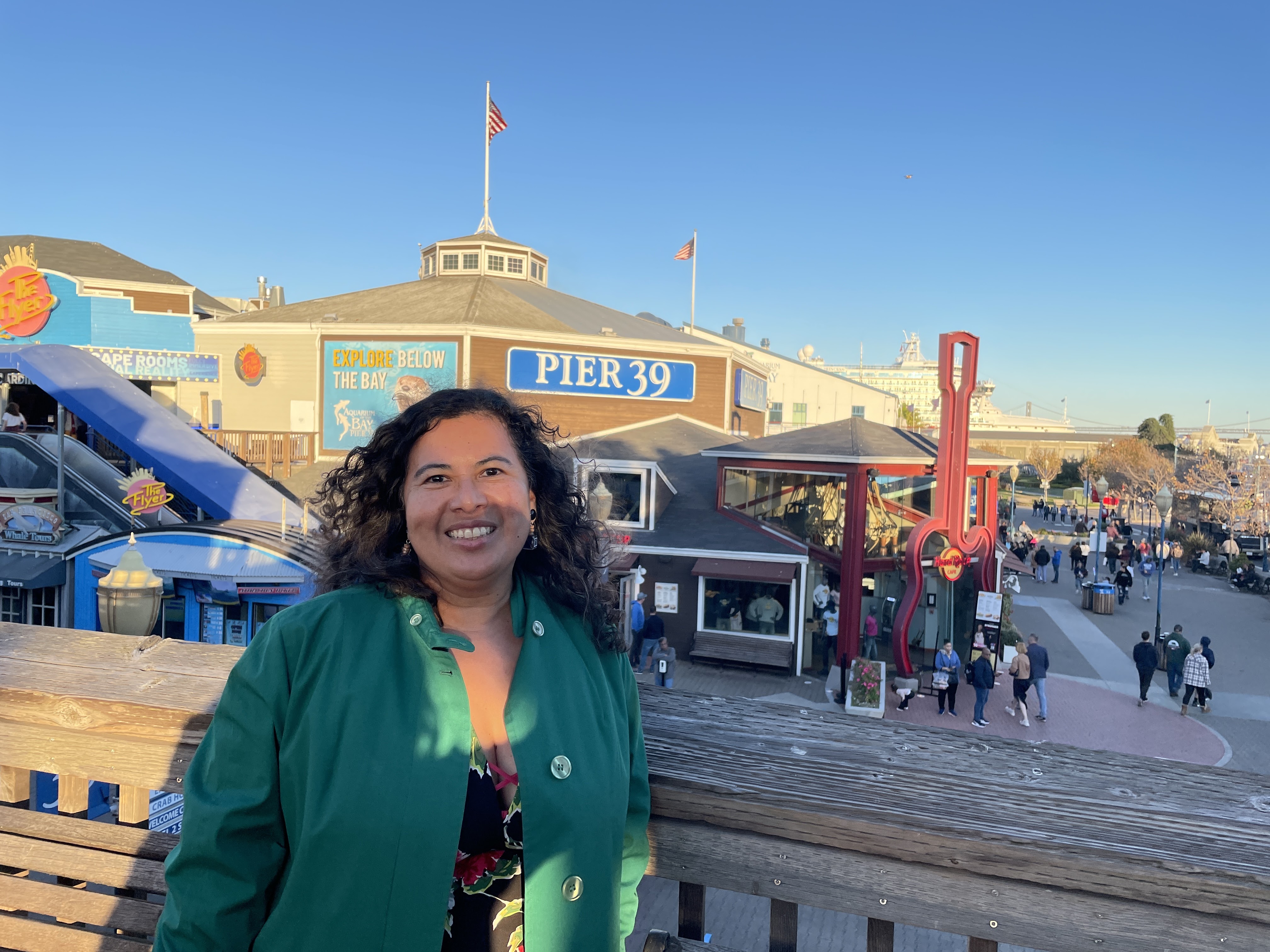
Fisherman's Wharf was different from what I remembered, busier, crowded. Allioto's shuttered and a victim of the pandemic. 


Tony Benett sang about leaving his heart in San Francisco and it's easy to see why. It's still a special city by the bay and I am a lucky to have good friends who showed me around the city I once loved and lived in. San Francisco will always have a piece of my heart. 


Thursday, October 29, 2015

Chicanonautica: Weird Mexican Art: The Dead and Kid Stuff


Still too warm, but El Niño and the remnants of Hurricane Patricia are kicking enough moisture over Arizona to cause some impressive thunderstorms that have soaked the desert that gets streamy as the sun blazes. Not exactly what Americano cultural expects for fall, but we're hurtling toward the end of October. The big weekend is coming: Halloween/Días de los Muertos/Dead Daze as I called it in my controversial novel Smoking Mirror Blues (to be republished as Tezcatlipoca Blues in the near future).

Luckily, thanks to my wife, who works at the bookstore of the Heard Museum, I got ahold of a couple of fantastic art books that are just the thing for getting the visual cortex in that Dead Daze mood.

And they're both bilingual, too.

First, there's Posada & Manilla: Illustrations Of Mexican Fairy Tales/Artistas Del Cuento Mexicana By Mercurio López Casillas that takes us into the world of cheap “penny press” books – well, actually pamphlets – that children enjoyed before comic books. Manuel Manilla illustrated them before José Guadalupe Posada. Manilla wasn't as much of a stylist or master of the woodcut as Posada, but he definitely laid the groundwork for this style that is both modern and primitve, and suggests an alternative, fantastic Mexican universe where European fairy tales blend with Mexican folklore and history.

It comes with a spectacular two-sided dust jacket and a facsimile of one of these books, El Rey y Sus Tres Hijos.

Frightening, disturbing -- but that was children's entertainment before Walt Disney.

Mercurio López Casillas is back with help from Gregory Dechant and other scholars of Mexican art in Images of Death in Mexican Prints/La Muerte: Espejo Que No Te Engaña. This is an oversized, lavishly illustrated look at the calavera/calaca Mexican living skeleton and other morbid symbols from preColumbian times, through the Spanish invasion, to popular broadsheets where they were often accompanied by satirical poems  (presented in their original format), to modern illustration. It's an unholy feast for the eye, better than an all-night horror movie marathon. The ancient, popular, and avant garde meld, as is the Mexican way.

Both these books are great inspiration for artists young and old, and sources of important cultural history.

Ernest Hogan says “My roots embrace the planet and reach out of the universe – the Intergalactic Barrio.”in his “Chicanonautica Manifesto” in Aztlan: A Journal of Chicano Studies, Volume 40, Number Two, Fall 2015.

Thursday, June 11, 2015

Chicanonautica: Estridentistas, Treintarentistas, and Aztlán's Avant-Garde Tradition

by Ernest Hogan

One of the perks of having a day job shelving books at a library is that I get to spend a lot of time cruising those shelves, scanning lots and lots of books. Now and then, one grabs my attention and demands to be read. This was the case of Mexico's Revolutionary Avant-Gardes: From Estridentismo to ¡30-30! by Tatiana Flores. The cover, a detail from Fernando Leal's mural,The Feast of the Lord Chalma, intrigued me and triggered memories from the days when I read stacks of art books.

Decades later, I wasn't really clear about what Estridentismo and ¡30-30! were. But my art is suddenly getting attention, and I'm writing manifestos. Looks like a refresher course is in order.

Mexico's art has always been different. There's something about this continent that inspires art. It can be argued that avant-garde and postmodernism have existed there (here? Is that border still there?) for thousands of years. Like that talking statue that told the Chichimecs leave Aztlán to go searching for an eagle and snake fighting on a cactus on an island on a lake, to build Tenochtitlán, which is now the largest urban center on the planet. Things like that don't happen in the European tradtition.

Estridentismo came along in the 1920s, after the Revolution, as a reaction against academic art in the European tradition, not only trying to connect with an ancient past and a folkloric present, but to express what it's like to live in a modern, urban, technological Mexico. Almost futuristic, and like Italian Futurism, but without the facism.

It started with Manuel Maples Arce plastering the walls of Mexico City with his manifesto Actual No. 1, more like graffiti than the social media blitz that would happen today. Later they would try to reenvision Xalapa into Estridentópolis, parking and photographing a car on the steps of the cathedral in a precursor to performance art.

They also produced magazines, murals, prints, masks, as well as paintings and sculptures. They were trying to reach the public, instead of complaining about how the public is ignorant.

Grupo de Pintores ¡30-30! (named for the .30-.30 Winchester rifle that was popular during the revolution) came after Estridentópolis failed to materialize, and was lead by Ramón Alva de Canal, Fermin Revuletas, and Fernando Leal, who were also involved with Estridentismo. According to Tatiana Flores, “¡30-30! sought not just to destroy retrograde attitudes but to construct a progressive future.” They were mostly teachers and students of the open-air painting schools, and art education centers rebeling against academicism.

The tradition of revolution continued, and still continues today. The student rebels of the twenty-first century could learn a few things from this book, if only to look at the illustrations to steal some ideas.

Ernest Hogan stopped trying to be avant-garde a long time ago, but he gets called that anyway. And some of his drawings have sold in a gallery.


Saturday, October 15, 2011

Huichol art in Denver

Wixaritari Opening Reception

October 13, 2011

6:00 p.m. Member Reception- Free for Members

7:00 p.m. General Reception $5.00

Featuring music of the Rocky Mountain Guitar Duo

861 Santa Fe Drive, Denver

www.museo.org

The Museo de las Americas, in collaboration with the Consulate General of Mexico and the Mexican Cultural Center present Wixaritari. This exhibit provides viewers with an opportunity to experience one of the most important and unique cultures in Mexico today. Detached and elusive, the Huichol people have managed to preserve their way of life and and maintain a spiritual relationship with the universe through complex ceremonies. Living in accordance with their original instructions, in a world where colorful visions and conversations with nature conjoin to create a resplendent aesthetic, Wixaritari: the Huichol Art of Mexico speaks a contemporary tongue.

Conversacion Contacto

Join us for a presentation on the symbolism and magic behind Huichol yarn paintings. Create your own to take home and enjoy!

October 14, 2011

6:30-8:00 p.m.

861 Santa Fe Drive, Denver

FREE!

Come back and practice your beading skills. Participate in an in-depth conversation with Huichol Master Artists.

October 15, 2011

1:00-3:00 p.m.

861 Santa Fe Drive

FREE!

School workshops available throughout the duration of the exhibit.

Contact workshops@museo.org for more information.

861 Santa Fe Drive

Denver, Colorado 80204

303-571-4401

www.museo.org