Showing posts with label travelogue. Show all posts

Friday, November 25, 2022

Quick Trip to San Francisco

 Melinda Palacio

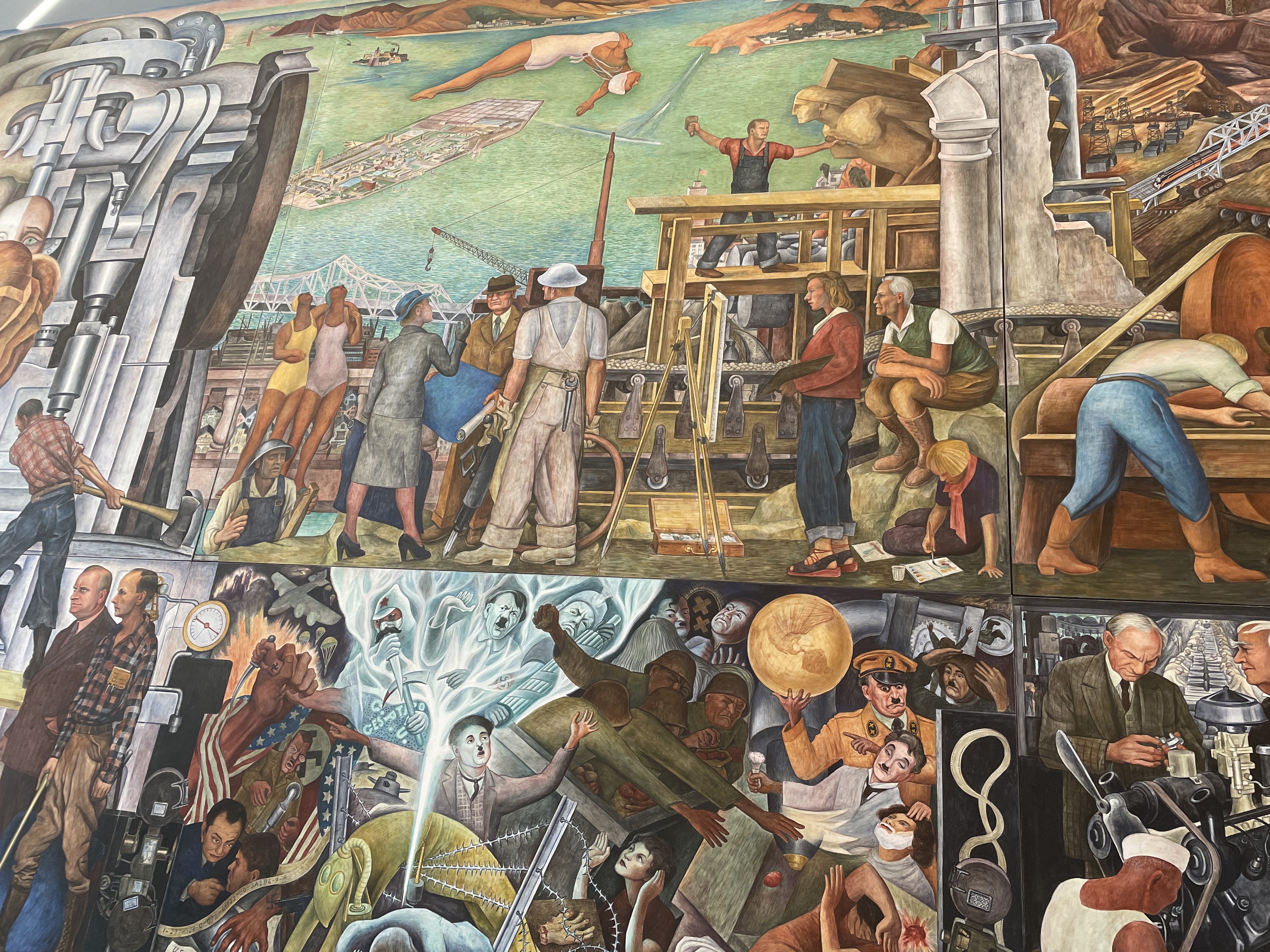
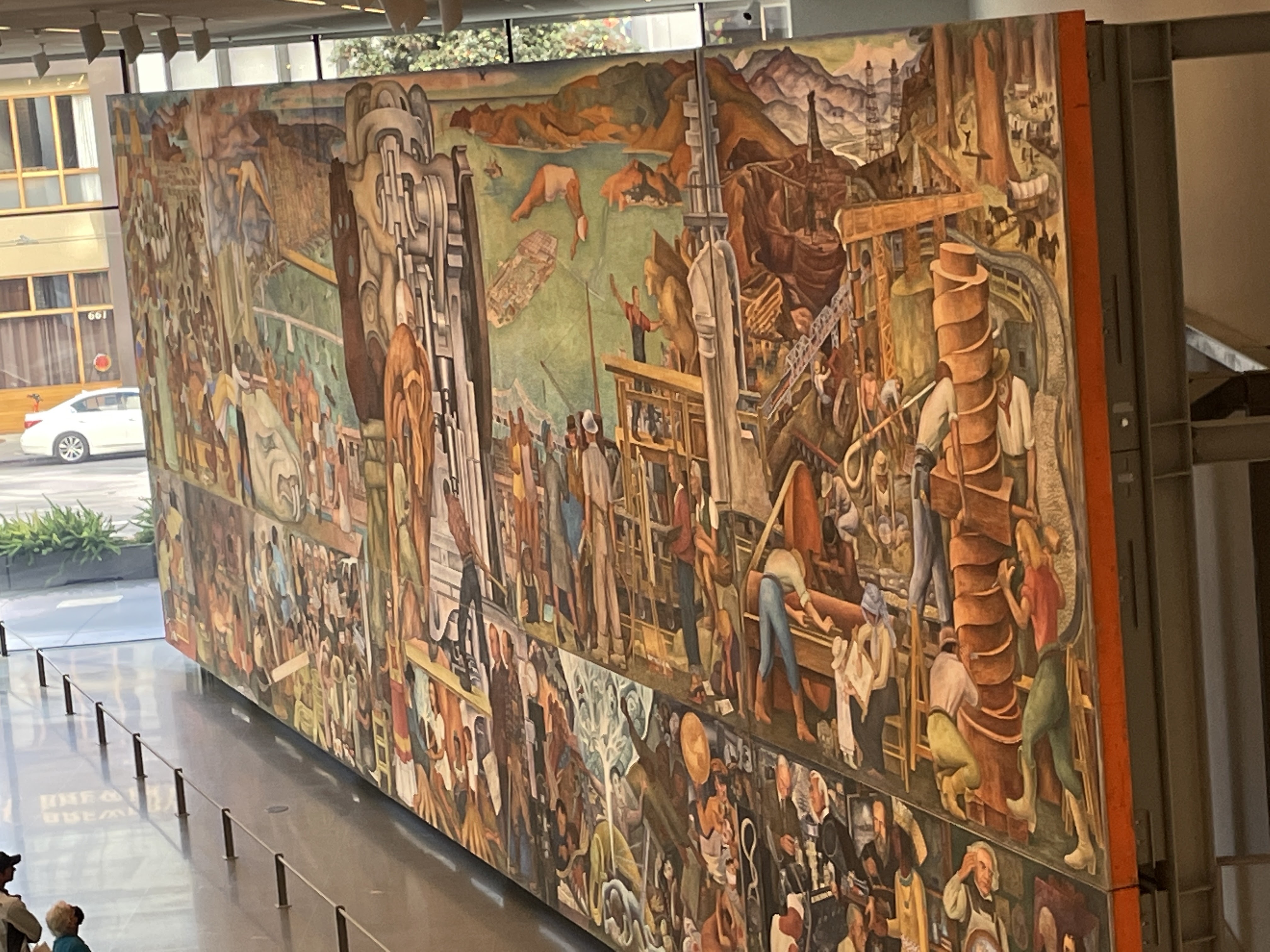
November is a beautiful time to visit California. Crisp, sunny weather makes for a nice weekend getaway. Bonus excursion to the San Francisco Museum of Modern Art, where you can view Diego Rivera's America exhibit until January 3, 2023. 

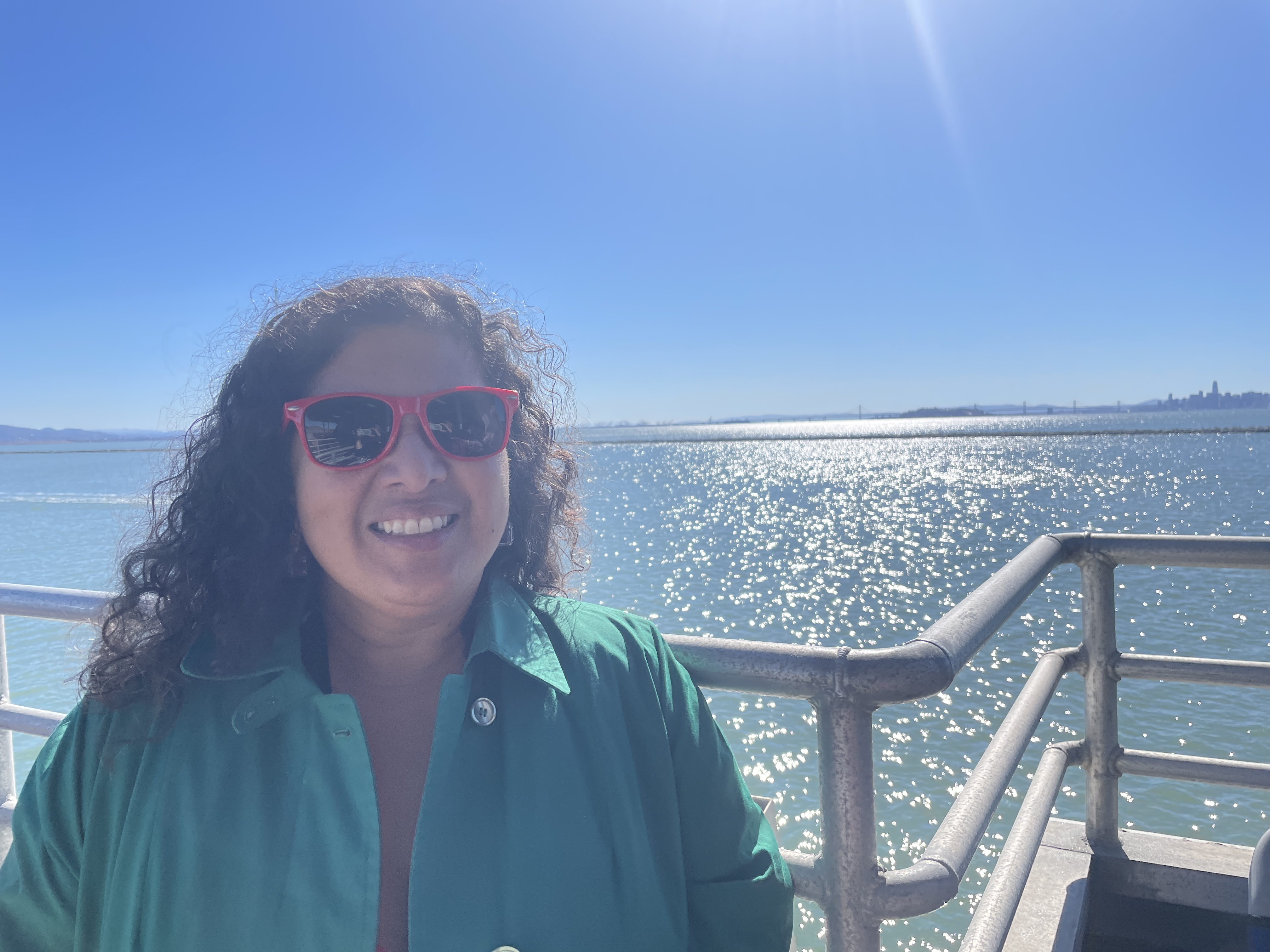
I had the pleasure of visiting a friend in Richmond who introduced me to the ferry near her house that goes straight to San Francisco. When I lived there, the only non car option was to take Bart and get to SF. Bart is the Bay Area Rapid Transit system and how you will get around without being stuck in car traffic. 


San Francisco

Views of the Golden Gate Bridge from the Richmond Ferry to SF.


Once in the city, Bart will get you to all destinations, but it's fun taking the trolley. 

close up of the Rivera's mural

With Diego's Siren drawing. 

Andy Warhol's Triple Elvis 


Bording the trolley from Powell street

If you look closely, you might see Nancy's house in the distance. 

Do not attempt this photo while the trolley is moving. 

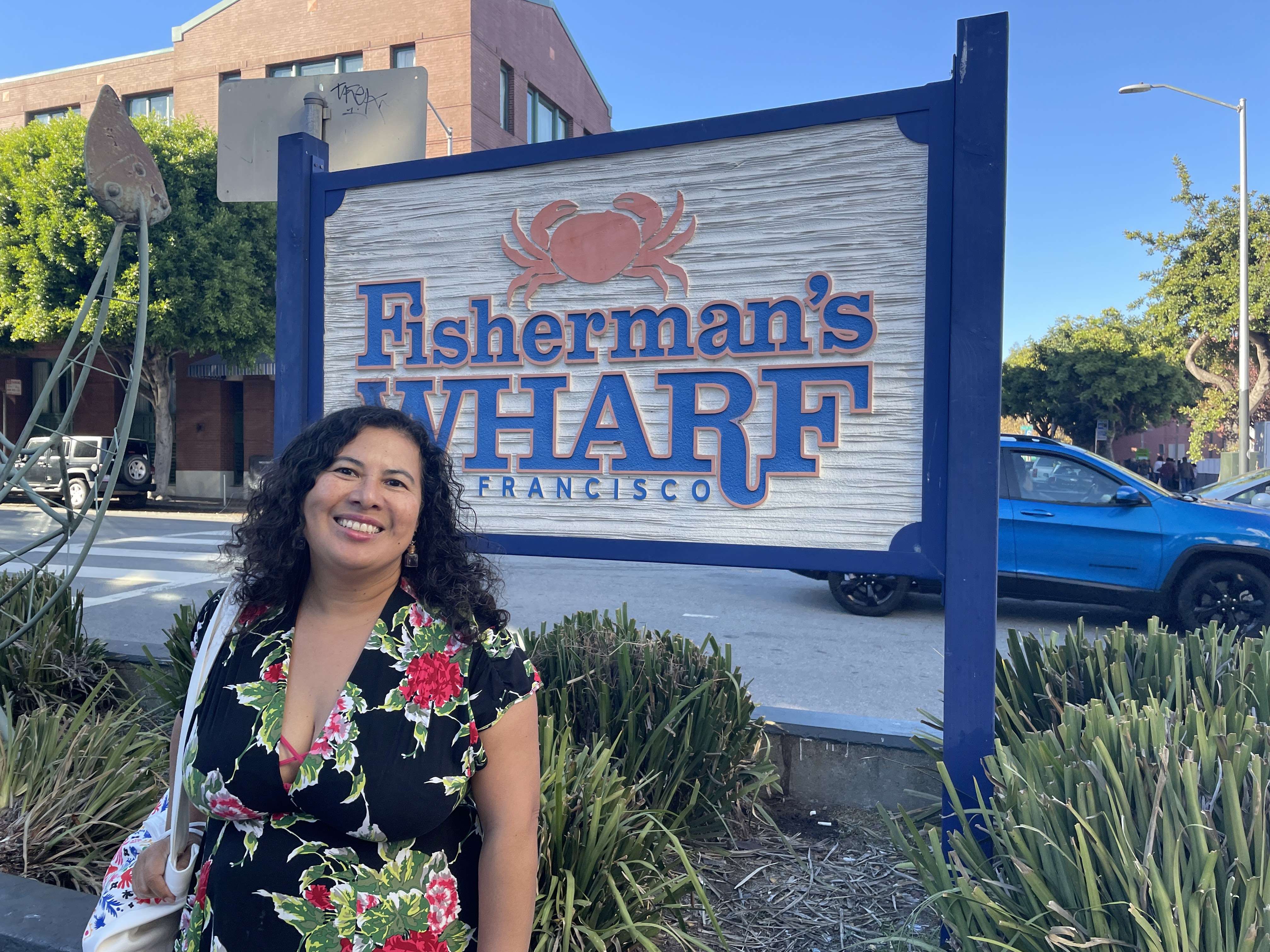
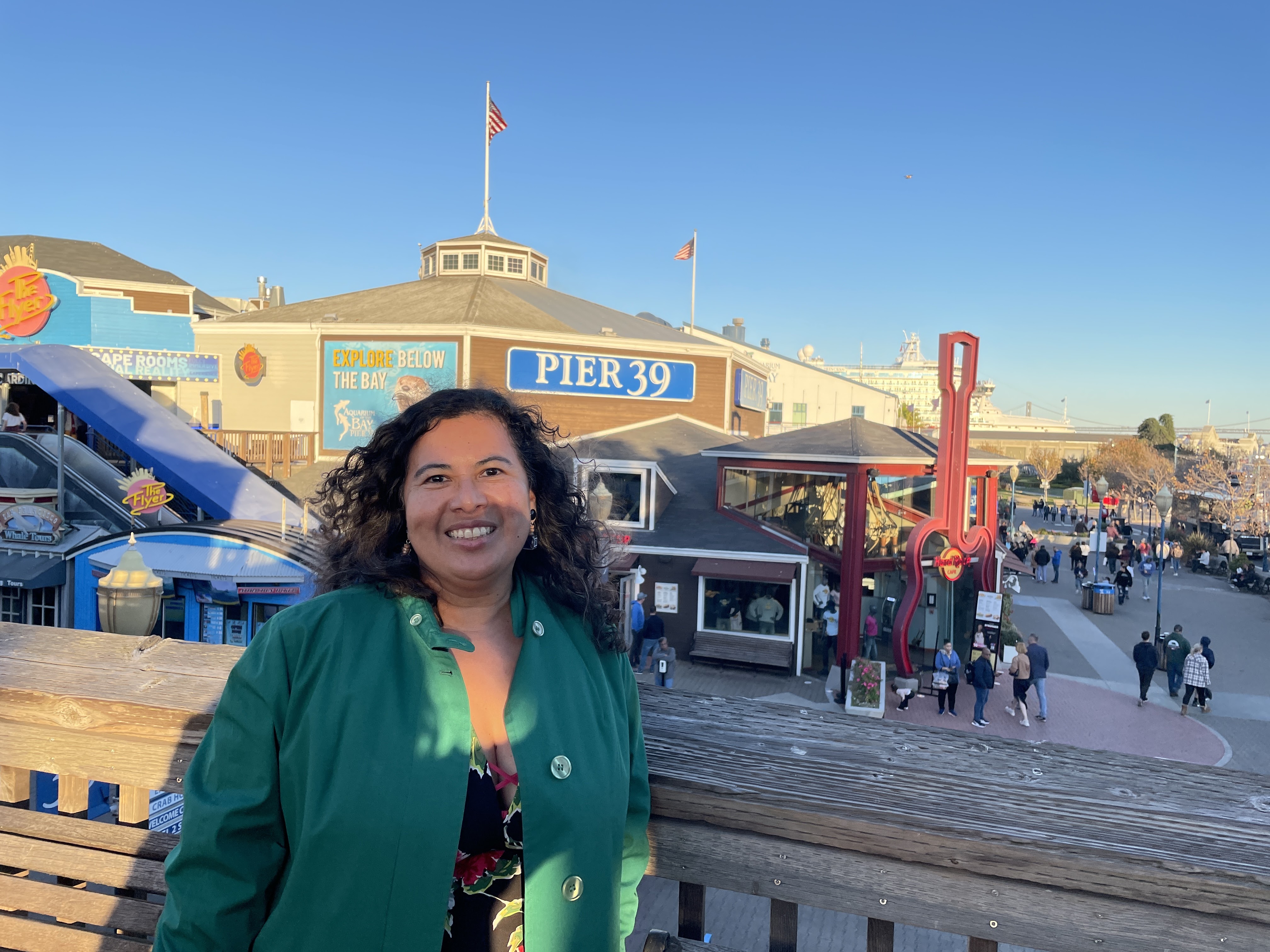
Fisherman's Wharf was different from what I remembered, busier, crowded. Allioto's shuttered and a victim of the pandemic. 


Tony Benett sang about leaving his heart in San Francisco and it's easy to see why. It's still a special city by the bay and I am a lucky to have good friends who showed me around the city I once loved and lived in. San Francisco will always have a piece of my heart. 


Thursday, February 18, 2016

Chicanonautica: Impressions of Tenochtitlán


I probably would have never written High Aztech if I hadn't been to Mexico City, thanks to my sister Carol. It blew my mind, to use a cliché that seems to pop up a lot these days – maybe there's something in the air, or the gravity waves distorting that part of the spacetime continuum . . . I took along a sketchbook, made some notes and drawings that captured some what was happening to my mind. Here are scans of the pages, and transcriptions of my scrawled notes, with minimal corrections, and the run-on sentences intact to emphasize how I was overwhelmed by Tenochtitlán:


27Jul82 (Flying in Mexican air-space): Plane flies thru an electrical storm. Lighting is different when you're on its level or above. Flashes reveal instant landscapes of the storm-clouds. Is it more spectacular flying over Jupiter?


Later, from a decaying taxi I see this sprayed on a Mexico City wall . . . ¡PUNK!


Like a feathered serpent uncoiling in the primordial dawn – Mexico City gets up early, winds up, comes to life. By sun-up, workers are busy excavating Aztec ruins less than a mile from the Palacio Nacional. This is a city built on a city built on a city . . . onward until the 21st century. Decaying buildings spew forth people in modern business dress. An Aztec serpent face peers out of a 16th century wall. 1960s psychedelic color (long faded) art deco façades. Drivers & pedestrians slide into mad rhythms that don't allow for error. Blind people are all over, the infirm, the starving, the hustling . . . an old lady begs at the entrance to the National Cathedral, a man pantomimes hunger in front of a diner. Indians in Aztec costumes play music and dance. A man plays the accordion while his daughter holds out a tin cup. Boys in uniform hold rifles and pose for tourist's photos in front of national treasures. The concrete is cracked, flowing and organic – This city is a living thing. Murals & graffiti – History & news. Disco sucks here too. (27Jul82 Mexico City)


Top Cat, Beany & Cecil, Bozo the Clown, Little House on the Prairie and Sheriff Lobo all habla español on Mexico City T.V. We arrive a day late to witness a political demonstration. Programacion infantil. Yanqui go home. Tourists come here to look at another culture. (27Jul82)


29Jul82 – Climbed to the top of the Pyramid of the Sun . . . WHEW!


31Jul82 – The Metro & bus system of Cuidad Mexico ain't all that bad. Despite all the hassles & crowds I wish L.A. had half as efficient a rapid transit system. Everywhere (museums, streets, subways, buses) people are reading tiny Mexican comic books. On the Metro guys get on & hawk books (on buses too). Also on the Metro as a blind beggar made his way thru a car singing a little boy tried to steal a coin from his outstretched hand. Blisters erupt on my feet. Saw “The Illustrated Man” w/Spanish subtitles last night. Sipped wine while watching lighting flash behind the Palacio Nacional. Graffiti is more political than adolescent search for identity. Parts of Mexico City (and the suburbs) look like the L.A. area, except for the ancient decaying churches, the Aztec ruins in the middle of the Metro, and all the beggars, cripples, dwarves & hunchbacks – it also rains most every day in this wet season. Also young people of the same sex walk hand & hand, arm & arm around the streets, they do the same with their mothers & fathers – touching and affection don't necessarily mean sex here. Culture shock. In the Metro there's no “ladies first” politesse – when the train stops, it vomits and swallows masses of humanity, then speeds off on its merry way.


ErnestHogan's High Aztech in available in an enhanced ebook version, and a premier trade paperback edition will be coming out in April, 2016.


Tuesday, July 15, 2014

The Chicana Traveler Puts a Cork In It

Guest columnist
Xicana Travelougue: Week 1
Sarah Rafael García


Ireland was one of Papi’s travel tales. Although Papi himself never traveled beyond Mexico and the United States, he infused my mind with limitless opportunities to cross over different borders.

“Mira mija, you’re American, tu vas tener la oportunidad de conocer ese país. Imagínate, one day you’ll go there!” His ink-stained fingertips tapped on the newspaper page that told of some green countryside in Ireland. Papi worked in the print room of the OC Register for 10 years; along the stories printed he also shared the lives of the other immigrants who worked with him. Needless to say, Vietnam, Samoa and Colombia are also countries on my travel list and he is the reason I share my stories.


Finally, at the age of 40, here I am. Writing in Ireland. “Si Papi, I know, I know you were right. It’s more than I could’ve imagined back then.” But from this point on, I have to learn to live and write for myself. I have chosen to present a final piece to him in a country that struggles with preserving their identity—as many of us do.

I’m in Cork, Ireland on a study abroad experience through early August. I look forward to sharing this country with you in the weeks ahead.


Beyond Timoleague
For Papi

Thump, thump. Thump, thump.
The odor of musk resurrects the past.

I turn my head for an escape,
agony unearthing the stones at my feet.
Wish it away! Wish it away.

Find solace in the damp grass.
Inhale until the malady subsides,
fill all the crevices within.
It’s not even past!


The clucking of life,
Cacrack, cacrack.
Cwaw, cwaw.

Rising, quietly, misty view ahead.
Shiny mudflats adorned with winged spirits,
savoring sweetness of grassy hues.
The buzzing at my head,
the earth pressed in my palms.
In such stillness, life goes on.

Behind me,
silence echoes—swaying to and fro.
Buried crosses,
endless knots,
a whispered name.
Shhh…listen to it again.


Once a prayer, today a reminder.
Peace will never be.
Nor here, nor there,
the past is never dead.

Forever in my thoughts,
“May his soul be at God’s right hand,”
because I know I am not.

(A response to a visit to Timoleague. Inspired by "The past is never dead. It's not even past." -- William Faulkner & "Timoleague Reveries" by Steve Wilson.)


Sarah Rafael García is a writer, community educator and traveler. She has trekked the Great Wall of China sixteen times and backpacked Australia from Melbourne to the Daintree Rainforest. Since publishing her memoir Las Niñas in 2008, she continues to share her passion by founding Barrio Writers and hosting Wild Womyn Writers workshops.
Her writings have been featured in Connotation Press, Label Me Latina/o, Brooklyn & Boyle, LATINO Magazine, Santanero Zine and Flies, Cockroaches and Poets. Sarah Rafael is currently attending Texas State University’s MFA Program in Creative Writing. Her works promote community empowerment, cultural awareness and global sharing. www.sarahrafaelgarcia.com

Saturday, April 20, 2013

Latina Poet Laureate. Bloguista in Aridzona 1


First Latina Texas State Poet Laureate

“The Texas Commission on the Arts (TCA) is pleased to announce the Texas State Legislature’s appointment to the position of state poet laureate: Rosemary Catacalos.” (Texas Commission on the Arts press release). Catacalos is the first Latina to hold that post. You can learn more information on her author page.

In September, Wings Press will publish the 30th anniversary edition of Rosemary's first book, Again for the First Time, and a limited edition (1,000 copies) of a chapbook of newer poems, to be entitled Begin Here. The signed and numbered chapbook will feature a cover of handmade paper printed by letterpress. (Wings Press has published books by poets laureate of Virginia, Delaware, Louisiana, Utah, Kansas, and Texas -- and the U.S. For more info, contact Bryce Milligan, Publisher, Wings Press)

Catacalos was awarded the Dobie Paisano Fellowship by the Texas Institute of Letters and the University of Texas in 1985, as well as a National Endowment for the Arts creative writing fellowship. She directed the literature program at the Guadalupe Cultural Arts Center (1986-1989). Catacalos spent 1989 to 2003 in California, where she was a Stegner Creative Writing Fellow at Stanford University, then executive director of The Poetry Center/American Poetry Archives at San Francisco State University (1991-1996). She was a visiting scholar at the Institute for Research on Women and Gender at Stanford until she returned to San Antonio in 2003 to become the executive director of Gemini Ink, a literary arts center. She retired from Gemini Ink in 2012. In 2008 Catacalos received the Macondo Foundation's 2008 Elvira Cordero Cisneros Award.

A Bloguista in Aridzona 1
Not getting away from it all

This week, my wife and I  wanted to do three things: take a short cheap vacation (Tucson), experience a Sixto Rodriguez concert (Denver tickets, sold out) and, as they say, “get away from it all.” We got tickets for the first two and headed for the airport.

So, what is the “all” that a marginalized Chicano wants to get away from on a vacay? A list of that could fill a paragraph, but let’s just call it: the political, economic and social pressures of U.S. society, the kinds of things bolded below.

Snow-ice granules fall as we head to the DIA terminal. They increase. I’m thinking Global Heating’s going to interfere with our getaway, but forecasts assure us it’s “just a spring storm.”

As we work through airport security, for the first time I notice how few Blacks and Latino-lookers are in line. I count those queued, and come up with an estimate that only about every 30th person looks like they’re not Anglo. I’m privileged, I’m reminded, one of few able to enjoy “freedoms” of air travel.

I don’t make it past the scanners. Two jars of homemade jelly that apparently look like nitroglycerine are confiscated. Okay, fine. But then, “You’ve got a knife in your bag.” “But I thought the rules were changed.” “They don’t change until tomorrow.” They confiscate my second Swiss Army knife in a year. It’s my fault for not reading closely Homeland’s motto: “Give us your billions of dollars and we’ll make you safe by taking away your jelly and precious little knife.”

I’m more pissed at myself than them because I forgot cardinal rule #1 about living under Big Homeland Brother’s repression: The rules can change; you were safe yesterday, but keep up on how you might transgress, today.

We get on the plane and for over an hour the pilot will strategically reassure us with varying explanations how it won’t be that much longer before we take off. He never mentions Global Heating is responsible. We sit on the tarmac for over an hour, waiting our turn for deicing. I’m wondering about the poor souls who took later planes and how long before they’ll get out.

Landing in Tucson is good; rental car; motel (America’s Best Value Inn – exit 262 on I-10 is $50 cheap, clean and recommended by Visitor’s Bureau. Now we’ve gotten away from it all?

Except the motel TV, car radio and Arizona newspaper are filled with the Marathon bombings. Conjectures, misreporting, photos of pain and suffering, again. And strange pieces, like, of all people, Putin assures the U.S. Russia is ready to assist however they can. Why’s the Russian Prez entering the picture?

We hit the Biosphere 2 facility, full of the sciences of arcane worries like self-sustainability, recycling wastes and vibrant ecosystems. Not once during the hour lecture do I hear the words Global Anything, no connections made to how the mostly retired, Anglo visitors contribute more than anyone else to planetary degradation.

Next to Arizona State University, we have beers and good eats one night, an area filled with college people, yeah, very few are black and brown. In the bathroom standing up to do my business, I hear a couple of Anglo kids share and laugh over some nigger-jokes that I thought were dead history. I forget Aridzona is a hothouse of anti-bilingual/Chicano studies/immigration sentiments. At least the guitar player tells me about R&B performed at a few good bar/eateries.

Like at home, I’m up at 6, reading the newspaper, going online for Denver and national news:
1. A cop shot at MIT, but “it has nothing to do with the Bombing.”
2. The layer of dust on motel swimming pool furniture is from Asarco copper mines in the area and more severe, recent desert dust storms that violate Clean Air Act levels. Will they get their jelly and knives taken away for that?
2. U.S. children rank 26th internationally in quality of life, only a little better than Latvia and Estonia; kids like I once taught.
3. The storm that escorted us out of Denver hit the Midwest. Tornados, snow, rain, flooding, car-eating sinkholes, a few deaths, stretching from Mexico to Canada. I don’t hear mentions of Global Anything.
4. Snow pack in Colo. Mountains will melt too fast because of dust from NM and AZ. Likely cause flooding and the drought to continue. No mention of Global Anything.
5. Homeland Empress Napolitano is on the news asking we give her more of our money that should go to kids’ welfare, instead, so she can install more surveillance, even though the billions we already gave her accomplished nada to stop the Bombing. Sounds like Putin deserves the money more than her.
6. Arizona pipeline and Keystone XL Pipeline in the news. Here it threatens Native American sacred grounds. XL threatens the continent.
7. Boston shut down for a day. MIT cops killed by Marathon bombers. One suspect dead, the other captured, bloody. Chechnyans, maybe. So, somehow Putin knew? Which means Obama knew, though maybe too late. Americans, of course, were the last to learn.

They’re cheering, clapping, tweeting and celebrating in Boston. After the residents of an American metropolitan area was on lockdown--no transportation, no schools, businesses open, people walking the streets, shut into their homes, self-incarcerated for the All-Clear.

It’s good the ALLEGED perpetrators were caught, stopped, taken off the streets. But millions of supposedly free Americans on Lock Down for hours and hours scares me more than the terrorists, whoever they were, whatever they were armed with. They were no nuclear threat. To our knowledge, there were only two of them, on the run and in hiding. To willing give up my right to travel, conduct my life and pursue my endeavors and hand it over to Homeland threatens me in a way that’s too 1984. But that’s just me, unable to get away from it all and unable to forget that I’m supposed to be living in the Land of the Free, not the Home of the Shut-In.

Great Mexican food in Tucson

For lunch on Friday. we head to Mi Nidito, the so-popular place to eat in Tucson, for lunch with Tom Miller--and wife Regla--who’s leading a Cuba trip of alternative-media journalists this July that I’d give my next Swiss Army knife to be on.

Tom is as tall as the restaurant’s famous visitor Bill Clinton, when he was still Prez and after he’d recovered from Monica. According to our host, Jimmy Lopez, Clinton came in and ordered almost one of everything on the extensive menu. He ate all but one tamal.

The walls of the waiting area of this appropriately named, Little Nest, are covered with photos of the famous and the notorious, including Cheney. Tom Miller’s photo’s there, but mine won’t be until my next book, apparently, because Jimmy didn’t rush for his camera.

We’re treated like, not kings, but gente. Moderately priced, the food is extravagantly served, with my wife and I unable to finish one order between us, even though we’d had no breakfast. Attentive staff, crammed Mexican décor, a busy place that was worth waiting for. Go here for more info about a place not to miss.

Friday night we head to the Pascua Yaqui tribe’s Casino del Sol Amphitheater for the Sixto Rodriguez concert. I need to digest Sixto—not Rodriguez—before I tell you about the experience. Next time, more about that, and about heading to Phoenix to meet, for the first time, Bloguista Ernest Hogan. And the saguaro cactus. And Phoenix. Y más. But very little about getting away from it all.

Es todo, hoy,
RudyG

Sunday, October 21, 2012

Pedazos of a fall book-tour - SoCal 2


by Rudy Ch. Garcia

As I describe in yesterday's first report, I spent a week on the road to promote my fantasy novel The Closet of Discarded Dreams in another state, Califas, and a strange region, L.A., as a relatively unknown author and culture-shocked tourist, not knowing how Californios would receive a Chicano author peddling a fantasy book that, as one vata put it, "our gente won't read."

Every time I needed to head to another venue, to this Denverite it was comparable to driving to another city, another city sometimes two hours away. But apparently that's life here.

Latinopia y Jesus Treviño

When Bloguero Michael Sedano told me people were coming over to Casa Sedano for a Mental Cocido (the local version of intimate Salon gatherings), I welcomed not having to climb into the rental again. As the guest artists and writers began showing up, a short trim guëro brought in camera equipment, set it up and introduced himself as Jesús Treviño.

Not until later did I realize this was the Treviño who Sedano featured in a La Bloga post, the one whose television credits include Law and Order - Criminal Intent, The Unit, Criminal Minds and Resurrection Blvd. Apparently, that too is life here, periodic encounters with raza who have broken into higher levels of cultural work than what I'm accustomed to in Denver.

Treviño filmed part of my reading of my novel The Closet of Discarded Dreams and informed me he'll be posting it on his website Latinopia sometime soon.

Later I spent time exploring Latinopia. Calling it a website is an understatement. Yes, it's like other sites with videos, others that feature cultural events or interviews. But the breadth of it is more than ambitious. It struck me--and will you when you check it--as a monumental work. I quickly realized Treviño and company are documenting our history for future generations and others in distant places.

Read Sedano's piece on Latinopia; set aside some time to navigate the wealth of documentary available there; then enjoy it and learn. College students needing research material, fans of lit and music, baby boomers wanting to relive the times and hear the words of those who have, are and will pass through Aztlán, making their marks, leaving their cultural imprints--many of those are here. Later, gente will come to realize the great legacy Treviño has and is making.

The Latino Book & Family Festival


I'd been invited to participate in this festival on Oct. 13 at California State University, in Dominguez Hills, and was eager to read and share my novel with everyone in earshot. The Festival linked up with another event aimed more at the community than just writers and lovers of lit. Tens of thousands of people, primarily latino families came through that day.

The building housing the rooms designated for many events had such a convoluted layout and room numbering system, I thought I was The Chicano in my novel--disoriented, lost, wandering into dead ends and generally not certain anyone would find us, even though we authors were determined not to be no-shows.

At my first panel, the audience consisted of two people.
At another panel, three showed and the moderator never appeared.
At my one reading, the two people there very much enjoyed what I read.
I sold a handful of books, probably more due to my lack of fame than anything else.

The event was great for children's books authors Mara Price, René Colato Laínez and others, given the latino family makeup of Festival attendees. Well-known latino authors also did well.

My Festival highlights consisted of meeting authors, celebrities and notables, and getting my pic taken with them, like some cow-town tourist's first time in the Big City.

At Tía Chucha's

Of my two readings at Tia Chucha's Cultural Center & Bookstore in
Sylmar, getting a chance at the open mic proved to be the best experience. Founders Maria Trinidad Rodriguez, Enrique Sanchez and Luis J. Rodriguez have a gem in this bookstore/cultural center. The Friday Open Mic had the feel of gente greatly knowledgeable about our government's mad dash to the bottom and the 99%'s equally great efforts to keep not only past culture, but also ongoing love of learning. I would read again there any day.

The small attendance at my offical reading and signing was less well-attended, again probably due to me being the out-of-town wannabe searching for fame. But my hosts and the staff made me feel not only welcome, but even a little distinguished.

The Siqueiros mural

For more information you can go here to read Sedano's post about the great Mexican revolutionary artist David Siqueiros mural, America Tropical.

I've been to Mexico, enjoyed not enough time in front of the wondrous Mexican muralists' work, Dr. Atl, Siqueiros, Orozco and Rivera. Every Chicano's bucket list should include travel there to experience something that still inspires the way hearing the national anthem did when we were young, before we knew better.

B&W estimation of the original America Tropical
Standing in front of Siqueiros partially salvaged monumental work on an L.A. wall engenders entangled feelings and sensations:
Immediate anger. Over Anglo American ignorance that desecrated a historical treasure, appropriately, with whitewash.
Disgust. For small-minded commercialism that deprived even Anglos of the evocative creativity of one of the world's masters as vaunted as Michelangelo or Degas.
Relief. That modern day efforts restored something of the grandeur that brown children should experience each day before they pick up a crayon.
Pride. That what opens up before you was created by a mind and heart you are distantly linked to, with other links that stretch back into the times of Bonampak.
Emptiness. That can never be satisfied by seeing the original masterpiece. At least not until the next Siqueiros arises with a rebellious brush and revolutionary heart.
Soon enough.

Author Garcia, Ed Olmos, Lalo Alcarez 

Fin
Sedano's S.O. Barbara made my stay as Casa Sedano much like finding that perfect resort on a vacation. My other hosts during my stay included René's charming parents, Salvadoreños whose accents reminded me of boriqua's speech of which I usually catch only about every third word. It made me realize how complex latino Spanish is, something not cured in a matter of a few days. With more time, I would have loved talking and listening to fill my coffer of how varied our lives are, how different our experiences, how crazy our heritage. Maybe on another, extended stay I can work past that.

I headed back to Denver, off to another conference, and then Tejas. I retuned with many copies of my books, not much lighter than when I arrived. Other things were also much more weighty. The contacts I'd made, the enjoyment from people I'd spent time with, my perspective on some aspects of life in L.A. And my fuller belly from the cuisine at Casa Sedano. Hasta luego.

Es todo, hoy,
RudyG, aka Rudy Ch. Garcia, author of The Closet of Discarded Dreams

Oct. 24-31, Garcia will be in HOUSTON at the River Oaks Bookstore; in SAN ANTONIO at the SW Workers Union Underground Library, The Twig Book Shop and at Palo Alto College. Click here for details.
Garcia's author interviews can be heard on Tue. Oct 23, 7:30pm CST on Tony Diaz's Nuestra Palabra - Latino Writers Having Their Say, KPFT 90.1fm in Houston and seen on the Great Day San Antonio daytime program, KENS5 TV in San Anto, Sun. Oct. 28 at noon.
  

Friday, February 25, 2011

Sometimes Getting Lost...by Melinda Palacio

Lost for a day in Achutupu, San Blas, Panama

Losing my sister in Panama for a day was the stupidest thing I’ve ever done. Mary Rose told me I should not have gotten on the plane. There were so many could’ve, would’ve, should’ve moments. My sister and I are lucky this story contains a sweet ending. When I saw my cousin at the airport with her son and no Emily, I feared the worse. My sister Emily showed up ten minutes later and saved me a few gray hairs.

Our moon guidebook specifically said, “Do not confuse the great snorkeling spot of Achutupu in El Porvenir with the island Achutupu three hours away.” How I managed to buy one airplane ticket only, leave my sister behind in Panama City, land on a small airstrip for Achutupu where the “airport” consisted of a shelter and a few wooden benches is the story I’ve told repeatedly. The story also went viral via the phone tree. By the time the next and last plane landed two hours later and it was obvious there was no Emily Palacio on board, I broke down in tears and soon everyone on Achutupu (Dog Island) knew the story of how I became stranded on an island with no running water, let alone internet service, or hotels.

Piña Coladas can make a ridiculous plan sound sane. At an internet café, were only able to buy one ticket on Aeroperlas before our time on the computer was up. I went first and then the flight was sold out. Our plan was to go to the airport early and buy another ticket on Air Panama. Had we been going to an island with hotels and a larger airport, El Porvenir, we would have both been able to get there. Later, my sister said there were flights to El Porvenir. I actually thought I was going to El Porvenir in San Blas. Instead, I found myself on an island with Kuna Yala inhabitants who didn’t speak English or Spanish, near the Columbian border.

With our usual Panamanian timing, Emily and I arrived ten minutes before my flight to Achutupu. I had to make a split decision and Emily urged me to get on the plane, saying she will meet me there in two hours or she would be fine in Panama City for a day. As I waited a butterfly fluttered over me. There were two people who spoke Spanish (the rest spoke the dialect of the Kuna Yalas who live on Achutupu). They told me the butterfly would bring me good luck in finding my sister. My sister and I made a plan to be in touch by email. When my phone read No Service, I panicked and started to cry. The women felt sorry for me. I thought I would be staying at Hotel Kuna Niskua. They explained that this hotel was in Wichub Huala three hours away and that if I went there, I might miss my 6 am flight back to Panama City in the morning. They convinced me to spend the day with them.

I made the best of being lost on a faraway island. The daughter of the lady I stayed with took me swimming at a nearby island by canoe. My host killed a chicken for me and grilled it over a fire and made rice and patacones (green plantains). It was one of the best meals I’ve ever had. The Kuna people treated me extremely well and, although I was worried about my sister, I had a feeling everything would work out well. I did my best to enjoy myself. I know my sister would have had an equally grand time. Emily spends her days laughing. She never worries and is an expert at going with the flow. These past two weeks in Panama, my sister taught me to enjoy the moment and treasure laughter.

Tuesday, March 23, 2010

Review: Revenge of the Saguaro; Bits 'n pieces.

Tom Miller. Revenge of the Saguaro. Offbeat Travels Through America's Southwest. El Paso: Cinco Puntos Press, 2010.
ISBN: 1-933693-60-6 and 9781933693606

Michael Sedano

Back in 2000 and again in 2002, the National Geographic Society published Tom Miller's Jack Ruby's Kitchen Sink. Now, in 2010, EPT's Cinco Puntos Press republishes the volume, retitled with the more southwesty title, Revenge of the Saguaro. Offbeat Travels Through America's Southwest

Under its former title, 368 libraries from California to Australia according to WorldCat, shelve the seven-essay Jack Ruby. Cinco Puntos’ addition of two essays not in the earlier volume, the title piece, “Revenge of the Saguaro” and “The Occidental Tsuris,” should find welcome space in those libraries, and your own.

Shared in common are seven essays, including “The Great Stinking Desert,” “What Is the Sound of One Billboard Falling?”, “Jack Ruby's Kitchen Sink,” “Searching for the Heart of ‘La Bamba’,” “Hollywood Goes Southwest,” “Death by Misadventure,” and “The Free State of Cochise.”

Miller’s style bears repeating, he must feel, because every essay assumes the same voice and similar structure. The title conveys the major theme, but Miller’s way is theme and variations. His “La Bamba” essay, for example, begins with a consideration of a travel music mix for a Southwest jaunt, selected for location. Depending upon where your wheels are rolling, sounds would include Indian flute by R. Carlos Nakai, country folk by Latie Lee, chicken scratch music by Joe Miguel and the Blood Brothers, Alice Cooper because you're in his hometown, cantina rolas from Los Blues Ventures, and broadly regional work from Los Lobos and Los Tigres del Norte. One song, Miller suggests, fits the entire region, “La Bamba.”

The essay looks at the Ritchie Valens oldie rock version then explores further south into Veracruz and jarocho music, then back into history with Cortés and the European invasion’s syncretic influences on Mexican sounds. Miller’s musical journey U-turns from Xalapa to McCarthysim, noting folksinger Travis Edmonson was hauled before “a congressional hearing because he performed a foreign folk tune assumed to be about the bomb.”

Enriching the essay, Miller doesn’t drop "La Bamba" and stop there. Instead, he circles around the rim of the Morenci mine, delving into its ballad, “Open Pit Mine,” then heads east to the west Texas town of El Paso and Marty Robbins' hit about wicked Felina and a wild young cowboy’s misplaced passion. True to his travel genre, Miller takes you not only through the song but also to the “real” Rosa’s Cantina and associated ironies.

The title essay,"Revenge of the Saguaro," offers a gem of storytelling and righteous retribution. In a well-refined narrative, Miller tells of the death of a loser named David Grundman. Having told the story numerous times, Miller observes, not a single listener expressed any remorse over Grundman’s death. I am not the first to feel it, nor will you. You, as I, will side with Ha:san, a Saguaro cactus.

The essay links Ha:san's growing years to historical benchmarks. Saguaros themselves have populated the earth for 10,000 years. Ha:san germinated as a microscopic seedling during the hegemony of James Buchanan. In this period, the Supremes hand down their mistaken Dred Scott decision, some invader discovers gold along the Gila River, and Mexicanos are being swindled out of their lands and culture supposedly guaranteed by the Treaty of Guadalupe-Hidalgo.

In 1912, Ha:san’s tierra becomes the State of Arizona. Now 55 years old and standing 8 feet tall, Ha:san blooms.

Miller builds a loving biography of the magnificent cactus, contrasting it to the meaningless life of an easterner who moves to Arizona at age 21, the Attica parolee, Grundman.

One happy sad day, Grundman and his pal load up on ammo and birongas and drive out to the wilderness where Grundman and pal kill a half-dozen Saguaros of varying sizes and histories. When Grundman drops the hammer on Ha:san, the hundred twenty-five year old 3000 pound magnificence refuses to fall. The drunken pendejo attacks Ha:san with the dried rib of a long-dead Saguaro. Too close, menso. Whump! Grundman is felled by Ha:san’s 500 pound arm. Then Whu-ump! Ha:san herself, devastated by the frenzied attack and unbalanced from her lost arm, succumbs to gravity and comes crashing down on the exact spot where Grundman lies under the fallen arm. “The joke was on David Grundman, and so was Ha:san. . . . Grundman lay face-up, dead beneath a ton and a half and 125 years of cactus…Natural selection had played its hand.”

The title story alone is well worth the time spent with Tom Miller’s ambling, oft intricate story-telling. You’ll likely enjoy the history of velvet painting, backstage stuff on the films “Milagro Beanfield War” and “Salt of the Earth,” ride-alongs with eco-terrorists, and ample helpings of social irony and salutes to lost causes and Miller's personal heroes.

I hope you’ll read and enjoy Revenge of the Saguaro. If so, you’ll also enjoy William Least Heat Moon’s Blue highways : a journey into America for much the same reasons. They're the same book, only different. Per WorldCat, the latter is available in only 68 libraries worldwide, a real lastima because these two titles are kissin’ cousins of the curious byways of United States culture.

News from the heartland

You'll have to be a local, or traveling through Kansas City Missouri, to enjoy La Bloga guest bloguera Xánath Caraza and friends reading at The Writers Place. (Click image for a larger view):


Readers everywhere will appreciate the news from the Eric Hoffer Award for Short Prose & Independent Books. The Latino Writers Collective's prose collection, Cuentos del Centro, reviewed at La Bloga last July, is shortlisted for the Hoffer's Montaigne Medal. From the Hoffer website:

The Eric Hoffer Award for short prose and books was established at the start of the 21st century as a means of opening a door to writing of significant merit. It honors the memory of the great American philosopher Eric Hoffer by highlighting salient writing, as well as the independent spirit of small publishers. The winning stories and essays are published in Best New Writing, and the book awards are covered in the US Review of Books.

¡Felicidades to Latino Writers Collective of Kansas City MO, and publisher Scapegoat Press!


Prayers for the Women of Juarez

This is the final week of the 40 day vigil around the world dedicated to the femicide victims in Juarez. In Los Angeles, Casa 0101 annex, 2102 E. 1st St. Los Angeles, CA 90033, closes an art exhibit curated by Victoria Delgadillo. Click here for details.

The image below comes from poet Don Newton of La Palabra, one of five artists whose joint effort created the image based roughly on a poem by Judith Terzi. The five artists are: Poli Marichal, Marianne Sadowski, Kay Brown, Victor Rosas and Don Newton.


That's March's penultimate Tuesday, a Tuesday like any other Tuesday, except You Are Here. Thank you for visiting La Bloga. See you next Tuesday.

mvs

La Bloga welcomes your comments on this and all columns. Click the comments counter below to add your observations. La Bloga welcomes guest columnists. If you have a book review, an extended commentary on something you've read here at La Bloga, a literary, arts or cultural event to report, or something from your writer's notebook, click here to discuss being our guest.