Showing posts with label Nation of Immigrants. Show all posts

Tuesday, April 14, 2009

Review: Julia Alvarez. Return To Sender.

NY: Knopf, 2009. 
ISBN: 0-375-85838-5

Michael Sedano

Tyler’s family is about to lose their dairy farm after a tractor accident disables dad’s shoulder. Coming hard upon Granpa’s death, and impending college for the elder son, the Paquette family’s ability to work is far short of the farm’s demands for labor. Desperate, they hire three Mexicans, the Cruz brothers. Tyler’s family doesn’t know about the three girls, one about Tyler’s age.

At first, Mom compels Tyler to be neighborly to the girls living down in the trailer. Reluctantly, Tyler complies. As Tyler and Mari develop a deep friendship, Tyler struggles with his contradictions. On one side, as a loyal, law-abiding person, Tyler understands his family is breaking the law. On the other side is what his mother calls the Cruz family, angels.

Further complicating the mix are the two youngest, born-in-the-USA sisters and the interplay this brings within the trailer. The youngsters are so comfortable in English that Papa permits only Spanish language television on the hand-me-down from Granma.

Of everyone in the extended family group, Granma welcomes the Cruz girls with complete abandon. They offer all-day companionship for the seventy-something woman, along with a healthy dose of intercultural communication. But when Granma builds an Ofrenda for Grampa, the family thinks she’s gone and tries to force her into a rest home.

School finds Mari and Tyler in the same class, with a wonderfully humane teacher who speaks up at the annual town meeting and puts down the village curmudgeon. When the family goes on the run from la migra, this old crotchety fellow becomes the fugitives’ best friend and Tyler’s too.

There's an ugly hard edge to the story, but Alvarez pulls the punches. Leave it to a parent to discuss coyotes, slavery, ransom, and torture. When Mari's mother goes missing during a surreptitious crossing into Texas, father and daughters fear the worst but refuse to put Mama's photo on the altar this year.

Constructed in an epistolary style, the gimmick falls apart immediately, in disbelief that an eleven year old child writes like Julia Alvarez! No reader will give a hoot at the transparent failure of the letter / diary ploy. It’s a superb way to subsume narrative requirements to the needs of character and plot, and pulling at heartstrings.

Return to Sender will be an ideal choice for adult bookgroups, but also for those ten and eleven year olds in the family, surrounded as they are by immigrant bashing hysteria. Alvarez puts a personal, human face on the condition. Those intensely pro-immigrant will find the end disturbing. I don’t know if this is a Vermont thing, but Mari’s contentment, and of her self-deported minor citizen sisters, is not the answer.

That's what the second Tuesday of April sounds like. For the past 8 years, paying my taxing due has been a pain, knowing what I was getting for my money. With the new guy in charge, here's hoping the money goes to better days.

To leave a comment on today's review, or any issue, click the Comments counter below. La Bloga welcomes your guest columns. Please click here to discuss how you can be our guest.

Tuesday, November 18, 2008

Confluences, Coincidences, Conferences

Michael Sedano

Ex Mex. Jorge G. Castañeda. NY: The New Press, 2007.
ISBN: 978-1-59558-163-1

Mexican Enough. Stephanie Elizondo Griest. NY: Washington Square Press, 2008.
ISBN-10: 1-4165-4017-2 ISBN-13: 978-1-4165-4017-5

In one of those serendipitous events that I wish on everyone, I am browsing the nonfiction new books shelves at the main branch of the Pasadena Public Library when Jorge Castañeda's name jumps out at me. Ex Mex, the spine proclaims. "Has Castañeda moved to the EUA?" I wonder. I'd read a number of useful Castañeda Op-Ed pieces in the LA Times, and know him as a Mexicano diplomat. The subtitle on the cover offers an explanation, From Migrants to Immigrants. Ah. A Mexicano perspective on U.S. immigration issues. Bién, bién, let's see what the former Mexican foreign minister contributes to our national dialog.
As I stride away toward the check-out desk, another spine catches my eye. Xican Enough. "Oddly nationalistic--in a good way--" I think, but pulling it down, I see the actual title reads Mexican Enough, My Life Between the Borderlines. The library has stuck a "NEW" label on the spine covering the "Me" in "Mexican." Which is ironic, given that Stephanie Elizondo Griest's early pages confess to her abandonment of her Mexicritude in high school, until she learns she'll qualify for college scholarships and numerouse ethnic-centered bennies by admitting her mother's heritage.

As one might expect, although the two titles weigh about one pound, Castañeda's is the heavier work. On the other hand, Griest's travelogue is more fun. The foreign minister builds upon statistical and scholarly reports while Griest builds upon her first-hand experience gleaned from a year in Guanajuato learning Spanish and getting in touch with her other cultura. The two make excellent companion pieces. When the Mexican's analysis begins to slow, a quick detour with the Mexican Unitedstatesian to the lucha libre gym provides a nice breather and the warm touch of human interest absent from the heavier work.

Castañeda's overview holds that U.S. politics, less than a growing Mexican economy, influenced the changes he sees in the Mexicano diaspora. Prior to Clinton's launching the TLC--NAFTA--Mexican immigration followed a circularity pattern. Agricultural workers, for example, followed the crops from Spring to Summer to Fall, and when the picking and weeding slowed, the workers would go back home for Winter. Next year, they're back, "bumerangas que la mano de diós por este mundo tiró" writes Abelardo.

Come NAFTA and the tightening of the border, circularity becomes more problematic. U.S. immigration law, historically more a breach than observance phenomenon, becomes more severe. Immigrants have a disincentive to flow in the tightening gyre of circularity--they can't come back--so large numbers settle down in the states and send for their families instead.

Griest is fascinated with emigration, too. Whole neighborhoods stand empty of men. In a domino effect, when one neighbor heads north and starts sending money back, others follow. The newer homes, the shiny pickup trucks, the stepladder kids, evince a year or two up north. Castañeda evokes a once-common view among Mexicans that only the weak and afraid left la Republica for el norte. That resentment is far from what Griest experiences.

The scholarly Castañeda starts spinning his conclusion, noting "Nothing on the immigration front ever is devoid of costs, pain, and tough decisions, and nothing ever happens quickly....Mexican migration's multicausal, multifactor origins and persistence suggest that caution and skepticism are in order. The sum of elements that have driven migration for more than a century cannot be boiled down to one single, economic consideration."

Tourist Griest experiences a different reality, at the grass roots, free from footnotes and bibliography. In a visit to an elementary school, the teacher quizzes the kids. Hands shoot up when she asks who wants to be a doctor? ¡Me! ¡me! A teacher? ¡Me! ¡me! Who wants to be this, that. ¡Me! ¡me! "'So none of you want to go to El Norte?' 'I DO, I DO!' they scream....But if you go to El Norte, you won't be a doctor or a teacher...You won't be anything. You'll just be a mojado. Too late: they are brimming with plans. One kid says he wants to go to Los Estados Unidos to buy a truck so he can drive it home and be a chauffeur. Another wants to go so he can build Mamá a house because Papá never will. Alma looks at me and shrugs. My stomach shrivels."

Castañeda deserves the last word. "Unauthorized worker." OK, two words. Some gente, Castañeda names these "American" and "conservative," like to call immigrants "illegal alien" to emphasize the law issue. Mexicans, Castañeda avers (and Chicanas Chicanos, he could have added), use "undocumented worker" to highlight the immigrants' limbo of being neither legal nor illegal. A term used by U.S. liberals and Mexican realists, he claims, "seeks to incorporate both the fact there is an issue of legality, but not only of legality." Given the ambiguity of migrant status against history's ever-shifting enforcement or not, the term--it'll never catch on--is "unauthorized worker."

A final confluence and coincidence. Like so many Mexicans, Castañeda gives up on the continent-not-a-country debate and refers to Unitedstatesians as "Americans." That is probably a global malapropism people like me will one day come to tolerate. The usage has pretty well permeated my consciousness, I noticed Sunday, when I looked at my program for the L.A. Philharmonic's Disney Hall concert. A British composer-conductor named Thomas Adès was performing his millenium piece, "America: A Prophecy." Melodies from Charles Ives, maybe Gershwin, or something spiritually jazzy, I was thinking. Nope. It's the Maya. The prophecy of the beginning of European migration to America--the original Unauthorized Residents, if you will. A most interesting piece. As the program notes declare, One of the ironies of the piece is that there is no real Maya music to be quoted – not only because the Spanish did everything they could to obliterate everything Mayan but because there was no musical notation before they came. Words, though, did survive, passed down and copied through the centuries, and these, from the books of the chilam balam (jaguar seers), provide Adès with the text for his mezzo-soprano’s prophecy-lament.

I recommend finding Adès' piece and giving it a spin. Ditto these two interestingly contrapuntal works on Mexico and Mexicans in America. All of it.

News from the National Hispanic Cultural Center
Spring lies ready to pounce upon us sooner than we might expect. And Springtime--May, in fact--brings the National Latino Writers Conference. This intensive workshop event brings writers and writing teachers from across the nation together for half a week to explore literary skill, hear the views of accomplished writers, and share in the camaraderie of our literary culture.

Applications to attend the Conference are now open. Send an inquiry to the Director, Carlos Vásquez, or visit the Center's website for details.

Among the highlights of the National Latino Writers Conference is the presentation of El Premio Aztlán Literary Award. Here's the preliminary news release. Presses and individuals may nominate candidates for consideration.


Premio Aztlán Literary Award


The Premio Aztlán Literary Award is a national literary award, established to encourage and reward emerging Chicana and Chicano authors. Renowned author, Rudolfo Anaya and his wife, Patricia, founded Premio Aztlán in 1993. This year’s award and lecture will be given at the National Latino Writers Conference, May 21-23, 09.

Guidelines:
• Literary prize is for a work of fiction (novels and collections of short stories) published within the calendar year.
• Authors must have published not more than two books.
• Entries must be the work of living authors.
• Edited works, self-published books or manuscripts in process are not accepted.

• No poetry, children or young adult literature will be considered.

• Recipient must be present to receive the award and is expected to give a lecture.

• Deadline for submission is January 30, 2009.


Past prize recipients include:
Veronica Gonzalez
Reyna Grande
Gene Guerín
Mary Helen Lagasse
Sergio Troncoso
Ronald Ruíz
Wendell Mayo
Norma Cantú
Alicia Gaspar de Alba

Photo courtesy NHCC: Los Anaya celebrate Reyna Grande's Premio Aztlán.


That's the penultimate Tuesday of the year's penultimate month. Can you believe how tempus fugit? Thanksgiving just around the corner. Helpful Indians. Starving Pilgrims (the original illegals). Turkey. Stuffiing. Desserts, just or just dessert.

La Bloga welcomes your comments or observations on today's column, or any column. Click the Comments Counter below to share your views. If you have a new topic to develop, a book or cultural event to review, an extended response to something you've read here at La Bloga, be our guest. La Bloga welcomes guest columnists. To learn about your invitation, click here.

Hasta next week. Les wachamos.

mvs

Friday, January 04, 2008

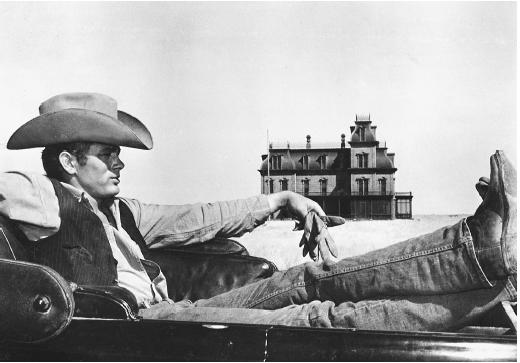
Scene From the Movie Giant -- And a Few Bits

Manuel Ramos


SCENE FROM THE MOVIE GIANT
Tino Villanueva
(Curbstone Press, 1993)
It's been several years since I watched the classic movie Giant, whose cast included James Dean, Elizabeth Taylor, Sal Mineo, and Rock Hudson. The first time I saw it, I was a young boy, probably eight or nine. It was the middle of the 1950s and I was in the Rialto Theater on Main Street, in a small Colorado town. The Rialto was one of those movie palaces that used to occupy places of respect in almost every American town -- a gaudy, blinking marquee, deep red carpeting, elaborate wall fixtures, and thick curtains that majestically opened when the lights dimmed and the newsreel flickered on the screen.

I remember Saturday afternoon matinees with my buddies and an occasional midweek night out with my parents and younger brother for some special screening. The Rialto was where I first encountered American icons of comedy such as the Three Stooges and the Little Rascals, and red-blooded heroes like John Wayne and Burt Lancaster. It's also the place where I practiced my recently acquired reading skill. Sitting on a worn cushion and scraping my shoes on the sticky floor, I read all the credits as they rolled up the screen; I learned that the director was always last and when his name appeared, the flick was about to start.

But my experience with Giant was different. Going in, I thought it was only a love story but it had some attraction for me because of James Dean. Back then, and maybe for years afterwards, I deluded myself that I was something of a rebel, even at that young age, and so I was drawn to teenage outlaw myths created by the movies and other facets of mass culture in the immediate post-War years. In another movie I thought Sal Mineo was perfect when he sauntered down a nameless New York street hunched over in a shiny red jacket, smoking a cigarette and flashing a switchblade. I saw the first four Elvis Presley movies and every rock and roll melodrama that passed through the Rialto.


And so I checked out Giant, mainly to see what James Dean had been up to after his surly bulldozing of the decaying middle American landscape in Rebel Without a Cause. Of course, I didn't think of it that way when I was a kid -- he was cool, man, and that was enough.

But what I got from Giant was this amazingly complicated story about Texas -- quick money from oil, cowboy aristocracy clashing with political tensions created by a vanishing Old West; rich and poor whites mixing it up in their own private class war; and, eventually, Mexicans: people who looked like my grandparents, who were scattered throughout the film as so many props.

I felt uncomfortable watching this movie. I didn't like the way the Mexicans were treated in the film but somehow I thought that maybe it was the Mexicans' fault. Why were they in a movie anyway? Movies were for slapstick comedy, outer space monsters, the glory and bluster of John Wayne on the shores of Iwo Jima, and juvenile delinquents.

Texas poet Tino Villanueva has focused his own reactions to this movie and created an epic poem entitled Scene From the Movie Giant. In his marvelously written book he capsulizes a lifetime of provocations inspired by the movie. In particular, he deals with one scene where a trio of quiet, almost submissive Mexicans are subjected to blatant and violent racism.

Villanueva agonizingly chronicles his own attitudes about the crucial scene, which portrays the apparent victory of brute force and hatred over the humble Mexicans. Sarge, owner of a diner, refuses to serve a Mexican family. When cattleman Rick Benedict (Rock Hudson) objects, Sarge savagely beats him up. Villanueva stretches his images over the years and miles to Boston where, as a graduate student, he still grapples with the real meaning of the scene from the movie. As Villanueva writes, he constantly must turn back to the time when his offended small world was disrupted, unresolved. As is made clear in Villanueva's pages, his own resolution comes through the words he has chosen to present to the reader, so many years after he watched a movie in fear and awe. He has presented the truth as only a poet can understand it.

(this review first aired on Denver radio KUVO in 1995)

A BIT OF NEWS

How Else Am I Supposed to Know I'm Still Alive?


If you can't read the image, it's an announcement of a presentation of How Else Am I Supposed to Know I'm Still Alive, written by Evelina Fernández and starring the very talented and always entertaining Debra Gallegos and Yolanda Ortega on January 19 at 7:30 PM at the Troutman Theater at Aurora Central High School, 11700 E. 11th Avenue, Aurora, CO. $35 for adults, $10 for students and seniors. The performance benefits the Nuñez Foundation College Scholarship Program. We love these women and their enthusiastic performance art, and I know I'll see many of you at the play.

Nation of Immigrants
The Art Students League of Denver sent the following announcement about their upcoming exhibit, Nation of Immigrants, curated by Tony Ortega and Susan Sagara Bolton: "This exhibit brings together a wide range of media, styles, concerns, and sensibilities from artists whose inspiration is the immigration experience. Walking through the exhibit, you will experience the history each artist brings to their art and how culture and heritage resonate through their work." Participating artists include Polly Chang, Manuel Cordero, Carlos Frésquez, Ken Iwamasa, Clara Martínez, Emanuel Martínez, Sylvia Montero, Adriana Restrepo, George Rivera, Danny and Maruca Salazar, Carlos Santistevan, and several others. Exhibit opens January 4, 5:30 - 8:00 PM and runs through February 27. The Art Students League is at 200 Grant Street, Denver, 303-778-6990.

Dolores Huerta
Dolores Huerta will be the keynote speaker at the Latina/o Advocacy Day event to be held February 24-25 at the Adams Mark Hotel in downtown Denver. Sponsored by the Latina Initiative and the Colorado Organization for Latina Opportunity and Reproductive Rights, the event provides advocacy and lobby training on policy issues of concern to Latinas and Latinos in Colorado. For those who might not know, Dolores Huerta is a long-time human rights activist and a co-founder with César Chávez in starting the United Farm Workers in the 1960s. Info., send an email to: dusti@latinaadvocacyday.org. Image courtesy of favianna.com.

Sacramento Poetry Center
I'm passing on the following piece:

Another great night of poetry is coming up this Monday, January 7 at the Sacramento Poetry Center, 1719 25th Street, at 7:30 pm.

Starting off the new year will be Barbara Jane Reyes and Oscar Bermeo. It will be an exciting night of powerful poetry hosted by Arturo Mantecon. Don't miss it!


Barbara Jane Reyes was born in Manila, Philippines and raised in the SF Bay Area. She is the author of Gravities of Center (Arkipelago, 2003) and Poeta en San Francisco (Tinfish, 2005) which received the James Laughlin Award of the Academy of American Poets. Her other honors include an Andrew W. Mellon Foundation Fellowship and numerous Pushcart Prize nominations. Her work has appeared or is forthcoming in Asian Pacific American Journal, Chain, New American Writing, North American Review, Notre Dame Review, among others. She lives with her husband, poet Oscar Bermeo, in Oakland.

Born in Ecuador and raised in the Bronx, Oscar Bermeo is a BRIO (Bronx Recognizes Its Own) award winning poet, educator & literary events coordinator. Oscar now makes his home in Oakland, where he is the poetry editor for Tea Party magazine and lives with his wife, poeta Barbara Jane Reyes.

Sacramento Poetry Center
1719 25th Street
Sacramento, CA
916.451.5569 - www.sacramentopoetrycenter.org


Later.