Saturday, January 24, 2009

Upcoming Events

Latina Authors Panel & Book Signing
3:00pm Sunday
January 25, 2009

Location:
Los Alamitos/Rossmoor Library
12700 Montecito
Seal Beach, CA


Latina Authors Panel & Book Signing
6:00-9:00pm Thursday
February 5, 2009


Join us in celebrating Libreria Martinez's Grand Re-Opening with Great Literature, Food & Wine Tasting!

Featuring: Sarah Rafael Garcia, Jamie Martinez Wood & Mary Castillo
Guest Moderator: Marcos Najera, Latino Affairs Journalist

Location:
Libreria Martinez
1110 N. Main St.
Santa Ana, CA
(714) 973-7900


Texas Book Tour, Again!
March 4-12th, 2009
Dates & Locations to be announced

Friday, January 23, 2009

Good News and New Books

HOW ABOUT SOME GOOD NEWS?

More American Adults Read Literature According to New NEA Study

Literary reading on the rise for first time in history of Arts Endowment survey

Washington, D.C. -- For the first time in more than 25 years, American adults are reading more literature, according to a new study by the National Endowment for the Arts. Reading on the Rise documents a definitive increase in rates and numbers of American adults who read literature, with the biggest increases among young adults, ages 18-24. This new growth reverses two decades of downward trends cited previously in NEA reports such as Reading at Risk and To Read or Not To Read.

"At a time of immense cultural pessimism, the NEA is pleased to announce some important good news. Literary reading has risen in the U.S. for the first time in a quarter century," said NEA Chairman Dana Gioia. "This dramatic turnaround shows that the many programs now focused on reading, including our own Big Read, are working. Cultural decline is not inevitable."

Among the key findings:

Literary reading increases

  • For the first time in the history of the survey - conducted five times since 1982 - the overall rate at which adults read literature (novels and short stories, plays, or poems) rose by seven percent.
  • The absolute number of literary readers has grown significantly. There were 16.6 million more adult readers of literature in 2008. The growth in new readers reflects higher adult reading rates combined with overall population growth.
  • The 2008 increases followed significant declines in reading rates for the two most recent ten-year survey periods (1982-1992 and 1992-2002).

Demographics of literature readers

  • Young adults show the most rapid increases in literary reading. Since 2002, 18-24 year olds have seen the biggest increase (nine percent) in literary reading, and the most rapid rate of increase (21 percent). This jump reversed a 20 percent rate of decline in the 2002 survey, the steepest rate of decline since the NEA survey began.
  • Since 2002, reading has increased at the sharpest rate (+20 percent) among Hispanic Americans, Reading rates have increased among African Americans by 15 percent, and among Whites at an eight percent rate of increase.
  • For the first time in the survey's history, literary reading has increased among both men and women. Literary reading rates have grown or held steady for adults of all education levels.

Trends in media and literary preferences

  • Fiction (novels and short stories) accounts for the new growth in adult literary readers.
  • Reading poetry and drama continues to decline, especially poetry-reading among women.
  • Online readers also report reading books. Eighty-four percent of adults who read literature (fiction, poetry, or drama) on or downloaded from the Internet also read books, whether print or online.
  • Nearly 15 percent of all U.S. adults read literature online in 2008.

A tale of two Americas

  • The U.S. population now breaks into two almost equally sized groups – readers and non-readers.
  • A slight majority of American adults now read literature (113 million) or books (119 million) in any format.
  • Reading is an important indicator of positive individual and social behavior patterns. Previous NEA research has shown that literary readers volunteer, attend arts and sports events, do outdoor activities, and exercise at higher rates than non-readers.

The NEA research brochure Reading on the Rise is based on early results from the 2008 Survey of Public Participation in the Arts (SPPA). SPPA is a periodic survey that has been conducted five times since 1982 using data obtained in partnership with the United States Census Bureau. Detailed results from the 2008 survey will be available in 2009. The 2008 SPPA survey has a sample size of more than 18,000 adults. The 2008 survey's literary reading questions - which form the focus of Reading on the Rise - were the same as in previous years: "During the last 12 months, did you read any a) novels or short stories; b) poetry; or c) plays?" Since 1992, the survey also has asked about book-reading. In 2008, the survey introduced new questions about reading preferences and reading on the Internet.

Reading on the Rise, along with other NEA research, is available for download at www.nea.gov/research.


MORE GOOD NEWS

SU TEATRO WILL BE AMONG THE 2008 RECIPIENTS OF MAYOR’S AWARDS FOR EXCELLENCE IN THE ARTS

Free community reception February 18

(DENVER) Mayor John Hickenlooper, the Denver Office of Cultural Affairs and Denver Commission on Cultural Affairs are pleased to announce the 2008 recipients of the Mayor’s Awards for Excellence in the Arts. The 2008 honorees are Charles Burrell, Denver Young Artists Orchestra, Su Teatro and The Bloomsbury Review. In addition, the Mayor’s Cultural Legacy Award will be presented to Noël Congdon.

The 2008 Mayor’s Awards for Excellence in the Arts reception will be held on Wednesday, February 18, 2009 from 6:30 p.m. to 7:30 p.m. (doors open at 5:30 p.m.) at the Ellie Caulkins Opera House in the Denver Performing Arts Complex, 14th St. & Curtis St. Mayor Hickenlooper will present the awards to the honorees at the event. The public is invited to attend this free community celebration. Seating will be first-come, first-served; no RSVP necessary. Performances for the evening will include: Rocky Mountain Children’s Choir, Sweet Edge Dance Company and Purnell Steen & Le Jazz Machine.

Since 1986, the Mayor’s Awards for Excellence in the Arts annually recognize individuals and organizations that have made significant and lasting contributions to the arts in the City and County of Denver.

Here's what the announcement says about Su Teatro -

Su Teatro was formed in 1972 in a University of Colorado classroom and quickly became an important artistic arm of the Chicano self-identity and civil rights movement of the time. Su Teatro is the third oldest Chicano theater company still in existence—after Teatro Campesino and Teatro Esperanza—and has been recognized as a significant force in both the Chicano arts aesthetic and American Theater. Su Teatro’s mission is to create, produce and promote theater and other art that celebrates the experiences, history, language and heritage of Latinos in the U.S.and the Americas.

In 1989, Su Teatro emerged as the larger cultural arts center, El Centro Su Teatro. They expanded their offerings to include annual projects such as the XicanIndie FilmFest: Latino World Cinema, Neruda Poetry Festival, which includes the Barrio Slam competition, St. Cajetan’s Reunification Project, Chicano Music Festival and Auction and a multi-tiered arts education program called the Cultural Arts Institute.

The organization is poised to expand once again with the purchase of a new space on Santa Fe Drive in Denver’s historic Westside neighborhood. Though the organization continuously experiments with form and content, Su Teatro remains committed to education, social justice and community enrichment.

You can read more about the award and the recipients at this link to a Denver Post story.


LITTLE BIT MORE GOOD NEWS

The recent series of short stories about Denver collectively known as A Dozen on Denver and printed in the Rocky Mountain News has been picked up by Fulcrum Publishing. The twelve stories will be published in book form in Fall, 2009, "positioned and priced for the Holiday season" as the announcement says. A Dozen on Denver has been a great project that brought together a varied and terrific group of writers who produced some outstanding stories about Denver through the decades. The project helped celebrate the 150th birthday of Denver and the News in a unique and literary way. I have a story in the collection so I am not completely objective, but I heartily recommend the stories (and the book, of course). Until the book is available, you can read my contribution, Fence Busters, here; and you can get to all twelve stories at this link.


NEW BOOKS

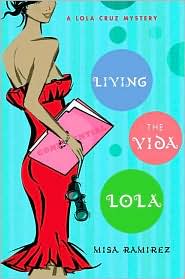
Living The Vida Lola
Misa Ramirez
St. Martin's Minotaur, February 7, 2009

Dolores “Lola” Cruz loves shoes, kung fu, and her job as an underling at Camacho and Associates, a private investigation firm in Sacramento. After a year and a half on the job, her sexy and mysterious boss, Manny Camacho, finally assigns Lola her first big case—a woman’s disappearance. If Lola gets it right, it could mean a big bump up the career ladder. But this is no grocery store stakeout. The woman turns up dead and the same thing could happen to Lola if she doesn’t watch her back.


The Sweet Smell of Home
Leonard F. Chana, Susan Lobo, Barbara Chana
University of Arizona Press, July, 2009

A self-taught artist in several mediums who became known for stippling, Leonard Chana captured the essence of the Tohono O'odham people. He incorporated subtle details of O'odham life into his art, and his images evoke the smells, sounds, textures, and tastes of the Sonoran desert -- all the while depicting the values of his people.

He began his career by creating cards and soon was lending his art to posters and logos for many community-based Native organizations. Winning recognition from these groups, his work was soon actively sought by them. Chana's work also appears on the covers and as interior art in a number of books on southwestern and American Indian topics.

The Sweet Smell of Home is an autobiographical work, written in Chana's own voice that unfolds through oral history interviews with anthropologist Susan Lobo. Chana imparts the story of his upbringing and starting down the path toward a career as an artist. Balancing humor with a keen eye for cultural detail, he tells us about life both on and off the reservation.

Eighty pieces of art -- 26 in color -- grace the text, and Chana explains both the impetus for and the evolution of each piece. Leonard Chana was a people's artist who celebrated the extraordinary heroism of common people's lives. The Sweet Smell of Home now celebrates this unique artist whose words and art illuminate not only his own remarkable life, but also the land and lives of the Tohono O'odham people.

what i'm on
Luis Humberto Valadez
University of Arizona Press, March, 2009

Luis Valadez is a performance poet and his poems shout to be read aloud. It's then that their language dazzles most brightly. It's then that the emotions bottled up on the page explode beyond words. And there is plenty of emotion in these poems. Frankly autobiographical, they recount the experiences of a Mexican American boy growing up in a tough town near Chicago. Just as in life, the feelings in these poems are often jumbled, sometimes spilling out in a tumble, sometimes coolly recollected. Sometimes the words jump and twitch as if they'd been threatened or attacked. Sometimes they just sit there knowingly on the page, weighted down by the stark reality of it all.

José García
put a thirty-five to me
my mother was in the other room
He would have done us both
if not for the lust of my fear

This new Mexican American/Chicano voice is all at once arresting, bracing, shocking, and refreshing. This is not the poetry you learned in school. It owes as much to hip hop as it does to the canon. But Valadez has paid his academic dues, and he certainly knows how to craft a poem. It's just that he does it his way.

i anagram and look and subject to deformation and reconfiguring . . .
it ain't events or blocks that ahm jettisoning through this process
it be layers of meaning, identity, narrative, and ego that gets peeled off
i can only increase my own understanding


Dark Thirty
Santee Frazier
University of Arizona Press, February, 2009

Writing sometimes in dialect, sometimes in gunshot bursts, sometimes in sinuous lines that snake across the page, Santee Frazier crafts poems that are edgy and restless. The poems in Dark Thirty, Frazier's debut collection, address subjects that are not often thought of as "poetic," like poverty, alcoholism, cruelty, and homelessness. Frazier's poems emerge from the darkest corners of experience: "I search the cabinet and icebox -- drink the pickle juice / from the jar. Bologna, / hard at the edges, / browning on the kitchen / table since yesterday. / I search the cabinet and icebox -- the curdling / milk almost smells drinkable."

Dark Thirty takes us on a loosely autobiographical trip through Cherokee country, the backwoods towns and the big cities, giving us clear-eyed portraits of Native people surviving contemporary America. In Frazier's world, there is no romanticizing of Native American life. Here cops knock on the door of a low-rent apartment after a neighbor has been stabbed. Here a poem's narrator recalls firing a .38 pistol -- barrel glowing like oil in a gutter-puddle" --for the first time. Here a young man catches a Greyhound bus to Flagstaff after his ex-girlfriend tells him he has fathered a child. Yet even in the midst of violence and despair there is time for the beauty of the world to shine through: "The Cutlass rattling out / the last fumes of gas, engine stops, / the night dimly lit by the moon / hung over the treetops; / owls calling each other from / hilltop to valley bend."

Like viewing photographs that repel us even as they draw us in, we are pulled into these poems. We're compelled to turn the page and read the next poem. And the next. And each poem rewards us with a world freshly seen and remade for us of sound and image and voice.


Later.

Thursday, January 22, 2009

Martín Espada on Barack Obama


Litany at the Tomb of Frederick Douglass
Mount Hope Cemetery, Rochester, New York
November 7, 2008

This is the longitude and latitude of the impossible;
this is the epicenter of the unthinkable;
this is the crossroads of the unimaginable:
the tomb of Frederick Douglass, three days after the election.

This is a world spinning away from the gravity of centuries,
where the grave of a fugitive slave has become an altar.
This is the tomb of a man born as chattel, who taught himself 
to read in secret,scraping the letters in his name with chalk on wood;
 now on the anvil-flat stone a campaign button fills the O in Douglass. 
The button says: Obama. This is the tomb of a man in chains, 
who left his fingerprints on the slavebreaker’s throat so the whip 
would never carve his back again;  now a labor union T-shirt drapes itself 
across the stone, offered up by a nurse, a janitor, a bus driver. 
A sticker on the sleeve says: I Voted Today. 
This is the tomb of a man who rolled his call to arms off the press,
peering through spectacles at the abolitionist headline; now a newspaper
spreads above his dates of birth and death. The headline says: Obama Wins.

This is the stillness at the heart of the storm that began in the body
of the first slave, dragged aboard the first ship to America. Yellow leaves
descend in waves, and the newspaper flutters on the tomb, like the sails
Douglass saw in the bay, like the eyes of a slave closing to watch himself
escape with the tide. Believers in spirits would see the pages trembling
on the stone and say: look how the slave boy teaches himself to read.
I say a prayer, the first in years: that here we bury what we call
the impossible, the unthinkable, the unimaginable, now and forever. Amen.

~~~ Martín Espada


xxxxxxxxxxxxxxxxxxxxxxxxxxxxxxxxxxxxxxxxxxxxxxx

Tips for Better Life

1. Take a 10-30 minutes walk every day. And while you walk, smile.
2. Sit in silence for at least 10 minutes each day.
3. Sleep for 7 hours.
4. Live with the 3 E's -- Energy, Enthusiasm, and Empathy.
5. Play more games.
6. Read more books than you did the previous year.
7. Make time to practice meditation, yoga, and prayer. They provide us with daily fuel for our busy lives.
8. Spend time with people over the age of 70 & under the age of 6.
9. Dream more while you are awake.
10. Eat more foods that grow on trees and plants and eat less food that is manufactured in plants.
11. Drink plenty of water.
12. Try to make at least three people smile each day.
13. Don't waste your precious energy on gossip.
14. Forget issues of the past. Don't remind your partner with his/her mistakes of the past. That will ruin your present happiness.
15. Don't have negative thoughts or things you cannot control. Instead invest your energy in the positive present moment.
16. Realize that life is a school and you are here to learn. Problems are simply part of the curriculum that appear and fade away like algebra class but the lessons you learn will last a lifetime.
17. Eat breakfast like a king, lunch like a prince and dinner like a beggar.
18. Smile and laugh more.
19. Life is too short to waste time hating anyone. Don't hate others.
20. Don't take yourself so seriously. No one else does.
21. You don't have to win every argument. Agree to disagree.
22. Make peace with your past so it won't spoil the present.
23. Don't compare your life to others'. You have no idea what their journey is all about. Don't compare your partner with others.
24. No one is in charge of your happiness except you.
25. Forgive everyone for everything.
26. What other people think of you is none of your business.
27. However good or bad a situation is, it will change.
28. Your job won't take care of you when you are sick. Your friends will. Stay in touch.
29. Get rid of anything that isn't useful, beautiful or joyful.
30. Envy is a waste of time. You already have all you need.
31. The best is yet to come.
32. No matter how you feel, get up, dress up and show up.
33. Do the right thing!
34. Call your family often.
35. Your inner most is always happy. So be happy.
36. Each day give something good to others.
37. Don't over do. Keep your limits.
38. Share this with someone you care about


Lisa Alvarado

Wednesday, January 21, 2009

Voces


A Message from Adriana Dominguez

VOCES


Dear Friends:

Happy New Year! As some of you may already know, I've launched a bilingual blog to promote Latino authors and books called VOCES (see web address below). The idea started with an invitation to a local Univision news show to recommend Spanish language books as Christmas gifts, and grew from there. (I've posted the video on the blog.)

The following is my first post and "Welcome" message on the site:

Welcome!/¡Bienvenidos!
I've created this blog with one goal in mind: To provide you with a place to read about Latino authors, their books, and news related to the Latino book market (with a special emphasis on the Latino children's market). We write and speak in two languages, often seamlessly switching between the two, hence, this blog will sometimes switch from English to Spanish, depending on the source of the content. Latino authors, publishers, agents, booksellers, journalists, this is your blog too; I encourage you to participate by sending me your news, events, releases, anything you'd like to let others know about. The name of this blog does not only refer to Latino authors, but to our collective effort in using our "voices" to promote the work of Latino authors and books. This is a work in progress, and I look forward to your feedback to help me make this the place where Latino authors and books are the #1 priority. I hope that you will join me on this wonderful new journey. Saludos!

"Caminante, no hay camino, se hace camino al andar..."—Antonio Machado


Although the blog is still a little "green," the initial response has been wonderful, in both languages! Univision viewers wrote me to thank me for guiding them through the sometimes complex process of finding and learning about Spanish language books in the U.S., and for promoting reading on television, something not often done. Colleagues have offered to help in any way they can, and a few have already linked up to to the blog from their websites. I have a couple of author interviews lined up as well, and plans to develop a series to guide aspiring Latino authors through the process of getting published, and beyond. And I am of course open to any ideas that you may have!

Saludos,
Adriana

http://adrianadominguez.blogspot.com


This is a great way to call Lotería

Yesterday, I was checking Lotería's videos on You Tube and I found this hilarious video. I had heard many ways to call Lotería and the guy on the video is the king! If you have a loteria's card grab it. Find some frijoles and play the game. Be ready to laugh!


Tuesday, January 20, 2009

Review: The Accidental Santera

"Irete Lazo." NY: Thomas Dunne Books, 2008.
ISBN: 978-0-312-38188-2


Michael Sedano

That's not this author's real name, according to the inside flap of the dust jacket of this interesting novel. The photo of a smiling brown-skinned woman may be Lazo or quién sabe who. "Lazo" in her not pseudonym worked as a scientist, print journalist, announcer  for NPR, and santera. 
And there's the rub. The Accidental Santera describes an agnostic experimental scientist's religious conversion from lapsed Texas Catholic to priestess of the Cuban-Afro religion called Santeria. 

Santeria informs many a novel. From cultural allusions in such work as Leonardo Padura's Havana colors series, to the more typical scary elements of such novels as Alex Abella's scary The Killing of the Saints.

Perhaps owing to the horror-story character of the religion, "Lazo" elects to cloak her actual identity behind that pseudonym. Just as her character, a San Francisco State University professor does.

La Profesora works happily with her third-world students out of an obligation to bring people of color into the racist, sexist, deeply biased world of the hard sciences.

But other than that happiness, the first person narrator is dismal. She and her scientist husband have grown estranged, partially as a result of three miscarriages and their failure to conceive. But he's become an insensitive clod, and she drinks too much. Her BFF, another Latina scientist, offers a comforting shoulder to cry on, as well as a solid point of reference for Gabi's--our narrator--sense of estrangement from her own Latinidad.

Gabriella's crises of culture, relationship, faith, and faithfulness, come to a head at a New Orleans scientific conference. Drinking too much, she picks up a good-looking scientist at the conference party and allows herself to be pulled to the brink of adultery, until too many margaritas drive her to a toilet bowl to puke out her guts.

Having come to this head-spinningly low point in her life, Gabi sits for a santero's reading of the bones at Marie Laveau's voodoo shop, setting Gabi off on a search for identity that eventuates in her initiation as a santera of The Religion.

Stripped to these outlines, The Accidental Santera offers a fulfilling story of academic political bullshit, marriage, fertility, family, and friendship. Less arresting is the author's drive to explain her conversion to Santeria, which requires the novel to assume a pedagogical voice explaining the various terms and personages of The Religion--as Santeria is referred by adherents. Also less involving is the author's--or her editor's--insistence on appositional translation. Say something in Spanish and have it in English in the next clause. Worse, the translation is almost always literal, none of the fun with expression seen in such work as Houston, We Have a Problema. Fortunately, the "Lazo" resists the temptation to use a lot of Spanish but instead tells us a character speaks in Spanish.

Despite these flaws, or perhaps because of them, the novel is an enjoyable reading experience. And, given the allusions to Santeria in so many other novels, The Accidental Santera--including its glossary--will fill several gaps in many a reader's knowledge.

Free Houston, We Have A Problema

After I reviewed Gwendolyn Zepeda's chiclit title, Houston, We Have a Problema, the publisher offered a free copy to the first five La Bloga readers who requested a copy. And that's exactly what La Bloga was happy to do for these friends:

Randy Zuniga
Stanton, Ca

Lauren Bogenberger
Odenton MD

Arnoldo Mata
Pharr TX

Amy Mascareñas
Watsonville, ca

George Luna-Peña
Washington DC 20036

Congratulations to our five friends! I hope they'll read and enjoy the title and send in their own review of the novel, or pass along their copy to other readers to share in the experience.

Know that La Bloga welcomes your reviews of books reviewed here, or other titles that merit La Bloga's attention. Be La Bloga's guest by leaving a comment, or click here to get more information about your invitation to be a La Bloga guest columnist.

Arroba, arroba, arroba.

Last week, La Bloga's Thursday columnist, Lisa Alvarado, introduced Damian Baca's [Mestiza Mestizo] Scripts, Digital Migrations, and the Territories of Writing. Rather than spelling out the feminine and masculine noun forms of the title, Baca elected using the nonsense @ marker to designate both genders. I complained and a commenter with the handle Quetzal, presumably Baca himself, blamed some gente at UC Berkely for the orthography, averring the unpronounceable spelling offers some version of gender inclusivity. 

I disagree. Vehemently. For me, this arroba represents someone's cute idea gone wild. I see the usage as laziness, at best. As I complained, how does a reader pronounce that perversion? Chicanat? Chicanarroba? In any event, the spelling doesn't say what the writer intends, so it's simply an error.

Chicana Chicano writers express inclusivity by writing inclusively. Only slightly less huevón is the -a -o abbreviation, as in "Latina/o", which Quetzal acknowledges as similarly unpronounceable, and characterizes as a "landmine." Sheesh, gente. When approaching a landmine, the only sensible strategy is go around. I'd say that's a safe rule, ¿que no?

Hay les wachamos, folks. Happy inauguration.

Believe It.

When I was a kid, the legal voting age was 21. So I was already in grad school my first presidential election. 1968. Gene McCarthy was my man.

I remember. Bobby and Hubert. Riots in Chicago and Miami. Law and ordure Nixon’s Southern Strategy plays on racial divisions to solidify the still-solid GOP South. Thanx, Dick. In ‘68, Nixon drafts my ass out of grad school. Dick Cheney and Bill Clinton stay home.

You go. Yes you can.

I remember my parents' bitter disappointment when a real estate agent phones us the evening we’d bought a new house. The offer rescinded because Mexicans not allowed to live in that neighborhood.

No you can't.

I remember 4th grade, playing violin for the Superintendent of Schools who pats my head with his greatest compliment, “You are a credit to your race.”

No you can't.

I remember 5th grade, we buy a house and I enroll in a new school. The first week an invitation to a girl's birthday party. Wow, I am amazed that some people rent the entire roller rink—I’d never been inside--to hold private parties. Then the girl phones me and tells me I’m disinvited--Mexicans not allowed in the roller rink on Saturday mornings.

No you can't.

I remember photos and television images, cops using fire hoses to knock people down, attack them with dogs, club them to the ground, because they want to vote.

No you can’t.

I remember bombs. Schwerner. Chaney. Goodman. Evers. QEPD. Troops to open schoolhouse doors.

No you can't.

I remember incredulous men and women peppering me with questions, "What are you?" "Where is your father from?” “What language do you speak at home?" then denying I could possibly be, because I win speech contests.

No you can't.

I remember, all gussied up for fraternity rush, the curious stares from the guys. Why was I bothering? Not welcome.

No you can't.

I remember a voice on television telling me Barack Obama surpasses 270 Electoral Votes and is the 44th President of the United States of America.

Yes we can.

Monday, January 19, 2009

The Meaning of the Martin Luther King, Jr. Holiday

By Coretta Scott King

[from The King Center 's website]

The Martin Luther King, Jr. Holiday celebrates the life and legacy of a man who brought hope and healing to America. We commemorate as well the timeless values he taught us through his example -- the values of courage, truth, justice, compassion, dignity, humility and service that so radiantly defined Dr. King’s character and empowered his leadership. On this holiday, we commemorate the universal, unconditional love, forgiveness and nonviolence that empowered his revolutionary spirit.

We commemorate Dr. King’s inspiring words, because his voice and his vision filled a great void in our nation, and answered our collective longing to become a country that truly lived by its noblest principles. Yet, Dr. King knew that it wasn’t enough just to talk the talk, that he had to walk the walk for his words to be credible. And so we commemorate on this holiday the man of action, who put his life on the line for freedom and justice every day, the man who braved threats and jail and beatings and who ultimately paid the highest price to make democracy a reality for all Americans.

The King Holiday honors the life and contributions of America’s greatest champion of racial justice and equality, the leader who not only dreamed of a color-blind society, but who also lead a movement that achieved historic reforms to help make it a reality.

On this day we commemorate Dr. King’s great dream of a vibrant, multiracial nation united in justice, peace and reconciliation; a nation that has a place at the table for children of every race and room at the inn for every needy child. We are called on this holiday, not merely to honor, but to celebrate the values of equality, tolerance and interracial sister and brotherhood he so compellingly expressed in his great dream for America.

It is a day of interracial and intercultural cooperation and sharing. No other day of the year brings so many peoples from different cultural backgrounds together in such a vibrant spirit of brother and sisterhood. Whether you are African-American, Hispanic or Native American, whether you are Caucasian or Asian-American, you are part of the great dream Martin Luther King, Jr. had for America. This is not a black holiday; it is a peoples' holiday. And it is the young people of all races and religions who hold the keys to the fulfillment of his dream.

We commemorate on this holiday the ecumenical leader and visionary who embraced the unity of all faiths in love and truth. And though we take patriotic pride that Dr. King was an American, on this holiday we must also commemorate the global leader who inspired nonviolent liberation movements around the world. Indeed, on this day, programs commemorating my husband’s birthday are being observed in more than 100 nations.

The King Holiday celebrates Dr. King’s global vision of the world house, a world whose people and nations had triumphed over poverty, racism, war and violence. The holiday celebrates his vision of ecumenical solidarity, his insistence that all faiths had something meaningful to contribute to building the beloved community.

The Holiday commemorates America’s pre-eminent advocate of nonviolence --- the man who taught by his example that nonviolent action is the most powerful, revolutionary force for social change available to oppressed people in their struggles for liberation.

This holiday honors the courage of a man who endured harassment, threats and beatings, and even bombings. We commemorate the man who went to jail 29 times to achieve freedom for others, and who knew he would pay the ultimate price for his leadership, but kept on marching and protesting and organizing anyway.

Every King holiday has been a national "teach-in" on the values of nonviolence, including unconditional love, tolerance, forgiveness and reconciliation, which are so desperately-needed to unify America. It is a day of intensive education and training in Martin’s philosophy and methods of nonviolent social change and conflict-reconciliation. The Holiday provides a unique opportunity to teach young people to fight evil, not people, to get in the habit of asking themselves, "what is the most loving way I can resolve this conflict?"

On the King holiday, young people learn about the power of unconditional love even for one's adversaries as a way to fight injustice and defuse violent disputes. It is a time to show them the power of forgiveness in the healing process at the interpersonal as well as international levels.

Martin Luther King, Jr. Day is not only for celebration and remembrance, education and tribute, but above all a day of service. All across America on the Holiday, his followers perform service in hospitals and shelters and prisons and wherever people need some help. It is a day of volunteering to feed the hungry, rehabilitate housing, tutoring those who can't read, mentoring at-risk youngsters, consoling the broken-hearted and a thousand other projects for building the beloved community of his dream.

Dr. King once said that we all have to decide whether we "will walk in the light of creative altruism or the darkness of destructive selfishness. Life's most persistent and nagging question, he said, is `what are you doing for others?'" he would quote Mark 9:35, the scripture in which Jesus of Nazareth tells James and John "...whosoever will be great among you shall be your servant; and whosoever among you will be the first shall be the servant of all." And when Martin talked about the end of his mortal life in one of his last sermons, on February 4, 1968 in the pulpit of Ebenezer Baptist Church, even then he lifted up the value of service as the hallmark of a full life. "I'd like somebody to mention on that day Martin Luther King, Jr. tried to give his life serving others," he said. "I want you to say on that day, that I did try in my life...to love and serve humanity.

We call you to commemorate this Holiday by making your personal commitment to serve humanity with the vibrant spirit of unconditional love that was his greatest strength, and which empowered all of the great victories of his leadership. And with our hearts open to this spirit of unconditional love, we can indeed achieve the Beloved Community of Martin Luther King, Jr.’s dream.

May we who follow Martin now pledge to serve humanity, promote his teachings and carry forward his legacy into the 21st Century.

◙ Many good people have been fighting for Dr. King's dream in different ways. One such group of people created Community Lawyers, Inc., a nonprofit organization that was incorporated in May 2005 by R. Vanessa Alvarado and Luz E. Herrera. As explained in its website:

Community Lawyers, Inc. was formed to formalize mentoring opportunities for first-generation pre-law and college students to expose them to opportunities in, and challenges of, the legal profession and the needs of low- and moderate-income clients. The precursor to Community Lawyers was an informal internship program facilitated by Luz E. Herrera in her law office for young lawyers, law students and college students interested in going to law school. Between May 2002 to May 2005, approximately a dozen new and future attorneys sought Ms. Herrera's assistance for work and practical experience. Although still in its infancy, the organization seeks to create a pipeline for quality, ethical and affordable attorneys who are responsive to the needs of the communities they serve.

Community Lawyers is proud to announce the upcoming opening of the COMMUNITY LEGAL ACCESS CENTER located at 1216 E. Compton Blvd., Compton, California 90221.

DATE: January 30, 2009

TIME: 5:00p.m. - 7:00 p.m.

Stop by for a cup of coffee sponsored by Antigua Coffee House and a tasty dessert sponsored by Narver Insurance and prepared by Chef Luz. For more information and to contribute please contact us at (310) 635-8181.

[Pictured: Community Lawyers, Inc.'s 2008 Summer Interns.]

◙ Over at the El Paso Times, Sheryl Luna reviews Suzanne Frischkorn's Lit Windowpane (Main Street Rag) which she calls a "tight collection of poems that speaks to the beauty of the natural world, as well as the relationships between individuals." Luna continues:

Suzanne Frischkorn's poems are often compact, well controlled, yet playful linguistically and thematically. This collection is engaging on multiple levels with its multilayered meanings and careful attention to language.

***

These poems are often syntactically innovative. They also are lyrically attentive to the ear, short and well-controlled, yet playful and imaginative. Themes of love, sorrow, nature and awareness run throughout.


To read the entire review, go here. Sheryl Luna, an El Paso native and award-winning poet, is the author of Pity the Drowned Horses (University of Notre Dame Press).

◙ Al Martinez's last column appears in today's Los Angeles Times. I'll let Al speak for himself...read the column here.

◙ That’s all for this week. Tomorrow will be a wonderful day as our new President is sworn in; I hope you will have a chance to watch the ceremonies and, perhaps, join in with the festivities (even from afar). Remember: ¡Lea un libro!


Saturday, January 17, 2009

It's my fiesta and I'll cry if I want to.

You know that stereotype about how we Latinos are overly emotional people? As is usually the case with stereotypes, it's just not true. Not in the case of my family, anyway. But with one glaring exception. I remember one balmy summer evening when I went to go see "The Joy Luck Club" with my mother, the perfect mother-daughter bonding film. By the end of the exceptionally touching movie, I was sobbing so hard we had to wait until the other patrons had left the theatre and I had wiped the trails…nay, four-lane highways, of mascara off of my cheeks. My mother just sat and stared from the seat next to me.

"Why do you do this to yourself?" she inquired.

"What do you mean?" I asked sniffling into the thirtieth tissue.

"I mean, if you know films like this do this to you, why would you put yourself through this?"

I just gaped at her. She really didn't get it. "Going through this" was exactly why I went to films. To feel, to think…to cry. "Mom," I attempted to explain, "I enjoy expressing my emotions! It was a wonderful touching movie and I am just honoring it!"

She shook her head and sighed. "Emotions like that are signs of weakness."

I glared back at her with fury.

"You have the same feelings, mother," (I always called her mother when I was angry, like she always used my middle name when she was pissed at me), "you just bury them and they come out in bad health. THAT is a sign of weakness!" The argument went on as we left the theatre and walked up Seventh Avenue, our raised voices echoing off the closed storefronts.

I have since had this same "discussion" with many people, mostly men, but all ending with the same "agreeing to disagree" conclusion. I just don't get it. I love to cry, laugh, yell, and express pretty much every emotion that blows through my psyche. There is such a feeling of relief to let them out, to guffaw in public or, yes, sob. A colleague and I were actually shooshed at an outdoor university gathering for laughing out loud. Yet people like my mother feel that bottling up is the best option. Hell, I'm not sure where my cap even is, so bottling is out of the question for me.

And how do I feel this differs from gender to gender? Personally I don't think there's much sexier than a man who can cry. I mean really, there is a time and a place for the, “Oh come on! Suck it up and deal!” attitude, but there are other occasions that beg for a tender expression of emotions, and I don’t just mean funerals. Though my husband is literally the strongest person I’ve ever met, he cried at the birth of our son, Carlos, and I have never loved him more. However when Carlos broke his wrist and I was away at a writers’ residency, I knew that he was the best parent for the situation. Though I am clearly better at the empathy side of parenting, our son really needed his father’s, “Okay, cry for awhile, then suck it up and deal” type of crisis management. If I had been there I fear my husband just would have been taking care of us both as I am never more emotionally raw than when it comes to my kid. But in general it serves me quite well in parenting and the rest of my life. I get as excited as Carlos does when we go to the Champlain Valley Fair, or the new Harry Potter book comes out. When I cry, he holds me. When he cries, I hold him. And we laugh…God we laugh…

So go ahead and bury the emotions my friends, stiffen your upper lip when Bambi's mother is killed and titter into your hand at the latest Jib Jab short, but I'll be a few rows back sobbing and guffawing with the other "overly emotional" folk. All I ask is that you don't make judgments about the strength of our personalities based on our display of emotions. You might be surprised just how tough we cry babies turn out to be.