Showing posts with label poet. Show all posts

Thursday, October 24, 2024

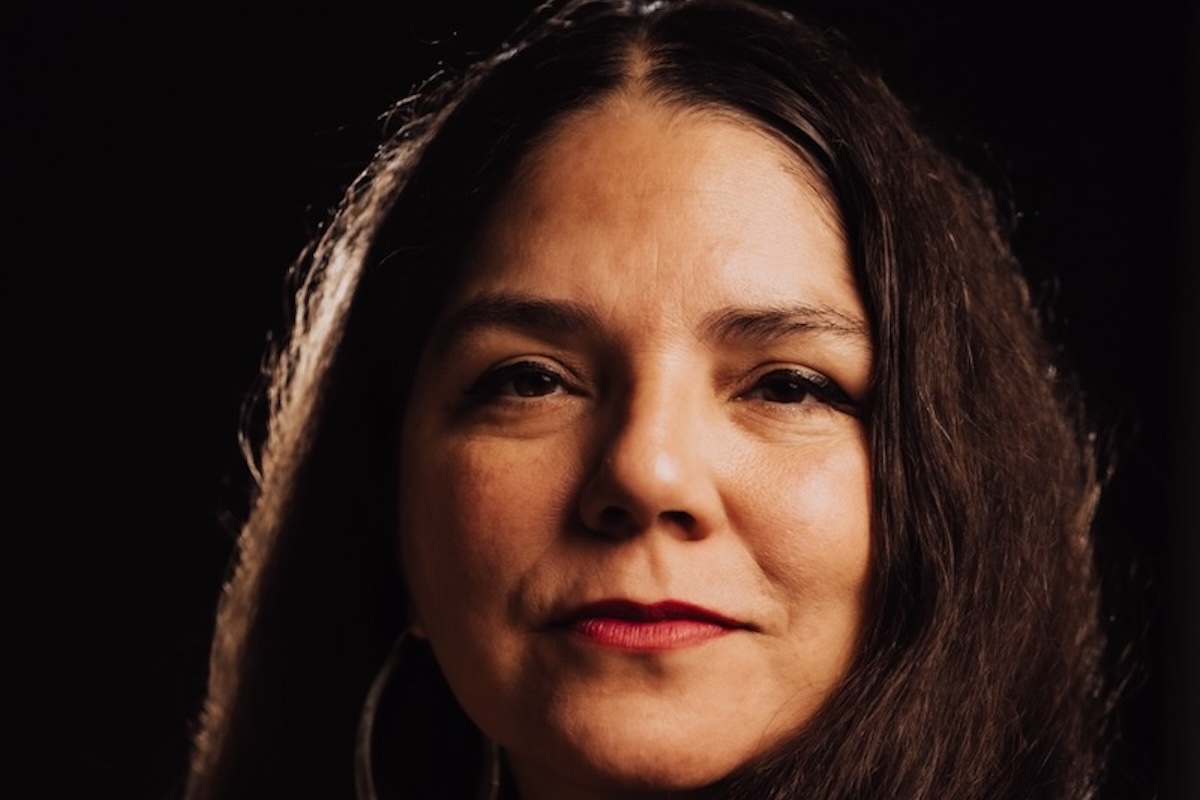
Spotlight on Leticia Hernandéz-Linares

 Melinda Palacio

Leticia Hernandéz-Linares


When I found out that LeticiaHernandéz-Linares lived in Santa Barbara for a year and was an intern at the Santa Barbara Independent, I asked interviewed her about that special year. This post was previously published in the Santa Barbara Independent. 


Thanks to the events celebrating Latino Poetry and the Anthology from the Library of America I have discovered that I know a poet who is a former Independent intern. Leticia Hernández-Linares, professor at San Francisco State University, was an Indy intern for a year in 1993.


Leticia and I are both poets published by Tía Chucha Press. I lived in San Francisco during the year she lived in Santa Barbara and our paths didn’t cross until 2017, when we read together at Beyond Baroque in Venice.  As the daughter of Salvadoran immigrants, she is a poet who champions and promotes Latina poetry. Earlier this month when I participated in her hybrid reading at San Francisco’s Medicine for Nightmares bookstore, via zoom, I mentioned that I would be writing about the event for the Independent. She then told me her story of how she took some time off from completing her MFA to live and heal in Santa Barbara. 


As someone who also has a master’s in literature from UC Santa Cruz, I can tell you that academic work is no easy feat and completing any type of graduate work is testament to a person’s strength. Leticia is certainly impressive with everything she has accomplished in the past three decades, from her first publication in the Independent to award-winning author and poet to writing a picture book, her community work against gentrification, and her many grants as an artist in resident at Yerba Buena Center for the Arts in San Francisco. 


All of the roles that Leticia currently embodies began to take shape during that formative year in Santa Barbara. She started working with youth as a case worker for Goleta Valley Middle School and she started to prioritize her writing: “I began writing consistently,” she said. Living in Santa Barbara encouraged her to try new things. She worked as an art teacher for Girls inc. and worked with daughters of migrant workers. 


“I took a woman’s self-defense class at Jang’s Karate Center on Gutierrez Street. I had never taken martial arts. I felt very connected to the place. There were lots of Latina women there to support their kids.” 


Leticia is a self-taught artist. She also sings and is a single mom of two boys, one in college and one in high school. Her boundless energy is impressive. In addition to her work as a professor of literature and Latino Studies, a poet and published author, she is a library laureate, and has received the Local Hero Award for her community activism. She incorporates art and song in her poetry presentations. When I spoke to her on the phone for this interview, she was multitasking by answering my questions, cooking eggs Salvadorean style, and attending to her teenage son. She gives credit to her community for helping her raise two boys. If you were one of the handful of Santa Barbara attendees on the zoom on October 9, you know just how boundless and fun her energy is. Along with Héctor Tobar and Rubén Martínez, she edited Wandering Song: Central American Writing in the United States (Tía Chucha Press, 2017). When I met her twenty years ago, I had no idea she graduated Scripps College Cum Laude nor did I know that she has both an M.A. in English with a concentration in Chicanx Literature, Testimonio, Ethnic & Urban Studies, and an MFA in Creative Writing from San Francisco State University. Leticia is also as humble as she is dynamic. And to think, her creating writing, poetry, journalism and art started at the Santa Barbara Independent. 


This week’s poetry connection comes from former Indy intern, Leticia Hernandez, a poem published in her first full-length poetry collection Mucha Muchacha by Tía Chucha Press. 


Despierta

By Leticia Hernández-Linares

Mission street yawns wide under the canopy of breaking day,
breathless footsteps tax rickety ladder rungs,
chase streams of light unveiling the horizon,
sleepy hands burning sage on tar rooftop,
the day just barely born
into my desert dusted arms wanting
to hold a neighborhood hostage from itself

What a perfect mission these streets have become,
shoveling out plots for graves, lots for sale
a concentric circle of conquest carving itself
into a ground overcrowded with the whispering of ghosts

If I charge the children with painting poems,
will you learn to feed yourself, curl up from the crouching
towards death stance you slag around the streets in,
cease the fire that barrels holes through the heads
of young men guilty of nothing but brown skin,
being on foot––no car to speed past the candle lit
processing of their own untimely deaths

La piedra del sol down la calle Valencia reflects
light from a Chicana architect’s plans, shines
over open doors of a community learning space,
comedores bearing plates steaming with home country
recuerdos, connecting writers to the next verse,
amantes to inevitable missteps

Prayers printed on the feet of danzantes resound
through blocks where I learned how to make crying count,
counted murals counting wars cried close to corners
where someone keeps dying for nothing, nodded
while poet cantos sing truth into sense
calling each day to attention with the promise
of sunrise and sanctuary

Thursday, May 13, 2021

Notes from a Poet

 Melinda Palacio


A question I’m often asked is a vague inquiry about where I get my inspiration. My answer to where poems come from may sound equally vague and elusive, especially after a year of lockdown and experiencing the world from my living room window. The window is a sliding door onto the balcony where I spent many hours bird watching, reading, writing, learning the ukulele and participating in readings and meetings online, where most of life took place. 
While I joined many bakers in the sourdough  brigade, keeping sourdough starter healthy and at the ready to turn into bread wonders and crackers, I realized I had to stop with the bread production and consumption. Although I don’t have an allergy to wheat, I don’t have the metabolism of young person and I staying indoors doesn’t help either. With the world awakening, it was easy to neglect Seymour (the name of the sourdough starter. I am a little sad about Seymour demise. Seymour is no more. While I no longer have to keep the pet in the refrigerator, I think I’ll give up baking for a while all together; at least until my expanded waistline shrinks a bit. All that work at home means I need a good diet, even my dog is on a diet. She was a pudgy puppy when we adopted her. We are helping each other get back into shape. 
No matter what I’m writing, I often start with a phrase or a sentence, usually taken from my notebook. For a few months, I had fallen out of habit of writing in my journal and I experienced a dry spell with little ideas. Now, that I’ve returned to the practice, I have more projects because I can remember those sparks of and ideas that nag me in the middle of the night. I used to think that if the idea was good enough, I’d remember it the next day. However, these days, I can’t even fool myself into believing this is true. Ideas, whenever they arrive must be honored by immediately writing them down or else they will move on, and believe me someone else will be ready to listen and jot down that stroke of genius. I’ve found that it’s important to respect those ideas and breath life into them by following through with them by starting with a visual manifestation of the words, a simple jotting down of a a phrase or word or sentence or allow yourself to get as much of the idea on paper as is possible before going back to sleep or attending a meeting or doing some task that prevents you from finishing the thought. 
I do not have a set notebook for jotting down all the ideas that pop into my head. I would certainly recommend having just one place to turn to. I grab the closest piece of paper, notepad or blank journal. The most important thing is to write down the idea, especially if I know the idea will become a poem or story, or song. 


Friday, October 07, 2016

Mucha Muchacha: More Than a Woman: Book Review

Melinda Palacio
Poems by Leticia Hernández-Linares

I've been sitting on a goldmine. It's such a treasure to find a book you absolutely can't help but love. Leticia Hernandez-Linares wrote such a book, Mucha Muchacha: Too Much Girl: Poems, published by Tía Chucha Press last year. Earlier at AWP 2016 in Los Angeles, Leticia introduced herself and asked if I would review her book. I must admit I usually don't like to review books because I find it a challenge to be objective. Since I am also a Tia Chucha Press poet, I knew the book would be good. Publisher Luis Rodriguez runs a small press and publishes poetry books he feels strongly about. March was a long time ago. Leticia's book gathered dust in the growing stack of books I have to read. Finally, I opened the book and could not put it down. I could end here; I loved the book.
            Mucha Muchacha is more than a collection of poems. It is wisdom from an old soul spoken by a young woman in command of her craft. Her poems, skate, dance, sing, and exist. Confession number two, the title kept me from opening the book. I kept thinking of the daft song by Esquivel of the same title, not realizing that this poem, this book was Leticia's answer to the song. Her verses crack with heartbreak, hope, and defiance. "Waking old under the city's/respiratory system, she inhales a quiet/daybreak. No feet shuffling, no smell/of a man's clothes. Rubbing brass/Buddha's belly, she mutters prayers," excerpt from Mucha Muchacha.
            I'm not surprised that in her everyday life, the poet is a mother, singer, activist, teacher, artist, and more. She is rooted, even when taking on subjects such as the civil war in El Salvador, gentrification in San Francisco, and the hopes handed to her as a daughter, "daughter, tells me to carry handwritten recipes in my/throat-take care to not let them strangle," from Flowers for My Father.
            In the over 90 pages of poetry packed in Mucha Muchacha, the various moods leave you clamoring for mas, more from the poet who is mucha muchacha, who answers How To Be Spiritual in Stilettos with "Brother, walk with me." The blend of bold humor and fearless code switching makes you laugh and cry at the same time. Leticia's last book, Razor Edges of My Tongue, came out in 2002. Her latest book is made up of all polished edges and is well worth the wait.
            What's even more impressive is the musicality of her poems. I wasn't surprised to learn that Leticia is the daughter of a musician and that she is also a singer and songwriter. Her singing voice is reminiscent of Mercedes Sosa. You can hear samples of Leticia's singing and reading voice on Reverbnation. If you haven't made up your mind already, the recordings will ensure more sales of Mucha Muchacha. Stop reading this review, pick up the book and enjoy.  
Leticia Hernández-Linares. Photo copied from her website.
If you are in the Bay Area this month, you can hear Leticia Hernández-Linares. The following three readings are on her updated website: Join Leticia.


October 14, La Calle 24 Acción Latina's Juan R. Fuentes Gallery, 2958 24th St., San Francisco,
Closing Reception, Artist Talk and Poetry Reading in response to the exhibit by Jose Rojas

October 15, Lit Crawl SF Presents the Pan Dulce Poets: Leticia Hernandez, Aura Maru, Silvia Oviedo, and Cathy Arellano 3114 24th Street, San Francisco, CA 94110
#PANDULCEPOETS


Lyrics and Dirges: A Monthly Reading Series
Wednesday, October 19th, 2016 - 7:30pm
This Recurring Event is at Pegasus Books Downtown Berkeley
Lyrics and Dirges October lineup features:
Leticia Hernández-Linares
Angela Hume
Bonnie Wailee Kwong
Aqueila M. Lewis
Anne Raeff 
Hosted and curated by Sharon Coleman
----
Leticia Hernández-Linares is an award-winning writer and community worker.  She has performed her poemsongs throughout the country and in El Salvador.  Her work has appeared in Street Art San Francisco, U.S. Latino Literature Today, Teatro bajo mi piel, Huizache, and Pilgrimage among other publications. A member of the CantoMundo Organizing Committee, she lives, writes, and works in the Mission District of San Francisco. 
Angela Hume lives in Oakland. She is the author of the poetry chapbooks Melos (Projective Industries, 2015), The Middle (Omnidawn, 2013) and Second Story of your Body (Portable Press at Yo-Yo Labs, 2011). Her first full-length book of poetry is Middle Time (Omnidawn, 2016). You can learn more about Angela http://angelamhume.tumblr.com/.
Bonnie Wailee Kwong's first poetry collection is ravel, a finalist for the Many Voices Project by New Rivers Press, and the White Pine Press Poetry Prize.  Her work in poetry and fiction has garnered several Pushcart nominations.  She creates in many mediums and languages: English, Cantonese, Mandarin, Japanese, ruby, and javascript.  She is currently artist-in-residence at Stanford University.  Her website is: www.bonniekwong.info.
Aqueila M. Lewis is an award-winning writer, Bay Area Native and resident of Oakland, CA.  As a multi-talented artist and poet, she is also well-versed in journalism (print and radio) composing, singing, poetry/spoken word, modeling as a plus-model. She also currently holds the titles as Ms. Oakland Plus America 2014 and SF Raw Performing Artist of the Year 2015. Aqueila’s articles have been published in numerous publication and on radio such as  94.1 FM KPFA Radio’s First Voice Media Apprenticeship Program and Full Circle Show, Sideshow Radio, After Hours Radio, All the Rest of US Radio on 89.3 FM KPFB, National Radio Project Making Contact Storytelling Fellowship, Sistah’s With Ink Voices Anthology,Reflections: A Collaboration Between Painting And LiteratureIn Her Soul Magazine, Til Death Do Us Part Lady Warrior Zine and Walking in the Feminine: Stepping in our Shoes Anthology. Aqueila is currently creating children’s books focused on issues in relation to social justice and community.
 Anne Raeff’s stories and essays have appeared in New England Review, ZYZZYVA, and Guernica among other places. Her first novel Clara Mondshien’s Melancholia was published in 2002 (MacAdam/Cage). Her short story collection, The Jungle Around Us won the 2016 Flannery O'Connor Award for Short Fiction. She is proud to be a high school teacher and works primarily with recent immigrants. She too is a child of immigrants and much of her writing draws on her family’s history as refugees from war and the Holocaust. She lives in San Francisco with her wife and two cats.
Pegasus Books presents Lyrics and Dirges: A Monthly Reading Series
Lyrics & Dirges is a monthly reading series featuring a mix of prominent, emerging and beginning writers. Its aim is to highlight various forms of writing in an effort to spotlight the diverse literary community of the Bay Area. 
Every third Wednesday of the month at Pegasus Books Downtown.
Event date: 
Wednesday, October 19, 2016 - 7:30pm
Event address: 
Pegasus Books Downtown
2349 Shattuck Avenue
BerkeleyCA 94704
Event Category: 

Wednesday, January 06, 2016

¡Viva la vida!


Dear friends and family,

Join us for a poetry reading to honor the life and works of Francisco X. Alarcón at Cafe La Boheme on Sunday, January 10, 2:00pm. 

Partial list of poets, musicians and Aztec Dancers:
U.S. Poet Laureate Juan Felipe Herrera, Margarita Robles, Dr. Loco, Francisco Aragon, Jack Hirschman, Alfredo Gomez, Nina Serrano, Lucha Corpi, René Colato Lainez, Huracan Gomez, Alejandro Murguia, Nancy Aidee Gonzalez, Jerry Ferraz, David Volpendesta, Tony Ryan, Barbara Pascheke, Francisco Herrera, Francisco Dominguez, Jorge Molina, Harold Terezon, Leticia Hernandez, Arturo Mantecon, JoAnn Anglin, Graciela Ramirez, Paul Aponte, Jeannie Zukav, Neeli Cherkovski,, Dottie Payne, Francisco Orrego, Betty Sanchez, Judith Ayn Bernhard, Miguel Govea and Jorge Argueta. Xitlalli: Aztec Dancers

This event is open to all of Francisco's friends who wish to particpate - please contact Jorge Argueta for more information at tetl2002@yahoo.com.


Cafe La Boheme on Sunday
January 10, 2:00pm. 

3318 24th Street
San Francisco California 94110


Another event to honor Francisco X Alarcón

Save the date! There will be a reading dedicated to poet Francisco X. Alarcón on January 23, 8 pm, at the Natsoulas Gallery, 521 1st St in Davis. Format and readers to be announced shortly. Save the date.


Wednesday, March 13, 2013

Adiós Carlitos


Carlos Ramirez, poet, singer and friend passed away on Sunday, March 10, 2013. 


Talleres de Poesía said: 
We are honored to have Carlitos Ramirez be part of Talleres de Poesía. Carlitos helped in all our fundraising events and accompanied us last November to participate in the 3rd Annual Children's Poetry Festival in El Salvador. Carlitos had the gift of making children and adults laugh with his carefree spirit. We'll miss you dear friend.


A poem in memory of Carlos Ramirez by Jorge Argueta


CARLITOS

En memoria de mi buen amigo Carlos Ramirez
Quien falleció el domingo 10 de Marzo, 2013

Allá viene Carlitos Ramirez
Por la calle 24
Viene volando
Viene cantando

Allá viene Carlitos con nubes
En las mejias
Con nubes
En la cabeza

Allá viene Carlitos
Alegre como los pájaros
Hermoso como las flores
Ayyyy que niño tan bonito y tan travieso

Allá viene Carlitos
Cantando el a b c
Cantando de colores
Cantando cielito lindo

Allá viene Carlitos
Maestro de todos los niños y las niñas
Cipitio* de los salvadoreños
Que están lejos de El Salvador

Allá viene Carlitos
Recitando su poesía
Y todos las escuchamos
En el viento

Ayer se fué Carlitos
Se fue con sus amigos los pájaros
Ahora hay fiesta en las montañas y jardines
Carlitos se ha vuelto primavera

*Personaje de la mitología salvadoreña

CARLITOS

In memory of my good friend Carlos  Ramirez
Who passed away on March 10, 2013

Here Come Carlitos Ramirez
Around 24 street
He comes flying
He comes singing

Here come Carlitos
With clouds
on his cheeks
Clouds on his head

Here come Carlitos
Happy like the birds
Wonderful like the flowers
Ayyyy such a cute and mischievous boy

Here come Carlitos
Singing the A B C
Singing De Colores
Singing Cielito Lindo

Here come Carlitos
A teacher to all boys and girls
Cipitio* to the Salvadorans
Far from El Salvador

Here come Carlitos
Reciting his poetry
We can hear it
In the wind

Carlitos Ramirez left us yesterday
He went away with his friends the birds 
Now there is a celebration in the mountains and gardens
Carlitos has turned into spring

*A character from Salvadoran mythology

Jorge Argueta 2013

Un poema de Franciso X Alarcón


On this Friday, March 15, at 7pm in Cafe La Boheme, San Francisco, California, Talleres de Poesía will be holding a poetry reading in celebration of Carlitos' life and spirit. Among the readers, Francisco X. Alarcón, Neeli Cherkovski, Miguel Robles, Magda Cordova, Mamacoatl, Jorge Argueta. This is an organization to which Carlitos belonged to and that took him to El Salvador on November 2012 in order to participate in the Third Annual Children's Poetry Festival.

Este viernes 15 de marzo a las 7pm en el Cafe La Boheme de San Francisco, California, Talleres de Poesía, organización a la que Carlitos pertenecía y con la cual viajó a El Salvador en noviembre de 2012 para participar en III Festival Anual de Poesía Infantil, estaremos celebrando una lectura de poesía para celebrar su vida y espíritu. Entre los lectores, Francisco X. Alarcón, Neeli Cherkovski, Miguel Robles, Magda Cordova, Mamacoatl, Jorge Argueta.


Sunday, April 08, 2012

Every last Secret and Every Wonderful Word -------- Guest Post by Lisa Alvarado


Linda Rodriguez has published one novel, Every Last Secret (Minotaur Books), winner of the St. Martin’s Press/Malice Domestic First Traditional Mystery Novel Competition, two books of poetry, Heart’s Migration (Thorpe Menn Award; finalist, Eric Hoffer Book Award) and Skin Hunger, and a cookbook, The “I Don’t Know How To Cook” Book: Mexican. She received the Midwest Voices & Visions Award, Elvira Cordero Cisneros Award, KCArtsFund Inspiration Award, and Ragdale and Macondo fellowships. Rodriguez is a member of the Latino Writers Collective, Wordcraft Circle of Native American Writers and Storytellers, Kansas City Cherokee Community, International Thriller Writers, and Sisters in Crime.

Linda Rodriguez

As someone who is proud to call Linda friend, my less-official praise poem is this: She is tireless--as a writer, a community organizer, a critical thinker about her craft and the body politic. Both in her poetry and prose is a deep rooted sense of personal justice, of infinite care and a strong belief in the need to do good, be good and walk in beauty. This is our conversation about writing, and her book, Every Last Secret.

When did you begin writing? Why?

I had a childhood that made Mommie, Dearest look like a fairytale, and reading and writing helped me survive it. So I started writing when I was quite young—poetry and stories that I wanted to think of as novels—but I really began in earnest when I was a young, college-drop-out mother and wife. At various times in my life, poetry has taken precedence over novels and vice versa, usually because of time constraints. Novels, I have found, require a longer chunk of writing each day and over a longer period of time. Poetry takes as much work—one poem may go through twenty or more revisions—but that work can be done in shorter bits of time with longer absences from the work in-between.

You began as a poet. When and why did you begin writing mysteries?

I’ve always read mysteries (and science fiction/fantasy), along with the literary stuff. I’m an omnivore when it comes to reading. When I came up with this character, Skeet Bannion, she seemed to belong in a mystery.

I like the premise of the modern mystery, which is focused less on locked rooms and impossible methods of murder and more on relationships among the characters and emotional fallout from those relationships as motive.The great mystery is always “What goes on within the heart of this person to make him/her capable of killing another?”

Do you still write poetry? How do the two genres affect each other?

Yes, I still write poetry. I have a new manuscript I’m about to send out, and I’ve been noodling around with poems to begin another. One impact on my poetry of writing mysteries is that I tend to think in terms of books of poetry focused on a theme or narrative pole rather than individual poems tossed off here and there and gathered into a book later.

I think poetry helps me make my novels tighter and stronger. When I had to cut a lot of words from the manuscript, I treated it like one humongous poem and went over and over, honing the language as I would with a poem.

Tell us about your book and explain the basic idea for your series.

Half-Cherokee Marquitta “Skeet” Bannion thought she was leaving her troubles behind when she fled the stress of being the highest ranking woman on the Kansas City Police Department, a jealous cop ex-husband who didn’t want to let go, and a disgraced alcoholic ex-cop father. Moving to a small town to be chief of the campus police force, she builds a life outside ofpolice work. She might even begin a new relationship with the amiable Brewster police chief.

All of this is threatened when the student editor of the college newspaper is found murdered on campus. Skeet must track down the killer, following trails that lead to some of the most powerful people in the university. In the midst of her investigation, Skeet takes up responsibility for a vulnerable teenager as her ex-husband and seriously ailing father wind up back on her hands. Time is running out, and college administrators demand she conceal all college involvement in the murder, but Skeet will not stop until she's unraveled every last secret.

It’s the first in a series with Skeet Bannion as the protagonist. Skeet, like most of us, has some internal issues she has to learn to deal with. Each book is a complete mystery novel in itself, but I see theentire series as a kind of meta-novel following Skeet’s growth as a person. I like Julia Spencer-Fleming’s categorization of “traditional mystery-thriller”as a description. Every Last Secret is, indeed, a traditional mystery set in a small town, but the small town is right outside a big, dangerous city, and there’s a darker edge to this character, this book, and the series as a whole.

Has your work or life experiences affected your writing?

I spent many years running a university women’s center, and that has translated directly for this series of books into background knowledgeof the university setting and campus politics and procedures. It has translated also in a more general way throughout all my work into a concern for women’sissues and an option for and understanding of strong female characters.

I spent a good deal of time in my childhood with my Cherokee grandmother and aunt, whose influence on me shows daily in how I live my life and in almost everything I write, especially in this series of novels. And of course, I have Latino characters who play major and minor roles in the books, some of whom are new immigrants and some of whom are successful professionals and entrepreneurs. For example, Skeet’s chief investigator, on whom she relies with complete confidence, is Gil Mendez, a detective with an accounting degree, as well as one in criminal justice.

How have you found it to be published? Share that experience.

I’m very fortunate to be with St. Martin’s Press and their imprints, Minotaur Books and Thomas Dunne Books. They value good writing, and writers with a literary background, who might be at a disadvantage elsewhere, are appreciated. I’ve been treated extremely well by St. Martin’s. And I have a wonderful editor, Toni Margarita Plummer, one of the rare Latina editors at a major trade publisher. (I don’t know. She might be the only one right now.)

However, publishing today is very different from what it was in years past in terms of promotion expectations. It’s a balancing act to do all that you need to do to promote your books and write the books at the same time. Even long-established authors are battling that one.


How would you evaluate the separation of "literary" v. "genre" fiction, i.e. -quality of story, audience, etc?

The whole genre categorization—and yes, literary is a genre—is a marketing ploy and a successful one. The current version is Amazon’s “Readers who bought this also bought that” algorithm. In general, I’ve found many writers in crime fiction and in fantasy/science fiction who write extremely well, often much better than many published in the literary genre. And certainly genre writers, especially in crime fiction, are writing more ambitious books that examine segments of society that literary fiction seldom, if ever, touches. As a genre, literary fiction has built its platform by turning inward and excluding much of the reading public.

What are your thoughts concerning the burgeoning interest/contribution of Latino writers to the crime genre?

Latino writers have a long history of writing for la gente and not just for the academy. Many have said, while writing literary fiction or poetry, that we wanted to make our writings accessible to those we loved and knew while growing up and people like them. Latino writers have also had a long history of being politically involved and speaking truth about the corruption and desperation that have combined to fill so many prisons with our own in this broken system we live in. So it seems to me natural that Latino writers would gravitate toward the crime genre, where there is a real blossoming now. We are in a second Golden Age of crime fiction, and writers of color of all sorts are helping to make it shine.

What’s next?

I have another mystery series I want to write that would be centered in the Kansas City Latino, specifically Chicano, community. This is an old community going back a century, which has experienced an influx from not only Mexico but Central and South America in past decades. It has a rich history and culture and a real dichotomy between the grandchildren and great-grandchildren of the gente who first settled and the newcomers—graduate degrees versus ESL classes. I envision this series solidly centered in urban Midwestern Chicano culture and food and the struggle between assimilation and la cultura and the many ways people negotiate that.


Saturday, May 29, 2010

Who will La Bloga interview next?

In our years online, La Bloga has nurtured a significant body of lore in the form of interviews of Chicano authors, poets and others, and non-Chicanos as well. Coincidentally we know the site is used by students, collegiate and non, literally across the planet, although we have little info on the numbers or purposes. I'd assume many are students using La Bloga material to bulk up their theses or term papers. Qué bueno!

The interviews do and will serve a higher purpose than bibliographical
cites; they're the authors' own words about what inspired them, how they write, and why, where they come from and where they think Chicano lit might be headed. In that sense they're a pulse of how Chicano lit lives and breathes, and one day, dies, though the authors' prose and poesy lives on.

La Bloga
's staff is a bunch of dedicated individuals who've managed to build this body of work into something we know is enjoyed, utilized and perhaps even visited every day by many. But, given the inherently thin definition of what constitutes our staff, we could use help from readers.

We'd like your ideas about adding to this body of literary history:


We're especially open to interviews of those who've published books or collections in hard copy. At the same time, someone who's published stories, poems, essays, etc. in several publications could also deserve our attention, within our given time constraints.


We're not limited to covering Chicanos. We've been known to post interviews of
boriquas, newyorquians, mexicanos, peludos y a veces the occasional gringo, even.

If you as a reader would enjoy seeing an interview of a particular author, poet, editor,
o cualquier tipo del mundo de literatura, write one or all of us and let us know who that is, especially if you have a way of contacting them that we might not.

Autor, autor!


Or if you yourself are published and have wondered why we never contacted you before,
mándanos un mensaje, and we might surprise you. I assure you we've never meant to neglect anyone; it's just how slowly La Bloga works as an unpaid enterprise. So, contact us, whether you're Gabriel Garcia Marquez or quién-sabe-quién.

Hell, if you're a gringo and think you'd pass RudyG's
CACA test with flying burrito colors, send that E-mail. At the same time, if you think that test is un montón de mierda fuchi then write one of the other more sensible Bloguistas.

Obviously, we'll get to authors with published novels before those with online pubs, but perhaps you're a rising star and
La Bloga should get in your face with our interview mike before you're beyond us.

Additionally, if you're not an author per se, but somehow involved in the literary world--an editor, for instance--and think La Bloga would benefit from your participation, let us know.

Yes, we're always open to reprinting interviews, as space permits, and to interviews done by guest bloguistas. But of course we love seeing our own words online and hope to hear about more candidates we've yet to interview.

Today's my first day of dis-employment,
estoy bien cansado por sacar todas mis libros y las otras cosas de mi salón de clase. So,

es todo, hoy,

RudyG

Thursday, January 22, 2009

Martín Espada on Barack Obama


Litany at the Tomb of Frederick Douglass
Mount Hope Cemetery, Rochester, New York
November 7, 2008

This is the longitude and latitude of the impossible;
this is the epicenter of the unthinkable;
this is the crossroads of the unimaginable:
the tomb of Frederick Douglass, three days after the election.

This is a world spinning away from the gravity of centuries,
where the grave of a fugitive slave has become an altar.
This is the tomb of a man born as chattel, who taught himself 
to read in secret,scraping the letters in his name with chalk on wood;
 now on the anvil-flat stone a campaign button fills the O in Douglass. 
The button says: Obama. This is the tomb of a man in chains, 
who left his fingerprints on the slavebreaker’s throat so the whip 
would never carve his back again;  now a labor union T-shirt drapes itself 
across the stone, offered up by a nurse, a janitor, a bus driver. 
A sticker on the sleeve says: I Voted Today. 
This is the tomb of a man who rolled his call to arms off the press,
peering through spectacles at the abolitionist headline; now a newspaper
spreads above his dates of birth and death. The headline says: Obama Wins.

This is the stillness at the heart of the storm that began in the body
of the first slave, dragged aboard the first ship to America. Yellow leaves
descend in waves, and the newspaper flutters on the tomb, like the sails
Douglass saw in the bay, like the eyes of a slave closing to watch himself
escape with the tide. Believers in spirits would see the pages trembling
on the stone and say: look how the slave boy teaches himself to read.
I say a prayer, the first in years: that here we bury what we call
the impossible, the unthinkable, the unimaginable, now and forever. Amen.

~~~ Martín Espada


xxxxxxxxxxxxxxxxxxxxxxxxxxxxxxxxxxxxxxxxxxxxxxx

Tips for Better Life

1. Take a 10-30 minutes walk every day. And while you walk, smile.
2. Sit in silence for at least 10 minutes each day.
3. Sleep for 7 hours.
4. Live with the 3 E's -- Energy, Enthusiasm, and Empathy.
5. Play more games.
6. Read more books than you did the previous year.
7. Make time to practice meditation, yoga, and prayer. They provide us with daily fuel for our busy lives.
8. Spend time with people over the age of 70 & under the age of 6.
9. Dream more while you are awake.
10. Eat more foods that grow on trees and plants and eat less food that is manufactured in plants.
11. Drink plenty of water.
12. Try to make at least three people smile each day.
13. Don't waste your precious energy on gossip.
14. Forget issues of the past. Don't remind your partner with his/her mistakes of the past. That will ruin your present happiness.
15. Don't have negative thoughts or things you cannot control. Instead invest your energy in the positive present moment.
16. Realize that life is a school and you are here to learn. Problems are simply part of the curriculum that appear and fade away like algebra class but the lessons you learn will last a lifetime.
17. Eat breakfast like a king, lunch like a prince and dinner like a beggar.
18. Smile and laugh more.
19. Life is too short to waste time hating anyone. Don't hate others.
20. Don't take yourself so seriously. No one else does.
21. You don't have to win every argument. Agree to disagree.
22. Make peace with your past so it won't spoil the present.
23. Don't compare your life to others'. You have no idea what their journey is all about. Don't compare your partner with others.
24. No one is in charge of your happiness except you.
25. Forgive everyone for everything.
26. What other people think of you is none of your business.
27. However good or bad a situation is, it will change.
28. Your job won't take care of you when you are sick. Your friends will. Stay in touch.
29. Get rid of anything that isn't useful, beautiful or joyful.
30. Envy is a waste of time. You already have all you need.
31. The best is yet to come.
32. No matter how you feel, get up, dress up and show up.
33. Do the right thing!
34. Call your family often.
35. Your inner most is always happy. So be happy.
36. Each day give something good to others.
37. Don't over do. Keep your limits.
38. Share this with someone you care about


Lisa Alvarado