Showing posts with label Latino Poetry. Show all posts

Thursday, October 24, 2024

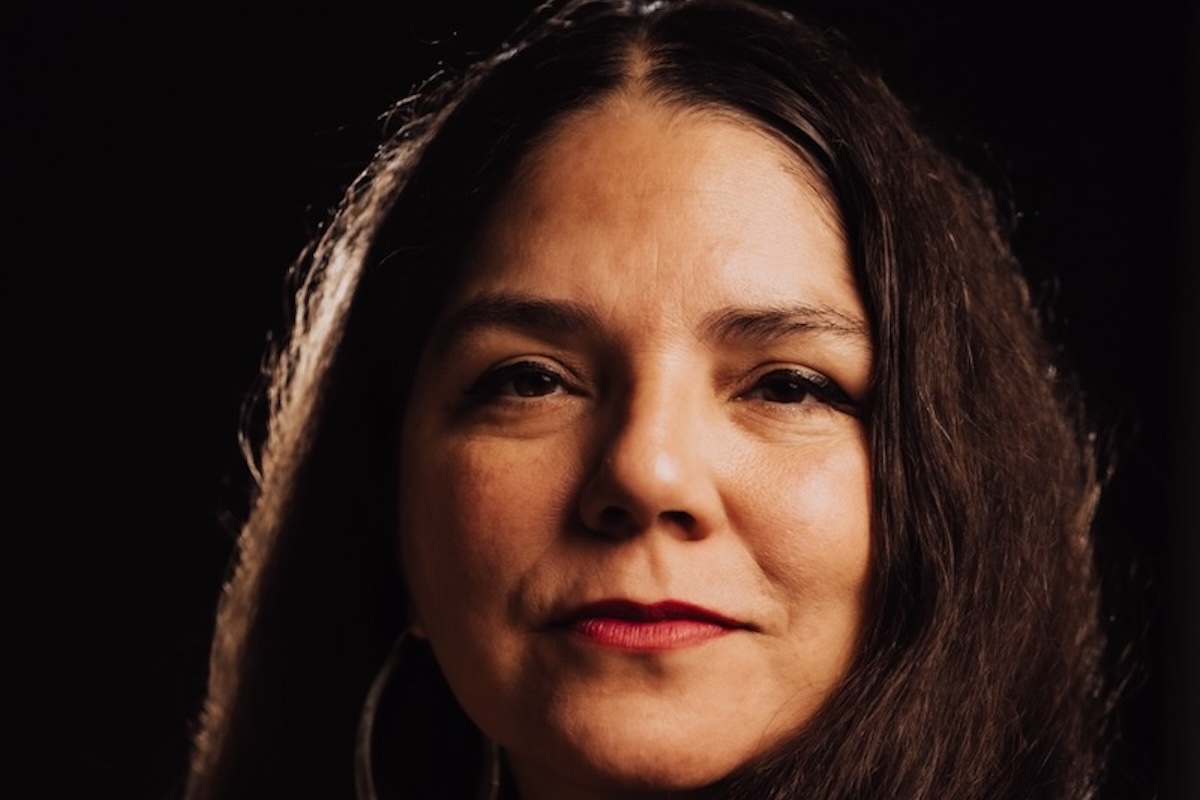
Spotlight on Leticia Hernandéz-Linares

 Melinda Palacio

Leticia Hernandéz-Linares


When I found out that LeticiaHernandéz-Linares lived in Santa Barbara for a year and was an intern at the Santa Barbara Independent, I asked interviewed her about that special year. This post was previously published in the Santa Barbara Independent. 


Thanks to the events celebrating Latino Poetry and the Anthology from the Library of America I have discovered that I know a poet who is a former Independent intern. Leticia Hernández-Linares, professor at San Francisco State University, was an Indy intern for a year in 1993.


Leticia and I are both poets published by Tía Chucha Press. I lived in San Francisco during the year she lived in Santa Barbara and our paths didn’t cross until 2017, when we read together at Beyond Baroque in Venice.  As the daughter of Salvadoran immigrants, she is a poet who champions and promotes Latina poetry. Earlier this month when I participated in her hybrid reading at San Francisco’s Medicine for Nightmares bookstore, via zoom, I mentioned that I would be writing about the event for the Independent. She then told me her story of how she took some time off from completing her MFA to live and heal in Santa Barbara. 


As someone who also has a master’s in literature from UC Santa Cruz, I can tell you that academic work is no easy feat and completing any type of graduate work is testament to a person’s strength. Leticia is certainly impressive with everything she has accomplished in the past three decades, from her first publication in the Independent to award-winning author and poet to writing a picture book, her community work against gentrification, and her many grants as an artist in resident at Yerba Buena Center for the Arts in San Francisco. 


All of the roles that Leticia currently embodies began to take shape during that formative year in Santa Barbara. She started working with youth as a case worker for Goleta Valley Middle School and she started to prioritize her writing: “I began writing consistently,” she said. Living in Santa Barbara encouraged her to try new things. She worked as an art teacher for Girls inc. and worked with daughters of migrant workers. 


“I took a woman’s self-defense class at Jang’s Karate Center on Gutierrez Street. I had never taken martial arts. I felt very connected to the place. There were lots of Latina women there to support their kids.” 


Leticia is a self-taught artist. She also sings and is a single mom of two boys, one in college and one in high school. Her boundless energy is impressive. In addition to her work as a professor of literature and Latino Studies, a poet and published author, she is a library laureate, and has received the Local Hero Award for her community activism. She incorporates art and song in her poetry presentations. When I spoke to her on the phone for this interview, she was multitasking by answering my questions, cooking eggs Salvadorean style, and attending to her teenage son. She gives credit to her community for helping her raise two boys. If you were one of the handful of Santa Barbara attendees on the zoom on October 9, you know just how boundless and fun her energy is. Along with Héctor Tobar and Rubén Martínez, she edited Wandering Song: Central American Writing in the United States (Tía Chucha Press, 2017). When I met her twenty years ago, I had no idea she graduated Scripps College Cum Laude nor did I know that she has both an M.A. in English with a concentration in Chicanx Literature, Testimonio, Ethnic & Urban Studies, and an MFA in Creative Writing from San Francisco State University. Leticia is also as humble as she is dynamic. And to think, her creating writing, poetry, journalism and art started at the Santa Barbara Independent. 


This week’s poetry connection comes from former Indy intern, Leticia Hernandez, a poem published in her first full-length poetry collection Mucha Muchacha by Tía Chucha Press. 


Despierta

By Leticia Hernández-Linares

Mission street yawns wide under the canopy of breaking day,
breathless footsteps tax rickety ladder rungs,
chase streams of light unveiling the horizon,
sleepy hands burning sage on tar rooftop,
the day just barely born
into my desert dusted arms wanting
to hold a neighborhood hostage from itself

What a perfect mission these streets have become,
shoveling out plots for graves, lots for sale
a concentric circle of conquest carving itself
into a ground overcrowded with the whispering of ghosts

If I charge the children with painting poems,
will you learn to feed yourself, curl up from the crouching
towards death stance you slag around the streets in,
cease the fire that barrels holes through the heads
of young men guilty of nothing but brown skin,
being on foot––no car to speed past the candle lit
processing of their own untimely deaths

La piedra del sol down la calle Valencia reflects
light from a Chicana architect’s plans, shines
over open doors of a community learning space,
comedores bearing plates steaming with home country
recuerdos, connecting writers to the next verse,
amantes to inevitable missteps

Prayers printed on the feet of danzantes resound
through blocks where I learned how to make crying count,
counted murals counting wars cried close to corners
where someone keeps dying for nothing, nodded
while poet cantos sing truth into sense
calling each day to attention with the promise
of sunrise and sanctuary

Thursday, June 20, 2019

Chicanonautica: The Haunted Girl Attacks


I didn’t know what to expect from Lisa M. Bradley’s collection,The Haunted Girl. It had poems as well as stories. I don’t mind poetry, but it’s never been my thing. Like I keep saying, I’m more of a slapstick comedian than a poet

And there were a lot of them. What the hell, I dug in . . . and these were a bunch of solid gut-punchers: images of the desert . . . Aztlán . . . the sun-blasted landscape, with people and things that lurk in those shadows that can be darker than the night.
 
There’s this one called “Teratoma Lullaby” that scars my memory.  According to the National Cancer Institute, a teratoma is “A type of germ cell tumor that may contain several different types of tissue, such as hair, muscle, and bone.” They “usually occur in the ovaries in women, the testicles in men, and the tailbone in children.” The story (poem? Pose poem?) switches from poetry to prose and back.

This genre/format blurring goes further in “we come together we fall apart”--a serious mind-ripper about a super dysfunctional family that demonstrates the diabolical extremes of human behavior. I was shocked, and I’m an old guy who’s been wallowing in weird shit forever. It impressed the hell out of me. It really should have won an award of some kind.

The rest of the stories (or should I call them prose pieces?) were an impressive array of tough, gritty, postpunk horror tales from millennial points of view, full of amazing, weird characters,including various kinds of Latiniods.

Hmm. My term actually seems to fit this time.

So this old vato is impressed. I’m also going to be looking out for more stuff by Lisa M. Bradley. She can really mess up your mind, in a good way.

Ernest Hogan’s story “PeaceCon,” a savage, full-frontal attack on popular sensibilities is in Unfit Magazine Vol.3.

Friday, June 15, 2018

Bird Forgiveness: the Box Landing and Tour

Melinda Palacio


The birds have officially landed. I've received a box of author copies of my new poetry book, Bird Forgiveness. When my publisher requested a photo of me opening the box, I sent several stills and I also took a video to post on the feisboo (the big FB will most likely ban this post as well). I noticed that the ritual opening of the book box is a social media tradition that allows readers to share in the big moment when the author finally views the finished copy of books that will go out into the world. I'm thrilled to share this moment with La Bloga.


Will the birds land in your area?

For bookings and to bring the Bird Forgiveness Tour to you: contact melindapalacio@gmail.com or 3 Taos Press


Bird Forgiveness, the new poetry book.

Bird Forgiveness Tour  2018


Summer


June 17-22, Santa Barbara Writers Conference
June 21 panel, June 20 workshop
June 26, interview new orleans


July 14, Camarillo Library panel   2-3pm 

July 15 Poetry Zone Santa Barbara, Karpeles Manuscript Library 21 W Anapamu, 2pm, with Gina Ferrara

July 17, Santa Barbara     Chaucer's Books 7pm, Loreto Plaza3321 State Street, Santa Barbara CA 93105

July 25, New Orleans, Octavia Books, 6pm,

August 3, Teche Center for the Arts, 210 E. bridge St., Breaux Bridge, Louisiana in the heart of Cajun-Creole Country, 6pm.

Fall


September 1                Santa Barbara Paseo Nuevo 2-4pm

September 6          Ventura, Topping Room EP Foster Library, 7:30 pm,  Ventura, 651 E. Main Street       host Phil Taggart


October 6          Poetry Buffet with Valentine Pierce and Dennis Formento, New Orleans Latter Library  2pm

October 28    Maple Leaf Bar, New Orleans 3pm


November 10              Louisiana Book Festival      Baton Rouge TBA

November 14, University of New Orleans CWW with Neil Shepard   New Orleans, 8pm


2019

February 9, Core Winery, 7:30 pm, Orcutt Tasting Room, 105 W Clark Ave., Old Orcutt, CA, corewine.com


March 27-30 AWP Portland

Friday, January 13, 2017

Poetry in the Wet Air: Three Anthologies

Melinda Palacio
Rainbow in Santa Barbara. Keep raining California. 


I have the pleasure of being included in three wonderful anthologies: Maple Leaf Rag VI, the Wandering Song, and Poetry in Flight. Maple Leaf Rag VI is the latest sampling of poems read at the Maple Leaf Bar. For those unfamiliar with the poetry scene in New Orleans, the Maple Leaf Bar holds the longest running poetry reading series in the South. The reading began in 1979 and was founded by Everett Maddox who passed away in 1989. Nancy Harris has been hosting the weekly readings for more than 25 years. The collection includes many New Orleans poets, past and present, as well as first-time visitors, such as La Bloga friend Maria M. Kelson of Pueblo and Santa Barbara poets Chryss Yost and George Yatchisin. My poem, "Bones for Feathers" is included in the anthology. The book launch for the Maple Leaf Rag VI is this Sunday, January 15, at the Maple Leaf Bar in New Orleans, 8316 Oak Street.  For those unable to attend the reading, you can order a copy of the book through the Portals Press website.


Maple Leaf Rag VI: An Anthology of Poetic Writings New Orleans
Portals Press, 2017

Next month, at AWP, Tía Chucha Press will present The Wandering Song: Central American Writing in the United States, edited by Leticia Hernández Linares, Rubén Martínez, and Héctor Tobar. The Wandering Song is a much anticipated anthology of Central American writers living in the United States. This is the first time a comprehensive literary survey of the Central American diaspora by a U.S. publisher will be available for readers and scholars, a collection appropriate for high school, college, or university courses in U.S. Literature, Latino Literature, Multicultural Studies, and Migration Studies. The multi-genre collection includes poems, short stories, essays, memoir, novel excerpts, and creative nonfiction. I'm looking forward to this collection and am honored to have two poems in the book, "This Is How the World Ends" and "All Things Precious." The anthology is available for pre-order through Tia Chucha Press and Northwestern University Press. The book launch and reading will be in DC, Wednesday, February 8 at the AWP, details TBA, stay tuned on La Bloga.

The Wandering Song: Central American Writing in the United States,
Tía Chucha Press 2017.

The Anthology Poetry in Flight/Poesía en Vuelo celebrates contributors of San Francisco's, El Tecolote. In the words of Juan Felipe Herrera, "this is the El Tecolote Anthology, the pioneering, fiery, soulful eye of this community, keeping watch and ward on our realities, without borders-even if the border makers insist on doing their border work. This is a volume of dreams, battle, play and the magic of the people-new freedom of thought warriors, word-salseras-checking on that odd-angled thing called 'progress,' on that viral tsunami of corporate, social and economic encroachment." My poem, "Age-Old Poetry" is included in this long-awaited collection. This anthology has witnessed the deaths of two of its co-editors, Francisco X. Alarcon and Alfonso Texidor. The cover art is by Juan R. Fuentes and the design work by Adrian Arias. An endorsement by Juan Felipe Herrera graces the back cover. The new publication celebration and reading will be held on Sunday, March 19 from 1-4 at Acción Latina in San Francisco in their beautiful remodeled facility at 2958 24th Street.


Poetry in Flight/Poesía en Vuelo
Anthology in Celebration of El Tecolote 2017

Friday, April 11, 2014

2014 Paterson Poetry Prize Reading

Melinda Palacio
Joseph Millar, Aaron Smith, Melinda Palacio, Maria Gillan, Richard Blanco


 Last Saturday, I enjoyed my fifteen minutes (or more) of fame. I'm still feeling the glow of being including in the finalists for the Paterson Poetry Prize. I had the pleasure of meeting three poets with varying and powerful styles, including our winner, 5th Inaugural Poet Richard Blanco of Beyoncé and Anderson Cooper fame, and finalists Aaron Smith and Joseph Millar. What a way to celebrate Poetry Month!
 
I'll skip the whiny details about my flights being delayed and then cancelled. Flying into Newark resulted in only a four-hour delay, but the airline gave me a one-hundred dollar voucher, which I'll use for an upcoming trip to Chicago where La Bloga will celebrate its 10th anniversary at the International Latino/a Studies Conference in July. I guess I'm going to complain a little bit more about my travel. On the way back, my plane was delayed by 12 hours, and then cancelled after midnight with no voucher or hotel stay because the problems was weather related. You win some, you lose some, I kept telling myself, and continued telling myself when I realized I had lost an entire day and a half at the airport in Newark.
Cancelled, delayed, bumped, and finally rerouted to Houston the next day.

Speaking of winning, I sure felt like a winner being included in the Paterson Prize for my book, How Fire Is a Story, Waiting (Tia Chucha Press). Our winner, Richard Blanco, delighted the audience with a reading from his latest book, Looking for The Gulf Motel (University of Pittsburgh Press). Blanco reads poetry like a dancer. His foot and hand movements are reminiscent of el maestro Martín Espada. I enjoy watching poets who read with their entire bodies, offering body, soul, and voice to the listener.
Richard Blanco

Joseph Millar
Next, Joseph Millar took the stage and read from Blue Rust (Carnegie Mellon University Press). Millar had a casual delivery that impressed me with his ease at being in front of a packed room, his ease at being a poet, and his ease at simply being. He's a cool cat who returned to poetry after two decades of working a various jobs in the San Francisco Bay Area. And he didn't miss a beat.
Maria Gillan

Maria Gillan, Founder and Executive Director of the Poetry Center at Passaic County Community College told us ahead of time that Richard would be reading first, but we didn't know the overall order. I may have been nervous and spacing out during that memo, but recall feeling joyous when she called me up to read at the historic Hamilton Club Building in downtown Paterson, a beautiful building that was once a gentleman's club. Paterson is a town that could use some maintenance and TLC for its gorgeous building and famous Paterson Falls.
Paterson Falls
Melinda Palacio
The Poetry Center

Aaron Smith
Aaron Smith brought us home and brought down the house with his reading from Appetite (Pitt Poetry Series University of Pittsburgh Press). I already felt as though I knew Aaron because we have a mutual poet friend in New Orleans, Brad Richard, who I had the pleasure of reading with two days before I left for Newark at the Reading Between the Wines Series at Pearl Wine co.
Aaron Smith asked me to sign his book before we read.
Aaron also bought my book and asked me to sign it. In fact, he bought all of our books, a wonderful gesture of poet to poet support and camaraderie. Aaron has allowed La Bloga to reprint his poem, 
Like Him, also featured on Poets.org, the Academy ofAmerican Poets:


Like Him

by Aaron Smith

I’m almost forty and just understanding my father
doesn’t like me. At thirteen I quit basketball, the next year
refused to hunt, I knew he was disappointed, but never
thought he didn’t have to like me
to love me. No girls. Never learned
to drive a stick. Chose the kitchen and mom
while he went to the woods with friends who had sons
like he wanted. He tried fishing—a rod and reel
under the tree one Christmas. Years I tried  
talking deeper, acting tougher
when we were together. Last summer
I went with him to buy a tractor.
In case he needs help, Mom said. He didn’t look at me
as he and the sales guy tied the wheels to the trailer, perfect
boy-scout knots. Why do I sometimes wish I could be a man
who cares about cars and football, who carries a pocketknife
and needs it? It was January when he screamed: I’m not
a student, don’t talk down to me! I yelled: You’re not smart enough
to be one! I learned to fight like his father, like him, like men:
the meanest guy wins, don't ever apologize.


 Upcoming April Events
Santa Barbara Sunday Poets at the Book Den, April 19, 4-6 pm, ***On Saturday.
April 30, UCSB Little Theatre, 4pm
May 2, First Friday Phoenix, 6:30 pm at Obliq Gallery


Sunday, August 12, 2012

Guest Columnist: Lisa Alvarado interviews Luz Maria Umpierre.

Lisa Alvarado - Interview with Luz Maria Umpierre

Luz Maria Umpierre has wrought a legacy, a challenge, a history, a love letter, a sinuous and sentient record of personal identity, revealing the crosshatched scars and singing victories of a warrior, the yielding body and the body politic in
"I'm still standing- 30 Years of Poetry -available through her website http://luzmaumpierre.com

"Luz Maria Umpierre is, quite simply, one of my heroes in a postmodern world that insists on rid­ding us of icons and pedestals in an attempt to level all people and institu­tions. Paradoxically, some institutions seem to merit such debasement when they never miss an opportunity to hound the historically marginal­ized and alternative voices out of the academy." Dr.Eric Pennington (Seton Hall)

She is an established scholar in the fields of Puerto Rican, Caribbean, Latina/o Studies, Poetry, and Gender Studies, with multiple publications in leading journals, including Hispania, Latin American Theatre Review, Revista do Estudios Hispánicos, Bilingual Review, Chasqui, Explicación do Textos Literarios, Chicana/Latina Studies and The Americas Review. Co-founder of the journal, Third Woman. Also published in internet journals, including La Acera, Diálogo Digital, Cruce and La Bloga.

Author of two books of literary criticism, ten collections of bilingual poetry, numerous book chapters and over 50 articles of literary criticism on Latin American scholars and writers from several generations, including a seminal article on writers and migration published in MELUS in 2002 and currently included in an anthology of essays in honor of Isabel Allende.

Her collected works and personal papers currently housed at De Paul University, Latina rare book collection housed at Bryn Mawr College.

She is recognized internationally as an authority on the interdisciplinary study of Literature, the Social Sciences, History and Language, especially regarding race, culture, gender identity and ethnicity. Complete list of publications available on request.

What do you believe is the purpose of poetry?
The purpose of poetry is to liberate the spirit, our soul, so that it has a concrete expression that is palpable. And as Julia Alvarez said in one of my favorite poems of all times, to be able to say "Whoever reads this poem, touches a woman." I am hoping that I am quoting her correctly because my copy of her book is at my rare book collection at Bryn Mawr. I can and will accept to be corrected in my quote but not in my idea. LOL

What do you consider to be "Latino/a" themes?
All themes are Latina themes. It is the vision or the approach we take as Latinas what gives them a sabor or authenticity that is ours. For example, many years ago I took Vanguardista poetry which was highly non-politicized and turned it into political poetry. From there, for example, emerged my Poemas Concretistas.

To say that there are Latina themes is to reduce us. Granted there are subject matters such as identity that we explore more than other groups of writers but I would not say that there are Latina themes and non Latina themes. All themes are human themes and that is overall the most important theme to me.

Describe the intersection of sexual identity and culture as it lives in your writing?
I learned from Audre Lorde years and years ago that I cannot be asked to divide my Self into separate pieces of identity and ignore some in favor of others. That to me would be mutilation. I refuse to mutilate my rich identity for the sake of pleasing the eye of a beholder or for an aesthetics of a political correctdness of beauty. Thus all aspects of my identity and culture live in harmony in my works.

What would you say to critics of your lesbian-identified work?
That they get a life and start living in the 21st. century. I never forced them to leave their heterosexist and nationalist macho agenda views through meanness, non inclusion or actual shuning. On the contrary, I questioned them publicly and made my dissenting opinions known to them. I did not go back stabbing them, making calls to bad mouth them into being denied jobs, I did not refuse to teach them in my classes. To the contrary, I included them because I wanted to have an open dialogue about difference. But "I'm Still Standing" as the only dancer on that inclusion floor because some of these people are so petty that they refuse to engage me in public and face to face or, as Lorraine Sutton marvelously said in one of her poems: "to cunt-front" me.

How has academia enhanced/impinged upon your creative process?
They have always wanted to deny me a claim to my poetry as an academic achievement. However, I have not allowed them to infringe on my freedom to write. I have used my academic struggles precisely to question antics and tactics in academia and make fun, mock and criticize their elitism and snobbery.

Who are some authors who move you and why?
 Adrienne Rich, her book The Dream of A Common Language has been my Bible since the 1980s. Nemir Matos Cintron has poems in her collections A través del aire y del fuego pero no del cristal and in Aliens in NYC that have made me cry time and time again because of her portrayal of genuine human identity angst. Lorde also moved me with some of her poems on women. Marge Piercy's book The Moon is Always Female has some of my favorite poems of all times because of her delving into what constitutes to be a strong woman. Julia de Burgos, of course she is part of our collective unconscious as Puerto Ricans. The theme of the river in her poetry and the sea attracts me.

What are some thoughts you would share with newer poetas/poetisas/Nuyorican poets?
To remember that many people paved a path for them and they should be honored, not bullied, harassed, shunned and most importantly, not disrespected.

I think Puerto Rican poets of the younger generation have no respect towards their elders, their sages, those who broke a path for them now to enjoy. They are not like other Latina groups. I am marveled by the respect of Mexican Americans towards their wiser older Latinas/Latinos something that is totally lacking among young poets be they Puerto Rican or Nuyorican.

I would like to let them know that one day they will inevitably be older and if they do not change their ways and attitudes, they too will be the subject of disrespect.

What sustains your creative and spiritual longevity?
The power to love, to find love, to see everything with fresh eyes, to be able to marvel at beauty and to be passionate about living. But also, as the poem says: "To be of use."

Friday, May 11, 2012

Add Javier O. Huerta to Your Grocery List


by Melinda Palacio


Javier O. Huerta’s second book of poems, American Copia: An Immigrant Epic, is a life-changing theoretical, metaphorical, and physical trip to the grocery store. What began as simple statement, Today, I am going to the grocery store, turned into a catch phrase, which turn into a sequel to his book. Since the word, Copia, translates directly from Huerta copying down the sentence he received when he became a naturalized U.S. citizen, the poet also plays on the word Copia by copying from himself, a recursive trick to keep literature graduate students entertained for years.  Huerta himself is a Ph.D. student in English at UC Berkeley.

American Copia takes the reader on several trips to the grocery store. The dynamic fusion of poetry, fiction, non-fiction, English, Spanish, and Spanglish is a cornucopia of words, food, shoppers, lovers, family, and the immigrant experience.

Huerta says he feels fortunate and realizes that part of the publishing and awards game is all about luck. His first book of poems, Some Clarifications y otros poemas (Arte Público Press, 2007) is the recipient of the Chicano/Latino Literary Prize, chosen by Valerie Martinez. He says he hopes his luck continues, but is also conscious of making his own luck. There’s no doubt he will meet his goals of finishing his dissertation and publishing more books, especially one he has in mind on corridos.

Upon meeting Huerta, one wouldn’t know how funny he is because he is shy and reserved. On the page, his poetry and vignettes show a genuinely funny person. His deadpan delivery on and off the page is his strong suit. Huerta admits that slam or performance poetry does not fit his personality as much as telling bad jokes (which he is really good at). In writing a serious story about Memo, a 4-year old grocery cart, Huerta hits his stride and breaks loose as Memo crosses the boundaries of the supermarket’s parking lot. Find all your favorite grocery stores in the book: Safeway, H-E-B, Fiesta, 99 cent stores, Trader Joes, Target, and more.

“I like to word play. I am trying to work on jokes and bilingual relations between English and Spanish. I don’t want to take things too seriously so I throw in a little humor.”

Huerta’s supermarket favorite is the cereal aisle because the boxes are so colorful. “I like to think about the stuff I used to eat,” he said. “I used to get Frosted Flakes, but now that I am supposed to eat healthier and watch my figure, I buy Special K.”

Huerta says he loves La Bloga and hopes readers will buy his book and reminisce about their own fond memories of going to the supermarket.


Next Week, May 19 is Tia Chucha's 7th Annual Celebrating Words Festival, 1pm to 7pm, a free event.

Next week, Tia Chucha's Celebrates its 7th Annual Celebrating Words Festival, May 19, from 1pm to 7pm. Stay for the Tia Chucha Press panel at 3:45 in Room 5 with Luis Rodriguez, Chiwan Choi, Luivette Resto, and Melinda Palacio.


Saturday, February 19, 2011

Announcements: Latino poetry & Latina poetry

New poetry anthology

An upcoming anthology of Latino poety includes Bloguera Lisa Alvarado and others, making this a fine collection. A review or reviews soon to come on La Bloga.

Me No Habla With Acento:
Contemporary Latino Poetry

Edited by Emanuel Xavier


From the publisher:

This anthology of contemporary Latino poetry celebrates the rich mosaic of a major arts movement within the United States featuring poets and spoken word artists from across the country. Pages are filled with English, Spanglish, and even Spanish, but the unifying theme throughout this uncompromising book is the great oral tradition and diversity of a community that has significantly contributed to American culture beyond bookstores and cafes.

The inspiring and powerful voices captured in this collection include: Edwin Torres, Rigoberto Gonzalez, Maria Rodriguez-Morales, Erik "Advocate of Wordz" Maldonado, Bonafide Rojas, Luzma Umpierre, Paul S. Flores, Roberto "Simply Rob" Vassilarakis, Caridad de la Luz "La Bruja", Nancy Mercado, Urayoan Noel, Chris "Chilo" Cajigas, Latasha N. Nevada Diggs, Roberto F. Santiago, Frank Perez, Sheila Maldonado, John "Chance" Acevedo, Machete Movement, Lisa Alvarado, A. B. Lugo, Jason "Majestik Originality" Hernandez, Myrna Nieves, Tito Luna, and Carlos Andres Gomez. Also includes B&W artwork by Juan Betancurth and a foreword by Gonzalo Casals, Director of Education and Public Programs for El Museo del Barrio. Published in association with El Museo del Barrio.


For interview requests or promotional photography of the editor or any of the featured contributors, please email emanuelATemanuelxavierDOTcom.

For more info, click here.
_ _ _ _ __ _

Letras Latinas Blog

Check out the Weblog of the literary program of the Institute for Latino Studies, at the University of Notre Dame. Today there's a posted article called "Victor Martinez, Chicano Poet/Author Passed Today," written by amigo Francisco X. Alarcón.

And here's what they say about the website:

Letras Latinas, the literary program of the Institute for Latino Studies, seeks to enhance the visibility, appreciation and study of Latino literature both on and off the campus of the University of Notre Dame. We are particularly interested in projects that identify and support emerging Latino/a writers. Letras Latinas actively seeks collaboration with individuals and organizations in order to more effectively carry out its mission. Letras Latinas is under the direction of Francisco Aragón.

To go to the website, click here.

Es todo, hoy

Thursday, April 29, 2010

INTERVIEW WITH FRANCISCO ARAGÓN: Latino Poetry and National Poetry Month

Francisco Aragón interviewed by Lydia Gil

LG: Could you comment on the representation of Latino poets during National Poetry Month? Were there any major events that highlighted Latino poets?

FA: Two events come to mind with regard to events featuring Latino and Latina poets this month. One took place this past April 17th in the Bronx: "ACENTOS Festival of Latino and Latina Poets." Fish Vargas and Rich Villar were, I believe, the principal organizers and among the poets that took part were Martin Espada and Willie Perdomo among more established voices and Diana Marie Delgado, Rachel McKibbens, and Paul Martinez Pompa, among more emerging ones. But there were many more. The other signature event this past month took place at an AWP off-site event in Denver, CO on April 9th: it was a "One Poem Festival" sponsored by Momotombo Press and PALABRA and whose organizers included the poets John Michael Rivera, J. Michael Martínez and elena minor, the editor of PALABRA. This event featured nearly 30 poets from all over the country, including Richard Blanco, Diana Garcia, Tim Z. Hernandez, Kristin Naca, Gloria Vando and so many others. One special feature of the evening was that at its conclusion, Silvia Curbelo, the judge of the Andres Montoya Poetry Prize, officially announced Emma Trelles as the winner of the 4th edition of this prize, which supports the publication of a first book by a Latino or Latina poet. I would also point to the Latino Writers Collective in Kansas City, MO, particularly the efforts of Linda Rodriguez in organizing both readings and workshops there.

LG: Have you seen any major developments in the visibility and production of Latino poets in the US in the past decade? If so, to what do you attribute them?

FA: I mentioned earlier the group ACENTOS, certainly the vital work they do in the Bronx with their workshops and their readings has gone a long way towards providing a haven where Latino and Latina poets can shine. In Chicago, the Guild Complex, a community based literary organization, has spearheaded the PALABRA PURA reading series to great success in partnership with Letras Latinas, the literary program of the Institute for Latino Studies at Notre Dame. University of Arizona Press, with its Camino del Sol series, and Bilingual Press with its new Canto Cosas series has created publishing opportunities for Latino poets. Scapegoat Press, headed by Ben Furnish, is a new small press, whose inaugural volume was an anthology of Latino poets from the Midwest. I'd also single out Poetry Daily: among the more mainstream online venues for poetry, this one has been especially diligent, in my view, in showcasing poems by Latinos and Latinas. Just off the top of my head, I know they've featured work by Rigoberto Gonzalez, Brenda Cárdenas, William Archila, Orlando Ricardo Menes, Carmen Gimenez Smith, Eduardo C. Corral, David Dominguez and others. Poetry Daily has set a benchmark of sorts in terms of inclusivity and taking an more accurate and complete pulse of American poetry. As far as what I attribute this to, I think it’s a result of a growing awareness of our numbers, but also the result of particular efforts at advocacy among certain groups and people. I’ve mentioned some above. I’d add, for example, the efforts of CON TINTA, a group of Chicano/Latino activist writers, and I’d also single out the efforts of Chicano writer Rigoberto González, whose work as a book reviewer for the El Paso Times and other venues has helped shift the conversation where Chicano/Latino writers is concerned.

LG: What about Latino poets who write in Spanish, can they find a market in the US today? Is this likely to change?

FA: This is an area in Latino poetry that I think continues to be undervalued and under appreciated. But there are entities out there doing vital work like the monthly in Chicago called Contratiempo, who has been organizing an annual festival in Chicago showcasing poetry written in Spanish and which publishes a fine literary supplement to their monthly called Deshoras. In Washington DC there is a group called “ParaEsoLaPalabra who hold events at an annex of the Folger Library to feature poets writing in Spanish. Among the poets that come to mind are the Argentine, but long-time DC-based poet Luis Alberto Ambroggio, who has been tireless in promoting poetry written in Spanish in the US. In CA, I think of Francisco X. Alarcón. And I think of Lourdes Vásquez and Cecilia Vicuña and Marjorie Agosín, to name a few. But I’m sure there are many others.