Showing posts with label Tia chucha press poet. Show all posts

Thursday, October 24, 2024

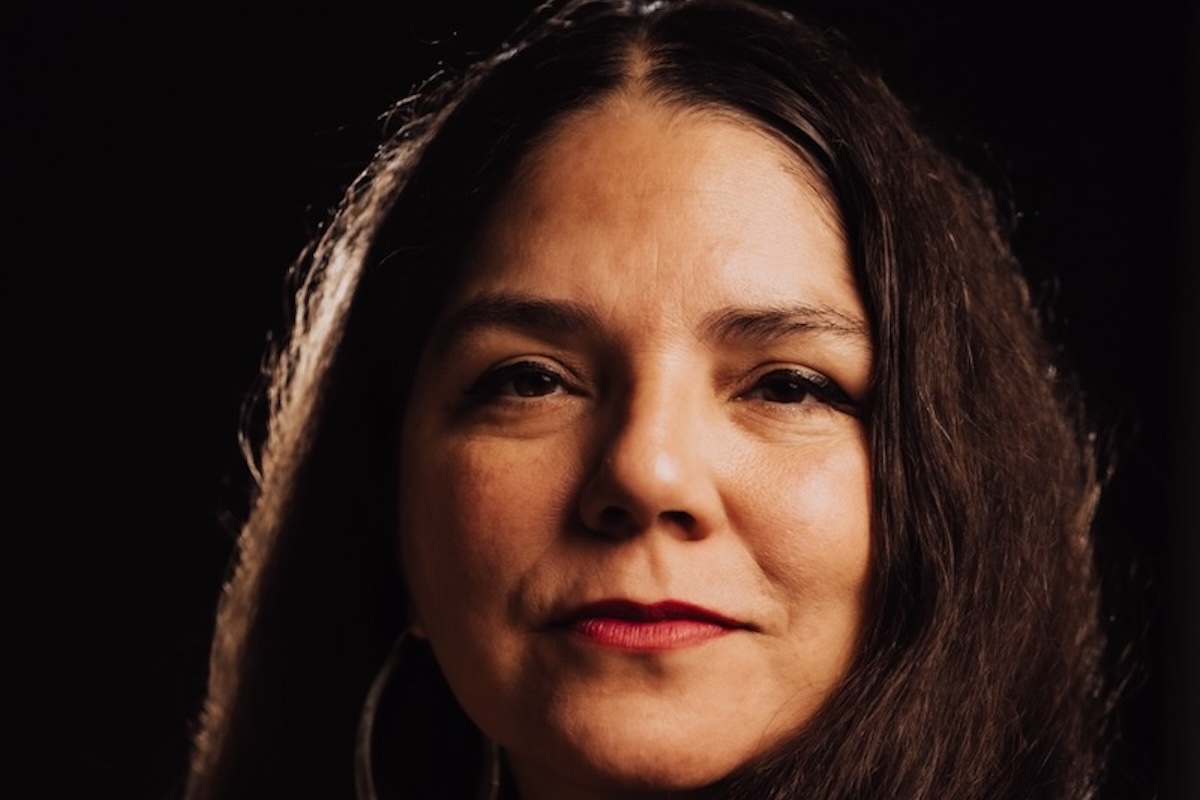
Spotlight on Leticia Hernandéz-Linares

 Melinda Palacio

Leticia Hernandéz-Linares


When I found out that LeticiaHernandéz-Linares lived in Santa Barbara for a year and was an intern at the Santa Barbara Independent, I asked interviewed her about that special year. This post was previously published in the Santa Barbara Independent. 


Thanks to the events celebrating Latino Poetry and the Anthology from the Library of America I have discovered that I know a poet who is a former Independent intern. Leticia Hernández-Linares, professor at San Francisco State University, was an Indy intern for a year in 1993.


Leticia and I are both poets published by Tía Chucha Press. I lived in San Francisco during the year she lived in Santa Barbara and our paths didn’t cross until 2017, when we read together at Beyond Baroque in Venice.  As the daughter of Salvadoran immigrants, she is a poet who champions and promotes Latina poetry. Earlier this month when I participated in her hybrid reading at San Francisco’s Medicine for Nightmares bookstore, via zoom, I mentioned that I would be writing about the event for the Independent. She then told me her story of how she took some time off from completing her MFA to live and heal in Santa Barbara. 


As someone who also has a master’s in literature from UC Santa Cruz, I can tell you that academic work is no easy feat and completing any type of graduate work is testament to a person’s strength. Leticia is certainly impressive with everything she has accomplished in the past three decades, from her first publication in the Independent to award-winning author and poet to writing a picture book, her community work against gentrification, and her many grants as an artist in resident at Yerba Buena Center for the Arts in San Francisco. 


All of the roles that Leticia currently embodies began to take shape during that formative year in Santa Barbara. She started working with youth as a case worker for Goleta Valley Middle School and she started to prioritize her writing: “I began writing consistently,” she said. Living in Santa Barbara encouraged her to try new things. She worked as an art teacher for Girls inc. and worked with daughters of migrant workers. 


“I took a woman’s self-defense class at Jang’s Karate Center on Gutierrez Street. I had never taken martial arts. I felt very connected to the place. There were lots of Latina women there to support their kids.” 


Leticia is a self-taught artist. She also sings and is a single mom of two boys, one in college and one in high school. Her boundless energy is impressive. In addition to her work as a professor of literature and Latino Studies, a poet and published author, she is a library laureate, and has received the Local Hero Award for her community activism. She incorporates art and song in her poetry presentations. When I spoke to her on the phone for this interview, she was multitasking by answering my questions, cooking eggs Salvadorean style, and attending to her teenage son. She gives credit to her community for helping her raise two boys. If you were one of the handful of Santa Barbara attendees on the zoom on October 9, you know just how boundless and fun her energy is. Along with Héctor Tobar and Rubén Martínez, she edited Wandering Song: Central American Writing in the United States (Tía Chucha Press, 2017). When I met her twenty years ago, I had no idea she graduated Scripps College Cum Laude nor did I know that she has both an M.A. in English with a concentration in Chicanx Literature, Testimonio, Ethnic & Urban Studies, and an MFA in Creative Writing from San Francisco State University. Leticia is also as humble as she is dynamic. And to think, her creating writing, poetry, journalism and art started at the Santa Barbara Independent. 


This week’s poetry connection comes from former Indy intern, Leticia Hernandez, a poem published in her first full-length poetry collection Mucha Muchacha by Tía Chucha Press. 


Despierta

By Leticia Hernández-Linares

Mission street yawns wide under the canopy of breaking day,
breathless footsteps tax rickety ladder rungs,
chase streams of light unveiling the horizon,
sleepy hands burning sage on tar rooftop,
the day just barely born
into my desert dusted arms wanting
to hold a neighborhood hostage from itself

What a perfect mission these streets have become,
shoveling out plots for graves, lots for sale
a concentric circle of conquest carving itself
into a ground overcrowded with the whispering of ghosts

If I charge the children with painting poems,
will you learn to feed yourself, curl up from the crouching
towards death stance you slag around the streets in,
cease the fire that barrels holes through the heads
of young men guilty of nothing but brown skin,
being on foot––no car to speed past the candle lit
processing of their own untimely deaths

La piedra del sol down la calle Valencia reflects
light from a Chicana architect’s plans, shines
over open doors of a community learning space,
comedores bearing plates steaming with home country
recuerdos, connecting writers to the next verse,
amantes to inevitable missteps

Prayers printed on the feet of danzantes resound
through blocks where I learned how to make crying count,
counted murals counting wars cried close to corners
where someone keeps dying for nothing, nodded
while poet cantos sing truth into sense
calling each day to attention with the promise
of sunrise and sanctuary

Friday, January 10, 2020

A Decade in the Life of a Chicana Author

Melinda Palacio

2010 Santa Barbara


2010: La Bloga Newbie
One of the best things about the past decade is finding my voice on La Bloga. La Bloga was the first online journal for Latino authors that I followed. This Chicana author was happy to have found a home here. It was a cold AWP conference for writers and writers programs in Denver where Manuel Ramos asked me to join. I remember being a little nervous about having something to say every Friday. The fact that I could write about anything or simply put up some photos made the decision easy. Why not? Eventually, Ramos came back to the fold and we share Fridays. This same year, Michael Sedano introduced the Festival de Flor y Canto de Atzlan reunion to USC, its archives span from 1973-2010.

2010 is also the year my first book was published. Folsom Lockdown, winner of the Kulupi Press Sense of Place award. The small chapbook represented a milestone. I visited my father in Folsom Prison the year before and over one weekend began writing the poems that would make up the chapbook. My father is now out of prison and we are less estranged than we were when I first went to visit him in 2009. The past decade has included more publications in journals and magazines and hundreds of rejections. If you want to be a writer, you need to celebrate the rejections and not let them create roadblocks to your goals.

2011
I took a trip with my sister and friend to Panama, where I met some of my father's relatives. Since I didn't grow up with my father, Panama was a place I never thought I'd visit, a mythical place that belonged to the world of my father. I'm glad my sister (whom I also did not grow up with) encouraged me to go.

Later in 2011, my first full-length book was published. Thanks to my connection to La Bloga's Daniel Olivas, who published a short story of mine in 2008 in Latinos in Lotusland, Arizona State University published my novel, Ocotillo Dreams, also found a literary home at ASU's Bilingual Press. Although the novel about immigration in Arizona is fiction, it was certainly a dream come true to see my book in print by a University Press.

2012
I was on a publishing roll the beginning of the decade. Tía Chucha Press published my first full-length poetry book. Earlier in 2007, when I was a PEN USA Emerging Voices fellow, I had the pleasure of getting to know Luis J. Rodriguez. I was more than thrilled when he accepted my manuscript for How Fire Is a Story, WaitingOcotillo Dreams was still in play as it won a PEN Oakland Josefine Miles Award for Excellence in Literature and the Mariposa Award for Best First Book at the International Latino Book Awards. I also had the pleasure of going to Cuba.

2013
I was happy to mentor students at the University of Arkansas in Monticello through their online MFA Program. Working with students online certainly had its challenges. I much prefer a one-on-one interaction, but I'd like to do more. Students have a way of teaching their instructors and mentors new skills. In 2013, How Fire Is a Story, Waiting was a finalist for the Milt Kessler Poetry Award and the Paterson Poetry Prize.

2014
The main thing I remember about 2014 is breaking my leg. If you ever get the urge to run down three flights of stairs carrying a heavy bag of books in each hand and wearing mule shoes with no straps, don't do it. The thought of the four months I spent in bed and that lighting pain moment of realizing my foot was facing the wrong direction sends shivers down my spine. Thank you Southern Orthopedic Specialists in New Orleans for putting me back together. I'm lucky I can walk, run, jump, and dance again. A positive attitude saved me from myself. It's easy to become depressed when your life is upended. I continued to read, write, and enter work for contests and publication. A poem that I wrote about my broken leg made it into the Coiled Serpents Anthology and I was a finalist in the Rita Dove Poetry Award and the Faulkner Wisdom Competition.

2015
With my recovery complete, I was free to jump back into writing and speaking. What I remember most about that year is having a poem chosen by the Academy of American Poets, the Praying Tree. In 2014, I broke my leg and in 2015 the house broke and we had some flooding that led to a long remodel. Sometimes it's hard to shake off an unfortunate streak, but at least the proverbial silver lining came in form of fixing up the house to how I would design it. Thieves also broke into the house that year, but only stole Steve's jars of quarters and one strand of pearls.

2016
One of the worst years was the year my grandmother died. I spent a month taking care of her before she decided that she had had enough of this earth. I remember very little else. I started and abandoned several projects. I didn't know it at the time, but eventually I would create something from the tragedy in the form of the poem, What the Birds Know, and a song, Bird Forgiveness for the project that would eventually become a book. Grief is never easy. When my mother died in 1994, I thought I wouldn't be long for this earth myself. Yet, I have survived my mother and grandmother, as most people do.

2017
A year after my grandmother's death, Steve surprised me with a trip to Tahiti. Tahiti has always been at the top of my bucket list and I fell in love with the place and the people. The Spring trip brought so much joy and a welcome reunion with our car. A month before the trip, our Honda Green Element was stolen from the driveway. Steve and I gave up on ever getting the car back. While we were at LAX, about to take off for Tahiti, a call came in from a towing garage saying that they had found and towed the car. Lucky for us, we were able to retrieve it when we returned from our trip.

2018 was the year Steve and I celebrated ten years of marriage. I also became obsessed with playing guitar. In November, Steve bought me a Martin guitar for my birthday. Music also helps me roll with the punches and all those rejection slips. For every publication, fellowship and grant application, dozens of rejection notes follow, not to mention the ones that don't bother to let you know you didn't make the cut. Thanks to Andrea Watson at 3 Taos Press who published my poetry book Bird Forgiveness. This is the book that has its own theme song. I've since written a few more songs, but the Bird Forgiveness  theme song will forever have a special place as being my first song. Steve told me I should write songs because I'm a poet. I didn't believe I had the ability to write a song until the melody popped into my head. Another highlight was our trip to Ireland; there's so much more to say about all the places I was fortunate enough to visit this past decade, including the banana festival in Kentucky and Memphis on the way back.

The end of 2019 was last week. This is the year I think I've finally finished my next novel. Only an acceptance of publication will tell me that it is indeed finished. A wise person said that books are never finished only abandoned. Sometimes your editor takes the manuscript from your critical hands. I'm still looking for such an editor. I've written more poems, songs, and stories.

Meeting students who see themselves in my writing and who thank me for sharing my work is one of the most rewarding experiences. It fuels me during those dry spells of rejections. Recently, I've had the pleasure of also sharing my music along with my poetry and fiction. Here's to the next decade, and thanks to my online ukulele teacher for asking about my accomplishments in the last decade. Did I mention I started learning the ukulele online? I'm also taking singing lessons. There's so much more that happened this past decade, but my computer is running out of juice and I'm on the road, my eyes beg for sleep. Cheers and happy new year. Know your voice and vote count.


2019 Monterey 

Friday, November 01, 2019

My Heart, Mis Muertas. Poems to Honor My Ancestors

Melinda Palacio


Next Saturday, I have the honor or reading matriarchal poems, honoring my grandmother and mother, at the C.D. Wright Women's Conference in Conway, Arkansas. I've never been to Arkansas or to this conference. I will have more to report on after next week. Since today is a Día de Los Muertos celebration, I'm happy to share three poems: the title poem of my first full-length poetry book and two short prose poems also in How Fire Is a Story, Waiting. It took me a long time to achieve the kind of peace I have regarding the early death of my mother and more recent death of my grandmother.


Matriarchs in Triptych and across Cultures (Creative Reading)
(Gina Ferrara, Julie Kane, and Melinda Palacio)
Location: Baum Gallery, McCastlain Hall
Anne Sexton famously wrote, "A woman is her mother. That's the main thing." Female poets have a long tradition of presenting mothers in their poetry. How does the frequent presence and recollection of mothers define who we are? Across cultures, specifically Hispanic, Irish, and Sicilian, what similarities do mothers share and what differences? Must daughters look back at their matriarchal predecessors before crossing any kind of threshold? This reading will respond to these questions in triptych, via three cultures.  


(title poem from the 2012 book published by Tia Chucha Press)


My grandmother caught the flame in her thick hands.
Curled fingers made nimble by kaleidoscope embers.
Fire burns hot and cold if you know where to touch it, she said.

I watched the red glow spit and wiggle as it
snaked down the thin timber, a striptease, 
born out of the festive sound of a half-filled matchbox.

Through orange windows framed by obsidian eyes, I saw the child she once was. 
A little girl who raised herself because her mother had a coughing disease.
Blood on her mother’s handkerchief didn’t stop her from dreaming.
Maria Victoria was going to be a singer with her deep, cinnamon stick voice. 

She watched novelas in the kitchen while waiting for dough to rise.
Her body, heavy with worry for two families and three lifetimes.  She tucked
Mariachi dreams under her girdle. Lullabies escaped on mornings 
warmed by her song falling into gas burners turned on high.

The flame on a stove was never the same.  It had a bad hangover,
didn’t remember the many matches lit when its starter broke down.

My grandmother rolled paper into a funnel, 
stole fire from the pilot to light the stubborn burner on the right.  
Crimson burned blue on the white paper, its folded edges 
curled black like a lace ruffle on a skirt.
The finicky flame can’t comment on its magic.
The thousands of tortillas and pancakes cooked over the years.
How I burned myself roasting a hot dog campfire style.
How a melted pencil smudged under my sister’s eyelid makes her beautiful.

My grandmother noticed the time, almost noon.
She needed to make three dozen tortillas to feed her family of thirteen.
The show over, she blew the match into a swirl of gray squiggles,
snuffed before it had a chance to burn hot on her finger.


Laughter


The story of my mother touches the wind and rattles me off balance, raises the small hairs on my forearms, my skin no longer feels my own. I long to be cradled by a cloud, suspended and sheltered. I listen to the words of the Grandmother Spirit. My elder says look beneath your skin and you’ll the see the loneliness in your veins. I hear drumming, a familiar wail of pain. The drums stop. The story of my mother is as ordinary as once upon a time there was a happy woman who lived a short life before dying, leaving behind a daughter. The pages between the beginning and the end are filled with laugher. A girl with wild hair the color of the Río Grande sinks her feet into the muddy river and says, you laugh like my grandmother. I laugh harder because the wild woman is my mother.


Choosing a Coffin

We arrive at the cemetery you can see from the freeway. Rolling, green hills, naked statues that make Ama laugh and blush. Walk into a white office. Meet the nice white lady with the white jacket. Sit in her white chairs, stare at the pictures on the white walls. We are here to choose a coffin. I am her mother. I am her daughter. I am her brother. I am her uncle. I am her friend. Our voices fill in blank spaces. I see a plain pine box. That one, I say, because it’s simple, like the coffin chosen for Cesar Chavez, a man my mother admired  tirelessly. No grapes, I remember. Don’t be cheap, Melinda, my uncle says. Don’t worry about the money, my mother’s friend says. My grandmother decides on the white coffin that looks like a Cadillac with pink roses on each corner, lined in pink satin for a luxurious sleep. I knew you’d pick that one, says the nice lady with perfect plastic Pompadour hair like Elvis. It’s our finest she says, taking in the shades of bewildered brown faces.


Funny, how fire is a story, waiting.

Friday, October 07, 2016

Mucha Muchacha: More Than a Woman: Book Review

Melinda Palacio
Poems by Leticia Hernández-Linares

I've been sitting on a goldmine. It's such a treasure to find a book you absolutely can't help but love. Leticia Hernandez-Linares wrote such a book, Mucha Muchacha: Too Much Girl: Poems, published by Tía Chucha Press last year. Earlier at AWP 2016 in Los Angeles, Leticia introduced herself and asked if I would review her book. I must admit I usually don't like to review books because I find it a challenge to be objective. Since I am also a Tia Chucha Press poet, I knew the book would be good. Publisher Luis Rodriguez runs a small press and publishes poetry books he feels strongly about. March was a long time ago. Leticia's book gathered dust in the growing stack of books I have to read. Finally, I opened the book and could not put it down. I could end here; I loved the book.
            Mucha Muchacha is more than a collection of poems. It is wisdom from an old soul spoken by a young woman in command of her craft. Her poems, skate, dance, sing, and exist. Confession number two, the title kept me from opening the book. I kept thinking of the daft song by Esquivel of the same title, not realizing that this poem, this book was Leticia's answer to the song. Her verses crack with heartbreak, hope, and defiance. "Waking old under the city's/respiratory system, she inhales a quiet/daybreak. No feet shuffling, no smell/of a man's clothes. Rubbing brass/Buddha's belly, she mutters prayers," excerpt from Mucha Muchacha.
            I'm not surprised that in her everyday life, the poet is a mother, singer, activist, teacher, artist, and more. She is rooted, even when taking on subjects such as the civil war in El Salvador, gentrification in San Francisco, and the hopes handed to her as a daughter, "daughter, tells me to carry handwritten recipes in my/throat-take care to not let them strangle," from Flowers for My Father.
            In the over 90 pages of poetry packed in Mucha Muchacha, the various moods leave you clamoring for mas, more from the poet who is mucha muchacha, who answers How To Be Spiritual in Stilettos with "Brother, walk with me." The blend of bold humor and fearless code switching makes you laugh and cry at the same time. Leticia's last book, Razor Edges of My Tongue, came out in 2002. Her latest book is made up of all polished edges and is well worth the wait.
            What's even more impressive is the musicality of her poems. I wasn't surprised to learn that Leticia is the daughter of a musician and that she is also a singer and songwriter. Her singing voice is reminiscent of Mercedes Sosa. You can hear samples of Leticia's singing and reading voice on Reverbnation. If you haven't made up your mind already, the recordings will ensure more sales of Mucha Muchacha. Stop reading this review, pick up the book and enjoy.  
Leticia Hernández-Linares. Photo copied from her website.
If you are in the Bay Area this month, you can hear Leticia Hernández-Linares. The following three readings are on her updated website: Join Leticia.


October 14, La Calle 24 Acción Latina's Juan R. Fuentes Gallery, 2958 24th St., San Francisco,
Closing Reception, Artist Talk and Poetry Reading in response to the exhibit by Jose Rojas

October 15, Lit Crawl SF Presents the Pan Dulce Poets: Leticia Hernandez, Aura Maru, Silvia Oviedo, and Cathy Arellano 3114 24th Street, San Francisco, CA 94110
#PANDULCEPOETS


Lyrics and Dirges: A Monthly Reading Series
Wednesday, October 19th, 2016 - 7:30pm
This Recurring Event is at Pegasus Books Downtown Berkeley
Lyrics and Dirges October lineup features:
Leticia Hernández-Linares
Angela Hume
Bonnie Wailee Kwong
Aqueila M. Lewis
Anne Raeff 
Hosted and curated by Sharon Coleman
----
Leticia Hernández-Linares is an award-winning writer and community worker.  She has performed her poemsongs throughout the country and in El Salvador.  Her work has appeared in Street Art San Francisco, U.S. Latino Literature Today, Teatro bajo mi piel, Huizache, and Pilgrimage among other publications. A member of the CantoMundo Organizing Committee, she lives, writes, and works in the Mission District of San Francisco. 
Angela Hume lives in Oakland. She is the author of the poetry chapbooks Melos (Projective Industries, 2015), The Middle (Omnidawn, 2013) and Second Story of your Body (Portable Press at Yo-Yo Labs, 2011). Her first full-length book of poetry is Middle Time (Omnidawn, 2016). You can learn more about Angela http://angelamhume.tumblr.com/.
Bonnie Wailee Kwong's first poetry collection is ravel, a finalist for the Many Voices Project by New Rivers Press, and the White Pine Press Poetry Prize.  Her work in poetry and fiction has garnered several Pushcart nominations.  She creates in many mediums and languages: English, Cantonese, Mandarin, Japanese, ruby, and javascript.  She is currently artist-in-residence at Stanford University.  Her website is: www.bonniekwong.info.
Aqueila M. Lewis is an award-winning writer, Bay Area Native and resident of Oakland, CA.  As a multi-talented artist and poet, she is also well-versed in journalism (print and radio) composing, singing, poetry/spoken word, modeling as a plus-model. She also currently holds the titles as Ms. Oakland Plus America 2014 and SF Raw Performing Artist of the Year 2015. Aqueila’s articles have been published in numerous publication and on radio such as  94.1 FM KPFA Radio’s First Voice Media Apprenticeship Program and Full Circle Show, Sideshow Radio, After Hours Radio, All the Rest of US Radio on 89.3 FM KPFB, National Radio Project Making Contact Storytelling Fellowship, Sistah’s With Ink Voices Anthology,Reflections: A Collaboration Between Painting And LiteratureIn Her Soul Magazine, Til Death Do Us Part Lady Warrior Zine and Walking in the Feminine: Stepping in our Shoes Anthology. Aqueila is currently creating children’s books focused on issues in relation to social justice and community.
 Anne Raeff’s stories and essays have appeared in New England Review, ZYZZYVA, and Guernica among other places. Her first novel Clara Mondshien’s Melancholia was published in 2002 (MacAdam/Cage). Her short story collection, The Jungle Around Us won the 2016 Flannery O'Connor Award for Short Fiction. She is proud to be a high school teacher and works primarily with recent immigrants. She too is a child of immigrants and much of her writing draws on her family’s history as refugees from war and the Holocaust. She lives in San Francisco with her wife and two cats.
Pegasus Books presents Lyrics and Dirges: A Monthly Reading Series
Lyrics & Dirges is a monthly reading series featuring a mix of prominent, emerging and beginning writers. Its aim is to highlight various forms of writing in an effort to spotlight the diverse literary community of the Bay Area. 
Every third Wednesday of the month at Pegasus Books Downtown.
Event date: 
Wednesday, October 19, 2016 - 7:30pm
Event address: 
Pegasus Books Downtown
2349 Shattuck Avenue
BerkeleyCA 94704
Event Category: