
Melinda Palacio
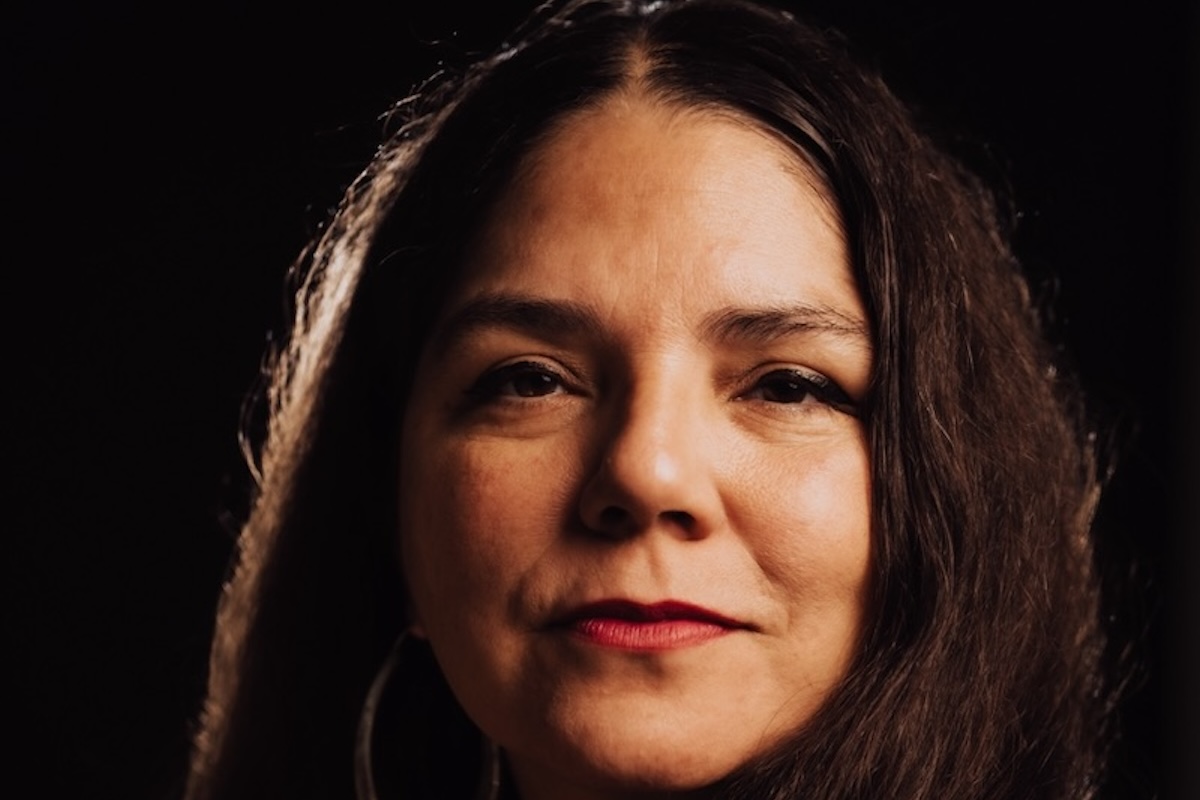 |
| Leticia Hernandéz-Linares |
When I found out that LeticiaHernandéz-Linares lived in Santa Barbara for a year and was an intern at the Santa Barbara Independent, I asked interviewed her about that special year. This post was previously published in the Santa Barbara Independent.
Thanks to the events celebrating Latino Poetry and the Anthology from the Library of America I have discovered that I know a poet who is a former Independent intern. Leticia Hernández-Linares, professor at San Francisco State University, was an Indy intern for a year in 1993.
Leticia and I are both poets published by Tía Chucha Press. I lived in San Francisco during the year she lived in Santa Barbara and our paths didn’t cross until 2017, when we read together at Beyond Baroque in Venice. As the daughter of Salvadoran immigrants, she is a poet who champions and promotes Latina poetry. Earlier this month when I participated in her hybrid reading at San Francisco’s Medicine for Nightmares bookstore, via zoom, I mentioned that I would be writing about the event for the Independent. She then told me her story of how she took some time off from completing her MFA to live and heal in Santa Barbara.
As someone who also has a master’s in literature from UC Santa Cruz, I can tell you that academic work is no easy feat and completing any type of graduate work is testament to a person’s strength. Leticia is certainly impressive with everything she has accomplished in the past three decades, from her first publication in the Independent to award-winning author and poet to writing a picture book, her community work against gentrification, and her many grants as an artist in resident at Yerba Buena Center for the Arts in San Francisco.
All of the roles that Leticia currently embodies began to take shape during that formative year in Santa Barbara. She started working with youth as a case worker for Goleta Valley Middle School and she started to prioritize her writing: “I began writing consistently,” she said. Living in Santa Barbara encouraged her to try new things. She worked as an art teacher for Girls inc. and worked with daughters of migrant workers.
“I took a woman’s self-defense class at Jang’s Karate Center on Gutierrez Street. I had never taken martial arts. I felt very connected to the place. There were lots of Latina women there to support their kids.”
Leticia is a self-taught artist. She also sings and is a single mom of two boys, one in college and one in high school. Her boundless energy is impressive. In addition to her work as a professor of literature and Latino Studies, a poet and published author, she is a library laureate, and has received the Local Hero Award for her community activism. She incorporates art and song in her poetry presentations. When I spoke to her on the phone for this interview, she was multitasking by answering my questions, cooking eggs Salvadorean style, and attending to her teenage son. She gives credit to her community for helping her raise two boys. If you were one of the handful of Santa Barbara attendees on the zoom on October 9, you know just how boundless and fun her energy is. Along with Héctor Tobar and Rubén Martínez, she edited Wandering Song: Central American Writing in the United States (Tía Chucha Press, 2017). When I met her twenty years ago, I had no idea she graduated Scripps College Cum Laude nor did I know that she has both an M.A. in English with a concentration in Chicanx Literature, Testimonio, Ethnic & Urban Studies, and an MFA in Creative Writing from San Francisco State University. Leticia is also as humble as she is dynamic. And to think, her creating writing, poetry, journalism and art started at the Santa Barbara Independent.
This week’s poetry connection comes from former Indy intern, Leticia Hernandez, a poem published in her first full-length poetry collection Mucha Muchacha by Tía Chucha Press.
Despierta
By Leticia Hernández-Linares
Mission street yawns wide under the canopy of breaking day,
breathless footsteps tax rickety ladder rungs,
chase streams of light unveiling the horizon,
sleepy hands burning sage on tar rooftop,
the day just barely born
into my desert dusted arms wanting
to hold a neighborhood hostage from itself
What a perfect mission these streets have become,
shoveling out plots for graves, lots for sale
a concentric circle of conquest carving itself
into a ground overcrowded with the whispering of ghosts
If I charge the children with painting poems,
will you learn to feed yourself, curl up from the crouching
towards death stance you slag around the streets in,
cease the fire that barrels holes through the heads
of young men guilty of nothing but brown skin,
being on foot––no car to speed past the candle lit
processing of their own untimely deaths
La piedra del sol down la calle Valencia reflects
light from a Chicana architect’s plans, shines
over open doors of a community learning space,
comedores bearing plates steaming with home country
recuerdos, connecting writers to the next verse,
amantes to inevitable missteps
Prayers printed on the feet of danzantes resound
through blocks where I learned how to make crying count,
counted murals counting wars cried close to corners
where someone keeps dying for nothing, nodded
while poet cantos sing truth into sense
calling each day to attention with the promise
of sunrise and sanctuary


