Showing posts with label Salvadoran-American Poet. Show all posts

Thursday, October 24, 2024

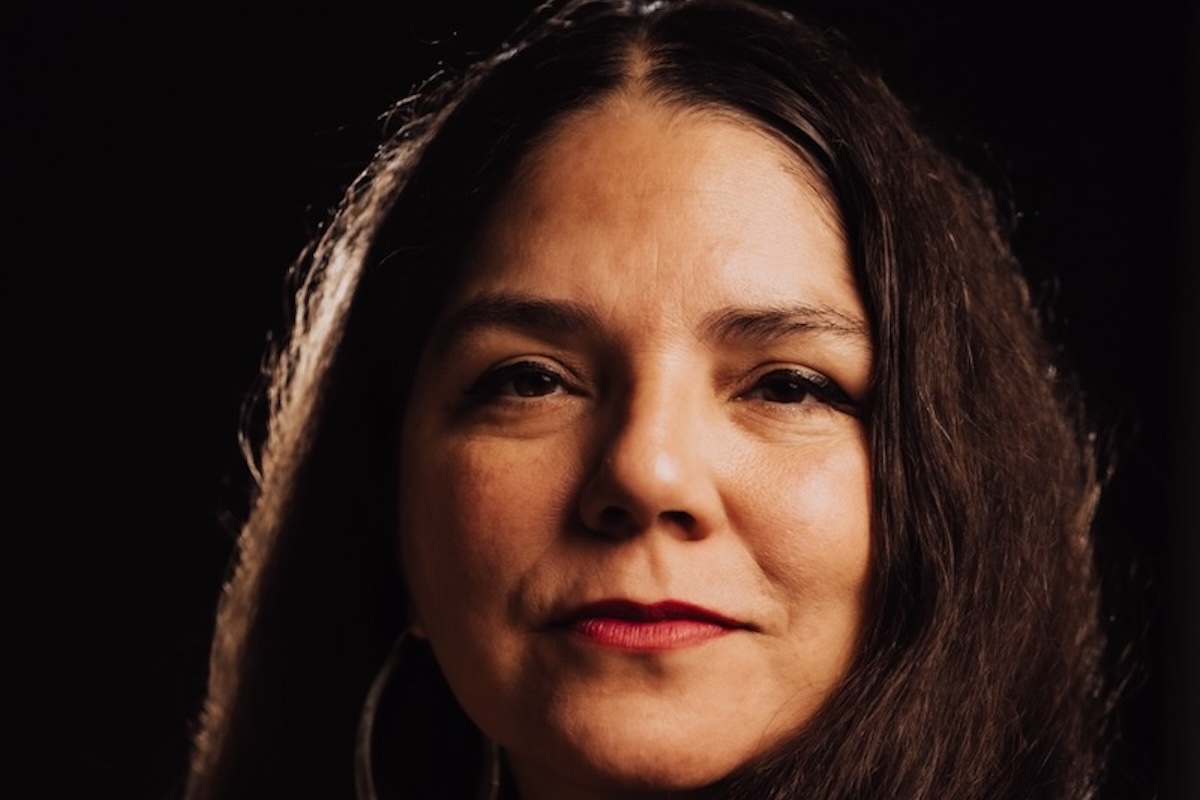
Spotlight on Leticia Hernandéz-Linares

 Melinda Palacio

Leticia Hernandéz-Linares


When I found out that LeticiaHernandéz-Linares lived in Santa Barbara for a year and was an intern at the Santa Barbara Independent, I asked interviewed her about that special year. This post was previously published in the Santa Barbara Independent. 


Thanks to the events celebrating Latino Poetry and the Anthology from the Library of America I have discovered that I know a poet who is a former Independent intern. Leticia Hernández-Linares, professor at San Francisco State University, was an Indy intern for a year in 1993.


Leticia and I are both poets published by Tía Chucha Press. I lived in San Francisco during the year she lived in Santa Barbara and our paths didn’t cross until 2017, when we read together at Beyond Baroque in Venice.  As the daughter of Salvadoran immigrants, she is a poet who champions and promotes Latina poetry. Earlier this month when I participated in her hybrid reading at San Francisco’s Medicine for Nightmares bookstore, via zoom, I mentioned that I would be writing about the event for the Independent. She then told me her story of how she took some time off from completing her MFA to live and heal in Santa Barbara. 


As someone who also has a master’s in literature from UC Santa Cruz, I can tell you that academic work is no easy feat and completing any type of graduate work is testament to a person’s strength. Leticia is certainly impressive with everything she has accomplished in the past three decades, from her first publication in the Independent to award-winning author and poet to writing a picture book, her community work against gentrification, and her many grants as an artist in resident at Yerba Buena Center for the Arts in San Francisco. 


All of the roles that Leticia currently embodies began to take shape during that formative year in Santa Barbara. She started working with youth as a case worker for Goleta Valley Middle School and she started to prioritize her writing: “I began writing consistently,” she said. Living in Santa Barbara encouraged her to try new things. She worked as an art teacher for Girls inc. and worked with daughters of migrant workers. 


“I took a woman’s self-defense class at Jang’s Karate Center on Gutierrez Street. I had never taken martial arts. I felt very connected to the place. There were lots of Latina women there to support their kids.” 


Leticia is a self-taught artist. She also sings and is a single mom of two boys, one in college and one in high school. Her boundless energy is impressive. In addition to her work as a professor of literature and Latino Studies, a poet and published author, she is a library laureate, and has received the Local Hero Award for her community activism. She incorporates art and song in her poetry presentations. When I spoke to her on the phone for this interview, she was multitasking by answering my questions, cooking eggs Salvadorean style, and attending to her teenage son. She gives credit to her community for helping her raise two boys. If you were one of the handful of Santa Barbara attendees on the zoom on October 9, you know just how boundless and fun her energy is. Along with Héctor Tobar and Rubén Martínez, she edited Wandering Song: Central American Writing in the United States (Tía Chucha Press, 2017). When I met her twenty years ago, I had no idea she graduated Scripps College Cum Laude nor did I know that she has both an M.A. in English with a concentration in Chicanx Literature, Testimonio, Ethnic & Urban Studies, and an MFA in Creative Writing from San Francisco State University. Leticia is also as humble as she is dynamic. And to think, her creating writing, poetry, journalism and art started at the Santa Barbara Independent. 


This week’s poetry connection comes from former Indy intern, Leticia Hernandez, a poem published in her first full-length poetry collection Mucha Muchacha by Tía Chucha Press. 


Despierta

By Leticia Hernández-Linares

Mission street yawns wide under the canopy of breaking day,
breathless footsteps tax rickety ladder rungs,
chase streams of light unveiling the horizon,
sleepy hands burning sage on tar rooftop,
the day just barely born
into my desert dusted arms wanting
to hold a neighborhood hostage from itself

What a perfect mission these streets have become,
shoveling out plots for graves, lots for sale
a concentric circle of conquest carving itself
into a ground overcrowded with the whispering of ghosts

If I charge the children with painting poems,
will you learn to feed yourself, curl up from the crouching
towards death stance you slag around the streets in,
cease the fire that barrels holes through the heads
of young men guilty of nothing but brown skin,
being on foot––no car to speed past the candle lit
processing of their own untimely deaths

La piedra del sol down la calle Valencia reflects
light from a Chicana architect’s plans, shines
over open doors of a community learning space,
comedores bearing plates steaming with home country
recuerdos, connecting writers to the next verse,
amantes to inevitable missteps

Prayers printed on the feet of danzantes resound
through blocks where I learned how to make crying count,
counted murals counting wars cried close to corners
where someone keeps dying for nothing, nodded
while poet cantos sing truth into sense
calling each day to attention with the promise
of sunrise and sanctuary

Friday, December 08, 2023

Poetry Connection: El Salvador Edition

Melinda Palacio

a version of this column was originally published in the Santa Barbara Independent


Alexandra Lytton Regalado


Last Sunday, poet Alexandra Lytton Regalado gave a salon style reading and discussion at the Ridley Tree House where she is in residence for the week, thanks to a collaboration with Santa Barbara City College and the Santa Barbara Museum of Art. I’ve had the opportunity to connect with Alex over the years, first at a writing conference and later through Swwim Everyday, an online journal for women-identifying poets where she is an editor. 


It is no coincidence that her last name sounds like a regalo. As much as she is honored to reside in a home overlooking the mountains, during one of Santa Barbara’s many good weather weeks, she is a gift to the city. Don’t miss her free workshop on Thursday. I didn’t have much advance notice either or else I would have talked up her reading in previous columns. The salon’s intimate setting allowed the poet to speak to us candidly with what she called, confianza. She said Sunday’s event was like a gathering with friends.

Alexandra Lytton Regalado, Melinda Palacio, Michelle Detorie, Emma Trelles


Alex describes herself as a double agent because she was born in El Salvador, left for Miami as a child during the country’s civil war and moved back to El Salvador as an adult. She has spent 24 years in Miami and 23 years in El Salvador. Now, she finds herself the matriarch of her family. As the adult in charge, she says she is comfortable being displaced. 


Her words carry the weight of being the matriarch of her family as well as the eldest sister. With this responsibility comes a grit that Regalado says is natural for Salvadoran women who must have the quality to aguantar. She says being the keeper of memory is the hardest. When her sisters want to throw away old photographs of unknown people, Alex feels compelled to dig into memory and name those unknown faces. She says she has rescued many photographic memories from the garbage. As the matriarch of her family, she is sensitive to the fact that those saved photographs represent a grief for those who are only with us in photographs. For Regalado, grief is always expected. She describes grief as a way of life, an inheritance.

Alexandra Lytton Regalado


Photography and the visual arts are dear to Regalado. She has a degree in visual art and photography. She is still fascinated by visiting museums. I loved the way in which she discussed how we translate a poem or song in the same way we might ascribe meaning to a painting in a museum The idea of honoring personal interpretation makes poetry more accessible to people, yet another form of poetry connection. 


Alex said this isn’t her first residency, but her third; however, it is her first in California. “The house is full of light and has amazing views of mountains I can see from my desk window,” she said. It also helps that the Ridley-Tree House is in the same neighborhood as her sister-in-poetry, Emma Trelles, previous Poet Laureate of Santa Barbara. Alex has had a long-standing connection to Santa Barbara via Emma Trelles and the Mission Poetry Series, offering translations for the winning chapbooks for the Alta California chapbook prize; and this year she has served as judge for chapbook contest. “I’m honored that three Santa Barbara poet laureates attended the reading,” she said, “I’m looking forward to Thursday’s free workshop at SBCC from 3 to 5 pm at the Multimodal Lab—I’ve developed writing exercises centered around wonder and loss and a great reading packet of poems to share with the group.“  


This week’s Poems feature Alexandra Lytton Regalado.


EL PUENTE QUE NOS UNE


I left red gladiolas on the altar.

Patrón Santiago Apostól, your horse is spattered with mud.

San Alejo, your shoes are worn.

Acompáñanos y líbranos de todo mal.

This bridge is long and rickety.

Rotten planks, rusted nails moan every step.

Who built this?

We’ve had to leap across all that collapsed.

I have no choice.

Can’t stop to ask why.

Can’t rest.

There are people in front of us and people behind us.

The way back would be just as long.

Best to keep going.

We must get to the other side.

Con cada paso mi sombra pierde color.

The dark water offers my face and I say to it:

This is my one and only life.

Already others are pressing up behind me.

And others have moved too far ahead.

When someone falls I cannot stop to help.

Even though some look like papá, but younger.

Mamá, but mixed with my daughter’s face.

An old friend who died long ago.

Patrón, who will save us?

Will I turn into a fish if I fall?

Will I be jolted awake?


THE GIANTESS


After Leonora Carrington’s painting

After Tracy K. Smith


Daughter, you need to grow into your body,

understand its dimensions,

how to move in this world.

I tell her this as she mops up water

from a glass she’s knocked over.

She is constantly bumping, tripping,

leaving frames askew.

She hides in hoodies & sweats,

but the girl is all legs, taller than me

at thirteen. I want her to live in her body,

not padded in layers of fabric, shoulders

hunched, veiled in long hair, behind

glasses. Push it back, I tell her,

I want to see your pretty face,

in the voice of all women, telling all

other women how to be seen.

She talks of feminism, tells her brothers

Mami will disown you if you are not

a feminist; quick to bark, quick to snap,

to claw, to sink in a tooth.

Arrows & daggers at her feet

& her moon head overcast, as she watches

wide-winged geese circle her body. A family

takes refuge between her ankles,

us or her future family. A lumen cape

hangs from her shoulders, but the egg—

all sun—she holds close to her chest.

How to be a tower, a pillar

of confidence, to inhabit that body

at thirteen, still surprised to be on this earth—

how is it that things work? Do you want to play

a game with me? She wants to skate on smooth

streets, go out into the world without someone

shadowing her. She wants to live in her skin.

I bite back my anger at her awkwardness,

show tenderness for the fawn stumbling

to find its legs, mewling kitten. She is far from

these helpless animals. Wolf at the foot

of her bed, she draws or reads, curtains drawn

in a freezing room. She doesn’t belong to me

as much as her body belongs to her.

I look up to her, rising stories

above me, rising above her own body

&—haven’t I seen her

elsewhere & before—she

is what waits to be said.


Alexandra Lytton Regalado is a Salvadoran-American author, editor, and translator. She is the author of Relinquenda, winner of the National Poetry Series (Beacon Press, 2022); the chapbook Piedra (La Chifurnia, 2022); and the poetry collection, Matria, the winner of the St. Lawrence Book Award (Black Lawrence Press, 2017).