Monday, March 06, 2017

Entrevista a Juana Moriel


Entrevista a Juana Moriel por Xánath Caraza

Juana Moriel
 
Xánath Caraza (XC): ¿Quién es Juana Moriel?

Juana Moriel (JM): Como una mujer muy curiosa, de ahí que me encante preguntar, deducir, imaginar crear.  Creo que todo esto se refleja en mi escritura, a la cual le añado mi sentido del humor.

XC: ¿Quiénes guían tus primeras lecturas?

JM: No tuve una guía en la lectura. Mi abuelo materno fue un poeta, pero nunca publicó. Murió cuando yo tenía diez años. El primer libro de ficción me lo regaló mi padre, Las aventuras de Tom Sawyer. Lo leí y coloreé miles de veces, pues fue el único que tuve hasta llegar a mi adolescencia.


XC: ¿Cómo comienza el quehacer literario para Juana Moriel?

JM: En una clase sobre la historia de la frontera de la Nueva España conocí a Juana de Cobos, una mujer que vivió en Chihuahua colonial y retó de varias maneras el patriarcado en el que vivía. Consideré que la historia de esta mujer tenía que darse a concer por medio de una novela histórica. Cuando menos lo pensé, yo estaba haciendo la investigación histórica en los archivos de Chihuahua colonial y escribiendo escenas.

Mis dos novelas las he escrito en la zona fronteriza de Ciudad Juárez y El Paso. Trigueña se publicó después de resultar ganadora en el concurso “Publicaciones 2012”, organizado por el Instituto Chihuahuense de la Cultura (ICHICULT). La caza del venado resultó finalista en el “Concurso Contacto Latino 2016” y luego fue publicada.

XC: ¿Tienes novelas favoritas de otros autores?

JM: Mis novelas favoritas son Estación Tula y Santa María del Circo de David Toscana. También me gusta el escritor Julio Llamazares con sus dos novelas La lluvia amarilla y Luna de Lobos.


XC: ¿Pudieras compartir algunos párrafos y compartir un poco de tu atracción hacia ese párrafo?

JM: Me encanta encontrar imágenes/frases como estas en las novelas, como en la vida, hechas de pequeños detalles:

“Sus pasos apenas hacían ruido, como si levitara, pero la pesada tela del hábito al desplazarse, las cuentas del rosario dándose unas con otras, y el penetrante olor a lana que desprendían sus vestimentas dejaban surcos en el aire como los de una embarcación moviéndose sigilosa entre ruidos de páginas y lápices arañando el papel”.

- Gioconda Belli, El pergamino de la seducción.


XC: ¿Cómo es un día de creación literaria para Juana Moriel?

JM: No escribo con frecuencia. Mi proceso de escritura comienza en la mente. Cuando tengo una idea la voy creando poco a poco en mi imaginación y cuando creo que tengo una escena la escribo y la voy trabajando. Escribo donde puedo, ya sea en mi casa o en un Café. Necesito estar totalmente enfocada mientras lo escribo. Para mí esto es entrar en un espacio único, creativo.

XC: ¿Cuándo sabes que un texto está listo para ser leído?

JM: Siento que un capítulo, poema, novela, ensayo está listo para ser leído cuando al leerlo me hace sentir que estoy comunicando mi visión sobre la experiencia humana, luego viene la edición.
       
XC: ¿Qué tanto hay de México/la frontera en lo que escribes?

JM: En mis dos novelas, ambas ubicadas en el estado de Chihuahua, hay por lo menos dos Méxicos; uno percibido a distancia, con una especie de curiosidad, de añoranza de un Centro al cual el norte no ha tenido acceso. El otro es el México norteño, el que se ha venido creando através de la historia, desde la violenta entrada de los españoles, hasta la violencia que se experiementa hoy día.   

XC: ¿Cuál piensas que es tu papel como mujer, historiadora y escritora? ¿Crees que hay alguna responsabilidad?

JM: No sé si tengo un papel o una responsabilidad que cumplir. Me importa la historia de las mujeres y las relaciones de género en la frontera para dejar ver una complejidad más de la experiencia humana.  Escribo lo que he presenciado y aprendido en la frontera: una zona en constante movimiento que cuenta con una historia colonial y postcolonial muy rica. En todo caso siento que tengo que conribuir para su enrequecimiento histórico y cultural.  

XC: ¿En qué proyectos estás trabajando ahora?

JM: Estoy empezando la escritura de otra novela ubicada en el norte de México y que combina el pasado colonial y el tiempo contemporáneo. Se trata de la historia de dos mujeres, una mulata del siglo XVII y una “mexicana-mestiza” actual que mediante sueños se unen con la intención de buscar un camino que las lleve al mar.

Friday, March 03, 2017

Book Events in Colorado


Héctor Tobar


  • Thursday, March 30, at the Denver Public Library's Corky Gonzales Branch, 1498 Irving St., Denver
  • Friday, March 31, at the Fort Collins Hilton at 425 W Prospect Rd., Fort Collins 80526.
Both programs begin at 7 p.m. There is no admission charge, thanks to Colorado State University, which is presenting Tobar in partnership with the Colorado Authors League and the Denver Public Library.

Tobar will read from and discuss his award-winning account of the trapped Chilean miners, Deep Down Dark: The Untold Stories of 33 Men Buried in a Chilean Mine, and the Miracle That Set Them Free.

Héctor Tobar is the author of four books, including the critically acclaimed, New York Times bestseller Deep Down Dark. A finalist for the National Book Critics Circle Award, Deep Down Dark is published by Farrar, Straus and Giroux, by Sceptre in the UK, Harper Collins Canada, and Belfond in France.


“Tobar plunges the reader into this world of uncertainty with visceral, present-tense prose and careful pacing . . . Whether the story is completely new to you, or if you were one of the millions glued to the news reports and wondering, will they make it--physically, emotionally, spiritually--you'll be greatly rewarded to learn how they did.”
Mac McClelland, The New York Times Book Review 

Nely Galán

The Denver Network of Las Comadres & Friends National Latino Book Club invites you to a book club meeting on Saturday, March 25, 2017 at 1:00pm at Rodolfo "Corky" Gonzales Branch Library in the Eugene Lucero Meeting Room, 1498 N. Irving Street at W. Colfax Ave., Denver, 80204. The March 2017 book of the month to be discussed is Self Made: Becoming Empowered, Self-Reliant and Rich in Every Way by Nely Galán. 

An immigrant and self-made media mogul, Galán was the first Latina President of Entertainment for a U.S. television network (Telemundo). She is an Emmy Award-winning producer of over 600 episodes of television in Spanish and English, including the FOX hit reality series The Swan.

After becoming self-made on her own terms, Galán has made it her mission to teach women—regardless of age or background—how they too can become entrepreneurs. Her New York Times best-selling book, Self Made: Becoming Empowered, Self-Reliant, and Rich in Every Way, was published in 2016. Inspired by the new revolution in women’s entrepreneurship led by multicultural women, Galán wrote the book as a manifesto to ignite the SELF MADE movement, uniting all women on a quest for an economic future they control.


Karen Valentin


 Additional conversations with Karen Valentin about her book The Mother God Made Me To Be.  Membership is free and open to every book lover interested in reading English-language works written by Latina and Latino authors.


Also, at 2:00pm on March 25 in the Lena Archuleta Meeting Room of the Corky Gonzales branch library, an author visit and writing workshop by Mario Acevedo in Spanish, for more details view: https://www.denverlibrary.org/event?id=29538
Acompañe al autor, Mario Acevedo, autor del la serie Felix Gomez. Escuche todo sobre su experiencia escribiendo libros, sus retos publicando en inglés, y que fue lo que lo motivo a escribir. Un evento para motivar a otros Latinos/Hispanos a escribir! Nos compartirá su experiencia y como convirtió lo malo a buenas oportunidades que lo llevaron a escribir las novelas de vampiros detectives. 2 p.m. *Este evento será en español.


My Bad: A Mile High Noir

Denver Central Library
Floor 1, Burnham Hoyt Book Club Room
March 28, 2017 - 6:30pm - 7:30pm
Adult | Author Visits and Writing
Two-time winner of the Colorado Book Award, Manuel Ramos is the best-selling author of Chicano noir crime fiction set in North Denver. Books will be available for sale and signing.


Later.
 
Manuel Ramos is the author of several novels, short stories, poems, and non-fiction books and articles. His collection of short stories, The Skull of Pancho Villa and Other Stories, was a finalist for the 2016 Colorado Book Award. My Bad: A Mile High Noir was published by Arte Público Press in October, 2016
 

Thursday, March 02, 2017

Chicanonautica: Witches and Vampires in Mexico City

by Ernest Hogan

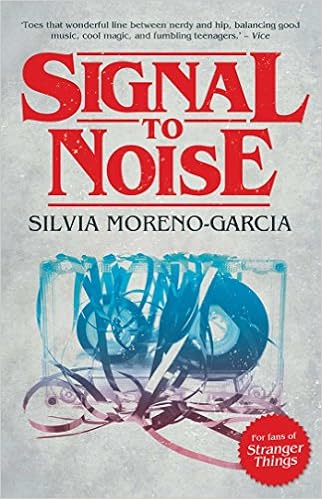
Tenochtitlán, that is known to Western Civilization as Mexico City, is one of the lost (in that Gringolandia does its best to ignore its existence) metropolises of North America, is our planet's largest urban complex, was founded by the Aztecs, and is teeming with universes of mythology on streets where you find the true meaning of magic realism. I'm a bit obsessed. I wrote a book about it. I like to read books about it. The first two novels of Silvia Moreno-Garcia, “Mexican by birth, Canadian by inclination,” delighted me.


Signal to Noise, a Copper Cylinder Award winner, is about witches in Mexico City, coming of age in the Eighties and Nineties while reveling in now obsolete technology – note the iconic audio casette on the cover – and pre-corporate pop cultures, both Mexican and American. The witchcraft rings true with my own researches into the subject – Mexico/Aztlán is the Transylvania of this continent – and the book has a far more realistic feel than most other books on the subject. I wonder what a nongenre reader stumbling on it without the usual prejudices would think . . . based on a true story? Could be, in Tenochtitlán.

Certain Dark Things is one of NPR's Best Books of 2016, and is dedicated to Germán Robles, who played handsome vampires in old, black and white Mexican movies. These vampires aren't fashionable sparkling, romantic masturbation fantasies. They are an impressive, imaginative, ingenious work of world-building that includes not only Aztec-descended vampires, but diverse tribes and
species from all over the planet that can give any other fictional blood-suckers a run for their money. And they hold up when shown next to gritty, modern realities, and remind me more of walking Tenochtitlán's streets among the blind beggars, fire-eaters, and snake-charmers than watching old movies. I personally would like to see more of these characters and this world.


I highly recommend both these books, realizing that they are outside the usual white middle-class comfort zone of the New York publishing industry. They may disturb those looking for light reading, and the characters aren't “likable” suburbanites. But reading about them makes me smell Mexico City, which makes me homesick and fires the imagination.


I think that's a good thing.


And later this year, Moreno-Garcia has another book coming out, The Beautiful Ones!


Wednesday, March 01, 2017

Lee Bennett Hopkins Poetry Award Winner Book: Somos como las nubes/We Are Like the Clouds


The Lee Bennett Hopkins Poetry Award is named for the internationally renowned educator, poet, anthologist and passionate advocate of poetry for young people. Established in 1993, the award is presented annually to an American poet or anthologist for the most outstanding new book of poetry for children published in the previous calendar year.

Selected by a panel of authors, librarians, teachers and scholars, the Lee Bennett Hopkins Poetry Award was the first award of its kind in the United States. The Pennsylvania Center for the Book, the Penn State University Libraries, and Lee Bennett Hopkins share joint administration of the annual award. 

For more information visit


This year’s winner is “Somos como las nubes/We Are Like the Clouds” written by Jorge Argueta, published by Groundwood Books/House of Anansi Press. Jorge Argueta will accept the award and the $1,000 prize, courtesy of Lee Bennett Hopkins, at Penn State this fall.

Judges' Comments

In few words and brief poems, Argueta is able to capture the safety of home and the mundane with the pain of not knowing what awaits on the other side. A refugees' journey is a difficult topic to present in poetry, but Argueta's words are able to balance the struggles, happiness, uncertainty, sadness, fears, and the mixture of feelings that the child narrator experiences. The pictures perfectly complement the rich poetry.


In Somos como las nubes /We are Like the Clouds, the reader is pulled into the story visually from the beautiful illustrations and rhythmically from the poetic language. The bilingual aspect adds authenticity to the story and connectivity for more children. 

Somos como las nubes /We are Like the Clouds helps bring the idea of immigration to a more personal and relatable reality by beautifully expressing hardships, uncertainty and hope.

The poems are imaginative, musical, and beautiful, conveying a message of empathy and hope that is powerful and significant.  The bilingual format makes these poems accessible to more children than any single language book could reach.

Argueta takes young readers on the harrowing and heartwarming journey of so many children.  In musical language we experience the emotional range of migration—from gangs to the ultimate destination of American. The imagery of clouds threads through a story told with rhyme, repetition, and wonderful pacing.


Library of Dreams


From the author, Jorge Argueta,


Please consider making a donation in any amount.

For a donation of a $100 or more, you will receive a signed copy of my most recent book, We Are Like the Clouds. This book recently received the Lee Bennett Hopkins Poetry Award from the University of Pennsylvania.

The Library of Dreams, a library that opened in November of 2016 in San Jacinto El Salvador to promote reading and writing for children living under means and in vulnerable areas.


Our children in El Salvador love to read, paint and sing. At The Library of Dreams we do this and much more. Soon we will start planting vegetables, and finishing the murals we have already started. This is a beautiful project that needs strengthening and growth in order to continue to provide our children with these services, which they need so much and help them grow healthy and positive minds. To continue with these services I need your support. I have begun the process of converting The Library of Dreams into a non-profit organization. This is a process that will take one or two years. As we wait for non-profit status, The Library of Dreams wishes to continue supporting our children - for this reason I have created this campaign.