Showing posts with label silvia moreno-garcia. Show all posts

Thursday, August 10, 2023

Chicanonautica: Blazing Silver Nitrate

by Ernest Hogan 

During a summer where the world seems like it’s on fire, what we need is a book that burns like silver nitrate. In case some of you don’t know, in the early days of movies, the film was made with silver nitrate, which is highly flammable and dangerous. It’s also the title of the new novel by Silvia Moreno-Garcia. It’s so hot it’ll make you think it’s cooling off outside.


Silver Nitrate also isn’t an arbitrary title. The substance, and its use in film, particularly old film, is central to the novel. How can this be? Silver is often used in witchcraft. It makes sense that it could be used in connection with the magic of movies. 


Like in her earlier novel Signal to Noise, it takes place in Mexico City. Technology—in this case, audio cassettes-- and witchcraft intersect. There are also intersections with a lot of real life strangeness that is so well researched and presented in such rich detail that it’s hard to tell where the reality ends and the fantastic begins. There’s occultism—Aleister Crowley is evoked, along with Nazis and the incredible world of Mexican horror movies.


I’m kinda obsessed with this twisted branch of the cinematic arts. I wouldn’t call myself an expert, but I knew right away that the character Abel Urueta was named for the actor Abel Salazar and the director Chano Urueta. (Which reminds me I need to see  El Barón de Terror–called The Brainiac in K. Gordon Murray’s dubbed English version–again sometime soon).


It also has one of the most badass, intelligent female heroes ever (somehow the antiquated term “heroine” isn’t quite right here). Some reviewers have complained about Silvia’s characters not being likeable enough—but speaking as a writer, a good fictional character doesn’t have to be “likeable,” they need to have a knack for interesting trouble, and entertaining ways of getting out of it. Montserrat, Momo to her friends, is amazing. I would like to see more of her.


What I enjoyed most wasn’t the noir/thriller aspects, or the imaginative and original horror elements (Stephen King, watch out), but that it presents the joy of investigation and doing research. And in the pre-internet era! It’s an intellectual adventure. I was hesitant to say that, since the mantra of the bestseller reader as imagined but the major publishers is “I don’t like to think when I read.” But Silver Nitrate is a thrill ride, and those thrills will cause a few synapses to fire triggering the imagination. Some readers appreciate that.


I also need to make it clear that even though it deals with what some call trash culture, this is not a trashy novel—not the literary equivalent of telenovela or a grade Z horror flick. This book is a class act, and so is its author.


All this, and it will make you forget about this being the hottest summer on record, too!


Ernest Hogan is trying to sell a trashy novel, and his first story collection, Pancho Villa’s Flying Circus, is coming out soon.

Thursday, September 22, 2022

Chicanonautica: A Mad Scientist’s Mexican Daughter

by Ernest Hogan

Silvia Moreno-Garcia has expressed frustration with the science/speculative fiction genre, even announcing that she has left it, proving that she was capable of writing just about anything in the process. But lately she’s returned to it with a vengeance.  

Mexican Gothic not only expanded into the gothic romance genre but gave us world class horrors. And in her latest, she takes a classic novel—H. G. Wells’ The Island of Doctor Moreau--and does her own daring take on it. Look out world, brace yourself for The Daughter of Doctor Moreau.


No, it’s not an Abbott and Costello Meet Frankenstein-type franchise sequel, or prequel, but a bold new take on Wells’ original, that has been done and redone to the point of becoming a horror movie cliché, rethinking the entire concept from a modern viewpoint. Pretty gutsy.

Primarily, the traditional mad scientist (that she wrote about in an interesting article) and daughter are completely reconstructed. 

Instead of the beautiful but sheltered maiden who exists so a dashing hero can rescue her, we have a complex central character who becomes the core of a story richer than Wells’ original. Carlota Moreau is a breakthrough creation that readers will not forget, a mestiza of a different kind.

Moreno-Garcia sets the story in the jungles of the Yucatán peninsula rather than an island. This opens up a new world that readers of pop fiction are unfamiliar with. Mayan rebels show up, history that hasn’t yet been integrated into pop culture. My visit there decades ago rearranged my mind, streets and towns had Mayan names, naked children played with broken toys on dark dirt that the women somehow kept off their dazzling white huipils, all before the bizarre 21st century developments. Writers, gente, you really need to research tropical Mexico, you’ll be glad you looked beyond the deserts of Aztlán. 


This is a new take on the antiquated term “scientific romance” and brings it up to date for the modern reader, decolonialism and feminism with a damn good story. An excellent read that will satisfy the modern audience, and would make an excellent movie, if there’s any visionary filmmakers out there up to the job.


It’s also firmly in the Wellsian tradition of social commentary, Wells being a Victorian Social Justice Warrior—he wrote War of the Worlds to show the British what it would be like if someone else did to them what they were doing to the rest of the world. Here we see humanity’s relationship to nature and fellow humans–and question the very definition of what is human–through alien eyes, and a mind you fall in love with. Those in the Latinoid continuum will find things to identify with. 


Once again, I can promise that anything by Silvia Moreno-Garcia

is worth your time and money.


Ernest Hogan is judging Somos en escrito’s Extra Fiction Contest 2022.  The contest submission is free and is open for any Native or Latina/o/x person from or residing in the USA (of American Indian, Chicano/Mexican American, Puerto Rican, Cuban American, Dominican American, Central American, or South American origin). The deadline is October 31, 2022. Can you blow the mind of the Father of Chicano Sci-Fi?

Thursday, October 08, 2020

Chicanonautica: Mexican Gothic Rising

by Ernest Hogan

Let’s take some time to praise the most successful Latin (let’s also leave out any controversial suffixes for the moment) writer of the current generation. Her name is Silvia Moreno-Garcia, she was born in Mexico, and lives in Canada, and Mexican Gothic, her latest novel is a New York Times Best Seller is being developed into an original Hulu series by Kelly Ripa and Mark Consuelos.

It is not her first novel. She has been publishing for years, so often I’ve had a hard time keeping up. And what I’ve read is wonderful. Yeah, I’m a fan.


The secret to her success is that she’s one of the hardest working writers in the business. She also, along with having a day job, works in publishing as an editor (she’s published me), and is a curator of ebook bundles (which brought me some money) and other writing-related activities. This is all despite that struggling in Anglo-dominated publishing has been frustrating.


She has written all kinds of fiction from Latin points of view. With Mexican Gothic she has come up with something that has broken an important barrier. It’s surprising that we haven’t seen a Mexican gothic romance before. Mexico is a very “gothic” country, as viewing scenes from a from Mexican horror movies would prove. The sensibility was probably created about two thousand years ago in Teotihuacán.


The problem is that until very recently, the romance novel industry was so white-oriented that accusations of white supremacism may be justified. They are just getting used to the fact that black people exist; it may take them longer to get used to the rest of the human race. Mexican Gothic is great leap forward.


Wisely, it has been published not as a romance but as a mainstream novel, further breaking down barriers, crossing borders, tearing down walls.


The novel nods to the genre by presenting us with a nice heroine from a good family, that fits in the whole girl-in-a-spooky-castle format. Mexico in the Nineteen-Fifties is far enough away from the Norteamericano reading public’s stereotypical expectations about Mexico that it might as well be another planet. That pale-faced readers that Anglo publishers lust after will be lulled into a feeling of security.


But then there’s a lot of knowledge of Mexican—and Latin--realities in there. It gets weird, not just typical gothic. Race and eugenics are essential parts of the story. And then . . . well, let me say that fans of horror and science fiction will not be disappointed. The boy in me who enjoyed watching Caltiki, the Immortal Monster on a black and white TV set back in the Nineteen-Sixties was delighted.


There are some diabolical possibilities for the TV series.


I’m hoping that we can get enough people talking about Silvia Moreno-Garcia that people start buying her other works. It could happen. Her previous novel, Gods of Jade and Shadow, has been in demand at the library where I work.


And who knows? Maybe some of other Latinoid writers will get a chance.


Ernest Hogan will be involved in two Zoom events in October. Check him out on Facebook and Twitter for details.

Thursday, March 02, 2017

Chicanonautica: Witches and Vampires in Mexico City

by Ernest Hogan

Tenochtitlán, that is known to Western Civilization as Mexico City, is one of the lost (in that Gringolandia does its best to ignore its existence) metropolises of North America, is our planet's largest urban complex, was founded by the Aztecs, and is teeming with universes of mythology on streets where you find the true meaning of magic realism. I'm a bit obsessed. I wrote a book about it. I like to read books about it. The first two novels of Silvia Moreno-Garcia, “Mexican by birth, Canadian by inclination,” delighted me.


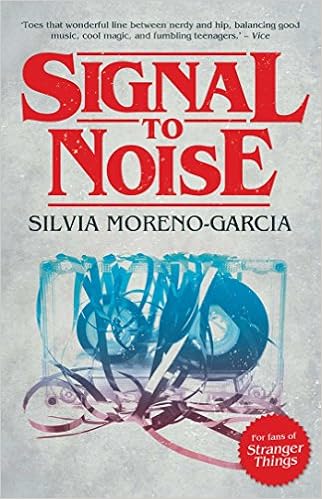
Signal to Noise, a Copper Cylinder Award winner, is about witches in Mexico City, coming of age in the Eighties and Nineties while reveling in now obsolete technology – note the iconic audio casette on the cover – and pre-corporate pop cultures, both Mexican and American. The witchcraft rings true with my own researches into the subject – Mexico/Aztlán is the Transylvania of this continent – and the book has a far more realistic feel than most other books on the subject. I wonder what a nongenre reader stumbling on it without the usual prejudices would think . . . based on a true story? Could be, in Tenochtitlán.

Certain Dark Things is one of NPR's Best Books of 2016, and is dedicated to Germán Robles, who played handsome vampires in old, black and white Mexican movies. These vampires aren't fashionable sparkling, romantic masturbation fantasies. They are an impressive, imaginative, ingenious work of world-building that includes not only Aztec-descended vampires, but diverse tribes and
species from all over the planet that can give any other fictional blood-suckers a run for their money. And they hold up when shown next to gritty, modern realities, and remind me more of walking Tenochtitlán's streets among the blind beggars, fire-eaters, and snake-charmers than watching old movies. I personally would like to see more of these characters and this world.


I highly recommend both these books, realizing that they are outside the usual white middle-class comfort zone of the New York publishing industry. They may disturb those looking for light reading, and the characters aren't “likable” suburbanites. But reading about them makes me smell Mexico City, which makes me homesick and fires the imagination.


I think that's a good thing.


And later this year, Moreno-Garcia has another book coming out, The Beautiful Ones!


Saturday, August 01, 2015

Today – Speculative fiction authors & art


Tejano David Bowles calls his work, "at the crossroads of myth and legend, genre and literature." Today he'll share some of it at Barnes & Noble Northcross in McAllen, Tex., from 2–3 pm. A reading from his YA fantasy novel, The Smoking Mirror, answering questions and signing books. He'll probably also talk about and share from his book, Border Lore: Folktales and Legends of South Texas.
  

Daniel José Older will be speaking, and reading from his Young Adult urban fantasy, Shadowshaper, at the Chilltown Lit Fest in Jersey City. 


Canadian-Chicana Silvia Moreno-Garcia, author of Signal to Noise, has a fantasy story called “To See Pedro Infante” that appears in Lightspeed Magazine, out today.


Lastly, award-winning artist John Picacio will be in Santa Fe later this month, offering prizes of his works, and a bit of gaming. Check it out.


Es todo, hoy, at least, that I know about.
RudyG, speculative fiction author Rudy Ch. Garcia

Saturday, June 27, 2015

Latino books and stories and stories about books

-->
Dreamland
Sam Quiñones's third book, Dreamland: The True Tale of America’s Opiate Epidemic, was released by Bloomsbury Press.
Sam explains: "The story of this epidemic involves shoelaces, rebar, Levi’s 501s, cellphones, football, Walmart, American prosperity, with marketing, with Mexican poverty and social competition, and with the biggest swimming pool in the US and what happened when that was destroyed.
"It’s about the marketing of prescription pills as a solution to pain of all kinds, and about a small town in Mexico where young men have devised a system for retailing heroin across America like it was pizza.
"The tale took me from Appalachia to suburbs in Southern California, into one of the biggest drug-abuse stories of our time – and one of the quietest, and whitest as well.
It’s been a long haul, and I thank the many people I met and spoke to along the way as I put together this American saga.
Hope you like it. – Sam

From the publisher: Over the past fifteen years, enterprising sugar cane farmers in the small county of Xalisco on the west coast of Mexico have created a unique distribution system that has brought black tar heroin--the cheapest, most addictive form of the opiate, two to three times purer than its white powder cousin--to the veins of people across the United States. Communities where heroin had never been seen before have become overrun with it.
Local police and residents are stunned: How could heroin, long considered a drug found only in the dense, urban environments along the East Coast, and trafficked into the United States by enormous Colombian drug cartels, be so incredibly ubiquitous in the American heartland? Who was bringing it here and why were so many townspeople suddenly eager for the comparatively cheap high it offered?

         Acclaimed journalist Sam Quinones weaves together two classic tales of American capitalism in Doped Up: Young men in Mexico, independent of the drug cartels, in search of their own American Dream via the fast and enormous profits of trafficking cheap black tar heroin to America's rural and suburban addicts; and Purdue Pharma, determined to corner the market on pain with its new and expensive miracle drug, Oxycontin, extremely addictive in its own right. Quinones illuminates just how these two stories fit together as cause and effect. Doped Up is a dramatic and revelatory account of addiction spreading to every part of the American landscape.

Reviews
“The most original writer on Mexico and the border out there.” –  San Francisco Chronicle Book Review
“Journalist Quinones weaves an extraordinary story, including the personal journeys of the addicted, the drug traffickers, law enforcement, and scores of families affected by the scourge, as he details the social, economic, and political forces that eventually destroyed communities in the American heartland and continues to have a resounding impact.” –  starred review, Booklist
“In Dreamland, former Los Angeles Times reporter Sam Quinones deftly recounts how a flood of prescription pain meds, along with black tar heroin from Nayarit, Mexico, transformed the once-vital blue-collar city of Portsmouth, Ohio, and other American communities into heartlands of addiction. With prose direct yet empathic, he interweaves the stories of Mexican entrepreneurs, narcotics agents, and small-town folks whose lives were upended by the deluge of drugs, leaving them shaking their heads, wondering how they could possibly have resisted.” –  Mother Jones
“Dreamland spreads out like a transnational episode of The Wire, alternately maddening, thrilling, depressing, and with writing as sharp and insightful as a razor blade. You cannot understand our drug war and Mexican immigration to the United States without reading this book.” –  Gustavo Arellano, syndicated columnist, ¡Ask a Mexican!,
“Unflinching . . . compellingly investigated.” –  Kirkus
“Fascinating . . . a harrowing, eye-opening look at two sides of the same coin, the legal and illegal faces of addictive painkillers and their insidious power.” –  Publishers Weekly

Innsmouth Free Press 30% off

Buy direct and get 30% off selected print titles until July 5. Choose from these anthologies or collections. On their website, click on the title you are interested in, click on “add to cart” button located below the book summary. Discount applied at checkout. Here are just two of the selections:
Love & Other Poisons by Silvia Moreno-Garcia. Poison is in everything, and no thing is without poison. The dosage makes it either a poison or a remedy. This collection of 18 speculative stories, including three never found in print before, explores the meaning of love, and, of course, of poison.
Sword & Mythos – The blades of heroes clash against the darkest sorcery. Aztec warriors ready for battle, intent on conquering a neighboring tribe, but different gods protect the Matlazinca. For Arthur Pendragon, the dream of Camelot has ended. What remains is a nightmarish battle against his own son, who is not quite human. Master Yue, the great swordsman, sets off to discover what happened to a hamlet that was mysteriously abandoned. He finds evil.Sunsorrow, the ancient dreaming sword, pried from the heart of the glass god, yearns for Carcosa. Fifteen writers, drawing inspiration from the pulp sub-genres of sword and sorcery and the Cthulhu Mythos, seed stories of adventure, of darkness, of magic and monstrosities. From Africa to realms of neverwhere, here is heroic fantasy with a twist.

Hungry Darkness

Severed Press just released Gabino Iglesias's Hungry Darkness: Deep Sea Thriller.
From the publisher: Nick Ayres wanted to be the first man to explore all of Caye Caulkers’ Giant Cave, the largest underwater cave in the world. Instead of fame and fortune, he found death at the hands of something that defies science, accidentally unleashing it on the island’s unsuspecting population.

Gabriel Robles is the man hired to take care of the monster. He knows the water and its inhabitants better than anyone else, but he's never faced something so deadly. Robles has to figure something out quick, because the victims are piling up and it’s only a matter of time before the blood in the water becomes a problem for all of Belize, maybe even the world.

Ancient Hunger, Silent Wings
tejano author David Bowles
Devilfish Review just published David Bowles's fantasy story featuring 18th-century Mexican vampires. Here's the opening:

Nicolasa Sandoval Murillo had not quite reached her thirteenth saint’s day when the hunger came upon her, sudden and sharp like talons round her gut, in the middle of the night. She crept wincing but quiet to the kitchen, where her grandmother’s clay olla of beans cooled slowly upon dying embers in the wood stove. Snatching up a cold tortilla someone had left on the roughhewn table, Nicolasa uncovered the jar and began shoveling the spicy mixture into her mouth. Soon she found herself gagging—the beans, normally delicious, tasted of ash and bile. With a frantic lurch she stumbled out of doors and vomited an acidic stream onto the mucky street.
The door opened behind her, and a figure emerged with a petroleum lantern: it was her grandmother Florencia Murillo—Mamá Lencha—and in place of anger or concern, a look of resigned understanding smoothed the woman’s wrinkled brow.
“It is the hunger, yes? It awakened you.”
Nicolasa nodded, her empty stomach too queasy for speech.


The origin of Daniel José Older's story

If you're on Twitter, you know what "storifies" means. Read two origin storifies about his great novel, Shadowshaper.

Es todo hoy, since I'm behind on my reading,
RudyG, a.k.a. Chicano author Rudy Ch. Garcia, this week, completing what he imagines is his first great kids' story. We'll all know, if it lands up here.

Saturday, February 28, 2015

Author Silvia Moreno-Garcia's strange ways


When I first learned that the Chicana spec lit author Silvia Moreno-Garcia lived and published in Canada, I wondered how Mexican she still was. I don't know much about the culture there, other than it's obviously far from Aztlán y la frontera. I read about anthologies she co-edited and about her awards: Sunburst Award, Cooper Short Fiction Competition winner, Manchester Fiction finalist. Then, I was more surprised that the setting for her full-length novel, Signal to Noise, was set even further south--in Mexico City--and described as "a literary fantasy about love, music and sorcery, set against the background of Mexico City."

Here's what some of the literary Gatekeepers say about the book:
"It's very early in the year but I can already tell this is one of the Notable Reads of 2015." - Kirkus
"Moreno-Garcia has a solid and convincing prose style, robust and subtle in all the right places... a successful debut, and a very interesting book." - Tor.com
“In a poignant, graceful coda, Moreno-Garcia brings the book full-circle, slyly subverting the expectations of a linear narrative and punctuating Meche's story with a hushed, lovely flourish. In many ways, Signal to Noise is a coming-of-age tale, but it's also the tale of what comes after — and what happens when forces beyond our control, magical or otherwise, are better left that way.” – NPR

So I read the book. It's more than a regular fantasy, and then again, it's not pure fantasy. To me, genre classifications don't do justice to a lot of our Latino writings. Even the term speculative, as in, speculative literature, is the Euro-Western worldview being imposed on what's only a half-Euro world, our Spanish half.

The witches and witchcraft in Moreno-Garcia's book would be called fantasy and speculative--or Daniel José Older's santería--even though we grew up in environments where the only speculation about witches was, who was a good or bad witch, and what they do next.

But Signal to Noise is about signal to noise (s:n), developed through literary paths of Silvia's making. For those who don't know, s:n is a tech/scientific term comparing what's understandable to what's interfering with that understanding. The less background "noise," the better. Like being in the middle of the recent Facebook exchange of insults about not reading White Male Hero Saves The World books, for a year. Too much racist, privilege-defense and male chauvinism make it difficult to find intelligible comments.

I understood and appreciated Moreno-Garcia's novel once I realized that the theme of s:n permeated the entire plot and subplots. Maybe I should say themes, plural. Here's the synopsis from her publisher, the imprint Solaris (Rebellion Publishing Ltd., England):
     "Mexico City, 1988: Long before iTunes or MP3s, you said, “I love you” with a mixtape. Meche, awkward and fifteen, has two equally unhip friends -- Sebastian and Daniela -- and a whole lot of vinyl records to keep her company. When she discovers how to cast spells using music, the future looks brighter for the trio. With help from this newfound magic, the three friends will piece together their broken families, change their status as non-entities, and maybe even find love...
     "Mexico City, 2009: Two decades after abandoning the metropolis, Meche returns for her estranged father’s funeral. It’s hard enough to cope with her family, but then she runs into Sebastian, and it revives memories from her childhood she thought she buried a long time ago. What really happened back then? What precipitated the bitter falling out with her father? And, is there any magic left?"

Don't think this some regular time-travel story. Silvia beautifully develops the s:n themes through her character Meche (a great girl-name). The plot weaves between Meche's life as a teenager and the grown-up Meche returning to DF to help bury her father.

The s:n theme is also reflected in Meche's current life and her memories of her teen years. Back and forth, down those two currents, or paths, she will run through phases of coming of age, twice. And coming to terms with her BFFs, as teens and as adults, as well as her teen and her adult love of a boy and a man. Old magic that worked and new magic that may not. The s:n of the magical pitted against reality. The s:n between teen Meche and the boy Sebastian, attempting to find their "signals" by filtering out the "noise" of teen life, growing up in Mexico City.
These are my thoughts about what Silvia accomplished, which she may see differently. She gave us a novel that explores at least two ways--possibly more--of living and reliving a teen's life. The memoirs of an adult Meche judging her teen mistakes and successes, not only with dark magic, but also with the struggle of trying to find happiness in family life that reminded me of Melinda Palacio and Reyna Grande's books.

In that sense, Signal to Noise has a feel of memoir that I know girls will love. This also crosses into genre of "teen romance" with the teasing and flirting and obsessing about the hottest guy in school, the pledges and tortures of loyalty and love between girls and guys. Yes, there is some "love story."

Teen boys will see in Sebastian, their own attempts to create more signals to girls, rather than awkwardly stumbling over the "noise" they often produce from trying to discover their male emotions. Boys, just read a female version of what you're going through and you might learn quite a bit.

This is also a book for adults--the nostalgia, oldies music of rock, jazz, R&B and more. Adults will recognize and maybe regret identifying with how they fumbled with the "other" sex, through their own teen years. And later, how they might have returned to correct some of the stupid things they did.

How the strange magic works, I'll let you discover from your own reading. Of course it's about music, and witches, and witchcraft. That will turn dark, not like horror, but as mean as some of us might have acted had we had the power.

Don't expect a La Capital setting that an Anglo author might paint. There's not much of museum visits, boat rides down Chapultepec canals, or the tourist lens. This is a Mexico City that its residents live and love in, a mysterious place to a gringo americano, but it's simply a Home, like barrios we grew and grow up in. Abject realism, centered on the characters.

What I'd love to see from Moreno-Garcia are sequels or prequels of these characters and the city DF and the magic. I want Meche to visit and stay with her bruja abuela who's sent somewhere--I'm not spoiling it--and have the abuela mentor Meche's magical abilities. I want to know how the magic ties to Aztec or other indigenous cultures. Give me más, por favor.

For the sake of getting our Latino stories published, we're supposed to follow the constrictions of genre to be a "good fit," as it's called. Latinos writers are subordinated too often by the rules of the Euro-Western worldview. It's buenísimo that Moreno-Garcia didn't shoehorn her story into one genre. And instead, let her story flow thematically, in multiple streams across time, space and teen/adult emotions.

About Silvia Moreno-Garcia:
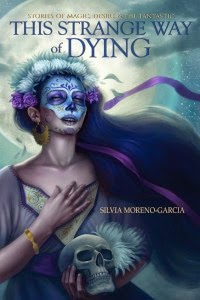
Mexican by birth, Canadian by inclination. Silvia’s first collection, This Strange Way of Dying, was released in 2013 and was a finalist for The Sunburst Award for Excellence in Canadian Literature of the Fantastic. Her stories have also been collected in Love & Other Poisons.
She co-edited the anthologies Sword & Mythos, Historical Lovecraft, Future Lovecraft, Candle in the Attic Window and Fungi. Dead North and Fractured are solo anthologies. In 2011, She won the Carter V. Cooper/Exile Short Fiction Competition (in the Emerging Writer category) and was a finalist for the Manchester Fiction Prize.
Blog: http://www.silviamoreno-garcia.com/blog/
https://twitter.com/silviamg
https://www.facebook.com/silvia.morenogarcia

Es todo, of my "noise" today,
RudyG, a.k.a., Chicano fantasy author Rudy Ch. Garcia, known for sending his own mextasy signals