Friday, January 27, 2012

And The Banned Played On

Worthwhile Books for Your Library
(coincidentally, banned, [confiscated, outlawed?] in Arizona)


The information contained in these books is dangerous. Complacency, racism, and injustice fear these books. You've been warned.
Manuel Ramos
___________________________________


Critical Race Theory: An Introduction
Richard Delgado and Jean Stefancic
NYU Press, 2001

[from the publisher]
For well over a decade, critical race theory—the school of thought that holds that race lies at the very nexus of American life—has roiled the legal academy. In recent years, however, the fundamental principles of the movement have influenced other academic disciplines, from sociology and politics to ethnic studies and history.

And yet, while the critical race theory movement has spawned dozens of conferences and numerous books, no concise, accessible volume outlines its basic parameters and tenets. Here, then, from two of the founders of the movement, is the first primer on one of the most influential intellectual movements in American law and politics.


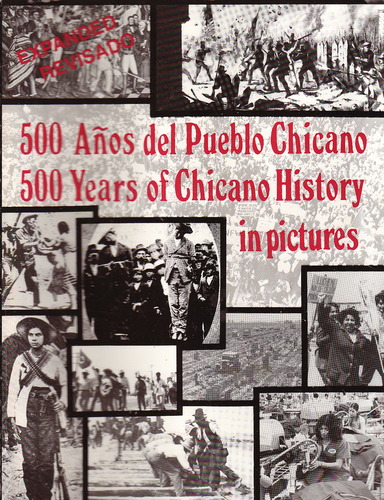
500 Años Del Pueblo Chicano / 500 Years of Chicano History: In Pictures
edited by Elizabeth Martinez
Southwest Community Resources, 1990 (expanded edition)

"One of the most motivating books on the Chicano experience as far as working class people and students are concerned...The visual quality adds a fantastic dimension to the understanding of our past." ~ Dr. Rodolfo F. Acuna, California State University, Northridge.


Message to Aztlán: Selected Writings
Rodolfo "Corky" Gonzales, edited by Antonio Esquibel
Arte Público Press, 2001

[from the publisher]
In Message to Aztlán, Dr. Antonio Esquibel, Professor Emeritus of Metropolitan State College of Denver, has compiled the first collection of Gonzales' diverse writings: the original I Am Joaquín (1976), along with a new Spanish translation, seven major speeches (1968-78); two plays, The Revolutionist and A Cross for Malcovio (1966-67); various poems written during the 1970's, and a selection of letters. These varied works demonstrate the evolution of Gonzales' thought on human and civil rights. Any examination of the Chicano movement is incomplete without this volume. Eight pages of photographs accompany the text.


Chicano! The History of the Mexican American Civil Rights Movement

F. Arturo Rosales
Arte Público Press, 1996

[from the publisher]
Chicano! The History of the Mexican American Civil Rights Movement is the most comprehensive account of the arduous struggle by Mexican Americans to secure and protect their civil rights. It is also a companion volume to the critically acclaimed, four-part documentary series of the same title, which is now available on video from the Corporation for Public Broadcasting. Both this published volume and the video series are a testament to the Mexican American community’s hard-fought battle for social and legal equality as well as political and cultural identity.


Occupied America: A History of Chicanos
Rodolfo F. Acuña
Pearson, 2011 (7th edition)

[from the publisher]
Authored by one of the most influential and highly-regarded voices of Chicano history and ethnic studies, Occupied America is the most definitive introduction to Chicano history. This comprehensive overview of Chicano history is passionately written and extensively researched. With a concise and engaged narrative, and timelines that give students a context for pivotal events in Chicano history, Occupied America illuminates the struggles and decisions that frame Chicano identity today.


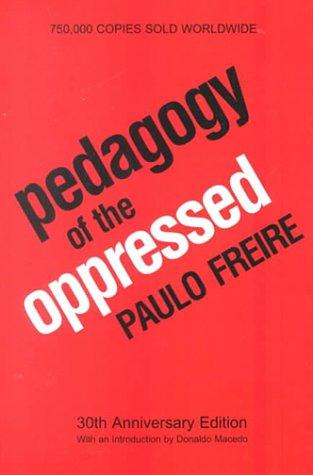
Pedagogy of the Oppressed
Paulo Freire
Continuum, 2000 (30th anniversary edition)

[from the publisher]
First published in Portuguese in 1968, Pedagogy of the Oppressed was translated and published in English in 1970. The methodology of the late Paulo Freire has helped to empower countless impoverished and illiterate people throughout the world. Freire's work has taken on especial urgency in the United States and Western Europe, where the creation of a permanent underclass among the underprivileged and minorities in cities and urban centers is increasingly accepted as the norm. With a substantive new introduction on Freire's life and the remarkable impact of this book by writer and Freire confidant and authority Donaldo Macedo, this anniversary edition of Pedagogy of the Oppressed will inspire a new generation of educators, students, and general readers for years to come.
For more information, visit www.pedagogyoftheoppressed.com.


Rethinking Columbus: The Next 500 Years
edited by Bill Bigelow, Bob Peterson
Rethinking Schools, 2003 (2d edition)

[from the publisher]
We need to listen to a wider range of voices. We need to hear from those whose lands and rights were taken away by those who "discovered" them. Their stories, too often suppressed, tell of 500 years of courageous struggle, and the lasting wisdom of native peoples. Understanding what really happened to them in 1492 is key to understanding why people suffer the same injustices today. More than 80 essays, poems, interviews, historical vignettes, and lesson plans reevaluate the myth of Columbus and issues of indigenous rights. Rethinking Columbus is packed with useful teaching ideas for kindergarten through college.


____________________________


“TU Y YO” -- MARUCA AND DANIEL SALAZAR EXHIBIT AT REGIS UNIVERSITY O’SULLIVAN ART GALLERY
JAN 17 – FEB 17

[from the Regis University News]

SalazarRegis University’s O’Sullivan Art Gallery will feature Tu y Yo, an exhibit of installation art and video art by Maruca and Daniel Salazar, Jan. 17 through Feb. 17, 2012.

An opening reception is slated from 4:30 to 7 p.m., Jan. 26 and a gallery talk by both artists is at 7 p.m. Feb. 9.

Since June 2003, Maruca has been an arts specialist Northwest Area, Denver Public Schools, and prior to that was the visual arts coordinator for Denver Public Schools. She is also the executive director of the Museo de las Americas in Denver. Her dual career in education and the arts includes a history of initiating, organizing, and executing innovative programs and projects with students and teachers, including some that have achieved regional and national recognition. She has a master’s degree in Literature and Linguistics/Visual Arts from the University of Colorado.

Since 1988, Daniel has been an artist and producer-director for RAZALAS studios/impossible artz. As a working artist in the areas of photography and cinematography, Daniel has had his works displayed in numerous art photography exhibitions, including international credits. He is a producer-director of some 12 PBS documentaries and experimental animations. He is the recipient of national level awards and screenings including: Mayor’s Award for Excellence in the Arts, 2006; Escuela Tlatelolco Centro de Estudios, Flor y Canto, Champions of Change 2008; and Denver Biennial, Museo de las Americas, Liberadores/Liberadors 2010.

O’Sullivan Art Gallery hours are: Tuesday, Wednesday and Friday from 10 a.m. – 4 p.m. and Thursday from 2 to 8 p.m. 3333 Regis Boulevard, Denver, CO 80221

For more information, contact Robert St. John, O’Sullivan Art Gallery and Studio manager, at 303-964-3634.


Why Not... Daniel Luna

DATE

February 2, 2012

TIME

6:00-9:00 p.m.

6:00 p.m. Member Reception- Free for Members

7:00 p.m. Public Reception- Admission $5.00

Featuring an aria performance by Opera Colorado from

Florencia en el Amazonas.

LOCATION
861 Santa Fe Drive, Denver, CO

www.museo.org

The Museo de las Americas presents Why Not....

There is no other artist in Colorado that can claim to be a "Regional Mythologist." Daniel Luna's paintings of chickens crying over a frying pan of eggs or a native woman holding a toaster to roast watermelons will remind you of a magic that reality holds within our dreams.

Join us for a night full of illusion.

Cocktails and appetizers will be provided.


Enrique's Journey: January 27 - February 4
Based on the Pulitzer Prize winning work of Sonia Nazario
Best New Play 2011 Denver Post Ovation Winner

Amorcito Corazón/ Daniel Valdez in Concert: February 9 - 11
Romantic, raucous and revolutionary. Singer/Composer/Grammy Award-winner. Backed by Jazz del Barrio, Daniel will offer many moods but one singularly beautiful voice.

Water & Power: March 8-25
Written by Richard Montoya for Culture Clash, directed by Phil Luna. L.A. Times Theatre Critic's Award winner and soon to be a major motion picture; a moody "stage noir" about power & politics told with a pulsing city beat.

Placas: April 25-28
Written by Paul S. Flores (PEN Award), directed by John Michael Garces, featuring Ric Salinas (Culture Clash). "Placas" is barrio slang for a graffiti tag, a nickname, or a tattoo. Placas is the story of three generations caught in civil and gang warfare.

Tickets: $20/general; $17/students and seniors.
For tickets/info: 303-296-0219.

El Centro Su Teatro
721 Santa Fe Drive
Denver, CO 80204

Later.

Thursday, January 26, 2012

David Unger en NYC y Luis Cruz Azaceta en NOLA

Están invitados a la presentación de la nueva novela de David Unger, Para mí, eres divina/In My Eyes, You Are Beautiful (Mexico: RandomHouseMondadori, 2011) en la librería McNally Jackson, 52 Prince Street entre Lafayette y Mulberry, NYC, el viernes 10 de febrero a las 19 horas. El escritor colombiano Jaime Manrique va a presentar al autor y el Instituto Cultural Mexicano ofrecerá un brindis. Copias del libro estarán a la venta. 

Dice Marcela Álvarez (About.com.libros) de la novela:
Por delante tenemos una historia de anhelos, sueños y determinación. También podría decirse que, especialmente en la primera parte, es un retrato social y cultural de un país del que conocemos poco, más allá de las noticias (poco auspiciosas) que llegan a diario...

You are cordially invited to the presentation of David Unger's novel Para mí, eres divina/In My Eyes, You Are Beautiful (Mexico: RandomHouseMondadori, 2011) at The McNally Jackson Bookstore, 52 Prince Street between Lafayette and Mulberry, NYC, on Friday, February 10, 2012 7:00 pm until 9:00 pm. Colombian novelist Jaime Manrique will be introducing the author. Though most of the reading will take place in Spanish, Unger will be bringing several dozen copies of the first two chapters of the novel that were published in MAKE: A Chicago Literary Magazine for English speakers.  The Mexican Cultural Institute of New York will be offering a wine reception and copies of the novel will be available for purchase. 

*********
Y de uno mis pintores favoritos, el cubano Luis Cruz Azaceta, detalles de su exposición en Nueva Orleans hasta mediados de febrero:


De Cuban Art News:  Luis Cruz Azaceta, en Nueva Orleans. La inestabilidad de los asuntos mundiales que va desde el colapso de las economías hasta las consecuencias del cambio climático, ha sido para muchos de nosotros una causa de alarma y desesperación. Sin embargo, para Luis Cruz Azaceta, ha sido una fuente de inspiración artística, especialmente la manera como las personas en todo el mundo se han levantado para exigir un cambio.
En Luis Cruz Azaceta: Shifting States, él aborda esta continua transición global en pinturas y dibujos que reflejan su colorido estilo. El espectáculo se estrenó en Nueva Orleans el pasado sábado en la Galería Arthur Roger @ 434, y estará en exhibición hasta el 18 de febrero.

From Cuban Art News:  Luis Cruz Azaceta in New Orleans: From collapsing economies to the consequences of climate change, the instability of global affairs has been, for many of us, a cause of alarm and despair. But for Luis Cruz Azaceta, it’s been a source of artistic inspiration—particularly the way individuals across the world have been rising up to demand change. In Luis Cruz Azaceta: Shifting States, he tackles this ongoing global transition in paintings and drawings that reflect his signature colorful style. The show opened in New Orleans this past Saturday at the gallery Arthur Roger@434, where it’s on view through February 18.

Wednesday, January 25, 2012

American Library Association Award Winners 2012


The Pura Belpré Award, established in 1996, is presented to a Latino/Latina writer and illustrator whose work best portrays, affirms, and celebrates the Latino cultural experience in an outstanding work of literature for children and youth.


Winner for Illustration
Diego Rivera: His World and Ours,” illustrated and written by Duncan Tonatiuh and published by Abrams Books for Young Readers, an imprint of ABRAMS.

Honor Books for Illustration
“The Cazuela that the Farm Maiden Stirred,” illustrated by Rafael López, written by Samantha R. Vamos and published by Charlesbridge.


“Marisol McDonald Doesn’t Match /Marisol McDonald no combina,” illustrated by Sara Palacios, written by Monica Brown and published by Children’s Book Press, an imprint of Lee and Low Books Inc.


Author Book Winner 
Under the Mesquite,” written by Guadalupe Garcia McCall and published by Lee and Low Books Inc.

Author Honor books  
“Hurricane Dancers: The First Caribbean Pirate Shipwreck,” written by Margarita Engle and published by Henry Holt and Company,LLC.

“Maximilian and the Mystery of the Guardian Angel: A Bilingual Lucha Libre Thriller,” written by Xavier Garza and published by Cinco Puntos Press.

The Newbery Medal was named for eighteenth-century British bookseller John Newbery. It is awarded annually by the Association for Library Service to Children, a division of the American Library Association, to the author of the most distinguished contribution to American literature for children.


Winner
Dead End in Norvelt,” written by Jack Gantos and published by Farrar Straus Giroux.


Honor Books
"Inside Out & Back Again," written by Thanhha Lai and published by HarperCollins Children’s Books, a division of HarperCollins Publishers.

"Breaking Stalin’s Nose,” written and illustrated by Eugene Yelchin, and published by Henry Holt and Company, LLC.


The Caldecott Medal was named in honor of nineteenth-century English illustrator Randolph Caldecott. It is awarded annually by the Association for Library Service to Children, a division of the American Library Association, to the artist of the most distinguished American picture book for children.


Winner
A Ball for Daisy," illustrated and written by Chris Raschka and published by Schwartz & Wade Books, an imprint of Random House Children’s Books, a division of Random House, Inc.

Honor Books
“Blackout,” illustrated and written by John Rocco, and published by Disney · Hyperion Books, an imprint of Disney Book Group.

"Grandpa Green" illustrated and written by Lane Smith, and published by Roaring Brook Press, a division of Holtzbrinck Publishing Holdings Limited Partnership

“Me … Jane,” illustrated and written by Patrick McDonnell, and published by Little, Brown and Company, a division of Hachette Book Group, Inc.


Given to African American authors and illustrator for outstanding inspirational and educational contributions, the Coretta Scott King Book Award titles promote understanding and appreciation of the culture of all peoples and their contribution to the realization of the American dream. The award is designed to commemorate the life and works of Dr. Martin Luther King Jr. and to honor Mrs. Coretta Scott King for her courage and determination to continue the work for peace and world brotherhood. 

Author Book Winner
Kadir Nelson, author and illustrator of “Heart and Soul: The Story of America and African Americans,” is the King Author Book winner. The book is published by Balzer + Bray, an imprint of HarperCollins Publishers.

Author Honor Books
Eloise Greenfield, author of “The Great Migration: Journey to the North,” illustrated by Jan Spivey Gilchrist and published by Amistad, an imprint of HarperCollins Publishers.

Patricia C. McKissack, author of “Never Forgotten,” illustrated by Leo and Diane Dillon and published by Schwartz & Wade Books, an imprint of Random House Children’s Books, a division of Random House, Inc.

Winner for Illustration
Shane W. Evans, illustrator and author of “Underground: Finding the Light to Freedom,” is the King Illustrator Book winner. The book is a Neal Porter Book, published by Roaring Brook Press, a division of Holtzbrinck Publishing Holdings Limited Partnership.

Honor Books for Illustration
Kadir Nelson, illustrator and author of “Heart and Soul: The Story of America and African Americans,” published by Balzar + Bray, an imprint of HarperCollins Publishers.

For a complete list of ALA awards and winners visit  http://ala.org

Tuesday, January 24, 2012

Review: Anaya's Billy the Kid. Mural Restored. Champions. On-Line Floricanto.

Review: Rudolfo Anaya. Billy the Kid and other plays.

Rudolfo Anaya. 
Billy the Kid and Other Plays. Afterword By: Cecilia J. Aragón , Robert Con Davis-Undiano. Norman: UOklahoma Press, 2011.
ISBN: 9780806142258
384.


Michael Sedano

There's a burden on Rudolfo Anaya's back that rivals Sisyphus' rock: being "El abuelo" the "founding father" de Chicana Chicano Literature. It is his fault, after all, that Bless Me, Ultima is the megaseller it has become so he must accept that responsibility. Fortunately, unlike that accursed's mythical burden, an ever-inspired Anaya easily shoulders his on to myriad heights.


2012 marks the fortieth anniversary of publication by TQS of Bless Me, Ultima. (Look for a special announcement later at La Bloga.) Aside from illustrating that quality surpasses the limitations of a tiny obscure publisher, Bless Me, Ultima helped bring Chicana Chicano cultura into United States Literature on our own terms.

As if that weren't sufficient career achievement--Harper Lee, recall, published only a single novel in her career--Anaya goes beyond Ultima to bring readers childrens books, warm folktales, travel writing, and edge-of-your-seat detective novels.

Every family should own Serafina's Stories, read it to the kids for bedtime storytime. Once you've read all the way through it, expect the kidlet to request you read it again.

The lesser-known A Chicano in China documents ways a chicano uses his US-bred xenophobia to find bridges across the cultures and personal enchantments. Then there's the uniqueness of it all; how many chicanos are writing about the PRC?

Every reader of detective fiction will want to devour the Sonny Baca novels. From Sonny's first appearance in Alburquerque through the seasons, Zia Summer, Rio Grande Fall, to Jemez Spring. Baca's a great character plus there's fun seeing Anaya in the character "Ben Chavez," and CHICLE-founder Teresa Marquez appear as herself.

Now Rudolfo Anaya's playwriting has been collected in the University of Oklahoma's 2011 Billy the Kid and other plays. The volume is the 10th in the Press' Chicana And Chicano Visions Of The Americas Series. The title piece and "Who Killed Don José?" appeared in The Anaya Reader. Five plays will be new to most readers.

"The Season of La Llorona" is a fitting opening piece for the collection. It echoes the actos of movimiento teatro, and, like any YA piece is transparently designed to instruct. The piece is a visual treat, too, whose setting alternates between Abuelo's lap on Hallowe'en night, and 500 years earlier to Doña Marina and her slavemaster.

A reading through the collection to its final two works, "Billy the Kid" and "Angie,"tracks refinement in the playwrite's art. "Billy" reads vividly. Irrespective of the formalities of a printed script, the narrative flows effortlessly. One hesitates to praise the play for reading like a novel, but Anaya gives the speeches a coherency that fills in the absent narrative.  A play is not prose, but speech. Anaya's ear so effective his characters jump off the page with distinct voices.

Anaya's intent to soften the historical image of cold-blooded murderer Billy calls to mind the Anglo pachuco in Luis Valdez' Zoot Suit. "I'm Chicano too!" But Billy, Anaya admits, killed that vato. And the other one. Billy is a bicultural victim of cultural schism, an outsider boy raised with manito sensibilities who finds himself on the wrong side of a landgrab. Billy's pursuers know him--he's one of them--and use his passions to gun him down. At curtain, Anaya has effortlessly blurred lines between the historical Billy's life and the stage Billy's life.

"Angie" is contemporary U.S. theatre at its best. Whereas audiences can observe Billy's tragedy safely behind the distance of its historical setting, "Angie" slams theatre-goers and readers right between the eyes with its in-your-own-family theme of warehoused elders.

Angie is a broken, old woman, forced into a convalescent home for her own good. Angie's daughter is trapped between a controlling asshole vendido husband and being a daughter who is failing her responsibility to care for an aging mother.

The playwrite weaves a thread of enjoyment for readers of the Sonny Baca thrillers, who recognize the land grab scheme that has captured Angie's son-in-law's soul. But that's a sidelight to the quandary Anaya sharpens in building his audience's vicarious guilt trip. The villain's a hateful Nurse Ratched tipa who uses drugs and mindless rules to squeeze joy out of patients, keeping them hyped for convenience of the staff.

Other elders glumly deteriorate in this setting. Angie, despite her wheelchair, nurtures her lust for life. From that arises an opportunity to inject life into the day room with music, dance, sex, and that most precious absence in old gente's lives, puro fun.

In the end, Angie does what she came to the nursing home to do, she dies. The tragedy is never death--Angie, as Randy Lopez does, goes home--because whatever truths and lies she leaves behind don't matter now. The tragedy is how Angie gets there, and how, in those final years, things could have been done differently. Some theatre-goers will leave the auditorium thinking about their mothers, as will an aging reader.

In a fitting way, this play about the viejitos fighting to stay alive brings to a close the collection that begins with chamacos learning about La Llorona. Anaya's foreword and the afterwords from Cecilia J. Aragón, Robert Con Davis-Undiano provide additional perspective on the plays. Thanks goes to the University of Oklahoma Press for bringing such an excellent opportunity to acquire a captivating and instructive collection of Rudolfo Anaya's theatrical work.


Lost and Ruined Mural Re-Born

The City of Los Angeles recently reversed a long-held belief that murals violated the city's advertising and visual blight laws. It's the latest evidence of a progressive attitude toward the city's treasures of muralism.
Ernesto de La Loza beams vibrantly as his palette.

With so much pedo in El Lay's local governance, I'll take all the evidence I can find, especially when it comes in the form of grants to restore  faded artifacts of muralism's movimiento heyday in the 1970s, like Ernesto de La Loza's 1975 "Organic Stimulus" in historic Estrada Courts.

Estrada Courts' murals make its walls among the more remarkable collections of public art in the world. The deteriorating murals are targetted for restoration through efforts of people in organizations like the Mural Conservancy of Los Angeles. Through MCLA's efforts, restoration of "Organic Stimulus" is funded by the Los Angeles Department of Cultural Affairs.
Muralist Ernesto de la Loza, Isabel Rojas Williams MCLA 

In LA, two public housing sites, Ramona Gardens and Estrada Courts house stupendous galleries of art in the monumental scale covering twenty foot high walls. Sadly, the work has been unconserved and defaced by generations of taggers layering placazos, ironically obscuring a lasting cultural heritage.

2012 detail

circa 1980, scanned Ektachrome

Then again, a few pendejos have gone on to produce outstanding gallery and authorized wall work. The late artist Magu was always quick to defend tagging and the tagger as malunderstood, a form of culture and importance, even when the tagger hit walls of great value.

La Bloga has long followed the survival of the enchanting "El Corrido de Boyle Heights." Its prominent corner makes it among the highest visibility targets in the region, its beauty irresistible to nihilists with spray cans. Now, with the City's new mural law and its Department of Cultural Affairs joining efforts like Amigos de Siquieros, UCLA's Fowler Museum, the Getty museum, and the Mural Conservancy of Los Angeles, we're presented the most hopeful evidence to hit the block in ages.

Visit the Mural Conservancy of Los Angeles' Facebook page to observe the restoration process and the full mural before and after.  https://www.facebook.com/muralconservancy


For these and additional images at higher resolution of the dedication of Ernesto de la Loza's "Organic Stimulus," see Read! Raza's foto essay at readraza.com/edelalozarestored.


Late-Breaking News
UCSB C/S Honoring Luis Leal

Back in 1963, I was the only Chicano in the freshman class at UC Santa Barbara, which makes it all the more amazing to this alumnus of the English, Speech, and Classics programs that today there's a room in South Hall named for Dolores Huerta and a Department of Chicana Chicano Studies.

It's in that Dolores Huerta room in South Hall, where C/S holds an event dedicated to their late Chair's memory on Wednesday, January 25, 2012.

Click the middle image below for a slightly higher resolution view, or visit the Departamento's  Chicanarrobas Facebook page. Is that Chicanats, in English?


Open Call for Champions

Power of the press belongs to the person who owns one. That used to be a bad thing. Today, access to the internet is the same as owning a press, and that’s a good thing. But there's a problem or two.

It’s not that traditional print is in trouble. It is; big corporate media, to be more precise, is in trouble. That’s a consequence of the power of the internet press. Everyone is the same click away. With tightening discretionary budgets people increasingly cut back on magazine and newspaper subscriptions, migrating to some mix of fee-, advertising-supported, and wholly satisfying no-fee internet alternatives.

Print or digital, periodicals remain a huge market in the monetized segment of the information economy. According to advertising clearing house Standard Rate and Data Service, the US offers consumers over 3000 print and 5000 advertising-supported digital magazines.

Most readers support traditional media. I am a long-time subscriber to a handful of consumer magazines, plus enjoying a couple of free trade magazines. Kids in the family can count on me for a holiday gift subscription to some magazine--someone has to collect Ranger Rick and National Geographic back issues, after all.

Old media as traditional gatekeeper has lost control to the masses, unleashing flood gates of competition from every Fulana de Tal with enough computer literacy to operate Macintosh software. Given inspiration and nimble fingers any numerate and literate person becomes equal rival to the Grey Lady, or the Saturday Review for that matter.

Not only are there more of us than Them—think of the 99 percent v. the 1—alternative media are cheaper. For readers, here’s where a problem lurks: the honey trap of low price tag and easy acquisition.

An impulse dime there, twenty there, the occasional hundred dollars for a handmade poetry book that never arrives. All the while the bankers are chirping away collecting their transaction fees and taking their cut as click after click adds one’s personal contribution to Obama’s economic recovery.

¿Pero sabes qué? After a while, another $2.50 here, another $20 there, and one’s discretionary lana looks like the fleece at the bottom of a wallet. In the vastness of an unruly democratized media landscape, readers need a new gatekeeper role to influence their decision-making choices!

It’s unquestioned that invaluable information lies within a click’s effort of acquisition. What’s absent is a form of guided serendipity, an advocate, someone who finds and champions a title, who talks or writes to convince fellow readers to click.

With so much competition for a reader’s dollar, a personal endorsement from a credible source goes a long way toward impelling a buyer’s decision to seek more information, to click, to acquire access, to spend. Ditto worthwhile information. With ever-increasing volumes of  information out there in the tubes, advocates perform a filtering function, picking and choosing from what came their way. Clearly, everyone can be a Champion.

An opportunity reached me recently, a pair of poetry-related print and digital publications. The first is the $4.50 American Poetry Review special feature on a dozen Chicana Chicano poets.

The second, one that includes a couple of La Bloga On-Line Floricanto friends, the $20 Liberty’s Vigil, The Occupy Anthology: 99 Poets among the 99%, so new there's no picture yet.

Will someone become the Champion for one of these opportunities? If so, click the Comments link at the end of today's column and leave your recommendation.


On-Line Floricanto On January's 4th Tuesday

La Bloga's On-Line Floricanto began in conjunction with planning for the 2010 Festival de Flor y Canto. Yesterday • Today • Tomorrow celebrated at the University of Southern California.

That floricanto scheduled two father-son readings, two Montoyas and two Dominguez. Happily, January's penultimate La Bloga On-Line Floricanto features the father-son poets Sanchez plus the son of past floricanto performer Gaby Sweningsen. It's a delight that in floricanto, an old order doesn't pass, giving place to new. Instead, generations share the stage while embracing and making one's own energies.


"Rise" by Braja Mandala Sanchez
"Hollering My Discovery" by Luis Ascencio-Cortez
"The Creator’s Gift" by Andrea Hernandez Holm
"Poeta y Guerrero" Raul Sanchez
"Morelia" by Samuel Duarte


Rise
by Braja Mandala Sanchez  

The pen's mightier than the gun
Why tote a strap when u can utilize ur tongue???
This 1 iz dedicated 2 my people of the sun
Who've toiled in the mud
Shed sweat, Tears, & Blood.
Only 2 be victims of ignorant racism
Knowledge iz tru bliss.
Everyday I pray 2 the Sun-God
up above,
Plz shine ur light into the darkness.
Erase the hate & replace it with love.
Mexi-Kingz will rize,
While abominable racist haterz
accumulate devastating Karma.

~~~Sun-chez~~~ 12-2011


Hollering My Discovery 
by Luis Ascencio-Cortez

Drip, drip, drip, drip
Is the sound of the blood that flows
Out of bodies of innocent fellows,
That fell victim to a relative’s stupidity
Sorry, but similar race doesn’t mean immunity
Mothers smother their children, to walk the right path
But even if they do, they’ll fall to their environment’s wrath
Now, we expect others to solve this
But we can do it ourselves
Just toss some books at the ignorant
Allow their brains to develop, out of the stage of an infant
Bigger problems than ourselves
Like, the children getting hungry
The poor still losing money
Kids still losing mommies
Being sent across borders
Restrained by metal orders
Look, now we’re being slaughtered
Have an examination of our dependence
And expectation across the nation
Not on ourselves but others
Educate yourselves on the truth not fiction
Maybe then, we won’t have such restriction
But rather the freedom of thought
Because, we don’t think, this isn’t what we sought
But rather what we fought….
Against many years ago
When disease spread among us
And I am not just talking physical
But hatred is a disease, trust
It’ll eat and eat
Then we will lay here as we accept defeat…..

NEVER!!!

© Luis Ascencio-Cortez


Creator’s Gift
by Andrea Hernandez Holm

We always drive the backroads
Of Pinal County
With our windows open wide
Enough to let the desert in.
We turn down dirt roads
Bump through sandy washes
Sometimes close enough to reach out
And touch the guama leaves with our fingertips.

We go by el Rancho~
The three-room wooden casita
Where my mom grew up
Between the cottonwoods.
“That’s where the piñon groves were,”
She says, pointing to some space in the distance.

We drive among the saguaros and ocotillos,
Stop near the mountains
And walk gingerly past the jumping cholla
And over the pincushion cactus
Picking fruits and blossoms along the way
Letting their flavors saturate our senses.

We walk between the hills
Rising and falling swells
Always going west toward the crimson evening.

© Andrea Hernandez Holm 2012


Poeta y Guerero / Warrior and Poet
by Raul Sanchez 

para  Francisco X. Alarcón

Se siente el fuego
de un Dragon Negro
y el de un guerrero
vengador sin espada
ni capa
ni daga
solo un arma—
la pluma
y su voz
resonante
cuando el Poeta
dice
la verdad!

© Raul Sanchez 1-16-2012


For Francisco X. Alarcón

The heat
of the Black Dragon’s breath
can be felt
along with the breath
of the avenging warrior
without sword
without cape
without dagger
only one weapon at hand
his pen--
and his resounding voice
when the Poet
tells
the truth!

© Raul Sanchez 1-16-2012


Morelia 
by Samuel Duarte


I have come to sit and dine under
your ancient portales, across from your
cathedrals and cobblestone pathways
where camera-happy tourists rush to prove
you were once part of their lives.

I have walked under your archways
beside monolithic resorts sprawled
across magnificent horizons,
under the surrounding aqueducts
where our indigenous brothers and sisters
wait outside your lavish banquets of progress.

I have visited your points of interest
in your colorful brochures; your murals,
gardens, museums, your courtyards and
fountains adorned with fauns and naiads
from which a revolution once flowed

And have strolled the Plaza de Armas,
where I first saw reflected in your eyes
Moorish and Spanish conquests buried
in a kaleidoscope of time.

But as beautiful as you are, Morelia,
I figured we are all born with flaws.
And that even if we manage to rid of a few
we end up picking up another bundle along the way.

With this in mind, I lifted your veil
and searched for the other you
behind the Cathedrals of Perfection.

I searched your dark streets and alleyways
where apparitions gather alongside shoeshine boys
drumming fistfuls of earth-pounding prayers.

I searched for you, Morelia,
until I found you in the
coloresque Colinas of your youth,
inviting me to dance in a dusty swirl,
where you cared to embrace me
and all my imperfections.


BIOS

"Rise" by Braja Mandala Sanchez
"Hollering My Discovery" by Luis Ascencio-Cortez
"The Creators Gift" by Andrea Hernandez Holm
"Poeta y Guerrero" Raul Sanchez
"Morelia" by Samuel Duarte

Braja is a resident of Alachua, Florida. His inspiration comes from the Renaissance of his Chicano culture, rap music, the fight for social justice and his internal spiritual journey.


Raúl Sánchez, a Seattle Bio-Tech technician, prosody enthusiast, translator, and DJ, who conducts workshops on The Day of the Dead in Tieton WA. Featured in the program for the 2011 Burning Word Poetry Festival in Leavenworth WA. Board member of the Washington Poets Association, Los Norteños writers group and recently a moderator for the Poets Responding to SB 1070 Facebook page. His work appeared on-line in The Sylvan Echo, Flurry, Gazoobitales, Pirene’s Fountain and several times in La Bloga. His most recent work is the translation of John Burgess "Graffitto" released  by Ravenna Press. Also, he appears in the Occupy San Francisco Anthology by Jambu Press, in the Anthology Speaking Desde las Heridas (Publisher: Universidad Nacional Autónoma  de México). His first Chapbook to be released early Spring 2012 by Path Moon Press.


Samuel Hiram Duarte was born in Nogales, Sonora, Mexico in 1974. Along with his parents and three brothers, he migrated to California and settled in the agricultural Central California Valley. His poetry has been featured in Flies, Cockroaches, and Poets, a yearly journal for the arts, Differentia Press and in The Sound of Poetry Review. He has also written a short story compilation; Stories from the Other Side of Town, and a second book of poetry; Seven Standard Roads. He lives in Santa Maria California with his wife Jessica and son Kael.

Monday, January 23, 2012

Luis J. Rodríguez is a National Book Critics Circle finalist for his autobiography, “It Calls You Back”

The National Book Critics Circle (NBCC) is a nonprofit organization of book reviewers and critics that honors outstanding writing and fosters a national conversation about reading, criticism, and literature, in part through annual awards for the year’s outstanding books. Books are directly nominated and chosen by leading book critics. The NBCC thus offers the unique opportunity for professional critics to recognize and reward literary excellence.

On Saturday, January 21, the NBCC announced the finalists for its book awards for publishing year 2011 at a gala event held at Artists Space in downtown Manhattan. The categories are fiction, nonfiction, autobiography, biography, poetry and criticism.

La Bloga readers will be happy to learn that Luis J. Rodríguez was announced as a finalist in the autobiography category for It Calls You Back: An Odyssey through Love, Addiction, Revolutions, and Healing (Touchstone). The autobiography list was presented by NBCC 2010 winner Darin Strauss.

Since its publication, It Calls You Back has garnered stellar reviews including the following:

It Calls You Back possesses a fervent down these mean streets candor that makes us respect its embattled author even more.” –Barnes & Noble

“Rodriguez tells an honest, direct story, though stripped of rawness by years of reworking.” –Publishers Weekly

“Extraordinarily haunting and provocative.” –The Washington Post Book World

“Rodriguez’s account of his coming of age is vivid, raw….Here’s truth no television set, burning night and day, could ever begin to offer.” –The New York Times Book Review

“Raw, searing reading from start to finish.” –Kirkus Reviews

La Bloga congratulates Luis for this wonderful honor! To read a complete list of NBCC finalists, visit here.

Sunday, January 22, 2012

Reflections: "NEW FIRE: To Put Things Right Again" by Amelia M.L. Montes

In 1992, Cherríe Moraga wrote the following:

I paint in scribe colors—the black of this ink, the red of those fires—my own Chicano codex . . .

“The Chicano codex is a portrait of our daily lives. Images of spam next to a stack of store-bought tortillas . . . We pick nopales, graduate from college . . .

In the circle of this oración, we form a contemporary urban Chicano glyph. A small group of jotería, “two-spirited” people, standing in the shadow de Los Pechos de La India (San Francisco). Two lush green mounds of female protection. A radio tower piercing her breast.” (Cherríe Moraga, from “Codex Xerí: El Momento Histórico,” The Last Generation)

This section from Moraga’s essay in The Last Generation “was originally written for the Mexican Museum’s 1992 ‘Chicano Codices Encountering Art of the Américas,’ curated by Marcos Sánchez-Tranquilino. Representing twenty-five Chicano artists from across the United States, the exhibit’s task was to create a contemporary response to the Mesoamerican codices, the pictorial record books of Indigenous America though largely destroyed by the fires of the Spanish conquest.”

Cherríe Moraga

Perhaps this essay gave Moraga a foundation from which to create (20 years later) a play based on the Maya “Calendar Round,” a 52-year cycle. (This Calendar Round was also used by Aztec, Mixtec, and Zapotec tribes.) Moraga translates “the red of those fires—my own Chicano codex” to the stage with NEW FIRE: To Put Things Right Again at the BRAVA Theater in San Francisco. She invites her audience to participate along with the main character, Vero, a woman who is about to turn 52, in remembering and confronting the past, in spewing out all of what needs to be ejected in order to heal.

In my interview with Moraga two weeks ago (CLICK HERE for interview), she said, “This play is very demanding of the audience . . . it’s not like a good time . . . it really moves and has the promise of moving the soul. And of course it’s entertaining—incredible music, dance, acting—but the intention is to move things around in the gut, the head, in the spirit.”

Indeed, this is not at all a play using Aristotelian classical unities but instead, Moraga surrounds Vero’s slow journey to conscious awakening with poignant moments of indigenous ritual: call and response, dance, chanting, singing, and the frightening guides Itzpapalotl and Tzitzimitl who come to reclaim Vero (so well done with music, lighting, and luminous costuming). All work “in the round” to give us a very different concept of theater. It is and it is not theater. It is sacred indigenous ritual both on stage and on screen. Two large screens on either side of the stage serve to provide a visual of ceremony outside while dance and song also echo on stage: an inner and outer honoring, cleansing.

I kept thinking about sections from Chicana writer Eden Torres’ book, Chicana Without Apology because they speak to various sections of the play. Specifically this section from Torres’ book connects with Vero’s memories of violations within and outside of the home (the stepfather and incest, rape at 17). Torres writes: “If we avoid grieving, which necessarily includes thinking about the trauma, then we never face the injured Self. Failure to do so can result in inappropriate emotional responses to stimuli in our everyday lives. We may feel overwhelmed by little things that go wrong, yet unaffected by major crisis . . . Rage may be directed at a child who spills milk, while we exhibit numb indifference to spousal violation . . . History and tradition are part of our present and our future . . . In order for us to be able to help succeeding generations make healthy connections to our spiritual mothers and blended cultural traditions (Indian, Spanish, Mestizo, and the United States), we have to deal with our own wounds.” (35-40)

Vero’s guides (powerful performances by--Celia Herrera Rodriguez, Roadwoman; Arnita Dobbins, Cedar Woman; Robert Owens-Greygrass, El Caminante; the luminous Itzpapalotl and Tzitzimitl played by Alleluia Panis, Delina Patrice Brooks, Greg Manalo; El Danzante, Rico Kleinstein Chenyek; Coyote/trickster, Adelina Anthony; the powerful singing of Oglala Lakota, Charlene O’Rourke) all surround Vero (Dena Martinez) to do what Gloria Anzaldúa asks of us all:

From Borderlands/La Frontera: “I acknowledge that the self and the race have been wounded . . . On that day I gather the splintered and disowned parts of la gente mexicana and hold them in my arms. Todas las partes de nosotros valen . . . I will not be shamed again/Nor will I shame myself. I am possessed by a vision: that we Chicanas and Chicanos have taken back or uncovered our true faces.” (87-8)

art piece by Celia Herrera Rodríguez

At the end of the play, I didn’t want to leave the theater. I had been sitting with friends who included writer and activist Jewelle Gomez and Sylvie Walters from France who is now living in San Francisco. Sylvie was amazed and quite moved by the play but wished, as Jewelle and I had also wished—that there might have been a Q&A afterwards (we didn’t go on a night they were having a “TalkBack”—but I feel every performance would have benefited from a "TalkBack"). The play was so remarkably different that we wanted to have a dialogue—to hear what other people thought. Sylvie was not happy about, what she felt to be, a very short round of applause for the actors. She explained that in France (and various other countries—including my own frame of reference: Mexico) the audience will clap for five minutes or more at a time. The actors will leave but then will return for more applause. Gifts are distributed to the players and more applause follows. She felt that such a short round of applause and then watching the audience get up and leave so soon did not honor the long hours the actors/staff had put into the production. She wanted to stay in the atmosphere, the sound and feelings she was experiencing. She wanted to honor them with her presence. So we sat and talked while keeping our eyes on the stage, watching the actors come out, the back stage members prepare the stage for the next performance. We sat for a good while talking and thinking about what we had just seen. We all agreed that the combination of ritual, song, and story opens various perspectives on identity, social traumas, and healing. We also discussed our own personal journeys of migration, identity, healing. The three of us were “doing” one of the repeated lines from the play: creating “our small nation of remember.”

Sylvie Walters, Jewelle Gomez, Amelia M.L. Montes (before the play began)

A few days later, Robert Hurwitt, Theater Critic for The San Francisco Chronicle weighed in with his review of the play as “inspired and beautiful.” However, he felt the indigenous rituals “overwhelm[ed] the theatrical,” and they took too long therefore “shut(ing) out those who aren’t already convinced of its message.” I go back to Cherrie’s interview with me and how she said this play is not for a mainstream audience (white, middle class). "They are not our base," she said. The play is on Indian/Mexica time, not European western-theater time. It is an invitation for Chicanas y Chicanos/ Latinas y Latinos, individuals of color, to participate, witness, and understand the wounds Vero has carried for 51 years and finally expunges on the 52nd, and the kind of NEW FIRE all of us need under our feet in order “to put things right again" and the importance of coming into community to speak and share. Moraga points out the importance of returning to our community, to our raza to do this.

Celia Herrera Rodríguez and Adelina Anthony

There is a wonderful short video (accompanied by Erika Vivianna Céspedes' great blog on the play) with Adelina Anthony and Cherrie Moraga further explaining NEW FIRE. This is a great little video because it also includes individuals who were interviewed right after seeing the play--right outside the theater. It's inspiring to see these individuals so filled with the spirit of what NEW FIRE offers.

Check it out here: CLICK!

In the last section of her 1992 essay, Moraga writes: “We must open the wound to make it heal, purify ourselves with the prick of Maguey thorns . . .

And we, the Codex-Makers, remove the white mask.

We wait and watch the horizon.

Our Olmeca third eye

begins to glisten

in the slowly

rising

light.


New Fire—“To Put Things Right Again plays for one more week. DON’T MISS IT!!

Sunday, January 22, 3p.m. Matinee (with Talkback)

Monday, January 23, 8p.m. (Industry Night with Talkback)

Friday, January 27, 8p.m. (with Talkback)

Saturday, January 28, 8p.m.

Sunday, January 29, 3p.m. Matinee (with Talkback) CLOSING

Brava Theater, 2781 24th St. (at York), San Francisco, California

Tickets: $10-$30

Brava Box Office: 415-647-2882 / www.brava.org