Showing posts with label juanita salazar lamb. Show all posts

Monday, November 04, 2024

Palabras en el Writers Place con Juanita, Juliana y Xánath por Xánath Caraza

Palabras en el Writers Place con Juanita, Juliana y Xánath

por Xánath Caraza


El pasado viernes, 1 de noviembre, una miríada de palabras abordó nuestras pantallas con la fluidez que crearon Juanita Salazar Lamb, Juliana Aragón Fatula y la que escribe.

Celebramos la palabra, su fuerza, una amena conversación con el público y Día de muertos 2024 en el Writers Place en Kansas City de manera virtual. Tuvimos casa llena y con el apoyo de Maryfrances Wagner, Steve Holland, y tantos más, la poesía, la ficción y una amena plática con el público no se hizo esperar.

Hoy, queridos lectores de la Bloga, comparto algunas gotas de luz, a través de imágenes, de esa velada literaria en el Writers Place para conmemorar Día de muertos.


Juanita Salazar Lamb


Juliana Aragon Fatula


Xanath Caraza


Maryfrances Wagner and Greg Field


Steve Holland

Altar y Ofrenda 2024 by Xanath Caraza

Monday, October 21, 2024

Una cita literaria en el Writers Place en Kansas City por Xánath Caraza

Una cita literaria en el Writers Place en Kansas City por Xánath Caraza


El 1 de noviembre a las 7 p.m. CST el Writers Place en la Ciudad de Kansas abre sus puertas para una cita literaria en Zoom con Juanita Salazar Lamb, Juliana Aragón Fatula y la que escribe.  Será una noche para celebrar la palabra y Día de muertos. Ojalá y nos acompañen.


Juanita Salazar Lamb
grew up in a bilingual, bicultural familia along the Texas border. She writes from the heart, which is puro Mexicano.   Her fiction and essays have appeared in Zopilote (2000), Latina Magazine (2001), Border Senses, Azahares, Cuentos del Centro: Stories from the Latino Heartland (1st and 2nd edition) and Primera Página: Poetry from the Latino Heartland (2nd Edition); and Corazón y una lengua peregrina: Poesia y Narrativa.  Under the pen name Juana Cordero, her first mystery novel Death at the Rock was published in 2024. Juanita is currently working on the second Yara Garcia Mystery, The Corpse Wore Red Lipstick.


Juliana Aragón Fatula
, author of Crazy Chicana in Catholic City and Red Canyon Falling on Churches, and The Road I Ride Bleeds, identifies as Chicana with Ute, Diné, Pueblo ancestors. She lives on her ancestors’ homeland in Southern Colorado. 


Xánath Caraza
is the author of more than twenty collections of poetry, and two short story collections. Caraza has been translated into English, Italian, Romanian, and Greek; and partially translated into Nahuatl, Portuguese, Hindi, and Turkish. For the 2018 International Latino Book Awards, she received First Place for Lágrima roja and Sin preámbulos/Without Preamble for “Best Book of Poetry in Spanish” and “Best Book Bilingual Poetry”.  Syllables of Wind received the 2015 International Book Award for Poetry. She writes for La Bloga and Monolito. 


Register in advance for this event:


https://us02web.zoom.us/meeting/register/tZIsd-2trjosHdLNHGiEgUFZvPs-RDv5JNJM

After registering, you will receive a confirmation email containing information about joining the Day of the Dead Literary Event.


Monday, September 22, 2014

Dr. Theresa Torres Receives Community Outreach Award in Kansas City y más.


Por Xánath Caraza


Dr. Theresa Torres
 

Kansas City Chican@s are celebrating el otoño with a bang.  Firstly, this year’s Community Outreach Award granted by Guadalupe Centers, Inc. went to Dr. Theresa Torres, who has a long trajectory in Kansas City.  Next, NACCS will have its Midwest Focus Conference at the University of Missouri-Kansas City (UMKC) and Sílabas de viento/Syllables of Wind has its debut in Kansas City as well.


Dr. Theresa Torres
 

Associate Professor Theresa Torres, Ph.D., of UMKC, has recently received the Dr. Thomas E. Purcell Award for her outstanding contributions to the Guadalupe Centers,Inc. at the Blanco y Negro Annual Awards Gala in Kansas City, MO.

The award is given in recognition of the man {or woman} who impacted the growth of the Westside community in the early 1900s.  Purcell was concerned about the plight of the growing Mexican immigrant community and dedicated much of his life to improving the quality of life of Kansas City’s new arrivals.

Torres has served on the Guadalupe Center Board for ten years including three years as the Board secretary and Program Committee Chair.  She currently serves on the Guadalupe Educational System (Charter School) Board and is chair of the Curriculum Committee.  The fund raised each year at the gala benefit the Guadalupe Center and to honor outstanding individuals who have contributed to the growth and development of the center and the Latino Community of Kansas City, MO.

 Dr. Theresa Torres is Associate Professor in the Latina/Latino Studies Program and Department of Sociology at the University of Missouri-Kansas City.  Her areas of expertise are Latina Latino Studies, immigration, race and ethnic relations, religious studies, and gender studies.  Her current book, The Paradox of Latina Religious Leadership in the Catholic Church is an in-depth description of the on-going dynamics of religious identity and gender among Kansas City Latinas in the religious organization of the Guadalupanas and published Dec. 2013 with Palgrave MacMillan.  Her most recent publication is an article, “A Latina Testimonio: Challenges as an Academic, Issues of Difference, and a Call for Solidarity with White Female Academics.” In Why We Can’t Be Friends: Women of Color and White Women in the Academy, ed. Karen Dace. New York: Routledge Press, 2012.

She has been a professor at the University of Missouri for nine years and has taught a variety of courses since she is an interdisciplinarian, which means she has diverse research and scholarship from a number of fields: Race and Ethnicity, Latina Latino Studies, Women and Gender Studies, Anthropology, Sociology, and Religious Studies.  Currently she is teaching two classes on Latina/o Studies with a focus on immigration.  She also engages students in community service learning projects and internships.  She places students in projects that serve the inner city by having them working with non-profit agencies or participate in research projects studying the community.  She serves on several boards for non-profit groups and previously worked with non-profit agencies, particularly the Guadalupe Center Inc. and Guadalupe Education System School Board that serve the Latina/o community of Kansas City.  As a scholar, she has direct contact on a regular basis with the urban populations of Latina/os in the Midwest.

Muchas felicidades Theresa!


In Other News


NACCS Midwest Focus: Latin@s in the Midwest: Past, Present, and Future in Kansas City

 
From October 23 – 25, 2014 in Kansas City, UMKC will host and organize the NACCSMidwest Focus: Latin@s in the Midwest: Past, Present, and Future.  The conference theme–Latin@s in the Midwest: Past, Present, and Future–recognizes the rich historical and growing presence of Latin@s in this region. Our goal is to promote awareness and further develop knowledge and analysis of historic, current, and future developments that impact the Latin@ population.


Keynote Presenters:


Dr. Alberto Pulido: "Everything Comes From the Streets" Documentary on Lowrider Culture

Dr. Rogelio Saenz: "Demographics:  Latinos in the Midwest"

Dr. Rusty Barceló: "Navigating Our Midwest Latina/o Journey in Higher Education: Challenges and Opportunities for the Future"


Latina/Latino Studies Program at UMKC

The mission of Latina/Latino Studies (LLS), a program based in the College of Arts and Sciences, is to function as a vehicle for interdisciplinary and multidisciplinary teaching, research and outreach focusing on Latinas/os-Chicanas/os in the U.S. The LLS program will provide an awareness and understanding of the wide diversity of Latino communities, cultures and backgrounds. The development and expansion of our curricula will serve to empower our students with the concepts and skills to better understand a rapidly growing Latina/o population. The LLS program will engage students, scholars and the greater Kansas City community in collaborative projects, programs and service learning efforts. These efforts will foster new curricula and advance research and outreach scholarship to create new knowledge to better understand the cultural, economic, and historical experiences and contributions of U.S. Latinas/os-Chicanas/os and their diasporic origins.


With a full house on September 12, 2014 at The Writers Place Juanita Salazar Lamb and I had a poetry and narrative presentation.  What a delightful evening and gracias a nuestra Arkansan Chicana for being part or the Riverfront Reading Series.  Here are a couple of photos of the event.


Juanita Salazar Lamb at The Writers Place in Kansas City, MO


Xanath Caraza at The Writers Place in Kansas City, MO
 

Finally, on September 15 Sílabas de viento/Syllables of Wind (Mammoth Publications, 2014) was released.  Thank you to Park University’s Ethnic Vocies Poetry Series, Woodneath Library and New Letters on the Air, hosted by Angela Elam, for hosting this event.   Great evening and audience.  Lastly, my upcoming appearances in September will be starting today at Carver Dual Language Elementary School, where I will share some poesía y cuento as part of their month long celebration of Hispanic Heritage Month.   Next, I will participate in the reading at the Raven Bookstore on September 25 as part of the Big Tent Reading Series.  Then on September 30 at the University of Kansas I will have another poetry reading as part of Hispanic Heritage Month.  The Raven Bookstore and KU events will be in Lawrence, KS.  Viva la poesía!  


Xanath Caraza and Angela Elam, Ethinic  Voices Poetry Series and New Letters on the Air


Monday, September 08, 2014

Of Runners and Writers: Juanita Salazar Lamb, an Arkansan Chicana


By Xánath Caraza


Juanita Salazar Lamb at The Writers Place, Festival of Faiths
 

A Chicana con ganas, Arkansas is where Juanita Salazar Lamb lives, a runner and writer.

This week, Juanita will be in Kansas City for a race on September 11. She will be part of the Riverfront Reading Series at the Writers Place on September 12. However, Juanita is no stranger to Kansas City; she has been featured here before as part of the Festival of Faiths also at The Writers Place a few years ago.

Participants and Organizers of Festival of Faiths, The Writers Place, Kansas City, MO
 

I actually met her at our Latino Writers Collective meetings, she is an out-of-town member and last summer I had the opportunity to spend some time with her in Arkansas. 

Arkansas
 

Arkansas


Of a runner, writer, and friend, an Arkansan Chicana, here is a short interview of Juanita Salazar Lamb.  ¡Conozcámosla!


Juanita Salazar Lamb at The Writers Place


Xánath Caraza: ¿Desde cuándo escribes? ¿Qué género literario escribes?

Juanita Salazar Lamb: I’ve always written—maybe not always on paper or a computer—but in my head ever since I can remember.  I would make up stories about people I would see around town: The man carrying a bouquet of flowers wrapped in green florist’s paper: were they part of an apology or a celebration? The little boy with his arm in a cast: was it the result of a playground accident that couldn’t be helped or was it a result of his travesura?  The woman wearing dark glasses that obscured the upper part of her face: was she hiding something or did she want to observe closely without been noticed?

I mainly write short stories, have been working on a series of murder mysteries for more than 10 years. And, for better or worse, I sometimes produce the occasional verse.


La librería favorita de Juanita

Arkansas


XC: ¿Puedes compartir algún reto para ti cuando escribes?

JSL: Some stories will not let go of me until I put them down on paper.  “The Night the Devil Rode the Wind” is one example.  That story came to me after a very unusual weather phenomenon in Oklahoma.  It filled my mind and I brought it to conclusion in my head, but it kept churning inside of me until I wrote it down.  It was my first short story to be published in a literary magazine, Border Senses, Spring 2006, Vol. XI.  When I experience such an overwhelming feeling, I need to the emotions, turmoil, joy, etc., release from me.  Once it’s down on paper, I can rest.  Will other’s read it and feel what I felt?  I would like to think so, but for the most part writing is something I must do…for me.


Arkansas
 

Arkansas


XC: ¿Qué recomendaciones pudieras dar a las nuevas generaciones que quieren escribir?

JSL: WRITE! We all have a little voice in our head that tells us “nobody cares what you think.” “You, write?  You’re too ___________________(fill in the blank) and not enough ____________(fill in the blank).” Ignore that voice and write.


READ!! Read everything—in the genre you’re writing.  Read beyond your genre. Increase your vocabulary, especially adjectives.  Not all things are “amazing”.


LISTEN!! If your writing includes dialogue, then listen closely to the way people speak. Do people speak in full sentences or do they speak in phrases, or verbal shorthand? Do some persons have trademark phrases or words?


Arkansas
 

Arkansas


XC: Yo sé que también eres corredora y que de hecho vienes a una carrera a Kansas City, ¿a cuál carrera vienes y puedes compartir un poco de cómo te iniciaste?

JSL:  I’m going to Kansas City to do the Patriots’ Run half marathon on 9/11.   I’ve been running since 2010 when I ran out of excuses as to why I couldn’t do an endurance race.  It’s something I had wanted to do for many years, and suddenly I was looking at turning 60 and still only wishing.    In October of that year I signed up to train for a half marathon with Team in Training, and finished my first half marathon in April of 2011, then turned 60 in May of 2011.  The Patriots’ Run will be my 9th half marathon; I’ve also completed numerous other races ranging in distance from 5k to 20 miles. 


Juanita


XC: ¿Qué has aprendido de esta disciplina, correr?

JSL: I can apply 2 lessons from running to writing, and viceversa:

There’s a voice in my head that tells me I can’t do it: I’m too old, I’m tired, I don’t feel like it, it’s too hot, it’s too cold, etc., etc., etc.,  It’s just like the voice in the writer’s head I mentioned earlier.  But like writing, I run for me.  Just like I don’t run the fastest race or have the best form, I run because I need to challenge myself.  I may not write a story as compelling as some other authors, or poems that flow as beautifully as others, but I write because I need to get the words down on paper.

The second lesson is that no matter how well I’ve prepared myself for a race: training, nutrition, hydration, sometimes my body just says “no”. So I may quit for that day, but I’ll keep trying.  Sometimes I have a story brewing for months, or years—I know the characters, the beginning, the ending, but even so my story just isn’t flowing.  But I just keep going back to it, because it just might come together perfectly the next time.


Juanita Salazar Lamb


XC: ¿Puedes dar algún consejo a otr@s Chican@s/Latin@s que quieran correr y competir?

JSL: If you’ve never run before, train with a group if possible like Team in Training and Marathon Makeover to name two that I’ve trained with. If no training groups are available then read and follow the advice knowledgeable coaches who have published books and articles on their preferred method like Danny Dreyer on Chi running, and Galloway on the run/walk method.  Como dicen los de Nike:  Hazlo!


Juanita Salazar Lamb


Juanita Salazar Lamb grew up in a bilingual, bicultural family and her heart belongs to La Cultura Latina. Her stories are grounded in the realities of growing up along the border of two countries and two cultures. Her writings have appeared in Zopilote, Latina Magazine, Border Senses, Azahares: UA Fort Smith's premier Spanish-language creative literary journal, and Cuentos del Centro: Stories from the Latino Heartland. She served on the judging panel for 2010 Conversations Essay Contest sponsored by the Rogers Public Library Foundation.


In Other News

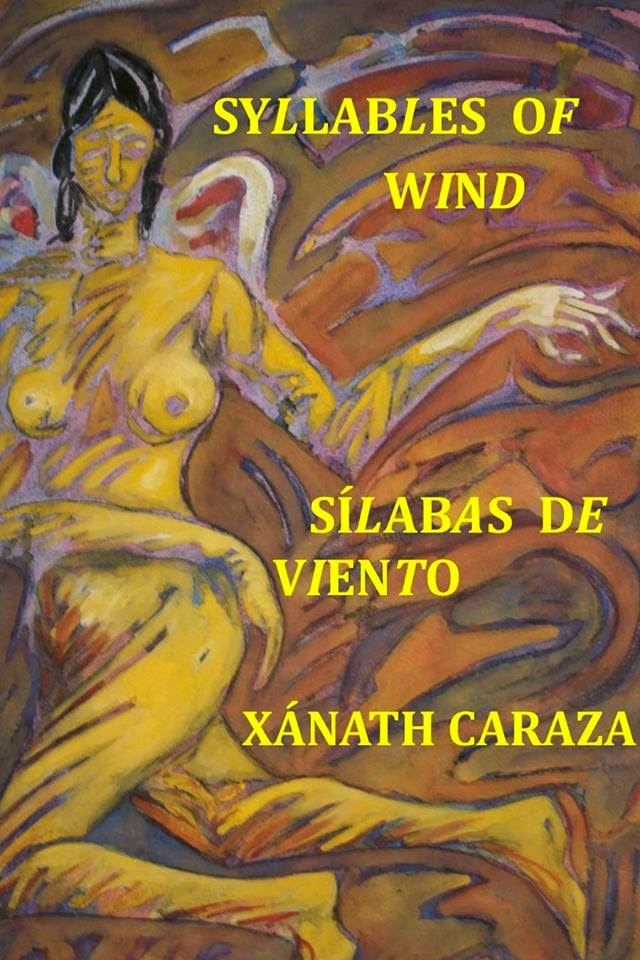
Thrilled to announce that my new book of poetry is finally here, Sílabas de viento/Syllables of Wind (Mammoth Publications, 2014)  by Xanath Caraza, translated by Sandra Kingery and cover art by Adriana Manuela.  I’ll have my book release on Monday, September 15 at 7 p.m., where I’ll discuss my work on the radio program, New Letters on the Air,hosted by Angela Elam, as part of Park University’s Ethnic Voices PoetrySeries, held at Woodneath Library Center, 8900 N. Flintlock Road, Kansas City, MO.  Then Sílabas de viento/Syllables of Wind will have its next debut at the Big Tent Reading Series at Raven Book Store in Lawrence, Kansas on September 25 at 7 p.m.  Finalmente, here is a link to Revista Contratiempo, page 4, of a book review of Sílabas de viento/Syllables of Wind.  Viva la poesía!


Sílabas de viento/Syllables of Wind 


Tuesday, April 20, 2010

Foto Review: Anywhere But L.A. Guest columnist Juanita Salazar Lamb. LATC East of Broadway Season. Book Give-Away.

Michael Sedano

Foto review: Daniel A. Olivas. Anywhere But L.A. Tempe: Bilingual Press/ Editorial Bilingüe, 2009.
ISBN: 978-1-931010-69-6


Metropolis Books spans maybe 20 feet across and 50 feet deep into the entrañas of a low-rise building in the heart of Los Angeles’ urban renewal movement. Well ahead of the hipness curve, Metropolis has been in its location now three years, evidence of the swelling spread of loft-dwellers into the heart of downtown Los Angeles. Metropolis’ shelves pack a lot of wallop for the space. During the Q&A, for example, Daniel remarked that his work runs fewer pages than a magnum opus like War and Peace. I looked at the shelf at Dan’s right elbow and there was War and Peace, one shelf over from the poetry section. Taste, that’s what Metropolis Books’ inventory reflects.

Olivas selects three monologues from his involving collection Anywhere But L.A., adding a fourth when late-arrivals take seats: “Blue,” a ten-paragraph horror story of a child’s drowning that Olivas based on the 10 tracks of a Joni Mitchell vinyl. You can read “Blue” at this La Bloga post. “Let Me Tell You a Story,” filled with understated rage at lethally irresponsible drug addled parenting. The enchanting “Painting,” spoken from the perspective of a nude woman in her portrait, a beautiful evocation of Keats' "Ode on a Grecian Urn," or Sandra C. Muñoz' "Free Metal Woman." “Gordon,” another point of view piece, this one a dog’s.


To read Olivas is to experience a master of the short form. Olivas illustrates how character development doesn’t require pages of dialog and extensive tell-then-show. In Olivas' hand, a word or two is enough show. “Gordon,” for example, speaks volumes about the nature of this dog when the Setter avers his preference for the ideal bone, “a femur.” Absence of, suggestion of, detail is among Olivas’ most effective techniques. In “Blue,” for example, the speaker has been hollowed out by the life path she’s chosen surrounding giving birth at fifteen. Olivas fully conveys her emptiness by withholding details of events and people, facts hinted, alluded, never spoken, as if the story's events, as is her life, are unspeakable.


Writers-as-readers will profit from observing Dan's technique. Metropolis Books provides a table and chair, but Dan works for effect. He stands away from the table to commit his entire person to the reading. Readers who sit, or hide behind a lectern, not only diminish their effectiveness by denying themselves the full use of their body, the fully-exposed reader releases pent-up nervousness while developing power and poise that make a convincing case for buying this book. Standing like this always makes a wise choice, given that in any reading, the writer's two purposes are to entertain and to sell books.

Daniel Olivas’ first novel is in publication now, coming later this year.

Guest Columnist: Juanita Salazar Lamb

Third Speech

Juanita Salazar Lamb © 2010

A friend asked me recently if I would continue writing stories set in the Latina/o experience, or would I reach out and write for the rest of the community. After all, isn’t my current writing like singing to the choir, she said. Mulling over that has spurred me to think about my presentation at Northwest Arkansas Community College Spring Arts Festival. In February, Jose Faus and I, of the Latino Writers Collective read from the anthology “Cuentos del Centro: Stories from the Latino Heartland” and the discussion afterward centered around questions of writing technique, dialogue, and some translations for the audience. But as our friend Michael Sedano sagely says there are 3 presentations:

  1. the one you prepare to give from notes;
  2. the one you actually give;
  3. and one where you actually deliver all the good things you thought to say afterward.

So here is the one where I talk about universal issues in multi-cultural writing: While it’s true that “El Vestido Colora’o” and “Promesas” are set in la cultura Tejana of South Texas, with its mix of Spanish and English language and customs, these stories both address universal themes. “El Vestido Colora’o” is a coming of age story in which the adolescent girl, chafing under her mother’s choices and directions, nevertheless recognizes the need to toe the line. Marisol’s insistent refusals to participate in a social gathering with her parents are met with her mother’s threat that Papá will be called in. This resonates with “wait until your father gets home.” Marisol is naïve in the ways of relationships with boys, other than the occasional glance or smile across a classroom, but at the same time she is experiencing twinges of nascent lust. This is evident as she describes Tony, the object of her affection, as “the cutest boy in the whole world” and when she restrains herself from reaching up and running her fingers through his hair. And we are all familiar when, as adolescents, we were absolutely certain everyone in our surroundings was staring at us and our awful __________ (fill in the blank from the options: skin, zit, shoes, clothes, car). So it is with Marisol as she prays that the earth will open up and swallow her and the awful red dress. And finally, the issue of validation. By the end of the story Marisol finds validation from the most important person at the moment. Haven’t we all been put at ease when someone we cared about paid us a compliment when our confidence was shaky?

Similarly, in “Promesas” we can identify with issues of self-esteem, jealousy, and revenge. Zoila has had enough. Enough to go out and find herself a real man, not someone who will run off after a few hours, as she says. But first, she has some unfinished business with this sinvergüenza, and the prescription requires that it be administered on this special night. In a world where relationships can be fleeting, self-esteem mercurial and exacting revenge costly, Zoila shows us that once you’re ready for a new start, dale gas! The surprise twist in this story reaffirms the universal belief in the triumph of good.

So for my friends who think that writing Latina/o stories is singing to the choir, come sing along with us. You may find we can all sing along.

Juanita Salazar Lamb currently lives in Texas. Cuentos del Centro: Stories from the Latino Heartland is available from Amazon, order it through your favorite bookstore (isbn 978-0-9791291-2-4) or directly from Scapegoat Press by calling 816-824-6138. Juanita's first guest column for La Bloga was in March 2008.


East of Broadway

East-of-downtown theatre-goers in El Lay long have endured the westerly drive to the Valley, Hollywood, Culver City, and Music Center Hill in order to enjoy a myriad of first-class teatro. Now, the Los Angeles Theatre Center, on Spring Street just around the corner from Metropolis Books--or is that vice versa?--opens its April 17 - June 27 2010 season.

A professional troupe of highest calibre, LATC's downtown facility offers not only the most convenient parking in LA theatre, but a location in the heart of a thriving arts and dining district. After a show, promenade at street level from nightspot to nightspot amid the high energy excitement of live music, convivial gente, and puro life! No other LA theatre spot offers this ambience.

Click here for information on the Los Angeles Theatre Center's current season.


Blogmeister's Note:
I'm honored that Juanita Salazar Lamb's title reflects a principle of public speaking I endorse, the "third speech" concept. As a long-time teacher of public speaking, and "reading your own stuff" coach for writers (long download, be patient), I want readers to think that every performance is three performances. There's the one you plan for before the event, all the cool techniques you'll muster, the audience interactions, the dynamism of the moment. Then there's the actual presentation. Your knees rattled a bit, you flubbed a line, someone dozed in the second row, you carried it off. Then there are all the great things you thought of to do after you sat down! I shoulda, I coulda, I woulda if only... The public speaker, the reader of one's own stuff need consider this tri-partite division of performance, then rehearse, reflect, evaluate, and adapt the rehearsal so what the audience gets is that "third speech". (Michael Sedano is La Bloga's Blogmeister).

Try to Remember by Iris Gomez Book Give-Away

from the Publisher, Hachette Book Group

Award-winning poet and expert in US immigration and asylum law Iris Gomez delivers a debut novel about a Latina daughter's attempt to sustain her family as her father battles with mental illness after immigrating to the United States.


"What holds the reader is the drama of each intense home scenario, scary and tender... The clash between traditional immigrant values and feminist independence is powerful... In her debut novel, Colombian immigrant poet Gomez dramatizes the universal dilemma of a loving family serving as 'both joy and prison.'" --- Booklist

http://irisgomez.com

Reading Group Guide


Here's how to get your free copy of Iris Gomez' new novel: First three entries with the correct answers to all these questions, plus their mailing address, get a copy.

Answer in your own words, completing the statements below:

1. The Los Angeles Theatre Center current season is called _______.

2. Dan Olivas' reading technique is notable because _______.

3. The La Bloga columnist who is an oral communication teacher and "read your own stuff" coach is named _______.

4. Juanita Salazar Lamb writes mystery stories featuring a character named ________.

5. The title and author of the book you'll receive if you're among the first three to answer all these questions correctly are ________ by _________.

Click here to submit your answers. Remember to include a mailing address.


That's the penultimate Tuesday of April 2010, a Tuesday like any other Tuesday, except You Are Here. Thank you for visiting La Bloga. See you next week.

mvs


Gente, La Bloga welcomes your comments and observations. We welcome, encourage, guest columnists. When someone posts a column you'd like to extend or respond to, leave a comment. If you've written something entirely different that you think fits La Bloga's emphasis on literature, arts and cultura chicana / latina, click here and let us know what you'd like to share.