Friday, September 17, 2021

Teatro Sin Fronteras New Orleans

Melinda Palacio


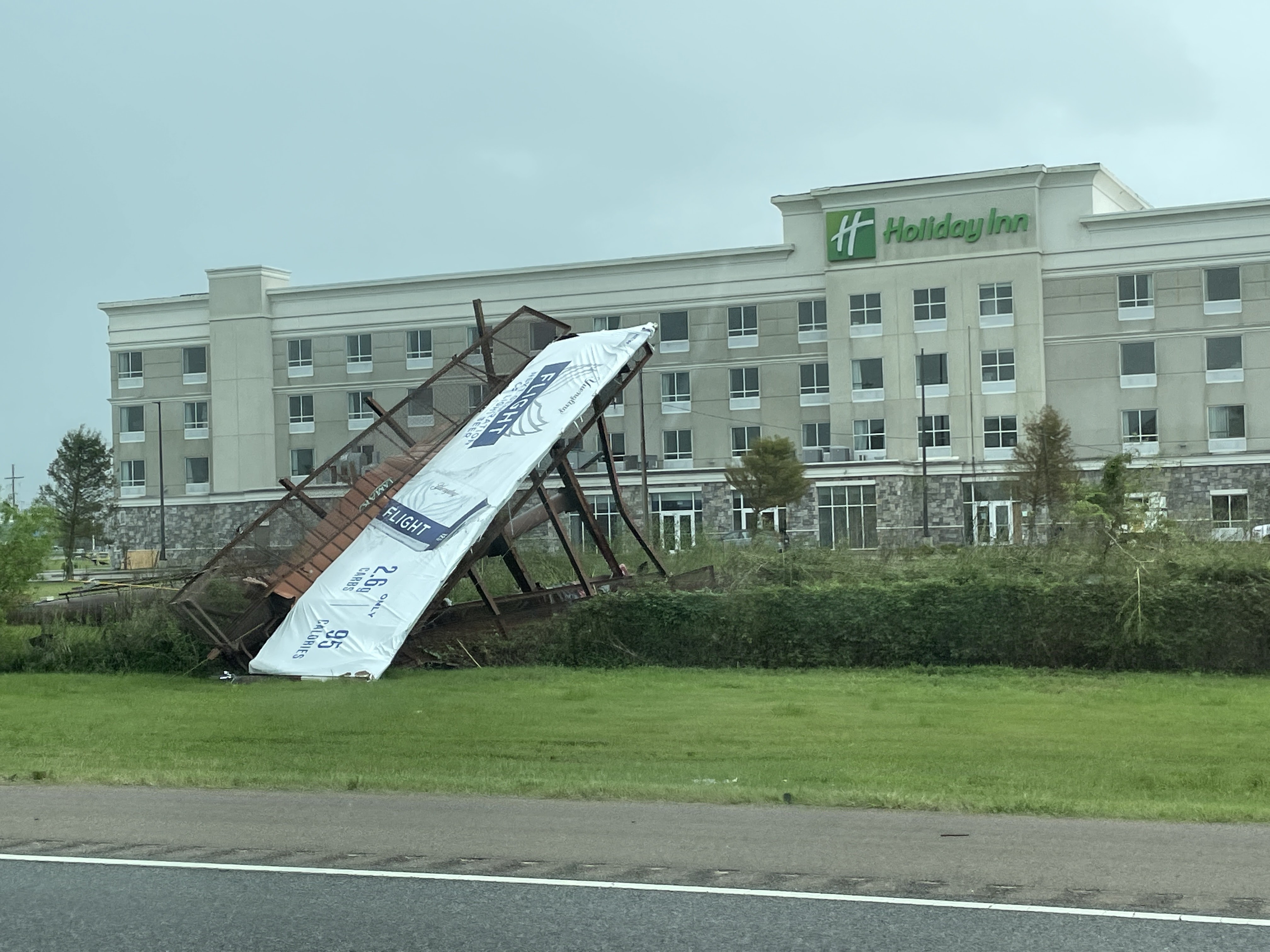
An announcement in three photos, or the show must go on. Teatro Sin Fronteras New Orleans.

Hurricane Ida blew through New Orleans, snapping off billboards and rooftops.


An uprooted tree in Audubon Park.


Even though there are still hundreds of residents without power, the show must go on.  New Orleans requires proof of vaccination for all indoor gatherings. 


Thursday, September 16, 2021

What does September 16 mean to me?

                                                                                  
Playa del Rey, at sunset

     When I was a kid growing up on L.A.’s westside in the 1950s and ‘60s, September 16 meant absolutely nothing to me. In fact, Cinco de Mayo hadn’t yet been discovered by Coors, Coca-Cola, or any Mexican kids of my generation. Don’t quote me as historically accurate, but I believe it was the Vietnam-era Chicano college students who discovered Cinco de Mayo and turned it into a day of pride, which has now become a day of hedonism to most Americans across the U.S. And, I’ll bet a dime to a dollar, most Americans, today, drinking and partying in bars across the country on May 5th have no idea what the day represents. 
     Don’t blame me! My “greatest generation” Chicano parents never discussed these Mexican holidays, and nobody in our town celebrated them. James Dean, Marlon Brando, Las Hemanas Padilla, Trio los Panchos, Marilyn Monroe, Lola Beltran, Pedro Infante, and Javier Solis were the rage in my Mexican-American community. The USC, UCLA football game drew the biggest crowds of any event. Even, the opening of the Ten Commandments had larger crowds than any Westside 4th of July celebration. That’s because families could buy fireworks and celebrate right in the safety of their own neighborhood, usually in the driveway, setting matches to creepy-crawly fiery snakes, sparklers, and little blasts coming out of cone shaped explosives, lasting about thirty-seconds, if you were lucky. 
     I don’t even know the first time I heard of September 16, as Mexican Independence Day, maybe when I saw the movie Juarez; though, I’m sure nothing historically registered. When I began college, there were no Mexican history classes, and the closest subject to my grandmother’s language was the Spanish department, and it taught mostly about Spain. 
     I read and taught myself about Mexico. I think the first book I discovered was the Discovery and Conquest of Mexico by Spanish conquistador, Bernal Diaz del Castillo, which I later learned was one of the best and most accurate books about the conquest of Tenochtitlan, from a conquistador's perspective. 
     I was an English major and a Spanish minor, so my brain was filled mostly with western lit, the Romans, and Greeks, but mostly the Brits, and English-speaking countries. Byron an Shelly were my literary heroes. Then, in 1977, I received a fellowship to study in Spain, so I switched my major, more out of practicality than desire, to Spanish, since I’d be studying in Granada for close to a year, where I’d earn the units necessary to graduate once I returned home. 
                                                                                              
A life of books, true liberation, artes liberales

     I’d always been an average student in school, just getting by to play sports, keep my parents off my back, and not appear like a moron to my friends, mostly, other B-C students, by choice. However, after my discharge from the military, something clicked. Near-death experiences can do that. Maybe I realized my time here was limited, and I wanted to learn everything I could before my exit, maybe, even learn--gulp, why I was put here in the first place. 
     So, I read, and I travelled, and I talked, and I listened. I began hanging out with the educated and the literate, and, funny thing, I realized some of my childhood friends, with no college education, were just as smart, and even as insightful, in a common-sensical way, as many of my college-educated friends. If I opened my eyes, I was surrounded by knowledge.
     It wasn’t until I was in my fifties that my father told me about his view of September 16. Oh, nothing to do with Mexican Independence, the wars with France and Spain, or liberation. No, he reminisced about his early years, in the 30s and early 40s, and how September 16th, for Mexicans, was the most important holiday on the Westside, Mexican or otherwise. 
     The largest celebration was in Santa Monica, a parade down Olympic boulevard to the beach. There was a queen and her court, decorated cars, food and spirits (even during prohibition), bootleg booze. The Santa Monica streets were packed with people from all over L.A. There were parties and dances at night. 
     He said even when he was in the army, a lot of his friends stationed near home got leaves just to come home and attend the festivities, like Chris Cruz, stationed at Camp Roberts near Paso Robles. Chris couldn’t get a leave. No biggie. He grabbed his gear and hitched a ride to L.A. That he was AWOL didn’t compare with the 16th of September celebration. A few days later, when everything returned to normal, he hitched his way back to Camp Roberts, checked in, took his punishment, and ended up seeing a lot of action in the Pacific. 

     I’ve written before about Fred Machado (RIP), descendent of a Californio family, one of the few families who could trace his roots to the first party of settlers coming into San Gabriel in 1771. When I visited him at his Culver City home, we, along with his cousin Ron Mendez, had talked about Mexican Independence from Spain. The Machado family--granted Rancho La Ballona by Spain’s monarchy--had been in California more than fifty years when Spain finally gave Mexico its independence in 1836. 
     Fred, a short handsome man, blue eyes, butch haircut, and low raspy voice, found in his research how there were arguments, even bad blood, among the early Californios regarding independence from Spain, the royalists who wanted to keep ties to the monarchy and the liberals who wanted independence. 
     Fred guessed that after a certain time in the 1800s, his great-grandfather Jose Agustin did not want to live under Spain's rule, and probably did not want to adhere to Mexican authority either. 
     Ron said, "California to them was a new frontier," which might explain why they saw themselves as Californios, neither Spanish nor Mexican subjects. The two, who have researched their family’s history thoroughly, speculated that Alta California was thousands of miles and worlds away from both Spain and Mexico City, and the laws and reforms passed by those two governments were more a burden than a help to the culture the Californios had created, so it must have been natural for the rancheros to see the land as their own.
    In some ways, they were mentally and physically ready for a new country, so, it was fateful when the United States entered and promised fair laws to the Californios, which the Americans later shattered, shamelessly. 
     Yet, it is difficult to sympathize, or even empathize, since we know these were the same people who, upon their arrival, tried enslaving the Tongva people. We know to hang, draw, and quarter a disloyal servant, or enemy, among the Spanish and mestizo rulers was a normal punishment.
     Interestingly, during Venezuela's fight for independence, about the same time as Mexico's, its African slaves and Indians chose to remain loyal to the Spanish crown, since they had suffered so much under the yoke of the "pardos," American born Spaniards and mestizos, who used methods of terror perfected during the Inquisition, methods that even made the Aztec sacrifices seem tame, one such technique was to cut off heads, boil them in oil, and post them around a town square as a deterrent to other rebels.
     Ron said, "My gut feeling is that they (his ancestors) would have rather been Americans than Mexicans." Since the family’s lands were in California, for them to return to Mexico would have meant to lose their lands. Besides, at the time, the Californios had created their own culture, not Yankee and certainly not Mexican. For them, to belong to the U.S. was someplace in between. Besides, Mexico was a country the Machados no longer knew. It didn’t sit well with the Californios that Mexico and Spain demanded taxes, furs, and other produce, while offering nothing in return. 

     Fred lived his life as an Anglo, and his name, Machado, was simply an anomaly, but his research resurrected his dormant Mexican spirit. “Yes, back then, in my mind, I was an Anglo,” he said. “All of the older folks always spoke Spanish, except when we kids were around, they’d switch to English.” He said, "My grandfather, Ricardo, who everyone called ‘the Old Man’ was very wealthy at one time. He was a typical [Californio] don and lived on the ranch in what we called the 'Big House' surrounded by acres and acres of land." 
     Fred said, as children, neither he nor his cousins could visit his grandfather unless accompanied by a parent. The Big House was located out near Jefferson and Sepulveda, the heart of the original Machado land grant. (To be clear, a grant was not a gift but a loan. Only Spain’s king could own land.) 
     Fred remembered hanging around outside with his cousins, waiting while their fathers entered first, to greet the old man and talk business. After some time, the fathers exited and escorted the children, one at a time, inside the house. Fred said, “The Old Man would be sitting in a large chair and take us on his lap, one at a time, pat us on the head, and give each of us a dime. Then we would leave.” 
     Fred remembered the time when his grandfather and the grandchildren, thirty-two in all, gathered for a photo in front of the Big House. He said, "Today you might visualize that this was what it was like to belong to one of the big Italian Mafia families." 
     His grandfather died in 1934, as the Depression began to take a firm hold of the country. By this time, most of the land known as Rancho La Ballona had been lost to unpaid back-taxes or sold, and much of Ricardo’s money had been spent. To survive those difficult years, Fred's father farmed the remaining land and his mother began working. 
     “How much land did your father farm?” I asked. 
     Fred said his grandfather, Ricardo, gave his heirs twelve portions of La Ballona. But by that time because of inheritances over the years, the land had been carved into tiny parcels. Fred's father, Federico, received a two hundred-foot portion of land near Playa del Rey, and he also bought another lot from his sister. But as the country slipped deeper into the Depression, Federico sold much of the land, as did the other family members. 
     Fred said his parents moved off the ranch but returned to live a few times in the 1930s. Essentially, that was the end of the Machado family’s physical relationship to the land. Of course, the psychological association, will always remain, independence or not.

Wednesday, September 15, 2021

Coquí in the City - De aquí como el coquí


By Nomar Perez 


Publisher ‏ : ‎ Dial Books 

Language ‏ : ‎ English

Hardcover ‏ : ‎ 32 pages

ISBN-10 ‏ : ‎ 0593109031

ISBN-13 ‏ : ‎ 978-0593109038


A heartfelt picture book based on the author-illustrator's own experiences, about a boy who moves to the U.S. mainland from Puerto Rico and realizes that New York City might have more in common with San Juan than he initially thought.


Miguel's pet frog, Coquí, is always with him: as he greets his neighbors in San Juan, buys quesitos from the panadería, and listens to his abuelo's story about meeting baseball legend Roberto Clemente. Then Miguel learns that he and his parents are moving to the U.S. mainland, which means leaving his beloved grandparents, home in Puerto Rico, and even Coquí behind. Life in New York City is overwhelming, with unfamiliar buildings, foods, and people. But when he and Mamá go exploring, they find a few familiar sights that remind them of home, and Miguel realizes there might be a way to keep a little bit of Puerto Rico with him--including the love he has for Coquí--wherever he goes.


En esta emocionante historia, basada en las propias experiencias del autor e ilustrador, un niño se muda de Puerto Rico a los Estados Unidos en donde descubre que la ciudad de Nueva York tiene mucho más en común con la ciudad de San Juan que lo que el podia imaginar.


La mascota de Miguel, Coquí, siempre anda con el: mientras saluda a sus vecinos en San Juan, compra quesitos en la panadería y mientras escucha la historia de su abuelo cuando conoció al famoso pelotero Roberto Clemente. Un día Miguel se entera que el y sus padres se mudarán a los Estados Unidos, lo cual significa dejar atrás a sus amados abuelos, su hogar en Puerto Rico y también a Coquí. La vida en la ciudad de Nueva York es abrumadora, con lugares, comidas y personas desconocidas. Sin embargo cuando el y Mamá se van a explorar, descubren algunos lugares similares que les recuerdan a casa y Miguel se da cuenta que hay una posibilidad de mantener un poco de Puerto Rico con el --incluyendo su amor por Coquí-- a donde quiera que vaya.


Nomar Perez was born on the beautiful island of Puerto Rico, in the city of Ponce, and moved with his parents and five siblings to Ohio when he was ten. Nomar is heavily influenced by all types of media, most especially animation, puppetry, and computer art. He studied computer animation and painting at Bowling Green State University in Ohio, and since then has worked as an illustrator on social expression products in the categories of humor, children's, and young adult. Nomar has also illustrated numerous children's board books and school publishing books. Coquí in the City is his author-illustrator debut.


Tuesday, September 14, 2021

Summer Virtual Sidewalk Art Show: Birds, Bees, Butterflies, Blossoms

Photographs by Michael Sedano
Taken in Summer 2021 at The Huntington Library, Art Museum, and Botanical Gardens, except as noted.

Red Dragonfly, Agapanthus, watergarden

Click an image to run a slide show.

Butterflies & BlossomsOrange Fritillary, Scarlet Salvia

Painted Lady, Buddleia spike
Gulf Fritillary, Salvia flower
Lantana flower cluster, Mourning Cloak Butterfly
Purple Salvia spike, Mourning Cloak Butterfly
Monarch Butterfly, Sentimental Favorite Earned By Beauty
Queen Anne's Lace
Butterfly Bush, Buddleia
Rudbeckia hirta, Blackeyed Susan (above)
Yellow Cabbage Butterfly (Pieris rapae), unknown plant

Bees & Wasps

Carpenter Bee, Salvia flowers (above)
Wasp, California Buckwheat (below)
Bee Fly, Arbutus unedo flower

Colibrí, Chuparrosa, Picaflor, Hummingbirds In Flight

Spathodea Campanulata atop Tallac Knoll, Los Angeles County Arboretum, 2020.
Agapanthus flowers

Sausage Tree, Kigelia Africana

Feathering Her Nest
A new generation of Allen's Hummingbirds on the way at the Los Angeles County Arboretum.

Reprints available on notecards, tee shirts, posters, and archival (museum) prints. 


Michael Sedano photographs nature two mornings a week, looking for the perfect action moment or a darn good still life of animals and plants.
Sedano acquired photojournalism experience as a soldier, photographing military activities as the Information Specialist of the 7th of the 5th Air Defense Artillery Battalion (HAWK), stationed along the DMZ in the Republic of Korea in 1969 and 1970. 
Honorably Discharged from the United States Army, Sedano attended USC Graduate School where he was Chief Photographer for Daily Trojan and El Rodeo yearbook. 
Sedano's Chicano floricanto photographs reside in the Tomas Rivera Library at UC Riverside, Doheny Library at USC, and appear in the film The Rise and Fall of the Brown Buffalo.
Michael Sedano retired from the world of work as a corporate executive in 2009. 


Monday, September 13, 2021

Mexican American Poets outside Aztlan Read in Honor of Diez y Seis

 Mexican American Poets outside Aztlan Read in Honor of Diez y Seis


MeXicanos 2070 is a non-profit organization committed to reclaim and enrich our indigenous Mexican American culture through a collective program of study, research and training to learn more and gain deeper understanding about our indigenous origins and advance our evolving role in the future of the Americas.


On September 16 at 5 p.m. CST MeXicanos 2070 Webinar Series presents Mexican American Poets outside Aztlan Read in Honor of Diez y Seis.  Los poetas que participamos en esta ocasión somos Carlos Cumpián, Brenda Cárdenas, Raúl Sánchez y Xánath Caraza.  This is a free event and open to the public. Join us. Go to MeXicanos 2070 facebook page on 9/16 at 5 p.m. CST. This should be a fine event where poetry welcomes you.


Friday, September 10, 2021

The Flashiest Flash Fiction


The Rocky Mountain Mystery Writers of America (RMMWA) has sponsored a popular six-word mystery contest for five years.  Hundreds of entries from around the U.S. and several other countries demonstrate the universal appeal of such storytelling.  So, once again, here's your chance to come up with the right combination of six pithy words filled with drama, tension, high emotion, or clever dialog.  Create a dark tale, a cozy thriller, or a humorous riddle in six words exactly, and if you are a crowd favorite you will win cash or gift cards and publication of your masterpiece.  Here's the RMMWA press release with all the info you need.  Good luck!

______________________________


DENVER, August 23, 2021 – There are short stories. Then there are really short stories consisting of only six words. Writers who can boil down a mystery into a half-dozen words are encouraged to enter the fifth annual Six-Word Mystery Contest sponsored by the Rocky Mountain Chapter of Mystery Writers of America (RMMWA).

The contest opens September 1, 2021 with instructions posted at www.rmmwa.org. Entries must be received by midnight, Oct. 8, 2021, MST. Six-word “whodunits” can be entered in one or all five of the following categories: Hard Boiled or Noir; Cozy Mystery; Thriller Mystery; Police Procedural Mystery; and/or a mystery with Romance or Lust. The Six-Word Mystery Contest is open to all adults 18 and over. No residency requirements.

Award-winning author and RMMWA Chapter President Margaret Mizushima said, “Follow the tradition set by Hemingway in the 1920s with your own boiled-down intriguing mystery, written in just six words and be judged by professional writers, editors, and agents. Writers from across the nation as well as Europe, Asia and Australia have entered our previous contests. We’re excited to see what big and fun story ideas are revealed this year.”

Last year’s overall winning entry from the romance/lust category was written by Sue Hinkin: “Smooth talking lothario found tongue tied.” Another previous contestant, Kathleen O’Brien, said her entry landed her a literary agent.

This year’s esteemed judges include Alfred Hitchcock’s Mystery Magazine Editor Linda Landrigan; New York Times best-selling author Anne Hillerman; award-winning author, lawyer and activist Manuel Ramos; literary agent Terrie Wolf, owner of AKA Literary Management; and John Charles of the Poisoned Pen Bookstore in Scottsdale, AZ.

The contest entry fee is $6 for one entry (just $1 per word); or $10 to enter six-word mysteries in all five categories. The grand prize winner will receive $100 in cold, hard cash. Winners in all other categories will receive $25 gift certificates, and all winners and finalists will be featured in Alfred Hitchcock’s Mystery Magazine, on our RMMWA website, and in our popular monthly newsletter, Deadlines.

Participants will be invited to the chapter’s annual Mystery & Mistletoe Holiday Party in December which will be held live and on Zoom.

According to legend, the first six-word novel was born in the 1920s when Ernest Hemingway at New York’s Algonquin Hotel or Luchow’s restaurant (depending on whom you ask) won a $10 bet by writing a six-word story. His dark and dramatic submission was: “For sale: Baby shoes. Never worn.” Urban legend or no, memorable, heart-breaking, and sublime six-word stories have been penned ever since.

For more information about the contest rules and how to enter, please visit www.rmmwa.org beginning Sept. 1, 2021.

ABOUT MYSTERY WRITERS OF AMERICA

Mystery Writers of America is a nonprofit professional organization of mystery and crime writers, editors, publishers, and other professionals in the mystery field.

MWA watches developments in legislation and tax law, sponsors symposia and mystery conferences, presents the Edgar® Awards, and provides information for mystery writers. Membership in MWA is open to published authors, editors, screenwriters, and other professionals in the field.

The Rocky Mountain Chapter represents member writers in Colorado, Montana, New Mexico, Utah, and Wyoming. The Rocky Mountain Chapter meets monthly and provides educational presentations by subject matter experts on topics related to crime, law enforcement, investigative, forensic, medical and legal issues among others; and often sponsors special events of interest to mystery writers in the region.

Later.
___________________________

Manuel Ramos writes crime fiction. His latest is Angels in the Wind, available from Arte Público Press.

Thursday, September 09, 2021

Of Speculative Fiction, Dreamers, Rumors, Cannibalism, and Human Sacrifice

by Ernest Hogan


So finally, it’s officially released, Speculative Fiction for Dreamers: A Latinx Anthology edited by Alex Hernandez, Matthew David Goodwin, and Sarah Rafael Garcia, with a preface by Professor Latinx himself, Frederick Luis Aldama. 


Good reviews are already coming in. Publisher’sWeekly says, “This is a knockout.” 


It’s 400 pages in which the Latinoid imagination is unleashed in works by Lisa M. Bradley, Pedro Cabiya, Scott Russell Duncan, Stephanie Nina Pitsirilos, Julia Rios, Sabrina Vourvoulias, and many others.


One of the others is the old Chicanonaut himself, me.


That’s right, a brand new, never before published story, “Those Rumors of Cannibalism and Human Sacrifice Have Been Greatly Exaggerated.” It was inspired by my travels in New Mexico, and bizarre developments in Aztlán. I came, I saw, I speculated. I am particularly proud of this one--it's a bold demonstration of why I’ve come to be known as the Father of Chicano Science Fiction.


What more can I do? How about a teaser. Here’s the opening:


The frankentruck left Pie Town and headed toward the Very Large Array when Lola yelled, “Cowboy alert!”

“And it don’t look like he’s from around here,” said Chuncho, who was driving.

Down the road a white kid in a cowboy hat, ostrich-skin cowboy boots, jeans, and a Virgin of Guadalupe T-shirt stood, backpack on his shoulder, sticking out a thumb, smiling.

“Yeah, pard, muy suspicioso. Better give him a ride. Check him out.”

     “You never know these days.”

     “Besides, we’re ahead of schedule, and it might be fun.” Lola leered.


And it gets fun--a wild ride into some possibilities that may get you rethinking your ideas of the future.


Speculative For Dreamers, buy it, read it, live it . . .


Ernest Hogan is an old Chicano who doesn’t mind being called Latinx is if it means he can get published and warp more minds. He's also judging the 2021 Extra-Fiction Contest.